

Gravity in the Eye: How ‘Gravitational Ischemia’ in the Retina May Be Released and Resolved Through Rapid Eye Movement (REM), a Component of Gravity Opposition Physiology




Abstract
1. Introduction
2. Methods and Focus
3. Gravity and Weight on the Earth’s Surface
4. Clues Regarding the Primary Etiology of REM
5. Normal REM Sleep
6. Sleeping in Space
7. Gravity
8. Spaceflight and Gravity Opposition Physiology in Astronauts
9. Sleep and REM

10. Retinal Responses to Gravity: Sleep Deprivation vs. Microgravity
11. Final Observations
- Gravity opposition physiology may, in fact, create significant challenges for humans involved in long-duration space travel (long-term microgravity). Possible solutions may include the use of artificial gravitational fields in space, such as centrifuges. Astronauts may not require such facilities continuously, but rather only at space stations.
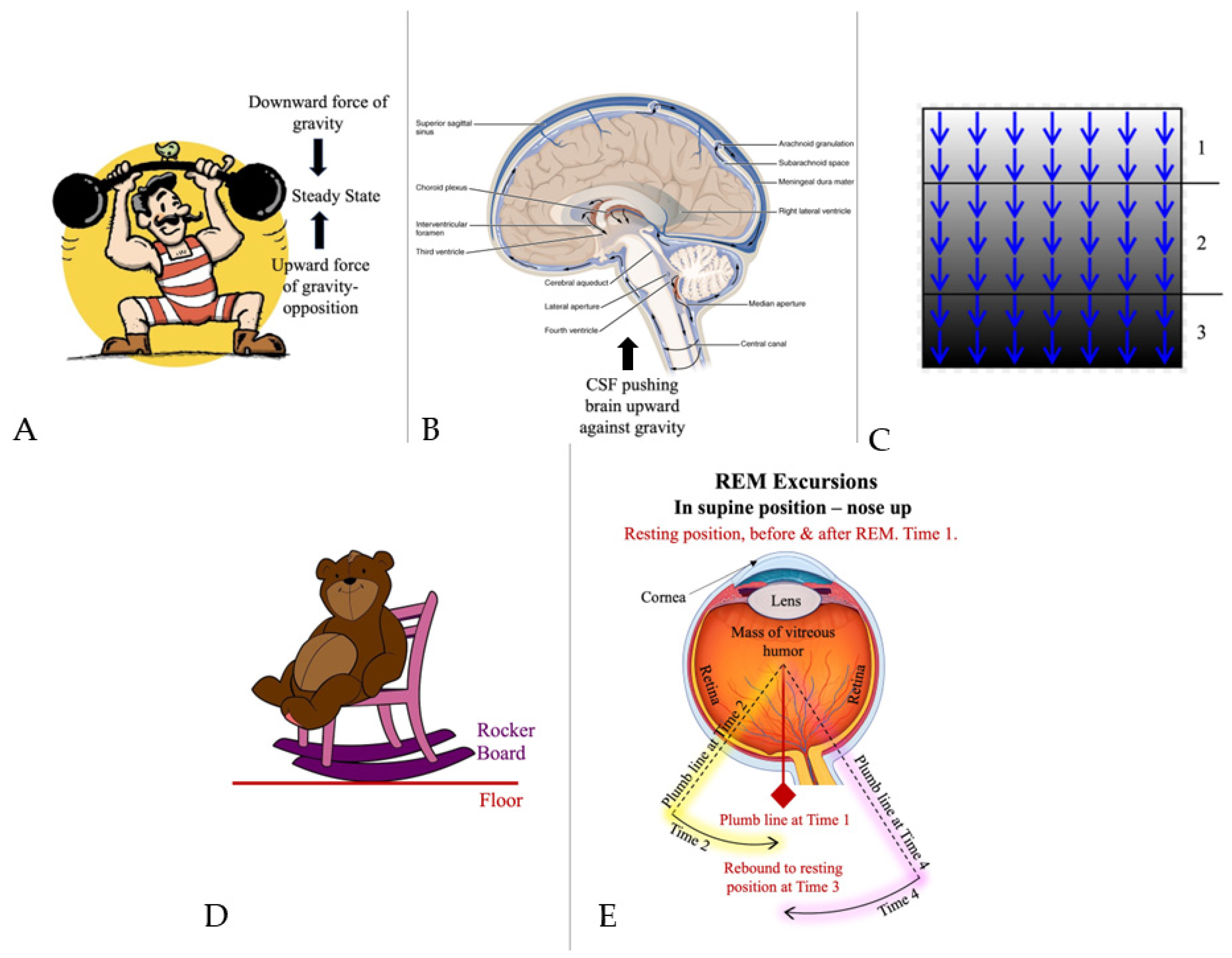
- If gravitational ischemia (Figure 5) is a problem in terrestrial physiology [46,47], and if Parkinson’s and Alzheimer’s diseases are physiologically maladaptive responses in old age, then oxygen delivery of some sort may possibly play a role in resolving those neurodegenerative diseases, as a decreased level of parenchymal oxygen tension may be the primary concern [9,57,58,59].
- During long-term space flight, gravity opposition physiology remains unopposed and induces its own regional ischemia in the brain (near the skull vertex) and in the retina (associated with papilledema). These may potentially be addressed, in part, by using an increased ambient ‘fraction of inspired oxygen’ (FiO2) in the spacecraft [60]. An interesting historical note is that some of the earliest astronauts breathed near-100% oxygen, until the Apollo 1 launch-pad explosion at Cape Kennedy in 1967 killed all three astronauts onboard.
- Many of the cardinal features of SANS may potentially be explained as features of gravity opposition physiology, which become unopposed by gravity during spaceflight.
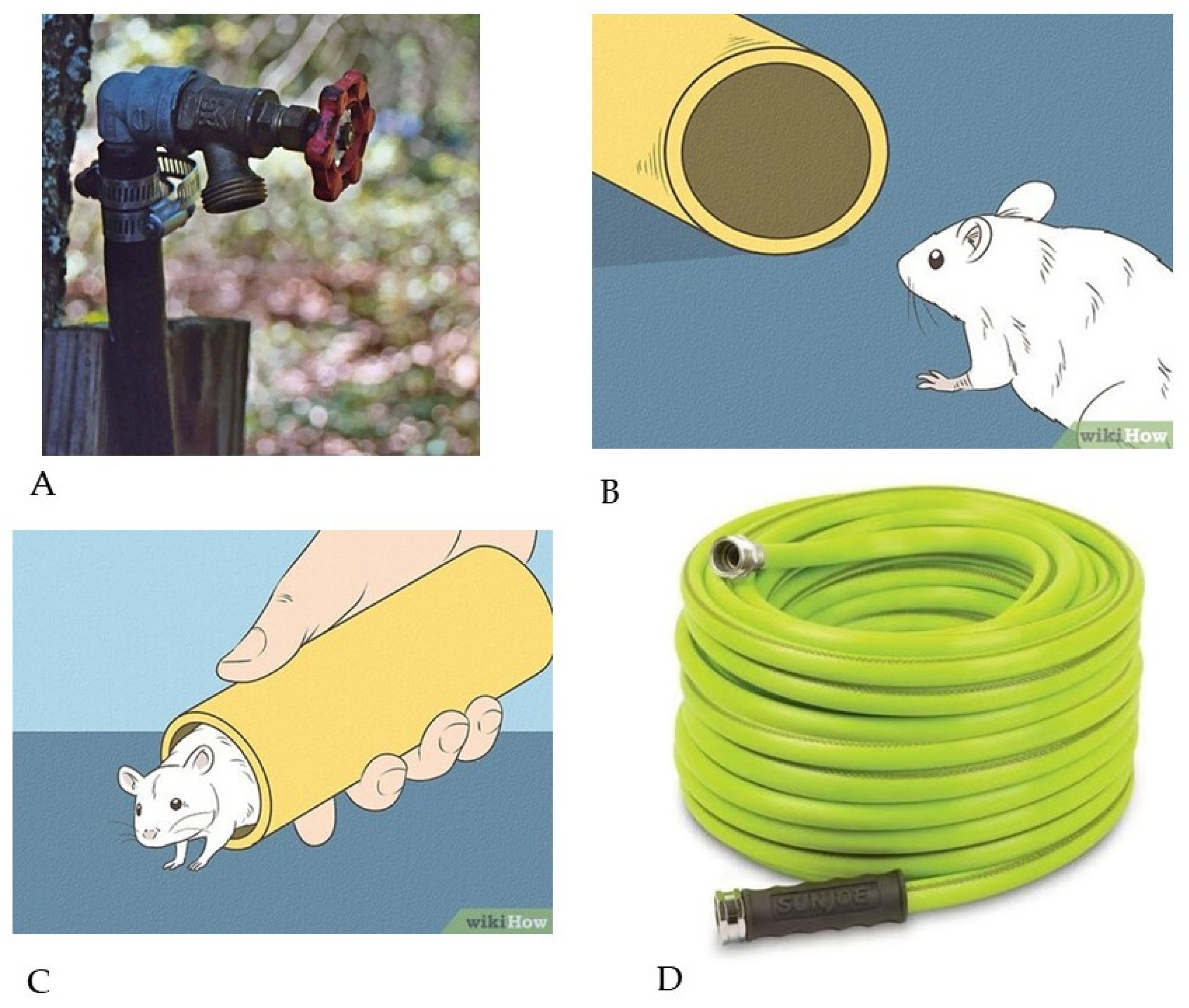
11.1. The Story of the Mouse and the Garden Hose
11.2. Welcome to the History of Medicine (The Story of How We May Have Gotten to This Place)
12. Conclusions
- In normal terrestrial physiology, the superior retinal hemisphere receives significantly more blood flow than the inferior hemisphere. This includes the influence of the cilioretinal artery (which is congenitally present in 30% of the population), which significantly localizes to the superior temporal retinal quadrant. This may be an evolutionary adaptation to protect the blood circulation in the superior temporal retinal quadrant, which is exposed to gravitational ischemia during sleep, when the eyes are typically rotated up and out, rolling the superior temporal retinal quadrant into the ‘bottom’ position, when sleeping in a supine position with the nose up.
- Some of the possible contributions of gravitational ischemia in the brain to normal terrestrial physiology may be inferred by observing what happens when gravity is removed. Spaceflight may reveal the most immediate, prominent, and least integrated of the brain’s natural counterforces to gravity, which find themselves suddenly unopposed. Gravity on Earth acts continuously on the brain and on both eyes, with each of the three responding as a separate globe.
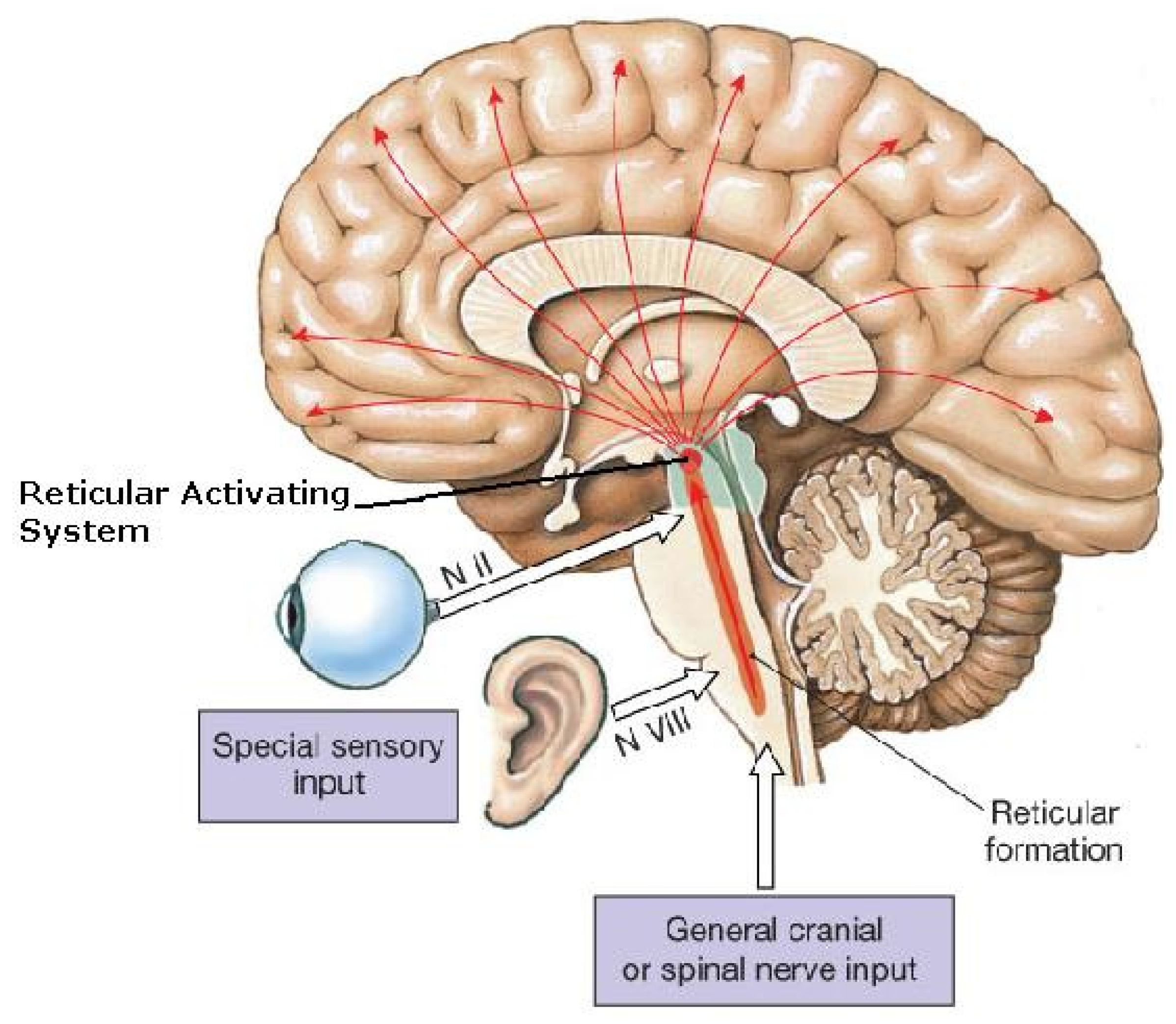
- In microgravity (in space), gravitational ischemia in the brain does not occur. But regional ischemia may still form around the cortical vertex due to the upwardly directed forces of gravity opposition physiology, compressing brain tissue and blood vessels there against the interior of the skull. This may itself induce sleep by directly triggering terminal cortical receptors in the RAS. But this sleep may be non-physiological and ineffective at releasing or resolving the regional brain ischemia associated with gravity opposition physiology. This could create an unfavorable situation for astronauts.
- Essentially, all humans and land mammals experience disconjugate eye twitching for a couple of hours every night during sleep, and no one knows why. This phenomenon is called REM.
- The primary physiological (teleological) purpose of REM may be to mitigate gravitational ischemia in the retina.
13. Acknowledging Weaknesses in Our Narrative Review
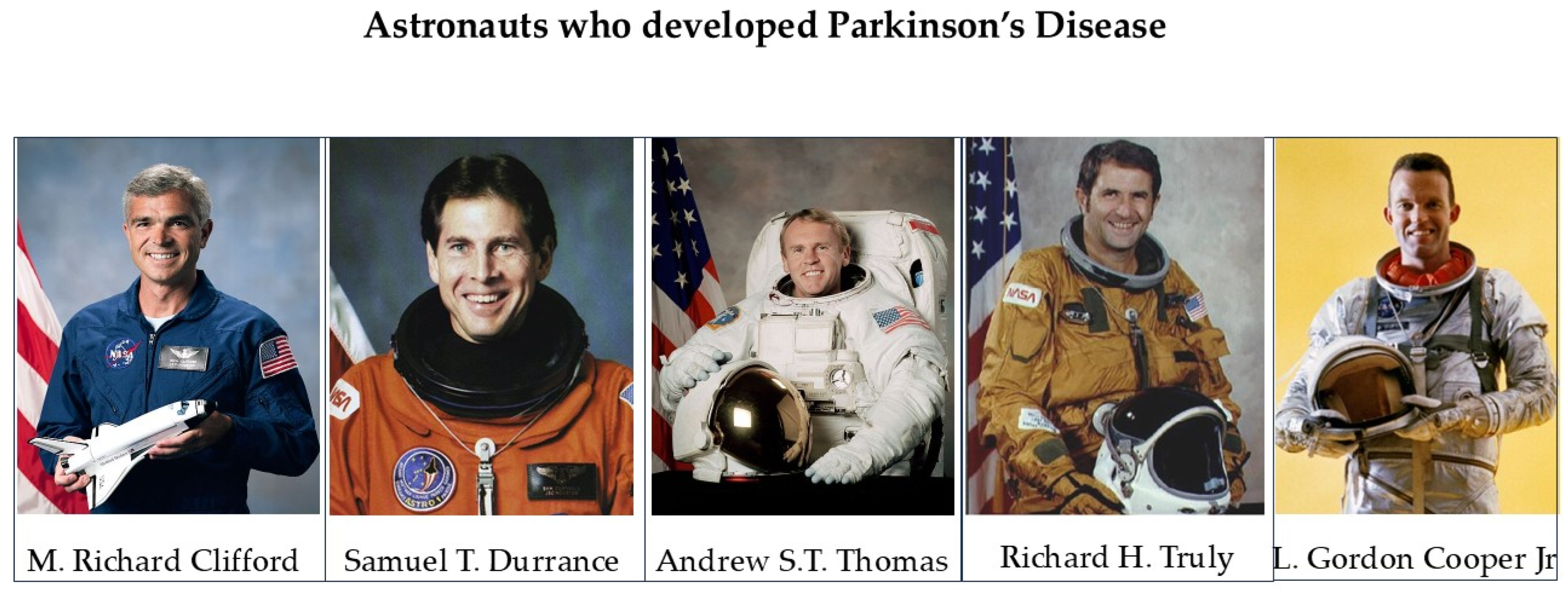
- In Figure 1, we note an increased incidence of Parkinson’s disease among astronauts. We characterize this as ‘anecdotal’, without including numerical data regarding sample size and terrestrial incidence for comparison. As of 2025, the total number of astronauts and cosmonauts who have participated in long-duration spaceflight is approximately 300. There is no public access to the vast majority of medical records regarding these participants. Of the very few who have publicly announced health issues subsequent to spaceflight, we have noticed what we consider to be a high prevalence of Parkinson’s disease. But we have not comprehensively organized all of these data. Refs. [3,4,5,6,7] are only public announcements of disease presence in each astronaut.
- Figure 5 and the garden hose story depiction of gravitational ischemia ignore the complex vascular physiology, such as autoregulation, and the blood–brain barrier. It is simply a metaphor, but, as such, we tried to use it to focus our readers’ attention on relationships that might easily be overlooked. Our history of medicine was similarly limited and focused.
- In this paper, we explored uncharted territory. We sought an answer to the following questions: ‘What is the primary causation and etiology of REM’? ‘Why do our eyeballs twitch intermittently at night while we sleep’? In the vast ocean of the medical literature, very few investigators have considered these questions at all. No one seems to know where to start. We would like to frame a conversation around this topic.There is little real data from anywhere that reflects directly on this topic. But spaceflight is producing medical data about the brain, sleep, and REM from a place where life is very different from what we know on Earth, because of a very limited number of variables, mostly the Earth’s gravitational and magnetic fields. Conditions like a ‘lack of atmosphere’ are mostly secondary.The early stages of exploration are going to consist largely of trying to stitch together half-truths and ‘maybe-relationships’. There is no low-hanging fruit in sight. Still, the question is important enough to motivate us forward. Problems revolving around ischemia can potentially be mitigated by something fairly simple and available: oxygen.And this set of problems regarding gravity, ischemia, and REM is interfacing with another set of problems regarding Parkinson’s disease, involving both the brain and the eyes, arterial tortuousities, and evidence of preceding cerebrovascular disease, involving the blood–brain barrier, glymphatics, and complex immune phenomena. It is at least plausible that problems involving the release and resolution of gravitational ischemia could be at play in this mix.
- The cause of the alpha-synuclein/tau deposition associated with Parkinson’s disease and Alzheimer’s is largely unknown but is under intense investigation. A large body of research involving human pathological specimens and animal models has produced results from which many inferences can be made, although nothing has been conclusively demonstrated. Among the inferences is the possibility that ischemia and reduced neural oxygen tension may play a role in the etiology of either or both neurodegenerative diseases.
- This narrative review did not systematically evaluate alternative functions of REM. Most of what is described in the literature is secondary functions associated with memory and abnormal REM physiology, such as REM behavioral disorder. We also did not discuss possible non-gravitational causes of astronaut neurodegeneration, such as radiation exposure.
- We used Wikipedia graphics for illustrative purposes only, and not to substantiate information.
- We cited direct spaceflight measurements of sleep times compared with direct terrestrial measurements in the same astronauts (13). The numbers varied from one night to the next, and from one astronaut to another. Overall, the duration of time (in hours) spent sleeping in space per 24 h cycle is less than the typical nightly sleep duration on Earth. We characterized it as 80%.
Author Contributions
Funding
Institutional Review Board Statement
Informed Consent Statement
Data Availability Statement
Conflicts of Interest
References
- Rosenblum, Y.; Jafarzadeh Esfahani, M.; Adelhöfer, N.; Zerr, P.; Furrer, M.; Huber, R.; Roest, F.F.; Steiger, A.; Zeising, M.; Horváth, C.G.; et al. Fractal Cycles of Sleep, a New Aperiodic Activity-Based Definition of Sleep Cycles. Elife 2025, 13, RP96784. [Google Scholar] [CrossRef]
- Aserinsky, E.; Kleitam, N. Regularly Occurring Periods of Eye Motility, and Concomitant Phenomena, during Sleep. Science 1953, 118, 273–274. [Google Scholar] [CrossRef]
- Wikipedia. Michael R. Clifford. Available online: https://en.wikipedia.org/wiki/Michael_R._Clifford (accessed on 24 October 2025).
- Wikipedia. Samuel T. Durrance. Available online: https://en.wikipedia.org/wiki/Samuel_T._Durrance (accessed on 24 October 2025).
- Wikipedia. Andy Thomas. Available online: https://en.wikipedia.org/wiki/Andy_Thomas (accessed on 24 October 2025).
- The New York Times. Richard Truly, 86, Dies; Shuttle Astronaut Who Went on to Lead NASA. Available online: https://www.nytimes.com/2024/03/07/science/space/richard-truly-dead.html (accessed on 24 October 2025).
- Leroy, G.J. New Mexico Museum of Space History. Available online: https://nmspacemuseum.org/inductee/leroy-g-cooper-jr/#content (accessed on 24 October 2025).
- Ali, N.; Beheshti, A.; Hampikian, G. Space Exploration and Risk of Parkinson’s Disease: A Perspective Review. NPJ Microgravity 2025, 11, 1. [Google Scholar] [CrossRef] [PubMed]
- Jaster, J.H.; Ottaviani, G. Gravitational Ischemia in the Brain: How Interfering with Its Release May Predispose to Either Alzheimer’s- or Parkinson’s-like Illness, Treatable with Hyperbaric Oxygen. Physiologia 2023, 3, 510–521. [Google Scholar] [CrossRef]
- Wong, Y.Y.; Wu, C.-Y.; Yu, D.; Kim, E.; Wong, M.; Elez, R.; Zebarth, J.; Ouk, M.; Tan, J.; Liao, J.; et al. Biofluid Markers of Blood-Brain Barrier Disruption and Neurodegeneration in Lewy Body Spectrum Diseases: A Systematic Review and Meta-Analysis. Park. Relat. Disord. 2022, 101, 119–128. [Google Scholar] [CrossRef]
- Rahimi, J.; Milenkovic, I.; Kovacs, G.G. Patterns of Tau and α-Synuclein Pathology in the Visual System. J. Parkinsons. Dis. 2015, 5, 333–340. [Google Scholar] [CrossRef] [PubMed]
- Zhou, J.; Ning, E.; Lu, L.; Zhang, H.; Yang, X.; Hao, Y. Effectiveness of Low-Intensity Pulsed Ultrasound on Osteoarthritis: Molecular Mechanism and Tissue Engineering. Front. Med. 2024, 11, 1292473. [Google Scholar] [CrossRef] [PubMed]
- Piltch, O.; Flynn-Evans, E.E.; Young, M.; Stickgold, R. Changes to Human Sleep Architecture during Long-duration Spaceflight. J. Sleep Res. 2025, 34, e14345. [Google Scholar] [CrossRef]
- Borbély, A.A. A Two Process Model of Sleep Regulation. Hum. Neurobiol. 1982, 1, 195–204. [Google Scholar]
- Sawada, T.; Iino, Y.; Yoshida, K.; Okazaki, H.; Nomura, S.; Shimizu, C.; Arima, T.; Juichi, M.; Zhou, S.; Kurabayashi, N.; et al. Prefrontal Synaptic Regulation of Homeostatic Sleep Pressure Revealed through Synaptic Chemogenetics. Science 2024, 385, 1459–1465. [Google Scholar] [CrossRef]
- Wikipedia. Cerebrospinal Fluid. Available online: https://en.wikipedia.org/wiki/Cerebrospinal_fluid#/media/File:1317_CFS_Circulation.jpg (accessed on 24 October 2025).
- Wiki-Media. Commons Iris Retina. Available online: https://www.edupointbd.com/wp-content/uploads/2017/08/iris-retina.png (accessed on 24 October 2025).
- Jaster, J.H. Gravitational Ischemia in the Brain—May Explain Why We Sleep, and Why We Dream. AME Med. J. 2021, 6, 11. [Google Scholar] [CrossRef]
- Jaster, J.H. Gravity in the Brain-How It May Regulate Skeletal Muscle Metabolism by Balancing Compressive Ischemic Changes in the Weight-Bearing Pituitary and Hypothalamus. Physiol. Rep. 2021, 9, e14878. [Google Scholar] [CrossRef]
- Walusinski, O. How Yawning Switches the Default-Mode Network to the Attentional Network by Activating the Cerebrospinal Fluid Flow. Clin. Anat. 2014, 27, 201–209. [Google Scholar] [CrossRef] [PubMed]
- Roberts, D.R.; Albrecht, M.H.; Collins, H.R.; Asemani, D.; Chatterjee, A.R.; Spampinato, M.V.; Zhu, X.; Chimowitz, M.I.; Antonucci, M.U. Effects of Spaceflight on Astronaut Brain Structure as Indicated on MRI. N. Engl. J. Med. 2017, 377, 1746–1753. [Google Scholar] [CrossRef]
- Barisano, G.; Sepehrband, F.; Collins, H.R.; Jillings, S.; Jeurissen, B.; Taylor, J.A.; Schoenmaekers, C.; De Laet, C.; Rukavishnikov, I.; Nosikova, I.; et al. The Effect of Prolonged Spaceflight on Cerebrospinal Fluid and Perivascular Spaces of Astronauts and Cosmonauts. Proc. Natl. Acad. Sci. USA 2022, 119, e2120439119. [Google Scholar] [CrossRef]
- Jaster, J.H. Gravity in the Brain: How Compressive Ischemic Changes in the Weight-Bearing Brainstem Autonomic Nuclei May Contribute to Vascular Endothelial Dysfunction Elsewhere in the Body Following Sleep Deprivation. Am. J. Physiol. Heart Circ. Physiol. 2021, 320, H1415–H1416. [Google Scholar] [CrossRef]
- Jaster, J.H. Reperfusion Injury to Ischemic Medullary Brain Nuclei after Stopping Continuous Positive Airway Pressure-Induced CO2-Reduced Vasoconstriction in Sleep Apnea. J. Thorac. Dis. 2018, 10, S2029–S2031. [Google Scholar] [CrossRef]
- Wiki-Media. Commons RAS: Reticular Activating System. Available online: https://rcweb.dartmouth.edu/CANlab/brainstemwiki/doku.php/ras.html (accessed on 24 October 2025).
- Ong, J.; Tavakkoli, A.; Zaman, N.; Kamran, S.A.; Waisberg, E.; Gautam, N.; Lee, A.G. Terrestrial Health Applications of Visual Assessment Technology and Machine Learning in Spaceflight Associated Neuro-Ocular Syndrome. NPJ Microgravity 2022, 8, 37. [Google Scholar] [CrossRef]
- Ong, J.; Tarver, W.; Brunstetter, T.; Mader, T.H.; Gibson, C.R.; Mason, S.S.; Lee, A. Spaceflight Associated Neuro-Ocular Syndrome: Proposed Pathogenesis, Terrestrial Analogues, and Emerging Countermeasures. Br. J. Ophthalmol. 2023, 107, 895–900. [Google Scholar] [CrossRef]
- Ong, J.; Waisberg, E.; Masalkhi, M.; Kamran, S.A.; Lowry, K.; Sarker, P.; Zaman, N.; Paladugu, P.; Tavakkoli, A.; Lee, A.G. Artificial Intelligence Frameworks to Detect and Investigate the Pathophysiology of Spaceflight Associated Neuro-Ocular Syndrome (SANS). Brain Sci. 2023, 13, 1148. [Google Scholar] [CrossRef]
- Ong, J.; Jang, K.J.; Baek, S.J.; Hu, D.; Lin, V.; Jang, S.; Thaler, A.; Sabbagh, N.; Saeed, A.; Kwon, M.; et al. Development of Oculomics Artificial Intelligence for Cardiovascular Risk Factors: A Case Study in Fundus Oculomics for HbA1c Assessment and Clinically Relevant Considerations for Clinicians. Asia-Pacific J. Ophthalmol. 2024, 13, 100095. [Google Scholar] [CrossRef]
- Quiroz-Reyes, M.A.; Quiroz-Gonzalez, E.A.; Quiroz-Gonzalez, M.A.; Lima-Gomez, V. Effects of Cigarette Smoking on Retinal Thickness and Choroidal Vascularity Index: A Systematic Review and Meta-Analysis. Int. J. Retin. Vitr. 2025, 11, 21. [Google Scholar] [CrossRef]
- Liu, P.; Xu, J.; Chen, Y.; Xu, Q.; Zhang, W.; Hu, B.; Li, A.; Zhu, Q. Electrophysiological Signatures in Global Cerebral Ischemia: Neuroprotection Via Chemogenetic Inhibition of CA1 Pyramidal Neurons in Rats. J. Am. Heart Assoc. 2024, 13, e036146. [Google Scholar] [CrossRef]
- Le Roy, B.; Jouvencel, A.; Friedl-Werner, A.; Renel, L.; Cherchali, Y.; Osseiran, R.; Sanz-Arigita, E.; Cazalets, J.-R.; Guillaud, E.; Altena, E. Is Sleep Affected after Microgravity and Hypergravity Exposure? A Pilot Study. J. Sleep Res. 2025, 34, e14279. [Google Scholar] [CrossRef]
- Wikipedia. Braak Staging. Available online: https://en.wikipedia.org/wiki/Braak_staging#/media/File:BraakStagingbyVisanjiEtAl.png (accessed on 24 October 2025).
- Jaster, J.H.; Ong, J.; Ottaviani, G. Visual Motion Hypersensitivity, from Spaceflight to Parkinson’s Disease-as the Chiasmatic Cistern May Be Impacted by Microgravity Together with Normal Terrestrial Gravity-Opposition Physiology in the Brain. Exp. Brain Res. 2024, 242, 521–523. [Google Scholar] [CrossRef]
- Ma, J.P.; Robbins, C.B.; Pead, E.; McGrory, S.; Hamid, C.; Grewal, D.S.; Scott, B.L.; Trucco, E.; MacGillivray, T.J.; Fekrat, S. Ultra-Widefield Imaging of the Retinal Macrovasculature in Parkinson Disease Versus Controls with Normal Cognition Using Alpha-Shapes Analysis. Transl. Vis. Sci. Technol. 2024, 13, 15. [Google Scholar] [CrossRef]
- Hart de Ruyter, F.J.; Morrema, T.H.J.; den Haan, J.; Gase, G.; Twisk, J.W.R.; de Boer, J.F.; Scheltens, P.; Bouwman, F.H.; Verbraak, F.D.; Rozemuller, A.J.M.; et al. α-Synuclein Pathology in Post-Mortem Retina and Optic Nerve Is Specific for α-Synucleinopathies. NPJ Park. Dis. 2023, 9, 124. [Google Scholar] [CrossRef]
- Tomita, R.; Iwase, T.; Ueno, Y.; Goto, K.; Yamamoto, K.; Ra, E.; Terasaki, H. Differences in Blood Flow Between Superior and Inferior Retinal Hemispheres. Investig. Ophthalmol. Vis. Sci. 2020, 61, 27. [Google Scholar] [CrossRef]
- Pierobon Mays, G.; Hett, K.; Eisma, J.; McKnight, C.D.; Elenberger, J.; Song, A.K.; Considine, C.; Richerson, W.T.; Han, C.; Stark, A.; et al. Reduced Cerebrospinal Fluid Motion in Patients with Parkinson’s Disease Revealed by Magnetic Resonance Imaging with Low b-Value Diffusion Weighted Imaging. Fluids Barriers CNS 2024, 21, 40. [Google Scholar] [CrossRef]
- Mays, G.P.; Hett, K.; Eisma, J.; McKnight, C.D.; Elenberger, J.; Song, A.K.; Considine, C.; Han, C.; Stark, A.; Claassen, D.O.; et al. Reduced Suprasellar Cistern Cerebrospinal Fluid Motion in Patients with Parkinson’s Disease Revealed by Magnetic Resonance Imaging with Dynamic Cycling of Diffusion Weightings. Res. Sq. 2023; preprint. [Google Scholar] [CrossRef]
- Rossinelli, D.; Fourestey, G.; Killer, H.E.; Neutzner, A.; Iaccarino, G.; Remonda, L.; Berberat, J. Large-Scale in-Silico Analysis of CSF Dynamics within the Subarachnoid Space of the Optic Nerve. Fluids Barriers CNS 2024, 21, 20. [Google Scholar] [CrossRef]
- Wang, X.; Wang, L.; Wu, Y.; Lv, X.; Xu, Y.; Dou, W.; Zhang, H.; Wu, J.; Shang, S. Intracerebral Hemodynamic Abnormalities in Patients with Parkinson’s Disease: Comparison between Multi-Delay Arterial Spin Labelling and Conventional Single-Delay Arterial Spin Labelling. Diagn. Interv. Imaging 2024, 105, 281–291. [Google Scholar] [CrossRef] [PubMed]
- Jaster, J.H.; Ottaviani, G. Gravity-Induced Ischemia in the Brain-and Prone Positioning for COVID-19 Patients Breathing Spontaneously. Acute Crit. Care 2022, 37, 131–133. [Google Scholar] [CrossRef]
- Lv, H.; Kurt, M.; Zeng, N.; Ozkaya, E.; Marcuz, F.; Wu, L.; Laksari, K.; Camarillo, D.B.; Pauly, K.B.; Wang, Z.; et al. MR Elastography Frequency-Dependent and Independent Parameters Demonstrate Accelerated Decrease of Brain Stiffness in Elder Subjects. Eur. Radiol. 2020, 30, 6614–6623. [Google Scholar] [CrossRef]
- Jaster, J.H. Gravity in the Brain: How It Might Regulate Skeletal Muscle Metabolism by Balancing Compressive Ischemic Changes in the Weight-Bearing Hypothalamus, While Sometimes Predisposing to Maladaptive Cerebral β-Amyloid Deposition. Geriatr. Gerontol. Int. 2023, 23, 645–646. [Google Scholar] [CrossRef]
- Wu, Y.-C.; Bogale, T.A.; Koistinaho, J.; Pizzi, M.; Rolova, T.; Bellucci, A. The Contribution of β-Amyloid, Tau and α-Synuclein to Blood-Brain Barrier Damage in Neurodegenerative Disorders. Acta Neuropathol. 2024, 147, 39. [Google Scholar] [CrossRef]
- Yokoyama, Y.; Yamada, Y.; Kosugi, K.; Yamada, M.; Narita, K.; Nakahara, T.; Fujiwara, H.; Toda, M.; Jinzaki, M. Effect of Gravity on Brain Structure as Indicated on Upright Computed Tomography. Sci. Rep. 2021, 11, 392. [Google Scholar] [CrossRef]
- Voldsbekk, I.; Groote, I.; Zak, N.; Roelfs, D.; Geier, O.; Due-Tønnessen, P.; Løkken, L.-L.; Strømstad, M.; Blakstvedt, T.Y.; Kuiper, Y.S.; et al. Sleep and Sleep Deprivation Differentially Alter White Matter Microstructure: A Mixed Model Design Utilising Advanced Diffusion Modelling. Neuroimage 2021, 226, 117540. [Google Scholar] [CrossRef]
- Schneider, M.; Molnar, A.; Angeli, O.; Szabo, D.; Bernath, F.; Hajdu, D.; Gombocz, E.; Mate, B.; Jiling, B.; Nagy, B.V.; et al. Prevalence of Cilioretinal Arteries: A Systematic Review and a Prospective Cross-Sectional Observational Study. Acta Ophthalmol. 2021, 99, e310–e318. [Google Scholar] [CrossRef] [PubMed]
- Jaster, J.H. Age-Related Arterial Dysfunction in the Brain May Precede Parkinson’s Disease and Other Types of Dementia, Reflecting a Failure to Release Gravitational Ischemia. Am. J. Physiol. Heart Circ. Physiol. 2024, 327, H000. [Google Scholar] [CrossRef] [PubMed]
- Shinojima, A.; Kakeya, I.; Tada, S. Association of Space Flight With Problems of the Brain and Eyes. JAMA Ophthalmol. 2018, 136, 1075–1076. [Google Scholar] [CrossRef]
- Wåhlin, A.; Holmlund, P.; Fellows, A.M.; Malm, J.; Buckey, J.C.; Eklund, A. Optic Nerve Length before and after Spaceflight. Ophthalmology 2021, 128, 309–316. [Google Scholar] [CrossRef]
- Starčević, A.; Radojičić, Z.; Djurić Stefanović, A.; Trivić, A.; Milić, I.; Milić, M.; Matić, D.; Andrejic, J.; Djulejic, V.; Djoric, I. Morphometric and Volumetric Analysis of Lacrimal Glands in Patients with Thyroid Eye Disease. Sci. Rep. 2023, 13, 16345. [Google Scholar] [CrossRef]
- Lorber, M.; Vidić, B. Measurements of Lacrimal Glands from Cadavers, with Descriptions of Typical Glands and Three Gross Variants. Orbit 2009, 28, 137–146. [Google Scholar] [CrossRef] [PubMed]
- Chen, Y.-K.; Chen, C.-L. Ischemic Retinopathy from Prolonged Orbital Compression. N. Engl. J. Med. 2024, 390, e14. [Google Scholar] [CrossRef] [PubMed]
- Holmlund, P.; Støverud, K.-H.; Wåhlin, A.; Wiklund, U.; Malm, J.; Jóhannesson, G.; Eklund, A. Posture-Dependent Collapse of the Optic Nerve Subarachnoid Space: A Combined MRI and Modeling Study. Investig. Ophthalmol. Vis. Sci. 2021, 62, 26. [Google Scholar] [CrossRef] [PubMed]
- Ahn, J.H.; Kang, M.C.; Youn, J.; Park, K.-A.; Han, K.-D.; Jung, J.-H. Nonarteritic Anterior Ischemic Optic Neuropathy and Incidence of Parkinson’s Disease Based on a Nationwide Population Based Study. Sci. Rep. 2024, 14, 2930. [Google Scholar] [CrossRef]
- Tan, W.; Pan, Z.; Xie, F. Efficacy and Safety of Hyperbaric Oxygen Therapy for Parkinson’s Disease with Cognitive Dysfunction: Protocol for a Systematic Review and Meta-Analysis. BMJ Open 2024, 14, e087164. [Google Scholar] [CrossRef]
- Bu, S.; Liu, W.; Sheng, X.; Jin, L.; Zhao, Q. Hyperbaric Oxygen Therapy Improves Motor Symptoms, Sleep, and Cognitive Dysfunctions in Parkinson’s Disease. Dement. Geriatr. Cogn. Disord. 2025, 54, 187–200. [Google Scholar] [CrossRef]
- Pan, Z.; Tan, W.; Ran, X.; Yan, M.; Xie, F. Effect of Hyperbaric Oxygen Therapy for Non-Motor Symptoms among Patients with Parkinson’s Disease: A Systematic Review and Meta-Analysis. Clin. Rehabil. 2025, 39, 281–294. [Google Scholar] [CrossRef]
- Jaster, J.H.; Ottaviani, G. Gravitational Ischemia in the Brain—May Be Exacerbated by High Altitude and Reduced Partial Pressure of Oxygen, Inducing Lung Changes Mimicking Neurogenic Pulmonary Edema. Int. J. Cardiol. 2021, 343, 105. [Google Scholar] [CrossRef]
- Jiang, N.; Ji, H.; Guan, Z.; Pan, Y.; Deng, C.; Guo, Y.; Liu, D.; Chen, T.; Wang, S.; Wu, Y.; et al. A Deep Learning System for Detecting Silent Brain Infarction and Predicting Stroke Risk. Nat. Biomed. Eng. 2025, 9, 1907–1919. [Google Scholar] [CrossRef] [PubMed]
- Ge, M.; Wang, Y.; Xu, S. From Retina to Brain: How Deep Learning Closes the Gap in Silent Stroke Screening. NPJ Digit. Med. 2025, 8, 655. [Google Scholar] [CrossRef]
- Drachmann, J.; Petersen, L.; Jeppesen, S.K.; Bek, T. Systemic Hypoxia Increases Retinal Blood Flow but Reduces the Oxygen Saturation Less in Peripheral Than in Macular Vessels in Normal Persons. Investig. Ophthalmol. Vis. Sci. 2025, 66, 43. [Google Scholar] [CrossRef] [PubMed]
- Magonio, F. REM Phase: An Ingenious Mechanism to Enhance Clearance of Metabolic Waste from the Retina. Exp. Eye Res. 2022, 214, 108860. [Google Scholar] [CrossRef]
- Limoli, C.; Khalid, H.; Wagner, S.K.; Huemer, J. Retinal Ischemic Perivascular Lesions (RIPLs) as Potential Biomarkers for Systemic Vascular Diseases: A Narrative Review of the Literature. Ophthalmol. Ther. 2025, 14, 1183–1197. [Google Scholar] [CrossRef] [PubMed]
- Ma, X.; Liu, Y.; Xie, M.; Li, C.; Li, X.; Shang, D.; Chen, M.; Chen, H.; Su, W. Parkinson’s Disease with Possible REM Sleep Behavior Disorder Correlated with More Severe Glymphatic System Dysfunction. NPJ Park. Dis. 2025, 11, 82. [Google Scholar] [CrossRef]
- Conti, M.; Ferrari, V.; Pierantozzi, M.; Simonetta, C.; Carparelli, F.; D’Angelo, V.; Bagetta, S.; Di Giuliano, F.; Mercuri, N.B.; Schirinzi, T.; et al. Increased Blood-Brain Barrier Permeability Is Associated with Dysfunctional α Band Connectivity in Early-Stage Parkinson’s Disease. J. Neural Transm. 2025; online ahead of print. [Google Scholar] [CrossRef]
- McDevitt, E.A.; Kim, G.; Turk-Browne, N.B.; Norman, K.A. The Role of Rapid Eye Movement Sleep in Neural Differentiation of Memories in the Hippocampus. J. Cogn. Neurosci. 2025; online ahead of print. [Google Scholar] [CrossRef]
- Zhang, Y.-T.; Zhang, H.; Su, W.; Liu, W.; Chen, Y.-T.; Ren, H.-Y.; He, M.; Zhang, Y.-X.; Fan, Y.-P.; Liu, W.; et al. Age-(in)Dependent Altered Molecular Mechanisms in Parkinson’s Disease through Extracellular Vesicle Proteome and Lipidome. Cell Rep. Med. 2025, 6, 102432. [Google Scholar] [CrossRef]
- Erhardt, E.B.; Mayer, A.R.; Lin, H.C.; Pirio Richardson, S.E.; Shaff, N.A.; Vakhtin, A.A.; Caprihan, A.; van der Horn, H.J.; Hoffman, N.; Phillips, J.P.; et al. The Influence of Intermittent Hypercapnia on Cerebrospinal Fluid Flow and Clearance in Parkinson’s Disease and Healthy Older Adults. NPJ Park. Dis. 2025, 11, 334. [Google Scholar] [CrossRef] [PubMed]


Disclaimer/Publisher’s Note: The statements, opinions and data contained in all publications are solely those of the individual author(s) and contributor(s) and not of MDPI and/or the editor(s). MDPI and/or the editor(s) disclaim responsibility for any injury to people or property resulting from any ideas, methods, instructions or products referred to in the content. |
© 2025 by the authors. Licensee MDPI, Basel, Switzerland. This article is an open access article distributed under the terms and conditions of the Creative Commons Attribution (CC BY) license (https://creativecommons.org/licenses/by/4.0/).
Share and Cite
Jaster, J.H.; Ong, J.; Ottaviani, G. Gravity in the Eye: How ‘Gravitational Ischemia’ in the Retina May Be Released and Resolved Through Rapid Eye Movement (REM), a Component of Gravity Opposition Physiology. Physiologia 2025, 5, 55. https://doi.org/10.3390/physiologia5040055
Jaster JH, Ong J, Ottaviani G. Gravity in the Eye: How ‘Gravitational Ischemia’ in the Retina May Be Released and Resolved Through Rapid Eye Movement (REM), a Component of Gravity Opposition Physiology. Physiologia. 2025; 5(4):55. https://doi.org/10.3390/physiologia5040055
Chicago/Turabian StyleJaster, J. Howard, Joshua Ong, and Giulia Ottaviani. 2025. "Gravity in the Eye: How ‘Gravitational Ischemia’ in the Retina May Be Released and Resolved Through Rapid Eye Movement (REM), a Component of Gravity Opposition Physiology" Physiologia 5, no. 4: 55. https://doi.org/10.3390/physiologia5040055
APA StyleJaster, J. H., Ong, J., & Ottaviani, G. (2025). Gravity in the Eye: How ‘Gravitational Ischemia’ in the Retina May Be Released and Resolved Through Rapid Eye Movement (REM), a Component of Gravity Opposition Physiology. Physiologia, 5(4), 55. https://doi.org/10.3390/physiologia5040055