Article

Clustering-Based Characterization of Mixed Herds and the Influence of Pasture Fertilization in High-Andean Livestock Systems

1
Instituto Nacional de Innovación Agraria—Proyecto PROGAN, Estación Experimental Agraria Illpa, Puno 21110, Peru
2
Dirección de Investigación y Desarrollo Tecnológico, Instituto Nacional de Innovación Agraria (INIA), Lima 15024, Peru
*
Author to whom correspondence should be addressed.
Ruminants 2026, 6(1), 5; https://doi.org/10.3390/ruminants6010005
Submission received: 10 October 2025 / Revised: 21 November 2025 / Accepted: 25 November 2025 / Published: 8 January 2026

Simple Summary

Livestock farming in the high Andes is vital for rural families but is limited by poor pasture quality and scarce resources. We studied how pasture fertilization affects mixed herds of sheep, alpacas, llamas, and cattle. By analyzing data from several farms, we identified three groups with different herd structures and management practices. Fertilization was linked to higher sheep numbers, while other species were less affected. Farms without fertilization sometimes had slightly more diverse animals, but larger pastures alone were not enough to improve productivity without better forage quality. These results suggest that combining fertilization with sustainable practices can improve herd performance and support rural communities while protecting fragile mountain ecosystems.

Abstract

Livestock production in the high Andes is vital for rural livelihoods and food security but is limited by poor pasture quality, environmental variability, and restricted resources. Pasture improvement, achieved through management practices and particularly through fertilization, may enhance productivity and sustainability in high-Andean livestock systems. This study aimed to characterize mixed herds composed of domestic sheep (Ovis aries), alpacas (Vicugna pacos), llamas (Lama glama), and domestic cattle (Bos taurus) and to evaluate the role of pasture fertilization on herd composition and livestock size. Primary data were collected through structured questionnaires administered to 88 randomly selected livestock producers, complemented by direct field observations of grazing areas, corrals, shelters, and water sources. The survey documented herd structure, grazing management, pasture conservation, fertilization practices, and farm infrastructure. Data from multiple farms were analyzed using a clustering approach to group production units with similar characteristics, and statistical models were applied to assess the effects of fertilization, pasture area, and water sources. Three distinct clusters were identified: one dominated by alpacas, another by sheep, and a third by llamas with the most uniform stocking density. Pasture fertilization was most common in the sheep-dominated cluster and was significantly associated with higher sheep numbers, while no significant effects were detected for alpacas, llamas, or cattle. Farms without fertilization showed slightly higher overall livestock size; however, a strong negative interaction between pasture area and lack of fertilization indicated that expanding grazing land alone could not offset low forage quality. These findings suggest that targeted fertilization, when combined with sustainable grazing practices, may contribute to improved herd performance and long-term resilience in heterogeneous Andean livestock systems.

1. Introduction

Mixed-herd livestock systems, composed of domestic cattle (Bos taurus), domestic sheep (Ovis aries), alpacas (Vicugna pacos), and llamas (Lama glama), are the backbone of agricultural livelihoods in the high Andes of Peru. These systems represent a millennia-old adaptive strategy that allows producers to withstand extreme climates, fragile ecosystems, and fluctuating markets. Beyond providing meat, milk, and fiber, mixed herds contribute to food security, household income, and cultural identity [1]. The complementarity among species in their grazing habits and resource utilization allows for greater efficiency in the use of pastures, contributing to both resilience and sustainability of the production system [2].
The benefits of maintaining multi-species herds are increasingly recognized. Studies demonstrate that mixed grazing systems enhance livestock productivity, optimize forage use, and can even improve biodiversity outcomes while reducing greenhouse gas emissions when compared to single-species systems [3,4]. For example, domestic cattle typically graze on grasses in lowland areas, camelids browse shrubs in highland environments, and domestic sheep mainly use open plains. This complementary feeding behavior reduces competition and allows producers to maximize available resources across ecological niches.
Characterizing these systems is crucial for designing effective interventions in production, reproduction, and pasture management. In Peru, systematic evaluations of herd composition, reproductive management, disease incidence, and feeding practices provide essential information for planning sustainable livestock policies [5,6]. Such characterization also provides evidence to guide programs in genetic improvement, veterinary services, and community-based pasture conservation. In regions where access to technical services is limited, baseline data serve as a foundation to link traditional knowledge with science-based strategies.
Animal health interventions—including deworming and vitamin supplementation—are particularly relevant in the context of high-Andean livestock systems. Gastrointestinal parasites are among the most frequent health constraints in mixed herds, reducing productivity and causing economic losses for producers [7,8]. Regular deworming protocols adapted to the epidemiological context are necessary to maintain animal health and prevent productivity losses. Similarly, vitamin supplementation, particularly with vitamin D, plays an essential role in preventing rickets and metabolic bone disease in young camelids. Studies have shown that vitamin D deficiency is common in alpacas and llamas raised at high altitudes, especially during low solar radiation periods, and that supplementation improves calcium–phosphate metabolism and growth [9,10].
Moreover, herd composition itself—whether dominated by camelids, domestic sheep, or domestic cattle—influences grazing behavior, resilience, and overall productivity. Camelid-rich herds tend to be more adaptable to drought, steep terrain, and low-quality forage because alpacas and llamas possess physiological and anatomical traits that reduce water demand and minimize grazing pressure on fragile high-altitude ecosystems [11,12]. In contrast, domestic cattle generally require higher-quality pastures and greater water availability, making them more vulnerable to environmental stress in high-Andean landscapes. Understanding these species-specific dynamics is crucial for designing extension programs that deliver tailored recommendations and promote both herd performance and ecological sustainability.
Pasture fertilization has been shown to interact strongly with grazing dynamics in other high-altitude grasslands, influencing forage productivity and the functional structure of mixed grazing systems. Studies in alpine meadows report that fertilization combined with grazing increases aboveground biomass but can also modify plant diversity by favoring fast-growing species under nutrient enrichment [13,14]. Research in the Tibetan Plateau further demonstrates that nitrogen addition alters the effects of domestic sheep grazing on seedling recruitment and dicotyledon abundance [15], and that mixed yak–sheep grazing responses depend on soil nutrient availability, shaping plant functional diversity and grassland composition [16].
Given this context, the present study aims to characterize the mixed-herd production systems managed by producers in high-Andean communities of Cabanillas district, Puno. We hypothesize that pasture fertilization contributes to detectable differences in herd composition and livestock abundance within mixed herds, particularly for species more sensitive to forage improvements such as sheep. By documenting herd composition, reproductive practices, grazing strategies, health management, and pasture management—including fertilization—this study provides essential insights into the sustainability and productivity of livestock systems above 4000 m. Such information is crucial for designing interventions that improve herd performance, strengthen rural livelihoods, and support the conservation of fragile high-Andean ecosystems.

2. Materials and Methods

2.1. Study Area

This study was conducted in the district of Cabanillas, province of San Román, Puno region, Peru. Two high-Andean communities were selected: Aziruni (15.841105° S, 70.606909° W) and Tincopalca (15.844075° S, 70.755939° W). Both are located at more than 4250 m above sea level, in an ecological zone characterized by fragile soils, limited forage resources, and marked climatic seasonality. The rainy season extends from December to April, the frost season from May to August, and transitional “veranillo” months with dry winds occur between September and November. These climatic patterns strongly influence forage availability and animal health. The landscape in both communities is dominated by native private pastures (praderas) composed mainly of high-Andean grass species such as Jarava ichu, Festuca dolichophylla, and Calamagrostis vicunarum. All grazing lands are privately owned, and pasture management is carried out directly by the landowners, who make decisions regarding grazing schedules, resting periods, and fertilization. According to regional estimates for the Puno highlands, the carrying capacity varies by species: 0.5 ha/year for cattle, 1.5 ha/year for sheep, 1 ha/year for alpacas, and 0.8 ha/year for llamas, calculated based on the total herd size relative to the available natural pasture area owned by the farmers.

2.2. Sampling Design

The target population consisted of 936 livestock producers identified in the 2024 Agricultural Census for Cabanillas district. Using a 95% confidence level, 10% margin of error, and standard sampling formula for finite populations, a representative sample of 88 producers was determined. All livestock producers in the study area have access to irrigation systems within their grazing paddocks, which helps maintain forage availability throughout the year. Animal feeding relies exclusively on natural grazing, and supplementary feed is not routinely used. In addition, most producers implement a rotational grazing system, moving their herds between paddocks to promote vegetation recovery and sustain pasture quality. The number of hectares of natural pastures managed by each producer is presented in Supplementary Table S1, Producers were randomly selected within the communities to ensure proportional representation of herd sizes and management practices. This study was designed as a non-experimental, descriptive survey, focusing on the characterization of management practices within mixed-herd systems. This design was chosen because it allows documenting the current situation of production without manipulating the variables under study [6].

2.3. Data Collection

Primary data were collected through structured questionnaires administered directly to producers. The survey documented herd composition (number and species of animals, reproductive males, and distribution by age and sex), type of pasture fertilization applied on each farm (organic manure vs. no fertilization), the water source available for grazing animals (spring or flowing water), and the total area of natural pastures managed by each producer (ha). In addition, direct observations of herds, grazing areas, corrals, shelters, and water sources were conducted, complemented with photographic evidence to validate survey responses and ensure accuracy. All farms that reported applying pasture fertilization (“Yes”) used a consistent fertilization practice based exclusively on organic inputs, applying manure from sheep, alpacas, and llamas. No producer reported the use of synthetic or inorganic fertilizers. Fertilization was carried out once per year, typically just before the onset of the rainy season (December–March), allowing rainfall to incorporate nutrients naturally into the soil. For farms that reported not applying fertilization (“No”), producers indicated that they did not use any type of manure, organic amendments, or external nutrient inputs. Instead, these farms relied entirely on the natural regeneration of high-Andean rangelands, where seasonal rainfall and ecosystem dynamics sustain pasture growth without deliberate nutrient additions.

2.4. Statical Analysis

A Wilcoxon rank-sum test was employed to assess differences in the abundance of each livestock species (alpacas, domestic cattle llamas, and domestic sheep) between farms with and without pasture fertilization. A Generalized Linear Model (GLM) with a Poisson distribution was used to evaluate the effects of natural pasture area (continuous variable), pasture fertilization (categorical: Yes/No), and water source (categorical: Spring/Flowing Water) on livestock size (total number of animals per farm). An interaction term between pasture area and fertilization was included to explore potential effect modification. All variables were checked for multicollinearity and transformed into appropriate formats using make.names() and factor() functions where needed. The model was fitted using the glm() function in R (v4.3.1), and standard errors, z-values, and p-values were obtained to assess predictor significance. Model fit was evaluated based on residual deviance and AIC values. Visualization of interaction effects was performed with ggplot2, applying custom color palettes and confidence intervals (±1.96 SE) to distinguish fertilization. To facilitate interpretation of effect sizes, we standardized the continuous predictor (pasture area) prior to fitting a second Poisson GLM and reported standardized coefficients (βstd) together with 95% confidence intervals. These values are presented in Supplementary Table S2.
The optimal number of clusters was determined using complementary numerical and graphical criteria. Average silhouette widths were computed for k = 2–6, and although k = 2 yielded the highest value, the decrease observed at k = 3 was minimal, indicating that both solutions had comparable cohesion and separation. To further refine the selection, we examined the D-index and its second-difference curve, which revealed a pronounced knee and the strongest peak at k = 3, signaling a substantial improvement in cluster separation at this level. Additionally, the NbClust procedure, which integrates multiple clustering indices, showed near-equal support for k = 2 (11 indices) and k = 3 (10 indices). Considering the combined evidence—together with the clearer biological interpretability of the three-group structure—we selected k = 3 as the most robust and meaningful configuration for characterizing herd composition patterns among producers. A Partitioning Around Medoids (PAM) algorithm was applied to group production units by similarity in herd composition, selecting three clusters (k = 3) based on silhouette analysis. No management variables—including fertilization, water source, or grazing practices—were included in the clustering process. Each unit was then assigned to a cluster, and stocking density was calculated as the total number of animals divided by the natural pasture area (hectares). Differences in species abundance among clusters were tested using the Kruskal–Wallis test. Additionally, animal abundance was compared between farms with and without pasture fertilization across the three clusters. A two-tailed t-test was conducted within each cluster to evaluate differences in animal numbers, and the corresponding p-values were displayed above each boxplot.

3. Results

3.1. Effect of Pasture Fertilization and Pasture Area on Livestock Abundance in Mixed Herds

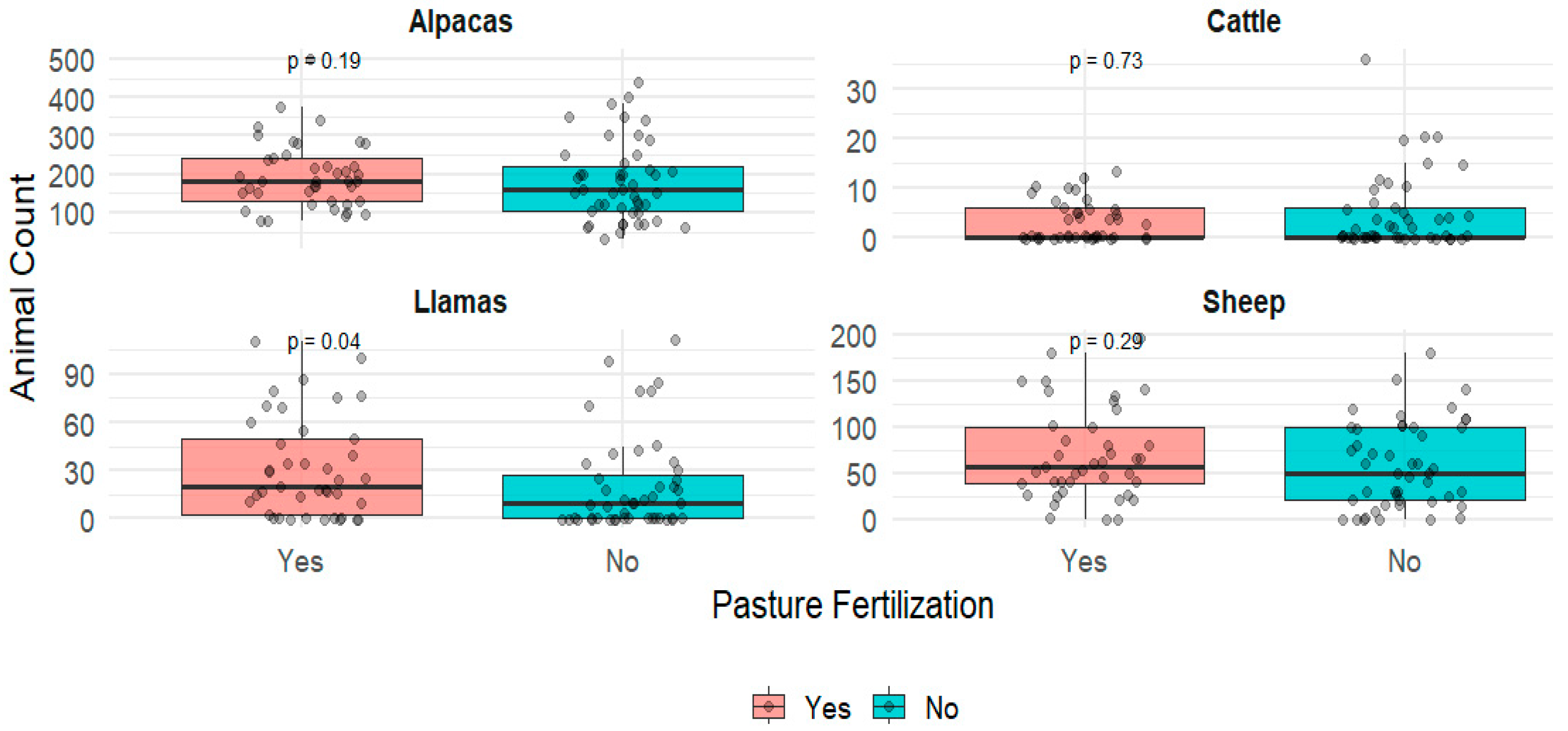
Figure 1 presents a comparison of the abundance of major livestock species—alpacas, domestic cattle, llamas, and domestic sheep—between farms that apply pasture fertilization and those that do not. Overall, the number of animals was highly variable across producers, with alpacas and domestic sheep being the most abundant species. The Wilcoxon rank-sum test revealed a statistically significant difference in llama counts (p = 0.04), with higher numbers recorded on farms where pasture fertilization was applied. In contrast, no significant differences were observed for alpacas (p = 0.19), domestic cattle (p = 0.73), or domestic sheep (p = 0.29).
Table 1 summarizes the results of a Poisson regression model evaluating the influence of natural pasture area, fertilization, and water source on livestock size (total number of animals). A significant positive effect of pasture area (p < 0.001) suggests that larger pastures tend to support greater livestock numbers. Farms that did not apply pasture fertilization showed a slight increase in livestock size (p = 0.025), although the significant negative interaction (p < 0.001) between pasture area owned by the farmers and the absence of fertilization indicates that the beneficial effect of pasture area is reduced when fertilization is not practiced. Water source had no significant effect. Overall, the model indicates that fertilization status is statistically associated with differences in livestock size, particularly under larger pasture areas. Because this study did not include direct measurements of animal productivity, these results should be interpreted as reflecting potential enhancements in natural pasture utilization rather than confirmed increases in productivity.
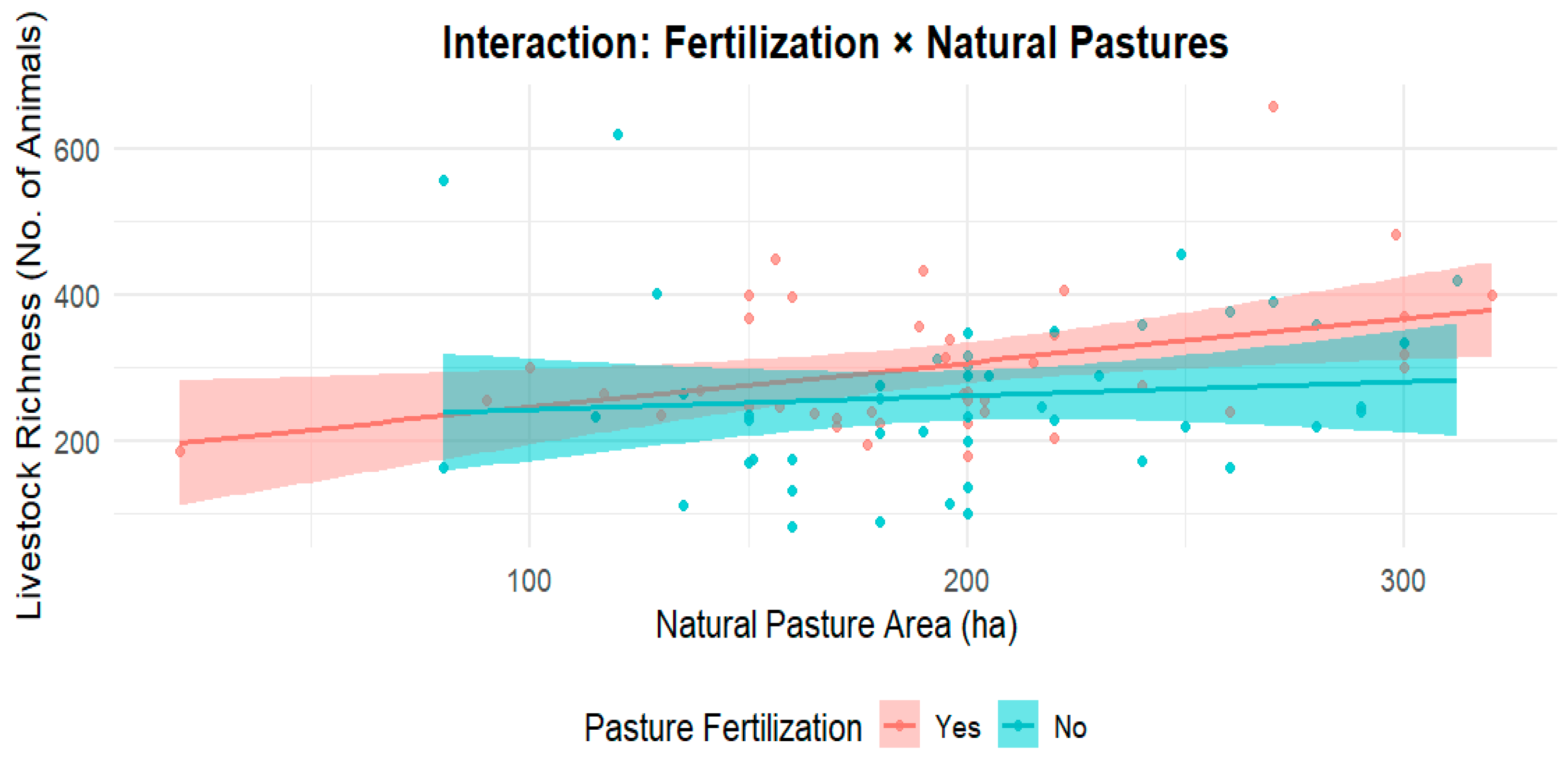
Figure 2 illustrates the interaction effect between natural pasture area (ha) and pasture fertilization (Yes = red; No = turquoise) on livestock size, measured as the total number of animals (domestic cattle, domestic sheep, alpacas, and llamas). Data points represent individual observations, while the shaded areas denote 95% confidence intervals around the fitted linear model. The red line (fertilized pastures) shows a positive association between increasing pasture area and livestock size, suggesting that fertilization may enhance the capacity of natural pastures to support a greater number of animals. In contrast, the turquoise line (non-fertilized pastures) presents a weaker slope, indicating a more modest increase in livestock numbers with larger pasture areas. This interaction suggests that fertilization modulates the relationship between pasture availability and animal abundance in mixed herds under high-Andean production systems. The standardized coefficients indicated that pasture area (βstd = 0.0429) and its interaction with fertilization (βstd = 0.0745) showed the strongest relative effects on livestock size, whereas fertilization alone had a smaller but significant positive effect (βstd = 0.1472) (Table S2).

3.2. Clustering-Based Characterization of Mixed Livestock Herds

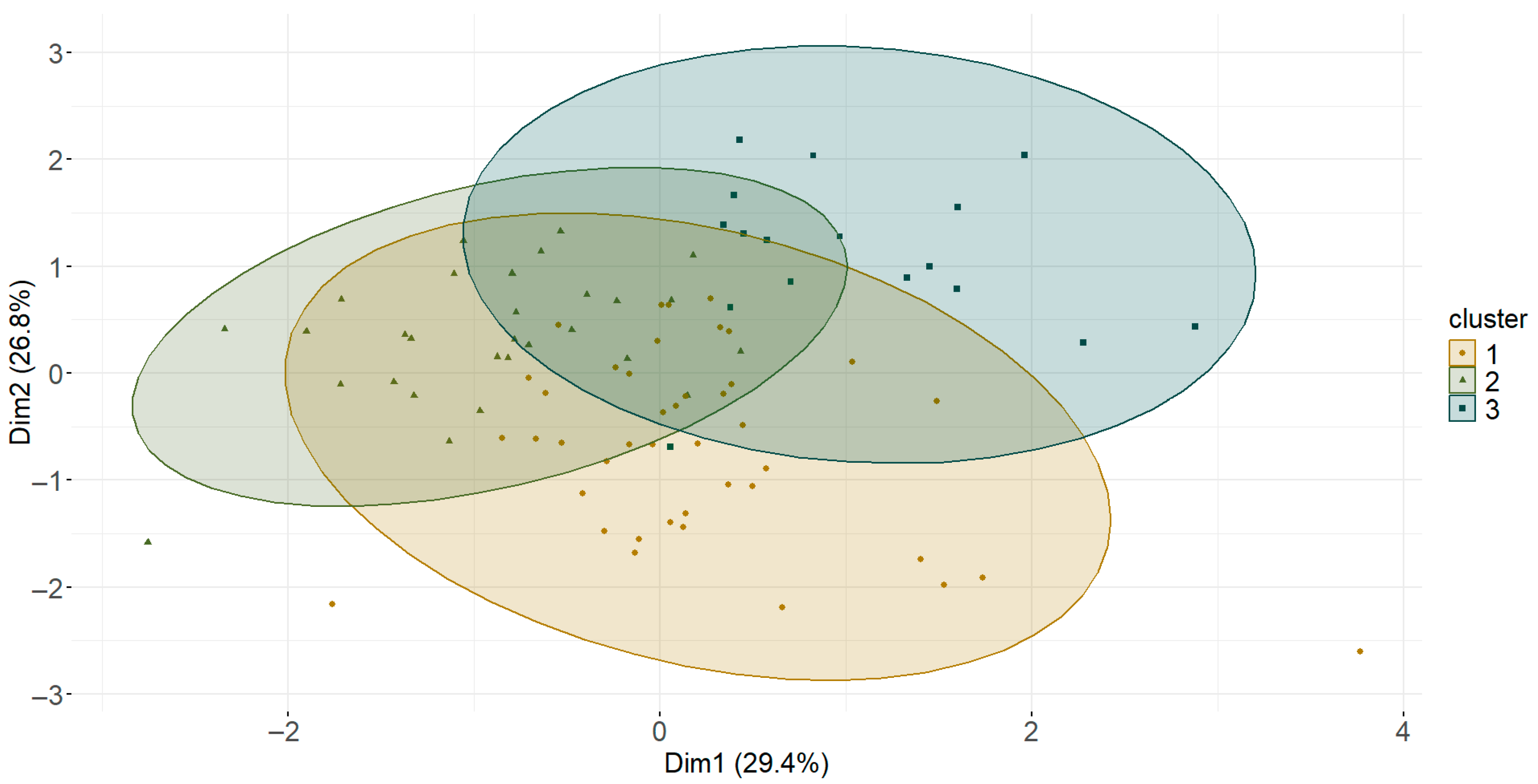
The Partitioning Around Medoids (PAM) clustering analysis identified three distinct groups of livestock production units with partially overlapping boundaries (Figure 3). The overlap observed between Clusters 1 and 2 suggests a gradual transition in herd composition among some producers, while Cluster 3 shows clearer separation, indicating a distinct production strategy dominated by llamas. According to the descriptive statistics (Table 2), Cluster 1 was characterized by the highest mean number of alpacas (231.36 ± 14.60) and a moderate presence of domestic sheep (39.4 ± 5.22). In contrast, Cluster 2 had the largest domestic sheep population (106.38 ± 7.48), with alpacas as a secondary component (145.83 ± 15.16). Cluster 3, while intermediate in domestic sheep numbers (48.47 ± 10.27), was clearly differentiated by a markedly greater number of llamas (78.41 ± 4.68) and a more uniform stocking density (1.33 ± 0.06 animals/ha). Regarding pasture management, fertilization practices were most common in Cluster 2, where 65.5% of units reported applying fertilizers, followed by Cluster 1 with 54.8%, whereas Cluster 3 had the lowest adoption, with only 29.4% of units using fertilization.
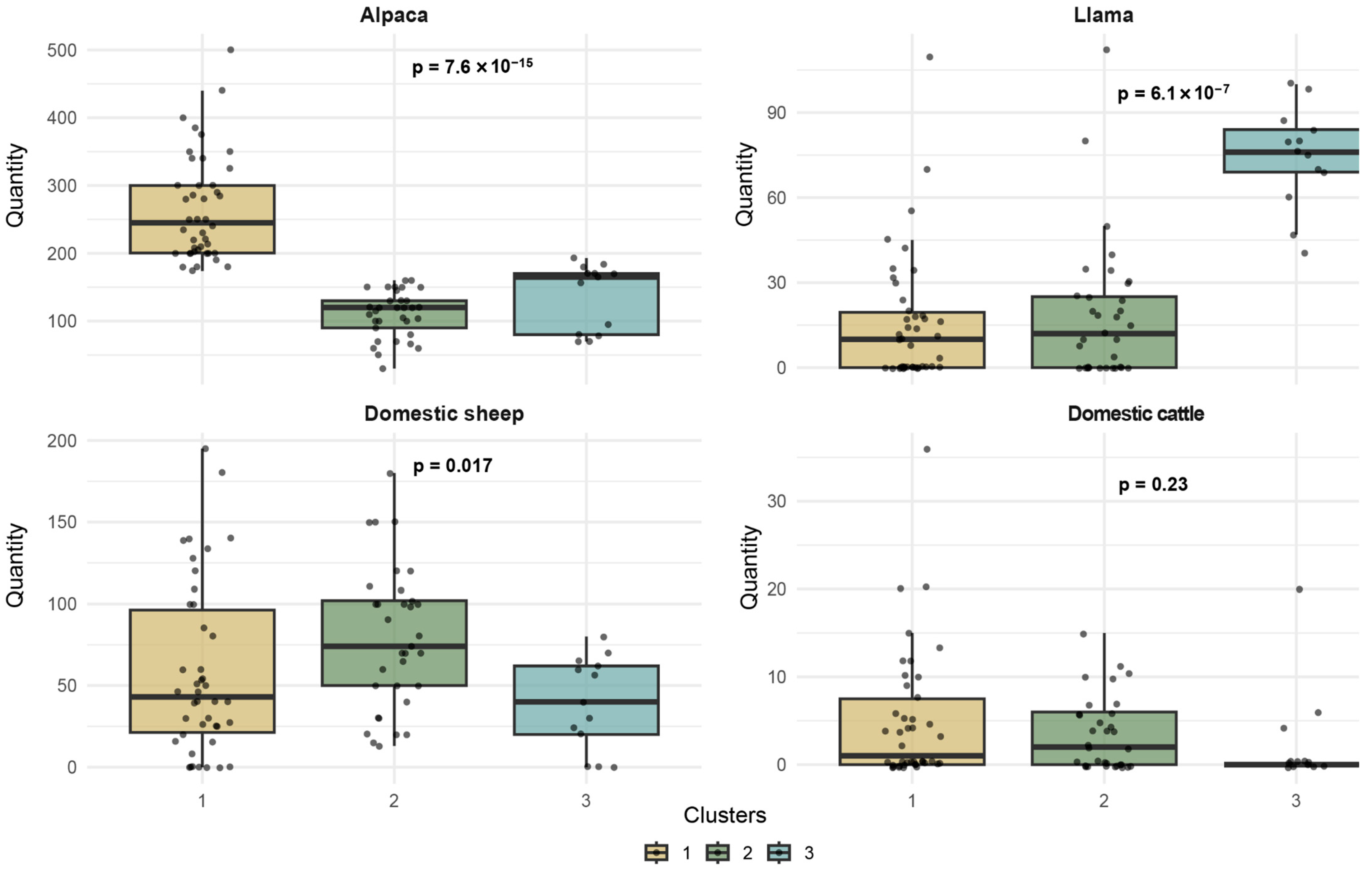
The comparison of livestock species among clusters revealed clear differences in the abundance of alpacas, domestic sheep, and llamas, while domestic cattle numbers remained relatively similar across groups (Figure 2). Alpacas were most abundant in Cluster 1, with notably lower numbers in Clusters 2 and 3 (Kruskal–Wallis, p < 0.001). In contrast, domestic sheep were predominant in Cluster 2, followed by Cluster 3, and were least represented in Cluster 1 (p < 0.001). Llamas exhibited a distinct pattern, with Cluster 3 showing markedly higher numbers compared to the lower and more similar values observed in Clusters 1 and 2 (p < 0.001). Meanwhile, domestic cattle had low and relatively uniform counts among clusters, with no significant differences detected (p = 0.22) (Figure 4).
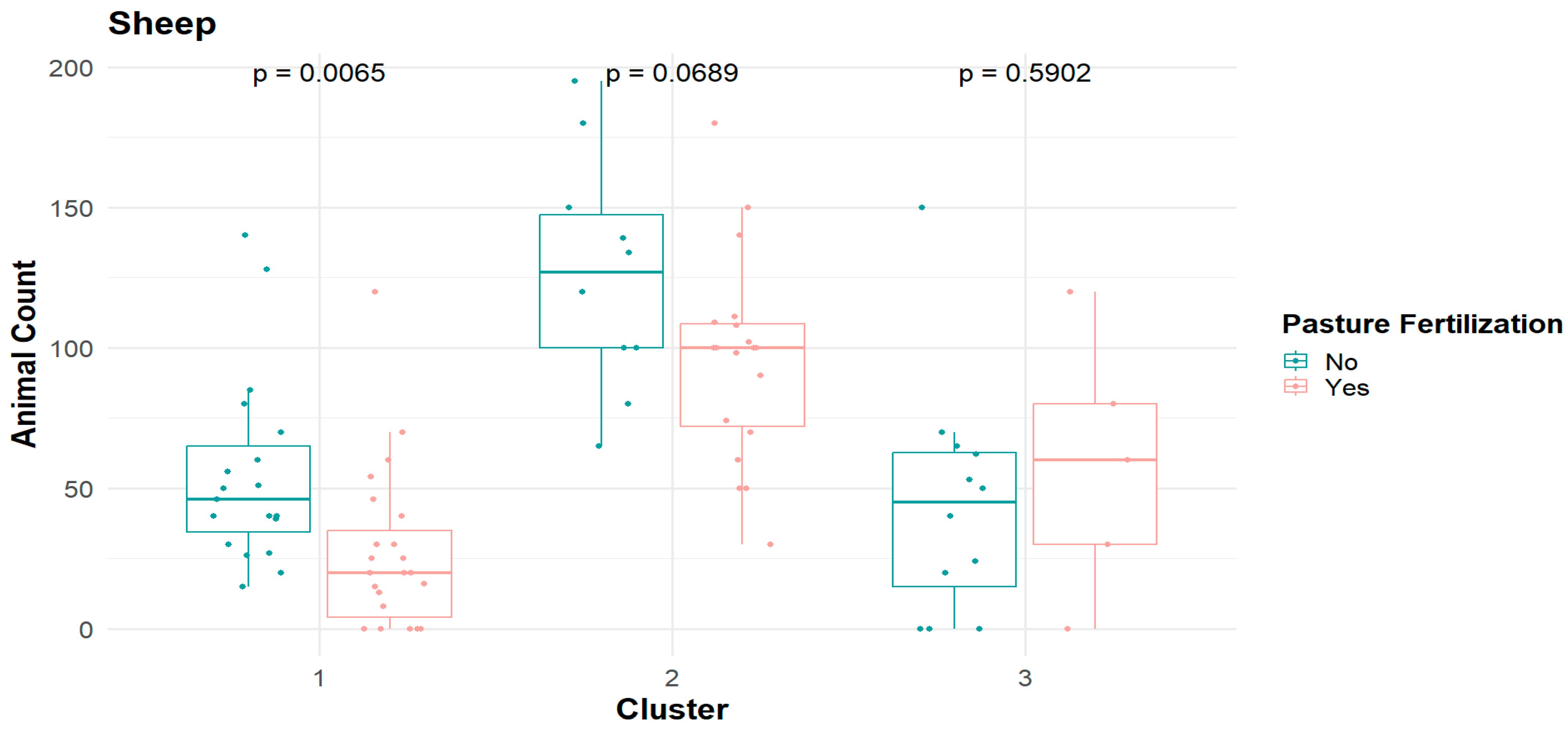
The comparison of domestic sheep abundance across clusters revealed a clear interaction between pasture fertilization practices and herd composition (Figure 5). Within clusters, the t-test analysis showed a significant difference in Cluster 1 (p = 0.0065), indicating that farms applying fertilization tended to have lower domestic sheep numbers than those that did not. In Cluster 2, the difference between fertilized and non-fertilized units was marginally non-significant (p = 0.0689), while in Cluster 3, no significant effect was detected (p = 0.5902). For the other livestock species (alpacas, llamas, and domestic cattle), no significant differences were observed between fertilized and non-fertilized farms within each cluster.

4. Discussion

Our results indicate that pasture fertilization plays a complex role in shaping herd composition and livestock size in high-Andean mixed production systems. Domestic sheep numbers varied significantly across clusters, and these patterns were statistically associated with fertilization status, while alpacas, llamas, and domestic cattle showed no significant differences. This aligns with previous studies in South American pastoral systems, which highlight that domestic sheep are highly responsive to improvements in pasture biomass and quality derived from fertilization, while camelids such as alpacas and llamas have evolved physiological adaptations to efficiently utilize lower-quality forage, reducing their sensitivity to short-term improvements in forage condition [17,18].
The finding that farms not applying fertilization exhibited slightly higher overall livestock size (p = 0.025) seems counterintuitive at first glance. However, this pattern is consistent with the negative interaction observed between pasture area and the absence of fertilization (p < 0.001), suggesting that while larger pastures can support more animals, this benefit diminishes when pasture quality is not enhanced through fertilization. In other words, when no fertilization is applied, expanding pasture area alone cannot compensate for the declining nutrient availability per hectare, leading to lower productivity per unit area. This result is consistent with studies showing that nutrient depletion in unimproved pastures limits carrying capacity, especially under high grazing pressure [19,20].
Similar patterns have been reported in other regions, where fertilization increases pasture productivity and nutritive value, enabling more efficient use of land area and higher stocking densities [21]. In tropical grasslands, forage productivity and ecosystem capacity are strongly mediated by grazing management, with management practices determining the balance between biomass production, biodiversity, and carrying capacity [11]. Without these inputs, producers often need to expand pasture areas to sustain livestock, but this strategy leads to land degradation and lower long-term sustainability [13].
The lack of a significant fertilization effect on alpacas, llamas, and domestic cattle across clusters reflects species-specific responses. Differences in fertilization effects are likely mediated by forage availability and quality rather than uniform responses across livestock species [18]. Domestic cattle may benefit from fertilization; however, low population sizes and heterogeneous management practices can obscure detectable statistical effects. Previous studies of Andean pastoral systems highlight that variability in management and resource availability often leads to context-dependent responses rather than uniform outcomes [17].
This study has several limitations. Some variables were based on self-reported information from producers, which may introduce recall or reporting bias despite the field validation performed. The cross-sectional design captures management practices at a single moment, limiting causal interpretation of fertilization effects. In addition, this study did not directly measure forage quality or biomass, which would strengthen inferences about pasture responses. Finally, results reflect conditions in two specific high-Andean communities and may not fully represent other Andean production systems.
Overall, these findings suggest that targeted pasture fertilization in combination with adaptive grazing management could optimize the balance between pasture area and animal productivity. Instead of simply expanding grazing areas, improving pasture quality may support higher livestock size and productivity while reducing environmental degradation, aligning with recommendations for sustainable intensification in high-altitude Andean systems [11,13].

5. Conclusions

This study provides an integrated characterization of high-Andean mixed-herd systems and shows how fertilization practices relate to differences in herd composition and livestock abundance. While the three identified clusters reflect distinct production strategies, the overall pattern highlights that pasture quality may be an important factor associated with herd productivity. The species-specific response of sheep to fertilization also underscores the need for management recommendations tailored to the biological and nutritional requirements of each livestock species.
Beyond describing current practices, the findings offer practical guidance for producers and extension programs. They suggest that organic fertilization, when combined with rotational grazing and adequate pasture resting periods, can strengthen the resilience of native pastures and contribute to more stable livestock performance in high-altitude environments. For practitioners, these results highlight the value of integrating simple, low-cost soil nutrient management practices into existing grazing systems to enhance long-term sustainability.
Future research should evaluate the temporal dynamics of fertilization effects through longitudinal monitoring and incorporate direct measurements of forage biomass and nutritive value. Expanding this approach to additional Andean regions would help determine the broader applicability of the patterns observed here and inform evidence-based strategies to improve mixed-herd management under high-altitude conditions.


Supplementary Materials

The following supporting information can be downloaded at: https://www.mdpi.com/article/10.3390/ruminants6010005/s1, Table S1: Descriptive Characteristics of Livestock Herds and Pasture Management Across Farmers in the Study Area. Table S2: Standardized Coefficients of the Poisson GLM Evaluating the Effects of Pasture Area, Fertilization, and Water Source on Livestock size.

Author Contributions

Conceptualization, J.N. and R.E.; methodology, J.N. and R.E.; software, R.E.; validation, J.N., F.P.-M. and W.C.; formal analysis, R.E.; investigation, J.N., F.P.-M. and W.C.; resources, J.N.; data curation, W.C. and R.E.; writing—original draft preparation, R.E.; writing—review and editing, J.N., F.P.-M., W.C. and R.E.; visualization, R.E.; supervision, R.E.; project administration, J.N., W.C. and R.E.; funding acquisition, J.N., and W.C. All authors have read and agreed to the published version of the manuscript.

Funding

This research was funded by the project “Mejoramiento de los servicios de investigación y transferencia de tecnología en ganadería alto andina en 33 distritos de los departamentos de Apurímac, Arequipa, Ayacucho, Cusco, Huancavelica, Junín, Moquegua, Pasco, Puno y Tacna”, CUI N° 2491159, of the Instituto Nacional de Innovación Agraria.

Institutional Review Board Statement

The survey protocol was approved on 12 February 2025 by the Institutional Animal Ethics Committee of the Instituto Nacional de Innovación Agraria (INIA), under project code CUI N° 2491159, in accordance with Peruvian National Law No. 30407, “Animal Protection and Welfare”.

Informed Consent Statement

Informed consent was obtained from all livestock producers who participated in the survey and provided information about herd management practices. Participation was voluntary, and all responses were anonymized prior to analysis.

Data Availability Statement

The raw data supporting the conclusions of this article will be made available by the authors on request.

Acknowledgments

We gratefully acknowledge the Aziruni Community (Puno), the Tincopalca Community (Puno), and the technical team of the PROGAN project for their valuable support.

Conflicts of Interest

The authors declare no conflicts of interest.

References

  1. Leon-Velarde, C.U.; Quiroz, R.; Zorogástua, P.; Tapia, M. Sustainability concerns of livestock-based livelihoods in the Andes. In Contribution of Livestock to Mountain Livelihoods: Research and Development Issues; Turaehan, P.M., Mohamed Saleem, M.A., Maki-Hokkonen, J., Partap, T., Eds.; International Centre for Integrated Mountain Development (ICIMOD): Berlin, Germany, 2000; pp. 183–202. Available online: https://cgspace.cgiar.org/items/f7bd11fe-dfa3-4470-b72e-2d9c842abe53 (accessed on 24 November 2025).
  2. Jerrentrup, J.S.; Komainda, M.; Seither, M.; Cuchillo-Hilario, M.; Wrage-Mönnig, N.; Isselstein, J. Diverse Swards and Mixed-Grazing of Cattle and Sheep for Improved Productivity. Front. Sustain. Food Syst. 2020, 3, 2019. [Google Scholar] [CrossRef]
  3. Fraser, M.D.; Moorby, J.M.; Vale, J.E.; Evans, D.M. Mixed Grazing Systems Benefit both Upland Biodiversity and Livestock Production. PLoS ONE 2014, 9, e89054. [Google Scholar] [CrossRef] [PubMed]
  4. Alemu, A.W.; Kröbel, R.; McConkey, B.G.; Iwaasa, A.D. Effect of Increasing Species Diversity and Grazing Management on Pasture Productivity, Animal Performance, and Soil Carbon Sequestration of Re-Established Pasture in Canadian Prairie. Animals 2019, 9, 127. [Google Scholar] [CrossRef] [PubMed]
  5. Estrada, R.; Guelac-Mori, E.; Pedemonte-Cruz, C.; Chiqui-Condori, K.M.; Pacherres, K.M.; Cerdan-Ramos, D.; Zúñiga-Aranibar, D.M. Morphometric Variation and Production Constraints of Criollo Sheep in the High Andes of Southern Peru. Agriculture 2025, 15, 1860. [Google Scholar] [CrossRef]
  6. Rojas-Espinoza, R.; Macedo, R.; Suaña, A.; Delgado, A.; Manrique, Y.P.; Rodríguez, H.; Quispe, Y.M.; Perez-Guerra, U.H.; Pérez-Durand, M.G.; García-Herreros, M. Phenotypic Characterization of Creole Cattle in the Andean Highlands Using Bio-Morphometric Measures and Zoometric Indices. Animals 2023, 13, 1843. [Google Scholar] [CrossRef] [PubMed]
  7. Leguía, G. The Epidemiology and Economic Impact of Llama Parasites. Parasitol. Today 1991, 7, 54–56. [Google Scholar] [CrossRef] [PubMed]
  8. Masson, M.; Gutiérrez, G.; Puicón, V.; Zárate, D. Helmintiasis y Eimeriosis Gastrointestinal en Alpacas Criadas al Pastoreo en Dos Granjas Comunales de la Región Pasco, Perú, y su Relación con el Peso y Condición Corporal. Rev. Investig. Vet. Perú 2016, 27, 805–812. [Google Scholar] [CrossRef]
  9. Van Saun, R.J.; Smith, B.B.; Watrous, B.J. Evaluation of Vitamin D Status of Llamas and Alpacas with Hypophosphatemic Rickets. J. Am. Vet. Med. Assoc. 1996, 209, 1128–1133. [Google Scholar] [CrossRef] [PubMed]
  10. Smith, B.B.; Van Saun, R.J. Seasonal Changes in Serum Calcium, Phosphorus, and Vitamin D Concentrations in Llamas and Alpacas. Am. J. Vet. Res. 2001, 62, 1187–1193. [Google Scholar] [CrossRef] [PubMed]
  11. Duchicela, S.A.; Llambí, L.D.; Bonnesoeur, V.; Román-Dañobeytia, F. Pastoralism in the High Tropical Andes: A Review of the Effect of Grazing Intensity on Plant Diversity and Ecosystem Services. Appl. Veg. Sci. 2024, 27, e12791. [Google Scholar] [CrossRef]
  12. Rodríguez, T.; Quispe, E. Domesticated Camelids: The Main Animal Genetic Resource of Pastoral Systems in the Region of Turco, Bolivia; FAO Animal Production and Health Paper; FAO: Roma, Italy, 2010. [Google Scholar]
  13. Hu, X.; Sun, Q.; Zhang, S.; Li, W.; Wang, X.; Long, R.; Jin, G.; Zhang, B. Effects of No-Till Seeding and Fertilization on Vegetation Restoration and Soil Physicochemical Properties in Alpine Degraded Grazing Grasslands. Agronomy 2025, 15, 578. [Google Scholar] [CrossRef]
  14. Zheng, L.; Zhao, W.; Gao, S.; Wang, R.; Yan, H.; Wang, M. Fertilization Promotes the Recovery of Plant Productivity but Decreases Biodiversity in a Khorchin Degraded Grassland. Nitrogen 2025, 6, 64. [Google Scholar] [CrossRef]
  15. Dong, H.; Ma, Y.; Wang, Z.; Yang, Y.; Zhang, L.; Yin, X.; Li, H.; Li, L.; Zhou, H.; Ma, Z.; et al. Effects of Sheep Grazing and Nitrogen Addition on Dicotyledonous Seedling Abundance and Diversity in Alpine Meadows. Nitrogen 2024, 5, 498–508. [Google Scholar] [CrossRef]
  16. Liu, Y.; Zhao, X.; Yang, X.; Liu, W.; Feng, B.; Sun, S.; Dong, Q. Yak and Tibetan Sheep Mixed Grazing Enhances Plant Functional Diversity in Alpine Grassland. J. Integr. Agric. 2025, 24, 936–948. [Google Scholar] [CrossRef]
  17. Fernández-Baca, S. Alpaca Raising in the High Andes. In Animal Breeding: Selected Articles from the World Animal Review; FAO: Roma, Italy, 1980. [Google Scholar]
  18. Figueroa-Saavedra, H.F.; Guamán-Rivera, S.A. Agronomic yield and nutritive value of Brachiaria reclining under different fertilization strategies in the north of the Ecuadorian Amazon. J. Namib. Stud. 2023, 34, 5017–5028. [Google Scholar]
  19. González-Marcillo, R.L.; Castro Guamán, W.E.; Guerrero Pincay, A.E.; Vera Zambrano, P.A.; Ortiz Naveda, N.R.; Guamán Rivera, S.A. Assessment of Guinea grass Panicum maximum under silvopastoral systems in combination with two management systems in Orellana Province, Ecuador. Agriculture 2021, 11, 117. [Google Scholar] [CrossRef]
  20. Lima, L.O.; Ongaratto, F.; Dallantonia, E.E.; Leite, R.G.; Argentini, G.P.; Fernandes, M.H.M.R.; Reis, R.A.; Vyas, D.; Malheiros, E.B. N-fertilization of tropical pastures improves performance of grazing beef cattle but not individual methane emissions of Nellore growing bulls. J. Anim. Sci. 2023, 101, skac362. [Google Scholar] [CrossRef] [PubMed]
  21. Shi, T.-S.; Collins, S.L.; Yu, K.; Peñuelas, J.; Sardans, J.; Li, H.; Huo, H.-X.; He, Y.; Kong, D.; Zhou, X.; et al. A Global Meta-Analysis on the Effects of Organic and Inorganic Fertilization on Grasslands and Croplands. Nat. Commun. 2024, 15, 3411. [Google Scholar] [CrossRef] [PubMed]
Figure 1. Effect of Pasture Fertilization on the Abundance of Livestock Species in Mixed-Herd Systems.
Ruminants 06 00005 g001
Figure 2. Interaction between Natural Pasture Area and Fertilization on Livestock size in Mixed Herds.
Ruminants 06 00005 g002
Figure 3. Clustering of livestock production units based on PAM analysis showing three groups with differing herd compositions.
Ruminants 06 00005 g003
Figure 4. Comparison of livestock species abundance across clusters in mixed herds using boxplots. Significant differences were observed for alpacas, domestic sheep, and llamas.
Ruminants 06 00005 g004
Figure 5. Effect of Pasture Fertilization on domestic sheep abundance across Clusters.
Ruminants 06 00005 g005
Table 1. Generalized Linear Model (Poisson) assessing the effects of pasture area, pasture fertilization, and water source on livestock size.
TermEstimateStd. Errorz Valuep-Value
(Intercept)5.32050.0320166.36<0.001 ***
Natural Pasture Area (ha)0.00200.0001513.40<0.001 ***
Fertilization (No)0.100280.04592.240.025 *
Water Source (Flowing)−0.00270.0142−0.190.851
Area × Fertilization (No)−0.0030.00022−5.80<0.001 ***
Significance codes: *** p < 0.001, * p < 0.05.
Table 2. Mean ± standard error of the mean (SEM) for the number of animals per species and stocking density across clusters identified by the PAM clustering analysis.
ClusterDomestic Sheep (Mean ± SEM)Domestic Cattle (Mean ± SEM)Alpacas (Mean ± SEM)Llamas (Mean ± SEM)Density (Mean ± SEM)Pasture Fertilization (%)
139.4 ± 5.225.4 ± 1.17231.36 ± 14.6014.79 ± 2.521.83 ± 0.25Yes (54.8)
No (45.2)
2106.38 ± 7.482.62 ± 0.66145.83 ± 15.1610.24 ± 2.371.53 ± 0.16Yes (65.5)
No (34.5)
348.47 ± 10.272.88 ± 1.29155.06 ± 19.4378.41 ± 4.681.33 ± 0.06Yes (29.4)
No (70.6)
Disclaimer/Publisher’s Note: The statements, opinions and data contained in all publications are solely those of the individual author(s) and contributor(s) and not of MDPI and/or the editor(s). MDPI and/or the editor(s) disclaim responsibility for any injury to people or property resulting from any ideas, methods, instructions or products referred to in the content.