1. Introduction
The curricular units in Differential and Integral Calculus are widely recognized as fundamental to the advancement of science and the development of new technologies. Accordingly, they provide the essential theoretical foundation for the training of professionals in the exact sciences, particularly in engineering. Within this framework, these courses are typically positioned in the first year of engineering programs and encompass mathematical content that presupposes a solid grounding in fundamental and elementary concepts acquired during pre-higher education [
1,
2].
Persistent deficiencies in basic mathematical competencies among incoming students are well-documented across diverse educational contexts [
3,
4]. Such gaps have been associated with reduced engagement, higher dropout rates, and disparities in academic achievement, particularly among underrepresented groups and female students in STEM fields [
5,
6,
7]. These issues highlight the critical need for diagnostic tools and tailored pedagogical interventions to support student success from the outset.
Recent advancements in mathematics education emphasize the role of formative assessment and individualized support as key drivers of student learning and confidence [
8,
9]. Diagnostic assessments enable educators to identify conceptual and procedural gaps early, facilitating the design of personalized learning pathways grounded in constructivist principles and supporting the development of self-efficacy [
10,
11]. Complementary strategies such as active learning, digital resources, and adaptive support programs have demonstrated effectiveness in strengthening foundational knowledge, enhancing motivation, and promoting equitable access to STEM education [
6,
8,
12].
However, based on the application of diagnostic assessments, several studies have shown that first-year students experience significant difficulties in mastering the mathematical concepts underlying Differential and Integral Calculus [
13,
14]. These challenges may contribute to elevated failure rates in these courses and, potentially, to increased dropout rates from the initially chosen degree program.
The failure of students in mathematics in engineering degrees has been debated in the international scientific community. The Mathematics Working Group (MWG), created in 1982 by the European Society for Engineering Education (SEFI), was established to discuss education and teaching systems in engineering. The main purpose of this society was to promote a forum for discussion and guidance involving all those interested in mathematics education in engineering in Europe.
The higher education academic environment has also identified a decline in the mathematical skills and knowledge of students entering tertiary education. Furthermore, an increasing heterogeneity among candidates for engineering programs has been observed, largely due to the diversification of access pathways to these degrees. In this context, in 1992, the MWG produced its first set of curricular guidelines, defining the core content considered essential for mathematics education in engineering programs [
15]. The primary objective of this document was to establish the fundamental and appropriate mathematical content required for engineering education, recognizing mathematics as a foundational and indispensable discipline in this field.
The 1965 OECD report [
16] outlines the importance of mathematics within the engineering curriculum. It emphasizes that mathematics fosters rational thinking and serves as a primary tool for acquiring knowledge of natural systems. It is also regarded as a second language of human communication, enabling the interpretation of natural phenomena and the generalization of empirical observations. Furthermore, when effectively taught, mathematics cultivates imagination and intellectual curiosity. In addition to these aspects, ongoing technological advancements have significantly reinforced the central role of mathematics in engineering education.
With a focus on learning outcomes rather than a mere enumeration of topics, the MWG revised its initial document in 2002. Structured by thematic areas and organized into topics, the Core Zero section of the document Mathematics for the European Engineer: A Curriculum for the Twenty-First Century [
17].
In 1995, the London Mathematical Society, in collaboration with the Institute of Mathematics and its Applications and the Royal Statistical Society, published the report Tackling the Mathematics Problem [
18]. This report examined prevailing concerns among mathematicians, scientists, and engineers regarding the mathematical preparedness of students entering higher education. The final report produced by the UK Engineering Council provided strong evidence of a “steady decline” in basic mathematical competencies and an “increasing heterogeneity in mathematical attainment and knowledge” [
19]. One of its key recommendations was the implementation of diagnostic testing to identify students with mathematical deficiencies and to support the design of curricula and modules that take into account varying levels of mathematical proficiency.
Characteristics such as a lack of basic mathematical skills, fragmented conceptual understanding, insufficient knowledge of fundamental concepts, and difficulties in successfully solving mathematical problems are commonly referred to as the “Maths Problem” and have been identified as a significant concern in countries such as Ireland, the United Kingdom, Australia, and the United States [
5,
20,
21,
22,
23,
24]. Responses to these concerns have led to the adoption of innovative approaches aimed at improving mathematics teaching and learning [
8,
12]. Additionally, an increasing number of studies have reported the implementation of inquiry-based learning methodologies [
9].
In response to this issue and the need to promptly support under-prepared students, several universities in the United Kingdom began seeking solutions to help students overcome their difficulties in these subjects. Consequently, Mathematical Support Centres were established in 2004, and by that time, approximately 60% of UK universities had already incorporated them into their remediation strategies [
10]. The National Audit Office recommends that such support services should not be viewed solely as a means of assisting struggling students, but also as an opportunity to enhance the quality of teaching and the overall learning experience for all students [
25].
In addition to this analytical perspective, the study is conceptually guided by a theoretical framework integrating three complementary perspectives:
- 1.
Constructivist learning theory, which emphasizes that students actively build knowledge through engagement with new concepts and problem-solving, highlighting the importance of individualized support and scaffolding.
- 2.
Self-efficacy and motivation theories, which posit that students’ beliefs in their own capabilities influence their engagement, persistence, and academic success in challenging subjects like mathematics.
- 3.
Equity and access in higher education, which acknowledges the diversity of students’ prior preparation and the need for interventions that mitigate knowledge gaps, ensuring all students have the opportunity to succeed.
This framework provides the conceptual foundation for both the design of the diagnostic assessment and the complementary support measures (CeAMatE), and it allows for interpretation of their impact on students’ performance in Differential and Integral Calculus.
Within this context, the present study focuses on the experience conducted at the Coimbra Institute of Engineering (ISEC) in Portugal. It aims to analyze the mathematical preparedness of first-year engineering students and to evaluate the effectiveness of diagnostic assessment and complementary support measures. In particular, this study seeks to answer the following research question: What is the mathematical preparedness of first-year engineering students at ISEC, and to what extent do diagnostic assessment and support measures influence their academic success in Differential and Integral Calculus?
This study advances the understanding of engineering mathematics education by linking students’ initial mathematical knowledge, measured through diagnostic assessments, to their subsequent performance in Differential and Integral Calculus. By implementing individualized support interventions through the CeAMatE program, it demonstrates how targeted strategies can enhance student engagement, learning outcomes, and success. Furthermore, by integrating a theoretical framework grounded in constructivist learning, self-efficacy, and equity principles, this work provides both empirical evidence and conceptual guidance for designing effective diagnostic assessments and support programs in higher education. Aligning with international trends emphasizing inclusive and evidence-based teaching practices [
26,
27], this work seeks to inform curriculum design and support services that foster equitable and effective learning environments in STEM disciplines.
To the best of our knowledge, there are no other studies in this context; therefore, we do not have a strong basis for comparison with other similar studies.
After describing the Portuguese context (
Section 2), it is intended to share the experience with the mathematics diagnostic test (
Section 4). The results obtained by students are analyzed (
Section 3 and
Section 5).
The assessment of basic and elementary mathematics knowledge enables the design of individualized plans to be worked on in a mathematics support center, dedicated to accompanying ISEC’s students in overcoming difficulties (
Section 6). Finally, the impact of these methodologies on the curricular units of Differential and Integral Calculus is studied (
Section 7), and some conclusions are presented (
Section 8).
2. The Portuguese Context
The insufficient mathematical preparation of students intending to enter higher education is also a relevant issue in Portugal. According to the 2018 Program for International Student Assessment (PISA) report, Portugal achieved a performance close to the OECD average in mathematics, with overall improvement since 2003. However, in 2018 the average score remained similar to the levels recorded over the 2009–2015 period [
28]. The report also highlights that the career expectations of 15-year-old high-achieving students reflect strong gender stereotypes, noting that “one in two boys in Portugal expect to work as an engineer or science professional, while about one in seven girls expects to do so”.
All engineering degree programs include a curricular unit in Differential and Integral Calculus, whose syllabus typically progresses from differentiation to integration. Poor performance in national examinations for access to higher education [
29] indicates that students entering university often exhibit difficulties in fundamental and elementary mathematical content. These deficiencies hinder full engagement with the Differential and Integral Calculus course and, more broadly, with the engineering program itself.
However, a lack of affinity and vocational inclination toward mathematics contributes to a reduced interest in degree programs that are strongly based on mathematics, such as engineering. This imbalance in supply and demand in engineering studies was further exacerbated by the introduction, in 2012, of Mathematics and Physics–Chemistry as compulsory entrance examination subjects for access to most engineering programs.
Higher education instructors recognize this measure as essential, given the need for strong theoretical foundations in key areas of knowledge. However, performance in Physics has also been unsatisfactory. This context has contributed to a decline in demand for engineering programs, while higher education institutions have increasingly expanded their portfolios of degrees to attract students with interests in other scientific and creative fields, such as biology, geometry, the arts, and design.
Several alternative admission pathways are used by Portuguese higher education institutions to attract new students. These pathways reflect the heterogeneity of incoming cohorts, which may enter higher education through diverse routes, including completion of scientific or humanities secondary studies, professional or technological upper secondary programs, or the “over 23” access scheme, a special admission route designed for individuals aged over 23 who left formal education without obtaining a degree. These students exhibit varying levels of mathematical proficiency in essential foundational content, which has motivated instructors to adapt Differential and Integral Calculus courses and to implement measures aimed at improving students’ mathematical preparation.
Coimbra is one of the main regions for engineering education in Portugal. ISEC is a 100-year-old organic unit of the Polytechnic Institute of Coimbra and offers several three-year undergraduate engineering degrees, including Biomedical Engineering, Bioengineering, Civil Engineering, Electrical Engineering (regular and post-work schedule), Electromechanical Engineering, Industrial Engineering and Management, Computer Engineering (regular, post-work schedule, and European program), and Mechanical Engineering. Since the 2018/2019 academic year, ISEC has also offered a non-engineering degree in Sustainable Cities Management.
In addition, ISEC provides a “Year Zero” program, designed for students who have completed secondary education but have not yet entered higher education. This optional preparatory program aims to strengthen students’ knowledge in core engineering-related subjects, particularly mathematics and physics, and to prepare them for the examinations required for admission to higher education.
In 2021, a study was conducted to better understand student failure in Differential and Integral Calculus [
4]. The results indicated an overall average pass rate of 58.40% in the first semester, with a standard deviation of 14.34% and a mean absolute deviation of 12.4%. Across the seven academic years analyzed, Biomedical Engineering exhibited a high attendance rate and an average pass rate of 78.82%. In contrast, Computer Engineering had lower attendance, with an average pass rate of 48.02% in the first semester. Further studies are needed to better characterize the student profile at ISEC that is associated with higher attendance and improved academic success rates.
In order to support a positive learning process for all students, the Department of Physics and Mathematics at ISEC has promoted and implemented several strategies, including the reorganization of course delivery and assessment methods, the development of tools to facilitate learning, and the introduction of initiatives aimed at increasing student engagement. Despite these efforts, students have not achieved the expected outcomes and continue to exhibit high failure and absenteeism rates, both in class attendance and in assessments.
Assuming that students are not acquiring the expected learning outcomes due to a significant gap between their actual mathematical background and the required knowledge, pedagogical tools with diagnostic purposes have been developed. In addition, these tools support the acquisition and consolidation of the mathematical knowledge and skills required in engineering, as well as the development of resources designed to enhance the overall learning experience of engineering students.
3. Methodology
This study follows a descriptive and quantitative research design, structured in two complementary phases.
In a first phase, it is intended to study the level of mathematical knowledge of students who access ISEC through a longitudinal analysis from 2013/14 to 2021/22. Based on the results of a diagnostic tool, we intend to determine the level of mathematical knowledge students have and the topics they consider more difficult. It is intended, without exercising any type of control over the situation, to obtain conclusions that can lead to the implementation of strategies of teaching, learning, and assessment that contribute to promoting students’ success in Differential and Integral Calculus curricular units.
In a second phase, the goal is to study the effect of complementary actions for learning/teaching mathematics. The results from the diagnostic tool and students’ attendance at a support center for mathematics are considered. This longitudinal study, from 2015/16 to 2021/22, aims to analyze the impact of students’ attendance at this center on the success of Differential and Integral Calculus.
3.1. Sample and Inclusion Criteria
The sample includes 2813 first-year students enrolled in various engineering undergraduate programs at the Coimbra Institute of Engineering (ISEC) from the 2013/14 to 2021/22 academic years. Students were included if they completed the diagnostic test (DT) during the first week of classes in the Differential and Integral Calculus curricular unit. Students from special programs, including Year Zero, CTeSP, and other non-standard courses, were excluded from certain analyses to avoid confounding effects arising from differing prior mathematical preparation.
The study acknowledges that participation in the CeAMatE support program is voluntary, and therefore, self-selection bias is a potential limitation. Students who opt to attend may differ in motivation, prior knowledge, or learning behaviors from those who do not, potentially affecting the observed outcomes. This limitation is explicitly taken into account when interpreting the results.
3.2. Diagnostic Assessment and Analytical Approach
The DT was designed to evaluate students’ foundational mathematical knowledge, covering Algebra, Analysis and Calculus, Geometry and Trigonometry, and Mathematical Modeling. The assessment is based on multiple-choice questions derived from Portuguese secondary education curricula and SEFI Core Zero guidelines, ensuring alignment with the essential knowledge required for engineering studies. Descriptive statistics were first used to summarize the distribution of DT scores across degrees, cohorts, and semesters. To examine differences between groups, one-way ANOVA tests were applied, complemented by Tukey’s post hoc comparisons where appropriate. These techniques allow for the identification of statistically significant differences in student performance and trends over time.
3.3. Rationale for Analytical Techniques
The chosen methods provide an initial overview of student performance and allow for group comparisons across cohorts and degrees. However, given the nested structure of the data (students within degrees and cohorts) and the potential confounding effects of self-selection into CeAMatE, more robust analytical approaches could further strengthen the validity of the findings. Specifically, regression modeling could adjust for covariates such as prior mathematical background, degree type, and semester of enrollment, isolating the effect of CeAMatE participation. Multilevel (hierarchical) modeling could account for clustering of students within degrees and cohorts, providing more accurate estimates of intervention effects while properly handling the hierarchical data structure. These more robust techniques may be considered in further studies.
3.4. Ethical Considerations
All student data were collected in compliance with institutional guidelines for research ethics, ensuring confidentiality and anonymity. Participation in the DT and CeAMatE support program did not influence students’ formal assessment outcomes.
4. Assessing Basic Knowledge in Mathematics
In light of the context and the situation observed at ISEC, it became clear to mathematics instructors that a diagnostic tool was necessary for incoming higher education students. To this end, a diagnostic test (DT) was developed to identify gaps in the essential mathematical knowledge required for successful progression in engineering studies. The results of the DT enable instructors to design and implement targeted interventions aimed at addressing these gaps. Such interventions include complementary teaching methodologies and motivational practices in Differential and Integral Calculus, ensuring that students acquire a thorough understanding of the syllabus content. By systematically linking diagnostic assessment with instructional support, this approach promotes student engagement, reduces disparities in prior knowledge, and enhances overall learning outcomes in foundational STEM courses.
Since the 2011/12 academic year, the diagnostic test (DT) has been administered semiannually during the first week of each semester to first-year students enrolled in the Differential and Integral Calculus courses at ISEC. Following several iterations, which included revisions and adjustments, the final version was established in 2013/14 as the result of a collaborative effort with the Dublin Institute of Technology (DIT), enabling comparative studies between the two countries [
30]. In accordance with the Core Zero outcomes outlined in the SEFI guidelines [
17], the recommendations of Mathematics for the European Engineer: A Curriculum for the Twenty-First Century, and the basic and secondary education programs in Portugal [
28], the 20 questions of the final version were organized by topics and subtopics related to Algebra (8 questions), Analysis and Calculus (7 questions), Geometry and Trigonometry (4 questions), and Mathematical modeling (1 question), as listed in [
7]. We remark that for each question, the student has to choose one of the four available options (multiple-choice questions), and all the questions but one (the modeling question) are about concepts and procedures.
To administer the diagnostic test (DT), the following rules were established: a duration of 60 min; no submission of calculations or justifications; each question has a correct answer among the provided options; answers must be presented unambiguously, otherwise they are annulled; and the use of calculators is prohibited.
5. Diagnostic Test Results
This section presents the results obtained from the analysis of data across the various undergraduate programs at ISEC. Following a global overview, additional results are provided for the Biomedical Engineering program, which achieved the highest marks, as well as for the programs with the largest and smallest enrollments (Informatics and Biomedical Engineering, respectively). Furthermore, analyses are included based on the semester in which the DT was administered, as well as according to the topic and the number of student enrollments.
5.1. Sample
The sample comprises 2813 DT results (
Table 1) from various undergraduate programs at ISEC, including Biomedical, Bioengineering, Civil, Electrical, Electromechanical, Industrial Management, Informatics, Mechanical, and Sustainable City Management, as well as Year Zero and technical-professional courses. The results cover the 2013/14 to 2021/22 academic years, with the exception of 2018/19 and 2019/20, during which only Informatics and Biomedical students completed the test due to various constraints. Owing to the COVID-19 pandemic, the DT was administered remotely in the 2020/21 academic year. It is also noteworthy that only 54.71% of students come from technological secondary education programs.
5.2. Global Results
The number of DT responses, along with the mean values and standard deviations of the results by academic year from 2013/14 to 2021/22, are presented in
Table 2. The last row additionally reports the overall mean and standard deviation of all DT results. According to the Portuguese grading system, scores range from 0 to 20 points, and a minimum of 10 points is required to pass the assessment.
As the DT assesses basic mathematical knowledge, the authors established that students scoring below 12 points (60%) require complementary support to acquire the essential mathematics knowledge needed for higher education studies. The overall mean score of 10.55 points indicates that students’ mathematical proficiency is below the expected level.
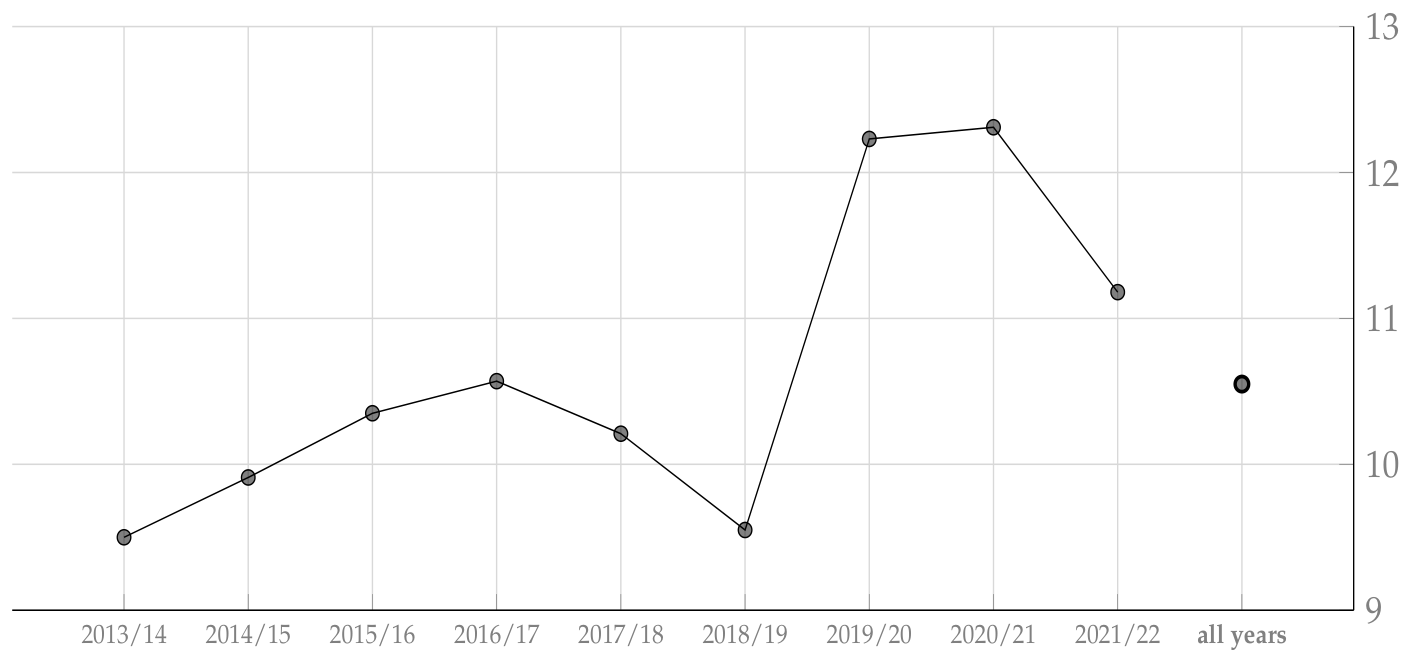
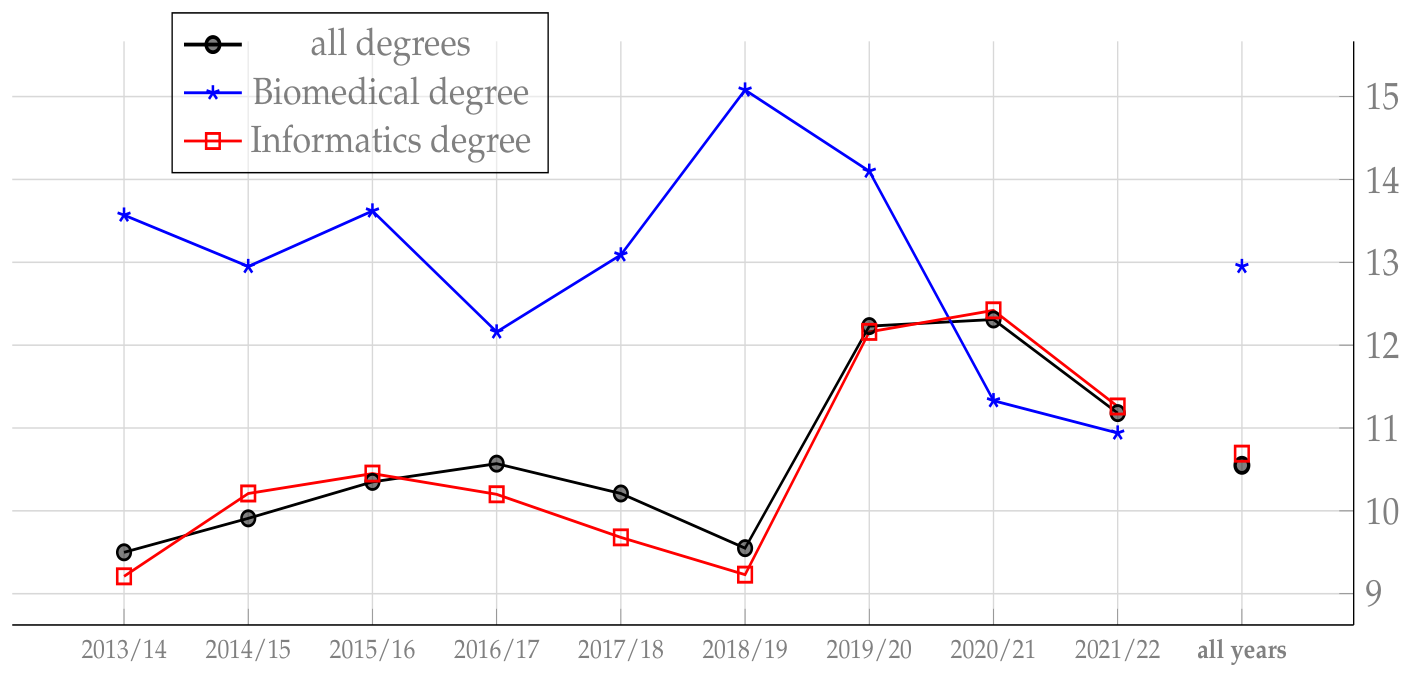
No clear trend of improvement or decline is observed; however, a notable increase in scores occurred during the 2019/20 academic year, as shown in
Figure 1. The standard deviation remains high, approximately 20% of the grading scale, for all years.
To compare DT results from the 2013/14 to 2021/22 academic years, a one-way ANOVA was performed. The null hypothesis of equality of means was rejected with a
p-value
, as shown in
Table 3. Regarding the potential effects of the COVID-19 pandemic on DT results, no significant differences were observed between the 2020/21 and 2021/22 academic years compared to 2019/20.
5.3. Results by Degree
In the previous section, the focus was on the year-by-year evolution of DT results. The current section examines the differences in performance between the various undergraduate programs.
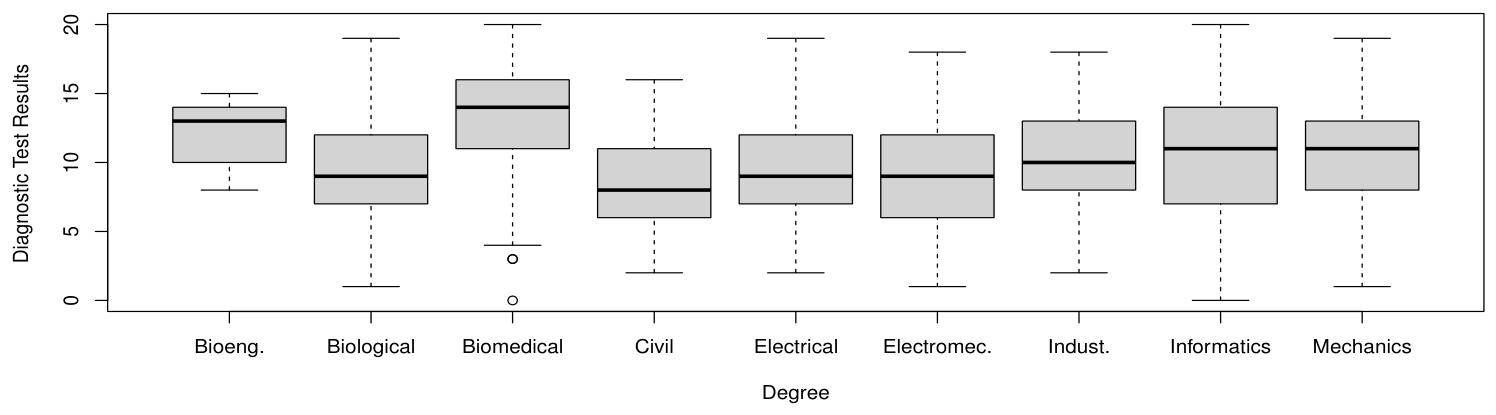
The distribution of DT results across the different undergraduate programs is presented in
Figure 2. As Biomedical Engineering achieved the highest scores, it is considered the benchmark for this analysis, given that the objective is to define the profile of a successful student.
To compare DT results across different undergraduate programs, a one-way ANOVA was performed. The null hypothesis of equality of means was rejected with a
p-value
, as shown in
Table 4. Only 2670 DT results were included in the analysis, as students from “Year Zero”, “CTeSP”, and “Other” programs were excluded.
Pairwise comparisons of DT results by degree, using the Tukey method, confirm that Biomedical Engineering consistently achieves higher scores. Among the 36 possible pairwise combinations,
Table 5 presents only those involving Biomedical Engineering. Biomedical and Bioengineering is the only pair in which no significant differences are observed, possibly because students in both programs predominantly come from science and technology secondary-education courses.
5.4. Informatics Degree
As previously explained, only the DT results from Informatics students will be considered in the following analysis to avoid bias.
5.4.1. Results Depending on the Semester
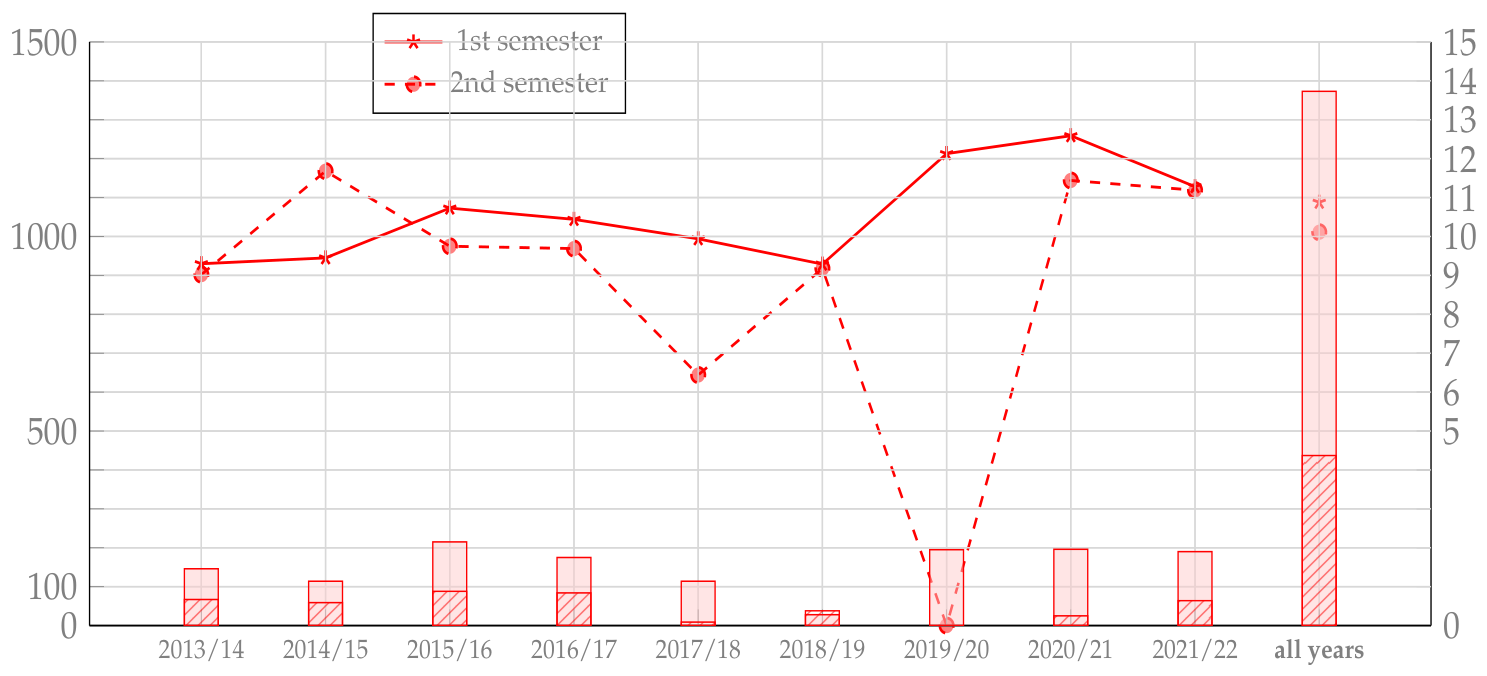
A greater number of students take the DT in the first semester of each academic year compared to the second semester. This is due to the higher number of Differential and Integral Calculus courses offered in the first semester. Students considered in the second semester are enrolled in courses operating under a sliding regime, which allows those who failed in the first semester to take the same course in a subsequent semester. This measure was implemented by ISEC to address students’ difficulties and reduce failures in evaluations. The DT results of Informatics students across both semesters of each academic year are compared in
Figure 5.
As expected, DT results in the first semester are higher, since students taking the test in the second semester are those who did not pass the first-semester Differential and Integral Calculus course. These students represent 24% of all DT participants. Exceptions were observed during the 2014/15 and 2019/20 academic years. As noted previously, no data are available for 2019/20 due to the COVID-19 pandemic.
Approval rates for the Differential and Integral Calculus course in the Informatics program are similar across both semesters [
4]. However, examination attendance in the second semester is only approximately 26%.
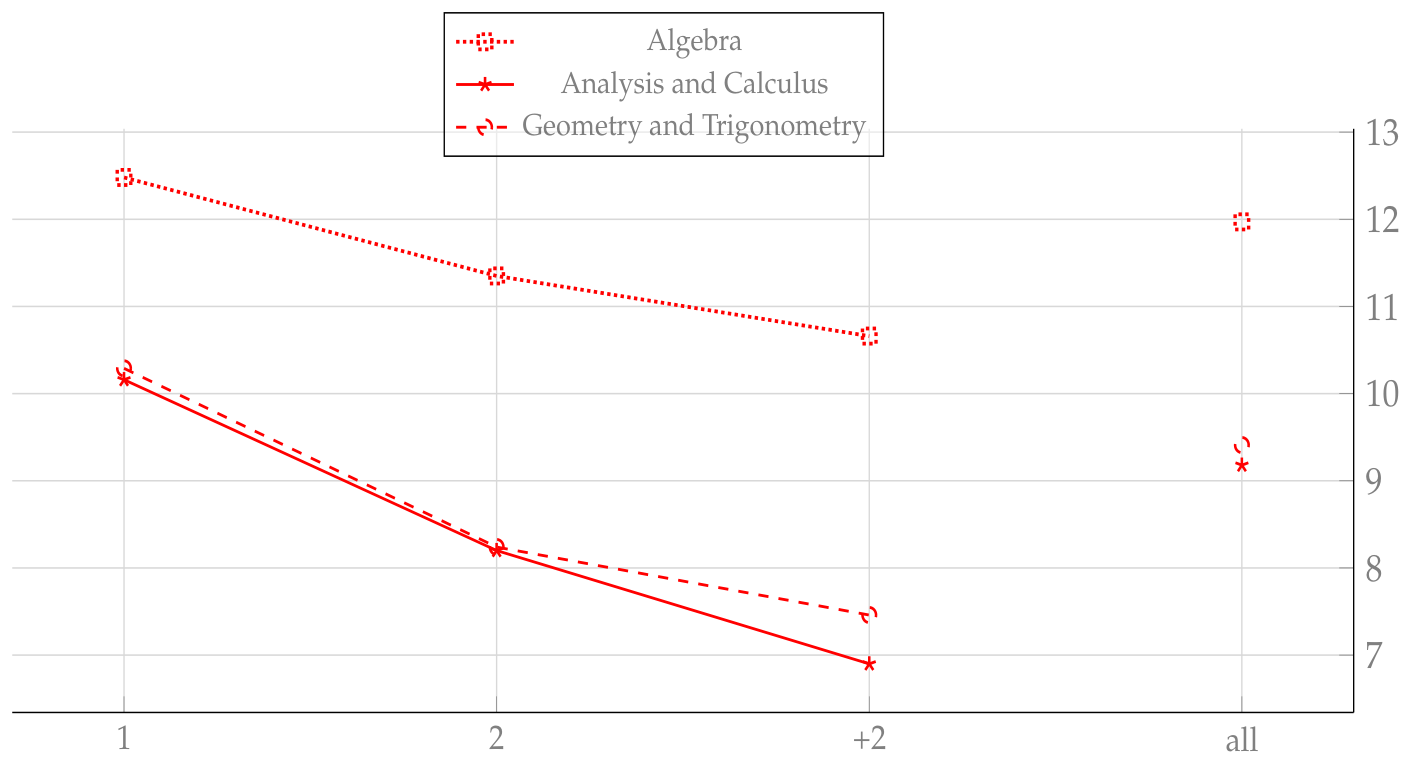
5.4.2. Results Depending on the Number of Enrollments
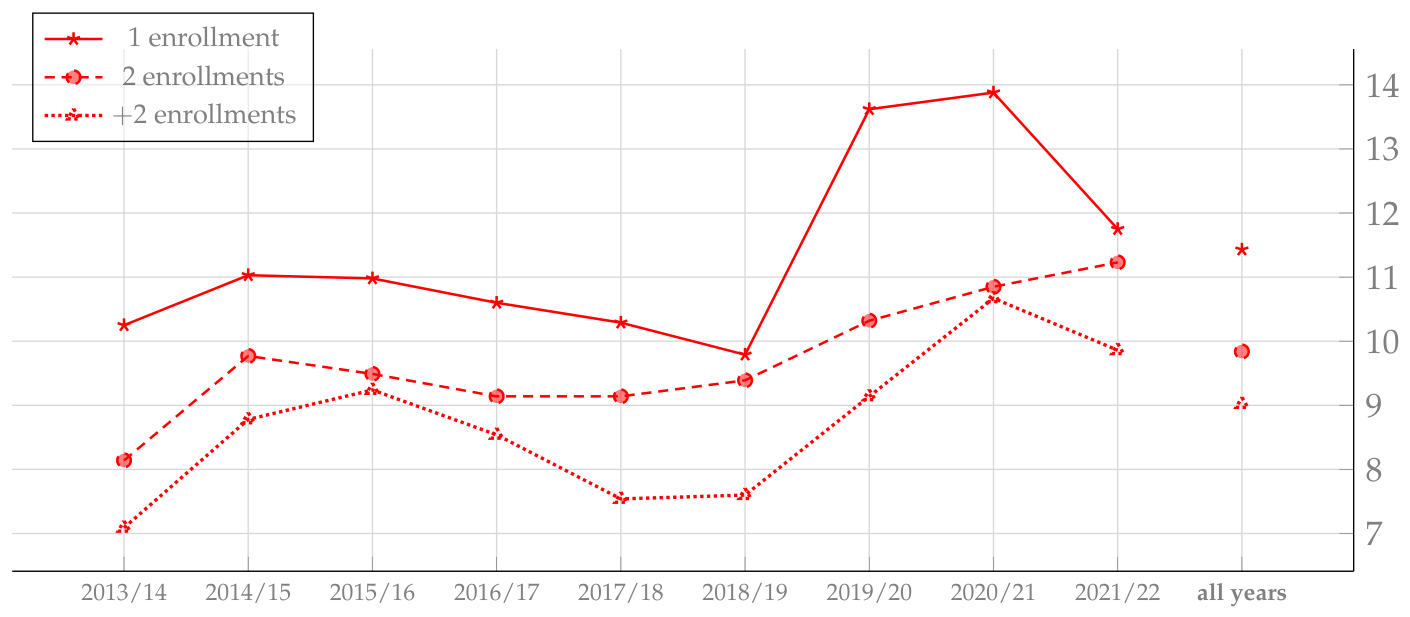
The DT results, analyzed by enrollment count, are presented in
Figure 6. The objective of this analysis was to determine whether students who postponed the Differential and Integral Calculus courses had lost any essential mathematics knowledge required for these courses and, consequently, for successful progression in their degree program.
The results show a decreasing trend as the number of enrollments increases, indicating that students who postpone taking mathematics courses tend to lose the essential mathematical knowledge required for them.
In terms of temporal evolution, a pattern similar to the overall results is observed, including the improvement in scores during the 2019/20, 2020/21, and 2021/22 academic years.
5.4.3. Results According to Topic
The evolution of DT results by topic—covering Algebra, Analysis and Calculus, and Geometry and Trigonometry—was previously studied in [
31]. In the present study, the analysis is extended to include the 2020/21 and 2021/22 academic years, with conclusions remaining consistent. The highest scores are consistently observed in Algebra, while results in Analysis and Calculus, and Geometry and Trigonometry are significantly lower. The low performance in Analysis is particularly concerning, as it constitutes one of the fundamental pillars of the mathematics curriculum.
5.4.4. Results According to the Topic and Number of Enrollments
The DT results, analyzed by topic and number of enrollments (all scores converted to a 0–20 scale), are presented in
Figure 7.
As expected, there is an overall decline in scores as the number of enrollments increases. This decreasing trend is observed consistently across all topics.
6. Complementary Actions for Learning/Teaching Mathematics
The DT results indicate that students entering engineering programs at ISEC generally possess weak mathematical knowledge from secondary education, which prevents full integration into the Differential and Integral Calculus courses. Poor performance in Analysis, Calculus, and Geometry and Trigonometry (as detailed in
Section 5) underscores the need for complementary strategies, beyond regular classroom instruction, to help students overcome gaps in their mathematical knowledge.
According to the literature, successful participation in Differential and Integral Calculus courses requires effectively integrating the basic mathematical knowledge acquired in secondary education with the essential knowledge gained during the first year of university. This alignment facilitates better student engagement and integration with the curriculum.
In this context, exploring changes in teaching practices is a priority for engineering mathematics instructors, particularly those teaching first-year students. Such adaptations allow educational strategies to address the wide diversity of students’ backgrounds. This represents a continuing challenge for higher education instructors and raises important considerations regarding student motivation, academic success, and the design of differentiated learning pathways.
DT results provide insight into the mathematical content that should be addressed with students, enabling the design of individualized plans to monitor the development of their mathematical knowledge. These plans track students’ learning progress through the Support Center for Mathematics in Engineering (CeAMatE) at ISEC. CeAMatE is a dedicated space where students receive guidance to overcome difficulties in basic and elementary mathematics, essential for full integration into engineering courses. The center aims to provide support and learning resources that facilitate independent study and help students address their knowledge gaps [
32].
The MathCentre (
https://www.mathcentre.ac.uk/ (accessed on 12 January 2026)) is widely recognized in the scientific community as a reference for higher education institutions seeking to develop student support strategies. Since all materials are freely available, the pedagogical resources applied at CeAMatE are drawn from the MathCentre repository. In addition, CeAMatE instructors produce a set of reference texts in Portuguese to complement these resources.
In this way, CeAMatE enables the design of an academic program that fosters the development of students’ independent study skills, giving them joint responsibility for shaping their own educational paths. It also supports the acquisition of new knowledge by providing a range of activities and resources specifically aimed at helping students overcome learning difficulties.
This project, initiated in the 2015/16 academic year, targets ISEC students who lack the basic mathematical knowledge necessary for successful participation in mathematics courses, particularly Differential and Integral Calculus. It also supports students requiring specialized assistance to address gaps in foundational mathematics. Participation in this program is voluntary. The center employs a structured methodology based on diagnosis, monitoring, and evaluation:
- 1.
Diagnostic
The information provided by the DT regarding students’ existing and required basic mathematical knowledge serves as a baseline for assessing their individual learning progress. Since the DT evaluates fundamental mathematics skills, all students scoring below 60% were advised to enroll in CeAMatE to acquire additional mathematical knowledge.
- 2.
Monitoring
Furthermore, the DT provides specific information about the mathematical content that should be addressed with students during their follow-up at CeAMatE, highlighting areas that require greater effort. For this purpose, an Individual Working Plan (IWP) is developed [
32]. This document includes a structured training program consisting of a curated set of study sheets, texts, and exercises. Since the IWP is based on the results obtained from the DT, its development was guided by the same reference [
17] and adapted to the Portuguese educational context (based on basic and secondary education curricula). It covers the minimum mathematical knowledge recommended for engineering degrees and is organized by areas and topics, following the Core Zero section of the SEFI framework [
32].
The IWP is continuously updated as students progress, reflecting their varying levels of success while attending the designated support sessions. Students are closely monitored: information regarding the topics addressed by each student is recorded, along with the difficulties encountered and the support required to overcome them. For each visit, data are collected on the date and duration of the session, as well as the specific topics studied, the challenges faced, and the assistance provided.
- 3.
Evaluation.
Students are required to present a work proposal to be carried out during face-to-face sessions and to provide an overall assessment of their progress at the center. Evaluation of this work occurs continuously during each student’s attendance at CeAMatE, through self-proposed tasks, promoting ongoing monitoring via a structured training plan. Additionally, periodic administration of adapted versions of the DT enables assessment and reformulation of the Individual Working Plan (IWP).
Three DT versions—the original and two variants—are used to conduct these periodic evaluations. The variants, developed from the original DT, differ only in numerical values to ensure variation. One of CeAMatE’s objectives is for this stage to contribute to autonomous learning. To support this, a random DT was implemented on the MOODLE platform, where each question is randomly selected from one of the three main versions. This randomization allows immediate feedback for incorrect answers, facilitating the improvement of the student’s mathematical knowledge. This process continues until the student achieves the minimum required score (90%, equivalent to 18 points), at which point they are considered adequately prepared to engage with the syllabus content of the mathematics courses.
A mathematics instructor supervises students, assisting them in resolving doubts and guiding self-study sessions, with the goal of making the learning process more effective and productive.
7. Results of CeAMatE Attendance Versus Differential and Integral Calculus Assessment
Using data from CeAMatE since 2015, this study aims to analyze the relationship between students’ participation in the center and their performance in the Differential and Integral Calculus course. It should be noted that this study has certain constraints. All students participating in the center are required to take the DT, as it provides the basis for constructing the Individual Working Plan (IWP), which is subsequently implemented at CeAMatE. However, not all ISEC students complete the DT annually during the first week of classes, for various reasons: some instructors of Differential and Integral Calculus courses consider it consumes excessive class time, and students do not always attend classes during the first week, among other factors.
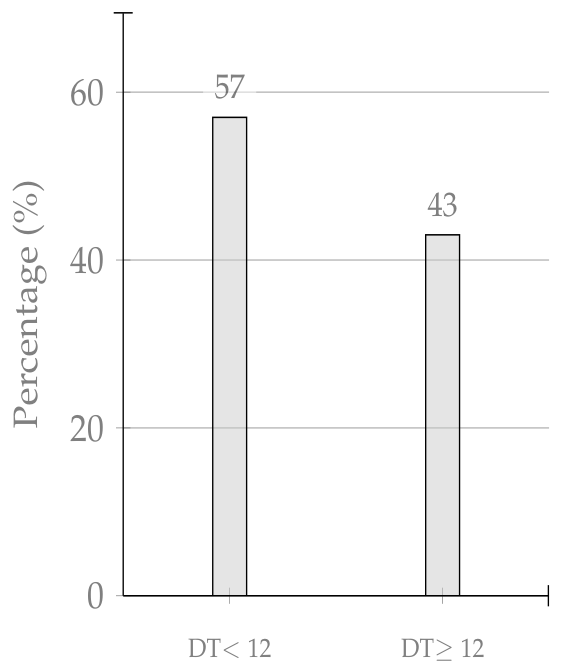
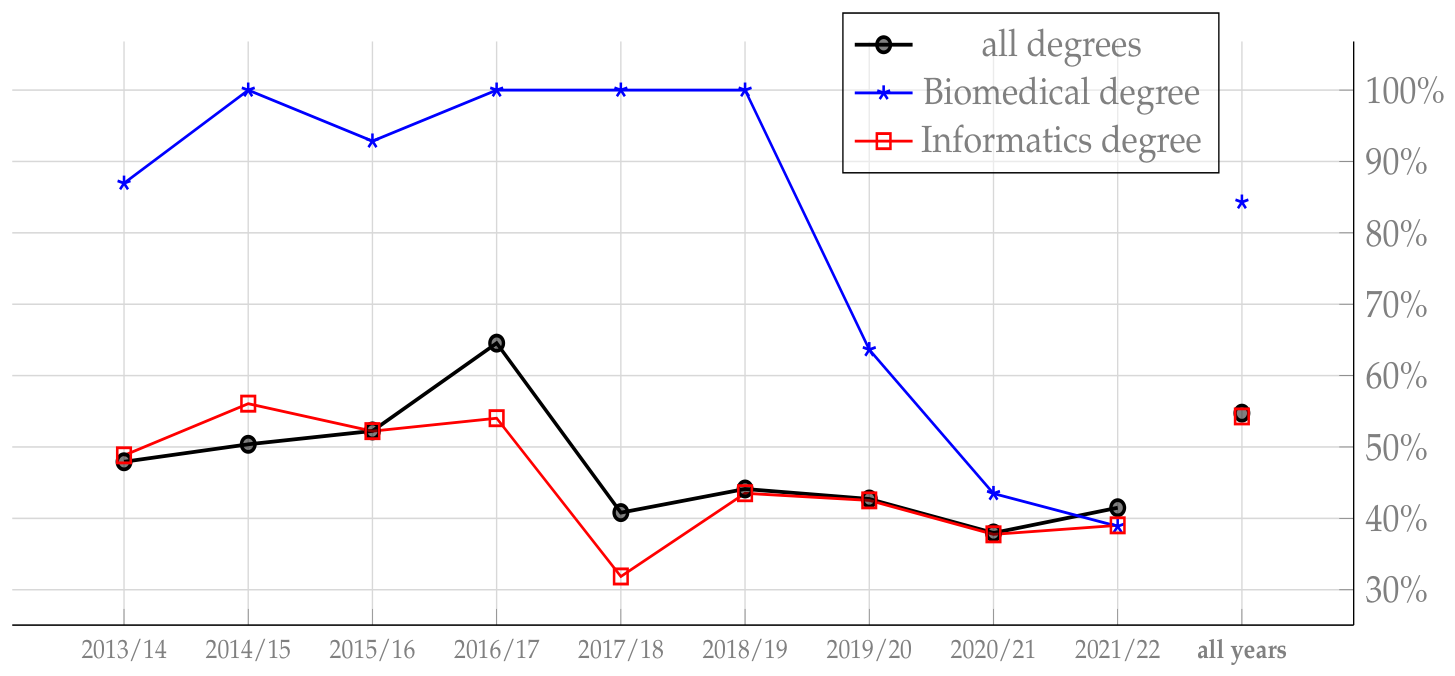
All students who correctly answer fewer than 60% of the questions on the DT are advised to enroll in CeAMatE. This threshold serves as an alert for the potential need for complementary support to standardize knowledge upon entry into higher education. Analysis of our sample, comprising 2813 students who completed the DT between 2013/14 and 2021/22, shows that the majority of students do not meet this minimum requirement, as illustrated in
Figure 8. These findings emphasize the importance of implementing strategies to help students overcome these knowledge gaps.
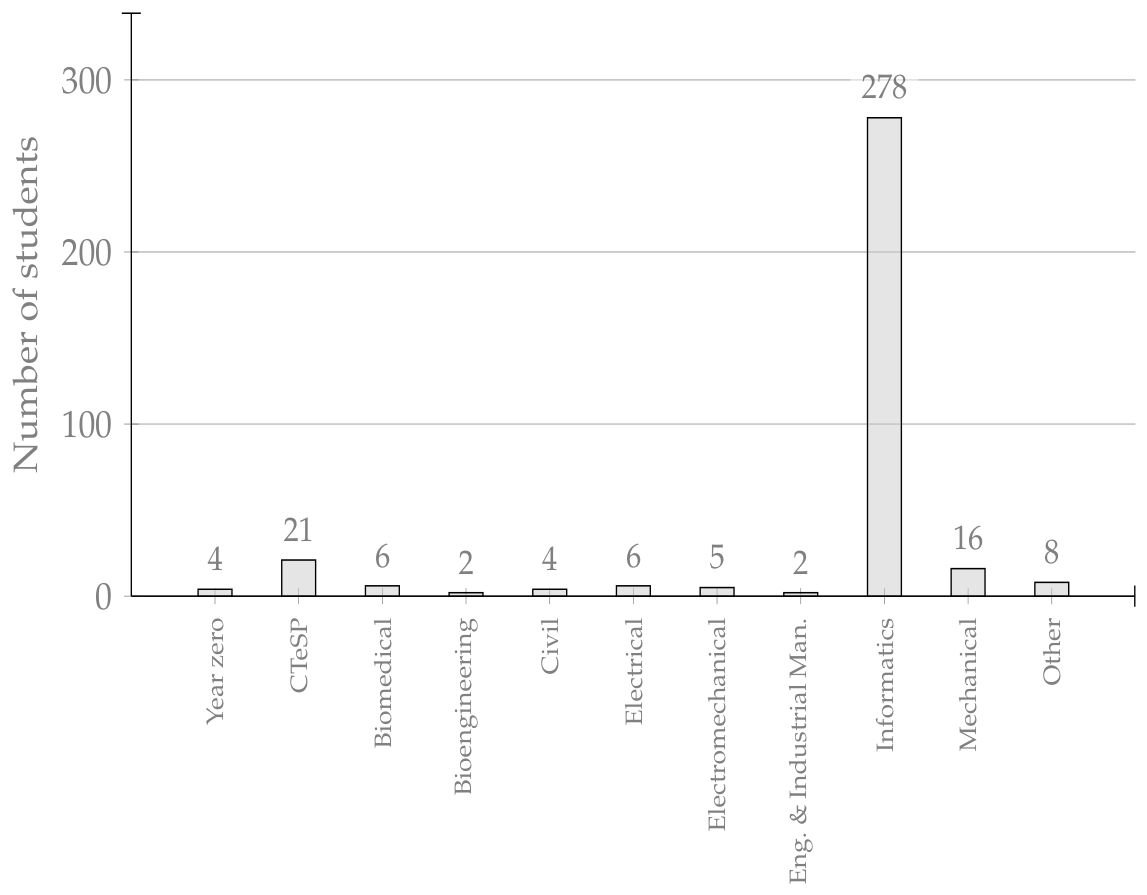
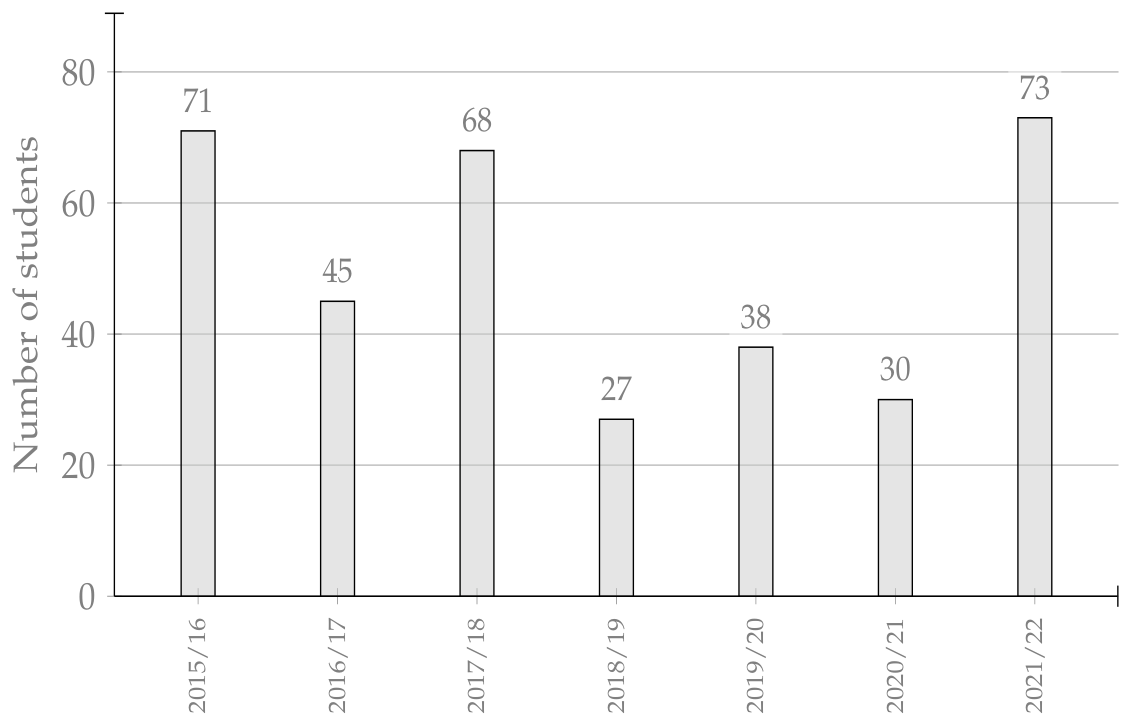
CeAMatE was initially opened in April 2015 on an experimental basis, with materials prepared and applied while monitoring 15 ISEC students. From October 2015 onward, the center has been available to all ISEC students. Following the analysis of DT results, 352 students attended the center.
Figure 9 presents the distribution of students by degree, showing that students enrolled in the Informatics Engineering undergraduate program participate more actively than those in other programs.
Regarding the distribution of student attendance at CeAMatE by academic year, the data presented in
Figure 10 were collected.
Students who score below 60% on the DT are advised to complete at least 20 h of continuous work at CeAMatE (2 h per week for a minimum of 10 weeks per semester) to address their mathematical difficulties. Since its opening, CeAMatE has operated for a total of 3339 h, yet only 44 students have used the center for more than 20 h, corresponding to a participation rate of 12.5%. On average, students do not reach the recommended amount of time.
We considered it relevant to examine the impact of CeAMatE attendance on our benchmark degrees, Informatics and Biomedical, from 2015/16 to 2021/22, since CeAMatE was established in 2015/16. However, most Biomedical students come from secondary education programs with high mathematics requirements. As previously noted, the approval rates for the Differential and Integral Calculus course in Biomedical Engineering are the highest among ISEC degrees, corroborating the DT results and indicating that these students generally possess a profile suitable for successful integration into the course. The low demand for complementary support in mathematics among Biomedical students is further evidenced by CeAMatE attendance, with only six students participating in the 2021/22 academic year—all from technical-professional programs. Based on this, the sample for analysis was limited to Informatics Engineering students.
For Informatics students,
Table 6 shows that assessment scores and approval rates in the Differential and Integral Calculus course are higher for those who attend CeAMatE. This suggests that students who engage in additional support may develop greater confidence and feel more secure in their foundational mathematical knowledge.
Examining the data for students who scored below 12 points on the DT (
Table 7)—i.e., those advised to attend CeAMatE because they lacked the necessary prerequisites for integration into the Differential and Integral Calculus course—it appears that both the evaluation participation rate and the approval rate are higher among students who follow the recommended guidelines for effective mathematics remediation (at least 20 h of attendance at CeAMatE) [
31].
Overall, the results of this study highlight a significant variability in the mathematical preparedness of first-year engineering students at ISEC, with a substantial proportion scoring below the passing threshold of the DT. Notably, students who attended CeAMatE support activities for at least 20 h demonstrated markedly higher rates of evaluation success and course approval compared to those with fewer hours of participation. This pattern reinforces the effectiveness of personalized, targeted interventions in bridging foundational knowledge gaps, aligning with prior research emphasizing the positive impact of individualized support on student learning [
10,
12]. The higher engagement and success rates among students following the tailored individual working plans suggest that such support fosters increased confidence and self-efficacy, which are critical factors in overcoming prior deficiencies—consistent with constructivist and self-efficacy theories [
11]. Conversely, the observed low and irregular attendance in some cohorts, especially among Informatics students, points to motivational and behavioral barriers that limit the potential benefits of these interventions. This resonates with findings by [
6], who identified motivation as a key determinant of success in remedial mathematics support. Additionally, the data suggest that early diagnosis of mathematical weaknesses allows for timely pedagogical adjustments, facilitating better integration of students into complex calculus courses.
8. Conclusions
This study contributes to the existing body of research by providing an empirical analysis of the implementation and impact of diagnostic assessment and targeted support strategies within a higher education engineering context. Specifically, it extends prior studies by demonstrating how diagnostic tools can be effectively employed to identify foundational mathematical gaps among first-year students and how personalized support programs, such as CeAMatE, are associated with improved academic outcomes in Differential and Integral Calculus courses. Unlike many previous investigations that focus predominantly on secondary education or general support initiatives, this work offers a detailed examination of the development, deployment, and assessment of tailored intervention frameworks in a university setting, grounded in a theoretical model integrating constructivist, motivational, and equity principles. Additionally, it incorporates a comprehensive analysis of participation patterns and their associations with performance, contributing nuanced insights into the behavioral dimensions of mathematics support. By contextualizing these findings within the Portuguese higher education system and using longitudinal data, the study advances understanding of how diagnostic and support measures can be aligned with student heterogeneity to foster more inclusive and effective mathematics learning pathways in STEM higher education.
The analysis of the results obtained from the diagnostic test highlights differences in mathematical knowledge among students across the various ISEC degree programs.
The results suggest that, on average, ISEC students possess insufficient foundational knowledge in mathematics, particularly in Analysis. This deficiency tends to worsen if not addressed during the first year of the degree programs.
Biomedical and Informatics students exhibit markedly different profiles, leading to distinct outcomes in the DT and, consequently, in their integration into the Differential and Integral Calculus course.
This asymmetry in student profiles is particularly significant given the current high demand for Informatics degrees. This fact raises the question of whether reinforcing the requirements for basic and elementary mathematical content in secondary education could help reduce failure rates in the Differential and Integral Calculus course. During this study, it was observed that other engineering degrees have higher mathematical entry requirements, which may have contributed to lower enrollment and a shift of students to non-STEM areas. Compounding this issue is the low participation of women in engineering programs.
These results underscore the need to develop complementary support strategies to help students overcome difficulties in fundamental and elementary mathematical concepts upon entering higher education.
The implementation of a diagnostic test enabled the identification of students’ gaps in essential mathematical knowledge, facilitating the development of tailored intervention plans through the CeAMatE support program. Using the DT results, an Individual Working Plan is defined for each student seeking assistance at CeAMatE. The personalized support provided at the center fosters self-efficacy, helping to prevent demotivation in self-study that could otherwise lead to dropout and academic failure. Results seem to indicate that personalized support measures, complemented by active learning methodologies and digital resources, effectively enhance student engagement, mitigate disparities in prior knowledge, and improve academic performance in mathematics courses. Furthermore, increased motivation and self-efficacy among students highlight the importance of pedagogical strategies tailored to individual needs. Such findings align with prior research indicating that personalized intervention strategies may be linked to improved academic performance [
10,
12]. Additionally, the data point to motivational and behavioral factors influencing engagement, as irregular attendance was particularly notable among certain student groups, echoing findings from motivation studies [
6].
Studies conducted at ISEC indicate that Informatics students exhibit low and irregular attendance at CeAMatE. However, our results show that the more hours a student spends at the center, the greater the likelihood of attending the Differential and Integral Calculus assessment and achieving a passing grade. These findings suggest that students are aware of their limitations, yet also reveal a certain inertia in addressing their difficulties. The primary concerns identified in the analyses conducted at ISEC relate to gaps in essential mathematical knowledge required for full participation in these courses, as well as students’ behaviors and attitudes toward learning.
For most students, the primary focus is on passing the course rather than on the learning process, leading them to believe they can succeed even without sufficient knowledge. This behavior represents the most significant constraint in this study, as the findings indicate that active attendance and engagement at CeAMatE foster a profile of students who achieve success in the Differential and Integral Calculus course.
In the context of higher education in engineering, the findings of this study provide suggestions for both teaching practice and educational policy. Instructors could adopt differentiated strategies that offer individualized support, using active learning methodologies, formative assessments, and digital tools like CeAMatE to engage students and address diverse levels of prior mathematics knowledge. At the policy level, the results highlight the need for initiatives aimed at fostering curriculum alignment between secondary and higher education, early diagnostic and bridging programs, and ongoing professional development for faculty in active and inclusive teaching strategies. Policies that recognize the heterogeneity of student preparation and provide targeted support can promote equitable learning opportunities, reduce learning gaps, and enhance student success in foundational STEM courses such as Differential and Integral Calculus.
Based on the conclusions drawn in the study, the responses to the research questions outlined in the introduction can be summarized as follows:
What is the mathematical preparedness of first-year engineering students at ISEC?
The study seems to indicate that there is a significant variability in students’ prior mathematical knowledge, with many entering university demonstrating gaps in fundamental concepts essential for success in Differential and Integral Calculus. A considerable proportion of students scored below the passing threshold on diagnostic assessments, highlighting insufficient preparedness.
To what extent do diagnostic assessment and support measures influence students’ academic success in Differential and Integral Calculus?
The implementation of diagnostic assessments combined with targeted support through the CeAMatE program appears to be effective. Personalized interventions and active learning strategies significantly increased student engagement, reduced disparities in prior knowledge, and improved performance in calculus courses. Increased attendance and participation in support activities correlated with higher success rates, demonstrating the positive impact of these measures on academic achievement.
Future research should explore underlying attitudinal factors influencing engagement and examine whether enhancements in instructional strategies or digital support tools might further improve participation and outcomes, particularly for students with low initial motivation or prior knowledge deficits.
As future work, it is planned to introduce an online component in CeAMatE that complements the learning in an autonomous way. For example, enabling students to receive and process information on a given topic according to their preferred learning style. Attention will be paid to each student’s educational pathways to understand their difficulties and how to overcome them, using personalized and motivating materials that serve as guides for new strategies to be included in the teaching practices of teachers.




 ,
,