1. Introduction: From Regeneration to Resilience
Over the past three decades, high street regeneration in the UK and similar post-industrial contexts has been shaped by a narrow set of assumptions. Chief among these is the belief that decline can be reversed through public realm improvements, retail-led redevelopment, and targeted investment intended to stimulate private sector confidence. Within this model, architects and urban designers have been positioned as agents of renewal, tasked with creating more attractive and commercially competitive environments. However, this emphasis on visible environmental improvement has often obscured the structural economic forces shaping town centre decline. This approach has been reinforced through successive waves of policy and professional practice. From the late 1990s onwards, town centre regeneration strategies across the UK increasingly emphasised the importance of design quality and place-making as mechanisms for economic revival.
These assumptions have been undermined by structural changes in retail and urban economies, including the growth of online commerce, the retrenchment of major retail chains, and reduced public sector capacity to intervene in town centres. In this context, the language of regeneration—long central to architectural and planning discourse—has begun to appear increasingly inadequate. Regeneration carries with it an implicit temporal logic: the expectation that decline can be reversed through intervention, pursuing a stable end-state, whether through redevelopment intended to attract investment or visitors.
Yet the structural conditions shaping contemporary high streets make such stability elusive. High streets are no longer characterised by cycles of decline and recovery, but by sustained volatility and continual transition. These changes are typically incremental and uneven, unfolding over extended periods.
In this context, the concept of resilience has gained increasing prominence. Originating in ecological theory, resilience refers to the capacity of systems to absorb disturbance and reorganise while undergoing change [
1,
2]. However, critics argue that it is often used in ways that obscure the political and economic conditions shaping vulnerability [
3,
4]. Issues such as property ownership patterns, commercial lease structures, business rates, and the financialisation of urban land markets play a decisive role in determining whether spaces can be reused, subdivided or repurposed. Without engaging with these conditions, architectural interventions may produce environments that appear adaptable but remain economically brittle.
This paper argues that advancing resilience in high streets requires a more critically engaged role for architects and urban designers. Rather than focusing on form alone, design practice must engage with the economic and governance frameworks that underpin urban change. Building on earlier research into the structural causes of high street decline [
5], the paper advances a reframing of resilience as an outcome produced through the interaction of spatial design, governance arrangements and economic adaptability. Rather than conceiving the architect’s role as delivering a finished regeneration outcome, the paper proposes that architecture can contribute to the design of frameworks capable of accommodating continual transformation: building typologies that allow subdivision and recombination, streetscapes capable of supporting diverse uses, and planning strategies that anticipate rather than resist change.
2. Methodology
This paper adopts a qualitative, conceptually driven research approach combining literature review, secondary data analysis and comparative case-based interpretation to examine the evolving role of architectural and urban design practices in shaping high street resilience.
2.1. Research Design
The study is positioned as a critical, interpretive analysis rather than a formal empirical investigation. It seeks to synthesise insights from existing research, policy discourse and observed patterns of high street transformation in order to develop a more integrated understanding of how spatial design, economic structures and governance systems interact in shaping resilience outcomes. The research is structured around three strands:
A critical review of academic and policy literature relating to resilience, retail transformation and urban regeneration;
An interpretive analysis of structural changes affecting UK high streets, drawing on existing datasets and prior research;
A comparative examination of built form typologies and selected case examples to explore how spatial characteristics influence adaptive capacity.
This approach reflects the complexity of high street change, which cannot be fully understood through a single methodological lens, and instead requires the integration of spatial, economic and institutional perspectives.
2.2. Data Sources
The analysis draws primarily on secondary data sources and existing research, including:
Published academic literature on urban resilience, retail change and high street development;
National datasets on retail performance, vacancy rates and town centre composition (e.g., Experian GOAD and Office for National Statistics);
Prior empirical research undertaken by the author and collaborators, including the study of one hundred UK high streets [
5];
Policy reports, industry analyses and government publications relating to town centre regeneration and economic restructuring.
These sources are used to establish a robust evidence base for identifying structural trends in retail and urban change.
2.3. Case Selection and Comparative Approach
The paper incorporates selected case examples (including towns such as Stockport and Stockton-on-Tees) as illustrative rather than representative cases. These examples are not intended to form a statistically generalisable sample, but instead serve to:
Demonstrate how structural trends manifest in different local contexts;
Illustrate the interaction between spatial form, governance and economic conditions;
Provide a range of grounded examples of adaptive strategies and constraints.
Cases were selected on the basis of their relevance to key themes explored in the paper, including:
Active governance interventions (e.g., municipal acquisition strategies);
Significant retail restructuring or redevelopment;
The presence of contrasting built form typologies.
This comparative, typological approach enables the identification of recurring spatial and institutional patterns without claiming universal applicability.
2.4. Analytical Framework
The analysis is guided by a relational understanding of resilience, in which outcomes are understood to emerge from the interaction of:
Spatial design (built form, typologies, and adaptability of structures);
Economic conditions (retail demand, property markets, and financial viability);
Governance systems (ownership structures, policy frameworks, and institutional capacity).
Rather than treating resilience as a fixed or measurable variable, the paper examines how these dimensions interact to enable or constrain adaptation over time. Built form typologies are analysed as a key interface between these dimensions, allowing the study to connect architectural characteristics with broader economic and governance dynamics.
2.5. Scope and Limitations
The study focuses primarily on high streets within the United Kingdom, reflecting the availability of data and the policy context within which the research is situated. While many of the dynamics discussed are applicable to other post-industrial contexts, the findings should be understood as context-specific.
Given its interpretive and conceptually oriented design, the paper does not present new primary empirical data or statistically generalisable findings. Instead, it aims to develop a theoretically informed framework for understanding high street resilience and to identify spatial and institutional factors that may support adaptive urban transformation.
3. Defining Resilience in the Context of High Streets
Despite its widespread use in urban studies and design discourse, the concept of resilience remains contested and frequently imprecise. In the context of high streets, resilience is often conflated with recovery, revival or the restoration of economic performance following periods of decline. Such interpretations imply a return to a previous equilibrium, typically associated with retail-led activity. However, this understanding is increasingly inadequate in the face of structural transformations affecting town centre economies.
In this paper, resilience is not understood as recovery. High streets are unlikely to return to the retail-dominated conditions that characterised the late twentieth century. Instead, resilience is conceptualised as a capacity for ongoing adaptation and transformation in response to changing economic, social and institutional conditions. This interpretation aligns with ecological and urban resilience literature, which emphasises the ability of systems to absorb disturbance, reorganise and evolve rather than return to a prior stable state [
1,
2]. It also reflects more critical perspectives that position resilience as a dynamic and locally produced process shaped by institutional and socio-economic conditions [
3,
4].
To clarify this position, it is important to distinguish resilience from several related but distinct concepts frequently used in discussions of high street change.
Vitality typically refers to levels of activity and intensity of use, often measured through indicators such as footfall or occupancy [
6]. While vitality can signal short-term success, it does not necessarily indicate long-term sustainability.
Viability relates to the economic conditions required to sustain occupation and use over time, including affordability, rental structures and the capacity of businesses or organisations to operate within a given location [
7].
Adaptability describes the ability of buildings, spaces and urban systems to accommodate different uses or configurations. Within architectural discourse, this has often been associated with flexibility in spatial design [
8].
While these concepts are related, none alone captures the full dynamics of high street change. A high street may be vibrant but economically fragile, viable but spatially rigid, or adaptable in form but constrained by governance.
Resilience, as defined in this paper, emerges from the interaction of vitality, viability and adaptability, rather than being reducible to any single dimension [
9]. It is therefore understood as a condition, shaped by the interplay between spatial design, economic structures and governance arrangements. This aligns with recent work that emphasises resilience as an outcome of interconnected urban systems rather than an inherent property of places [
2,
10].
It is a distinction that has implications for architectural and urban design practice. If resilience is framed as recovery, design interventions tend to focus on restoring previous forms of activity, often through retail-led regeneration or public realm improvements. By contrast, if resilience is understood as adaptation and transformation, the emphasis shifts toward enabling ongoing change.
4. Resilience in Architecture and Urban Design: Recent Debates
Building on the definition outlined in the previous section, this section examines how resilience has been interpreted within architecture and urban design discourse, with particular attention to its limitations when applied to high street contexts.
4.1. Resilience and the Politics of Adaptation
One of the most influential critiques of resilience in planning and urban studies is that it risks depoliticising urban change. Davoudi et al. [
3] argue that resilience thinking can inadvertently reinforce existing power structures by framing adaptation as a technical challenge rather than a political one. When resilience is narrowly interpreted as the ability to ‘bounce back’ from disruption, attention may shift away from the systemic inequalities and institutional arrangements that shape vulnerability in the first place. More recent work has extended this critique, suggesting that resilience can be mobilised to justify policies that place the burden of adaptation on local communities, municipalities or individuals rather than addressing structural drivers of instability [
4]. In the context of austerity-era governance in many Western countries, resilience has sometimes been used to legitimise reduced state-led intervention, encouraging cities and communities to become self-reliant in the face of economic shocks [
11]. At the same time, scholars have sought to reclaim resilience as a more critical and transformative concept. Shamsuddin [
6], for example, emphasises that resilience is always locally produced through the interaction of institutions, spatial conditions and social practices. Rather than being an inherent property of places, resilience emerges from the capacity of local actors to respond to changing circumstances. From this perspective, resilience is not simply a matter of technical design solutions.
These debates highlight a pivotal point for architectural practice. If resilience is shaped by institutional and economic conditions as much as by spatial form, then architectural responses cannot be understood in isolation from the wider systems within which buildings and urban spaces operate. The design of resilient urban environments therefore requires engagement with the political economy of cities.
4.2. Architectural Interpretations of Resilience
In architectural and urban design practice, there has been an emphasis on tactics such as modularity, adaptability and flexibility. These ideas are closely related to earlier debates about flexible architecture and open building systems. From the work of John Habraken and the Open Building movement to contemporary discussions of adaptable housing and mixed-use urban form, architects have long explored ways of designing buildings that can accommodate changing uses over time [
12]. In this sense, resilience might appear to be simply a new vocabulary for a longstanding architectural concern.
However, recent architectural theory has begun to question whether flexibility is sufficient to produce resilient environments. Schneider and Till [
8] argue that the concept of flexibility has often been interpreted too narrowly, focusing on spatial arrangements while ignoring the frameworks that determine whether spaces can actually be adapted in practice. A building might be technically capable of accommodating multiple uses, yet remain locked into a single function because of lease structures, planning regulations or financial constraints. Similarly, Cruz and Forman [
13] have argued that architectural practice must move beyond the design of individual objects and engage more directly with the systems that shape urban environments. In their work on spatial justice, they position architecture as a form of institutional and political engagement, capable of reorganising the relationships between spatial design, governance and social processes. From this perspective, resilience is not simply a property of buildings but an outcome produced through the interaction of spatial and structural factors.
4.3. Implications for High Streets
These critiques resonate strongly with the challenges facing contemporary high streets. While town centres contain buildings that are technically adaptable, the economic and institutional conditions governing their use often prevent meaningful transformation. Applying resilience thinking to high streets therefore requires shifting attention from architectural form to the broader systems that shape urban adaptation. This shift is consistent with recent planning scholarship that calls for a rethinking of town centres beyond retail-led development, emphasising the need to align spatial strategies with changing economic conditions and governance frameworks [
14].
High streets are not simply collections of buildings, but socio-economic infrastructures in which spatial form, ownership structures, governance arrangements and economic activity are tightly interwoven. Their capacity to adapt depends on both the physical characteristics of buildings and streets and the institutional frameworks that govern their use. In many cases, the spatial structure of traditional high streets—narrow plots, shallow building depths and multiple ownerships—has historically enabled incremental change. Buildings could be subdivided, extended or repurposed over time, allowing high streets to evolve gradually in response to shifting economic conditions. This contrasts with the more rigid spatial and ownership structures often associated with large shopping centres or retail parks.
However, the contemporary crisis facing many high streets demonstrates the limits of spatial adaptability in isolation. High business rates, absentee landlords and the financial dynamics of commercial property ownership can all inhibit adaptation, leaving spaces vacant even where there is demand. These conditions highlight the importance of engaging with the economic and governance forces that shape how high streets function in practice.
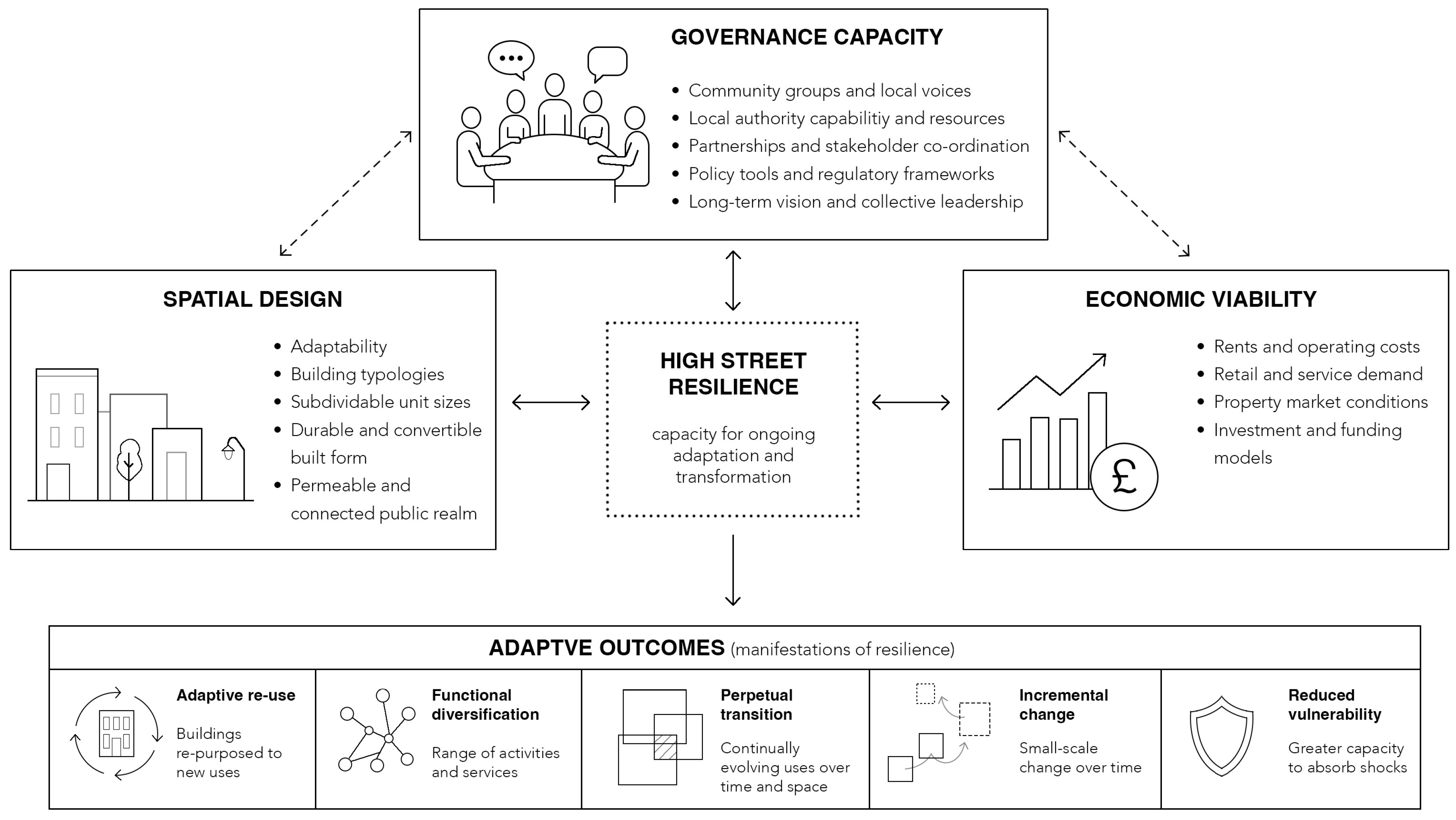
Designing for high street resilience therefore involves more than producing adaptable buildings or attractive public spaces. It requires attention to the institutional and financial frameworks that enable or constrain spatial transformation. From this perspective, resilience can be regarded as emerging from the interaction of spatial design, governance structures and economic viability.
Figure 1 conceptualises high street resilience as a relational condition emerging through the interaction of spatial design, economic viability and governance capacity, producing varying adaptive outcomes over time. The role of architecture is not simply to create flexible forms, but to contribute to urban environments capable of accommodating ongoing and often unpredictable change.
The following sections build on this framework to examine how these dynamics are manifested in the contemporary transformation of high streets.
5. High Streets After the Retail Crisis and COVID-19
5.1. Key Findings: Patterns of High Street Transformation
While this paper does not present results in the form of a conventional empirical study, the analysis undertaken generates a set of interpretive findings derived from the synthesis of literature, secondary data and comparative case analysis. These findings are not intended to be statistically generalisable; rather, they identify recurring patterns and structural relationships shaping the transformation of high streets. Three key findings underpin the analysis that follows.
First, high street change is best understood not as a linear decline, but as a process of uneven functional reconfiguration, in which retail contraction is accompanied by diversification into service, civic and residential uses. This process varies significantly between locations, reflecting differences in local economic conditions, governance capacity and spatial structure.
Second, the capacity of high streets to adapt is not determined by spatial form alone. Instead, it emerges from the interaction between built environment characteristics, economic viability and governance arrangements. Buildings that are physically adaptable may nevertheless remain underused where financial and institutional conditions inhibit change.
Third, many prevailing architectural and planning responses remain misaligned with these structural dynamics. Strategies centred on retail recovery, public realm enhancement or short-term activation often fail to engage with the underlying economic and governance conditions that shape long-term resilience.
Taken together, these findings support the argument that high street resilience should be viewed as a relational and systemic condition, rather than as an outcome that can be achieved through isolated design interventions. The following sections examine these dynamics in greater detail, drawing on empirical evidence and typological analysis to explore their implications for architectural and urban design practice.
5.2. Beyond the Narrative of Collapse
Public discourse around high streets has long been dominated by narratives of decline. Media coverage frequently frames town centres as casualties of technological change and shifting consumer behaviour, presenting empty shops and closing retail chains as evidence of the ‘death of the high street.’ Such narratives have become particularly prominent over the past decade as a succession of household names, including Woolworths and Topshop, have disappeared. Yet concerns about the decline of town centres are far from new. Repeated high street crises have occurred over the past century, each prompting the announcement of its obsolescence [
5].
Data collected over the past decade indicates that vacancy rates on UK high streets have fluctuated but do not uniformly indicate collapse. Prior to the pandemic, average vacancy rates across UK town centres stabilised at around 11–12 per cent, though this figure masked significant variation between locations [
6,
7,
15]. Some struggling towns experienced vacancy rates above 20 per cent, while others maintained near full occupancy through diversification and local demand. Experian GOAD data has shown that the mid-size settlements (large towns and small cities) have fared worse in that respect, missing out to nearby large centres, whilst villages and small towns had the lowest vacancy rates due to the higher proportion of independent businesses, and also benefitting from the increasing trend of working from home [
5]. This variation highlights that high street performance is not uniform.
Furthermore, vacancy alone provides only a partial picture of high street change. Many units previously occupied by retail have been replaced by service-oriented activities, including hospitality, personal services, health facilities and leisure uses. Cafés, restaurants, gyms, beauty services and small creative enterprises increasingly occupy spaces once dominated by clothing and comparison retail. These shifts reflect a broader restructuring of the high street economy rather than a simple disappearance of activity, indicating that decline is more accurately understood as functional transformation rather than loss.
The research underpinning ‘High Street: How Our Town Centres Can Bounce Back from the Retail Crisis’ [
5] supports this interpretation. Drawing on a dataset of one hundred high streets across the United Kingdom, the study revealed highly differentiated trajectories shaped by local economic conditions, demographic change and governance capacity. This evidence reinforces the argument that high streets are not experiencing linear decline, but are instead undergoing uneven processes of reconfiguration shaped by local conditions and governance capacity. In many locations, the disappearance of national retail chains was accompanied by the emergence of independent businesses and service-based uses. Rather than collapsing entirely, these high streets were slowly diversifying their economic base, demonstrating that adaptive capacity is often expressed through incremental diversification rather than wholesale regeneration. Recent post-pandemic research reinforces this picture. Rudlin et al. [
5] argue that high streets are undergoing a process of functional rebalancing in which retail becomes only one component of a broader urban mix. Ntounis et al. [
16] describe this process as a form of ‘repositioning’, suggesting that many town centres are evolving toward new roles combining retail, leisure, services and residential uses. In this sense, the high street is not disappearing but being reconfigured as a more socially diverse urban environment.
Taken together, these findings complicate the idea that the central challenge facing high streets is simply how to restore retail activity. Instead, they suggest that the concern should be how high streets can readily accommodate changing patterns of use over time.
5.3. Structural Change in the Retail Economy
The pressures currently facing high streets are the result of gradual structural changes rather than a single disruptive event. These shifts were already well underway before the pandemic, but were accelerated by the impact of COVID-19.
One often overlooked force in the decline of many legacy high street retailers has been their financial restructuring. In several cases, established brands were acquired by private equity investors whose business strategies sought short-term financial returns over long-term operational investment. This tends to involve asset stripping: the sale of property, loading companies with debt, and extracting dividends [
17,
18]. While such strategies can generate immediate financial returns for investors, they reduce a business’s capacity to adapt or invest. The collapse of major high street chains, including BHS and Debenhams, was directly linked to these financial practices, illustrating how the restructuring of retail firms has played a significant role in shaping high street decline [
6,
7].
Another significant factor has been the rapid growth of online retail, although not to the extent that it is perceived, and not entirely to the detriment of the high street either. Internet sales account for approximately 28 per cent of total retail spending in the UK in 2026 [
19]. Yet both independent and major retailers have found success by embracing both [
20,
21], with evidence showing that online trading allows greater reach whilst a physical shop presence has been shown to boost online sales [
22,
23]. This suggests that the relationship between physical and digital retail is not substitutive but complementary, challenging narratives that position online retail as the primary cause of high street decline. This shift has also prompted a rethinking of the role of physical retail space. Rather than functioning solely as sites of transaction, stores are increasingly conceived as experiential, logistical and hybrid environments integrated within wider retail systems [
24].
Nevertheless, many forms of retail that were once dependent on having a physical shopfront have become increasingly mediated through e-commerce, giving rise to direct spatial consequences. Retail environments designed around large comparison retail formats are particularly vulnerable to the shift toward online consumption. Department stores and large fashion chains were once prominent anchors within town centres, generating footfall for surrounding businesses. Yet the pool of retailers capable of occupying such large spaces has shrunk dramatically. The Centre for Retail Research estimates that more than 17,000 retail stores closed in the UK in 2020 alone, the highest annual figure on record [
25]. In reality, businesses can now achieve the same coverage with fewer stores [
5], and, consequently, there is widespread consensus that the UK has a substantial oversupply of retail space—estimated to be between 20 and 40% [
26,
27]—and there is a need to determine how to manage the corresponding contractions of town centres [
5].
5.4. The Limits of Retail-Led Regeneration
So whilst retail-led regeneration was a defining feature of town centre development in the late twentieth and early twenty-first centuries, the economic conditions that supported this model have largely disappeared. Even where those in the last wave of these developments have been completed, they often now have difficulties maintaining occupancy [
7,
28]. The redevelopment of Rochdale town centre illustrates this struggle. Despite significant investment in retail-led regeneration, the scheme has been unable to sustain tenancies and activity, reflecting the declining viability of large-format retail environments.
5.5. Adaptation as an Architectural Problem
High street transformation is often framed as either an economic and policy challenge or as a design problem. In reality, these are intertwined. The capacity of buildings and urban spaces to accommodate new uses is shaped not only by their physical characteristics but also by the economic and governance conditions within which they operate. Although flexibility and adaptability are frequently promoted as design solutions, their effectiveness is limited where financial viability, ownership structures, or regulatory constraints inhibit change. As a result, architectural interventions alone are unlikely to achieve meaningful transformation without engagement with these wider systems.
This suggests that the role of architecture in supporting high street resilience lies not simply in proposing spatial change, but in engaging more directly with the economic and institutional frameworks that determine whether such change can occur. Understanding these conditions forms the focus of the next section.
6. The Political Economy of High Streets as a Design Constraint
For architects and urban designers working in town centres, the conditions that shape their capacity to adapt often operate as implicit constraints. Understanding the resilience of high streets therefore requires engaging with the political economy of urban land and property markets.
6.1. Business Rates, Rents and Economic Viability
Alongside spatial constraints, financial structures play a crucial role in shaping high street adaptation. Based on property valuations, business rates impose substantial costs on businesses regardless of their turnover. Despite recent attempts to moderate the advantage this gives to online retail, it continues to present a major obstacle to both small independents and major retailers who wish to occupy high street premises [
5]. The substantial combined financial pressures of rent, rates and fit-out can mean spaces remain unused despite demand. This demonstrates that vacancy is not simply reflecting insufficient demand but the financial and regulatory frameworks governing commercial property.
6.2. Fragmented Ownership and Governance Capacity
Property ownership patterns are another factor shaping high street resilience. Many high streets consist of buildings owned by numerous different landlords, ranging from institutional investors to small private owners. Whilst this can support diversity, it can also complicate redevelopment or adaptation strategies. Limited powers over privately owned property, combined with constrained financial resources following years of austerity, can restrict the ability of municipalities to intervene directly in town centre economies. Even when local authorities wish to support adaptive reuse or encourage new forms of activity, they may lack the mechanisms to coordinate action across multiple property owners. This reflects a broader problem identified in urban resilience research, where the implementation of adaptive strategies is frequently constrained by fragmented governance structures and competing institutional priorities rather than a lack of technical or design solutions [
29].
Some towns have begun experimenting with alternative local governance models that seek to overcome these challenges [
30]. They include forms of municipal property ownership, town centre partnerships and development corporations capable of assembling land and coordinating investment. For example, in Stockton-on-Tees, the local authority has pursued an active strategy of acquiring retail properties and shopping centre sites in order to restructure the town centre and introduce new civic and cultural uses. By bringing fragmented property assets under public control, the council has been able to coordinate redevelopment, demolish obsolete retail space and create new public realm and development opportunities along the River Tees.
National policy initiatives in the UK, such as the Towns Fund and the Future High Streets Fund, have also sought to support local authorities through targeted investment in town centre regeneration. However, such programmes have largely focused on capital projects and, as a result, may deliver physical improvements without enabling greater vitality and viability. More recently, initiatives such as the ‘Long-Term Plan for Towns’ and the ‘Pride in Place’ programme have pivoted to longer-term, endowment-style funding. The introduction of High Street Rental Auctions in 2024 has also provided local authorities with a new mechanism to address persistent vacancy. At present, it is too soon to assess the efficacy of these initiatives.
6.3. The Financialisation of Commercial Property
Property ownership structures and investment practices play a significant role in shaping the capacity of high streets to adapt. In many cases, commercial property is held as a financial asset by pension funds and international investors, with value derived from rental income and expectations of long-term capital appreciation [
18,
31]. This can incentivise the protection of asset value (against which further borrowing can be leveraged) rather than occupancy [
17]. Owners may be reluctant to lower rents, subdivide units or accommodate alternative uses that do not align with established valuation models. In some instances, this leads to prolonged vacancy even where there is demand for different types of occupation [
6,
7]. The outcome is a mismatch between available space and local needs, not because of a lack of activity, but because of constraints imposed by ownership and investment structures, further reinforcing the argument that the transformation of high streets is shaped not only by changing patterns of demand, but by the systems that govern how urban space is owned and managed.
6.4. Implications for Architectural Practice
Collectively, these dynamics show that the capacity of high streets to adapt is not determined by spatial characteristics alone, but by the interaction of economic viability, governance capacity and property ownership structures. While buildings may be physically capable of accommodating new uses, these changes are often constrained by financial, regulatory and institutional conditions.
This has implications for how high street transformation is understood. Vacancy and underuse should not be interpreted solely as indicators of declining demand, but as outcomes shaped by the systems through which urban space is managed and valued. As a result, interventions focused exclusively on physical redesign are unlikely to enable sustained change unless they engage with these wider constraints.
These findings reinforce the need to reconsider the role of architecture and urban design, shifting from a focus on delivering fixed spatial solutions toward enabling conditions for adaptation within complex and often restrictive systems.
7. Persistent Architectural Myths in High Street Interventions
Despite a growing body of evidence revealing the structural changes affecting high streets, many architectural and urban design responses to high street decline continue to reproduce assumptions that were developed under very different economic conditions. Design proposals frequently focus on spatial improvement—better public spaces, new mixed-use developments or reconfigured retail environments. This section examines several persistent assumptions that continue to shape high street interventions. These assumptions are not necessarily incorrect in themselves, but they can obscure the deeper dynamics influencing whether architectural and urban design strategies succeed in practice. By interrogating these ideas, it becomes possible to identify alternative approaches more closely aligned with the realities of contemporary high streets.
7.1. Retail Primacy
Perhaps the most persistent assumption within high street regeneration strategies is the belief that retail should remain the primary organising function of town centres. Retail frontage continues to be prioritised at ground level, public spaces are designed to support shopping activity, and development viability is frequently calculated on the basis of retail rental values.
Yet research increasingly suggests that the role of retail within high streets is changing rather than disappearing. Parker et al. [
6] note that town centres are becoming more diverse in their functions, with service-based activities, hospitality, cultural facilities and residential uses playing a growing role. For architects, this implies the need to design environments capable of supporting a broader mix of uses. Ground floors that can accommodate a range of activities rather than only retail, buildings that allow conversion between commercial and residential functions, and public spaces designed for social interaction rather than solely consumption may all contribute to more resilient urban environments.
7.2. Design-Led Quick Fixes
Another common assumption is that improvements to public space and urban design can, by themselves, catalyse economic revival. Streetscape upgrades, new paving, street furniture and landscaping are commonly implemented. While such visible interventions can enhance perception and experience, they do not address the underlying economic conditions that shape viability. Carmona [
32] notes that while well-designed public spaces contribute to urban vitality, they cannot compensate for underlying economic weaknesses. Without viable businesses, active uses and supportive governance structures, public space improvements may have limited long-term impact.
This suggests that spatial design, when implemented in isolation, risks addressing symptoms rather than causes. For architects and urban designers, this implies that their role of design extends beyond the production of attractive environments to ensure integrated policies respond to property ownership, land use regulation and economic development.
7.3. Meanwhile Uses as Transitional Strategy
Temporary uses are frequently promoted as a means of activating vacant spaces and presented as a pathway to regeneration. Vacant shops are often repurposed as pop-up galleries, community spaces or temporary retail outlets while longer-term redevelopment plans are developed.
While they can provide short-term benefits, they rarely translate directly into sustained occupation or structural change. Ferreri [
33] argues that temporary uses often function as mechanisms for managing vacancy rather than addressing its underlying causes.
This again reflects the limitations of approaches that do not engage with longer-term economic and governance constraints.
7.4. Footfall as a Proxy for Success
Finally, many high street strategies continue to rely on footfall as a primary indicator of success, despite its limitations. Increasing visitor numbers is often assumed to correlate with economic vitality, leading to schemes designed to attract more people into town centres. Events, festivals and leisure attractions are frequently introduced with the aim of boosting footfall. However, high visitor numbers do not necessarily translate into sustainable local economies, particularly if visitors are not engaging with local businesses or if activity is concentrated in limited areas. This indicates that commonly used performance metrics may obscure more fundamental questions of economic resilience and social function.
Moreover, focusing on footfall can reinforce a consumption-oriented view of high streets, prioritising visitor numbers over the provision of local services (healthcare, education, and civic functions) that may provide more resilience.
7.5. Rethinking Design Assumptions
Taken together, these assumptions illustrate how architectural responses to high street change can remain tied to outdated models of urban development. Retail primacy, mixed-use optimism, design-led revamps, temporary interventions and footfall metrics all reflect a broader belief that spatial design can restore high streets to a previous model of economic stability. Yet the evidence presented in earlier sections suggests that high streets are unlikely to return to such an equilibrium. Instead, they are, and always have been, environments characterised by continual adaptation.
The following sections explore how a different approach might re-frame architectural agency and describe the potential of viability-responsive urban design frameworks.
8. Reframing Architectural Agency in Conditions of Uncertainty
The preceding sections have argued that high streets are undergoing structural transformations that challenge many of the assumptions underpinning traditional regeneration strategies. If town centres are viewed not as stable retail environments but as systems undergoing continual economic and social change, then architectural practice cannot focus solely on delivering fixed spatial outcomes. Instead, architects must increasingly consider how spatial design can support processes of long-term adaptation.
8.1. From Finished Objects to Adaptive Frameworks
Traditional architectural practice has often emphasised the production of coherent and complete spatial compositions. Buildings and urban spaces are typically designed around clearly defined functions and programmes intended to remain stable over time. Yet high streets demonstrate the limitations of this approach. Buildings constructed for specific functions or formats may quickly become obsolete as market conditions shift, leaving spaces vacant or underused. In such contexts, architectural interventions designed around a single anticipated use risk becoming redundant.
Recognising this uncertainty suggests the need for a different understanding of architectural agency. Rather than focusing exclusively on finished spatial objects, architects may instead contribute by establishing frameworks capable of accommodating multiple future scenarios. Schneider and Till [
8] argue that architecture should be understood not as the production of fixed artefacts but as a practice embedded within dynamic social and economic systems. From this perspective, architectural projects establish conditions for future change rather than determining final spatial outcomes.
8.2. Designing for Uncertainty
This shift implies engaging more directly with the systems that shape urban transformation. As earlier sections have demonstrated, the adaptability of high streets is influenced by factors such as property ownership patterns, investment models, planning regulations and governance capacity. These conditions determine whether buildings can be subdivided, reused or repurposed as economic circumstances evolve. Architectural design cannot resolve these issues independently, but it can shape how spatial structures interact with them. For example, buildings can be designed with structural grids, circulation systems and service arrangements that allow spaces to be reconfigured or occupied by multiple tenants over time.
Designing for uncertainty therefore requires balancing specificity and openness. Buildings must support particular activities while remaining capable of accommodating others in the future. Structural frameworks, access arrangements and service infrastructure can be organised to allow different spatial configurations without sacrificing architectural quality. The objective is not to produce generic or indeterminate spaces, but to create built environments that remain capable of adaptation as economic and social conditions change. This perspective also highlights the importance of collaboration. The long-term adaptability of high streets depends on interactions between architects, planners, policymakers and property owners. Spatial design is only one component of a broader system shaping how town centres evolve. Architects can contribute by helping to align spatial strategies with the economic and governance frameworks that influence urban change.
In this sense, architectural agency lies not only in the design of individual buildings but in shaping the spatial conditions through which urban environments evolve. High streets will continue to transform in response to forces beyond the control of individual designers. However, architecture can influence how those transformations unfold by creating structures capable of accommodating diverse activities and incremental change.
9. High Street Built Form Typologies and Their Adaptive Capacity
If resilience is interpreted as the capacity of urban environments to adapt to changing economic and social conditions, then the spatial characteristics of high street buildings become critical. Architectural form influences not only how buildings are used at any given moment but also how easily they can accommodate different uses over time. While previous sections have examined the economic and governance conditions shaping high street transformation, this section considers how specific built form typologies influence the adaptability of town centre environments.
High streets are rarely homogeneous spatial environments. Instead, they typically consist of layers of development reflecting different historical periods of urban growth and redevelopment. Victorian shop buildings, post-war commercial blocks, department stores and late twentieth-century shopping centres often coexist within the same urban landscape. Each of these building types embodies particular assumptions about how retail economies function and how urban space should be organised.
Understanding the adaptive capacity of high streets therefore requires examining how these different typologies perform under changing economic conditions. This typological variation demonstrates that the capacity for adaptation is unevenly distributed across the built environment, rather than being an inherent property of high streets as a whole. Some built forms have proven relatively resilient, capable of accommodating new uses with minimal intervention. Others have become increasingly difficult to reuse as the retail economy has evolved. The following sections outline the principal high street typologies and consider how each might be approached within a resilience-oriented design framework.
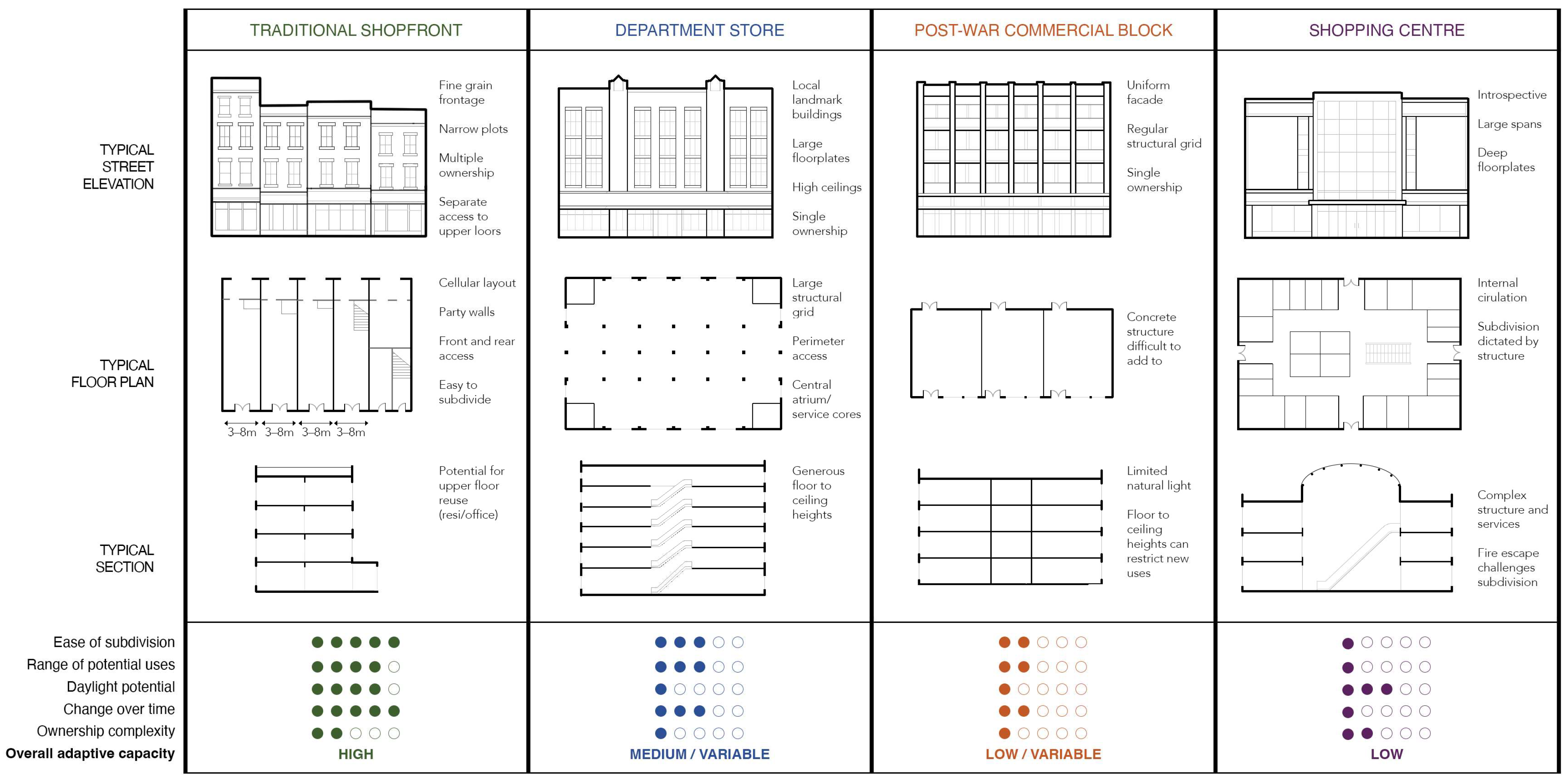
Table 1 summarises the characteristics and adaptive approaches most commonly associated with each.
9.1. Traditional Shopfront Buildings
These buildings are usually characterised by narrow plot widths, shallow floorplates and vertically organised structures combining ground-floor commercial space with residential or storage uses above. Fine-grained plots with individual street access allow units to be occupied, vacated, and reoccupied independently, reducing systemic vacancy risk and enabling continuous micro-level change [
34]. Narrow plots allow premises to be occupied by relatively small businesses, while the shallow depth of buildings ensures that internal spaces can receive natural light and ventilation, meaning ground floors can accommodate retail, cafés, workshops, or service uses, while upper floors may be used for residential or office functions. This spatial flexibility has allowed traditional high street buildings to evolve gradually in response to economic and social change.
However, the adaptability of these buildings is not unlimited. Many traditional shop buildings suffer from long-term underuse of upper floors, often due to access constraints or outdated building standards. In addition, fragmented ownership can make coordinated refurbishment difficult. Strategies might include improving access to upper floors and facilitating residential conversion. Preserving the spatial diversity of traditional shop buildings can support continued incremental urban change.
9.2. Department Store Anchors
Department stores were designed to accommodate national chains operating under long leases and supported by anchor tenants generating footfall for surrounding shops. As national chains have withdrawn from town centres, the limited adaptability of this typology has become increasingly apparent, leaving prominent buildings vacant for extended periods [
5].
Architecturally, these buildings were designed as highly specialised retail environments. Large floorplates, deep internal layouts, and centralised service cores enabled efficient retail display and controlled circulation within single-tenant spaces. While these characteristics supported the operational logic of large-scale retailing, deep floorplates restrict access to natural light, and internal circulation systems do not support multiple tenants and make them difficult to re-purpose [
35]. Substantial architectural and engineering interventions are required to repurpose this infrastructure [
36].
Large open floorplates, accessible ground-level entrances, and central locations well served by public transport do, however, make them good candidates for a range of civic and community uses. Across the UK, several have been adapted to accommodate healthcare facilities. NHS Community diagnostic centres have been installed in Skegness and Dewsbury, providing imaging, testing and outpatient services.
The redevelopment of the former Debenhams building in Stockport illustrates this process. Vacant since 2021, it has been repurposed as ‘Stockroom’, a multi-use cultural and learning hub incorporating a library, archive facilities, event space and creative workspaces. Rather than seeking demolition, the project repositions the building as civic infrastructure, with new vertical circulation, increased daylight through façade alterations and the reconfiguration of large retail floors into smaller programme areas.
While such interventions require substantial public investment, they demonstrate how large retail typologies can be adapted to facilitate the broader shift towards civic, cultural and service-based functions on the high street. This aligns with emerging research on the adaptive reuse of retail space, which highlights the potential to repurpose vacant commercial buildings for residential, hospitality and community uses rather than relying on demolition and replacement. For example, Münster and Adriansen [
37] demonstrate how empty retail units can be reconfigured as accommodation and mixed-use community spaces, contributing to both local economic activity and environmental sustainability.
9.3. Post-War Commercial Blocks
Many high streets also contain post-war commercial blocks intended to modernise accommodation. They typically feature wider shopfronts, simplified structural grids and more standardised commercial layouts than the traditional units they replaced. Their smaller and shallower floorplates make them more straightforward to subdivide or repurpose than department stores. The challenges usually related to poor energy performance, limited upper-floor utilisation, and outdated façade design.
Architectural interventions might involve façade refurbishment or the introduction of new residential or office uses. Adaptive reuse strategies that diversify building uses and improve spatial permeability can help extend the lifespan of post-war commercial structures within high street environments.
9.4. Enclosed Shopping Centres
Enclosed shopping centres typically date from the 1970s onwards. They consist of large internalised retail environments organised around covered circulation spaces and anchored by major retail tenants. Their introspective nature can create difficulties when retail demand declines as inward-facing circulation patterns weaken connections with surrounding streets, reducing potential footfall.
Several towns have reconfigured or partially dismantled their shopping centres, reinstating street networks, while others seek to integrate residential, cultural or civic functions into existing structures. Examples of this include Stockton’s Castlegate Shopping Centre, the redevelopment of Elephant and Castle Shopping Centre and the Broadmarsh Centre, as well as St Nicholas Market and the Broadmead area. In each case, more externally facing, street-based approaches have been taken, with a finer grain and greater permeability/connectivity.
9.5. Typology and Resilience
Examining these typologies highlights that high street resilience is shaped not only by economic conditions but also by the capacity of different building types to accommodate change. The capacity for adaptation is therefore unevenly distributed across different spatial typologies, rather than being an inherent property of high streets as a whole, as summarised in
Figure 2. Recent urban design research similarly emphasises that the physical configuration of buildings—such as plot structure, depth and internal layout—plays a critical role in enabling or constraining long-term adaptability [
38]. A variety of motivations exist to necessitate the retention of existing structures to some degree—including environmental goals, phased investment and the preservation of local landmarks and place identity.
10. Viability-Responsive Urban Design Frameworks
If high streets are increasingly characterised by continual transformation rather than stable equilibrium, architectural and urban design approaches must respond accordingly. The preceding sections have shown that many regeneration strategies remain tied to assumptions of retail-led growth and environmental improvement, despite operating within complex economic and governance conditions that often undermine such models.
This section proposes an alternative approach: viability-responsive urban design frameworks. Rather than focusing on fixed spatial outcomes, these frameworks prioritise the capacity of urban environments to accommodate changing conditions over time. They recognise that resilience emerges not from a single intervention, but from the interaction of spatial form, governance arrangements and economic viability. Viability-responsive design does not seek to predict the future of high streets. Instead, it aims to ensure that town centre structures remain capable of supporting a range of activities as conditions evolve.
10.1. Designing for Incremental Transformation
Many successful high streets evolved through incremental change rather than comprehensive redevelopment. Buildings were modified, extended or subdivided as conditions shifted, producing fine-grained environments with varied typologies and multiple ownership structures. These characteristics enabled spatial flexibility that is difficult to replicate in large-scale developments.
Smaller plots and varied building types allow businesses to occupy spaces suited to their scale, while incremental modification enables adaptation as new uses emerge. Future interventions should therefore prioritise incremental adaptability over wholesale restructuring, retaining and enhancing the spatial grain that supports long-term change. This does not preclude redevelopment, but suggests it should be carefully calibrated to maintain or strengthen adaptive capacity.
10.2. The Importance of Unit Size and Spatial Grain
The size and configuration of commercial units strongly influence high street resilience. Large retail spaces designed for national chains can be difficult for smaller businesses to occupy, particularly where demand for large-format retail has declined [
6,
7,
39]. By contrast, smaller units with flexible layouts can accommodate a wider range of uses.
Designing for varied unit sizes increases the likelihood that spaces remain occupied as conditions change. Relevant strategies include:
Subdividable floorplates;
Maintaining narrow plot divisions;
Enabling amalgamation or subdivision of units;
Designing services and circulation to support multiple tenants.
While relatively modest, these measures can significantly affect long-term viability.
10.3. Built-In Pathways for Conversion
Viability-responsive design also involves enabling future conversion. Buildings with deep floorplates, limited natural light, or complex servicing are difficult to adapt, whereas flexible structural grids, accessible circulation, and adequate daylight support multiple uses.
Designing for sufficient ceiling heights, structural capacity, and service access can allow retail spaces to convert to residential or workspace uses. Similarly, independent access to upper floors enables mixed-use occupation. These strategies do not require predicting future uses, but ensure buildings remain capable of accommodating change. This approach reflects a growing emphasis on adapting existing building stock to accommodate new forms of occupation. Recent work highlights how vacant retail spaces can be repurposed into housing, hospitality, or community uses, reducing the need for new construction while supporting local vitality and lowering environmental impact [
37].
10.4. Integrating Residential Density into Town Centres
Increasing residential presence is often proposed as a way to support high street vitality, providing a stable base of demand and contributing to activity and perceived safety [
40,
41]. This includes emerging models in which vacant retail spaces are repurposed as short-term accommodation or hybrid residential uses, aligning local economic development with more sustainable use of existing building stock [
37]. However, evidence suggests that residential presence has not expanded at the scale often assumed, despite retail decline [
42].
Integrating housing requires careful spatial and governance considerations. Simply adding residential units above retail may be insufficient where building structures or management arrangements are unsuitable. Research on office-to-residential conversion highlights how floor depth, access and daylight affect feasibility and quality [
43]. Poorly located housing can also fragment pedestrian flows and weaken commercial activity [
44].
Viability-responsive design therefore emphasises appropriate residential typologies and spatial placement. This may include:
Upper-floor conversions;
Mixed-use buildings with active ground floors;
Adaptive reuse of redundant buildings;
Targeted new residential development.
Housing should not only be utilised for feasibility, but also regarded as a long-term component of town centre life.
10.5. Aligning Spatial Design with Governance Structures
Spatial strategies depend on governance arrangements. Buildings may be adaptable in principle, but remain underused if ownership structures, financial models, or regulations inhibit change. Design must therefore be considered alongside implementation mechanisms.
Public sector acquisition and management of former retail buildings demonstrates how governance capacity can enable adaptation that would otherwise be constrained within fragmented property markets. For example, the former BHS department store in Grimsby was acquired and redeveloped by North East Lincolnshire Council as part of a wider town centre strategy, with the building adapted to accommodate public services and office uses. Similarly, the conversion of the former Co-operative department store in Croydon into the cultural venue Turf Projects and other community uses illustrates how large retail buildings can be repurposed to support cultural activity within town centres.
10.6. Resilience as an Ongoing Urban Process
Viability-responsive design reframes resilience as an ongoing process rather than a fixed outcome. It emerges from the interaction of spatial design, economic conditions and governance systems, rather than from individual projects. For high streets facing uncertain futures, the role of design is less about delivering definitive solutions than enabling continued adaptation. Environments that support multiple uses, incremental change and alignment with governance structures are more likely to remain viable over time. In this sense, viability-responsive design offers a framework for engaging with the complexity of evolving high street systems.
11. Conclusions: Designing for Continual Change
High streets have always occupied a complex and evolving position within urban life. Their fine-grained structures, diverse ownership patterns and central locations have historically enabled adaptation over time. However, late twentieth-century planning and design approaches were shaped by the assumption that retail would remain the dominant organising force, with regeneration strategies focused on restoring or expanding retail activity through public realm improvements and commercial development.
This assumption is no longer tenable. Structural changes—including the growth of online retail, the retrenchment of major chains, rising operating costs, and the financialisation of commercial property—have undermined the economic foundations of retail-led town centres. The COVID-19 pandemic accelerated these trends, exposing the vulnerability of environments reliant on major retailers while highlighting the importance of local services and adaptable spaces.
These shifts have prompted renewed interest in resilience, but the concept is often interpreted too narrowly within architectural discourse. When reduced to spatial attributes such as flexibility or mixed use, resilience risks becoming detached from the economic and institutional conditions that determine whether adaptation is viable in practice.
This paper has argued that high street resilience should instead be understood as an outcome emerging from the interaction of spatial design, governance arrangements, and economic viability. While architectural form influences the capacity of buildings and streets to accommodate change, this capacity is shaped equally by property ownership structures, investment models, and governance frameworks. Resilience, therefore, cannot be designed into buildings alone; it emerges through the relationship between architecture and the wider systems that structure urban life.
Viewed in this way, several limitations of prevailing regeneration approaches become clear. The continued prioritisation of retail as the primary driver of town centre vitality often results in strategies that are misaligned with contemporary economic conditions. Similarly, assumptions that mixed-use development, public realm improvements or temporary interventions will generate resilience can obscure the importance of underlying economic and governance dynamics. While such strategies may contribute to vitality, they are unlikely to deliver sustained transformation in isolation.
Recognising these limitations points toward alternative approaches that engage more directly with uncertainty and change. The viability-responsive urban design framework proposed in this paper offers one such approach. Rather than seeking to deliver fixed spatial solutions, it emphasises the capacity of urban environments to accommodate ongoing, incremental transformation.
Several spatial principles follow from this perspective. Fine-grained urban structures and varied unit sizes can support a wider range of uses and occupiers. Adaptable building configurations and accessible circulation systems can enable conversion between uses over time. The integration of residential and civic functions can provide more stable sources of activity, while alignment with governance structures is essential for enabling implementation.
Taken together, these principles suggest a shift in architectural success in the context of high streets. Rather than being measured through completed regeneration schemes or immediate economic uplift, success lies in the capacity of places to evolve. Buildings and public spaces that support multiple forms of occupation, accommodate incremental change, and respond to shifting urban conditions are more likely to remain viable over time.
This shift also has implications for architectural practice. It requires closer engagement with planners, policymakers, and institutional actors, as well as recognition that urban transformation often occurs gradually through cumulative change rather than singular interventions. In this context, architecture contributes not by delivering final solutions, but by shaping the conditions through which adaptation can occur.
Resilient high streets are therefore unlikely to emerge from a single regeneration strategy. Instead, they will be shaped through ongoing interactions between spatial design, governance systems, and local economic activity. The role of architecture is not to restore a previous model of retail-led prosperity or define a fixed future vision, but to enable the conditions through which high streets can continue to evolve under uncertain and changing circumstances.