Article

Spatial Dimensions of Nature Bonding in Urban Place Attachment

Department of Architecture, Faculty of Art, Design and Architecture, Duzce University, Duzce 81620, Türkiye
Architecture 2025, 5(4), 133; https://doi.org/10.3390/architecture5040133
Submission received: 3 November 2025 / Revised: 14 December 2025 / Accepted: 15 December 2025 / Published: 18 December 2025

Abstract

Nature bonding (NB), alongside place identity and place dependence, is among the most frequently discussed and empirically validated contributing factors of place attachment (PA) within urban environments. While PA has been extensively studied through its psychological, personal, and spatial dimensions, the specific contribution of NB across these dimensions and spatial scales remains insufficiently understood. To address this gap, this study aims to demonstrate the importance of NB in fostering PA by highlighting the need for spatially sensitive urban planning that integrates natural elements across scales to enhance community satisfaction and well-being. Elmwood Village in Buffalo, New York, recognized as one of the top ten most livable American neighborhoods and part of the historic Frederick Law Olmsted-designed parkway system was chosen as a case study. A three-stage investigation was conducted using survey data. First, the three dimensions of PA—place, person, and psychology—were identified. Second, NB was categorized into three levels: attachment, enjoyment, and oneness with nature. Third, the variability of these bonds across three spatial scales—building, street, and neighborhood—was tested to assess their spatial relevance. The findings reveal that the strength and form of NB differ significantly across spatial contexts, shaping how individuals emotionally and behaviorally connect to urban places. By integrating NB into the spatial understanding of PA, this research provides a framework for urban designers and environmental psychologists to better interpret and enhance human–nature relations in the built environment.

1. Introduction

There is a well-established consensus that nature connectedness significantly enhances human well-being and should, therefore, be an essential consideration in the design of the built environment. This idea has been widely emphasized in previous research (e.g., [1,2,3,4]), particularly within the fields of environmental psychology, urban design, and place studies. Within this body of work, nature bonding (NB) is commonly defined as the emotional, cognitive, and experiential connection that individuals develop with the natural environment, influencing how they perceive, value, and interact with places [5,6,7]. In this context, NB—the emotional and personal connection individuals develop with nature—has frequently been linked to residential satisfaction and place attachment (PA). However, while NB is inherently related to the natural environment, it is also shaped by the spatial and physical characteristics of the built environment. This duality necessitates a spatio-relational approach to understanding how NB operates within urban residential settings.
Although numerous studies acknowledge nature’s contribution to PA, considerably less is known about how individuals interpret their relationship with nature specifically within built environments [8]. Qualitative studies can provide valuable insights into how people experience nature in urban settings, yet the complexity of the concept also calls for a positivistic approach (e.g., [9]). This is particularly relevant when examining PA, a subjective phenomenon widely acknowledged as challenging to quantify and measure [10].
Most existing research approaches nature through experiential or activity-based perspectives, whereas the potential mediating influence of built form on the strength of NB at different spatial scales has received comparatively limited scholarly attention [8,10,11]. Prior research highlights that nature experiences influence emotional well-being and psychological restoration, but the spatial dimension of this relationship remains underexplored [1,4]. Since urban design plays a crucial role in shaping people’s access to and interaction with nature, a spatially sensitive examination of NB is needed [12].
This study aims to address this gap by investigating spatio-hierarchical relationships of NB within urban residential environments at three distinct scales: building, street, and neighborhood [2,13]. By focusing on the physical characteristics of the built environment, this research aims to investigate the extent to which nature integration in residential settings is associated with PA beyond individual experiences [9]. Specifically, this study adopts the three widely recognized dimensions of NB—attachment, enjoyment, and oneness—not only because they are established in the literature [10,11], but also, because they capture distinct emotional, experiential, and identity-based aspects of human–nature relations. These dimensions provide a framework for examining how different forms of NB vary across spatial scales and may differentially relate to PA.
To achieve this, the study explores the following research questions:
  • Does the degree of NB vary across different spatial scales?
  • Are there differences in the perceived connections to the natural environment (namely: attachment, oneness, and enjoyment) at the building, street, and neighborhood scales
  • How do these connections relate to the three dimensions of PA—psychological, person-based, and place-based—within an urban setting?
In the first step, the study has investigated the link between NB and PA, in general, and in relation to the scale dimension of NB. The second step has evaluated the three dimensions of PA and their relation to NB satisfaction at the three scales. Finally, the types of NB have been discussed in relation to spatial differences and their performance evaluation in the development of PA. By integrating spatial, environmental, and psychological perspectives, this study aims to contribute to a deeper understanding of the interconnections between NB, the built environment, and PA.

2. Research Background

Nature connectedness has been widely acknowledged as a crucial factor in enhancing human well-being and fostering a stronger sense of belonging in the built environment [1,4]. This relationship has been extensively studied in environmental psychology, particularly in relation to residential satisfaction and place attachment (PA) [2,10]. People develop personal and emotional connections to nature, but these connections are also influenced by the spatial and physical structure of the built environment [8]. Thus, despite being inherently linked to nature, NB is also spatial and relational, making it essential to examine its role within urban settings.

2.1. Nature Bonding: A Component of Place Attachment

Place attachment (PA), within the scope of this research, is broadly defined as an emotional bond formed with a physical setting [11,14]. Although prior studies acknowledge nature bonding (NB) as a factor influencing place-related meanings [11,15,16], its specific role within residential urban environments remains insufficiently clarified. This study aims to address this gap by examining the role of NB in the development of PA within urban contexts.
A substantial body of research has examined the positive impact of nature connectedness on human behavior, well-being, and place perception, though often in indirectly related literature. For example, Zhang et al. [17] investigated how access to green spaces and nature connectedness influence health and well-being. Similarly, Gosling and Williams [18] explored the relationship between pro-environmental behavior and emotional associations to place, identifying two key components: PA and NB. Beyond its psychological effects, NB has also been framed as a representation of local history and cultural continuity, contributing to familiarity, a sense of place, and the livability of environments [19,20]. Additionally, research suggests that nature connectedness is essential for achieving psychological well-being, supporting theories such as biophilia [21]. In this sense, the natural environment emerges as a critical predictor of PA in residential areas, shaping spatial aesthetics, recreation opportunities, and interpersonal relationships.
Over time, various uni-dimensional and multi-dimensional models have been proposed to measure PA. Among these, NB has increasingly been recognized as a third key dimension, alongside place identity and place dependence [11]. This shift reflects criticisms of the traditional two-dimensional framework, which often overlooked the social and ecological context of PA [11]. As a result, NB has recently been incorporated into PA assessments, both as an empirical construct and as a phenomenological experience that deepens the connection between individuals and their environments.

2.2. A Reciprocity: Nature Bonding and Tripartite Aspects of Place Attachment

Nature Bonding (NB) as discussed above, has been associated with not only physical, spatial, and social satisfaction but also psychological fulfillment. Parallelly, place attachment (PA) consists of three entities: (1) person/people, (2) activity, and (3) a setting to perform the activity [22]. The interaction between these three leads to three dimensions of PA in the literature: psychology, person, and place [10]. The psychology dimension refers to affective, cognitive, and behavioral attachment, while the person dimension refers to the attachment that is developed either individually or collectively [10]. The third-dimension place is evaluated by exploring whether physical setting itself is the main source of PA or not {10] compared to the other two.
The psychological dimension of PA emphasizes the emotional, cognitive, and behavioral bonds people form with a place [10]. NB, similarly, fosters emotional and cognitive connections by allowing individuals to engage with natural settings, whether it be through tranquil gardens or expansive green spaces [23,24]. This emotional connection results in feelings of well-being and belonging, which are central to PA theory [10]. Nature’s ability to evoke a sense of tranquility and security enhances the psychological attachment to both the place and the natural environment [25]. Moreover, NB often leads to stronger behavioral attachment, as individuals frequently engage in activities that involve nature, such as walking, gardening, or simply observing the environment [26]. This reciprocity between nature and the psychological aspect of PA demonstrates how NB strengthens emotional ties to both the space and the activities conducted within it [27].
The person dimension of PA refers to the connections people form, either individually or collectively, with a place [10]. This connection is essential for understanding how NB influences social relationships within a given environment. Through shared experiences in nature, individuals can develop collective bonds that enhance their sense of belonging to a community [13]. Social interactions in natural spaces, such as parks or green corridors, offer opportunities for connection and collaboration, further reinforcing community attachment [11]. On an individual level, NB allows a person to connect deeply with a place on a personal level, forming individual attachments to natural features such as a specific tree, garden, or pond [28]. The reciprocity in this dimension is evident as NB cultivates individual and collective connections to a space, which in turn strengthens the social fabric of a community or personal sense of place [29].
The place dimension of PA explores the physical setting itself and its role in fostering attachment [10]. NB directly impacts this dimension by shaping the way individuals perceive and interact with their environment [25]. The physical presence of nature, such as trees, plants, or gardens, contributes to a sense of identity and belonging to a place [30]. The built environment that incorporates natural elements creates a harmonious blend between the constructed and natural realms, making the setting more appealing and fostering long-term attachment [23]. As Scannell & Gifford [10] highlight, the physical setting can serve as a powerful anchor for both individual and collective attachments. The reciprocal relationship between NB and the place dimension is thus evident in the way natural elements influence the way people experience and form bonds with their surroundings, making nature an integral aspect of PA [27].

2.3. Spatial Scales in Understanding Nature Bonding and Place Attachment

The understanding of place attachment (PA) and nature bonding (NB) varies significantly across different spatial scales, particularly when considering the building, street, and neighborhood levels within the built environment. PA, as a multifaceted concept, is broadly understood to be shaped by the physical, social, and psychological connections people form with a place. As Lewicka [31] notes, PA can be understood at both personal and community levels, and the nature of these attachments can differ based on scale. NB, which often involves direct or symbolic interactions with the natural environment [23], also varies across spatial scales. These connections, however, are not uniform across different spatial scales. At the micro-scale, individuals may form bonds with small green spaces such as gardens or tree-lined streets, experiencing a personal connection to nature.
At the scale of a single building or dwelling, attachment is primarily shaped by individual experiences and the direct interaction with immediate surroundings, such as gardens, courtyards, or even the spatial arrangement within the home [23]. NB in this context is often more intimate, rooted in personal interactions with small, accessible natural elements like plants, trees, or even the view of greenery outside the window [13]. As the scale increases to the street and neighborhood levels, these attachments tend to shift toward social and community aspects, integrating broader cultural, historical, and collective experiences [10,32].
At the street scale, attachment becomes influenced by how nature is integrated into public spaces, such as tree-lined streets, parks, or community gardens, which facilitate interactions not just for individuals but for the broader community [11]. Social interactions within these spaces help forge a collective attachment, as people begin to associate these spaces with both personal experiences and shared memories [10]. NB at the street scale often occurs through regular use of green spaces, fostering a sense of ownership and belonging within the community. The visibility and accessibility of nature at this scale can enhance the sense of place, making it a key factor in cultivating both individual and collective bonds [13,31].
As such, the nature of attachment at the neighborhood scale is often influenced by social identity, local history, and the shared experiences of the people who live there [11]. At the neighborhood scales, NB and PA take on an even broader significance, as the interconnectedness of the built environment and green spaces plays a central role in shaping people’s sense of identity and well-being. A neighborhood with abundant green spaces, such as parks, walking trails, or nature reserves, fosters a stronger connection not only to the environment but also to the social fabric of the area. Community attachment at this scale is cumulative, as the collective experience of natural spaces influences overall satisfaction with the neighborhood [11]. However, disruptions at this scale—such as the loss of green spaces or poorly designed urban environments—can have a profound impact on both individual and community attachment [29]. Thus, as the spatial scale increases from the building to the neighborhood level, the nature of the attachment becomes more complex and interdependent, shaped by both personal experiences and social interactions.
Overall, based on given above background, this study posits that different scales of spatial analysis may contribute to understanding of distinct dimensions of PA and NB. At smaller scales, such as individual buildings, NB may be more personal and intimate, while at larger scales, like streets and neighborhoods, these connections are amplified through social interactions and collective experiences. The scale at which nature is encountered—whether on a personal balcony, a public street, or a neighborhood park—ultimately influences the depth and type of attachment formed. As such, the understanding of NB and PA must account for these varying scales to provide a comprehensive view of how people form emotional, social, and behavioral bonds with their environments [10,29]. This satisfaction here is a cumulative process and thus, affected by any disruptions from smaller scales to larger scales in the built environment. Studies also highlight that disruptions at a single scale—like changes to a neighborhood or the removal of green spaces—can significantly affect the attachment and well-being of individuals at another scale [10,11,33,34]. On a micro level, personal experiences dominate the attachment process, while at a community or urban level, these connections become more integrated with social identity and collective experiences, suggesting that the scale of observation can shape how individuals perceive and interact with their environment. Understanding the relationship between NB and PA thus requires considering spatial scale to identify the relations between perceived and physical aspects of satisfaction in a more systematic and spatially sensitive way. This paper focuses on the direct experience of nature within the built environment, particularly the amount of greenery (e.g., trees, vegetation coverage, front and back yards of houses), which will be detailed in the methodology section.

3. Methodology

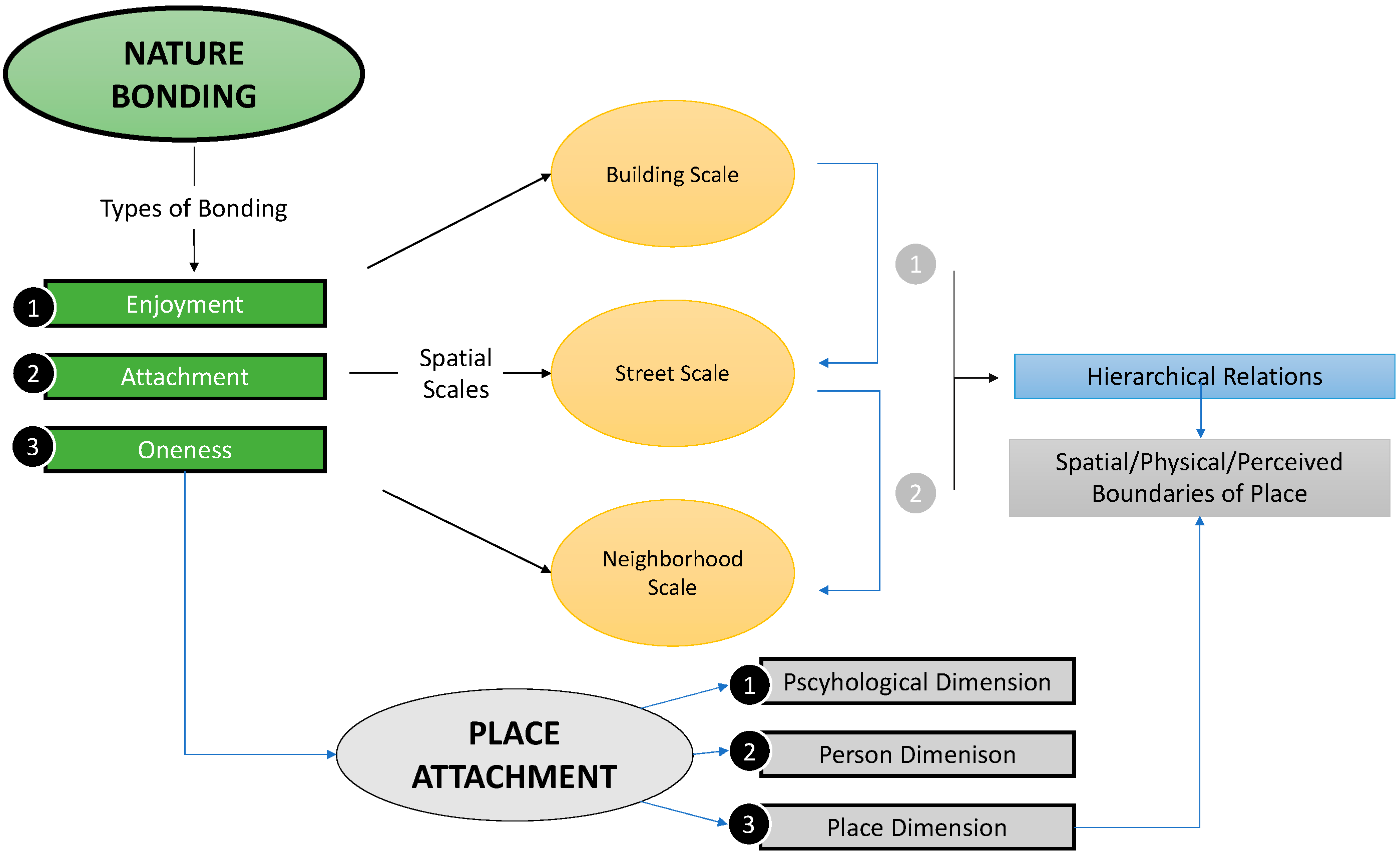
This study adopts a case study approach to investigate the spatial dimension of nature bonding (NB) manifested via place attachment (PA). The study first establishes criteria for case selection and verifies these criteria through spatial characteristics analysis. For the assessment of NB and PA, surveys are conducted with the residents online using Google Forms (Google LLC, Mountain View, CA, USA). NB is assessed through two primary dimensions: (1) spatial scale, where NB is measured at the levels of building, street, and neighborhood, and (2) types of attachment, ranging from enjoyment to attachment and a sense of oneness with nature (See Table 1). On the other hand, PA is measured through three main dimensions: psychological, person, and place dimensions, with a stronger emphasis on the place dimension. This study systematically compares these parameters to reveal the findings through statistical analysis. The research design is visualized below (Figure 1).

3.1. Case Selection Rationale

This study sets the criteria first to allow a robust measurement of the subjective concepts in question. For instance, place attachment (PA) can be felt differently by people who are not a part of the socio-economic and cultural background of the majority living in a neighborhood. In other words, cultural or ethnic differences can create inter-group conflicts and result in dissatisfaction with the place [35]. Therefore, the case study area should be selected in a way that can limit demographic differences amongst its residents.
Although selecting cases with highly similar physical environments and minimizing demographic variation may limit the generalizability of the findings, this design choice is intentional. Controlling these factors allows the study to isolate the spatial effects of street configuration and residential layout on nature bonding (NB) and PA. By holding other influential variables constant, the research design ensures that the observed differences could be attributed primarily to these spatial attributes rather than demographic or socio-economic disparities. While this controlled approach constrains broader interpretation, it provides a clearer causal understanding of how spatial settings shape psychological outcomes.
This study also does not aim to compare the impact of different degrees or the management quality of green built environment on NB and/or PA as in most of the earlier studies (e.g., [36]). Instead, it initially focuses on finding the true relationship between NB and PA. To allow such association, the case study location should be determined in the best possible way to offer a strong sense of PA and a strong sense of NB. It is essential to control not only for demographic and welfare-related variables but also for certain quantitative spatial attributes when selecting comparable residential tissues. Therefore, the spatial settings included in the study were required to offer similar levels of greenery (e.g., number of trees per 1000 m2 or vegetation coverage) as well as comparable indicators of urban form, such as building density, building height–to–street width ratios, mean building heights, and housing types. These criteria were determined based on established findings in the literature on environmental perception, spatial configuration, and greenery exposure, all of which have been shown to significantly shape residents’ environmental experiences [25,37,38]. Accordingly, the reciprocity between the psychological and spatial components can only be meaningfully examined when such variables are controlled in advance. The operationalization and measurement of these spatial attributes are described in detail in the following section.
Elmwood Village, located in the central part of Buffalo, New York, serves as a compelling case for this research. Recognized as one of the ten most livable American neighborhoods by the American Planning Association (APA) due to its vitality and diverse cultural and social assets [39], it exemplifies a thriving residential community. Additionally, it fosters a strong sense of belonging and natural connectedness among its residents, partly due to its integration into the parkway system designed by Frederick Law Olmsted, the landscape architect behind Central Park in New York City [40]. The pride of its residents in their neighborhood has been passed down through generations, reinforcing its status as a historically and socially significant area [41]. This deep-rooted attachment is further evidenced by findings from interviews conducted with residents, as reflected in the following excerpts, which will be discussed in more detail in the survey section of the study:
Living in Elmwood Village is a lifestyle.
Feeling like it is a small town within a city. Enjoying the history of Buffalo through our homes and architecture.
This is a real neighborhood.
I love the urban options here, the gardens and greenspace, the beautiful homes, and buildings. It’s a kind of bit of everything kind of place.
We sold our house and moved back to Elmwood. We rented again but are very happy to back living where we feel is our home.
The above quotes overall indicate that Elmwood Village is more than just a place to live—it is a way of life. Residents cherish its unique blend of urban vibrancy and small-town charm, where history is woven into the very fabric of their homes and streets. The sense of community is strong, fostering deep connections that make it feel like a true neighborhood. With its mix of green spaces, beautiful architecture, and lively urban offerings, Elmwood Village offers the best of both worlds. For many, it is not just a location but a place they long to return to—a home in the fullest sense.

3.2. The Spatial Analysis

As mentioned above, the initial aim of the study is to investigate the relationship between nature bonding (NB) and place attachment (PA) in a neighborhood where both are felt strong so that the exact association between these two concepts can be revealed. While this investigation has been followed to identify the impact of the spatial scale dimension of NB, to investigate the place dimension of PA, in the selected residential setting, identifying spatial similarities and differences was necessary to ensure analytical consistency, as variations in spatial form and greenery exposure are known to influence environmental perception.
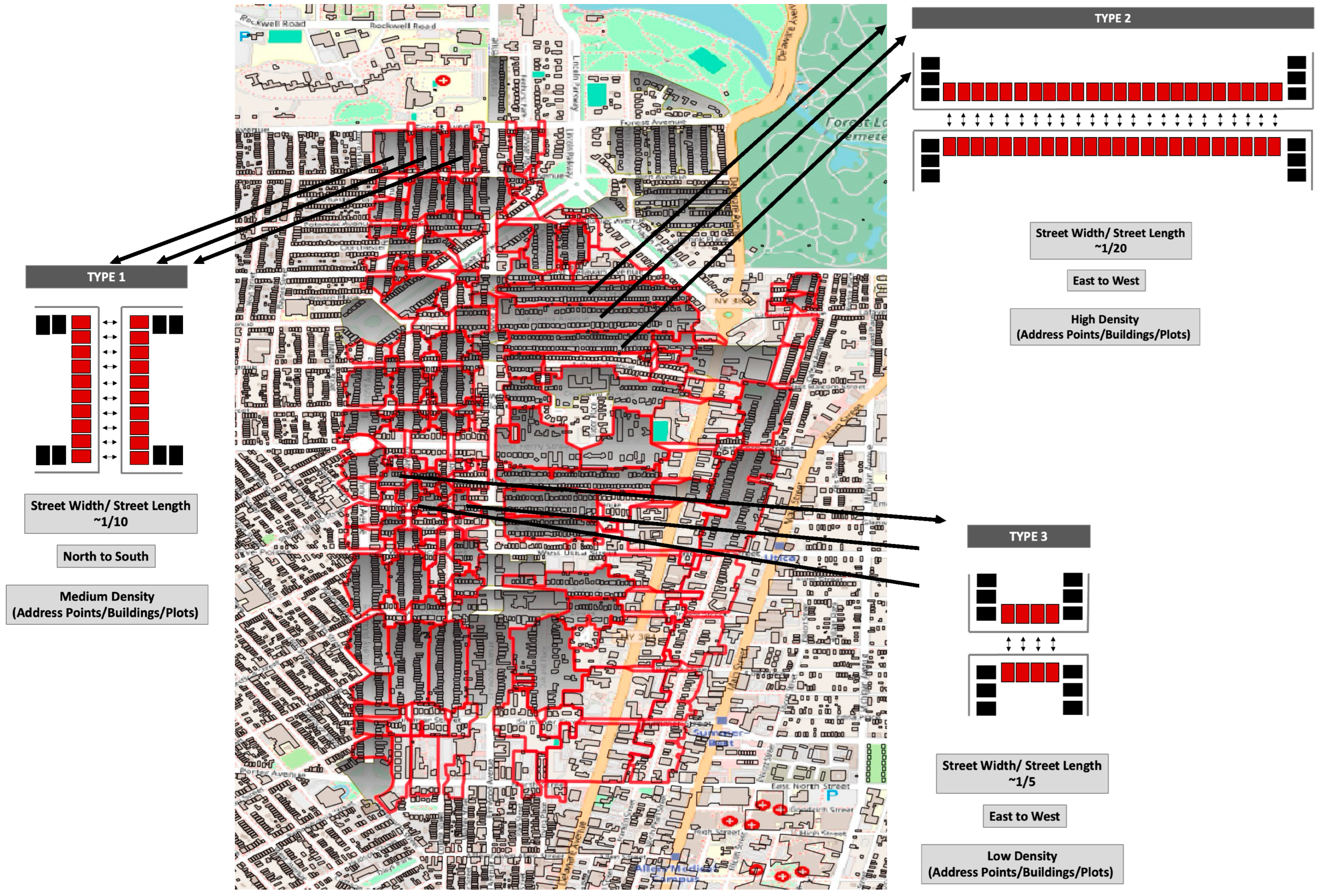
The residential streets are first identified in the neighborhood, then numbered according to their, shape, orientation, and sizes (Figure 2). Additionally, interviews with Elmwood Village residents regarding NB and PA are conducted and will be discussed in more detail in the next section. Based on these evaluations, three street types (Type 1, Type 2, and Type 3) have been highlighted (representatively showed in Figure 2). The homogeneous structure of Elmwood Village suggests that similarities outweigh differences. These three street types can be defined by the community size they support. Differences in street length, number of buildings, and orientation are reflected in spatial characteristics.
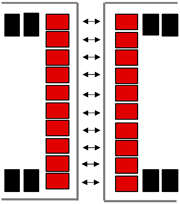
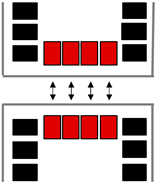
Looking at the spatial attributes of the chosen layouts in more detail (Table 1), it is evident that they look alike in terms of certain characteristics, such as types of housing (single-family-2–3 floor housing stock), street widths, building heights and thus H/W ratio, plot sizes. Some other similarities can also be assumed in relation to building density, tree density and vegetation coverage which have also been quantitatively measured in this study. As seen in Table 1, the determinant characteristics of the chosen layouts were orientation, street length, number of units/buildings/plots, total street segment block areas, sizes, and dimensions.
This study also highlights the urban morphological effects of boundary perception in green residential environments. In this study, the term boundary refers to the physical, visual, and perceptual conditions that structure the degree of separation or continuity between built and natural elements within residential environments. Boundaries operate at multiple scales—ranging from building-level thresholds such as windows, balconies, and façade permeability to street-level enclosures and neighborhood-scale edges shaped by land-use transitions or green corridors. Drawing on environmental psychology and urban morphology literature (e.g., [42,43,44], boundaries influence how individuals access, perceive, and interpret natural elements, thereby playing a critical role in mediating NB and PA. For example, the amount of greenery could be the same, but the perception of satisfaction could have been felt differently within the perceived boundaries of the residential setting. The above table thus lists a set of variables associated with greenery to prove the similarity amongst the three groups in terms of the amount of green in each type of street block. These attributes are Sky Coverage (street eye-level view, the percentage of the sky visible from 360 panoramic street view), Vegetation Coverage (bird’s eye view), number of trees per 100 m, and number of trees per 1000 m2.

3.3. Survey Design and Measurement Framework

The survey questions are designed to assess residential satisfaction related to place attachment (PA) and nature bonding (NB). Likert-scale items were developed and administered to the residents of Elmwood Village. Sets of statements for both concepts were adapted from the established scales. The survey consists of 9 items measuring PA and 15 items measuring NB. For PA, scales for place and neighborhood attachment (PAI, NAS, PREQs) are used. These scales consider three situations: (1) moving away from a place, (2) the relocation of important individuals, (3) moving with loved ones. These situations correspond to the psychological, person, and place dimensions of PA, respectively, and asked for three spatial scales, namely home, street and neighborhood, resulting in 9 items in total.
For NB, the study employs the Connectedness to Nature Index (CNI) and the Connectedness to Nature Scale (CNS). The CNI conceptualizes NB as a combination of emotional closeness, enjoyment, and reliance on nature, whereas the CNS defines it as a deeper sense of oneness and self-identification with the natural world. These scales were selected because they are among the most widely validated measures of human–nature relationships and because their conceptual distinctions align with the study’s aim to examine different forms of NB across spatial scales. Given the word limitations of this paper, Table 2 provides a summarized set of items adapted from these scales to ensure applicability across the building, street, and neighborhood contexts. As shown in Table 3, the NB scale consists of five core items, each evaluated across three spatial scales—home, street, and neighborhood—resulting in a total of 15 measurement items.
These items are grouped into three categories: PA dimensions, NB across three scales, and the strength of NB. The clarification has been made between the scales in relation to the relevant natural features they can offer (e.g., the front and rear garden at the building scale; gardens, street trees, and other vegetation at the street scale; and gardens, street trees, parks, and other vegetation at the neighborhood scale). These items are grouped in three ways in Table 3: PA dimensions, NB at the three scales, and the degree of NB. Table 3 also presents the distributions of the items and their reliability scores together with a summary of the statements used for the measurement of NB.
A total of 122 residents were interviewed. Before categorizing the sample into groups, an initial analysis was conducted to assess the overall relationship between NB and PA. The sample was then divided into three spatial groups—Type 1, 2 and 3, with participants distributed as follows: 43 households for Type 1, 45 for Type 2 and 34 for Type 3.
In terms of socio-economic status, at least 55% of the respondents in each case are homeowners (76.7% in Type 1, 80% in Type 2, and 55.9% in Type 3). Their lengths of residence in the housing unit, street, and neighborhood are also similar in Type 1 and 2 (at least 55% over 10 years of residence) and slightly lower in Type 3 (at least 35% over 10 years of residence). Regarding household types, the majority of responses in all cases reported that they live with a partner (at least 32.2% for each case). The following dominant household type was the ones living with family/relatives/children (at least 29.4% for each case). Majority of the respondents were also females (67.4% in Type 1, 68.9% in Type 2, 82.4% in Type 3) and age 55 years and older (48.8% in Type 1, 40% in Type 2, 32.3% in Type 3).
All three cases consist of single-family houses, duplexes, quadplexes, and low to mid-rise multi-family apartment buildings. However, cases show overall similar housing stock distribution where the 1 to 3-floor houses are dominant. At least over 50% of each case has single-family houses (62.8% in Type 1, 77.8% in Type 2, and 50% in Type 3). In addition, 1- to 3-floor duplexes and quadplexes also cover 27.9%, 20%, and 32.3%, respectively. Regarding greenery, all three spatial types contained similar levels of vegetation, ensuring that differences in NB perceptions were not due to variations in green space availability. The following table provides a comparative analysis of their spatial characteristics and greenery levels.

4. Findings

4.1. Nature Bonding and Place Attachment Association

Building on previous literature and the authors’ empirical findings across diverse cultural and geographical contexts [33,34,46], which establish nature bonding (NB) as a key contributing factor of place attachment (PA), this study specifically examines the strength of this relationship. In this study, although a moderate correlation (based on [47]’s standard) was found between NB and PA (Pearson correlation: 0.377, p-value: 0.000), this association was lower than expected given the case study’s high satisfaction levels. The focus of the findings, therefore, shifts from the absolute strength of the relationship to how this relationship varies across spatial contexts and scales. Although it still indicates the relevance, such a low correlation was not expected, especially compared to the results of the author’s earlier research [34] conducted in the Turkish housing context (r: 0.689). In addition, this research had been specifically designed to reveal this association with more certainty by conducting research where it is believed to have strong NB and PA. The study further compared the results at the three spatial scales and found the association slightly stronger at the building scale (0.338) than those at the street and neighborhood scales (0.326). This was not also aligned with the author’s previous research where the natural bonding was significantly effective at the street and neighborhood scales but not at the buildings. However, it is acceptable because the perspective the earlier research [33,34] adopted was towards the different housing typologies, not the certain natural features. On the other hand, in this paper, the urban/neighborhood layout consists of homogenous house types and with its own peculiar layout leads to perceptual differences in evaluating NB.
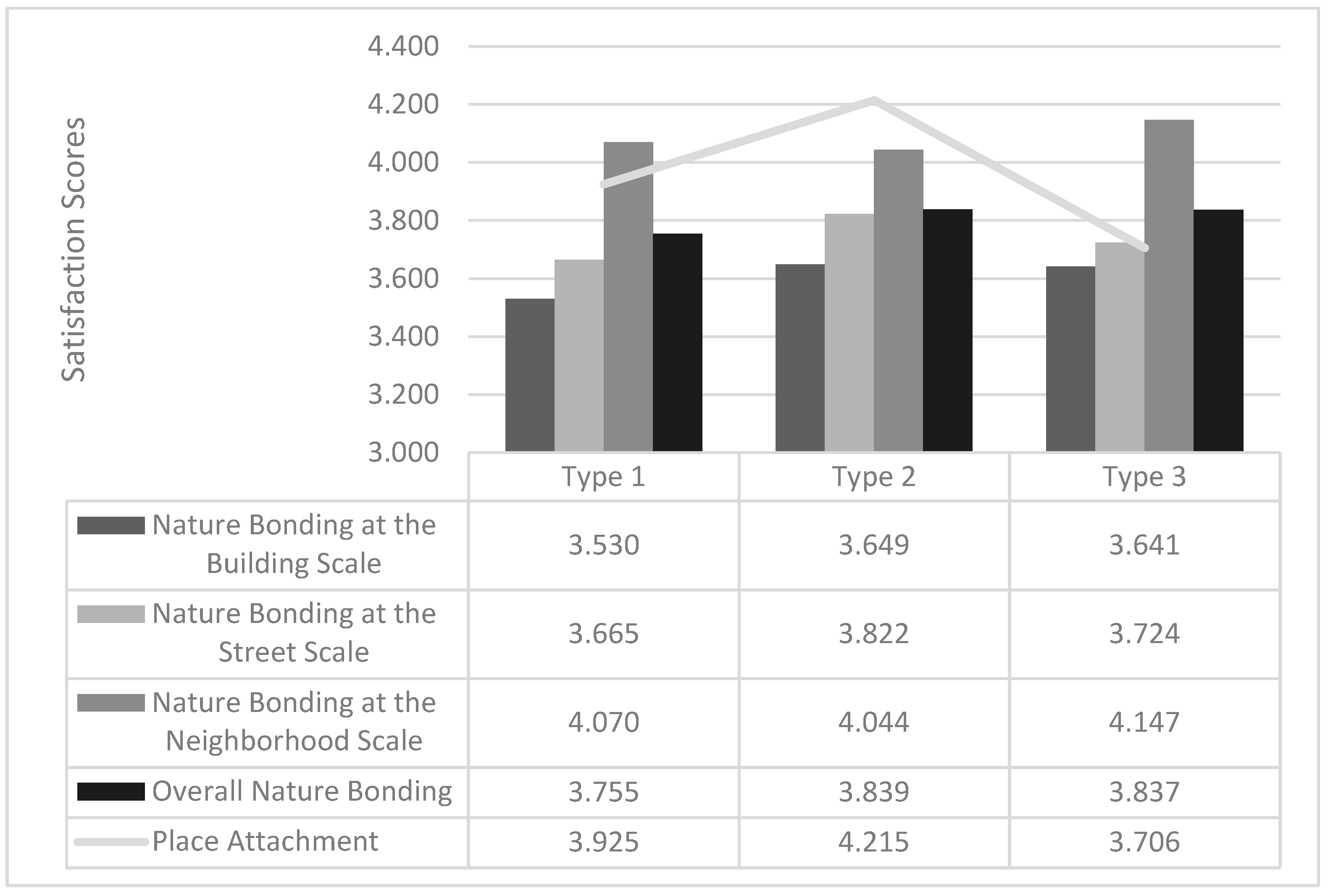
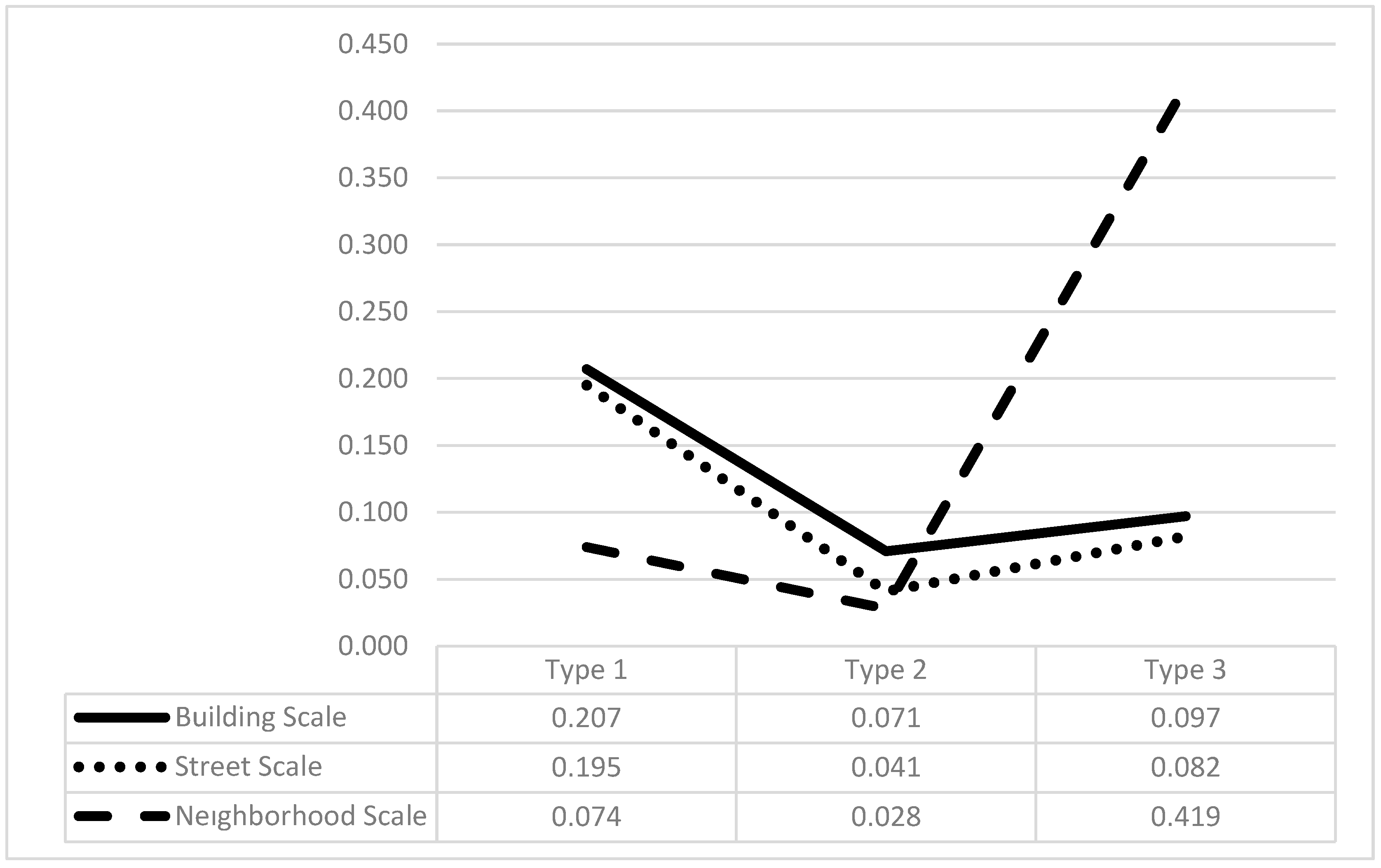
To identify the perceptual differences derived from the place boundaries, the above-mentioned relations have also been compared over the three street layouts. This study particularly aimed to look at the hierarchical relation of the satisfaction scores of NB from building scale to neighborhood scale and its impact on the strength of the overall PA. Figure 3 illustrates that when there is a gradual increase in NB satisfaction scores from the building scale to the street and then to the neighborhood scale (as seen in Type 2), it consistently leads to a higher overall PA score. This pattern highlights the importance of spatial continuity in nature experiences.
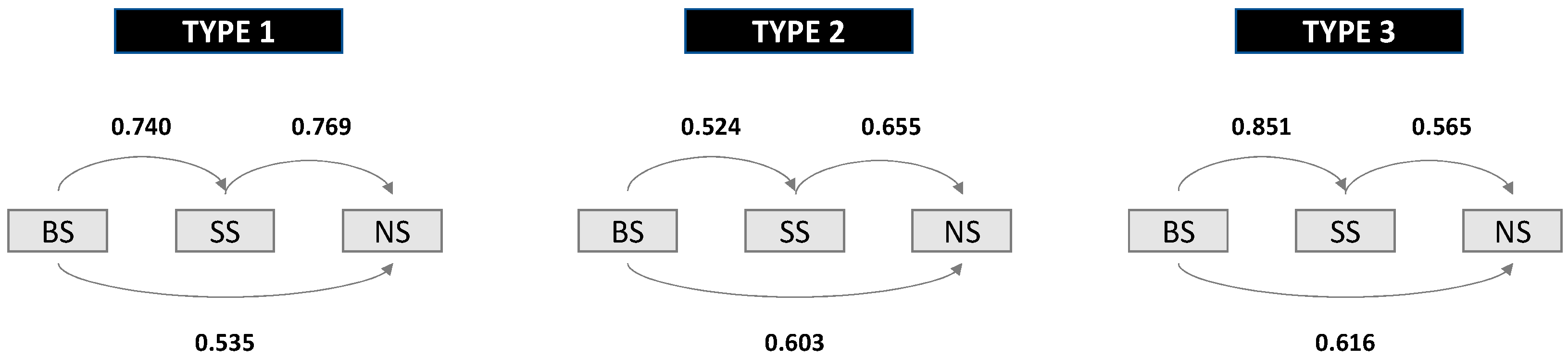
Then, the correlation scores are calculated between the scales regarding NB from the building scale to the street scale, and then from the street scale to the neighborhood scale (See Figure 4). It is seen that in Type 3, the building-to-street scale relation has been much more prominent than that from the street scale to neighborhood scale. Type 1 has shown the same degree of hierarchical relevance between the cases (from smaller to larger). This also results in higher satisfaction with PA than Type 3. In Type 2, the relevance and correlation scores between all scales (hierarchical and non-hierarchical) were similar and it ends up with the highest PA scores reported by their residents.
It is also important to point out that these differences are more likely the consequences of the residents’ different perceptions of the spatial boundaries. In Type 3, the residents most likely do not feel a part of the bigger neighborhood defined around them. Their surroundings are limited to a much smaller circle and their personal boundaries are probably more deeply embedded at the smaller scales. In the second scenario, keeping up the gradual relevance at the satisfaction level with NB helps to develop better PA. However, the better scenario (Type 2) is where the relevance is more or less equal between all scales, (it shows lower correlations than Type 1 but still over 0.5 that ends up with stronger place/neighborhood attachment.). This is also supported by the R2 values run between NB scores at each case and PA scores (Figure 5). Even though the R2s are low, their relative comparisons show that Type 3 is prominently isolated at its building and street scales from its neighborhood scale. Type 1 was slightly segregated at its neighborhood scale and Type 2 is the one showing the same degree of relevance to PA, and thus the stronger satisfaction.
All three cases share similarities at both the building and neighborhood scales. However, as this study demonstrates, the relationships between these scales and their impact on PA vary. Differences in size, orientation, and dimensions suggest that residents may perceive and define “neighborhood” differently across these cases. For instance, in Type 3, where boundaries are the smallest, NB at the building scale shows the strongest correlation with the neighborhood scale. However, these residents are also the most isolated from their neighborhood, leading to the weakest PA. The study did not statistically control for homeownership or length of residence when comparing the three types. Therefore, the weaker PA observed in Type 3 may reflect demographic turnover rather than purely spatial or morphological factors. In Type 2, the dominant street length makes it easier for residents to connect from the street scale to the neighborhood rather than the building. Meanwhile, in Type 1, with its medium size and balanced dimensions, relationships between the street, building, and neighborhood scales are more evenly distributed. Overall, these findings suggest that street configuration plays a crucial role in shaping residents’ perception of neighborhood boundaries.
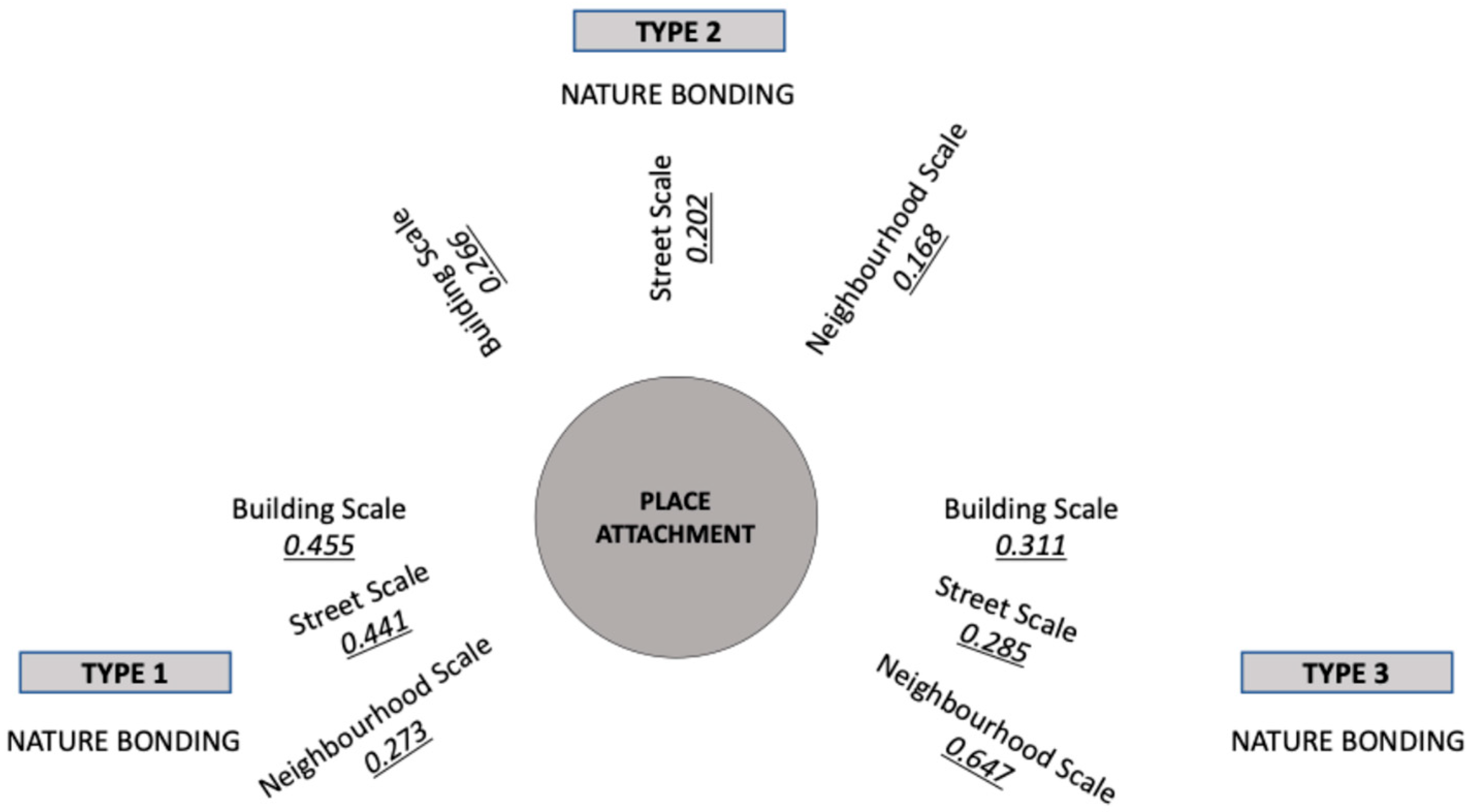
For further clarification, the correlation scores can be examined in Figure 6. Based on Cohen [47]’s standards, the correlation scores are interpreted as follows: Small (0.2): 0.1 to 0.3, Medium (0.5): 0.3 to 0.5, Large (0.8): 0.5 to 1.0. Across all scales and cases, NB is positively correlated with PA, though the strength varies. In Type 1, moderate correlations were found at the building and street scales, but a weak correlation at the neighborhood scale. Type 2 exhibited weak correlations at all scales. In Type 3, a moderate correlation appeared at the building scale, a weak correlation at the street scale, and a strong correlation at the neighborhood scale. The weakest correlation in Type 2 occurred at the neighborhood scale, while the strongest was in Type 3. Comparing the cases, Type 1 and Type 2 share a trend where neighborhood-scale correlations are the weakest. However, in Type 3—the smallest spatial setting—the strongest correlation is at the neighborhood scale, while NB at the street scale has the weakest link to PA. This suggests that perceptions of neighborhood boundaries shift based on spatial scale, with smaller areas reinforcing stronger neighborhood attachment.

4.2. Evaluating Tripartite Dimensions of Place Attachment

This section examines the significance of the three main dimensions of place attachment (PA)—psychology, person, and place—on overall satisfaction with the place, while also assessing the relevance of nature bonding (NB) to each dimension. When analyzed collectively across all cases, NB (aggregated across all scales) exhibited a moderate correlation with the three dimensions of PA, with the strongest association found in the place dimension (r = 0.375, p-value = 0.000) and the weakest in the psychology dimension (r = 0.327, p-value = 0.000). Additionally, a scale-sensitive analysis of NB indicates that the place dimension plays a slightly greater role in satisfaction, as it shows a correlation above 0.3, whereas the other two dimensions remain below this threshold (see Table 4 below).
Looking at the three identified street layouts, ANOVA tests have been run between the groups and the results showed statistically significant differences in place (p: 0.024) and person (p: 0.007) dimensions but not in psychological dimension (p: 0.071) of PA. These have been investigated further in relation to the satisfaction with NB at the three scales for the three street block types (Table 5).
Considering the three main dimensions of PA, psychology, person, and place; Table 5 shows that in Type 1, NB indicates statistically significant importance in the positive development of PA at the building and street scales; but NB at the neighborhood scale is not correlated with PA. In Type 2, there has been no statistically significant correlation between NB and PA regardless of the scales. In Type 3, a statistically significant contribution has been noted only at the neighborhood scale, but in all three dimensions of PA. In this case, although the correlations at all scales were high/large (<0.5), the highest contribution was to psychological attachment (R: 0.688), then this is followed by the person (R: 0.587), and the place dimensions (R: 0.562), respectively. In other words, the attachment here is strongly psychological rather than being related to the spatial attributes of the neighborhood. In Type 1, at the building and street scales, the correlations were at a moderate level (>0.3). There was almost no difference regarding the contributions to the three dimensions of PA at the building and street scales, but the contribution of NB to PA was much higher in its place and person dimensions than psychological dimensions.
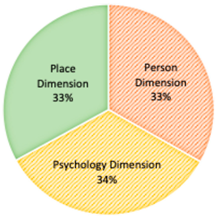
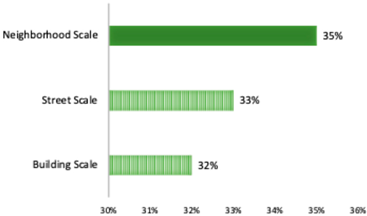
Considering the three components of attachment, the studies identifying the place dimension are not many [10], but the limited literature focusing on these three dimensions suggests that the social dimension and the person dimension have been found more important than its place dimension [29]. In this research, the cases have already shown strong PA and NB. However, the results of this study differently suggest that the reason behind this success could be the achievement of satisfaction levels in all three dimensions of PA. This has been illustrated in the left column of Table 6 below where the distribution of each dimension in the overall score has been calculated and presented in percentages. The same argument may be valid for NB scores reported at the three spatial scales, too, as the almost equal distributions shown in the right column below.

4.3. Nature Bonding Typologies at the Three Scales

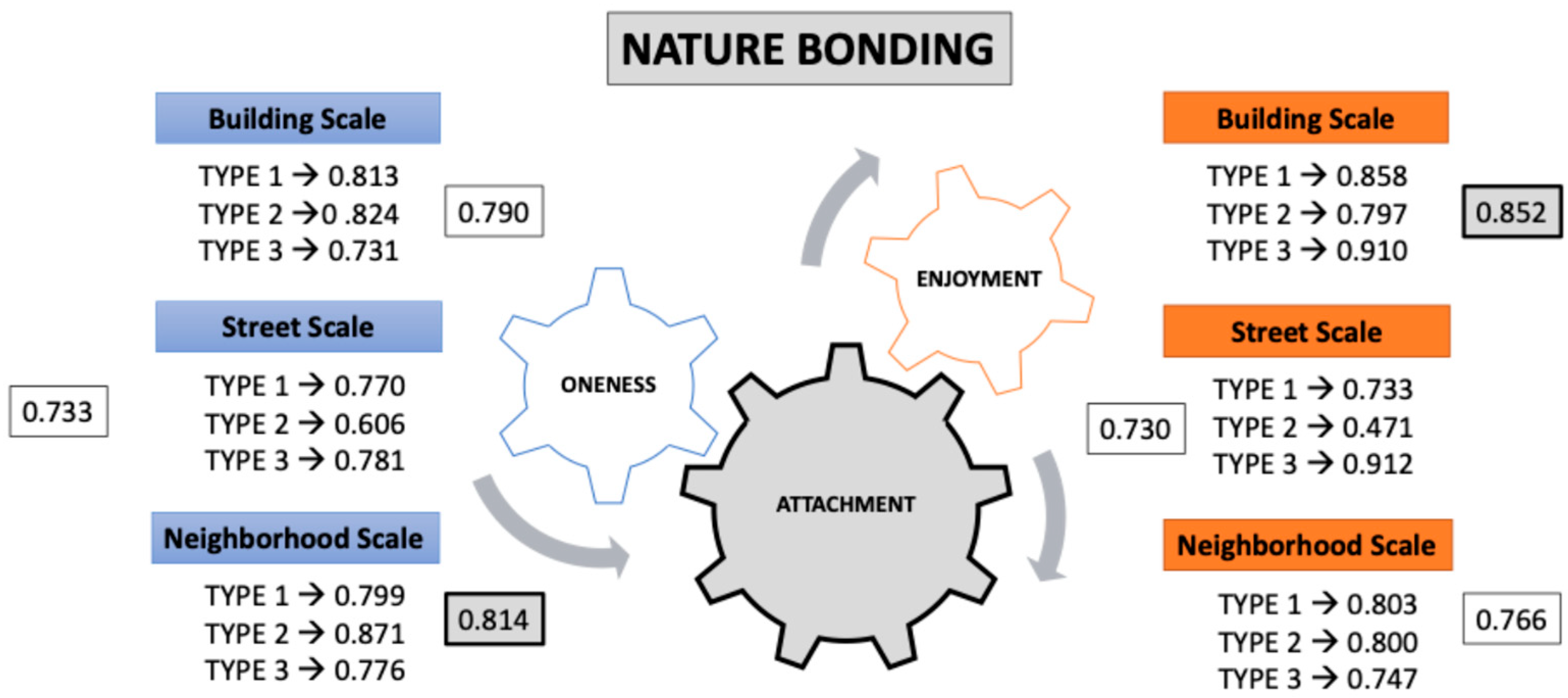
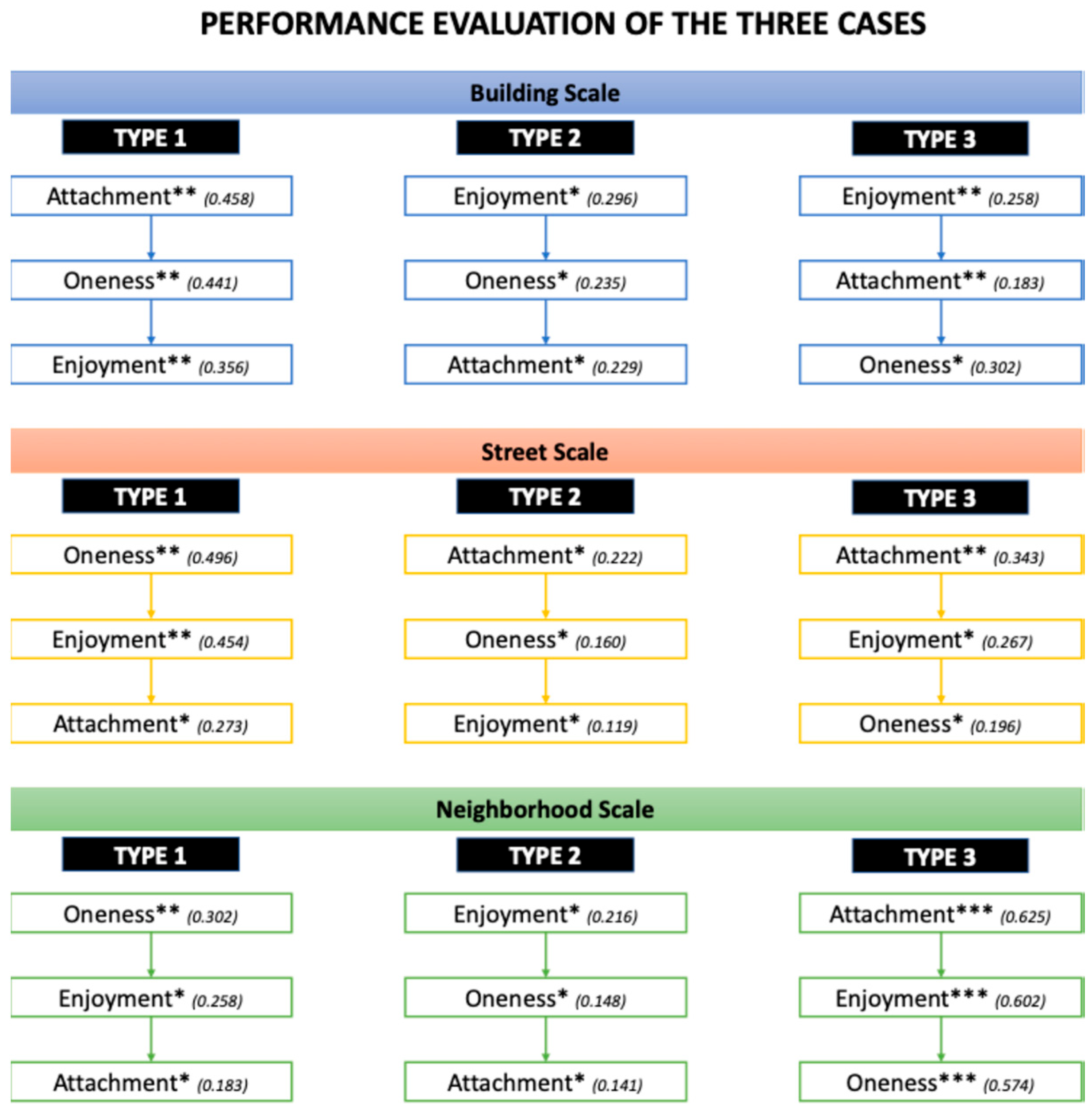
Regarding the nature bonding (NB) typologies, namely, senses of enjoyment, attachment, and oneness, Figure 7 reports on which type of bonding is the most significant in what type of street layout. Then it presents their performance evaluation regarding promoting place attachment (PA) (Figure 8).
As seen in Figure 7 above, the sense of oneness is the strongest at the neighborhood scale, and the enjoyment of nature at the building scale. The enjoyment of nature is the most important in Type 3 at the building and street scales compared to the other two cases. The enjoyment of nature and the sense of oneness have both shown the lowest importance in Type 2 at the street scale.
Regarding the association of NB to PA, the NB typologies are further scrutinized at the three scales (see above). As seen from Figure 8 above, each of the cases has shown a different association between NB and PA at the three scales. While enjoyment was the main predictor of the PA at the building scale in Type 2 and 3, and attachment at the street scale. The main differences in all cases were observed at the neighborhood scale where Type 1 performance was the greatest in terms of oneness, and enjoyment in Type 2 and attachment in Type 3. According to this comparison, in Type 3, the smallest unit, NB has resulted in the strongest PA at the neighborhood scale. The same logic is followed by Type 1, at a moderate level, at the building scale.

5. Discussion and Conclusions

This study provides a nuanced understanding of nature bonding (NB) at three articulated scales, manifested through place attachment (PA) within an urban residential setting. The findings confirm that NB is a significant predictor of PA. However, the strength of this relationship varies across spatial scales and is influenced by perceived spatial boundaries. While previous literature has emphasized the psychological benefits of nature connectedness, this study highlights the role of built environment configurations in shaping the intensity and distribution of NB and its subsequent impact on PA.
The findings reveal that hierarchical relationships across spatial scales influence PA. A gradual increase in NB from the building to the street and then to the neighborhood level enhances PA, as seen in Type 2, where the most balanced correlation across scales was observed. Conversely, in Type 3, where residents exhibited the strongest attachment at the building scale but weaker connections to the neighborhood, PA was lower. This suggests that continuity in nature experiences across spatial scales plays a critical role in fostering a sense of place. Perceived spatial boundaries also play a vital role in defining PA. In cases where residents perceived their surroundings as fragmented, as seen in Type 3, the overall attachment was weaker at the neighborhood level. Meanwhile, in Type 1, where the correlation between smaller and larger scales was more even, PA remained moderate but lacked the strongest neighborhood integration observed in Type 2.
It should also be acknowledged that the form and length of the street are closely linked to the social scale available for interaction. As Table 1 shows, Type 2 includes a considerably larger number of households than Type 3. Therefore, the higher PA and stronger connectivity observed in Type 2 may reflect not only the spatial continuity of greenery but also the greater social density that facilitates interpersonal recognition and community formation. Conversely, the sense of isolation reported in Type 3 may be partly attributable to its smaller population size rather than the short street form alone. These factors likely operate interactively rather than independently, and the spatial interpretation of the findings should be read with this limitation in mind.
These results highlight the need to consider the interplay between spatial configurations and human perceptions when designing urban environments to enhance PA. The prominence of boundaries in the findings also aligns with earlier research suggesting that spatial edges and transitions shape environmental experience. For instance, studies in urban design and landscape perception highlight that thresholds and enclosure levels affect visual exposure to natural elements (e.g., [25,48]) In line with these perspectives, the results demonstrate that the perceived continuity or separation between built form and greenery significantly influences the strength of NB, particularly at the street and neighborhood scales. However, unlike previous studies that treat boundaries mainly as morphological or visual constructs, the findings suggest that boundaries also function as experiential filters through which people develop emotional ties to nature within dense urban settings.
NB contributes differently to the three dimensions of PA: psychological, person, and place. Across all cases, the strongest correlation was found with the place dimension, confirming the crucial role of the physical environment. However, the varying correlation strength across spatial scales suggests that while social and psychological factors remain important, the spatial configuration of nature integration significantly impacts attachment formation. Type 1 demonstrated moderate correlations between NB and all three dimensions of PA at the building and street scales, but not at the neighborhood scale. Type 3, on the other hand, exhibited the strongest correlations at the neighborhood scale, with psychological attachment being the most prominent dimension. This suggests that while spatial factors are essential, individuals may develop attachment differently depending on their lived experiences and interactions with nature.
The study also examined different types of NB: enjoyment, attachment, and oneness. At the building scale, enjoyment was found to be the most influential factor in fostering PA, whereas oneness played a more significant role at the neighborhood scale. These findings suggest that individuals seek different forms of nature engagement at varying scales, emphasizing the need for urban environments to accommodate multiple layers of nature interaction. For instance, in Type 3, where NB at the neighborhood scale showed the strongest correlation with PA, oneness was the most dominant factor. Meanwhile, in Type 1, PA was more strongly influenced by attachment at the street scale. These differences underscore the importance of designing nature-infused environments that cater to diverse engagement preferences, ensuring that residents can develop meaningful connections with their surroundings.
It should be noted that the R2 values, particularly at the neighborhood scale, are low. This indicates that NB accounts for only a small portion of the variance in PA, and that many other factors not examined in this study—such as safety, socio-economic stability, neighborhood reputation, housing affordability, or community networks—likely play substantial roles. Therefore, the emphasis of this study is not on the magnitude of prediction but on the comparative spatial patterning of relationships. NB functions as one contributing factor rather than a dominant predictor, and its relevance lies in how its strength varies across the building, street, and neighborhood scales rather than in its total explanatory power.
The study assumed to find a strong correlation between NB and PA, especially because the residents of the neighborhood reported high levels of satisfaction scores in both qualities of the residential environment in question. Although the relevance has been identified at a moderate level, the study revealed differences at the three scales and with the important dimensions of PA. For instance, hierarchical relations from smaller to bigger scales have been found relevant in the improvement of PA. The gradual increases in NB from the building-to-street, then the street-to-neighborhood, have resulted in higher PA scores (Figure 3). However, it is also noted that the spatial qualities and the perceived boundaries of the home environment may lead to different satisfaction levels. The chosen residential layouts could have caused perceptual differences in place boundaries. This is because people may develop an attachment to a place based on the relationships they establish as a group identity [10], and the street layouts have been chosen in a way that may affect the degree of strength in establishing this group identity. So, as a result, being a part of smaller community settings may bring about stronger connections at larger scales and weaker at smaller scales. Sharing a street with a small number of housing units at the street level may cause a feeling of isolation. Sharing a lengthy street may make the residents feel the strongest PA at the street scale, but this scale can replace the concept of neighborhood in their minds. The perceived benefit of greenery may also differ at different place scales. For instance, enjoyment and oneness may not always be the two opposite ends of NB in residential areas. While the sense of oneness can be felt stronger at the neighborhood scale, enjoyment can be the priority at the building scale. This is also reflected in the strength of PA. People feeling a stronger attachment to a place may develop NB easier. Another important outcome of this study is that satisfaction with PA and NB can be improved by providing balanced relations between the three dimensions of PA and the three spatial scales of NB.
However, these results cannot be generalized to a wider housing context, as the study was conducted in a single-family home, American residential neighborhood setting. Additionally, the research was conducted in a prosperous neighborhood where attachment, especially at an emotional level, could have already been felt strongly over many years, as opposed to most studies conducted in dilapidated environments. It is claimed in the literature that “Individuals of similar status and life-stage select the location and type of dwelling according to their lifestyles and economic constraints. As a result, pockets of relatively homogeneous communities emerge, and within these neighborhoods, interpersonal attachments and networks develop” [10]. Given this, the case study selection also acknowledges why the neighborhood is satisfied. One could argue that the impact of NB may not be identified as strongly. However, as discussed earlier, the case studies have shown an equal degree of satisfaction with the place dimension compared to its social and psychological attachments. The explanatory power of NB was modest, and the low R2 values indicate that PA is shaped by many environmental and socio-economic variables that were not included in this study. Accordingly, the findings should be interpreted as relational patterns across scales rather than attempts to statistically predict attachment strength. Future research would benefit from controlling for variables such as safety, housing affordability, neighborhood reputation, and long-term residence to provide a more comprehensive explanatory model.
Furthermore, trees have had a significant impact on the sense of enclosure in this neighborhood for over half a century, and thus its influence could be more physical than psychological attachment as well. One respondent’s comment supports this:
I love my home, street, and neighborhood and I enjoy the green, gardens, and trees, but it does not necessarily mean that I developed bonding towards them.
The study also proves that the amount of greenery, even though it is the same, can lead to different degrees of satisfaction at different spatial scales. While some people could feel they have enough greenery at the building level, they may still feel attached to nature at larger scales, as indicated in the following quote from one of the respondents:
The amount of green space in the community is important to me (_and my dog) but I don’t have personal green space at my place, but the parkways and the park are a key feature to the area for me.
Sometimes, NB can be related to the amount of greenery alone. Here, the impact can be both psychological and physical, but it may be embedded in past experiences, and the feeling can continue over time, even though it has become less effective today. As one respondent noted:
I do miss the nature and more open spaces of suburban living which I left behind after 42 years.
The healing power of nature in developing pro-environmental actions is something strongly believed by the community in the case study area, similarly to what has been discussed in the literature (e.g., [49,50]. This is also reflected in the interviews, where one respondent remarked:
The Olmsted Park system that is part of my neighborhood is a treasure. It is a special gift to have access to parkways and parks steps from my home. I truly believe in the healing power of nature. My street has an island with a garden. Several neighbors tend it and, in the last two years, I have been able to engage some of the kids in pruning, planting, deadheading, and sweeping. They feel a sense of ownership because of their involvement. They are proud when flowers bloom and sad when a truck accidentally runs over the plants.
Although NB can be linked to the above-mentioned positive outcomes, it may also lead to negative side effects by not allowing consideration of future living area alternatives, especially for the neighborhood studied in this research:
“We are of the age to downsize our home but have not been able to find a similar quality of environment, that’s why we want to stay in our neighborhood.”
Another important factor is to provide the best fit between human needs and the physical environment. The chosen case study areas show similarities regarding density measures (e.g., building coverage, number of units per 1000 m2, etc.), but their population sizes are different. In return, actions towards nature are also limited to the extent of the community they belong to, where group-specific actions occurred. This can be discussed in relation to the development of PA as well, leading us to consider what exact spatial characteristics of the built environment are behind its formation [10].
Overall, the findings have several implications for urban design and planning. First, the study demonstrates that strengthening NB at multiple spatial scales requires a deliberate spatial hierarchy of green elements—beginning at the building scale and extending through the street to the neighborhood. Designers should therefore avoid concentrating greenery in a single location and instead establish a continuous sequence of natural features that can be experienced during daily routines. Providing varied opportunities—private gardens, semi-public front yards, tree-lined streets, and accessible parks—can support the different forms of NB (enjoyment, attachment, and oneness) identified in this study. In practical terms, this means prioritizing fine-grained, walkable green networks rather than isolated nodes—designing street trees at regular intervals, maintaining visual access to greenery from dwellings, and ensuring that every daily route intersects with natural elements.
Second, the results highlight the design relevance of perceived boundaries. The transitions between the home, street, and neighborhood scales can shape how residents interpret and internalize their surroundings. For instance, strengthening connections between the street and neighborhood scales, as observed in Type 2, can foster a stronger sense of community and belonging. Urban designers should therefore soften hard spatial edges by improving visual permeability, increasing green continuity between parcels, and enhancing pedestrian connections. Design interventions such as reducing front yard fences, using semi-transparent boundary treatments, or aligning planting strips across property lines can help minimize perceived fragmentation. Community gardens, pocket parks, and green corridors can help foster collective experiences of nature, thereby strengthening social cohesion and neighborhood-level attachment.
Lastly, this study acknowledges that NB is context-dependent. The findings are specific to an affluent American neighborhood with a well-established green infrastructure, which may not be generalizable to other housing typologies or socio-economic contexts. Future research should explore NB and PA in diverse urban environments, including high-density settings, mixed-use developments, and areas with limited green spaces. Additionally, incorporating longitudinal studies that can monitor how NB changes over time, and how different urban settings (e.g., high-density areas, mixed-use neighborhoods, or low-income urban environments) contribute to these perceptions and the development of PA, can provide insights into how NB evolves over time and how changes in the built environment impact PA. Complementing perceptual surveys with spatial analytics and behavioral data (e.g., movement patterns, green visibility metrics) could deepen our understanding of how built environments mediate psychological outcomes. Comparative studies across contrasting cultural and climatic contexts would be particularly valuable, as the meaning of NB may differ in arid climates, rapidly densifying cities, or regions with limited tree canopy.
Overall, three core findings emerge clearly from the analysis:
  • NB varies across spatial scales and this variability shapes PA;
  • Perceived boundaries mediate how residents internalize these scales;
  • And enjoyment, attachment, and oneness contribute differently at the building, street, and neighborhood levels.
These patterns appear consistently despite moderate statistical strength, indicating stable tendencies across the dataset. It should also be noted that the statistical results presented in this paper indicate relative tendencies rather than strong predictive relationships. For instance, this study acknowledged that Type 3 contains a substantially lower proportion of homeowners and long-term residents compared with Types 1 and 2. These sociodemographic differences may partially explain the weaker neighborhood-level attachment, making it difficult to attribute the lower scores solely to spatial configuration. At the same time, it is worth noting that residents in all three types generally perceived the neighborhood as a single, coherent spatial unit—more strongly than the building or street scales. This suggests that the relatively weak attachment in Type 3 may not be explained by tenure characteristics alone; it may also reflect how the spatial structure and its boundaries shape residents’ interpretation of what constitutes their ‘neighborhood.’ Thus, demographic factors and spatial perceptions likely operate together rather than independently. Therefore, the interpretations focus on comparative patterns across scales rather than strict statistical precision.
In conclusion, this study contributes to PA literature by demonstrating how NB operates across spatial scales and dimensions of attachment. The findings underscore the importance of spatial continuity, perceived boundaries, and varying forms of nature engagement in shaping attachment strength. By recognizing the spatially sensitive nature of NB, urban planners and environmental psychologists can develop strategies to enhance residential satisfaction, promote well-being, and foster deeper connections between individuals and their living environments. Future work can build on these insights to refine design guidelines that intentionally integrate nature into everyday urban life—not as a single amenity, but as a multi-scalar structure that shapes how people experience, interpret, and become attached to their living environments. In practice, this suggests design guidelines that prioritize multi-scalar greenery—ensuring that residents can see, access, and interact with nature both immediately around their homes and within their wider neighborhood structure.


Funding

This research was funded by the Turkish Fulbright Commission (Fulbright Grant for 12 months, Grant Number: FY-2021-TR-PD-04). The APC was funded by the author.

Institutional Review Board Statement

The study was conducted in accordance with the Declaration of Helsinki and was determined to be exempt from full ethical review by the University at Buffalo Institutional Review Board (UBIRB) (protocol ID: STUDY00006030, approval date: 27 December 2021), in accordance with 45 CFR 46.104 and there is no expiration date.

Informed Consent Statement

Informed consent was obtained from all subjects involved in the study.

Data Availability Statement

The data that support the findings of this study are not publicly available but are available from the author upon reasonable request.

Acknowledgments

The author would like to thank the Turkish Fulbright Commission for providing funding support, and the State University of New York at Buffalo for hosting the research during the fellowship period. Sincere thanks are extended to all interview participants who generously contributed their time and insights to this study.

Conflicts of Interest

The author declares no conflicts of interest. The funders had no role in the design of the study; in the collection, analyses, or interpretation of data; in the writing of the manuscript; or in the decision to publish the results.

Abbreviations

The following abbreviations are used in this manuscript:
APAAmerican Planning Association
PAIPlace Attachment Index
NASNeighborhood Attachment Scale
PREQIsPerceived Residential Environment Quality Indicators
CNIConnection to Nature Index
CNSConnectedness to Nature Scale
NBNature Bonding
PAPlace Attachment
BSBuilding Scale
SSStreet Scale
NSNeighborhood Scale

References

  1. Kellert, S.R.; Heerwagen, J.; Mador, M. Biophilic Design: The Theory, Science and Practice of Bringing Buildings to Life, 4th ed.; John Wiley & Sons Inc.: Hoboken, NJ, USA, 2008; ISBN 978-0-470-16334. [Google Scholar]
  2. Liu, H.; Nong, H.; Ren, H.; Liu, K. The effect of nature exposure, nature connectedness on mental well-being and ill-being in a general Chinese population. Landsc. Urban Plan. 2022, 222, 104397. [Google Scholar] [CrossRef]
  3. Kaplan, R. The Nature of the View from Home: Psychological Benefits. Environ. Behav. 2001, 33, 507–542. [Google Scholar] [CrossRef]
  4. Capaldi, C.A.; Dopko, R.L.; Zelenski, J.M. The relationship between nature connectedness and happiness: A meta-analysis. Front. Psychol. 2014, 5, 976. [Google Scholar] [CrossRef]
  5. Schultz, W.P. Inclusion with nature: The psychology of human-nature relations. In Psychology of Sustainable Environment; Kluwer Academic Publishers: Boston, UK; Dordrecht, UK; London, UK, 2002; pp. 61–78. [Google Scholar]
  6. Mayer, F.; Frantz, C.M. The connectedness to nature scale: A measure of individuals’ feeling in community with nature. J. Environ. Psychol. 2004, 24, 503–515. [Google Scholar] [CrossRef]
  7. Nisbet, E.K.; Zelenski, J.M.; Murphy, S.A. The Nature Relatedness scale: Linking individuals’ connection with nature to environmental concern and behavior. Environ. Behav. 2009, 41, 715–740. [Google Scholar]
  8. Kaplan, R. The Role of Nature in the Context of the Workplace. Landsc. Urban Plan. 1993, 26, 193–201. [Google Scholar] [CrossRef]
  9. Brown, G.; Raymond, C.M.; Corcoran, J. Mapping and measuring place attachment. Appl. Geogr. 2015, 57, 42–53. [Google Scholar] [CrossRef]
  10. Scannell, L.; Gifford, R. Defining place attachment: A tripartite organizing framework. J. Environ. Psychol. 2010, 30, 1–10. [Google Scholar] [CrossRef]
  11. Raymond, C.M.; Brown, G.; Weber, D. The measurement of place attachment: Personal, community, and environmental connections. J. Environ. Psychol. 2010, 30, 422–434. [Google Scholar] [CrossRef]
  12. White, M.P.; Alcock, I.; Wheeler, B.W.; Depledge, M.H. Nature, health, and well-being: The role of nature exposure in supporting psychological well-being. Curr. Dir. Psychol. Sci. 2019, 28, 36–41. [Google Scholar]
  13. Korpela, K.M.; Hartig, T.; Kaiser, F.G.; Fuhrer, U. Restorative experience and self-regulation in favorite places. Environ. Behav. 2001, 33, 572–589. [Google Scholar] [CrossRef]
  14. Jorgenson, B.S.; Stedman, R.C. Sense of place as an attitude: Lakeshore owners’ attitude towards their properties. J. Environ. Psychol. 2001, 21, 233–248. [Google Scholar] [CrossRef]
  15. Wolf, K.L. Green Cities & Good Health. 2010. Available online: https://depts.washington.edu/hhwb/Thm_Place.html (accessed on 27 September 2015).
  16. Katsamagka, A. Developing Place Attachment to the Natural Surroundings of the School: The Role of Outdoor Education. Master’s Thesis, Linköping University, Department of Culture and Communication, National Centre for Outdoor Education, Linköping, Sweden, 2013. [Google Scholar]
  17. Zhang, Y.; van Dijk, T.; Tang, J.; van den Berg, A.E. Green Space Attachment and Health: A Comparative Study in Two Urban Neighborhoods. Int. J. Environ. Res. Public Health 2015, 12, 14342–14363. [Google Scholar] [CrossRef]
  18. Gosling, E.; Williams, K.J.H. Connectedness to nature, place attachment and conservation behaviour: Testing connectedness theory among farmers. J. Environ. Psychol. 2010, 30, 298–304. [Google Scholar] [CrossRef]
  19. Uslu, A.; Gökçe, S. Social interaction in urban areas and the characteristics of urban outdoor spaces. Afr. J. Agric. Res. 2010, 5, 2801–2810. [Google Scholar]
  20. Li, W.W.; Hodgetts, D.; Ho, E. Gardens, Transitions and Identity Reconstruction among Older Chinese Immigrants to New Zealand. J. Health Psychol. 2010, 15, 786–796. [Google Scholar]
  21. Kellert, S.; Wilson, E. The Biophilia Hypothesis; Island Press: Washington, DC, USA, 1993. [Google Scholar]
  22. Relph, E. Place and Placelessness; Pion Limited: London, UK, 1976. [Google Scholar]
  23. Kellert, S. Building for Life: Designing and Understanding the Human-Nature Connection; Island Press: Washington, DC, USA, 2005. [Google Scholar]
  24. Herzog, T.R.; Kutzli, D. Nature and human experience: A critical review. In The Human-Nature Relationship: A Psychological Perspective; Clayton, S., Clayton, S., Eds.; Greenwood Press: Westport, CT, USA, 2002; pp. 51–68. [Google Scholar]
  25. Kaplan, R.; Kaplan, S. The Experience of Nature: A Psychological Perspective; Cambridge University Press: Melbourne, UK, 1989. [Google Scholar]
  26. Ulrich, R.S. Aesthetic and affective response to natural environment. In Humans and the Environment: A Psycho-Ecological Perspective; Podesta, A.M., Ed.; Cambridge University Press: Melbourne, UK, 1983; pp. 85–108. [Google Scholar]
  27. Olivos, P.; Clayton, S. Self, Nature and Well-Being: Sense of Connectedness and Environmental Identity for Quality of Life. In Handbook of Environmental Psychology and Quality of Life Research; Fleury-Bahi, G., Pol, E., Navarro, O., Clayton, S., Olivos, P., Liu, J., Corraliza, J.A., Uzzell, D., Bonaiuto, M., Lewicka, M., Eds.; Springer International Publishing: Berlin/Heidelberg, Germany, 2017; pp. 107–126. [Google Scholar]
  28. Shamai, S. Sense of place: An empirical measurement. Geoforum 1991, 22, 347–358. [Google Scholar] [CrossRef]
  29. Hidalgo, M.C.; Hernandez, B. Place Attachment: Conceptual and Empirical Questions. J. Environ. Pscychology 2001, 21, 273–281. [Google Scholar] [CrossRef]
  30. Hartig, T.; Böhm, G.; Mayer, F.S. Environmental psychology: A new direction in understanding hu-man-environment relations. Environ. Behav. 1996, 28, 402–424. [Google Scholar]
  31. Lewicka, M. Place attachment and place identity in the context of new, larger, and more mobile environments. In Handbook of Environmental Psychology; John Wiley & Sons: New York, NY, USA, 2010; pp. 115–138. [Google Scholar]
  32. Dang, L.; Weiss, J. Evidence on the Relationship between Place Attachment and Behavioral Intentions between 2010 and 2021: A Systematic Literature Review. Sustainability 2021, 13, 13138. [Google Scholar] [CrossRef]
  33. Gökce, D.; Chen, F. Sense of place in the changing process of house form: Case studies from Ankara, Turkey. Environ. Plan. B: Urban Anal. City Sci. 2018, 45, 772–796. [Google Scholar] [CrossRef]
  34. Gökce, D.; Chen, F. Multimodal and scale-sensitive assessment of sense of place in residential areas of Ankara, Turkey. J. House Built Environ. 2021, 36, 1077–1101. [Google Scholar] [CrossRef]
  35. Fried, M. Continuities and discontinuities of place. J. Environ. Psychol. 2000, 20, 193–205. [Google Scholar] [CrossRef]
  36. Paniotova-Maczka, D.; Matczak, P.; Jabkowski, P. Place Attachment and Views on Tree Management. Front. Psychol. 2021, 12, 639830. [Google Scholar] [CrossRef] [PubMed]
  37. Nasar, J.L. Urban design aesthetics: The evaluative qualities of building exteriors. Environ. Behav. 1994, 26, 377–401. [Google Scholar] [CrossRef]
  38. Stamps, A.E.I. Enclosure and Safety in Urbanscapes. Environ. Behav. 2005, 37, 102–133. [Google Scholar] [CrossRef]
  39. APA Great Places in America: Neighborhoods (Elmwood Village, Buffalo, New York). 2022. Available online: https://www.planning.org/greatplaces/neighborhoods/2007/elmwoodvillage.htm (accessed on 14 April 2022).
  40. Miller, J. Frederick Law Olmsted and the parkway system of Buffalo. Urban Des. Stud. 2015, 18, 75–98. [Google Scholar]
  41. Haller, M. The history and transformation of Elmwood Village: A study of Buffalo’s urban renewal. Buffalo Hist. Rev. 2011, 45, 112–129. [Google Scholar]
  42. Lynch, K. The Image of the City; MIT Press: Cambridge, MA, USA; London, UK, 1960. [Google Scholar]
  43. Appleton, J. The Experience of Landscape; John Wiley & Sons: London, UK; New York, NY, USA, 1975. [Google Scholar]
  44. Stamps, A.E. Visual qualities of the urban street. J. Plan. Lit. 2010, 25, 68–95. [Google Scholar]
  45. Cheng, J.C.-H.; Monroe, M.C. Connection to nature: Children’s affective attitude toward nature. Environ. Behav. 2012, 44, 31–49. [Google Scholar] [CrossRef]
  46. Gökce, D. Enhancing Sense of Place Through Form-Based Design Codes: Lived Experience in Elmwood Village Under Buffalo’s Green Code. Urban Sci. 2025, 9, 285. [Google Scholar] [CrossRef]
  47. Cohen, J. Statistical Power Analysis for the Behavioral Sciences, 2nd ed.; Lawrence Erlbaum Associates: Mahwah, NJ, USA, 1988. [Google Scholar]
  48. Nasar, J.L. The Evaluative Image of the City; Sage Publications: Thousand Oaks, CA, USA, 1998. [Google Scholar]
  49. Gullikson, C. Human Connection to Nature within the Built Environment: An Exploration of Office Employee Perception of Nature Connectedness. Master’s Thesis, Florida State University, College of Visual Arts, Theatre and Dance, Tallahassee, FL, USA, 2010. [Google Scholar]
  50. Brown, G.; Raymond, C. The relationship between place attachment and landscape values: Towards mapping place attachment. Appl. Geogr. 2007, 27, 89e111. [Google Scholar] [CrossRef]
Figure 1. Research design.
Architecture 05 00133 g001
Figure 2. Determining residential street layouts in Elmwood Village.
Architecture 05 00133 g002
Figure 3. The satisfaction scores of NB and PA at the three scales.
Architecture 05 00133 g003
Figure 4. The degree of hierarchical correlations in NB satisfaction (BS: Building Scale, SS: Street Scale, NS: Neighborhood Scale).
Architecture 05 00133 g004
Figure 5. The modest explanatory power (R2) of NB on PA, highlighting the comparative difference across scales.
Architecture 05 00133 g005
Figure 6. Correlation scores showing the contribution of NB at the three scales to PA.
Architecture 05 00133 g006
Figure 7. Comparison of the mean correlation scores of three NB typologies.
Architecture 05 00133 g007
Figure 8. Performance evaluation: the correlation ranking of the three NB typologies. (From top to bottom represents from the highest correlation to the lowest) (*: low, **: moderate, ***: high correlation).
Architecture 05 00133 g008
Table 1. Comparison of similarities and differences.
Type 1Type 2Type 3
Architecture 05 00133 i001Architecture 05 00133 i002Architecture 05 00133 i003
Spatial AttributesOrientationN-S *E-WE-W
Street Length180 m *430 m *96 m *
Street Width20–22 m20–22 m20–22 m
Total N of Address Points71.41 *120.66 *39.88 *
Total N of Buildings33.11 *65.20 *14.91 *
Total N of Plots29.90 *67.7316.05
Street Segment Block Area (m2)18,991 m2 *43,078 m2 *9394 m2 *
Height to Width Ratio0.460.490.48
Average N of Floors3.333.333.33
Building Coverage %29.11%26.32% *29.41%
Street Coverage %21.09%22.24%22.98%
Address points count per 1000 m24.78 *3.54 *6.24 *
Average Plot Area (m2)513 m2 *498 m2 *449 m2 *
GreenerySky coverage35%34%37%
Vegetation Coverage (%)41.38%40.89%37.81%
N of trees per 100 m20.6820.3523.04
N of trees per 1000 m21.982.112.61
* Gray hatches show where the differences occur between the cases.
Table 2. Types of nature bonding proposed by the established natural connectedness scales.
ScaleMeasuring Item Example
EnjoymentCNI: Connection to Nature Index by [45]I like to garden
Being in the natural environment makes me feel peaceful
Being outdoors makes me happy
AttachmentCNS: Connectedness to nature scale by [6]I think of the natural world as a community to which I belong.
Like a tree can be part of a forest, I feel embedded within the broader natural world.
OnenessCNS: Connectedness to nature scale by [6]I often feel a sense of oneness with the natural world around me.
I feel as though I belong to the Earth as equally as it belongs to me.
CNI: Connection to Nature Index by [45]Humans are part of natural world
Table 3. The measurement scales, their reliability scores and overview of scale items.
Number of ItemsCronbach Alfa
Place Attachment9 items (3 × 3)0.901
Place attachment (psychology)3 items0.772
Place attachment (person)3 items0.637
Place attachment (Place)3 items 0.795
Nature Bonding (Scale dimension)15 items (3 × 5)0.946
At the building scale5 items0.924
At the street scale5 items0.905
At the neighborhood scale5 items0.913
Nature Bonding (Bonding typology)
Enjoyment3 items0.808
Attachment6 items0.881
Oneness6 items0.862
Interview Item Summary *
I feel a deep feeling of oneness with the natural environment in my home/street/neighborhood 3
I would feel less attached to my home/street/neighborhood if its natural features 3
I am very attached to the natural features in my home/street/neighborhood 2
The natural features of my home/street/neighborhood say a lot about who I am and what I stand for 2
I feel at peace when I spend time in and with the natural features in my home/street/neighborhood 1
* Items in this section are asked for three spatial scales repeatedly and superscripts indicate the constructs measured by each item (1 = Enjoyment, 2 = Attachment, 3 = Oneness).
Table 4. The correlation scores between PA dimensions and NB scores at the three scales.
Nature Bonding
Building ScaleStreet ScaleNeighborhood Scale
Place Attachment Overall0.338 **0.326 **0.326 **
Place Dimension0.335 **0.338 **0.311 **
Person Dimension0.299 **0.294 **0.293 **
Psychology Dimension0.297 **0.268 **0.296 **
** Sig. (2-tailed) is all significant at the level 0.01.
Table 5. The comparison of the correlation scores amongst three street layouts at the three scales.
Dimensions of
Place Attachment
Nature Bonding at the Three Scales
BuildingStreetNeighborhood
Type 1PlacePearson Correlation0.454 **0.447 **0.289
Sig. (2-tailed)0.0020.0030.060
PersonPearson Correlation0.456 **0.447 **0.298
Sig. (2-tailed)0.0020.0030.052
PsychologyPearson Correlation0.354 *0.334 *0.176
Sig. (2-tailed)0.0200.0290.258
Type 2PlacePearson Correlation0.2230.2460.188
Sig. (2-tailed)0.1410.1030.215
PersonPearson Correlation0.2290.2450.102
Sig. (2-tailed)0.1310.1050.506
PsychologyPearson Correlation0.2160.0270.126
Sig. (2-tailed)0.1550.8620.410
Type 3PlacePearson Correlation0.3220.2840.562 **
Sig. (2-tailed)0.0640.1030.001
PersonPearson Correlation0.2460.1960.587 **
Sig. (2-tailed)0.1620.2670.000
PsychologyPearson Correlation0.3110.3240.688 **
Sig. (2-tailed)0.0730.0610.000
Bold values indicate statistical significance: * p < 0.05; ** p < 0.01.
Table 6. The score distributions amongst the dimensions of PA and NB at the three scales.
Place AttachmentNature Bonding
Architecture 05 00133 i004Architecture 05 00133 i005
Type 1Architecture 05 00133 i006Architecture 05 00133 i007
Type 2Architecture 05 00133 i008Architecture 05 00133 i009
Type 3Architecture 05 00133 i010Architecture 05 00133 i011
Disclaimer/Publisher’s Note: The statements, opinions and data contained in all publications are solely those of the individual author(s) and contributor(s) and not of MDPI and/or the editor(s). MDPI and/or the editor(s) disclaim responsibility for any injury to people or property resulting from any ideas, methods, instructions or products referred to in the content.