Article

A Longitudinal Study of Post-Disaster Resettlement in Nepal: Insights into Building Back Better

by
Barsha Shrestha
1,
Sanjaya Uprety
1,* and
Martina Maria Keitsch
2
1
Department of Architecture, Pulchowk Campus, Institute of Engineering, Pulchowk, Lalitpur P.O. Box 1915, Nepal
2
Faculty of Architecture and Design, Norwegian University of Science and Technology, NO-7491 Trondheim, Norway
*
Author to whom correspondence should be addressed.
Architecture 2025, 5(1), 17; https://doi.org/10.3390/architecture5010017

Submission received: 3 November 2024 / Revised: 17 February 2025 / Accepted: 20 February 2025 / Published: 24 February 2025

Abstract

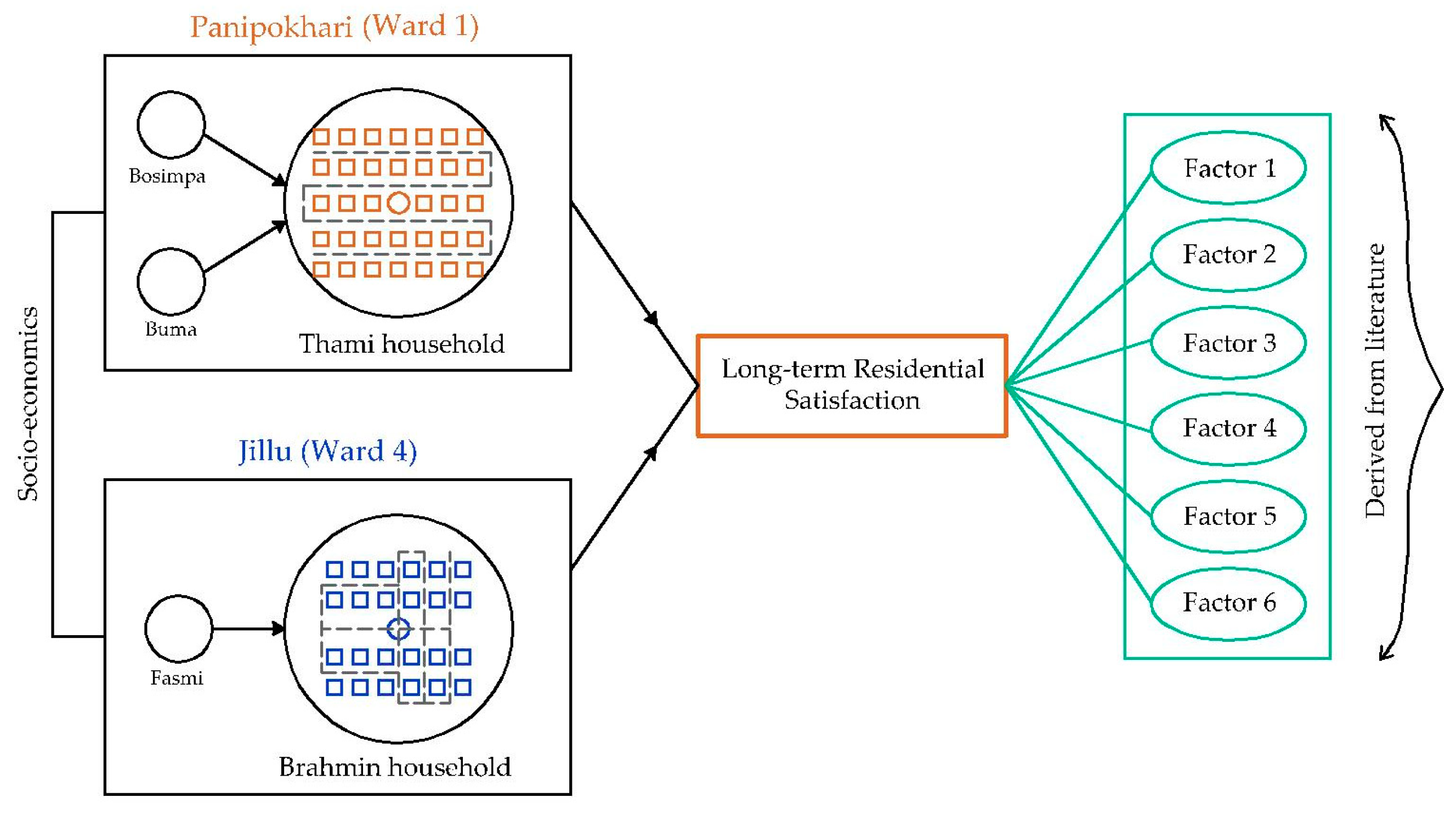
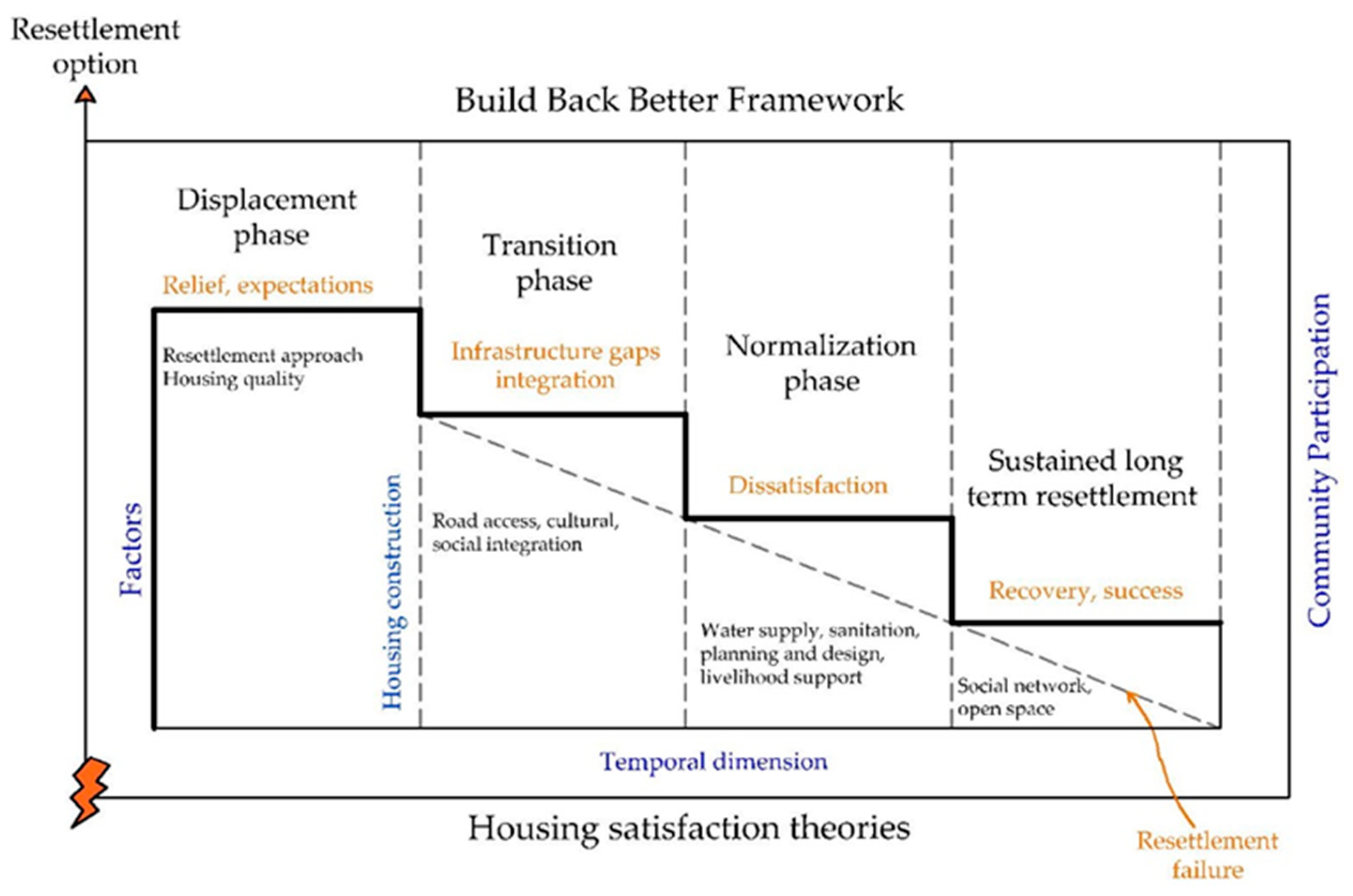
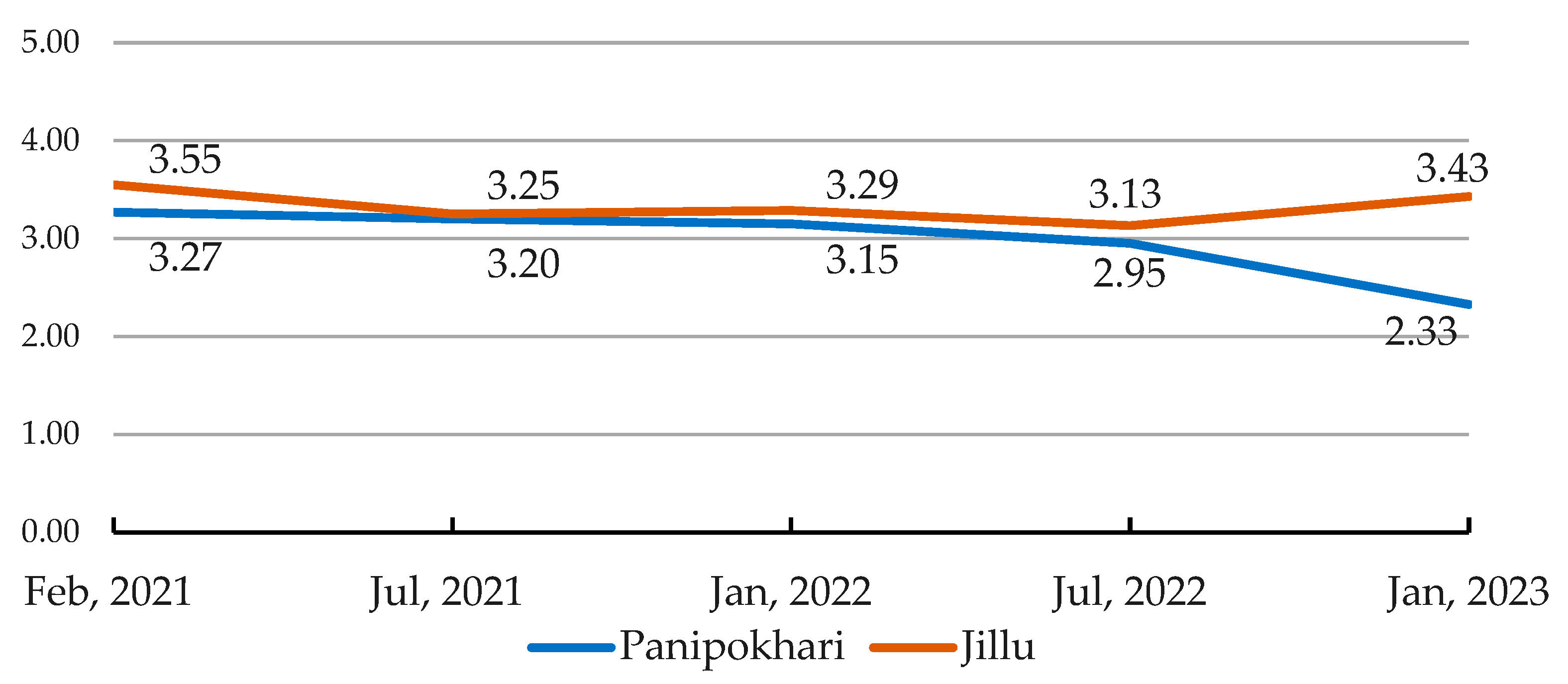
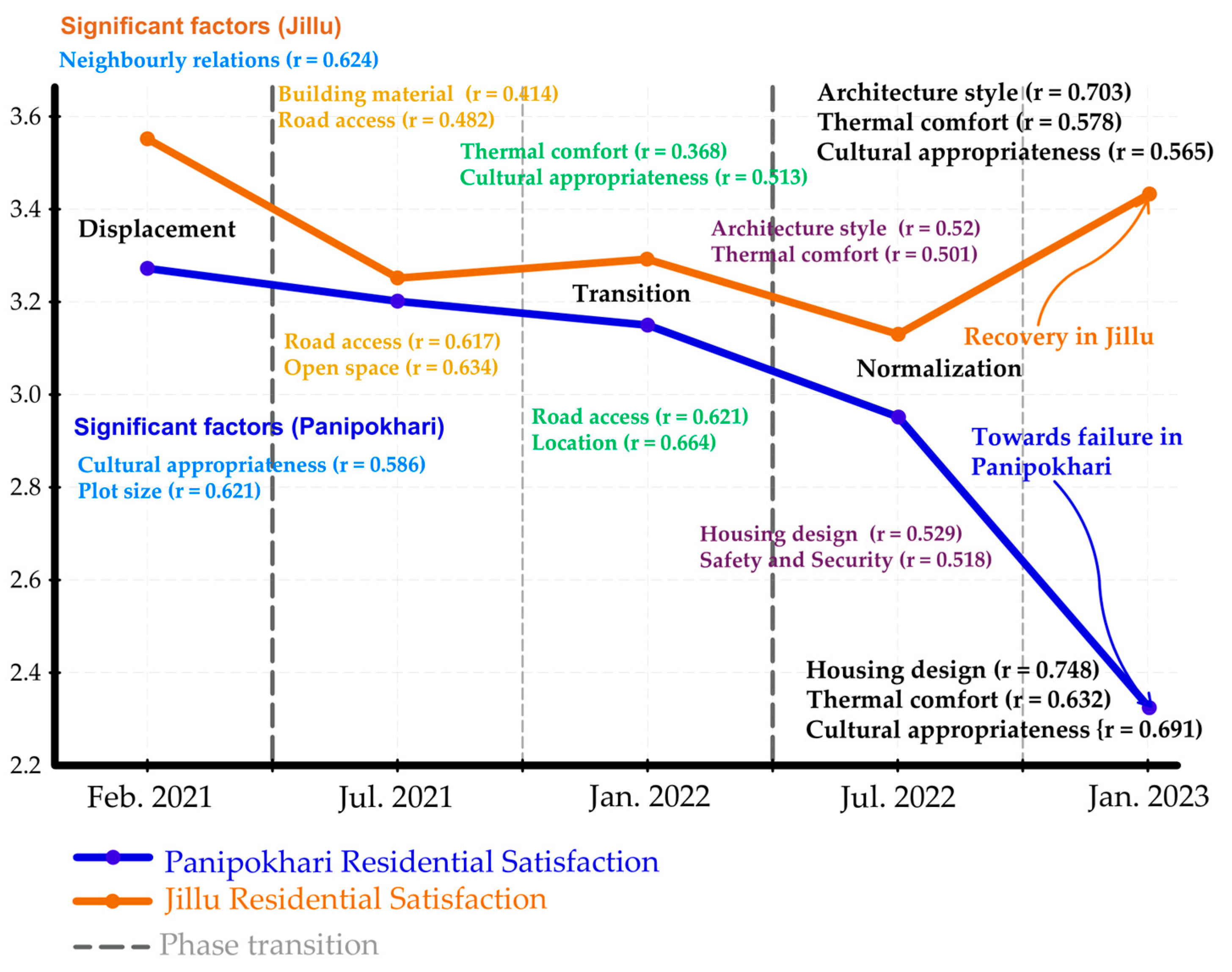
Post-disaster resettlement often faces abandonment and modification; yet, the factors influencing long-term residential satisfaction, especially within diverse communities, remain underexplored. This study examines how satisfaction evolves over time in relation to socio-economic status and community participation comparing the underprivileged Thami community in Panipokhari and the privileged Brahmin community in Jillu Integrated Settlement of Nepal. Using a mixed-method case study approach, this research integrates quantitative satisfaction scores with qualitative insights from surveys, interviews, and observations over three years. Findings reveal diverging satisfaction trends: Jillu’s satisfaction remained stable (3.55 to 3.43 from 2021 to 2023), whereas Panipokhari’s declined (3.27 to 2.33) due to unmet housing needs and limited participation. Correlation tests and qualitative interviews confirmed that while all five key factors—housing design, thermal comfort, water, cultural appropriateness, and architectural aesthetics—influenced satisfaction, their importance varied. These findings challenge “one size fits all” top-down resettlement models, demonstrating that housing adaptability and participatory decision-making are more critical than structural adequacy alone. The study underscores the need for flexible, community-driven housing strategies within the Build Back Better (BBB) framework. By integrating the housing satisfaction theory, the housing mobility theory, and the BBB framework, it advances understanding of socio-economic agency in shaping post-disaster housing outcomes, providing insights for sustainable and inclusive resettlement policies.
Keywords: build back better; community participation; post-disaster resettlement; residential satisfaction; socio-economic status build back better; community participation; post-disaster resettlement; residential satisfaction; socio-economic status