2. Materials and Methods
This is a case study of a patient evaluated and treated by the authors. No identifying information is included. The patient consented to the description. The evaluation and treatment methods have been described previously [
7]. In summary, the goal of the evaluation is to identify contributors to cognitive decline for individual patients, with the four major groups of contributors being (1) pro-inflammatory pathogens and processes, (2) toxins and toxicants (inorganics such as heavy metals, organics such as toluene, and biotoxins such as trichothecenes), (3) energetics (cerebral blood flow, oxygen saturation, mitochondrial function), and (4) trophic support (e.g., hormones and nutrients).
Markers of inflammation (e.g., high-sensitivity C-reactive protein), autoimmunity (e.g., anti-thyroid peroxidase), and immunity (e.g., immunoglobulins and lymphocyte subsets), as well as potential sources of inflammation (e.g., Herpes family viruses or tick-borne pathogens), were evaluated. Furthermore, brain energetics were evaluated, including nocturnal SpO2, fasting insulin, hemoglobin A1c, lipid panel, organic acids, and hypercoagulation markers (e.g., factor V Leiden).
Trophic support evaluation included nutrients (e.g., vitamin D) and hormones (estradiol, progesterone, testosterone, pregnenolone, DHEA sulfate, and thyroid). Biomarker p-tau 217 was also evaluated.
Imaging was carried out utilizing brain MRI with regional volumetrics (Neuroreader).
The treatment goal of this approach is to address the factors associated with Alzheimer’s-related cognitive decline, both common and patient-specific:
Optimize energetic support (oxygenation, cerebral blood flow, substrate availability, and mitochondrial function);
Restore insulin sensitivity and metabolic flexibility;
Improve hyperlipidemia;
Resolve inflammation if present, and treat the cause(s) of the inflammation;
Treat identified pathogens;
Optimize trophic support;
Treat autoimmunity if identified;
Detoxify if toxins are identified.
In addition, basics are included for each patient: regular exercise, a plant-rich, mildly ketogenic diet, sleep optimization (as well as treatment of sleep apnea if identified), stress reduction, and brain training (BrainHQ, San Francisco, CA, USA).
The specific treatment modalities for the patient described in this case study are detailed in the next section.
3. Results
A 63-year-old woman presented with visual complaints. At the age of 54, she had had an automobile accident without head trauma and, following that, repeatedly complained that something was “not right” about her vision. She also felt that, overall, her brain “simply wasn’t right”. She felt that her memory was not the same and that her ability to think as she formerly had was somehow different. However, multiple medical evaluations failed to reach a diagnosis. Furthermore, she was told that there was nothing wrong, though she knew that this was untrue.
In her early 60s, she began to experience more definitive symptoms, such as blurry vision, optic ataxia, and difficulty seeing multiple objects in her visual field (simultanagnosia). She developed difficulty reading and was unable to use her computer or drive an automobile. In one instance, while she was driving, she felt that the scene in front of her rippled, just as one might see when watching a movie and the screen ripples to indicate travelling back in time. When her vision returned, there was another car right next to her that she had not seen. It was at this time that she stopped driving.
In addition to her declining vision, her memory began to decline rapidly, depression set in, and she became angry that no one seemed to be able to help her. She began to isolate herself from her friends, concerned about their reaction to her verbal repetitions. Travel was tiring, and there was generally a period of disorientation upon arrival at the destination. Her affect became flat. She joined a support group for patients and care partners of those with Alzheimer’s disease, and, as she was still verbally proficient, she was able to explain to the other care partners what this condition was like. A few years later, they reflected to her that, for the first year after they had met her, she had not smiled.
With her blurry vision and her increasing loss of memory, she stopped reading. She had trouble keeping track of what she was reading, and, because she could not see the words well, she became irritated and frustrated. She had difficulty organizing and became irritated and then apathetic. Her office became cluttered.
She began to rely fully on her husband for meal preparation, medication management, and direction of what to do throughout the day. She was determined to find a way to beat her illness, but she did not have the faculties to follow through.
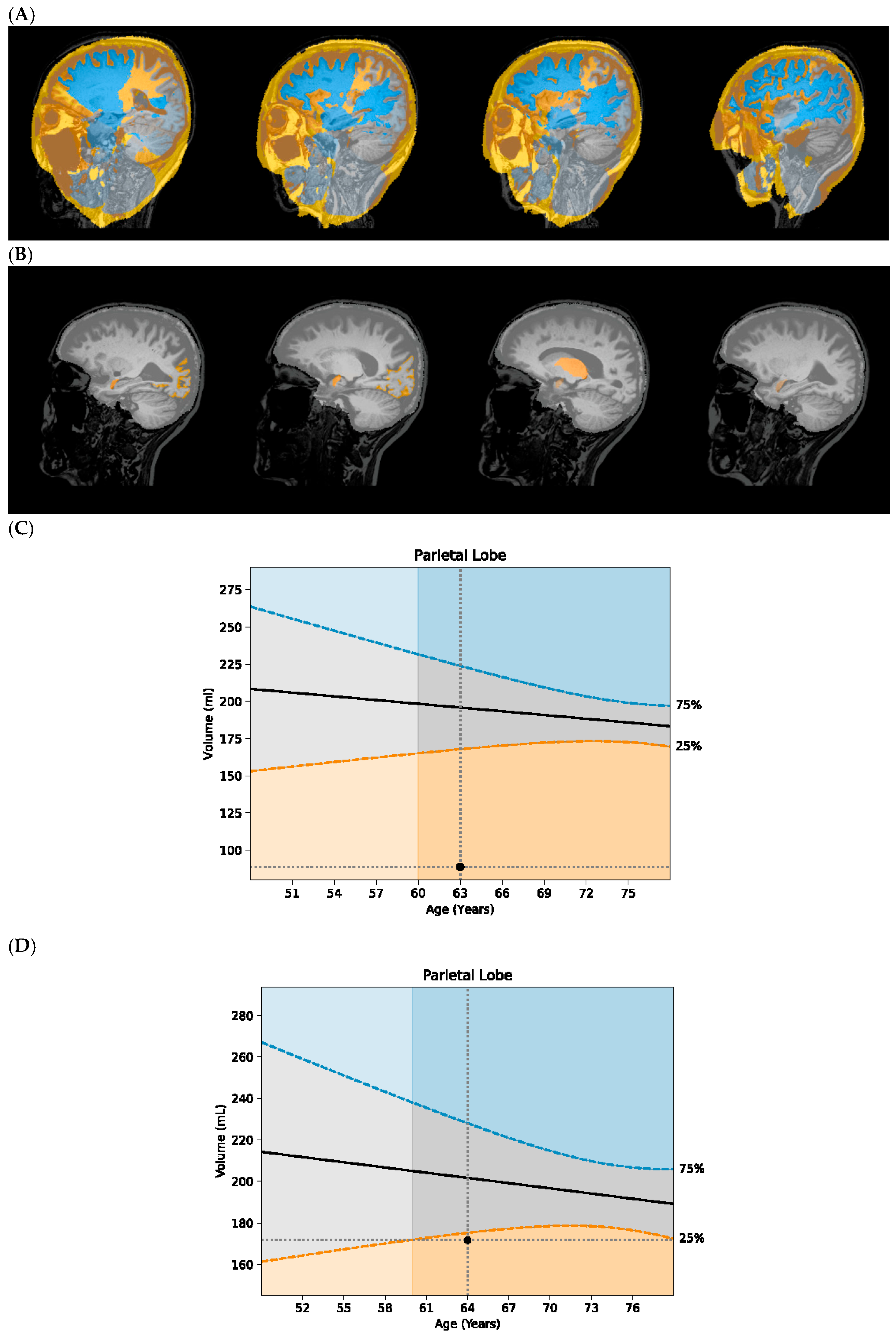
Her MRI volumetrics showed parietal and occipital atrophy, with parietal lobe volume at <1st percentile for age, occipital lobe volume at the 10th percentile, temporal lobe volume at the 41st percentile, and frontal lobe volume at the 13th percentile (
Table 1). Based on her symptoms and atrophy pattern, a diagnosis of PCA was made.
She participated in a pharmaceutical trial for an anti-amyloid antibody for 1.5 years; however, after completion of the trial, she found out that she had been in the placebo control group.
She took donepezil for a few years without noticing any symptomatic improvement. When she discontinued it, she did not notice acceleration of decline but did notice that her headaches had abated.
Laboratory evaluation showed her to be ApoE4 heterozygous, with the following: WBC, 4400/mL; HOMA-IR, 0.73; hemoglobin A1c, 5.1%; homocysteine, 6.2 mM; estradiol, 0 pg/mL; progesterone, 13.66 ng/mL; TSH, 1.22 mU/mL; vitamin D, 32.9 ng/mL; serum copper, 155 mg/dL; serum zinc, 132 mg/dL; ALT, 16 units/L; AST, 30 units/L; blood mercury, 5 mcg/L; MMP−9, 135 ng/mL (normal < 331 ng/mL); TGF-β1, 11,360 pg/mL (normal < 2380 pg/mL); LDL, 122 mg/dL; LDL particle number, 1449 nM; triglycerides, 57 mg/dL; albumin, 4.4 g/dL; and glutathione, 585 mM.
She failed a visual contrast sensitivity test (
https://www.vcstest.com/; accessed on 14 August 2021). Plasma p-tau 181 was elevated at 1.72 pg/mL (normal range: 0–0.97 pg/mL). A sleep study disclosed mild sleep apnea, with an apnea/hypopnea index of 9.9.
Urinary mycotoxin analysis was positive for ochratoxin, aflatoxin, trichothecenes, gliotoxin, and zearalenone. Antibodies to Borrelia and Bartonella were positive (IgM). Urinary mercury was increased at 10 mg/g of creatinine (normal < 1.3), and lead was also increased at 6.2 mg/g creatinine (normal < 1.2).
She was treated with a personalized, precision medicine approach that included the following:
Treatment of Bartonella for three months:
ABart ½ dropper po bid;
Azithromycin 500 mg po qd;
Doxycycline 100 mg po bid;
Rifampin 300 mg po bid;
Megasporebiotic 295 mg po bid.
Treatment of mycotoxin exposure (ongoing for 2.5 years):
Bentonite clay 450 mg po bid;
Activated charcoal 560 mg po bid;
Chlorella 125 mg po tid;
Welchol 625 mg po bid;
Saccharomyces boulardii 235 mg po tid;
InterFase Plus 675 mg po bid;
Nystatin 500 mg po qid;
Argentyn nasal spray, with 2 sprays in each nostril bid;
Amphotericin B 150 mg po bid;
BE spray (mupirocin and EDTA), with 2 sprays in each nostril bid;
Treatment of lead and mercury for six months;
DMSA 200 mg twice per week.
In addition to the treatments mentioned above, she began a plant-rich, mildly ketogenic diet, as well as fasting for 12–14 h each night. She used a breathalyzer device (Biosense, St. Louis, MO, USA) to track her acetone levels, scoring in the 30s on average, which corresponds to approximately 3 mM beta-hydroxybutyrate in the blood. The treatment modalities and timing are summarized in
Table 2.
Due to a pain in her foot (which is common with Bartonella), her exercise was limited, but she used a Peloton and walked infrequently. She checked her oxygen saturation at night using a Wellue ring, and her SpO2 was an average of 96–98%, with few drops and none below 90%. She used a Sunlighten sauna for diaphoresis and detoxification 2–3 times per week. She began bioidentical hormone replacement therapy, valacyclovir, and took supplements tailored to her laboratory data, including Ashwagandha, Bacopa, Gotu kola, Cataplex b-gf (bovine liver, organic beet (root), nutritional yeast, defatted wheat germ, rice bran, organic sweet potato, organic carrot, and bovine adrenal), pregnenolone, DHEA, S-adenosyl methionine, NAD, glutathione, methyl-B12, zinc, vitamin D, multivitamins, magnesium threonate, pro-resolving mediators, and 5-hydroxytryptophan.
She received glutathione intravenously weekly for 10 weeks to support detoxification, underwent ozone treatment for her pathogens, and used a grounding mat, but no changes in her symptoms were linked temporally to these treatments. However, when she began exercise with oxygen therapy (EWOT), she noticed an immediate improvement in her symptoms. Initially, she was unable to carry out computer brain training due to her vision. She also had cranial sacral therapy monthly.
In April 2023, she began vision exercises and training, which are still ongoing.
After she began treatment, the first change noted was stabilization, without further decline. Next, her memory began to improve. She remembered more details in stories from a few days prior and, in some cases, a few weeks prior. Her engagement picked up tremendously, and, in the support group, she began discussing how the group could collectively help others. She regained her sharp wit and her ability to tell engaging stories.
Her attitude toward life became more focused on the future. She began talking about her bucket list and started to make to-do lists again. Her feelings began to change, from her initial anger that no one had helped her 10 years prior to being grateful for what she can do at present.
Over the year after treatment was initiated, her inability to read resolved, and she began reading without difficulty. She is once again reading with purpose and great interest. Her ability to use a computer returned, and she was once again able to carry out computer-based brain training.
Her engagement with others improved, and she became a leader in her Alzheimer’s support group, helping others in the group. She served as a panelist regarding her own case history in front of an audience of 100 people, answering questions extemporaneously and accurately for over an hour.
She responded to vision training: although she initially struggled with tracking and saccadic movements, these improved markedly, and her vergence and binocular vision also improved.
She has begun driving in parking lots but recognizes that she is not yet ready for road driving.
Her mycotoxins decreased: ochratoxin A from 36.09 to 10.98 ng/g creatinine (normal <7.5 ng/g creatinine), mycophenolic acid from 213 to 37.4 (normal <37.4), and zearalenone from 293 to undetectable (normal <3.2). Her TGF-β1 decreased from 11,360 to 6323 pg/mL (normal <2380 pg/mL).
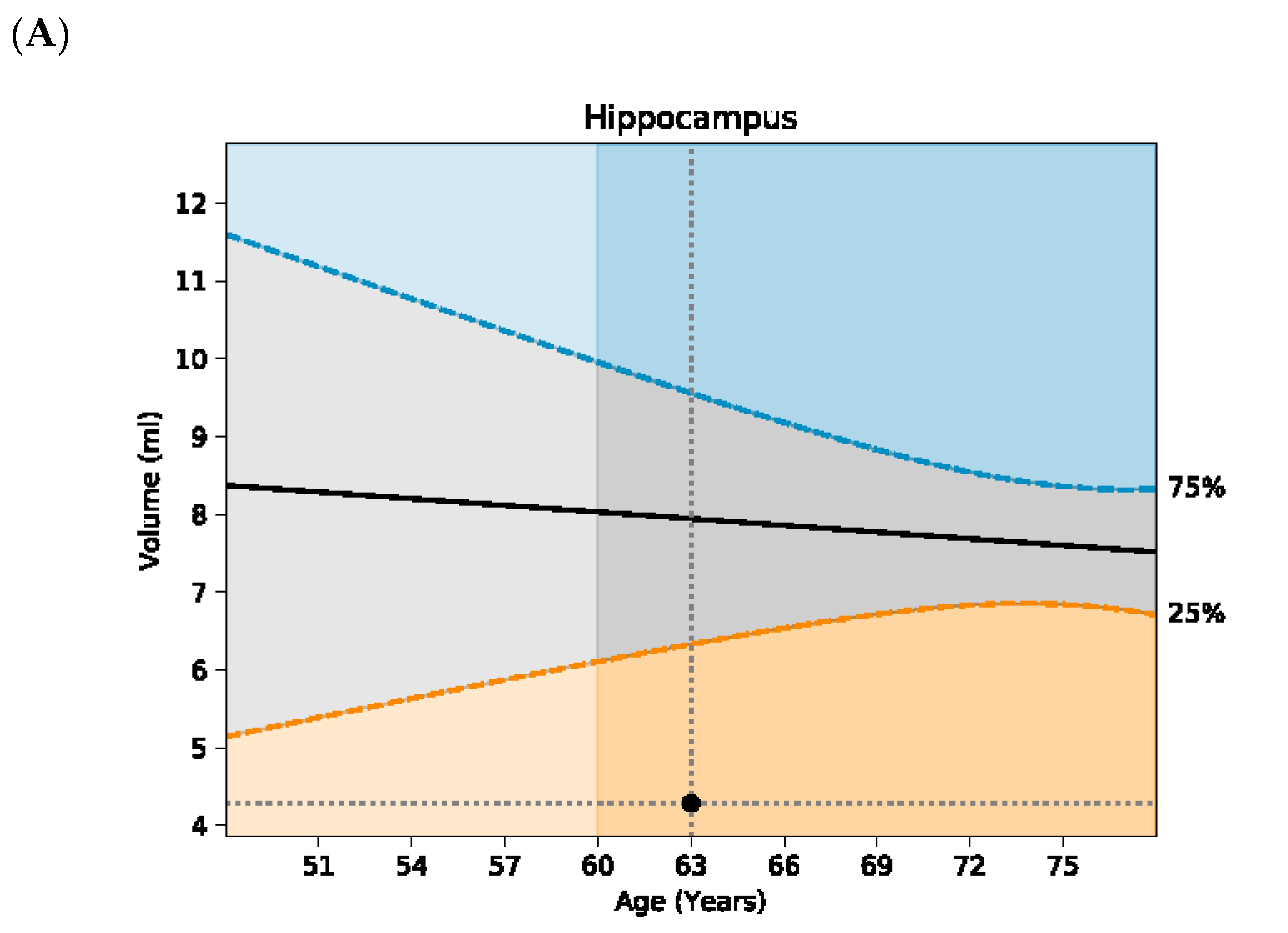
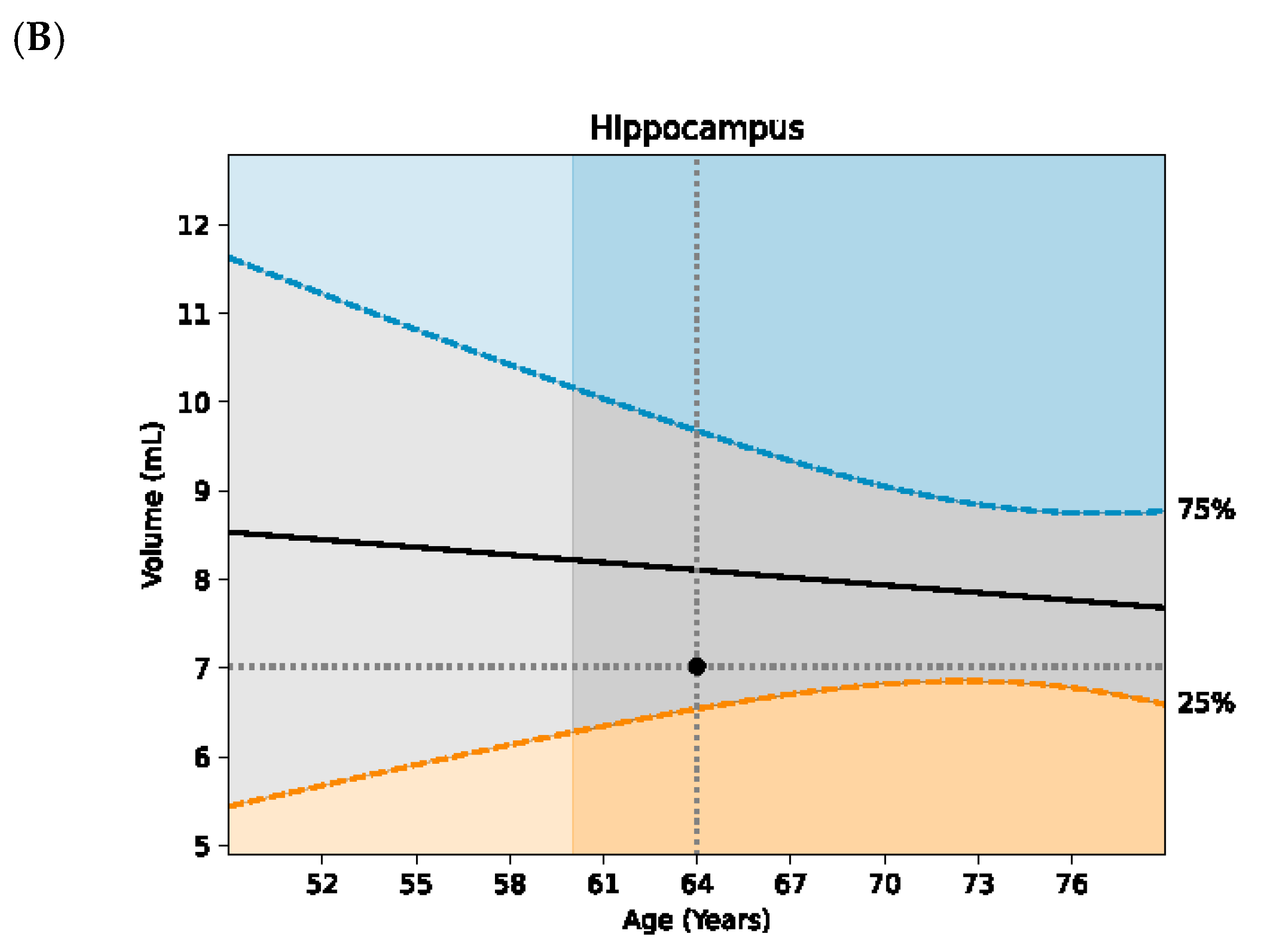
Her MRI volumetrics showed marked improvement (
Table 1): her parietal lobe volume increased from <1st percentile to the 22nd percentile (
Figure 1); her occipital lobe volume increased from the 10th to 25th percentile; and her hippocampal volume increased from the 6th to 32nd percentile (
Figure 2). Her p-tau 181 improved modestly, from 1.72 pg/mL to 1.68 pg/mL and then to 1.52 pg/mL.
4. Discussion
It has been noted previously that non-amnestic presentations of Alzheimer’s disease, such as PCA, primary progressive aphasia (PPA), and many early-onset Alzheimer’s disease cases (onset before 65 years of age) [
5], tend to be associated with biotoxin exposure and/or tick-borne illness [
6]. These presentations may include early depression, executive dysfunction, prosopagnosia, topographical disorientation, primary progressive aphasia (logopenic variant), dressing and other apraxias, and other non-amnestic presentations, as occurred here. This patient had both biotoxin exposure and tick-borne illness (
Bartonella), and treatment of these potential contributors, along with basic metabolic support, led to marked improvement in her cognitive symptoms, as well as MRI volumetrics. The presence of neuroinflammation in Alzheimer’s disease and the increase in inflammation with the ApoE4 allele are compatible with the notion that pro-inflammatory responses to
Bartonella and biotoxins may have been reduced by reducing these exposures, in concert with the reduction in inflammation using anti-inflammatories such as omega−3 fats and resolvins. It is noteworthy that the patient noted symptomatic improvement with EWOT, and it is possible that the increased cerebral blood flow and oxygenation afforded by EWOT may have been beneficial. Her ability to read, use her computer, and undergo computer-based brain training all returned. Furthermore, her previous long-term decline has been replaced by ongoing improvement.
Dr. R. Shoemaker described chronic inflammatory response syndrome (CIRS), which is associated with biotoxins and tick-borne illnesses such as
Borrelia,
Bartonella,
Ehrlichia, and
Babesia. It has been noted previously that laboratory testing characteristic of CIRS, such as increased C4a and TGF-β1, also occurs commonly in non-amnestic presentations of Alzheimer’s disease, such as PCA and PPA [
6]. This patient was found to have markedly elevated TGF-β1; however, her MMP−9, which is also commonly elevated in CIRS, was in the normal range. She also had some of the symptoms and conditions associated with CIRS, such as fatigue, memory loss, pain, disorientation, and depression.
The improvement that occurred with treatment may suggest that she did not have Alzheimer’s disease, but her elevated p-tau 181, ApoE4 heterozygosity, progressive decline over several years, symptoms typical of PCA, and MRI showing marked parietal lobe atrophy (and to a lesser extent, hippocampal and occipital lobe atrophy) all support the diagnosis.
Considering that PCA represents approximately 5–15% of patients with Alzheimer’s disease, there may be between 330,000 and 1 million PCA patients in the United States. As the cause(s) of PCA have not been identified and no effective treatment has been developed, in the evaluation of potential PCA patients, it may be productive to include testing that involves the identification of tick-borne illnesses such as Borrelia, Bartonella, Babesia, and Ehrlichia, as well as tests for mycotoxin exposure, detoxification status, and immune status. Furthermore, the case history presented here suggests that a proof-of-concept trial should be considered as a step toward developing effective treatment for PCA. The limitations of a case study are inherent in this report.