1. Introduction
Optical coherence tomography (OCT) is a volumetric imaging modality that has been demonstrated to be a powerful tool in a variety of clinical applications, providing image-based diagnostics and guidance in areas spanning ophthalmology and beyond [
1]. While OCT imaging yields a wealth of high-resolution, three-dimensional structural and functional information, there is a severe limit on the penetration depth of the modality in most tissues. This can hinder the imaging of targets in many contexts, particularly in those occluded by scleral tissue. For example, there is difficulty imaging the full extent of the ciliary body and choroid (especially when thickened by disease) with standard-of-care OCT devices for the assessment of infiltrative lesions, suprachoroidal lesions, tumors, and fluid. This can also impact care in intrasurgical procedures, hindering the visualization of surgical tools, implants, and anatomy while treating patients with glaucoma, strabismus, nanophthalmos with scleral effusion, lesions and malignancies of the deep sclera, choroid, and anterior chamber angle/ciliary body [
2,
3,
4].
The chief mechanism responsible for this limitation is the high degree of optical scattering exhibited by the sclera (and most other biological tissues) due to its composition of protein and fat structures suspended in a watery medium. As a result, heavy scattering occurs for incident light due to the difference in the refractive index between these structures and the surrounding water [
5]. In the case of OCT, more and more of the structural information of the tissue reflectance is lost to the increasing scattering encountered along longer depths of propagation. These losses manifest in an attenuation of the OCT signal with image depth, limiting OCT imaging penetration in the tissue to 1–2 mm in most applications [
6,
7].
A substantial amount of work has been dedicated to addressing this limitation in OCT and other imaging modalities, with methods spanning a variety of optical and chemical approaches [
8,
9]. For in vivo applications, a promising approach has been found in the application of various biocompatible optical clearing agents, including sugar solutions, glycerol, propylene glycol, and dimethylsulfoxide (DMSO) [
7,
10,
11,
12]. Diffusion of these agents into the tissue results in a homogenization of its refractive index, reducing the optical scattering and providing an increased imaging depth. However, the efficiency of the refractive index change for these agents is poor, requiring high concentrations within the tissue to achieve substantial clearing.
More recently, absorbing molecules such as the food dye tartrazine have been demonstrated to be far more efficient at optical clearing in tissue [
13]. These agents paradoxically increase the clearing of tissues by virtue of their absorbance properties, due to the coupling of absorbance and dispersion as described by the Kramers–Kronig relations [
14]. In this way, peaks in the absorption spectrum are accompanied by an increased refractive index at longer wavelengths. If the imaging wavelength is longer than the absorption peak, significant optical clearing can be achieved in tissue with minimal absorption loss. As the agent diffuses into the tissue, it raises the refractive index of the aqueous surrounding biological structures to reduce scattering. We have previously demonstrated that this mechanism can be leveraged with tartrazine in ophthalmic OCT to enable deep transscleral imaging [
15], and others have since corroborated this in other volumetric imaging modalities [
16,
17]. While promising, tartrazine has limited immediate utility for in vivo optical clearing given the lack of safety data regarding its topical use.
However, many absorbing dyes beyond tartrazine exist that are commonplace in clinical ophthalmic applications. Among these, by far the oldest and most commonly used is fluorescein [
18]. While currently used for its fluorescence properties in the staining of ophthalmic pathologies and anatomy, fluorescein also possesses a strong absorbance peak (490 nm) close to that of tartrazine (425 nm), significantly below typical NIR OCT imaging wavelengths. This prompted us to investigate whether fluorescein has the potential to serve as a more clinically compatible absorptive optical clearing agent compared to tartrazine or other non-clinical agents.
In this study, we aim to demonstrate the potential of fluorescein clearing in the improvement of image guidance and diagnostics for deep scleral surgical maneuvers, injections, lesions, and malignancies. As a pilot application for this purpose, trabeculectomy was selected due to its status as the gold standard treatment for advanced glaucoma, the leading cause of irreversible blindness, and its high degree of surgical precision in the careful placement of incisions, needle insertions, and implants within the eye [
19,
20]. It is theorized that some of the maneuvers associated with the procedure could benefit from transscleral clearing; with the high scattering of scleral tissue, the surgical target and instrument are often obscured from the surgeon’s sight, leaving the surgeon to rely on memory and indirect cues. Optical clearing could aid the visual guidance of the surgery via high-speed microscope-integrated OCT (MIOCT) systems, previously demonstrated to enhance surgical guidance and decision-making by providing high-resolution, depth-resolved OCT imaging of tissue at live video rates [
21,
22,
23,
24]. Combined with the improved image depth afforded by the optical clearing of fluorescein, the potential of these imaging systems could be harnessed in surgical scenarios like trabeculectomy where tissue scattering prevents visualization of deeper targets.
In this study, we demonstrate the following for the first time: (1) fluorescein can be used as an optical clearing agent in ex vivo studies with porcine and human donor eyes; (2) fluorescein is a reversible optical clearing agent; and (3) the potential for deep-tissue visual guidance in trabeculectomies as well as other procedures and diagnostics. We believe this work presents a valuable step towards in vivo optical clearing with highly absorbing molecules.
2. Materials and Methods
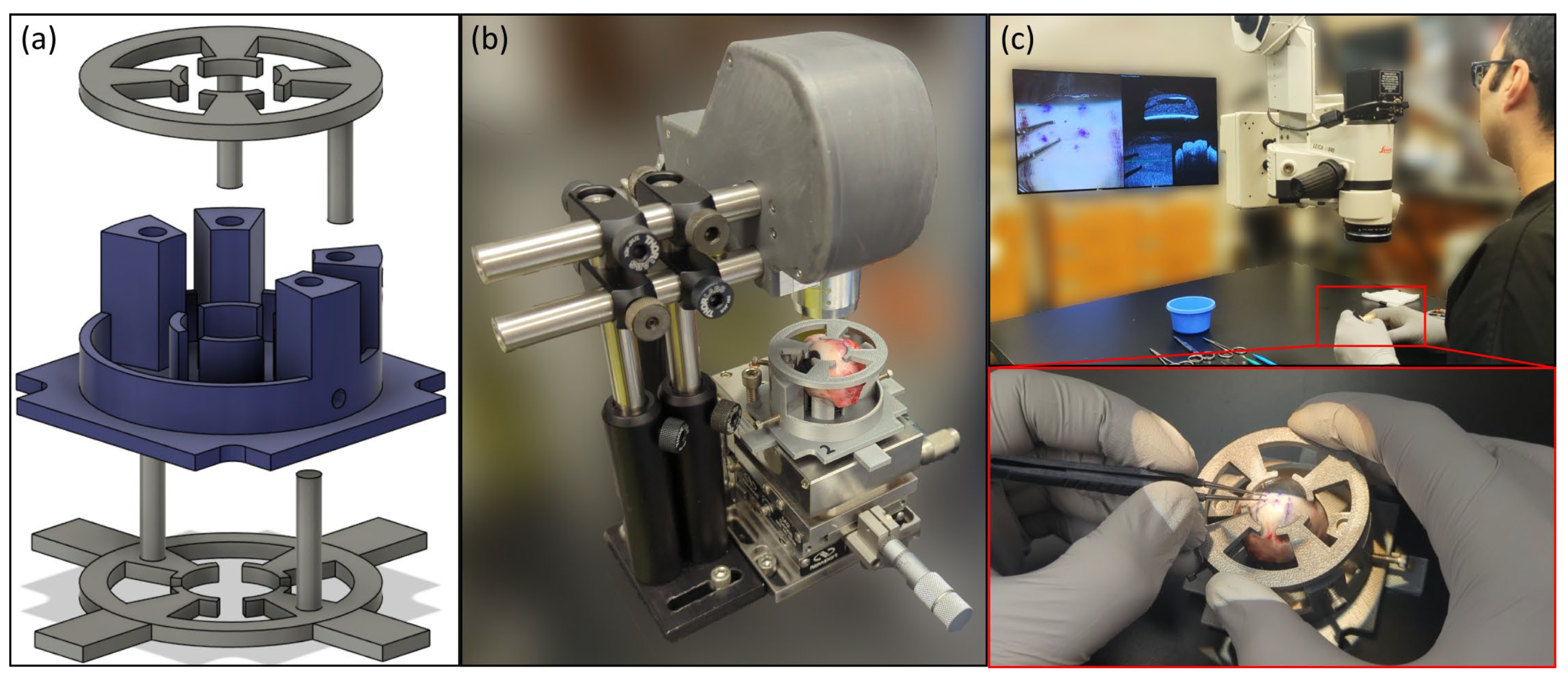
To investigate the clearing effect of fluorescein in scleral OCT imaging, mounted ex vivo human donor eyes from Miracles in Sight and ex vivo porcine eyes from a local abattoir were utilized as models (
Figure 1). Clearing effects in imaging were studied first as a function of time and concentration in a controlled setting (
Figure 1b), then in a model intrasurgical trabeculectomy scenario (
Figure 1c).
2.1. Sample Preparation
As models of trabeculectomy, all sample eyes had their conjunctiva removed from the area of imaging prior to treatment. To achieve sample stabilization and consistent imaging alignment over time across the ex vivo eye samples, a custom mounting solution was designed and 3D printed for repeatable positioning of the eyes relative to the imaging system. This was required for control of imaging variations related to sample positioning, enabling more robust quantitative comparison across eyes. Using rod features and set screws, the height of the sample may be offset from the base while the height of the lid can be adjusted to secure eyes of varying sizes (
Figure 1a).
After mounting, dosing of the eyes was conducted with a sodium fluorescein salt (Aqua Solutions, Deer Park, TX, USA) deionized water solution. To control for drying effects that may occur due to the hyperosmolarity of the fluorescein, an equiosmolar control solution of sodium chloride (non-iodized table salt) was applied for comparison. All eyes were dosed with fluorescein or the salt control solution at a rate of 5 drops every 5 min over the course of 1 h.
2.2. Time-Series Imaging
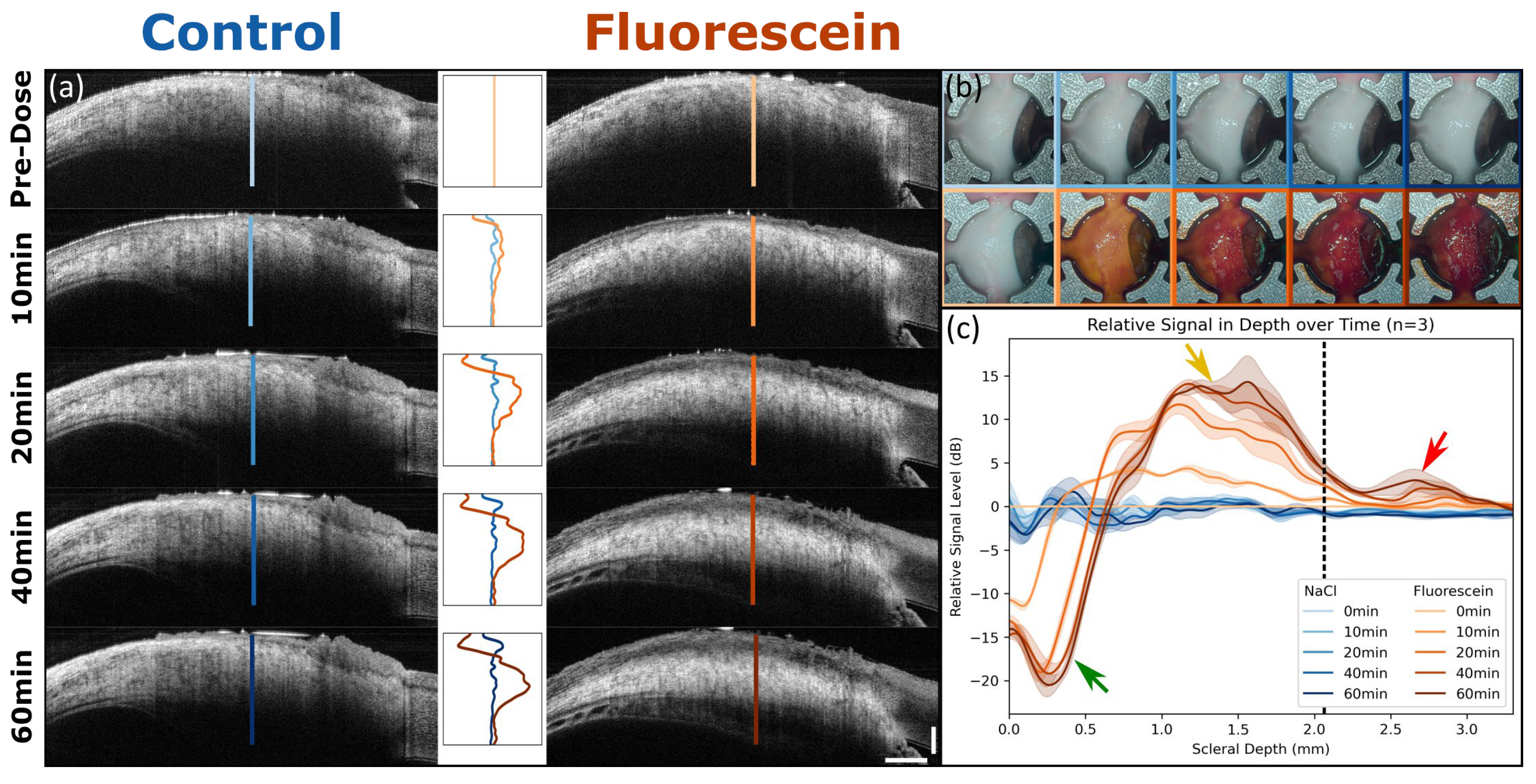
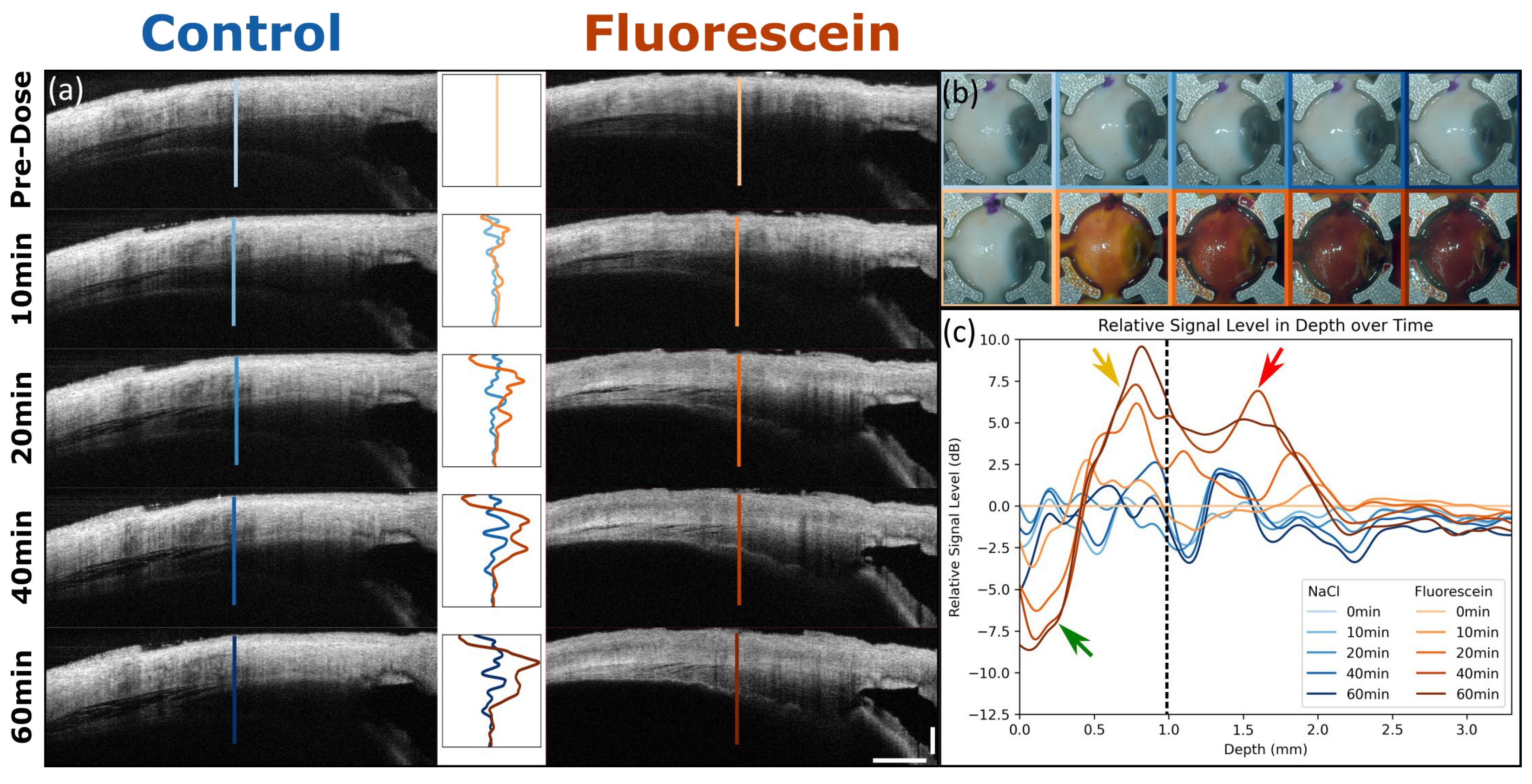
To examine the time dependence and repeatability of the clearing effect, control (7% salt) and experimental (30% fluorescein) porcine eyes (
n = 3) were positioned on an XYZ micrometer stage for aligned imaging using an investigational handheld anterior-segment research scanner detailed in previous work (
Figure 1b) [
15]. This OCT system includes a telecentric scanner with custom-designed optics and opto-mechanics, highly compact for functionality in both handheld and table-mounted modes. It provides a 25 mm working distance, lateral resolution of 12.7 μm (Airy radius), and lateral field of view of >18 mm. The OCT source consists of a swept-source laser operating at 1040 nm with a 104 nm bandwidth and 200 kHz sweep rate (Excelitas, Pittsburgh, PA, USA), delivering an axial resolution of 5.92 μm (in air) and average sample arm power of 1.23 mW. The scan protocol utilized for this study was 1000 A-scans by 128 B-scans averaged 8× over a 13 × 13 mm field of view. Imaging was taken pre-dose, and at 10, 20, 40, and 60 min timepoints during dosing. This experiment was then repeated with a pair of ex vivo human donor eyes (
n = 1) to see how the effect compared to that of a more realistic model.
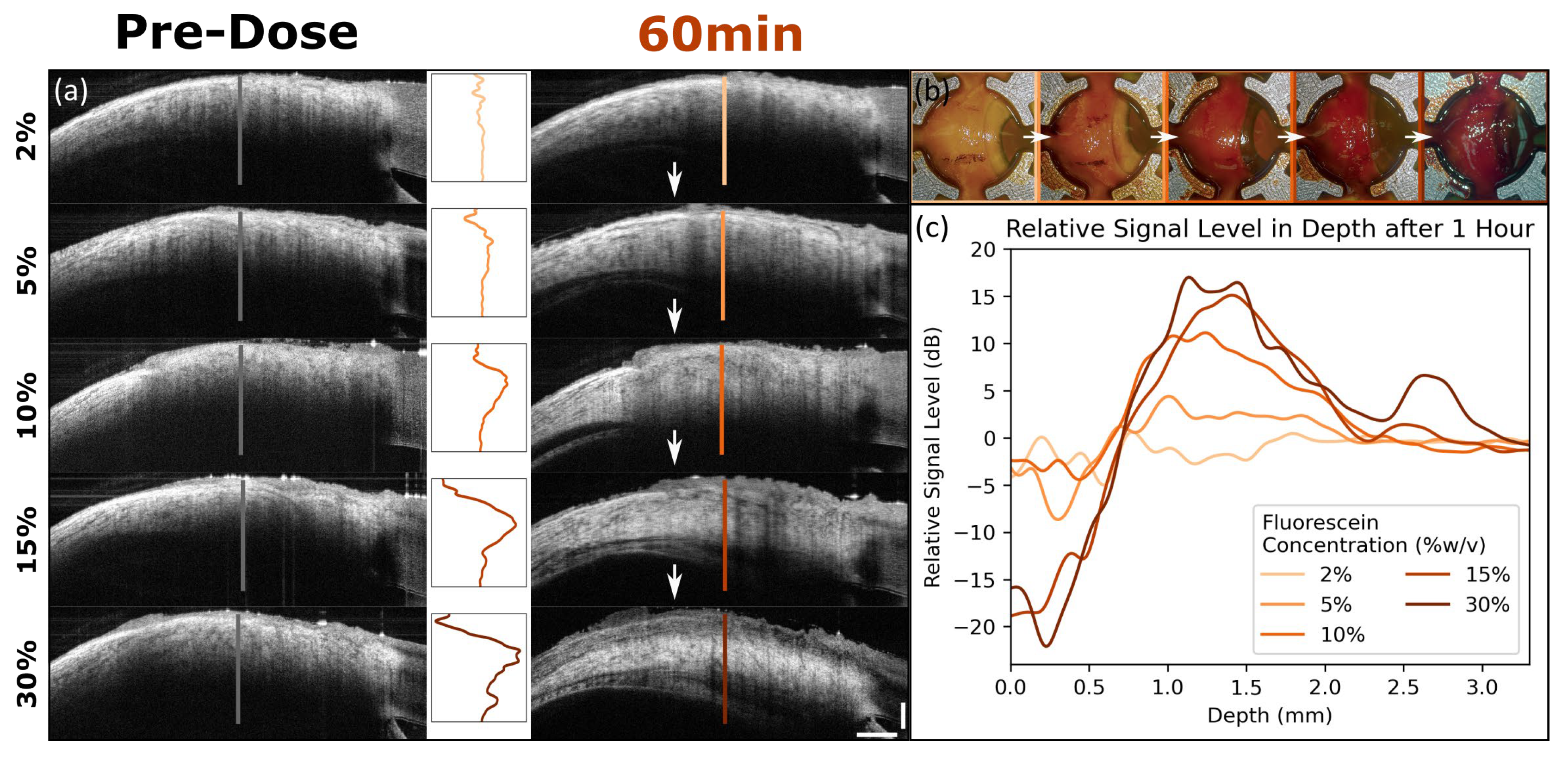
The concentration dependence of the clearing effect was characterized by imaging porcine eyes dosed with 2, 5, 10, 15, and 30% fluorescein solutions (n = 1 per concentration) over the course of 1 h.
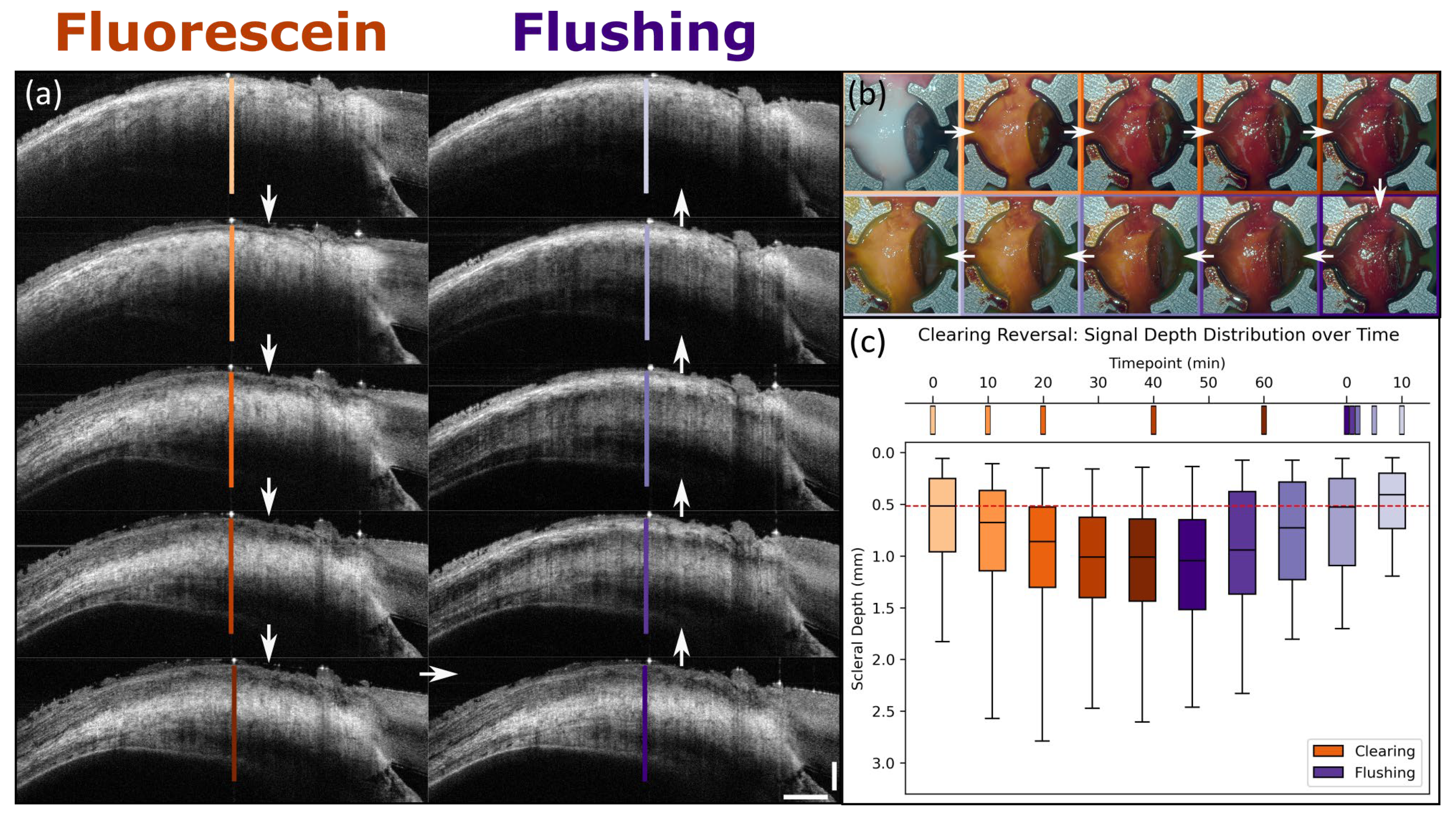
Reversibility of the clearing effect was characterized by first clearing a porcine eye (n = 1) with 30% fluorescein for 1 h, followed by flushing with 3 drops per second of balanced saline solution (BSS) for 10 min, imaged pre-rinse, and after 1, 2, 5, and 10 min of flushing.
To make quantitative comparisons across different imaging conditions, A-scans at corresponding positions were selected for each eye. A total of 10 adjacent A-scans were averaged together, and the smoothed result was normalized to the starting pre-dose depth profile of the eye. In this way, the profiles represent a change in the image signal of each eye relative to the signal in their pre-dose profile, normalizing inter-eye variation that may be present. The distributions of these image depth profiles were then compared to examine the effect of clearing on the imaging depth under different conditions.
2.3. Intrasurgical Imaging
For intrasurgical imaging (
Figure 1c), a previously developed high-speed MIOCT system based on a 400 kHz source centered at 1050 nm with a 100 nm sweep was used to acquire digital microscopy and OCT scanning in a dense/large configuration for snapshots (750 A-scans by 750 B-scans over 15 × 15 mm), and sparse/fast configuration for guidance at a 6 Hz volume rate (200 A-scans by 80 B-scans over 8 × 8 mm) [
22].
Trabeculectomy was carried out by an expert surgeon trained in glaucoma procedures (
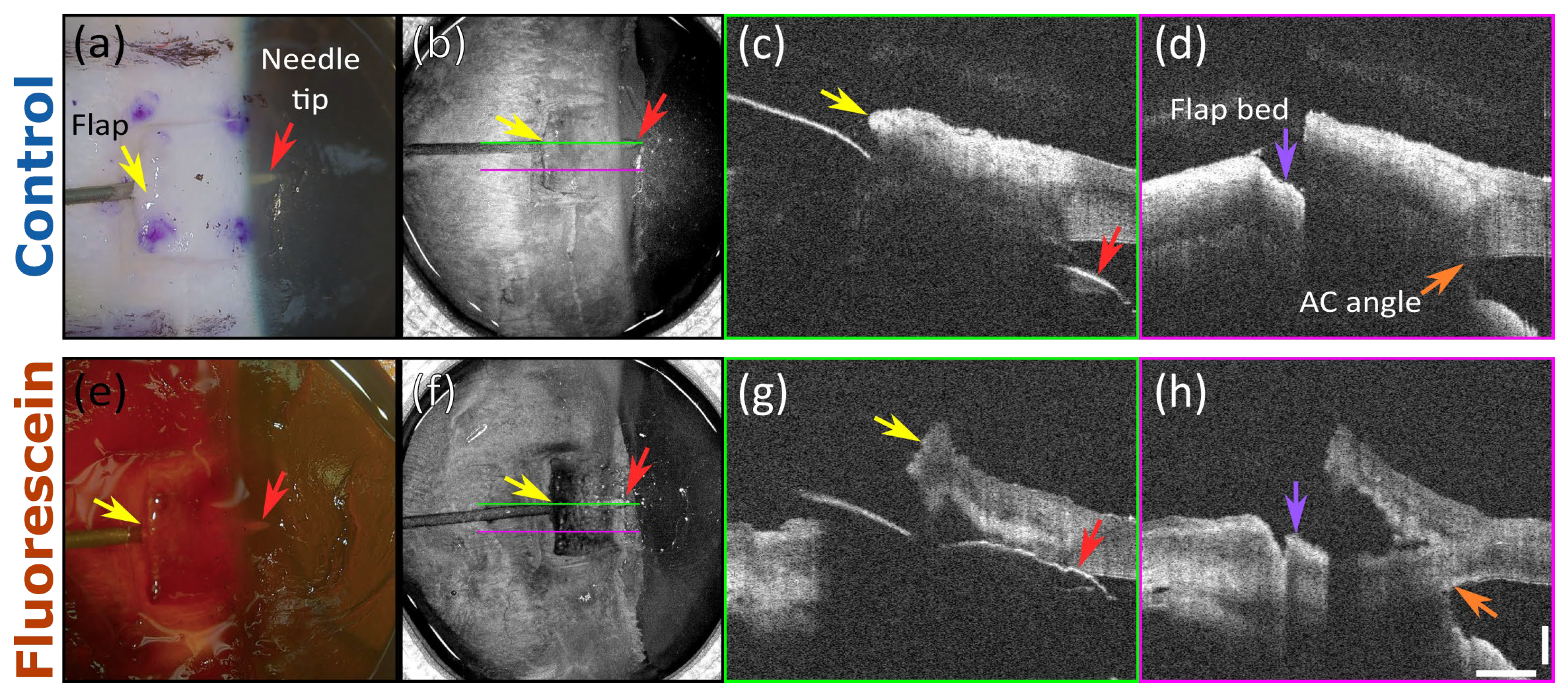
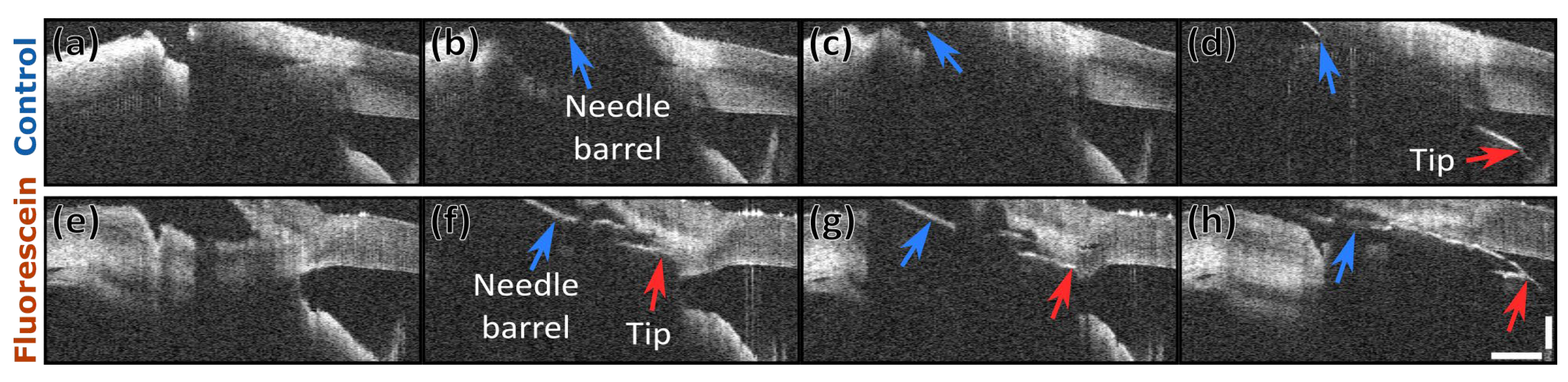
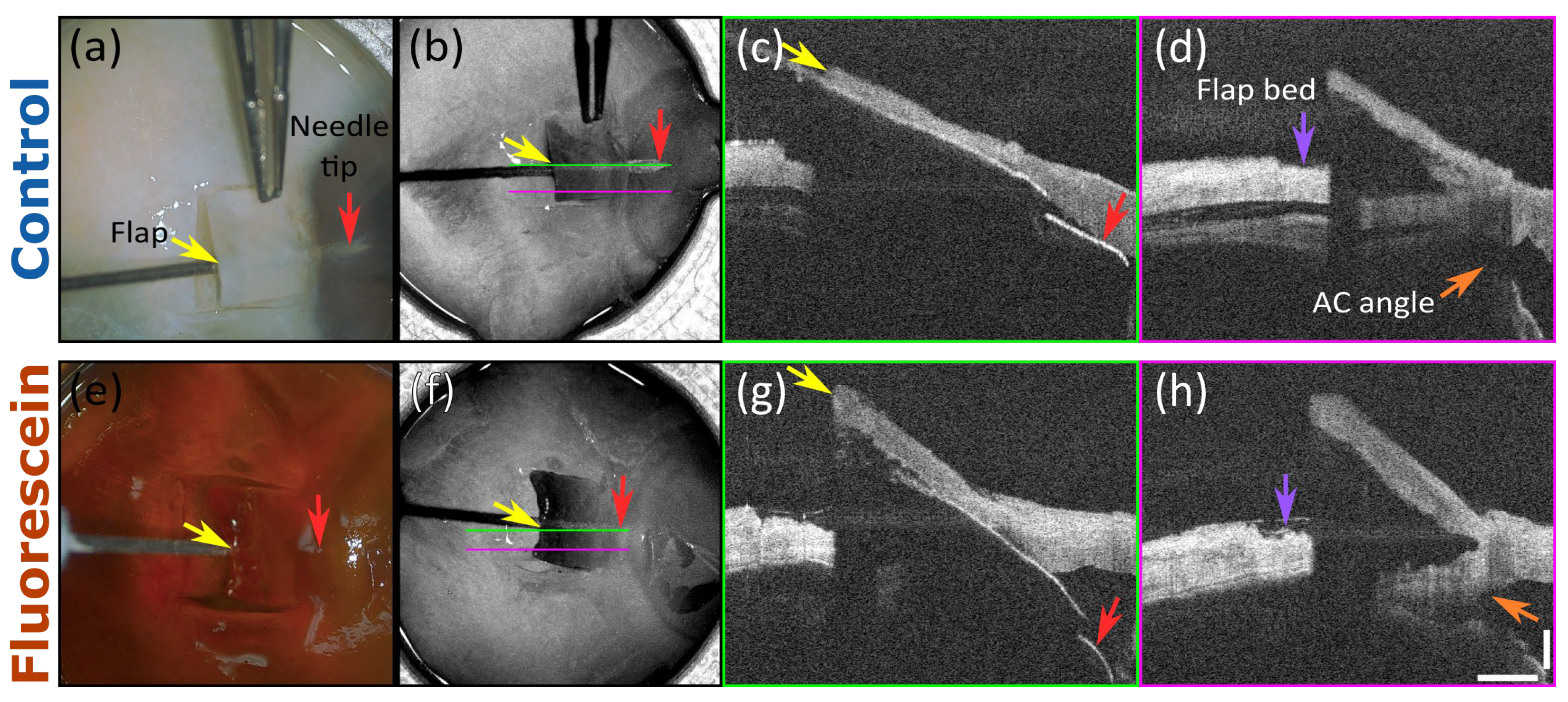
Figure 2).
The pilot procedure was performed ex vivo following the removal of the conjunctiva in the target area. Surgical steps included creation of a 4 mm sclerotomy flap (
Figure 2a–e), followed by the insertion of a 25G needle at the flap joint into the anterior chamber (AC) of the eye to create a drainage channel (
Figure 2f).
4. Discussion
We have demonstrated a novel application of fluorescein dye as a reversible optical clearing agent for increasing the OCT imaging depth through highly scattering biological tissue, with the potential for applications in intrasurgical OCT image guidance. In the pilot trabeculectomy investigated here, the improved visualization of needle and anterior angle has indications for better accuracy in the positioning of the drainage channel, helping to place it sufficiently anteriorly to avoid the iris, while posteriorly enough to avoid the cornea. Beyond trabeculectomy, this fluorescein tissue clearing could prove useful in several other applications in the anterior segment or posterior scleral surgery. As mentioned earlier, the enhanced imaging depth would improve glaucoma angle measurements, the determination of malignancy margins, the verification of implants and injections, scleral surgery for nanophthalmos treatment, and localization of muscle insertions for strabismus surgical treatments. This potential also extends to other challenging image tissue targets beyond ophthalmology, including dermatological, cervical, and neurosurgical imaging. Many applications of OCT in these spaces would benefit from an increased depths of imaging for more complete mappings of bulk tissue and vascular-network structural and functional information. Similarly, the benefits of clearing are not limited to OCT as a modality; spectroscopy, microscopy, fluoroscopy, endoscopy, photoacoustic, and photodynamic techniques can all potentially use fluorescein’s clearing effects [
9]. Even within this study, corresponding surgical microscopy imaging suggests that the method can increase the imaging depth of white-light microscopy, as the sclera is observed to darken with clearing as less illumination is backscattered by the sclera and is instead absorbed by the uveal pigment and blood beneath (
Figure 3b). This effect is even more pronounced in the human case (
Figure 8b), due to the decreased thickness of the human compared to porcine sclera resulting in even greater absorption by the RPE the rather than its backscatter by the sclera, darkening the tissue appearance under surgical microscopy. As an accessible, cost-effective, and well-tested agent with an extensive history in clinical applications, fluorescein could serve as a powerful and versatile tool for optical tissue clearing both for in vivo clinical applications, and ex vivo pathological testing and models.
While there is potential for wide applications, there are obvious caveats to discuss. Firstly, with the darkening of the sclera by the fluorescein, the contrast between the iris and sclera is decreased for darker-colored irises, potentially making the boundary between the two (the limbus) more challenging to discern, as well as reducing the visibility of any scleral blood vessels that may be used as points of spatial reference. Additionally, although the depth of imaging was improved in the human case, the effect was less dramatic compared to the porcine case; this can be straightforwardly attributed to the lesser thickness of the human sclera; the imaged human sclera has been nearly completely cleared, and thus exhibits less reflectivity than portions of the porcine sclera, which have not yet been cleared due to their increased depth from the surface. Combined with the fact that the full thickness of the sclera is initially visible in the human case, more of the visibility change with clearing treatment is seen in the ciliary body deeper below, which exhibits less reflectance than the layers of deep sclera in cleared porcine imaging. It may be that the clearing effect will be more useful in clinical imaging scenarios where the conjunctiva is not removed, further increasing the required depth of imaging, unlike this case.
Beyond this, the feasibility, risks, benefits, and costs of adding a preoperative dosing time to a procedure should not be ignored given the relatively long exposure times demonstrated to be necessary. At 40–60 min of exposure, possibly longer at concentrations less than 15%, it may not be feasible to implement this effectively as a preoperative procedure that could take longer than the procedure itself. Some alternatives application strategies that could be more successful include inspiration from gastrointestinal procedures requiring a clear-fluid diet for a period of time before a procedure; it is conceivable that longer, lower-concentration application times could be enabled with a similar approach of wearing an eyepatch-like fluorescein applicator for the night before the procedure.
It should also be noted that fluorescein is not the only ophthalmic dye with clearing potential in OCT; another common dye that should be considered in investigations of tissue-clearing applications is indocyanine green (ICG). While this is significantly more costly and is not typically applied topically in ophthalmic applications, it may be spectrally advantaged compared to fluorescein for NIR OCT imaging, with its absorbance peak of ~700–780 nm falling closer to the NIR imaging wavelength of most OCT systems. This may enable increased clearing at lower concentrations and dosing times compared to fluorescein, potentially providing an optical clearing agent with improved biocompatibility and clinical applicability compared to fluorescein. In a similar vein, while the source center wavelength choice was somewhat arbitrary in this study, it is certainly a free parameter that could be better optimized for the application. For example, a 1300 nm center wavelength would be better suited for this application if the sole concern is imaging depth, as it exhibits a greater penetration depth at baseline. Further, if this penetration depth at 1300 nm is still insufficient, this source could still potentially benefit from the clearing phenomenon, perhaps with a clearing agent possessing longer absorbance wavelengths, but this is conceivable with more NIR-shifted dyes like ICG. Alternatively, in the event that 1300 nm is not an option (higher axial resolution imaging, spectroscopic OCT at shorter wavelengths, visible-light OCT, etc.), optical clearing can help to address the reduced imaging depth of these modalities compared to longer wavelengths.
Lastly and critically, fluorescein is normally topically instilled at an ~2% concentration, with a target final concentration in tissue of 0.2% for optimal fluorescence [
25]; in this exploratory study to maximize the effect/signal, we thus used a significantly greater concentration of 30%. While this is a relatively high concentration, it is not strictly necessary for it to be this high to achieve a clearing effect. As a study aimed at the first characterization of the effect, an excessive upper limit of concentration was applied, but it is expected that lower concentrations will also exhibit noticeable and potentially equivalent clearing given a longer dosing time. Here, the effect appears to saturate between a 15 and 30% fluorescein concentration at 1 h, or 40–60 min at a 30% concentration. Lesser clearing may be sufficient for the thinner human sclera. As this research moves forward, it will be necessary to carefully evaluate the biocompatibility of higher topical concentrations of fluorescein in living tissue, as producers of high-concentration fluorescein solutions (10–20%) for intravascular injection warn of tissue necrosis risks if the dye extravasates at its injected concentration. This tissue risk originates from the high pH of unbuffered concentrated fluorescein (pH ~10 at 0.5 M, 17% wt/v, for example), which is normally quickly diluted as it circulates; however, in the event that it extravasates at the injection site, the lack of circulation in the surrounding tissue will maintain the high initial injection concentration and risk tissue damage. At this stage, it is unknown if this risk can be mitigated by buffering the solution’s pH while still maintaining the optical clearing effect. While the working conditions necessary to achieve the clearing effect were revealed in this study, they do not yet constitute a clinical protocol: there remains a need for thorough investigation of the biocompatibility risks of these conditions and whether any risks discovered can be feasibly mitigated (pH buffering, etc.).




 ,
,