
Passive Retention of Plastic Pellets and Microplastics by Coconut Fiber in a Mangrove-Supporting Floating Island in an Urban Estuary

 , , ,
, , , 
Abstract
1. Introduction
2. Methods
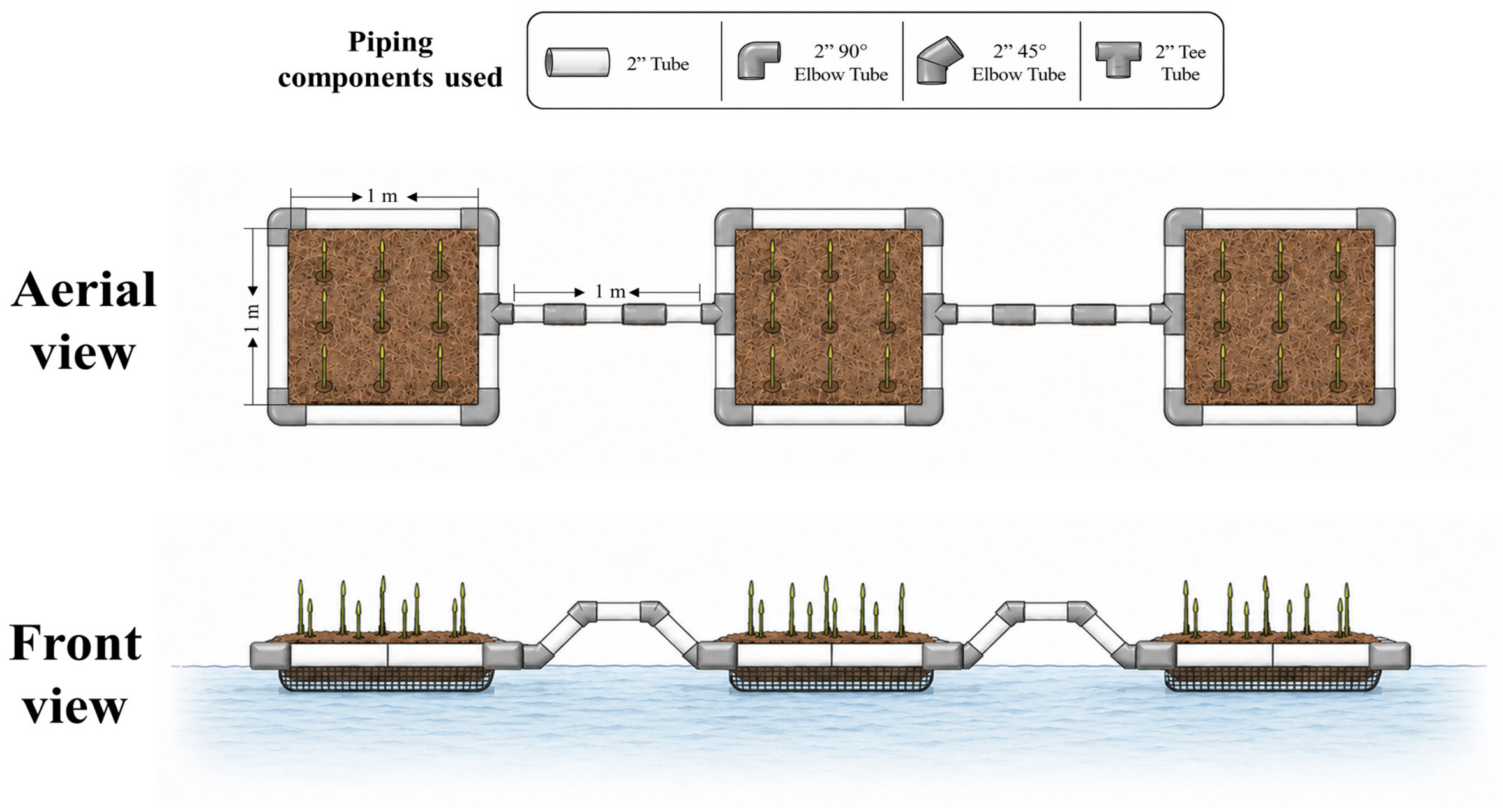
2.1. Study Site, Floating-Island Design, and Field Deployment
2.2. Recovery and Characterization of Retained Particles
2.3. Ftir and Mftir Polymer Identification
2.4. Quality Assurance and Data Analysis
3. Results and Discussion
3.1. Floating-Island Stability and Field Retention of Plastic Particles
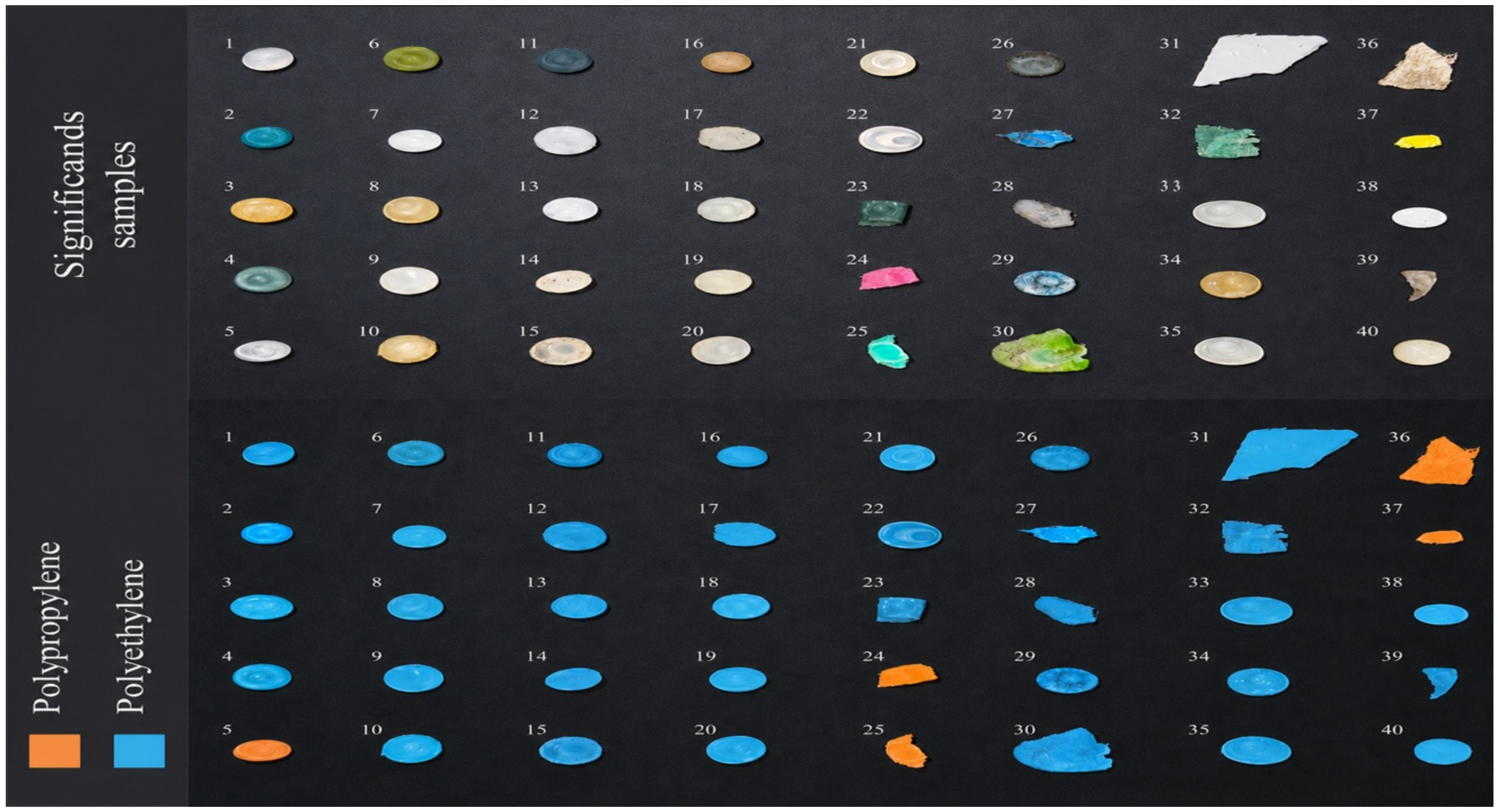
3.2. Morphological and Polymeric Composition of Visible Retained Particles
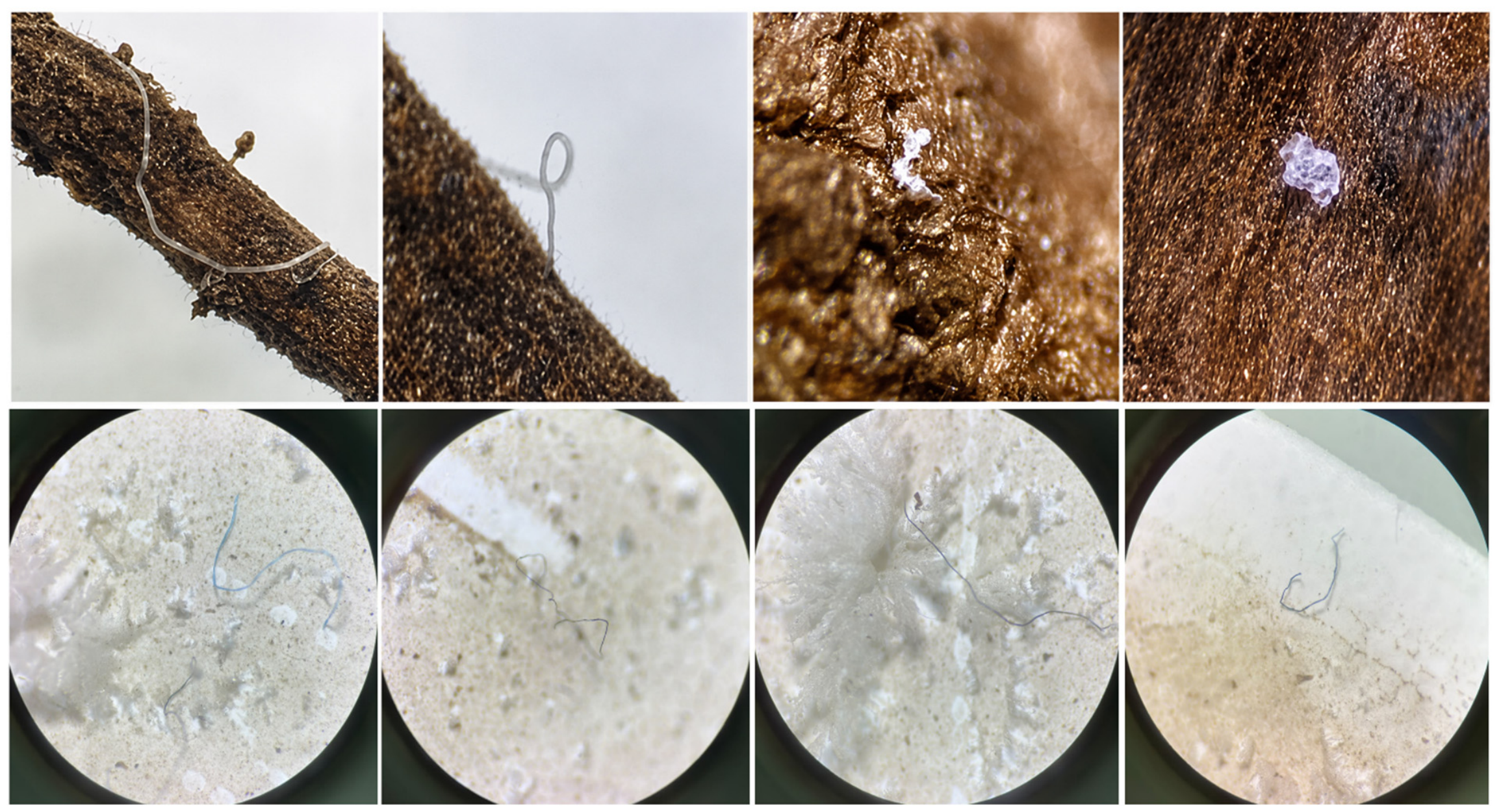
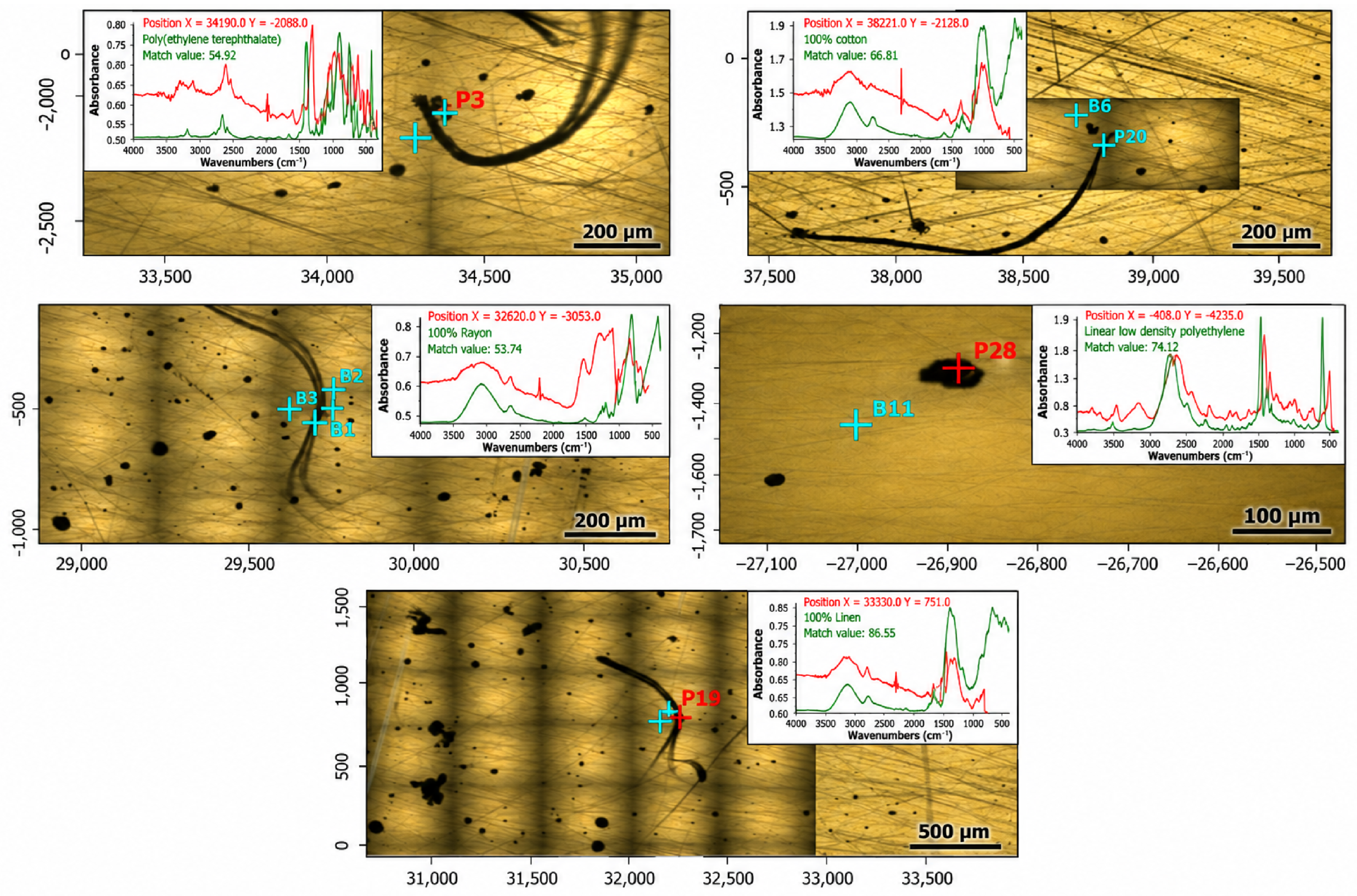
3.3. Detection and Identification of Smaller Retained Microparticles
3.4. Passive Retention Mechanisms of the Coconut-Fiber Matrix
3.5. Design Implications and Methodological Scope
4. Conclusions
Author Contributions
Funding
Institutional Review Board Statement
Informed Consent Statement
Data Availability Statement
Conflicts of Interest
References
- Malli, A.; Corella-Puertas, E.; Hajjar, C.; Boulay, A.-M. Transport mechanisms and fate of microplastics in estuarine compartments: A review. Mar. Pollut. Bull. 2022, 177, 113553. [Google Scholar] [CrossRef] [Scilit] [PubMed]
- Kumar, S.S.; Sangeetha, D. Toxic effects of microplastics in aquatic environments and the pathways to sustainable management. RSC Adv. 2026, 16, 16718–16747. [Google Scholar] [CrossRef] [Scilit] [PubMed]
- Corbau, C.; Skalny, M.; Bajda, T.; Le Coustumer, P.; Filipović Marijić, V.; Lazarou, A.; Nardin, W.; Coltorti, M.; Simeoni, U. Plastic pollution interception by vegetation: A mechanistic review across diverse habitats. J. Hazard. Mater. 2026, 508, 141908. [Google Scholar] [CrossRef] [Scilit] [PubMed]
- Cerri, F.; Mohamed, S.; Galli, P. Mangrove forests as a natural trap for marine plastic litter: Insights from the Maldives. Mar. Pollut. Bull. 2025, 213, 117677. [Google Scholar] [CrossRef] [Scilit] [PubMed]
- Duan, J.; Han, J.; Cheung, S.G.; Chong, R.K.Y.; Lo, C.-M.; Lee, F.W.-F.; Xu, S.J.-L.; Yang, Y.; Tam, N.F.-y.; Zhou, H.-C. How mangrove plants affect microplastic distribution in sediments of coastal wetlands: Case study in Shenzhen Bay, South China. Sci. Total Environ. 2021, 767, 144695. [Google Scholar] [CrossRef] [Scilit] [PubMed]
- Primus, A.; Hadibarata, T.; Jusoh, M.N.H. Accumulation of microplastics in mangrove ecosystem: Source, properties, and impacts for conservation. Environ. Sustain. 2026, 9, 711–728. [Google Scholar] [CrossRef] [Scilit]
- Barco, A.; Bona, S.; Borin, M. Plant species for floating treatment wetlands: A decade of experiments in North Italy. Sci. Total Environ. 2021, 751, 141666. [Google Scholar] [CrossRef] [Scilit] [PubMed]
- Sahreen, S.; Mukhtar, H. Floating Treatment Wetlands (FTW) for Sustainable Industrial Wastewater Treatment. In Microbial Bioremediation and Multiomics Technologies for Sustainable Development: Recent Trends; Ameen, F., Bhat, S.A., Kumar, V., Eds.; Royal Society of Chemistry: London, UK, 2024; Volume 13, pp. 291–318. [Google Scholar] [CrossRef] [Scilit]
- Cabrera, D.C.; Wang, Q.; Martín, M.; Rajadel, N.O.; Rousseau, D.P.L.; Hernández-Crespo, C. Microplastics occurrence and fate in full-scale treatment wetlands. Water Res. 2023, 240, 120106. [Google Scholar] [CrossRef] [Scilit] [PubMed]
- Zharkenov, Y.; Mkilima, T.; Abduova, A.; Zhaksylykova, L.; Turashev, A.; Imambayeva, R.; Imambaev, N.; Jaxymbetova, M.; Smagulova, A.; Beysenbaeva, E. Utilizing biofilm-enhanced coconut coir for microplastic removal in wastewater. Case Stud. Chem. Environ. Eng. 2024, 9, 100726. [Google Scholar] [CrossRef] [Scilit]
- Coppock, R.L.; Cole, M.; Lindeque, P.K.; Queirós, A.M.; Galloway, T.S. A small-scale, portable method for extracting microplastics from marine sediments. Environ. Pollut. 2017, 230, 829–837. [Google Scholar] [CrossRef] [Scilit] [PubMed]
- Hurley, R.R.; Lusher, A.L.; Olsen, M.; Nizzetto, L. Validation of a Method for Extracting Microplastics from Complex, Organic-Rich, Environmental Matrices. Environ. Sci. Technol. 2018, 52, 7409–7417. [Google Scholar] [CrossRef] [Scilit] [PubMed]
- Cowger, W.; Booth, A.M.; Hamilton, B.M.; Thaysen, C.; Primpke, S.; Munno, K.; Lusher, A.L.; Dehaut, A.; Vaz, V.P.; Liboiron, M.; et al. Reporting Guidelines to Increase the Reproducibility and Comparability of Research on Microplastics. Appl. Spectrosc. 2020, 74, 1066–1077. [Google Scholar] [CrossRef] [Scilit] [PubMed]
- Song, Y.K.; Hong, S.H.; Eo, S.; Shim, W.J. A comparison of spectroscopic analysis methods for microplastics: Manual, semi-automated, and automated Fourier transform infrared and Raman techniques. Mar. Pollut. Bull. 2021, 173, 113101. [Google Scholar] [CrossRef] [Scilit] [PubMed]
- Kozloski, R.; Cowger, W.; Arienzo, M.M. Moving toward automated µFTIR spectra matching for microplastic identification: Addressing false identifications and improving accuracy. Microplast. Nanoplast. 2024, 4, 27. [Google Scholar] [CrossRef] [Scilit]
- Noonan, M.J.; Grechi, N.; Mills, C.L.; Ferraz, d.A.M.M. Microplastics analytics: Why we should not underestimate the importance of blank controls. Microplast. Nanoplast. 2023, 3, 17. [Google Scholar] [CrossRef] [Scilit] [PubMed]
- Arteaga, I.; Pinos-Vélez, V.; Capparelli, M.; Moulatlet, G.M.; Cipriani-Avila, I.; Cabrera, M.; Rebolledo, E.; Arnés-Urgellés, C.; Cazar, M.E. Microplastic occurrence and distribution in the Gulf of Guayaquil, Ecuador. Mar. Pollut. Bull. 2024, 209, 117288. [Google Scholar] [CrossRef] [Scilit] [PubMed]
- Jiang, X.; Lu, K.; Tunnell, J.W.; Liu, Z. The impacts of weathering on concentration and bioaccessibility of organic pollutants associated with plastic pellets (nurdles) in coastal environments. Mar. Pollut. Bull. 2021, 170, 112592. [Google Scholar] [CrossRef] [Scilit] [PubMed]


Disclaimer/Publisher’s Note: The statements, opinions and data contained in all publications are solely those of the individual author(s) and contributor(s) and not of MDPI and/or the editor(s). MDPI and/or the editor(s) disclaim responsibility for any injury to people or property resulting from any ideas, methods, instructions or products referred to in the content. |
© 2026 by the authors. Licensee MDPI, Basel, Switzerland. This article is an open access article distributed under the terms and conditions of the Creative Commons Attribution (CC BY) license.
Share and Cite
Sanoja-Lopez, K.A.; Barona-Obando, M.; Suarez, C.F.; Navia-Pesantes, O.; Sanchez, E.; Quiroz-Suarez, K.A.; Luque, R. Passive Retention of Plastic Pellets and Microplastics by Coconut Fiber in a Mangrove-Supporting Floating Island in an Urban Estuary. Microplastics 2026, 5, 181. https://doi.org/10.3390/microplastics5030181
Sanoja-Lopez KA, Barona-Obando M, Suarez CF, Navia-Pesantes O, Sanchez E, Quiroz-Suarez KA, Luque R. Passive Retention of Plastic Pellets and Microplastics by Coconut Fiber in a Mangrove-Supporting Floating Island in an Urban Estuary. Microplastics. 2026; 5(3):181. https://doi.org/10.3390/microplastics5030181
Chicago/Turabian StyleSanoja-Lopez, Kelvin A., Marianela Barona-Obando, Cesar F. Suarez, Oscar Navia-Pesantes, Eder Sanchez, Kevin Alberto Quiroz-Suarez, and Rafael Luque. 2026. "Passive Retention of Plastic Pellets and Microplastics by Coconut Fiber in a Mangrove-Supporting Floating Island in an Urban Estuary" Microplastics 5, no. 3: 181. https://doi.org/10.3390/microplastics5030181
APA StyleSanoja-Lopez, K. A., Barona-Obando, M., Suarez, C. F., Navia-Pesantes, O., Sanchez, E., Quiroz-Suarez, K. A., & Luque, R. (2026). Passive Retention of Plastic Pellets and Microplastics by Coconut Fiber in a Mangrove-Supporting Floating Island in an Urban Estuary. Microplastics, 5(3), 181. https://doi.org/10.3390/microplastics5030181