Engineering Microbial Systems for Plastic Biodegradation into Monomers to Bridge Natural Plastisphere Ecology with Industrial Circularity



Abstract
1. Introduction
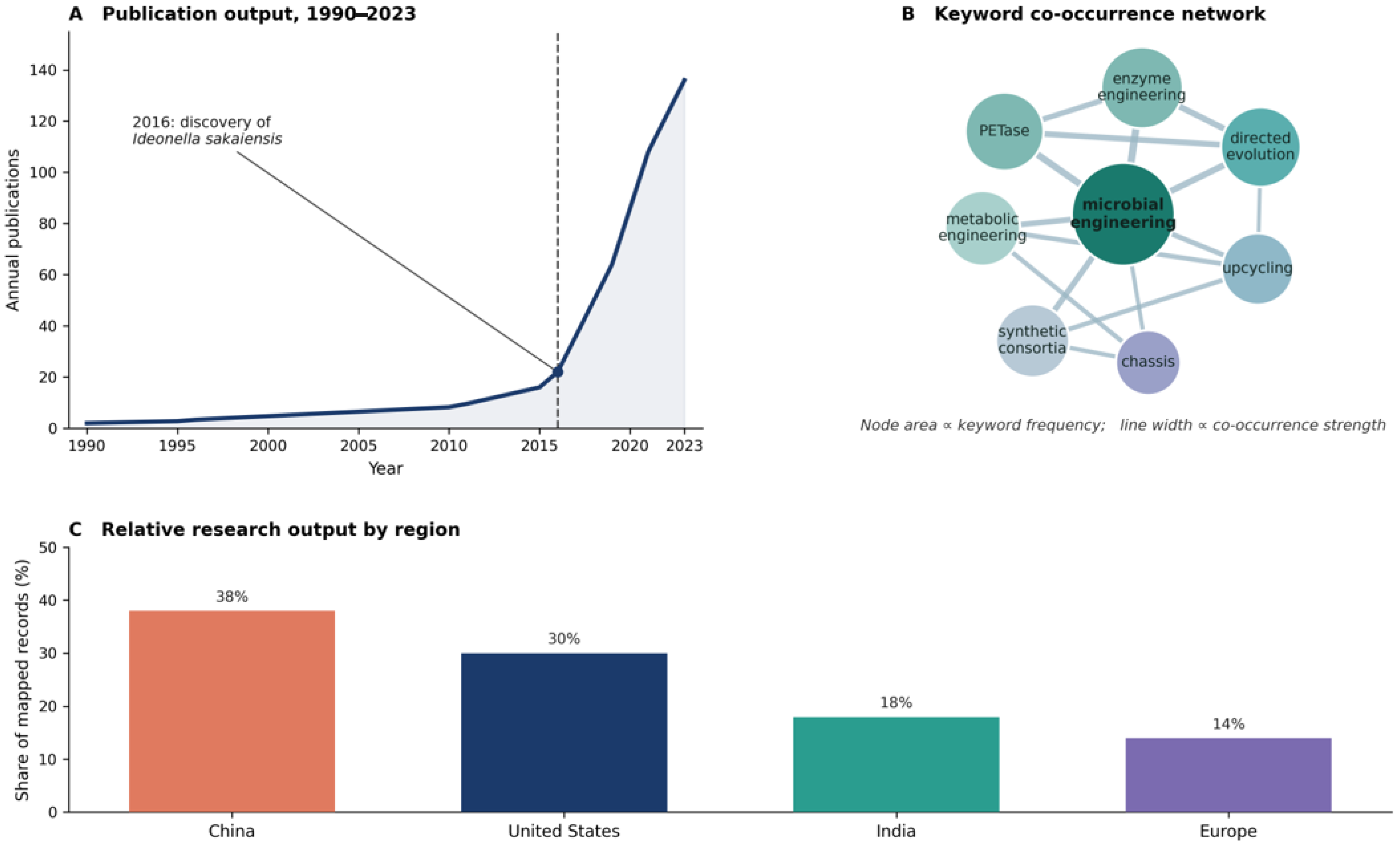
2. Bibliometric Overview: Methodology and Detailed Analysis
3. Natural Microbial Systems for Plastic Biodegradation
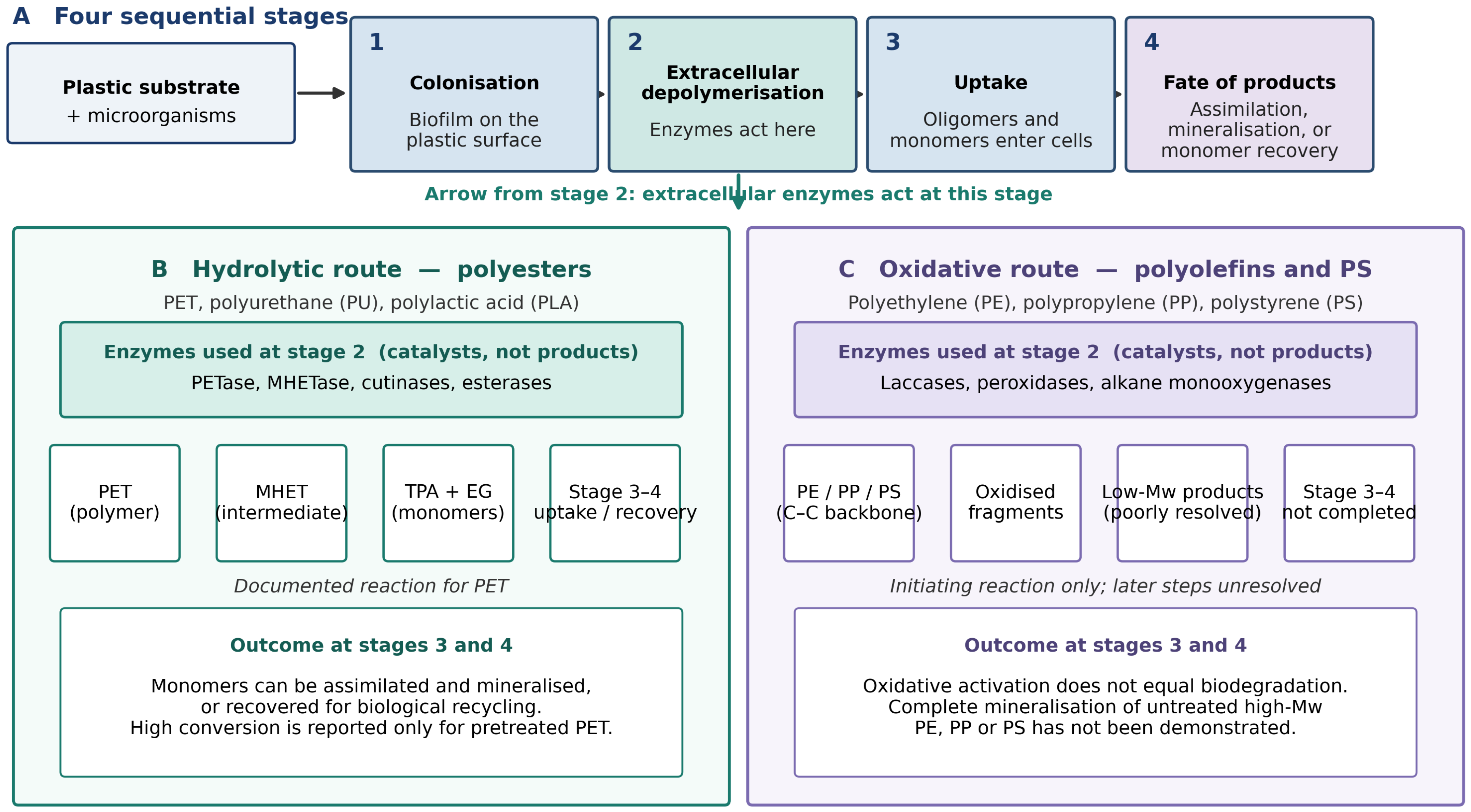
4. Biochemical Mechanisms and Key Enzymes
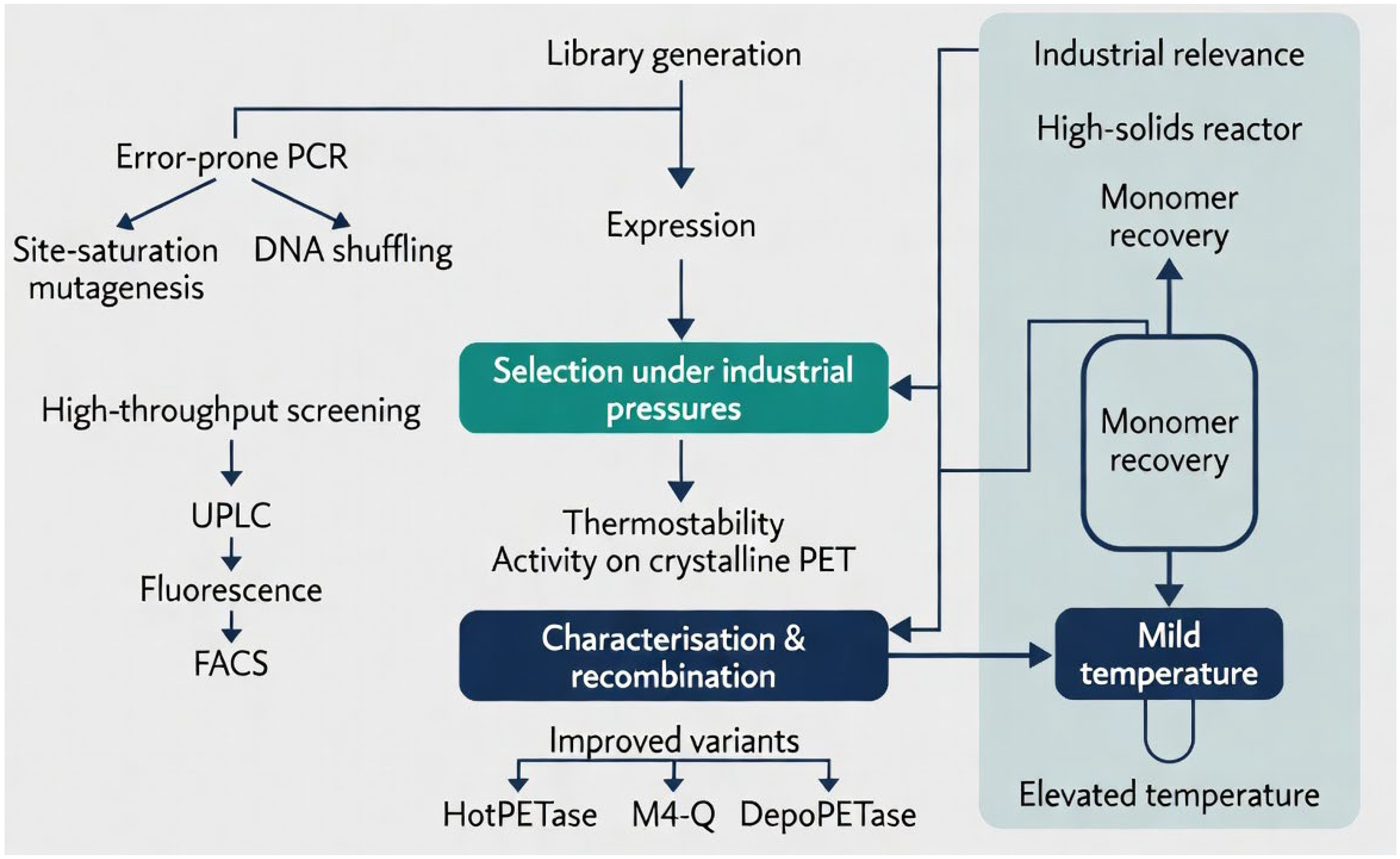
5. Enzyme Engineering of PET Hydrolases for Enhanced Performance
6. Engineering Microbial Hosts and Metabolic Pathways for PET Monomer Upcycling
7. Synthetic Microbial Consortia and Systems-Level Approaches
8. Translation from Laboratory to Industry
8.1. Pretreatment and Process Requirements
8.2. Pilot- and Demonstration-Scale Achievements
8.3. Techno-Economic and Life-Cycle Considerations
8.4. Regulatory, Biosafety, and Implementation Barriers
9. From Plastisphere Ecology to Engineered Circularity
9.1. A Six-Stage Translational Framework
9.2. What Engineering Can Take from the Plastisphere
9.3. What Engineering Must Add
9.4. Implications for Assay Design and Claims
10. Critical Limitations, Controversies, and Knowledge Gaps
10.1. Kinetic and Substrate Limitations
10.2. Disconnect Between Laboratory Conditions and Real-World Matrices
10.3. Ecological, Toxicological, and Biosafety Concerns
10.4. Economic, Scalability, and Systemic Barriers
10.5. Priority Knowledge Gaps
11. Discussion
12. Conclusions
Author Contributions
Funding
Data Availability Statement
Conflicts of Interest
References
- Yoshida, S.; Hiraga, K.; Takehana, T.; Taniguchi, I.; Yamaji, H.; Maeda, Y.; Toyohara, K.; Miyamoto, K.; Kimura, Y.; Oda, K. A bacterium that degrades and assimilates poly(ethylene terephthalate). Science 2016, 351, 1196–1199. [Google Scholar] [CrossRef] [Scilit] [PubMed]
- Plastics Europe. Plastics—The Fast Facts 2024. Plastics Europe. 2024. Available online: https://plasticseurope.org/knowledge-hub/plastics-the-fast-facts-2024/ (accessed on 22 June 2026).
- Plastics Europe. Plastics—The Fast Facts 2025. Plastics Europe. 2025. Available online: https://plasticseurope.org/knowledge-hub/plastics-the-fast-facts-2025/ (accessed on 23 June 2026).
- Geyer, R.; Jambeck, J.R.; Law, K.L. Production, use, and fate of all plastics ever made. Sci. Adv. 2017, 3, e1700782. [Google Scholar] [CrossRef] [Scilit] [PubMed]
- Organisation for Economic Cooperation and Development. Global Plastics Outlook: Economic Drivers, Environmental Impacts and Policy Options; OECD Publishing: Paris, France, 2022. [Google Scholar] [CrossRef] [Scilit]
- Lau, W.W.Y.; Shiran, Y.; Bailey, R.M.; Cook, E.; Stuchtey, M.R.; Koskella, J.; Velis, C.A.; Godfrey, L.; Boucher, J.; Murphy, M.B.; et al. Evaluating scenarios toward zero plastic pollution. Science 2020, 369, 1455–1461. [Google Scholar] [CrossRef] [Scilit] [PubMed]
- Stegmann, P.; Daioglou, V.; Londo, M.; van Vuuren, D.P.; Junginger, M. Plastic futures and their CO2 emissions. Nature 2022, 612, 272–276. [Google Scholar] [CrossRef] [Scilit] [PubMed]
- Danso, D.; Chow, J.; Streit, W.R. Plastics: Environmental and biotechnological perspectives on microbial degradation. Appl. Environ. Microbiol. 2019, 85, e01095-19. [Google Scholar] [CrossRef] [Scilit] [PubMed]
- Gambarini, V.; Pantos, O.; Kingsbury, J.M.; Weaver, L.; Handley, K.M.; Lear, G. Phylogenetic distribution of plastic-degrading microorganisms. mSystems 2021, 6, e01112-20. [Google Scholar] [CrossRef] [Scilit] [PubMed]
- Gambarini, V.; Pantos, O.; Kingsbury, J.M.; Weaver, L.; Handley, K.M.; Lear, G. PlasticDB: A database of microorganisms and proteins linked to plastic biodegradation. Database 2022, 2022, baac008. [Google Scholar] [CrossRef] [Scilit] [PubMed]
- Tournier, V.; Topham, C.M.; Gilles, A.; David, B.; Folgoas, C.; Moya-Leclair, E.; Kamionka, E.; Desrousseaux, M.-L.; Texier, H.; Gavalda, S.; et al. An engineered PET depolymerase to break down and recycle plastic bottles. Nature 2020, 580, 216–219. [Google Scholar] [CrossRef] [Scilit] [PubMed]
- Arnal, G.; Anglade, J.; Gavalda, S.; Tournier, V.; Chabot, N.; Bornscheuer, U.T.; Weber, G.; Marty, A. Assessment of four engineered PET degrading enzymes considering large-scale industrial applications. ACS Catal. 2023, 13, 13156–13166. [Google Scholar] [CrossRef] [Scilit] [PubMed]
- Cui, Y.; Chen, Y.; Sun, J.; Zhu, T.; Pang, H.; Li, C.; Geng, W.-C.; Wu, B. Computational redesign of a hydrolase for nearly complete PET depolymerization at industrially relevant high-solids loading. Nat. Commun. 2024, 15, 1417. [Google Scholar] [CrossRef] [Scilit] [PubMed]
- Restrepo-Flórez, J.-M.; Bassi, A.; Thompson, M.R. Microbial degradation and deterioration of polyethylene—A review. Int. Biodeterior. Biodegrad. 2014, 88, 83–90. [Google Scholar] [CrossRef] [Scilit]
- Santo, M.; Weitsman, R.; Sivan, A. The role of the copper-binding enzyme—Laccase—In the biodegradation of polyethylene by the actinomycete Rhodococcus ruber. Int. Biodeterior. Biodegrad. 2013, 84, 204–210. [Google Scholar] [CrossRef] [Scilit]
- Wei, R.; Zimmermann, W. Microbial enzymes for the recycling of recalcitrant petroleum-based plastics: How far are we? Microb. Biotechnol. 2017, 10, 1308–1322. [Google Scholar] [CrossRef] [Scilit] [PubMed]
- Montazer, Z.; Habibi Najafi, M.B.; Levin, D.B. Challenges with verifying microbial degradation of polyethylene. Polymers 2020, 12, 123. [Google Scholar] [CrossRef] [Scilit] [PubMed]
- Inderthal, H.; Tai, S.L.; Harrison, S.T.L. Non-hydrolyzable plastics—An interdisciplinary look at plastic bio-oxidation. Trends Biotechnol. 2021, 39, 12–23. [Google Scholar] [CrossRef] [Scilit] [PubMed]
- Sullivan, K.P.; Werner, A.Z.; Ramirez, K.J.; Ellis, L.D.; Bussard, J.R.; Black, B.A.; Brandner, D.G.; Bratti, F.; Buss, B.L.; Dong, X.; et al. Mixed plastics waste valorization through tandem chemical oxidation and biological funneling. Science 2022, 378, 207–211. [Google Scholar] [CrossRef] [Scilit] [PubMed]
- Nielsen, J.; Keasling, J.D. Engineering cellular metabolism. Cell 2016, 164, 1185–1197. [Google Scholar] [CrossRef] [Scilit] [PubMed]
- Zhu, B.; Wang, D.; Wei, N. Enzyme discovery and engineering for sustainable plastic recycling. Trends Biotechnol. 2022, 40, 22–37. [Google Scholar] [CrossRef] [Scilit] [PubMed]
- Nikel, P.I.; Chavarría, M.; Danchin, A.; de Lorenzo, V. From dirt to industrial applications: Pseudomonas putida as a Synthetic Biology chassis for hosting harsh biochemical reactions. Curr. Opin. Chem. Biol. 2016, 34, 20–29. [Google Scholar] [CrossRef] [Scilit] [PubMed]
- Roell, G.W.; Zha, J.; Carr, R.R.; Koffas, M.A.; Fong, S.S.; Tang, Y.J. Engineering microbial consortia by division of labor. Microb. Cell Fact. 2019, 18, 35. [Google Scholar] [CrossRef] [Scilit] [PubMed]
- Ellis, L.D.; Rorrer, N.A.; Sullivan, K.P.; Otto, M.; McGeehan, J.E.; Román-Leshkov, Y.; Wierckx, N.; Beckham, G.T. Chemical and biological catalysis for plastics recycling and upcycling. Nat. Catal. 2021, 4, 539–556. [Google Scholar] [CrossRef] [Scilit]
- Clomburg, J.M.; Crumbley, A.M.; Gonzalez, R. Industrial biomanufacturing: The future of chemical production. Science 2017, 355, aag0804. [Google Scholar] [CrossRef] [Scilit] [PubMed]
- Singh, A.; Rorrer, N.A.; Nicholson, S.R.; Erickson, E.; DesVeaux, J.S.; Avelino, A.F.T.; Lamers, P.; Bhatt, A.; Zhang, Y.; Avery, G.; et al. Techno-economic, life-cycle, and socioeconomic impact analysis of enzymatic recycling of poly(ethylene terephthalate). Joule 2021, 5, 2479–2503. [Google Scholar] [CrossRef] [Scilit]
- Uekert, T.; DesVeaux, J.S.; Singh, A.; Nicholson, S.R.; Lamers, P.; Ghosh, T.; McGeehan, J.E.; Carpenter, A.C.; Beckham, G.T. Life cycle assessment of enzymatic poly(ethylene terephthalate) recycling. Green Chem. 2022, 24, 6531–6543. [Google Scholar] [CrossRef] [Scilit]
- Yang, S.-S.; Wu, W.-M.; Pang, J.-W.; He, L.; Ding, M.-Q.; Li, M.-X.; Zhao, Y.-L.; Sun, H.-J.; Xing, D.-F.; Ren, N.-Q.; et al. Bibliometric analysis of publications on biodegradation of plastics: Explosively emerging research over 70 years. J. Clean. Prod. 2023, 428, 139423. [Google Scholar] [CrossRef] [Scilit]
- Cao, Y.; Bian, J.; Han, Y.; Liu, J.; Ma, Y.; Feng, W.; Deng, Y.; Yu, Y. Progress and prospects of microplastic biodegradation processes and mechanisms: A bibliometric analysis. Toxics 2024, 12, 463. [Google Scholar] [CrossRef] [Scilit] [PubMed]
- Zettler, E.R.; Mincer, T.J.; Amaral-Zettler, L.A. Life in the “plastisphere”: Microbial communities on plastic marine debris. Environ. Sci. Technol. 2013, 47, 7137–7146. [Google Scholar] [CrossRef] [Scilit] [PubMed]
- Amaral-Zettler, L.A.; Zettler, E.R.; Mincer, T.J. Ecology of the plastisphere. Nat. Rev. Microbiol. 2020, 18, 139–151. [Google Scholar] [CrossRef] [Scilit] [PubMed]
- Oberbeckmann, S.; Labrenz, M. Marine microbial assemblages on microplastics: Diversity, adaptation, and role in degradation. Annu. Rev. Mar. Sci. 2020, 12, 209–232. [Google Scholar] [CrossRef] [Scilit] [PubMed]
- Wright, R.J.; Erni-Cassola, G.; Zadjelovic, V.; Latva, M.; Christie-Oleza, J.A. Marine plastic debris: A new surface for microbial colonization. Environ. Sci. Technol. 2020, 54, 11657–11672. [Google Scholar] [CrossRef] [Scilit] [PubMed]
- Mohanan, N.; Montazer, Z.; Sharma, P.K.; Levin, D.B. Microbial and enzymatic degradation of synthetic plastics. Front. Microbiol. 2020, 11, 580709. [Google Scholar] [CrossRef] [Scilit] [PubMed]
- Danso, D.; Schmeisser, C.; Chow, J.; Zimmermann, W.; Wei, R.; Leggewie, C.; Li, X.; Hazen, T.; Streit, W.R. New insights into the function and global distribution of polyethylene terephthalate (PET)-degrading bacteria and enzymes. Appl. Environ. Microbiol. 2018, 84, e02773-17. [Google Scholar] [CrossRef] [Scilit] [PubMed]
- Sulaiman, S.; Yamato, S.; Kanaya, E.; Kim, J.-J.; Koga, Y.; Takano, K.; Kanaya, S. Isolation of a novel cutinase homolog with polyethylene terephthalate-degrading activity from leaf-branch compost by using a metagenomic approach. Appl. Environ. Microbiol. 2012, 78, 1556–1562. [Google Scholar] [CrossRef] [Scilit] [PubMed]
- Ru, J.; Huo, Y.; Yang, Y. Microbial degradation and valorization of plastic wastes. Front. Microbiol. 2020, 11, 442. [Google Scholar] [CrossRef] [Scilit] [PubMed]
- Chigwada, A.D.; Kalu, C.M.; Tekere, M. Substrate-specific bacterial and fungal communities in the Jukskei River plastisphere revealed by full-length amplicon sequencing. Sci. Total Environ. 2026, 1042, 181894. [Google Scholar] [CrossRef] [Scilit] [PubMed]
- Yang, Y.; Yang, J.; Wu, W.-M.; Zhao, J.; Song, Y.; Gao, L.; Yang, R.; Jiang, L. Biodegradation and mineralization of polystyrene by plastic-eating mealworms: Part 1. Chemical and physical characterization and isotopic tests. Environ. Sci. Technol. 2015, 49, 12080–12086. [Google Scholar] [CrossRef] [Scilit] [PubMed]
- Yang, Y.; Yang, J.; Wu, W.-M.; Zhao, J.; Song, Y.; Gao, L.; Yang, R.; Jiang, L. Biodegradation and mineralization of polystyrene by plastic-eating mealworms: Part 2. Role of gut microorganisms. Environ. Sci. Technol. 2015, 49, 12087–12093. [Google Scholar] [CrossRef] [Scilit] [PubMed]
- Brandon, A.M.; Gao, S.-H.; Tian, R.; Ning, D.; Yang, S.-S.; Zhou, J.; Wu, W.-M.; Criddle, C.S. Biodegradation of polyethylene and plastic mixtures in mealworms (larvae of Tenebrio molitor) and effects on the gut microbiome. Environ. Sci. Technol. 2018, 52, 6526–6533. [Google Scholar] [CrossRef] [Scilit] [PubMed]
- Bombelli, P.; Howe, C.J.; Bertocchini, F. Polyethylene bio-degradation by caterpillars of the wax moth Galleria mellonella. Curr. Biol. 2017, 27, R292–R293. [Google Scholar] [CrossRef] [Scilit] [PubMed]
- Jacquin, J.; Cheng, J.; Odobel, C.; Pandin, C.; Conan, P.; Pujo-Pay, M.; Barbe, V.; Meistertzheim, A.-L.; Ghiglione, J.-F. Microbial ecotoxicology of marine plastic debris: A review on colonization and biodegradation by the “plastisphere”. Front. Microbiol. 2019, 10, 865. [Google Scholar] [CrossRef] [Scilit] [PubMed]
- Kawai, F.; Kawabata, T.; Oda, M. Current knowledge on enzymatic PET degradation and its possible application to waste stream management and other fields. Appl. Microbiol. Biotechnol. 2019, 103, 4253–4268. [Google Scholar] [CrossRef] [Scilit] [PubMed]
- Urbanek, A.K.; Rymowicz, W.; Mirończuk, A.M. Degradation of plastics and plastic-degrading bacteria in cold marine habitats. Appl. Microbiol. Biotechnol. 2018, 102, 7669–7678. [Google Scholar] [CrossRef] [Scilit] [PubMed]
- Lucas, N.; Bienaime, C.; Belloy, C.; Queneudec, M.; Silvestre, F.; Nava-Saucedo, J.-E. Polymer biodegradation: Mechanisms and estimation techniques. Chemosphere 2008, 73, 429–442. [Google Scholar] [CrossRef] [Scilit] [PubMed]
- Wei, R.; Song, C.; Gräsing, D.; Schneider, T.; Bielytskyi, P.; Böttcher, D.; Matysik, J.; Bornscheuer, U.T.; Zimmermann, W. Conformational fitting of a flexible oligomeric substrate does not explain the enzymatic PET degradation. Nat. Commun. 2019, 10, 5581. [Google Scholar] [CrossRef] [Scilit] [PubMed]
- Gates, E.G.; Crook, N. The biochemical mechanisms of plastic biodegradation. FEMS Microbiol. Rev. 2024, 48, fuae027. [Google Scholar] [CrossRef] [Scilit] [PubMed]
- Palm, G.J.; Reisky, L.; Böttcher, D.; Müller, H.; Michels, E.A.P.; Walczak, M.C.; Berndt, L.; Weiss, M.S.; Bornscheuer, U.T.; Weber, G. Structure of the plastic-degrading Ideonella sakaiensis MHETase bound to a substrate. Nat. Commun. 2019, 10, 1717. [Google Scholar] [CrossRef] [Scilit] [PubMed]
- Knott, B.C.; Erickson, E.; Allen, M.D.; Gado, J.E.; Graham, R.; Kearns, F.L.; Pardo, I.; Topuzlu, E.; Anderson, J.J.; Austin, H.P.; et al. Characterization and engineering of a two-enzyme system for plastics depolymerization. Proc. Natl. Acad. Sci. USA 2020, 117, 25476–25485. [Google Scholar] [CrossRef] [Scilit] [PubMed]
- Yoshida, S.; Hiraga, K.; Taniguchi, I.; Oda, K. Ideonella sakaiensis, PETase, and MHETase: From identification of microbial PET degradation to engineering. Methods Enzymol. 2021, 648, 187–204. [Google Scholar] [CrossRef] [Scilit] [PubMed]
- Chen, C.-C.; Dai, L.; Ma, L.; Guo, R.-T. Enzymatic degradation of plant biomass and synthetic polymers. Nat. Rev. Chem. 2020, 4, 114–126. [Google Scholar] [CrossRef] [Scilit] [PubMed]
- Arnold, F.H. Directed evolution: Bringing new chemistry to life. Angew. Chem. Int. Ed. 2018, 57, 4143–4148. [Google Scholar] [CrossRef] [Scilit] [PubMed]
- Taniguchi, I.; Yoshida, S.; Hiraga, K.; Miyamoto, K.; Kimura, Y.; Oda, K. Biodegradation of PET: Current status and application aspects. ACS Catal. 2019, 9, 4089–4105. [Google Scholar] [CrossRef] [Scilit]
- Carr, C.M.; Clarke, D.J.; Dobson, A.D.W. Microbial polyethylene terephthalate hydrolases: Current and future perspectives. Front. Microbiol. 2020, 11, 571265. [Google Scholar] [CrossRef] [Scilit] [PubMed]
- Austin, H.P.; Allen, M.D.; Donohoe, B.S.; Rorrer, N.A.; Kearns, F.L.; Silveira, R.L.; Pollard, B.C.; Dominick, G.; Duman, R.; El Omari, K.; et al. Characterization and engineering of a plastic-degrading aromatic polyesterase. Proc. Natl. Acad. Sci. USA 2018, 115, E4350–E4357. [Google Scholar] [CrossRef] [Scilit] [PubMed]
- Son, H.F.; Cho, I.J.; Joo, S.; Seo, H.; Sagong, H.-Y.; Choi, S.Y.; Lee, S.Y.; Kim, K.-J. Rational protein engineering of thermo-stable PETase from Ideonella sakaiensis for highly efficient PET degradation. ACS Catal. 2019, 9, 3519–3526. [Google Scholar] [CrossRef] [Scilit]
- Cui, Y.; Chen, Y.; Liu, X.; Dong, S.; Tian, Y.; Qiao, Y.; Mitra, R.; Han, J.; Li, C.; Han, X.; et al. Computational redesign of a PETase for plastic biodegradation under ambient condition by the GRAPE strategy. ACS Catal. 2021, 11, 1340–1350. [Google Scholar] [CrossRef] [Scilit]
- Bell, E.L.; Smithson, R.; Kilbride, S.; Foster, J.; Hardy, F.J.; Ramachandran, S.; Tedstone, A.A.; Haigh, S.J.; Garforth, A.A.; Day, P.J.R.; et al. Directed evolution of an efficient and thermostable PET depolymerase. Nat. Catal. 2022, 5, 673–681. [Google Scholar] [CrossRef] [Scilit]
- Shi, L.; Liu, P.; Tan, Z.; Zhao, W.; Gao, J.; Gu, Q.; Ma, H.; Liu, H.; Zhu, L. Complete depolymerization of PET wastes by an evolved PET hydrolase from directed evolution. Angew. Chem. Int. Ed. 2023, 62, e202218390. [Google Scholar] [CrossRef] [Scilit] [PubMed]
- Zurier, H.S.; Goddard, J.M. A high-throughput expression and screening platform for applications-driven PETase engineering. Biotechnol. Bioeng. 2023, 120, 1023–1035. [Google Scholar] [CrossRef] [Scilit] [PubMed]
- Gao, S.; Shi, L.; Wei, H.; Liu, P.; Zhao, W.; Gong, L.; Tan, Z.; Zhai, H.; Liu, W.; Liu, H.; et al. β-sheet engineering of IsPETase for PET depolymerization. Engineering 2025, 47, 180–193. [Google Scholar] [CrossRef] [Scilit]
- Sun, S. Recent advances in screening and identification of PET-degrading enzymes. Environ. Rev. 2024, 32, 294–314. [Google Scholar] [CrossRef] [Scilit]
- Lu, H.; Diaz, D.J.; Czarnecki, N.J.; Zhu, C.; Kim, W.; Shroff, R.; Acosta, D.J.; Alexander, B.R.; Cole, H.O.; Zhang, Y.; et al. Machine learning-aided engineering of hydrolases for PET depolymerization. Nature 2022, 604, 662–667. [Google Scholar] [CrossRef] [Scilit] [PubMed]
- Han, Y.; Xing, S.; Ding, M.; Wang, Y.; Xiao, W.; Jiang, Y.; Yao, M. Synergistic engineering PETase reveals loop-region mutations for enhanced catalytic activity and thermal stability. Synth. Syst. Biotechnol. 2026, 11, 419–429. [Google Scholar] [CrossRef] [Scilit] [PubMed]
- Liu, Y.; Lin, H.; Wei, Z.; Bai, S.; Chen, S.; Wu, J.; Liu, Z. Efficient mild depolymerization of polyester plastics accomplished by engineered PETase via directed evolution of flexible loops. Cell Rep. Phys. Sci. 2024, 5, 102295. [Google Scholar] [CrossRef] [Scilit]
- Erickson, E.; Gado, J.E.; Avilán, L.; Bratti, F.; Brizendine, R.K.; Cox, P.A.; Gill, R.; Graham, R.; Kim, D.-J.; König, G.; et al. Sourcing thermotolerant poly(ethylene terephthalate) hydrolase scaffolds from natural diversity. Nat. Commun. 2022, 13, 7850. [Google Scholar] [CrossRef] [Scilit] [PubMed]
- Pfaff, L.; Gao, J.; Li, Z.; Jäckering, A.; Weber, G.; Mican, J.; Chen, Y.; Dong, W.; Han, X.; Feiler, C.G.; et al. Multiple substrate binding mode-guided engineering of a thermophilic PET hydrolase. ACS Catal. 2022, 12, 9790–9800. [Google Scholar] [CrossRef] [Scilit] [PubMed]
- Richter, P.K.; Blázquez-Sánchez, P.; Zhao, Z.; Engelberger, F.; Wiebeler, C.; Künze, G.; Frank, R.; Krinke, D.; Frezzotti, E.; Lihanova, Y.; et al. Structure and function of the metagenomic plastic-degrading polyester hydrolase PHL7 bound to its product. Nat. Commun. 2023, 14, 1905. [Google Scholar] [CrossRef] [Scilit] [PubMed]
- Bollinger, A.; Thies, S.; Knieps-Grünhagen, E.; Gertzen, C.; Kobus, S.; Höppner, A.; Ferrer, M.; Gohlke, H.; Smits, S.H.J.; Jaeger, K.-E. A novel polyester hydrolase from the marine bacterium Pseudomonas aestusnigri. Front. Microbiol. 2020, 11, 114. [Google Scholar] [CrossRef] [Scilit] [PubMed]
- Chen, Z.; Wang, Y.; Cheng, Y.; Wang, X.; Tong, S.; Yang, H.; Wang, Z. Efficient biodegradation of highly crystallized polyethylene terephthalate through cell surface display of bacterial PETase. Sci. Total Environ. 2020, 709, 136138. [Google Scholar] [CrossRef] [Scilit] [PubMed]
- Tiso, T.; Narancic, T.; Wei, R.; Pollet, E.; Beagan, N.; Schröder, K.; Honak, A.; Jiang, M.; Kenny, S.T.; Wierckx, N.; et al. Towards bio-upcycling of polyethylene terephthalate. Metab. Eng. 2021, 66, 167–178. [Google Scholar] [CrossRef] [Scilit] [PubMed]
- Dragosits, M.; Mattanovich, D. Adaptive laboratory evolution—Principles and applications for biotechnology. Microb. Cell Fact. 2013, 12, 64. [Google Scholar] [CrossRef] [Scilit] [PubMed]
- Sandberg, T.E.; Salazar, M.J.; Weng, L.L.; Palsson, B.O.; Feist, A.M. The emergence of adaptive laboratory evolution as an efficient approach for biological discovery and industrial biotechnology. Metab. Eng. 2019, 56, 1–16. [Google Scholar] [CrossRef] [Scilit] [PubMed]
- Satta, A.; Zampieri, G.; Loprete, G.; Campanaro, S.; Treu, L.; Bergantino, E. Metabolic and enzymatic engineering strategies for polyethylene terephthalate degradation and valorization. Rev. Environ. Sci. Bio/Technol. 2024, 23, 351–383. [Google Scholar] [CrossRef] [Scilit]
- Gercke, D.; Furtmann, C.; Tozakidis, I.E.P.; Jose, J. Highly crystalline post-consumer PET waste hydrolysis by surface displayed PETase using a bacterial whole-cell biocatalyst. ChemCatChem 2021, 13, 3479–3489. [Google Scholar] [CrossRef] [Scilit]
- Sadler, J.C.; Wallace, S. Microbial synthesis of vanillin from waste poly(ethylene terephthalate). Green Chem. 2021, 23, 4665–4672. [Google Scholar] [CrossRef] [Scilit] [PubMed]
- Franden, M.A.; Jayakody, L.N.; Li, W.-J.; Wagner, N.J.; Cleveland, N.S.; Michener, W.E.; Hauer, B.; Blank, L.M.; Wierckx, N.; Klebensberger, J.; et al. Engineering Pseudomonas putida KT2440 for efficient ethylene glycol utilization. Metab. Eng. 2018, 48, 197–207. [Google Scholar] [CrossRef] [Scilit] [PubMed]
- Werner, A.Z.; Clare, R.; Mand, T.D.; Pardo, I.; Ramirez, K.J.; Haugen, S.J.; Bratti, F.; Dexter, G.N.; Elmore, J.R.; Huenemann, J.D.; et al. Tandem chemical deconstruction and biological upcycling of poly(ethylene terephthalate) to β-ketoadipic acid by Pseudomonas putida KT2440. Metab. Eng. 2021, 67, 250–261. [Google Scholar] [CrossRef] [Scilit] [PubMed]
- Bao, T.; Qian, Y.; Xin, Y.; Collins, J.J.; Lu, T. Engineering microbial division of labor for plastic upcycling. Nat. Commun. 2023, 14, 5712. [Google Scholar] [CrossRef] [Scilit] [PubMed]
- Qi, X.; Ma, Y.; Chang, H.; Li, B.; Ding, M.; Yuan, Y. Evaluation of PET degradation using artificial microbial consortia. Front. Microbiol. 2021, 12, 778828. [Google Scholar] [CrossRef] [Scilit] [PubMed]
- Zhou, Y.; Zeeshan Ul Haq, M. Engineering of synthetic microbial consortia for sustainable management of wastewater and polyethylene terephthalate: A comprehensive review. Int. J. Mol. Sci. 2025, 26, 11623. [Google Scholar] [CrossRef] [Scilit] [PubMed]
- He, D.; Gong, Y.; Ding, M.; Yuan, Y. Construction of microbial systems for polyethylene terephthalate degradation. Synth. Syst. Biotechnol. 2025, 10, 1341–1351. [Google Scholar] [CrossRef] [Scilit] [PubMed]
- García, J.L. Enzymatic recycling of polyethylene terephthalate through the lens of proprietary processes. Microb. Biotechnol. 2022, 15, 2699–2704. [Google Scholar] [CrossRef] [Scilit] [PubMed]
- Anwar, M.; Konnova, M.E.; Dastgir, S. Circular plastic economy for sustainable development: Current advances and future perspectives. RSC Sustain. 2025, 3, 3724–3840. [Google Scholar] [CrossRef] [Scilit]
- Omidoyin, K.C.; Jho, E.H. Environmental occurrence and ecotoxicological risks of plastic leachates in aquatic and terrestrial environments. Sci. Total Environ. 2024, 954, 176728. [Google Scholar] [CrossRef] [Scilit] [PubMed]
- Haq, F.; Kiran, M.; Khan, I.A.; Mehmood, S.; Aziz, T.; Haroon, M. Exploring the pathways to sustainability: A comprehensive review of biodegradable plastics in the circular economy. Mater. Today Sustain. 2025, 29, 101067. [Google Scholar] [CrossRef] [Scilit]
- Joo, S.; Cho, I.J.; Seo, H.; Son, H.F.; Sagong, H.-Y.; Shin, T.J.; Choi, S.Y.; Lee, S.Y.; Kim, K.-J. Structural insight into molecular mechanism of poly(ethylene terephthalate) degradation. Nat. Commun. 2018, 9, 382. [Google Scholar] [CrossRef] [Scilit] [PubMed]



| Phylum/Group | Representative Genera/Species | Principal Polymers Reported | Reported Enzyme Activity | References |
|---|---|---|---|---|
| Proteobacteria | Ideonella sakaiensis, Pseudomonas species, Alcanivorax | PET; claimed activity on some polyolefins | PETase, MHETase, esterases, monooxygenases | [1,9,35] |
| Actinobacteria | Thermobifida fusca, Thermobifida alba, Streptomyces | PET, cutin, polyesters | Cutinases, esterases | [9,36] |
| Firmicutes | Bacillus species, Rhodococcus ruber, R. rhodochrous | Claimed PE, PP, PS, and polyesters | Oxidative enzymes, hydrolases | [9,15,34,38] |
| Ascomycota | Aspergillus niger, A. oryzae, Fusarium, Penicillium, Trichoderma | Polyesters; claimed activity on some polyolefins | Esterases, cutinases, laccases | [9,34,37] |
| Basidiomycota | Phanerochaete, Trametes, Pleurotus | Claimed polyolefin surface oxidation | Laccases, peroxidases | [9,34,37] |
| Insect-gut-associated | Tenebrio molitor/Galleria mellonella gut microbiota (Citrobacter, Enterobacter, Bacillus, Exiguobacterium) | PS, PE (fragmentation plus microbial chain cleavage) | Host mastication plus gut microbial depolymerization | [39,40,41,42] |
| Enzyme Variant | Key Mutations/Features | Optimal Temperature (°C) | Approximate Conversion/Activity Gain | Reference |
|---|---|---|---|---|
| Wild-type IsPETase | None | ~30–40 | Baseline activity on amorphous PET films; low activity on crystalline PET | [1,56] |
| PETase S238F/W159H | Active-site cleft narrowing | ~30–40 | Improved activity on crystalline PET relative to wild type; laboratory film assays | [56] |
| HotPETase | 21 substitutions; Tm = 82.5 °C | ~70 | Faster depolymerization of semi-crystalline PET than earlier IsPETase variants; laboratory evolution campaign | [59] |
| FAST-PETase | N233K/R224Q/S121E/D186H/R280A | 30–50 | Near-complete depolymerization of untreated thermoformed post-consumer PET in ≤1 week under laboratory batch conditions; lower conversion than LCCICCG under high-solid continuous comparison | [12,64] |
| QM-PETase-2 | N114I/N205K/N233K/S269V (loop region) | Mild temperatures | 4.9-fold catalytic efficiency; +12.4 °C Tm; laboratory kinetic assays | [65] |
| LCCICCG | ICCG mutations on leaf-branch compost cutinase | 65–72 | 90–98% conversion of pretreated, amorphized PET at ≤200 g kg−1 in 10–24 h; pilot/demonstration format | [11,12] |
| TurboPETase | Computational redesign of HR29 hydrolase | 65 (Tm ≈ 84) | 98.2% depolymerization of pretreated post-consumer PET in 8 h at 200 g kg−1 and 2 mg enzyme g−1 PET; laboratory bioreactor | [13] |
| Chassis Organism | Key Advantages | Main Limitations | Typical Applications in Plastic Biodegradation |
|---|---|---|---|
| Escherichia coli | Fast growth, simple genetics, rapid cloning | Low tolerance to aromatic monomers, limited secretion | Initial expression screening and laboratory characterization |
| Pseudomonas putida | High aromatic tolerance, versatile metabolism, robust genetic tools | More complex genetics than E. coli | Whole-cell biocatalysis, monomer assimilation and upcycling |
| Bacillus subtilis | Strong native secretion capacity, GRAS status | Lower aromatic tolerance than P. putida | Secreted enzyme production |
| Saccharomyces cerevisiae/Pichia pastoris | Eukaryotic post-translational modifications, high-density fermentation | Slower growth, more complex cultivation | Alternative expression hosts for eukaryotic-like enzymes |
| Factor | Current Status/Challenge | Implications for Scale-Up | References |
|---|---|---|---|
| Pretreatment intensity | Mechanical micronization plus thermal or solvent amorphization still required | Major energy and cost burden; limits overall process efficiency | [11,12,26] |
| Enzyme performance | LCCICCG achieves 90–98% conversion at high solids (≤200 g kg−1); TurboPETase reaches ~98% in 8 h at the same loading in laboratory reactors | Sets current industrial benchmark; other variants lag under continuous high-loading conditions | [11,12,13,72] |
| Enzyme production cost | Still a dominant operating cost driver | Requires high expression yields and enzyme recycling | [26,27] |
| Reactor residence time | 8–24 h for high conversion with best enzymes | Affects capital cost and throughput | [11,12,13,26] |
| Monomer purification | Recovery of polymer-grade TPA and EG is essential | Downstream processing complexity and cost | [26,27] |
| Feedstock variability | Mixed, contaminated, and highly crystalline post-consumer PET | Performance drops relative to ideal laboratory substrates | [12,17,27] |
| Life-cycle performance | Favorable GHG and energy metrics under optimistic assumptions | Sensitive to pretreatment energy and enzyme longevity; not yet measured on mixed waste at scale | [26,27] |
| Regulatory/biosafety | Contained enzyme processes face fewer barriers than living GMOs; no commercial commodity plant is operating | Whole-cell or consortium systems require additional safeguards; readiness is pilot/demonstration for PET enzymes only | [72,82,85] |
Disclaimer/Publisher’s Note: The statements, opinions and data contained in all publications are solely those of the individual author(s) and contributor(s) and not of MDPI and/or the editor(s). MDPI and/or the editor(s) disclaim responsibility for any injury to people or property resulting from any ideas, methods, instructions or products referred to in the content. |
© 2026 by the authors. Licensee MDPI, Basel, Switzerland. This article is an open access article distributed under the terms and conditions of the Creative Commons Attribution (CC BY) license.
Share and Cite
Chigwada, A.D.; Tekere, M. Engineering Microbial Systems for Plastic Biodegradation into Monomers to Bridge Natural Plastisphere Ecology with Industrial Circularity. Microplastics 2026, 5, 180. https://doi.org/10.3390/microplastics5030180
Chigwada AD, Tekere M. Engineering Microbial Systems for Plastic Biodegradation into Monomers to Bridge Natural Plastisphere Ecology with Industrial Circularity. Microplastics. 2026; 5(3):180. https://doi.org/10.3390/microplastics5030180
Chicago/Turabian StyleChigwada, Aubrey Dickson, and Memory Tekere. 2026. "Engineering Microbial Systems for Plastic Biodegradation into Monomers to Bridge Natural Plastisphere Ecology with Industrial Circularity" Microplastics 5, no. 3: 180. https://doi.org/10.3390/microplastics5030180
APA StyleChigwada, A. D., & Tekere, M. (2026). Engineering Microbial Systems for Plastic Biodegradation into Monomers to Bridge Natural Plastisphere Ecology with Industrial Circularity. Microplastics, 5(3), 180. https://doi.org/10.3390/microplastics5030180