Article

Microplastic Accumulation in Deep-Sea and Surface Sediments on the GEOTRACE Med Black Sea Cruise: Composition, Distribution, and Polymer Characterization


by
Dhouha Belhaj Sghaier
1,*,
Noureddine Zaaboub
1,
Ines Chniti
2,
Thouraya Barhoumi-Slimi
2,3,
Micha J. A. Rijkenberg
4 and
Monia El Bour
1
1
National Institute of Marine Sciences and Technologies (INSTM), University of Carthage, Tunis 2025, Tunisia
2
High Institute of Environmental Science and Technology, Technopark of Borj Cedria, University of Carthage, Tunis 2025, Tunisia
3
Laboratory of Structural (Bio)Organic Chemistry and Polymers, Faculty of Sciences of Tunis, University of Tunis El Manar, Tunis 2092, Tunisia
4
NIOZ Royal Netherlands Institute for Sea Research, Department of Ocean Systems, Utrecht University, 1791 Den Burg, The Netherlands
*
Author to whom correspondence should be addressed.
Microplastics 2026, 5(3), 143; https://doi.org/10.3390/microplastics5030143
Submission received: 17 December 2025 / Revised: 20 January 2026 / Accepted: 15 February 2026 / Published: 18 July 2026

Abstract

The pollution caused by microplastics (MPs) in marine sediments has been a concern of many researchers thanks to these substances’ persistence and potential ecological effects. To our knowledge, this study represents the first comprehensive investigation of MP contamination in marine sediments collected from multiple regions of the Mediterranean Sea, encompassing a wide bathymetric range from coastal areas to deep-sea environments, down to approximately 4000 m water depth. Sediment samples were taken from several sites in the Mediterranean and the northern Aegean Sea. Thanks to microscopic analysis, fragments and filaments were the dominant MP forms; their color and size varied, and the most frequent particle colors were red, transparent and blue. FTIR spectroscopy revealed diverse types of polymers, including polystyrene (PS), propylene (PP), ethylene–vinylacetate (EVA), polyamide (PA), and Acrylonitrile Butadiene Styrene (ABS) polymer. The 1-H NMR analyses confirmed the presence of PA, EVA, PP, polyethylene (PE), and PS, thereby supporting the FTIR results. This spatial variability in polymer composition probably reflects both regional anthropogenic inputs and hydrodynamic factors affecting sedimentary deposits. These results detail the complex and generalized nature of MP contamination in Mediterranean sediments and offer a basis from which to start assessing ecological risks and developing targeted mitigation strategies.

1. Introduction

Thanks to their low production costs, durability, and versatility, plastics have become indispensable materials in modern society. Global plastic production reached approximately 390 million metric tons in 2021, reflecting a dramatic increase over recent decades and underscoring the scale of plastic consumption worldwide [1]. As aconsequence of their persistence and resistance to degradation, plastic debris has accumulated across all marine compartments, from surface waters to the deepest ocean basins. In particular, microplastics (MPs), which are less than 5 mm in size, have emerged as a pervasive class of contaminants and are now recognized as a major environmental concern due to their ubiquity, persistence, and potential ecological impacts [2,3].
Research on MPs in marine environments has developed rapidly over the last decade, focusing mainly on coastal waters, beaches, and shallow sediments where plastic inputs are highest and sampling is more accessible. However, more and more evidence indicates that MPs are efficiently transported far from their sources and end up accumulating in remote and poorly studied environments, including on the high seas [4,5]. Once released into the marine environment, plastics undergo fragmentation through photodegradation, oxidation, and mechanical abrasion, generating MP particles that persist for long periods and can be redistributed across large spatial scales [6]. These small particles can interact with marine organisms and act as vectors for chemical contaminants and microorganisms, raising concerns about their long-term effects on marine ecosystems [7].
Deep-sea sediments represent one of the largest and most stable repositories of anthropogenic contaminants on Earth. Covering more than 60% of the planet’s surface, deep-sea environments play a key role in global biogeochemical cycles and support diverse and often vulnerable benthic communities [8,9]. Unlike shallow coastal systems, deep-sea sediments are characterized by low hydrodynamic energy, reduced light availability, low temperatures, and limited sediment reworking, conditions that favor the long-term accumulation and preservation of MPs [10,11]. As a result, MPs deposited in deep-sea sediments may persist for decades or longer, effectively recording the history of plastic pollution inputs to the ocean [12].
The dynamics and density of MPs are highly variable between shallow coastal and deep-sea environments. In shallow coastal regions, MP distribution is highly affected by wave action, tides, storms, and regular resuspension of sediments [13,14]. In deep-sea regions, MP accumulation is highly regulated by vertical processes of particle aggregation and sinking due to biofouling and incorporation into marine snow particles. In fact, lateral transport of MPs due to deep-sea currents through submarine canyons and gravity flows can also play a key role [15]. All these processes often result in the selection of specific sizes and shapes of particles composed of specific types of polymers for accumulation at distinct depths of deep-sea sediments compared to surface waters [16].
Recent studies have demonstrated that deep-sea sediments can contain concentrations of MPs comparable to, or even higher than, those found in heavily polluted coastal areas, which contradicts the vision of the deep sea as an unaffected environment [17,18]. Moreover, MPs ingested by deep-sea benthic organisms present an additional risk due to their potentially long lifespan, slow growth rates and the potentially exacerbated effects in these organisms, at least in terms of MP pollution effects [19]. Nevertheless, there is little information available on MPs in deep-sea sediments regarding abundance, composition and spatial distribution, especially across interconnected ocean basins [20,21].
The Atlantic Ocean constitutes a major source of MPs entering the Mediterranean basin through continuous exchanges of surface and intermediate water masses via the Strait of Gibraltar [22]. Large-scale circulation patterns further facilitate the redistribution of MPs across the Mediterranean Sea and into its sub-basins, including the Aegean Sea [23].Globally, an estimated 4.8–12.7 million tons of plastic are dumped in the oceans every year [24], and if waste management systems are not improved significantly, the amount of poorly managed plastic waste will be trip led by 2060 [25]. The Mediterranean region I s recognized as one of the world’s most plastic-impacted marine systems due to its semi-enclosed nature, limited water renewal, and intense anthropogenic pressures [26]. Plastic pollution in these areas has been mainly caused by rivers, urban and industrial effluents, untreated wastewater, fishing activities, and maritime transport [17,18]. While numerous studies have documented MP contamination in coastal and surface waters of the Mediterranean, deep-sea sediments remain comparatively understudied, limiting our understanding of basin-scale transport pathways and ultimate sinks [26].
In this context, the present study provides the first comprehensive assessment of MPs in deep-sea sediments along a continuous transect from the Atlantic Ocean to the Aegean Sea, encompassing a wide bathymetric range from coastal environments to deep-sea habitats reaching approximately a 4000 m water depth. By analyzing MP abundance, morphology, size distribution, and polymer composition across interconnected basins, this study offers new insights into the processes controlling MP transport, deposition, and accumulation in deep-sea sediments. The results establish a critical baseline for evaluating anthropogenic impacts on deep marine ecosystems and underscore the necessity of explicitly including deep-sea environments in future monitoring programs and management strategies addressing marine plastic pollution.

2. Materials and Methods

2.1. Sampling

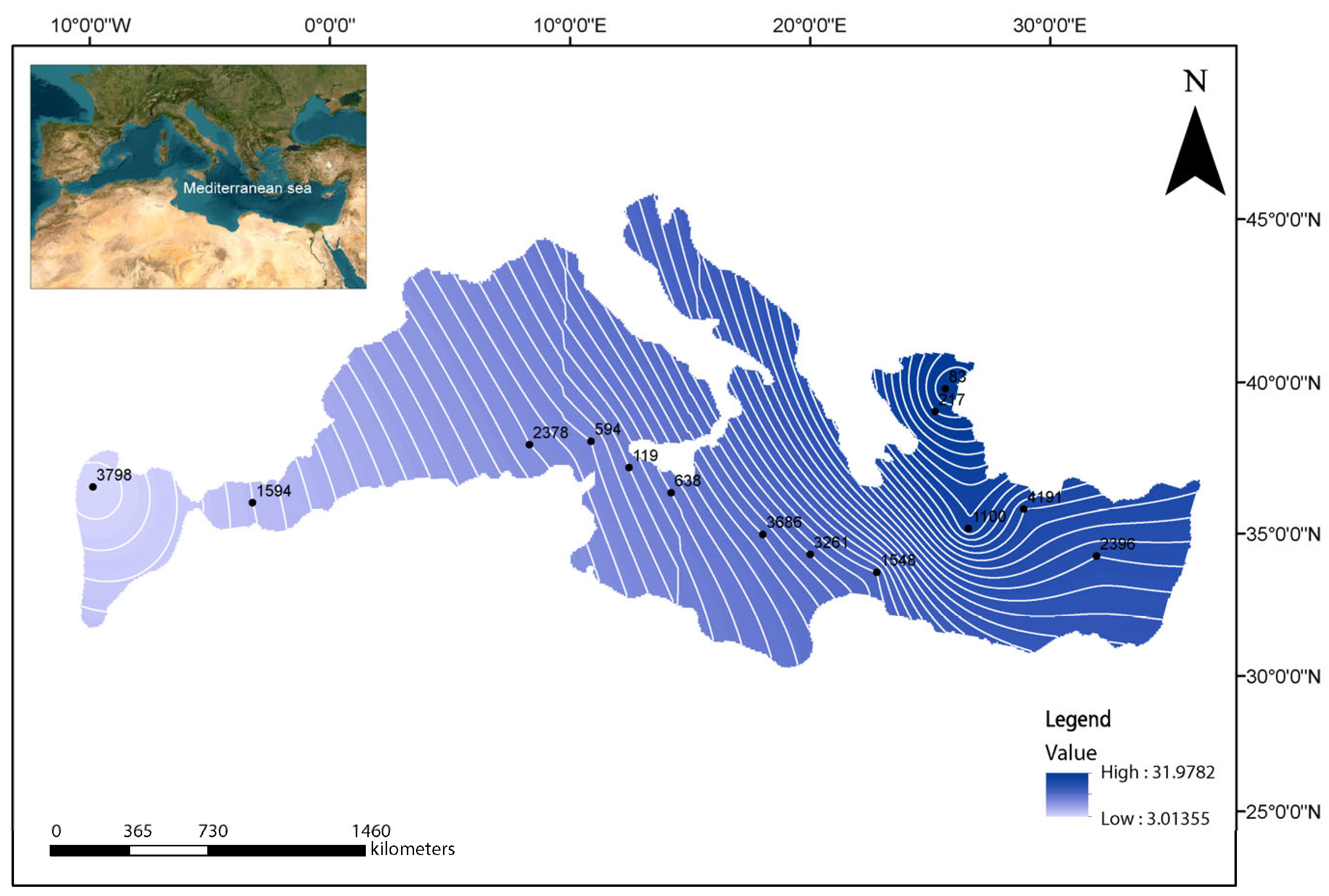
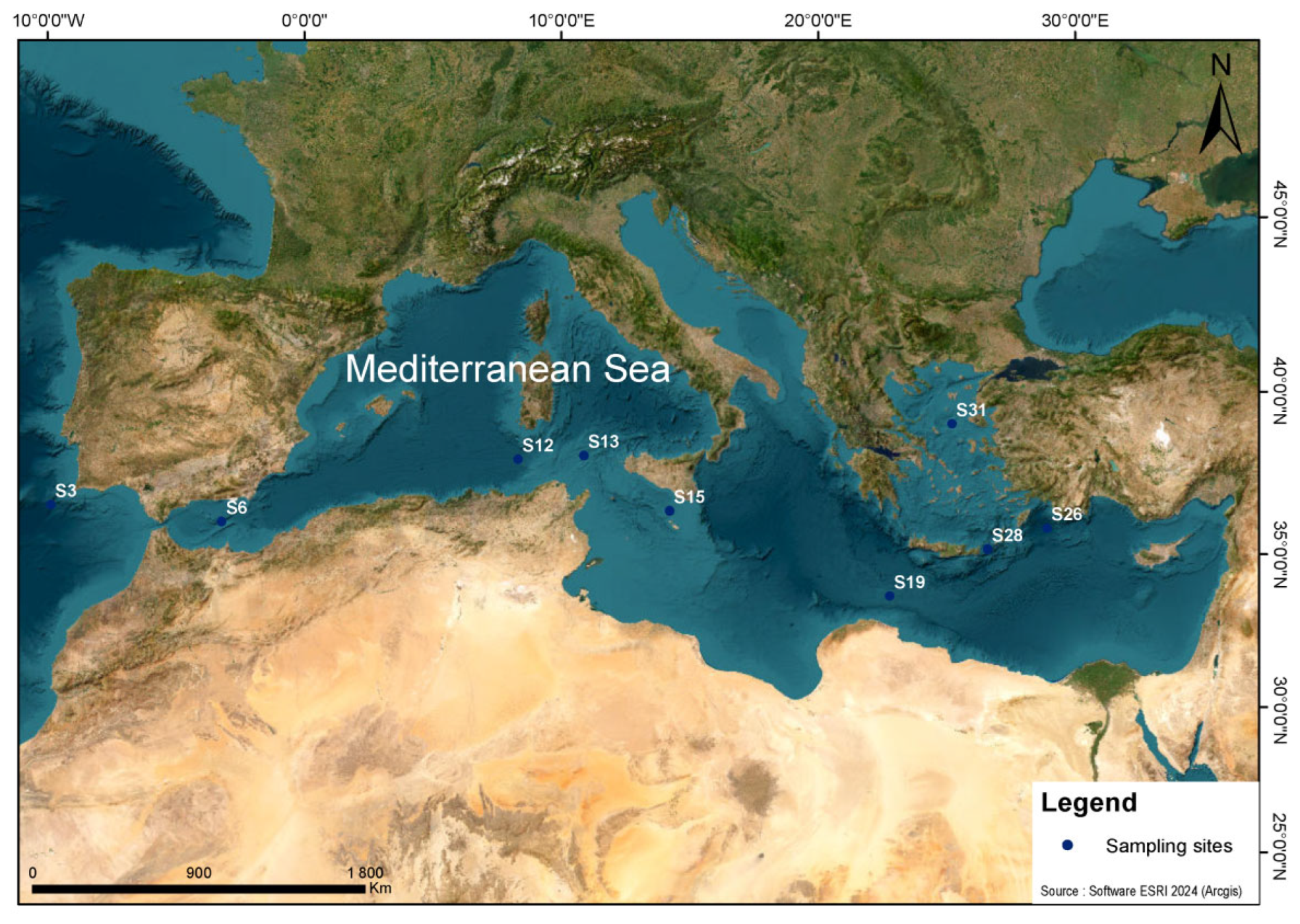
Sediment samples were collected during the GEOTRACES-A04N cruise on the Dutch R/V Pelagia [27]. Sampling stations were located along a west–east transect, including sites in the Atlantic Ocean (S3: 36°34′ N, 9°51.96′ W; 3798 m depth), the western Mediterranean (S6: 36°2.37′ N, 3°12.97′ W; 1594 m depth), the central Mediterranean (S12: 37°58.32′ N, 8°19.31′ E; 2378 m depth. S13: 38°4.97′ N, 10°52.96′ E; 594 m depth), and the eastern Mediterranean (S15: 36°22.31′ N, 14°13.21′ E; 638 m depth. S19: 33°39.81′ N, 22°47.27′ E; 1548 m depth. S26: 35°49.57′ N, 28°54.6′ E; 4191 m depth. S28: 35°10.15′ N, 26°35.98′ E; 1100 m depth). Further samples were obtained from the northern Aegean Sea (S31: 39°2.87′ N, 25°12.67′ E; 217 m depth) (Figure 1 and Figure 2).
All surface sediment cores were sliced into a nitrogen atmosphere during the MedBlack cruise to avoid contamination. The recovered sediment profiles did not exceed 22 cm, and most analyses were performed in the uppermost layers where early diagenetic processes take place [27,28].

2.2. Microplastic Extraction

For the extraction of microplastics, a protocol adapted from Corradini et al. [29] was followed. Indeed, dried sediment samples were weighed (taken in triplicate), and 5.00 ± 0.01 g of material was placed into 50mL glass centrifuge tubes. Twenty milliliters of deionized water was added, and the mixture was homogenized at approximately 21,000 rpm for 30 s. Then, the samples were centrifuged at 2000 rpm (2240× g) for 15 min. Next, the supernatant was filtered through Whatman No. 42 paper (8 µm retention).
To the remaining sediment, 20 mL of a 5 M sodium chloride solution (density 1.20 g cm−3) was added. After stirring, centrifugation under the same conditions and filtering of the supernatant through the same filter was performed. Finally, density separation was carried out with 20 mL of 5 M zinc chloride (ZnCl2, density 1.55 g cm−3). Stirring at 32,000 rpm for 30 s prior to centrifugation (2000 rpm, 15 min) was necessary because of thehigher viscosity. The obtained supernatant was filtered using a new filter if clogging had occurred. All filters were stored in closed Petri dishes until analysis.

2.3. Quality Control

No polymer-based tools were used during either the sample collection or processing to minimize plastic contamination. Laboratory blanks were prepared by placing a moistened filter inside an open Petri dish during handling to monitor airborne contamination. The operators wore cotton laboratory coats to limit synthetic fiber release. All filters were examined under a stereomicroscope before use to ensure they contained no pre-existing debris. Stainless-steel forceps were used throughout sample manipulation.

2.4. Microplastic Identifications

The suspected microplastic particles were manually isolated using metal tweezers and transferred into 90mm Petri dishes with a black–white contrast background to enhance visual detection. The samples were examined under a Leica M60 stereomicroscope (Leica Microsystems AG, Balgach, Switzerland) fitted with a CMOS camera. This microscope offers a zoom ratio of 6:1, with continuous magnification between 2× and 5×, inclusive of click-stop precision settings [30]. All the particles were photographed and categorized by color, shape, and size.

2.5. FT-IR Characterization

FTIR spectroscopy was used to complement 1H-NMR polymer identification. Analyses were carried out using a Perkin Elmer Spectrum BX FTIR instrument (PerkinElmer, Waltham, MA, USA) fitted with a Golden Gate diamond ATR accessory from (Specac, Orpington, UK). Spectra were recorded from 4000 to 450 cm−1 using 64 scans at a resolution of 4 cm−1 [31].

2.6. 1H-NMR Characterization

The identification of polymers was carried out by proton nuclear magnetic resonance (1H-NMR) after dissolving the isolated particles in appropriate deuterated solvents. Deuterated dimethyl sulfoxide (DMSO-d6; 99.8% D) and deuterated chloroform (CDCl3; 99.8% D, stabilized with Ag) obtained from Deutero (Kastellaun, Germany) were used. The NMR experiments were carried out at room temperature on a Bruker Avance III 300 MHz spectrometer (Bruker, Billerica, MA, USA). Spectra were recorded using 90° pulses of 3.25 µs, a spinning rate of 14 kHz, and a 5 s relaxation delay between scans [32].

3. Results

3.1. Microscopy Identification

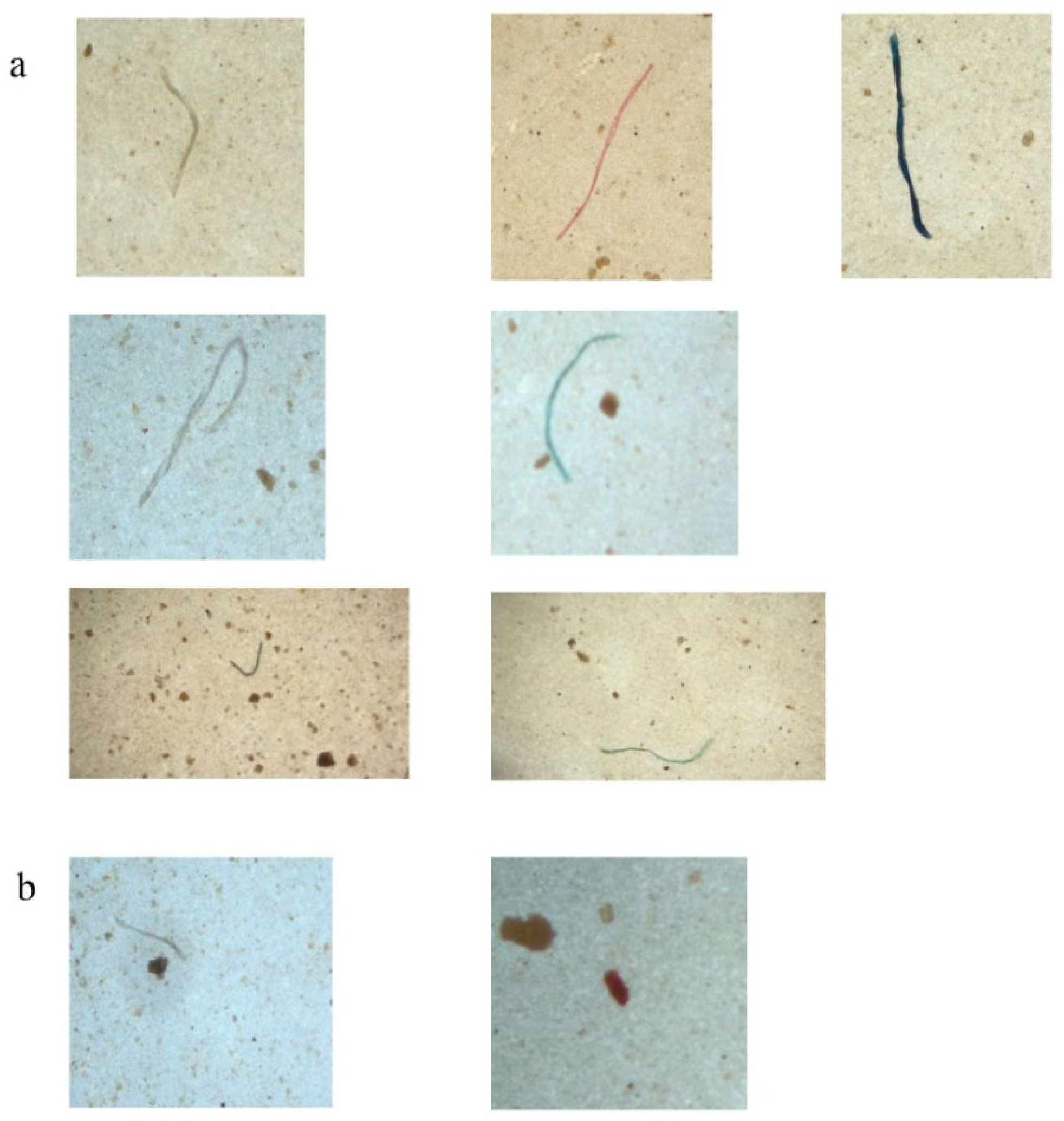
Sediment analysis (Figure 3) showed that the MPs were essentially fragments and filaments of all sizes distributed in all sediment levels. The prevailing colors were red at 25%, followed by transparent at 23%, blue at 20%, brown also at 20% and black at 12%. The shapes of MPs were essentially fibers at 88% and fragments at 12%.

3.2. FTIR Results

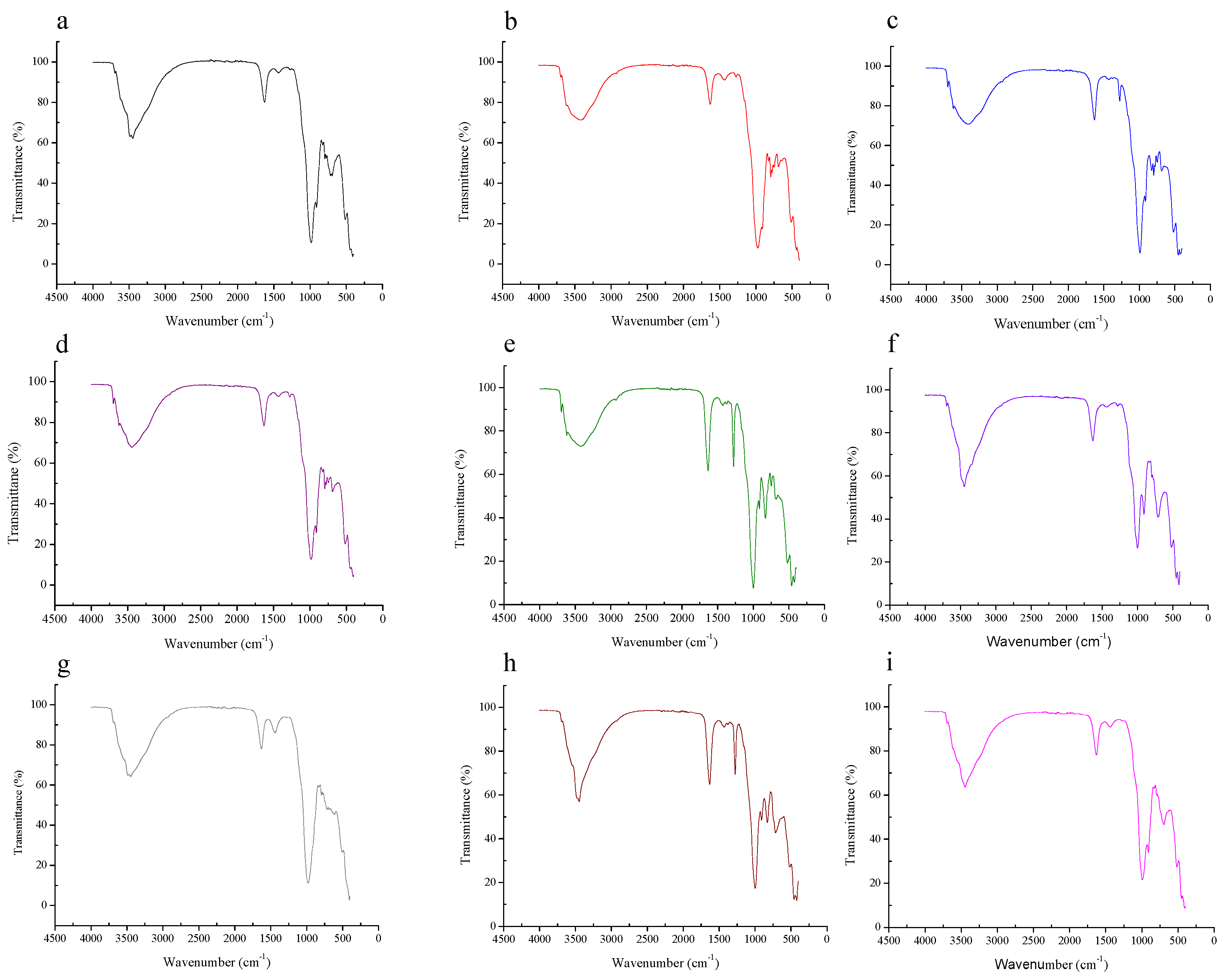
The FTIR spectra showed characteristic absorption bands that were in accordance with the literature: 3250 cm−1 corresponding to hydrogen-bonded N–H stretching, 2917–2840 cm−1 for CH2-stretching, 1722–1529 cm−1 representing amide I, 1354–1249 cm−1 representing amide III, 1152–1003 cm−1 for C–C stretching, 800–700 cm−1 for CH2 rocking, and 694–500 cm−1 for aromatic C–H out-of-plane bending.
Figure 4 illustrates the type of polymers detected at different sites by FTIR analysis. Concretely, Site S3 (Figure 4a) has absorption bands from 500 to 3400 cm−1 for PS, PP, and EVA, while peaks from 500 to 2924 cm−1 correspond to PS, PA, and ABS at Site S6 (Figure 4b).
Signals of PS, EVA, and PP were present for Sites S12 and S13 in the southern Mediterranean Sea (Figure 4c,d). In the eastern Mediterranean Sea, Site S15 contained PS, PP, PA, and ABS (Figure 4e), whereas Site S19 demonstrated PS and ABS (Figure 4f). While spectra obtained from Site S26 (Figure 4g) indicated PS, PA, and ABS, Site S28 exhibited PS, PA, ABS, and EVA (Figure 4h). In the northern Aegean Sea (Site S31), bands within 500 and 3400 cm−1 confirmed PS, PP, and ABS (Figure 4i).

3.3. 1H-NMR Spectroscopy Results

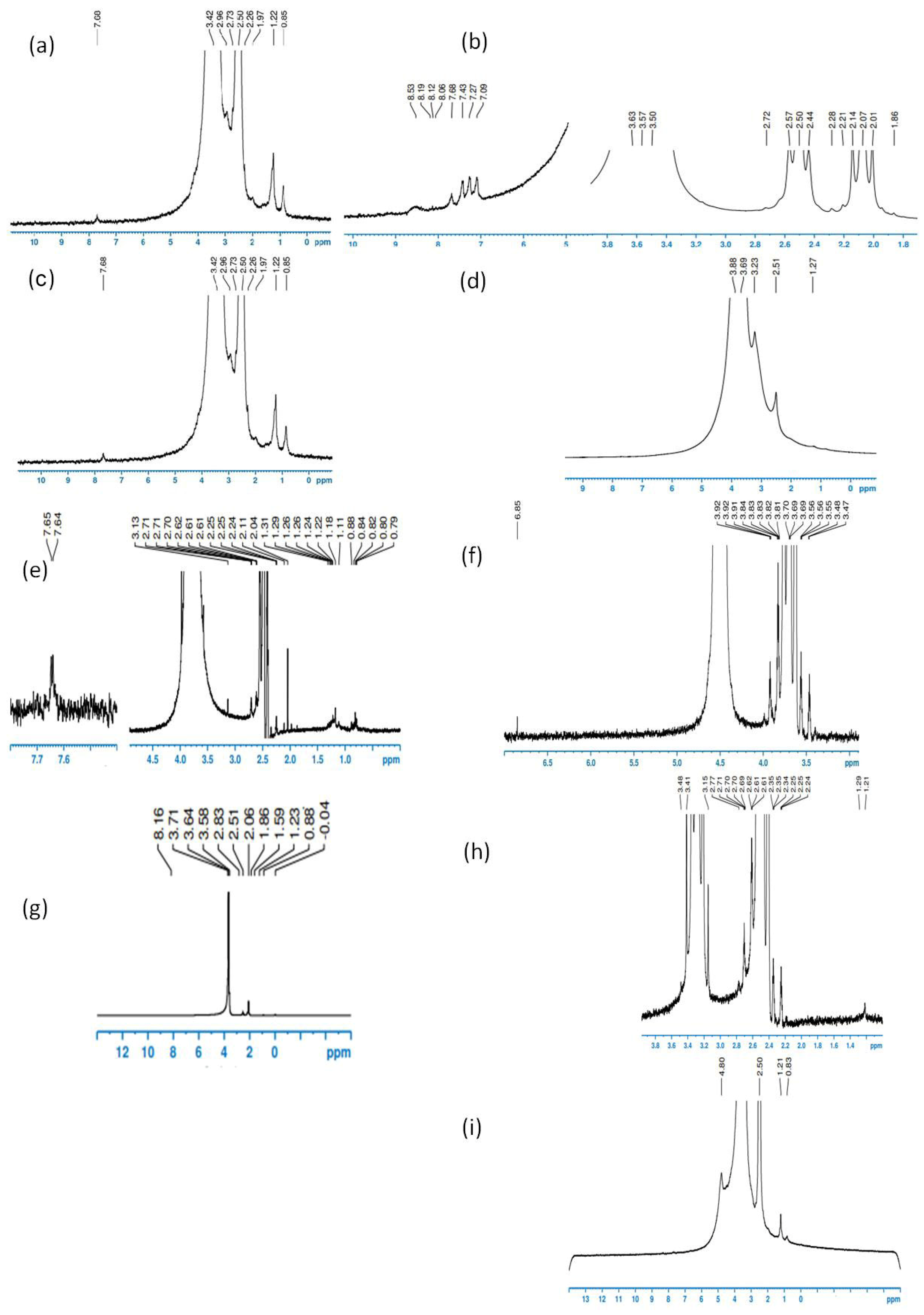
1H-NMR spectra of the extracted compounds were interpreted with reference to previous studies on MP identification.
As shown in Figure 5a, PP and EVA were detected at Site S3. EVA displayed five resonances at 0.86, 1.25, 1.74, 2.01, and 4.85 ppm, while for PP, three signals at 0.74, 1.19, and 1.48 ppm were assigned to methyl, methylene, and methine protons of oligo/polymeric propylene, respectively. Signals assignable to polyvinyl chloride (PVC) appeared between 4.6 and 4.2 ppm (α-Cl H) and between 2.5 and 2.1 ppm (β-Cl H), and for PS, signals are shown at 1.46, 1.87, 6.4–6.8, and 7.11 ppm.
In the northwestern Mediterranean Sea (Site S6; Figure 5b), EVA, PA, and PE were present. PA showed resonances in the range between 3.2 and 1.1 ppm, with α-NH protons between 3.2 and 3.0 ppm, α-CO protons between 2.3 and 2.15 ppm, and CH2 groups between 1.65 and 1.1 ppm. PE had two signals at 1.33 ppm (CH2) and 0.93 ppm (CH3).
At the remaining sites, EVA was detected at S12, S26 and S31; PA at S13, at S15, S19, S26 and S28; PE at S15; and PP at S26 (Figure 5c–i).

4. Discussion

MP pollution has become a global environmental concern, particularly in semi-enclosed marine systems such as the Mediterranean Sea, where intense human activity and restricted circulation promote accumulation. This study provides a basin-scale comparison of MP abundance, composition, and spatial variability in marine sediments collected along a longitudinal gradient from the Atlantic Ocean to the eastern Mediterranean and Aegean Seas. The observed patterns highlight the combined influence of hydrodynamic processes, anthropogenic inputs, and polymer characteristics on MP distribution and fate across interconnected basins.

4.1. Microplastic Characteristics and Polymer Identification

Microscopic results revealed that fibers made up the majority of the particles (88%), with fragments only accounting for 12%. The predominance of fibers is consistent with their widespread use in synthetic textiles, fishing nets, ropes, and aquaculture materials, which represent major sources of MPs in both coastal and offshore environments. Their elongated shape and small diameter enhance buoyancy and hydrodynamic mobility, facilitating long-distance transport before deposition in marine sediments [33].
The most frequent colors of the particles—red (25%), transparent (23%), and blue (20%) (Figure 3)—correspond to those most frequently found in the marine environment and generally reflect fishing gear and synthetic textiles [33,34].
According to the literature, MPs can have various colors such as black, blue, white, transparent, red, green, multicolored, yellow, and brown. White MPs are mainly the effect of weathering, whereas colored items are mostly from industrial packaging [35]. The current results are consistent with the findings of Zhang et al. [36], who found a large share of blue, red, and transparent MPs. However, some other studies pointed out different dominant colors. Rasta et al. [37], for example, reported the most frequent colors to be red, black, and blue. Furthermore, while Hosseini et al. [38] recognized black, transparent, and white as the dominant colors, Goswami et al. [39] observed a high level of blue, transparent, and red particles.
Nevertheless, depending only on stereomicroscopy to differentiate natural fibers from synthetic fibers is quite difficult [40,41]. For that reason, microscopy is typically used for the first assessment of the shape, size, and color of the samples, which are then further confirmed by spectroscopic methods that enhance the analytical accuracy [41].
Various polymers such as PA, EVA, PP, PE, PS, PVC, ABS, and PET were identified by the spectroscopic analyses (FTIR and 1H NMR), with PS, PA, EVA, and ABS being the most frequent (Figure 4 and Figure 5).
The identified polymers were consistent with those reported in the literature. In fact, PE, PP, PS, PA, PVC, EVA, and nylon are among the most common MP polymers found in marine, freshwater, and estuarine environments [5]. PE is widely used in fishing gear and in packaging materials such as bottles, bags, and agricultural films, whereas PP is mainly applied in food containers, carpets, and pipes. PS is commonly used in food packaging and various manufactured products, while EVA is primarily used as a cushioning material in sports and fishing equipment [1,5].
The confirmation of the results was carried out using FTIR and 1H-NMR analyses. Since the two methods are based on different physical principles, they showed slight differences in the identification of the polymer. FITR works contrary to 1H-NMR, which requires the samples to be dissolved and gives information based on the distribution of hydrogen atoms, including aromaticity. As mentioned in our previous study [42], FTIR, which is related to the changes in the vibrational frequencies of molecular bonds, was conducted directly on solid samples. Changes in the chemical shift, peak intensity, and shape of the NMR spectra provide information on the chemical environments and molecular structure [23,43].
A comparison between surface waters and deep-sea sediments reveals marked differences in MP composition and distribution, reflecting contrasting transport and accumulation processes. Surface waters are generally dominated by low-density polymers such as PE, PP, and EVA, which remain buoyant and are efficiently dispersed by wind-driven circulation and surface currents. In contrast, deep-sea sediments act as long-term sinks, integrating MPs transported through vertical settling and lateral advection. The presence of high-density polymers such as PA and ABS, whose densities exceed that of seawater, is consistent with their enhanced sinking potential and explains their occurrence at depths exceeding 4000 m at sites such as S26 and S3. However, the widespread occurrence of low-density polymers (PE, PP, and EVA) in deep-sea sediments across nearly all sampling sites (Figure 4 and Figure 5) suggests that density alone does not fully control MP fate. Processes like biofilm formation, mineral ballasting, and aggregation with organic matter can increase the effective density of initially buoyant polymers, promoting their vertical transfer to the seafloor. Additionally, particle shape, surface roughness, and aging further influence sinking behavior. While polymer density largely governs vertical transport, hydrodynamic forcing and large-scale circulation patterns play crucial roles in the horizontal redistribution of MPs across Mediterranean sub-basins, contributing to their accumulation in deep-sea depositional environments [44,45].

4.2. Hydrodynamic Drivers of Microplastic Transport

Hydrodynamic processes have fundamental control over MP transport pathways and accumulation patterns. The different water circulations at various depths may also influence the fates and pathways of MP particles that have sunk through the water column [11]. These dynamic changes impact horizontal dispersion and circulation routes, from the poles to the equator and from the shoreline to the deep sea, as exemplified by the transport of MPs from the Atlantic Ocean to the Mediterranean via the Strait of Gibraltar, where some of the load may be diverted or redistributed along the Iberian Peninsula through the Mediterranean Outflow Water (MOW) [11]
Sediments from the Atlantic and Western Mediterranean exhibited the greatest MP abundances and polymer diversity, likely reflecting the combined influence of riverine inputs, industrial and urban effluents, and heavy maritime traffic [46]. The highest polymer concentrations were observed near the Strait of Gibraltar (S3 and S6). Our results indicate that the lowest MP abundances recorded in the southern Mediterranean (S12 and S13) may be linked to weaker hydrodynamic retention, sedimentological characteristics, and lower levels of industrial activity relative to northern regions. The observed west–east gradient in microplastic abundance closely matches the major hydrodynamic structures of the Mediterranean system [47].
The southern area, at the confluence of the eastern and western sub-basins, receives mixed input from the Atlantic and local sources. However, the relatively high-energy and open coastal dynamics are likely to facilitate dispersion and decreased accumulation [12]. In the Mediterranean, the Algerian and Tyrrhenian currents together with intermediate and deep circulation cells facilitate eastward transport and regional accumulation in semi-enclosed basins like the Aegean [48]. Stronger stratification, limited vertical mixing, and intense fishing in the Aegean Sea may be factors leading to the retention of fibrous particles [49], which aligns well with the intermediate MPs found in this study.
Heavy and saline MOW leaves the Strait of Gibraltar toward the Atlantic, spreading southward into the Gulf of Cádiz and further toward the Canary region through mesoscale structures known as meddies [50]. This subsurface outflow transports buoyant MPs westward, explaining the high concentrations found in Atlantic sediments near the outflow region [51]. On the other hand, surface Atlantic inflow brings in less-saline water and floating debris into the Mediterranean, thereby contributing to a two-layer exchange system that controls plastic transport between the basins [11]. In fact, model outcomes indicate that 98% of surface microplastics along the SW Iberian coast are transported outside the model area, with 48% reaching Mediterranean waters and 20% the Canary region, thus suggesting that the Iberian coast is a significant source of MPs for the Mediterranean Sea [12]. This study, unlike earlier regional studies, pinpoints a definite longitudinal trend that connects hydrodynamic exchange at the Strait of Gibraltar with polymer-type distribution across three interconnected basins.
Further down the water column, hydrodynamic and meteorological factors have an essential influence on MP transport. The Mediterranean Sea’s intricate morphology and sub-basin structure give rise to several wind patterns that in turn drive surface circulation. Along its western edge, northeast (Levanter) and southwest (Vendaval) winds are most common [51]. The Mistral wind, which blows mainly from the northwest over the northwestern Mediterranean, also covers the western and Tyrrhenian sub-basins and at times reaches the African coastlines [52]. At the same time, the Libeccio wind moves eastwards over the Ionian–Meridional sub-basin and thus helps in the transport of oceanic and atmospheric MPs into the eastern Mediterranean [53]. Etesian winds from the north are also major factors in the drifting of floating MPs in the Levantine–Aegean sub-basin, especially in the summer months [16]. The sum of all these patterns is a greater extent of MP redistribution from the western basins to the eastern ones.
The regime of Mediterranean circulation includes strong mesoscale currents and very little interaction with the Atlantic Ocean [47]. The anticlockwise gyres along the northern coasts carry MPs from the heavily populated European and Anatolian areas to the southern and eastern coastlines and thus account for the constant MP concentration in the sediments of the northern Mediterranean [52]. The Strait of Sicily serves as a hydrodynamic and geomorphological bottleneck that not only controls the horizontal transport and retention of particulate MPs but also determines the flow direction between the eastern and western basins [54]. The vertical movement of the plastics as well as their burial in the sediments of the deep ocean is further facilitated by underwater canyons and turbidity currents, which makes these areas significant long-term plastic pollution sinks [55].

4.3. Terrestrial, Atmospheric, and Vertical Transport Inputs

In addition to marine-based sources, terrestrial and atmospheric pathways significantly contribute to MP inputs. Among the major sources, riverine discharges are at the top of the list, while major processes such as estuarine tidal mixing and plume dynamics make great contributions to MP advection and settling [56,57]. River networks contribute to about 15 to 20% of the MP load entering the world’s oceans [58]. Large rivers like the Nile, Ebro, and Po are the main avenues through which high levels of MPs are carried from the ground into the oceans. The Nile River transports almost 80–1000 billion MPs yearly into the southeastern Mediterranean [52]. Hence, it turns into a hotspot of accumulation along the Levantine coast. The densely populated and industrialized Nile basin is mainly responsible for this enormous volume that is then carried along the coast to the northeast by the currents, which makes the eastern Mediterranean the most important accumulation zone [59]. In turn, sediment core studies in the Golden Horn Estuary and the Marmara Sea have revealed that MP deposition has been increasing over the last several decades, clearly reflecting the development of urbanization and wastewater discharge [60,61]. Similarly, the Gulf of Venice, the Gulf of Suez, and Küçükçekmece Lagoon show the same patterns, in which the closeness to urban outlets due to limited hydrodynamics leads to increased accumulation in sediments [62,63,64]. Taken altogether, these factors explain the presence of different types of MP in the eastern Mediterranean and the Aegean Sea (S19, S26, S28 and S31), as well as the detection of similar types of polymers.
For vertical transport, buoyant MPs can be mixed into the lower layers by way of wind-driven turbulence, breaking waves, and Langmuir circulations [36]. Surface currents interacting with waves to generate Langmuir turbulence is generally considered to be the primary cause for the enhanced submergence of floating particles [36].The effects of diurnal heating and nocturnal cooling extend into vertical redistribution, especially in coastal areas where the mixed layer very often reaches the seabed [36]. As reported by Pierdomenico et al. [55], these processes may also explain the presence of both light and dense polymers within the same sediment strata: PP, PE, and EVA, up to PA, PVC, and PET.
In fact, most of the fibers and low-density polymers are constantly being introduced into the environment from land-based and sea-based sources [65]. However, the presence of these compounds in deep sediments underlines the importance of physical and biological processes for vertical fluxes [66]. The degradation of the surface of MPs is accompanied by scaling, microorganism biofouling, and weathering; all these can displace and redistribute MPs in the vertical direction [51]. Microbial colonization changes the density and hydrophobicity of the particle, thus supporting aggregation and a faster descent through the water column. Biofouling in this context can facilitate the transfer of buoyant MPs to deeper layers, thus extending their reach beyond surface currents [67]. Moreover, windage effects and salinity gradients that influence particle suspension depth or deposition potential are responsible for long-range transport and, finally, burial along the deep-sea floor [68,69].
The levels and polymer composition observed in our study are comparable to those reported in deep-sea sediments from various regions worldwide. Investigations conducted in the Arctic [70], Antarctica and the Southern Ocean [71], and the Western Pacific Ocean [72] consistently document high MP abundances, despite marked differences in geographic setting, hydrodynamic regimes, and proximity to direct anthropogenic sources. This convergence across distant marine environments supports the view that deep-sea MP accumulation is a global phenomenon rather than a region-specific issue.
Furthermore, the observed diversity in polymer types and MP morphologies across these regions indicates that MP contamination of marine sediments is both widespread and persistent, reflecting multiple sources and long-term accumulation processes operating at a global scale.

5. Conclusions

This study provides new insight into the distribution and fate of MPs across the Atlantic–Mediterranean–Aegean continuum by integrating polymer composition, morphology, and large-scale hydrodynamic connectivity. The observed west–east gradient in MP abundance highlights the central role of Atlantic–Mediterranean exchange processes and internal circulation in shaping regional contamination patterns. The two-layer circulation at the Strait of Gibraltar emerges as a key mechanism linking surface and deep transport pathways, positioning the Mediterranean Sea as both a long-term sink and an active contributor to MP redistribution within the broader Atlantic system.
A major contribution of this study is the demonstration that deep-sea sediments consistently contain both high- and low-density polymers across multiple basins, emphasizing that polymer density alone does not govern MPs’ fate. The widespread presence of buoyant polymers in deep sediments underscores the importance of biofouling, aggregation, and vertical mixing processes in facilitating long-term sequestration. Compared with previous regional studies, this work advances current knowledge by explicitly linking MP polymer distributions to basin-scale hydrodynamic exchange, rather than focusing solely on local sources or isolated sub-basins.
The results highlight the need for coordinated, transboundary monitoring strategies that integrate sediment observations with hydrodynamic and particle-transport modeling. Such an approach is essential for identifying long-term accumulation hotspots and for informing effective mitigation strategies. Ultimately, reducing MP inputs at their source, particularly from wastewater discharges, riverine systems, and maritime activities, remains critical for limiting further contamination of the Mediterranean Sea and its connected marine environments.

Author Contributions

Conceptualization, N.Z. and D.B.S.; Methodology, I.C. and D.B.S.; Formal Analysis, I.C., D.B.S. and T.B.-S.; Investigation, M.J.A.R., N.Z., M.E.B. and T.B.-S.; Resources, M.J.A.R., M.E.B. and T.B.-S.; Data Curation, M.J.A.R., N.Z. and D.B.S.; Writing—Original Draft, N.Z. and D.B.S.; Writing—Review and Editing, N.Z., D.B.S. and M.E.B.; Supervision, N.Z. and M.E.B.; Project Administration, M.J.A.R., N.Z. and M.E.B. All authors have read and agreed to the published version of the manuscript.

Funding

This research received no external funding.

Institutional Review Board Statement

Not applicable.

Informed Consent Statement

Not applicable.

Data Availability Statement

The original contributions presented in this study are included in the article. Further inquiries can be directed to the corresponding authors.

Acknowledgments

We gratefully acknowledge the international GEOTRACES programme and the successful implementation of the Mediterranean Section GA04. We sincerely thank all scientists, technicians, students, and the captains and crews of the R/V Pelagia (GA04-N) and (GA04-S) for their invaluable contributions and support during the cruises.

Conflicts of Interest

The authors declare no conflicts of interest.

References

  1. Plastic Europe. The Facts-2022. 2022. Available online: https://plasticseurope.org/knowledge-hub/plastics-the-facts-2022/ (accessed on 14 February 2026).
  2. Haave, M.; Lorenz, C.; Primpke, S.; Gerdts, G. Different stories told by small and large microplastics in sediment-first report of microplastic concentrations in an urban recipient in Norway. Mar. Pollut. Bull. 2019, 141, 501–513. [Google Scholar] [CrossRef] [Scilit]
  3. Munari, C.; Infantini, V.; Scoponi, M.; Rastelli, E.; Corinaldesi, C.; Mistri, M. Microplastics in the sediments of terra nova bay (ross sea, Antarctica). Mar. Pollut. Bull. 2017, 122, 161–165. [Google Scholar] [CrossRef] [Scilit] [PubMed]
  4. Van Cauwenberghe, L.; Devriese, L.; Galgani, F.; Robbens, J.; Janssen, C.R. Microplastics in sediments: A review of techniques, occurrence and effects. Mar. Environ. Res. 2015, 111, 5–17. [Google Scholar] [CrossRef] [Scilit] [PubMed]
  5. Wang, Y.; Zou, X.; Peng, C.; Qiao, S.; Wang, T.; Yu, W.; Khokiattiwong, S.; Kornkanitnan, N. Occurrence and distribution of microplastics in surface sediments from the Gulf of Thailand. Mar. Pollut. Bull. 2020, 152, 110916. [Google Scholar] [CrossRef] [Scilit] [PubMed]
  6. Thompson, R.C.; Olsen, Y.; Mitchell, R.P.; Davis, A.; Rowland, S.J.; John, A.W.G.; McGonigle, D.; Russell, A.E. Lost at sea: Where is all the plastic? Science 2004, 304, 838. [Google Scholar] [CrossRef] [Scilit]
  7. Andrady, A. The plastic in microplastics: A review. Mar. Pollut. Bull. 2017, 119, 12–22. [Google Scholar] [CrossRef] [Scilit]
  8. Benson, N.U.; Agboola, O.D.; Fred-Ahmadu, O.H.; De-la-Torre, G.E.; Oluwalana, A.; Williams, A.B. Micro(nano)plastics Prevalence, Food Web Interactions, and Toxicity Assessment in Aquatic Organisms: A Review. Front. Mar. Sci. 2022, 9, 851281. [Google Scholar] [CrossRef] [Scilit]
  9. Liubartseva, S.; Coppini, G.; Lecci, R.; Clementi, E. Tracking plastics in the Mediterranean: 2D Lagrangian model. Mar. Pollut. Bull. 2018, 129, 151–162. [Google Scholar] [CrossRef] [Scilit]
  10. Palmieri, R.; Serranti, S.; Capobianco, G.; Cózar, A.; Martí, E.; Bonifazi, G. Marine Microplastic Classification by Hyperspectral Imaging: Case Studies from the Mediterranean Sea, the Strait of Gibraltar, the Western Atlantic Ocean and the Bay of Biscay. Appl. Sci. 2024, 14, 9310. [Google Scholar] [CrossRef] [Scilit]
  11. Rosas, E.; Martins, F.; Tosic, M.; Janeiro, J.; Mendonça, F.; Mills, L. Pathways and Hot Spots of Floating and Submerged Microplastics in Atlantic Iberian Marine Waters: A Modelling Approach. J. Mar. Sci. Eng. 2022, 10, 1640. [Google Scholar] [CrossRef] [Scilit]
  12. Vega-Moreno, D.; Sicilia-Gonzalez, S.; Domınguez-Hernandez, C.; Moreira-Garcıa, E.; Aguiar-Gonzalez, B.; Hernandez-Borges, J.; Fraile-Nuez, E.; Machın, F. Exploring the origin and fate of surface and sub-surface marine microplastics in the Canary Islands region. Front. Mar. Sci. 2024, 11, 1314754. [Google Scholar] [CrossRef] [Scilit]
  13. Cozar, A.; Sanz-Martín, M.; Martí, E.; Gonzalez-Gordillo, J.I.; Ubeda, B.; Galvez, J.A.; Irigoien, X.; Duarte, C.M. Plastic accumulation in the Mediterranean sea. PLoS ONE 2015, 10, e0121762. [Google Scholar] [CrossRef] [Scilit] [PubMed]
  14. Suaria, G.; Avio, C.G.; Mineo, A.; Lattin, G.L.; Magaldi, M.G.; Belmonte, G.; Moore, C.J.; Regoli, F.; Aliani, S. The Mediterranean Plastic Soup: Synthetic polymers in Mediterranean surface waters. Sci. Rep. 2016, 6, 37551. [Google Scholar] [CrossRef] [Scilit]
  15. Ruiz-Orejón, L.; Sardà, R.; Ramis-Pujol, J. Now, you see me: High concentrations of floating plastic debris in the coastal waters of the Balearic Islands (Spain). Mar. Pollut. Bull. 2018, 133, 636–646. [Google Scholar] [CrossRef] [Scilit] [PubMed]
  16. Şener, İ.; Yabanli, M. Macro- and microplastic abundance from recreational beaches along the South Aegean Sea (Türkiye). Mar. Pollut. Bull. 2023, 194, 115329. [Google Scholar] [CrossRef] [Scilit] [PubMed]
  17. Pedrotti, M.L.; Petit, S.; Elineau, A.; Bruzaud, S.; Crebassa, J.C.; Dumontet, B.; Martí, E.; Gorsky, G.; Cózar, A. Changes in the Floating Plastic Pollution of the Mediterranean Sea in relation to the distance to land. PLoS ONE 2016, 11, e0161581. [Google Scholar]
  18. Van Sebille, E.; Wilcox, C.; Lebreton, L.; Maximenko, N.; Hardesty, B.D.; Van Franeker, J.A.; Eriksen, M.; Siegel, D.; Galgani, F.; Law, K.L. A global inventory of small floating plastic debris. Environ. Res. Lett. 2015, 10, 124006. [Google Scholar] [CrossRef] [Scilit]
  19. Jambeck, J.R.; Geyer, R.; Wilcox, C.; Siegler, T.R.; Perryman, M.; Andrady, A.; Narayan, R.; Law, K.L. Plastic waste inputs from land into the ocean. Science 2015, 347, 768–771. [Google Scholar] [CrossRef] [Scilit]
  20. Lebreton, L.; Andrady, A. Future Scenarios of Global Plastic Waste Generation and Disposal. Palgrave. Commun. 2019, 5, 6. [Google Scholar] [CrossRef] [Scilit]
  21. Kane, I.A.; Clare, M.A.; Miramontes, E.; Wogelius, R.; Rothwell, J.J.; Garreau, P.; Pohl, F. Seafloor microplastic hotspots controlled by deep-sea circulation. Science 2020, 368, 1140–1145. [Google Scholar] [CrossRef] [Scilit]
  22. Vianello, A.; Boldrin, A.; Guerriero, P.; Moschino, V.; Rella, R.; Sturaro, A.; Da Ros, L. Microplastic particles in sediments of Lagoon of Venice, Italy: First observations on occurrence, spatial patterns and identification. Estuar. Coast. Shelf. Sci. 2013, 130, 54–61. [Google Scholar] [CrossRef] [Scilit]
  23. Martin, J.; Lusher, A.; Thompson, R.C.; Morley, A. The deposition and accumulation of microplastics in marine sediments and bottom water from the Irish continental shelf. Sci. Rep. 2017, 7, 10772. [Google Scholar] [CrossRef] [Scilit] [PubMed]
  24. Alomar, C.; Compa, M.; Fagiano, V.; Concato, M.; Deudero, S. Posidonia oceanicae gagropiles: Good indicators for plastic pollution in coastal areas? Reg. Stud. Mar. Sci. 2024, 77, 103653. [Google Scholar] [CrossRef] [Scilit]
  25. Abidli, S.; Akkari, N.; Lahbib, Y.; Trigui El Menif, N. First evaluation of microplastics in two commercial fish species from the lagoons of Bizerte and Ghar El Melh (Northern Tunisia). Reg. Stud. Mar. Sci. 2021, 41, 101581. [Google Scholar] [CrossRef] [Scilit]
  26. Filgueiras, A.V.; Gago, J.; Campillo, J.A.; Leon, V.M. Microplastic distribution in surface sediments along the Spanish Mediterranean continental shelf. Environ. Sci. Pollut. Res. 2019, 26, 21264–21273. [Google Scholar] [CrossRef] [Scilit]
  27. Rijkenberg, M.J.; de Baar, H.J.; Bakker, K.; Gerringa, L.J.; Keijzer, E.; Laan, M.; Laan, P.; Middag, R.; Ober, S.; van Ooijen, J. “PRISTINE”, a new high volume sampler for ultraclean sampling of trace metals and isotopes. Mar. Chem. 2015, 177, 501–509. [Google Scholar] [CrossRef] [Scilit]
  28. EL Bour, M.; Rijkenberg, M.; Saadi, A.; Martins, M.V.; Zaaboub, N. Characterization of Deep-Sea Sediment Microbial Communities from Different Mediterranean Sea Regions. In Recent Advances in Environmental Science from the Euro-Mediterranean and Surrounding Regions, 2nd ed.; Ksibi, M., Ed.; Environmental Science and Engineering; Springer: Cham, Switzerland, 2021; pp. 2095–2101. [Google Scholar] [CrossRef] [Scilit]
  29. Corradini, F.; Meza, P.; Eguiluz, R.; Casado, F.; Huerta-Lwanga, E.; Geissen, V. Evidence of microplastic accumulation in agricultural soils from sewage sludge disposal. Sci. Total Environ. 2019, 671, 411–420. [Google Scholar] [CrossRef] [Scilit]
  30. Hassen, B.; Sghaier, D.B.; Matmati, E.; Mraouna, R.; El Bour, M. Detection and quantification of microplastics in Posidonia oceanica banquettes in the Gulf of Gabes, Tunisia. Environ. Sci. Pollut. Res. 2023, 1, 57196–57203. [Google Scholar] [CrossRef] [Scilit]
  31. Peez, N.; Imhof, W. Quantitative 1H-NMR spectroscopy as an efficient method for identification and quantification of PVC, ABS and PA microparticles. Analyst 2020, 145, 5363–5371. [Google Scholar] [CrossRef] [Scilit]
  32. Blindheim, F.H.; Ruwoldt, J. The Effect of Sample Preparation Techniques on Lignin Fourier Transform Infrared Spectroscopy. Polymers 2023, 15, 2901. [Google Scholar] [CrossRef] [Scilit]
  33. Erkan, S.; Takatas, B.; Ozturk, A.; Gündoğdu, S.; Aydın, F.; Koker, L.; Ozdemir, O.; Albay, M.; Engin, O. Spatio-temporal distribution of microplastic pollution in surface sediments along the coastal areas of Istanbul, Turkey. Mar. Pollut. Bull. 2023, 195, 115461. [Google Scholar] [CrossRef] [Scilit]
  34. Frias, J.; Pagter, E.; Nash, R.; O’Connor, I.; Carretero, O.; Filgueiras, A.; Vinas, L.; Gago, J.; Antunes, J.; Bessa, F. Standardised protocol for monitoring microplastics in sediments. Deliverable 2018, 4, 2. [Google Scholar]
  35. Maghsodian, Z.; Sanati, A.M.; Ramavandi, B.; Ghasemi, A.; Sorial, G.A. Microplastics accumulation in sediments and Periophthalmus waltoni fish, mangrove forests in southern Iran. Chemosphere 2021, 264, 128543. [Google Scholar] [CrossRef] [Scilit] [PubMed]
  36. Zhang, H. Transport of microplastics in coastal seas. Estuar. Coast. Shelf. Sci. 2017, 199, 74–86. [Google Scholar] [CrossRef] [Scilit]
  37. Rasta, M.; Sattari, M.; Taleshi, M.S.; Namin, J.I. Identification and distribution of microplastics in the sediments and surface waters of Anzali wetland in the Southwest Caspian Sea, Northern Iran. Mar. Pollut. Bull. 2020, 160, 111541. [Google Scholar] [CrossRef] [Scilit] [PubMed]
  38. Hosseini, R.; Sayadi, M.H.; Aazami, J.; Savabieasfehani, M. Accumulation and distribution of microplastics in the sediment and coastal water samples of Chabahar Bay in the Oman Sea, Iran. Mar. Pollut. Bull. 2020, 160, 111682. [Google Scholar] [CrossRef] [Scilit]
  39. Goswami, P.; Vinithkumar, N.; Dharani, G. First evidence of microplastics bioaccumulation by marine organisms in the Port Blair Bay, Andaman Islands. Mar. Pollut. Bull. 2020, 155, 111163. [Google Scholar] [CrossRef] [Scilit]
  40. de los Santos, C.B.; Krång, A.S.; Infantes, E. Microplastic retention by marine vegetated canopies: Simulations with seagrass meadows in a hydraulic flum. Environ. Pollut. 2021, 269, 116050. [Google Scholar] [CrossRef] [Scilit]
  41. Mariano, S.; Tacconi, S.; Fidaleo, M.; Rossi, M.; Dini, L. Micro and nanoplastics identification: Classic methods and innovative detection techniques. Front. Toxicol. 2021, 3, 636–640. [Google Scholar] [CrossRef] [Scilit]
  42. Sghaier, D.B.; Chniti, I.; Barhoumi-Slimi, T.; Zaaboub, N.; EL Bour, M. The trapping of microplastics in the Posidonia oceanica aegagropiles in Tunisian coasta areas—Southern Mediterranean. Front. Mar. Sci. 2025, 12, 1663783. [Google Scholar] [CrossRef] [Scilit]
  43. Peez, N.; Becker, J.; Ehlers, S.M.; Fritz, M.; Fischer, C.B.; Koop, J.H.E.; Winkelmann, C.; Imhof, W. Quantitative analysis of PET microplastics in environmental model samples using quantitative 1H-NMR spectroscopy: Validation of an optimized and consistent sample clean-up method. Anal. Bioanal. Chem. 2019, 411, 7409–7418. [Google Scholar] [CrossRef] [Scilit] [PubMed]
  44. Giaganini, G.; Cifelli, M.; Biagini, D.; Ghimenti, S.; Corti, A.; Castelvetro, V.; Domenici, V.; Lomonaco, T. Multi-analytical approach to characterize the degradation of different types of microplastics: Identification and quantification of released organic compounds. Molecules 2023, 28, 1382. [Google Scholar] [CrossRef] [Scilit] [PubMed]
  45. Sghaier, D.B.; Chniti, I.; Hassen, B.; Barhoumi-Slimi, T.; El Bour, M. Spectroscopic characterization and accumulation of microplastics in the banquette of Posidonia oceanica in the Tunisian coasts. Euro-Mediterr. J. Environ. Integr. 2025, 10, 2619–2631. [Google Scholar] [CrossRef] [Scilit]
  46. Weiss, L.; Estournel, C.; Marsaleix, P.; Mikolajczak, G.; Constant, M.; Ludwig, W. From source to sink: Part 1—Characterization and Lagrangian tracking of riverine microplastics in the Mediterranean Basin. Environ. Sci. Pollut. Res. 2024, 32, 10081–10104. [Google Scholar] [CrossRef] [Scilit]
  47. de Pascual-Collar, A.; Sotillo, M.G.; Levier, B.; Aznar, R.; Lorente, P.; Amo-Baladrón, A.; Alvarez-Fanjul, E. Regional circulation patterns of Mediterranean outflow water near the Iberian and African continental slopes. Ocean. Sci. 2019, 15, 565–582. [Google Scholar] [CrossRef] [Scilit]
  48. Pessini, F.; Olita, A.; Cotroneo, Y.; Perilli, A. Mesoscale eddies in the Algerian Basin: Do they differ as a function of their formation site? Ocean Sci. 2018, 14, 669–688. [Google Scholar] [CrossRef] [Scilit]
  49. Gunaalan, K.; Almeda, R.; Vianello, A.; Lorenz, C.; Iordachescu, L.; Papacharalampos, K.; Nielsen, T.; Vollertsen, J. Does water column stratification influence the vertical distribution of microplastics? Environ. Pollut. 2023, 340, 122865. [Google Scholar] [CrossRef] [Scilit]
  50. Soto-Navarro, J.; Jordá, G.; Compa, M.; Alomar, C.; Fossi, M.C.; Deudero, S. Impact of the marine litter pollution on the Mediterranean biodiversity: A risk assessment study with focus on the marine protected areas. Mar. Pollut. Bull. 2021, 165, 112169. [Google Scholar] [CrossRef] [Scilit]
  51. Tsiaras, K.; Hatzonikolakis, Y.; Kalaroni, S.; Pollani, A.; Triantafyllou, G. Modeling the Pathways and Accumulation Patterns of Micro- and Macro-Plastics in the Mediterranean. Front. Mar. Sci. 2021, 8, 743117. [Google Scholar] [CrossRef] [Scilit]
  52. Pu, S.; Bushnaq, H.; Munro, C.; Gibert, Y.; Sharma, R.; Mishra, V.; Dumée, L.F. Perspectives on transport pathways of microplastics across the Middle East and North Africa (MENA) region. npj Clean. Water 2024, 7, 114. [Google Scholar] [CrossRef] [Scilit]
  53. Simantiris, N.; Avlonitis, M.; Theocharis, A. Simulation of the transport of marine microplastic particles in the Ionian Archipelago (NE Ionian Sea) using a Lagrangian model and the control mechanisms affecting their transport. J. Hazard. Mater. 2022, 437, 129349. [Google Scholar] [CrossRef] [Scilit] [PubMed]
  54. Astraldi, M.; Gasparini, G.; Vetrano, A.; Vignudelli, S. Hydrographic characteristics and interannual variability of water masses in the central Mediterranean: A sensitivity test for long-term changes in the Mediterranean Sea. Deep-Sea. Res. I Oceanogr. Res. Pap. 2002, 49, 661–680. [Google Scholar] [CrossRef] [Scilit]
  55. Pierdomenico, M.; Casalbore, D.; Chiocci, F.L. The key role of canyons in funnelling litter to the deep sea: A study of the Gioia Canyon (Southern Tyrrhenian Sea). Anthropocene 2020, 30, 100237. [Google Scholar] [CrossRef] [Scilit]
  56. Sadri, S.S.; Thompson, R.C. On the quantity and composition of floating plastic debris entering and leaving the Tamar Estuary, Southwest England. Mar. Pollut. Bull. 2014, 81, 55–60. [Google Scholar] [CrossRef] [Scilit]
  57. Lima, A.R.A.; Barletta, M.; Costa, M.F. Seasonal distribution and interactions between plankton and microplastics in a tropical estuary. Estuar. Coast. Shelf. Sci. 2015, 165, 213–225. [Google Scholar] [CrossRef] [Scilit]
  58. Monnanni, A.; Rimondi, V.; Morelli, G.; Nannoni, A.; Cincinelli, A.; Martellini, T.; Chelazzi, D.; Laurati, M.; Sforzi, L.; Ciani, F.; et al. Microplastics and microfibers contamination in the Arno River (Central Italy): Impact from urban areas and contribution to the Mediterranean Sea. Sci. Total Environ. 2024, 10, 177113. [Google Scholar] [CrossRef] [Scilit]
  59. Shabaka, S.; Moawad, M.N.; Ibrahim, M.I.A.; El-Sayed, A.A.M.; Ghobashy, M.M.; Hamouda, A.Z.; El-Alfy, M.A.; Darwish, D.H.; Youssef, N.A.E. Prevalence and risk assessment of microplastics in the Nile Delta estuaries: “The Plastic Nile” revisited. Sci. Total Environ. 2022, 852, 158446. [Google Scholar] [CrossRef] [Scilit]
  60. Eryasar, A.R.; Gedik, K.; Mutlu, T. Ingestion of microplastics by commercial fish species from the southern Black Sea coast. Mar. Pollut. Bull. 2022, 177, 113535. [Google Scholar] [CrossRef] [Scilit]
  61. Balcıoglu Ilhan, E.B. Spatial Dynamics and Ecological Risk Assessment of Microplastics in Littoral Sediments of the Sea of Marmara, Turkiye. J. Mar. Sci. Eng. 2025, 13, 1159. [Google Scholar] [CrossRef] [Scilit]
  62. Mistri, M.; Scoponi, M.; Sfriso, A.; Munari, C.; Curiotto, M.; Sfriso, A.; Orlando-Bonaca, M.; Lipej, L. Microplastic Contamination in Protected Areas of the Gulf of Venice. Water. Air. Soil. Pollut. 2021, 232, 379. [Google Scholar] [CrossRef] [Scilit]
  63. Taher, N.Z.; Shabaka, S.; Soliman, Y.A.; Younis, A.M. Assessment of microplastic pollution in the Gulf of Suez: Abundance and polymeric composition in beach sediments. Egypt. J. Aquat. Biol. Fish. 2023, 27, 671–682. [Google Scholar] [CrossRef] [Scilit]
  64. Çullu, A.; Sönmez, V.; Sivri, N. Microplastic contamination in surface waters of the Küçükçekmece Lagoon, Marmara Sea (Turkey): Sources and areal distribution. Environ. Pollut. 2020, 268, 115801. [Google Scholar] [CrossRef] [Scilit]
  65. Cozzarini, L.; Buoninsegni, J.; Corbau, C.; Lughi, V. Characterization of Large Microplastic Debris in Beach Sediments in the Po Delta Area. Microplastics 2023, 2, 147–157. [Google Scholar] [CrossRef] [Scilit]
  66. Belioka, M.-P.; Achilias, D.S. The Effect of Weathering Conditions in Combination with Natural Phenomena/Disasters on Microplastics’ Transport from Aquatic Environments to Agricultural Soils. Microplastics 2024, 3, 518–538. [Google Scholar] [CrossRef] [Scilit]
  67. Li, J.; Shan, E.; Zhao, J.; Teng, J.; Wang, Q. The factors influencing the vertical transport of microplastics in marine environment: A review. Sci. Total Environ. 2023, 870, 161893. [Google Scholar] [CrossRef] [Scilit] [PubMed]
  68. Fan, Z.; Jia, Y.; Chu, F.; Zhu, X.; Zhu, N.; Li, B.; Quan, Y. Effects of Migration and Diffusion of Suspended Sediments on the Seabed Environment during Exploitation of Deep-Sea Polymetallic Nodules. Water 2022, 14, 2073. [Google Scholar] [CrossRef] [Scilit]
  69. Buoninsegni, J.; Anfuso, G.; Tessari, U.; Giro, V.; Marrocchino, E.; Vaccaro, C. Seasonal and Cross-Shore Assessment of Large and Small Microplastics Collected on the Ferrara Coast (Italy). Microplastics 2026, 5, 15. [Google Scholar] [CrossRef] [Scilit]
  70. Bergmann, M.; Wirzberger, V.; Krumpen, T.; Lorenz, C.; Primpke, S.; Tekman, M.B.; Gerdts, G. High Quantities of Microplastic in Arctic Deep-Sea Sediments from the HAUSGARTEN Observatory. Environ. Sci. Technol. 2017, 51, 11000–11010. [Google Scholar] [CrossRef] [Scilit]
  71. Cunningham, E.M.; Ehlers, S.M.; Dick, J.T.A.; Sigwart, J.D.; Linse, K.; Dick, J.J.; Kiriakoulakis, K. High Abundances of Microplastic Pollution in Deep-Sea Sediments: Evidence from Antarctica and the Southern Ocean. Environ. Sci. Technol. 2020, 54, 13661–13671. [Google Scholar] [CrossRef] [Scilit]
  72. Zhang, D.; Liu, X.; Huang, W.; Li, J.; Wang, C.; Zhang, D.; Zhang, C. Microplastic pollution in deep-sea sediments and organisms of the Western Pacific Ocean. Environ. Pollut. 2020, 259, 113948. [Google Scholar] [CrossRef] [Scilit]
Figure 1. Map showing the nine sampling area sites.
Microplastics 05 00143 g001
Figure 2. Map of stations’ sea depth, with black dots representing the stations from S3 to S31 and their corresponding depth.
Microplastics 05 00143 g002
Figure 3. Examples of the detected microplastic particles found in sediment extract samples under a stereomicroscope: (a) fiber, (b) fragment.
Microplastics 05 00143 g003
Figure 4. Polymers of microplastics obtained from FTIR spectroscopy reads found in: (a) S3, (b) S6, (c) S12, (d) S13, (e) S15, (f) S19, (g) S26, (h) S28, (i) S31 (assigned characteristic peaks in cm−1).
Microplastics 05 00143 g004
Figure 5. 1H-NMR spectra of plastic polymers found in: (a) S3, (b) S6, (c) S12, (d) S13 (e) S15, (f) S19, (g) S26, (h) S28, (i) S31 (assigned chemical shifts in ppm).
Microplastics 05 00143 g005
Disclaimer/Publisher’s Note: The statements, opinions and data contained in all publications are solely those of the individual author(s) and contributor(s) and not of MDPI and/or the editor(s). MDPI and/or the editor(s) disclaim responsibility for any injury to people or property resulting from any ideas, methods, instructions or products referred to in the content.