Article

Plastic and Biodegradable Mulch Reshapes the Nitrogen Cycling Process in Soil


by
Melinda Haydee Kovacs
and
Emoke Dalma Kovacs
*
Research Institute for Analytical Instrumentation, National Institute for Research and Development in Optoelectronics INOE 2000, Donath 67, 400293 Cluj-Napoca, Romania
*
Author to whom correspondence should be addressed.
Microplastics 2026, 5(2), 126; https://doi.org/10.3390/microplastics5020126

Submission received: 15 March 2026 / Revised: 29 May 2026 / Accepted: 13 June 2026 / Published: 16 June 2026

Abstract

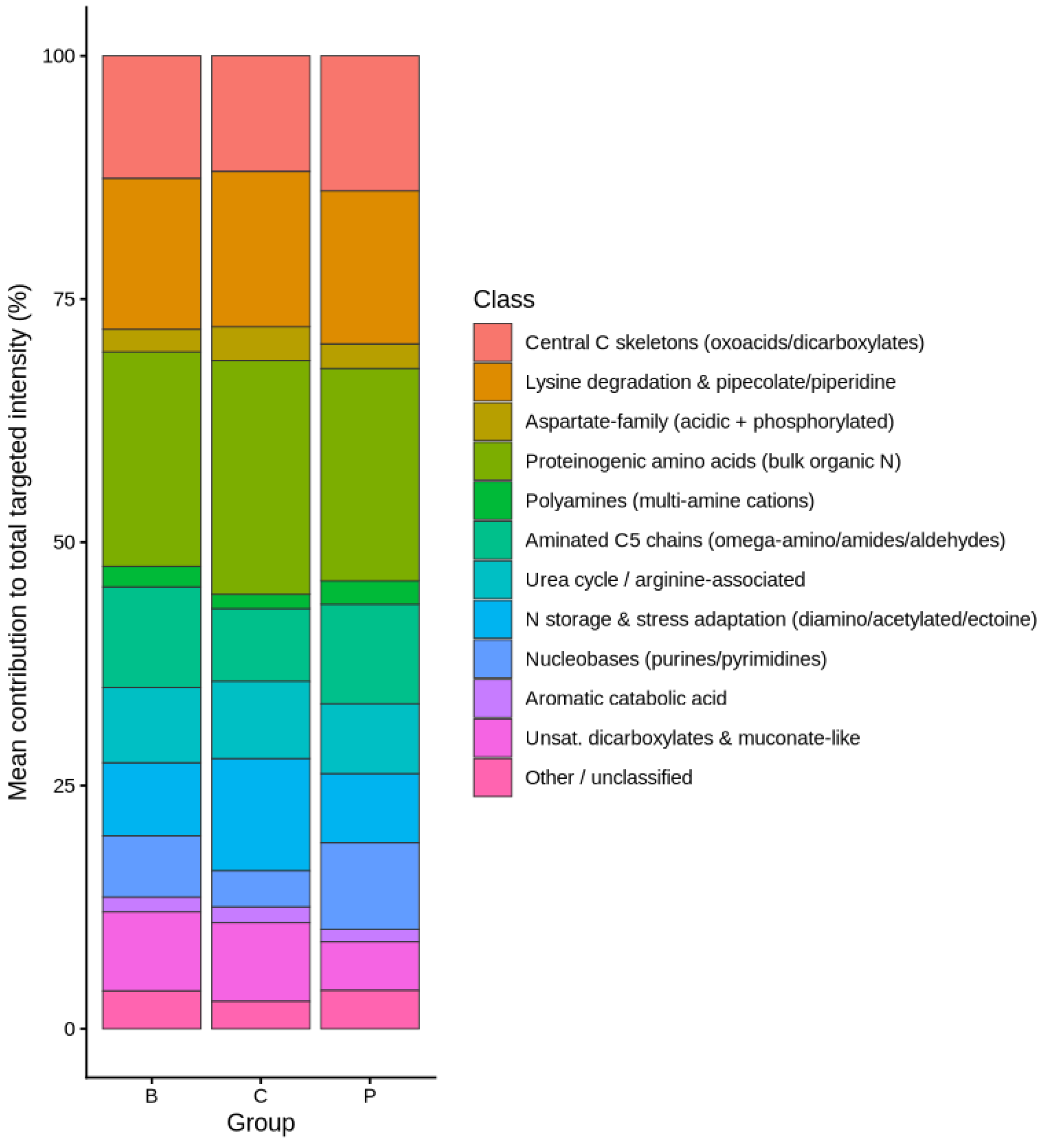
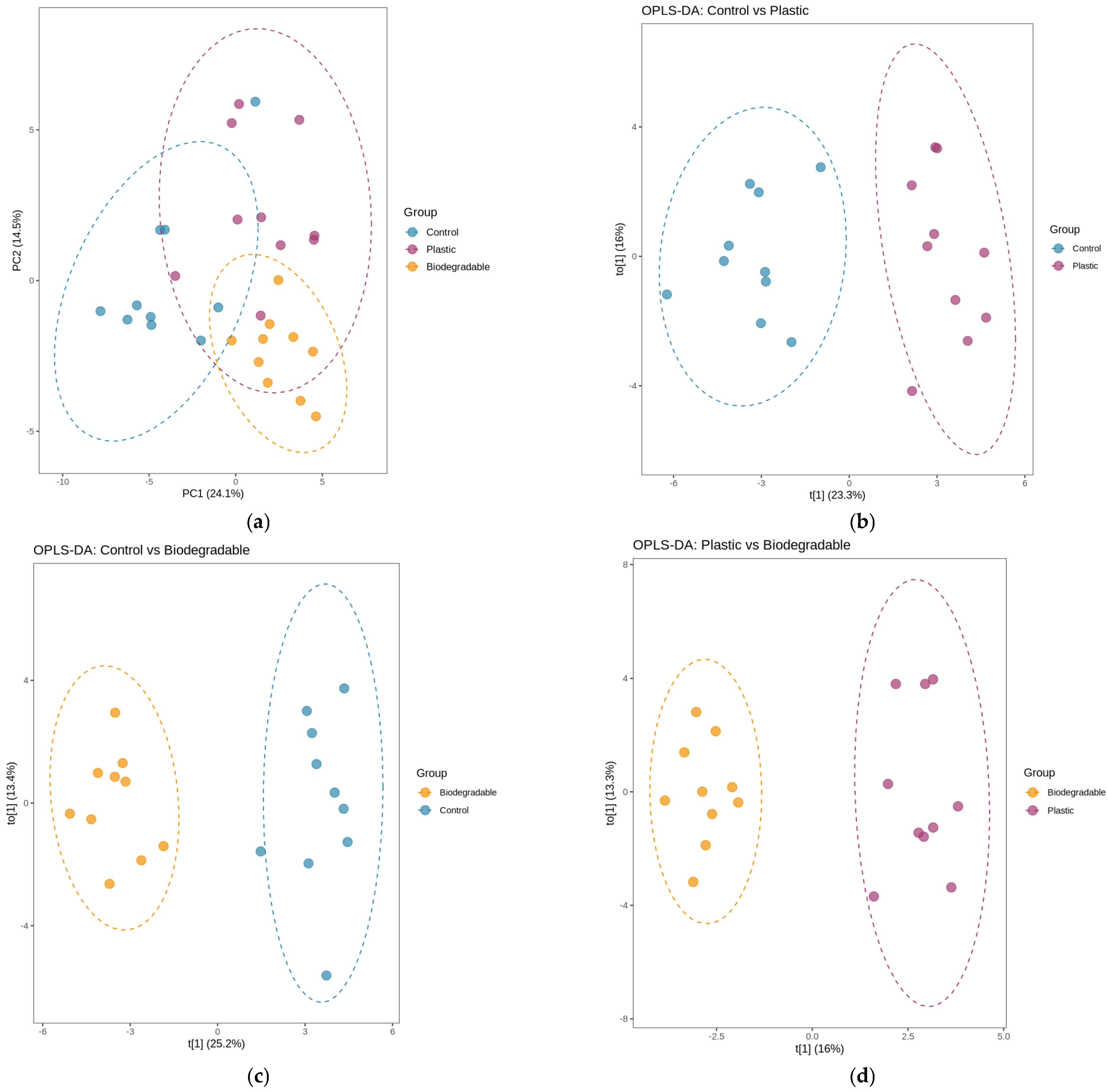
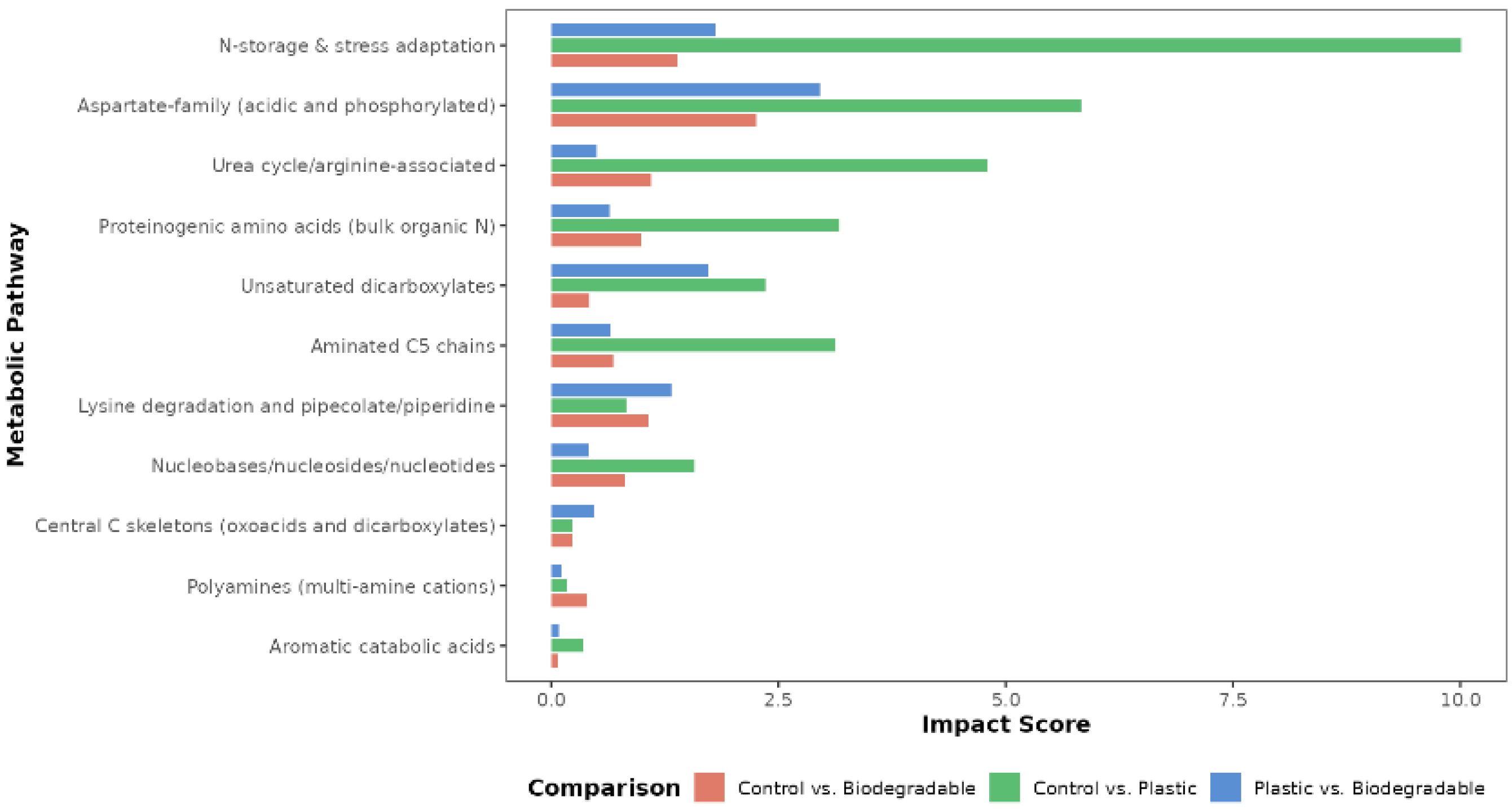
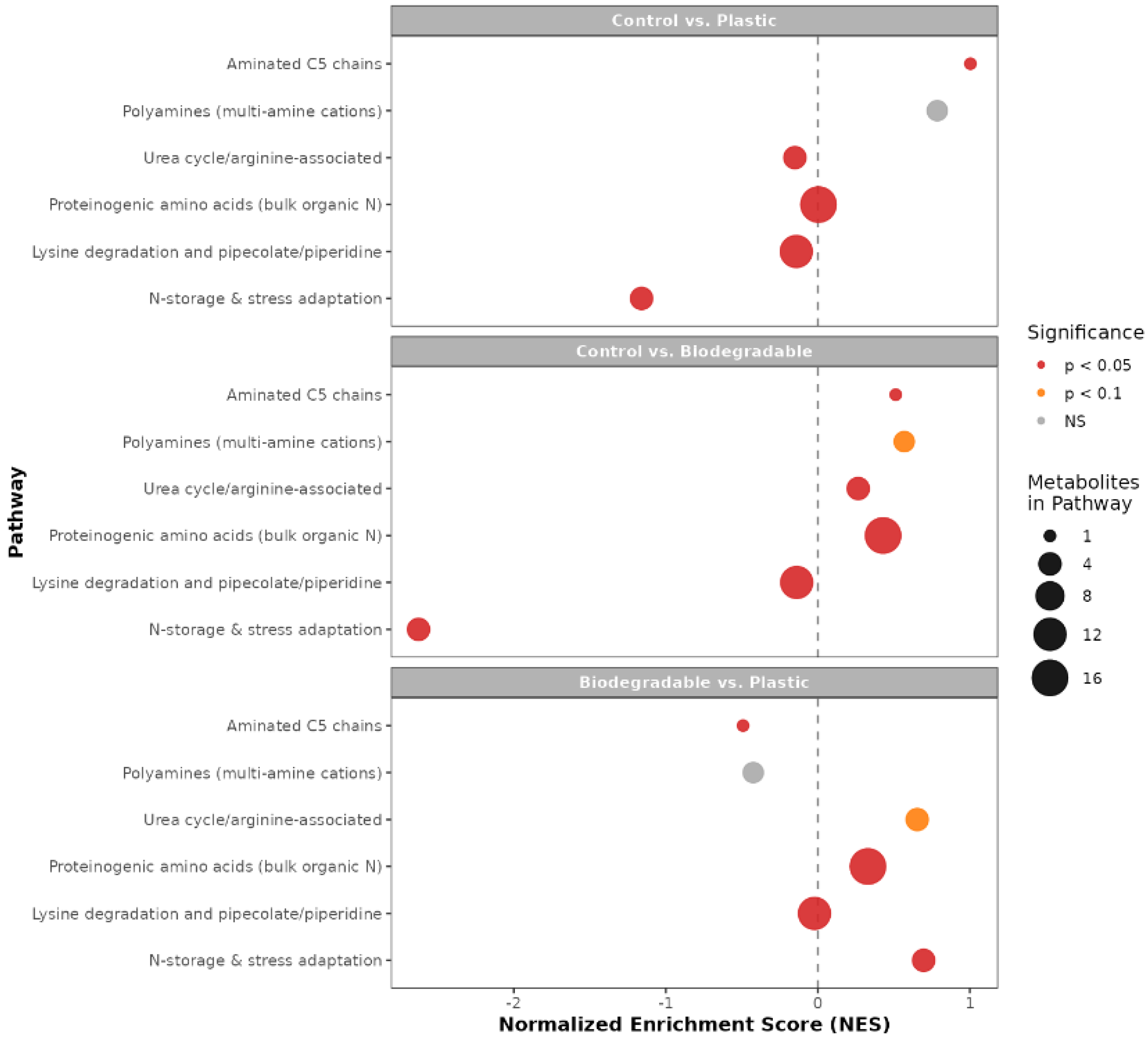
Background: Soil mulching is a widely adopted agricultural practice known to regulate soil microclimate and enhance crop productivity; yet the biochemical mechanisms by which intact plastic and biodegradable mulch films influence soil nitrogen (N) cycling at the metabolic pathway level remain largely unexplored. Understanding these nitrogen transformation pathways is critical for assessing the long-term impacts of mulching materials on soil microbial communities, soil health, and sustainable agricultural management. This study focuses on the biochemical effects of intact mulch film application on soil N metabolism. Methods: N cycle-related soil metabolites were profiled using GC–MS/MS and MALDI TOF/TOF MS and then integrated with multivariate statistical modelling and pathway-level metabolic network perturbation analysis to compare conventional plastic and biodegradable plastic mulch film application against unmulched controls. Results: A panel of 62 KEGG-annotated N-cycle metabolites was profiled, and material-dependent metabolome separation was confirmed by OPLS-DA (R2Y 0.893–0.956; Q2 0.546–0.786). Both mulching materials significantly perturbed soil N-metabolite pools but differed in terms of pathway identity, magnitude, and directionality. Conventional plastic mulching caused the greatest disruption—near-complete suppression of N-storage and stress-adaptation pools (NES of −1.16; impact score of 10.01) and severe impairment of aspartate-centred metabolism—with L-aspartate identified as a critical stoichiometric hub. Biodegradable mulching material imposed a distinct profile dominated by inhibition of branched-chain amino acid catabolism and lysine degradation, with L-pipecolate as a treatment-specific critical impact node. Conclusions: These findings support that mulching material choice is a primary determinant of soil N-cycling biochemistry. The observed metabolite-level perturbations are suggestive of potential consequences for nitrogen retention. Though this inference is based on metabolite pool size differences and network topology metrics rather than directly measured process rates, it should therefore be interpreted with appropriate caution.
Keywords: plastic mulch film; biodegradable mulch film; soil nitrogen cycling; sustainable agriculture; soil metabolomics plastic mulch film; biodegradable mulch film; soil nitrogen cycling; sustainable agriculture; soil metabolomics