Article

Simultaneous Sampling of Plastic Waste and Alien Species in the Northernmost Part of Lake Garda (Italy) Using Seabin During Winter Season


by
Marco Papparotto
1,
Alessio Fonnesu
2,
Jeevan Kishore Reddy Pidapa
1,
Paolo Matteotti
3 and
Luca Fambri
1,*
1
Department of Industrial Engineering and INSTM Research Unit, University of Trento, Via Sommarive, 9, 38123 Povo, TN, Italy
2
ITT Marconi Rovereto, Via Padre Monti, 1, 38068 Rovereto, TN, Italy
3
Fraglia della Vela Riva, Via G. Maroni, 2, 38066 Riva del Garda, TN, Italy
*
Author to whom correspondence should be addressed.
Microplastics 2026, 5(1), 57; https://doi.org/10.3390/microplastics5010057
Submission received: 11 November 2025 / Revised: 8 January 2026 / Accepted: 5 February 2026 / Published: 16 March 2026

Abstract

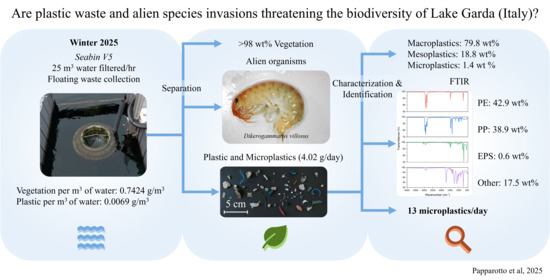
Plastic and microplastic (MP) pollution, along with alien species invasion, are of great concern for natural habitat preservation and human health, and are two important and concomitant likely causes for global biodiversity loss. In the present study, a Seabin, a device for buoyant waste collection in calm waters, was used to also characterize the waste collected in northernmost side of Lake Garda (Italy) in a period of very low anthropogenic pressure, the Winter season of 2024–2025. During the survey, 92.6 g of plastic was collected, i.e., a total of 540 pieces. About 6.9 mg of plastic per m3 of water was found, corresponding to about 0.04 plastic items per m3 and approximately 13 pieces of microplastics per day. Fourier-transform Infrared (FTIR) spectroscopy identification showed that the plastic was composed mainly of polyethylene (PE), polypropylene (PP), and polystyrene (PS). Microorganisms (Diatoms, Bacillariophyta) and microcrack formation with deposits of inorganic matter (mainly Si, Al, O, Ca) were also evidenced by SEM/EDX in all the observed aged MP. Qualitative evaluation of the captured biota highlighted the presence of at least five alien species, including invasive Dikerogammarus villosus. This study describes an easy and cost-effective novel methodology for simultaneously monitoring plastic waste and alien species presence in calm waters, which acts also as a mitigation tool for plastic pollution. The results could be of interest not only to policymakers and scientists, but also for public health and for environmental monitoring.

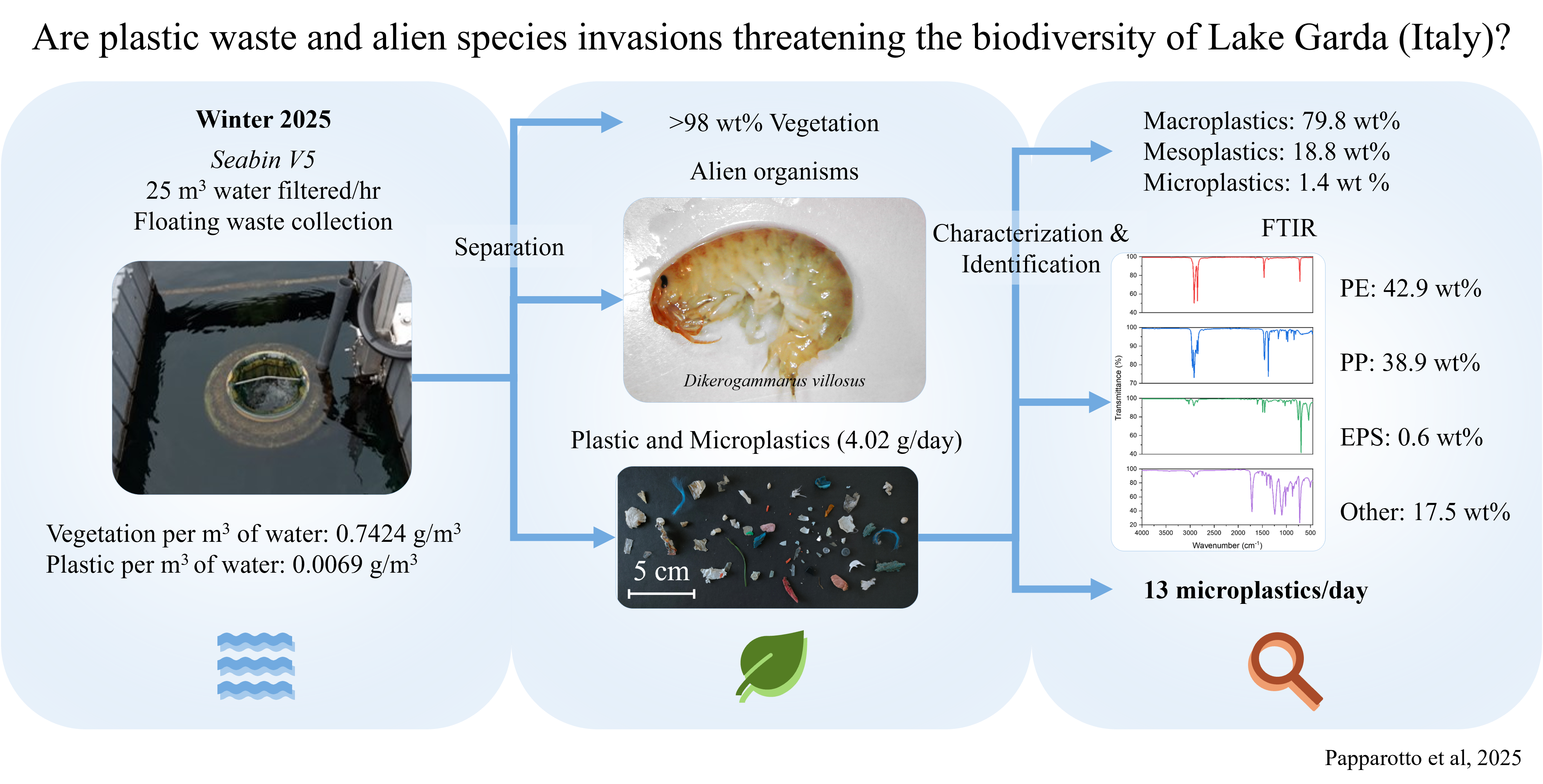
Graphical Abstract

1. Introduction

The world is now facing a so-called “triple planetary crisis”, which consists in climate change, loss of biodiversity, and intense pollution. There are five main generally recognized causes for the loss of global biodiversity, namely: reduction and degradation of natural habitats, over-exploitation of species, climate change, biological invasion by non-native (i.e., alien) species and pollution [1,2]. Water pollution by plastic and microplastic (MP) [3] is likely linked to all three planetary crises [4,5,6].
It was estimated that global polymer production increased from 2 Mt to 380 Mt in 65 years (from 1950 to 2015), and that 60% of all plastic ever made was discarded and accumulated in landfills or in the environment [7]. Microplastics are plastic particles insoluble in water that are smaller than 5 mm, according to ISO/TR 21960:2020. They can be divided into primary and secondary microplastics. Primary MPs are produced in small dimensions; they can be found, e.g., in cosmetics and in the form of pellets [8]. Secondary MPs come from larger products that fragment into smaller pieces under the effect of the environment, e.g., abrasion, exposure to solar radiation, biological interaction [8]. Plastic and microplastic are ubiquitous; microplastics have been found in all continents [9,10], in oceans [8], in deep sea [11], in remote lakes [12] and in the air [13].
Many efforts have been made to monitor plastic and microplastic pollution in seawater [8,14], but less attention has been focused on freshwater environments [15,16,17,18,19,20,21]. Awareness of the importance of monitoring programs on freshwater plastic pollution, however, is rising [16] because it is estimated that 80% of the plastic waste in seas is land-based [22] and lakes and rivers are likely recognized as important sources of marine plastic pollution [15,16,23].
Similarly to environmental factors that influence community structure in freshwater ecosystems [24], human-induced pollution can negatively affect aquatic environments [25]. Plastics, in particular, represent dominant pollutants in freshwater ecosystems worldwide. However, studies on the interactions between plastics and freshwater biodiversity remain scarce [26].
Additionally, research—especially in marine environments—has begun to investigate the capacity of plastics to act as vectors for transporting attached biota, including non-native and potentially invasive species, over long distances [27]. These alien organisms can rapidly multiply, disrupt local ecosystems, and outcompete native species. Their introduction may occur either intentionally or accidentally, often through human activities. The global rate of biological invasions is increasing, largely due to anthropogenic actions [28].
In Italy, many invasive species have been introduced intentionally, for instance through agricultural activities or aquaculture. For other taxa, e.g., invertebrates, introductions are usually accidental—such as crustaceans transported on ship hulls. While these organisms may pose little threat in artificial or confined environments, once they reach natural habitats lacking competitors or predators, they can cause the decline or extinction of native species.
Different techniques have been used to monitor plastic pollution in freshwater, including manta trawl [23], Seabin [29], visual inspection [30], and booms [31]. Each technique and each environment has its peculiarities, there seems to be no consensus on the best overall technique at present [15]. An exhaustive document focusing on the methodology of plastic litter assessment in the sea is presented in [32]. However, it could serve as guidelines for monitoring freshwater as well.
The Seabin is an easily operated and cost-effective solution for buoyant litter collection in calm water [33]. It can be used to remove plastic waste, e.g., from lakes, harbors and gulfs, but it can also be used as a monitoring tool for biological and artificial waste material. It consists of a 2 mm mesh size net that is placed at the water surface. The basket is connected to a system that pumps water through it with a declared flow rate of 25,000 L/h (https://www.deepbluecleanup.com/technicalspecs (accessed on 30 December 2025)) and traps floating debris inside the Seabin. The estimated electrical power consumption is 500 W, as declared by the producer, and the total weight that it can contain before necessary collection is approximately 20 kg, with an estimated possible waste removal of 1.5 tonnes/year. The updated version, Seabin V6, has been recently unveiled, confirming its ability to capture microplastics as small as 2 mm, as described in Sydney Water’s Urban Plunge (https://urbanplunge.sydneywater.com.au/content/dam/sydneywater/documents/Seabin%20.pdf (accessed on 30 December 2025)).
Many other mitigation techniques for plastic pollution exist [33,34]; the benefit of the Seabin is its low cost and ease of use.
Italian subalpine Lake Garda is a popular touristic attraction in northern Italy (https://data.gardatrentino.it/it/data-garda-trentino.html (accessed on 9 July 2025)). It is also located in a highly populated and polluted industrial area. These are some of the characteristics that make it a potential hot spot for both plastic pollution and alien species invasion. Some previous studies focused on the plastic and microplastic concentration in the beach sediments of the lake [35,36,37,38] and on monitoring plastic waste on the water surface via manta trawl [39] and via Seabin [29]. The studies report the presence of relevant amounts of plastic litter on the lake shores and in the water, especially in the northern part of the lake [35,39], but they also detected the presence of hazardous paint particles [36]. Other studies reported the presence of many alien species in the lake [40,41,42], including Dikerogammarus villosus, Corbicula fluminea, Procambarus clarkii, Lagarosiphon major, Elodea Nuttaallii, Elodea canadensis, and more, for a total of at least 42 non-indigenous species. In a recent study [43], the ingestion of microplastics by the talitrid amphipod species Cryptorchestia garbinii, inhabiting the bank of Lake Garda, was investigated.
Multidisciplinary studies considering both plastic pollution and alien species, however, are still scarce and generally do not take into consideration freshwater environments. One such example is constituted by a recent paper [44]. They proposed that the invasiveness of alien plant species in terrestrial ecosystems could be enhanced by the presence of MPs, particularly in fluctuating rainfall regimes. Coordinated action on multiple factors is of paramount importance in the contemporary context, where synergistic phenomena threaten global biodiversity [2]. A replicable methodology for the evaluation of biological and anthropic environmental stressors could be used to understand possible correlations between the various phenomena, with broad implications on the understanding of their complementarity.
For this reason, this study proposes an efficient and easy way to employ a conventional mitigation tool for plastic pollution also for monitoring purposes in a period with the lowest anthropogenic pressure. Plastic waste and alien species presence were studied simultaneously in Lake Garda in northern Italy during the Winter season of 2024–2025 using a Seabin; data was also compared with information on the weather. This study represents a follow-up of a previous baseline assessment of the abundance of plastic and microplastic in the lake during Summer and Autumn of 2024 [29]. The aim of this study is to (i) inform the scientific community and decision-makers about the multiple environmental threats facing lake by monitoring data during the season of least anthropogenic pressure; (ii) broaden the perspective of this long-term study on the parallel observation and monitoring of both microplastic pollution and alien species invasion; and (iii) propose an effective methodology to simultaneously monitor and mitigate plastic pollution that can be employed in similar calm water bodies (e.g., harbors in lakes and seas).

2. Materials and Methods

2.1. Study Area

The selected location for sample collection was 45.883455, 120 10.843897 (GPS data), in the northernmost part of Lake Garda, which has a narrow, elongated shape like a fjord, with average width of about 3–4 km and a depth up to 346 m. This study site was selected because debris floating on the water surface naturally tend to collect there. This depends on the presence of a southerly wind (blowing from south to north, Ora del Garda) and the Sarca River, which flows into the lake from the north-east about two kilometers from the collection site (see Figure 1a of previous paper [29]). During this Winter monitoring campaign, no other Seabin units and/or other locations were available for comparative results. The selected sample collection location is highlighted in Figure 1.
Data on weather (temperature, rain, wind speed) in the area was kindly provided by the Agrometeorology and Irrigation Operating Unit, Technology Transfer Center, Mach Foundation, San Michele All’Adige (TN) (https://fmach.it/). The air temperature during sampling and outdoor drying ranged from +2 °C to +11 °C in Riva del Garda (R.H. 58–68%), and from +1 °C to +6 °C in Cognola, near Povo di Trento.

2.2. Seabin

A Seabin V5 (https://seabin.io/home) was installed in the selected location and emptied various times during the Winter Season of 2024–2025 (from 31 December 2024 to 18 March 2025) for a total of 10 samples and 23 days of waste collection, as part of an ongoing long-term waste removal campaign and pollution assessment survey of Lake Garda started by Coop Italia and LifeGate PlasticLess project (https://www.lifegate.it/nasce-lifegate-plasticless (accessed on 12 July 2025)). The start dates for Seabin and waste retrieval are detailed in Table 1. The working time of the Seabin ranged from 48 to 72 h, with a sampling frequency of at least once a week in February and March (W2–W10) depending on the amount of waste collected. In January, only one sample (W1) was collected due to the visibly low amount of waste. Sampling was carried out in 8 of the 13 Winter weeks with a higher collection frequency in the second half of the season, due to the greater amount of waste.

2.3. Preliminary Analytical Procedures

After the litter collection, the net was dried in environmental conditions in a controlled area to avoid material degradation or loss, up to complete drying. In particular, each sample was treated by extraction from the Seabin net, which was first weighed in its wet state and initially left outdoors at the Fraglia site for approximately 24 h at a temperature between +2 and +11 °C. This initial draining and drying phase was carried out to reduce excess water before transport to Riva-Trento and to limit biological degradation during handling.
The samples were then transported to the laboratory facilities in Povo (Trento), where they were weighed again and dried outdoors for 4–8 h (temperature +1/+6 °C) to assess residual moisture and drying uniformity. The material was then transferred from the Seabin net to large plastic containers and left to dry further for another 8–12 h under laboratory conditions.
This secondary drying phase was specifically applied to minimize electrostatic interactions between microplastic particles, particularly expanded polystyrene (EPS), which could otherwise affect manual selection.
A first sorting was manually performed to separate vegetation, animal, and plastic fraction, which were the main constituents, as reported in Table 1.
Animal organisms (AO) and microplastic particles (MP) were isolated using two types of fine-tipped tweezers: (i) 145 mm long polypropylene tweezers with tips 1.35 mm thick and 2.60 mm wide; (ii) 122 mm long stainless steel tweezers with tips 0.73 mm thick and 0.90 mm wide. The AO and MP were stored in polystyrene (PS) Petri dishes, while plant and organic debris were stored separately in moisture-resistant paper bags (“moisture-proof paper”). The duration of manual sorting varied depending on the amount of vegetation and debris present in each sample; on average, it took approximately 60 min per kilogram of wet sample, with an estimated handling time of approximately 3 s per individual plastic particle or AO. After emptying, the Seabin net is washed in a laboratory glassware washer to remove any remaining plant debris and other contaminants, and to make it available for the next sampling (dry tare weight 645 g).
Plastic products were assigned to a product category from the following commonly retrieved items: cups, bottle caps, bottles, ropes/wires/threads, packaging, cigarette filters, foams (adapted from the possible categories proposed in [32]). A sorting of all the plastic among three selected dimensional categories was then carried out; the categories were assigned as follows: ≤5 mm microplastics [32]; >5–50 mm mesoplastics [45,46], >50 mm macroplastics. A final separation of plastic material was then performed with the aid of Fourier Transform Infrared Spectroscopy, Spectrum Two™ portable FTIR spectrometer by PerkinElmer Inc. (Waltham, MA, USA); polymers in the three dimensional categories were independently divided according to their material: polyethylene (PE), polypropylene (PP), polystyrene (PS), and “other”. After each sorting, the different polymeric categories were weighed, and the number of items was counted. Plant and animal fraction were sorted, weighed and identified, and dead animals were preserved in 70% alcohol. Wet mass (i.e., collective total weight of vegetation, animals, plastic and water immediately after net retrieval) was obtained with a luggage scale (with 5 g sensitivity), while accurate weighing of full samples and vegetation after drying was performed on a KB 3600–2N scale by Kern & Sohn GmbH (Balingen, Germany) (with 0.01 g sensitivity), and on an ABS 80–4 electronic balance by Kern & Sohn GmbH (0.1 mg sensitivity) for plastic and vegetal constituents after separation. Animal weighing was performed with a WTC 2000 by Radwag (Radon, Poland) (with 0.01 g sensitivity). Waste material mass and number of items concentrations for the various categories were calculated using the total estimated volume of water filtered during the working time, calculated with Equation (1):
Volume   of   filtered   water   ( L )     time   ( h )   ×   25,000   ( L / h ) .
This calculated volume could be overestimated, especially during the long time of collection due to the accumulation of high amounts of vegetable waste.

2.4. Waste Material Characterization

Material recognition was performed via Fourier Transform Infrared Spectroscopy (FTIR) in Attenuated Total Reflectance (ATR) configuration. A Perkin Elmer Inc. (Waltham, MA, USA) Spectrum Two™ portable FTIR spectrometer was used, equipped with a synthetic diamond crystal. Spectra were obtained between 4000 and 450 cm−1.
Micrographs of some selected MP specimens were obtained with a Scanning Electron Microscope (SEM) JSM-IT300LV SEM by JEOL Ltd. (Tokyo, Japan) with an EDXS system (EDXS; Bruker, Billerica, MA, USA) for semi-quantitative composition analyses. The surface was coated with platinum–palladium via sputtering with a Q150T ES coater by Quorum Technologies Plc (Laughton, UK). Microstructural observations were performed on PE, PP and EPS microplastics, and the EDAX map was obtained with relative percentage composition of the following elements: C, O, Si, Al, Ca, K, Fe, Mg, S, Na, Cu, Cl. The SEM was used with at an accelerating voltage of 13 kV (16 kV for EPS analysis).
The main dimensions of selected samples were obtained using a Nikon SMZ25 optical microscope (Nikon UK, Surrey, UK), equipped with a Nikon DS Fi2 digital camera. Thickness of specimens was measured by digital Mitutoyo caliper (sensitivity 10 micron).
After characterization, the material was disposed of with the undifferentiated municipal solid waste. The same procedure was performed routinely with the waste collected via Seabin that was not used for further characterization.

2.5. Statistical Treatment of Data

Data are reported as arithmetic mean ± standard deviation.
Number and mass of macroplastics, mesoplastics and microplastics were evaluated as average of single sampling Wi, and as average of all the ten Wi samples, for single type of material (PE, PP, EPS and Others) and for their total. Daily average number (nday-i) and daily average mass (mday-i) were used to calculate the average by day nday and mday of each material, according to Equations (2) and (3)
n d a y = 1 23 i = 1 10 n d a y i
m d a y = 1 23 i = 1 10 m d a y i
The average mass of single macro-, meso- and micro-plastic mWi for each Wi sample was determined from the mass of Wi sample divided by the number of items nWi, and was used to calculate the average mass of each plastic item, m ¯ n   (mn), according to Equation (4)
m ¯ n = 1 n i = 1 10 m W i
where n is the number of plastic items in sample Wi. Calculated data are reported in Table A5, Table A6, Table A7, Table A8, Table A9 and Table A10. The average masses of PE, PP, EPS, and other microplastics were not only calculated as simple or ordinary average (Equation (4)), but also as weighted average, mnw, according to Equation (5)
m ¯ n w = i = 1 10 m W i × n i i = 1 10 n i
Moreover, for each Wi-sample and each material, the average dimension of MP was also estimated as equivalent diameter, DWi, assuming approximately spherical micro-particles, according to Equation (6)
Equivalent   diameter   D W i = 3   ×   m W i S G 4   π     3
where mWi is the average mass of MP, assuming the following specific gravity: SGPE = 0.93 g/cm3; SGPP = 0.91 g/cm3; SGEPS = 0.03 g/cm3; SGOther = 1.00 g/cm3. The average diameters of PE, PP, EPS, and other microplastics were calculated as simple or ordinary average, Dn, and weighted average, Dnw, according to Equation (7) and (8), respectively.
D ¯ n = 1 n i = 1 10 D W i
D ¯ n w = i = 1 10 D W i × n i i = 1 10 n i

3. Results

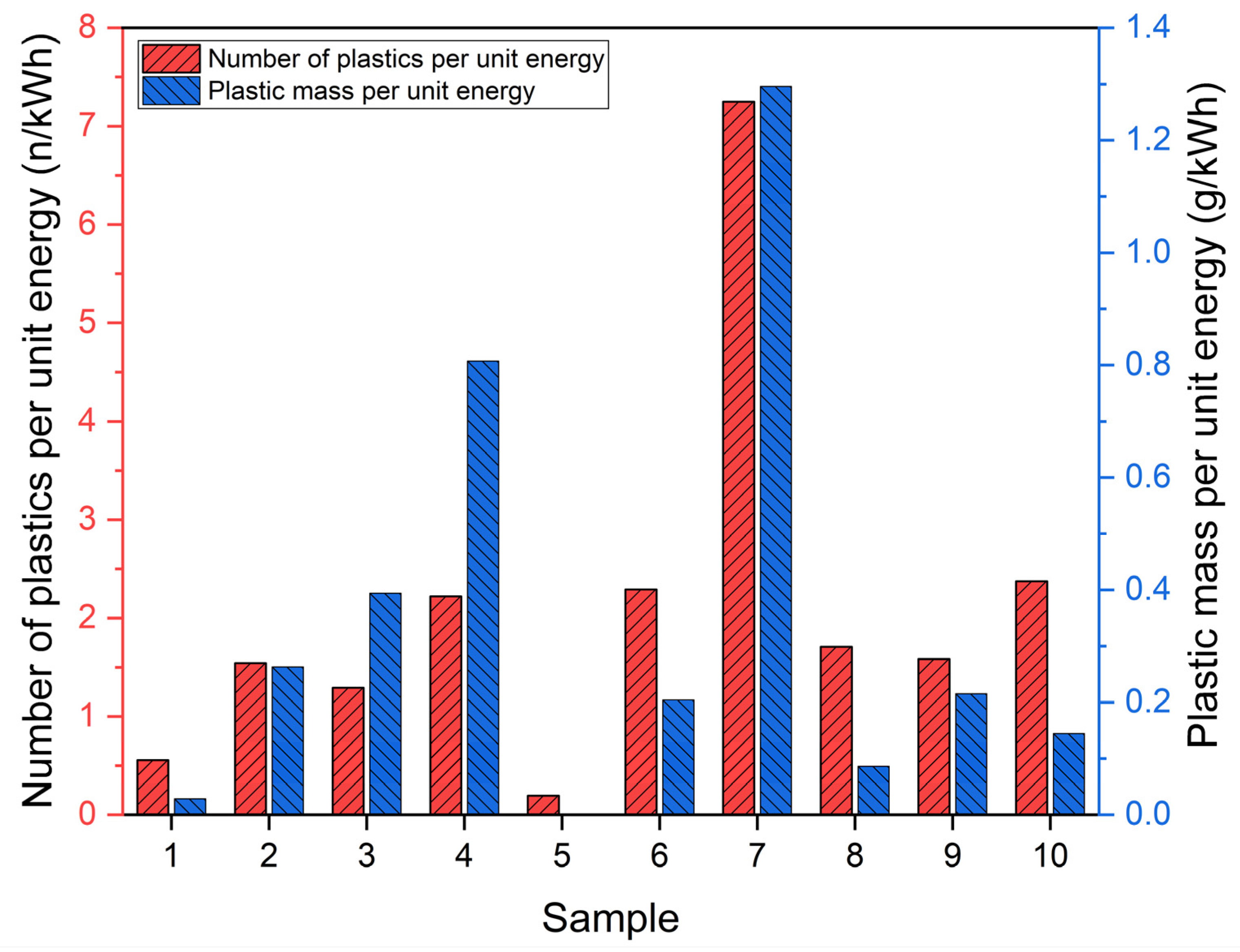
A total of 9331.01 g of vegetal residues and 92.61 g of plastic were retrieved during the collection of ten samples from the lake water (Table 1 and Table A1). A total of 303 MP pieces, weighing 1.29 g overall, were found (i.e., 1.4 wt% of all the plastic), along with 216 mesoplastic pieces (17.38 g overall, i.e., 18.8 wt%), and 21 macroplastics (73.94 g overall, i.e., 79.8 wt%), for a grand total of 540 plastic items. A total of 63 animal organisms were also retrieved, in total. The total wet mass, the number and mass of animals, and the number of plastic pieces collected are reported, along with the dates and working times of the Seabin, and the nomenclature of the samples, in Table 1. The energy efficiency of the method, measured as mass and number of plastic pieces retrieved per kWh, was calculated using Equations (9) and (10), respectively:
Total   plastic   mass   per   unit   energy   ( g kWh )   =   Total   plastic   mass   ( g ) Total   time   ( h )   ×   0.5   kW ;
Total   plastic   number   per   unit   energy   ( n kWh ) = Total   number   of   plastic   pieces   ( n ) Total   time   ( h )   ×   0.5   kW ,
where 0.5 kW is the approximate power consumption of the Seabin. The plastic mass per unit energy was 0.336 g/kWh, and the plastic number of pieces retrieved per unit energy were 2.0 n/kWh.
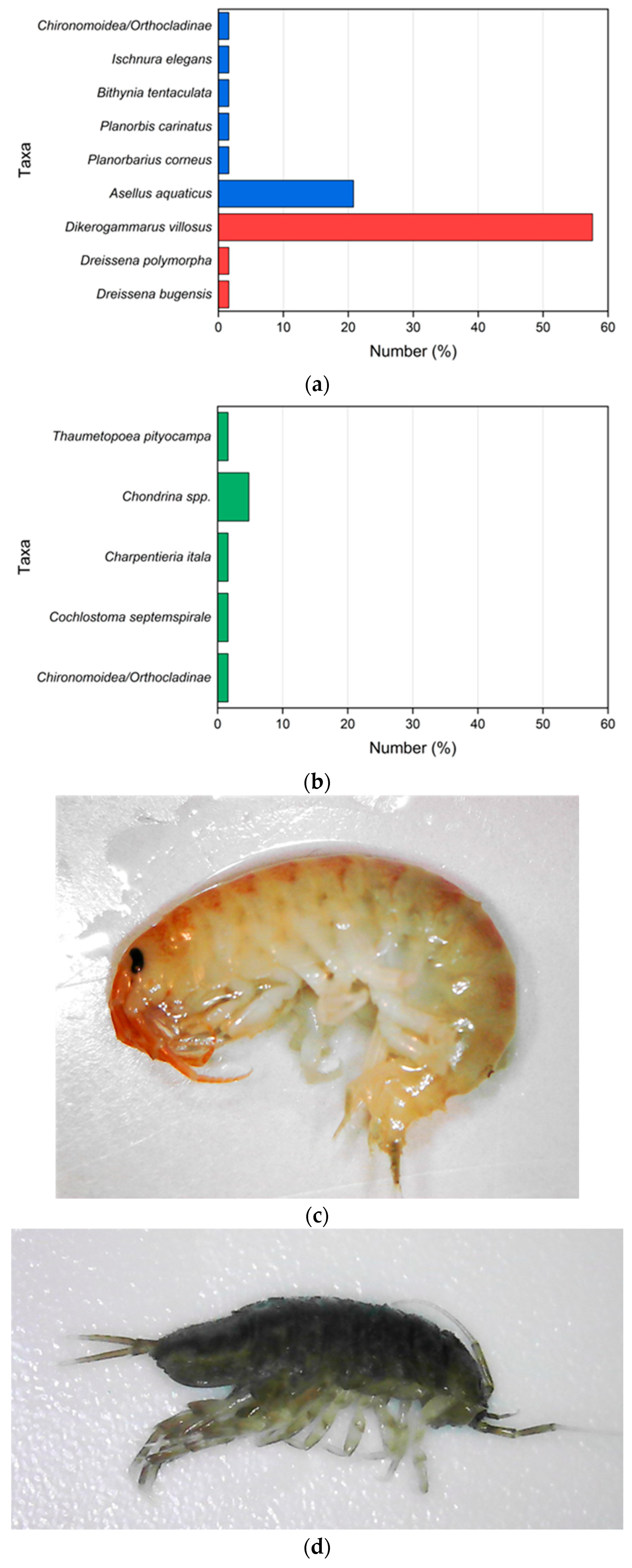
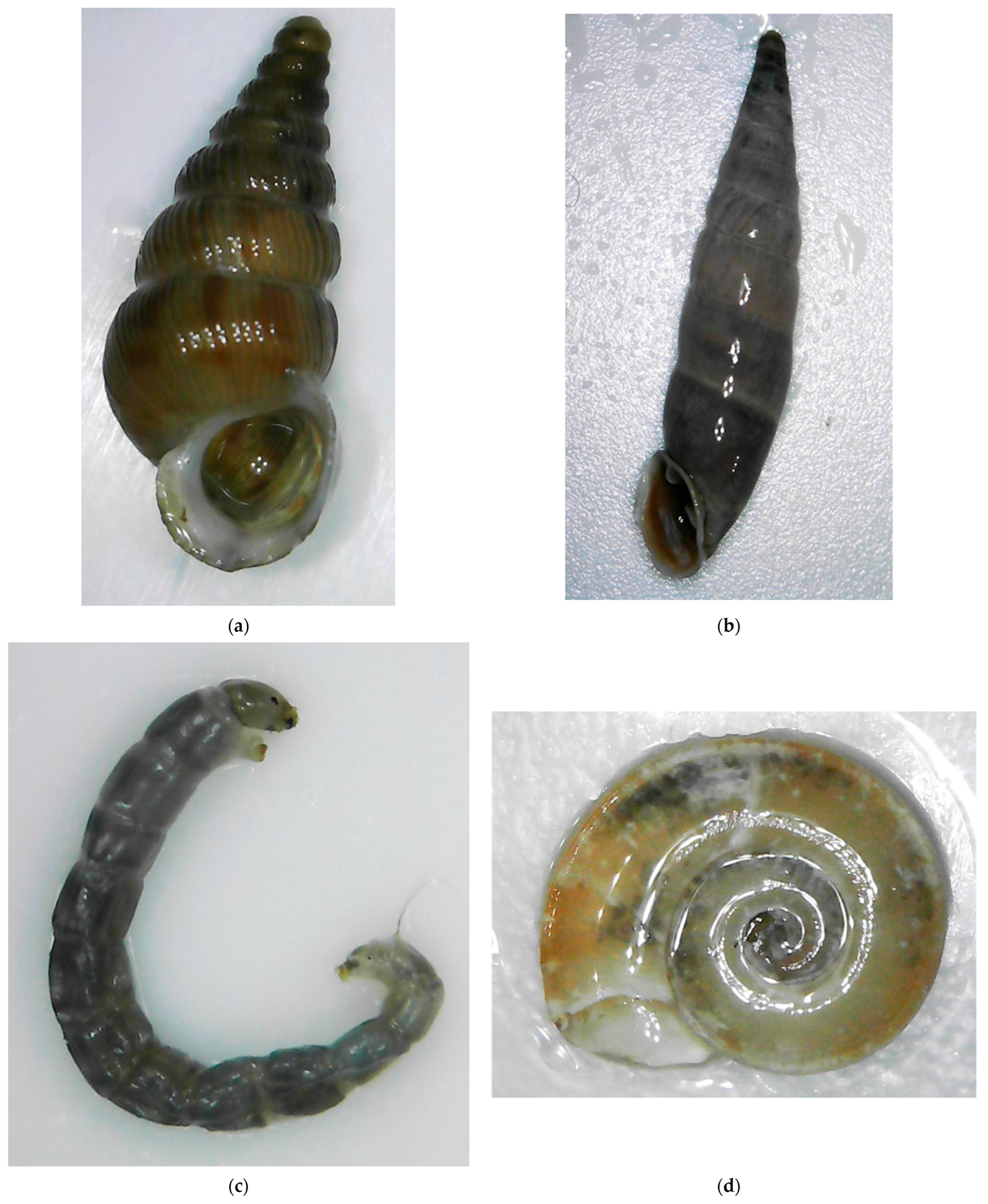
Across all samples, a total of 63 animal organisms, 56 of which were aquatic, and a very large number of vegetal organisms—or fragments thereof—belonging to various taxa were recovered from the Seabin (see Table 2). The exact number of plants was neglected and only a portion of the individuals were identified because it was considered beyond the purpose of the present study. The most frequently recorded taxon was Dikerogammarus villosus (57.1%), displayed in Figure 2c, followed by Asellus aquaticus (20.6%), displayed in Figure 2d. Other taxa were observed less frequently (Figure 2a,b).
In addition to aquatic fauna, seven terrestrial invertebrates were collected, the majority (71.4%) belonging to the class Gastropoda (see Table 2). Plant material from at least four distinct species was also identified.
The taxa detected in the Seabin included both non-native (alien, 60.3% of the total collected organisms) and native (autochthonous, 39.7% of the total) species (see Table 2). Among Gammaridae, only the alien D. villosus was recorded; the native Echinogammarus stammeri was absent. Conversely, A. aquaticus, a native species, was the only representative of the order Isopoda (Figure 2a). Within Bivalvia, only alien species—Dreissena polymorpha and D. bugensis—were detected, further highlighting the presence of non-native taxa (Figure 2a). The occurrence of invasive aquatic plants was confirmed by the presence of Lagarosiphon major and Ceratophyllum demersum.
Aquatic Gastropoda were represented by several taxa, though each was represented by only a single individual (see Table 2). Among aquatic insects, one individual each from the orders Odonata (Ischnura elegans) and Diptera was recorded (see Table 2).
Terrestrial taxa were also present, though represented by only a few individuals (see Table 2, Figure 2b).
During the survey, the concentrations of the main constituents collected were as follows:
  • Vegetation mass per cubic meter of water: 0.7424 ± 0.7777 g/m3;
  • Plastic mass per cubic meter of water: 0.0069 ± 0.0081 g/m3;
  • Pieces of plastic per cubic meter of water: 0.0420 ± 0.0389 1/m3.
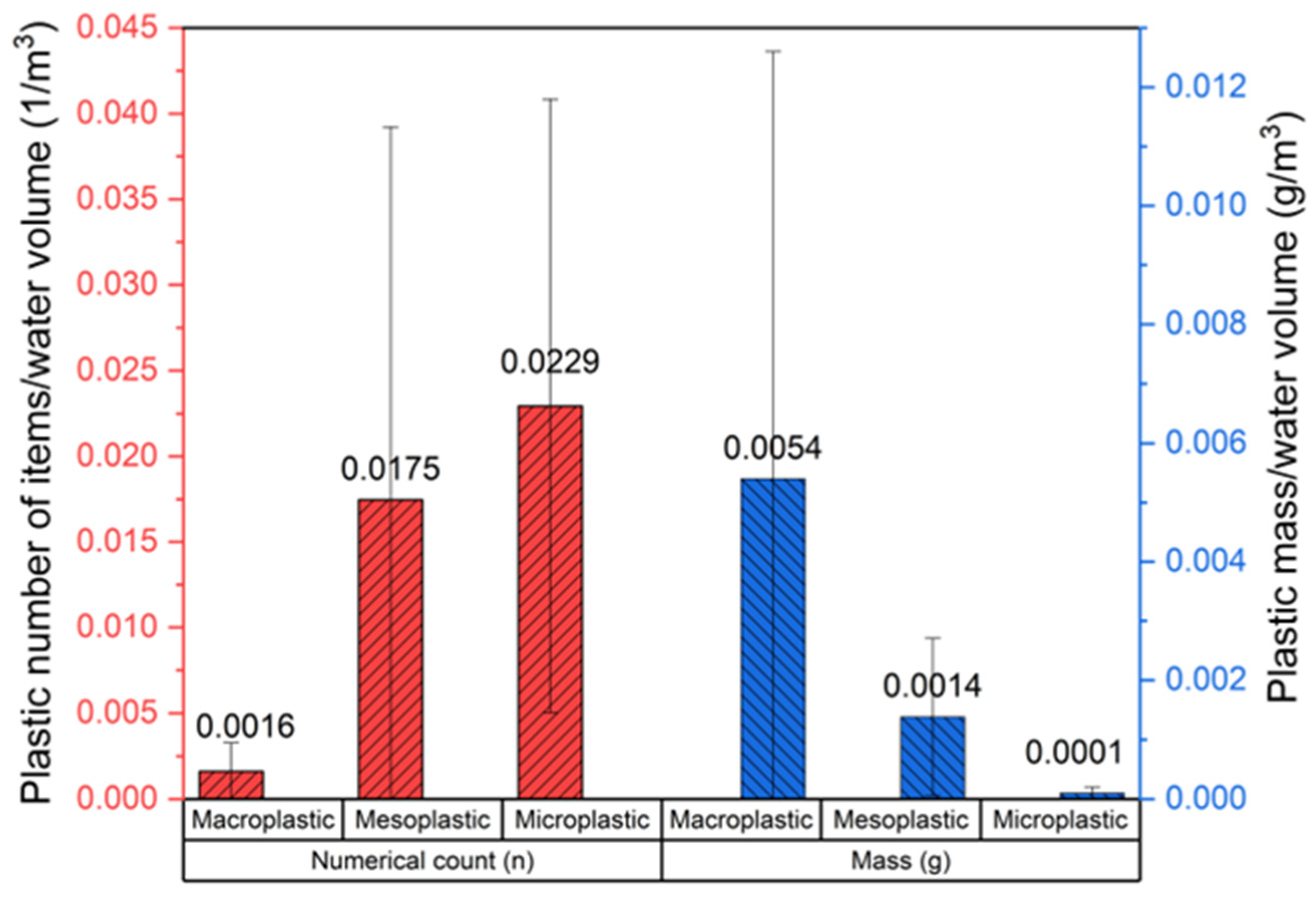
The amount of macro-, meso- and microplastic per cubic meter of water is reported in Figure 3, both in terms of mass and in terms of number of items. The mean density of items per cubic meter of water increased from macro- to micro-, while the mass decreased.
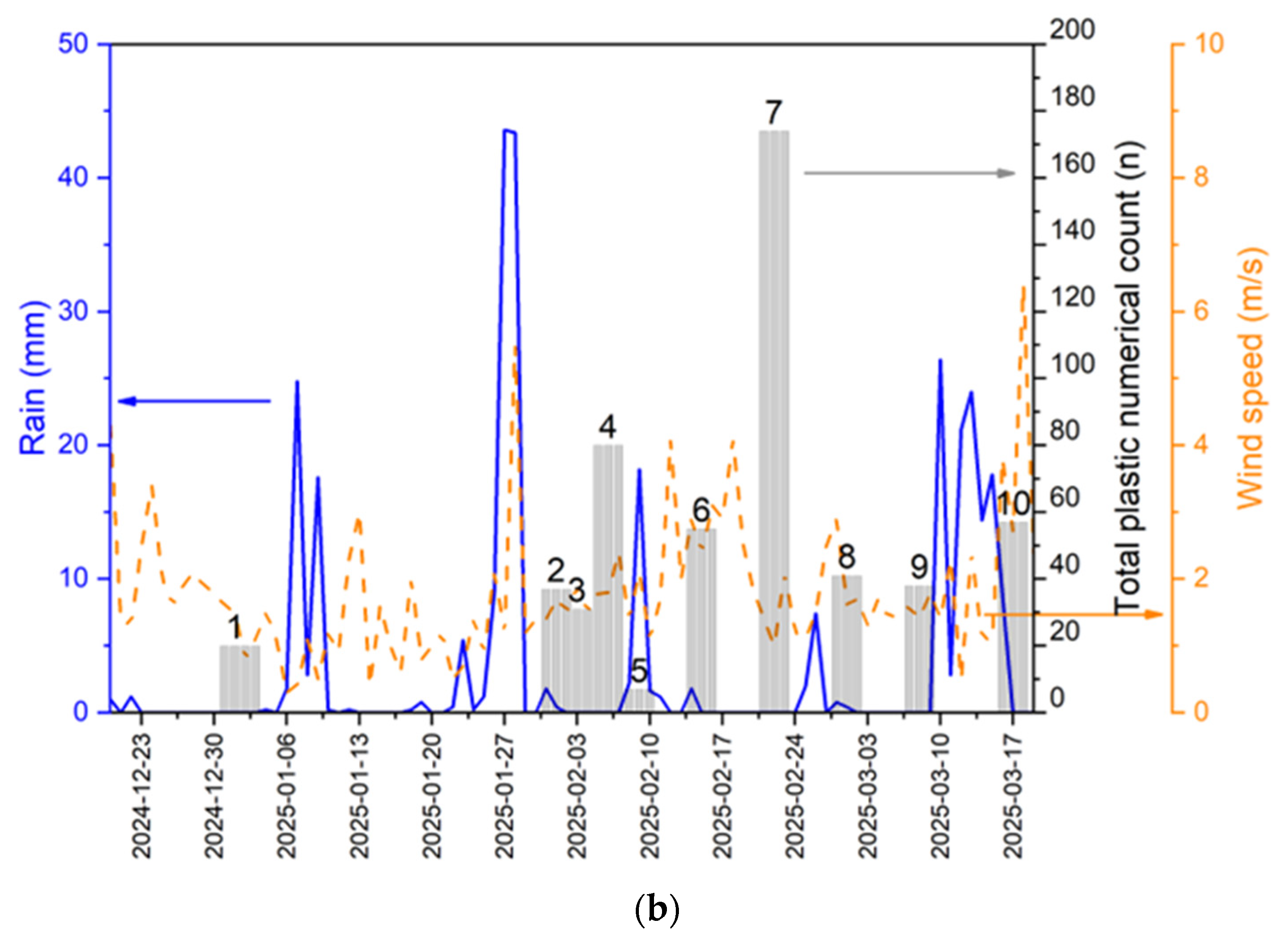
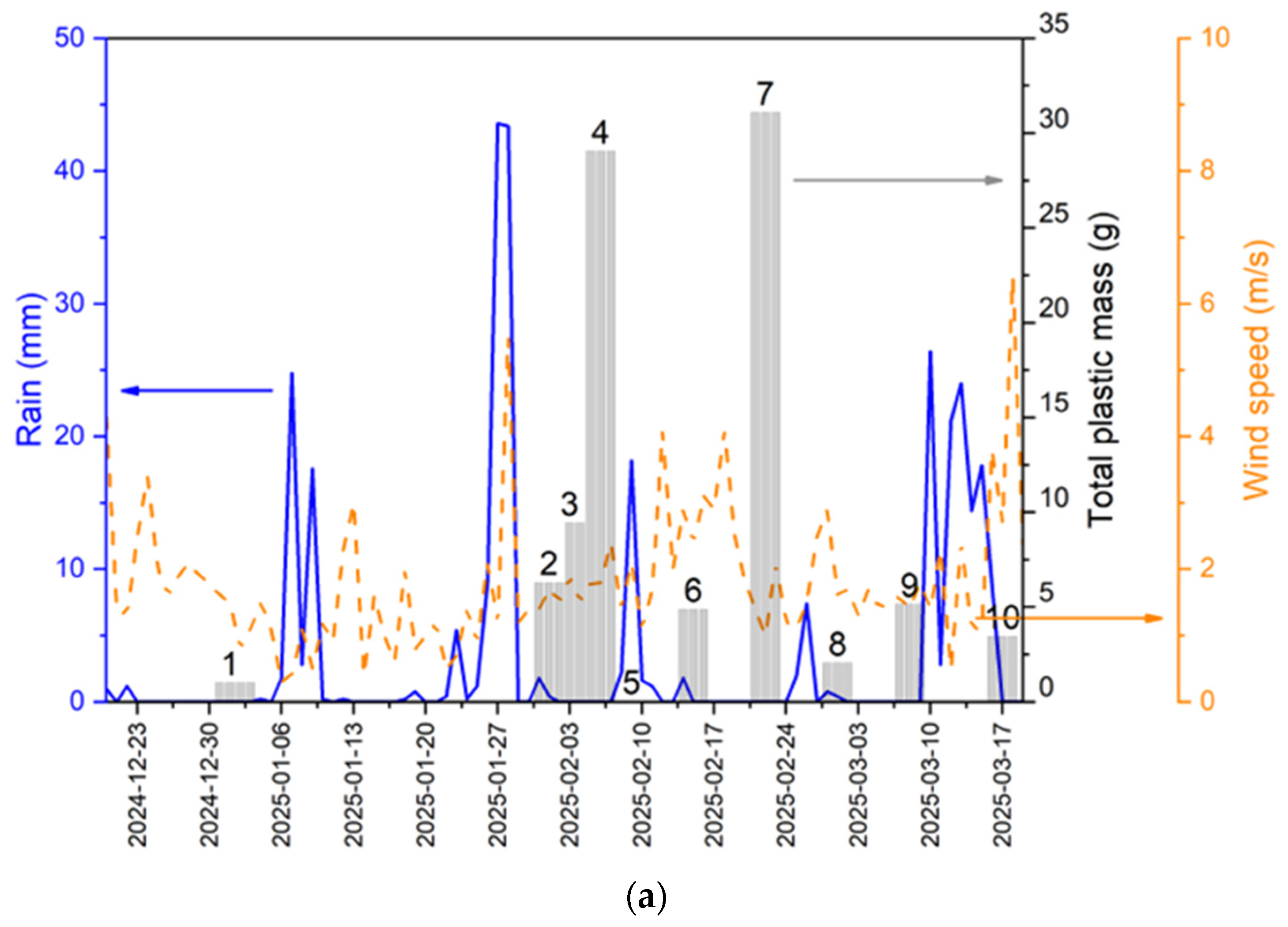
Figure 4 reports the data on the total amount of plastic retrieved during 8 weeks out of the 13 Winter weeks, in terms of mass and number of items, superimposed with data on the weather in the sampling area. Rainfall was not very intense during the Winter period, but some precipitations were present. A slight increase in plastic collected was observed after some days following significant rainfall. The correlation seems clearer for the total mass of plastic, and in particular for Samples W2, W3, and W4 (2, 4, and 7 February 2025, respectively), following precipitations of 27 and 28 January. A slightly higher amount of plastic mass was collected in Samples W6 and W7 (i.e., 16 February and 23 February, respectively), after the precipitations of 8–14 February. There seems to be a slightly stricter correlation between the plastic accumulation and the wind speed in the previous days, more visible for the same Samples W4, W6, and W7.
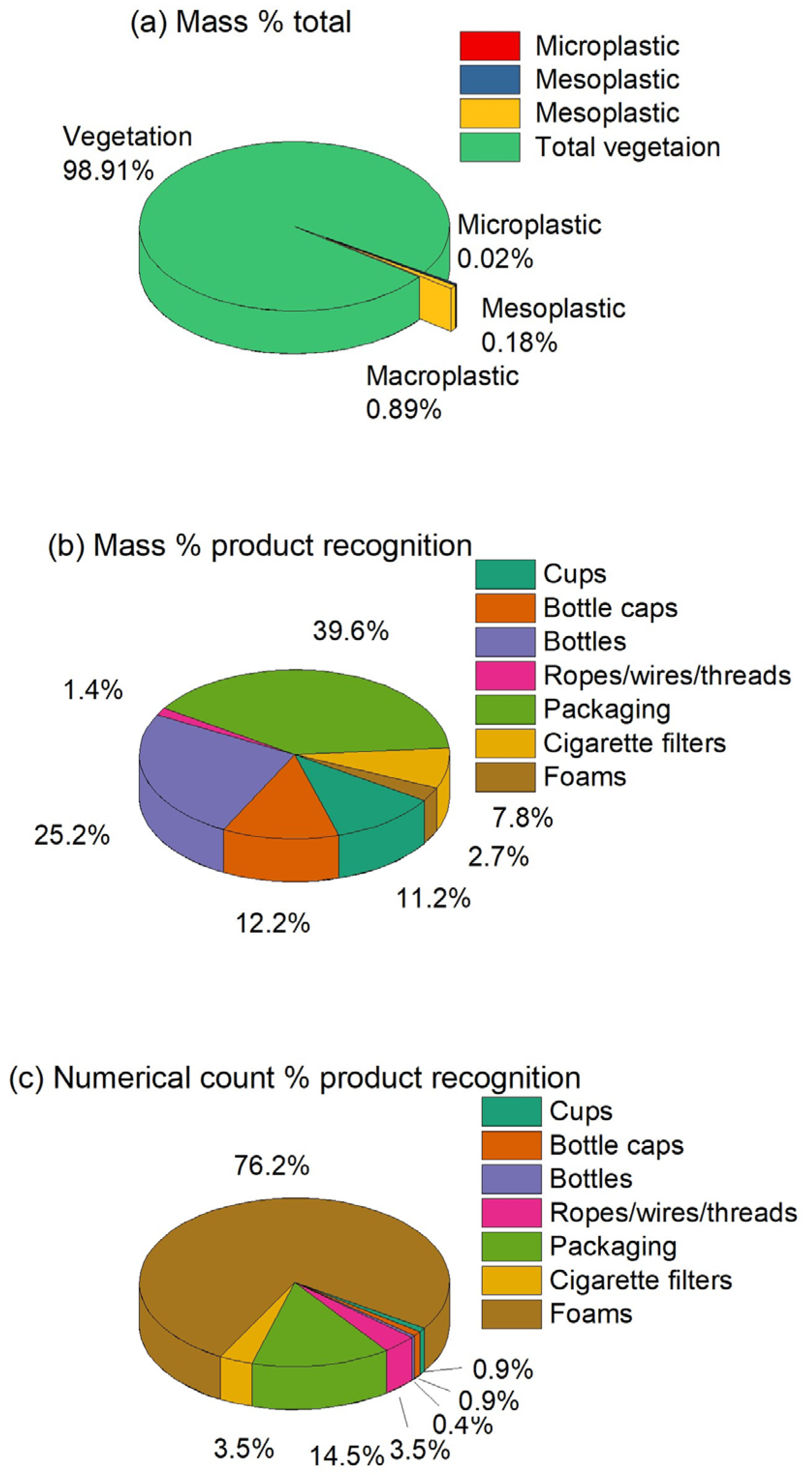
The composition of collected waste is reported in Figure 5 and Figure 6. In Figure 5a, it is possible to observe the constituents of the floating debris collected by the Seabin in terms of mass; almost 99 wt% was constituted by plant residues, and the rest was plastic, with decreasing mass going from macro- to micro-. A small fraction, constituted of animal species retrieved, was neglected in this chart because they were separated prior to weighing to permit their preservation. Figure 5b,c show the composition of the plastic litter retrieved, sorted by type of product; data is reported in terms of mass and number of items, respectively. Almost 40% of the recognized mass was constituted by packaging. Single-use plastic bottles and bottle caps represented another large fraction, followed by single-use cups. The analysis in terms of number of recognized items shows a predominance of low-density foams, including expanded polystyrene (EPS), the main constituent, but also polyurethane (PU), and expanded PE. Packaging was the second most frequent constituent in terms of numerical count. Cigarette filters and the category comprising ropes, wires and other types of filament-based products represented a relatively smaller fraction of collected objects.
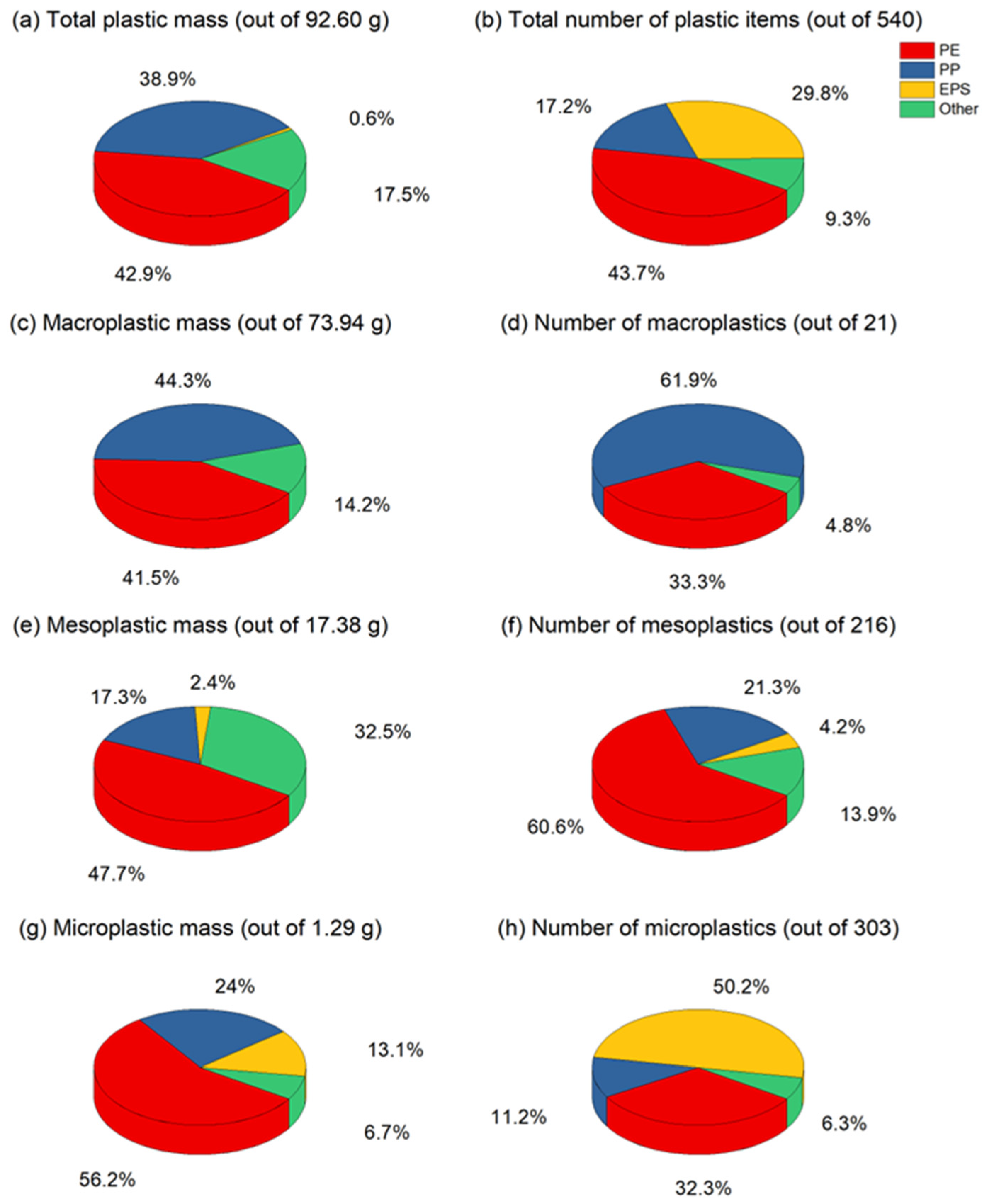
Figure 6 displays the composition of plastic litter collected, according to the material composition after FTIR identification. The polymers collected were mainly composed of PE, PP, and EPS. Other polymers, such as polylactic acid (PLA), PU, polyethylene terephthalate (PET), and cellulose acetate, were also retrieved in lower quantities. As can be seen in Figure 6a, PE and PP constituted together approximately 80% of the total mass, with 42.9% of PE and 38.9% of PP. PS (mainly EPS), constituted only 0.6% of the total mass. PE was found consistently in high concentrations (over 40 wt%) in all dimensional categories (macro-, meso- and micro, in Figure 6c and Figure 6e, and Figure 6g, respectively); PP was found in high concentrations mainly in the macro-category (in terms of mass). PS consistently composed a small fraction of the mass because of the low density of the EPS and because non-expanded PS tends to sink. Nevertheless, the fraction of EPS increased for lower dimensional ranges, from 0 wt% in macro- to 13.1 wt% in micro-. The relevant fraction of “other” polymeric materials within the mesoplastics (Figure 6e) was mostly composed of cellulose acetate cigarette filters. It should also be noted that macroplastics had a smaller sample size in comparison to microplastics (21 macroplastics vs. 303 microplastics collected).
The total mass was composed, in terms of number of objects (see Figure 6b), of a majority of PE (43.7%), a high fraction of mesoplastic objects collected were PE (60.6%, Figure 6f). EPS constituted 29.8% of the items collected in total, mainly microplastics: 50.2% of the MP objects retrieved in this study (Figure 6h) were fragments of EPS, often single spheroidal particles. The number of PP items collected was smaller (17.2% of the total), and they were the majority of the macroplastic category (61.9% of macroplastics by count, as displayed in Figure 6d). Only 9.3% of the 540 items collected (50 items in all categories) were categorized as “other”.
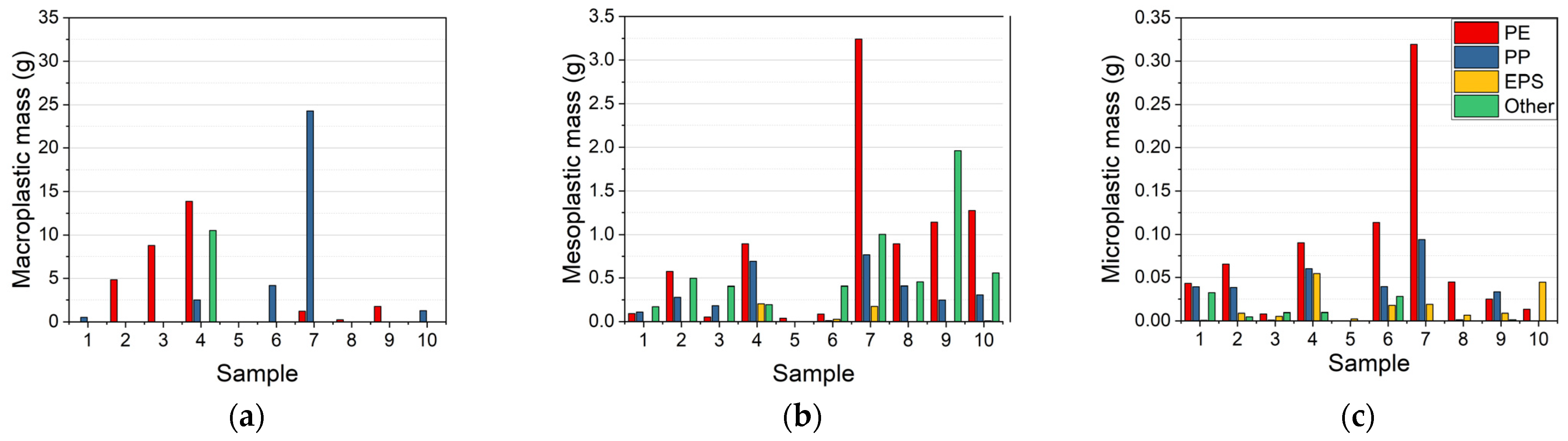
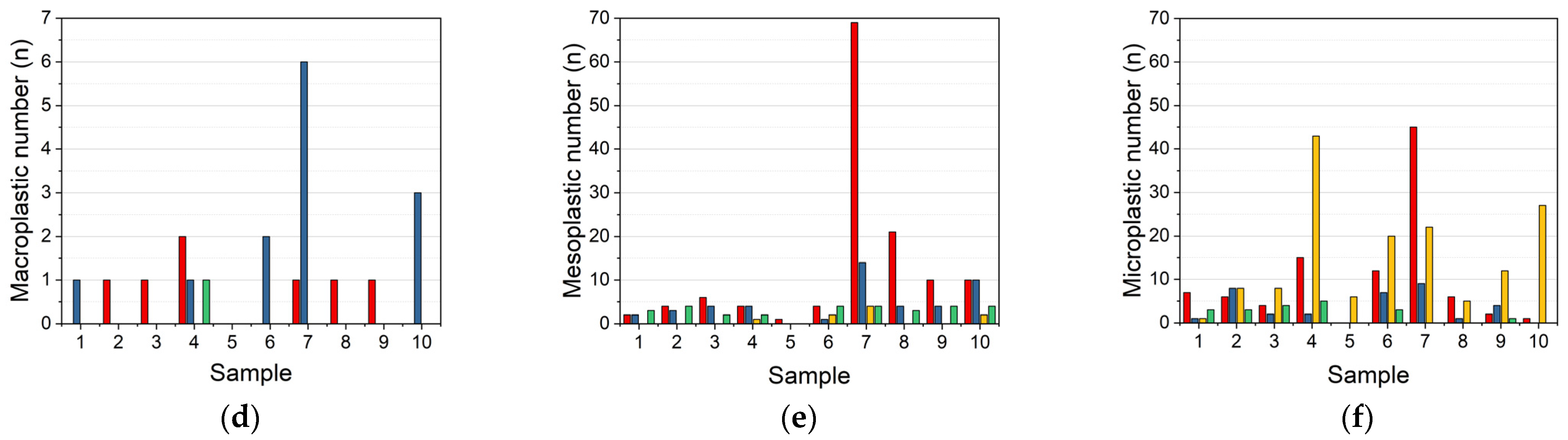
Data regarding mass and number of macro-, meso-, and microplastics in the ten samples are reported in Figure 7; similar trends with respect to the ones reported in Figure 4 can be observed.
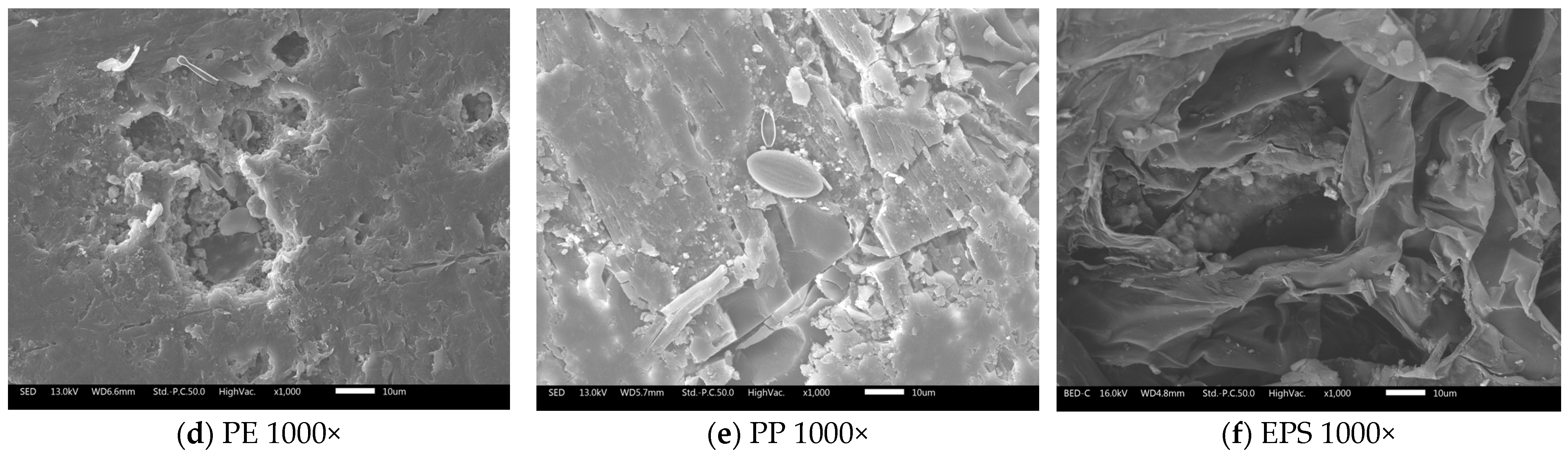
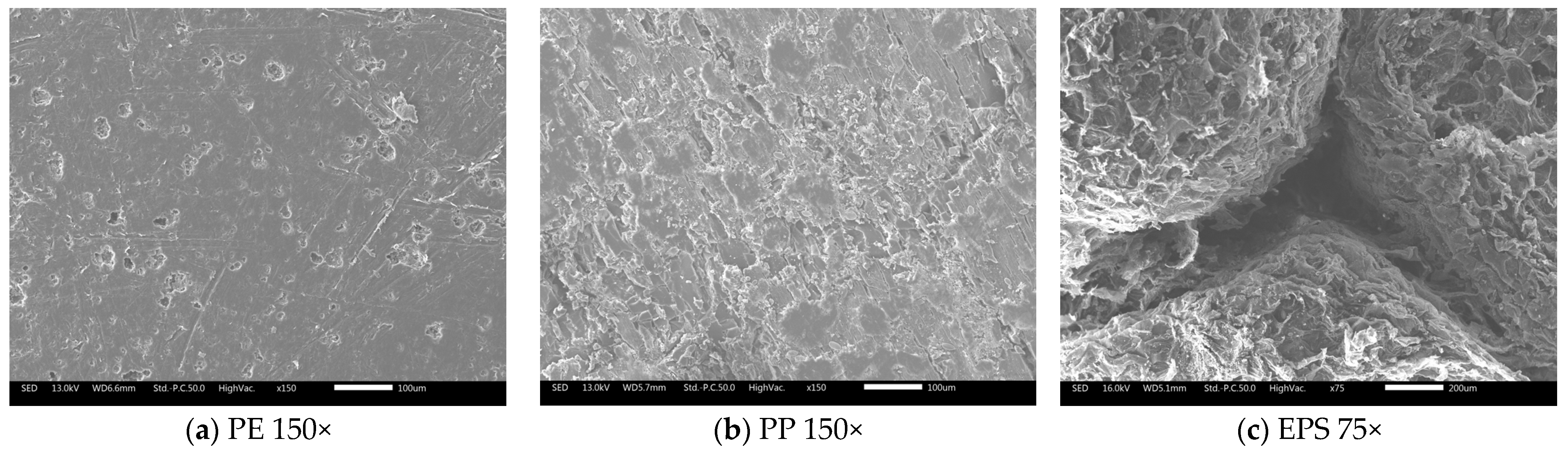
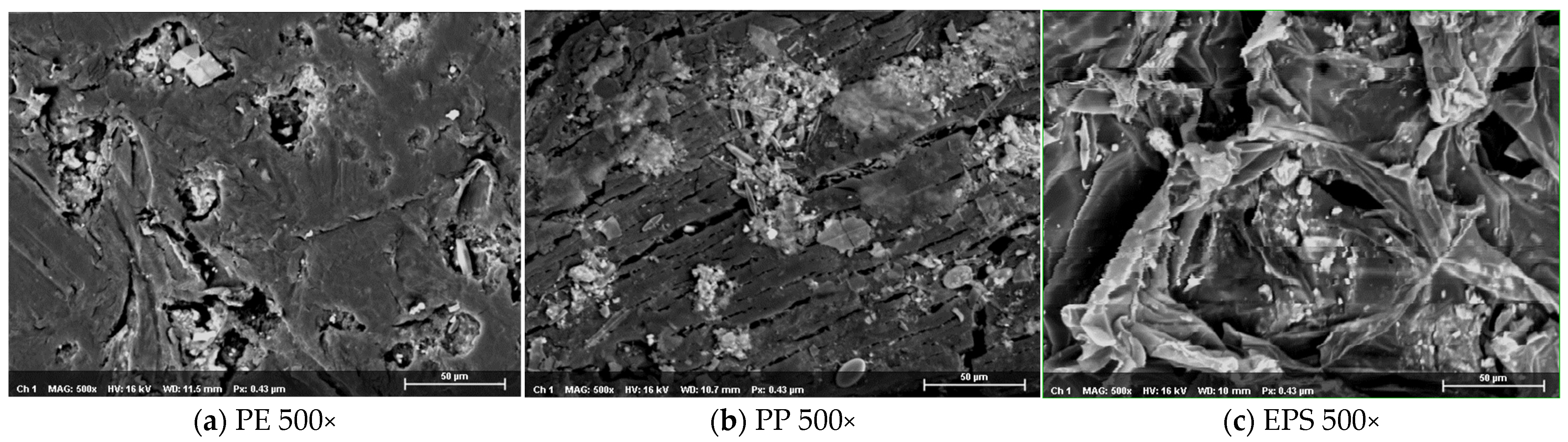
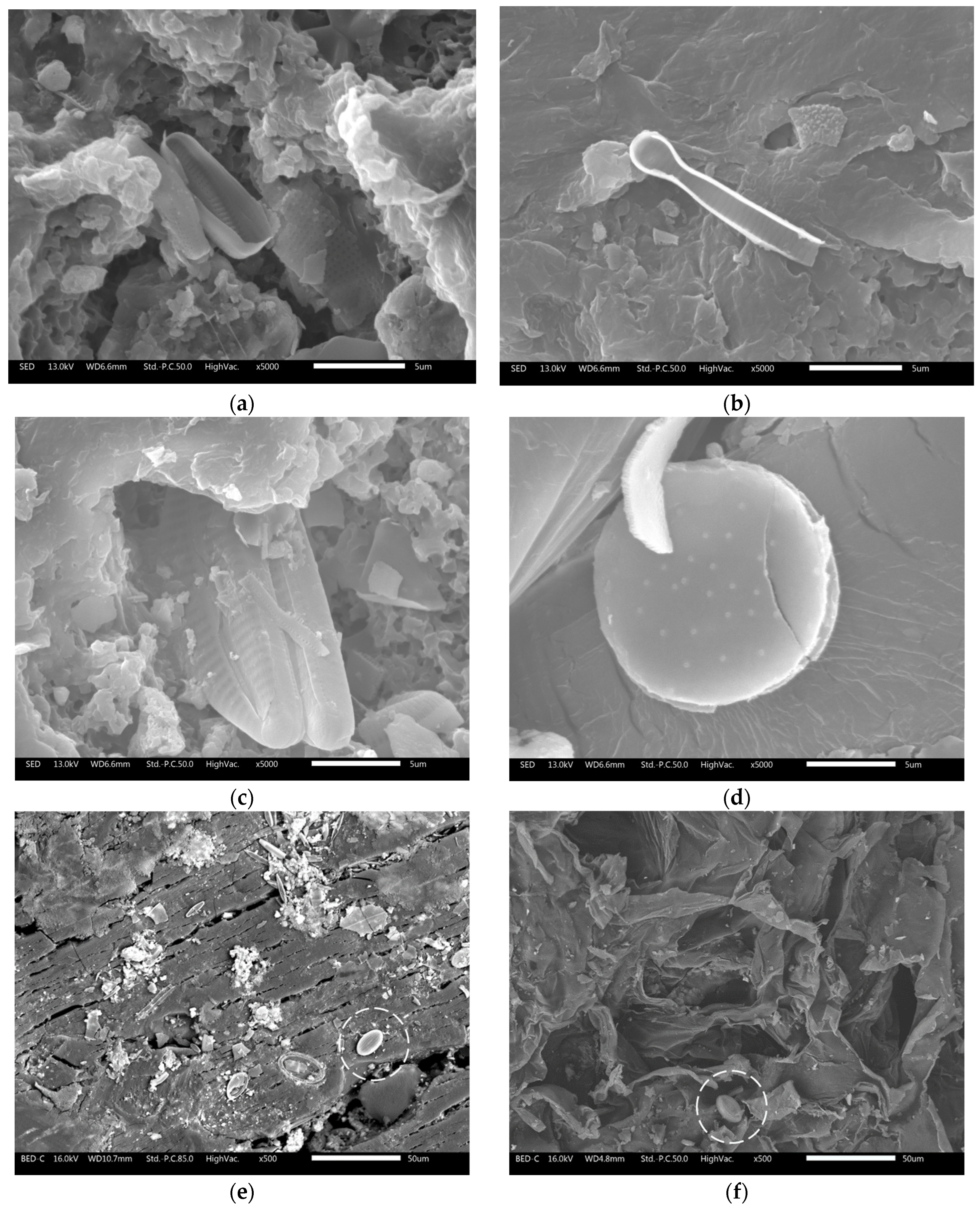
Morphology of selected representative MPs is detailed in Figure 8. Either PE (Figure 8a,d) and PP (Figure 8b,e) samples showed holes, fracture zones, and parallel cracks, as direct results of the production process, in which the polymer chains were oriented in the direction of extrusion or injection molding. Both PE and PP are semicrystalline polyolefin and appeared to show a progressive skin fragmentation in a multilayers structure with preferential lines for the crack propagation. Along these directions, precursors of microplastic fragments of about 2–10 microns are evident (Figure 8d,e). Further results related to the chemical ageing of polymers will be described in detail in the following EDX analyses. The higher magnification pictures (1000×) also reveal the presence of microorganisms with elliptical shape (main axes of about 20 × 10 micron) and tubular aspect (diameter of 2–3 micron), which are identified as Diatoms Bacillariophyceae, in agreement with previous findings [29]. These microorganisms appeared to preferentially colonize the fracture and hole zone with larger surface area, and they seem to be related to the plastic fragmentation.
In the case of EPS, that is an amorphous glassy polymer, not only does mechanical separation occur at the junction surfaces of the individual expanded microspheres (Figure 8c evidences the point of partial detachment of three of them), but also tearing of the individual thin cell membrane (thickness of approximately 1–2 microns), as shown in Figure 8f. These findings highlighted the two mechanisms of EPS fragmentation: (i) formation of single or aggregated particles that are spheroidal microplastics with diameter of 1–6 mm; and (ii) collapse of the expanded microbeads, and parallel erosion and break of the external spheroidal surface.
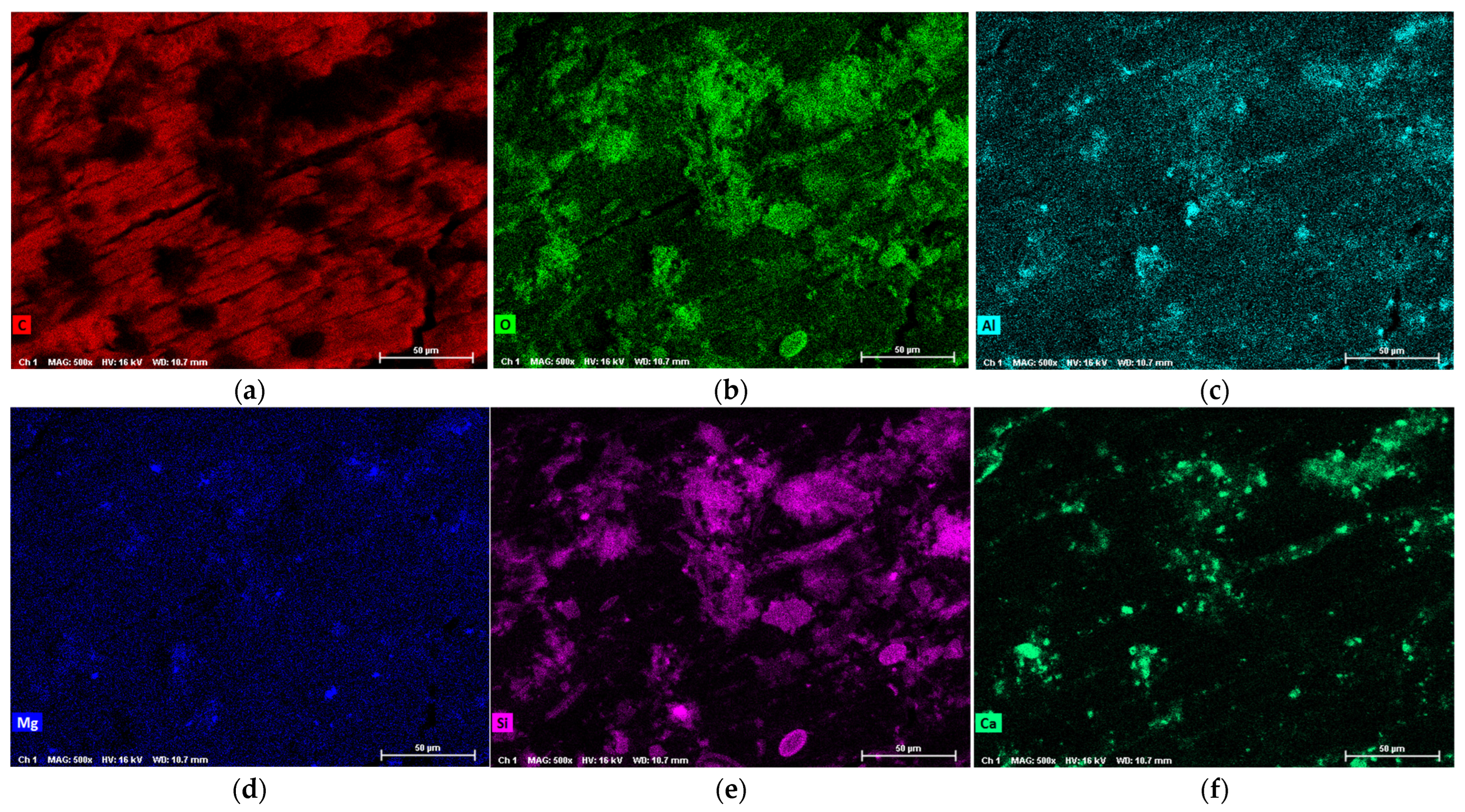
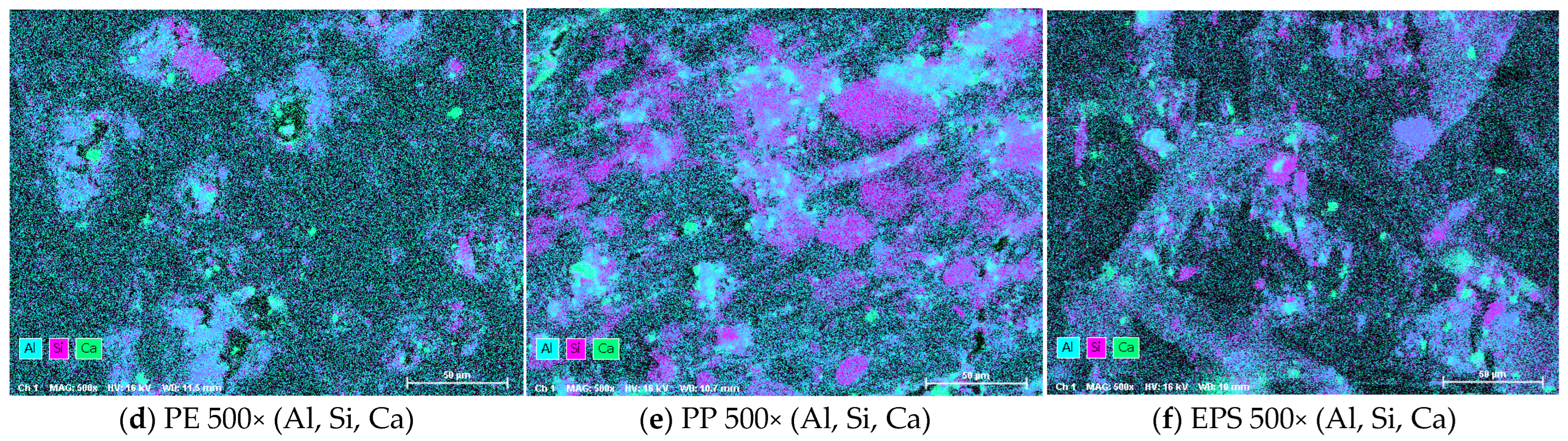
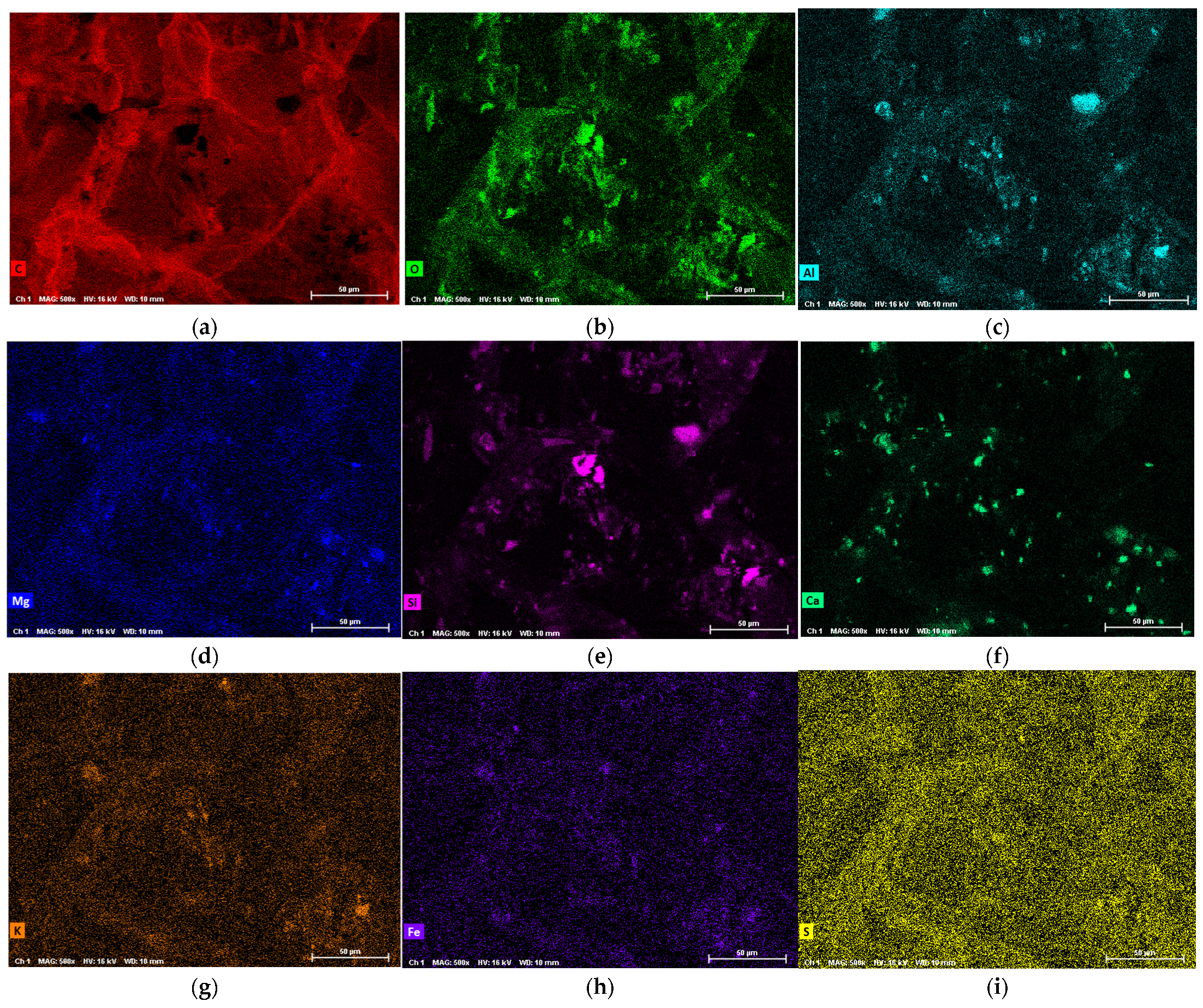
In order to better understand the ageing of microplastics and the origin of the various observed microfragments, EDX analysis was performed. The elements in order of abundance are reported in Table 3: mainly C, O, Si, and then Ca, Al, Fe, with traces of Mg, K, S, Na, Cu and Cl.
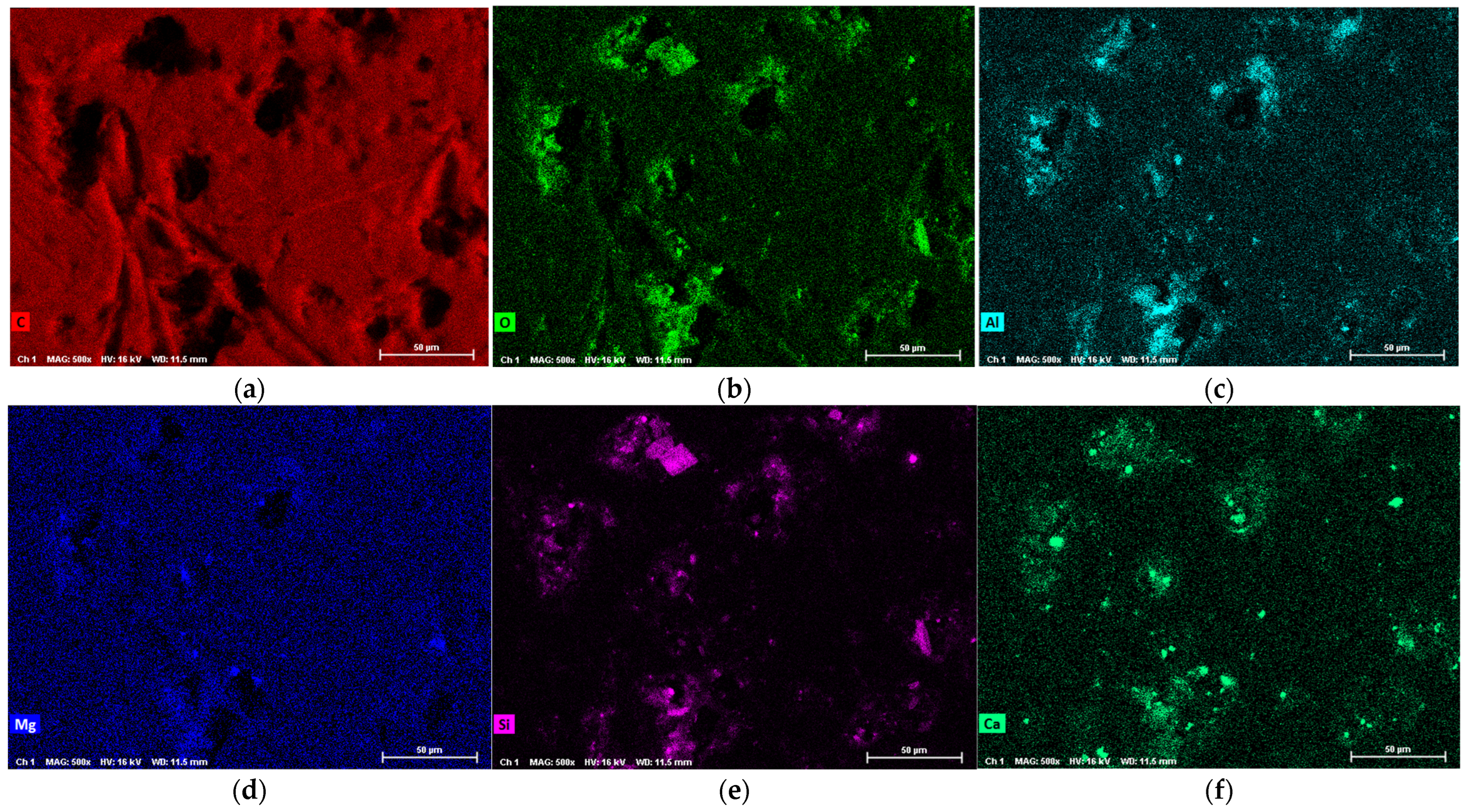
Figure 9 shows the micrographs and elemental map of Al, Si and Ca.
Data regarding the average mass and the average equivalent diameter of microplastics in the ten samples are reported in Table 4 and Table 5, respectively.
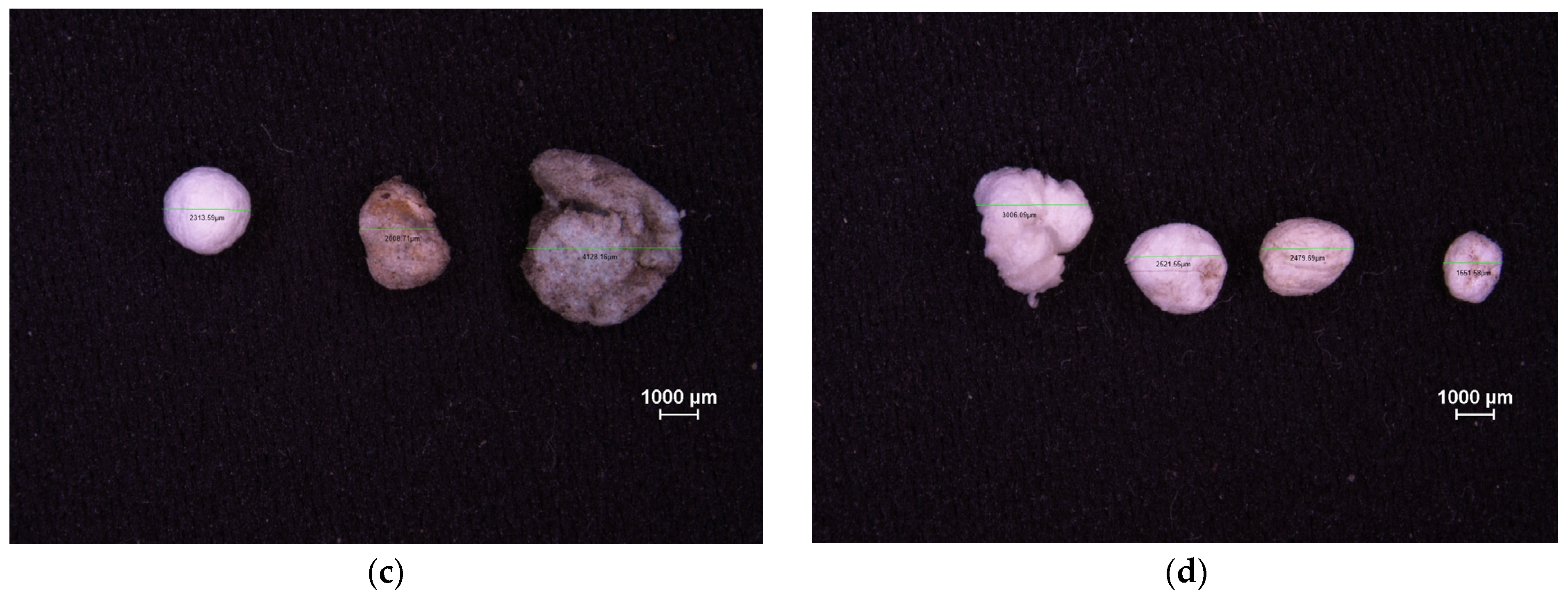
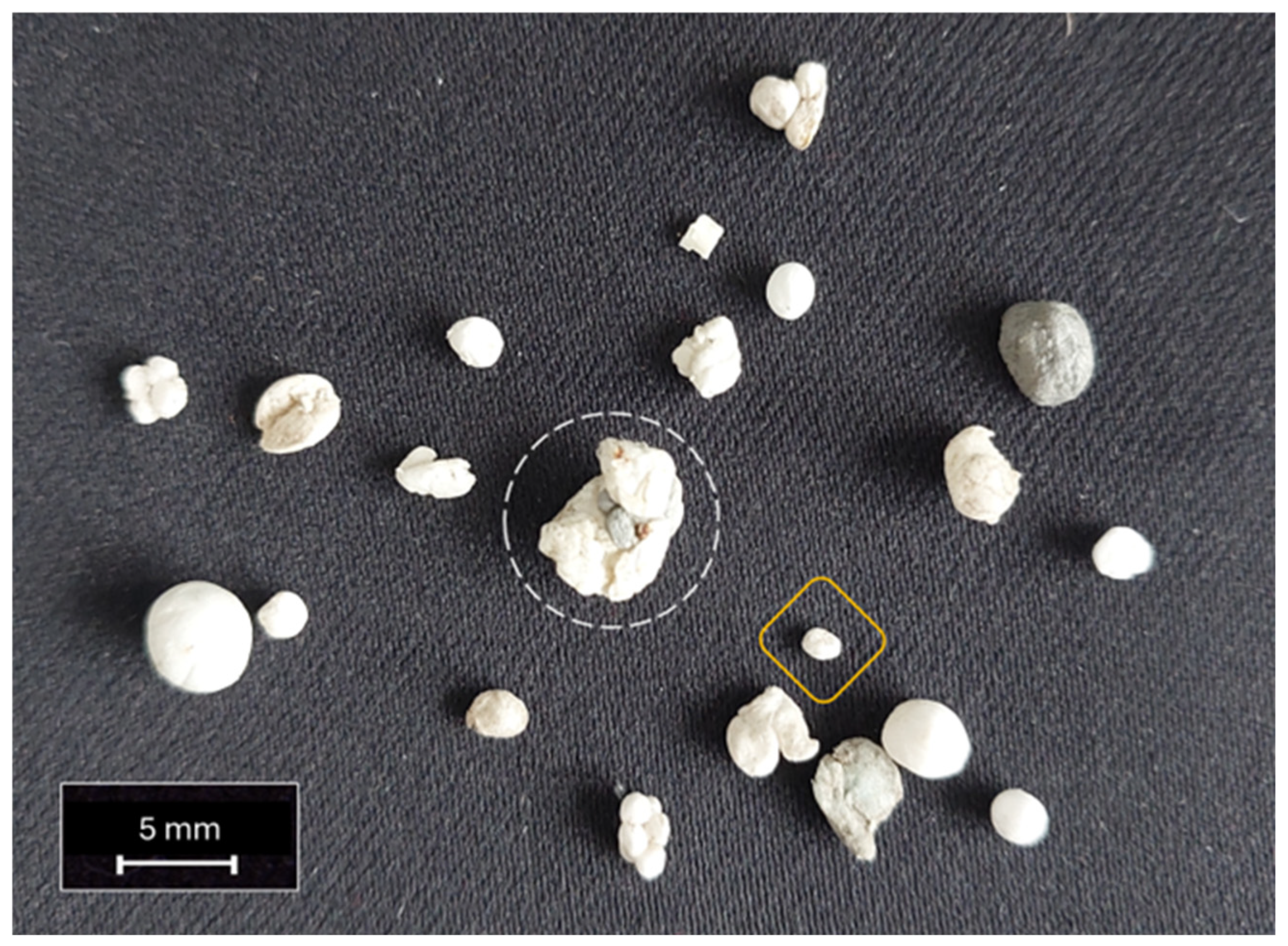
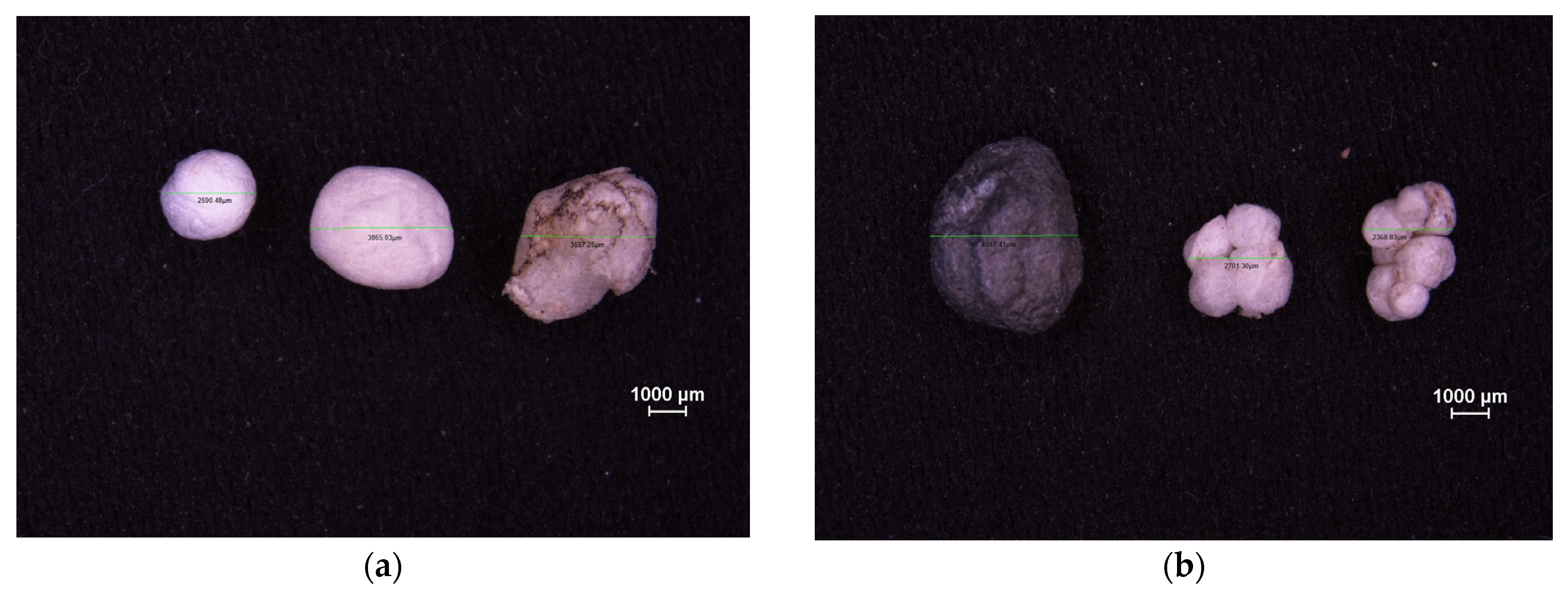
The size of a selected MP sample (W6) was also evaluated by direct OM observation (see details in Appendix A). The analyzed EPS microplastics are shown in Figure 10; their average diameter is 3.3 ± 1.1 mm, lower than average equivalent diameter of 3.8 mm reported in Table 5.
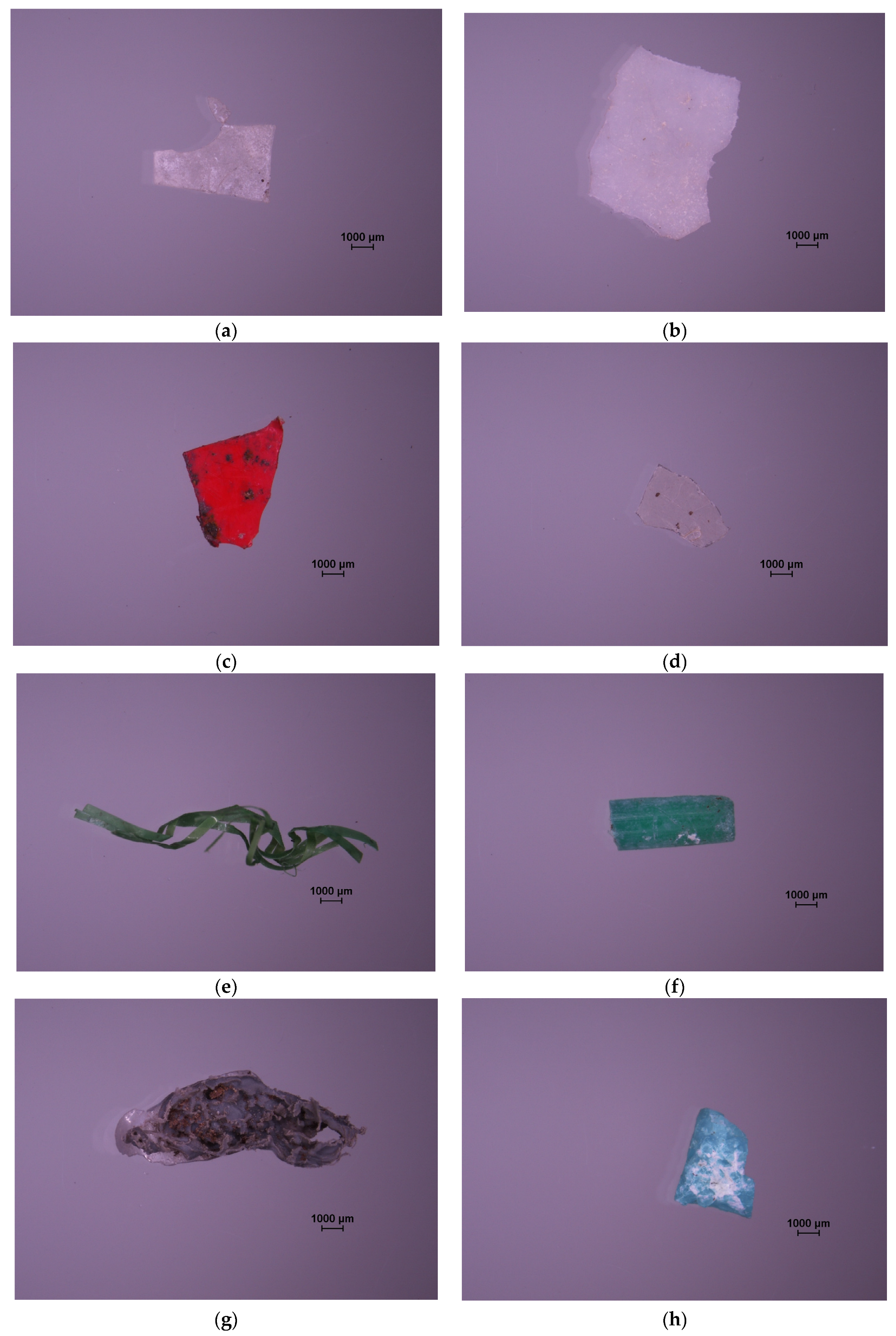
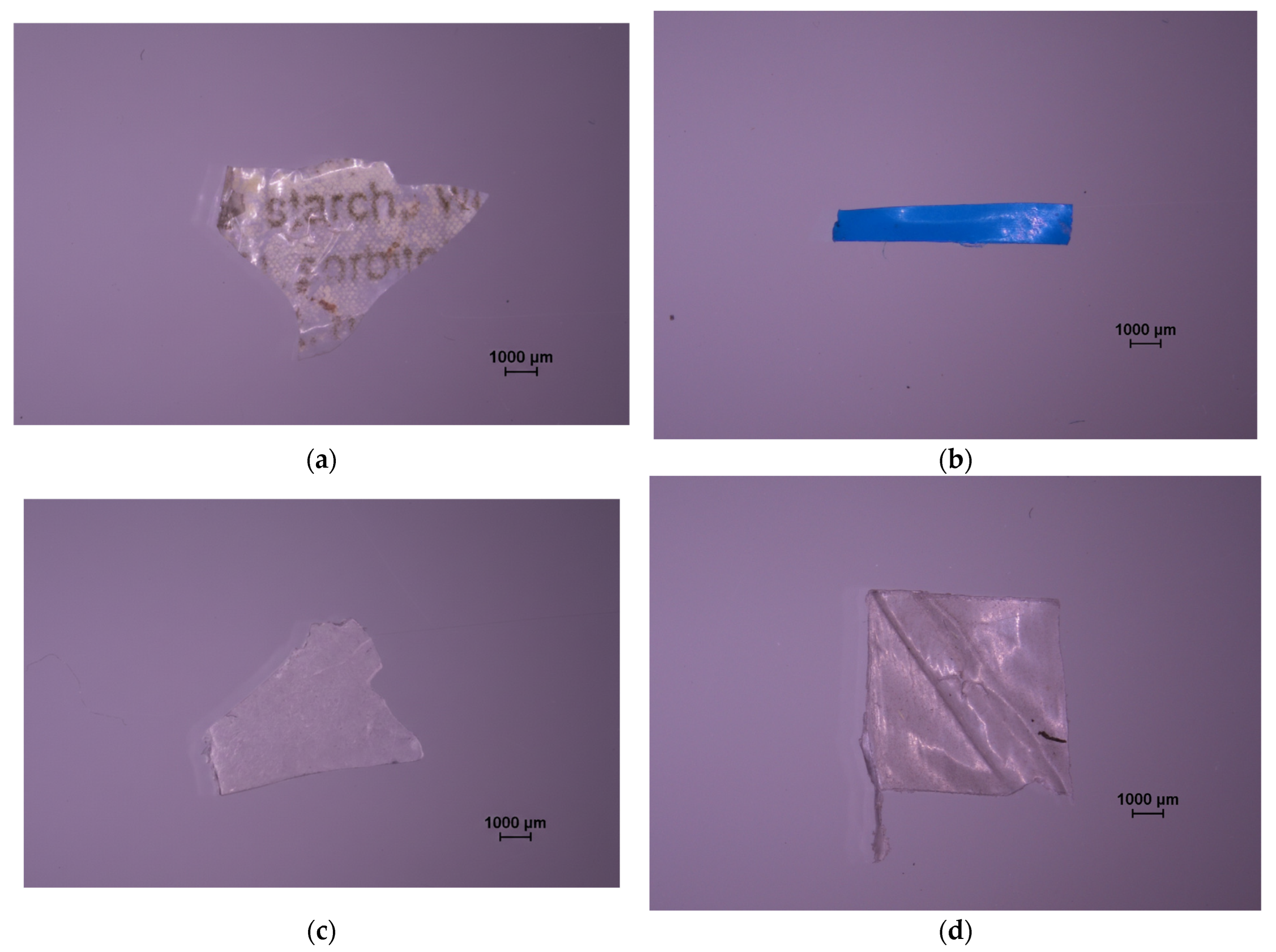
Similarly for PE and PP specimens, the average size was calculated from the measured length (L), width (W) and thickness (T) from the equation: s i z e = L ¯ × W ¯ × T ¯ 3 . The resulting size of 2.3 ± 0.7 mm and 1.8 + 0.5 mm, were lower than the average equivalent diameter of 2.7 mm and 2.4 reported in Table 5.

4. Discussion

4.1. Invasive Alien Species Presence

Regarding biological samples, various taxa, including animal and plant material, as well as different types of plastics and anthropogenic debris, are recorded in the Seabin device. Although the specific mechanisms by which these organisms become entrapped are still under investigation, it is crucial to consider the potential ecological impacts on local biota when employing Seabins for water purification purposes [47].
Although the Seabin is not a quantitative sampling tool for assessing biodiversity in Lake Garda, the taxa collected with this method corroborate the evidence on the expansion of alien species reported in other studies. The data obtained, though partial and qualitative, support the findings of previous research identifying Lake Garda as a hotspot for alien species [42]. Records of freshwater invasive species emphasize the vulnerability of Lake Garda to biological invasions, particularly by invertebrate and macrophyte taxa [41].
Furthermore, among the terrestrial taxa found in the Seabin, Thaumetopea pityocampa (pine processionary caterpillar) represents a serious threat not only to pine (Pinus spp.) and other conifer species, but also to human and animal health.

4.2. Plastic and Microplastic Pollution

From direct comparison with the data reported in our previous survey [29], obtained in Summer and Autumn 2024, it is possible to notice that the concentration of plastic retrieved seems decreased in Winter, both in terms of mass and of number of objects. The values of mass per unit volume decrease from 0.0325 g/m3 in Summer to 0.0176 g/m3 in Autumn, and to the 0.0069 g/m3 here reported for the Winter season. The total plastic object concentration decreases from 0.1097 items/m3 in Summer to 0.0488 items/m3 in Autumn, and to 0.0420 items/m3 in Winter. All these values referred to water cubic meter are under-extimated, because the real value of filtered water 25 m3/h is the maximum value declared for ideal conditions. A tentative correction factor could be 2, as preliminary evaluated from the experimental filtered water 12.5 m3/h, but this point could object of future research. However, independently on the absolute value of concentrations, the trend of data evidenced a decrease of about 45–55% and 62–80%, from Summer to Autumn and Winter, respectively.
As expected, the total mass of collected macroplastics (79.8%) is higher than that of mesoplastics (18.8%) and microplastics (1.4%), as documented in Figure 6. Conversely, the number of retrieved pieces is increasing from macroplastics (3.9%) to mesoplastics (40.0%) and microplastics (56.1%), with an almost inverse proportionality to the weighted average mass of single item, which is decreasing from 3.5 g to 107 mg and 4.2 mg (see Tables in Appendix A). The progressive comparison of these values, combined with subsequent ones, can provide useful indications for monitoring the level of plastic fragmentation.
Moreover, every day, approximately 0.91 macroplastics (weighted average mass of 3.7 ± 4.2 g per day) and 9.4 pieces of mesoplastic (weighted average mass of 769 ± 740 mg per day) were collected by Seabin activity, as detailed in Table A5, Table A6, Table A7 and Table A8. The daily collection of microplastics (Table A9 and Table A10) ranged between 2 and 38 MP/day (weighted average mass of 55 ± 58 mg per day), with an average value of 13.2 MP/day, and weighted average mass of a single MP of 4.2 ± 1.7 mg. The average mass for PE and PP microplastics was 7.4 mg and 9.2 mg (calculated on 98 and 34 MP, respectively), while that of EPS was 1.1 mg (average of 152 MP) as reported in Table 3.
These values, regarding the Winter period, are slightly lower than previously reported values for Autumn (15 MP/day) and significantly lower than those related to Summer (45 MP/day) [29]. Microplastic retrieval seems to decrease with respect to the previous baseline study, both in terms of mass and of number of items, suggesting a direct dependance on the lower anthropic pressure during Winter season. This, however, could be also related to a more rigid approach established in the present study for the dimensional separation of plastics with respect to the previous one. This difference makes the data regarding microplastic not completely comparable among the two studies. The total vegetation collected in the present survey is, conversely, higher than those reported during Summer and Autumn monitoring [29].
A recent study by Salikova et al. [48] found an average concentration of microplastics in three lakes in Kazakhstan of 210 particles/m3, which is much larger than the values reported in the present study. The predominant PM of [48] consisted of fibers measuring 100–500 microns, followed by residual fragments and films measuring 100–250 microns, while approximately 40% of the separated particles exceeded 500 microns. It should be noted that the methodology used in the two studies differ significantly. A notable difference is that the mesh size of the filter used in [48] was 100 μm, which is much smaller than the 2 mm mesh size of the net of the Seabin. A further and more representative comparison can be made with the data reported by Paris et al., who used a Seabin (2 mm mesh size; flow rate of 25 m3/h) to assess plastic pollution and other debris in a marine environment, a bay in the Fiji Islands [49]. They observed a concentration of 0.091 g/m3 of plastic (0.07 plastic items/m3), which is higher than that observed in the present study, suggesting less pollution in freshwater of north Lake Garda with respect to the marine waters of Laucala Bay.
No strong correlations between data on plastic retrieval and data on the weather can be observed. Other authors have tried to compare the weather phenomena with the concentration of plastic waste in the sea [50] and in the atmosphere [13]; however, strong correlation seems absent, at least in these works.
Data regarding the composition of the plastic litter in terms of type of products are consistent with previous findings [29]. Ropes, nets and filaments are expected to be found in higher concentrations in sediment and lakebed samples because ropes and nets for naval equipment are often made of polyamides (PAs), which should usually sink because of their higher density [32]. However, some floating fragments of PP and high density PE (HDPE) ropes of halyards and sheets are retrieved; their probable source is from the activities surrounding the frequent national and international sailing competitions in the area (https://www.fragliavelariva.it/en/regattas/ (accessed on 9 July 2025)) or from other sailing activities in the lake. The large amount of packaging is in accordance with global data on plastic use [7,51]; single-use plastics for consumers seem well-represented in the present study (i.e., bottles, cups, cigarette filters…). Other sectors, such as polymers used in building and construction, transportation, and electricals and electronics, seem underrepresented. This is likely because products used in these sectors have an expected lifetime that is longer than single-use plastics [7]. In general, the composition of floating plastic waste is expected to differ from the statistics on plastic production because of the following: (i) the lifetimes of plastic products differ, and (ii) the density of polymers makes them accumulate in different areas of water environments because some float (mainly PE, PP, EPS, and closed PET bottles), while others sink (PET in general, non-expanded PS, PAs, polyvinyl chloride (PVC)…) [32]. More packaging and fewer bottles and ropes/wires are observed in the present study in terms of mass, while less packaging and more foamed products are here observed in terms of number of objects. These differences do not seem linked to seasonality, and no trend seems to be present. One single wine cork found in Sample 1 (3 January 2025) seems linked to recreational seasonal activities. Another underrepresented class of products is single-use plastic cutlery, which is not observed in any of the samples obtained during this season. This could be due to the recent EU regulations on single-use plastic [52] and the switch of their production from commodity polymers to biodegradable alternatives (e.g., PLA). These products are likely to be found in the lakebed as they are not expected to degrade rapidly in natural environments but have higher densities [53,54].
The observation that the main constituent, in terms of numerical count, of each category is different (the majority of macroplastics are PP, the majority of mesoplastics are PE and the majority of microplastics are EPS) seems to suggest an increased susceptibility to wear in this freshwater environment by EPS and PE. However, it should be noted that the presented analysis stops at a relatively large dimensional range (approximately 1 mm); therefore, it is not taking into account the formation of small microplastics and nanoplastics. EPS, for example, is routinely observed in high numbers in the micro-range, but the spheres that constitute it are very easy to physically separate among them, producing large amounts of relatively large microplastics (1–2 mm of diameter, as displayed in Figure A2c and Figure A5 in Appendix A). It is proposed that this phenomenon is greatly favored in natural environments with respect to the breakdown of continuous plastic objects (e.g., usual PE and PP products, synthetic fibers…). Consequently, an in-depth study of the ageing mechanisms of PE, PP, EPS, and other common polymers could refine this analysis. The relatively small fraction of “other” material confirms that the selected categories are probably adequate for the purpose of this study.
Complementarily, the equivalent average diameter of 3.2 ± 0.9 mm (Table 4, Equation (5)) appeared acceptable and was calculated on a simplified assumption of a spheroidal shape, the MP weight and the polymer density. However, comparative size values of EPS microparticles obtained by the direct measurement of dimensions were lower than those of the equivalent diameter. Similar smaller dimensions were also found for the PE and PP samples. These discrepancies can be interpreted by the presence of inorganic material on the surfaces of the MP, as highlighted by the EDX analyses. In the cross-mapping of C, O, Si, Al, Ca, and S, the presence of silica, silicoaluminates, and sulfates is hypothesized. In addition, diatom shells consisting of a rigid silica membrane are easily identifiable (see Figure 8e, Figure 9e, Figure A9e,f and Figure A11b,h). The presence of diatoms on microplastics is an important potential parameter for the assessment of aquatic ecosystems [55].
The oxygen content could also be attributed to the partial oxidation of polymers: in particular, PP (Figure A11a,b) and PS (Figure A12a,b) show a consistent C/O overlap and a higher oxygen content (Table 3). This is also justified by the fact that PP and PS are more susceptible to oxidation reactions than PE, since the single C-H (in a geminate position with the methyl and phenyl groups, respectively) is more active than the -CH2- in PE.
The relative amount of identified polymeric materials is comparable to the previous study by the authors. The numerical count of all the collected items is particularly similar (38.0%, 31.0%, 20.1%, and 10.9% of PE, PP, PS, and other, respectively, in [29]). This confirms the quality of data reported in the previous study and the reliability of the methodology. Macro-, meso- and microplastic percentages are not directly comparable to previous data.
These findings highlight the alarming conditions of Lake Garda as a hotspot for both plastic pollution and alien species invasion, and the likely detrimental consequences to life in the lake. Moreover, floating plastic from the lake can reach the Adriatic Sea through rivers, therefore contributing to the issue of marine plastic pollution that is seriously threatening animal and human health on a global scale. Floating plastic waste retrieval can prove beneficial as a countermeasure, but correct communication on the issue can also be useful to reduce this problem. With this ongoing research and activity (see https://diinews.unitn.it/en/microplastics-a-macro-problem/ (accessed on 30 December 2025)), and with the aid of the Seabin, it is possible to act on the issues on multiple levels, contributing to the understanding of underlying mechanisms, to scientific communication, to divulgation, while reducing plastic pollution in the lake.

5. Conclusions

A study on the amount and type of floating waste in Lake Garda, Italy, during the Winter season of 2024–2025 was presented. Focus was given to plastic pollution and alien species presence in the northernmost part of the lake in the season of the lowest tourist pressure. A Seabin V5 was used for buoyant waste collection from the surface water. This device is easy to use and has low working cost; it collects floating plastic, plant and animal organisms. A total of 10 samples were collected, for a total working time of the Seabin of 23 days. In total, 98.9% of the total mass collected was constituted by vegetal residues. The rest was mainly constituted by plastic (540 items, 92.61 g), corresponding to 0.0420 ± 0.0389 pieces of plastic per cubic meter of water or 0.0069 ± 0.0081 g of plastic per cubic meter of water on average.
A qualitative evaluation of animals and plants collected by the Seabin confirmed the presence of at least three already reported alien taxa, namely Lagarosiphon major, Ceratophyllum demersum, Dikerogammarus villosus, thus further confirming the susceptibility of Lake Garda to alien species invasion. Alien taxa Dreissena polymorpha and Dreissena bugensis were also observed, though only one individual each. The majority of the plastic mass was constituted by packaging, bottles, bottle caps, cups, foams, and cigarette filters. FTIR identification of the plastic showed that the majority of the mass was constituted by PE (42.9 wt%), PP (38.9 wt%), and PS (0.6 wt%). Conversely, the composition of the debris in terms of numerical count was: PE 43.7%, EPS 29.8%, PP 17.2%. Other polymeric materials, such as PLA, PET, PU, and cellulose acetate, were collected in smaller quantities. The numerical count of the identified plastic items showed that macroplastics were mainly constituted by PP, mesoplastics by PE and microplastics by EPS; the average number of microplastic collected per day was 13. Dimensions of EPS microplastics ranged from 1.7 to 4.1 mm, whereas the average size of PE and PP were evaluated in the range 1.6–2.4 mm and 1.0–2.6 mm, respectively.
The presence of microorganisms (freshwater diatoms Bacillariophyceae) and inorganic deposits (mainly based on Si, O, Al, and Ca and other minor elements), together with structural–morphological and chemical variation, was found as a potential indicator of the degree of aging of microplastics.
The plastic collection rates were also compared to data on the wind speed and precipitations; however, no strong correlation seemed present.
These observations are in accordance with previous studies by the authors and suggest that most of the plastic waste floating on the lake is composed of commodity polymers and single-use plastics. This is likely due to three reasons: (i) they tend to have very short life cycles, (ii) they are the most produced ones, and (iii) they have densities lower than that of water and therefore tend to float. However, precise quantification of waste composition is of great relevance, both for policymaking and for subsequent studies on effects on the environment, and ultimately on human health.
The Seabin was shown to provide reliable data on plastic pollution and alien species presence, simultaneously. It has also proven useful as divulgation tool, especially for schools and children. The methodology presented here as a proof-of-concept could be used to broaden our understanding and, where appropriate, to assess possible correlations between alien species invasions and the transport of plastic and microplastic in freshwater and seawater. The multi-disciplinary approach employed could be used also in other similar studies or activities in other freshwater and seawater settings and the data discussed can be used to continue monitoring the health of the northern lake water, possibly enlarging the geographical perspective to more than one location, and for comparisons with other environments. In particular, these results obtained in Winter, a season with a very low touristic pressure, can be considered as the minimum reference values for other Seasons with higher anthropic pressure. The specific findings relate to the northernmost side of Lake Garda.
Another promising development would be to find efficient ways to reuse the material collected via Seabin, especially the plastic. This could provide an interesting adaptation strategy to the global pollution crisis, via material or energy recovery from harmful waste. Ultimately, the methodology shows its strengths especially when used with the triple purpose of monitoring, divulgation, and cleaning. These studies should therefore raise awareness of the threats on ecosystems that should not be taken for granted and that are rapidly changing.

Author Contributions

Conceptualization, M.P., A.F. and L.F.; methodology, L.F.; plastics separation, J.K.R.P.; validation, L.F.; formal analysis, M.P., A.F. and L.F.; investigation, M.P., A.F., J.K.R.P. and L.F.; resources, P.M. and L.F.; data curation, M.P., A.F., J.K.R.P. and L.F.; writing—original draft preparation, M.P. and A.F.; writing—review and editing, M.P., A.F. and L.F.; visualization, M.P. and J.K.R.P.; supervision, P.M. and L.F.; project administration, L.F.; funding acquisition, L.F. All authors have read and agreed to the published version of the manuscript.

Funding

This research was partially funded by the European Union under NextGenerationEU. PRIN 2022: PLASTACTS-Assessment of nano/microplastics impacts, Missione 4 Componente 2—Prot. n. 202293AX2L, CUP E53D23008370006.

Institutional Review Board Statement

Not applicable.

Informed Consent Statement

Not applicable.

Data Availability Statement

The original contributions presented in this study are included in the article. Further inquiries can be directed to the corresponding authors.

Acknowledgments

The authors would like to thank Claudia Gavazza and Alfredo Casagranda for their valuable technical contribution. The authors would like to thank Vanna Benini (Gruppo Sommozzatori Riva del Garda, https://www.grupposommozzatoririva.it/it (accessed on 30 December 2025)) for identifying the aquatic plant taxa. The authors would also like to thank Coop Italia and the LifeGate PlasticLess project for the positioning of the Seabin in the Fraglia della Vela Riva del Garda (Italy). Finally, the authors would like to gratefully thank Riva del Garda Fierecongressi and ITAS Mutua for providing the Perkin Elmer Spectrum Two™ spectrometer.

Conflicts of Interest

The authors declare no conflicts of interest. The funders had no role in the design of the study; in the collection, analyses, or interpretation of data; in the writing of the manuscript; or in the decision to publish the results.

Abbreviations

The following abbreviations are used in this manuscript:
ATRAttenuated Total Reflectance
EDXEnergy Dispersive X-ray analysis
EPSExpanded Polystyrene
FTIRFourier Transform InfraRed
HDPEHigh density polyethylene
MPMicroplastic
PAPolyamide
PEPolyethylene
PETPolyethylene Terephthalate
PLAPolylactic Acid
PPPolypropylene
PSPolystyrene
PUPolyurethane
PVCPolyvinyl Chloride
R.H.Relative Humidity
SEMScanning Electron Microscopy

Appendix A

Table A1. Sample nomenclature, with corresponding Seabin working time, total masses of collected waste, and ratio between vegetation mass and the total wet mass.
SampleSeabin
Working Time (day)
Separation
Working Time (min)
Total
Plastic Mass (g)
Total
Vegetation Mass
(g)
Vegetation Mass/
Total Wet Mass
(%)
W13521.02381.0347.9
W222316.322504.4369.5
W321119.46319.0718.6
W4311429.06790.9446.0
W53180.0495.6034.8
W621224.901061.6156.6
W7229431.102611.1158.4
W82912.07356.0426.1
W921645.17957.5437.3
W102543.47253.6432.7
Total23125192.619331.0142.8 ± 15.8 *
* average percentage.
Table A2. Macro, meso, and microplastic number of collected items and relative mass for each sample.
SampleMacroplastic Number Count (n)Mesoplastic Number Count (n)Microplastic Number Count (n)Macroplastic Mass (g)Mesoplastic Mass (g)Microplastic Mass (mg)
W117120.53240.3754116.0
W2111254.84331.3537118.1
W3112188.78920.642423.7
W44116526.86191.9861214.9
W501600.03972.4
W6211424.16300.5333199.4
W77917625.47465.1887432.1
W8128120.25641.758852.7
W9118191.75593.349568.9
W10326281.26352.149157.7
Total2121630373.940217.37671285.9
Average by day
(value/day)
1 ± 1
(n/day)
10.5 ± 13.1
(n/day)
13.7 ± 10.7
(n/day)
3.240 ± 4.322
(g/day)
0.829 ± 0.794
(g/day)
58.7 ± 62.4
(mg/day)
Table A3. Number of collected plastic items after product category recognition.
SampleCups
Number
(n)
Bottle Caps Number (n)Bottles Number (n)Ropes/Wires/
Threads Number (n)
Packaging Number (n)Cigarette Filters Number (n)Foams Number (n)
W10000301
W202003013
W30000419
W410134150
W50000006
W600003022
W710037126
W80001125
W900002312
W1000016029
Total2218338173
Average by day
(n/day)
0.1 ± 0.20.1 ± 0.30.0 ± 0.10.4 ± 0.51.5 ± 1.10.4 ± 0.57.7 ± 5.7
Table A4. Mass of collected plastic items after product category recognition.
SampleCups Mass
(g)
Bottle Caps Mass
(g)
Bottles Mass
(g)
Ropes/Wires/Threads Mass
(g)
Packaging Mass
(g)
Cigarette Filters Mass (g)Foams Mass
(g)
W100000.142000.0007
W205.0782000.187700.3969
W300008.81030.16810.0054
W42.5045010.50780.00593.08600.15300.3113
W50000000.0852
W600000.046400.0449
W72.1760000.16892.99700.90650.1943
W80000.42550.25640.28920.0067
W900000.00891.73030.0089
W100000.00300.995300.0530
Total4.68055.078210.50780.603313.53003.24711.1073
Average by day
(g/day)
0.192 ± 0.4100.254 ± 0.8030.350 ± 1.108 0.030 ± 0.0690.673 ± 1.3910.160 ± 0.2850.0487 ± 0.0649
Table A5. Number of collected macroplastic items after FTIR identification, divided by material.
SamplePE Number Macro (n)PP Number Macro (n)EPS Number Macro (n)Other Number Macro (n)TOT Number Macro (n)Macroplastic Number/Day (n/day)
W1010010.3
W2100010.5
W3100010.5
W4210141.3
W5000000
W6020021.0
W7160073.5
W8100010.5
W9100010.5
W10030031.5
Total7130121-
Average by day
(n/day)
0.32 ± 0.280.62 ± 0.9800.03 ± 0.110.91 *0.97 ± 1.00 **
* simple average number per day (Equation (2)); ** average number per day.
Table A6. Mass of collected macroplastic items after FTIR identification, divided by material.
SamplePE Mass Macro
(g)
PP Mass Macro
(g)
EPS Mass Macro
(g)
Other Mass Macro (g)TOT Mass Macro (g)Average Mass
(mg/n)
W100.5324000.5324532.4
W24.84330004.84334843.3
W38.78920008.78928789.2
W413.84962.5045010.507826.86196715.5
W5000000
W604.1630004.16302081.5
W71.196424.27820025.47463639.2
W80.25640000.2564256.4
W91.75590001.75591755.9
W1001.2635001.2635421.2
Total30.690832.7416010.507873.94023521 ± 2510 *
Average by day
(g/day)
1.304 ± 1.8451.586 ± 3.76600.350 ± 1.1083.2148 **2449 ± 3827 ***
* weighted average mass per particle in mg/n (Equation (5)); ** simple average mass per day in g/day (Equation (3)); *** weighted average mass per day (mg/day).
Table A7. Number of collected mesoplastic items after FTIR identification, divided by material.
SamplePE Number Meso (n)PP Number Meso (n)EPS Number Meso (n)Other Number Meso (n)TOT Number Meso (n)Mesoplastic Number/Day (n/day)
W1220372.3
W24304115.5
W36402126.0
W44412113.7
W5100010.3
W64124115.5
W76914449145.5
W8214032814.0
W910404189.0
W101010242613.0
Total13146930216-
Average by day
(n/day)
2.94 ± 5.270.14 ± 0.120.28 ± 0.290.83 ± 0.799.4 *10.5 ± 13.1 **
* simple average number per day (Equation (2)); ** average number per day.
Table A8. Mass of collected mesoplastic items after FTIR identification, divided by material.
SamplePE Mass Meso (g)PP Mass Meso (g)EPS Mass Meso (g)Other Mass Meso (g)TOT Mass Meso (g)Average Mass (mg/n)
W10.09270.110600.17210.375453.6
W20.57540.281500.49681.3537123.1
W30.05390.184000.40450.642453.5
W40.89370.69310.20450.19481.9861180.6
W50.03970000.039739.7
W60.08700.01120.02710.4080.533348.5
W73.24200.76800.17541.00335.188757.0
W80.89430.409000.45551.758862.8
W91.13900.248901.96163.3495186.1
W101.27490.30830.00850.55742.149182.7
Total8.29263.01460.41555.65417.376779.6 ± 45.5 *
Average by day
(g/day)
0.398 ± 0.4890.137 ± 0.1170.017 ± 0.0330.277 ± 0.2850.7555 **769 ± 740 ***
* weighted average mass per particle in mg (Equation (5)); ** simple average mass per day in g/day (Equation (3)); *** weighted average mass per day (mg/day).
Table A9. Number of collected microplastic items after FTIR identification, divided by material.
SamplePE Number Micro (n)PP Number Micro (n)EPS Number Micro (n)Other Number Micro (n)TOT Number Micro (n)Microplastic Number/Day (n/day)
W17213134.3
W267832412.0
W34284189.0
W41534356622.0
W5006062.0
W61262034120.5
W74592207638.0
W86150126.0
W924121199.5
W10102702814.0
Total983415219303-
Average by day
(n/day)
4.5 ± 6.71.6 ± 1.46.8 ± 5.10.8 ± 0.813.2 *13.7 ± 10.7 **
* simple average number per day (Equation (2)); ** average number per day.
Table A10. Mass of collected microplastic items after FTIR identification, divided by material.
SamplePE Mass
Micro (g)
PP Mass
Micro (g)
EPS Mass Micro (g)Other Mass Micro (g)TOT Mass Micro (g)Average Mass (mg/n)
W10.04320.03950.00070.03260.11608.9
W20.06570.03880.00880.00480.11814.9
W30.00800.00090.00530.00950.02371.3
W40.09020.06040.05460.00970.21493.3
W5000.002400.00240.4
W60.11360.03980.01780.02820.19944.9
W70.31920.09400.018900.43215.7
W80.04460.00140.006700.05274.4
W90.02500.03360.00890.00140.06893.6
W100.013200.044500.05772.1
Total0.72270.30840.16860.08621.28594.2 ± 1.7 *
Average by day
(g/day)
0.034 ± 0.0470.014 ± 0.0150.007 ± 0.0070.004 ± 0.0050.0559 **56 ± 58 ***
* weighted average mass per particle in mg (Equation (5)); ** simple average mass per day in g (Equation (3)); *** weighted average mass per day (mg/day).
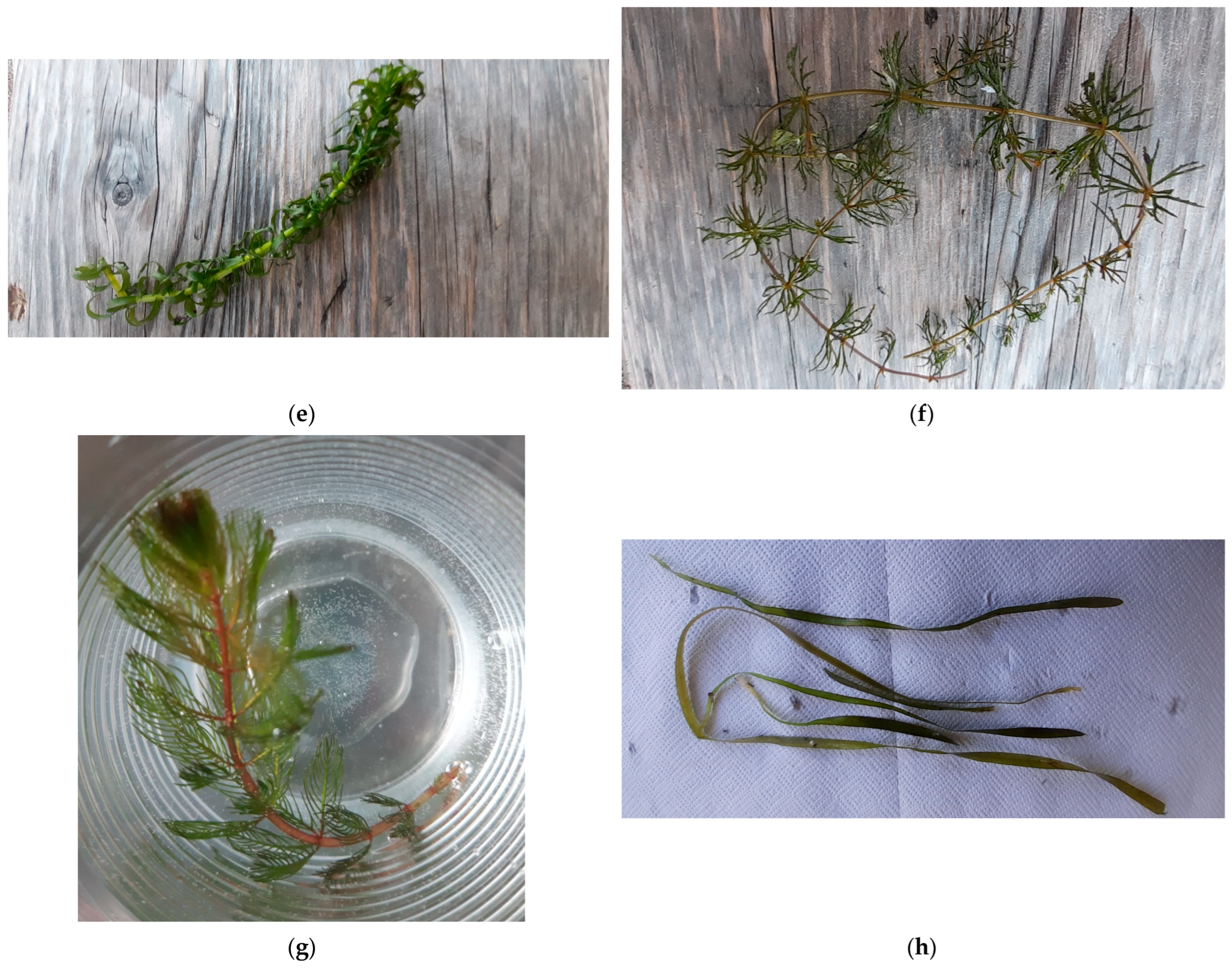
Figure A1. Pictures of some animal and plant species collected via Seabin. (a) Cochlostoma septemspirale; (b) Charpentieria itala; (c) Orthocladiinae; (d) Planorbis carinatus; (e) Lagarosiphon major *; (f) Ceratophylum demersus *; (g) Myriophyllum spicatum; (h) Vallisneria spiralis. (* alien species).
Microplastics 05 00057 g0a1aMicroplastics 05 00057 g0a1b
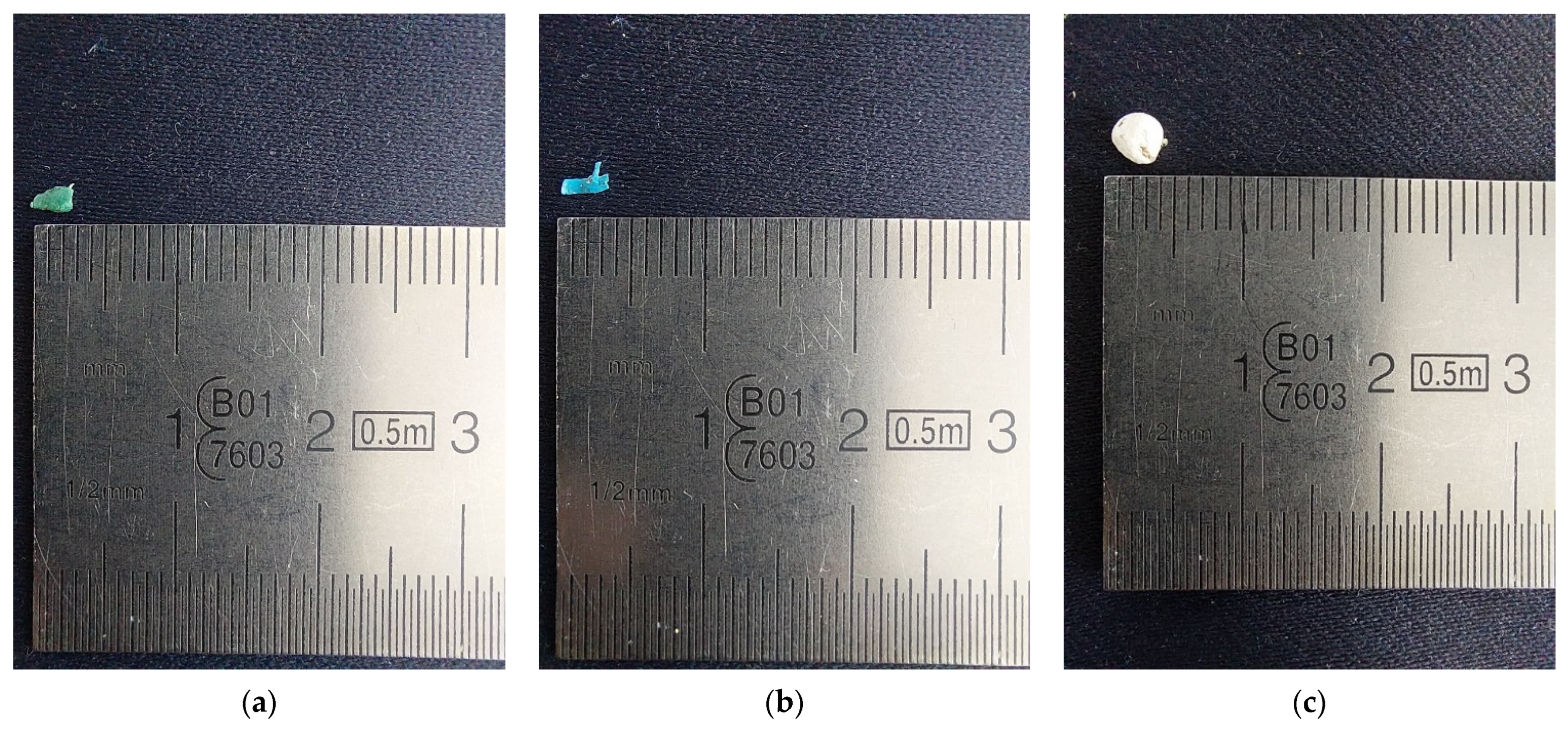
Figure A2. Pictures of microplastics collected via Seabin. (a) PE; (b) PP; (c) EPS.
Microplastics 05 00057 g0a2
Figure A3. Representative PE microplastics of Sample W6 show different type of product. Film with average thickness of 0.23 ± 0.04 micron (ad); multifilament/stripe (e); fragments of IM products with average thickness of 1.4 ± 0.4 mm (fh). Specimen (g) shows contamination of inorganic matter. Average size of the PE specimens in Sample W6 is 2.3 ± 0.7 mm, approximately calculated from the equation: s i z e = L ¯ × W ¯ × T ¯ 3 where L, W and T are the measured length, width and thickness of the specimen.
Microplastics 05 00057 g0a3
Figure A4. PP microplastics of Sample W6 are film with thickness ranging between 0.08 mm (a) and 0.32 mm (c,d). Specimen (b) is 1.1 mm thick. Average size of the PP specimens in Sample W6 is 1.8 ± 0.5 mm, approximately calculated from the equation: s i z e = L ¯ × W ¯ × T ¯ 3 where L, W and T are the measured length, width and thickness of the specimen.
Microplastics 05 00057 g0a4
Figure A5. Representative EPS microplastics of Sample W6. Average diameter measured for the 20 specimens of Sample W6 is 3.3 ± 1.2. The lowest average diameter value is 1.7 mm of the last specimen (d). Example of single EPS particle (a,c,d) and aggregated particles (b,d) are shown. Regular spheroids and deformed, or partially fragmented, EPS particles are also compared (a,c).
Microplastics 05 00057 g0a5aMicroplastics 05 00057 g0a5b
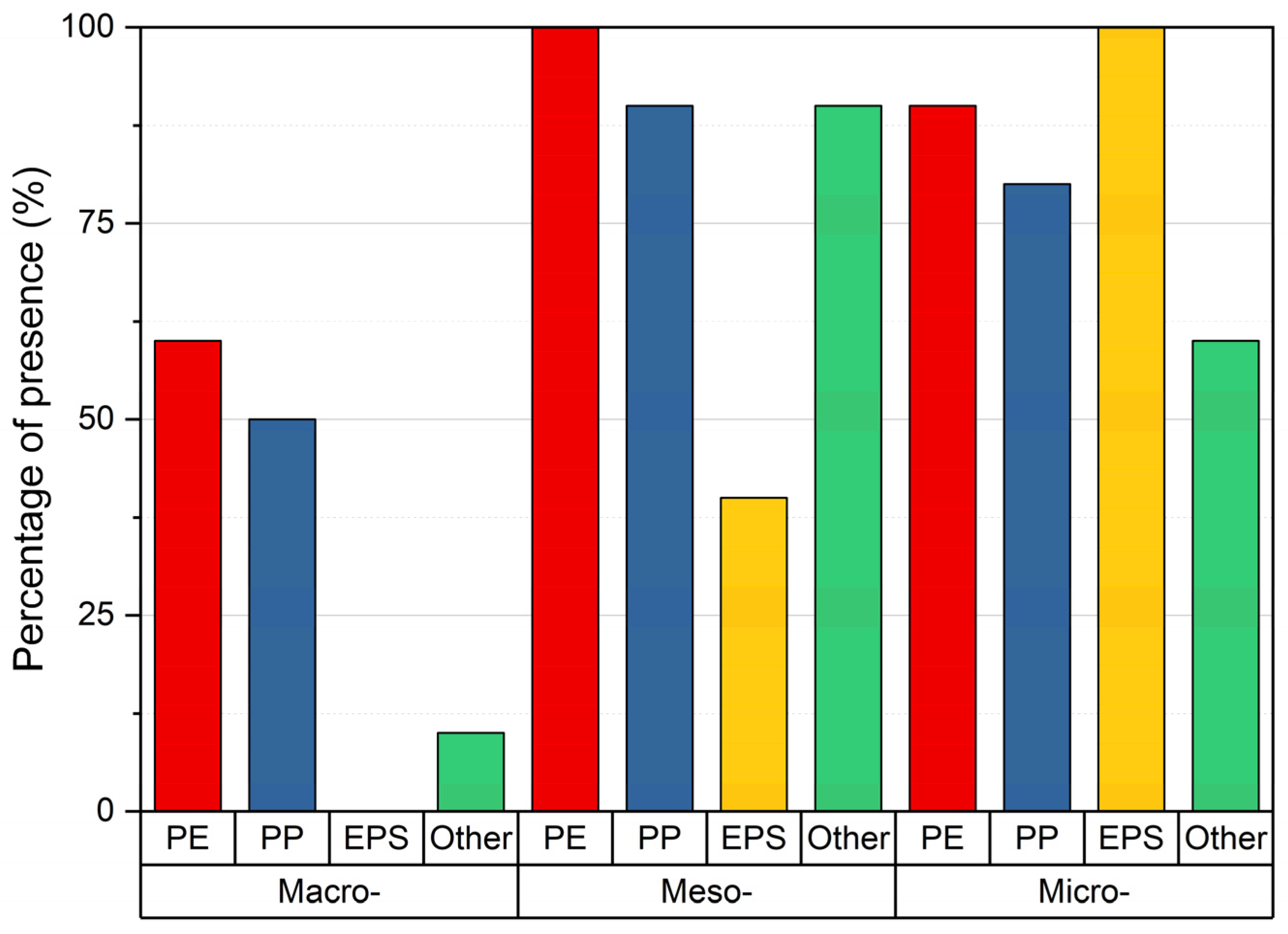
Figure A6. Bar graphs representing the fraction of samples in which at least one piece of the identified material (among PE, PP, EPS, and other) was observed.
Microplastics 05 00057 g0a6
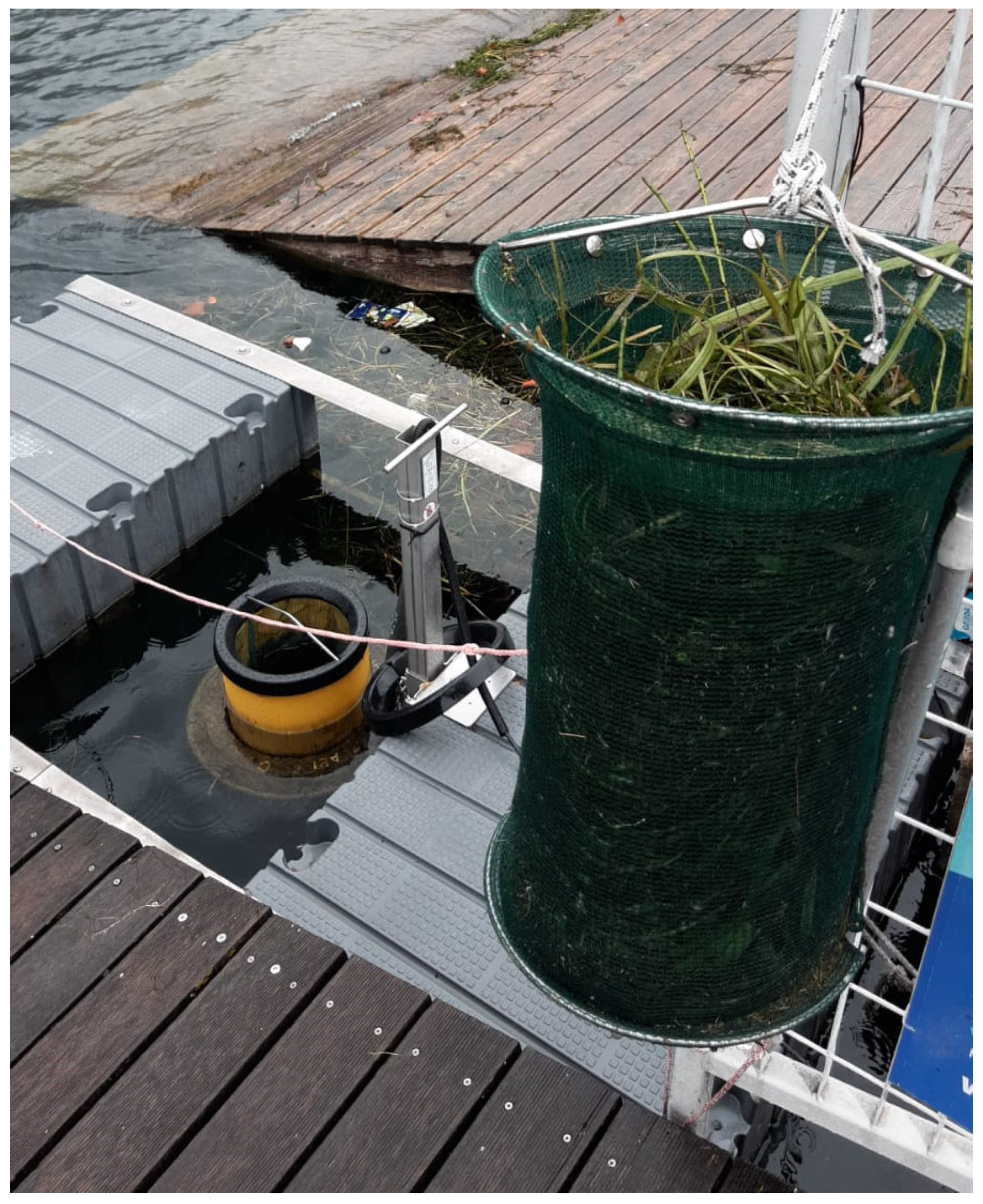
Figure A7. Picture of the Seabin and collected net during the first step of drying (outdoor draining).
Microplastics 05 00057 g0a7
Figure A8. Energy efficiencies of each of the sampling activities, calculated with Equations (9) and (10). Number of plastic pieces collected per unit energy and plastic mass per unit energy are reported.
Microplastics 05 00057 g0a8
Figure A9. High magnification of PE microplastic (5000×) show different shape micro-objects. Micro-dotted plates and micro-dotted plates—thickness of about 0.1–0.2 micron (a); hollow pedicle membrane—t 10 micron long and 0.2 micron thick (b); twin-unit organism at least 15 micron long and 2 micron thick (c); dotted discoid—diameter of about 13 micron (d). Medium magnification 500× highlights the presence of and other microorganism fragments in PP (e) and in EPS (f).
Microplastics 05 00057 g0a9
Figure A10. Detailed EDX analysis of PE microplastics (from Figure 9a) with separate maps of Carbon (a), Oxygen (b), Aluminum (c), Magnesium (d), Silicon (e) and Calcium (f).
Microplastics 05 00057 g0a10
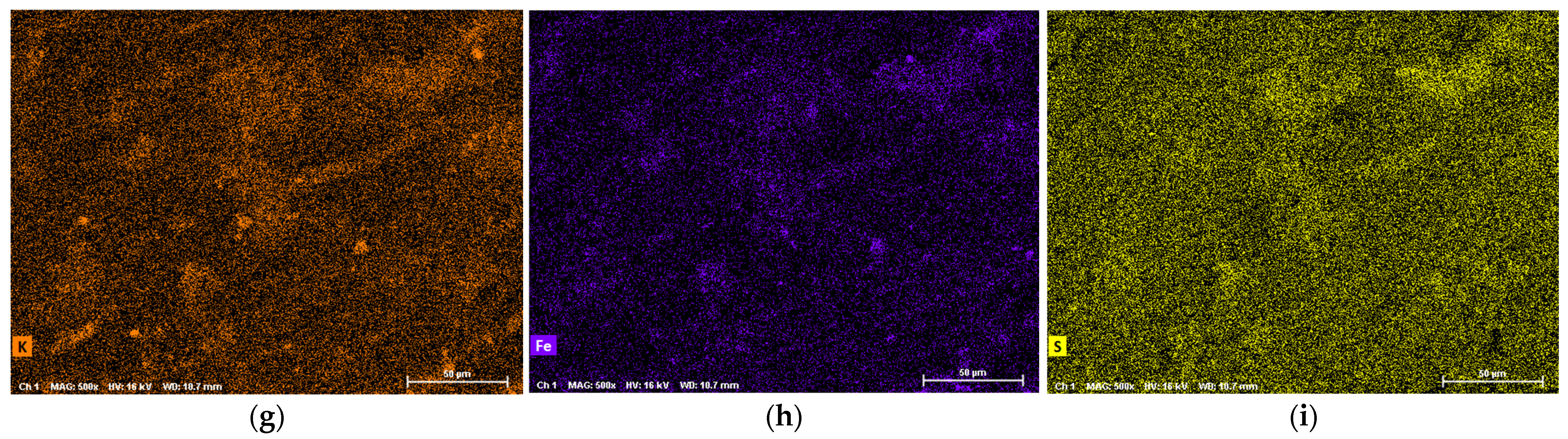
Figure A11. Detailed EDX analysis of PP microplastics (from Figure 9b) with separate maps of Carbon (a), Oxygen (b), Aluminum (c), Magnesium (d), Silicon (e), Calcium (f), Potassium (g), Iron (h) and Sulfur (i).
Microplastics 05 00057 g0a11aMicroplastics 05 00057 g0a11b
Figure A12. Detailed EDX analysis of EPS microplastics (from Figure 9c) with separate maps of Carbon (a), Oxygen (b), Aluminum (c), Magnesium (d), Silicon (e), Calcium (f),Potassium (g), Iron (h) and Sulfur (i).
Microplastics 05 00057 g0a12

References

  1. Brook, B.W.; Sodhi, N.S.; Bradshaw, C.J.A. Synergies among extinction drivers under global change. Trends Ecol. Evol. 2008, 23, 453–460. [Google Scholar] [CrossRef]
  2. Bellard, C.; Marino, C.; Courchamp, F. Ranking threats to biodiversity and why it doesn’t matter. Nat. Commun. 2022, 13, 2616. [Google Scholar] [CrossRef]
  3. Thompson, R.; Olsen, Y.; Mitchell, R.; Davis, A.; Rowland, S.; John, A.; McGonigle, D.F.; Russell, A. Lost at Sea: Where Is All the Plastic? Science 2004, 304, 838. [Google Scholar] [CrossRef]
  4. Ford, H.V.; Jones, N.H.; Davies, A.J.; Godley, B.J.; Jambeck, J.R.; Napper, I.E.; Suckling, C.C.; Williams, G.J.; Woodall, L.C.; Koldewey, H.J. The fundamental links between climate change and marine plastic pollution. Sci. Total Environ. 2022, 806, 150392. [Google Scholar] [CrossRef]
  5. GEF—Impacts of Marine Debris on Biodiversity: Current Status and Potential Solutions. Available online: https://www.cbd.int/doc/publications/cbd-ts-67-en.pdf (accessed on 17 March 2025).
  6. Gall, S.C.; Thompson, R.C. The impact of debris on marine life. Mar. Pollut. Bull. 2015, 92, 170–179. [Google Scholar] [CrossRef]
  7. Geyer, R.; Jambeck, J.R.; Law, K.L. Production, use, and fate of all plastics ever made. Sci. Adv. 2017, 3, e1700782. [Google Scholar] [CrossRef]
  8. Cole, M.; Lindeque, P.; Halsband, C.; Galloway, T.S. Microplastics as contaminants in the marine environment: A review. Mar. Pollut. Bull. 2011, 62, 2588–2597. [Google Scholar] [CrossRef] [PubMed]
  9. Browne, M.A.; Crump, P.; Niven, S.J.; Teuten, E.; Tonkin, A.; Galloway, T.; Thompson, R. Accumulation of Microplastic on Shorelines Woldwide: Sources and Sinks. Environ. Sci. Technol. 2011, 45, 9175–9179. [Google Scholar] [CrossRef] [PubMed]
  10. Aves, A.R.; Revell, L.E.; Gaw, S.; Ruffell, H.; Schuddeboom, A.; Wotherspoon, N.E.; LaRue, M.; McDonald, A.J. First evidence of microplastics in Antarctic snow. Cryosphere 2022, 16, 2127–2145. [Google Scholar] [CrossRef]
  11. Van Cauwenberghe, L.; Vanreusel, A.; Mees, J.; Janssen, C.R. Microplastic pollution in deep-sea sediments. Environ. Pollut. 2013, 182, 495–499. [Google Scholar] [CrossRef] [PubMed]
  12. Free, C.M.; Jensen, O.P.; Mason, S.A.; Eriksen, M.; Williamson, N.J.; Boldgiv, B. High-levels of microplastic pollution in a large, remote, mountain lake. Mar. Pollut. Bull. 2014, 85, 156–163. [Google Scholar] [CrossRef]
  13. Dris, R.; Gasperi, J.; Saad, M.; Mirande, C.; Tassin, B. Synthetic fibers in atmospheric fallout: A source of microplastics in the environment? Mar. Pollut. Bull. 2016, 104, 290–293. [Google Scholar] [CrossRef]
  14. Belioka, M.-P.; Achilias, D.S. Microplastic Pollution and Monitoring in Seawater and Harbor Environments: A Meta-Analysis and Review. Sustainability 2023, 15, 9079. [Google Scholar] [CrossRef]
  15. Eerkes-Medrano, D.; Thompson, R.C.; Aldridge, D.C. Microplastics in freshwater systems: A review of the emerging threats, identification of knowledge gaps and prioritisation of research needs. Water Res. 2015, 75, 63–82. [Google Scholar] [CrossRef] [PubMed]
  16. Dris, R.; Imhof, H.; Sanchez, W.; Gasperi, J.; Galgani, F.; Tassin, B.; Laforsch, C. Beyond the ocean: Contamination of freshwater ecosystems with (micro-)plastic particles. Environ. Chem. 2015, 12, 539–550. [Google Scholar] [CrossRef]
  17. Verma, M.; Singh, P.; Pradhan, V.; Dhanorkar, M. Spatial and seasonal variations in abundance, distribution characteristics, and sources of microplastics in surface water of Mula river in Pune, India. Environ. Pollut. 2025, 373, 126091. [Google Scholar] [CrossRef] [PubMed]
  18. Belontz, S.L.; Corcoran, P.L.; de Haan-Ward, J.; Helm, P.A.; Marvin, C. Factors driving the spatial distribution of microplastics in nearshore and offshore sediment of Lake Huron, North America. Mar. Pollut. Bull. 2022, 179, 113709. [Google Scholar] [CrossRef] [PubMed]
  19. Anagha, P.L.; Viji, N.V.; Devika, D.; Ramasamy, E.V. Distribution and abundance of microplastics in the water column of Vembanad Lake—A Ramsar site in Kerala, India. Mar. Pollut. Bull. 2023, 194, 115433. [Google Scholar] [CrossRef]
  20. Eriksen, M.; Mason, S.; Wilson, S.; Box, C.; Zellers, A.; Edwards, W.; Farley, H.; Amato, S. Microplastic pollution in the surface waters of the Laurentian Great Lakes. Mar. Pollut. Bull. 2013, 77, 177–182. [Google Scholar] [CrossRef]
  21. Hu, D.; Zhang, Y.; Shen, M. Investigation on microplastic pollution of Dongting Lake and its affiliated rivers. Mar. Pollut. Bull. 2020, 160, 111555. [Google Scholar] [CrossRef]
  22. Andrady, A.L. Microplastics in the marine environment. Mar. Pollut. Bull. 2011, 62, 1596–1605. [Google Scholar] [CrossRef]
  23. Sadri, S.S.; Thompson, R.C. On the quantity and composition of floating plastic debris entering and leaving the Tamar Estuary, Southwest England. Mar. Pollut. Bull. 2014, 81, 55–60. [Google Scholar] [CrossRef] [PubMed]
  24. Fonnesu, A.; Sabetta, L.; Basset, A. Factors Affecting Macroinvertebrate Distribution in a Mediterranean Intermittent Stream. J. Freshw. Ecol. 2005, 20, 641–647. [Google Scholar] [CrossRef]
  25. Kumaraswamy, T.R.; Javeed, S.; Javaid, M.; Naika, K. Impact of Pollution on Quality of Freshwater Ecosystems. In Fresh Water Pollution Dynamics and Remediation; Qadri, H., Bhat, R.A., Mehmood, M.A., Dar, G.H., Eds.; Springer: Singapore, 2019; pp. 69–81. [Google Scholar]
  26. Azevedo-Santos, V.; Brito, M.; Manoel, P.; Perroca, J.; Rodrigues-Filho, J.L.; Paschoal, L.; Gonçalves, G.; Wolf, M.; Blettler, M.; Ândrade, M.; et al. Plastic pollution: A focus on freshwater biodiversity. Ambio 2021, 50, 1313–1324. [Google Scholar] [CrossRef]
  27. García-Gómez, J.C.; Garrigós, M.; Garrigós, J. Plastic as a Vector of Dispersion for Marine Species with Invasive Potential. A Review. Front. Ecol. Evol. 2021, 9, 629756. (In English) [Google Scholar] [CrossRef]
  28. Thomaz, S.M.; Kovalenko, K.E.; Havel, J.E.; Kats, L.B. Aquatic invasive species: General trends in the literature and introduction to the special issue. Hydrobiologia 2015, 746, 1–12. [Google Scholar] [CrossRef]
  29. Papparotto, M.; Gavazza, C.; Matteotti, P.; Fambri, L. Seasonal Comparative Monitoring of Plastic and Microplastic Pollution in Lake Garda (Italy) Using Seabin During Summer–Autumn 2024. Microplastics 2025, 4, 44. [Google Scholar] [CrossRef]
  30. González-Fernández, D.; Hanke, G. Toward a Harmonized Approach for Monitoring of Riverine Floating Macro Litter Inputs to the Marine Environment. Front. Mar. Sci. 2017, 4, 86. (In English) [Google Scholar] [CrossRef]
  31. Gasperi, J.; Dris, R.; Bonin, T.; Rocher, V.; Tassin, B. Assessment of floating plastic debris in surface water along the Seine River. Environ. Pollut. 2014, 195, 163–166. [Google Scholar] [CrossRef]
  32. Kershaw, P.J.; Turra, A.; Galgani, F. (Eds.) GESAMP Guidelines for the Monitoring and Assessment of Plastic Litter and Microplastics in the Ocean; GESAMP Reports and Studies, No. 99; GESAMP Joint Group of Experts on the Scientific Aspects of Marine Environmental Protection: London, UK, 2019; 130p. [Google Scholar]
  33. Nikiema, J.; Asiedu, Z. A review of the cost and effectiveness of solutions to address plastic pollution. Environ. Sci. Pollut. Res. 2022, 29, 24547–24573. [Google Scholar] [CrossRef]
  34. Korzin, A.; Sturm, M.T.; Myers, E.; Schober, D.; Ronsse, P.; Schuhen, K. Upstream Microplastic Removal in Industrial Wastewater: A Pilot Study on Agglomeration-Fixation-Reaction Based Treatment for Water Reuse and Waste Recovery. Clean Technol. 2025, 7, 67. [Google Scholar] [CrossRef]
  35. Imhof, H.K.; Ivleva, N.P.; Schmid, J.; Niessner, R.; Laforsch, C. Contamination of beach sediments of a subalpine lake with microplastic particles. Curr. Biol. 2013, 23, R867–R868. [Google Scholar] [CrossRef]
  36. Imhof, H.K.; Laforsch, C.; Wiesheu, A.C.; Schmid, J.; Anger, P.M.; Niessner, R.; Ivleva, N.P. Pigments and plastic in limnetic ecosystems: A qualitative and quantitative study on microparticles of different size classes. Water Res. 2016, 98, 64–74. [Google Scholar] [CrossRef]
  37. Imhof, H.K.; Wiesheu, A.C.; Anger, P.M.; Niessner, R.; Ivleva, N.P.; Laforsch, C. Variation in plastic abundance at different lake beach zones—A case study. Sci. Total Environ. 2018, 613–614, 530–537. [Google Scholar] [CrossRef] [PubMed]
  38. Fambri, L.; Bombardelli, G.; Gavazza, C.; Casagranda, A.; Battocchi, P.; Tomasi, R. Study of Plastics Debris Collected on the North Beaches of the Garda Lake After the Severe Storm Vaia in Autumn 2018. In Proceedings of the 2nd International Conference on Microplastic Pollution in the Mediterranean Sea; Cocca, M., Di Pace, E., Errico, M.E., Gentile, G., Montarsolo, A., Mossotti, R., Avella, M., Eds.; Springer International Publishing: Cham, Switzerland, 2020; pp. 212–225. [Google Scholar]
  39. Sighicelli, M.; Pietrelli, L.; Lecce, F.; Iannilli, V.; Falconieri, M.; Coscia, L.; Di Vito, S.; Nuglio, S.; Zampetti, G. Microplastic pollution in the surface waters of Italian Subalpine Lakes. Environ. Pollut. 2018, 236, 645–651. [Google Scholar] [CrossRef]
  40. Casellato, S.; La, P.G.; Leonardo, L.; Ruffo, S. Dikerogammarus villosus (Sowinsky, 1894) (Crustacea, Amphipoda, Gammaridae) for the first time in Italy. Ital. J. Zool. 2006, 73, 97–104. [Google Scholar] [CrossRef]
  41. Ciutti, F.; Beltrami, M.E.; Confortini, I.; Cianfanelli, S.; Cappelletti, C. Non-indigenous invertebrates, fish and macrophytes in Lake Garda (Italy). J. Limnol. 2011, 70, 315–320. [Google Scholar] [CrossRef]
  42. Ciutti, F.; Cappelletti, C. Invasioni biologiche: Il caso del Lago di Garda. Biol. Ambient. 2017, 31, 159–164. [Google Scholar]
  43. Battistin, G.; Latella, L.; Iannilli, V. Microplastic pollution in the food web: Observation of ingestion by the talitrid amphipod Cryptorchestia garbinii on the shores of Lake Garda. Eur. Zool. J. 2023, 90, 73–82. [Google Scholar] [CrossRef]
  44. Zhang, R.-F.; Guo, Y.-J.; Lai, Y.-W.; Zhao, T.-T.; Li, G.-L.; Yan, Z.-G.; Wang, Y.-J.; Rillig, M.C. Microplastics promote the invasiveness of invasive alien species under fluctuating water regime. J. Appl. Ecol. 2024, 61, 2281–2293. [Google Scholar] [CrossRef]
  45. Randhawa, J.S. Advanced analytical techniques for microplastics in the environment: A review. Bull. Natl. Res. Cent. 2023, 47, 174. [Google Scholar] [CrossRef]
  46. Lebreton, L.; de Vries, R.; Pham, Y.; Wolter, H.; van Vulpen, M.; Puskic, P.; Sainte-Rose, B.; Royer, S.-J.; Egger, M. Seven years into the North Pacific garbage patch: Legacy plastic fragments rising disproportionally faster than larger floating objects. Environ. Res. Lett. 2024, 19, 124054. [Google Scholar] [CrossRef]
  47. Parker-Jurd, F.N.F.; Smith, N.S.; Gibson, L.; Nuojua, S.; Thompson, R.C. Evaluating the performance of the ‘Seabin’—A fixed point mechanical litter removal device for sheltered waters. Mar. Pollut. Bull. 2022, 184, 114199. [Google Scholar] [CrossRef]
  48. Salikova, N.S.; Rodrigo-Ilarri, J.; Makeyeva, L.A.; Rodrigo-Clavero, M.-E.; Tleuova, Z.O.; Makhmutova, A.D. Monitoring of Microplastics in Water and Sediment Samples of Lakes and Rivers of the Akmola Region (Kazakhstan). Water 2024, 16, 1051. [Google Scholar] [CrossRef]
  49. Paris, A.; Kwaoga, A.; Hewavitharane, C. An assessment of floating marine debris within the breakwaters of the University of the South Pacific, Marine Studies Campus at Laucala Bay. Mar. Pollut. Bull. 2022, 174, 113290. [Google Scholar] [CrossRef]
  50. Maes, T.; Van der Meulen, M.D.; Devriese, L.I.; Leslie, H.A.; Huvet, A.; Frère, L.; Robbens, J.; Vethaak, A.D. Microplastics Baseline Surveys at the Water Surface and in Sediments of the North-East Atlantic. Front. Mar. Sci. 2017, 4, 135. (In English) [Google Scholar] [CrossRef]
  51. Plastics—The Facts 2022. Available online: https://plasticseurope.org/knowledge-hub/plastics-the-facts-2022/ (accessed on 16 December 2024).
  52. Directive (EU) 2019/904 of the European Parliament and of the Council of 5 June 2019 on the Reduction of the Impact of Certain Plastic Products on the Environment (Text with EEA Relevance). Available online: https://eur-lex.europa.eu/eli/dir/2019/904/oj (accessed on 9 June 2025).
  53. Fredi, G.; Dorigato, A. Recycling of bioplastic waste: A review. Adv. Ind. Eng. Polym. Res. 2021, 4, 159–177. [Google Scholar] [CrossRef]
  54. Domínguez-Solera, E.; Gadaleta, G.; Ferrero-Aguar, P.; Navarro-Calderón, Á.; Escrig-Rondán, C. The Biodegradability of Plastic Products for Agricultural Application: European Regulations and Technical Criteria. Clean Technol. 2025, 7, 11. [Google Scholar] [CrossRef]
  55. Parikh, H.S.; Dave, G.; Tiwari, A. Microplastic pollution in aquatic ecosystems: Impacts on diatom communities. Environ. Monit. Assess. 2025, 197, 206. [Google Scholar] [CrossRef]
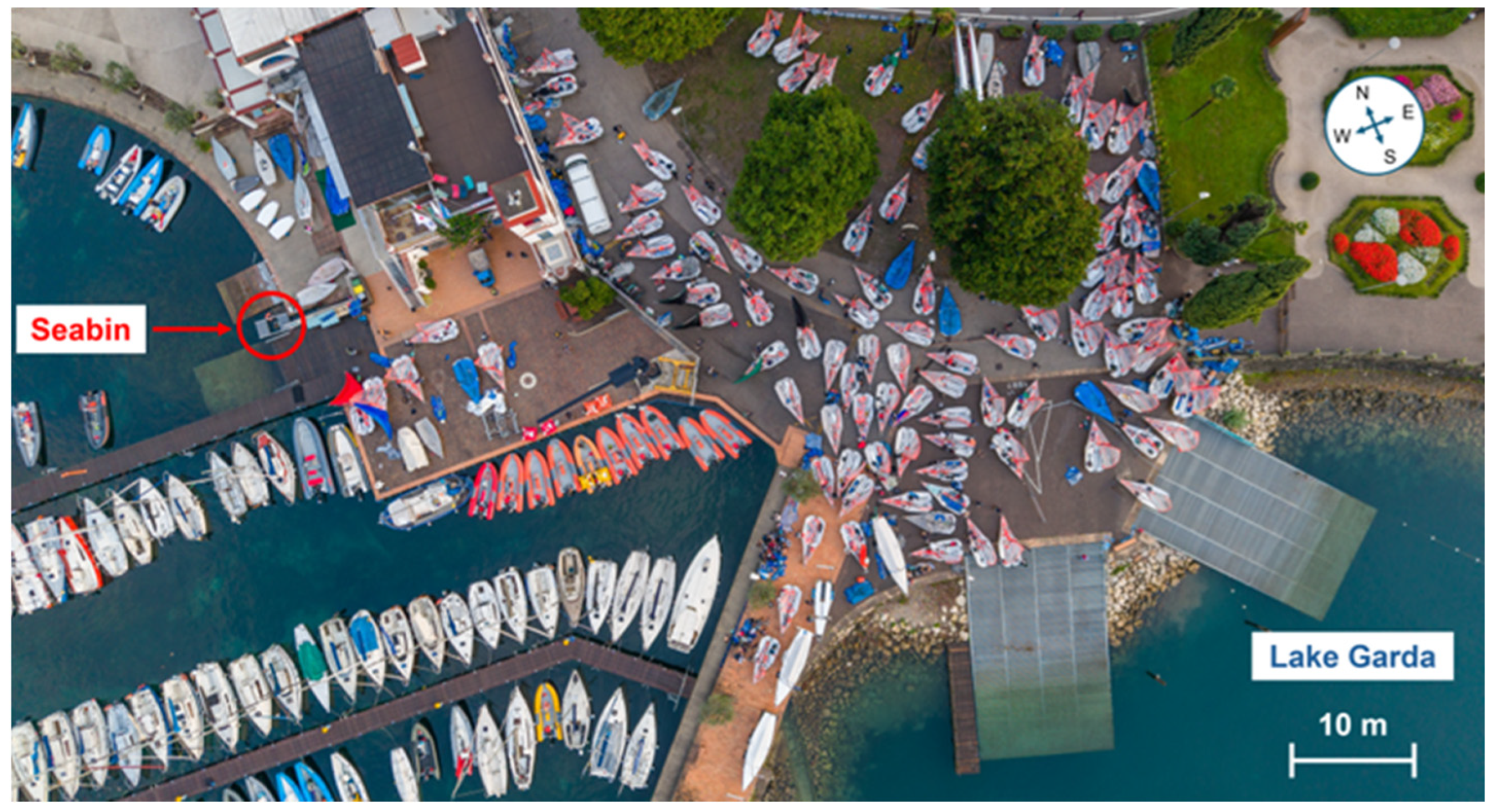
Figure 1. Aerial photograph of the location of the Seabin used for waste collection. Original picture was kindly provided by Fraglia della Vela Riva. The area can be seen in Webcam 2 in https://www.fragliavelariva.it/en/webcam/ (accessed on 9 July 2025).
Microplastics 05 00057 g001
Figure 2. (a,b) Abundance of animal organisms captured by the Seabin, red bars indicate alien species; (a) aquatic animals; and (b) terrestrial animals; (c) picture of the alien species Dikerogammarus villosus; and (d) native species Asellus aquaticus.
Microplastics 05 00057 g002
Figure 3. Graphical representation of the amount of macro-, meso- and microplastic per cubic meter of water observed during the survey. Data is reported in terms of mass and number of items.
Microplastics 05 00057 g003
Figure 4. Total plastic collected during the Winter season of 2024–2025, total precipitations (in mm), and wind speed (in m/s). (a) Total mass of plastic; (b) total number of plastic items collected. Sample identification is reported over the relative bar.
Microplastics 05 00057 g004aMicroplastics 05 00057 g004b
Figure 5. Composition of the floating waste collected with the Seabin. (a) Total mass composition, (b) recognized plastic waste products by mass, (c) recognized plastic waste products by number of items (Table A3).
Microplastics 05 00057 g005
Figure 6. FTIR identification of the polymeric material retrieved with the Seabin. (a) Total mass, (b) total numerical count, (c) mass of macroplastics, (d) numerical count of macroplastics, (e) mass of mesoplastics, (f) numerical count of mesoplastics, (g) mass of microplastics, and (h) numerical count of microplastics.
Microplastics 05 00057 g006
Figure 7. Macro-, meso-, and microplastics measured in the ten samples collected during Winter 2024–2025; (ac) mass; (df) numerical count.
Microplastics 05 00057 g007aMicroplastics 05 00057 g007b
Figure 8. Morphology of representative microplastics from Sample W9. PE (a,d); PP (b,e); EPS (c,f) at different magnification from 75× to 1000×, as indicated.
Microplastics 05 00057 g008aMicroplastics 05 00057 g008b
Figure 9. Full-frame microanalysis of representative 500× magnification of PE (a), PP (b), EPS (c) microplastics from Sample W9. Resulting elemental distribution maps of PE (d), PP (e) and EPS (f) with the three selected elements, Aluminum, Silicon and Calcium.
Microplastics 05 00057 g009aMicroplastics 05 00057 g009b
Figure 10. Optical image of 20 EPS microplastics from Sample W6 with average diameter of 3.3 ± 1.1 mm, compared to an EPS mesoplastic of Sample W6 (evidenced by white dotted circle in the center). The orange diamond evidences the smallest EPS particle retrieved in Winter monitoring (ellipsoidal shape with axes of 1.5 and 1.9 mm; equivalent diameter of 1.7 mm).
Microplastics 05 00057 g010
Table 1. Sample nomenclature, with the relative working dates and times of the Seabin, the total wet mass, the total number and mass of animals and total number of plastic pieces collected.
SampleDatesSeabin Working Time
(h)
Wet
Mass
(g)
Operator Separation Time
(min)
Number
of
Animals
(n)
Mass
of
Animals
(g)
Number
of
Plastics
(n)
Mass
of
Plastics
(g)
Ratio
Plastics/Wet Mass
(%)
W131Dec–03Jan727955200201.020.13
W231 Jan–02 Feb483605231161.25376.320.18
W302 Feb–04 Feb48172011100319.460.55
W404 Feb–07 Feb721720114008029.061.69
W507 Feb–10 Feb72275180070.040.01
W614 Feb–16 Feb48187512200554.900.26
W721 Feb–23 Feb48447029440.2717431.100.70
W828 Feb–02 Mar48136591241.61412.070.15
W907 Mar–09 Mar48256516400385.170.20
W1016 Mar–18Mar4877554191.73573.470.45
Total55219,1651251634.8654092.610.43 ± 0.49
Table 2. Number of individuals belonging to different taxa collected with the Seabin. Number of plants was neglected.
HabitatKingdomClassTaxaCommon NameNumberAlien
AquaticPlantaeAlismatalesLagarosiphon major(curly waterweed)-x
AquaticPlantaeCeratophyllalesCeratophylum demersus(rigid hornwort)-x
AquaticPlantaeSaxifragalesMyriophyllum spicatum(spiked watermilfoil)-
AquaticPlantaeSaxifragalesVallisneria spiralis(straight vallisneria)-
AquaticAnimaliaBivalviaDreissena bugensis(quagga mussel)1x
AquaticAnimaliaBivalviaDreissena polymorpha(zebra mussel)1x
AquaticAnimaliaCrustaceaDikerogammarus villosus(killer shrimp)36x
AquaticAnimaliaCrustaceaAsellus aquaticus(water hoglouse)13
AquaticAnimaliaGastropodaPlanorbarius corneus(great ram’s-horn)1
AquaticAnimaliaGastropodaPlanorbis carinatus(keeled ramshorn)1
AquaticAnimaliaGastropodaBithynia tentaculata(faucet snail)1
AquaticAnimaliaInsectaIschnura elegans(blue tailed damselfly)1
Terrestrial/AquaticAnimaliaInsectaChironomoidea/
Orthocladinae
(non-biting midges)2 *
TerrestrialAnimaliaGastropodaCochlostoma septemspirale_1
TerrestrialAnimaliaGastropodaCharpentieria itala_1
TerrestrialAnimaliaGastropodaChondrina spp._3
TerrestrialAnimaliaInsectaThaumetopoea pityocampa(pine processionary)1
* one larva (aquatic) and one adult (terrestrial).
Table 3. Semiquantitative EDX results of element composition in selected microplastic particles, after full frame analysis of 500× micrograph (Sample W9).
ElementMP-PEMP-PPMP-EPS
Carbon86.84 ± 9.9846.26 ± 1.7449.50 ± 3.5
Oxygen8.21 ± 1.4729.94 ± 1.4727.62 ± 1.47
Silicon2.07 ± 0.1211.04 ± 0.1617.84 ± 0.46
Calcium0.74 ± 0.067.95 ± 0.103.28 ± 0.09
Aluminum0.96 ± 0.451.36 ± 0.050.82 ± 0.05
Iron0.73 ± 0.161.55 ± 0.050.55 ± 0.04
Magnesium0.12 ± 0.060.57 ± 0.040.06 ± 0.00
Potassium00.68 ± 0.030.23 ± 0.03
Sulfur00.36 ± 0.160.09 ± 0.03
Sodium0.07 ± 0.030.19 ± 0.030
Copper0.28 ± 0.0500
Chlorine00.09 ± 0.000
Total100.00100.00100.00
Table 4. Average mass mwi of PE, PP, EPS and other microplastics collected in various Wi-samples (where i ranges from 1 to 10). Simple and weighted average mass are reported.
SamplemWi-PE Mass
(mg)
mWi-PP Mass
(mg)
mWi-EPS Mass (mg)MWi-Others Mass
(mg)
mWi-TOT Mass
(mg)
W16.219.90.710.98.9
W211.05.51.11.64.9
W32.00.50.72.41.3
W46.020.11.31.93.3
W5000.400.4
W69.56.60.99.44.9
W77.110.40.905.7
W87.41.41.304.4
W912.58.40.71.43.6
W1013.201.602.1
Simple
Average Mass *
8.3 ± 3.69.1 ± 7.51.0 ± 0.44.6 ± 4.33.9 ± 2.4
Weighted
Average Mass **
7.4 ± 2.09.2 ± 5.31.1 ± 0.34.5 ± 3.94.2 ± 1.7
* m ¯ n (Equation (4)); ** m ¯ n w (Equation (5)).
Table 5. Average equivalent diameter DWi of PE, PP, EPS and other microplastics collected in various Wi-samples and calculated according to Equation (6). Simple and weighted average equivalent diameter are reported.
SampleDWi-PE
(mm)
DWi-PP
(mm)
DWi-EPS (mm)DWi-Others
(mm)
DWi-TOT
(mm)
W12.33.53.52.73.0 ± 0.6
W22.82.34.11.52.7 ± 1.1
W31.61.03.51.71.9 ± 1.1
W42.33.54.31.52.9 ± 1.2
W5--2.9-2.9
W62.72.43.82.62.9 ± 0.6
W72.42.83.8-3.0 ± 0.7
W82.51.44.4-2.8 ± 1.5
W92.92.63.61.42.6 ± 0.9
W103.0-4.7-3.9 ± 1.2
Simple Average
Diameter *
2.5 ± 0.42.4 ± 0.93.9 ± 0.51.9 ± 0.62.9 ± 0.5
Weighted Average Diameter **2.4 ± 0.22.6 ± 0.64.1 ± 0.42.7 ± 0.93.2 ± 0.9
* D ¯ n (Equation (7)); ** D ¯ n w (Equation (8)).
Disclaimer/Publisher’s Note: The statements, opinions and data contained in all publications are solely those of the individual author(s) and contributor(s) and not of MDPI and/or the editor(s). MDPI and/or the editor(s) disclaim responsibility for any injury to people or property resulting from any ideas, methods, instructions or products referred to in the content.