3.2. Biogas Production and Intermediate Digester Development
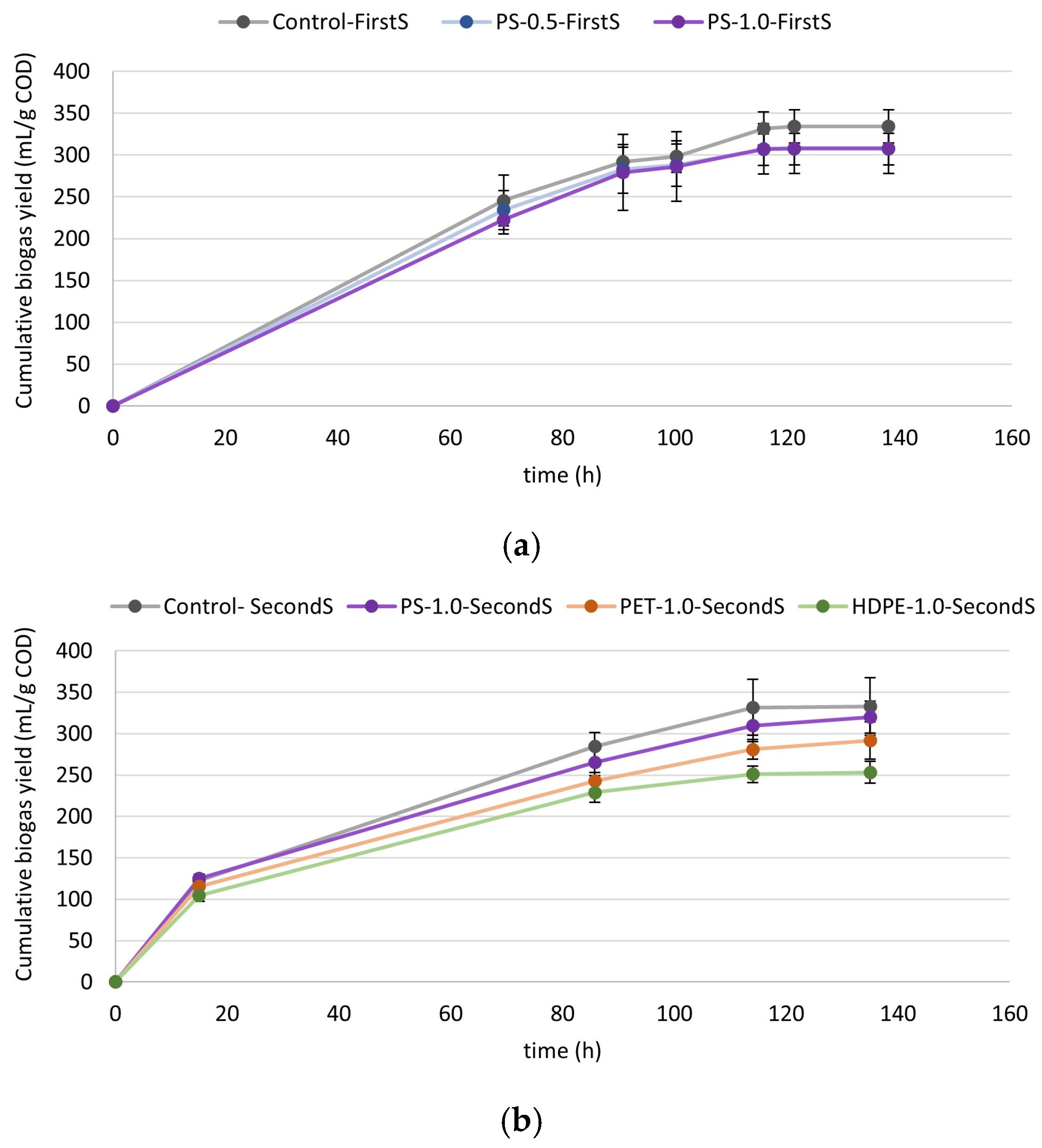
The cumulative biogas production (at 37 °C) per g of COD in the substrate throughout the digestion process is presented in
Figure 1 for both experimental series. It should be noted that the feed was a rapidly biodegradable substrate. Thus, the degradation time was consequently short. A slight general decrease in gas production was observed in the presence of MPs compared to the control, suggesting a negative impact on anaerobic digestion performance. However, within the first series, no significant differences were detected between the two concentrations of PS (0.5 and 1.0 g·L
−1), indicating that the observed inhibition was not strongly concentration-dependent within the tested range for this polymer. This points to a possible threshold effect or saturation of the inhibitory mechanisms at relatively low MP concentrations, as previously suggested in batch anaerobic assays [
23].
The second experimental series enabled a comparative assessment of the effects exerted by different polymer types at equal concentrations. As shown in
Figure 1b, different tendencies were observed in biogas production, suggesting that the impact of MPs on the anaerobic process was polymer-specific. Among the three tested materials, HDPE induced the most pronounced reduction in gas production relative to the control, followed by PET. In contrast, PS exhibited the least inhibitory effect under the same conditions. These results highlight the relevance of polymer properties—such as chemical composition—in modulating microbial accessibility and potential toxicity. Similar polymer-specific trends have been described in recent studies, where HDPE has been associated with greater microbial inhibition due to its higher hydrophobicity and persistence [
24,
25,
26].
The intermediate gas composition during the digestion period after 75 h is summarized in
Table 4. The volumetric fraction of CO
2 was practically the same in all the experiments. Only a slight increase in CO
2 concentration in the biogas in the presence of PS was observed, suggesting either a shift toward acidogenesis or a partial arrest of methanogenesis [
27,
28]. The concentration of H
2S in the biogas remained similar across all digesters, with no clear trend attributable to the presence of MPs. High H
2S concentrations have been associated with toxicity effects that impair the methanogenic consortia and enzymatic systems [
29], and their rise should be closely monitored as a potential secondary indicator of MP inhibition. However, the measured H
2S values were too low to jeopardize the efficiency of the anaerobic process.
The lower concentrations of FAs, measured as acetic acid equivalents and observed in the MP-doped digesters, than in the control (
Table 4) may be attributed to the following mechanism: The presence of MPs may not only inhibit methanogenic activity but also interfere with upstream acidogenic processes, thereby reducing the formation of FAs from proteins and other long-chain organic molecules [
30]. This would result in a lower overall accumulation of FAs throughout the digestion process. The reason for this behavior could be the lower availability of the hydrolytic exoenzymes, like protease, that are responsible for the hydrolysis step in anaerobic digestion, which could be attributed to their adsorption onto the MPs of the reactors. Wei et al. (2019) [
23] observed a reduction in protease activity in anaerobic reactors with PVC MPs, although these authors did not detail the mechanism responsible for this inhibition. However, this trend contrasts that in other previous studies, which have generally reported an increase in FA accumulation in the presence of MPs, attributed to the inhibition of methanogenic activity and the resulting disruption of FA consumption pathways [
31].
The lower FA accumulation with MPs contrasts the findings of some researchers, who observed acidification in the presence of MPs as a result of inhibited VFA consumption during the methanogenic phase [
32]. Therefore, monitoring FAs over time would help to better understand how MPs affect each stage of the digestion process. This discrepancy may also be related to the nature of the substrate used: unlike sewage sludge, the synthetic substrate applied in this study is rapidly biodegradable, allowing faster progression through the digestion stages, which could mask the accumulation of intermediate compounds such as VFAs.
3.3. Post-Digestion Characterization
At the end of the digestion period, key physicochemical parameters were analyses in the digested sludge to assess the extent of organic matter degradation and the effects of MPs on process efficiency.
As shown in
Table 5, the pH remained within the optimal range for methanogenesis (6.6–7.8) [
33] in all cases, indicating that the systems maintained acid–base balance and sufficient buffering capacity, even under the influence of MPs.
Moreover, the TS and TVS contents were consistently higher in the digesters containing MPs. This increase was due to two factors: on the one hand, the reduced conversion of organic matter to biogas, which was confirmed by the lower biogas production in the digesters with MPs (
Figure 1); on the other hand, the MPs added contributed to the TS and the TVS since they were organic matter as well. A perfect mass balance is not possible since some of the MPs remain attached to the tank walls, as reported by Miloloža et al. (2025) and Rasmussen et al. (2021) [
34,
35].
Table 6 shows the final biogas composition measured by gas chromatography. The methane content ranged between 72% and 78. Interestingly, HDPE not only maintained but slightly improved the CH
4/CO
2 ratio compared to the second series control (3.73 vs. 3.05, respectively), which indicated either enhanced carbon conversion or preferential microbial adaptation. Conversely, the lowest CH
4/CO
2 ratio was observed in the PET digesters (3.22), suggesting a partial inhibition of methanogenic pathways [
30].
The H2 concentrations in the biogas were low in all treatments, remaining below 4% and 4.1%. Although slight variations were observed—particularly a modest increase in the H2 in PET and HDPE digesters in the second series—these values fell within the range of normal fluctuations for batch systems and were not indicative of major metabolic disruption.
3.4. Microplastic Characterization After Anaerobic Digestion
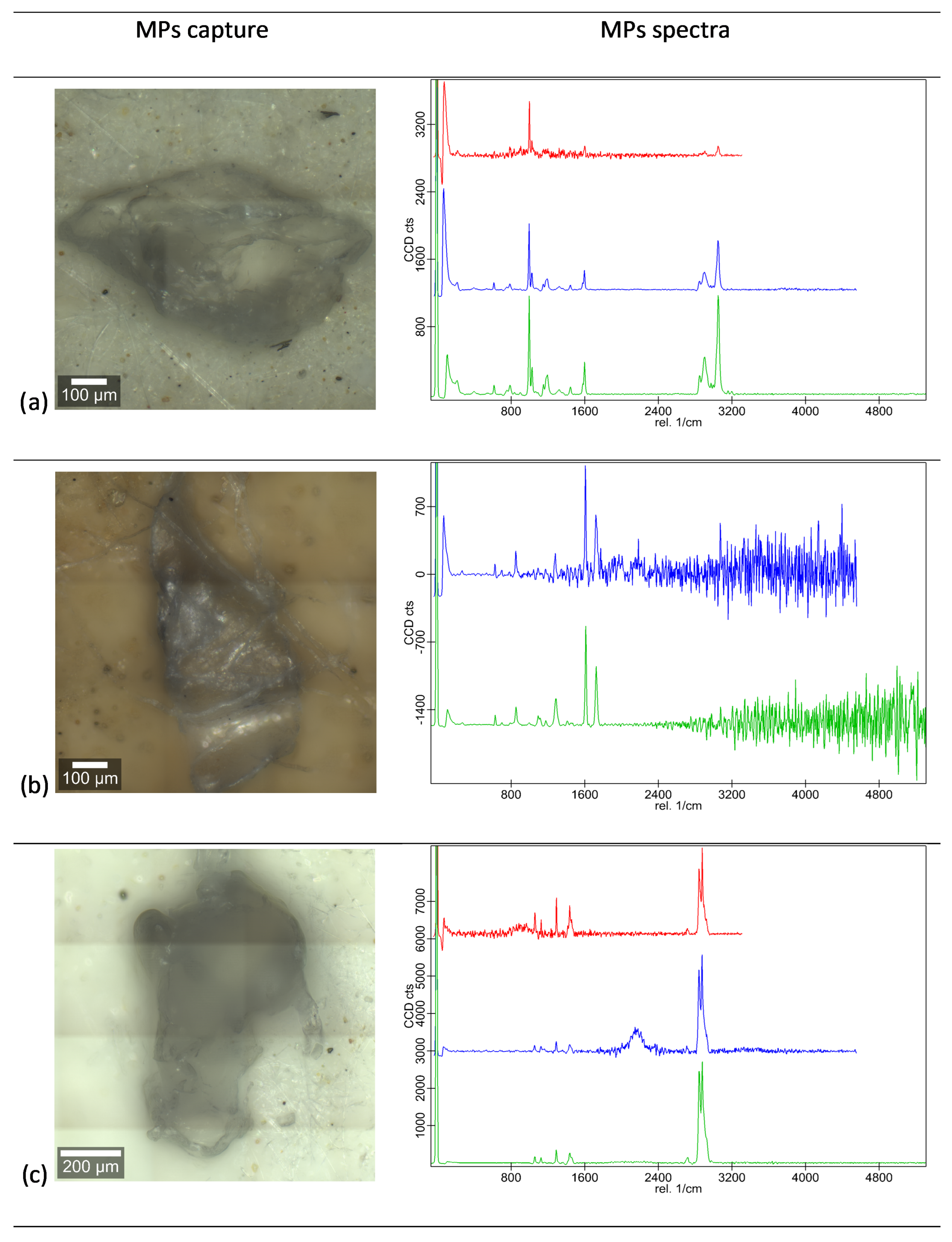
The post-digestion characterization of MPs was performed by Raman spectroscopy to assess potential structural changes after exposure to anaerobic conditions. The spectra obtained for each polymer type are shown in
Figure 2, and representative peaks were analyzed to detect signs of chemical degradation or molecular rearrangement.
No substantial spectral alterations were observed in the HDPE samples, suggesting high structural stability and resistance to degradation under mesophilic anaerobic conditions. This result aligns with the existing literature describing HDPE as one of the most inert plastic types in anaerobic environments [
36].
For PET, minor spectral variations were identified, including the appearance of or shift in characteristic peaks at 1544 cm
−1, 1776 cm
−1, and around 3076 cm
−1. The latter corresponds to the C–H stretching of aromatic rings, and its presence indicated subtle changes in surface chemistry or weak interactions with surrounding organic matter [
37]. However, the limited magnitude of these shifts prevented any conclusion on significant degradation.
In the case of PS, different weak signals were detected at 910 cm
−1 and 1501 cm
−1. These bands may be associated with out-of-plane C–H deformations and C=C stretching vibrations, respectively [
38]. Although their appearance could reflect superficial modifications or microbial interaction with the polymer surface, the evidence was insufficient to confirm chemical alteration.
Overall, the Raman spectra indicate that none of the tested MPs experienced extensive structural degradation during the digestion process. However, the detection of subtle spectral shifts, particularly in PET and PS, suggests that, even under relatively short experiment times and mesophilic conditions, minor modifications can occur. These may be associated with superficial oxidation or early-stage microbial interaction with the polymer surface [
14].
These findings are relevant because they show that changes in MPs can begin to occur even under moderate conditions and short digestion times. Therefore, chemical characterization via spectroscopy could be useful in detecting early signs of polymer alteration [
39,
40]. Further studies using longer retention times or under more demanding conditions could help clarify how MPs behave and transform during anaerobic treatment.
3.5. Microbial Community Analysis
Illumina sequencing was performed of the AD of the first and second experimental series to assess the impacts of PS, HDPE, and PET particles on the microbial community during anaerobic digestion. The MIDAS 5.3 database was used to analyze the microbiome in 9 and 12 anaerobic digester samples from the first and second experimental series, respectively. The 9 and 12 Illumina libraries of bacterial and archaea 16S rRNA genes from the first and second experimental series yielded 3,348,804 and 5,030,720 reads after quality filtering and removal of chimeric sequences. All samples were rarefied at 291,780 reads in the first series and 291,780 reads in the second series. The relative abundance (%) was calculated as taxonomic classification counts divided by total reads. The relative abundances at different taxonomic categories from the first experimental series (
Table S1) and second experimental series (
Table S2) can be found in the
Supplementary Material.
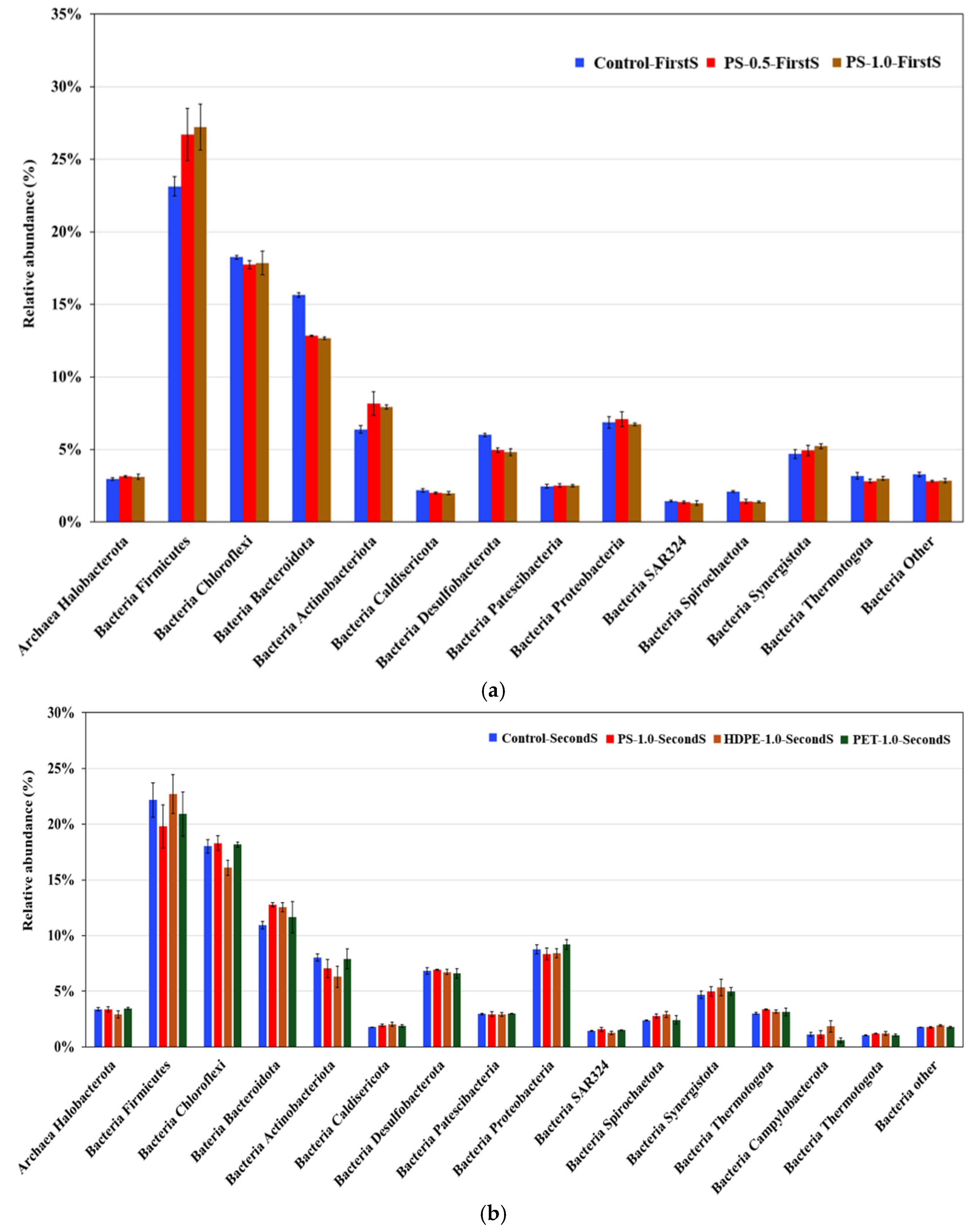
The 16S rRNA gene sequencing showed that the predominant phyla in both experimental series were
Firmicutes,
Chloroflexi,
Bacteroidota,
Proteobacteria, and
Actinobacteriota (
Figure 3a,b). In the conducted experiments, members of the phylum Firmicutes demonstrated predominant dominance within the microbial communities. Specifically, in the first series,
Firmicutes accounted for 23.14% (Control-FirstS), 26.71% (PS-0.5-FirstS), and 27.22% (PS-1.0-FirstS) of the total bacterial and archaeal populations. In the second series, their relative abundance was 22.2% (Control- SecondS), 19.82% (PS-1.0-SecondS), 22.71% (HDPE-1.0-SecondS), and 20.91% (PET-1.0-SecondS). The phylum
Chloroflexi emerged as the second most prevalent group (first series: 17.74–18.25% and second series: 16.10–18.18%), followed by
Bacteroidota (first series: 17.74–18.25% and second series: 10.96–12.77%). Other significant phyla included
Proteobacteria,
Actinobacteriota,
Synergistota, and
Desulfobacterota, each comprising approximately 6% of the core community. The seven most dominant phyla constituted 81.97% and 78.84% of the core bacterial communities in first series and second series, respectively. Among these,
Firmicutes,
Bacteroidota,
Proteobacteria,
Actinobacteriota, and
Synergistota have been consistently observed in various anaerobic digestion systems, indicating their potential functional relevance in such processes [
41,
42].
Firmicutes were the predominant bacterial phylum under conditions of stable process performance, whereas
Bacteroidota became more dominant under conditions of organic overloading [
43].
The ratio of
Firmicutes to
Bacteroidota (F/B ratio) has been proposed as an indicator of anaerobic digestion performance based on observed correlations between this microbial abundance ratio and key operational parameters [
43,
44]. The
Firmicutes-to-
Bacteroidetes (F/B) ratios in the first series were 1.47 (Control-FirstS), 2.08 (PS-0.5-FirstS), and 2.14 (PS-1.0-FirstS), while in the second series, the ratios were 2.02 (Control- SecondS), 1.55 (PS-1.0-SecondS), 1.81 (HDPE-1.0-SecondS), and 1.79 (PET-1.0-SecondS). High F/B ratios are associated with higher specific biogas yields [
45]. The values of the F/B ratio indicate that the presence of MPs, compared to the control, did not significantly affect the anaerobic digestion process.
The anaerobic digestion of organic compounds comprises four primary stages: hydrolysis, acidogenesis, acetogenesis, and methanogenesis [
46]. Among the various microbial processes involved in anaerobic digestion, archaeal communities uniquely carry out methanogenesis. In contrast, bacterial communities are responsible for the remaining stages, including hydrolysis, acidogenesis, and acetogenesis. Notably, specific bacterial groups often play a critical role in determining the overall efficiency and stability of the anaerobic digestion process [
43].
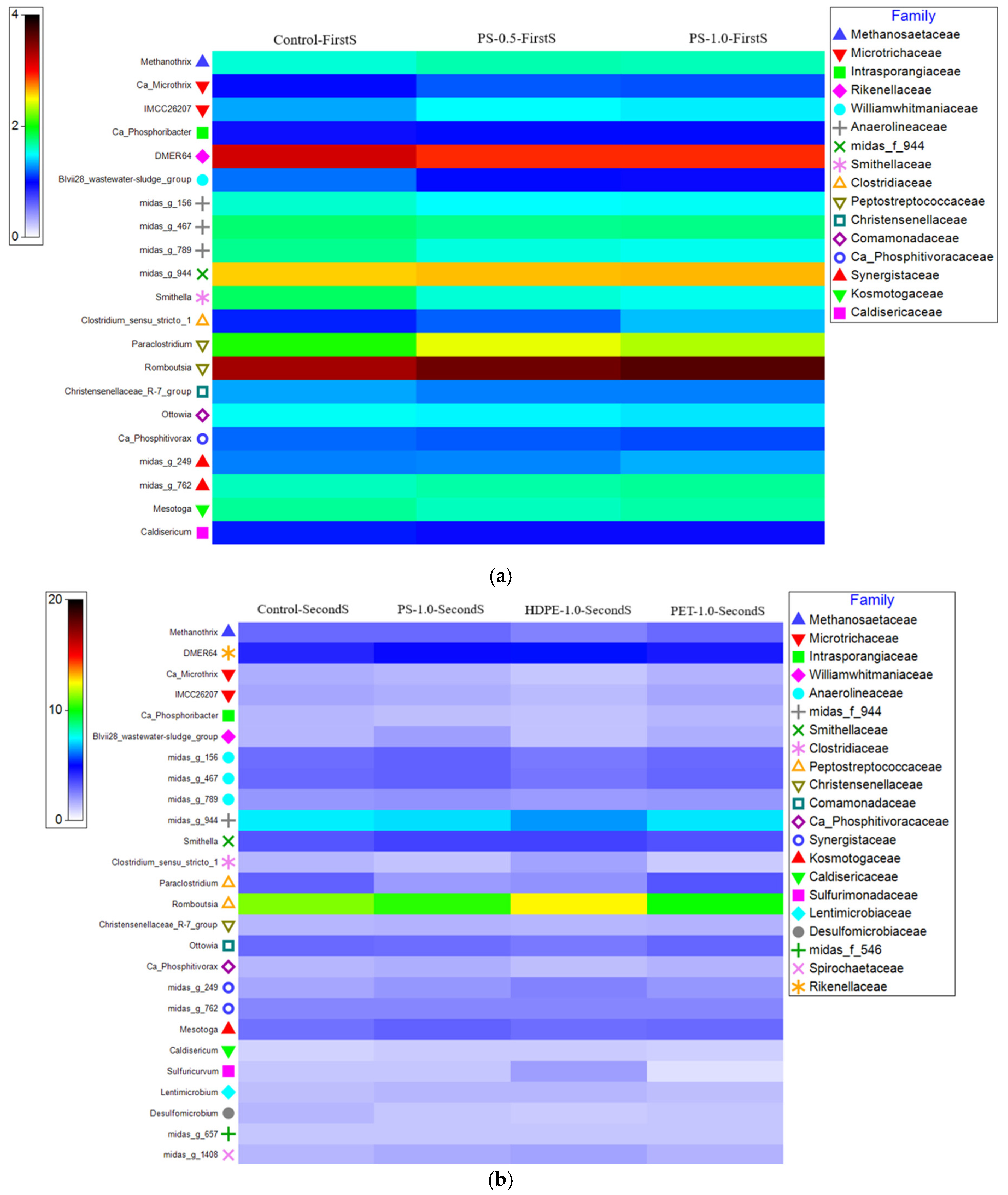
The relative abundance of the representative genera for the acidogenesis, acetogenesis, and methanogenesis steps, as reported in the recent literature [
47,
48], from the first and second series are shown in
Figure 4a and
Figure 4b, respectively. Multiple bacterial genera associated with hydrolysis, acidogenesis, acetogenesis, and syntrophic interactions were identified, each exhibiting a relative abundance exceeding 1% in at least one sample. Among these, Romboutsia was the most dominant genus, with relative abundances ranging from 11.15% to 13.32% in the first series and from 9.98% to 12.5% in the second series. This genus is characterized by extensive metabolic versatility, including the utilization of carbohydrates, the fermentation of individual amino acids, anaerobic respiration, and the production of diverse metabolic end products [
49]. The second most abundant genus was DMER64, belonging to the family
Rikenellaceae, with relative abundances of 8.41–10.01% in the first series and 4.20–5.09% in the second series. DMER64 has been suggested to participate in syntrophic interactions within anaerobic microbial communities [
50]. Other notable genera included midas_g_944 from the class Anaerolineae (6.54–6.86% in the first series and 6.40–7.23% in the second series) and Paraclostridium from the family
Peptostreptococcaceae (4.13–5.41% in the first series and 10.96–12.77% in the second series). Previous studies have demonstrated that bioaugmentation with
Paraclostridium species, in combination with multi-enzyme treatments, can enhance methane production from kitchen waste [
51]. Members of the family
Anaerolineaceae have also been identified as key participants in the AD process, particularly in the degradation of carbohydrates and proteins, often in association with methanogenic archaea [
52]. Among archaeal methanogens,
Methanothrix (family
Methanosaetaceae) was the most abundant methanogenic archaea, with relative abundances between 2.46 and 2.67% in the first series and 2.34 and 2.92% in the second series.
Methanothrix is recognized as a major methane producer in various anoxic environments, including soils, sediments, and anaerobic digesters, primarily due to its high affinity for acetate and its capacity for acetoclastic methanogenesis [
53].
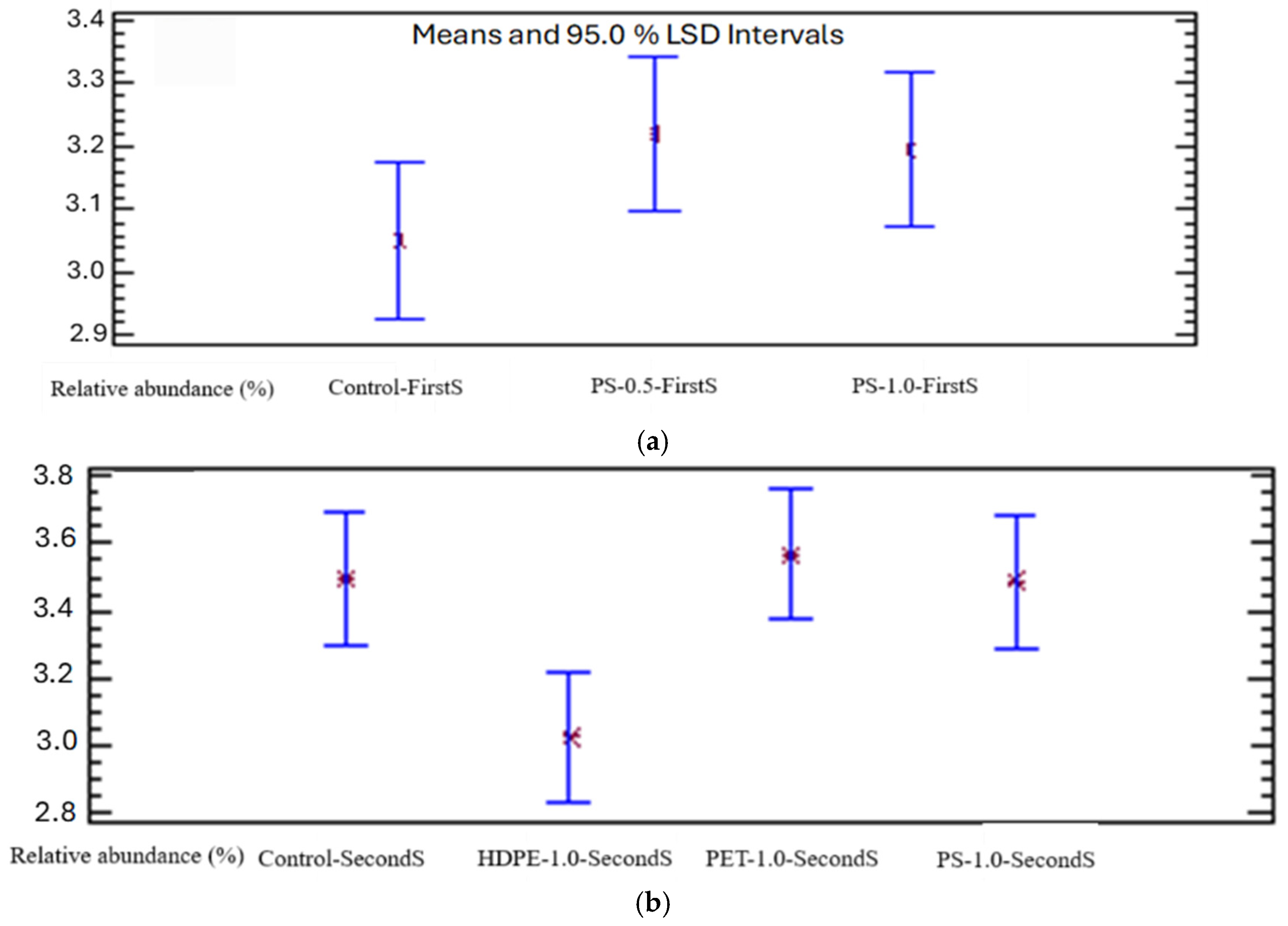
In this study, the relative abundance of methanogens did not differ significantly (
p > 0.05) among the Control-FirstS, PS-0.5-FirstS, and PS-1.0-FirstS AD samples in the first series (
Figure 5a). This result was expected since a highly biodegradable substrate should enhance microbial activity and overall digestion efficiency, helping to overcome the negative impacts of the MPs present in the feed (HDS) due to its nutrient composition and biodegradability [
54]. However, in the second series of experiments, the abundances of methanogens in HDPE-1.0-SecondS AD were significantly lower than in PS-1.0-SecondS, PET-1.0-SecondS and Control-SecondS. (
Figure 5b). In fact, this situation is similar to the one reported by Wang et al. (2022) [
55], who observed that PE MPs (10 mg·L
−1) inhibited methane production by 30.71%. The impact of MPs on methane production is highly variable and depends on the type of MP [
56]. In our work, only HPDE produced a significant decrease in methanogens.
The F ratio in the first experimental series was 0.27, and, in the second experimental series, it was 0.04. Since the p-value of the F test in experimental series two was less than 0.05, there was a statistically significant difference between the mean relative abundance from one sample level to another at the 95.0% confidence level. Fisher’s least significant difference (LSD) procedure showed that relative PE abundance was significantly lower than in the B control.




 ,
,