3.1. Impact of Pollution Sources on the Water Quality and MP Contamination in the Swartskop and uMsunduzi Rivers
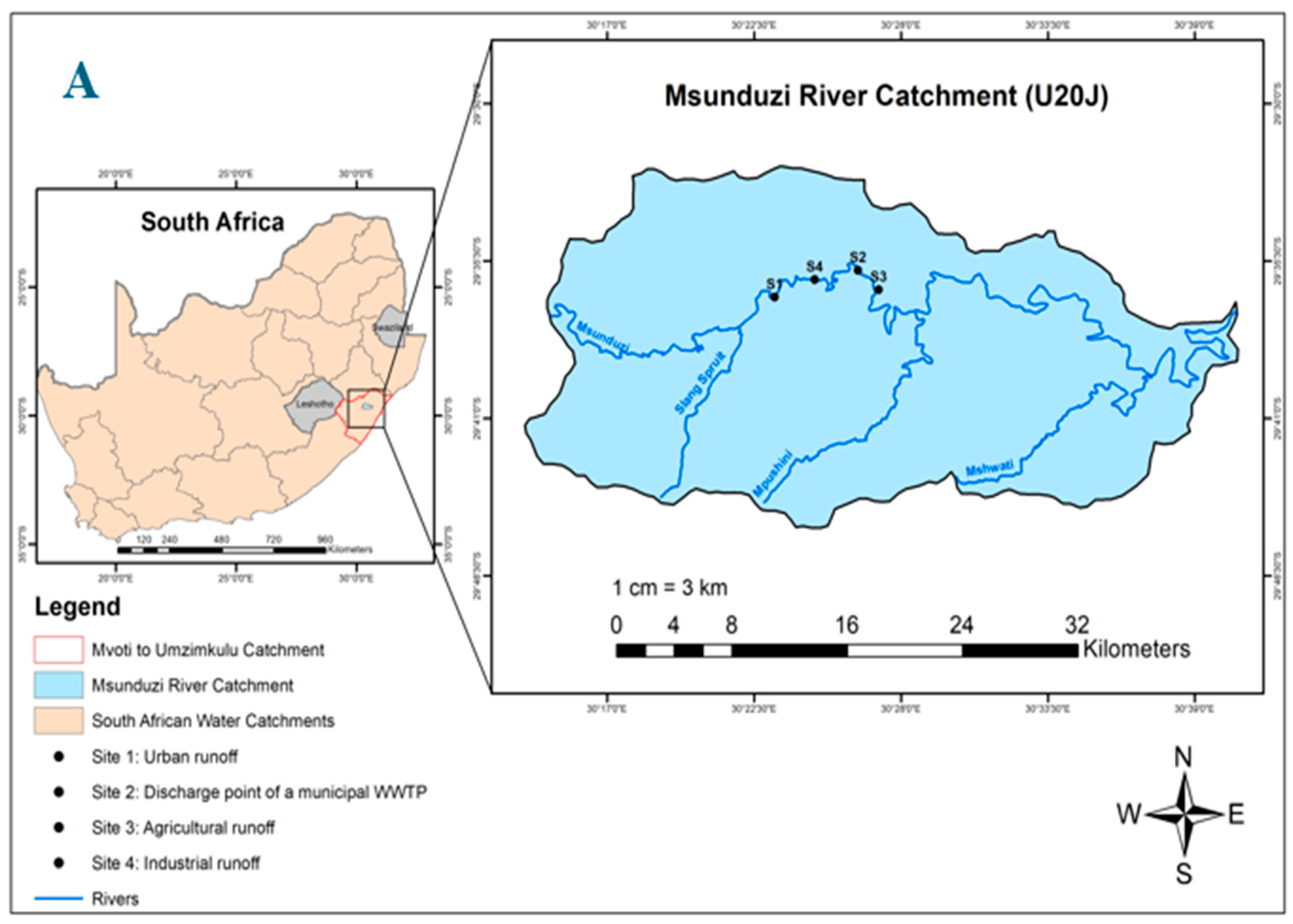
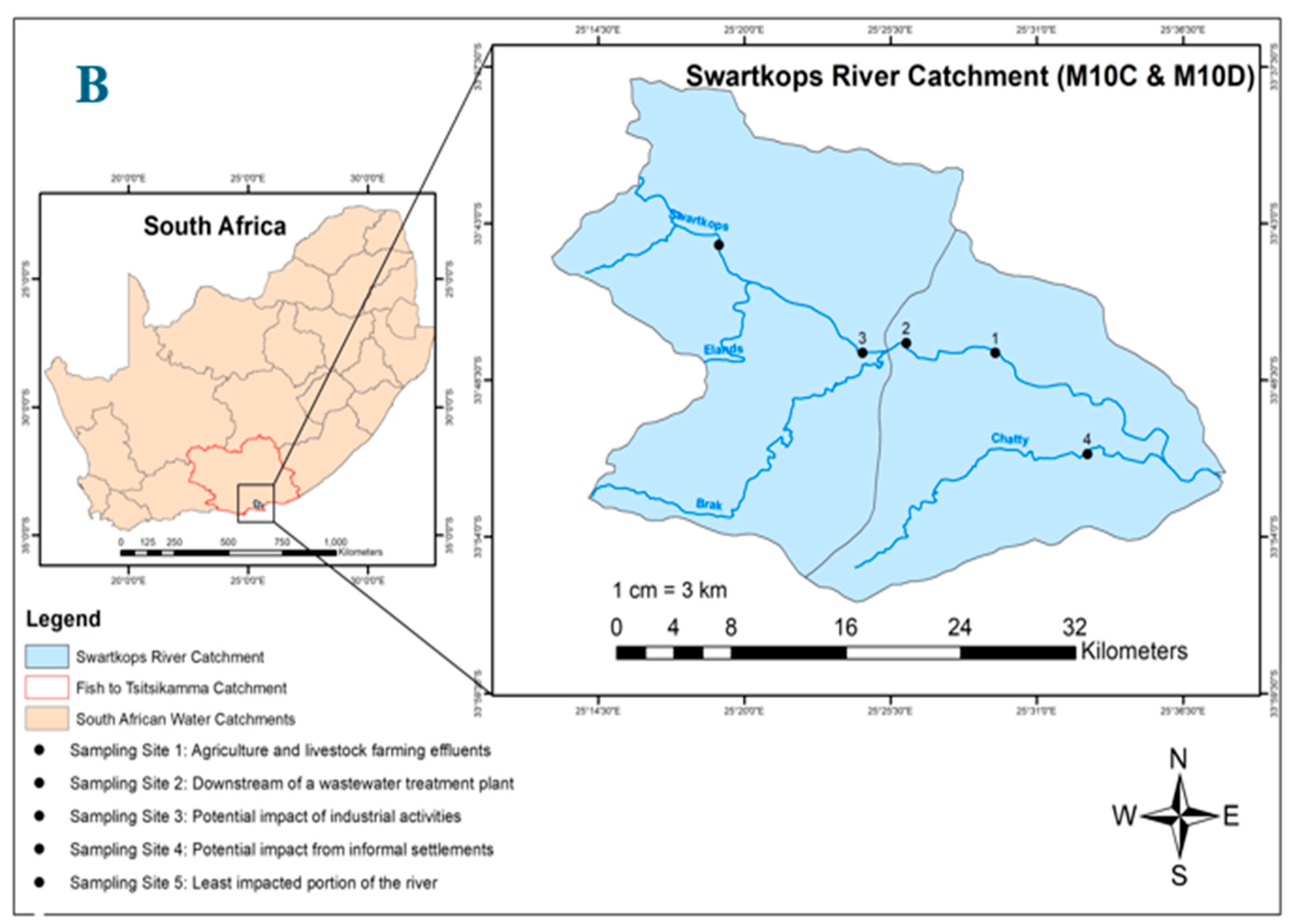
Across both rivers, land-use activities exerted a strong influence on microplastic (MP) contamination and water quality, with clear patterns emerging when different sources were compared. Industrial sites in the uMsunduzi River exhibited the highest MP concentrations, whereas agricultural sites dominated MP contamination in the Swartskop River. Additionally, wastewater treatment plant (WWTP) sites consistently showed substantial MP loads and polymer diversity, reflecting the role of treated effluents as mixed sources of pollution. These headline findings highlight the complex interplay between industrial discharge, agricultural runoff, and wastewater effluents in shaping riverine MP profiles. Pollution from anthropogenic sources not only contributed MPs but also altered key physicochemical parameters across sites. During the study period, the average temperature was 19 °C in the uMsunduzi River and approximately 20 °C in the Swartskop River (
Table S2). The pH ranged from 7.03–7.51 in the uMsunduzi and 7.40–7.7 in the Swartskop River (
Tables S2 and S3), indicating near-neutral to slightly alkaline conditions suitable for most aquatic organisms. However, ionic and particulate pollutants varied widely with land use.
In the Swartskop River, the informal settlement area (ISA) exhibited the highest specific conductivity (3202 µS/cm
2), followed by industrial areas (IA) (2917 µS/cm
2), agricultural areas (AA) (2667 µS/cm
2), and WWTP sites (2510 µS/cm
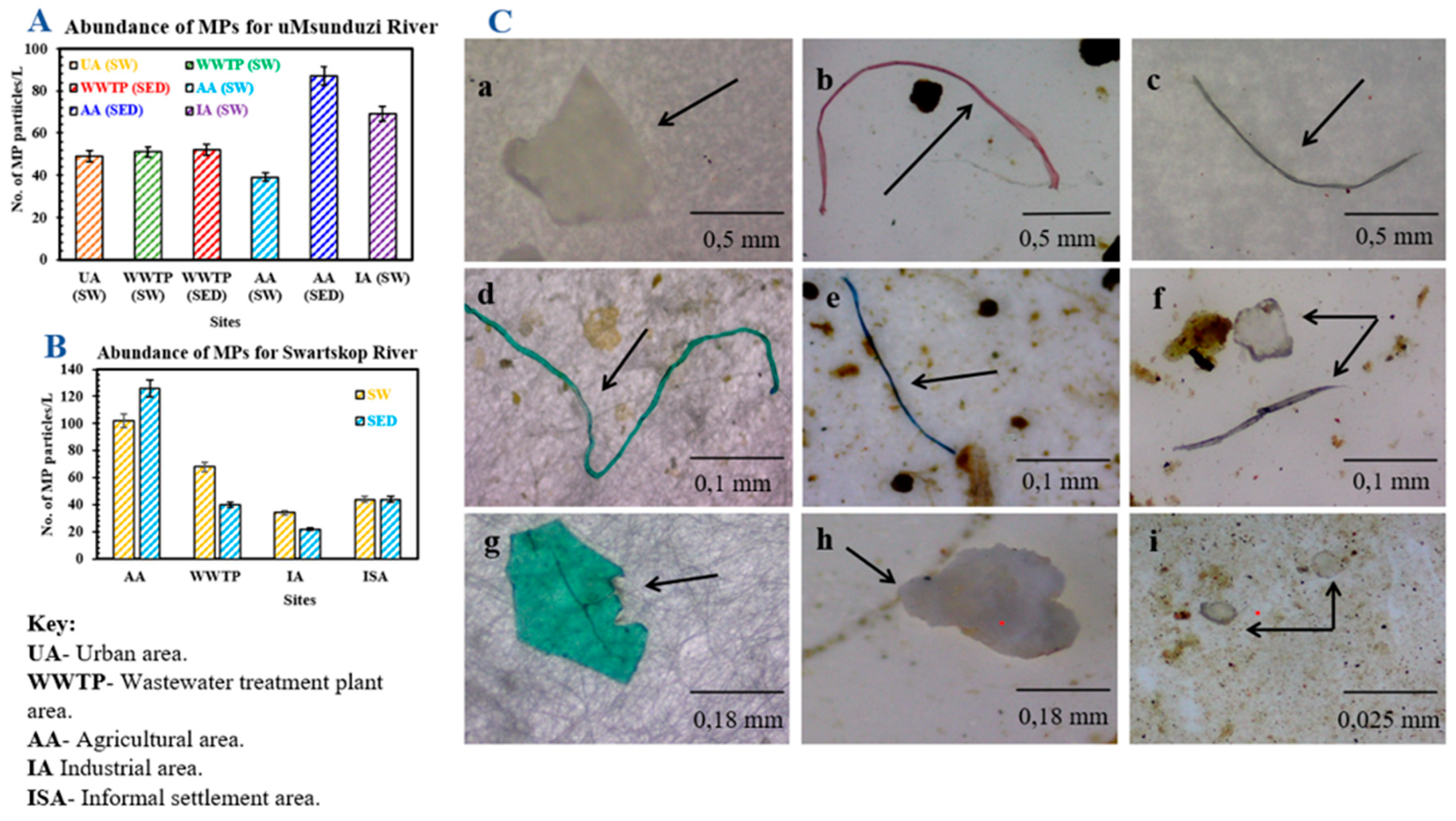
2). These elevated conductivity levels point to increased dissolved ion concentrations, likely from industrial effluents, untreated sewage, and agricultural runoff. Despite high ionic inputs from ISA and IA sites, the agricultural site recorded the highest MP concentration, with 51 (±32) particles/L detected in surface water (
Figure 2B). The use of plastic mulch, irrigation pipes, fertilizers, and pesticides in agriculture could explain this high MP load, as these materials degrade and wash into nearby waterways through runoff and soil erosion [
19,
20]. The higher microplastic concentrations observed at agricultural sites in both rivers align with previous findings from African rivers such as the Vaal and Buffalo [
9,
10] and global studies in agricultural catchments [
19,
20,
21,
22,
23,
24,
25,
26,
27], where agricultural runoff was shown to be a significant contributor to microplastic pollution compared to industrial or urban sources. This consistency indicates that agricultural activities play a major role in microplastic contamination across diverse geographic regions.
Meanwhile, turbidity in the Swartskop River ranged from 3.42 to 49.9 NTU, with the WWTP-impacted site recording the highest value (49.9 NTU), indicating substantial particulate loading from effluent discharge. Although the WWTP site exhibited the highest turbidity, the AA sites moderate turbidity, coupled with its elevated MP levels, further reinforces the role of agricultural runoff in transporting both sediments and MPs into the river. The combined influence of specific conductivity, turbidity, and MP concentrations highlights the complex interactions between pollution sources, where industrial and wastewater sites ionic and particulate pollutants, while agricultural areas serve as key sources of MPs. Similarly, in the uMsunduzi River, the highest specific conductivity was recorded at the WWTP-impacted site (2810 µS/cm
2), followed by UA (2516 µS/cm
2), IA (1962.5 µS/cm
2), and AA (1435 µS/cm
2). The elevated conductivity at the WWTP site suggests a strong presence of dissolved pollutants from treated effluents, while the lower values at AA indicate minimal ionic input from agricultural sources. The TDS, DO and COD varied across sites, ranging from 27.4 to 181.5 mg/L (TDS), 2.3 to 4.01 mg/L (DO), and 89.67 to 108.20 mg/L (COD). Notably, the highest COD was observed at the IA-impacted site (108.20 mg/L) (
Table S2), reflecting significant organic and chemical pollution likely originating from industrial discharge. This aligns with the IA site also exhibiting the highest MP concentration in surface water (69 ±71 particles/L) (
Figure 2A), reinforcing the notion that industrial processes are a primary contributor to MP pollution, as that often involve the use and disposal of plastic materials [
21,
22,
23].
Interestingly, the second-highest concentration of MP particles in both rivers was observed at the WWTP-impacted site, which is influenced by the discharge of treated wastewater. The presence of MPs in these samples raises concerns regarding the effectiveness of wastewater treatment processes in removing MPs and indicates the need for improved filtration and treatment technologies to mitigate the release of MPs into aquatic environments [
24]. In addition to surface water analysis, sediment samples were also assessed for MP abundance. Notably, some sediment concentrations exceeded those found in surface water samples for both rivers, suggesting a differential accumulation of MPs in sediments over time.
All the sediment values expressed as particles/g dry weight. For instance, the sediment concentration at the AA-impacted site in the uMsunduzi River reached 87 particles/L, significantly higher than the surface water concentration of 39 particles/L (
Figure 2A). This trend is mirrored in the Swartskop River, where the sediment concentration at the AA site was recorded at 63 particles/L, compared to 51 particles/L in surface water (
Figure 2B). These findings indicate that sediments in both rivers serve as significant reservoirs for MPs. The differential distribution of MPs between surface water and sediments emphasizes the necessity of considering both matrices in assessments of MP pollution, as they can reveal important insights into the different pollution sources in aquatic ecosystems. Overall, this comparison underscores the complexity of MP contamination and its implications for water quality, ecosystem health, and the effectiveness of pollution mitigation strategies.
It is important to note that this study provides a single-season snapshot of microplastic pollution in the uMsunduzi and Swartskops Rivers. Microplastic concentrations and distributions are expected to fluctuate seasonally and annually due to variations in rainfall, flooding, drought cycles, and human activities such as agricultural practices and textile effluent discharges. For instance, heavy rainfall and flooding events may increase surface runoff, transporting plastics into river systems, while dry periods may enhance deposition and accumulation in sediments.
3.2. Shape Distribution of Microplastics: Fibers, Fragments, and Pellets
The analysis of MP samples from both rivers revealed a diverse array of particle shapes, including fibers, fragments, and pellets. The shape distribution of MPs is a critical factor in understanding their sources, behavior, and potential ecological impacts. Typical MP particles recovered from surface water in both the uMsunduzi River and Swartskop River are illustrated in
Figure 2C, showcasing the visual diversity of these pollutants. There were four different colors of MPs observed including blue, transparent, dark blue, and red, which may reflect the range of plastic products commonly found in the environment and their origins.
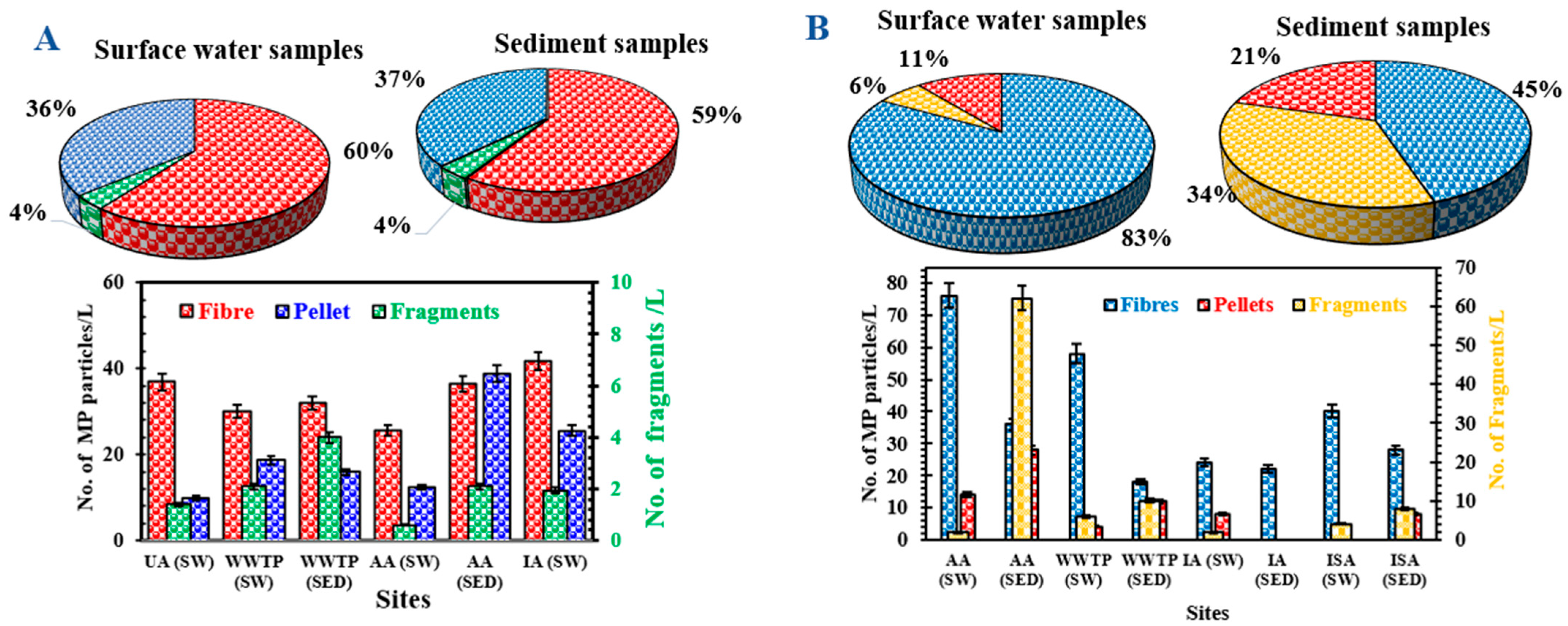
In the uMsunduzi River (
Figure 3A), fibers were the predominant MP shape in both surface water (60%) and sediment samples (59%). At the IA site, their concentration in surface water reached 42 particles/L, highlighting the strong influence of industrial activity. In sediment samples collected from the AA, fibers accounted for 36 particles/L. Although, fibers dominated across all sites, pellet concentrations at industrially impacted sites in both rivers (26–39 particles/L in surface water and sediments) were substantially higher than levels reported in many global riverine studies (e.g., Vaal River, South Africa: 5–12 particles/L; Cisadane River, Indonesia: 8–15 particles/L) [
9,
10,
26]. The presence of fibers aligns with global observations, such as those from the textile industrial area in Shaoxing City, China, where fibers were found to be the most common type of microplastic due to effluent from textile factories [
25]. This dominance of fibers indicates significant pollution from textile sources, such as washing machine effluents and textile industry discharges. Additionally, pellets were notably more prevalent at the IA site, with 26 particles/L in surface water and an even higher concentration of 39 particles/L in sediment, indicating a significant accumulation in the riverbed. Similarly, the Swartskop River (
Figure 3B) exhibited a similar trend, with fibers being the dominant shape across all sampling sites. The AA site recorded the highest concentration of fibers in surface water, at 38 particles/L, while the WWTP site showed 29 particles/L. In sediment samples, the AA site again showed a high concentration of fibers, at 18 particles/L, whereas fragments and pellets were more abundant at the AA site, with 31 particles/L. This shape distribution analysis underscores the complexities of MP pollution, emphasizing the need for targeted management strategies to address specific types of MPs based on their shapes and the environments from which they are collected.
The dominance of fibers has important ecological implications, as their long, thin morphology increases the likelihood of ingestion by aquatic organisms and potential bioaccumulation along the food chain. In contrast, pellets and fragments, due to their size and density, may settle more readily in sediments or be transported differently in the water column, influencing exposure pathways and ecological impacts.
3.3. Size Variation in Microplastics Across Sites
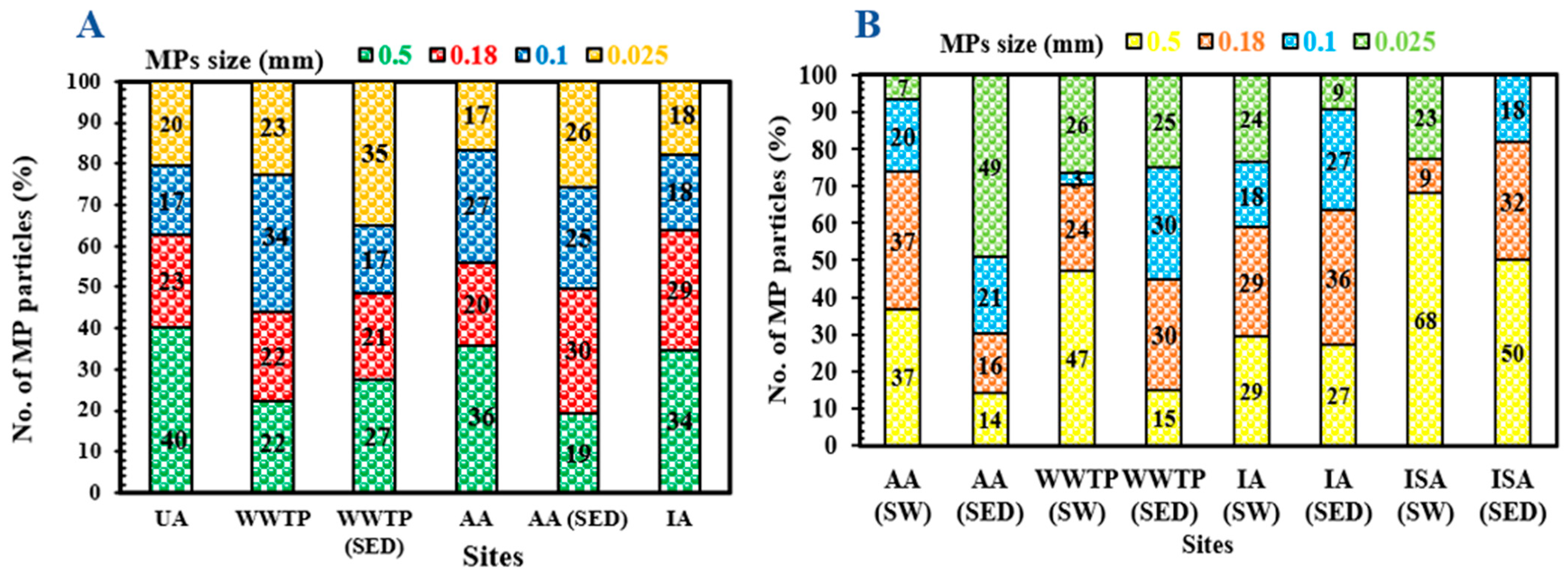
Larger MPs (0.5 mm) predominated in surface waters, while smaller particles (0.025 mm) were concentrated in sediments, highlighting contrasting accumulation patterns. The size variation in MPs in the uMsunduzi River and Swartskop River reveals significant insights into the characteristics of plastic pollution across different environments, as illustrated by the bar charts in
Figure 4A,B. The distribution of MPs was categorized into four size classes: 0.5 mm, 0.18 mm, 0.1 mm, and 0.025 mm, with distinct patterns observed in both surface water and sediment samples. In the uMsunduzi River, larger MPs (0.5 mm) were predominantly found in surface water samples, particularly at the UA site, where they constituted 40% of the total MPs, and at the AA site, accounting for 36%. Larger MPs are often derived from fragmented consumer products, packaging, and synthetic fibers that have not yet undergone extensive environmental degradation [
26,
27]. The high presence of these larger particles in ISA like that along the Swartskop River aligns with findings from other studies, such as the research on the Cisadane River in Indonesia, which found that poorly managed urban waste directly contributes to the high prevalence of larger MPs [
27]. A comparable study of the South African Vaal River by Saad et al. found that larger MPs were more common in regions with considerable human activity and inadequate waste management. This trend suggests that larger particles are more effectively transported within the water column, potentially due to their buoyant nature. At the IA site, 0.18 mm MPs made up 29% of the total, indicating a direct correlation between industrial discharge and the prevalence of this size class. While smaller size classes (0.1 mm and 0.025 mm) were present, they were less dominant, particularly at the AA site, where the 0.025 mm class made up 17% of the MPs. In contrast, sediment samples from the uMsunduzi River displayed a more balanced size distribution. Notably, smaller particles (0.025 mm) were more prevalent at the WWTP site (35%) and AA site (26%), highlighting the role of sediments in trapping these smaller MPs. This accumulation can have significant implications for benthic organisms, as smaller MPs may be ingested by various aquatic species.
In the Swartskop River, surface water samples similarly exhibited a dominance of larger MPs (0.5 mm), particularly at the ISA site, where they comprised 68% of the total MPs, followed by the WWTP site (47%). The smaller size classes were less common, with the 0.025 mm size class only accounting for 7% at the AA site. Conversely, in sediment samples, the 0.025 mm size class emerged as the most abundant, particularly at the ISA site (50%) and AA site (49%). These findings emphasize the importance of considering both surface water and sediment matrices in evaluating microplastic pollution dynamics, as they provide critical insights into the different pollution sources of the MP in the aquatic ecosystems. Notably, the high proportion of very small MPs (0.025 mm) observed in sediments (up to 50% at some sites) is comparable to reports from the Vaal River (South Africa) and the Cisadane River (Indonesia), suggesting that such fine particles are commonly retained in sediments rather than being unique to our study area.
The Spearman correlation test was run to determine the relationship between MP sizes and abundance in surface water and sediment samples across the sites. A Spearman correlation analysis showed a significant positive relationship between MP size and abundance only at the UA site in the uMsunduzi River (
r = 0.95,
p = 0.049). Most other sites showed weak or non-significant correlations (
Table S5). Overall, no consistent relationship was evident between MP size and abundance across sites. Furthermore, the Spearman correlation further revealed varying degrees of correlation for Swartskop River between the sites and habitats (surface water and sediment samples), though none of the relationships are statistically significant (
p > 0.05). Strong positive correlations were observed for surface water at AA (r = 0.768), WWTP (r = 0.7595), and ISA (r = 0.8522), as well as sediment for ISA (r = 0.9363), indicating that at these sites microplastic inputs are relatively consistent, likely reflecting continuous sources such as agricultural runoff or effluent discharge. In contrast, sediment samples for the AA (r = −0.666) revealed a moderate negative correlation and a strong negative correlation at WWTP sediment samples, suggesting more variable or intermittent sources of MPs in these matrices (
Table S5). Although this study quantified MPs down to 25 µm, we acknowledge that nanoplastics (<0.025 mm) were not captured due to methodological constraints. Nanoplastics are increasingly recognized as more bioavailable, capable of crossing biological membranes, and prone to bioaccumulation and trophic transfer in aquatic organisms [
6]. Toxicity assays in fish, bivalves, and plankton have demonstrated oxidative stress and growth inhibition at these smaller size ranges. Modeling studies further suggest that nanoplastics exhibit enhanced transport and longer residence times compared to larger MPs, consistent with findings from textile-dominated regions such as Shaoxing, China, where small fibers dominate. Future work should therefore incorporate advanced analytical tools and toxicity assays to better quantify nanoplastic fate and ecological impacts.
3.4. The Chemical Characterization of MPs Using Pyro-GC/MS
The detection of MPs in the Swartskop River sites using Pyro-GC/MS analysis indicates a diverse range of pyrolysis products that point towards different plastic pollutants. At the AA site the most dominant pyrolysis products identified were 2,4-Dimethylhept-1-ene (23%) Benzene (15%), Hexanal (11%), Bicyclo[2.1.1]hexan-2-ol, 2-ethenyl-(4%), 1-Undecene, 7-methyl-(4%), Benzene, 1,2-dimethyl-(3%), as shown in
Table 1. Pyro compound 2,4-Dimethylhept-1-ene (23%) was present in high composition which is associated with PE or PP [
28]. Its high percentage indicates that agricultural activities near the Swartskop River likely involve significant use of these plastics, potentially in irrigation pipes, plastic sheeting, or packaging. Pyro compound Benzene is an aromatic compound that was probably derived from PS or PVC, this suggests a notable presence of consumer or industrial waste in the area, possibly from plastic containers, packaging, or insulation materials [
29]. Hexanal is a linear chain aldehyde that may result from the degradation of polymers such as PE, and PP [
30]. Bicyclo[2.1.1] hexan-2-ol, 2-ethenyl- (4%) a minor component, this compound could be indicative of specialty plastics or additives which was probably derived from blending pyrolysis of PE and PP [
31]. The 1-Undecene, 7-methyl is a long chain linear structure pyro product that could be derived from PE and PP commonly used in packaging materials. The one minor pyro product Benzene, 1,2-dimethyl- (also known as o-Xylene) is used in the production of styrene, which is a key monomer for polystyrene [
32].
In the WWTP-impacted site in the surface water revealed the presence of several pyrolysis products: 1,3-Dioxolan-4-one, 2-(1,1-dimethylethyl)-5-(1-methylethyl)-, (2s-cis)-: (56.7%), Propyphenazone (3%), and n-Hexadecanoic acid (6%). These findings indicate that most detected MPs are likely composed of synthetic polymers or additives, with 1,3-Dioxolan-4-one being the dominant pyrolysis product. The compound 1,3-Dioxolan-4-one, 2-(1,1-dimethylethyl)-5-(1-methylethyl)- is a pyrolysis byproduct, and while it may not directly point to a specific type of plastic, it can be associated with synthetic materials or additives used in plastic production [
33]. This type of compound might originate from polymers such as polyesters, polycarbonates, or certain synthetic resins, which degrade during pyrolysis. The other compound propyphenazone is a non-steroidal anti-inflammatory drug (NSAID) commonly used for its analgesic (pain-relieving) and antipyretic (fever-reducing) properties, which is associated with pharmaceutical drugs [
34]. It should be noted that some pharmaceutical compounds detected (e.g., propyphenazone) may not be directly associated with plastic polymers but rather originate from wastewater effluents. These should therefore be considered as co-pollutants occurring alongside MPs, reflecting the mixed nature of anthropogenic discharges into river systems. n-Hexadecanoic acid (6.1%) is the potential pyro product of MPs of PE and PP. These polymers are widely used in packaging and household products [
29]. At the IA site, Hexacosane (87.7%) is a straight alkane comprising 26 carbon atoms. This was a major compound that indicated the presence of PE especially high-density polyethylene (HDPE) and low-density polyethylene (LDPE). The Pentafluoropropionic acid (3.8%) is a pyrolysis product of fluorinated polymers, particularly polytetrafluoroethylene (PTFE) and related fluoropolymers. During pyrolysis, these polymers can decompose and release various fluorinated compounds, including pentafluoropropionic acid [
35]. Nonacosanol (3.65%), a long-chain fatty alcohol, is not a common pyrolysis product of typical synthetic plastics like PE, PP, or PS. Instead, it is more likely to arise from natural waxes or biopolymers, such as those found in plant materials or certain biodegradable plastics. It can be associated with the pyrolysis of natural substances like polysaccharides or lipid-based materials, rather than traditional petroleum-based plastics [
36]. Propyphenazone (3.1%) was detected which is a pharmaceutical drug, not a polymer pyroproduct. The ISA site features R-(-)-Cyclohexylethylamine (35.88%), is an organic compound that can form as pyrolysis byproduct of certain polymers, such as polyamides (nylon) and PS. Additionally, it has been reported to be found in rubber products like tires, suggesting potential contributions from these sources as well [
37]. The 2,4-Dimethylhept-1-ene (23.96%) compound is produced from the degradation of PE and PP [
28]. The Bicyclo[4.2.0]octa-1,3,5-triene (6.41%) also known as “barrelene,” is a strained hydrocarbon structure, and polylefin or polystyrene, when subjected to high heat or catalytic degradation derived from PS, this aromatic compound further indicates the presence of in this ISA site [
31]. 7-Methyl-1-undecene is a pyrolysis product primarily associated with the thermal degradation of certain types of polyolefins, such as PP and PE. These polymers, when subjected to high temperatures, can break down and form a range of hydrocarbons, including 7-methyl-1-undecene [
29].
The presence of MPs in the AA site sediment samples in Swartskop River points to potential plastic contamination from agricultural materials. The identified compounds are 2-Propanone 1-hydroxy-(8.51%), Benzene (8.62%), and 2-Oxiranylmethyl acetate (7.68%). The 2-Propanone, 1-hydroxy- (commonly known as acetone) is a pyrolysis product of various polymers, particularly those containing carbonyl groups likely derived from polycarbonate (PC) and PS [
38]. The Benzene, ethenyl- (8.62%) indicated contamination, the primary monomer of PS, which is commonly found in packaging materials and can enter the environment through agricultural waste or plastic mulch [
32], while the detection of 2-Oxiranylmethyl acetate (7.68%), derived from cellulose acetate, in sediment samples suggests that agricultural activities may contribute to microplastic pollution in the form of cellulose acetate. Cellulose acetate is considered a bioplastic, it can still degrade into microplastic particles under certain conditions [
39]. The pyro compound detected in the WWTP-impacted site sediment sample was 2,4-Dimethylhept-1-ene (11.5%), 1-Decene (6.8%), 1-Undecene (4.71%), and 1-Dodecene (4.11%). All these compounds are long-chain hydrocarbons primarily derived from PE [
40]. The Benzene ethenyl- (39.25%) in the IA-impacted site sediment sample is the key pyrolyzate aromatic compound, which was produced from PS polymer [
32]. The other pyrolyzate compounds 1-decene (6.48%), and 1-undecene (5.1%), 1-dodecene (6.71%) and cetene (7.94%) are long-chain hydrocarbons primarily derived from PE [
40]. The dominance of Benzene, and ethenyl- suggests industrial discharge, while the presence of alkenes like 1-Decene indicates potential contamination from polyolefin plastics. The primary Pyrolyzate compounds detected in the ISA sediment sample were 2,4-Hexadiyne (25.82%), Benzene, ethenyl- (10.27%), and Benzene, methyl- (3.63%). Compound 2,4-hexadiyne also cellulose acetate which is a bioplastic and used as a film base in photography, as a component in some coatings, and as a frame material for eyeglasses; it is also used as a synthetic fibre in the manufacture of cigarette filters and playing cards. During pyrolysis, polybutadiene can break down and form various unsaturated hydrocarbons, including 2,4-hexadiyne [
39]. The other compounds Benzene, ethenyl- and Benzene, methyl- are primary monomer of PS, which is commonly found in packaging materials and can enter the environment through agricultural waste or plastic mulch [
32]. These findings suggest the sediment is heavily impacted by plastic debris, possibly from treated wastewater discharges.
The detection of MPs in surface water samples from the UA-impacted site near the uMsunduzi River revealed a diverse range of pyrolysis products, indicating various plastic pollutants. The amount of 1,30-Triacontanediol (40.9%), Heptacosane (31.26%), and Nonacos-1-ene (18.43%) were detected pyroptoducts indicating a dominance of PE, commonly found in urban waste [
28]. High concentrations of Heptacosane (31.26%) and Nonacos-1-ene (18.43%) were also detected. Heptacosane is saturated hydrocarbon formed from the breakdown of synthetic polymers, suggesting urban plastic pollution, and Nonacos-1-ene unsaturated hydrocarbon typically derived from PE, commonly found in urban environments due to high plastic use [
36,
40]. These compounds reflect the degradation of long-chain hydrocarbons characteristic of these widely used plastics in packaging, containers, and consumer products. The pyro-GC/MS analysis of MPs detected in the surface water sample of the WWTP-impacted site at uMsunduzi River revealed the presence of several pyrolysis products. Benzene (60.33%), Propyphenazone (8.18%), Benzene ethenyl- (5.13%) and Benzaldehyde (3.78%). The presence of Benzene, and Benzene ethenyl- indicates significant PS degradation, a material prevalent in consumer waste treated at wastewater effluent [
29], while Propyphenazone related pharmaceutical production analgesic drugs, suggests that sewage pollution is not limited to plastics, but also includes pharmaceutical contaminants, indicative of a diverse range of pollutants entering wastewater systems [
34]. Pyrolyzed compounds like Benzaldehyde is aromatic ring structure molecules derived from PS, PP, and PVC [
29,
32]. Microplastics detected in AA site surface water samples included compound Benzene, ethenyl- (25.15%), 2,4-Hexadiyne (24.78%), Benzene, methyl (6.54%), and Benzaldehyde (5.26%). The Benzene, ethenyl-, Benzene, methyl indicating the presence of PS, while 2,4-Hexadiyne product of ABS plastic or cellulose acetate plastics [
29,
39]. The Benzaldehyde products of PS, PP, and PVC. The major pyrolyzate compounds detected in the surface water sample from the IA sites were traced, i.e., Tetratetracontane (9.94%), Hexacosane (9.22%), 1-Heptadecene (4.5%), and 1-Hexanol, 2-ethyl- (5.09%). Tetratetracontane and hexacosane are long-chain alkanes commonly associated with the degradation of PE [
36]. It may originate from plastic packaging, industrial wraps, or other polymer-based materials used in manufacturing and transport. 1-Heptadecene is an unsaturated hydrocarbon is associated with the degradation of polyethylene or other polyolefins. It could be linked to industrial by-products or the breakdown of lubricants and additives in plastic manufacturing processes [
40]. 1-Hexanol, 2-ethyl- is a common plasticizer or additive used in industrial plastics and may also derive from the breakdown of plastic products like PVC or other polymeric materials [
40].
In the WWTP-impacted site sediment samples in uMsunduzi River, Heneicosyl heptafluorobutyrate (72.78%) is a compound that is a likely derivative of Polytetrafluoroethylene (PTFE), and 1,19-Eicosadiene (23.32%) long-chain diene is another product of PE degradation. Heneicosyl heptafluorobutyrate (72.78%) is a fluorinated ester, potentially derived from fluoropolymer coatings or fluorinated surfactants used in industrial applications [
40]. These compounds are commonly found in non-stick coatings, waterproofing agents, and firefighting foams (PFAS-related products). Fluorinated chemicals are persistent in the environment and often end up in wastewater systems. 1,19-Eicosadiene is a long-chain hydrocarbon, typically associated with the degradation or breakdown of polyolefins like PE [
40]. These plastics are commonly used in packaging, textiles, and other consumer products, and their degradation can release such hydrocarbons into wastewater. The AA site sediment samples, Hexacosane (59.27%), Octacosane (27.43%), and Tetratetracontane (9.7%), are long-chain hydrocarbons commonly associated with the breakdown of PE, which are extensively used in agricultural activities [
36]. Additionally, some of these long-chain hydrocarbons can also be linked to lubricants, waxes, and residues from pesticides or fertilizers used in farming. The presence of these compounds suggests plastic degradation and possible contamination from agricultural activities. The pyrolysis products identified across different sites highlight the complexity and diversity of plastic contamination in South African rivers. Overall, PE and PP were the dominant polymers across both rivers, while PS was primarily associated with industrial and wastewater sources. Agricultural areas contributed primarily polyolefins, industrial sites added specialty plastics such as PTFE, and WWTPs released diverse polymers along with pharmaceutical residues. Sediments consistently showed higher accumulation of PE and PS, confirming their role as long-term reservoirs of MPs. This analysis not only identifies the types of plastics present but also provides insights into their degradation processes and potential environmental implications, thereby informing strategies for pollution management and mitigation in these ecosystems.
Table 1.
Characteristic pyrolyzate compounds for uMsunduzi River and Swartskop River samples.
Table 1.
Characteristic pyrolyzate compounds for uMsunduzi River and Swartskop River samples.
| Pyrolyzate Compounds | Spectra Peak Area (%) | Retention Time (min) | Chemical Formula; PubChem CID | Probable Produced From | References |
|---|
| | Swartskop River |
|---|
| AA (SW) |
|---|
| 2,4-Dimethylhept-1-ene | 23.24 | 4.747 | C9H18; 123385 | PE, PP, PS, PVC | [32,41] |
| Benzene | 15.58 | 2.293 | C6H6; 241 | PS, PET, PVC | [32] |
| Hexanal | 11.96 | 2.163 | C6H12O; 6184 | PE, PP, | [30] |
| Bicyclo[2.1.1]hexan-2-ol, 2-ethenyl- | 4.71 | 5.985 | C8H12O; 560888 | Blending Pyrolysis of PE, PP | [31] |
| 1-Undecene, 7-methyl- | 4.13 | 17.749 | C12H24; 522554 | PE, PP | [40] |
| Benzene, 1,2-dimethyl- | 3.08 | 4.747 | C8H10; 7237 | PS | [32] |
| WWTP (SW) |
| 1,3-Dioxolan-4-one, 2-(1,1-dimethylethyl)-5-(1-methylethyl)-, (2s-cis)- | 56.77 | 48.56 | C10H18O3; 91701869 | Nylon, PET | [33] |
| Propyphenazone | 3.94 | 14.676 | C14H18N2O; 3778 | Pharmadrugs | [34] |
| n-Hexadecanoic acid | 6.1 | 33.374 | C16H32O2; 985 | PE, PP | [29] |
| IA (SW) |
| Hexacosane | 87.78 | 41.54 | C26H54; 12407 | PE (HDPE/LDPE pyrolytics) | [36] |
| Pentafluoropropionic acid, hexadecyl ester | 3.89 | 36.976 | C19H33F5O2; 525401 | Polytetrafluoroethylene (PTFE) | [35] |
| Nonacosanol | 3.65 | 36.528 | C29H60O; 243696 | PE, PP | [36] |
| Propyphenazone | 3.1 | 15.235 | C14H18N2O; 3778 | Pharma drugs | [34] |
| ISA (SW) |
| R-(-)-Cyclohexylethylamine | 35.88 | 2.178 | C8H17N; 110733 | Nylone, PS | [37] |
| 2,4-Dimethylhept-1-ene | 23.96 | 4.754 | C9H18; 123385 | PE, PP, PS, PVC | [28] |
| Bicyclo[4.2.0]octa-1,3,5-triene | 6.41 | 5.998 | C8H8; 69667 | Blending Pyrolysis of PE, PP | [31] |
| 7-Methyl-1-undecene | 4.57 | 17.755 | C12H24; 522554 | PE, PP | [29] |
| AA (Sediment) |
| 2-Propanone, 1-hydroxy- | 8.51 | 2.267 | C3H6O2; 8299 | PS, PC | [38] |
| Benzene, ethenyl- | 8.62 | 5.983 | C8H8; 7501 | PS | [32] |
| 2-Oxiranylmethyl acetate | 7.68 | 3.436 | C5H8O3; 110839 | Cellulose acetate | [39] |
| WWTP (Sediment) |
| 2,4-Dimethylhept-1-ene | 11.46 | 4.784 | C9H18; 123385 | PE, PP | [40] |
| 1-Decene | 6.77 | 8.729 | C10H20; 13381 | PE |
| 1-Undecene | 4.71 | 11.714 | C11H22; 13190 | PE |
| 1-Dodecene | 4.11 | 14.679 | C12H24; 8183 | PE, Nylone |
| IA (Sediment) |
| Benzene, ethenyl- | 39.25 | 5.999 | C8H8; 7501 | PS | [32] |
| 1-Decene | 6.48 | 8.717 | C10H20; 13381 | PE | [40] |
| 1-Undecene | 5.1 | 11.714 | C11H22; 13190 | PE |
| 1-Dodecene | 6.71 | 14.69 | C12H24; 8183 | PE |
| Cetene | 7.94 | 22.808 | C16H32; 12395 | PE |
| ISA (Sediment) |
| 2,4-Hexadiyne | 25.82 | 2.281 | C6H6; 137727 | ABS plastic, cellulose acetate plastics | [39] |
| Benzene, ethenyl- | 10.27 | 5.994 | C8H8; 7501 | PS | [32] |
| Benzene, methyl- | 3.63 | 3.461 | C7H8; 1140 | PS | [32] |
| uMsunduzi River |
| UA (SW) |
| 1,30-Triacontanediol | 40.96 | 33.856 | C30H62O2; 543982 | PE | [28] |
| Heptacosane | 31.26 | 42.12 | C27H56; 11636 | PE (HDPE/LDPE) | [36] |
| Nonacos-1-ene | 18.43 | 38.783 | C29H58; 156989 | PE | [40] |
| WWTP (SW) |
| Benzene | 60.33 | 2.285 | C6H6; 241 | PS, PET, PVC | [32] |
| Propyphenazone | 8.18 | 15.235 | C14H18N2O; 3778 | Pharmadrugs | [34] |
| Benzene, ethenyl- | 5.13 | 5.984 | C8H8; 7501 | PS | [32] |
| Benzaldehyde | 3.78 | 7.943 | C7H6O; 240 | PS, PP, PE and nylon | [42] |
| AA (SW) |
| Benzene, ethenyl- | 25.15 | 6.004 | C8H8; 7501 | PS | [32] |
| 2,4-Hexadiyne | 24.78 | 2.282 | C6H6; 137727 | ABS plastic, cellulose acetate plastics | [39] |
| Benzene, methyl- | 6.54 | 3.453 | C7H8; 1140 | PS | [32] |
| Benzaldehyde | 5.26 | 7.943 | C7H6O; 240 | PS, PP, PE and nylon | [42] |
| IA (SW) |
| Tetratetracontane | 9.94 | 29.56 | C44H90; 23494 | PE | [36] |
| Hexacosane | 9.22 | 31.554 | C26H54; 12407 | PE (HDPE/LDPE pyrolytics) | [36] |
| 1-Hexanol, 2-ethyl- | 5.09 | 9.916 | C8H18O; 7720 | PE | [40] |
| 1-Heptadecene | 4.5 | 31.786 | C17H34; 23217 | PE | [40] |
| WWTP (Sediment) |
| Heneicosyl heptafluorobutyrate | 72.78 | 41.09 | C25H43F7O2; 13932483 | Polytetrafluoroethylene (PTFE) | [40] |
| 1,19-Eicosadiene | 23.32 | 48.681 | C20H38; 519006 | PE | [36] |
| AA (Sediment) |
| Hexacosane | 59.27 | 32.724 | C26H54; 12407 | PE | [36] |
| Octacosane | 27.43 | 32.27 | C28H58; 124008 | PE |
| Tetratetracontane | 9.7 | 31.52 | C44H90; 23494 | PE |
3.5. ATR-FTIR Data Analysis of Samples Collected from Sites near the Swartskop and uMsunduzi Rivers for Microplastic Detection
The analysis of MP samples using ATR-FTIR revealed significant spectral peaks corresponding to distinct functional groups, reflecting the chemical nature of the pollutants [
43]. Unlike Pyro-GC/MS, which provides detailed molecular fragmentation patterns, ATR-FTIR offers a rapid, non-destructive approach for confirming functional groups and cross-verifying polymer identities. This makes ATR-FTIR particularly valuable for quick polymer screening, while Pyro-GC/MS provides deeper molecular-level confirmation. ATR-FTIR confirmed polymer types and their distribution in surface water and sediment samples from the Swartskop and uMsunduzi rivers. The comparison of results from both rivers across different sites highlights the diversity and sources of plastic pollution, as well as the potential environmental implications. In surface water samples from WWTP-impacted sites of the Swartskop River showed significant peaks 1720 cm
−1, 1250 cm
−1, 1100 cm
−1, and 700 cm
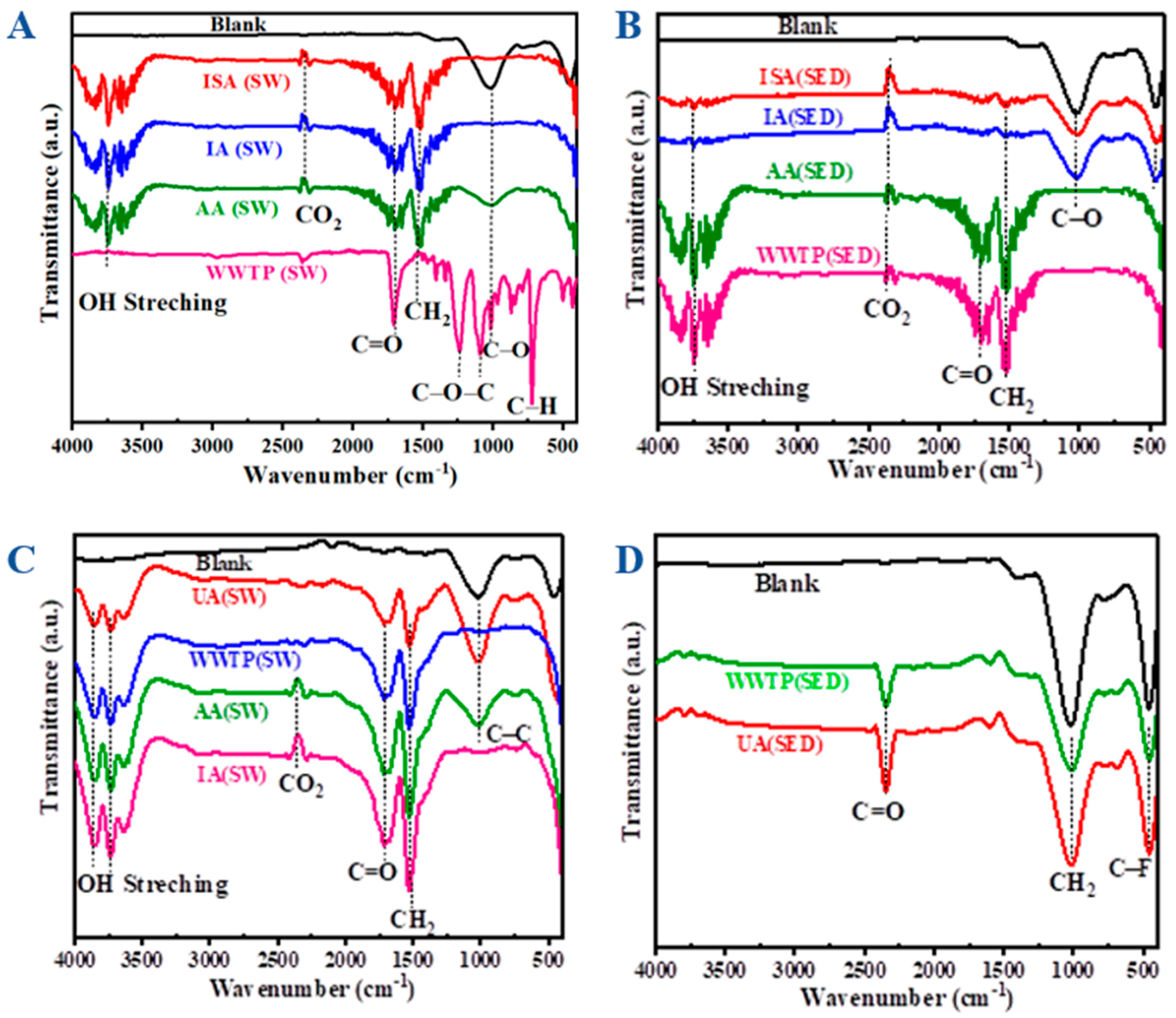
−1 could be attributed to different functional groups commonly associated with the compounds mentioned (
Figure 5A). The spectral band near 1720 cm
−1 corresponds to the C=O (carbonyl) stretching vibration, which is typically associated with esters, aldehydes, or carboxylic acids. This feature is often found in PET as well as in certain plasticizers or additives like n-hexadecanoic acid. This identification is supported by pyrolysis GC-MS analysis affirming the presence of PET, commonly used in beverage containers and textile fibers, indicating potential contributions from domestic or industrial wastewater sources [
29,
33]. The spectral band at 1250 cm
−1 attributed to C–O stretching, is characteristic of PC and PLA, both commonly used in packaging, electronics, and disposable products. In pyrolysis-GC/MS analysis, the presence of 1,3-Dioxolan-4-one is often linked to the thermal degradation of PC [
33]. This compound, a cyclic carbonate derivative, is consistent with known degradation pathways of PC, which include chain scission leading to the formation of cyclic carbonates, phenolic compounds, and other low-molecular-weight products. The 1100 cm
−1 band, linked to C–O–C stretching vibrations, is a characteristic feature of polyethers and can also be seen in PVA and modified cellulose acetate materials often found in films, fibers, and household products. The 700 cm
−1 peak corresponds to out-of-plane C-H bending in aromatic compounds, commonly seen in aromatic compounds like propyphenazone, which is PS and certain PVC formulations [
34].
At the AA site, located in an area influenced by agricultural activities, ATR-FTIR analysis revealed that PE and PS were the predominant polymers detected in surface water samples. The surface water samples from the AA site showed similar peaks near 1708 cm
−1, indicating the signal of functional groups such as aldehydes, ketones, or carboxylic acids, likely related to compounds like hexanal. Hexanal, or similar compounds, can result from the thermal degradation of PE (particularly low-density polyethylene, LDPE) [
30]. Additionally, a spectral band near 1543 cm
−1 was noted, corresponding to aromatic ring stretching, which may indicate the presence of an aromatic compound like Benzene or a derivative (e.g., 7-methyl-Benzene). These compounds are known pyrolysis products of PS [
32]. The spectral band near 1093 cm
−1 typically indicative of C-O or C-N stretching, which could be related to alcohols (Bicyclo[2.1.1]hexan-2-ol) or ether groups. These functional groups can be present in pyrolysis products that have been reported in studies analysing the thermal degradation of PE and, occasionally, PP [
31]. In the IA-impacted site sample, intense peaks showed near 1708 cm
−1 and 1543 cm
−1, both are associated with carbonyl (C=O) stretching in propyphenazone. Propyphenazone is not a typical pyrolysis product of plastics. It is a compound that may be associated with pharmaceutical or chemical contexts rather than plastic degradation products [
34]. Additionally, intense peak at 3750 cm
−1 peak could either be from nonacosanol (due to its hydroxyl group) or atmospheric moisture. Nonacosanol is a long-chain alcohol that can be a pyrolysis product of various plastics, particularly PE and PP. These polymers, when subjected to pyrolysis (high temperature breakdown), can produce a wide range of hydrocarbons and alcohols, including nonacosanol [
36].
In the ISA-impacted site sample intense spectral band near 1708 cm
−1 typically associated with a carbonyl (C=O) stretching in compounds like amides, esters, or ketones. It could be linked to the amine group present in R-(-)-Cyclohexylethylamine, although it is unusual for simple amines to have such a strong C=O stretch. R-(-)-Cyclohexylethylamine, an amine, is the most likely candidate responsible for peaks near 1543 cm
−1 and 3750 cm
−1 (N-H bending and stretching). Spectral band 3750 cm
−1 more common for hydroxyl groups (O-H stretch) rather than amine N-H stretches. The R-(-)-Cyclohexylethylamine is a product that can arise from the pyrolysis of certain plastic materials, particularly those containing cyclohexyl or ethylamine functional groups. One of the plastics that could produce this compound upon pyrolysis is polyamide (such as nylon), as it can contain amide groups that decompose into smaller amines during thermal degradation [
37]. The MPs detected in the uMsunduzi River, analyzed by ATR-FTIR in surface water samples collected from various active sites, showed the various functional groups, indicating the significant presence of MPs (
Figure 5C). The spectral band in the UA-impacted sample near 1002 cm
−1 is typically associated with C–C stretching vibrations in aliphatic compounds, which could be observed in heptacosane or nonacos-1-ene are typically pyrolysis products associated with PE [
36]. These compounds arise due to the thermal degradation of the polymers during pyrolysis, where long-chain hydrocarbons like alkanes (e.g., heptacosane) and alkenes (e.g., nonacos-1-ene) are produced [
40]. While the spectral band 1509 cm
−1 corresponds to C=C bending or aromatic skeletal vibrations in aromatic compounds, possibly linked to Benzene and Ethenyl-Benzaldehyde, which was produced from pyrolysis of PS [
32,
42]. Another intense peak near 1702 cm
−1 indicative of C=O stretching, which is characteristic of carbonyl compounds like esters or aldehydes corresponding to compound Benzaldehyde [
42]. The common spectral band near 1509 cm
−1 in all the sample sites in (WWTP, AA and IA) is typically associated with the C=C stretching vibrations in aromatic compounds, indicating the presence of a conjugated system, common in benzene and its derivatives (i.e., Benzene, ethenyl-; Benzene, methyl-; Benzaldehyde), these benzene derivatives mainly come from the pyrolysis of polystyrene, polycarbonate, and polyethylene terephthalate [
32]. Another band near 1702 cm
−1 in all the sample sites in (WWTP, AA and IA) associated by carbonyl (C=O) stretching vibrations, which is often seen in aldehydes, ketones, or carboxylic acids. It may correspond to 1-hexanol, 2-ethyl- or similar compounds with carbonyl functional groups in IA site. These compounds might be produced from the pyrolysis of plastics, particularly from the degradation of certain polymers like PVC and PE [
40]. The spectral band near 1002 cm
−1 in the surface water sample near the sites UA and AA typically associated with the C-H bending vibrations, which can be found in various plastics, particularly in the aromatic compounds or certain polymer structures. Compounds like styrene (benzene, ethenyl-), toluene (benzene, methyl-), and long-chain hydrocarbons such as heptacosane and nonacos-1-ene can support this peak due to their molecular structures, which involve aromatic rings or alkyl chains [
28,
36,
40]. Lastly, the spectral band near 3750 cm
−1 indicative of O-H stretching vibrations, typical for alcohols (like 1-hexanol, 2-ethyl-; 1,30-Triacontanediol) or phenolic compound (Propyphenazone). Propyphenazone is an analgesic, and though it is not a derivative of plastic, it might appear in FTIR spectra due to contamination or impurities.
Sediment Samples Analysis from Various Active Sites near the Swartskop and uMsunduzi Rivers
ATR-FTIR analysis of sediment samples from WWTP and AA sites of the Swartskop River showed significant peaks corresponding to various functional groups (
Figure 5B). A common spectral band near 1708 cm
−1, observed at both WWTP and AA impacted sites, represents the C=O stretching in aromatic ring compounds like 2-Propanone (acetone) and ethenyl-2-Oxiranylmethyl acetate. These compounds contain carbonyl groups, confirming the presence of PS [
38]. Another spectral band 1543 cm
−1 is likely with both the carbonyl group and the aromatic structure in 1-Hydroxybenzene (Phenol), suggesting the presence of a benzene ring [
32,
40].
In sediment samples from IA and ISA, a common peak near 1092 cm
−1 was identified, which is associated with the C–C stretching or C–O stretching vibrations. These vibrations are indicative of various hydrocarbons, including alkenes and aromatic compounds (Benzene, ethenyl-; 1-Decene; 1-Undecene; 1-Dodecene; Cetene; 2,4-Hexadiyne; Benzene, methyl-). Such peaks points toward the presence of aromatic compounds (like benzene derivatives) and alkenes, often resulting from the pyrolysis of common plastics like PS, PE, PP, and PET. The pyrolysis of PS, PE, PP, and PET can produce a range of hydrocarbons, including aromatic compounds like benzene and styrene, and alkenes such as 1-decene and 1-undecene [
32,
39,
40]. Additionally, there is one inverted peak shown near 2320 cm
−1 is attributed to CO
2 from the atmosphere interacting with the sample or the spectrometer. ATR-FTIR analysis of sediment samples from AA and WWTP sites of the uMsunduzi River showed significant peaks corresponding to various functional groups (
Figure 5D). The common spectral band in WWTP and AA impacted sites near 1092 cm
−1 typically related to the C-O stretching vibrations, which can be present in Heneicosyl heptafluorobutyrate (due to the ester functional group) and also in long-chain hydrocarbons. Heneicosyl heptafluorobutyrate is the probable pyro product of PE and PP [
40]. A spectral band near 470 cm
−1 in both WWTP and AA sites indicates out-of-plane bending vibrations, possibly associated with alkyl chains or certain halogenated compounds like hexacosane, octacosane and tetratetracontane [
36]. Lastly, a spectral band near 2340 cm
−1 typically represents the C≡C stretching vibrations or may indicate the presence of carbon dioxide (CO
2).
The ATR-FTIR analysis revealed that both rivers exhibit significant microplastic pollution, with a mix of common plastics like PE, PS, and PET, but they differ in the specific sources and degradation patterns of these pollutants. The Swartskop River shows a broader range of plastic types, especially at WWTP-influenced sites, while the uMsunduzi River appears to have a more advanced degradation profile, particularly for PE and PS. These findings underscore the need for targeted pollution management strategies that address the different sources and types of plastic contamination in both rivers.
Table S6 illustrates summarised types of polymers identified using ART-FTIR and Pyro-GC/MS in surface water and sediment samples from the uMsunduzi River and Swartskop Rivers, highlighting both complementary and overlapping findings. ART-FTIR identified common polymers such as nylon, PVC, PET, and PS in surface water, while Pyro-GC/MS detected additional, more complex polymers like ABS plastics, PTFE, cellulose acetate, and pharmaceutical residues, particularly in the Swartskop River. The AA-impacted site in the Swartskop River, pyro-GC/MS revealed ABS plastic and cellulose plastics, which ART-FTIR did not detect, pointing to agricultural pollution sources. Similarly, at the WWTP-impacted site in both rivers, pyro-GC/MS identified pharmaceutical residues alongside PE, PP, and nylon, underscoring the influence of wastewater discharges on water quality. The IA-impacted site demonstrated PTFE, impacted by the industrial discharge. While Pyro-GC/MS revealed additional complex polymers and pharmaceutical residues, ATR-FTIR uniquely contributed by enabling quick confirmation of common polymers and their functional groups, thus serving as a practical cross-validation tool.




 ,
,