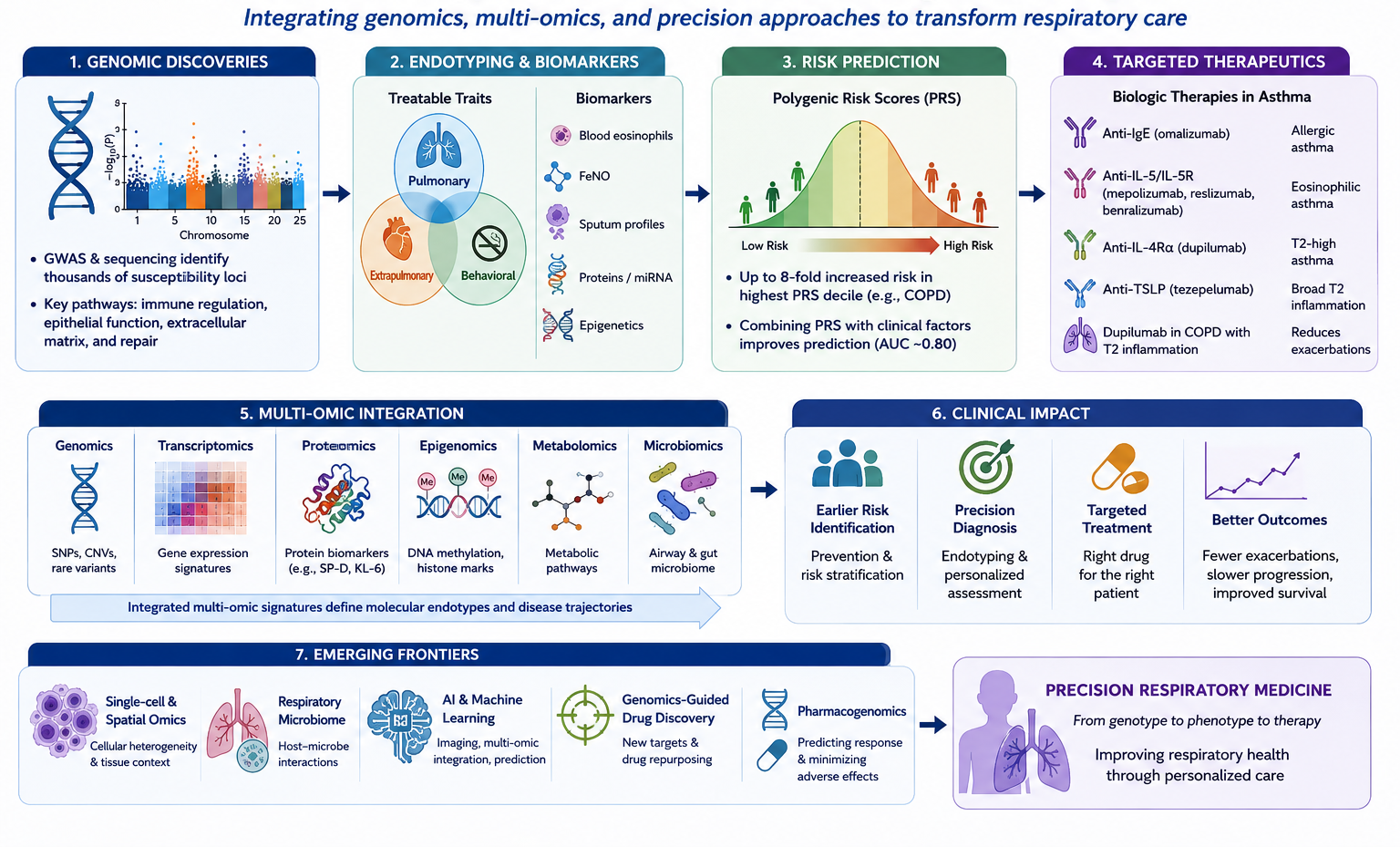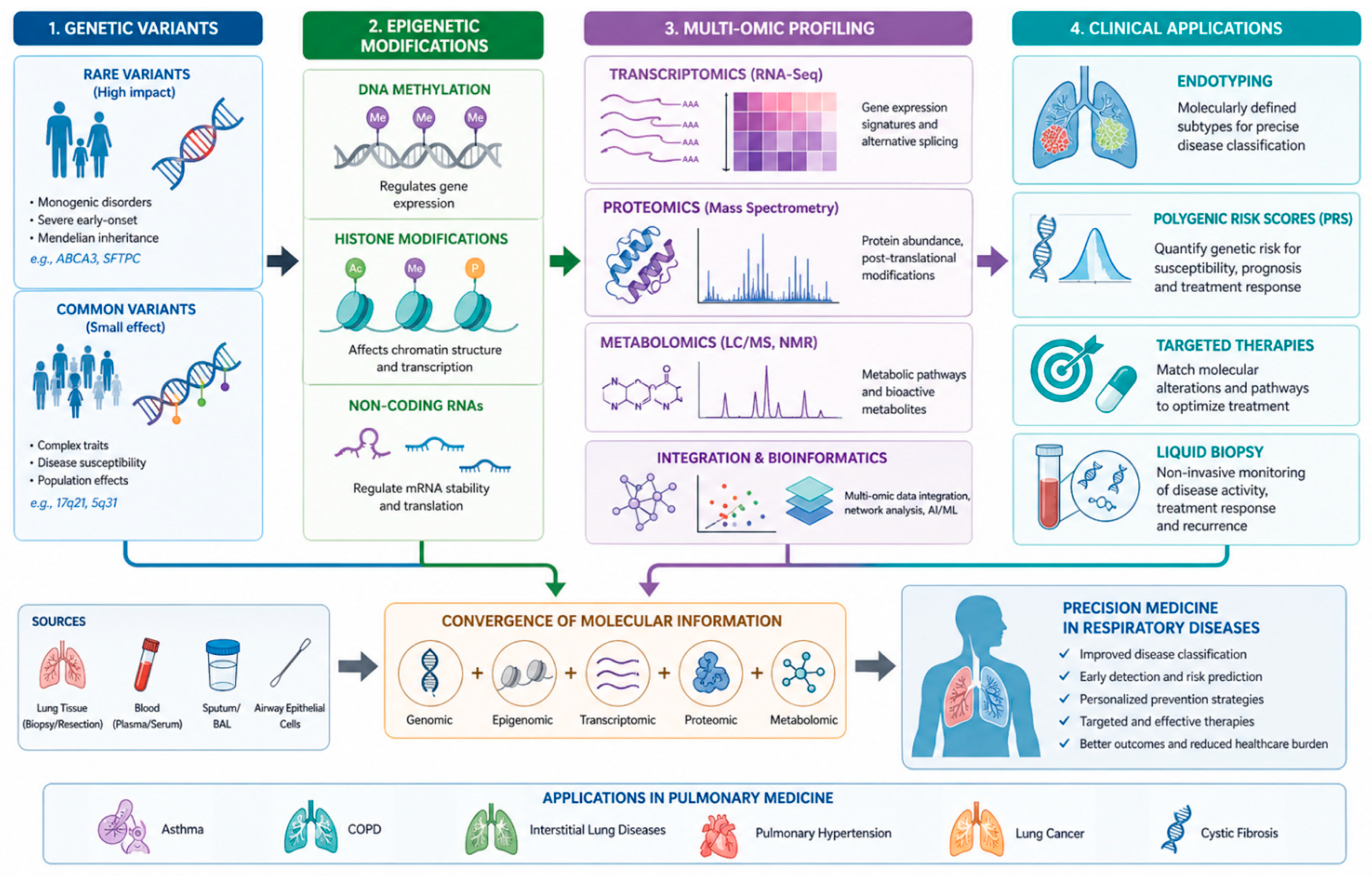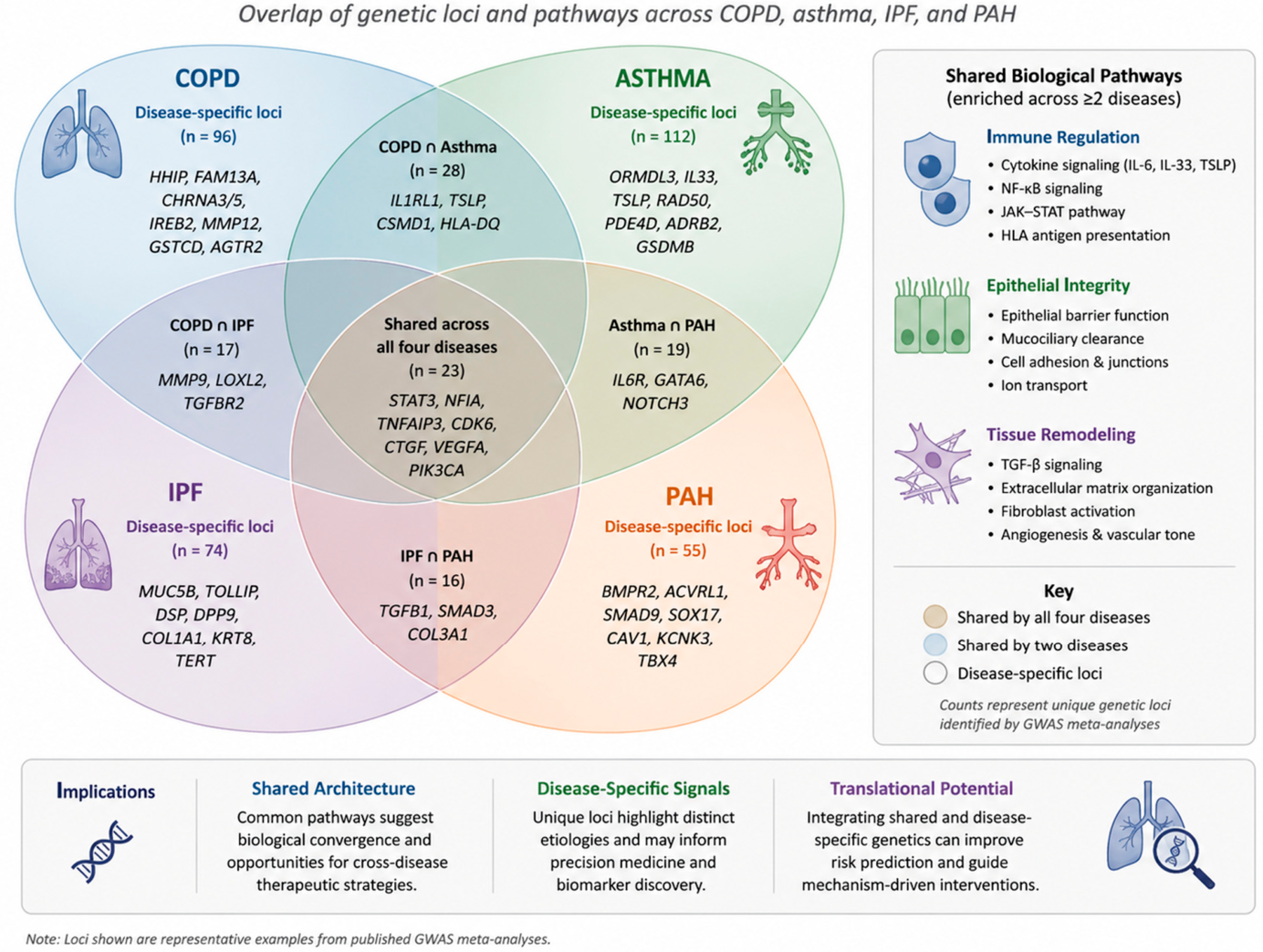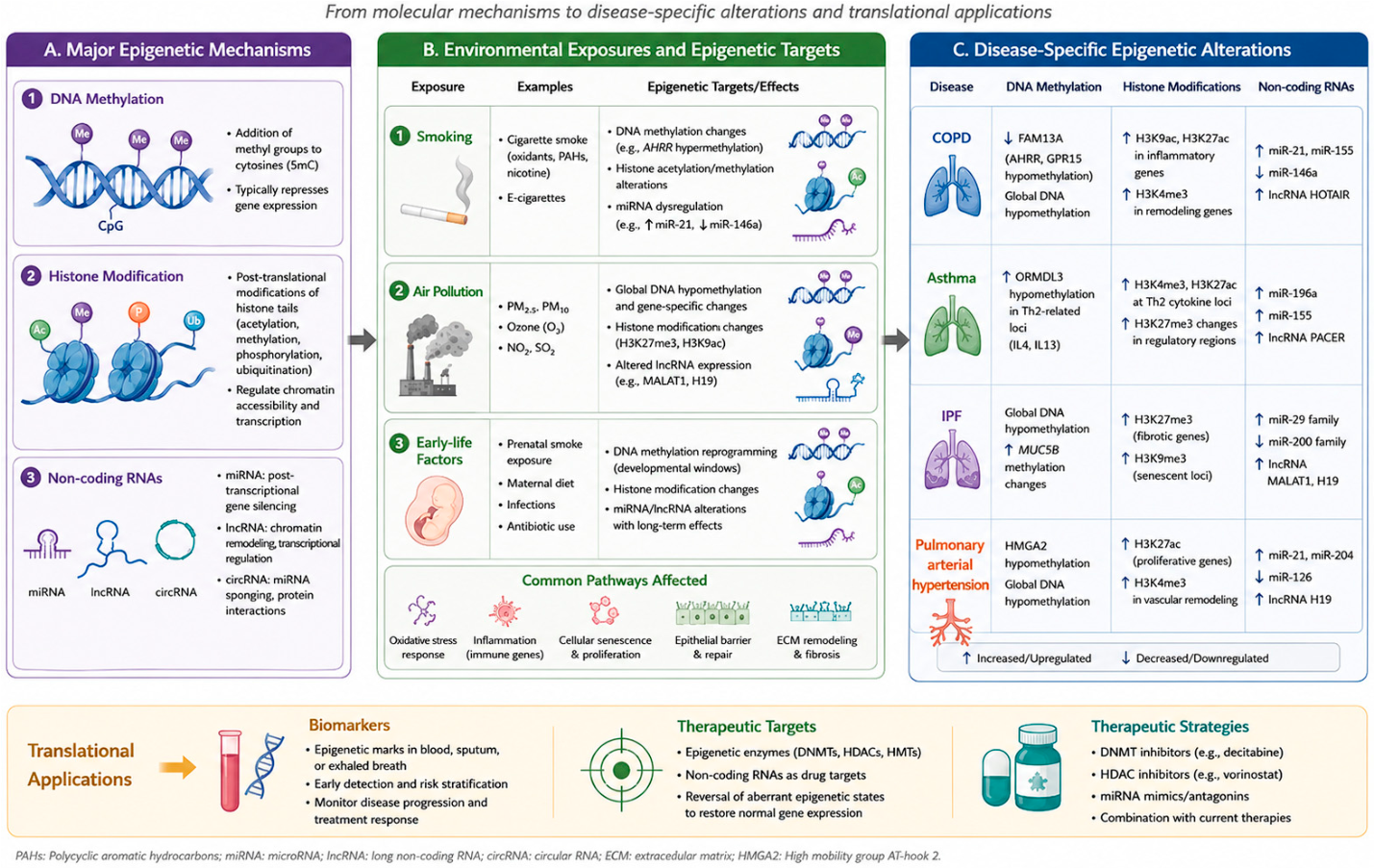

The Genomic Revolution in Pulmonary Medicine: A Comprehensive Narrative Review of Genomic and Multi-Omic Technologies in Respiratory Conditions


Abstract
1. Introduction
2. Genetic Architecture of Respiratory Diseases
2.1. Heritability and the Polygenic Basis of Respiratory Disease
2.2. Polygenic Risk Scores for COPD: Construction, Validation, and Clinical Implications
2.2.1. Construction and Methodological Evolution
2.2.2. Clinical Associations Beyond Diagnosis
2.2.3. Gene–Smoking Interactions
2.2.4. Limitations and Equity Considerations
2.3. Genetic Risk Scores for Asthma: Current State and Future Potential
2.4. Key Genetic Variants and Loci in COPD
2.5. Interstitial Lung Diseases
2.6. Pulmonary Arterial Hypertension
2.7. Cystic Fibrosis: The Paradigm of Genotype-Directed Therapy
2.8. Sleep Apnoea
2.9. Lung Cancer
2.10. Integrative Insights Across Respiratory Diseases
3. Epigenetic and Gene–Environment Interactions
3.1. DNA Methylation
3.2. Histone Modifications
3.3. Non-Coding RNAs
3.4. Gene–Environment Interactions
3.5. Disease-Specific Epigenetic Insights
4. Molecular Endotyping: From Syndromic to Molecular Classification
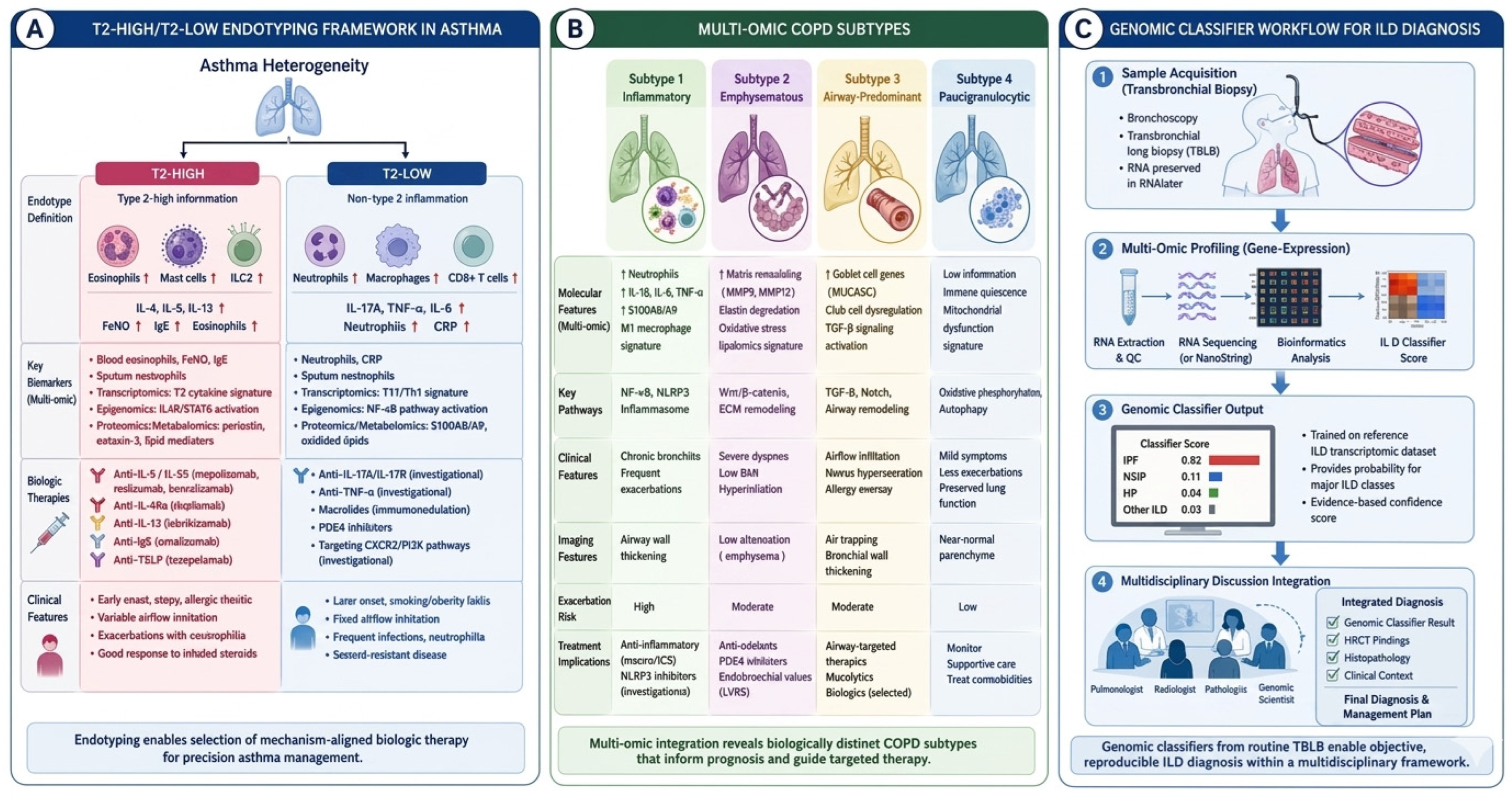
4.1. Asthma Endotypes: Type 2-High and Type 2-Low
4.2. COPD Endotyping Through Multi-Omic Integration
4.3. Multi-Omic Endotyping in Interstitial Lung Diseases
5. Molecular Diagnostics: From Syndromic to Genomic Classification
5.1. Nucleic Acid Amplification Tests and Multiplex Panels
5.2. Next-Generation Sequencing and Metagenomics
5.3. Liquid Biopsy and Tumour Genomics in Lung Cancer
5.4. Genomic Classifiers in Interstitial Lung Diseases
5.5. Monogenic Respiratory Disorders
6. Prognostic Biomarkers in Pulmonary Disease
6.1. Polygenic Risk Scores
6.2. Transcriptomic and Proteomic Signatures
6.3. Epigenetic and MicroRNA Biomarkers
6.4. Prognostic Biomarkers in Interstitial Lung Disease
6.5. Combined Clinical–Molecular Risk Models
7. Precision Medicine in Respiratory Diseases
7.1. Genomic Foundations of Precision Respiratory Medicine
7.2. The Treatable-Traits Framework
7.3. Biologic Therapies Guided by Molecular Endotyping
8. Challenges and Future Directions
8.1. Functional Interpretation of Genetic Variants
8.2. Data Integration and Bioinformatics
8.3. Diversity and Equity
8.4. Clinical Translation
8.5. Emerging Frontiers
8.5.1. Single-Cell and Spatial Omics
8.5.2. The Respiratory Microbiome
8.5.3. Artificial Intelligence and Machine Learning
8.5.4. Genomics-Guided Drug Discovery and Repurposing
8.5.5. Pharmacogenomics
9. Conclusions
Author Contributions
Funding
Institutional Review Board Statement
Informed Consent Statement
Data Availability Statement
Conflicts of Interest
References
- Christenson, S.A.; Smith, B.M.; Bafadhel, M.; Putcha, N. Chronic obstructive pulmonary disease. Lancet 2022, 399, 2227–2242. [Google Scholar] [CrossRef]
- Surana, A.; Bhattacharya, R.; Phadke, R.; Singh, A. Diverging trends in chronic respiratory disease burden: A 30-year comparison of the US, Western Europe, and high-income Asia Pacific (1991–2021). Chest 2025, 168, A135. [Google Scholar] [CrossRef]
- Phadke, R.; Singh, A.; Surana, A.; Bhattacharya, R. Trends in COPD and Asthma burden in high-income North America and Asia-Pacific: Epidemiological patterns and future projections to 2050. Chest 2025, 168, A5712. [Google Scholar]
- Cho, M.H.; Hobbs, B.D.; Silverman, E.K. Genetics of chronic obstructive pulmonary disease: Understanding the pathobiology and heterogeneity of a complex disorder. Lancet Respir. Med. 2022, 10, 485–496. [Google Scholar] [CrossRef] [PubMed]
- Zhang, J.; Xu, H.; Qiao, D.; DeMeo, D.L.; Silverman, E.K.; O’Connor, G.T.; Hobbs, B.D.; Dupuis, J.; Cho, M.H.; Moll, M. A polygenic risk score and age of diagnosis of COPD. Eur. Respir. J. 2022, 60, 2101954. [Google Scholar] [CrossRef] [PubMed]
- Moll, M.; Sakornsakolpat, P.; Shrine, N.; Hobbs, B.D.; DeMeo, D.L.; John, C.; Guyatt, A.L.; McGeachie, M.J.; Gharib, S.A.; Obeidat, M.; et al. Chronic obstructive pulmonary disease and related phenotypes: Polygenic risk scores in population-based and case-control cohorts. Lancet Respir. Med. 2020, 8, 696–708. [Google Scholar] [CrossRef] [PubMed]
- Zhang, P.D.; Zhang, X.R.; Zhang, A.; Li, Z.H.; Liu, D.; Zhang, Y.J.; Mao, C. Associations of genetic risk and smoking with incident COPD. Eur. Respir. J. 2022, 59, 2101320. [Google Scholar] [CrossRef] [PubMed]
- Lin, W.D.; Liao, W.L.; Chen, W.C.; Liu, T.Y.; Chen, Y.C.; Tsai, F.J. Genome-wide association study identifies novel susceptible loci and evaluation of polygenic risk score for chronic obstructive pulmonary disease in a Taiwanese population. BMC Genom. 2024, 25, 607. [Google Scholar] [CrossRef] [PubMed]
- Namjou, B.; Lape, M.; Malolepsza, E.; DeVore, S.B.; Weirauch, M.T.; Dikilitas, O.; Jarvik, G.P.; Kiryluk, K.; Kullo, I.J.; Liu, C.; et al. Multiancestral polygenic risk score for pediatric asthma. J. Allergy Clin. Immunol. 2022, 150, 1086–1096. [Google Scholar] [CrossRef] [PubMed]
- Sordillo, J.E.; Lutz, S.M.; Jorgenson, E.; Iribarren, C.; McGeachie, M.; Dahlin, A.; Tantisira, K.T.; Kelly, R.; Lasky-Su, J.; Sakornsakolpat, P.; et al. A polygenic risk score for asthma in a large racially diverse population. Clin. Exp. Allergy 2021, 51, 1410–1420. [Google Scholar] [CrossRef] [PubMed]
- Moll, M.; Sordillo, J.E.; Ghosh, A.J.; Hayden, L.P.; McDermott, G.; McGeachie, M.J.; Dahlin, A.; Tiwari, A.; Manmadkar, M.G.; Abston, E.D.; et al. Polygenic risk scores identify heterogeneity in asthma and chronic obstructive pulmonary disease. J. Allergy Clin. Immunol. 2023, 152, 1423–1432. [Google Scholar] [CrossRef] [PubMed]
- Koppelman, G.H.; Pino-Yanes, M.; Melén, E.; Powell, P.; Bracke, K.R.; Celedón, J.C.; Brusselle, G.G. Genetic and environmental risk factors for asthma: Towards prevention. Lancet Respir. Med. 2025, 13, 1011–1025. [Google Scholar] [CrossRef] [PubMed]
- Chen, E.; Jiang, Y.; Meng, Z.; Song, Y.; Wang, X.; Wu, Q.; Yang, Y.; Zhang, Y.; Glessner, J.; Song, X.; et al. Deep learning and statistical methods identify novel asthma risk variants in Europeans. J. Allergy Clin. Immunol. 2026. [Google Scholar] [CrossRef] [PubMed]
- Pariès, M.; Bougeard, S.; Eslami, A.; Li, Z.; Laviolette, M.; Boulet, L.P.; Vigneau, E.; Bossé, Y. The clinical value and most informative threshold of polygenic risk score in the Quebec City Case-Control Asthma Cohort. BMC Pulm. Med. 2025, 25, 21. [Google Scholar] [CrossRef] [PubMed]
- Yue, M.; Gaietto, K.; Han, Y.Y.; Rosser, F.J.; Xu, Z.; Qoyawayma, C.; Acosta-Perez, E.; Canino, G.; Forno, E.; Chen, W.; et al. Transcriptomic Profiles in Nasal Epithelium and Asthma Endotypes in Youth. JAMA 2025, 333, 307–318. [Google Scholar] [CrossRef] [PubMed]
- Porsbjerg, C.; Melén, E.; Lehtimäki, L.; Shaw, D. Asthma. Lancet 2023, 401, 858–873. [Google Scholar] [CrossRef] [PubMed]
- Wang, X.; Kong, Y.; Zheng, B.; Zhao, X.; Mingzhe, Z.; Wang, B.; Liu, C.; Yan, P. Tissue-resident innate lymphoid cells in asthma. J. Physiol. 2023, 601, 3995–4012. [Google Scholar] [CrossRef] [PubMed]
- Grunwell, J.R.; Fitzpatrick, A.M. Asthma Phenotypes and Biomarkers. Respir. Care 2025, 70, 649–674. [Google Scholar] [CrossRef] [PubMed]
- Brusselle, G.G.; Koppelman, G.H. Biologic therapies for severe asthma. N. Engl. J. Med. 2022, 386, 157–171. [Google Scholar] [CrossRef] [PubMed]
- Hammad, H.; Lambrecht, B.N. The basic immunology of asthma. Cell 2021, 184, 1469–1485. [Google Scholar] [CrossRef] [PubMed]
- Marinello, A.; Tagliamento, M.; Pagliaro, A.; Conci, N.; Cella, E.; Vasseur, D.; Remon, J.; Levy, A.; Dall’Olio, F.G.; Besse, B.; et al. Circulating tumor DNA to guide diagnosis and treatment of localized and locally advanced non-small cell lung cancer. Cancer Treat. Rev. 2024, 129, 102791. [Google Scholar] [CrossRef] [PubMed]
- Yang, J.; Hui, Y.; Zhang, Y.; Zhang, M.; Ji, B.; Tian, G.; Guo, Y.; Tang, M.; Li, L.; Guo, B.; et al. Application of circulating tumor DNA as a biomarker for non-small cell lung cancer. Front. Oncol. 2021, 11, 725938. [Google Scholar] [CrossRef] [PubMed]
- Chan, R.; RuiWen Kuo, C.; Lipworth, B. Pragmatic clinical perspective on biologics for severe refractory type 2 asthma. J. Allergy Clin. Immunol. Pract. 2020, 8, 3363–3370. [Google Scholar] [CrossRef] [PubMed]
- Bhattacharya, R.; Surana, A.; Patel, A.; Phadke, R. Trends and Disparities in Pulmonary Hypertension Related to Interstitial Pulmonary Fibrosis in the USA From 1999 to 2020. Am. J. Respir. Crit. Care Med. 2025, 211, A6303. [Google Scholar] [CrossRef]
- Israel, E.; Wechsler, M.E.; Jackson, D.J.; Moore, W.C.; Salciccioli, J.D.; Tan, R.; Liew, M.F.; Lim, H.F.; Leung, B.P.; Wong, W.S.F.; et al. Anti-cytokine biologics for asthma in adults. Lancet 2025, 406, 2282–2294. [Google Scholar] [CrossRef] [PubMed]
- Oberle, A.J.; Abbas, F.; Adrish, M.; Agache, I.; Conroy, M.; Coz Yataco, A.O.; Little, F.F.; Mammen, M.J.; Anand, M.P.; Reddy, R.; et al. Biologic Management in Severe Asthma for Adults: An American College of Chest Physicians Clinical Practice Guideline. Chest 2026, 169, 336–348. [Google Scholar] [CrossRef] [PubMed]
- Couillard, S.; Jackson, D.J.; Pavord, I.D.; Wechsler, M.E. Choosing the right biologic for the right patient with severe asthma. Chest 2025, 167, 330–342. [Google Scholar] [CrossRef] [PubMed]
- Grasemann, H.; Ratjen, F. Cystic fibrosis. N. Engl. J. Med. 2023, 389, 1693–1707. [Google Scholar] [CrossRef] [PubMed]
- Taylor-Cousar, J.L.; Robinson, P.D.; Shteinberg, M.; Downey, D.G.; Smith, A.B.; Jones, C.D.; Miller, E.F.; Davis, G.H.; Rodriguez, I.L.; Thomas, K.W.; et al. CFTR modulator therapy: Transforming the landscape of clinical care in cystic fibrosis. Lancet 2023, 402, 1171–1184. [Google Scholar] [CrossRef] [PubMed]
- Heijerman, H.G.; McKone, E.F.; Downey, D.G.; Van Braeckel, E.; Rowe, S.M.; Tullis, E.; Mall, M.A.; Welter, J.J.; Ramsey, B.W.; McKee, C.M.; et al. Efficacy and safety of the elexacaftor plus tezacaftor plus ivacaftor combination regimen in people with cystic fibrosis homozygous for the F508del mutation: A double-blind, randomised, phase 3 trial. Lancet 2019, 394, 1940–1948. [Google Scholar] [CrossRef] [PubMed]
- Ong, T.; Ramsey, B.W. Cystic fibrosis: A review. JAMA 2023, 329, 1859–1871. [Google Scholar] [CrossRef] [PubMed]
- Graeber, S.Y.; Mall, M.A. The future of cystic fibrosis treatment: From disease mechanisms to novel therapeutic approaches. Lancet 2023, 402, 1185–1198. [Google Scholar] [CrossRef] [PubMed]
- Reina, C.; Šabanović, B.; Lazzari, C.; Gregorc, V.; Heeschen, C. Unlocking the future of cancer diagnosis—Promises and challenges of ctDNA-based liquid biopsies in non-small cell lung cancer. Transl. Res. 2024, 272, 41–53. [Google Scholar] [CrossRef] [PubMed]
- Patel, A.; Surana, A.; Chaudhari, J.; Rana, G.; Bhattacharya, R.; Phadke, R. Trends and Disparities in Obstructive Sleep Apnea Related to Atrial Fibrillation in the United States From 1999 to 2020. Am. J. Respir. Crit. Care Med. 2025, 211, A4251. [Google Scholar] [CrossRef]
- Zaman, F.Y.; Subramaniam, A.; Afroz, A.; Samoon, Z.; Gough, D.; Arulananda, S.; Alamgeer, M. Circulating tumour DNA (ctDNA) as a predictor of clinical outcome in non-small cell lung cancer undergoing targeted therapies: A systematic review and meta-analysis. J. Clin. Oncol. 2023, 41, e21124. [Google Scholar] [CrossRef]
- Sankar, K.; Zeinali, M.; Nagrath, S.; Ramnath, N. Molecular biomarkers and liquid biopsies in lung cancer. Semin. Oncol. 2022, 49, 275–284. [Google Scholar] [CrossRef] [PubMed]
- Duffy, M.J. Circulating tumor DNA (ctDNA) as a biomarker for lung cancer: Early detection, monitoring and therapy prediction. Tumour Biol. 2024, 46, S283–S295. [Google Scholar] [CrossRef] [PubMed]
- Thai, A.A.; Solomon, B.J.; Sequist, L.V.; Gainor, J.F.; Heist, R.S. Lung cancer. Lancet 2021, 398, 535–554. [Google Scholar] [CrossRef] [PubMed]
- Guibert, N.; Pradines, A.; Favre, G.; Mazieres, J. Current and future applications of liquid biopsy in nonsmall cell lung cancer from early to advanced stages. Eur. Respir. Rev. 2020, 29, 190052. [Google Scholar] [CrossRef] [PubMed]
- Surana, A.; Bhattacharya, R. Trends and disparities in hospice care utilization in bronchus and lung cancer in the United States of America from 2003 to 2020: Analysis of CDC WONDER database. Chest 2025, 168, A5843. [Google Scholar] [CrossRef]
- Kemper, M.; Krekeler, C.; Menck, K.; Lenz, G.; Evers, G.; Schulze, A.B.; Bleckmann, A. Liquid Biopsies in Lung Cancer. Cancers 2023, 15, 1430. [Google Scholar] [CrossRef] [PubMed]
- Krebs, M.G.; Malapelle, U.; André, F.; Paz-Ares, L.; Schuler, M.; Thomas, D.M.; Vainer, G.; Yoshino, T.; Rolfo, C.; Singh, A.; et al. Practical Considerations for the Use of Circulating Tumor DNA in the Treatment of Patients with Cancer: A Narrative Review. JAMA Oncol. 2022, 8, 1830–1839. [Google Scholar] [CrossRef] [PubMed]
- Agustí, A.; Hogg, J.C. Update on the pathogenesis of chronic obstructive pulmonary disease. N. Engl. J. Med. 2019, 381, 1248–1256. [Google Scholar] [CrossRef] [PubMed]
- Benincasa, G.; DeMeo, D.L.; Glass, K.; Silverman, E.K.; Napoli, C. Epigenetics and pulmonary diseases in the horizon of precision medicine: A review. Eur. Respir. J. 2021, 57, 2003406. [Google Scholar] [CrossRef] [PubMed]
- Casas-Recasens, S.; Cassim, R.; Mendoza, N.; Agusti, A.; Lodge, C.; Li, S.; Bui, D.; Martino, D.; Dharmage, S.C.; Faner, R.; et al. Epigenome-Wide Association Studies of Chronic Obstructive Pulmonary Disease and Lung Function: A Systematic Review. Am. J. Respir. Crit. Care Med. 2024, 210, 766–778. [Google Scholar] [CrossRef] [PubMed]
- Eriksson Ström, J.; Kebede Merid, S.; Pourazar, J.; Blomberg, A.; Lindberg, A.; Ringh, M.V.; Hagemann-Jensen, M.; Ekström, T.J.; Behndig, A.F.; Melén, E.; et al. Chronic Obstructive Pulmonary Disease Is Associated with Epigenome-Wide Differential Methylation in BAL Lung Cells. Am. J. Respir. Cell Mol. Biol. 2022, 66, 638–647. [Google Scholar] [CrossRef] [PubMed]
- Huo, X.; Jin, S.; Wang, Y.; Ma, L. DNA methylation in chronic obstructive pulmonary disease. Epigenomics 2021, 13, 1145–1155. [Google Scholar] [CrossRef] [PubMed]
- Thomas, M.; Beasley, R. The treatable traits approach to adults with obstructive airways disease in primary and secondary care. Respirology 2023, 28, 1101–1116. [Google Scholar] [CrossRef] [PubMed]
- Agusti, A.; Gibson, P.G.; Heaney, L.G.; Thomas, M. Change is in the air: Key questions on the ‘Treatable Traits’ model for chronic airway diseases in primary care. npj Prim. Care Respir. Med. 2024, 34, 21. [Google Scholar] [CrossRef] [PubMed]
- Reddel, H.K.; Bateman, E.D.; Becker, A.; Boulet, L.P.; Cruz, A.A.; Drazen, J.M.; Gibson, P.G.; Giraud, V.; Hancox, R.J.; Johnston, N.W.; et al. Global Initiative for Asthma. Global Strategy for Asthma Management and Prevention. 2024. Available online: https://ginasthma.org/reports/ (accessed on 2 June 2026).
- Cazzola, M.; Maniscalco, M.; Matera, M.G.; Rogliani, P. The importance of biomarkers in the treatable-trait approach to chronic airway diseases. Pulm. Pharmacol. Ther. 2026, 92, 102410. [Google Scholar] [CrossRef] [PubMed]
- Gillenwater, L.A.; Helmi, S.; Stene, E.; Pratte, K.A.; Zhuang, Y.; Schuyler, R.P.; Lange, L.; Castaldi, P.J.; Hersh, C.P.; Banaei-Kashani, F.; et al. Multi-omics subtyping pipeline for chronic obstructive pulmonary disease. PLoS ONE 2021, 16, e0255337. [Google Scholar] [CrossRef] [PubMed]
- Olvera, N.; Sánchez-Valle, J.; Núñez-Carpintero, I.; Rojas-Quintero, J.; Noell, G.; Casas-Recasens, S.; Faiz, A.; Hansbro, P.; Guirao, A.; Lepore, R.; et al. Lung tissue multilayer network analysis uncovers the molecular heterogeneity of chronic obstructive pulmonary disease. Am. J. Respir. Crit. Care Med. 2024, 210, 1219–1229. [Google Scholar] [CrossRef] [PubMed]
- Syed, R.U.; Break, M.K.B.; Akasha, R.; Elafandy, N.M.; Abobaker, S.H.; Aboshouk, N.A.M.; Aboshouk, N.A.M.; Alghaythi, A.N.; Altwalah, L.A.; Aldhafeeri, R.M.M.; et al. Multi-omics biomarker detection in smoking induced COPD. Clin. Chim. Acta 2026, 584, 120868. [Google Scholar] [CrossRef] [PubMed]
- Bardhan, M.; Anand, A.; Javed, A.; Chilo, M.A.; Khan, N.; Garg, T.; Surana, A.; Huang, H.; Samim, M.M.; Suresh, V.; et al. Polymorphism of Melanocortin Receptor Genes-Association with Inflammatory Traits and Diseases. Diseases 2025, 13, 305. [Google Scholar] [CrossRef] [PubMed]
- Li, C.X.; Wheelock, C.E.; Sköld, C.M.; Wheelock, Å.M. Integration of multi-omics datasets enables molecular classification of COPD. Eur. Respir. J. 2018, 51, 1701930. [Google Scholar] [CrossRef] [PubMed]
- Zhang, Z.; Wang, J.; Li, Y.; Liu, F.; Chen, L.; He, S.; Lin, F.; Wei, X.; Fang, Y.; Li, Q.; et al. Proteomics and metabolomics profiling reveal panels of circulating diagnostic biomarkers and molecular subtypes in stable COPD. Respir. Res. 2023, 24, 73. [Google Scholar] [CrossRef] [PubMed]
- Xie, C.; Wang, K.; Yang, K.; Zhong, Y.; Gul, A.; Luo, W.; Yalikun, M.; He, J.; Chen, W.; Xu, W.; et al. Toward precision medicine in COPD: Phenotypes, endotypes, biomarkers, and treatable traits. Respir. Res. 2025, 26, 274. [Google Scholar] [CrossRef] [PubMed]
- Peters, M.C.; Ringel, L.; Dyjack, N.; Herrin, R.; Woodruff, P.G.; Rios, C.; O’Connor, B.; Fahy, J.V.; Seibold, M.A. A Transcriptomic Method to Determine Airway Immune Dysfunction in T2-High and T2-Low Asthma. Am. J. Respir. Crit. Care Med. 2019, 199, 465–477. [Google Scholar] [CrossRef] [PubMed]
- Karp, T.; Merid, S.K.; Kermani, N.Z.; Faiz, A.; Gillett, T.E.; Bults, R.; Raby, K.L.; Kerstjens, H.A.M.; Nawijn, M.C.; Piraino, A.; et al. Nasal gene expression shows a distinct signature in type 2-high asthma but not in type 2-low disease. J. Allergy Clin. Immunol. 2026, 157, 879–889. [Google Scholar] [CrossRef] [PubMed]
- Ryerson, C.J.; Adegunsoye, A.; Piciucchi, S.; Hariri, L.P.; Khor, Y.H.; Wijsenbeek, M.S.; Wells, A.U.; Sharma, A.; Cooper, W.A.; Antoniou, K.; et al. Update of the international multidisciplinary classification of the interstitial pneumonias: An ERS/ATS statement. Eur. Respir. J. 2025, 66, 2500158. [Google Scholar] [CrossRef] [PubMed]
- Kheir, F.; Uribe Becerra, J.P.; Bissell, B.; Ghazipura, M.; Herman, D.; Hon, S.M.; Hossain, T.; Khor, Y.H.; Knight, S.L.; Kreuter, M.; et al. Use of a Genomic Classifier in Patients with Interstitial Lung Disease: A Systematic Review and Meta-Analysis. Ann. Am. Thorac. Soc. 2022, 19, 827–832. [Google Scholar] [CrossRef] [PubMed]
- Kheir, F.; Alkhatib, A.; Berry, G.J.; Daroca, P.; Diethelm, L.; Rampolla, R.; Saito, S.; Smith, D.L.; Weill, D.; Bateman, M.; et al. Using Bronchoscopic Lung Cryobiopsy and a Genomic Classifier in the Multidisciplinary Diagnosis of Diffuse Interstitial Lung Diseases. Chest 2020, 158, 2015–2025. [Google Scholar] [CrossRef] [PubMed]
- Lai, L.M.; Dai, Q.B.; Cao, M.L.; Liu, Y.; Zhao, R.; Yuan, L. Clinical utility of metagenomic next-generation sequencing in pathogen detection for lower respiratory tract infections. Sci. Rep. 2025, 15, 19039. [Google Scholar] [CrossRef] [PubMed]
- Lai, Y.; Chen, B.; Chen, S.; Shen, Y. Experience of implementing metagenomic next-generation sequencing in patients with suspected pulmonary infection in clinical practice. Sci. Rep. 2025, 15, 9579. [Google Scholar] [CrossRef] [PubMed]
- Wang, R.; Wang, H.; Jiang, J.; Xu, S.; Dong, M. Diagnostic value of metagenomic next-generation sequencing in the etiological diagnosis of lower respiratory tract infection. Sci. Rep. 2025, 15, 39987. [Google Scholar] [CrossRef] [PubMed]
- Long, Y.; Xia, X.; Feng, H.; Zhao, P. Improving pulmonary infection diagnosis with metagenomic next-generation sequencing of bronchoalveolar lavage fluid. J. Med. Microbiol. 2024, 73. [Google Scholar] [CrossRef] [PubMed]
- Jin, X.; Li, J.; Shao, M.; Lv, X.; Ji, N.; Zhu, Y.; Huang, M.; Yu, F.; Zhang, C.; Xie, L.; et al. Improving Suspected Pulmonary Infection Diagnosis by Bronchoalveolar Lavage Fluid Metagenomic Next-Generation Sequencing: A Multicenter Retrospective Study. Microbiol. Spectr. 2022, 10, e0247321. [Google Scholar] [CrossRef] [PubMed] [PubMed Central]
- Cheng, G.S.; Crothers, K.; Aliberti, S.; Bergeron, A.; Boeckh, M.; Chien, J.W.; Cilloniz, C.; Cohen, K.E.; Dean, N.; Dela Cruz, C.S.; et al. Immunocompromised Host Pneumonia: Definitions and Diagnostic Criteria: An Official American Thoracic Society Workshop Report. Ann. Am. Thorac. Soc. 2023, 20, 341–353. [Google Scholar] [CrossRef] [PubMed]
- Bazan Russo, T.D.; Pepe, F.; Gristina, V.; Gottardo, A.; Russo, G.; Scimone, C.; Palumbo, L.; Busuito, G.; Incorvaia, L.; Guerry, J.A.; et al. Recent advances in liquid biopsy for precision oncology: Emerging biomarkers and clinical applications in lung cancer. Future Oncol. 2025, 21, 2803–2821. [Google Scholar] [CrossRef] [PubMed]
- Surana, A.; Bhattacharya, R.; Banga, A.; Tasch, J. Emerging Pathogenicity of Purpureocillium lilacinum: A Rare Case of Cavitary Lung Disease. Rhode Isl. Med. J. 2025, 108, 7–9. [Google Scholar]
- Surana, A.; Bhattacharya, R.; Javady, H.; Bhullar, G.; Satapathy, P.; Kumar, A.; Lakhanpal, S.; Satapathy, P.; Arcot, R.; Ndabashinze, R.; et al. Pan-Resistant Pseudomonas aeruginosa Septic Shock in a Critically Ill Patient: A Case Report. Clin. Med. Insights Case Rep. 2026, 19, 11795476251411094. [Google Scholar] [CrossRef] [PubMed]
- Chakravarty, D.; Johnson, A.; Sklar, J.; Lindeman, N.I.; Moore, K.; Ganesan, S.; Lovly, C.M.; Perlmutter, J.; Gray, S.W.; Hwang, J.; et al. Somatic Genomic Testing in Patients with Metastatic or Advanced Cancer: ASCO Provisional Clinical Opinion. J. Clin. Oncol. 2022, 40, 1231–1258. [Google Scholar] [CrossRef] [PubMed]
- Murphy, C.; Pandya, T.; Swanton, C.; Solomon, B.J. Lung Cancer in Nonsmoking Individuals: A Review. JAMA 2025, 334, 1836–1845. [Google Scholar] [CrossRef] [PubMed]
- Lim, J.U.; Oya, Y.; Fu, R.; Sooi, K.; Ang, Y.L.E.; Soo, R.A. Integrating liquid biopsies in non-small cell lung cancer diagnosis and management: Opportunities and challenges. Expert Rev. Anticancer Ther. 2026, 1–12. [Google Scholar] [CrossRef] [PubMed]
- You, J.B.; Shen, S.M.; Fan, J.H.; Zhen, S.S.; Sha, J.M. Clinical translation of ctDNA epigenetic signatures in lung cancer: An integrated strategy for early detection, therapeutic guidance, and prognostic stratification. Biochem. Biophys. Res. Commun. 2025, 783, 152636. [Google Scholar] [CrossRef] [PubMed]
- Renzoni, E.A.; Poletti, V.; Mackintosh, J.A. Disease pathology in fibrotic interstitial lung disease: Is it all about usual interstitial pneumonia? The Lancet 2021, 398, 1437–1449. [Google Scholar] [CrossRef] [PubMed]
- Gibson, P.G.; McDonald, V.M. Integrating hot topics and implementation of treatable traits in asthma. Eur. Respir. J. 2024, 64, 2400861. [Google Scholar] [CrossRef] [PubMed]
- Cazzola, M.; Hanania, N.A.; Rogliani, P. Comorbidities as treatable traits of chronic airway diseases. Respir. Med. 2025, 248, 108333. [Google Scholar] [CrossRef] [PubMed]
- Hu, X.; Qiao, D.; Kim, W.; Moll, M.; Balte, P.P.; Lange, L.A.; Bartz, T.M.; Kumar, R.; Li, X.; Yu, B.; et al. Polygenic transcriptome risk scores for COPD and lung function improve cross-ethnic portability of prediction in the NHLBI TOPMed program. Am. J. Hum. Genet 2022, 109, 857–870. [Google Scholar] [CrossRef] [PubMed]
- Idrees, S.; Chen, H.; Sadaf, T.; Rehman, S.F.; Johansen, M.D.; Paudel, K.R.; Liu, G.; Wang, Y.; Luecken, M.D.; Hortle, E.; et al. Multi-omics to study chronic respiratory diseases and viral infections. Eur. Respir. Rev. 2026, 35, 240286. [Google Scholar] [PubMed]
- Agusti, A.; Gibson, P.G.; McDonald, V.M. Treatable traits in airway disease: From theory to practice. J. Allergy Clin. Immunol. Pract. 2023, 11, 713–723. [Google Scholar] [CrossRef] [PubMed]
- Ulrik, C.S.; Vijverberg, S.; Hanania, N.A.; Diamant, Z. Precision medicine and treatable traits in chronic airway diseases—Where do we stand? Curr. Opin. Pulm. Med. 2020, 26, 33–39. [Google Scholar] [CrossRef] [PubMed]
- Tang, H.H.F.; Sly, P.D.; Holt, P.G.; Holt, K.E.; Inouye, M. Systems biology and big data in asthma and allergy: Recent discoveries and emerging challenges. Eur. Respir. J. 2020, 55, 1900844. [Google Scholar] [CrossRef] [PubMed]
- Bunyavanich, S.; Becker, P.M.; Altman, M.C.; Lasky-Su, J.; Ober, C.; Zengler, K.; Berdyshev, E.; Bonneau, R.; Chatila, T.; Chatterjee, N.; et al. Analytical challenges in omics research on asthma and allergy: A National Institute of Allergy and Infectious Diseases workshop. J. Allergy Clin. Immunol. 2024, 153, 954–968. [Google Scholar] [CrossRef] [PubMed]
- Singh, A.; Phadke, R.; Jena, A.; Bhattacharya, R.; Surana, A.; Martin, K.B. Economic burden of biologics in respiratory diseases: Analyzing Medicare spending on mepolizumab, benralizumab, and dupilumab using Medicare, Part D. Chest 2025, 168, A240–A241. [Google Scholar] [CrossRef]
- Gao, J.; Yi, X.; Wang, Z. The application of multi-omics in the respiratory microbiome: Progresses, challenges and promises. Comput. Struct. Biotechnol. J. 2023, 21, 4933–4943. [Google Scholar] [CrossRef] [PubMed]
- Sarma, A.; Sun, X.; Sucre, J.; Hong, J.; Medzikovic, L.; Jakubzick, C.V.; Li, X.; Zemans, R.L.; Singer, B.D. Multi-Omic and Single-Cell Approaches for Elucidating Cell Biology and Pathobiology of Lung Disease. Am. J. Respir. Cell Mol. Biol. 2026, 74, 287–294. [Google Scholar] [CrossRef] [PubMed] [PubMed Central]
- Travaglini, K.J.; Nabhan, A.N.; Penland, L.; Sinha, R.; Gillich, A.; Sit, R.V.; Chang, S.; Conley, S.D.; Mori, Y.; Seita, J.; et al. A molecular cell atlas of the human lung from single-cell RNA sequencing. Nature 2020, 587, 619–625. [Google Scholar] [CrossRef] [PubMed]
- Firsova, A.B.; Salas, S.M.; Kuemmerle, L.B.; Abalo, X.M.; Sountoulidis, A.; Larsson, L.; Mahbubani, K.T.; Theelke, J.; Andrusivova, Z.; Galicia, L.A.; et al. Spatial single-cell atlas reveals regional variations in healthy and diseased human lung. Nat. Commun. 2025, 16, 9745. [Google Scholar] [CrossRef] [PubMed]
- Phadke, R.; Surana, A.; Patel, A.; Bhattacharya, R. Trends and Disparities in Hospice Care Utilization in COPD Patients in the USA From 2003 to 2020. Am. J. Respir. Crit. Care Med. 2025, 211, A2839. [Google Scholar] [CrossRef]
- Phadke, R.; Singh, A.; Surana, A.; Bhattacharya, R. Unequal Access: Nationwide Trends in Hospice Utilization Among Patients with Interstitial Lung Disease in The US (2003–2020). Chest 2025, 168, A4603. [Google Scholar] [CrossRef]
- Kang, D.H.; Kim, Y.; Lee, J.H.; Kang, H.S.; Chung, C. Spatial Transcriptomics in Lung Cancer and Pulmonary Diseases: A Comprehensive Review. Cancers 2025, 17, 1912. [Google Scholar] [CrossRef] [PubMed]
- Surana, A.; Bhattacharya, R.; Singh, A.; Phadke, R. A Tale of Two Drugs: National Trends in Utilization and Spending of Pirfenidone and Nintedanib for Idiopathic Pulmonary Fibrosis in Medicare Part D (2018–2022). Chest 2025, 168, A3747. [Google Scholar] [CrossRef]
- Megas, S.; Wilbrey-Clark, A.; Maartens, A.; Teichmann, S.A.; Meyer, K.B. Spatial Transcriptomics of the Respiratory System. Annu. Rev. Physiol. 2025, 87, 447–470. [Google Scholar] [CrossRef] [PubMed]
- Dasgupta, S. Metagenomics in Obstructive Lung Diseases: Insights into Microbial Dysbiosis, Host-Microbe Interactions, and the Gut-Lung Axis. OMICS A J. Integr. Biol. 2026, 30, 191–202. [Google Scholar] [CrossRef] [PubMed]
- Budden, K.F.; Shukla, S.D.; Rehman, S.F.; Bowerman, K.L.; Keely, S.; Hugenholtz, P.; Armstrong-James, D.P.H.; Adcock, I.M.; Chotirmall, S.H.; Chung, K.F.; et al. Functional effects of the microbiota in chronic respiratory disease. Lancet Respir. Med. 2019, 7, 907–920. [Google Scholar] [CrossRef] [PubMed]
- Han, M.K.; Huang, Y.J.; Lipuma, J.J.; Boushey, H.A.; Boucher, R.C.; Cookson, W.O.; Curtis, J.L.; Erb-Downward, J.; Lynch, S.V.; Sethi, S.; et al. Significance of the microbiome in obstructive lung disease. Thorax 2012, 67, 456–463. [Google Scholar] [CrossRef] [PubMed]
- Caverly, L.J.; Huang, Y.J.; Sze, M.A. Past, present, and future research on the lung microbiome in inflammatory airway disease. Chest 2019, 156, 376–382. [Google Scholar] [CrossRef] [PubMed]
- Xue, Q.; Xie, Y.; He, Y.; Yu, Y.; Fang, G.; Yu, W.; Wu, J.; Li, J.; Zhao, L.; Deng, X.; et al. Lung microbiome and cytokine profiles in different disease states of COPD: A cohort study. Sci. Rep. 2023, 13, 5715. [Google Scholar] [CrossRef] [PubMed]
- Yang, R.; Zhang, Q.; Ren, Z.; Li, H.; Ma, Q. Different airway inflammatory phenotypes correlate with specific fungal and bacterial microbiota in asthma and COPD. J. Immunol. Res. 2022, 2022, 2177884. [Google Scholar] [CrossRef] [PubMed]
- Marrelli, F.; Lupia, C.; Nucera, S.; Pastore, D.; Zaffino, P.; Muscoli, C.; Pelaia, G.; Pelaia, C. Artificial Intelligence in Asthma and COPD: Current Status and Future Potential. J. Clin. Med. 2026, 15, 2445. [Google Scholar] [CrossRef] [PubMed]
- Gonem, S.; Janssens, W.; Das, N.; Topalovic, M. Applications of artificial intelligence and machine learning in respiratory medicine. Thorax 2020, 75, 695–701. [Google Scholar] [CrossRef] [PubMed]
- Soriano, J.B.; Lumbreras, S. The rise of artificial intelligence in respiratory primary care and pulmonology: A scoping review. npj Prim. Care Respir. Med. 2026, 36, 21. [Google Scholar] [CrossRef] [PubMed]
- Selman, M.; Buendia-Roldan, I.; Pardo, A.; Author, D.; Author, E.; Author, F.; Author, G.; Author, H.; Author, I.; Author, J.; et al. Artificial intelligence in idiopathic pulmonary fibrosis: Advances, challenges and future directions. Eur. Respir. J. 2026, 67, 2501112. [Google Scholar] [CrossRef] [PubMed]
- El-Husseini, Z.W.; Gosens, R.; Dekker, F.; Koppelman, G.H. The genetics of asthma and the promise of genomics-guided drug target discovery. Lancet Respir. Med. 2020, 8, 1045–1056. [Google Scholar] [CrossRef] [PubMed]
- Reay, W.R.; Cairns, M.J. Advancing the use of genome-wide association studies for drug repurposing. Nat. Rev. Genet. 2021, 22, 658–671. [Google Scholar] [CrossRef] [PubMed]
- Wang, L.; Fang, R.; Zhu, M.; Qin, N.; Wang, Y.; Fan, J.; Sun, Q.; Ji, M.; Fan, X.; Xie, J.; et al. Integrated gene-based and pathway analyses using UK Biobank data identify novel genes for chronic respiratory diseases. Gene 2021, 767, 145287. [Google Scholar] [CrossRef] [PubMed]
- Kareem, R.A.; Sameer, H.N.; Yaseen, A.; Athab, Z.H.; Adil, M.; Ahmed, H.H. A review of recent advances in gene therapy, pharmacogenomics, and genetic polymorphisms in asthma. Mol. Biol. Rep. 2025, 52, 513. [Google Scholar] [CrossRef] [PubMed]
- Sayers, I.; John, C.; Chen, J.; Hall, I.P. Genetics of chronic respiratory disease. Nat. Rev. Genet. 2024, 25, 534–547. [Google Scholar] [CrossRef] [PubMed]



| Disease | Heritability | Key Rare Variants | Key Common Loci | PRS Performance | Clinical Implications |
|---|---|---|---|---|---|
| COPD | 38–50% | SERPINA1 (AATD) | HHIP, FAM13A, CHRNA3/5, IREB2, DSP, MMP12 | AUC: 0.68–0.80; OR: up to 8.0× (top vs. bottom decile) | Early screening; smoking cessation; PRS + clinical model AUC ≈ 0.80 |
| Asthma | 60–80% (childhood) | Rare TSLP, IL33 variants | IL33, TSLP, ORMDL3, HLA-DQ, IL13, GSDMB | AUC: 0.60–0.73; OR: 1.10–1.75 per SD | Paediatric risk stratification; biologic therapy selection |
| IPF | ~30–40% | TERT, TERC, RTEL1, PARN, SFTPC, SFTPA2 | MUC5B (OR 5–6), FAM13A, DSP, TOLLIP | No formal PRS; MUC5B OR: 5–6 per allele | Telomere testing; transplant risk; antifibrotic eligibility |
| PAH | ~70–80% (familial) | BMPR2 (~80% familial, ~20% sporadic), ACVRL1, ENG | TBX4, SOX17, ATP13A3 | BMPR2 mutation: earlier onset, severe haemodynamics | Genetic counselling; cascade family screening |
| CF | Near 100% (monogenic) | CFTR (>2000 variants; F508del ~70% of alleles) | Modifier genes: MSRA, SLC26A9 | Genotype determines therapy eligibility | Genotype-directed CFTR modulators (ETI); theratyping |
| OSA | ~40–60% | None established | HTR1F, GPD2, L3MBTL2 | Early stage; no clinical PRS | Pharmacogenomic potential; serotonin pathway targets |
| Lung Cancer | ~15–20% | BRCA2, CHEK2, ATM, BRCA1; EGFR, YAP1 | 5p15.33 (TERT), 3q28 (TP63), 15q25 | Family history: OR: ~2× | Liquid biopsy; somatic driver profiling; targeted therapy |
| Biomarker Type | Specific Biomarkers | Disease Application | Clinical Utility (Diagnostic/Prognostic) | Evidence Level |
|---|---|---|---|---|
| Polygenic Risk Score (PRS) | COPD PRS (279 variants); asthma PRS (lasso/Bayesian) | COPD; asthma; ACO | Diagnostic (risk stratification); prognostic (disease severity) | Level IIa–IIb; meta-analyses |
| Transcriptomic Signatures | Blood TRS (>100 transcripts); nasal T2-high signature; bronchial epithelial score | COPD; asthma; ILD | Prognostic (FEV1 decline); diagnostic (endotyping) | Level IIb; prospective cohorts |
| Proteomic Markers | SP-D, CC16, fibrinogen, KL-6, MMP-7, CCL18, IL-6, CRP | COPD; IPF; PAH; lung cancer | Prognostic (severity, exacerbations, mortality) | Level IIa; multi-cohort studies |
| Epigenetic Markers | HHIP/FAM13A methylation; CYP1B1 methylation; stage I NSCLC methylation signature | COPD; asthma; lung cancer | Diagnostic; prognostic; therapeutic monitoring | Level IIb–III; replication needed |
| MicroRNA Biomarkers | miR-15b-5p (ACO); sputum miRNA panels (COPD vs. non-COPD) | COPD; asthma; ACO | Diagnostic (endotyping); predictive (steroid response) | Level IIb–III; validation ongoing |
| Composite Clinical–Molecular | PRS + age/sex/smoking (COPD AUC ≈0.80); PhenoAgeAccel + PRS | COPD; asthma; IPF | Diagnostic (superior to single markers) | Level IIa; prospective validation needed |
| ctDNA/Liquid Biopsy | Baseline ctDNA positivity; ctDNA clearance; EGFR T790M (plasma) | Lung cancer (NSCLC) | Prognostic; predictive (therapy response); MRD monitoring | Level IIa; RCT data emerging |
Disclaimer/Publisher’s Note: The statements, opinions and data contained in all publications are solely those of the individual author(s) and contributor(s) and not of MDPI and/or the editor(s). MDPI and/or the editor(s) disclaim responsibility for any injury to people or property resulting from any ideas, methods, instructions or products referred to in the content. |
© 2026 by the authors. Licensee MDPI, Basel, Switzerland. This article is an open access article distributed under the terms and conditions of the Creative Commons Attribution (CC BY) license.
Share and Cite
Surana, A.; Singh, A. The Genomic Revolution in Pulmonary Medicine: A Comprehensive Narrative Review of Genomic and Multi-Omic Technologies in Respiratory Conditions. DNA 2026, 6, 32. https://doi.org/10.3390/dna6030032
Surana A, Singh A. The Genomic Revolution in Pulmonary Medicine: A Comprehensive Narrative Review of Genomic and Multi-Omic Technologies in Respiratory Conditions. DNA. 2026; 6(3):32. https://doi.org/10.3390/dna6030032
Chicago/Turabian StyleSurana, Arihant, and Aditya Singh. 2026. "The Genomic Revolution in Pulmonary Medicine: A Comprehensive Narrative Review of Genomic and Multi-Omic Technologies in Respiratory Conditions" DNA 6, no. 3: 32. https://doi.org/10.3390/dna6030032
APA StyleSurana, A., & Singh, A. (2026). The Genomic Revolution in Pulmonary Medicine: A Comprehensive Narrative Review of Genomic and Multi-Omic Technologies in Respiratory Conditions. DNA, 6(3), 32. https://doi.org/10.3390/dna6030032