Article

Efficient Elimination of mtDNA from Mammalian Cells with 2′,3′-Dideoxycytidine

by
Natalya Kozhukhar
and
Mikhail F. Alexeyev
*
Department of Physiology and Cell Biology, University of South Alabama, Mobile, AL 36688, USA
*
Author to whom correspondence should be addressed.
DNA 2024, 4(3), 201-211; https://doi.org/10.3390/dna4030013
Submission received: 22 May 2024 / Revised: 25 June 2024 / Accepted: 2 July 2024 / Published: 4 July 2024

Abstract

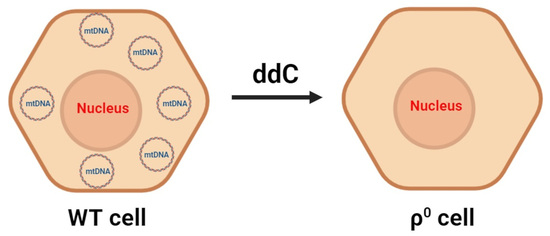
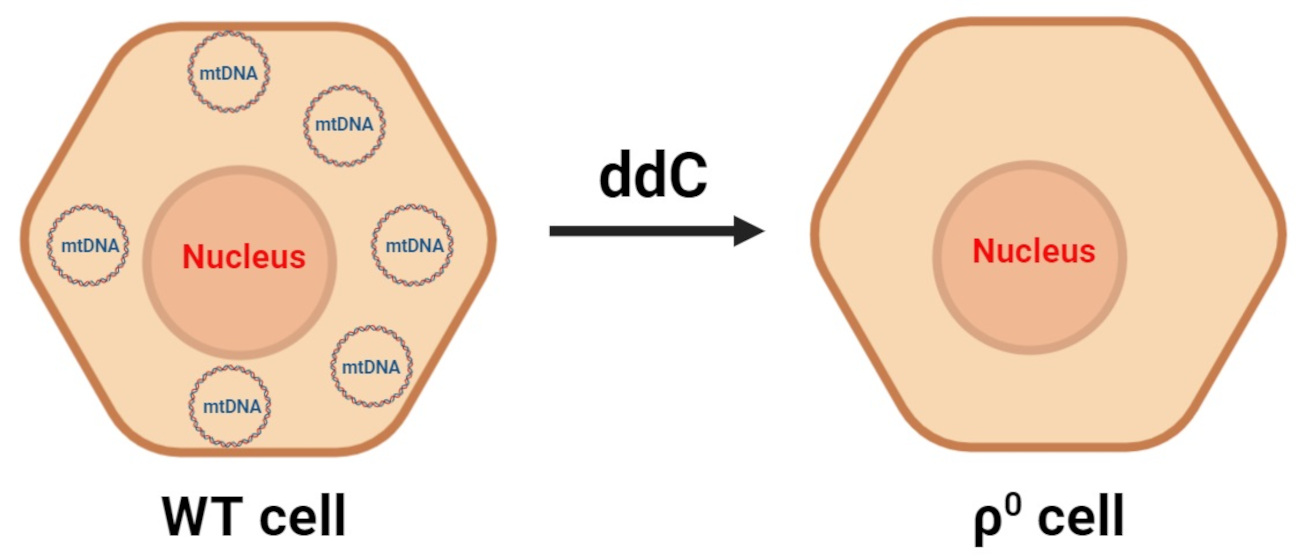
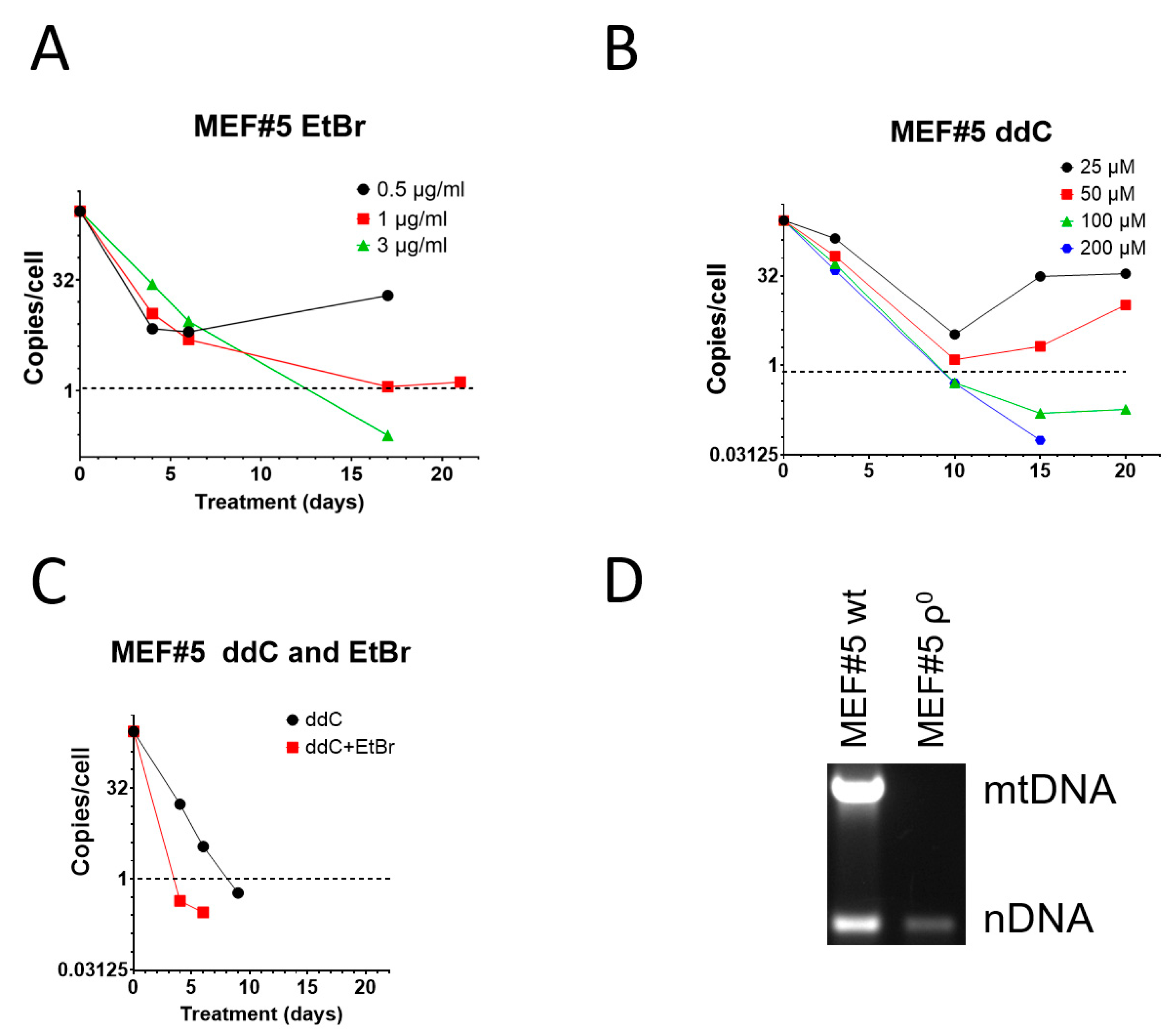
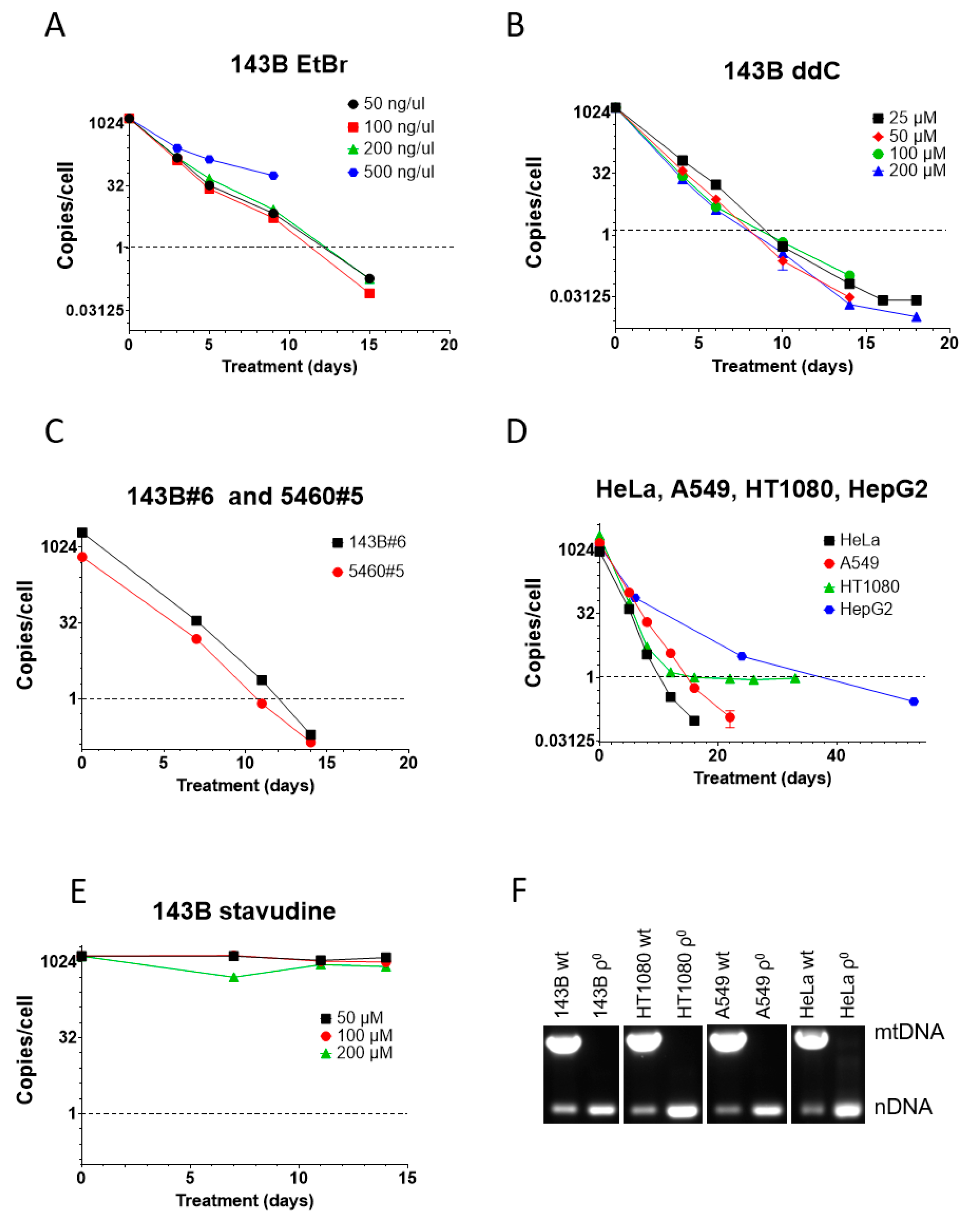
Mammalian cell lines devoid of mitochondrial DNA (mtDNA) are indispensable in studies aimed at elucidating the contribution of mtDNA to various cellular processes or interactions between nuclear and mitochondrial genomes. However, the repertoire of tools for generating such cells (also known as rho-0 or ρ0 cells) remains limited, and approaches remain time- and labor-intensive, ultimately limiting their availability. Ethidium bromide (EtBr), which is most commonly used to induce mtDNA loss in mammalian cells, is cytostatic and mutagenic as it affects both nuclear and mitochondrial genomes. Therefore, there is growing interest in new tools for generating ρ0 cell lines. Here, we examined the utility of 2′,3′-dideoxycytidine (ddC, zalcitabine) alone or in combination with EtBr for generating ρ0 cell lines of mouse and human origin as well as inducing the ρ0 state in mouse/human somatic cell hybrids. We report that ddC is superior to EtBr in both immortalized mouse fibroblasts and human 143B cells. Also, unlike EtBr, ddC exhibits no cytostatic effects at the highest concentration tested (200 μM), making it more suitable for general use. We conclude that ddC is a promising new tool for generating mammalian ρ0 cell lines.
Keywords: mtDNA depletion; rho-0 cells; ddC; HeLa; A549; HT1080 mtDNA depletion; rho-0 cells; ddC; HeLa; A549; HT1080
Graphical Abstract