1. Introduction
Interest in residual biomass has grown as production systems seek to use resources more efficiently and reduce disposal. Agricultural and forest residues are not uniform waste streams: each contains extractable and structural fractions that respond differently to processing [
1,
2,
3]. A biorefinery becomes useful when it recovers those fractions in a deliberate order, directs them to compatible products, and reduces losses across the complete process rather than maximizing one isolated yield.
Araucaria angustifolia (Bertol.) Kuntze, commonly known as Brazilian or Paraná pine, is native to subtropical South America rather than endemic to Brazil. Its natural range is centered in Southern and Southeastern Brazil and extends into Misiones, Argentina, and historically reported areas of Paraguay [
4,
5]. In Brazil, it is a defining component of the Mixed Ombrophilous Forest within the Atlantic Forest biome. Intensive twentieth-century timber exploitation, conversion of forest to agriculture and pasture, urbanization, fragmentation, and limited regeneration reduced the original forest area by approximately 97%. These cumulative pressures, together with continued habitat loss and climate-related range contraction, underpin its classification as Critically Endangered [
5,
6].
Beyond its ecological relevance,
A. angustifolia is closely associated with the food systems and cultural identity of Southern Brazil. Its edible seed, known as pinhão, has historically been consumed by Indigenous peoples such as the Kaingang and Guarani and remains strongly associated with regional gastronomy, seasonal consumption, and traditional culinary practices [
7,
8]. Pinhão production also represents an important example of conservation-by-use, in which non-timber forest products can contribute to local livelihoods while creating economic value associated with standing forests [
9]. Residue valorization may strengthen this relationship by extending value creation beyond the edible seed, although it should be regarded as complementary rather than a substitute for conservation policies, ecological restoration, agroforestry systems, and appropriate forest management.
The processing and consumption of pinhão generate several residual biomass streams, particularly seed coats, cone bracts, cooking effluents, and secondary processing residues. These materials are frequently discarded or underutilized despite containing lignocellulosic components and bioactive compounds with potential technological value. Seed coats and cone bracts contain cellulose, hemicellulose, and lignin together with phenolic compounds such as flavonoids, tannins, catechins, phenolic acids, and proanthocyanidins, while cooking effluents contain soluble phenolics, carbohydrates, minerals, and other water-soluble constituents [
10,
11]. This compositional diversity creates opportunities for combining the recovery of high-value bioactive compounds with subsequent utilization of the remaining structural biomass.
Recent studies have consequently explored
A. angustifolia residues as feedstocks for antioxidant and functional ingredients, biodegradable packaging, biomaterials, cosmetic formulations, adsorbents, and other bio-based products [
10,
11,
12,
13,
14,
15,
16]. Green processing technologies, including ultrasound-assisted extraction, microwave-assisted extraction, natural deep eutectic solvents (NADES), and enzyme-assisted approaches, provide opportunities to recover bioactive fractions while reducing solvent consumption and processing intensity [
17,
18,
19,
20,
21]. At the same time, cellulose-, hemicellulose-, and lignin-rich fractions remaining after extraction may constitute substrates for additional material, biological, or thermochemical conversion routes [
12,
22,
23]. This complementarity provides the basis for moving beyond isolated applications toward cascading biorefinery strategies in which different fractions of the same biomass are sequentially directed toward products according to their composition and potential value [
24,
25].
Two earlier reviews provide important but different starting points. Peralta et al. [
4] synthesized the species’ chemical constituents and biological activities, whereas Castrillon et al. [
26] emphasized pinhão starch, bioactive compounds, functional activity, and publication patterns. Neither review quantitatively links national feedstock availability, residue composition, extraction conditions, downstream compatibility, technological maturity, territorial logistics, and conservation safeguards within one process framework. The present review addresses that gap by treating cascading valorization as a sequence to be tested rather than as an already established biorefinery.
This review asks five connected questions: how much residue could be available; how composition and variability constrain processing; which fractions and products are supported by direct experiments; which sequence is chemically and operationally compatible; and what evidence is still required for commercialization. Its additional contribution is a critical separation of experimentally validated unit operations from prospective links between them, supported by quantitative comparisons and an evidence-ranked product portfolio. The central proposition is that selective recovery of high-value fractions can precede material, biological, environmental, or thermochemical use only when the upstream operation preserves downstream yield and quality.
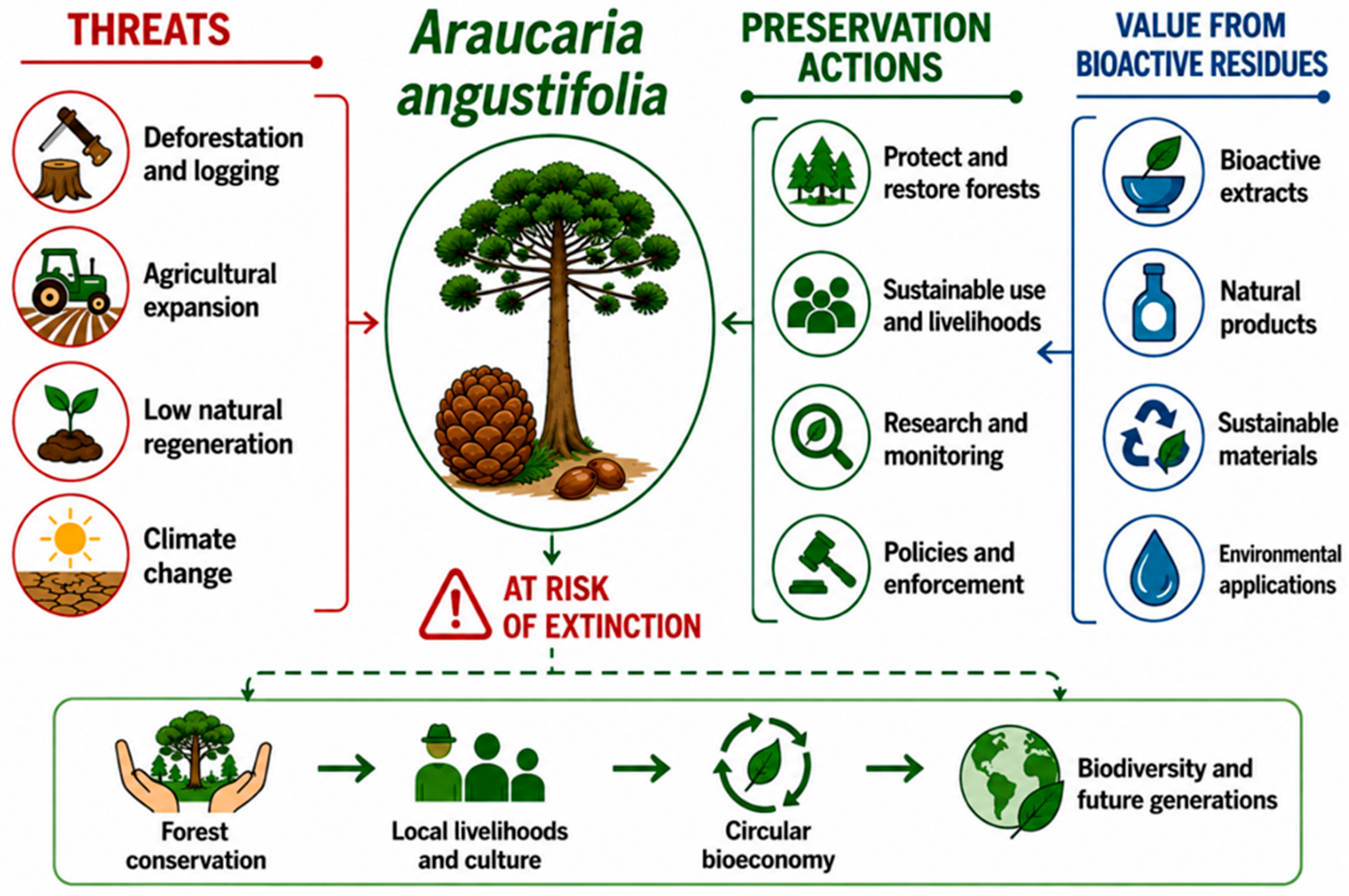
Figure 1 places this technical proposition within the ecological, cultural, and productive setting of
A. angustifolia.
2. Biomass Generation, Availability, and the Pinhão Value Chain
The availability of
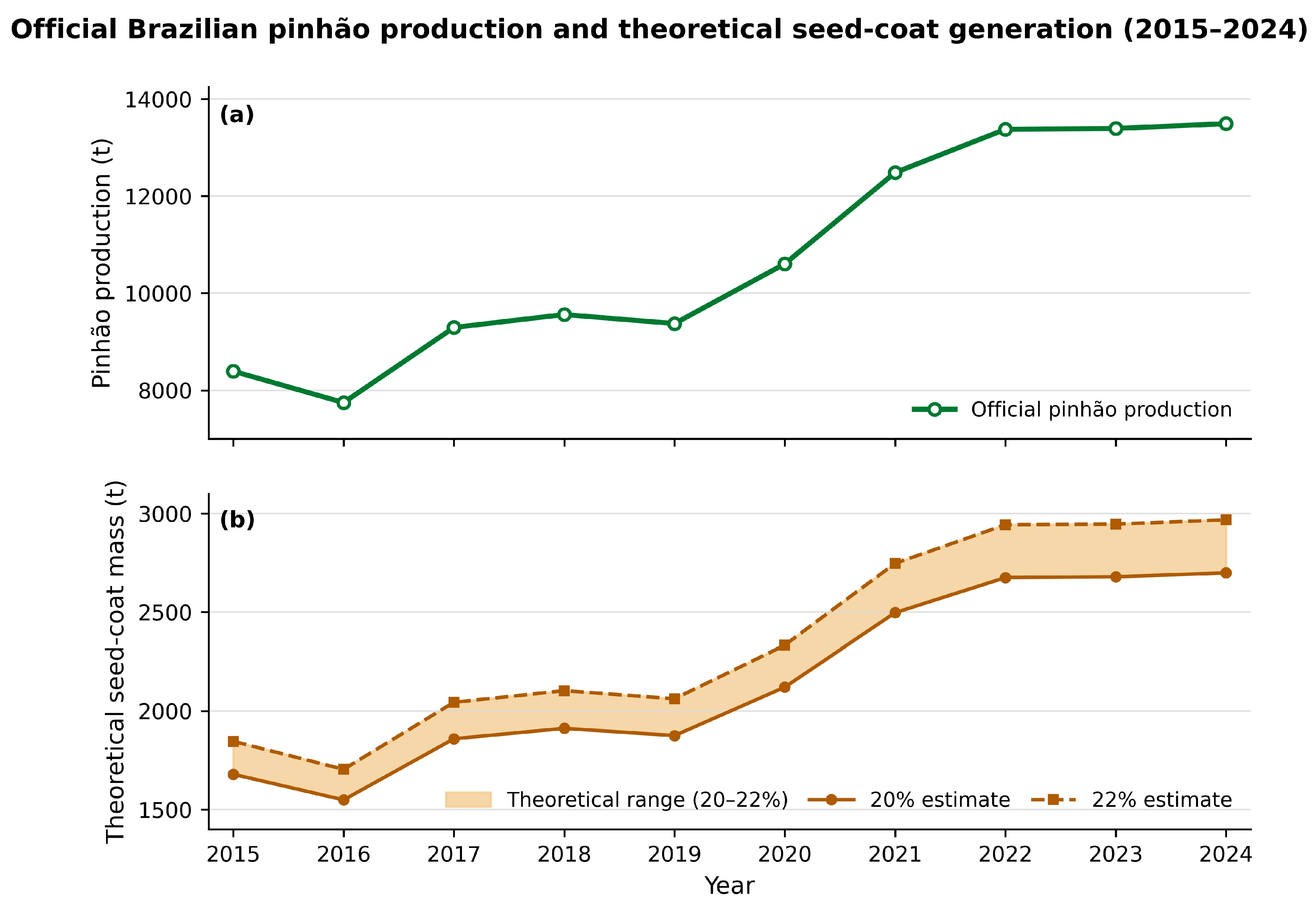
A. angustifolia residues is tied to the production, commercialization, and consumption of pinhão. The Brazilian Institute of Geography and Statistics (IBGE) reported 8393, 7746, 9293, 9561, 9374, 10,605, 12,485, 13,377, 13,393, and 13,493 t of extracted pinhão from 2015 to 2024, respectively [
27]. The series increased by 60.8% across the decade but was not monotonic, confirming year-to-year variability. In 2024, Paraná accounted for 4780 t (35.4%), Santa Catarina for 3706 t (27.5%), Minas Gerais for 3268 t (24.2%), Rio Grande do Sul for 966 t (7.2%), and São Paulo for 772 t (5.7%) [
27]. Thus, supply is concentrated in five states but dispersed among many rural municipalities and market channels.
Human use of
A. angustifolia helped shape cultural landscapes and food systems in Southern Brazil. Kaingang and Guarani communities relied on pinhão as a seasonal food connected to mobility, territorial occupation, and knowledge accumulated through long interaction with Araucaria forests [
7]. The landscape was both a source of food and a setting for cultural continuity and belonging.
Today, pinhão remains strongly associated with regional gastronomy, seasonal consumption, and local food traditions throughout Southern Brazil [
7,
8]. Roasted and boiled seeds are widely consumed during colder months and are also incorporated into soups, flours, pastries, cakes, and artisanal products [
7,
8]. Cultural events associated with the harvest season, such as the “Festa do Pinhão,” reinforce the connections among gastronomy, tourism, artisanal production, and local economies centered on Araucaria landscapes [
28]. In addition,
A. angustifolia has become one of the most recognizable cultural symbols of Southern Brazil, particularly in Paraná State, where it is closely linked to regional identity and collective memory [
7].
The pinhão chain contributes to family farming, traditional extractivism, and short marketing networks in Southern and Southeastern Brazil [
28]. Its cultural and economic importance coexists with limited industrial processing and uneven technological integration. These features determine where residues arise, how concentrated they are, and whether collection for a biorefinery is practical.
The production figures describe marketed seed, not residue collected. Seed coats represent approximately 20–22% of seed mass [
14,
26], giving a theoretical 2024 generation of 2699–2969 t before losses; the annual estimates in
Figure 2 should therefore be interpreted as an upper-bound mass balance, not as recoverable supply. Sterile bracts can constitute a major fraction of the female strobilus, with values up to 80% reported in the literature [
10], but another study notes that seeds average about 50% of fresh strobilus mass [
29]. Differences in maturity, genotype, moisture, and the definition of bract fractions prevent a defensible national tonnage from being calculated. Cooking-water volume is likewise unknown because water-to-seed ratio, batch reuse, and domestic versus industrial practice are not recorded. Field inventories must therefore measure wet mass, dry matter, contamination, competing uses, and the fraction that can be collected without affecting forest nutrient cycling.
Seasonality further reduces continuous availability. Annual production totals do not indicate how rapidly residues accumulate during the harvest and winter-consumption period, and wet cooking streams deteriorate much faster than dried coats or bracts. Collection plans should therefore distinguish three supply pools: concentrated residues at processors and food-service facilities; dispersed seed coats from households and street markets; and cone residues near collection areas. The first is the most realistically recoverable because source separation, volume measurement, and stabilization can be organized at fewer points. Decentralized drying, milling, pressing, or primary extraction could reduce water and bulk before transport, but the choice must be tested against product stability, energy access, and solvent-safety requirements.
The increase in recorded pinhão production does not imply that biomass extraction can expand without ecological limits.
A. angustifolia remains Critically Endangered because of historical habitat loss, fragmentation, timber exploitation, restricted regeneration, and emerging climate pressure [
5,
6]. Seed harvests also remove propagules that support regeneration and wildlife. Valorization must consequently use residues from legally and environmentally responsible food chains, retain traceability to the source, and avoid incentives to collect immature seeds or remove forest litter indiscriminately. Conservation-by-use can complement, but cannot substitute for, habitat protection, restoration, sustainable forest management, and biodiversity monitoring [
9].
The national scale also constrains plant configuration. The theoretical 2024 seed-coat stream averages only about 7.4–8.1 t day
−1 if spread across a year, and less after collection losses, whereas a widely used NREL design basis for a centralized lignocellulosic biorefinery process is approximately 2000 dry metric t day
−1 [
30]. This is not a commercial equivalence, but it demonstrates the order-of-magnitude mismatch between a national pinhão-residue stream and conventional centralized commodity-bioprocessing assumptions. A credible first stage is therefore a network of mapped collection hubs and modular stabilization or extraction units linked to centralized purification or product manufacture. Road access, electricity, process water, storage, technical labor, and equipment maintenance must be assessed municipality by municipality; no current study provides this georeferenced infrastructure audit.
3. Chemical and Structural Characterization of Araucaria angustifolia Residual Biomass
Composition data remain uneven across residual fractions. One seed-coat study reported 55% cellulose, including 46% α-cellulose, 9% hemicellulose, 34% lignin, 7% extractives, and 1.6% ash [
12]. Layer-resolved Soxhlet extraction produced total extractives of 11.91% in the exotesta, 17.44% in the mesotesta, and 27.53% in the endotesta [
31], showing that even one coat is chemically heterogeneous. For sterile bracts, the most comparable quantitative dataset concerns extractable phenolics rather than structural carbohydrates: across an experimental design, total phenolics ranged from 3.57 to 9.48 mg GAE g
−1, flavonoids from 2.10 to 6.57 mg catechin equivalents g
−1, and tannins from 2.17 to 10.56 mg catechin equivalents g
−1 [
10]. Equivalent cellulose, hemicellulose, lignin, moisture, and ash datasets are not yet available for every residue under harmonized methods.
The quantitative contrast has direct process implications. The high cellulose (55%) and lignin (34%) reported for seed coats [
12] support cellulose recovery but also predict recalcitrance during enzymatic hydrolysis. In sterile bracts, increasing ethanol concentration, liquid-to-solid ratio, and temperature across 20–60%, 10–40 mL g
−1, and 30–80 °C increased phenolic recovery; the best measured condition produced 9.48 mg GAE g
−1, 6.57 mg catechin equivalents g
−1 of flavonoids, and 10.26 mg catechin equivalents g
−1 of tannins [
10]. These values cannot be directly compared with all other reports because analytical standards and expression bases differ.
Table 1 therefore reports the quantitative evidence together with its measurement basis and identifies missing compositional data rather than replacing them with inferred ranges. Additionally,
Table 1 summarizes the main residual fractions generated during pinhão production and processing, their predominant chemical and structural characteristics, major bioactive compounds, technological relevance, and principal limitations. This comparison illustrates the potential complementarity among the different feedstocks and provides a basis for selecting appropriate recovery and conversion routes within cascading valorization systems.
Anatomy helps to explain why composition alone does not predict processing. The coat contains compact, lignified protective tissues, whereas sterile bracts form a different fiber-rich architecture [
10,
11,
31,
32,
33,
34,
35]. Pore structure and tissue orientation affect solvent penetration, liquid retention, heat transfer, and access to structural polymers [
20,
21]. Pretreatment and extraction should therefore be selected from both chemical and morphological evidence.
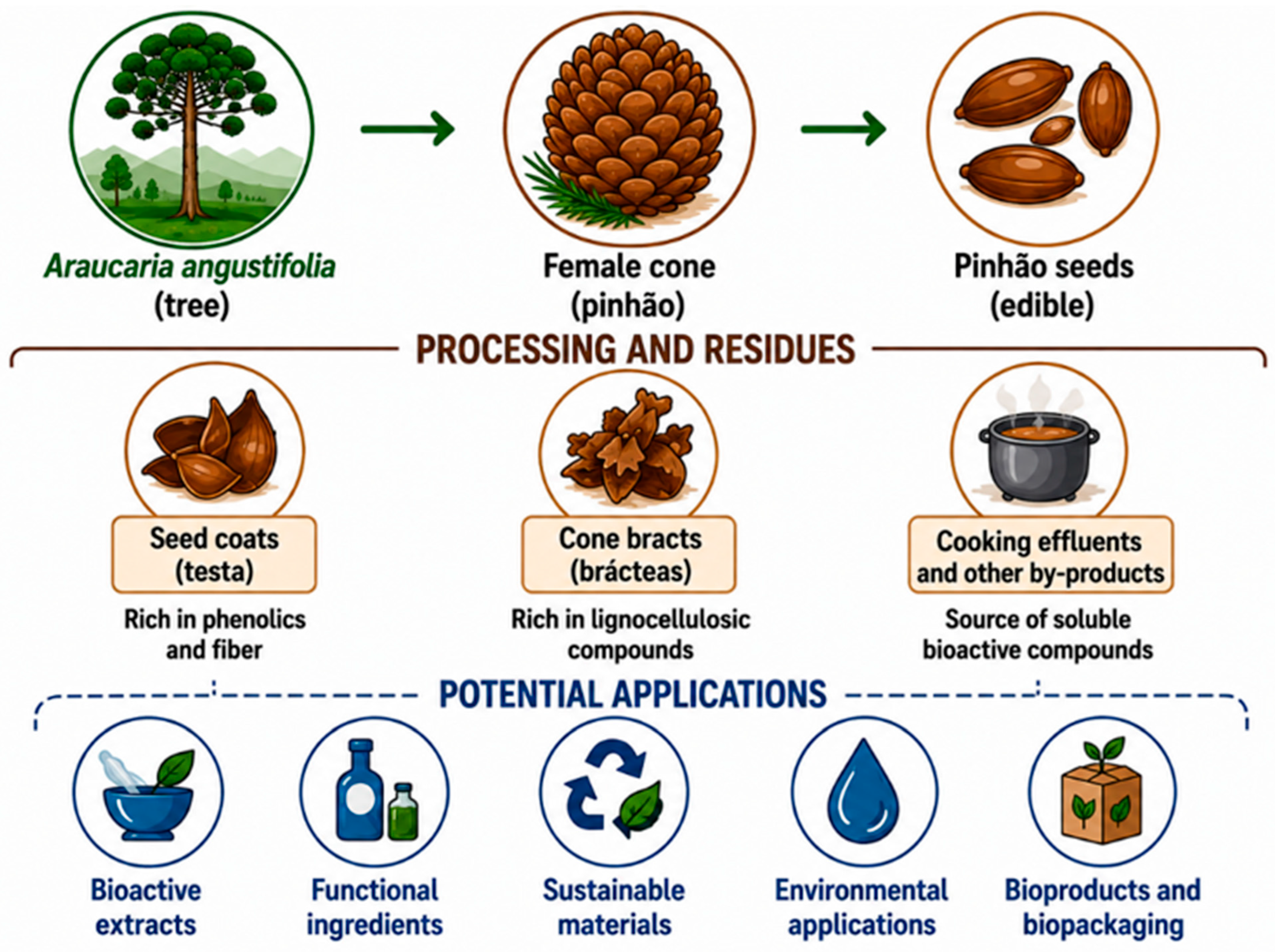
Figure 3 identifies the reproductive structures from which the main residual streams arise.
Antioxidant claims are supported by several assays but are not interchangeable. In sterile bracts, DPPH and ABTS capacities across the extraction design ranged from 15.57 to 68.69 and from 28.09 to 77.40 μmol TE g
−1, respectively [
10]. Godoy et al. compared aqueous, methanolic, and acetonic extracts of non-edible fractions using DPPH and ORAC and found that methanol enriched phenolics and flavonoids [
11]. Seedcoat and cooking-water extracts used in film studies were evaluated by ABTS, DPPH, and FRAP [
14]. Reporting the assay, unit, reference standard, extraction basis, and concentration is essential because a generic statement of ‘high antioxidant activity’ cannot support comparison or process selection.
Application-oriented bioactivity is also assay-dependent. The optimized sterile-bract extract inhibited α-glucosidase with an IC
50 of 0.58 mg mL
−1, compared with 5.54 mg mL
−1 for acarbose in that experimental system, but showed no detectable cellular antioxidant activity at 2000 μg mL
−1 or anti-inflammatory activity at 400 μg mL
−1; cytotoxicity toward non-tumor PLP2 and VERO cells occurred at GI50 values of 41 and 75 μg mL
−1, respectively [
10]. These results illustrate why radical-scavenging values should not be extrapolated to efficacy or safety. Condensed-tannin-rich coat extracts have separately inhibited salivary and pancreatic α-amylases [
36] and pancreatic lipase, with reduced intestinal triacylglycerol absorption demonstrated in vivo [
37]. The cysteine-protease inhibitor AaCI-2S was characterized from pine-nut extract [
38], but that seed evidence should not be presented as direct validation of a residual stream. Dose, bioaccessibility, selectivity, and safety remain product-specific requirements.
From a biomass valorization perspective, the coexistence of extractable bioactive compounds and structural lignocellulosic components is particularly important [
10,
11,
31]. Recovery of phenolic-rich fractions may constitute an initial high-value step, while the remaining cellulose-, hemicellulose-, and lignin-containing matrix can potentially be directed toward subsequent material, biological, or thermochemical processing [
12,
22,
23]. This composition therefore supports a cascading approach in which extraction of bioactive compounds does not represent the final use of the biomass but rather the first stage of a broader fractionation and conversion sequence [
24,
25].
Table 1.
Quantitative composition, bioactive evidence, technological relevance, and limitations of the main residual fractions generated during pinhão processing.
Table 1.
Quantitative composition, bioactive evidence, technological relevance, and limitations of the main residual fractions generated during pinhão processing.
| Residual Fraction | Quantitative Composition or Measured Range | Major Bioactive Compounds | Main Technological Relevance | Main Limitations/Challenges | Ref. |
|---|
Seed
coats | 55% cellulose (46% α-cellulose), 9% hemicellulose, 34% lignin, 7% extractives, and 1.6% ash; layer-specific total extractives: 11.91–27.53% | Catechin, epicatechin, gallic acid, proanthocyanidins, and condensed tannins; values vary with solvent and analytical basis | Antioxidant extracts, active packaging, nanocellulose production, functional food ingredients, and biomaterials | High lignin content; 20–22% of seed mass is only a theoretical residue coefficient; actual collection and seasonal composition are unquantified | [11,12,14,31,32] |
| Cone bracts | TPC: 3.57–9.48 mg GAE g−1; flavonoids: 2.10–6.57 mg catechin equivalents g−1; tannins: 2.17–10.56 mg catechin equivalents g−1 across 20–60% ethanol, 10–40 mL g−1, and 30–80 °C. Structural carbohydrate and ash data remain incomplete | Quercetin derivatives, catechin, epicatechin, apigenin, flavonoids, and polymeric tannins; DPPH: 15.57–68.69 μmol TE g−1; ABTS: 28.09–77.40 μmol TE g−1 | Phenolic recovery, biodegradable materials, cosmetic ingredients, adsorbents, and bioenergy feedstock | Reported as a major strobilus fraction, but dry-mass residue coefficients, moisture, and national recoverability are not standardized | [10,11] |
| Cooking effluents | Dissolved phenolics, sugars, and minerals are reported, but generation volume, dry matter, chemical oxygen demand, and concentration ranges are not nationally quantified | Protocatechuic acid, vanillin, coniferaldehyde, and other soluble phenolics; antioxidant activity measured by DPPH, ABTS, and FRAP in application studies | Recovery of soluble antioxidants, fermentation substrates, biotechnological processes, and liquid biorefinery applications | Dilution, rapid deterioration, and high concentration costs; no measured recoverable annual volume | [14,33,34] |
| Female-strobilus residues (bracts and scales) | Sterile-bract or cone-residue composition is not harmonized; up to 80% of the strobilus has been described as sterile bracts, whereas seeds average approximately 50% of the fresh strobilus in another report | Residual tannins and phenolics; structural composition requires direct analysis of cellulose, hemicellulose, lignin, ash, and moisture | Biochar production, activated carbon, adsorbents, thermochemical conversion, and lignocellulosic biomaterials | Conflicting fraction bases prevent national mass estimation; removal from collection areas may also involve ecological and logistical constraints | [9,10,12,29] |
| Secondary processing residues | Composition depends on whether the stream contains seed coat, pulp/starch, bracts, or mixed food residues; no representative range is available | Variable; must be measured rather than inferred from the composition of isolated fractions | Integrated cascading biorefinery systems, composting, renewable materials, and waste-minimization strategies | Lack of source separation, mass records, moisture data, and standardized sampling | [28,35] |
The available numbers permit only bounded comparisons. Seed coats have a structural composition favorable to cellulose recovery but a lignin content of 34% that can increase chemical and energy demand [
12]. Sterile bracts yielded phenolic-rich extracts with DPPH and ABTS values up to 68.69 and 77.40 μmol TE g
−1 under the tested conditions [
10], whereas a cosmetic shell extract reached 2197.9 ± 169 μmol TE g
−1 by ORAC and 1569.8 ± 47.3 μmol Trolox g
−1 by photochemiluminescence [
13]. These values do not establish that one residue or extraction method is intrinsically superior because the feedstock basis, solvent, endpoint, and unit differ. A direct extraction-yield comparison is also unavailable: one study optimized extract volume recovery [
32], whereas others emphasize phenolic concentration or antioxidant response [
10,
11,
21], and no common mass yield in grams of dried extract per 100 g of initial dry residue is reported across technologies.
Table 2 therefore retains the measured operating conditions and endpoints but identifies mass yield, specific energy use, solvent recovery, and post-extraction solid yield as missing when they were not reported on a comparable basis.
Post-harvest processing adds measurable variability. Thermal treatment changes phenolic profiles and drying can cause losses as internal temperature rises [
39,
40]. Extraction creates another trade-off: in a response-surface study, higher temperature and lower ethanol proportion produced a more defibrillated seed-coat structure that retained liquid and reduced volumetric extract recovery [
32]. This observation is important for a cascade because the condition that disrupts the matrix most strongly may improve access to one fraction while increasing liquid retention, separation demand, or loss of downstream solids. Standard reports should include initial moisture, particle size, dry-mass yield, solvent retained in solids, and composition before and after extraction.
A. angustifolia residues are heterogeneous feedstocks with complementary uses, not a single material with universal treatment. Their value lies in the coexistence of extractable compounds and structural polymers; their difficulty lies in variation among fractions, harvests, and processing histories. Reproducible development will depend on explicit links between starting composition, process conditions, recovered yield, residual-solid quality, and final product performance [
20,
24,
25].
4. Green Extraction and Fractionation Technologies for Biomass Valorization
Extraction is the opening fractionation step of the proposed cascade. Its design determines not only the amount and composition of the recovered extract but also solvent demand, separation work, and the condition of the remaining lignocellulosic solid [
20,
24,
25,
32]. A useful process must recover the target fraction selectively without making the next operation needlessly difficult.
Seed coats, cone bracts, and cooking-derived residues have attracted particular interest because of their phenolic content and potential applications in food, cosmetic, biomaterial, and other bio-based systems [
11,
12,
13]. Compared with conventional solvent-intensive methods, green extraction technologies aim to improve mass transfer and extraction efficiency while reducing solvent consumption, processing time, and environmental impacts [
20,
41,
42,
43]. Among the approaches investigated or considered for
A. angustifolia residues are ultrasound-assisted extraction (UAE), microwave-assisted extraction (MAE), natural deep eutectic solvents (NADES), hydroethanolic extraction, and enzyme-assisted extraction (EAE) [
10,
17,
18,
21]. Their main principles, advantages, limitations, and relevance to
A. angustifolia residue valorization are listed in
Table 2.
Quantitative extraction evidence is strongest for hydroalcoholic systems. Fischer et al. evaluated 20–60% ethanol, 10–40 mL g
−1 liquid-to-solid ratios, and 30–80 °C for sterile bracts; total phenolics, DPPH, and ABTS reached 9.48 mg GAE g
−1, 68.69 μmol TE g
−1, and 77.40 μmol TE g
−1, respectively [
10]. Dorneles and Noreña applied microwave-assisted extraction to bracts followed by encapsulation [
17], while de Freitas et al. directly compared emerging technologies for seed coats [
21]. Laboratory feasibility is established, yet the studies do not provide comparable values for specific energy use, solvent recovery, throughput, and post-extraction solid yield. The evidence cannot presently identify the lowest-energy or lowest-cost integrated option.
Table 2 separates direct
A. angustifolia evidence from extrapolation. UAE and MAE can shorten extraction and intensify mass transfer, but their advantage must be reported per kilogram of dry feed and per gram of recovered target, not only as extraction time. NADES are promising for phenolics [
44,
45,
46,
47] but currently lack direct
A. angustifolia validation in this evidence set and may shift the burden to product separation because of viscosity and low volatility. Hydroethanolic extraction has the clearest food-compatible benchmark and direct application in films, although ethanol recovery and drying remain material energy demands. Enzyme-assisted extraction is prospective for this biomass; its downstream advantage is plausible but unproven.
Hydroethanolic extraction remains a comparatively simple and relevant alternative, particularly when the recovered fractions are intended for food or related applications. Ethanol–water mixtures combine relatively low toxicity with adjustable polarity and can recover a broad range of phenolic compounds from plant matrices. Their technological simplicity and compatibility with established processing operations are advantageous, although solvent consumption, recovery requirements, extraction time, and limited selectivity may reduce process efficiency. For
A. angustifolia, hydroethanolic systems have been used to obtain phenolic-rich extracts from residual fractions and therefore provide an important benchmark against which emerging extraction technologies can be evaluated [
10,
48].
Table 2.
Green extraction and fractionation technologies relevant to the valorization of A. angustifolia residues.
Table 2.
Green extraction and fractionation technologies relevant to the valorization of A. angustifolia residues.
| Technology | Processing Principle | Main Advantages & Main Limitations | Evidence for A. angustifolia | Ref. |
|---|
| Ultrasound-assisted extraction (UAE) | Acoustic cavitation enhances cell disruption, solvent penetration, and mass transfer | Short extraction time; reduced solvent demand; mild operating conditions; suitable for thermolabile compounds
Scale-up limitations; performance dependent on biomass structure, particle size, solvent, and energy input | Direct evidence for seed coats. Comparative data on specific energy consumption, solvent recovery, throughput, and post-extraction solid yield have not been reported on a common basis | [21,32] |
| Microwave-assisted extraction (MAE) | Dielectric heating promotes rapid internal heating, matrix disruption, and compound diffusion | Rapid extraction; reduced processing time; potentially lower solvent consumption; high extraction efficiency
Risk of thermal degradation; equipment requirements; scale-up limitations; heating uniformity | Direct evidence for bracts and seed coats. Laboratory feasibility has been established, but uniform heating, specific energy consumption, solvent recovery, and residual-solid performance remain scale-up gaps | [17,21,43] |
| Natural deep eutectic solvents (NADES) | Hydrogen-bond donor–acceptor systems provide tunable solvent polarity and affinity for bioactive compounds | Low volatility; tunable polarity; potential use of naturally derived components; high affinity for phenolic compounds
High viscosity; mass-transfer limitations; difficult product separation; challenges involving solvent recovery and recyclability | No direct validation for A. angustifolia was found in the cited evidence set; support comes from studies of other plant residues. Product–solvent separation and solvent retention must be quantified | [18,19,44,45,46,47] |
| Hydroethanolic extraction | Ethanol–water mixtures provide adjustable polarity for the solubilization of phenolic compounds | Food-compatible solvent system; relatively low toxicity and cost; technological simplicity; broad phenolic recovery
Limited selectivity; solvent consumption and recovery requirements; potentially longer extraction times | Direct evidence is available. In sterile bracts, extraction using 20–60% ethanol, liquid-to-solid ratios of 10–40 mL g−1, and temperatures of 30–80 °C yielded TPC values of 3.57–9.48 mg GAE g−1 and DPPH and ABTS values of 15.57–68.69 and 28.09–77.40 μmol TE g−1, respectively | [10,14,32,48] |
| Enzyme-assisted extraction (EAE) | Hydrolytic enzymes modify structural polysaccharides and facilitate the release of matrix-associated compounds | Mild operating conditions; potentially selective biomass deconstruction; reduced need for harsh chemical treatments; compatibility with cascading processing
Enzyme cost; substrate specificity; optimization requirements; enzyme recovery; limited scale-up evidence | Prospective technology for A. angustifolia residues. No direct sequential dataset has demonstrated improved extract yield together with downstream cellulose or sugar recovery | [35] |
Enzyme-assisted extraction uses hydrolytic enzymes to open plant-cell-wall structures and release associated compounds under relatively mild conditions. That mechanism could couple phenolic recovery with partial biomass deconstruction. Practical use depends on enzyme cost, substrate specificity, residence time, recovery, and proof that the treatment improves the next operation. The cited literature does not yet provide sequential evidence for
A. angustifolia residues [
35].
Downstream compatibility is therefore a co-primary response, not an afterthought. For each extraction condition, the residual solid should be assessed for cellulose, hemicellulose, lignin, crystallinity, porosity, solvent residues, enzymatic digestibility, fermentation inhibitors, and material-forming performance. Water or diluted ethanol may preserve carbohydrate quality but require evaporation of larger liquid volumes. Higher temperature or microwave intensity may increase mass transfer while altering polymer degree of polymerization or generating inhibitory compounds. NADES can remain associated with solids and products unless recovery is demonstrated. A condition that maximizes phenolics but lowers cellulose yield, enzyme accessibility, or film performance may reduce total cascade value.
This distinction is particularly important when green extraction is incorporated into a cascading biorefinery. Ideally, the first processing stage should selectively recover compounds with relatively high added value while maintaining or improving the suitability of the residual biomass for subsequent conversion. The resulting solid fraction could then be directed toward cellulose-based materials, biopolymers, fermentation, adsorbents, biochar, or thermochemical routes, depending on its composition and structural properties. Liquid residues and recovered solvents should likewise be considered within mass and solvent recycling strategies. Such an approach shifts process evaluation from optimization of a single extraction yield toward optimization of the overall value obtained from the biomass.
Movement from laboratory extraction to integrated processing is limited by feedstock variability, solvent and water recovery, heat and mass transfer, purification, and reproducibility [
20,
42,
49]. Direct comparisons of conventional and intensified methods using the same feedstock, dry-mass basis, product specification, and unextracted control are rare. Future comparisons should therefore report extract mass yield, target recovery, specific energy, solvent recyclability, residual-solid composition, and performance in the next unit operation. Without this common dataset, the available technologies cannot be ranked defensibly as the first stage of an integrated
A. angustifolia biorefinery.
5. Cascading Biorefinery and Integrated Valorization Pathways
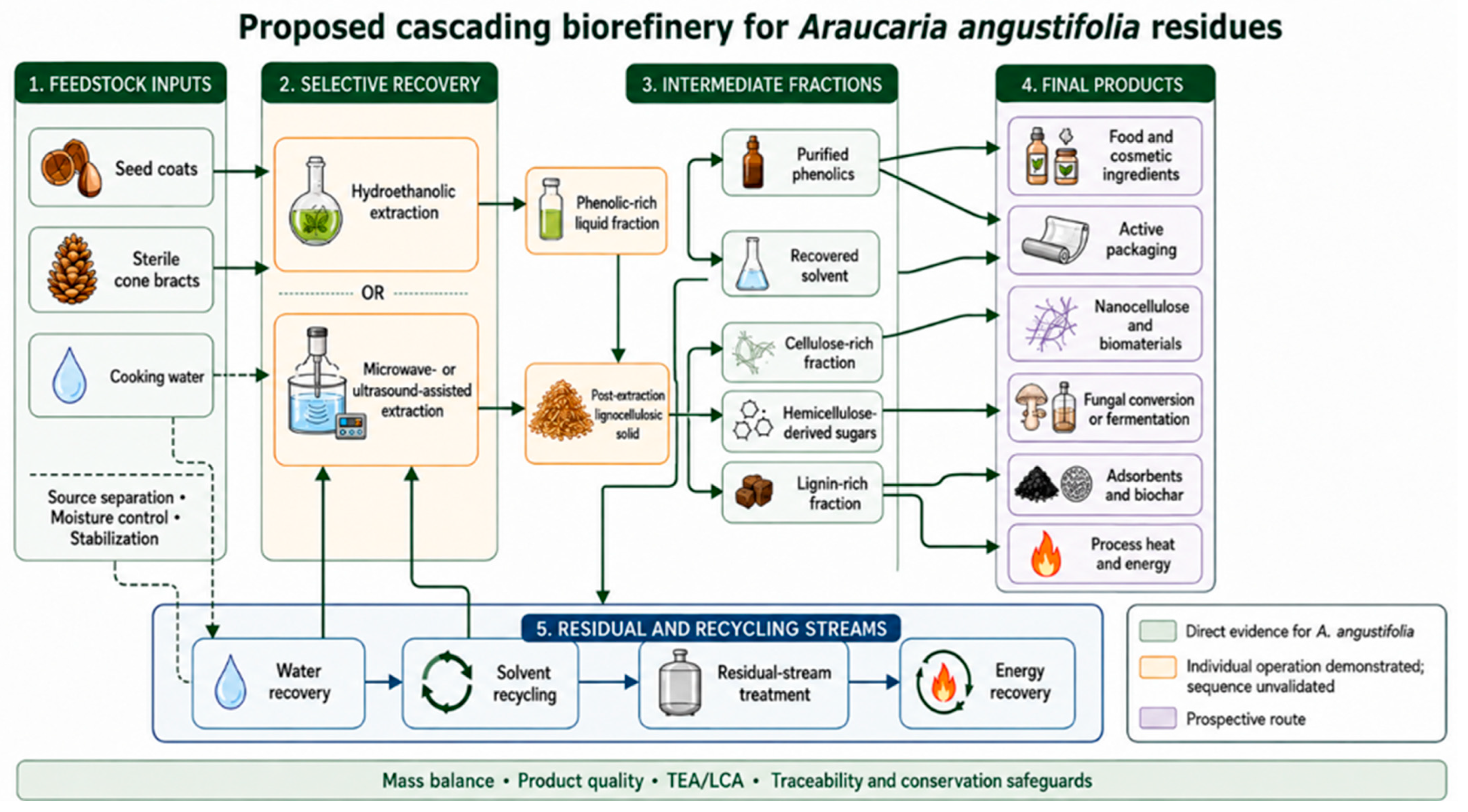
The cascading framework in this review is a proposed integration of validated unit operations, not evidence that a continuous
A. angustifolia biorefinery already exists. Direct experiments support phenolic extraction, cellulose and nanocellulose recovery, incorporation of extracts into films and cosmetic formulations, fungal use of seed coats, and adsorption by natural or carbonized shells [
10,
12,
13,
14,
15,
16,
17,
22,
48,
50,
51,
52]. No study has yet applied these operations sequentially to the same batch with a complete mass balance.
Figure 4 therefore marks each step as demonstrated, individually demonstrated but not sequentially validated, or prospective.
A ‘high value first’ hierarchy is justified only when value concentration outweighs yield loss, separation demand, and damage to later fractions. Phenolic extraction is the best-supported first step because it targets a small, potentially high-value stream before bulk conversion [
10,
14,
21]. The scientific test is not phenolic concentration alone: the process must quantify extract mass, solvent and energy inputs, residual-solid recovery, and the performance of cellulose, hydrolysis, fermentation, or material production relative to unextracted control. Without that paired comparison, high-value-first remains a hypothesis rather than an optimized sequence.
The seed-coat composition reported by Barros et al. [
12] suggests a material route after extraction: cellulose recovery from a feed containing about 55% cellulose and 34% lignin. Yet upstream treatment may change crystallinity, molecular integrity, surface chemistry, and chemical consumption during delignification. If a mild hydroethanolic step removes phenolics and increases wettability without excessive carbohydrate loss, it may facilitate later fractionation; if an intensive thermal or solvent step increases degradation or leaves non-recoverable solvent, it may do the opposite. Extracted and unextracted controls, expressed on the original dry-feed basis, are required to resolve this compatibility.
Biological conversion has one direct starting point: Rocha et al. [
22] used seed-coat waste to diversify substrates for
Pleurotus djamor cultivation. This experiment shows that the lignocellulosic residue can enter fungal production. Bioethanol, organic acids, enzymes, or microbial biomass derived from hydrolysates remain plausible but untested as downstream products after phenolic extraction [
35,
53]. Claims for those routes should remain prospective until sugar yield, inhibitors, and biological productivity are measured.
Lignin-rich material that fails to meet the requirements of higher-value routes may be carbonized or converted thermochemically into biochar, liquid or gaseous products, and process energy [
23]. Such placement near the end of the cascade is a working hierarchy, not a rule. It is justified only when mass, energy, emissions, and product value show that material or biological recovery is less suitable for that fraction.
Cooking water forms a separate liquid stream. Protocatechuic acid, vanillin, coniferaldehyde, and measurable antioxidant activity have been reported [
33], and recovered compounds have been incorporated into zein-based films [
14]. Boiling also transfers sugars and minerals such as P, Cu, and Mg to the water [
34]. Its low solute concentration and rapid deterioration may make recovery more expensive than the product obtained. Generation volume, dry matter, storage stability, and batch-to-batch composition must be measured before choosing concentration, fermentation, or treatment.
The proposed sequence is as follows: (i) source-specific collection, separation, moisture measurement, and stabilization; (ii) selective phenolic recovery from suitable solid or liquid streams; (iii) compositional and structural reassessment of the post-extraction solids; (iv) allocation of cellulose- and carbohydrate-rich fractions to materials, fungal conversion, or fermentation only after performance testing; and (v) adsorption, carbonization, energy recovery, or controlled treatment for recalcitrant residues, with solvent and water recycling evaluated throughout (
Figure 4). Cooking water should be processed separately because dilution and rapid deterioration govern its feasibility. Gate criteria between stages should include retained dry mass, target yield, solvent residue, energy demand, inhibitor formation, and product specification, not nominal product value alone.
The feasibility of such a system is strongly influenced by the characteristics of the pinhão value chain. Biomass seasonality, heterogeneous residual streams, decentralized generation, and limited regional processing infrastructure may constrain conventional large and centralized biorefineries. For geographically dispersed lignocellulosic resources, decentralized or modular processing has been proposed as an alternative capable of integrating initial biomass conversion closer to feedstock-generation sites with subsequent upgrading of intermediates [
54]. In the case of
A. angustifolia, this could involve biomass stabilization, extraction, or initial fractionation close to production and consumption areas, followed by centralized processing of more concentrated intermediate streams. The technical and economic feasibility of such configurations has not yet been established for pinhão residues and represents an important research need.
The most credible near-term route is therefore a partial rather than complete cascade: centralized collection of relatively clean seed coats or bracts, food-compatible extraction of a standardized phenolic fraction, and characterization of the extracted solid for one defined material application. Active packaging and nanocellulose have stronger product-level evidence than fermentation or thermochemical integration [
14,
48,
50,
52]. A second priority is modular extraction at processors that already generate concentrated residues. Whole-chain fermentation and multiproduct thermochemical routes remain lower-priority until feedstock volume, hydrolysate yield, inhibitor formation, and minimum economic scale are established.
No TEA or LCA has yet been reported for an
A. angustifolia residue biorefinery. An initial comparison should therefore test a single-product route against the proposed partial cascade and include seasonal operating days, collection radius, wet-to-dry conversion, storage loss, modular versus centralized preprocessing, solvent and water recycling, coproduct yield, capital utilization, and residual-stream treatment [
25,
55,
56,
57]. This assessment must determine whether the additional recovery step creates more value and lower environmental burden than it adds in transport, drying, separation, and energy demand; an advantage from integration cannot be assumed.
6. High-Value Bioproducts and Application Pathways
The chemical and structural diversity of
A. angustifolia residues supports the development of products with markedly different functions and added-value potential. Phenolic-rich extracts can provide antioxidant and other bioactive functionalities, whereas cellulose- and lignin-containing fractions can serve as renewable structural materials or precursors for environmental applications. Current evidence encompasses food ingredients, active and biodegradable packaging, cosmetic formulations, and adsorbent materials, although the technological maturity of these applications remains uneven [
10,
11,
12]. Distinguishing experimentally demonstrated applications from prospective uses is therefore important when assessing the actual valorization potential of this biomass.
6.1. Food Ingredients and Functional Applications
Food-related evidence spans chemical, enzymatic, in vivo, and real-matrix endpoints. Antioxidant activity has been measured by DPPH, ABTS, ORAC, FRAP, and photochemiluminescence rather than by one interchangeable test [
10,
11,
13,
14]. Condensed-tannin-rich coat extract inhibited salivary and pancreatic α-amylases [
36], and pancreatic-lipase inhibition was linked to reduced intestinal triacylglycerol absorption in vivo [
37]. Sterile-bract extract inhibited α-glucosidase with an IC
50 of 0.58 mg mL
−1 in the reported system [
10]. These results justify further formulation work but do not establish an effective human dose, bioavailability, or safety.
Fiebig et al. [
29] moved beyond isolated extract assays by incorporating pinhão fractions into açaí yogurt and measuring physicochemical, nutritional, functional, antimicrobial, and elemental responses. Processing and matrix interactions make this a stronger translational endpoint. Commercial development would still require sensory acceptance, microbial shelf life, reproducible ingredient specifications, effective inclusion levels, digestion studies, and regulatory assessment. The evidence is best described as a food-matrix proof of concept rather than a market-ready ingredient.
Activity in a chemical assay, enzyme system, or animal model does not by itself establish a commercial functional ingredient. Matrix interactions, processing stability, bioaccessibility, bioavailability, sensory effects, effective dose, and safety can change the response. Studies in real foods should be paired with simulated or in vivo digestion to determine whether activity survives formulation, processing, and gastrointestinal exposure.
6.2. Biodegradable and Active Packaging
Packaging represents another comparatively well-supported valorization pathway for
A. angustifolia residues. Cellulose-rich fractions can provide renewable structural components for biodegradable materials, while phenolic-rich extracts can introduce antioxidant or antimicrobial functionality into polymeric matrices. Cellulose recovery from pinhão agro-industrial residues has been demonstrated [
12], supporting the potential use of the structural biomass as a source of renewable material.
Packaging studies likewise vary in evidential strength. Coat and cooking-water extracts were characterized by ABTS, DPPH, and FRAP before incorporation into zein films [
14]. Pinhão extracts have also been introduced into TPS/PBAT and soy-protein-isolate matrices [
48,
50], while a related active-packaging study measured protection against lipid oxidation in Brazil nuts under different storage temperatures [
58]. These experiments demonstrate formulation and functional retention, but cross-study comparison requires common values for tensile strength, elongation, water-vapor and oxygen permeability, active-compound migration, and food-contact safety. None of the reported systems constitute an industrially validated package.
Packaging could, in principle, reunite two fractions from the same feedstock: cellulose as a structural component and phenolics as active agents. No study has yet produced and recombined both fractions through one sequential A. angustifolia process. The concept should be tested by comparing material yield and film performance with those of separately sourced components, rather than whether a shared origin improves the product.
Translation to commercial packaging will also require assessment of mechanical and barrier properties, active-compound migration, food-contact safety, processing stability, shelf-life performance, scalability, and compatibility with existing manufacturing technologies. These requirements distinguish proof of concept films from packaging systems that are technologically ready for practical application.
6.3. Cosmetic and Personal Care Applications
Da Mota et al. [
13] prepared three topical systems containing methanolic seed-shell extract: a water-in-oil (W/O) emulsion, an oil-in-water (O/W) emulsion, and a nonionic gel. The antioxidant capacity of the finished formulations was measured by photochemiluminescence rather than inferred from the extract. The W/O emulsion and gel reached 4.41 ± 0.07 and 4.00 ± 0.07 μmol Trolox g
−1, respectively, compared with 3.59 ± 0.17 μmol Trolox g
−1 for the O/W emulsion; the corresponding bases were less active. This is a direct proof of concept for this formulation, but it does not establish clinical anti-aging efficacy.
Recent analyses confirm that non-edible fractions contain phenolics of interest to cosmetic formulation [
10,
11]. Translation to an ingredient requires more than antioxidant screening: composition must be reproducible, the active fraction must remain stable in the vehicle, and skin compatibility, microbiological quality, and safety must be demonstrated. Claims should follow the endpoint tested.
Cosmetics are attractive because a small, standardized fraction may carry more value than a bulk lignocellulosic product. That advantage disappears if purification, stability control, toxicology, or regulatory compliance is disproportionate to the attainable market. Formulation studies should therefore report active concentration, recovery yield, shelf stability, and safety together.
6.4. Environmental Applications and Biomass-Derived Adsorbents
Environmental applications have direct batch evidence. Pine-shell residues were optimized as biosorbents for Cr(VI) and Cu(II) using factorial or response-surface experimental designs that evaluated pH, particle size, dose, and contact conditions [
15,
59]. Natural and carbonized shells were tested for methylene blue [
16], and unmodified shell removed Reactive Red 194 with a reported maximum capacity of about 20.8 mg g
−1 under the studied system [
51]. These values demonstrate contaminant uptake in controlled solutions, not treatment cost or performance in real wastewater containing competing ions and dissolved organic matter.
The quantitative evidence remains narrow. Raw pine-fruit shell reached a reported maximum capacity of about 20.8 mg g
−1 for Reactive Red 194 [
51]. For context, a commercial activated carbon reached 174 mg g
−1 for Procion Red MX-5B in a separate study [
60]. This is not a head-to-head performance comparison: dye structure, pH, initial concentration, particle size, temperature, contact time, and equilibrium model differ between the studies. It nevertheless shows that the current
A. angustifolia dataset does not demonstrate equivalence to a commercial adsorbent. A valid benchmark must test the residue-derived material and a named commercial carbon under identical conditions and report capacity, removal rate, selectivity, pressure drop or mechanical stability, regeneration loss, and cost per unit of contaminant removed.
Adsorption may provide an outlet for a lower-value solid after extract or structural fractions have been removed, but it is not automatically a benign final use. Preparation energy, regeneration, contaminant release, and disposal of the loaded adsorbent belong in the process balance. A cascade that merely transfers pollutants from water to an unmanaged solid has not solved the environmental problem.
The current evidence supporting these different valorization pathways varies considerably in terms of experimental validation and technological maturity.
Table 3 summarizes the main product and application routes identified for
A. angustifolia residues, distinguishing experimentally demonstrated applications from emerging and prospective pathways and highlighting the major barriers to further technological development.
6.5. From Proof of Concept to Market-Oriented Bioproducts
The evidence ranking identifies three comparatively credible near-term paths: standardized phenolic extracts for formulation research, active films in which function has been measured after incorporation, and cellulose/nanocellulose materials from clean seed coats. Cosmetic emulsions, fungal substrate supplementation, and adsorbents remain useful proof-of-concept routes but need application-specific safety, stability, or realistic-matrix tests. Integrated fermentation and thermochemical conversion after extraction are prospective. This ranking is based on the depth of direct evidence and compatibility with the available feedstock scale, not merely on nominal market value.
Industrial translation requires reproducible feedstock and product specifications, scalable processing, application-specific safety and performance, regulatory compliance, and competitive cost.
Table 3 identifies these requirements for each product class, while
Section 8 converts the shared gaps into a staged experimental and assessment roadmap.
7. Value Chains, Territorial Integration, and Regional Bioeconomy
The 2024 production distribution, 35.4% Paraná, 27.5% Santa Catarina, 24.2% Minas Gerais, 7.2% Rio Grande do Sul, and 5.7% São Paulo, shows regional concentration at state scale but not at collection-point scale [
27]. Biomass availability, road distance, storage time, electricity, process water, technical labor, and access to processors must be mapped together. State totals alone cannot determine whether a facility should be centralized, decentralized, or hybrid.
Timber exploitation drove much of the twentieth-century decline and fragmentation of
A. angustifolia forests [
6]. Stricter protection and recognition of the species’ ecological role later shifted attention toward non-timber products, especially pinhão. Conservation-by-use may support livelihoods and help maintain standing trees, but it is only one element of a broader conservation strategy [
9].
Residue valorization could extend value creation beyond the edible seed by transforming seed coats, cone bracts, cooking effluents, and other secondary biomass streams into marketable ingredients, materials, or intermediate products. Recovery of phenolic compounds, production of functional ingredients, development of biodegradable packaging, cellulose-derived materials, and other bioproducts could diversify the portfolio associated with the pinhão value chain and increase the value retained from biomass already generated through production and consumption [
19,
20]. Such diversification may be particularly relevant in a seasonal production system, in which reliance on a single product can restrict income-generation opportunities.
Logistics should be modeled from residue condition and product value. Wet cooking water is costly to transport and should be concentrated, fermented, or treated at the point of generation. Fresh bracts and coats require rapid drying or another stabilization step to prevent microbial and oxidative changes. For dried, milled solids, transport cost depends on bulk density and distance; for extracts, solvent recovery and safe handling become decisive. A feasibility study should therefore report collection radius, seasonal operating days, truck payload, storage loss, preprocessing energy, and the mass reduction achieved before long-distance transport.
The production scale rules out uncritical transfer of large commodity-biorefinery models. Even the upper-bound 2024 cost estimate is only 2699–2969 t year
−1 nationally, before recovery losses, compared with the approximately 2000 dry t day
−1 design basis used in a conventional NREL lignocellulosic refinery model [
30]. The appropriate benchmark is thus not planting size alone but cost per kilogram of stabilized residue or purified product. Shared dryers, mills, extraction skids, and analytical quality control at cooperatives or regional processors may be more realistic than a dedicated centralized refinery; this remains a hypothesis requiring spatial and economic optimization.
Infrastructure needs should be stated without assuming that all production areas are inaccessible. The evidence base lacks a georeferenced audit linking pinhão-producing municipalities to all-weather roads, three-phase electricity, water supply, storage, laboratories, and equipment maintenance. Investment scenarios should compare mobile or modular units, cooperative hubs, and transport to existing food or biomass processors. Minimum requirements include washable collection containers, covered storage, moisture control, drying capacity, worker training, solvent-safe installations when ethanol is used, traceability, and routine compositional testing.
The development of residue-based value chains also raises questions concerning how economic benefits are distributed. Commercial valorization of biodiversity-based resources does not automatically result in socially inclusive development. Unequal access to technology, financing, processing infrastructure, and markets may concentrate value in downstream segments while leaving biomass producers with only a small proportion of the economic return. Weak governance, dependence on niche markets, and limited bargaining capacity can further constrain the participation of small producers and community-based organizations [
9,
63]. For this reason, economic assessment should consider not only overall profitability but also where value is generated and retained along the chain.
This issue is particularly relevant because
A. angustifolia is a threatened native species. Increasing the economic value associated with standing trees and non-timber products may contribute to broader incentives for maintaining araucaria landscapes [
64], but commercialization alone cannot guarantee conservation. Increased demand could also create pressures if biomass sourcing, seed harvesting, or residue collection were poorly managed. Valorization strategies must therefore remain based on residues generated through environmentally responsible production and consumption systems and should operate alongside ecological restoration, sustainable forest management, environmental regulation, and biodiversity monitoring [
9].
Public policies and territorial governance consequently have an important role in determining whether emerging value chains contribute to sustainable regional development. Support for agroforestry systems, socio-biodiversity production chains, ecological restoration, technical assistance, producer organizations, and locally appropriate processing infrastructure may strengthen the conditions under which biomass valorization can generate both economic and environmental benefits [
9,
63]. Coordination among research institutions, producers, processing industries, public agencies, and local organizations will also be necessary to connect technological innovation with regional implementation.
Markets for natural ingredients, renewable materials, and traceable products may accept outputs derived from
A. angustifolia residues [
19,
65]. Entry depends on consistent composition, reliable seasonal supply, regulatory compliance, certification where needed, and competitive cost. Territorial identity may distinguish specialty extracts or materials; bulk products will compete directly with larger and better-established biomass chains.
The main economic, logistical, governance, and territorial factors that may determine the feasibility of
A. angustifolia residue-based value chains are summarized in
Table 4. Rather than representing independent constraints, these dimensions are strongly interconnected and should be considered jointly when evaluating future regional biorefinery configurations.
A regional value-chain assessment should combine the official production series with primary field data on residue coefficients, recovery rates, infrastructure, competing uses, and producer participation. The decision metric is total value retained per tonne of original dry biomass after logistics, processing, losses, and compliance—not gross product price. The preferred pathway may differ by hub: phenolic extraction near a concentrated food processor, dry-coat aggregation for material manufacture, and local treatment of cooking water. A single national process configuration is therefore unlikely to be optimal.
In summary, territorial integration is not an accessory social dimension but a process-design constraint. Commercialization is credible only if seasonal feedstock volumes, collection radii, infrastructure, product specifications, and buyers are demonstrated at the same regional scale. Traceability and sustainable harvesting are mandatory because increased residue value must not encourage excessive or premature seed removal. Public support is most useful when it strengthens shared infrastructure, technical assistance, quality control, restoration, and producer participation rather than subsidizing a plant before feedstock and market evidence are available.
8. Research Gaps and Roadmap Toward an Integrated A. angustifolia Biorefinery
The review identifies a bounded opportunity rather than a ready-to-commercialize refinery. Approximately 13,493 t of pinhão were recorded in 2024, corresponding to at most 2699–2969 t of seed coats before recovery losses [
26,
27]. Composition and laboratory studies justify targeted products, but no integrated process has reported a complete mass balance, energy balance, capital and operating costs, or environmental comparison. The roadmap must therefore begin with measurement and sequential validation, not plant construction.
A priority is improved feedstock characterization and standardization. Variability associated with genotype, geographic origin, climatic conditions, maturity, harvesting season, processing history, drying, and storage can affect both biomass composition and the recovery of target compounds. Standardized protocols for sampling, biomass preparation, compositional analysis, and reporting are therefore required to enable meaningful comparisons among studies. Attention should be given to quantitative characterization of cellulose, hemicellulose, lignin, extractives, phenolic subclasses, moisture, ash, and other parameters relevant to subsequent processing. Regional inventories of residue generation are also needed because the actual quantities and spatial distribution of seed coats, cone bracts, and cooking-derived streams remain insufficiently defined.
A second priority is multi-response design of experiments for sequential fractionation. Factors should include solvent composition, liquid-to-solid ratio, temperature, time, particle size, and microwave or ultrasound energy; responses should include phenolic mass recovered, residual-solid yield, retained cellulose and hemicellulose, lignin removal, enzymatic digestibility, inhibitor formation, solvent retained, energy per kilogram, and application performance. Factorial or response-surface designs, already used for phenolic extraction and adsorption [
10,
15,
32,
59], should be extended across two or more-unit operations. Multi-objective desirability or Pareto analysis can then identify conditions that maximize total cascade value rather than a single assay.
Pilot studies should compare at least two sequences under the same dry-feed basis, for example, mild hydroethanolic extraction followed by cellulose recovery versus direct cellulose recovery—and include an unextracted control. Reported outputs should close carbon and dry-mass balances; measure water, solvent, heat, and electricity; and quantify product purity and residual-stream treatment. Only after these data exist can simulation, equipment sizing, and sensitivity analysis identify a viable capacity and operating window.
Product validation should be used by the endpoint required by the market. Antioxidant ingredients need chemical stability, bioaccessibility, safety, sensory assessment, and efficacy in a real matrix; active films need mechanical, barrier, migration, food-contact, and shelf-life data; cosmetics need formulation stability, microbiological quality, skin compatibility, and controlled efficacy; adsorbents need selectivity, regeneration, realistic wastewater, and end-of-life tests. DPPH or ABTS values alone are screening evidence, not commercial validation.
TEA and LCA should initially be scenario-based because plant data are absent. The base case must include seasonal operating days, collection radius, wet-to-dry conversion, residue recovery fraction, modular versus centralized preprocessing, solvent recycling, coproduct yields, labor, capital utilization, and disposal or treatment. Sensitivity analysis should test feedstock volume, product selling price, extraction yield, energy price, and capacity factor. The sustainable pathway cannot be selected in advance: it is the configuration that meets product specifications while minimizing cost and environmental burden per unit of original residue used.
A sixth priority is to define appropriate processing configurations for a seasonal and decentralized biomass chain. The characteristics of pinhão production may not favor the same infrastructure used for continuously available industrial feedstocks. Comparative assessment of centralized, decentralized, and hybrid configurations should therefore consider residue density, storage stability, transportation distances, processing capacity, and the value and stability of intermediate products. Local stabilization or initial fractionation followed by centralized upgrading may represent one possible configuration, but its technical and economic feasibility remains to be demonstrated.
Finally, technological development must remain connected to the ecological and territorial context of
A. angustifolia. Because the species is critically endangered, expansion of biomass valorization cannot be based on increased pressure on native populations. Feedstock sourcing should remain restricted to residues generated through environmentally responsible production and consumption chains, and future biorefinery development should be integrated with sustainable forest management, agroforestry, restoration, traceability, and biodiversity monitoring [
6,
9]. At the same time, governance models should consider producer participation, local processing capacity, access to technology and financing, and the distribution of value among actors along the chain.
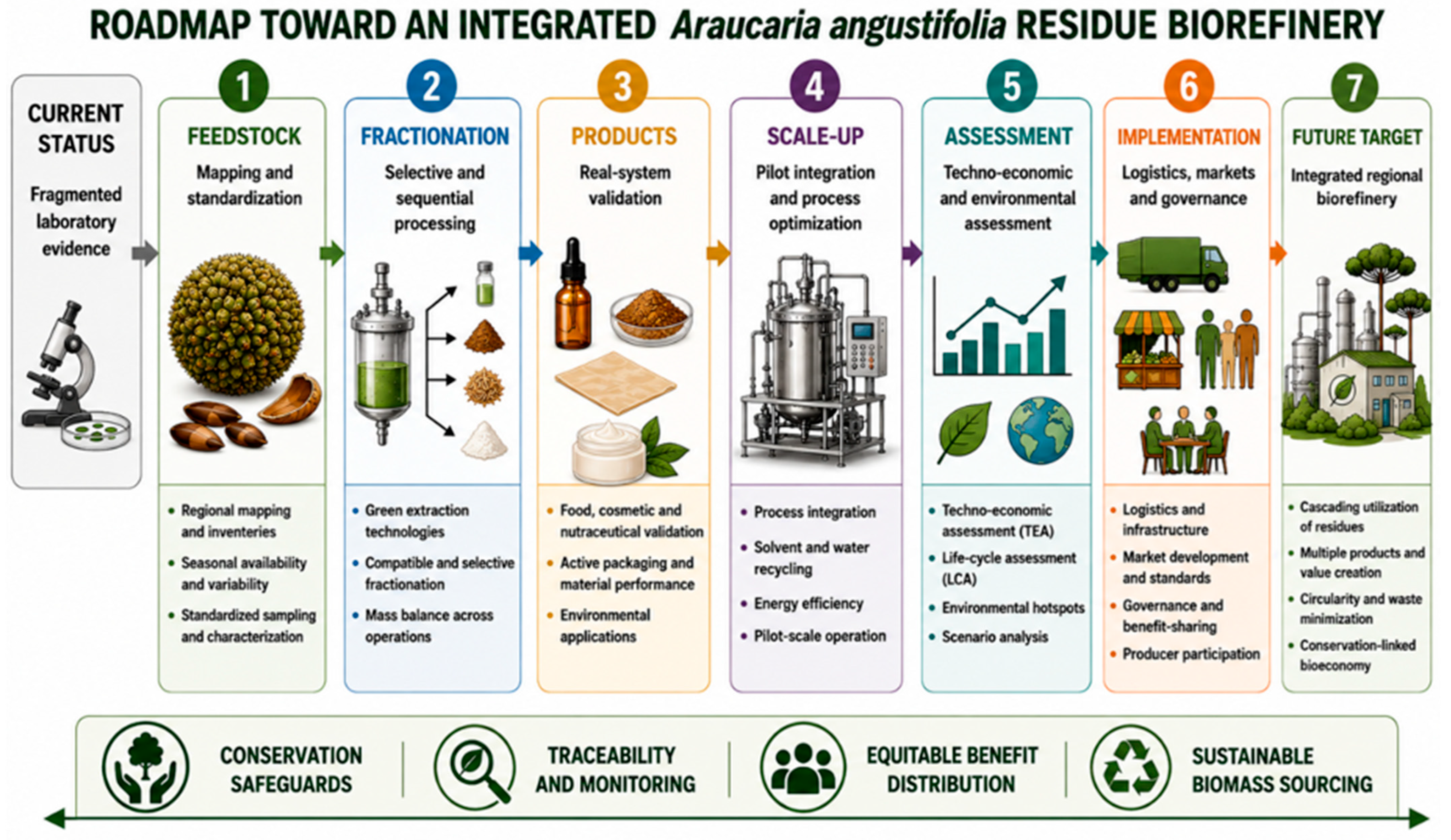
Based on these research gaps, a stepwise roadmap can be proposed for advancing
A. angustifolia residue valorization from fragmented laboratory evidence toward an integrated regional biorefinery (
Figure 5).
The priority sequence is therefore: (i) georeferenced feedstock and infrastructure mapping; (ii) harmonized composition and moisture data; (iii) multi-response experimental design for compatible sequential operations; (iv) product validation in realistic matrices; (v) pilot-scale mass and energy balances; (vi) TEA and LCA comparing modular, centralized, and hybrid configurations; and (vii) implementation only where traceable supply, buyers, conservation safeguards, and equitable participation are demonstrated. This sequence answers what can presently be concluded: chemistry supports valorization, selected products are technically credible at the proof-of-concept scale, but costs, commercialization, and the most sustainable pathway remain unresolved empirical questions.
9. Concluding Remarks
A. angustifolia residues are quantitatively modest but chemically valuable. Brazil recorded 13,493 t of pinhão in 2024, implying a theoretical 2699–2969 t of seed coats before collection losses. Seed coats combine about 55% cellulose and 34% lignin, while sterile bracts provide measurable phenolics and antioxidant capacity. These characteristics support selective products rather than a commodity-scale national refinery.
The strongest evidence supports laboratory phenolic recovery, cellulose and nanocellulose materials, active films, cosmetic formulations, fungal conversion, and adsorbents. A full cascade has not been demonstrated. The defensible sequence begins with source separation and stabilization, proceeds to food-compatible phenolic recovery, and continues only after the residual solid is shown to meet the requirements of a defined material or biological route. Recalcitrant fractions can then be considered for adsorption, carbonization, or energy recovery.
Commercial and sustainability claims remain premature because recoverable residue inventories, pilot-scale yields, infrastructure maps, costs, and life-cycle data are missing. The total feedstock scale and territorial dispersion favor modular collection and preprocessing scenarios, but this must be tested with spatial logistics, multi-response experimental design, mass and energy balances, TEA, and LCA.
Residue valorization is acceptable only as part of a conservation-oriented pinhão chain. Traceable sourcing, sustainable seed harvest, habitat protection, restoration, and producer participation are non-negotiable safeguards. Under those conditions, a partial regional cascade focused on a small number of validated products is more credible than an immediate claim of an integrated industrial biorefinery.
Author Contributions
Conceptualization, I.d.B.H. and R.M.P.; formal analysis, I.d.B.H., J.R.d.S.F.; S.S.K. and A.R.d.F.T.; data curation, R.C.G.C. and R.d.C.G.S.; writing—original draft preparation, I.d.B.H.; J.R.d.S.F. writing—review and editing, R.C., C.G.M.d.S., R.C.G.C., A.B. and R.M.P.; supervision, R.M.P. and A.B.; project administration, R.M.P.; funding acquisition, R.M.P. and C.G.M.d.S. All authors have read and agreed to the published version of the manuscript.
Funding
I.d.B.H., S.S.K., A.R.d.F.T., J.R.d.S.F. are recipients of CAPES (Coordenação de Aperfeiçoamento de Pessoal de Nível Superior) scholarships. A.B., C.G.M.d.S., R.C.G.C., R.M.P. are research fellows of CNPq (Conselho Nacional de Desenvolvimento Científico e Tecnológico). The authors gratefully acknowledge the financial support provided by the National Council for Scientific and Technological Development (CNPq, Grant No. 402692/2025-0) and Fundação Araucária (TC 878/2025 PDI).
Institutional Review Board Statement
Not applicable.
Informed Consent Statement
Not applicable.
Data Availability Statement
All data used in this review were obtained from the cited sources. Derived calculations of theoretical seed-coat generation were based on official IBGE production data and published seed-coat mass fractions, as described in the manuscript.
Acknowledgments
ChatGPT version GPT-5.6 Sol. (OpenAI, San Francisco, CA, USA) was used to assist with the conceptual design and graphical organization of selected figures and with the grammatical revision and language refinement of the English text. The tool was not used for literature search, study selection, data extraction, evidence classification, scientific interpretation, or formulation of the conclusions. The authors reviewed, edited, and approved all final content and assume full responsibility for the accuracy and integrity of the manuscript.
Conflicts of Interest
The authors declare no conflicts of interest.
Abbreviations
A. angustifolia, Araucaria angustifolia; AaCI-2S, A. angustifolia cysteine-protease inhibitor 2S; ABTS, 2,2′-azino-bis(3-ethylbenzothiazoline-6-sulfonic acid); AI, artificial intelligence; CAPES, Coordination for the Improvement of Higher Education Personnel; CNPq, National Council for Scientific and Technological Development; Cr(VI), hexavalent chromium; Cu(II), divalent copper; DPPH, 2,2-diphenyl-1-picrylhydrazyl; EAE, enzyme-assisted extraction; FRAP, ferric reducing antioxidant power; GAE, gallic acid equivalents; GI50, concentration causing 50% growth inhibition; IBGE, Brazilian Institute of Geography and Statistics; IC50, half-maximal inhibitory concentration; ICETI, Cesumar Institute for Science, Technology and Innovation; LCA, life-cycle assessment; MAE, microwave-assisted extraction; NADES, natural deep eutectic solvents; NREL, National Renewable Energy Laboratory; O/W, oil-in-water; ORAC, oxygen radical absorbance capacity; PBAT, poly(butylene adipate-co-terephthalate); PCL, photochemiluminescence; PLP2, porcine liver primary cell culture; SIDRA, IBGE Automatic Recovery System; TE, Trolox equivalents; TEA, techno-economic assessment; TPC, total phenolic content; TPS, thermoplastic starch; UAE, ultrasound-assisted extraction; VERO, African green monkey kidney cell line; W/O, water-in-oil.
References
- Pandey, A.; Sharma, Y.C. Advancements in biomass valorization in integrated biorefinery systems. Biofuels Bioprod. Biorefin. 2024, 18, 2078–2090. [Google Scholar] [CrossRef] [Scilit]
- Prado-Acebo, I.; Cubero-Cardoso, J.; Lu-Chau, T.A.; Eibes, G. Integral multi-valorization of agro-industrial wastes: A review. Waste Manag. 2024, 183, 42–52. [Google Scholar] [CrossRef] [Scilit] [PubMed]
- Gregg, J.S.; Jürgens, J.; Happel, M.K.; Strøm-Andersen, N.; Tanner, A.N.; Bolwig, S.; Klitkou, A. Valorization of bio-residuals in the food and forestry sectors in support of a circular bioeconomy: A review. J. Clean. Prod. 2020, 267, 122093. [Google Scholar] [CrossRef] [Scilit]
- Peralta, R.M.; Koehnlein, E.A.; Oliveira, R.F.; Correa, V.G.; Corrêa, R.C.G.; Bertonha, L.; Bracht, A.; Ferreira, I.C.F.R. Biological activities and chemical constituents of Araucaria angustifolia: An effort to recover a species threatened by extinction. Trends Food Sci. Technol. 2016, 54, 85–93. [Google Scholar] [CrossRef] [Scilit]
- Thomas, P. Araucaria angustifolia. IUCN Red List Threat. Species 2013, 2013, e.T32975A2829141. [Google Scholar] [CrossRef] [Scilit]
- Castro, M.B.; Barbosa, A.C.M.C.; Pompeu, P.V.; Figueiredo, I.T.; Lopes, A.G.; Miziara, F. Will the iconic conifer of the South Araucaria angustifolia survive climate change in Brazil? Biodivers. Conserv. 2020, 29, 591–607. [Google Scholar] [CrossRef] [Scilit]
- Pontes, H.S.; Junghans, R.; Massuqueto, L.L.; Mochiutti, N.F.B.; Guimarães, R.A.; Silva, A.G.C.; da Silva, A.R. First rupestrian representations of Araucaria angustifolia in Southern Brazil. Cad. Geogr. 2023, 33, 174–190. [Google Scholar] [CrossRef] [Scilit]
- Da Costa Quinteiro, M.M.C.; Alexandre, B.R.; Magalhães, L.M.S. Brazilian pine (Araucaria angustifolia (Bertol.) Kuntze) ethnoecology in the Mantiqueira Atlantic Forest. Floresta Ambient. 2019, 26, e20180185. [Google Scholar] [CrossRef] [Scilit]
- Reis, M.S.; Montagna, T.; Mattos, A.G.; Filippon, S.; Ladio, A.H.; Da Cunha Marques, A.; Zechini, A.A.; Peroni, N.; Mantovani, A. Domesticated landscapes in Araucaria forests, Southern Brazil: A multispecies local conservation-by-use system. Front. Ecol. Evol. 2018, 6, 11. [Google Scholar] [CrossRef] [Scilit]
- Fischer, T.E.; Marcondes, A.; Zardo, D.M.; Nogueira, A.; Calhelha, R.C.; Vaz, J.A.; Barros, L.; Zielinski, A.A.F.; Alberti, A. Bioactive activities of the phenolic extract from sterile bracts of Araucaria angustifolia. Antioxidants 2022, 11, 2431. [Google Scholar] [CrossRef] [Scilit] [PubMed]
- Godoy, A.C.; Ferreira, M.d.P.; Lins, L.B.; Kerkhoff, S.; von Mecheln, L.H.M.; Figueira, E.P.P.; Gorla, F.A.; dos Santos, P.D.S.; Neu, D.H.; Santos, O.O. Antioxidant potential and bioactive profiles of non-edible parts of Araucaria angustifolia: Comparative extraction methods and oxidative stability evaluation. Plant Foods Hum. Nutr. 2025, 80, 101. [Google Scholar] [CrossRef] [Scilit] [PubMed]
- Barros, S.; Pessoa, W.; Júnior, A.; Borges, Z.; Poffo, C.; Regis, D.; de Freitas, F.; Manzato, L. Value aggregation of pine (Araucaria angustifolia) nuts agro-industrial waste by cellulose extraction. Res. Soc. Dev. 2021, 10, e18836. [Google Scholar] [CrossRef] [Scilit]
- Da Mota, G.; Arantes, A.; Sacchetti, G.; Spagnoletti, A.; Ziosi, P.; Scalambra, E.; Vertuani, S.; Manfredini, S. Antioxidant activity of cosmetic formulations based on novel extracts from seeds of Brazilian Araucaria angustifolia (Bertoll) Kuntze. J. Cosmet. Dermatol. Sci. Appl. 2014, 4, 190–202. [Google Scholar] [CrossRef]
- Freitas, T.B.; Santos, C.H.K.; Silva, M.V.; Shirai, M.A.; Dias, M.I.; Barros, L.; Barreiro, M.F.; Ferreira, I.C.F.R.; Gonçalves, O.H.; Leimann, F.V. Antioxidants extraction from pinhão (Araucaria angustifolia) coats and application to zein films. Food Packag. Shelf Life 2018, 15, 28–34. [Google Scholar] [CrossRef] [Scilit]
- Brasil, J.L.; Ev, R.R.; Milcharek, C.D.; Martins, L.C.; Pavan, F.A.; dos Santos, A.A., Jr.; Dias, S.L.P.; Dupont, J.; Noreña, C.P.Z.; Lima, E.C. Statistical design of experiments as a tool for optimizing the batch conditions to Cr(VI) biosorption on Araucaria angustifolia wastes. J. Hazard. Mater. 2006, 133, 143–153. [Google Scholar] [CrossRef] [Scilit] [PubMed]
- Royer, B.; Cardoso, N.F.; Lima, E.C.; Vaghetti, J.C.P.; Simon, N.M.; Calvete, T.; Cataluña-Veses, R. Applications of Brazilian pine-fruit shell in natural and carbonized forms as adsorbents to removal of methylene blue from aqueous solutions—Kinetic and equilibrium study. J. Hazard. Mater. 2009, 164, 1213–1222. [Google Scholar] [CrossRef] [Scilit] [PubMed]
- Dorneles, M.S.; Noreña, C.P.Z. Microwave-assisted extraction of bioactive compounds from Araucaria angustifolia bracts followed by encapsulation. J. Food Process. Preserv. 2020, 44, e14484. [Google Scholar] [CrossRef] [Scilit]
- Hikmawanti, N.; Ramadon, D.; Jantan, I.; Mun’im, A. Natural deep eutectic solvents (NADES): Phytochemical extraction performance enhancer for pharmaceutical and nutraceutical product development. Plants 2021, 10, 2091. [Google Scholar] [CrossRef] [Scilit] [PubMed]
- González-Laredo, R.F.; Sayago-Monreal, V.I.; Moreno-Jiménez, M.R.; Chávez-González, M.L.; Gallegos-Infante, J.A. Natural deep eutectic solvents (NaDES) as an emerging technology for the valorisation of natural products and agro-food residues: A review. Int. J. Food Sci. Technol. 2023, 58, 6405–6423. [Google Scholar] [CrossRef] [Scilit]
- Capaldi, G.; Binello, A.; Aimone, C.; Mantegna, S.; Grillo, G.; Cravotto, G. New trends in extraction-process intensification: Hybrid and sequential green technologies. Ind. Crops Prod. 2024, 209, 117906. [Google Scholar] [CrossRef] [Scilit]
- de Freitas, M.M.G.; de Oliveira, A.R.; Cabeça, C.L.S.; Serra, G.M.; Siciliano, P.L.M.; Fernandes, P.G.M.; Feihrmann, A.C.; Santos, O.O. Extraction of bioactive compounds from pine nut seed coat (Araucaria angustifolia (Bertol.) Kuntze) using emerging technologies. Food Res. Int. 2026, 243, 120313. [Google Scholar] [CrossRef] [Scilit] [PubMed]
- Rocha, E.M.; Ávila, S.; Lima, J.J.; Silva, R.S.A.; Andrade, L.E.P.; Bacila, D.M.; Mathias, A.L.; Jorge, R.M.M. Araucaria angustifolia seed coat waste reduction through its utilization in substrate diversification for Pleurotus djamor production. Sci. Hortic. 2024, 330, 113060. [Google Scholar] [CrossRef] [Scilit]
- Patel, M.; Zhang, X.; Kumar, A. Techno-economic and life cycle assessment on lignocellulosic biomass thermochemical conversion technologies: A review. Renew. Sustain. Energy Rev. 2016, 53, 1486–1499. [Google Scholar] [CrossRef] [Scilit]
- Bartling, A.W.; Stone, M.L.; Hanes, R.J.; Bhatt, A.; Zhang, Y.; Biddy, M.J.; Davis, R.; Kruger, J.S.; Thornburg, N.E.; Luterbacher, J.S.; et al. Techno-economic analysis and life cycle assessment of a biorefinery utilizing reductive catalytic fractionation. Energy Environ. Sci. 2021, 14, 4147–4168. [Google Scholar] [CrossRef] [Scilit] [PubMed]
- Pérez-Almada, D.; Galán-Martín, Á.; Contreras, M.M.; Castro, E. Integrated techno-economic and environmental assessment of biorefineries: Review and future research directions. Sustain. Energy Fuels 2023, 7, 4031–4050. [Google Scholar] [CrossRef] [Scilit]
- Castrillon, R.; Helm, C.V.; Mathias, Á.L. Araucaria angustifolia and the pinhão seed: Starch, bioactive compounds and functional activity—A bibliometric review. Cienc. Rural 2023, 53, e20220048. [Google Scholar] [CrossRef] [Scilit]
- Instituto Brasileiro de Geografia e Estatística (IBGE). Produção da Extração Vegetal e da Silvicultura: Tabela 289—Quantidade Produzida e Valor da Produção na Extração Vegetal, por Tipo de Produto Extrativo; SIDRA: Rio de Janeiro, Brazil, 2025. Available online: https://sidra.ibge.gov.br/tabela/289 (accessed on 27 August 2026).
- Marques, R.T.; Barros, V.C.C.; Borges, L.A.C.; Barbosa, A.C.M.C. The trade of pinhão (Araucaria angustifolia seed) in Minas Gerais: A stimulus for conservation? Floresta 2021, 51, 346–353. [Google Scholar] [CrossRef] [Scilit]
- Fiebig, M.S.; Andrade, D.R.M.; Mindelo, L.J.O.; de Gois, J.S.; Luna, A.S.; Provenzi, M.A.; Magalhães, W.L.E.; Miotto, M.; Helm, C.V.; Prudencio, E.S. Pinhão potential and their parts (failures, shells, and almonds) in the elaboration of yogurts containing acai pulp: Physicochemical, nutritional, and functional properties, antimicrobial activity, and multi-elemental profile. Food Res. Int. 2024, 192, 114813. [Google Scholar] [CrossRef] [Scilit] [PubMed]
- Davis, R.; Grundl, N.; Tao, L.; Biddy, M.J.; Tan, E.C.D.; Beckham, G.T.; Humbird, D.; Thompson, D.N.; Roni, M.S. Process Design and Economics for the Conversion of Lignocellulosic Biomass to Hydrocarbon Fuels and Coproducts: 2018 Biochemical Design Case Update; NREL/TP-5100-71949; National Renewable Energy Laboratory: Golden, CO, USA, 2018. [Google Scholar] [CrossRef] [Scilit] [PubMed]
- Sampaio, D.A.; Abreu, H.S.; Augusto, C.R.; Neto, F.S.P. Anatomical and physicochemical characterization of the Araucaria angustifolia seed coat. Floresta Ambient. 2019, 26, e20170867. [Google Scholar] [CrossRef] [Scilit]
- Santos, C.H.K.; Baqueta, M.R.; Coqueiro, A.; Dias, M.I.; Barros, L.; Barreiro, M.F.; Ferreira, I.C.F.R.; Gonçalves, O.H.; Bona, E.; Silva, M.V.; et al. Systematic study on the extraction of antioxidants from pinhão (Araucaria angustifolia (Bertol.) Kuntze) coat. Food Chem. 2018, 261, 216–223. [Google Scholar] [CrossRef] [Scilit] [PubMed]
- Cunha, I.P.; Gonçalves, E.K.; Nascimento, L.E.S.; Melo, D.W.; Biluca, F.C.; Vitali, L.; Costa, A.C.O.; Ribeiro, D.H.B.; Amante, E.R. Araucaria angustifolia (Bert.) Otto Kuntze: Comparative evaluation of phenolic composition, antioxidant and antimicrobial activities of seeds cooking water. Res. Soc. Dev. 2021, 10, e8810917942. [Google Scholar] [CrossRef] [Scilit]
- Cordenunsi, B.R.; Menezes, E.W.; Genovese, M.I.; Colli, C.; Souza, A.G.; Lajolo, F.M. Chemical composition and glycemic index of Brazilian pine (Araucaria angustifolia) seeds. J. Agric. Food Chem. 2004, 52, 3412–3416. [Google Scholar] [CrossRef] [Scilit] [PubMed]
- Polesso, C.B.; Fontana, R.C.F.; Costa, C.; Fernandes, B.; Matamá, T.; Cavaco-Paulo, A.M.; Rencoret, J.; Gutieérrez, A.; Schneider, W.D.H.; Camassola, M. Transforming second-generation ethanol production waste into sustainable enzymatic cosmetic inputs. Ind. Crops Prod. 2022, 188, 115658. [Google Scholar] [CrossRef] [Scilit]
- Silva, S.M.; Koehnlein, E.A.; Bracht, A.; Castoldi, R.; Morais, G.R.; Baesso, M.L.; Peralta, R.A.; Souza, C.G.M.; Sá-Nakanishi, A.B.; Peralta, R.M. Inhibition of salivary and pancreatic α-amylases by a pinhão coat (Araucaria angustifolia) extract rich in condensed tannin. Food Res. Int. 2014, 56, 1–8. [Google Scholar] [CrossRef] [Scilit]
- Oliveira, R.F.; Gonçalves, G.A.; Inácio, F.D.; Koehnlein, E.A.; de Souza, C.G.M.; Bracht, A.; Peralta, R.M. Inhibition of pancreatic lipase and triacylglycerol intestinal absorption by a pinhão coat (Araucaria angustifolia) extract rich in condensed tannin. Nutrients 2015, 7, 5601–5614. [Google Scholar] [CrossRef] [Scilit] [PubMed]
- Sallai, R.S.; Salu, B.R.R.B.; Silva-Lucca, R.A.E.; Alves, F.M.; Napoleão, T.H.; Paiva, P.M.G.; Da Silva Ferreira, R.S.; Sampaio, M.V.; Oliva, M.L.V. Biotechnological potential of Araucaria angustifolia pine nuts extract and the cysteine protease inhibitor AaCI-2S. Plants 2020, 9, 1676. [Google Scholar] [CrossRef] [Scilit] [PubMed]
- Reis, N.N.; Taira, J.Y.; Quast, L.B.; Quast, E.; Marsaioli Junior, A.; Garais, B.S. Microwave and convective air on drying of Araucaria angustifolia seeds. Semin. Cienc. Agrar. 2021, 42, 1487–1504. [Google Scholar] [CrossRef] [Scilit]
- Sant’Anna, V.; Sfoglia, N.M.; Mercali, G.D.; Corrêa, A.P.F.; Segalin, J. Effect of cooking on polyphenols and antioxidant activity of Araucaria angustifolia seed coat and evaluation of phytochemical and microbiological stability over storage. Int. J. Food Sci. Technol. 2016, 51, 1932–1936. [Google Scholar] [CrossRef] [Scilit]
- Clarke, C.J.; Tu, W.-C.; Levers, O.; Bröhl, A.; Hallett, J.P. Green and sustainable solvents in chemical processes. Chem. Rev. 2018, 118, 747–800. [Google Scholar] [CrossRef] [Scilit] [PubMed]
- Kagueyama, S.S.; dos Santos Filho, J.R.; Contato, A.G.; de Souza, C.G.M.; Castoldi, R.; Corrêa, R.C.G.; Conte Junior, C.A.; Yamaguchi, N.U.; Bracht, A.; Peralta, R.M. Green extraction of bioactive compounds from plant-based agri-food residues: Advances toward sustainable valorization. Plants 2025, 14, 3597. [Google Scholar] [CrossRef] [Scilit] [PubMed]
- De Boni, L.A.B. Comparative study of alcoholic extraction of compounds from Araucaria angustifolia: Microwave-assisted extraction vs. maceration extraction. South. J. Sci. 2023, 31, 68–74. [Google Scholar] [CrossRef] [Scilit]
- Grisales-Mejía, J.F.; Cedeño-Fierro, V.; Ortega, J.P.; Martínez-Correa, H.A. Advanced NADES-based extraction processes for the recovery of phenolic compounds from Hass avocado residues: A sustainable valorization strategy. Food Chem. 2024, 466, 141099. [Google Scholar] [CrossRef] [Scilit] [PubMed]
- Coscarella, M.; Curcio, M.; Cirillo, G.; Puoci, F.; Iemma, F.; Nicoletta, F.P. Alternative assisted extraction methods of phenolic compounds using deep eutectic solvents. Foods 2023, 12, 610. [Google Scholar] [CrossRef] [Scilit]
- Alaşalvar, H.; Yildirim, Z. Ultrasound-assisted extraction of antioxidant phenolic compounds from Lavandula angustifolia flowers using natural deep eutectic solvents: An experimental design approach. Sustain. Chem. Pharm. 2021, 22, 100492. [Google Scholar] [CrossRef] [Scilit]
- Tripathi, A.K.; Suthar, K.J. Advances in the extraction of polyphenols using natural deep eutectic solvents: A comprehensive review. Chem. Pap. 2025, 79, 3563–3585. [Google Scholar] [CrossRef] [Scilit]
- De Souza, K.C.; Correa, L.G.; da Silva, T.B.V.; Moreira, T.F.M.; Oliveira, A.; Sakanaka, L.S.; Dias, M.I.; Barros, L.; Ferreira, I.C.F.R.; Leimann, F.V.; et al. Soy protein isolate films incorporated with pinhão (Araucaria angustifolia (Bertol.) Kuntze) extract for potential use as edible oil active packaging. Food Bioprocess Technol. 2020, 13, 998–1008. [Google Scholar] [CrossRef] [Scilit]
- Bezerra, F.d.S.; Koblitz, M.G.B. Extraction of phenolic compounds from agro-industrial by-products using natural deep eutectic solvents: A review of green and advanced techniques. Separations 2025, 12, 150. [Google Scholar] [CrossRef] [Scilit]
- Silva, T.B.V.D.; Moreira, T.F.M.; de Oliveira, A.; Bilck, A.P.; Gonçalves, O.H.; Ferreira, I.C.F.R.; Barros, L.; Barreiro, M.F.; Yamashita, F.; Shirai, M.A.; et al. Araucaria angustifolia (Bertol.) Kuntze extract as a source of phenolic compounds in TPS/PBAT active films. Food Funct. 2019, 10, 7697–7706. [Google Scholar] [CrossRef] [Scilit] [PubMed]
- Lima, E.C.; Royer, B.; Vaghetti, J.C.P.; Simon, N.M.; da Cunha, B.M.; Pavan, F.A.; Benvenutti, E.V.; Cataluña-Veses, R.; Airoldi, C. Application of Brazilian pine-fruit shell as a biosorbent to removal of Reactive Red 194 textile dye from aqueous solution: Kinetics and equilibrium study. J. Hazard. Mater. 2008, 155, 536–550. [Google Scholar] [CrossRef] [Scilit] [PubMed]
- Lima, T.A.M.; Lima, G.G.; Chee, B.S.; Henn, J.G.; Cortese, Y.J.; Matos, M.; Helm, C.V.; Magalhães, W.L.E.; Nugent, M.J.D. Characterization of gels and films produced from pinhão seed coat nanocellulose as a potential use for wound healing dressings and screening of its compounds towards antitumour effects. Polymers 2022, 14, 2776. [Google Scholar] [CrossRef] [Scilit] [PubMed]
- Karishma, S.; Kamalesh, R.; Saravanan, A.; Ragini, Y.P.; Vickram, A.S. Advances in integrated biorefineries for biofuel production: A comprehensive review of energy conversion, techno-economic analysis, and life cycle assessment. Sustain. Energy Technol. Assess. 2026, 85, 104811. [Google Scholar] [CrossRef] [Scilit]
- Sawatdeenarunat, C.; Nam, H.; Adhikari, S.; Sung, S.; Khanal, S.K. Decentralized biorefinery for lignocellulosic biomass: Integrating anaerobic digestion with thermochemical conversion. Bioresour. Technol. 2018, 250, 140–147. [Google Scholar] [CrossRef] [Scilit] [PubMed]
- Vickram, S.; Infant, S.S.; Balamurugan, B.S.; Jayanthi, P.; Sivasubramanian, M. Techno-economic and life cycle analysis of biorefineries: Assessing sustainability and scalability in the bioeconomy. Environ. Qual. Manag. 2025, 34, e70077. [Google Scholar] [CrossRef] [Scilit]
- Filina, A.; Jemaa, N.; Saulnier-Bellemare, T.; Bessède, E.; Lecocq, C.; Scaldaferri, M.C.; Lefebvre, S. Techno-economic analysis (TEA) and life-cycle assessment (LCA) methodology as a tool for biorefining technology benchmarking and iterative process design. Biomass Bioenergy 2026, 204, 108390. [Google Scholar] [CrossRef] [Scilit]
- Babaei, S.; Philips, L.; Lee, J.; Oh, E.J.; Huang, Y.; Neves, A.C.; Han, Y.; Zhao, J. Technoeconomic and life-cycle assessment of multi-product and single-product lignocellulosic biorefineries. Bioresour. Technol. 2026, 461, 135443. [Google Scholar] [CrossRef] [Scilit] [PubMed]
- Leme, C.M.M.; de Carvalho, A.S.; de Carvalho Rodrigues, V.; dos Santos, A.R.; Tanamati, A.A.C.; Gonçalves, O.H.; Valderrama, P.; Leimann, F.V. Active packaging to prevent lipid oxidation on Brazil nuts (Bertholletia excelsa HBK) stored under varying temperatures. Packag. Technol. Sci. 2023, 36, 985–993. [Google Scholar] [CrossRef] [Scilit]
- Brasil, J.L.; Martins, L.C.; Ev, R.R.; Dupont, J.; Dias, S.L.P.; Sales, J.A.A.; Airoldi, C.; Lima, E.C. Adsorption of Cu(II) on Araucaria angustifolia wastes: Determination of the optimal conditions by statistic design of experiments. J. Hazard. Mater. 2007, 140, 211–220. [Google Scholar] [CrossRef] [Scilit] [PubMed]
- Ribas, M.C.; de Franco, M.A.E.; Adebayo, M.A.; Lima, E.C.; Parkes, G.M.B.; Feris, L.A. Adsorption of Procion Red MX-5B dye from aqueous solution using homemade peach and commercial activated carbons. Appl. Water Sci. 2020, 10, 154. [Google Scholar] [CrossRef] [Scilit]
- Semim, V.; Bagattini, M.D.; da Silva, A.P.; Gonçalves, I.L.; Valduga, A.T.; Quast, L.B. Araucaria angustifolia seed coat aqueous extract as a source of compounds with antioxidant and antiproliferative properties. Food Humanit. 2025, 4, 100469. [Google Scholar] [CrossRef] [Scilit]
- Oliveira, A.; Moreira, T.F.M.; Pepinelli, A.L.S.; Costa, L.G.M.A.; Leal, L.E.; da Silva, T.B.V.; Gonçalves, O.H.; Ineu, R.P.; Dias, M.I.; Barros, L.; et al. Bioactivity screening of pinhão (Araucaria angustifolia (Bertol.) Kuntze) seed extracts: The inhibition of cholinesterases and α-amylases, and cytotoxic and anti-inflammatory activities. Food Funct. 2021, 12, 9820–9828. [Google Scholar] [CrossRef] [Scilit] [PubMed]
- Klerkx, L.W.A.; Aarts, M.N.C.; Leeuwis, C. Adaptive management in agricultural innovation systems: The interactions between innovation networks and their environment. Agric. Syst. 2010, 103, 390–400. [Google Scholar] [CrossRef] [Scilit]
- Machado, J.; Freitas, M.; Paiva, D.; De Souza, B.; De Sousa, V.; Martins, K.; Oliveira, E.B.; De Aguiar, A.V. Economic evaluation of conservation through use of an Araucaria angustifolia provenance and progeny test. Plants 2024, 13, 2580. [Google Scholar] [CrossRef] [Scilit] [PubMed]
- Bugge, M.M.; Hansen, T.; Klitkou, A. What is the bioeconomy? A review of the literature. Sustainability 2016, 8, 691. [Google Scholar] [CrossRef] [Scilit]
Figure 1.
Overview of the ecological, cultural, and productive dimensions of Araucaria angustifolia and the potential valorization of pinhão residues within a circular bioeconomy framework.
Figure 1.
Overview of the ecological, cultural, and productive dimensions of Araucaria angustifolia and the potential valorization of pinhão residues within a circular bioeconomy framework.
Figure 2.
Official Brazilian pinhão production from 2015 to 2024 (
a) and theoretical seed-coat generation estimated at 20–22% of annual seed mass (
b). Production data were obtained from IBGE/SIDRA Table 289 [
27]. Seed-coat values represent upper-bound calculations based on reported mass fractions [
14,
26] and should not be interpreted as measured recoverable supply.
Figure 2.
Official Brazilian pinhão production from 2015 to 2024 (
a) and theoretical seed-coat generation estimated at 20–22% of annual seed mass (
b). Production data were obtained from IBGE/SIDRA Table 289 [
27]. Seed-coat values represent upper-bound calculations based on reported mass fractions [
14,
26] and should not be interpreted as measured recoverable supply.
Figure 3.
Morphological organization of Araucaria angustifolia reproductive structures and the main residual biomass fractions generated during pinhão processing, including seed coats, cone bracts, and cooking-derived residues.
Figure 3.
Morphological organization of Araucaria angustifolia reproductive structures and the main residual biomass fractions generated during pinhão processing, including seed coats, cone bracts, and cooking-derived residues.
Figure 4.
Proposed cascading biorefinery for A. angustifolia residues, showing feedstock inputs, selective recovery operations, intermediate fractions, potential products, and residual-stream recycling. Colors distinguish routes supported by direct evidence for A. angustifolia, individual operations demonstrated without sequential validation, and prospective pathways. The complete cascade remains conceptual because mass balances, integrated product quality, pilot-scale validation, TEA, and LCA have not yet been reported.
Figure 4.
Proposed cascading biorefinery for A. angustifolia residues, showing feedstock inputs, selective recovery operations, intermediate fractions, potential products, and residual-stream recycling. Colors distinguish routes supported by direct evidence for A. angustifolia, individual operations demonstrated without sequential validation, and prospective pathways. The complete cascade remains conceptual because mass balances, integrated product quality, pilot-scale validation, TEA, and LCA have not yet been reported.
Figure 5.
Proposed roadmap for advancing Araucaria angustifolia residue valorization from fragmented laboratory evidence toward an integrated regional biorefinery. The framework encompasses feedstock mapping and standardization, sequential fractionation, product validation, pilot-scale integration, techno-economic and environmental assessment, and implementation through appropriate logistics, markets, and governance. Conservation safeguards, traceability, and sustainable biomass sourcing are considered cross-cutting requirements throughout the development pathway.
Figure 5.
Proposed roadmap for advancing Araucaria angustifolia residue valorization from fragmented laboratory evidence toward an integrated regional biorefinery. The framework encompasses feedstock mapping and standardization, sequential fractionation, product validation, pilot-scale integration, techno-economic and environmental assessment, and implementation through appropriate logistics, markets, and governance. Conservation safeguards, traceability, and sustainable biomass sourcing are considered cross-cutting requirements throughout the development pathway.
Table 3.
Current evidence and technological development of the main valorization routes proposed for A. angustifolia residual biomass.
Table 3.
Current evidence and technological development of the main valorization routes proposed for A. angustifolia residual biomass.
| Residual Fraction | Product/Application | Current Evidence | Development Stage | Main Gaps Toward Implementation | Ref. |
|---|
| Seed coats | Phenolic-rich extracts and natural antioxidants | Phenolics quantified by the Folin–Ciocalteu method and antioxidant activity measured using DPPH, ABTS, ORAC, FRAP, or PCL assays; methods and units differ among studies | Laboratory evidence/advanced extract characterization | Extraction standardization; batch variability; solvent recovery; scale-up; stability and safety assessment | [11,21,32,36,61] |
| Cone bracts | Phenolic-rich extracts and bioactive fractions | Direct evidence for bracts: TPC of 3.57–9.48 mg GAE g−1; DPPH activity of 15.57–68.69 μmol TE g−1; and ABTS activity of 28.09–77.40 μmol TE g−1 across the extraction design | Laboratory evidence/proof of concept | Optimization at larger scales; extract standardization; stability; bioaccessibility; integration with downstream use of the extracted biomass | [10,11,17] |
| Seed shells | Cosmetic formulations | Methanolic shell extract was incorporated into W/O and O/W emulsions and a nonionic gel. Finished-formulation photochemiluminescence values were 4.41 ± 0.07, 3.59 ± 0.17, and 4.00 ± 0.07 μmol Trolox g−1, respectively; the corresponding bases were less active. | Formulation proof of concept | Extract yield and standardization; formulation stability; microbiological quality; skin compatibility; controlled efficacy; toxicology; regulatory compliance | [13] |
| Seed coats | Digestive-enzyme-inhibitory extracts/functional ingredients | α-Amylase and lipase inhibition demonstrated in enzyme assays; reduced intestinal triacylglycerol absorption demonstrated in vivo. Sterile-bract extracts presented an α-glucosidase IC50 of 0.58 mg mL−1 | Advanced biological proof of concept | Dose–response validation; bioaccessibility and bioavailability; safety; sensory effects; formulation studies; human studies | [21,36,37,62] |
| Seed coats and other pinhão fractions | Functional food ingredients | Incorporation into a real food matrix has been demonstrated, extending the evidence beyond isolated extracts and enzyme assays | Food matrix proof of concept | Processing stability; sensory acceptance; effective concentration; shelf life; gastrointestinal fate; regulatory assessment | [29] |
| Seed coats/cooking-derived fractions | Active and biodegradable packaging | Extracts evaluated using ABTS, DPPH, and FRAP assays before incorporation into zein, TPS/PBAT, and soy-protein-isolate films; functionality at the formulation level has been demonstrated. Cross-study numerical ranking is not possible because tensile, elongation, barrier, migration, and shelf-life outcomes were not reported on a common formulation and conditioning basis. | Proof of concept product | Scale-up; migration studies; food-contact safety; long-term stability; industrial processing; validation with different foods | [14,48,50] |
| Seed coats | Nanocellulose, films, and gels | Nanocellulose has been produced from pinhão seed coats and subsequently used in films and gels subjected to functional characterization | Proof of concept biomaterial | Yield optimization; energy and chemical requirements; scale-up; comparison with commercial nanocellulose; application-specific validation | [52] |
| Cooking effluents | Recovery of soluble phenolics and antioxidant fractions | Cooking water contains recoverable phenolic compounds and exhibits antioxidant and antimicrobial activities; incorporation of recovered antioxidants into materials has also been explored | Laboratory evidence/early proof of concept | Low solute concentration; rapid deterioration; concentration and purification costs; storage stability; integration into processing facilities | [14,33] |
| Seed-coat waste | Fungal bioconversion/mushroom production | Direct use of seed-coat waste as a component of lignocellulosic substrates for Pleurotus djamor cultivation has been experimentally demonstrated | Laboratory biological conversion/proof of concept | Substrate formulation; optimization of biological efficiency; contaminant control; process scale-up; economic assessment | [22] |
| Seed coats/carbohydrate-rich residual fractions | Fermentation-derived products, enzymes, organic acids, or microbial biomass | Technically plausible based on biomass composition, but direct evidence for integrated fermentation of A. angustifolia residues after upstream fractionation remains scarce | Prospective | Pretreatment and hydrolysis optimization; fermentable sugar yield; inhibitor formation; strain selection; sequential process validation | [22] |
| Pine-fruit shells/lignocellulosic residues | Biosorbents for metal removal | Direct batch-process optimization for Cr(VI) and Cu(II), considering pH, adsorbent dose, particle size, and contact conditions; data on real effluents and regeneration remain unavailable | Laboratory adsorption evidence | Performance in real effluents; selectivity; regeneration; competing ions; adsorbent lifetime; disposal or reuse after adsorption | [15,59] |
| Pine-fruit shells/lignocellulosic residues | Biosorbents and carbonaceous adsorbents for dye removal | A Reactive Red 194 maximum adsorption capacity of approximately 20.8 mg g−1 was reported for raw pine-fruit shell. Natural and carbonized shells were also tested for methylene blue in controlled aqueous systems. A separate commercial activated-carbon benchmark reached 174 mg g−1 for Procion Red MX-5B, but the different adsorbate and conditions preclude direct ranking. | Laboratory adsorption evidence/carbonized-material proof of concept | Validation using real wastewater; regeneration; multicycle performance; carbonization energy demand; comparison with commercial adsorbents | [16,51,60] |
| Cone residues and lignin-rich fractions | Biochar, activated carbon, and thermochemical products | Biomass composition supports thermochemical valorization, and carbonization of pine-fruit shells has demonstrated the feasibility of producing carbonaceous adsorbent materials; broader integrated thermochemical conversion remains insufficiently investigated | Early experimental evidence/prospective integrated route | Pyrolysis optimization; product yields and characterization; energy balance; emissions; integration with prior extraction; TEA and LCA | [16] |
| Residual lignocellulosic biomass after extraction | Cascading recovery of cellulose, lignin, fermentable carbohydrates, and other structural fractions | Individual valorization routes have been demonstrated, but sequential use of the same biomass after the recovery of high-value compounds has not been systematically validated | Conceptual integration supported by individual proof of concept studies | Sequential mass balance; effects of extraction on downstream fractions; process compatibility; energy and water integration; pilot-scale validation | [14,22,52] |
| Multiple A. angustifolia residual streams | Integrated multiproduct cascading biorefinery | No complete process has sequentially integrated phenolic recovery, structural-fraction use, biological or thermochemical conversion, and stream recycling using the same feedstock batch | Research frontier | Feedstock logistics and standardization; sequential process validation; mass and energy balances; pilot demonstration; TEA; LCA; market validation | [24,25,55,56,57] |
Table 4.
Key economic, logistical, governance, and territorial dimensions affecting the development of A. angustifolia residue-based value chains.
Table 4.
Key economic, logistical, governance, and territorial dimensions affecting the development of A. angustifolia residue-based value chains.
| Dimension | Main Opportunity | Critical Constraint | Requirement for Implementation | Ref. |
|---|
| Feedstock supply and seasonality | Valorization of seed coats, cone bracts, cooking effluents, and other residues already generated along the pinhão chain | Seasonal production, heterogeneous residual streams, variable biomass composition, and limited quantitative information on regional residue availability | Regional biomass inventories; characterization of seasonal and compositional variability; reliable feedstock-supply assessment | [10,11,28] |
| Collection, storage, and logistics | Integration of residue recovery into existing production, commercialization, and processing activities | Geographically dispersed generation; transportation of low-value or unstable biomass; storage-related deterioration; limited collection infrastructure | Collection networks; stabilization and storage protocols; optimization of transport distances; integration with existing local infrastructure | [9,28] |
| Processing scale and infrastructure | Development of processing systems adapted to regional biomass availability, including potential local preprocessing and centralized upgrading | Limited industrial infrastructure; seasonality; high equipment investment; difficulty maintaining standardized operation at small scale | Definition of appropriate processing scale; modular or decentralized preprocessing where feasible; shared infrastructure; pilot-scale validation | [20,25] |
| Product portfolio and value creation | Cascading recovery of high-value phenolics followed by valorization of lignocellulosic fractions can diversify revenue streams | Most current studies address individual products or unit operations; limited evidence for integrated multiproduct processing | Product prioritization according to biomass composition, market value, processing requirements, and compatibility among sequential conversion routes | [19,24,56] |
| Economic feasibility | Conversion of currently underutilized residues into higher-value ingredients, materials, and intermediate products | Lack of process-specific cost data; uncertain biomass supply; solvent, energy, purification, transportation, and capital costs | Techno-economic assessment incorporating the complete processing chain, logistics, scale, co-product revenues, and sensitivity analysis | [25,56,57] |
| Market development and product standardization | Access to markets for naturally derived ingredients, renewable materials, and biodiversity-based products | Variable feedstock composition; competition with established products; certification and regulatory costs; uncertain market scale | Standardized product specifications; quality control; regulatory compliance; traceability; application-specific performance validation | [19,65] |
| Local value retention and producer participation | Diversification of income and greater participation of family farmers, cooperatives, and local organizations in value-added activities | Unequal access to technology, financing, processing infrastructure, technical assistance, and markets | Producer organization; access to technology and financing; capacity building; local participation in processing and commercialization | [9,28,63] |
| Governance and benefit distribution | Development of bioeconomy chains capable of linking technological innovation with territorial development | Risk of value concentration in downstream actors; weak coordination; limited bargaining capacity; dependence on niche markets | Participatory governance; transparent benefit-sharing arrangements; coordination among producers, research institutions, industry, and public agencies | [9,63] |
| Conservation safeguards | Increasing the value associated with non-timber products and residues may reinforce incentives for maintaining araucaria landscapes | Commercial valorization does not inherently guarantee conservation and may create additional pressure if biomass sourcing is poorly managed | Use of residues from environmentally responsible production chains; sustainable harvesting; biodiversity monitoring; integration with restoration and forest-management strategies | [6,9,64] |
| Policy and institutional support | Public policies can strengthen socio-biodiversity chains, agroforestry, local processing, and conservation-oriented regional development | Bureaucratic barriers; fragmented institutional coordination; insufficient technical assistance, financing, and monitoring | Coordinated policies for bioeconomy, agroforestry, conservation, technical assistance, infrastructure, research, and innovation | [9,28,39,63] |
| Environmental performance | Cascading utilization may improve resource efficiency and reduce residual biomass losses | Environmental benefits cannot be assumed without considering energy, solvents, transportation, water use, and residual-stream management | Life-cycle assessment integrated with process design and TEA to identify environmental hotspots and avoid burden shifting | [25,55,56] |
| Disclaimer/Publisher’s Note: The statements, opinions and data contained in all publications are solely those of the individual author(s) and contributor(s) and not of MDPI and/or the editor(s). MDPI and/or the editor(s) disclaim responsibility for any injury to people or property resulting from any ideas, methods, instructions or products referred to in the content. |




 ,
,