


Abstract
The massive influx of pelagic Sargassum in the Caribbean poses a serious environmental, social, and economic problem, as the stranded biomass is often treated as waste and deposited in landfills. This literature review synthesizes recent research highlighting its potential for valorization in various industries, turning this challenge into an opportunity. Sargassum has low levels of protein and lipids. Still, it is particularly rich in carbohydrates, such as alginates, fucoidans, mannitol, and cellulose, as well as secondary metabolites, including phenolic compounds, flavonoids, pigments, and phytosterols with antioxidant and bioactive properties. These biochemical characteristics allow for its application in renewable energy (bioethanol, biogas, biodiesel, and combustion), agriculture (fertilizers and biostimulants), construction (composite materials, cement additives, and insulation), bioremediation (adsorption of heavy metals and dyes), and in the health sector (antioxidants, anti-inflammatories, and pharmacological uses). A major limitation is its high bioaccumulation capacity for heavy metals, particularly arsenic, which increases environmental and health risks and limits its direct use in food and feed. Therefore, innovative pretreatment and bioprocessing are essential to mitigate these risks. The most promising approach for its utilization is a biorefinery model, which allows for the sequential extraction of multiple high-value compounds and energy products to maximize benefits, reduce costs, and sustainably transform Sargassum from a coastal pest into a valuable industrial resource.
1. Introduction
The recurrent stranding of pelagic Sargassum in the Atlantic and Caribbean regions has escalated into a significant global concern [1]. Since 2011, the volume of biomass accumulating along the Mexican Caribbean has overwhelmed local management capacities, leading to its disposal in landfills in the absence of specific legal frameworks [2]. These unchecked accumulations have triggered a multidimensional crisis in the region [2]. The environmental impact is critical, characterized by coastal eutrophication and massive seagrass mortality driven by light attenuation from the extensive brown macroalgae mats [3]. Furthermore, there is a significant risk of aquifer contamination through the leaching of arsenic and other heavy metals accumulated in the biomass [4,5]. Economically, the degradation of scenic beauty imposes severe strains on the tourism industry [2]. At the same time, public health is increasingly compromised by the release of hydrogen sulfide (H2S) and ammonia (NH3) during decomposition, which has been linked to acute toxicity cases [6]. Despite these challenges, this excess biomass represents an untapped opportunity. In recent years, the focus has shifted from disposal to valorization, exploring sustainable applications such as bioenergy generation and bioremediation, as well as the development of agricultural and pharmaceutical products [7].
Effective management of these Sargassum influxes requires a multi-phase strategy [8]. The initial ‘exploratory phase’ is critical, establishing the scientific baseline for the causes, spatiotemporal dynamics, biology, and chemical composition of the influxes. This knowledge lays the foundation for the subsequent ‘valorization phase.’ Successfully transitioning to this stage involves a comprehensive protocol: detection via remote sensing, in situ assessment of floating and beached biomass, biomass stabilization, and rigorous chemical analysis. Furthermore, experimentation is essential to understand the factors controlling the species’ growth, physiology, and degradation processes [8].
A crucial prerequisite for achieving biomass valorization is understanding the specific species composition of these events. Despite the inherent variability of these natural phenomena, recent studies in the Mexican Caribbean confirm that pelagic Sargassum species (Sargassum fluitans, Sargassum natans var. natans, and Sargassum natans var. wingei) [9] constitute the vast majority of the influx, accounting for 78.1–99.6% of the fresh biomass [10]. However, the remaining fraction is significant; benthic Sargassum species (e.g., S. acinarium, S. buxifolium) and seagrasses (Thalassia testudinum, Syringodium filiforme, Halodule wrightii) have been identified in varying proportions. Depending on the season, these associated species can comprise up to 22% of the total biomass [10,11,12], a factor that must be strictly considered during characterization.
The unique biology of these holopelagic morphotypes (varieties of S. fluitans and S. natans), characterized by their strictly free-floating life cycle and rapid vegetative propagation [13], facilitates the continuous formation of massive biomass aggregations. These mats, driven by ocean currents, eventually strand along affected coastlines [1]. Industrially, S. fluitans and S. natans are valued primarily as sources of alginates and fucoidans, which are used for their gelling and therapeutic properties [7]. Additionally, their high content of phlorotannins (antioxidants) and cellulose positions them as ideal feedstocks for applications ranging from high-value cosmetics to bioenergy production [14,15]. However, to effectively transform this abundant resource into a sustainable industry, a biorefinery approach is increasingly recognized as the optimal strategy for maximizing value recovery.
Accordingly, this literature review synthesizes available knowledge on the chemical composition of pelagic Sargassum, including spatiotemporal and interspecific variations. Furthermore, it emphasizes potential high-value applications and evaluates how they can be integrated into a cascading biorefinery model to fully valorize the biomass [16,17].
2. Chemical Characterization and Variability
After thirteen years of Sargassum events along the Caribbean region, a significant amount of scientific information on the chemical composition of the three holopelagic taxa of Sargassum is now available, including proximal and elemental composition, as well as more complex components such as structural and/or reserve polysaccharides, pigments, and secondary metabolites [10,14,15,18].
To characterize the sampling efforts and biomass properties in the Caribbean, an integrative literature review was conducted using databases such as Scopus, Web of Science, and Google Scholar. The search strategy employed descriptors including ‘Sargassum’, ‘biomass characterization’, and ‘chemical composition’ covering the period from 2011 to 2025. Through this systematic organization, we found a diverse range of research. Most of these works have been carried out in the Mexican Caribbean (from Tulum to Cancun), with a greater number in the Puerto Morelos area (Figure 1). We found studies that describe sampling at a single site, as well as other works with multiple sampling points, which show similarities or differences in the biochemical components of the biomass across different points along the coast. Another critical difference was the site where the biomass was collected (stranded versus floating).
Figure 1.
Sargassum event maps in the Caribbean region. The geographic distribution of pelagic Sargassum sampling sites in the Greater Caribbean region is identified in this review. The main map illustrates the regional dispersion of studies. Insets detail the sampling hotspots along the Mexican Caribbean coast: Tulum-Playa del Carmen, Puerto Morelos, and Cancún. The legend distinguishes between collection types: floating biomass (black circles) and stranded biomass (red circles), further differentiating between single-point studies (solid circle) and multi-site studies (ringed circle). The bottom-left inset indicates the global location of the study area. Map created using QGIS software (version 3.40.12, Bratislava, Slovakia) based on data from [11,12,14,15,18,19,20,21,22,23,24,25,26,27,28,29,30].
Far from being redundant, this heterogeneity in sampling efforts provides complementary information on the Sargassum phenomenon. Single-site studies [14,15,18,22] typically offer high temporal resolution, essential for understanding seasonal variations and local baseline conditions. Conversely, multi-site studies [10,19,20] reveal spatial heterogeneity in the biochemical profile along the coast, identifying potential environmental factors that modify its composition.
Additionally, distinguishing between collection sites (stranded versus floating biomass) is crucial for developing effective valorization strategies. Floating samples represent the ideal ‘pristine’ chemical baseline for high-value applications. In contrast, data from stranded biomass reflect the reality of management challenges, including weathering, sand inclusion, and early-stage decomposition.
The chemical composition of these holopelagic taxa shows variation according to the species (interspecific variation), the type of sample (stranded vs. floating biomass; fresh, degraded, or dried biomass), the season of the year, and the region of collection (Table 1). Holopelagic algae of the genus Sargassum spend their entire lives as floating organisms, traveling long distances across the Atlantic Ocean. They can incorporate nutrients or contaminants during their journey [2]. Consequently, their chemical composition can vary with environmental conditions encountered during oceanic transport (e.g., salinity, temperature, pH, nutrients, and light).
Table 1.
Biochemical composition of holopelagic Sargassum species.
Identifying economically valuable components is a prerequisite for finding applications for holopelagic Sargassum species. While species-specific data are ideal, some studies are only available for mixed samples. Notably, several studies have shown that, for most components, comparable or higher yields are obtained with mixed biomass without species separation [3]. This finding is critical for industrial scalability, as separating species is labor-intensive and cost-prohibitive. However, the feasibility of using mixed biomass depends on the compound of interest or the desired application, as some components can vary significantly across holopelagic Sargassum taxa [3,4].
Table 1 summarizes the proximate and biochemical composition reported for the three holopelagic Sargassum morphotypes and mixed biomass. As observed, the data reveal significant heterogeneity across all parameters, mainly attributable to differences in sample origin (fresh vs. stranded) and pre-treatment protocols rather than solely to interspecific variation. This is particularly evident in the ash content, which fluctuates drastically from 3.4% to 46.9%, reflecting the degree of washing and the presence of sand or sea salts in stranded samples. Regarding the carbohydrate fraction, the table highlights the potential of these species as biorefinery feedstocks, characterized by remarkably high levels of mannitol (up to 60.1% in S. natans var. wingei) and alginates. Conversely, while lignin values are reported as high as 29.5%, these figures are likely overestimated due to the analytical interferences discussed in the text. Finally, the profile includes bioactive metabolites and pigments, such as fucoxanthin and polyphenols, which, although present in lower concentrations, exhibit crucial seasonal variability essential for high-value applications.
2.1. Proximal Composition
As shown in Table 1, there is significant variation in the main components, which is directly related to the environmental and methodological factors mentioned previously. For example, moisture content (a critical parameter for calculating the energy balance in drying processes) is generally high, with reported values exceeding 80% in most studies involving fresh biomass [19]. However, other works report significantly lower humidity values (~12%) [21,22]. This discrepancy is not biological but rather reflects the state of the biomass at the time of collection (e.g., stranded biomass that has undergone natural dehydration outside the intertidal splash zone). Therefore, homogenizing sampling protocols is essential, as the yields of subsequent components are strictly dependent on calculations based on dry weight (DW).
Regarding proteins and lipids, pelagic Sargassum generally has lower levels than other macroalgae. Protein levels typically range from 10.4% to 12.4%, though these values can fluctuate with nitrogen availability in the water column during the bloom [29]. Lipid content is similarly low (0.6–4.56%), with variations often attributed to the specific species (S. fluitans vs. S. natans) and the extraction solvent used in the analysis.
2.2. Structural and Storage Polysaccharides
The biomass is characterized by a high total carbohydrate content (11.68–32.4%), which represents its primary potential for biofuel production [30]. Sulfated polysaccharides are the dominant fraction, including alginates (9.36–34.6%) and fucoidans (4.4–9.1%). It is important to note that the wide range in alginate yield reported in the literature often reflects differences in extraction methodologies (e.g., acid vs. enzymatic extraction) rather than biological variation alone. Cellulose (11.5–18.8%) constitutes the main rigid structural component, while mannitol (up to 56% in specific seasons) acts as the primary storage polysaccharide [31].
A significant controversy exists regarding the lignin content in holopelagic Sargassum. While phylogenetically macroalgae lack true lignin, recent studies using the Klason method have reported concentrations exceeding 17.8%, reaching up to 29.5% in S. natans var. natans [16,18]. However, these high values are likely an overestimation due to interference from protein-tannin complexes or “pseudo-lignin” that precipitate during acid hydrolysis, highlighting the need for more specific analytical techniques for marine biomass [15].
Regarding structural polysaccharides, seasonal influence extends beyond total yield to the specific chemical composition of their functional groups. Ortega-Flores et al. [26] reported significant temporal variations in the content of uronic acids (from alginates) and sulfate groups (from fucoidans) in S. fluitans collected in the Mexican Caribbean. Crucially, this study established that the seasonality of these components is a key driver of the biomass’s biosorption capacity. The researchers demonstrated that seasonal fluctuations in these functional groups (particularly during the rainy season) are statistically correlated with the accumulation of toxic trace elements, such as arsenic (As). This finding underscores that the chemical quality of alginates and fucoidans is not static and directly impacts the safety profile of the biomass for potential valorization.
2.3. Secondary Metabolites
The secondary metabolites in pelagic Sargassum (crucial for high-value pharmaceutical applications) have been less extensively quantified than polysaccharides. The primary compounds include phenols (0.11–2.55%) and flavonoids (0.34–19.8%), which the algae produce primarily as a defense mechanism against UV radiation and oxidative stress while floating [32].
In a comprehensive phytochemical screening, Lambert et al. [27] characterized a hydroethanolic extract of S. fluitans collected in the south-east coastline of Martinique, reporting a diverse profile including coumarins (5.85%), anthocyanins (7.39%), quinones (5.88%), saponins (22.1%), tannins (7.99%), and triterpenes (18.28%). The high concentration of these bioactive compounds underscores Sargassum’s potential not only for energy but also as a source of antioxidant and antimicrobial agents, provided that extraction protocols are optimized to preserve their stability.
Recent research on pelagic Sargassum arriving at the Mexican Caribbean coast has highlighted the critical role of seasonality in the concentration of secondary metabolites. A study evaluating S. fluitans, S. natans var. natans, and S. natans var. wingei during the 2018–2019 influx found that antioxidant capacity and total phenolic content (TPC) were not stable throughout the year. Instead, significant peaks were observed in August and during the spring months (March–April), coinciding with periods of elevated seawater temperatures and maximum solar irradiance [14]. Consequently, for applications requiring high antioxidant potential, harvesting strategies should prioritize biomass collected during the summer months to ensure optimal yields of these bioactive compounds.
3. Elemental Composition and Safety Concerns
Elemental composition is a critical bottleneck for Sargassum valorization. Due to their holopelagic lifecycle and the high content of sulfated polysaccharides in their cell walls (which act as ion-exchange sites), these species efficiently bioaccumulate heavy metals such as Arsenic (As), Lead (Pb), Molybdenum (Mo), and Zinc (Zn) from the water column [26]. This raises significant environmental and health concerns regarding their utilization [4,12,18].
3.1. Heavy Metal Bioaccumulation and Seasonality
Research in the Mexican Caribbean has highlighted the magnitude of this issue. For instance, Rodríguez-Martínez et al. [4] reported that 86% of stranded biomass samples collected between August 2018 and June 2019 from eight localities along ∼370 km long coastline of the Mexican Caribbean Sea exceeded the maximum permissible arsenic concentration for animal feed under European regulations (40 mg kg−1), and 100% exceeded the limits for agricultural soils in Mexico (22 mg kg−1) [33]. Notably, the authors suggest these metals are likely of oceanic origin rather than local coastal pollution, given the absence of heavy industry in the region.
Crucially, this metal accumulation is not static; it exhibits significant seasonal variability driven by environmental factors. Ortega-Flores et al. [34] observed that while total arsenic concentrations tend to peak during the rainy season (potentially linked to nutrient inputs and metabolic activity), the metal’s speciation changes. In a comprehensive analysis, they found that the highly toxic inorganic arsenic (iAs) content peaked during the warm-dry season (mean 41.0 mg kg−1 DW) and winter (33.8 mg kg−1 DW), being lowest in the rainy season (31.3 mg kg−1 DW) [35]. This distinction is vital because, regardless of the season, the iAs values consistently exceed the strict regulatory limit (3 mg kg−1) established by China and the EU for food applications [34]. This seasonal decoupling between Total As and Inorganic As poses a complex challenge for risk management.
Table 2 summarizes the trace element and heavy metal profiles reported for the three morphotypes of pelagic Sargassum and mixed biomass. The data reveal a substantial variability in elemental concentrations, driven by interspecific differences and the high bioaccumulation capacity of these macroalgae. Among the micronutrients, Iron (Fe) exhibits the broadest range of concentrations, particularly in S. fluitans (9.8–832.97 mg kg−1), followed by Aluminum (Al) and Phosphorus (P). However, the critical focus for valorization lies in the accumulation of toxic metals. As shown in the table, Arsenic (As) consistently presents alarming levels across all taxa, with total concentrations reaching up to 255 mg kg−1 in mixed biomass and 210 mg kg−1 in S. natans var. wingei. Furthermore, the levels of Uranium (U), Lead (Pb), and Cadmium (Cd) reported in certain studies underscore the need for rigorous chemical characterization before processing. Notably, the inorganic arsenic (iAs) fraction (the most toxic form) remains consistently high (47.7–71.5 mg kg−1) across all species, far exceeding international safety limits for food and feed applications.
Table 2.
Heavy metal content reported in Sargassum stranded events in the Mexican Caribbean.
3.2. Challenges in Remediation and Pretreatment
Developing cost-effective methods to remove these heavy metals is a prerequisite for industrial scaling. While freshwater washing effectively removes salts and sand, it is generally insufficient for extracting metals chemically bound to cell wall polysaccharides. Consequently, efficient pretreatment often requires acid washing (protonation) or specific ion-exchange processes [35,36].
A recent study by Cisneros-Ramos et al. [37] illustrates this limitation. By applying a sequential treatment of hot, fresh water and citric acid, they successfully reduced total arsenic levels from 62.2 to 7.2 mg kg−1, bringing the biomass into compliance with animal feed regulations (<40 mg kg−1). However, even with this aggressive treatment, the levels of inorganic arsenic did not fall below the threshold for human consumption (3 mg kg−1). This finding underscores that while current remediation techniques can unlock agricultural applications, the safe use of Sargassum in the food or pharmaceutical industries requires more advanced, species-specific, and likely more expensive decontamination technologies.
4. Potential Applications and Constraints: Is Sargassum Biomass a Real Opportunity for Coastal Communities? Are There Associated Risks?
When the massive influx of holopelagic Sargassum became an environmental problem in the Caribbean, scientific information on the biochemical composition of these species was scarce. The development of uses and applications for stranded biomass relied on existing knowledge of similar species or raw materials, and various artisanal applications emerged, including the production of building blocks, notebook paper, and organic agricultural products.
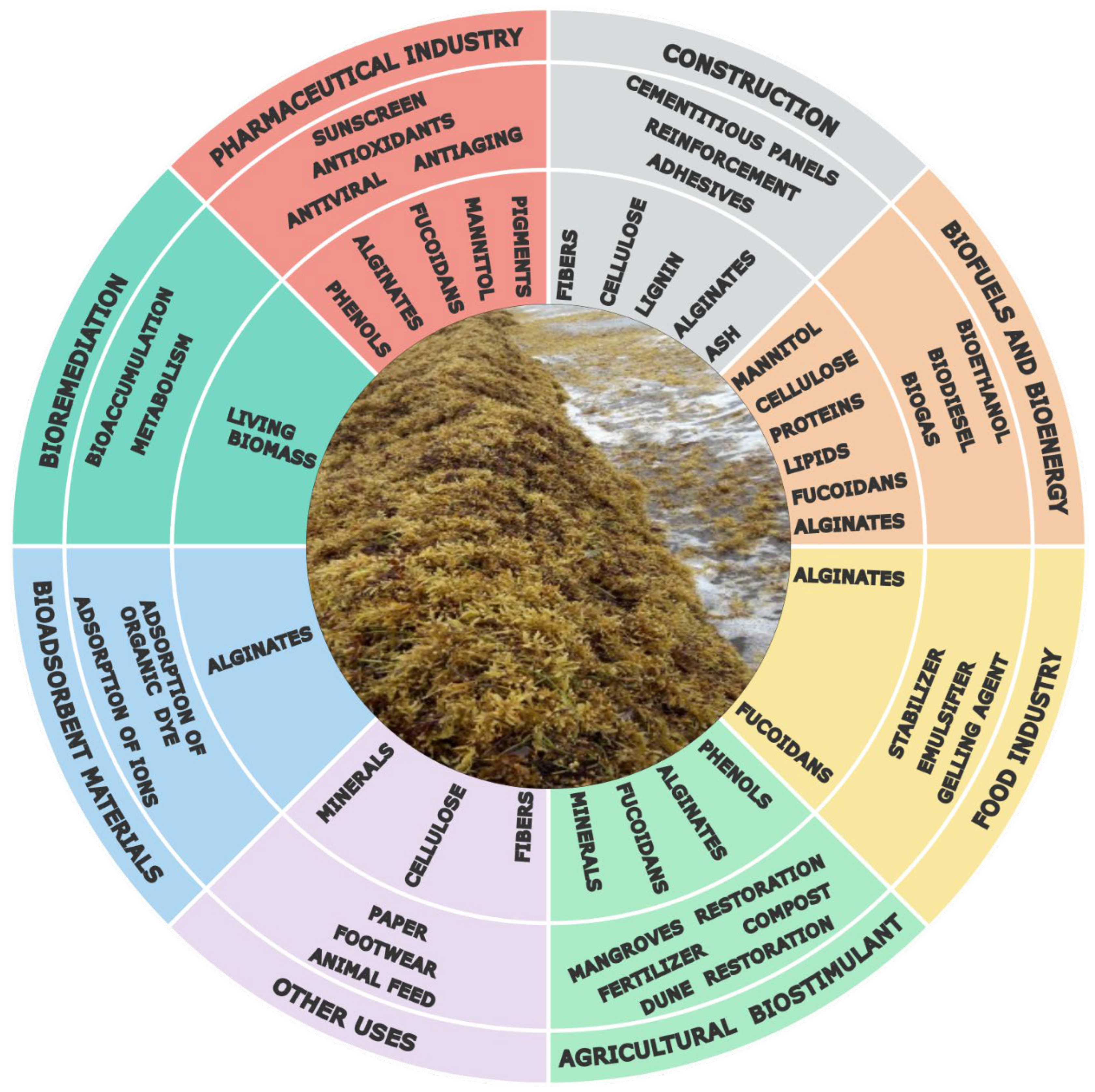
Figure 2 illustrates this diversified landscape of potential uses derived from our bibliometric analysis. The diagram classifies valorization pathways across various industrial sectors, ranging from high-volume applications, such as bioenergy and agriculture, to high-value niche products in the pharmaceutical and food industries. In the following subsections, we critically analyze these emerging applications, evaluating the opportunities they present in light of the previously identified biochemical limitations and safety issues.
It is important to note that while chemical characterization of Caribbean Sargassum is well documented, research on its industrial applications is still emerging. Therefore, this section reviews available local data alongside studies on Sargassum species from other regions (e.g., Europe, Asia) to illustrate the full range of potential applications for this biomass.
4.1. Bioenergy and Biofuels
The massive increase in industrialization and high population growth has led to problems such as the depletion of fossil fuel reserves, price fluctuations, negative environmental impacts, and climate change. The high dependence on fossil fuel reserves is evident in the fact that most energy is produced from them, with only 10% coming from renewable sources. Therefore, in response to the decline of fossil fuels and their associated pollution, a transition from the current fossil-fuel-based economy to a carbon-neutral economy based on renewable raw materials, such as biofuels, is expected [38].
Currently, three generations of biofuels have emerged based on different feedstocks. First-generation biofuels are derived from edible materials, mainly from seeds, grains, or simple sugars. Second-generation materials are derived from non-edible materials such as agricultural and forest residues and crops grown for biofuel. Unfortunately, debates arise over food versus fuel, land use, and freshwater resources for the first and second generations. In the third generation, the substrates are micro and macroalgae. In this context, holopelagic species of the Sargassum genus have been identified as a possible source of third-generation biofuel [7,10,22].
However, the main limitation to valorizing seaweed that can be used for this purpose is that extracting a single molecule or compound is often not profitable unless that molecule has an exceptionally high market value [39]. An integrated process in which bioethanol or biogas produced from the fermentation of Sargassum is simultaneously co-produced with other value-added compounds, such as alginates, proteins, or fucoidans, could make the process more attractive and profitable [39]. Orozco-González et al. [39] have proposed an experimental diagram in which, from the landed biomass of Sargassum and after several pretreatments, followed by enzymatic hydrolysis, biodiesel (from the extraction and transesterification of lipids), bioethanol (from the fermentation of sugars), or biogas (from the anaerobic digestion of the biomass) can be produced.
Figure 2.
Biochemical components and uses of the biomass of holopelagic Sargassum. Overview of the potential valorization routes for pelagic Sargassum biomass. The inner ring identifies the primary biochemical fractions and functional components (e.g., alginates, fucoidans, cellulose, and phenols). The outer ring maps these components to their respective industrial sectors, illustrating a multi-product biorefinery approach that spans from high-volume/low-value applications (e.g., construction, energy) to low-volume/high-value products (e.g., pharmaceuticals, cosmetics).
4.1.1. Bioenergy
Direct combustion has been the primary method of obtaining bioenergy from dried biomass. Evaluating the combustion properties of seaweed can help determine its suitability for various bioenergy applications. There are significant differences between the combustion of seaweed and traditional biomass due to the physical and chemical characteristics imposed by their respective environments. Thus, although the combustion of macroalgae could be economically viable, the technical feasibility remains debatable due to their high ash and moisture content, which reduces energy efficiency. As mentioned before, the moisture content of biomass reported for Sargassum species is high; therefore, a drying stage is essential as a preliminary step for energy conversion [40].
The use of Sargassum natans biomass for direct combustion was revised by Wang et al. [41]. The authors concluded that its ignition temperature is low, and the biomass easily bursts into flame. The fusion temperature is also low because of the ash’s many alkali metal elements. In this regard, because seaweeds can naturally absorb metal ions, the presence of alkali metals such as sodium (Na) and potassium (K), as well as halogens, can cause corrosion and saturation in boilers and conductive lines, leading to significant toxic emissions [42]. Seaweeds, including the holopelagic Sargassum taxa, can naturally absorb metal ions. The emission of heavy metals results from the thermal conversion of fuels to generate energy and heat. For this reason, it seems necessary to determine whether materials used as fuels may pose a risk of contaminating the atmosphere [43]. Thus, moisture and salts technically limit the direct combustion of Sargassum for energy purposes [44]. Sun drying would be a viable alternative to reduce the initial moisture content of biomass. However, large areas are required, as only about 100 g of dry matter can be dried per square meter of surface [42]. On the other hand, some authors have proposed that adding a previous washing step to the biomass has favorable effects on the bioenergetic characteristics of S. fluitans, increasing its calorific value by 36.80% [45]. The washing mechanism removes sand, salts, and residues, thereby increasing the content of C, H, O, and N, while reducing heavy metal concentrations to levels below international standards.
4.1.2. Bioethanol Production
Bioethanol production from terrestrial feedstocks (mainly crops) has brought robust debates on food security, land use, and freshwater [46,47]. These discussions on the use of critically limited resources, coupled with the low yields from lignocellulosic biomass (wood, agricultural, and forestry residues) and the high cost of separating lignin from fibers to access beneficial sugars, have made macroalgae a potential source of raw materials in this industry [48].
Marine macrophytes have lower cellulose concentrations than terrestrial plants. However, they have high growth rates, high carbohydrate content and diversity, and low or no lignin content [49]. It is proposed that Sargassum biomass from landfall can serve as a viable feedstock for bioethanol production due to its abundance, underutilization, and low cost [18]. Bioethanol production involves the conversion of polysaccharides into simple sugars, a process that primarily comprises pretreatment, hydrolysis (acidic or enzymatic), and fermentation. The ability to achieve conversion rates of over 80%, combined with low energy consumption and high yields, under an environmentally friendly approach, makes the enzymatic process more attractive for bioethanol production [18]. Moreover, positive results, including cost reductions achieved through eco-friendly procedures combining enzymatic hydrolysis with fermentation, have been reported for Sargassum species [50].
Borines et al. [30] reported an ethanol conversion rate of 89% for the enzyme hydrolysate, which is significantly higher than the theoretical yield of 51% based on glucose as the substrate. This may indicate that the remaining non-glucan components were hydrolyzed and fermented. S. fluitans, S. natans var. natans, and S. natans var. wingei contain readily fermentable glucose in the form of mannitol (56%) and cellulose (18.8%) in addition to specific carbohydrates such as alginates (31%) and fucoidans (8.2%) that may be present in the hydrolysate [18]. Mannitol values for these Sargassum species are reported to be between 49.9 and 60.1%, while the levels of cellulose (11.5–18.8%), alginates (15.7–34.6%), and fucoidans (6.3–11.4%) are also reported (Table 1). Mannitol, a sugar alcohol derived from D-mannose, is the first accumulation product of photosynthesis in brown algae [20]. Since the calorific value of mannitol is higher than that of glucose (3025 kJ mol−1 versus 2805 kJ mol−1), its carbon distribution and different redox states have been revealed to make mannitol more favorable than glucose for ethanol production [40].
Another essential factor to consider when proposing biomass as a bioethanol source is the C:N ratio. De Bertoldi et al. [51] suggest that the C:N ratio should be 20–30 to optimize the development of a biological degradation process, as simple carbon compounds, such as soluble sugars and organic acids, must be degraded as the first step in producing bioethanol. The average C:N ratio of Sargassum reported for oceanic waters is 47 in contrast to 27 which corresponds to most of the studies of Caribbean events [18], including Sargassum where the C:N ratio moves in the optimal range proposed by De Bertoldi [51] (Table 1) except in the study by Rosado-Espinosa et al. [23] where the C:N ratio was 9.2. Biomass with an excess of degradable substrate represented by a C:N ratio > 30 slows the process likewise, a C:N ratio < 20 results in nitrogen losses that also slow down the process because it causes the release and accumulation of nitrogen in the form of ammonium ion, the high level of which increases the pH in the digester and is toxic to methanogenic bacteria [52].
The high water content (72–83%) and ash content (15.1–27.61%) in these species could be a disadvantage for bioethanol production. However, production could be sustained from a biorefinery perspective by simultaneously extracting other high-value commercial components, such as proteins, alginates, or fucoidans [18]. Additionally, it is suggested that high protein levels in the system enable fermentation without the need for additional nutrients [53].
Based on various studies on the valorization of holopelagic Sargassum as a source of bioethanol, this resource has been described as rich in polysaccharides composed of glucose, as well as high levels of mannitol and other fermentable carbohydrates, such as alginate and fucoidan. However, bioethanol production from macroalgae is still in the early stages, primarily conducted at the laboratory scale before scaling up. Therefore, technologies for large-scale production are underdeveloped, and the primary obstacle is the development of species-specific and appropriate methodologies for the complete hydrolysis of complex polysaccharides to obtain fermentable sugars [18,39]. To compensate for the high production cost, some authors claim that holopelagic Sargassum species could be a promising raw material for biorefineries, enabling the production of bioethanol and the isolation of high-added-value compounds [18,54,55].
4.1.3. Biogas Production
Biogas production is a long-established technology, and the conventional feedstocks used include crops, animal waste, sewage sludge, and some household refuse. Biogas consists of methane (also known as biomethane) and carbon dioxide, and biomethane serves as a valuable source of energy. Biogas can be upgraded to produce more biomethane, reducing greenhouse gas emissions. Therefore, it is essential to make it in closed systems [56]. Through anaerobic digestion, seaweed is a valuable feedstock for producing biogas due to its high carbohydrate content, which is favorable for enzyme activity, and its relatively low lignin content [52,57,58]. Moreover, anaerobic digestion is generally the preferred method for energy production from high-water-content biomass.
The biogas produced by anaerobic digestion can be used to convert various types of seaweed waste into renewable energy. To produce biogas from seaweed, the biomass must be hydrolyzed to yield biomethane. Strategies such as pretreatments (acid, enzymatic, mechanical, thermal, and hydrothermal processes), anaerobic co-digestion, and the use of additives, including volatile fatty acids, can be implemented to enhance biogas production from seaweeds.
Thompson et al. [59] report that holopelagic Sargassum from the Caribbean can optimize biogas production when used in conjunction with hydrothermal pretreatment and anaerobic co-digestion of food waste. Results revealed that hydrothermal pretreatment promoted the hydrolysis of organics, thereby increasing methane recovery by 212.57% compared with untreated samples.
Nevertheless, seaweed biomass contains several inhibitory compounds that hamper biomethanation. Two of them are referred to the high salinity of the biomass, which can inhibit the anaerobic digestion process and reduce production rates by up to 50% [60], as well as the presence of phenols accumulated in the cell walls of seaweeds that also hinders anaerobic digestion, mainly due to enzyme deactivation [61]. On the other hand, Sargassum species have a high salt content (Table 1), which negatively affects biogas production. High salt levels cause bacterial cells to dehydrate due to osmotic pressure, leading to slow growth and potentially severe inhibition or toxicity [62].
4.1.4. Biodiesel Production
Biodiesel is produced directly by chemically catalyzed transesterification of oils and lipids derived from vegetable, animal, or other commercially available plant fats. Regarding seaweeds, their limited lipid content has restricted their use as traditional candidates for biodiesel production [39]. However, Gordillo-Sierra et al. [24] proposed an experimental design that could utilize a mixed Sargassum sample containing S. fluitans and S. natans var. natans as a carbon source for oleaginous yeast in biodiesel production. First, the authors obtained alginate, and the extraction residues were pretreated by autohydrolysis and enzymatic degradation. In a novel approach, the resulting Sargassum sugar medium was fermented by the genetically modified Yarrowia lipolytica E26S1S2 to generate lipids. The latter transesterification demonstrated a novel biodiesel production with profiles similar to those of conventional plant-derived oils.
4.2. Agricultural Biostimulants and Fertilizers
In addition to biogas, anaerobic digestion of biomass produces a nutrient-dense solid–liquid digestate. Thompson et al. [63] suggest that digestate generated from Sargassum biomass decomposed in landfills could be applied to agriculture as fertilizer after treatment and removal of ammonia and heavy metals. The recovered solid fraction can be directly applied to agriculture. However, the high ammonia content of the liquid fraction must be removed by evaporation, reverse osmosis, or struvite precipitation [63]. Heavy metals accumulate in agricultural soils through repeated fertilization, leading to soil acidification and toxicity that stunts plant growth and reduces crop productivity. Furthermore, heavy metals pose a significant hazard to human health and ecosystems through direct ingestion and physical contact. These cations can be removed by incorporating remediation techniques such as soil washing, phytoremediation, and immobilization [64].
In coastal areas, the seaweed that reaches the coast by tides and wind washes up on beaches has been used for centuries as a natural fertilizer. In this regard, applying pelagic Sargassum to soils as a conditioning agent can enhance plant growth, health, and yield by modifying soil texture and improving moisture-holding capacity [18]. Williams & Feagin [65] reported using S. fluitans and S. natans var. natans from Galveston Island, Texas, as fertilizers for dune plants, and observed improved growth. This is related to its high content of mineral salts, water-soluble polysaccharides, and phenolic compounds that, together, improve the health, quality, productivity, and enzymatic activities of the soil in terrestrial crops [66]. This has made pelagic Sargassum an excellent candidate for use as a biostimulant and fertilizer, as the mixed biomass of S. natans and S. fluitans can increase crop growth rates and yield compared to traditional chemical fertilizers [67].
However, it is necessary to consider the high levels of heavy metals in the biomass that can be passed to crops and bioaccumulate. Abdool-Ghany et al. [68] found that in crops enriched with Sargassum compost, the cultivated radishes exhibited levels of arsenic and cadmium that did not meet the guidelines set by international standards. A possible solution to the problem of arsenic bioaccumulation in crops is vermicomposting, which involves the use of worms to decompose organic materials since it decreases the levels of high arsenic (As), cadmium (Cd), copper (Cu), chromium (Cr) and zinc (Zn), which are absorbed by the worms making them less bioavailable [69].
The physicochemical conditions of compost are essential for crop viability [68]. Regarding pH, ideal compost values should be between 5.0 and 8.5, and all values should be above 8.91. For C: N ratios, levels recommended by relevant bodies should be <20; however, in both experiments, C: N ratios did not reach <20, although C and N content were within acceptable ranges. Several authors suggest that Sargassum compost could be used for non-food crop applications to support the growth of ornamental or coastal plants, such as mangroves, thereby enhancing dune restoration efforts [63,68].
In this regard, Trench et al. [70] suggest that composting has the most significant potential to improve mangrove soil, as both soil properties (texture and water-holding capacity) and nutrient content are enhanced. These authors show that, in the right proportions, Sargassum compost enhances the growth of mangrove seedlings. Furthermore, it is suggested that mangrove soils have a high capacity to sequester heavy metals, as mangrove species, especially Rhizophora mangle, have evolved strategies to minimize their uptake, thereby leaving these metals in the soil [71]. This could ensure the tremendous success of rehabilitation efforts in these areas and utilize algal biomass, benefiting impoverished coastal communities, which are ultimately the most affected by Sargassum spp. flooding and mangrove loss [70].
4.3. Construction Materials
Another proposed use of Sargassum biomass is in civil construction. Due to its polysaccharide-rich composition [22] and high fiber content [19], it could be a sound reinforcement for composite materials. In addition, byproducts of its processing, such as ashes obtained from burning for energy generation, may have potential use as mineral additions to cementitious compounds and to compounds with alkaline-activated binders, given the chemical composition of said ashes [72]. In this regard, there are few studies on holopelagic Sargassum species. However, Rossignolo et al. [72] suggest that several products can be produced depending on the components in the biomass: Cementitious and medium-density wood panels using fibers from algae (holocellulose and lignin) in different proportions with other elements such as cement, resins or sawdust; Polymeric composite of plant origin (wheat gluten or biodegradable polyethylene from sugar cane) reinforced with algae fibers; complementary material to Portland cement (mineral-rich ash, with a predominance of Ca, K, Na, S, Cl and Mg) that brings with it a reduction in capillary water absorption values, due to better particle packing; pavement reinforcement such as modified bituminous agents, reinforcing and self-healing fibers; raw earth bricks (adobe) that act as an adhesive (soil stabilizer) and as fibers (reinforcement); facades and roofs functioning as thermal and acoustic insulation.
The use of residual algal biomass to manufacture building materials and additives significantly enhances tensile strength and stiffness, even without chemical treatments of the plant fibers [72]. The alginate present in the holopelagic species of Sargassum presents adhesive properties due to the interaction between carboxylic groups and divalent ions [73], which can lead to an increase in the durability of alginate-added concrete with a reduction in water absorption and a significant increase in the compressive and tensile strength of the concrete for the optimal addition level of 20% [74]. Alginate can also contribute to soil stabilization in block production by increasing compressive strength by 70% [75]. Bilba et al. [76] studied the viability of Sargassum biomass ash as a pozzolanic (corrosion-reducing) material in mineral binders for civil construction, concluding that Sargassum ash was not a pozzolanic-type material. These ashes cannot be considered alkaline activators for geopolymers due to their low silica content; however, they can be used as a source of calcium carbonate.
4.4. Bioremediation Potential
Increased development and human activities, such as industrial, agricultural, and domestic practices, have introduced various polluting substances into marine ecosystems, including heavy metals, which are persistent in the environment and highly toxic at high concentrations. Different technologies have been developed to recover and degrade pollutants; however, they have limitations, including the production of toxic sludge, high costs, and low efficiency. On the other hand, bioremediation is one of the primary strategies for reducing the levels of these pollutants, representing a low-cost, simple, and safe alternative. Bioremediation has been developed through two fundamental pathways: (a) bioaccumulation or absorption of contaminants by living organisms (primarily microorganisms and plants) generating biomass through metabolism [77], (b) biosorption, referred to as the ability of a non-living organism to allow the passive removal of different substances through its capture/binding in aqueous solution [57,78].
Through the bioaccumulation pathway, macroalgae can integrate nutrients such as phosphorus (P) and nitrogen (N) and metals such as iron (Fe), cobalt (Co), zinc (Zn), copper (Cu), manganese (Mn), and nickel (Ni) into the organism through metabolism. This process occurs because cysteine-rich proteins can bind metals and macronutrients, which are subsequently immobilized in vacuoles and other vesicles by enzymes [79]. However, bioaccumulation capacity has been observed to depend on optimal conditions for macroalgae growth, such as pH, temperature, and light [79]. The use of macroalgae for contaminant bioaccumulation primarily focuses on nutrient and waste remediation from aquaculture farms through integrated multitrophic cultures. In these cultures, macroalgae utilize the excreta of fish or other animals, as well as food remains, for their growth, which are then used for various purposes [78]. Fish feed is supplemented with mineral additives containing metals as preservatives. In addition, they may contain zinc, copper, cadmium, iron, manganese, cobalt, nickel, lead, magnesium, selenium, and mercury [80]. Therefore, efficient bioremediation mechanisms would be essential to mitigate the damage caused by aquaculture, a rapidly developing economic activity. Sargassum epiphyllum and Sargassum henslowianum are highly efficient at absorbing inorganic nutrients and heavy metals from the water surrounding their aquaculture farms [80].
On the other hand, implementing macroalgae cultivation in coastal areas affected by eutrophication and harmful algal blooms could help reduce pollution [77]. In addition to acting as a bioremediation agent, macroalgae can inhibit phytoplankton growth and indirectly alleviate harmful algal blooms through nutritional competition, shading, and allelopathy [81]. Tian et al. [82] suggest that large-scale cultivation of S. fusiforme can reduce nutrient loading and eutrophication levels in the cultivation area, slightly increase dissolved oxygen levels, pH, phytoplankton abundance, and diversity index, and support the fixation and removal of C, N, and P from coastal seawater.
Few bioaccumulation studies have been conducted using holopelagic Sargassum species from the perspective of effluent bioremediation. However, high levels of heavy metals have been found in pelagic Sargassum species from the Mexican Caribbean [4,10,26,34], indicating that these algae have a high capacity to bioaccumulate metals in their biomass, likely due to their holopelagic lifestyle.
The primary mechanism of biosorption in brown macroalgae is ion exchange, which is given by the chemical bond and electrostatic attraction between various functional groups present in the polysaccharide alginate and fucoidan in their cell walls [83]. Mass transfer can be achieved through physical, chemical, and electrostatic interactions [84]. Cationic metals can bind to the surface of macroalgae by the presence of hydroxyl, carboxyl, amino, and sulfate groups that are part of polysaccharides (alginate and fucoidan) and proteins on the cell surface [85]. Light metals, such as sodium, potassium, and magnesium, are first bound to the cell surface. Then, as pH increases, light metal ions are released, and heavy metals occupy the binding sites [86].
In the literature, several methods for utilizing macroalgae biomass as a bioabsorbent have been reported, including the use of dry biomass and the extraction of specific compounds, such as alginates and fucoidans, with acidification pretreatments to enhance the adsorption capacity for heavy metals [87]. Pareja-Rodríguez et al. [88] report the adsorption capacity of Pb2+ in graphene oxide-like materials obtained from the pyrolysis of S. fluitans, S. natans var. natans, and S. natans var. wingei biomass. Jalali et al. [89] suggest that Sargassum biomass can undergo ten biosorption-desorption cycles while maintaining a lead adsorption capacity of 98%. Even when starting with residual biomass from alginate extraction, it is possible to maintain adsorption capacities of 100% and 99.4% for cadmium and zinc, respectively [90].
At the end of the adsorption process, biomass contaminated with toxic metals must be disposed of appropriately to avoid environmental damage. The primary forms of disposal currently used are direct disposal, composting, and incineration [91]. Each of these methods is used to determine the bioaccumulation and biosorption capacity of biomass and its components. These alternatives have associated risks, with incineration being the least harmful and most widely used. It reduces the total dry weight of contaminated biomass by more than 90% and enables recovery of metals [91]. Additionally, the ash can be used in road filling, agriculture, or as fuel [92].
Another type of pollutant that has gained relevance today is synthetic azo dyes (azo group (-N=N-)) due to their persistence, toxicity, and carcinogenic effect [92]. In addition, they are the most widely used dyes (60–70%) in industrial applications. Around 15% of these are released directly into the environment during dyeing, potentially altering the ecosystem [93]. Pelagic Sargassum biomass can be a viable alternative for removing some dyes due to its low cost and availability. However, Nielsen et al. [94] suggest that biomass can be efficiently used to remove cationic dyes such as methylene blue because the functional groups present in the wall (amino, hydroxyl, carboxyl, and sulfate) can exert electrostatic attraction, ion exchange or complexation with this type of dyes, which does not occur with the anionic dyes brilliant blue and Congo red, which showed low or no affinity with the adsorbent. Other analyses with other cationic dyes, such as malachite green, have been treated with Sargassum latifolium, with a maximum removal rate obtained (69.8%) at pH 7 [95].
4.5. Food and Health-Related Biomolecules
Given the Sargassum species’ nutrient and bioactive compound composition, there is a compelling case for further research into their potential as dietary supplements for human consumption and as animal feed. By analyzing their proximate and elemental composition, it can be observed that holopelagic Sargassum species have remarkably high levels of fiber (31.1–37.4%) [19] compared to commonly used cereals such as rice [96], making these a potential replacement source of essential carbohydrates for human consumption during the current food crisis. Additionally, most of the fibers present in the biomass are alginates, which can function as bioactive compounds and induce feelings of satiety. The protein content in these species is low (10.4–12.4) [18] compared to other macroalgae species included in diets, such as Ulva ohnoi (41%) [97]. The lipid content is also low (0.6–6.02%) [18,22] when using mixed biomass separated by species. The mineral content of the holopelagic species of Sargassum is exceptionally high, so its consumption in large quantities can be harmful to health.
However, the potential of holopelagic Sargassum as a dietary supplement is tempered by the need for caution due to its high bioaccumulation capacity, as species spend their entire lives adrift and can accumulate heavy metals. Several studies have reported levels of heavy metals above the maximum permissible concentration in Sargassum, even for animal feed under European regulations [4,12].
On the other hand, marine macroalgae, with their remarkable resilience, constitute an essential source of bioactive compounds, among which antioxidant agents are particularly notable [98,99]. Algae produce these molecules as part of their mechanisms to counteract oxidative stress and combat the chemical imbalance caused by the environmental conditions in which they develop.
Their antioxidant capacity underlies most medicinal uses of macroalgae, as free radicals are involved in the development of various pathologies and bodily processes, including coronary heart disease, certain types of cancer, inflammatory and neurological disorders, and photoaging of the skin [100].
Antioxidants help protect cells against damage from reactive oxygen species (ROS) and oxidative stress. Among the main antioxidant compounds present in Sargassum are polyphenols, sulfated polysaccharides, pigments, tocopherols, and phytosterols [101]. For holopelagic Sargassum species, the content of total phenolic compounds varies between 0.3 and 5% [14,102,103,104]. These variations may be due to seasonality, among other factors [14], and it is also suggested that differences may occur between the different parts of the thallus or vegetative structures [105]. Fagundo-Mollineda et al. [14] found that higher levels of total phenolic compounds produced by S. fluitans, S. natans var. natans, and S. natans var. wingei occur in spring-summer (August and March-April).
Phenolic compounds are mainly related to antioxidant activity. Seasonality in the production of phenolic compounds could be a limitation when establishing an economic activity based on their extraction. However, in the study by Fagundo-Mollineda [14], the authors found that antioxidant activity was generally greater than 60% in practically all months for the three holopelagic species, using the ABTS technique. When working with a hydroethanolic extract, other antioxidant compounds, such as alginates, fucoidans, and mannitol, were found in the mixture. These compounds can act synergistically to maintain antioxidant activity during periods when phenol production is lower. Therefore, working with mixtures of compounds could potentially yield more favorable results.
Sulfated polysaccharides (alginates and fucoidans) present in the holopelagic Sargassum also show antioxidant activity due to their chemical structure rich in sulfate groups, which allows them to chelate pro-oxidant metals by binding them to their structure [106]. Although fucoidans from holopelagic Sargassum species have been little studied, studies of benthic species have shown that they exhibit anticoagulant, antitumor, antibacterial, antiangiogenic, and anti-inflammatory activities [107,108,109,110,111]. The biological activity of fucoidans from different species depends on factors such as seasonality, chemical structure, sugar composition, position, and degree of sulfation [106]. Chale-Dzul et al. [112] analyzed the hepatoprotective effect of a fucoidan extract from Sargassum fluitans, finding that it has an antifibrotic and anti-inflammatory effect on the liver. On the other hand, Fernando et al. [113] analyzed the cytoprotective properties of fucoidan from Sargassum natans against urban aerosol-induced damage to keratinocytes. They found that treatment with fucoidans exhibits high antioxidant activity, dose-dependently attenuating the increase in intracellular free radical levels in keratinocytes by increasing antioxidant defense enzymes and chelating the metal ions Pb2+, Ba2+, Sr2+, Cu2+, Fe2+, and Ca2+.
Alginate is primarily valued in medicine for its rheological properties, such as gelling capacity, viscosity enhancement, and dispersion stabilization, rather than for its biological activity. Furthermore, it is non-toxic, biocompatible, biodegradable, biostable, and a hydrophilic biopolymer, making it a good candidate for various advanced clinical and biomedical applications, such as wound dressings, tissue repair and regeneration, and the production of biomaterials (hydrogels, films, foams, nanofibers, gauze) [114]. It is considered a highly versatile material for the production of wound dressings, as it enables the polymer to absorb wound exudate and create a moist environment, thereby promoting healing and facilitating the delivery of bioactive substances [114]. In addition, Tønnesen & Karlsen [115] suggest the benefits of using alginates in the administration of drugs as a binder in tablets or a disintegrant in controlled-release drugs, accelerating or slowing down the release of the active compound depending on the amount used in the formulation. The applications and biological activity of alginate from different Sargassum species depend on several factors, including seasonality, the structural composition of their uronic acids, and the extraction methodologies used.
Pigments are another group of compounds with biomedical properties present in Sargassum species. Among the various pigments in algae, xanthophylls and carotenes are efficient singlet oxygen inhibitors, interacting at very high reaction rates [116]. One of the most widely used xanthophylls in dietary and cosmeceutical formulations today is fucoxanthin, due to its antioxidant and anti-inflammatory properties, which have been shown to decrease the risk of cancer, obesity, diabetes, and hypertension [117,118]. The levels of fucoxanthin present in holopelagic Sargassum species have been little studied and may be affected by sunlight duration and seawater temperature [119]. Kergosien et al. [28] performed an analysis of the levels of pigments present in the three morphotypes of Sargassum upon arrival, finding that fucoxanthin is the second primary pigment, followed by chlorophyll a, with values of 0.245, 0.383, and 0.483 µg mg −1(dw) for S. natans var. wingei, S. natans var. natans, and S. fluitans.
Another family of compounds present in Sargassum biomass is phytosterols. They are fatty compounds present in the biological membranes of plant cells and exhibit antioxidant, antidiabetic, anticancer, and cholesterol-lowering properties [120]. Sargassum species are considered good sources of phytosterols, such as fucosterol, β-sitosterol, and saringosterol [119]. Smith et al. first reported the presence of fucosterol in the biomass of S. fluitans. However, they claim that they did not find saringosterol [121].
5. Biorefinery as a Challenge
Up to this point, we have compiled the main uses reported in the scientific literature and grouped them by category. We observed that among the most widely used biochemical components are sulfated polysaccharides (alginates and fucoidans), with primary applications in energy generation and biofuel production, and that they are emerging as novel materials in civil construction. Most analysts agree that a biorefinery would be the best approach to address the problem [7]. This approach enables the sequential extraction of most components, paving the way for a more sustainable future. Consequently, based on the chemical properties reviewed herein, previous models for brown algae [16,17], and the authors’ experience with this specific feedstock, we propose the following sequential biorefinery scheme optimized for Caribbean Sargassum (Figure 3).
Figure 3.
Circular Biorefinery Model for the Comprehensive Valorization of Pelagic Sargassum. Proposed cascade biorefinery scheme for the integral valorization of pelagic Sargassum biomass. The process is structured in three sequential stages to maximize resource recovery. Stage 1 involves pretreatment with fresh water to remove salinity and heavy metals. Stage 2 focuses on the extraction of low-volume, high-value bioactive compounds (pigments, phenols, fucoidans, and alginates). Stage 3 utilizes the residual biomass for the high-volume production of biofuels (bioethanol, biogas, and biodiesel) via hydrolysis and fermentation (using Y. lipolytica). Finally, the diagram illustrates the valorization of process residues (ashes and digestate) into construction materials and agricultural amendments, promoting a circular economy approach.
In Figure 3, we propose a conceptual diagram of a zero-waste biorefinery strategy using mixed Sargassum biomass. The process begins with pretreatment to address initial challenges (high humidity, salinity, and heavy metals). This is followed by sequential fractionation that prioritizes the extraction of high-value compounds (for the pharmaceutical and food industries), followed by the conversion of the residual biomass into biofuels and materials (for bioenergy and construction). Byproducts and residues from each stage (wash water, digestate, fibers, and ash) are reincorporated into the production cycle as biofertilizers or construction additives, or are treated through biosorption, closing the cycle under a circular economic approach.
5.1. Stage 1: Biomass and Pretreatment
The process begins with the collection of mixed Sargassum biomass, which is practical and economical as it avoids the costs associated with species separation. This biomass presents three initial challenges: high moisture content (over 80%), high salinity that can inhibit biological processes, and a strong capacity to bioaccumulate heavy metals such as arsenic.
Washing: An initial washing process is applied to reduce salt and heavy metal content, thereby improving the materials’ properties for downstream uses such as biofuel production and construction. Furthermore, these pretreatments allow for working with contaminant-free biomass. The resulting contaminated biomass can be incinerated to reduce its volume by over 90% and allow for metal recovery.
5.2. Stage 2: Extraction of High-Value Compounds
For a profitable process, it is crucial first to extract high-value compounds, such as pigments, phenols, fucoidans, and alginates, which can be extracted sequentially due to their distinct chemical structures. These compounds have proven antioxidant, anti-inflammatory, and pharmacological properties, with applications in the pharmaceutical and nutraceutical industries. The solid residual biomass remaining after these extractions is rich in carbohydrates, such as cellulose and mannitol, and is ready for conversion into biofuels.
5.3. Stage 3: Production of Biofuels and Materials
The residual biomass is used to produce energy and construction materials, leveraging its high carbohydrate and fiber content. Through well-known processes such as hydrolysis and fermentation, polysaccharides can be broken down into simple sugars, which are then fermented to produce bioethanol (obtained from the fermentation of sugars such as glucose and mannitol), biogas (generated through the anaerobic digestion of biomass), and biodiesel (although the lipid content is low, the sugars in Sargassum can be used to feed oleaginous yeasts that produce the lipids needed for biodiesel).
Waste and Valorization: Digestate for Agriculture: The sludge or digestate resulting from anaerobic digestion is rich in nutrients and, after treatment to remove excess ammonia or metals, can be used as a biofertilizer or biostimulant. Its use is recommended for non-food crops or for the restoration of ecosystems such as dunes and mangroves. Construction Fibers: Residual fibers (cellulose, lignin) that do not ferment are excellent reinforcement for construction materials. They can be used to create panels, reinforced adobe bricks, or thermal and acoustic insulation.
Construction Ashes: If a portion of the biomass is burned directly to generate bioenergy, the resulting ash can be used as a mineral additive in cementitious compounds.
6. Conclusions
The recurrent massive influxes of pelagic Sargassum in the Caribbean represent a complex duality: they are a severe environmental stressor but simultaneously a promising reservoir of renewable biomass. This review confirms that the chemical profile of S. fluitans and S. natans is highly dynamic, driven by interspecific variability, seasonality, and the distinct oceanic conditions encountered during transport. While the biomass is characterized by a low lipid and protein content, its richness in sulfated polysaccharides (alginates and fucoidans), mannitol, and bioactive secondary metabolites (phenols, fucoxanthin) positions it as a competitive feedstock for diverse industries.
However, the safe valorization of this resource faces a critical bottleneck: the significant bioaccumulation of heavy metals, particularly arsenic. Our analysis highlights that while Sargassum holds immense potential for high-volume applications in bioenergy and construction, its use in food, feed, and agriculture is strictly constrained by international safety regulations. Consequently, simple processing methods such as freshwater washing are often insufficient for deep decontamination, necessitating advanced pretreatments or restricting certain products to non-food chains (e.g., construction materials or mangrove restoration).
Ultimately, the transition from an environmental liability to an asset requires a paradigm shift from single-product extraction to an integrated biorefinery model. As proposed in this review, a “zero-waste” cascade approach (prioritizing the extraction of high-value phytochemicals before converting the residual biomass into biofuels and construction materials) offers the most viable path to economic feasibility and sustainability. Future research must focus on optimizing these sequential extraction protocols, developing cost-effective heavy-metal remediation technologies, and establishing standardized monitoring programs to ensure the safety and quality of Sargassum-derived products.
Author Contributions
Conceptualization, A.F.-M., Y.F.-P., R.M.V.-E., E.V.-D. and D.R.; methodology, A.F.-M. and Y.F.-P.; formal analysis, A.F.-M.; investigation, A.F.-M. and Y.F.-P.; resources, Y.F.-P. and D.R.; data curation, A.F.-M.; writing—original draft preparation, A.F.-M., Y.F.-P., R.M.V.-E., E.V.-D. and D.R.; writing—review and editing, A.F.-M., Y.F.-P., R.M.V.-E., E.V.-D. and D.R.; visualization, A.F.-M. and Y.F.-P.; supervision, Y.F.-P., E.V.-D. and D.R.; project administration, A.F.-M., Y.F.-P., R.M.V.-E., E.V.-D. and D.R.; funding acquisition, D.R. All authors have read and agreed to the published version of the manuscript.
Funding
This research review was funded by The Institut de Recherche pour le Développement (IRD) and the French Embassy in Mexico through the Fond Équipe France project (FEF-R Sargasses) “State of the Art Sargasso Events diagnosis” and The APC was funded by MDPI Author Voucher discount code (c058954c8419c6ee).
Data Availability Statement
Not applicable. No new data were created or analyzed in this study. Data sharing is not applicable to this article.
Acknowledgments
The Institut de Recherche pour le Développement (IRD) and the French Embassy in Mexico are gratefully acknowledged for funding the “State of the Art Sargasso Events diagnosis” through the Fond Équipe France project (FEF-R Sargasses). R.M. Vásquez-Elizondo and D. Robledo also thank the Virtual Institute on Feedstocks of the Future (VIFF) under the Schmidt Sciences SaBRe project (Sargassum BioRefinery) for their collaborative insights during the development of this manuscript.
Conflicts of Interest
The authors declare no conflict of interest.
References
- Wang, M.; Hu, C.; Barnes, B.B.; Mitchum, G.; Lapointe, B.; Montoya, J.P. The great Atlantic Sargassum belt. Science 2019, 365, 83–87. [Google Scholar] [CrossRef] [Scilit]
- Chávez, V.; Uribe-Martínez, A.; Cuevas, E.; Rodríguez-Martínez, R.E.; van Tussenbroek, B.I.; Francisco, V.; Estévez, M.; Celis, L.B.; Monroy-Velázquez, L.V.; Leal-Bautista, R.; et al. Massive influx of pelagic Sargassum blooms on the coast of the Mexican Caribbean: Management solutions and challenges. Ocean Coast. Manag. 2020, 201, 105445. [Google Scholar] [CrossRef] [Scilit]
- van Tussenbroek, B.I.; Hernández-Arana, H.A.; Rodríguez-Martínez, R.E.; Espinoza-Avalos, J.; Canizales-Flores, H.M.; González-Godoy, C.E.; Barba-Santos, M.G.; Vega-Zepeda, A.; Collado-Vides, L. Severe impacts of brown tides caused by Sargassum spp. on near-shore Caribbean seagrass communities. Mar. Pollut. Bull. 2017, 122, 272–281. [Google Scholar] [CrossRef] [Scilit]
- Rodríguez-Martínez, R.E.; Roy, P.D.; Torrescano-Valle, N.; Cabanillas-Terán, N.; Carrillo-Domínguez, S.; Collado-Vides, L.; van Tussenbroek, B.I. Element concentrations in pelagic Sargassum along the Mexican Caribbean coast in 2018–2019. PeerJ 2020, 8, e8667. [Google Scholar] [CrossRef] [Scilit] [PubMed]
- Devault, D.A.; Modestin, E.; Cottereau, V.; Vedie, F.; St-Louis, R.; Blaise, C. The silent spring of Sargassum. Environ. Sci. Pollut. Res. 2021, 28, 15580–15583. [Google Scholar] [CrossRef] [Scilit] [PubMed]
- Resiere, D.; Valentino, R.; Nevière, R.; Banydeen, R.; Laurent, R.; Cohen-Tenoudji, G.; Nossin, E.; Mégarbane, B. Sargassum seaweed on Caribbean islands: An occupational health hazard. Lancet 2018, 392, 2691. [Google Scholar] [CrossRef] [Scilit]
- Amador-Castro, F.; García-Cayuela, T.; Alper, H.S.; Rodriguez-Martinez, V.; Carrillo-Nieves, D. Valorization of pelagic Sargassum biomass into sustainable applications: Current trends and challenges. J. Environ. Manag. 2021, 283, 112013. [Google Scholar] [CrossRef] [Scilit]
- Robledo, D.; Vázquez-Delfín, E.; Freile-Pelegrín, Y.; Vásquez-Elizondo, R.M.; Qui-Minet, Z.N.; Salazar-Garibay, A. Challenges and opportunities in relation to Sargassum events along the Caribbean Sea. Front. Mar. Sci. 2021, 8, 699664. [Google Scholar] [CrossRef] [Scilit]
- Siuda, A.N.S.; Blanfuné, A.; Dibner, S.; Verlaque, M.; Boudouresque, C.-F.; Connan, S.; Goodwin, D.S.; Stiger-Pouvreau, V.; Viard, F.; Rousseau, F.; et al. Morphological and Molecular Characters Differentiate Common Morphotypes of Atlantic Holopelagic Sargassum. Phycology 2024, 4, 256–275. [Google Scholar] [CrossRef] [Scilit]
- Vázquez-Delfín, E.; Freile-Pelegrín, Y.; Salazar-Garibay, A.; Serviere-Zaragoza, E.; Méndez-Rodríguez, L.C.; Robledo, D. Species composition and chemical characterization of Sargassum influx at six different locations along the Mexican Caribbean coast. Sci. Total Environ. 2021, 795, 148852. [Google Scholar] [CrossRef] [Scilit]
- García-Sánchez, M.; Graham, C.; Vera, E.; Escalante-Mancera, E.; Álvarez-Filip, L.; van Tussenbroek, B.I. Temporal changes in the composition and biomass of beached pelagic Sargassum species in the Mexican Caribbean. Aquat. Bot. 2020, 167, 103275. [Google Scholar] [CrossRef] [Scilit]
- Vázquez-Delfín, E.; Robledo, D.; Freile-Pelegrín, Y. Temporal characterization of Sargassum (Sargassaceae, Phaeophyceae) strandings in a sandy beach of Quintana Roo, Mexico: Ecological implications for coastal ecosystems and management. Thalassas 2024, 40, 1053–1067. [Google Scholar] [CrossRef] [Scilit]
- Butler, J.N.; Morris, B.F.; Cadwallader, J.; Stoner, A.W. Studies of Sargassum and the Sargassum Community; Special Publication No. 22; Bermuda Biological Station for Research: St. George’s West, BM, USA, 1983. [Google Scholar]
- Fagundo-Mollineda, A.; Robledo, D.; Vásquez-Elizondo, R.M.; Freile-Pelegrín, Y. Antioxidant activities in holopelagic Sargassum species from the Mexican Caribbean: Temporal changes and intra-thallus variation. Algal Res. 2023, 76, 103289. [Google Scholar] [CrossRef] [Scilit]
- Alzate-Gaviria, L.; Domínguez-Maldonado, J.; Chablé-Villacís, R.; Olguin-Maciel, E.; Leal-Bautista, R.M.; Canché-Escamilla, G.; Hernández-Núñez, E.; Tapia-Tussell, R. Presence of polyphenols complex aromatic “Lignin” in Sargassum spp. from Mexican Caribbean. J. Mar. Sci. Eng. 2021, 9, 6. [Google Scholar] [CrossRef] [Scilit]
- del Río, P.G.; Flórez-Fernández, N.; Álvarez-Viñas, M.; Torres, M.D.; Romaní, A.; Domínguez, H.; Garrote, G. Evaluation of sustainable technologies for the processing of Sargassum muticum: Cascade biorefinery schemes. Green Chem. 2021, 23, 7001–7015. [Google Scholar] [CrossRef] [Scilit]
- Flórez-Fernández, N.; Domínguez, H.; Torres, M.D. Advances in the biorefinery of Sargassum muticum: Valorisation of the alginate fractions. Ind. Crops Prod. 2019, 138, 111483. [Google Scholar] [CrossRef] [Scilit]
- Freile-Pelegrin, Y.; Robledo, D.; Chávez-Quintal, C.; Vázquez-Delfín, E.; Pliego-Cortés, H.; Bedoux, G.; Bourgougnon, N. Chemical composition and carbohydrate characterization of beach-cast marine macrophytes from the Mexican Caribbean: Implications for potential bioethanol production. Waste Biomass Valorization 2024, 16, 471–485. [Google Scholar] [CrossRef] [Scilit]
- Milledge, J.J.; Maneein, S.; Arribas López, E.; Bartlett, D. Sargassum inundations in Turks and Caicos: Methane potential and proximate, ultimate, lipid, amino acid, metal and metalloid analyses. Energies 2020, 13, 1523. [Google Scholar] [CrossRef] [Scilit]
- Davis, D.; Simister, R.; Campbell, S.; Marston, M.; Bose, S.; McQueen-Mason, S.J.; Tonon, T. Biomass composition of the golden tide pelagic seaweeds Sargassum fluitans and S. natans (morphotypes I and VIII) to inform valorization pathways. Sci. Total Environ. 2021, 762, 143134. [Google Scholar] [CrossRef] [Scilit]
- Chikani-Cabrera, K.D.; Fernandes, P.M.B.; Tapia-Tussell, R.; Parra-Ortiz, D.L.; Hernández-Zárate, G.; Valdez-Ojeda, R.; Alzate-Gaviria, L. Improvement in methane production from pelagic Sargassum using combined pretreatments. Life 2022, 12, 1214. [Google Scholar] [CrossRef] [Scilit]
- Paredes-Camacho, R.M.; González-Morales, S.; González-Fuentes, J.A.; Rodríguez-Jasso, R.M.; Benavides-Mendoza, A.; Charles-Rodríguez, A.V.; Robledo-Olivo, A. Characterization of Sargassum spp. from the Mexican Caribbean and its valorization through fermentation process. Processes 2023, 11, 685. [Google Scholar] [CrossRef] [Scilit]
- Rosado-Espinosa, L.A.; Freile-Pelegrín, Y.; Hernández-Nuñez, E.; Robledo, D. A comparative study of Sargassum species from the Yucatan peninsula coast: Morphological and chemical characterization. Phycologia 2020, 59, 261–271. [Google Scholar] [CrossRef] [Scilit]
- Sierra, A.R.G.; Amador-Castro, L.F.; Ramírez-Partida, A.E.; García-Cayuela, T.; Carrillo-Nieves, D.; Alper, H.S. Valorization of Caribbean Sargassum biomass as a source of alginate and sugars for de novo biodiesel production. J. Environ. Manag. 2022, 324, 116364. [Google Scholar] [CrossRef] [Scilit]
- Zubia, M.; Payri, C.; Deslandes, E. Alginate, mannitol, phenolic compounds and biological activities of two range-extending brown algae, Sargassum mangarevense and Turbinaria ornata (Phaeophyta: Fucales), from Tahiti (French Polynesia). J. Appl. Phycol. 2008, 20, 1033–1043. [Google Scholar] [CrossRef] [Scilit]
- Ortega-Flores, P.A.; Serviere-Zaragoza, E.; De Anda-Montañez, J.A.; Freile-Pelegrín, Y.; Robledo, D.; Méndez-Rodríguez, L.C. Trace elements in pelagic Sargassum species in the Mexican Caribbean: Identification of key variables affecting arsenic accumulation in S. fluitans. Sci. Total Environ. 2022, 806, 150657. [Google Scholar] [CrossRef] [Scilit] [PubMed]
- Lambert, P.; Radouani, F.; Ahmed, M.S.; Salvin, P.; Roos, C.; Lebrini, M. Extract from Sargassum fluitans III: A Promising Valuable Resource of Anti-bacterial Metabolites. Adv. Biochem. Biotechnol. 2024, 9, 10118. [Google Scholar] [CrossRef] [Scilit]
- Kergosien, N.; Helias, M.; Le Grand, F.; Cérantola, S.; Simon, G.; Nirma, C.; Stiger-Pouvreau, V. Morpho- and chemotyping of holopelagic Sargassum species causing massive strandings in the Caribbean region. Phycology 2024, 4, 340–362. [Google Scholar] [CrossRef] [Scilit]
- Lapointe, B.E.; Brewton, R.A.; Herren, L.W.; Wang, M.; Hu, C.; McGillicuddy, D.J., Jr.; Lindell, S.; Hernandez, F.J.; Morton, P.L. Nutrient content and stoichiometry of pelagic Sargassum of the Great Atlantic Sargassum Belt. Nat. Commun. 2021, 12, 3844. [Google Scholar] [CrossRef] [Scilit]
- Borines, M.G.; de Leon, R.L.; Cuello, J.L. Bioethanol production from the macroalgae Sargassum spp. Bioresour. Technol. 2013, 138, 22–29. [Google Scholar] [CrossRef] [Scilit]
- Stiger-Pouvreau, V.; Bourgougnon, N.; Deslandes, E. Carbohydrates from seaweeds. In Seaweed in Health and Disease Prevention; Fleurence, J., Levine, I., Eds.; Academic Press: San Diego, CA, USA, 2016; pp. 223–274. [Google Scholar] [CrossRef] [Scilit]
- Sudatti, D.B.; Fujii, M.T.; Rodrigues, S.V.; Turra, A.; Pereira, R.C. Effects of abiotic factors on growth and chemical defenses in cultivated clones of Laurencia dendroidea J. Agardh (Ceramiales, Rhodophyta). Mar. Biol. 2011, 158, 1439–1446. [Google Scholar] [CrossRef] [Scilit]
- Diario Oficial de la Federación. Norma Oficial Mexicana NOM-147-SEMARNAT/SSA1-2004, Que Establece Criterios para Determinar las Concentraciones de Remediación de Suelos Contaminados por Arsénico, Bario, Berilio, Cadmio, Cromo Hexavalente, Mercurio, Níquel, Plata, Plomo, Selenio, Talio y/o Vanadio; Secretaría de Medio Ambiente y Recursos Naturales: Mexico City, Mexico, 2007; Available online: https://www.profepa.gob.mx/innovaportal/file/1392/1/nom-147-semarnat_ssa1-2004.pdf (accessed on 16 December 2025).
- Ortega-Flores, P.A.; Gobert, T.; Méndez-Rodríguez, L.C.; Serviere-Zaragoza, E.; Connan, S.; Robledo, D.; Waeles, M. Inorganic arsenic in holopelagic Sargassum spp. stranded in the Mexican Caribbean: Seasonal variations and comparison with international regulations and guidelines. Aquat. Bot. 2023, 188, 103674. [Google Scholar] [CrossRef] [Scilit]
- Wang, W.; Huang, Y.; Pan, Y.; Dabbour, M.; Dai, C.; Zhou, M.; He, R. Sodium Alginate Modifications: A Critical Review of Current Strategies and Emerging Applications. Foods 2025, 14, 3931. [Google Scholar] [CrossRef] [Scilit]
- Kleinübing, S.J.; Gai, F.; Bertagnolli, C.; Silva, M.G.C. Extraction of alginate biopolymer present in marine alga Sargassum filipendula and bioadsorption of metallic ions. Mater. Res. 2013, 16, 481–488. [Google Scholar] [CrossRef] [Scilit]
- Cisneros-Ramos, K.I.; Gutiérrez-Castañeda, M.; Magaña-Gallegos, E.; Villegas-Pañeda, A.G.; Monroy-Velázquez, L.V.; Barba-Santos, M.G.; van Tussenbroek, B.I. From Inundations to Golden Opportunity: Turning Holopelagic Sargassum spp. into a Valuable Feed Ingredient through Arsenic Removal. Phycology 2024, 4, 384–393. [Google Scholar] [CrossRef] [Scilit]
- Jambo, S.A.; Abdulla, R.; Azhar, S.H.M.; Marbawi, H.; Gansau, J.A.; Ravindra, P. A review on third generation bioethanol feedstock. Renew. Sustain. Energy Rev. 2016, 65, 756–769. [Google Scholar] [CrossRef] [Scilit]
- Orozco-González, J.G.; Amador-Castro, F.; Gordillo-Sierra, A.R.; García-Cayuela, T.; Alper, H.S.; Carrillo-Nieves, D. Opportunities surrounding the use of Sargassum biomass as precursor of biogas, bioethanol, and biodiesel production. Front. Mar. Sci. 2022, 8, 791054. [Google Scholar] [CrossRef] [Scilit]
- Basu, P. Biomass Gasification and Pyrolysis; Elsevier: Oxford, UK, 2010. [Google Scholar] [CrossRef] [Scilit]
- Wang, S.; Jiang, X.M.; Han, X.X.; Liu, J.G. Combustion characteristics of seaweed biomass. 1. Combustion characteristics of Enteromorpha clathrata and Sargassum natans. Energy Fuels 2009, 23, 5173–5178. [Google Scholar] [CrossRef] [Scilit]
- Milledge, J.J.; Harvey, P. Anaerobic digestion and gasification of seaweed. In Grand Challenges in Marine Biotechnology; Rampelotto, P.H., Trincone, A., Eds.; Springer International Publishing: Cham, Switzerland, 2018; pp. 283–311. [Google Scholar] [CrossRef] [Scilit]
- Jagustyn, B.; Kmieć, M.; Smędowski, Ł.; Sajdak, M. The content and emission factors of heavy metals in biomass used for energy purposes in the context of the requirements of international standards. J. Energy Inst. 2017, 90, 704–714. [Google Scholar] [CrossRef] [Scilit]
- Smith, A.M.; Ross, A.B. Production of bio-coal, bio-methane and fertilizer from seaweed via hydrothermal carbonisation. Algal Res. 2016, 16, 1–11. [Google Scholar] [CrossRef] [Scilit]
- Sosa Olivier, J.A.; Laines Canepa, J.R.; Guerrero Zarate, D.; González Díaz, A.; Figueiras Jaramillo, D.A.; Osorio García, H.K.; Evia López, B. Bioenergetic valorization of Sargassum fluitans in the Mexican Caribbean: The determination of the calorific value and washing mechanism. AIMS Energy 2022, 10, 45–63. [Google Scholar] [CrossRef] [Scilit]
- Khambhaty, Y.; Mody, K.; Gandhi, M.R.; Thampy, S.; Maiti, P.; Brahmbhatt, H.; Ghosh, P.K. Kappaphycus alvarezii as a source of bioethanol. Bioresour. Technol. 2012, 103, 180–185. [Google Scholar] [CrossRef] [Scilit]
- Thompson, P.B. The agricultural ethics of biofuels: The food vs. fuel debate. Agriculture 2012, 2, 339–358. [Google Scholar] [CrossRef] [Scilit]
- Kraan, S. Mass-cultivation of carbohydrate rich macroalgae, a possible solution for sustainable biofuel production. Mitig. Adapt. Strateg. Glob. Change 2013, 18, 27–46. [Google Scholar] [CrossRef] [Scilit]
- Yanagisawa, M.; Nakamura, K.; Ariga, O.; Nakasaki, K. Production of high concentrations of bioethanol from seaweeds that contain easily hydrolyzable polysaccharides. Process. Biochem. 2011, 46, 2111–2116. [Google Scholar] [CrossRef] [Scilit]
- Aparicio, E.; Rodríguez-Jasso, R.M.; Pinales-Márquez, C.D.; Loredo-Treviño, A.; Robledo-Olivo, A.; Aguilar, C.N.; Ruiz, H.A. High-pressure technology for Sargassum spp biomass pretreatment and fractionation in the third generation of bioethanol production. Bioresour. Technol. 2021, 329, 124935. [Google Scholar] [CrossRef] [Scilit] [PubMed]
- De Bertoldi, M.; Vallini, G.; Pera, A. The biology of composting: A review. Waste Manag. Res. 1983, 1, 157–176. [Google Scholar] [CrossRef] [Scilit]
- Montingelli, M.E.; Tedesco, S.; Olabi, A.G. Biogas production from algal biomass: A review. Renew. Sustain. Energy Rev. 2015, 43, 961–972. [Google Scholar] [CrossRef] [Scilit]
- Del Río, P.G.; Domínguez, E.; Domínguez, V.D.; Romaní, A.; Domingues, L.; Garrote, G. Third generation bioethanol from invasive macroalgae Sargassum muticum using autohydrolysis pretreatment as first step of a biorefinery. Renew. Energy 2019, 141, 728–735. [Google Scholar] [CrossRef] [Scilit]
- González-Gloria, K.D.; Rodríguez-Jasso, R.M.; Aparicio, E.; González, M.L.C.; Kostas, E.T.; Ruiz, H.A. Macroalgal biomass in terms of third-generation biorefinery concept: Current status and techno-economic analysis—A review. Bioresour. Technol. Rep. 2021, 16, 100863. [Google Scholar] [CrossRef] [Scilit]
- Dlangamandla, N.; Permaul, K. Third-Generation Bioethanol Production Technologies. In Liquid Biofuels: Bioethanol; Soccol, C.R., Amarante Guimarães Pereira, G., Dussap, C.G., Porto de Souza Vandenberghe, L., Eds.; Biofuel and Biorefinery Technologies, Volume 12; Springer: Cham, Switzerland, 2022. [Google Scholar] [CrossRef] [Scilit]
- Obileke, K.; Nwokolo, N.; Makaka, G.; Mukumba, P.; Onyeaka, H. Anaerobic digestion: Technology for biogas production as a source of renewable energy—A review. Energy Environ. 2021, 32, 191–225. [Google Scholar] [CrossRef] [Scilit]
- Chen, B.; Ye, X.; Zhang, B.; Jing, L.; Lee, K. Marine oil spills—Preparedness and countermeasures. In World Seas: An Environmental Evaluation; Sheppard, C., Ed.; Academic Press: London, UK, 2019; pp. 407–426. [Google Scholar] [CrossRef] [Scilit]
- Thompson, T.M.; Young, B.R.; Baroutian, S. Advances in the pretreatment of brown macroalgae for biogas production. Fuel Process. Technol. 2019, 195, 106151. [Google Scholar] [CrossRef] [Scilit]
- Thompson, T.M.; Young, B.R.; Baroutian, S. Enhancing biogas production from Caribbean pelagic Sargassum utilising hydrothermal pretreatment and anaerobic co-digestion with food waste. Chemosphere 2021, 275, 130035. [Google Scholar] [CrossRef] [Scilit]
- Maneein, S.; Milledge, J.J.; Nielsen, B.V.; Harvey, P.J. A review of seaweed pre-treatment methods for enhanced biofuel production by anaerobic digestion or fermentation. Fermentation 2018, 4, 100. [Google Scholar] [CrossRef] [Scilit]
- Austin, C.; Stewart, D.; Allwood, J.W.; McDougall, G.J. Extracts from the edible seaweed, Ascophyllum nodosum, inhibit lipase activity in vitro: Contributions of phenolic and polysaccharide components. Food Funct. 2018, 9, 502–510. [Google Scholar] [CrossRef] [Scilit]
- Chen, Y.; Cheng, J.J.; Creamer, K.S. Inhibition of anaerobic digestion process: A review. Bioresour. Technol. 2008, 99, 4044–4064. [Google Scholar] [CrossRef] [Scilit] [PubMed]
- Thompson, T.M.; Young, B.R.; Baroutian, S. Pelagic Sargassum for energy and fertiliser production in the Caribbean: A case study on Barbados. Renew. Sustain. Energy Rev. 2020, 118, 109564. [Google Scholar] [CrossRef] [Scilit]
- Li, C.; Zhou, K.; Qin, W.; Tian, C.; Qi, M.; Yan, X.; Han, W. A review on heavy metals contamination in soil: Effects, sources, and remediation techniques. Soil Sediment Contam. Int. J. 2019, 28, 380–394. [Google Scholar] [CrossRef] [Scilit]
- Williams, A.; Feagin, R. Sargassum as a natural solution to enhance dune plant growth. Environ. Manag. 2010, 46, 738–747. [Google Scholar] [CrossRef] [Scilit]
- Kuda, T.; Ikemori, T. Minerals, polysaccharides and antioxidant properties of aqueous solutions obtained from macroalgal beach-casts in the Noto Peninsula, Ishikawa, Japan. Food Chem. 2009, 112, 575–581. [Google Scholar] [CrossRef] [Scilit]
- Oyesiku, O.O.; Egunyomi, A.O. Identification and chemical studies of pelagic masses of Sargassum natans (Linnaeus) Gaillon and S. fluitans (Borgessen) Borgesen (brown algae), found offshore in Ondo State, Nigeria. Afr. J. Biotechnol. 2014, 13, 10. [Google Scholar] [CrossRef] [Scilit]
- Abdool-Ghany, A.A.; Pollier, C.G.; Oehlert, A.M.; Swart, P.K.; Blare, T.; Moore, K.; Solo-Gabriele, H.M. Assessing quality and beneficial uses of Sargassum compost. Waste Manag. 2023, 171, 545–556. [Google Scholar] [CrossRef] [Scilit]
- Sun, F.S.; Yu, G.H.; Zhao, X.Y.; Polizzotto, M.L.; Shen, Y.J.; Zhou, H.B.; He, X.S. Mechanisms of potentially toxic metal removal from biogas residues via vermicomposting revealed by synchrotron radiation-based spectromicroscopies. Waste Manag. 2020, 113, 80–87. [Google Scholar] [CrossRef] [Scilit]
- Trench, C.; Thomas, S.L.; Thorney, D.; Maddix, G.M.; Francis, P.; Small, H.; Webber, M. Application of stranded pelagic Sargassum biomass as compost for seedling production in the context of mangrove restoration. Front. Environ. Sci. 2022, 10, 932293. [Google Scholar] [CrossRef] [Scilit]
- Machado, W.; Lacerda, L.D. Overview of the biogeochemical controls and concerns with trace metal accumulation in mangrove sediments. In Environmental Geochemistry in Tropical and Subtropical Environments; Drude de Lacerda, L., Santelli, R.E., Duursma, E.K., Abrao, J.J., Eds.; Springer: Berlin/Heidelberg, Germany, 2004; pp. 319–334. [Google Scholar] [CrossRef] [Scilit]
- Rossignolo, J.A.; Felicio Peres Duran, A.J.; Bueno, C.; Martinelli Filho, J.E.; Savastano Junior, H.; Tonin, F.G. Algae application in civil construction: A review with focus on the potential uses of the pelagic Sargassum spp. Biomass. J. Environ. Manag. 2022, 303, 114258. [Google Scholar] [CrossRef] [Scilit]
- Siddique, M.N.I.; Zularisam, A.W. Application of natural seaweed modified mortar for sustainable concrete production. In IOP Conference Series: Materials Science and Engineering, Proceedings of the 3rd International Conference on Chemical and Material Engineering (ICCME 2017), Medan, Indonesia, 19 September 2017; IOP Publishing: Bristol, UK, 2018; Volume 342, p. 012008. [Google Scholar] [CrossRef] [Scilit]
- Sarbini, N.N.; Ibrahim, I.S.; Ismail, M.; Anuar, M.Z.T. The effects of seaweed powder to the properties of polymer modified concrete. In IOP Conference Series: Materials Science and Engineering, Proceedings of the 1st International Conference on Civil Engineering and Architecture, Seoul, Republic of Korea, 17–19 April 2020; IOP Publishing: Bristol, UK, 2020; Volume 849, p. 012065. [Google Scholar] [CrossRef] [Scilit]
- Galán-Marín, C.; Rivera-Gómez, C.; Petric, J. Clay-based composite stabilized with natural polymer and fibre. Constr. Build. Mater. 2010, 24, 1462–1468. [Google Scholar] [CrossRef] [Scilit]
- Bilba, K.; Potiron, C.O.; Arsène, M.A. Invasive biomass algae valorization: Assessment of the viability of Sargassum seaweed as pozzolanic material. J. Environ. Manag. 2023, 342, 118056. [Google Scholar] [CrossRef] [Scilit] [PubMed]
- Saldarriaga-Hernandez, S.; Hernandez-Vargas, G.; Iqbal, H.M.; Barceló, D.; Parra-Saldívar, R. Bioremediation potential of Sargassum sp. biomass to tackle pollution in coastal ecosystems: Circular economy approach. Sci. Total Environ. 2020, 715, 136978. [Google Scholar] [CrossRef] [Scilit] [PubMed]
- Neveux, N.; Bolton, J.J.; Bruhn, A.; Roberts, D.A.; Ras, M. The bioremediation potential of seaweeds: Recycling nitrogen, phosphorus, and other waste products. In Blue Biotechnology: Production and Use of Marine Molecules; La Barre, S., Bates, S.S., Eds.; Wiley-VCH Verlag GmbH & Co. KGaA: Weinheim, Germany, 2018; pp. 217–239. [Google Scholar] [CrossRef] [Scilit]
- Segretin, A.B.; Cazón, J.P.; Donati, E.R. Bioaccumulation and biosorption of heavy metals. In Heavy Metals in the Environment: Microorganisms and Plants; Sherameti, I., Varma, A., Eds.; CRC Press: Boca Raton, FL, USA, 2018; pp. 93–113. [Google Scholar]
- Yu, Z.; Zhu, X.; Jiang, Y.; Luo, P.; Hu, C. Bioremediation and fodder potentials of two Sargassum spp. in coastal waters of Shenzhen, South China. Mar. Pollut. Bull. 2014, 85, 797–802. [Google Scholar] [CrossRef] [Scilit]
- Sylvers, L.H.; Gobler, C.J. Mitigation of harmful algal blooms caused by Alexandrium catenella and reduction in saxitoxin accumulation in bivalves using cultivable seaweeds. Harmful Algae 2021, 105, 102056. [Google Scholar] [CrossRef] [Scilit]
- Tian, S.; Chen, B.; Wu, M.; Cao, C.; Gu, Z.; Zheng, T.; Ma, Z. Are there environmental benefits derived from coastal aquaculture of Sargassum fusiforme? Aquaculture 2023, 563, 738909. [Google Scholar] [CrossRef] [Scilit]
- Verma, L.K.; Jaiswal, P.; Verma, N.K. Fucoidan: Structure and bioactivity. Molecules 2008, 13, 1671–1695. [Google Scholar] [CrossRef] [Scilit]
- Macek, T.; Mackova, M. Potential of biosorption technology. In Microbial Biosorption of Metals; Kotrba, P., Mackova, M., Macek, T., Eds.; Springer: Dordrecht, The Netherlands, 2011; pp. 7–17. [Google Scholar] [CrossRef] [Scilit]
- Ungureanu, G.; Santos, S.; Boaventura, R.; Botelho, C. Biosorption of antimony by brown algae S. muticum and A. nodosum. Environ. Eng. Manag. J. 2015, 14, 455–462. [Google Scholar] [CrossRef] [Scilit]
- Barquilha, C.E.R.; Cossich, E.S.; Tavares, C.R.G.; Silva, E.A. Biosorption of nickel (II) and copper (II) ions by Sargassum sp. in nature and alginate extraction products. Bioresour. Technol. Rep. 2019, 5, 43–50. [Google Scholar] [CrossRef] [Scilit]
- He, J.; Chen, J.P. A comprehensive review on biosorption of heavy metals by algal biomass: Materials, performances, chemistry, and modeling simulation tools. Bioresour. Technol. 2014, 160, 67–78. [Google Scholar] [CrossRef] [Scilit]
- Pareja-Rodríguez, R.; Freile-Pelegrín, Y.; Robledo, D.; Ruiz-Gómez, M.; Martínez-Flores, R.; Rodríguez-Gattorno, G. Self-generated active sites in graphene oxide-like materials by controlling the oxidative decomposition reactions of Sargassum. J. Environ. Chem. Eng. 2021, 9, 106551. [Google Scholar] [CrossRef] [Scilit]
- Jalali, R.; Ghafourian, H.; Asef, Y.; Davarpanah, S.J.; Sepehr, S. Removal and recovery of lead using nonliving biomass of marine algae. J. Hazard. Mater. 2002, 92, 253–262. [Google Scholar] [CrossRef] [Scilit]
- Esteves, A.J.P.; Valdman, E.; Leite, S.G.F. Repeated removal of cadmium and zinc from an industrial effluent by waste biomass Sargassum sp. Biotechnol. Lett. 2000, 22, 499–502. [Google Scholar] [CrossRef] [Scilit]
- de Souza Coracao, A.C.; Dos Santos, F.S.; Duarte, J.A.D.; Lopes-Filho, E.A.P.; De-Paula, J.C.; Rocha, L.M.; Teixeira, V.L. What do we know about the utilization of the Sargassum species as biosorbents of trace metals in Brazil? J. Environ. Chem. Eng. 2020, 8, 103941. [Google Scholar] [CrossRef] [Scilit]
- Vikrant, K.; Giri, B.S.; Raza, N.; Roy, K.; Kim, K.H.; Rai, B.N.; Singh, R.S. Recent advancements in bioremediation of dye: Current status and challenges. Bioresour. Technol. 2018, 253, 355–367. [Google Scholar] [CrossRef] [Scilit] [PubMed]
- Benkhaya, S.; M’rabet, S.; El Harfi, A. A review on classifications, recent synthesis and applications of textile dyes. Inorg. Chem. Commun. 2020, 115, 107891. [Google Scholar] [CrossRef] [Scilit]
- Nielsen, B.V.; Maneein, S.; Anghan, J.D.; Anghan, R.M.; Al Farid, M.M.; Milledge, J.J. Biosorption potential of Sargassum for removal of aqueous dye solutions. Appl. Sci. 2022, 12, 4173. [Google Scholar] [CrossRef] [Scilit]
- El-Sheekh, M.M.; Deyab, M.A.; Hassan, N.I.; Abu Ahmed, S.E. Bioremediation of malachite green dye using sodium alginate, Sargassum latifolium extract, and their silver nanoparticles. BMC Chem. 2023, 17, 108. [Google Scholar] [CrossRef] [Scilit]
- Poole, N.; Donovan, J.; Erenstein, O. Agri-nutrition research: Revisiting the contribution of maize and wheat to human nutrition and health. Food Policy 2021, 100, 101976. [Google Scholar] [CrossRef] [Scilit]
- Juul, L.; Nissen, S.H.; Bruhn, A.; Alexi, N.; Jensen, S.K.; Hammershøj, M.; Dalsgaard, T.K. Ulva species: A critical review on the green seaweed as a source of food protein. Trends Food Sci. Technol. 2024, 149, 104534. [Google Scholar] [CrossRef] [Scilit]
- Holdt, S.L.; Kraan, S. Bioactive compounds in seaweed: Functional food applications and legislation. J. Appl. Phycol. 2011, 23, 543–597. [Google Scholar] [CrossRef] [Scilit]
- Rengasamy, K.R.; Mahomoodally, M.F.; Aumeeruddy, M.Z.; Zengin, G.; Xiao, J.; Kim, D.H. Bioactive compounds in seaweeds: An overview of their biological properties and safety. Food Chem. Toxicol. 2020, 135, 111013. [Google Scholar] [CrossRef] [Scilit] [PubMed]
- Tapiero, H.; Ba, G.N.; Couvreur, P.; Tew, K.D. Polyunsaturated fatty acids (PUFA) and eicosanoids in human health and pathologies. Biomed. Pharmacother. 2002, 56, 215–222. [Google Scholar] [CrossRef] [Scilit]
- Anwar, H.; Hussain, G.; Mustafa, I. Antioxidants from natural sources. In Antioxidants in Foods and Its Applications; Emad, S., Ed.; IntechOpen: London, UK, 2018. [Google Scholar] [CrossRef] [Scilit]
- Stiger, V.; Deslandes, E.; Payri, C.E. Phenolic contents of two brown algae, Turbinaria ornata and Sargassum mangarevense on Tahiti (French Polynesia): Interspecific, ontogenic and spatio-temporal variations. Bot. Mar. 2004, 47, 402–409. [Google Scholar] [CrossRef] [Scilit]
- Plouguerné, E.; Le Lann, K.; Connan, S.; Jechoux, G.; Deslandes, E.; Stiger-Pouvreau, V. Spatial and seasonal variation in density, reproductive status, length and phenolic content of the invasive brown macroalga Sargassum muticum (Yendo) Fensholt along the coast of Western Brittany (France). Aquat. Bot. 2006, 85, 337–344. [Google Scholar] [CrossRef] [Scilit]
- Zubia, M.; Robledo, D.; Freile-Pelegrin, Y. Antioxidant activities in tropical marine macroalgae from the Yucatan Peninsula, Mexico. J. Appl. Phycol. 2007, 19, 449–458. [Google Scholar] [CrossRef] [Scilit]
- Kumar, S.; Sahoo, D. A comprehensive analysis of alginate content and biochemical composition of leftover pulp from brown seaweed Sargassum wightii. Algal Res. 2017, 23, 233–239. [Google Scholar] [CrossRef] [Scilit]
- Wijesinghe, W.A.J.P.; Jeon, Y.J. Biological activities and potential industrial applications of fucose rich sulfated polysaccharides and fucoidans isolated from brown seaweeds: A review. Carbohydr. Polym. 2012, 88, 13–20. [Google Scholar] [CrossRef] [Scilit]
- Marudhupandi, T.; Kumar, T.T.A. Antibacterial effect of fucoidan from Sargassum wightii against the chosen human bacterial pathogens. Int. Curr. Pharm. J. 2013, 2, 156–158. [Google Scholar] [CrossRef] [Scilit]
- Jo, B.W.; Choi, S.K. Degradation of fucoidans from Sargassum fulvellum and their biological activities. Carbohydr. Polym. 2014, 111, 822–829. [Google Scholar] [CrossRef] [Scilit] [PubMed]
- Cong, Q.; Chen, H.; Liao, W.; Xiao, F.; Wang, P.; Qin, Y.; Ding, K. Structural characterization and effect on anti-angiogenic activity of a fucoidan from Sargassum fusiforme. Carbohydr. Polym. 2016, 136, 899–907. [Google Scholar] [CrossRef] [Scilit]
- Palanisamy, S.; Vinosha, M.; Marudhupandi, T.; Rajasekar, P.; Prabhu, N.M. Isolation of fucoidan from Sargassum polycystum brown algae: Structural characterization, in vitro antioxidant and anticancer activity. Int. J. Biol. Macromol. 2017, 102, 405–412. [Google Scholar] [CrossRef] [Scilit]
- Pan, T.J.; Li, L.X.; Zhang, J.W.; Yang, Z.S.; Shi, D.M.; Yang, Y.K.; Wu, W.Z. Antimetastatic effect of fucoidan-Sargassum against liver cancer cell invadopodia formation via targeting integrin αVβ3 and mediating αVβ3/Src/E2F1 signaling. J. Cancer 2019, 10, 4777. [Google Scholar] [CrossRef] [Scilit]
- Chale-Dzul, J.; de Vaca, R.P.C.; Quintal-Novelo, C.; Olivera-Castillo, L.; Moo-Puc, R. Hepatoprotective effect of a fucoidan extract from Sargassum fluitans Borgesen against CCl4-induced toxicity in rats. Int. J. Biol. Macromol. 2020, 145, 500–509. [Google Scholar] [CrossRef] [Scilit]
- Fernando, I.P.S.; Sanjeewa, K.K.A.; Lee, H.G.; Kim, H.S.; Vaas, A.P.J.P.; De Silva, H.I.C.; Jeon, Y.J. Characterization and cytoprotective properties of Sargassum natans fucoidan against urban aerosol-induced keratinocyte damage. Int. J. Biol. Macromol. 2020, 159, 773–781. [Google Scholar] [CrossRef] [Scilit]
- Lee, K.Y.; Mooney, D.J. Alginate: Properties and biomedical applications. Prog. Polym. Sci. 2012, 37, 106–126. [Google Scholar] [CrossRef] [Scilit]
- Tønnesen, H.H.; Karlsen, J. Alginate in drug delivery systems. Drug Dev. Ind. Pharm. 2002, 28, 621–630. [Google Scholar] [CrossRef] [Scilit] [PubMed]
- Stahl, W.; Sies, H. Antioxidant activity of carotenoids. Mol. Aspects Med. 2003, 24, 345–351. [Google Scholar] [CrossRef] [Scilit]
- Lourenço-Lopes, C.; Fraga-Corral, M.; Jimenez-Lopez, C.; Carpena, M.; Pereira, A.G.; García-Oliveira, P.; Simal-Gandara, J. Biological action mechanisms of fucoxanthin extracted from algae for application in food and cosmetic industries. Trends Food Sci. Technol. 2021, 117, 163–181. [Google Scholar] [CrossRef] [Scilit]
- Oliyaei, N.; Moosavi-Nasab, M.; Tamaddon, A.M.; Tanideh, N. Antidiabetic effect of fucoxanthin extracted from Sargassum angustifolium on streptozotocin-nicotinamide-induced type 2 diabetic mice. Food Sci. Nutr. 2021, 9, 3521–3529. [Google Scholar] [CrossRef] [Scilit]
- Catarino, M.D.; Silva-Reis, R.; Chouh, A.; Silva, S.; Braga, S.S.; Silva, A.M.; Cardoso, S.M. Applications of antioxidant secondary metabolites of Sargassum spp. Mar. Drugs 2023, 21, 172. [Google Scholar] [CrossRef] [Scilit]
- Abdul, Q.A.; Choi, R.J.; Jung, H.A.; Choi, J.S. Health benefit of fucosterol from marine algae: A review. J. Sci. Food Agric. 2016, 96, 1856–1866. [Google Scholar] [CrossRef] [Scilit] [PubMed]
- Smith, L.L.; Dhart, A.K.; Gilchrist, J.L.; Yong, Y.L. Sterols of the brown alga Sargassum fluitans. Phytochemistry 1973, 12, 2727–2732. [Google Scholar] [CrossRef] [Scilit]
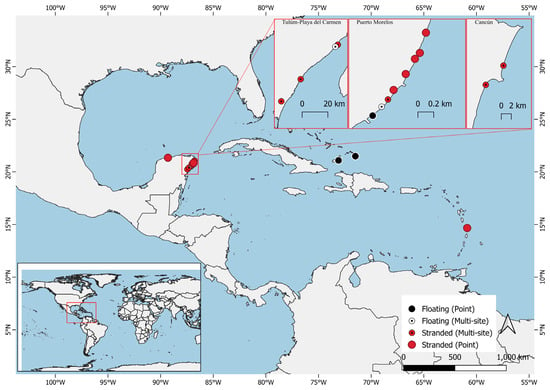
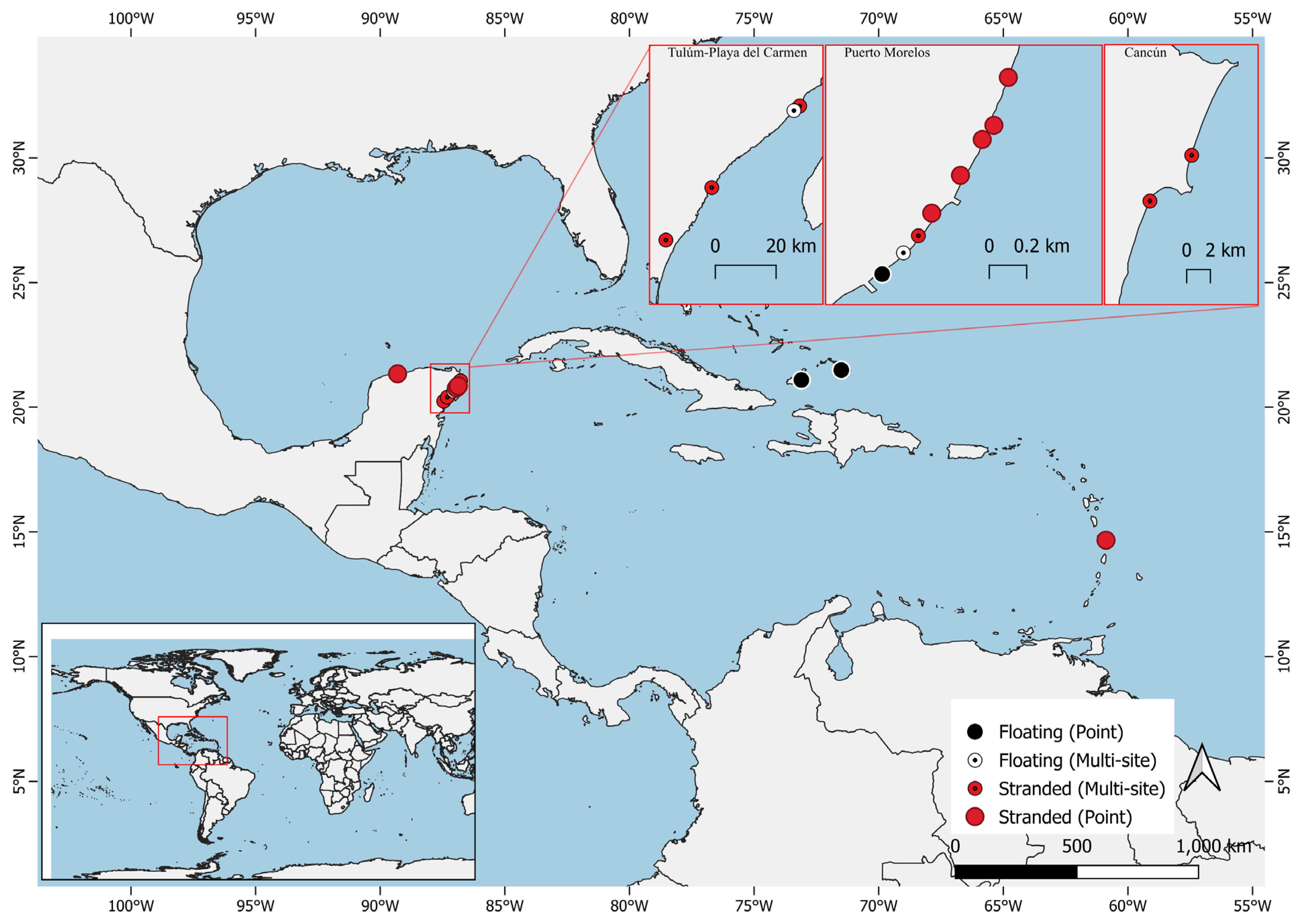
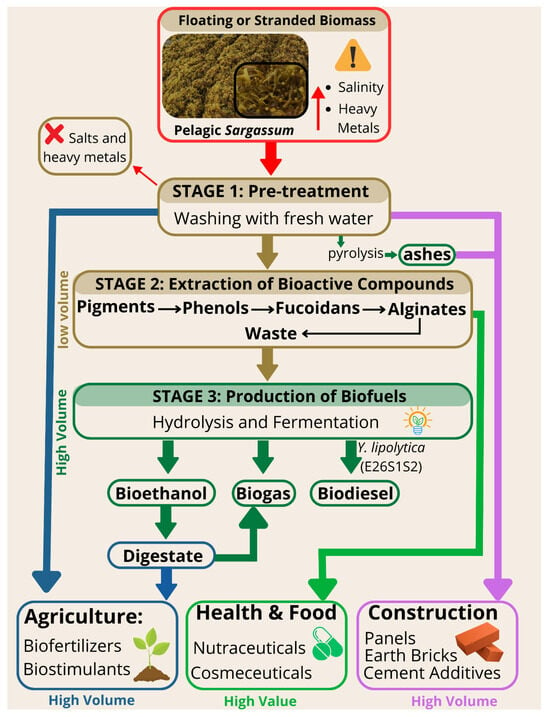
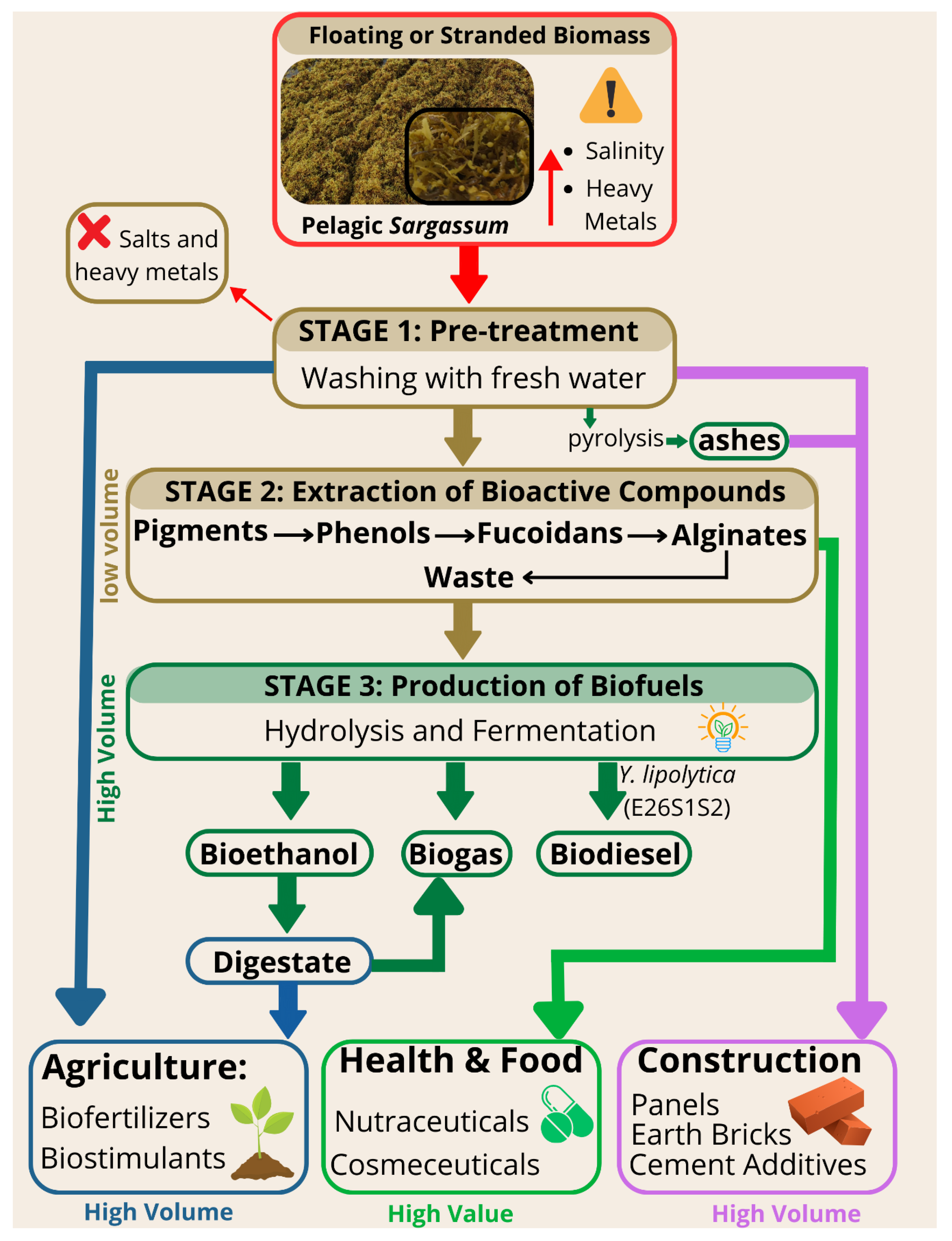

Disclaimer/Publisher’s Note: The statements, opinions and data contained in all publications are solely those of the individual author(s) and contributor(s) and not of MDPI and/or the editor(s). MDPI and/or the editor(s) disclaim responsibility for any injury to people or property resulting from any ideas, methods, instructions or products referred to in the content. |
© 2026 by the authors. Licensee MDPI, Basel, Switzerland. This article is an open access article distributed under the terms and conditions of the Creative Commons Attribution (CC BY) license.