


Abstract
The valorization of agro-industrial waste could be a strategy to improve organic waste management. The production of activated carbon (AC) is a path to use for this waste, with the aim of reducing its negative effects. AC is characterized by a high internal surface area, chemical stability, and oxygen-containing functional groups in its structure. This work is focused on the valorization of agro-industrial waste such as pineapple peel and coconut shells. These are made up of sucrose, glucose, fructose, and other essential nutrients, as well as cellulose, hemicellulose, and lignin. Activated Carbon was obtained with slow pyrolysis at 400 °C, for 4 h in a stainless-steel tubular reactor with physical activation. The obtained samples were analyzed using SEM, TGA, FTIR, and BET to verify the morphology, thermal degradation, functional groups and pores ratio of the AC, highlighting the presence of materials pore >10 µm. The TGA residual materials gave 16.3% of pineapple peel AC ashes and 0.2% of coconut AC. A C=C, C-HX, CO, and OH stretching were observed in 400–4000 cm−1. The peak intensity decreased once the biodiesel was treated with AC, because the traces of water and functional groups interacted actively, resulting a high content of bases. Activated carbon was used for dry cleaning of the obtained biodiesel from residual oil, which was effective in reducing pH and moisture levels in the biodiesel samples. Pore distribution was determined by BET, 5.6 nm for pineapple peel and 39.8243 nm for coconut shells. The obtained activated carbon offers a sustainable alternative to traditional carbon sources and contributes to the circular economy by recycling waste biomass.
1. Introduction
Global population growth has led to an overproduction of solid waste. Currently, only 51% and 16% of municipal solid waste are recycled in developed and developing countries, respectively. Therefore, integrating waste management and decarbonization strategies are crucial for addressing environmental sustainability and mitigating climate change. Key strategies include waste prevention and minimization, recycling and reuse, composting, energy recovery from waste, and landfill management [1]. Carbon contained in organic waste originates from the photosynthesis process, and release of this biogenic carbon would not contribute to the net increase of greenhouse gases (GHG) in the atmosphere. However, under an anaerobic environment like that found at landfills, methane gas is produced from the decomposition of organic material. According to the Intergovernmental Panel on Climate Change, methane has a global warming potential 25 times greater than CO2 over a 100-year time span. Hence, organic waste management via alternative methods have the potential to benefit the environment by reducing greenhouse gas emissions [2].
Mexico ranks as the ninth largest pineapple producer in the world, with a production of 1.209 million tons last year and as the seventh largest coconut producer, according to data from the Ministry of Agriculture and Rural Development. Meanwhile, national per capita consumption is 7.7 kg for pineapple and 1.7 kg for coconut [3]. Around 30% of this fruit is discarded as waste. Moreover, lignocellulosic content and its status as waste make it a viable option for use as economical raw material in activated carbon (AC) production [4,5].
Coconut shells (cs) chemical composition (% w/w) is approximately 64.23% carbon, 6.89% hydrogen, 27.73% oxygen, 0.77% nitrogen, and 4.6% ash. The cs also contain phenolic compounds and lignin, which are responsible for their adsorptive properties [5]. Pineapple solid waste is made up of 11.74% glucose, 9.70% fructose, 2.93% xylose, 2.05% sucrose, and 24.04% reducing sugars and polyphenolic compound. This has raised attention to converting this waste into valuable products [6]. Pineapple peel (pp) contains a significant cellulose (19.8%) and hemicellulose (11.7%) amount, which could be used to synthesize activated carbon [4,6]. While the lignin and cellulose content of coconut shells is over 80% [7], lignocellulosic biomass obtained from agro-industrial waste represents an abundant and strategic raw material for the AC production.
Well-defined properties are required for AC production, such as abundance, hardness, characteristic pore structure, high carbon content, low ash content from lignocellulosic materials, and high mass yield during the carbonization process [8]. Several authors have reported the use of wood, lignite, agricultural waste, endocarps, and pits from some fruits such as mango, avocado, and olives as carbon synthesis resources [9,10,11]. Carbon activation processes are divided into physical–thermal and chemical treatment [12,13]. Physical activation is one of the two primary methods used to transform carbonized material into activated carbon. This process consists of treating the char with oxidizing gases, such as steam or carbon dioxide, at temperatures between 800 °C and 1100 °C [14]. Porous carbon materials have successfully been applied in the chemical industry and research in areas such as gas separation, water purification, supporting catalysts, and serving as electrodes for electrochemical double-layer capacitors, fuel cells, and contaminant retention, owing to their high porosity and surface area [14,15]. Agro-industrial waste can be converted to valuable products majorly by either thermochemical or biochemical pathways.
Biomass thermal decomposition in the absence of oxygen is known as pyrolysis. Pyrolysis is divided into three types based on the heating rate and residence time: slow, fast, and instantaneous. Slow pyrolysis is conventionally used in the production of low-grade charcoals from crop residues at 300–700 °C/h or even days [16]. The carbonization process is the first step in activated carbon production; it occurs between 400 °C and 900 °C. Vallejo et al. indicated that temperatures above 300 °C increase the volatile and impurity content, leading to uneven charcoal with low activation efficiency [17]. Titiladunayo et al. found that the biomass carbonization degree is a key factor in the yield and quality of the solid residue (charcoal) produced in a pyrolysis reaction as the volatiles evolve [18]. Therefore, careful temperature selection is important, considering the chemical composition of the biomass. Hemicellulose begins to degrade at temperatures between 180 and 200 °C [19], followed by cellulose depolymerization above 210 °C [20] and lignin softening [21]. Olszewski et al. reported complete hemicellulose conversion at a reaction temperature of 180 °C and a residence time of 4 h during waste treatment [22]. Cellulose proved to be the most difficult component to degrade. Volpe et al. reported complete cellulose conversion at a reaction temperature of 260 °C [20]. The concentration of relatively unreactive inorganic materials in char residues continues to increase with temperature and residence time. This is due to the mass loss caused by the evolving volatiles as the biomass polymer chain breaks down with heat. The literature demonstrates that slow pyrolysis temperatures are sufficient for effectively activating lignocellulosic precursors and achieving significant porosity [23].
On the other hand, waste oil generation is becoming a growing worldwide problem. Waste fats and oils present a major management challenge due to the associated disposal problems and contribution to water and soil pollution [24]. According to Greenpeace data, Mexico generated over 320 million liters of used oil in 2022, with no record of its disposal. To address this issue, a proposal from various countries is to use this waste in biodiesel manufacturing. Biodiesel is an alternative to petroleum diesel. As a biodegradable product, it is much less harmful to the environment. This fuel is a mixture of obtained fatty acid methyl esters from vegetable oils and animal fats, with a low commercial value [25,26]. It is obtained by the transesterification of triglycerides, the main constituents of vegetable oils and animal fats, with a short-chain alcohol (methanol or ethanol) in the presence of an alkaline catalyst such as potassium or sodium hydroxide and potassium and sodium methoxides [27]. Transesterification consists of three consecutive reversible reactions. First, triglycerides are converted to diglycerides. Then, diglycerides are converted to monoglycerides. Finally, monoglycerides are converted to glycerol, the main byproduct of the reaction. Three molecules of alcohol are used for each triglyceride molecule in each stage [28].
In contrast, green chemistry involves designing chemical products and processes that reduce or eliminate the use or generation of hazardous substances. This concept applies throughout the entire life cycle of a chemical product, including design, manufacturing, use, and final disposal. Green chemistry aims to minimize contamination directly at the source rather than through remediation [29]. Moreover, the use of existing products to produce new ones reduces investment and production costs. Undoubtedly, regulatory policies, markets, and waste-specific research are required to convert agro-industrial wastes into valuable commodities [16].
In this work, activated carbon was synthesized from pineapple peels and coconut shells (biomass) by thermal pyrolysis using green chemistry principles; the activated carbon was applied to the biodiesel purification which used cooking oil as its base.
2. Materials and Methods
2.1. Activated Carbon Synthesis
Slow pyrolysis was used as the carbonization method; each sample was placed separately in a completely sealed austenitic stainless steel tubular reactor (La Paloma S.A de C.V., Morelia, Mexico) that is 18 cm long and 3 cm in diameter, and this was placed in a furnace (Novatech muffle MD-12-ESP, Novatech EOOD, Ruse, Bulgaria) at 400 °C for 4 h. Functionalization was achieved through physical activation with water vapor at 720–750 °C for 1 h. Pineapple peels (from chopped fruit waste) and coconut shells (collected from the local market) were used as biomass. The pineapple peel was washed with tap water at room temperature to remove any additional residue and then dried for a week in a solar dryer. After drying, the biomass was weighed and reduced in size (5 cm); the purpose was to reduce pyrolysis time. The pretreatment of the coconut shells consisted of removing the remaining pulp. Subsequently, they were mechanically brushed to remove surface fibers; the objective was to use only the endocarp. They were sun-dried for 7 days, ground using a hand mill (OASS203, ISIALAB, Ecatepec, Mexico), and sieved (11/95). Due to their physical characteristics, it was not possible to match the size of the pp and cs, whose sizes ranged from 2 to 5 cm. Finally, once the sample cooled, it was weighed.
2.2. Activated Carbon Characterization
Activated carbon was characterized by scanning electron microscopy (SEM) using a JEOL 5910 LV (Tokio, Japan) to observe its morphology and porosity. Fourier transform infrared spectroscopy (FTIR) was also employed to demonstrate the presence of chemical groups and confirm the functionalization of the carbon. A Bruker Tensor 27 instrument (Ettlingen, Germany) was used for FTIR analysis, and the test was performed with potassium bromide pellets, OPUS Data Collection Program. Surface area and porosity analysis was conducted using Quantachrome instruments NOVA touch LX1 (BET) at 77.35 K N2 (Anton Paar, Boynton Beach, FL, USA). Thermogravimetric analysis (TAG) was performed using a PerkinElmer STA 6000 TGA, (Shelton, CT, USA), operating from 30 to 600 °C with a temperature ramp of 10 °C/min, an oxygen flow of 30 mL/min and a resolution of 0.2 micrograms, Pyris™ 9 software AS 6000 Autosampler.
2.3. Calculation of Yield
The yield general formula is as follows:
where the variables used were defined as follows:
- WAC: AC final weight
- W0: Dried biomass weight
2.4. Biodiesel Production
The biodiesel synthesis was carried out according to Morales-Troyo, 2015 [30]. Alkaline-catalyzed transesterification process for waste cooking oil from Maki’s commercial kitchen in the city was performed. Biodiesel was obtained by transesterification with methanol (Meyer 99.8%) and sodium hydroxide (Maesacv 97%). In theory, the same amount of fuel should be obtained per liter of vegetable oil. However, the yield is reduced by about 5–6%. Glycerol is left as a by-product, along with the main product, which contains traces of water, hydroxide, glycerol, and soaps derived from the saponification reaction. Biodiesel was produced using different percentages of residual oil and commercial vegetable oil as a control sample. The degree of purity was then analyzed to determine its effect on the combustion process. Table 1 summarizes the pH tests and the fatty acids quantification according to the amount of residual oil used. The average viscosity of the mixtures was calculated to be 6.6 cP, with a density average of 0.927 g/mL.
Table 1.
Free Fatty Acids (FFA) data.
3. Results and Discussion
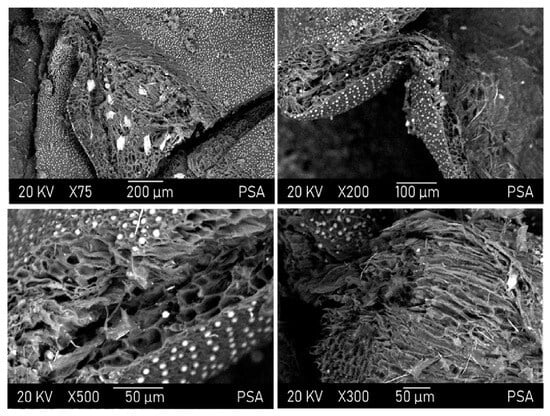
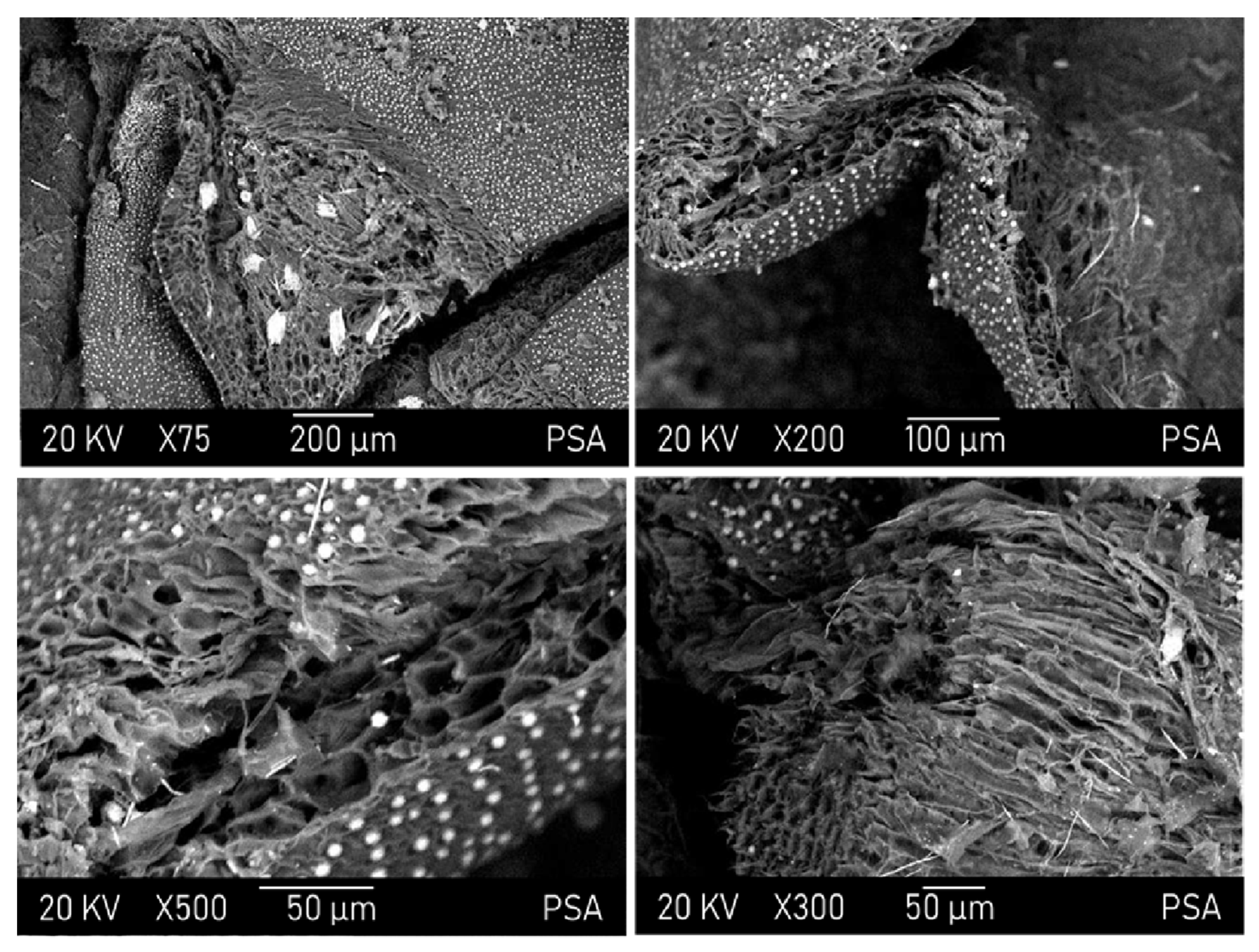
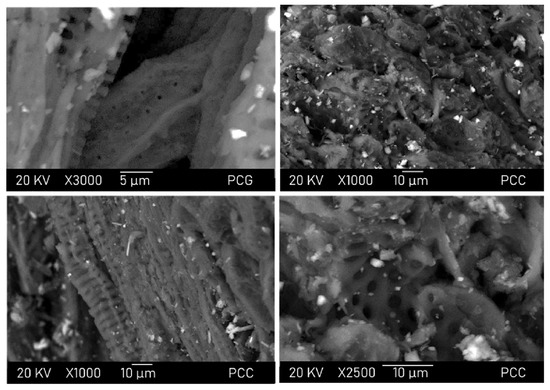
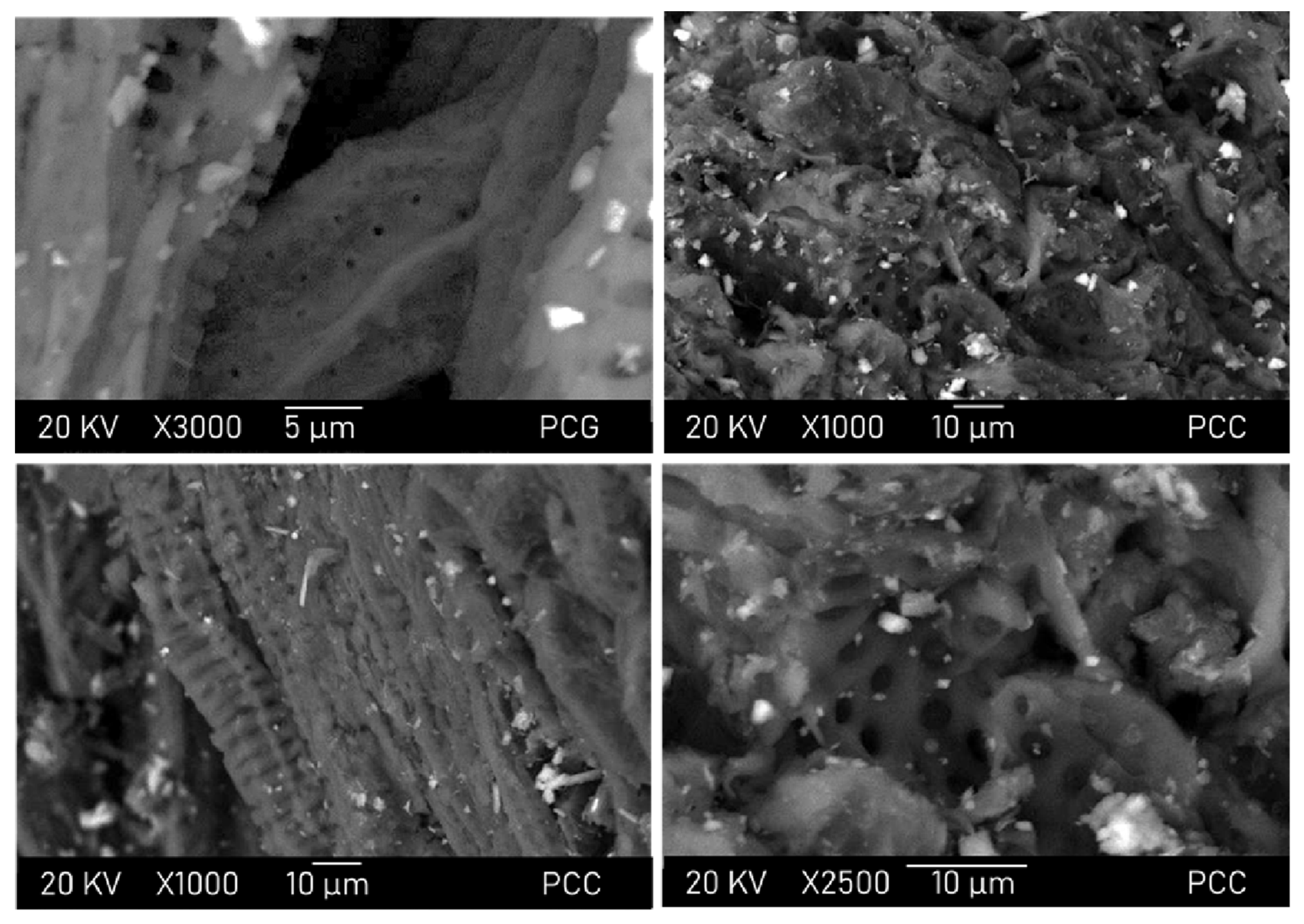
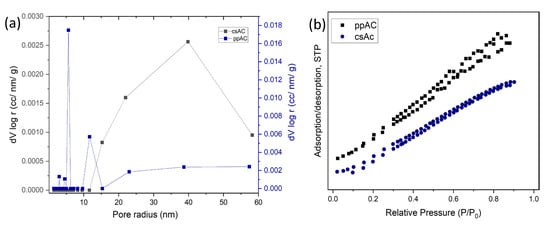
Activated carbon SEM micrographs from samples of pineapple peels and coconut shells, respectively, are shown in Figure 1 and Figure 2. The porosity can be clearly observed. Image analysis was performed using ImageJ software (1.54e, 2023) to measure pore size and to determine an average value. This resulted in pore sizes of 9.92 μm for pp and between 0.73–1.20 μm for cs. Based on these results, the carbon is considered macroporous [31]. Liang et al. [7], in 2020, reported that for the obtained carbon from coconut shells, all three types of pores could be obtained in a single sample. This depends on the relationship between temperature and activation time, as well as the activator concentration [7]. In the case of pineapple peel, authors such as Oni et al. [32] have reported the presence of white dots on the surface of the activated carbon, as can be seen in Figure 3. These dots do not indicate use but are rather typical of pineapple bark. The loss of water is the first stage of the carbonization process, which is carried out at around 200 °C. Then, the degradation of volatile compounds occurs, achieving up to this point the loss of around five percent of the initial mass. From 220 to 350 °C, the greatest amount of material is lost, around 60%, due to the breaks in the cellulose chains. Yang et al. [33] reported that hemicellulose decomposition occurred at 220–315 °C, while the cellulose decomposed between 314–400 °C. Lignin decomposition occurs throughout the temperature range between 160 and 900 °C, but with a very low rate of mass loss. When the temperature exceeds 500 °C, lignin generates a large amount of greenhouse gases due to its decomposition [10,34]. Most of the oxygenated and hydrogenated groups of the carbon already formed are lost over time, leaving approximately 18–20% of the initial material, which coincides with the yield of ppAC. This confirms what some authors have mentioned. The low temperature during the carbonization phase also significantly influences the properties of the final material. Biochar yield increases with a decrease in pyrolysis temperature, with an increase in residence time, and preferably at a low heating rate [35,36].
Figure 1.
Activated carbon SEM-Micrographs from pineapple peels. The structure and porosity are observed.
Figure 2.
Activated carbon SEM-Micrographs from coconut shells. The structure and porosity are observed.
Figure 3.
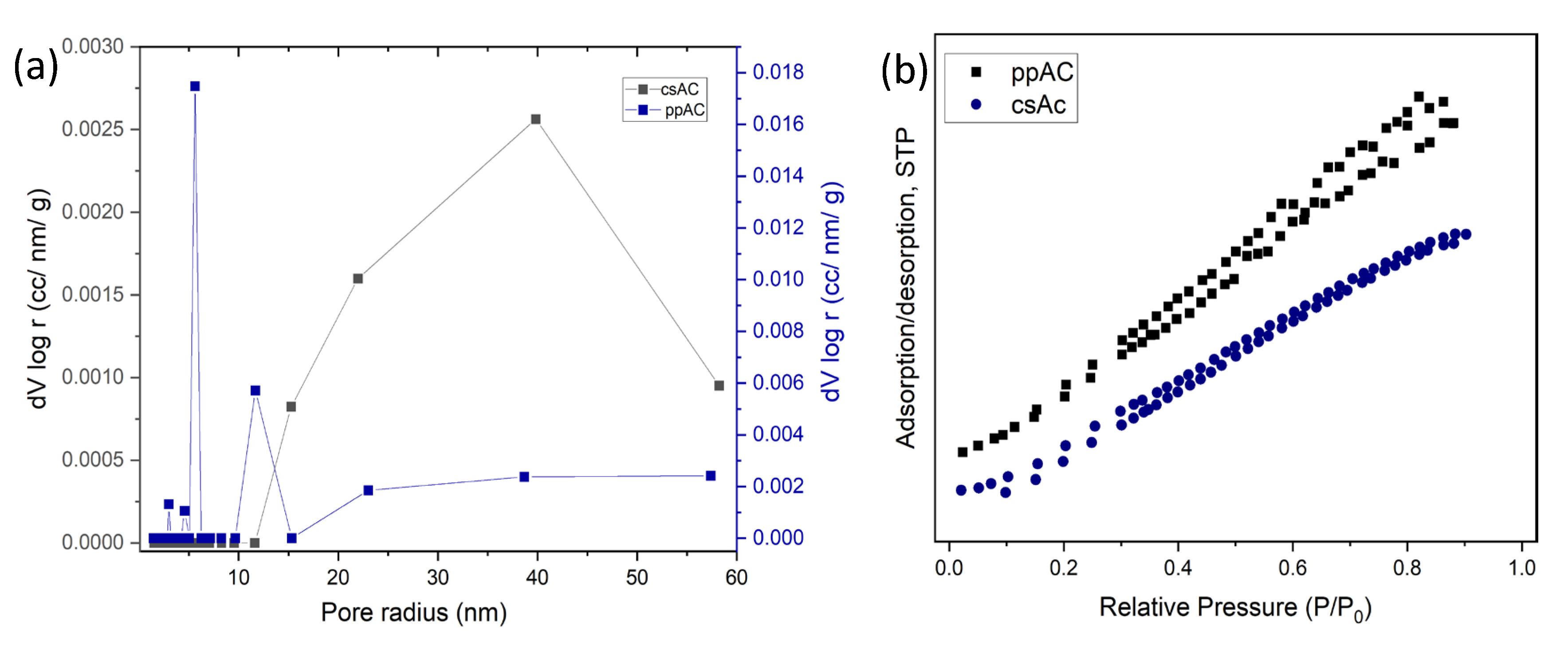
(a) Pore radius distribution of ppAC and csAC and (b) Adsorption/desorption isotherms of nitrogen registered for ppAC and csAC and some samples after the mechanochemical treatment.
The yield according to yield formula for pineapple peel is around 20 wt% to 25 wt%. Although coconut shell has a range of 37 wt% to 40 wt% of yield, it is consistent with the physical activation method [37].
Figure 3 shows the pore radius distribution of ppAC and csAC. The surface properties of the ACs were affected by temperature. The analysis shows variability in pore radius, especially for ppAC. Authors such as Díaz-Terán et al. [38] demonstrate the relationship between porosity and pyrolysis temperature, where porosity development improves at much higher temperatures. This variability can also be observed in the SEM analysis, particularly for the ppAC samples. Based on the pore distribution, ACs are mesoporous (2–50 nm). Dv (r) for ppAC is 5.6309 nm and 39.8243 nm for csAC.
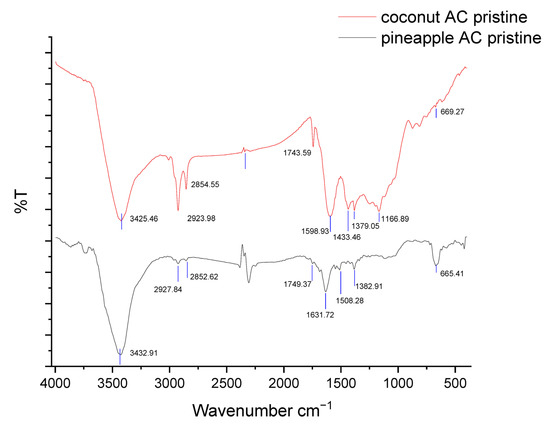
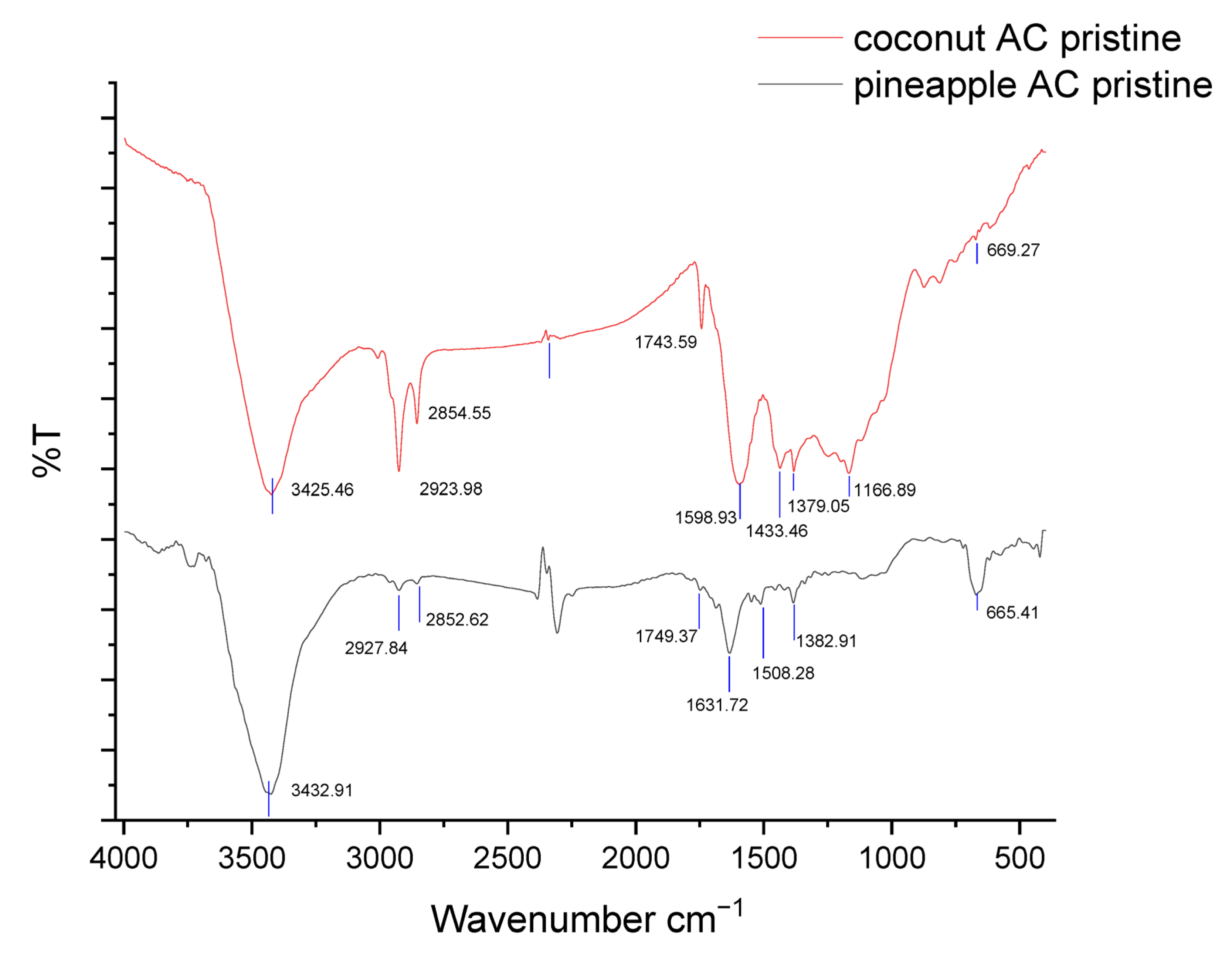
The physical activation involves thermochemical conversion of the precursor to char, followed by activation with an oxidizing gas at high temperatures [39]. However, in this study, carbon activation was primary and physical; it occurred in the carbonization process to avoid the additional use of acids. The activation is confirmed by the presence of different functional groups, as seen in the infrared spectrum bands (Figure 4, Wavenumber vs. %Transmittance). The broad, flat band around 3200–3600 cm−1 indicates the presence of -OH stretching vibrations from hydroxyl groups, which are attributed to cellulose and hemicellulose due to the chemical composition of the precursors [40]. The weak band observed between 2950 and 2800 cm−1 represents a C-H stretching vibration in the methyl group. The bands at 1624, 1630, and 1622 cm−1 can be described as C=C aromatic ring stretching vibrations [41]. The weaker band between 765 and 530 cm−1 is attributed to aromatic structures. The presence of these groups might be explained by the organic acids found in pineapple, such as citric and malic acids, which are responsible for its acidic flavor and, in turn, its nutritional properties. The presence of the C-Hx bands indicates aromatic compounds, flavonoids, and polyphenol compounds that are common in plants. C-O bands indicate the presence of esters, which are important in the formation of flavors and aromas and tend to be present in aromatic compounds [42].
Figure 4.
FTIR transmittance spectra of AC pristine. Blue lines indicate the bands of the functional groups.
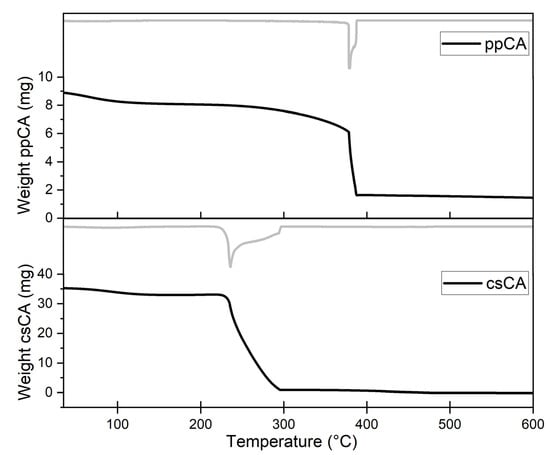
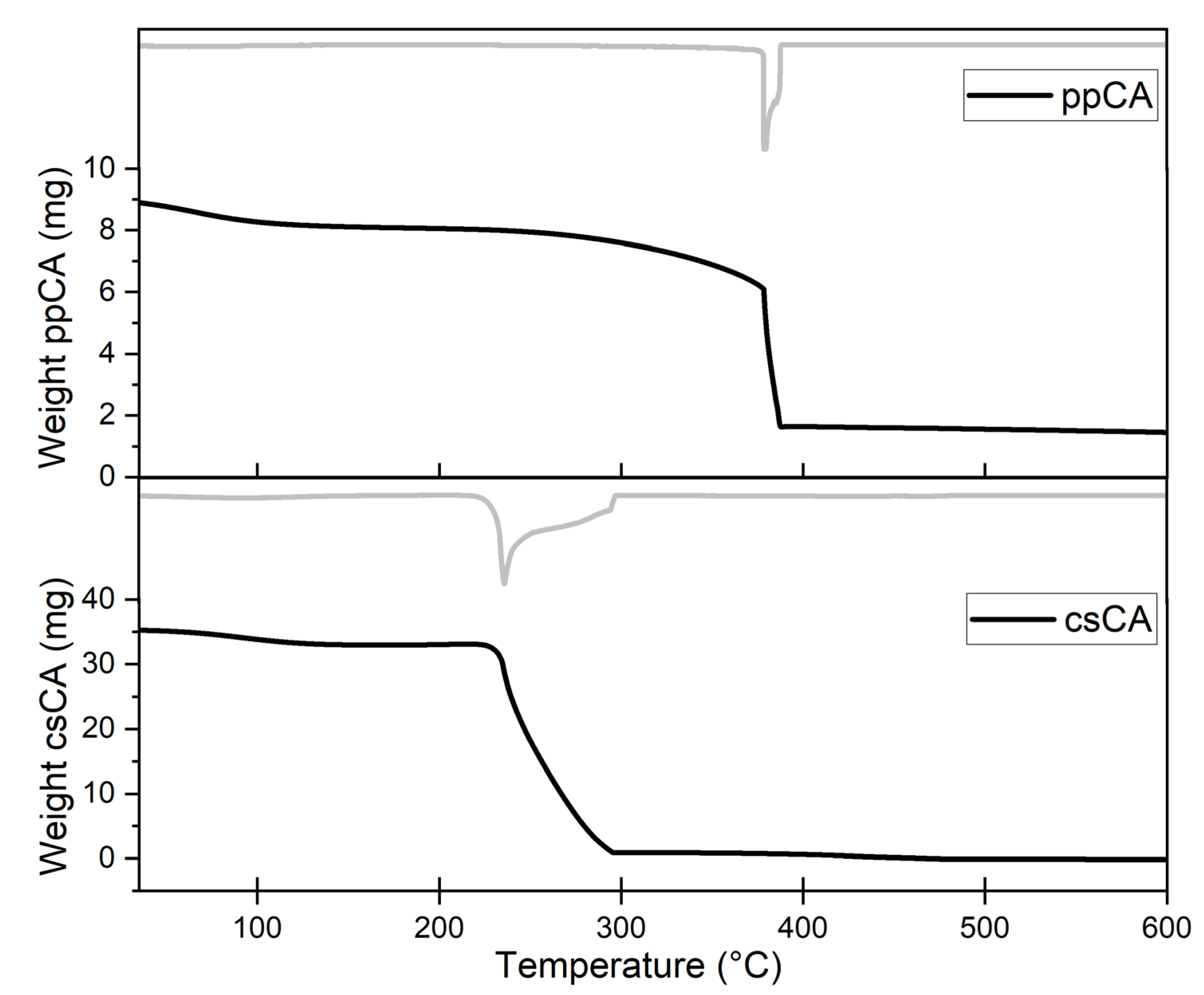
Thermogravimetric analysis (TGA) was used to determine the thermal stability of the activated carbon samples. Figure 5 shows the comparison between activated carbons from pineapple peel and coconut shell. Total mass loss (wt%) occurred in two stages. In the first stage, the organic matter decomposes and releases gaseous volatiles (25–130 °C); in the second stage, it decreases due to loss of mass. At 388 °C there is a loss of 83.68% for ppAc. The main losses for CSAC are once at 296 °C with a loss of 97.71%, and the second, less visible in the graph, happens at 400 °C, when it reaches 99.80% of the total mass [43]. For ppAC, TGA shows that the first stage is longer than for csAC; this could be due to the presence of functional groups, which are more defined in pp than in csAC.
Figure 5.
TGA analysis of ppAC and csAC. The gray lines indicate the first drift, i.e., the temperature at which the sample loses weight.
The standard method used to purify crude biodiesel is water washing, whereby impurities such as soap, catalysts, glycerol, and residual alcohol are removed. However, the major disadvantage of using water is the increased cost [44]. Furthermore, biodiesel and water do not separate easily, and the process produces a significant amount of wastewater. Thus, nearly 10 L of wastewater is generated for each liter of biodiesel [45]. Activated carbon is used for dry washing, so water is not needed. For dry washing, 5% by weight of 1–2 mm activated carbon was used for 60 min at 100 rpm, and pH measurements were taken during that time. A favorable change was observed when measuring the pH of the samples. Before AC treatment, the pH values were between 9.1 and 10. After washing, the values dropped to 7.0–7.4, and the desired neutrality values for biofuels (pH 6–8) were reached. It should be noted that the best results were obtained with coconut activated carbon; this may be related to the micrographs showing greater homogeneity in porosity and resistance during agitation. According to Ajien, 2023 [5], the pore size distribution of activated carbon is enhanced when it comes from coconut shells using different activation methods. The oil acidity is a value related to the product quality and is also a measure of the degree of fat hydrolysis [46]. The acidity index of residual oils must be less than 3 in order to obtain and purify biodiesel. Since the acidity value of the residual vegetable oil samples was 2.26, it was decided to create mixtures with unused oil. Some properties were measured before and after using activated carbon, and the results are reported in Table 2. The water and cloud point values demonstrate that dry cleaning favored the decrease in moisture in the biodiesel.
Table 2.
Data before and after using activated carbon with biodiesel.
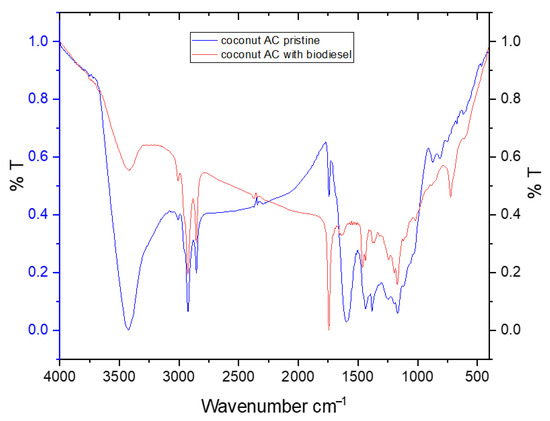
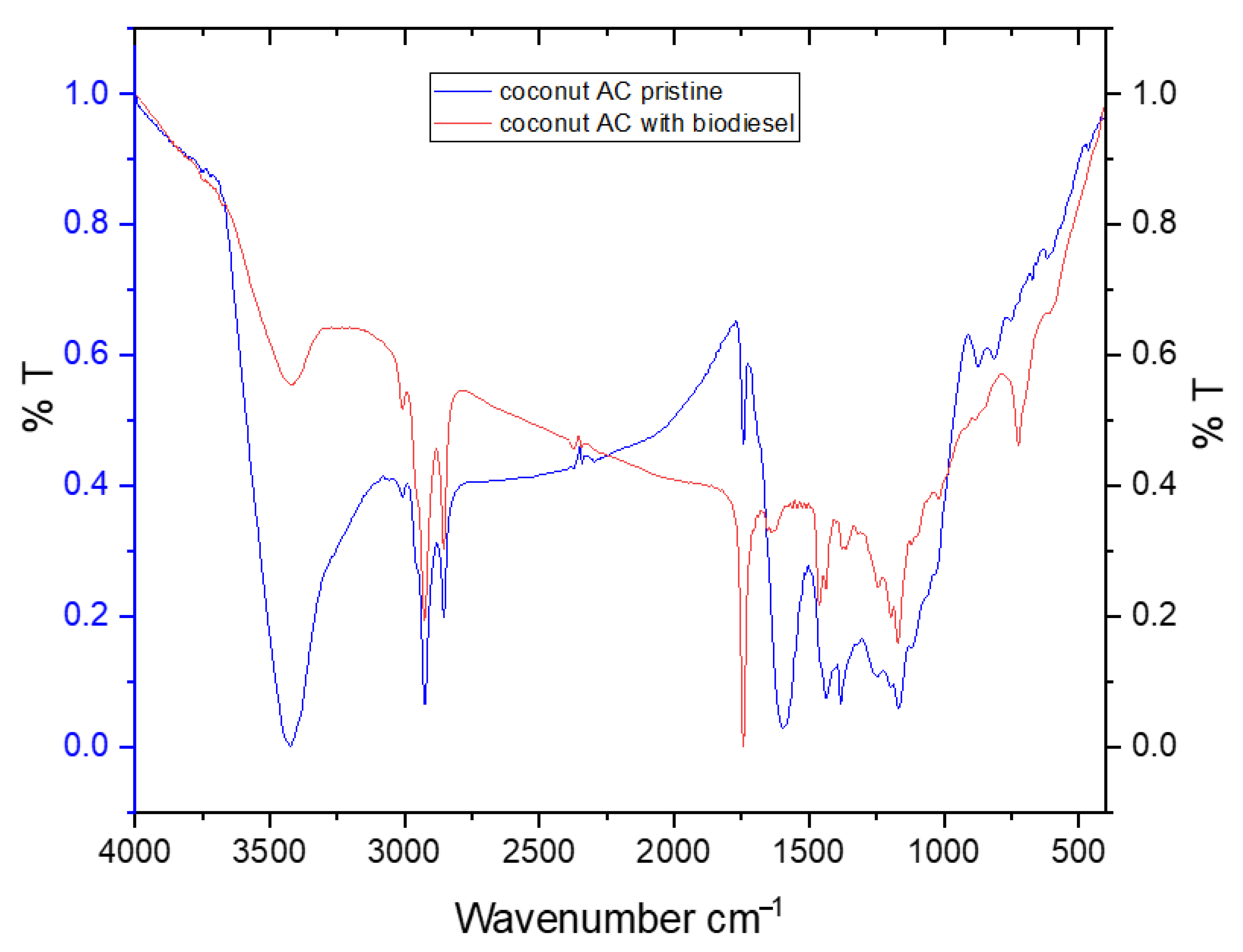
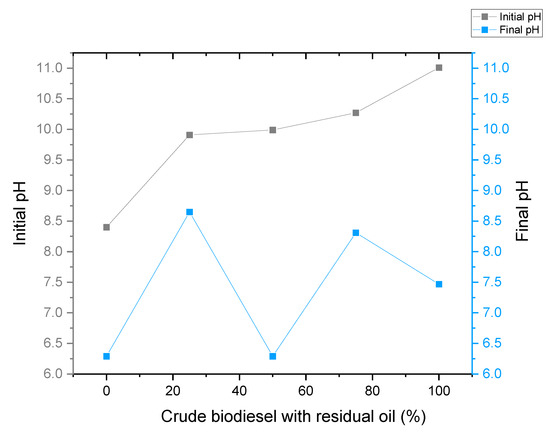
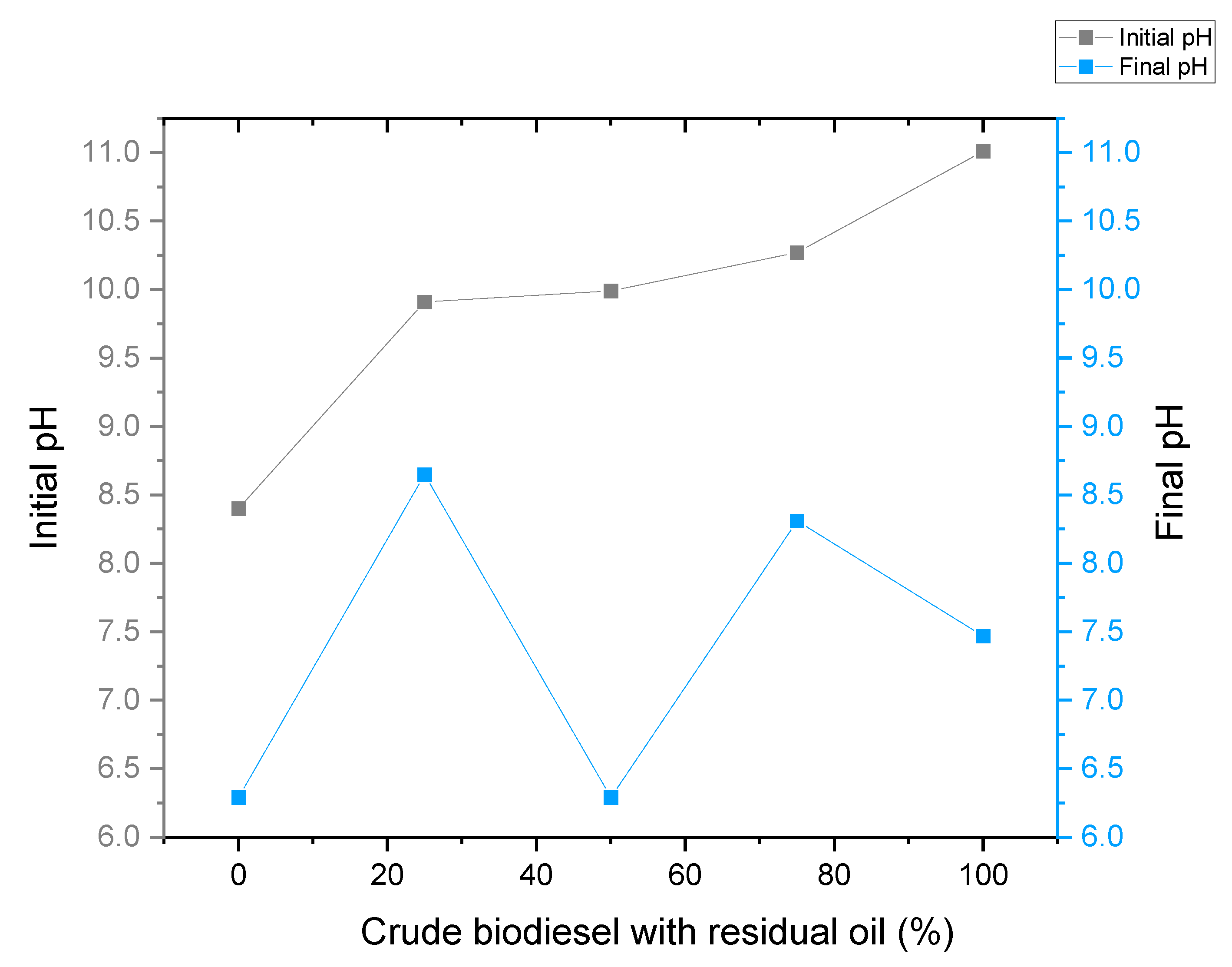
Figure 6 shows a comparative FTIR analysis before and after the use of activated carbon (normalized graphic). The intensity of bands suggests a chemical interaction between the –OH band and the biodiesel. A weaker signal is observed in the peaks compared to pristine activated carbon [39], where the signal was strong. In addition to the changes in the pH (Figure 7) of the biodiesel treated with activated carbon, it shows that the active sites of the carbon are chemically interacting, trapping the traces present in the biodiesel and improving its purity degree. Authors such as Clark, 2013 [47] reported pH increments according to the saponification reaction and suggested that the pH monitoring proves to be robust and precise enough, and it might help to monitor biodiesel production processes. AC from pineapple and AC from coconut shells were tested at the same conditions, and activated carbon from pineapple showed a minor interaction with biodiesel.
Figure 6.
FTIR spectra of AC pristine vs. AC with biodiesel.
Figure 7.
pH data comparison of biodiesel before and after AC purification.
Glycerol and methanol are both highly soluble in water, so water washing is an effective method of removing contaminants. For a long time, this was the most common purification method [48]. However, sustainable options are increasingly being sought to avoid excessive consumption and water waste pollution. Resin-based methods have been tested for dry cleaning or membrane and adsorption processes such as removal methods [44,49]. However, this work seeks to add value to a waste product, such as organic waste, as a possible substitute for water in the purification process.
4. Conclusions
The development of sustainable processes has become a priority due to environmental concerns. In the present study, a simple and economical method was employed successfully to obtain physically activated carbon in one step from pineapple peel and coconut endocarp waste. Infrared analysis verified its functionalization, demonstrating the unnecessary addition of chemicals and avoiding waste generation. Additionally, low temperatures (400 °C) were used to achieve green synthesis and significant porosity, which is lower than those reported in the literature. Important advantages of the activation include the relatively short time (4 h), which allows for the production of materials with an acceptable distribution of pore ratio and functional groups incorporation such as C=C, C-HX, CO, and OH stretching. The csAC showed sharper peaks in the spectra of FTIR. Further, the distribution pore ratio presented minor variability that favors the homogenous adsorption. Activated carbon was used for dry cleaning the obtained biodiesel from residual oil, which was effective in reducing pH and moisture levels in the biodiesel samples. The obtained activated carbon offers a sustainable, cost-effective alternative to traditional carbon sources and contributes to the circular economy by recycling waste biomass. Regarding the use of biodiesel in dry cleaning, it is a viable option since it eliminates the need for wastewater generation. The potential of agro-industrial waste and its applicability as a renewable and economical raw material can replace conventional activated carbon synthesis processes in the future.
Author Contributions
Conceptualization: C.J.G.-G. and L.D.-L.; methodology: D.L.G.-R., C.J.G.-G. and F.M.-T.; software: S.M.H.-O. and D.S.V.-D.; validation: L.F.O.-V., L.D.-L. and C.J.G.-G.; formal analysis, Y.S.-R., C.J.G.-G. and F.M.-T.; investigation: D.L.G.-R., S.M.H.-O. and D.S.V.-D.; resource: C.J.G.-G. and L.F.O.-V.; data curation, D.L.G.-R. and Y.S.-R.; writing—original draft preparation: D.L.G.-R. and C.J.G.-G.; writing—review and editing: C.J.G.-G., L.F.O.-V. and L.D.-L.; graphical abstract: C.J.G.-G. and L.F.O.-V.; supervision: C.J.G.-G. All authors have read and agreed to the published version of the manuscript.
Funding
CIC-UMSNH 18099; ICTI/DA/173/2025.
Data Availability Statement
Data supporting reported results can be found in: Data Availability. Further inquiries can be directed to the corresponding author.
Acknowledgments
This project was supported by Coordinación de la Investigación Científica-UMSNH (CIC-UMSNH 18099), Instituto de Ciencia, Tecnología e Innovación (ICTI) del Estado de Michoacán (ICTI/DA/173/2025).
Conflicts of Interest
The authors declare no conflicts of interest.
References
- Chiang, P.F.; Zhang, T.; Claire, M.J.; Maurice, N.J.; Ahmed, J.; Giwa, A.S. Assessment of solid waste management and decarbonization strategies. Processes 2024, 12, 1473. [Google Scholar] [CrossRef] [Scilit]
- Yoshida, H.; Gable, J.J.; Park, J.K. Evaluation of organic waste diversion alternatives for greenhouse gas reduction. Resour. Conserv. Recycl. 2012, 60, 1–9. [Google Scholar] [CrossRef] [Scilit]
- Secretaría de Agricultura y Desarrollo Rural. Prensa. Available online: https://www.gob.mx/agricultura/prensa/crece-16-2-produccion-de-pina-en-mexico-durante-2020?idiom=es (accessed on 8 December 2025).
- Kamusoko, R.; Mukumba, P. Pineapple waste biorefinery: An integrated system for production of biogas and marketable products in South Africa. Biomass 2025, 5, 17. [Google Scholar] [CrossRef] [Scilit]
- Ajien, A.; Idris, J.; Md Sofwan, N.; Husen, R.; Seli, H. Coconut shell and husk biochar: A review of production and activation technology, economic, financial aspect and application. Waste Manag. Res. 2023, 41, 37–51. [Google Scholar] [CrossRef] [Scilit]
- Aili Hamzah, A.F.; Hamzah, M.H.; Che Man, H.; Jamali, N.S.; Siajam, S.I.; Ismail, M.H. Recent updates on the conversion of pineapple waste (Ananas comosus) to value-added products, future perspectives and challenges. Agronomy 2021, 11, 2221. [Google Scholar] [CrossRef] [Scilit]
- Liang, Q.; Liu, Y.; Chen, M.; Ma, L.; Yang, B.; Li, L.; Liu, Q. Optimized preparation of activated carbon from coconut shell and municipal sludge. Mater. Chem. Phys. 2020, 241, 122–327. [Google Scholar] [CrossRef] [Scilit]
- Mejia, M.V.V. Potencial de residuos agroindustriales para la síntesis de Carbón Activado: Una revisión. Sci. Tech. 2018, 23, 411–419. [Google Scholar]
- Blachnio, M.; Derylo-Marczewska, A.; Charmas, B.; Zienkiewicz-Strzalka, M.; Bogatyrov, V.; Galaburda, M. Activated carbon from agricultural wastes for adsorption of organic pollutants. Molecules 2020, 25, 5105. [Google Scholar] [CrossRef] [Scilit] [PubMed]
- Dhyani, V.; Bhaskar, T. A comprehensive review on the pyrolysis of lignocellulosic biomass. Renew. Energy 2018, 129, 695–716. [Google Scholar] [CrossRef] [Scilit]
- Sarkar, S.D.; Mukherjee, D.; Kuila, D. CO2 Capture using Activated Carbon Derived from Avocado Seeds and Sawdust: A Comparative Study on Adsorption Performance and Surface Properties. J. Environ. Chem. Eng. 2025, 5, 117643. [Google Scholar] [CrossRef] [Scilit]
- Gale, M.; Nguyen, T.; Moreno, M.; Gilliard-Abdulaziz, K.L. Physiochemical Properties of Biochar and Activated Carbon from Biomass Residue: Influence of Process Conditions to Adsorbent Properties. ACS Omega 2021, 6, 10224–10233. [Google Scholar] [CrossRef] [Scilit] [PubMed]
- Colomba, A.; Berruti, F.; Briens, C. Model for the physical activation of biochar to activated carbon. J. Anal. Appl. Pyrolysis 2022, 168, 105769. [Google Scholar] [CrossRef] [Scilit]
- Lee, J.; Kim, J.; Hyeon, T. Recent progress in the synthesis of porous carbon materials. Adv. Mater. 2006, 18, 2073–2094. [Google Scholar] [CrossRef] [Scilit]
- Zhou, L.; Yu, Q.; Cui, Y.; Xie, F.; Li, W.; Li, Y.; Chen, M. Adsorption properties of activated carbon from reed with a high adsorption capacity. Ecol. Eng. 2017, 102, 443–450. [Google Scholar] [CrossRef] [Scilit]
- Singh, R.; Das, R.; Sangwan, S.; Rohatgi, B.; Khanam, R.; Peera, S.P.G.; Misra, S. Utilisation of agro-industrial waste for sustainable green production: A review. Environ. Sustain. 2021, 4, 619–636. [Google Scholar] [CrossRef] [Scilit]
- Vallejo, F.; Yánez, D.; Díaz-Robles, L.; Oyaneder, M.; Alejandro-Martín, S.; Zalakeviciute, R.; Romero, T. Valorizing Biomass Waste: Hydrothermal Carbonization and Chemical Activation for Activated Carbon Production. Biomass 2025, 5, 45. [Google Scholar] [CrossRef] [Scilit]
- Titiladunayo, I.F.; McDonald, A.G.; Fapetu, O.P. Effect of temperature on biochar product yield from selected lignocellulosic biomass in a pyrolysis process. Waste Biomass Valorization 2012, 3, 311–318. [Google Scholar] [CrossRef] [Scilit]
- Libra, J.A.; Ro, K.S.; Kammann, C.; Funke, A.; Berge, N.D.; Neubauer, Y.; Titirici, M.M.; Fühner, C.; Bens, O.; Kern, J.; et al. Hydrothermal carbonization of biomass residuals: A comparative review of the chemistry, processes and applications of wet and dry pyrolysis. Biofuels 2011, 2, 71–106. [Google Scholar] [CrossRef] [Scilit]
- Volpe, M.; Messineo, A.; Mäkelä, M.; Barr, M.R.; Volpe, R.; Corrado, C.; Fiori, L. Reactivity of cellulose during hydrothermal carbonization of lignocellulosic biomass. Fuel Process Technol. 2020, 206, 106456. [Google Scholar] [CrossRef] [Scilit]
- Sevilla, M.; Fuertes, A.B. The production of carbon materials by hydrothermal carbonization of cellulose. Carbon 2009, 47, 2281–2289. [Google Scholar] [CrossRef] [Scilit]
- Olszewski, M.P.; Nicolae, S.A.; Arauzo, P.J.; Titirici, M.M.; Kruse, A. Wet and dry? Influence of hydrothermal carbonization on the pyrolysis of spent grains. J. Clean. Prod. 2020, 260, 121101. [Google Scholar] [CrossRef] [Scilit]
- Chakraborty, S.; Aktay, N.; Alptekin, F.M.; Celiktas, M.S.; Dunford, N.T. Effect of Process Parameters and Biomass Type on Properties of Carbon Produced by Pyrolysis. Biomass 2025, 5, 52. [Google Scholar] [CrossRef] [Scilit]
- Chhetri, A.B.; Watts, K.C.; Islam, M.R. Waste cooking oil as an alternate feedstock for biodiesel production. Energies 2008, 1, 3–18. [Google Scholar] [CrossRef] [Scilit]
- Dias, J.M.; Alvim-Ferraz, M.C.M.; Almeida, M.F. Production of biodiesel from acid waste lard. Biores. Technol. 2009, 100, 6355–6361. [Google Scholar] [CrossRef] [Scilit]
- Ibeto, C.; Ofoefule, A.; Ezeugwu, H. Fuel quality assessment of biodiesel produced from groundnut oil (Arachis hypogea) and its blend with petroleum diesel. Am. J. Food Technol. 2011, 6, 798–803. [Google Scholar] [CrossRef] [Scilit]
- Predojević, Z.J. The production of biodiesel from waste frying oils: A comparison of different purification steps. Fuel 2008, 87, 3522–3528. [Google Scholar] [CrossRef] [Scilit]
- Sharma, Y.C.; Singh, B.; Upadhyay, S.N. Advancements in development and characterization of biodiesel: A review. Fuel 2008, 87, 2355–2373. [Google Scholar] [CrossRef] [Scilit]
- Clark, J.H. Green chemistry: Challenges and opportunities. Green Chem. 2007, 9, 1–8. [Google Scholar] [CrossRef] [Scilit]
- Morales Troyo, F. Análisis del Ciclo de Vida de la Producción de Biodiesel a Partir de Aceite Usado. Master’s Thesis, Universidad Nacional Autónoma de México, Mexico City, Mexico, 2015. [Google Scholar]
- Khuong, D.A.; Trinh, K.T.; Nakaoka, Y.; Tsubota, T.; Tashima, D.; Nguyen, H.N.; Tanaka, D. The investigation of activated carbon by K2CO3 activation: Micropores-and macropores-dominated structure. Chemosphere 2022, 299, 134365. [Google Scholar] [CrossRef] [Scilit]
- Oni, B.A.; Abatan, O.G.; Busari, A.; Odunlami, O.; Nweke, C. Production and characterization of activated carbon from pineapple waste for treatment of kitchen wastewater. Desalination Water Treat. 2020, 183, 413–424. [Google Scholar] [CrossRef] [Scilit]
- Yang, H.; Yan, R.; Chen, H.; Lee, D.H.; Zheng, C. Characteristics of hemicellulose, cellulose and lignin pyrolysis. Fuel 2007, 86, 1781–1788. [Google Scholar] [CrossRef] [Scilit]
- Chen, H.; Wang, L. Technologies for Biochemical Conversion of Biomass; Academic Press Publication: Cambridge, MA, USA; Elsevier Inc.: Oxford, UK, 2016; pp. 3–7. [Google Scholar]
- Tripathi, M.; Sahu, J.N.; Ganesan, P. Effect of process parameters on production of biochar from biomass waste through pyrolysis: A review. Renew. Sustain. Energy Rev. 2016, 55, 467–481. [Google Scholar] [CrossRef] [Scilit]
- Kosheleva, R.I.; Mitropoulos, A.C.; Kyzas, G.Z. Synthesis of activated carbon from food waste. Environ. Chem. Lett. 2019, 17, 429–438. [Google Scholar] [CrossRef] [Scilit]
- Jun, T.Y.; Arumugam, S.D.; Latip, N.H.A.; Abdullah, A.M.; Latif, P.A. Effect of activation temperature and heating duration on physical characteristics of activated carbon prepared from agriculture waste. Environ. ASIA 2010, 3, 143–148. [Google Scholar]
- Dıaz-Teran, J.; Nevskaia, D.M.; López-Peinado, A.J.; Jerez, A. Porosity and adsorption properties of an activated charcoal. Colloids Surf. A Physicochem. Eng. Asp. 2001, 187, 167–175. [Google Scholar] [CrossRef] [Scilit]
- Ali, R.; Aslam, Z.; Shawabkeh, R.A.; Asghar, A.; Hussein, I.A. BET, FTIR, and RAMAN characterizations of activated carbon from waste oil fly ash. Turk. J. Chem. 2020, 44, 279–295. [Google Scholar] [CrossRef] [Scilit]
- Brito, G.M.; Cipriano, D.F.; Schettino, M.A., Jr.; Cunha, A.G.; Coelho, E.R.C.; Freitas, J.C.C. One-step methodology for preparing physically activated biocarbons from agricultural biomass waste. J. Environ. Chem. Eng. 2019, 7, 103113. [Google Scholar] [CrossRef] [Scilit]
- Yacob, A.R.; Azmi, A.; Amat Mustajab, M.K.A. Physical and chemical activation effect on activated carbon prepared from local pineapple waste. Appl. Mech. Mater. 2015, 699, 87–92. [Google Scholar] [CrossRef] [Scilit]
- Pavia, D.L.; Lampman, G.M.; Kriz, G.S.; Vyvyan, J.R. Introduction to Spectroscopy, 5th ed.; Cengage Learning: Stamford, CT, USA, 2015; pp. 14–87. [Google Scholar]
- Das, D.; Samal, D.P.; Meikap, B.C. Preparation of activated carbon from green coconut shell and its characterization. J. Chem. Eng. Process Technol. 2015, 6, 1000248. [Google Scholar] [CrossRef]
- Berrios, M.; Skelton, R.L. Comparison of purification methods for biodiesel. Chem. Eng. J. 2008, 144, 459–465. [Google Scholar] [CrossRef] [Scilit]
- Saleh, J. A Membrane Separation Process for Biodiesel Purification. Ph.D. Thesis, University of Ottawa, Ottawa, ON, Canada, 2011. [Google Scholar]
- Kirk, R.S.; Sawyer, R.; Egan, H. Composición y Análisis de Alimentos; Décima primera reimpresión; Grupo Editorial Patria: Mexico City, Mexico, 2011; pp. 706–710. [Google Scholar]
- Clark, W.M.; Medeiros, N.J.; Boyd, D.J.; Snell, J.R. Biodiesel transesterification kinetics monitored by pH measurement. Bioresour. Technol. 2013, 136, 771–774. [Google Scholar] [CrossRef] [Scilit]
- Atadashi, I.M.; Aroua, M.K.; Aziz, A.A.; Sulaiman, N.M.N. Refining technologies for the purification of crude biodiesel. Appl. Energy 2011, 88, 4239–4251. [Google Scholar] [CrossRef] [Scilit]
- Nadeem, F.; Shahzadi, A.; El Zerey-Belaskri, A.; Abbas, Z. Conventional and advanced purification techniques for crude biodiesel—A critical review. Int. J. Chem. Biochem. Sci. 2017, 12, 113–121. [Google Scholar]

Disclaimer/Publisher’s Note: The statements, opinions and data contained in all publications are solely those of the individual author(s) and contributor(s) and not of MDPI and/or the editor(s). MDPI and/or the editor(s) disclaim responsibility for any injury to people or property resulting from any ideas, methods, instructions or products referred to in the content. |
© 2026 by the authors. Licensee MDPI, Basel, Switzerland. This article is an open access article distributed under the terms and conditions of the Creative Commons Attribution (CC BY) license.