
Influence of Peach Stone Composition, Pretreatment and Processing Method on the Properties of the Resulting Carbon Adsorbent


Abstract
1. Introduction
- -
- Determination of the composition of the selected precursor. We focused on peach stones as a precursor, due to their high availability and favorable texture, for the use of physical activation for the preparation of carbon adsorbent.
- -
- Removal of part of the mineral components of the raw material by treating peach stones with hydrochloric acid.
- -
- Changing the chemical composition and texture of the raw material used by extracting peach shells with an organic solvent.
- -
- By one-step steam pyrolysis, produce activated carbon with developed pores texture.
- -
- Determining the influence of the pre-treatment of the raw material on the quality of the obtained carbon adsorbent.
2. Materials and Methods
2.1. Characterization Methods—Raw Materials
Biomass Pre-Treatment and Extraction
2.2. Preparation of Carbon Adsorbent
3. Results and Discussion
3.1. Elemental Analysis of PEACH Stones Sample
3.2. Biomass Composition
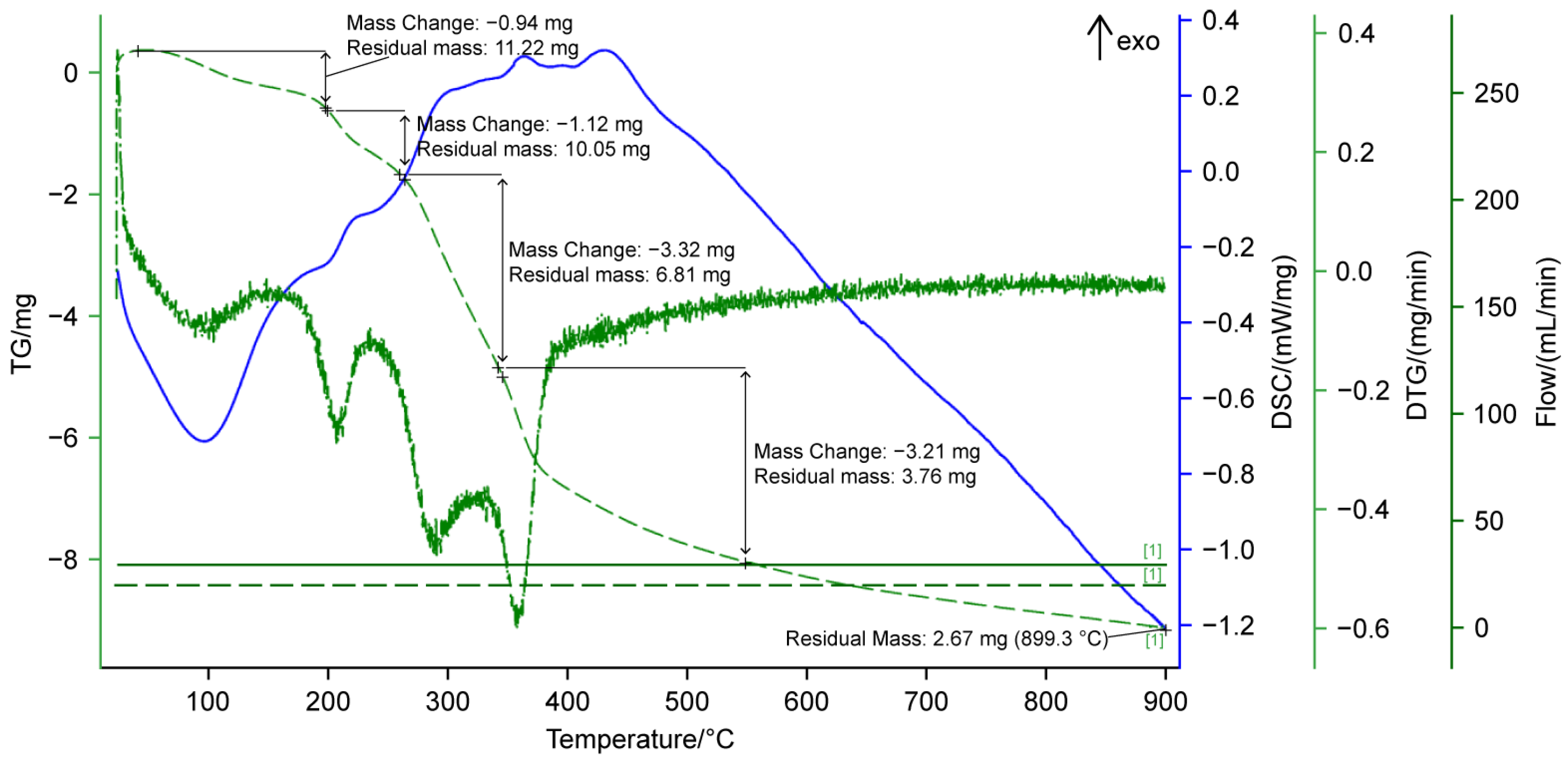
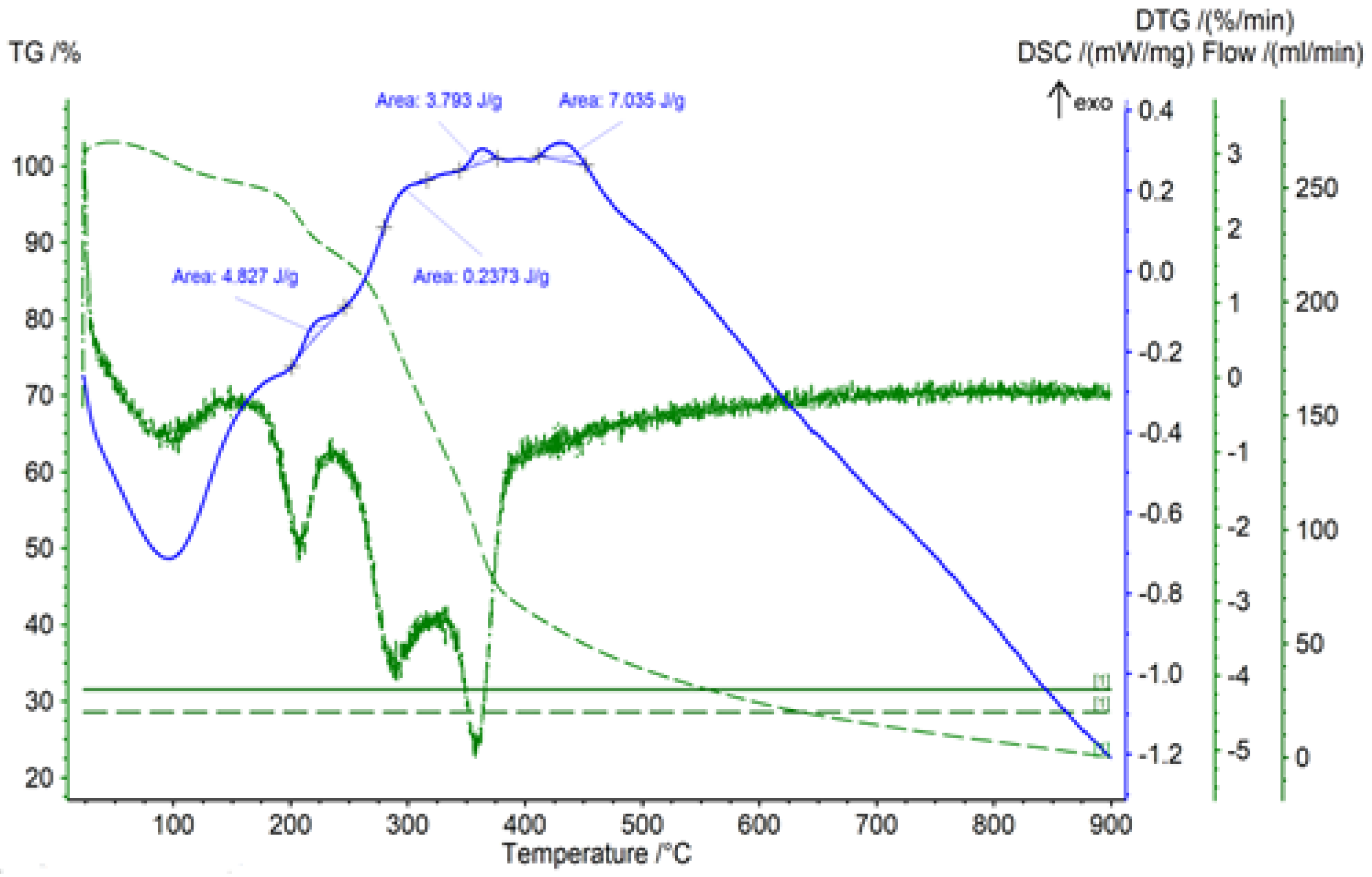
3.3. Thermal Behavior of Peach Stones Biomass
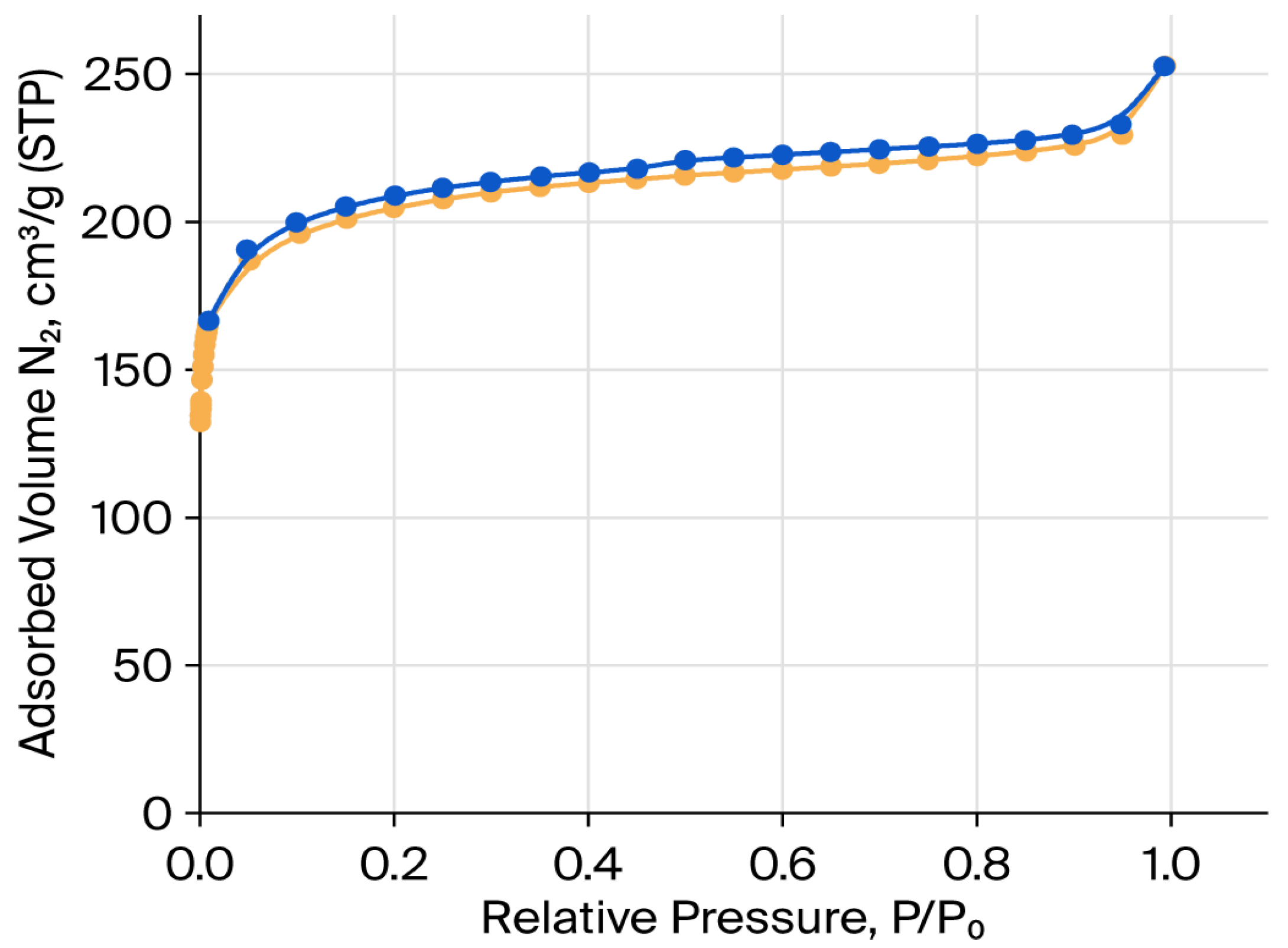
3.4. Development of Porous Texture
Comparative Textural Analysis of Carbon Adsorbent Obtained from Untreated and Treated Peach Stones
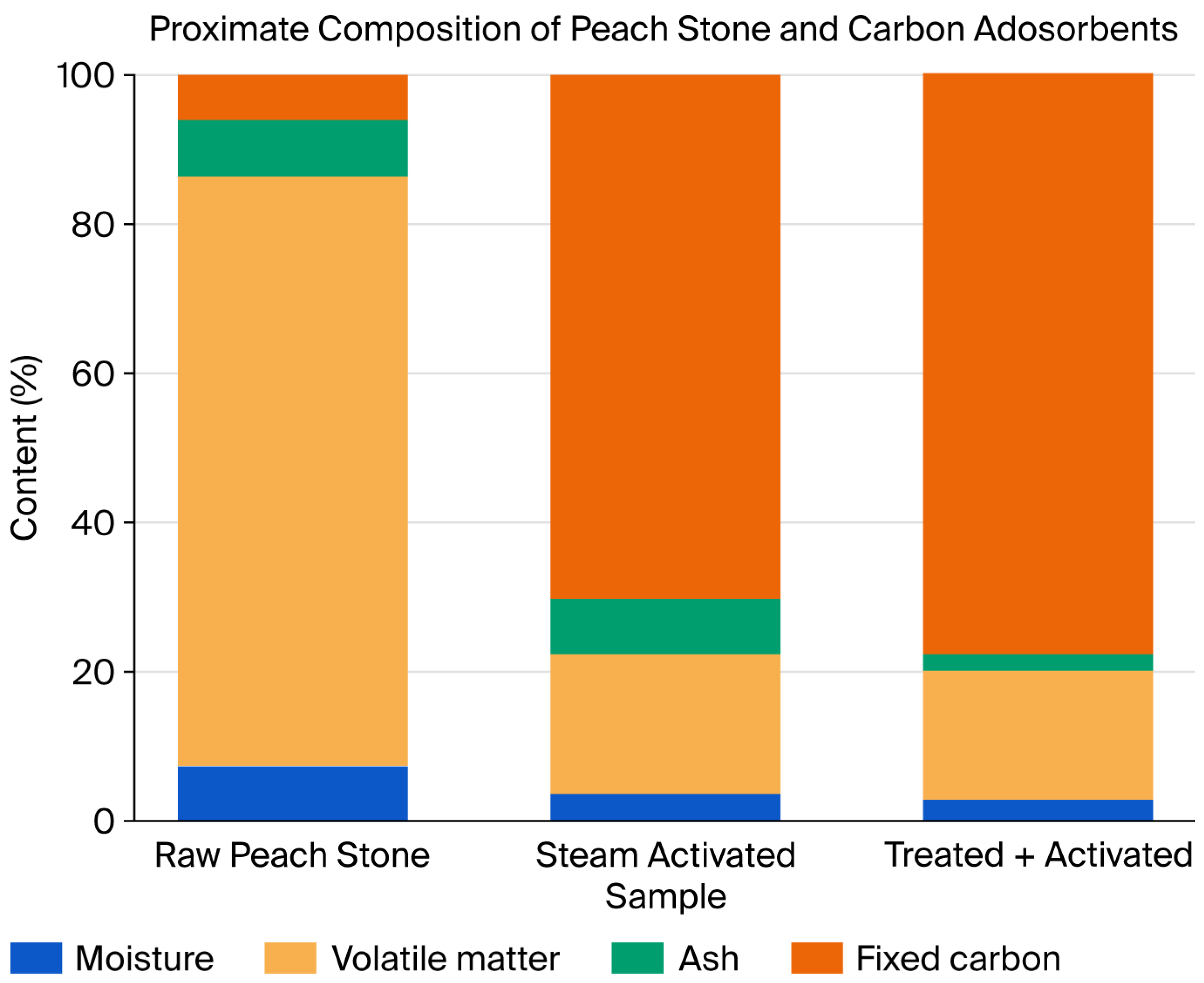
3.5. Proximate Analysis of Peach Stones Carbon Adsorbent
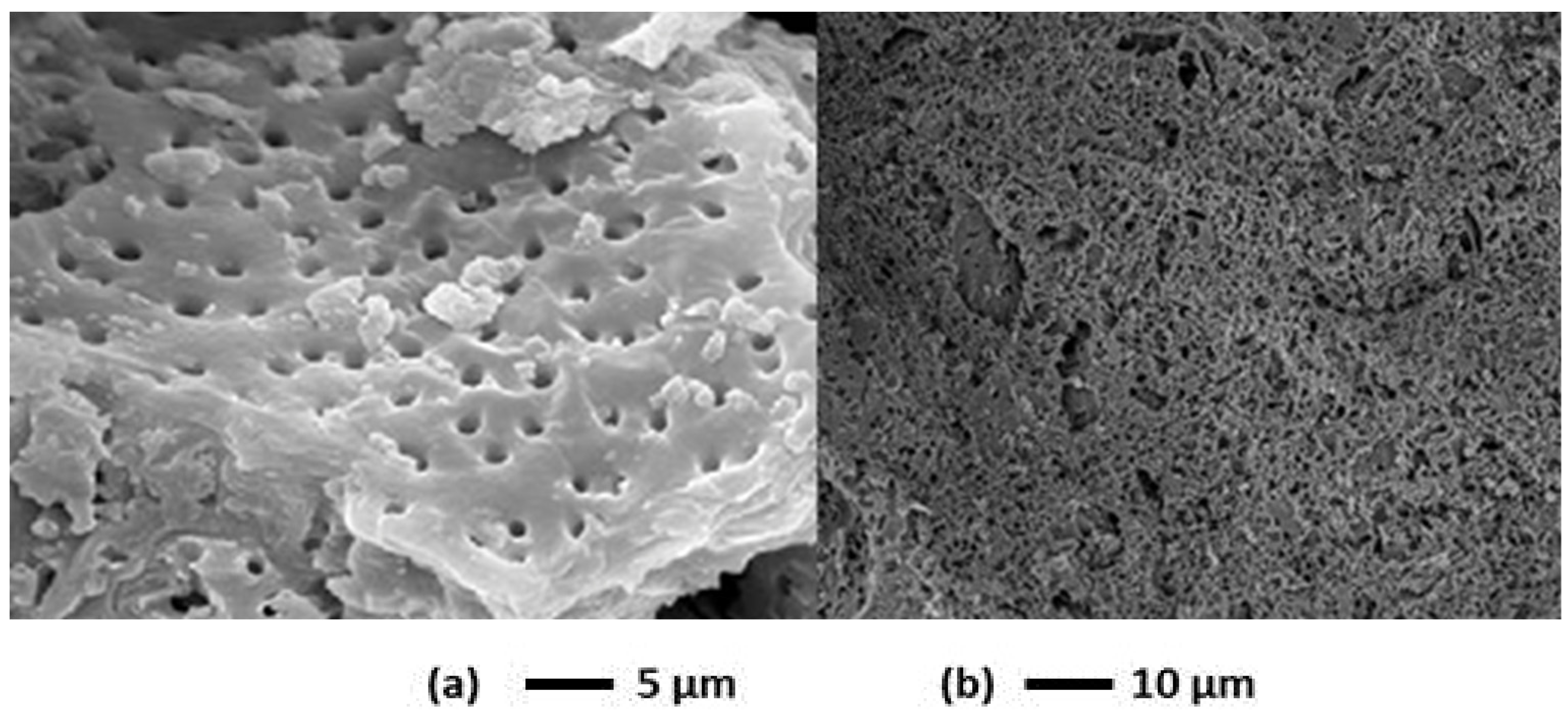
3.6. Scanning Electronic Microscopy (SEM)
4. Conclusions
Author Contributions
Funding
Institutional Review Board Statement
Informed Consent Statement
Data Availability Statement
Conflicts of Interest
References
- Jekria, N.; Daud, S. Environmental Concern and Recycling Behaviour. Procedia Econ. Financ. 2016, 35, 667–673. [Google Scholar] [CrossRef]
- Hofmann, M.; Hofmann, H.; Hagelüken, C.; Hool, A. Critical raw materials: A perspective from the materials science community. Sustain. Mater. Technol. 2018, 17, e00074. [Google Scholar] [CrossRef]
- Ordoñez, J.; Harder, R.; Nikitas, A.; Rahe, U. Waste sorting in apartments: Integrating the perspective of the user. J. Clean. Prod. 2015, 106, 669–679. [Google Scholar] [CrossRef]
- Kalmykova, Y.; Sadagopan, M.; Rosado, L. Circular economy—From review of the theories and practices to development of implemention tools. Resour. Conserv. Recycl. 2018, 135, 190–201. [Google Scholar] [CrossRef]
- Stoeva, K.; Alriksson, S. Influence of recycling programmes on waste separation behavior. Waste Manag. 2017, 68, 732–741. [Google Scholar] [CrossRef]
- The European Union. Directive (EU) 2018/851 of the European Parliament and of the Council of 30 May 2018 Amending Directive 2008/98/EC on Waste. Off. J. Eur. Union 2018, 150, 109–140. Available online: https://eur-lex.europa.eu/eli/dir/2018/851/oj/eng (accessed on 20 November 2025).
- Agegnehu, G.; Srivastava, A.K.; Bird, M.I. The role of biochar and biochar-compost in improving soil quality and crop performance: A review. Appl. Soil Ecol. 2017, 119, 156–170. [Google Scholar] [CrossRef]
- Wang, K.; Remón, J.; Jiang, Z.; Ding, W. Recent advances in the preparation and application of biochar derived from lignocellulosic biomass: A mini review. Polymers 2024, 16, 851. [Google Scholar] [CrossRef]
- Behera, S.S.; Ray, R.C. Solid state fermentation for production of microbial cellulases: Recent advances and improvement strategies. Int. J. Biol. Macromol. 2016, 86, 656–669. [Google Scholar] [CrossRef] [PubMed]
- Afolalu, S.A.; Salawu, E.Y.; Ogedengbe, T.S.; Joseph, O.O.; Okwilagwe, O.; Emetere, M.E.; Yusuf, O.O.; Noiki, A.A.; Akinlabi, S.A. Bio-agro waste valorization and its sustainability in the industry: A review. IOP Conf. Ser. Mater. Sci. Eng. 2021, 1107, 012140. [Google Scholar] [CrossRef]
- Avitabile, V.; Baldoni, E.; Baruth, B.; Bausano, G.; Boysen-Urban, K.; Caldeira, C.; Camia, A.; Cazzaniga, N.; Ceccherini, G.; De Laurentiis, V.; et al. Biomass Supply and Uses in the EU; Publications Office of the European Union: Luxembourg, 2023; p. 11. [Google Scholar] [CrossRef]
- Zhang, B.; Li, H.; Chen, L.; Fu, T.; Tang, B.; Hao, Y.; Li, J.; Li, Z.; Zhang, B.; Chen, Q.; et al. Recent advances in the bioconversion of waste straw biomass with steam explosion technique: A comprehensive review. Processes 2022, 10, 1959. [Google Scholar] [CrossRef]
- Takkellapati, S.; Li, T.; Gonzalez, M.A. An overview of biorefinery-derived platform chemicals from a Cellulose and Hemicellulose Biorefinery. Clean Technol. Environ. Policy 2018, 20, 1615–1630. [Google Scholar] [CrossRef]
- Sengupta, S.; Bhattacharya, D.; Mukhopadhyay, M. Bioactive compounds production from vegetable biomass. A Biorefinery Approach (Chapter 12). In Biorefinery Production Technologies for Chemicals and Energy; Scrivener Publishing LLC: Beverly, MA, USA, 2020; pp. 241–258. [Google Scholar] [CrossRef]
- Machado, M.; Hofmann, M.; Garrido, M.; Correia, J.R.; Bordado, J.C.; Rosa, I.C. Incorporation of lignin in bio-based resins for potential application in fiber–polymer composites. Appl. Sci. 2023, 13, 8342. [Google Scholar] [CrossRef]
- Vijayakumar, M.; Sankar, A.B.; Rohita, D.S.; Rao, T.N.; Karthik, M. Conversion of Biomass Waste into High Performance Supercapacitor Electrodes for Real-Time Supercapacitor Applications. ACS Sustain. Chem. Eng. 2019, 7, 17175–17185. [Google Scholar] [CrossRef]
- Bolan, S.; Hou, D.; Wang, L.; Hale, L.; Egamberdieva, D.; Tammeorg, P.; Li, R.; Wang, B.; Xu, J.; Wang, T.; et al. The potential of biochar as a microbial carrier for agricultural and environmental application. Sci. Total Environ. 2023, 886, 163968. [Google Scholar] [CrossRef]
- Chirakkara, R.A.; Reddy, K.R. Biomass and chemical amendments for enhanced phytoremediation of mixed contaminated soils. Ecol. Eng. 2015, 85, 265–274. [Google Scholar] [CrossRef]
- Gautam, R.K.; Mudhoo, A.; Lofrano, G.; Chattopadhyaya, M. Biomass-derived biosorbents for metal ions sequstration: Adsorbent modification and activation methods and adsorbent regeneration. J. Environ. Chem. Eng. 2014, 2, 239–259. [Google Scholar] [CrossRef]
- Gupta, N.; Mahur, B.K.; Izrayeel, A.M.D.; Ahuja, A.; Rastogi, V.K. Biomass conversion of agricultural waste residues for different applications: A comprehensive review. Environ. Sci. Pollut. 2022, 29, 73622–73647. [Google Scholar] [CrossRef]
- Anca-Couce, A. Reaction mechanisms and multi-scale modelling of lignocellulosic biomass pyrolysis. Prog. Energy Combust. 2016, 53, 41–79. [Google Scholar] [CrossRef]
- Sun, M.; Liu, Y.; Xiang, W.; Zhai, L. Electricity- induced catalytic oxidation of RhB by O2 at a graphite anode. Electrochim. Acta 2015, 158, 314–320. [Google Scholar] [CrossRef]
- Saini, S.; Chand, P.; Joshi, A. Biomass derived carbon for supercapacitor applications: Review. J. Energy Storage 2021, 39, 102646. [Google Scholar] [CrossRef]
- Singh, K.; Kumar, R.; Kaur, A. Novel hierarchical porous carbon derived from biomass Citrus limetta pulp for high-performance quasi-solid-state supercapacitor electrodes. J. Energy Storage 2023, 71, 108121. [Google Scholar] [CrossRef]
- Liu, Y.; Ma, C.; Wang, K.; Chen, J. Recent advances in porous carbons for electrochemical energy storage. New Carbon Mater. 2023, 38, 1–15. [Google Scholar] [CrossRef]
- Rehman, W.U.; Ma, Y.; Khan, Z.; Laaskri, F.Z.A.; Xu, J.; Farooq, U.; Ghani, A.; Rehman, H.; Xu, Y. Biomass-derived carbon materials for batteries: Navigating challenges, structural diversities, and future perspective. Next Mater. 2025, 7, 100450. [Google Scholar] [CrossRef]
- Quan, C.; Zhou, Y.; Wang, J.; Wu, C.; Gao, N. Biomass-based carbon materials for CO2 capture: A review. J. CO2 Util. 2023, 68, 102373. [Google Scholar] [CrossRef]
- Duan, D.; Chen, D.; Huang, L.; Zhang, Y.; Zhang, Y.; Wang, Q.; Xiao, G.; Zhang, W.; Lei, H.; Ruan, R. Activated carbon from lignocellulosic biomass as catalyst: A review of the applications in fast pyrolysis process. J. Anal. Appl. Pyrolysis 2021, 158, 105246. [Google Scholar] [CrossRef]
- Huang, B.; Koh, Y.K. Improved topological conformity enhances heat conduction across metal contacts on transferred grapheme. Carbon 2016, 105, 268–274. [Google Scholar] [CrossRef]
- Gomez-Serrano, V.; Gonzalez-Garcia, C.; Gonzalez-Martin, M. Nitrogen adsorption isotherms on carbonaceous materials. Camperison of BET and Langmuir surface areas. Powder Technol. 2001, 116, 103–108. [Google Scholar] [CrossRef]
- Neimark, A.V.; Ravikovitch, P.I.; Grun, M.; Schuth, F.; Unger, K.K. Pore Size Analysis of MCM-41 Type Adsorbents by Means of Nitrogen and Argon Adsorption. J. Colloid Interface Sci. 1998, 207, 159–169. [Google Scholar] [CrossRef]
- Lopičić, Z.; Avdalović, J.; Milojković, J.; Antanasković, A.; Lješević, M.; Lugonja, N.; Šoštarić, T. Removal of diesel pollution by biochar—Support in water remediation. Hem. Ind. 2021, 75, 329–339. [Google Scholar] [CrossRef]
- ASTM D7582; Standard Test Methods for Proximate Analysis of Coal and Coke by Macro Thermogravimetric Analysis. ASTM International: West Conshohocken, PA, USA, 2021.
- ISO 17246; Coal—Proximate Analysis. International Organization for Standardization: Geneva, Switzerland, 2010.
- Núñez-Decap, M.; Wechsler-Pizarro, A.; Vidal-Vega, M. Mechanical, physical, thermal and morphological properties of polypropylene composite materials developed with particles of peach and cherry stones. Sustain. Mater. Technol. 2021, 29, e00300. [Google Scholar] [CrossRef]
- Sandu, T.; Chiriac, A.L.; Tsyntsarski, B.; Stoycheva, I.; Caprarescu, S.; Damian, C.M.; Iordache, T.V.; Patroi, D.; Marinescu, V.; Sarbu, A. Advanced hybrid membranes for efficient nickel retention from simulated wastewater. Polym. Int. 2021, 70, 866–876. [Google Scholar] [CrossRef]
- Brunauer, S.; Emmett, P.H.; Teller, E. Adsorption of gases in multimolecular layers. J. Am. Chem. Soc. 1938, 60, 309–319. [Google Scholar] [CrossRef]
- Rouquerol, F.; Rouquerol, J.; Sing, K. Adsorption by Powders and Porous Solids; Elsevier: Amsterdam, The Netherlands, 1999. [Google Scholar] [CrossRef]
- Marsh, H.; Rodríguez-Reinoso, F. Activated Carbon; Elsevier: Amsterdam, The Netherlands, 2006. [Google Scholar] [CrossRef]
- Lua, A.C.; Yang, T. Characteristics of activated carbon prepared from pistachio-nut shell by zinc chloride activation under nitrogen and vacuum conditions. J. Colloid Interface Sci. 2005, 290, 505–513. [Google Scholar] [CrossRef]
- Ioannidou, O.; Zabaniotou, A. Agricultural residues as precursors for activated carbon production—A review. Renew. Sustain. Energy Rev. 2007, 11, 1966–2005. [Google Scholar] [CrossRef]



| Sample | C (wt%) | H (wt%) | O (wt%) | N (wt%) | S (wt%) | Ash (wt%) |
|---|---|---|---|---|---|---|
| Raw materials | 78.6 | 2.3 | 10.1 | 0.99 | 0.51 | 7.5 |
| Carbon adsorbent | 85.2 | 2.1 | 8.0 | 0.86 | 1.54 | 2.3 |
| Sample | Cellulose, wt% | Lignin, wt% | Hemicellulose, wt% | Lipids, wt% |
|---|---|---|---|---|
| Raw material | 40 | 37 | 18 | 5 |
| Sample | Basic Mass Loss (°C) | Residue at 800 °C (wt.%) | Observed Exo/Endo Events | ∆H J/g |
|---|---|---|---|---|
| Raw material | 280–420 °C | 25.6 | Endo at 100 °C, Exo at 360 °C | 4.827 |
| Carbon adsorbent | 290–450 °C | 23.8 | Endo at 110 °C, Exo at 375 °C | 3.793 |
| Properties | Carbonization Sample | Carbon Adsorbent |
|---|---|---|
| BET surface area (m2/g) | 732.00 | 812.00 |
| Total pore volume (cm3/g) | 0.45 | 0.58 |
| Micropore volume (cm3/g) | 0.38 | 0.49 |
| Pore diameter in mode (nm) | 1.20 | 1.10 |
| Carbon yield (%) | 29.40 | 26.70 |
| Component | Content (%) | Description |
|---|---|---|
| Maltenes | 9.8 | Light compounds (saturated, aromatic, resins), soluble in n-hexane or toluene |
| Asphaltenes | 87.6 | Remaining solid carbon matrix after extraction |
| Free (non-extractable) carbon | 87.6 | Remaining solid carbon matrix after extraction |
| Total extractables | 12.4 | Combined maltenes and asphaltenes |
Disclaimer/Publisher’s Note: The statements, opinions and data contained in all publications are solely those of the individual author(s) and contributor(s) and not of MDPI and/or the editor(s). MDPI and/or the editor(s) disclaim responsibility for any injury to people or property resulting from any ideas, methods, instructions or products referred to in the content. |
© 2026 by the authors. Licensee MDPI, Basel, Switzerland. This article is an open access article distributed under the terms and conditions of the Creative Commons Attribution (CC BY) license.
Share and Cite
Stoycheva, I.; Petrova, B.; Tsyntsarski, B.; Petrov, N.; Ranguelov, B. Influence of Peach Stone Composition, Pretreatment and Processing Method on the Properties of the Resulting Carbon Adsorbent. Biomass 2026, 6, 14. https://doi.org/10.3390/biomass6010014
Stoycheva I, Petrova B, Tsyntsarski B, Petrov N, Ranguelov B. Influence of Peach Stone Composition, Pretreatment and Processing Method on the Properties of the Resulting Carbon Adsorbent. Biomass. 2026; 6(1):14. https://doi.org/10.3390/biomass6010014
Chicago/Turabian StyleStoycheva, Ivanka, Bilyana Petrova, Boyko Tsyntsarski, Nartzislav Petrov, and Bogdan Ranguelov. 2026. "Influence of Peach Stone Composition, Pretreatment and Processing Method on the Properties of the Resulting Carbon Adsorbent" Biomass 6, no. 1: 14. https://doi.org/10.3390/biomass6010014
APA StyleStoycheva, I., Petrova, B., Tsyntsarski, B., Petrov, N., & Ranguelov, B. (2026). Influence of Peach Stone Composition, Pretreatment and Processing Method on the Properties of the Resulting Carbon Adsorbent. Biomass, 6(1), 14. https://doi.org/10.3390/biomass6010014