
Article

An Ecofriendly Approach to Obtain Biodegradable Hydrogels by Reactive Extrusion

by
João Otávio Ferraro Kishima
1,
Mayara Thamela Pessoa Paiva
1,
Maria Eduarda Matos Cassiano
1,
Avacir Casanova Andrello
2 and
Suzana Mali
1,*
1
Department of Biochemistry and Biotechnology, State University of Londrina, Rodovia Celso Garcia Cid, PR 445 Km 380, Londrina 86057-970, PR, Brazil
2
Department of Physics, State University of Londrina, Londrina 86057-970, PR, Brazil
*
Author to whom correspondence should be addressed.
Biomass 2025, 5(4), 81; https://doi.org/10.3390/biomass5040081
Submission received: 19 November 2025 / Revised: 11 December 2025 / Accepted: 16 December 2025 / Published: 18 December 2025

Abstract

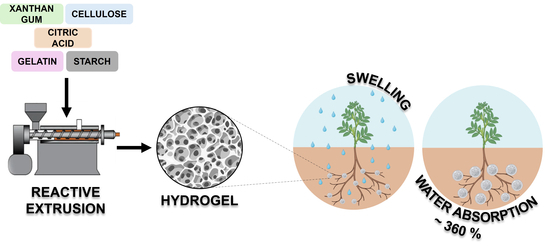
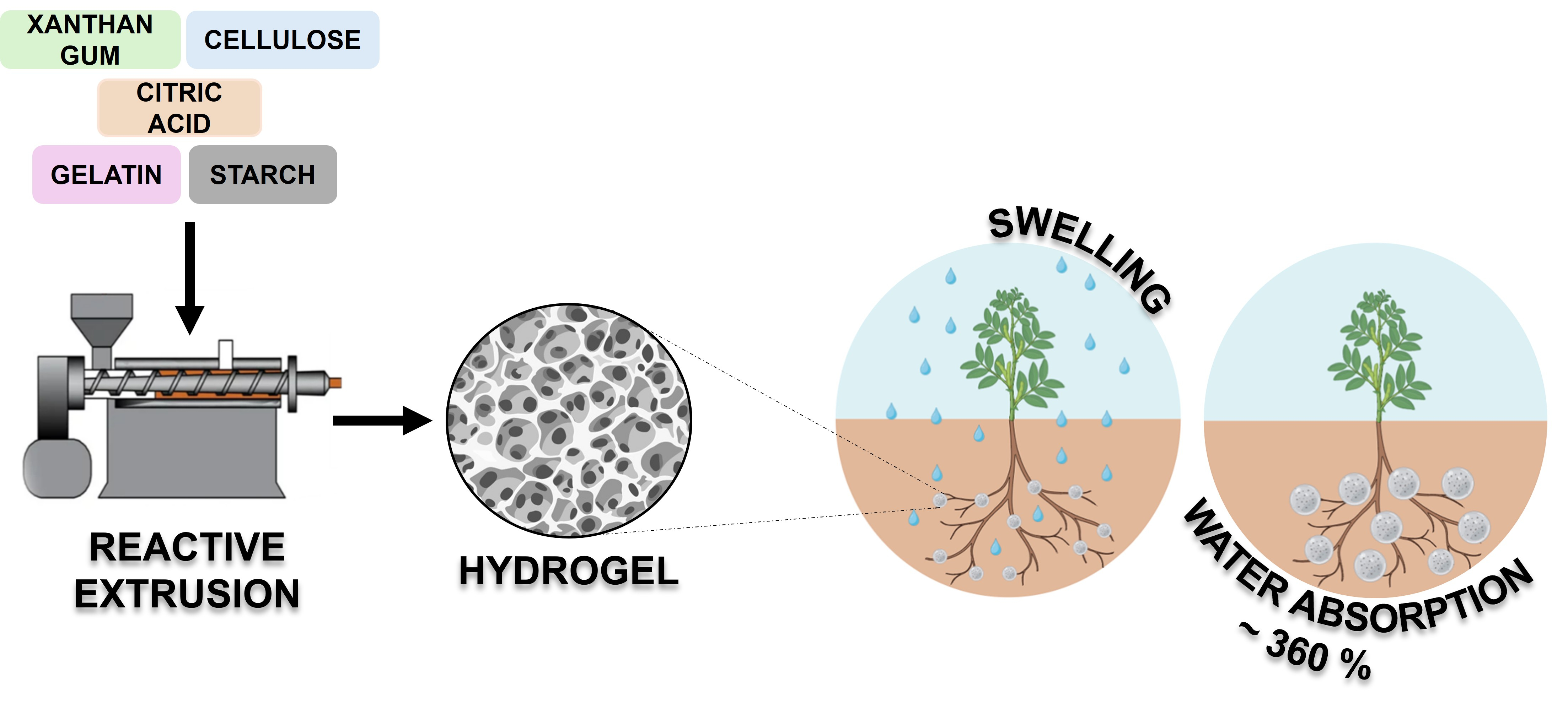
Climate change and the impacts related to nonbiodegradable synthetic materials highlight the need for sustainable alternatives. Biopolymers from renewable sources show great potential for producing hydrogels, which are three-dimensionally crosslinked materials with high water absorption. In this work, super-absorbent biodegradable hydrogels were produced via single-step reactive extrusion using mixtures of starch, gelatin, cellulose, and xanthan gum, with glycerol as a plasticizer, and citric acid as a crosslinking agent. Pelleted hydrogels were obtained with water absorption between 290% and 363%. Reactive extrusion promoted the formation of new ester and amide bonds, confirmed by FT-IR. Citric acid was effective as a crosslinker, and higher citric acid content (3%) produced samples with greater swelling, supported by the porous internal structure observed. Preliminary agricultural tests showed that the formulation with the highest citric acid content, when added to soil at 5%, significantly increased water-holding capacity and resulted in the highest germination rate of maize seeds. Overall, the extrusion process proved efficient, scalable, and environmentally friendly for producing biodegradable hydrogels for agricultural applications.

Graphical Abstract

1. Introduction

Climate change represents one of the most pressing challenges confronting humanity in the twenty-first century [1]. The continuous rise in global temperatures has intensified the occurrence of heat waves and irregular rainfall patterns, leading to more frequent, severe, and prolonged drought events [2,3]. Among all productive sectors, agriculture is the most vulnerable due to its intrinsic dependence on air temperature and precipitation. Limited water availability and elevated temperatures adversely affect both the yield and quality of crops [4]. Moreover, population growth is driving an increasing demand for food production, while global warming is exacerbating food insecurity [5]. Therefore, the development and implementation of technologies capable of mitigating crop losses caused by drought stress have become indispensable.
Hydrogels are three-dimensional crosslinked polymeric materials with a high capacity to absorb and retain water or aqueous media within their structure without dissolving. Upon contact with water, it is absorbed into the interstices of the polymer matrix, creating a three-dimensional swollen structure due to its porosity and the presence of hydrophilic functional groups, such as amines (—NH2), hydroxyls (—OH), and carboxyls (—COOH), among others [6,7,8,9].
The osmotic pressure difference is one of the most important driving forces for the swelling–deswelling process in hydrogels [10]. In water-saturated soil (e.g., after rainfall), hydrogels swell and, periodically, release the absorbed water when the soil becomes dry. Therefore, due to the constant difference in the amount of water in the soil in open-air plantations, hydrogels can be used to enhance soil water availability, as well as a controlled release agent [11]. Moreover, hydrogels can increase permeability, infiltration, porosity, soil drainage, aeration and decrease the use of fertilizers [12,13,14].
Despite these benefits, most hydrogels are produced from nonbiodegradable synthetic polymers because of their excellent chemical, mechanical and thermal properties, low cost, and high water absorption capacity. The exponential and unprecedented use of petroleum-based materials has also led to an imbalance in ecological systems [15,16]. Thus, there has been growing interest in the development and application of biodegradable hydrogels from natural sources, as they offer advantages in terms of environmental safety [17,18,19,20].
Biopolymer-based hydrogels from renewable sources are biodegradable, nontoxic, and sustainable materials that can deal with both the major environmental problems associated with the massive use of synthetic polymers and the drought stress due to climate change. Proteins and polysaccharides such as gelatin, starch, xanthan gum and cellulose are biopolymers rich in hydrophilic functional groups that can form a three-dimensional network structure. In addition, they are cheap and abundant polymers, ideal for applications that require large quantities, such as agriculture [21,22].
The hydrogel polymeric structure network formation involves the interaction between the polymer’s chains. Hydrogels can be crosslinked through physical interactions, bounded by weak forces, such as van der Waals forces, hydrogen bonds, electrostatic interactions and hydrophobic interactions, or through the formation of covalent bonds, by chemical reactions. Physically crosslinked hydrogels form transient junctions that can be reversed by changing the conditions of the system, such as pH, temperature and ionic strength, whereas chemically crosslinked hydrogels are joined by “permanent bonds” [9,23,24]. Thereby, covalent-bond crosslinked networks are extensively related to possess greater mechanical and thermal stability than physical junctions [9,23,24].
In agriculture, the soil is a complex system in which hydrogels can be exposed to different physico-chemical conditions, as well as subject to microbiological activity, especially biopolymer-based hydrogels. Therefore, for optimal long-term agricultural applications, hydrogels must be sufficiently resistant to degradation to a certain extent [25]. To this end, an organic molecule with more than one functional and reactive groups that can join two different polymeric chains can enhance the stability of biopolymer-based hydrogels [26]. Citric acid is a biodegradable polyfunctional molecule (tricarboxylic acid) that can be obtained from renewable sources [27]. As a crosslinking agent, citric acid can form a three-dimensional bond network through reaction with biopolymers rich in hydroxyl groups, such as cellulose, starch, and xanthan gum, and with amine-rich proteins, like gelatin [27,28,29,30,31,32,33].
In conventional methods, the crosslinking process usually involves solubilization of the precursor through a complex and time-consuming multi-step process. As a result, considerable water is used, and various effluents are generated [34]. Alternatively, in recent years, reactive extrusion has been reported as a viable, cheap, quick, scalable and eco-friendly alternative for synthesizing biopolymer-based hydrogels. The high heat transfer, shear rate, and homogenization imparted by reactive extrusion have a high potential for chemical modification and induction of crosslinking, providing the energy required to form new bonds [30,35,36,37,38,39,40].
Briefly, contemporary environmental problems are diverse and are caused by numerous anthropological factors. In this context, this study aims to contribute to the production, characterization, and application of biodegradable hydrogels based on starch, cellulose, gelatin, and xanthan gum, with citric acid as the crosslinking agent and glycerol as the plasticizer, via a single-step reactive extrusion process.

2. Materials and Methods

2.1. Materials

The corn starch was purchased from Yoki Alimentos S/A (São Bernardo do Campo, São Paulo, Brazil); The cellulose was previously extracted from oat hulls according to Marim et al. [41]; Type B gelatin from Êxodo cientifica (Sumaré, São Paulo, Brazil); Glycerol and xanthan gum (Synthlab, Diadema, Brazil) and citric acid was sourced from Acros Organics (Pittsburgh, PA, USA). All the reagents used in this work were of analytical grade.

2.2. Hydrogel Production Through Reactive Extrusion

Initially, the samples (Table 1) were prepared by mixing the different components in sealed plastic bags at 25 °C for 30 min before extrusion, using glycerol as a plasticizer and citric acid as a crosslinking agent. The quantity of each component was determined from the preliminary test results. Then, the extrusion process was performed (AX Plasticos, Diadema, Brazil) with a screw diameter of 1.6 cm and a screw length/screw diameter ratio (L/D) of 40, with four zones of heating, using a 2 mm in diameter die, containing two holes. The temperature used was 90/100/100/100 °C, from the feed zone to the end zone, and the screw speed was 35 rpm. The extruded cylindrical hydrogels were washed with ethanol, dried at 30 °C for 24 h and finally pelletized at 15 rpm.

2.3. Swelling Degree (SD) and Gel Fraction (GF)

The swelling degree was determined according to Cagnin et al. [37], with some modifications. Approximately 1.0 g of each sample (WI), previously dried, was placed in pre-weighed Falcon tubes and immersed in distilled water (30 mL) at 25 °C for 24 h. Excess water was drained by gravitational action using paper filters. The samples were weighed (WS) and the degree of swelling was calculated according to the equation:
S D ( g / g ) = W s W I W I
After the swelling degree experiment, the swollen hydrogels were dried for 24 h at 60 °C and weighed (WF). The gel fraction was calculated according to the following equation:
G F ( g / g ) = W F W I  

2.4. Attenuated Total Reflectance Fourier Transform Infrared Spectroscopy (ATR-FTIR)

Each hydrogel formulation pelletized and dried was compressed to produce thin layers of hydrogels. Then, ATR-FTIR spectra were collected on a Shimadzu IR Prestige-21 spectrometer (Kyoto, Japan). The scanning range was 4000 to 800 cm−1, with an average of 32 scans and a resolution of 4 cm−1.

2.5. Scanning Electron Microscopy (SEM)

Dried hydrogel samples were coated with a thin layer of gold (Sputter Coater BAL-TEC SCD 050, Ernst-Leitz-Straße 17-37, Wetzlar, Germany) and the images were obtained using an acceleration voltage of 20 kV. SEM analyses were performed on the FEI Quanta 200 (EUA) equipment (FEI Quanta, Shanghai, China).

2.6. Microtomography and Porosity

The porosity and pore size of the samples were determined by X-ray microtomography (µ-CT) using SkyScan-Bruker equipment (1172 MCT, Kontich, Belgium) under conditions of 50 kV, 80 μA, 300 ms of exposure time and spatial resolution of 5 μm. The acquired images were reconstructed and corrected using the NRecon version 2 (v2.x) software v. 2 (SkyScan).

2.7. Thermogravimetric Analysis (TGA)

Approximately 10 mg of each sample was heated from 25 up to 600 °C at a heating rate of 10 °C min−1. Thermogravimetric Analysis was performed using the Shimadzu TGA-50 (Kyoto, Japan) equipment under a nitrogen flow of 20 mL/min.

2.8. Swelling Kinetics

Swelling kinetics experiments were conducted according to Cagnin et al. [37] SD methodology, with slight modifications in the SD measurement at different time points. The SD was measured every 5 min for the first hour and then every 2 h until equilibrium at 25 °C. The kinetic parameters were determined according to Fick’s law (Equation (3)).
F = S t S e = k × t n
where F is the swelling fraction, St the swelling content at time (t), Se the content at equilibrium, k is the swelling constant and n is the swelling exponent. The diffusion coefficient (D) was determined using the short-time approximation for cylindrical hydrogels according to Equation (4) [42].
D = a × π × l 2 0.5 4 2
where a is the slope of F versus t1/2 plot and l the diameter of the hydrogel.

2.9. Soil Water Holding Capacity (SWHC)

The soil water holding capacity (SWHC) was determined using the methodology adapted from Sarmah and Karak [43]. The soil and the hydrogels in different concentrations (1.5 × 10⁻¹⁰-w/w) were added to polystyrene pots with 500 mL capacity. Water was added to the pots until soil saturation. The process was repeated once, and the excess water was drained off by gravitational force through holes in the bottom of the pots. Then, the SWHC was calculated by the difference between the final and initial weight.

2.10. Seed Germination Rate

In the same pots, after the SWHC test, 3 corn seeds were added to each pot and placed in a growth chamber (25 °C during the day, 22 °C at night; RH ≈ 60%; 3 lights (incandescent, LED and white) for 16 h of photoperiod. After 10 days, the seed germination rate (SGR) was calculated from Equation (4). All soil tests were performed in quintuplicate. Soil in the absence of hydrogel, using the same procedures and growing conditions, was used as a control. The simulated soil was prepared by mixing red latosol and sand in a 1:2 ratio. The soil contains 5.5 g·kg−1 of organic matter and has a pH of 6.1.
S G R = G e r m i n a t e d   s e e d s N u m b e r   o f   s e e d s × 100 %

2.11. Statistical Analysis

Anova and Tukey’s mean comparison test (p ≤ 0.05) was performed with R v. 3.5.1 (R Core Team, 2018).

3. Results and Discussion

3.1. Synthesis Mechanism

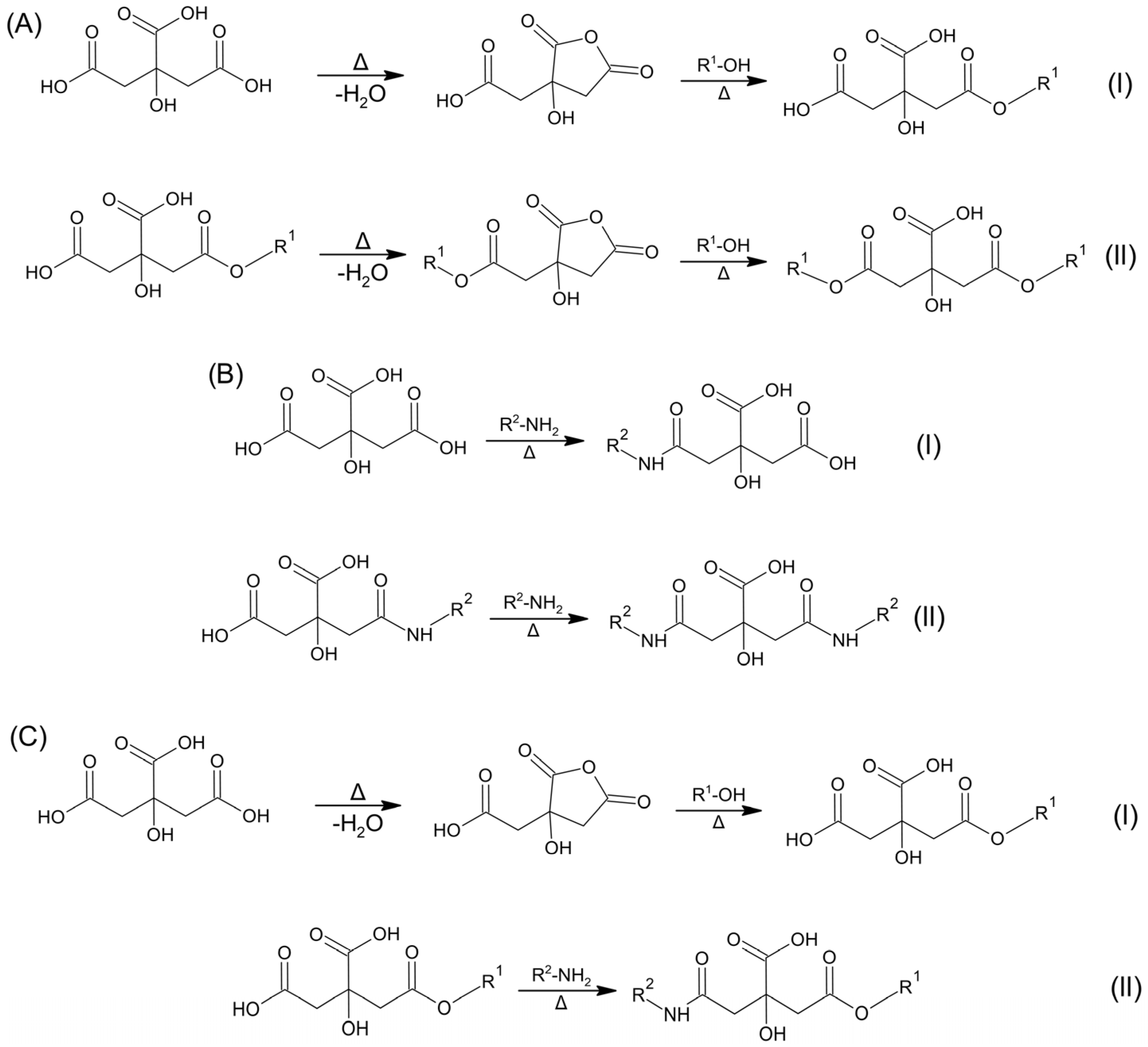
Cellulose, starch, xanthan gum, and gelatin are biopolymers rich in hydrophilic groups. Under reactive extrusion, their polar groups can react with citric acid, leading to the formation of a three-dimensional crosslinked network. The possible reaction routes are illustrated in Figure 1. At elevated temperatures, citric acid initially dehydrates to form a cyclic anhydride, shown in Figure 1A(I) [44,45]. This anhydrous intermediate is highly reactive and can undergo nucleophilic attack by hydroxyl groups of the biopolymers, generating monoesterified citric acid, as depicted in Figure 1A(II). For an effective crosslinking event, this monoester must subsequently react with an additional hydroxyl group from another polymer chain, thereby interconnecting two different macromolecules through an ester bridge, as represented in the sequence AI and AII.
In systems containing gelatin, an alternative pathway involves the formation of amide bonds. The cyclic anhydride can react with primary amino groups of gelatin, initiating nucleophilic substitution and yielding a monoamide intermediate (Figure 1B(I)) [46]. This intermediate may further react with a second amino group from another gelatin chain, producing intermolecular amide bonds (Figure 1B(II)). Thus, the sequence IB and IIB represents the amide-based crosslinking mechanism that occurs when amino-containing biopolymers are present.
Both esterification and amide formation may also take place simultaneously on the same citric acid molecule, as illustrated in Figure 1C. After anhydride formation (Figure 1C(I)), one carboxyl group may react with a hydroxyl group to form an ester, while another may react with an amino group to form an amide, generating mixed ester–amide structures (Figure 1C(II)). This combined pathway (IC and IIC) is particularly relevant in systems containing mixtures of polysaccharides and gelatin. Due to steric hindrance, all these reactions tend to occur preferentially at terminal hydroxyl or amino groups of the polymer chains.
Alternatively, without a crosslinking agent, xanthan gum can form intra- and intermolecular esters through heating, dehydration, and transesterification. In addition, at high temperatures, the presence of acid groups, such as acetyl and pyruvyl, can also react with hydroxyl groups to form esters via esterification [29].

3.2. ATR-FTIR

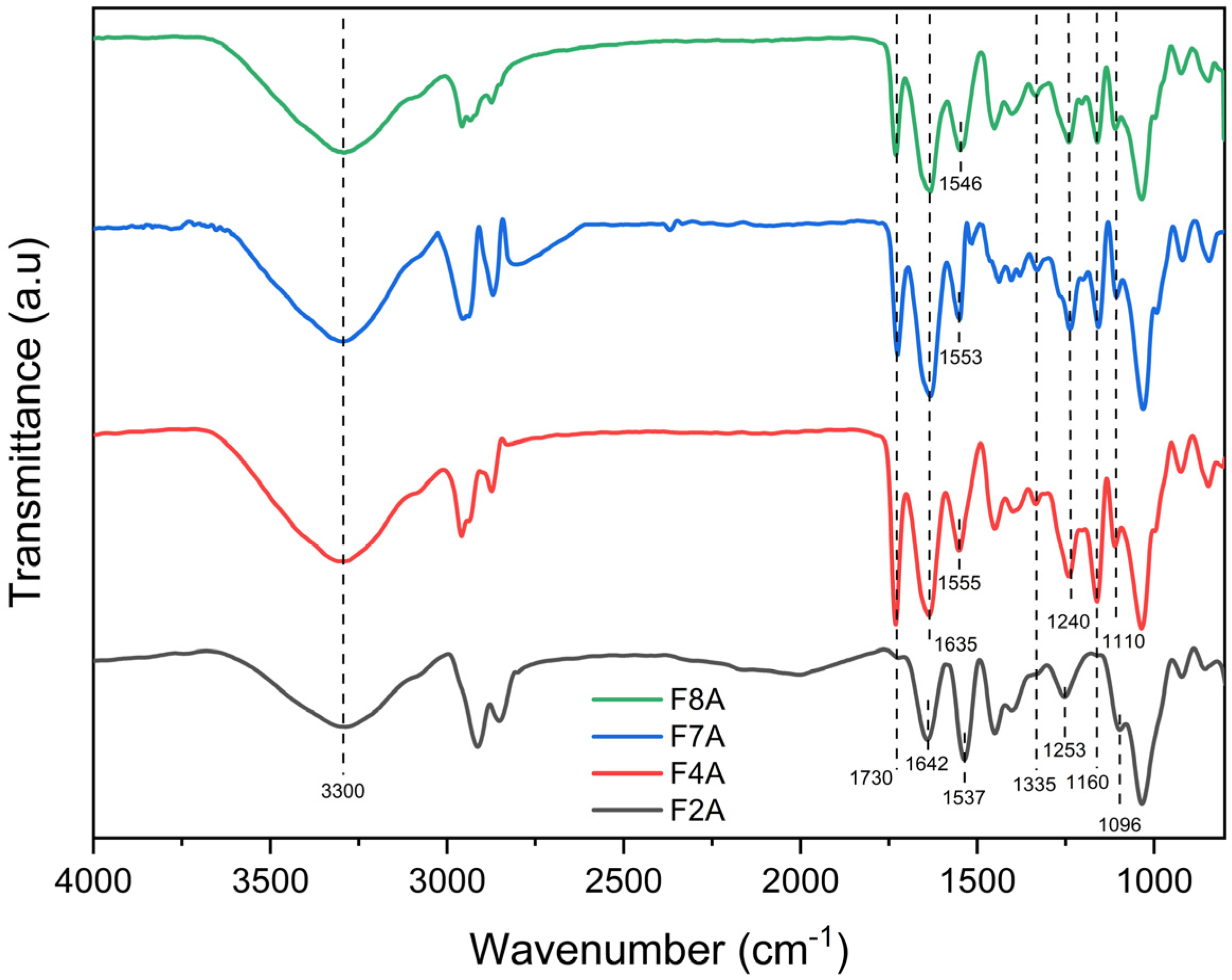
To investigate the molecular structures of the hydrogels, FTIR spectroscopy was employed. Figure 2 presents the ATR-FTIR spectra of the hydrogels (F2A, F4A, F7A and F8A) ranging from 4000 to 800 cm−1. The typical broadband presented in all samples in the range of 3500 to 3200 cm−1 is related to —OH and —NH2 stretching vibrations. The peak for F2A shifted to a lower wavenumber, arising from stronger —OH and —NH2 hydrogen bonding interactions compared to the citric acid-containing hydrogels (F4A, F7A and F8A). The bands around 2900 and 2850 cm−1 are a result of —C–H symmetric and asymmetric vibrations, respectively [46,47].
In all the spectra of the samples containing the crosslinking agent (F4A, F7A and F8A), an expressive band appeared at 1730 cm−1, which refers to the stretching of the C=O bond of the esters, indicating the formation of ester bonds through esterification with citric acid. Ye et al. [34], Pereira, Marim and Mali [38], Marim et al. [39], Gil-Giraldo et al. [40], and Olivato et al. [48] obtained similar results at 1730 cm−1 when the biopolymers were chemically modified with citric acid via reactive extrusion. Moreover, an increase in the intensity of the peaks was clearly observed with increasing citric acid concentration, suggesting an increase in the degree of crosslinking with increasing concentration of the crosslinking agent [49]. Although it is not clearly apparent in the F2A hydrogel, it is possible to notice a small band at 1730 cm−1; this band can be related to xanthan gum and gelatin carboxyl residues or related to esterification between these residues and —OH groups [29]. Following the “rule of three” other’s two strong ester-related vibrations can be found around 1000–1260 cm−1. Precisely, the citric acid-containing hydrogels exhibit a C—C—O stretch at 1160 cm−1 and show an increase in intensity with increasing citric acid concentration. However, the O—C—C stretching vibration overlapped with the characteristic cellulose, starch and xanthan gum ring vibrations below 1100 cm−1 [44,45,50]. The band located in the frequency range of 1635–1642 cm−1 refers predominantly to the C=O stretching of amides (Amide I). The amine I vibration peak for gelatin depends on the structure of the protein. So, the increase in the intensity of the bands and the shift to lower wavenumbers for the citric acid-containing hydrogels indicate the formation of new amide bonds and changes in the secondary structure of gelatin [51]. Another difference can be observed in the amide II and III frequency region, in the range of 1537–1555 cm−1 and 1240–1253 cm−1, respectively. The band related to amide II is mostly associated with the in-plane angular deformation of the N—H bond. A shift toward lower wavenumbers was observed as the citric acid concentration decreased, indicating strong hydrogen bond interactions for the N—H groups because of the lower crosslinking density. The amide III band, corresponding to the C—N stretching vibration, exhibited the same pattern as the amide I peak, reinforcing the evidence of the formation of new amide bonds [51,52,53].

3.3. Scanning Electron Microscopy (SEM)

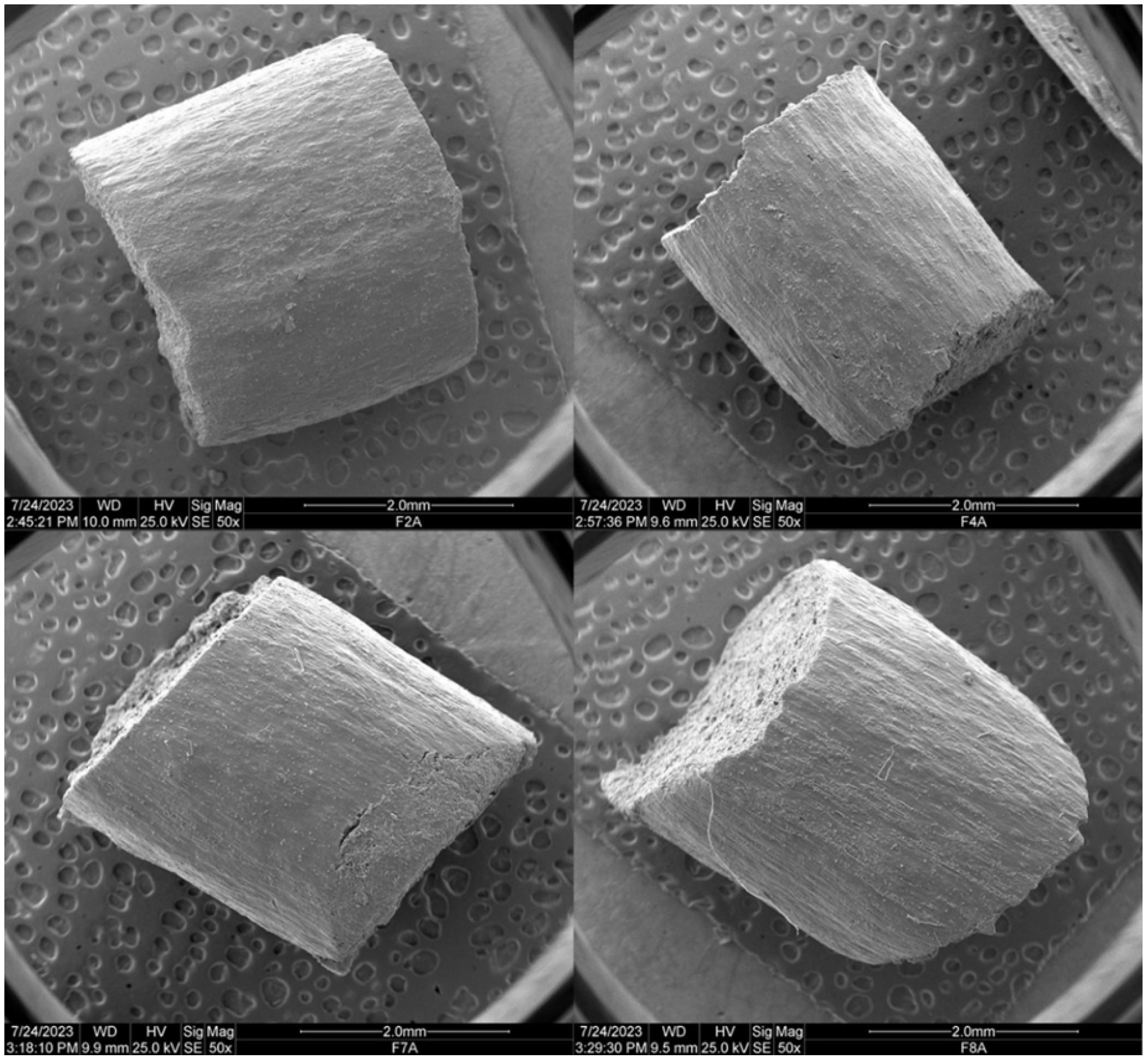
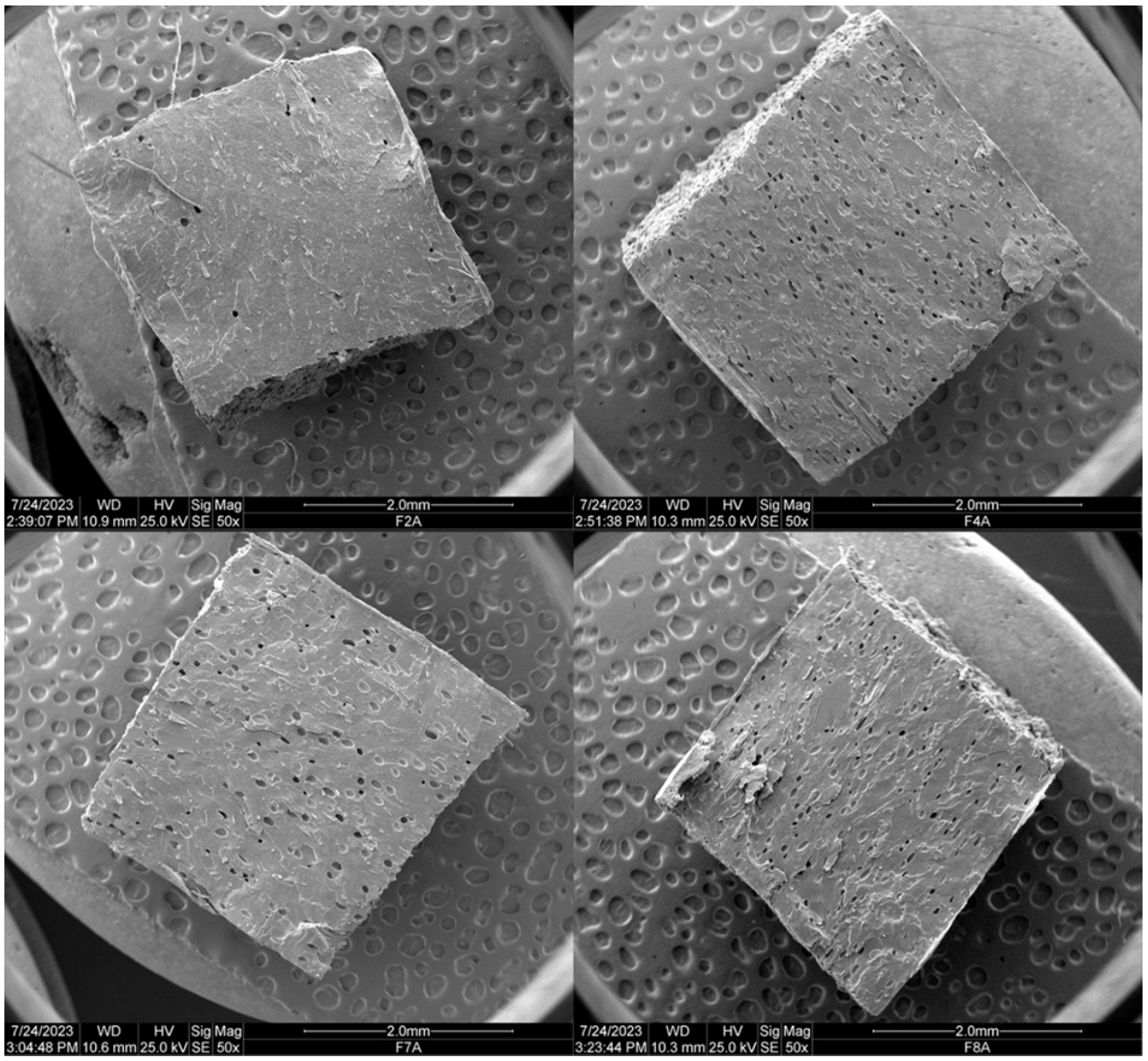
The surface and fractured morphology of pelletized hydrogels were investigated by SEM and are presented in Figure 3 and Figure 4, respectively. In all the samples, it is possible to see a smooth, compact surface with no visible pores at this magnification. The nature of the surface of the formulations may be due to the characteristics of the production process through reactive extrusion.
During synthesis, the precursors are subjected to considerable pressure and temperature, especially at the end of the extrusion process, as they exit the die with a defined shape. So, to examine the internal structure, the hydrogels were cryofractured. The morphological images of the fractured samples show some differences. Sample F2A had fewer pores in its internal structure than the samples containing citric acid. However, visually, no major differences were observed between the citric acid-crosslinked samples.

3.4. Microtomography and Porosity

The extent of porosity and the type of pore are important factors influencing the absorption and water absorption rate of superabsorbent hydrogels [54]. To quantify and identify the type of porosity of the samples, microtomography was employed, and Table 2 shows the percentage of porosity, open and closed pores of formulations F2A, F4A, F7A and F8A.
By subjecting the precursors to high temperatures, the reactive extrusion process induces the evaporation of moisture, volatile substances, and air, which are possibly incorporated during the pre-extrusion polymer mixing process and can form pores of varying sizes and quantities. Therefore, considering the same extrusion conditions for all the formulations, the differences in porosity and pore characteristics are due to the different contents of the raw materials used in the hydrogel formulations.
As also illustrated by the SEM images, sample F2A exhibited the lowest porosity (2.022%), which differed significantly from the formulations containing citric acid (Table 2). The pre-extrusion process involves homogenization of all components 30 min before the extrusion and acid hydrolysis and protein denaturation can occur during this period, leading to the loss of rigidity in the mixture [55]. The alcohol groups present in glycerol can react with the carboxylic acids present in citric acid via esterification, forming an ester and water as a by-product [56]. Moreover, as illustrated in Figure 1, the crosslinking process is triggered by the heating of citric acid, forming a reactive anhydride and releasing water. As the heating and the crosslinking proceed, another water molecule is released. So, for these reasons, the pre-extrusion mixtures of the samples containing citric acid were moister than F2A. Consequently, the high thermomechanical energy can cause the evaporation of water in the citric acid-containing formulations, leading to a higher porosity.
An increase in citric acid concentration leads to an increase in the rate and success of the reaction. Among the samples containing the crosslinking agent, the sample with the lowest content (F8A, 1%) exhibited the lowest porosity, compared to sample F4A (3%), probably due to its more rigid consistency before and during extrusion as a result of the lower rate of acid hydrolysis and water formation reactions. As reported by Garcia et al. [57], a 2% increase in the citric acid concentration led to hydrolysis of the starch chains in starch and poly(butylene adipate-co-terephthalate) (PBAT) films.
Open pores increase the capacity for free water absorption; thus, water quickly enters the cavities, driven mainly by capillary forces. However, a large number of open pores also results in low mechanical strength. In contrast, closed pores, where water absorption is governed by diffusion, lead to a slower and more controlled absorption process, producing materials with greater mechanical strength and elasticity [58].
Kim et al. [59] synthesized highly porous polyacrylamide hydrogels for soil hydration in horticultural crops; however, due to their high porosity, the hydrogels were fragile and exhibited low water retention. Thus, the hydrogels produced in this study with a higher crosslinking agent content can be effective water retainers because of their satisfactory porosity and higher percentage of closed pores compared to open pores.
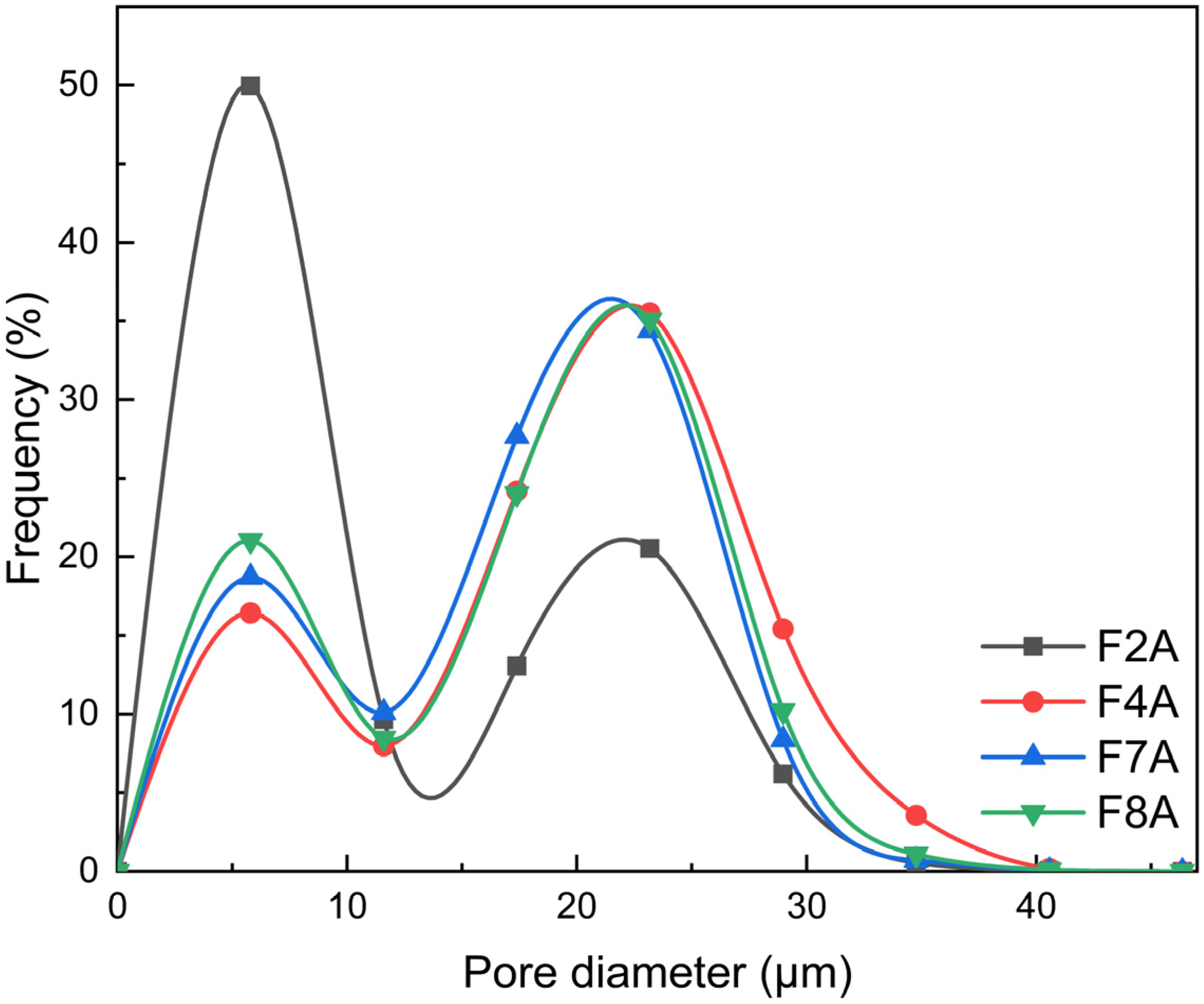
Whether open or closed, pores can also vary in size. Figure 5 shows the pore size distributions of the formulations. All samples presented the same pore-size distribution pattern; however, differences were observed in the percentual volume.
In addition to exhibiting the lowest percentage of pores (Table 2), sample F2A exhibited the highest concentration of pores with the smallest diameter and the lowest concentration of pores with the highest diameter. This result can be attributed to the absence of citric acid and the related reactions that decrease the rigidity and increase the moisture content of the mixture. The samples containing citric acid (F4A, F7A and F8A) showed practically the same pore size distribution when the diameters were less than 25 μm. However, in a larger size range (30–40 μm), the sample with the highest crosslinking agent content (F4A) exhibited the highest percentage of pores. In contrast to the other samples, the F4A dough exhibited the greatest viscoelasticity and moisture due to side reactions and the crosslinking process to a greater extent because of its high citric acid content. Hence, the greater viscoelasticity allows the vapor produced at high temperatures to expand more, forming larger voids in greater quantities [60].

3.5. Thermogravimetric Analysis (TGA)

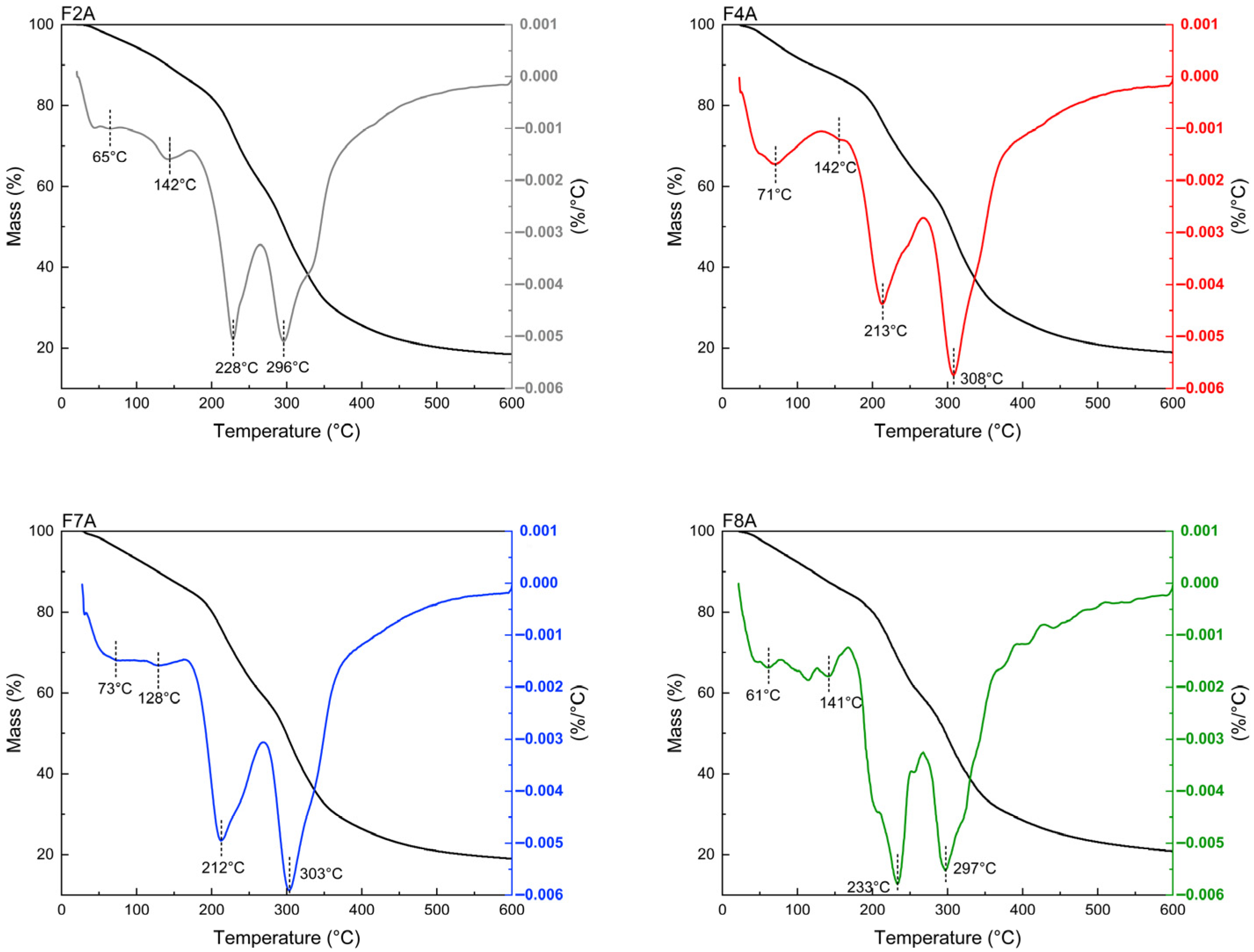
Thermogravimetric analysis was used to study the thermal performance of the hydrogels. The TGA and DTG curves of the samples are shown in Figure 6. All hydrogels exhibited the same thermal degradation pattern, with two main mass losses above 200 °C. The first stage of small mass loss below 100 °C is attributed to the evaporation of bound and free absorbed water [61].
The second stage of small mass loss at approximately 142 °C is related to glycerol decomposition [61,62]. The most intense peaks observed for the hydrogels F2A and F8A are due to the higher glycerol concentration and lower citric acid concentration, respectively. Minor citric acid content hinders glycerol to glycerol citrate conversion. The first large mass loss peak appears between 212 and 233 °C and is possibly related to gelatin degradation. As shown by Chuaynukul et al. [63], processes that subject gelatin molecules to high temperatures and pressure can disrupt the gelatin ordered backbone, leading to shorter polymer chains with smaller molecular weights and, consequently, lower degradation temperatures are observed. Thus, the degradation of samples F7A and F4A at lower temperatures with lower intensity peaks may be related to the previous acid hydrolysis of gelatin, due to higher acid concentrations. The second main peak of mass loss (296–308 °C) is related to the decomposition of the remaining polymeric components, residual gelatin, cellulose, xanthan gum, and starch [64,65,66,67]. All hydrogel samples exhibited good thermal stability and could withstand temperatures higher than those observed in agricultural systems.

3.6. Swelling Degree (SD) and Gel Fraction (GF)

The main property of hydrogels is their high water absorption capacity. Table 3 shows the SD and GF of the formulations after 24 h of soaking. After 24 h of absorption, all the samples differed significantly from each other and the sample prepared with the highest content of citric acid (F4A) showed the highest SD (3.628 g/g). According to Menzel et al. [68], high citric acid concentrations and high temperatures lead to the breakdown of biopolymer chains, and the presence of smaller hydrophilic chains scattered within the three-dimensional matrix can lead to greater water absorption. Additionally, the high frequency of larger pores (Figure 5) gives the F4A hydrogel a greater water absorption capacity.
Alternatively, Simões et al. [30] found that an increase in the crosslinking agent concentration led to a lower swelling capacity in starch and xanthan gum hydrogels because the molecular network was more compact, making it more difficult for water molecules to penetrate. Thus, the higher SD value of sample F2A compared to sample F8A may have been due to the higher glycerol content in F2A, as well as the presence of citric acid (F8A). A content of 1% may not be sufficient to hydrolyze a large proportion of the polymer chains, but sufficient to induce crosslinking, making the structure less susceptible to swelling.
Table 3 also shows the GF values of the hydrogels after the swelling study. The formulations exposed to absorption for 24 h did not differ significantly. The study of Menzel et al. [68] shows that small molecules were dissolved in water, whereas highly crosslinked and high-molecular-weight structures were likely to remain insoluble in water. Despite the occurrence of crosslinking in all citric acid-containing hydrogels, the acid treatment can hydrolyze some polymeric chains. High citric acid concentrations form a highly crosslinked molecular network, but also cause a higher acid hydrolysis. On the other hand, lower citric acid concentrations form a low crosslinked molecular network, but the polymeric chains are not highly degraded by acid hydrolysis. Thus, the non-observed major differences in GF between the hydrogels may be related to the acid hydrolysis/crosslinking density ratio.

3.7. Swelling Kinetics

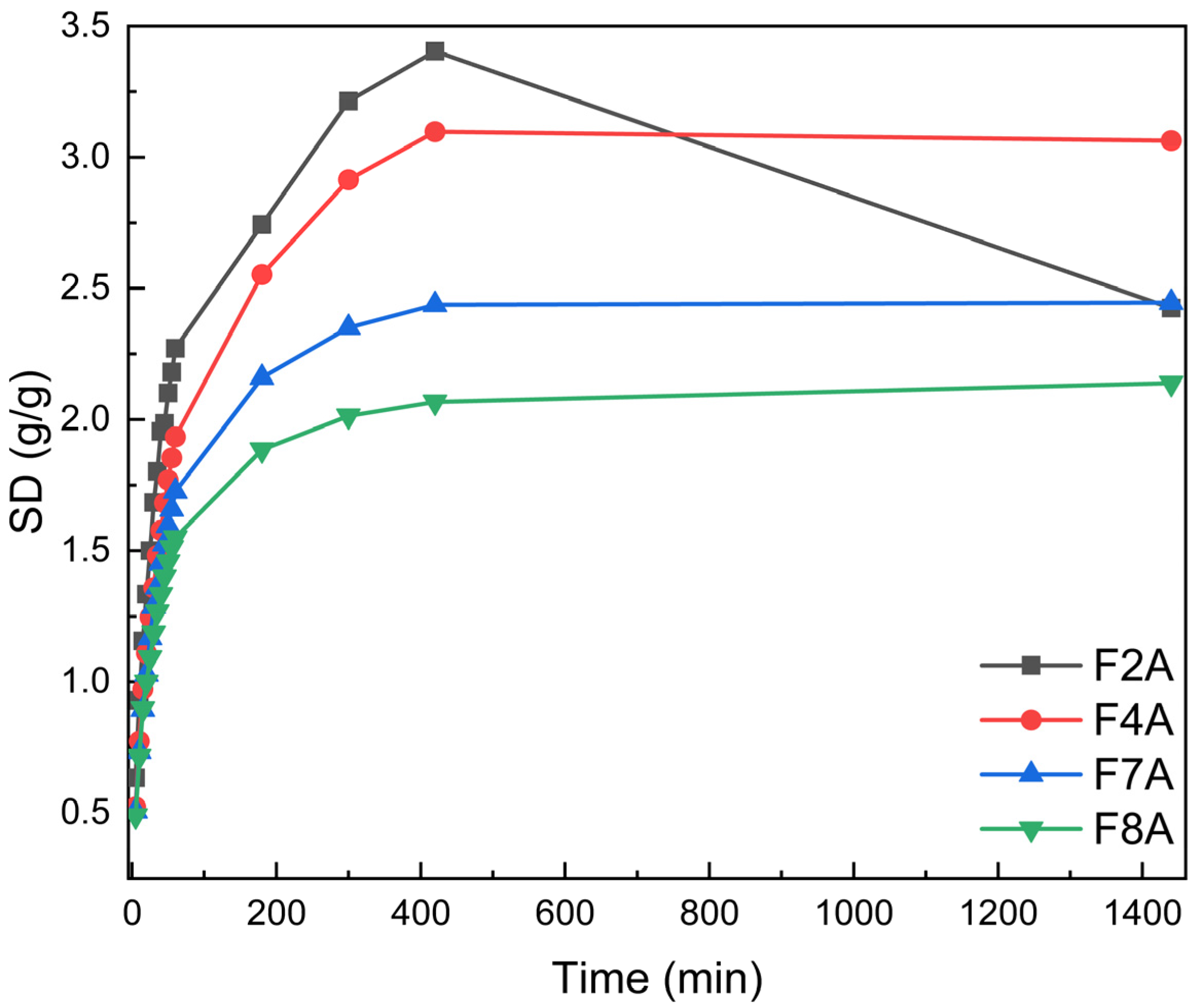
The swelling behavior of the formulations at 25 °C is shown in Figure 7. All formulations showed the same swelling pattern, with a high degree of absorption during the first hour, which can be related to the abundance of hydrophilic groups present throughout the hydrogel matrix, leading to rapid diffusion of water into the matrix [69].
Sample F2A had the highest SD during the first hour of soaking (2.271 g/g), whereas the other formulations did not exceed 2.000 g/g. Despite the lower porosity, it is possible that the higher glycerol content in the formulation and the absence of the crosslinking agent resulted in a molecular structure and morphology that allowed water to penetrate the matrix more rapidly. However, despite the faster swelling, the chemically crosslinked samples reached absorption equilibrium at approximately 420 min (7 h), with virtually no change afterward, while the hydrogel without citric acid exhibited a significant decrease in SD. Physical interactions are responsible for structure maintenance in the F2A hydrogel, making this sample more susceptible to hydrolysis and dissolution in the presence of water, thereby reducing its SD. The same behavior was observed by Coutinho et al. [70] in physically crosslinked samples.
So, to investigate the swelling dynamics of the formulations, the mathematical Fick diffusion model was used (Equation (3)). Because of the viscoelastic properties of polymers, the kinetic parameters are extremely important for understanding the molecular dynamics of water diffusion. In cases where the values of the diffusion exponent (n) fall between 0.45 and 0.50, the diffusion process can be described as Fickian (case l). This result indicates that the diffusion rate is slower than the relaxation rate of the polymer chains. For n = 1 (case ll), the diffusion speed is significantly greater than the relaxation speed of the polymer chains. Consequently, penetration is directly proportional to time. If 0.5 < n < 1.0, the transport is defined as non-Fickian or anomalous, in which water diffusion and relaxation of the polymer chains occur simultaneously [71,72,73].
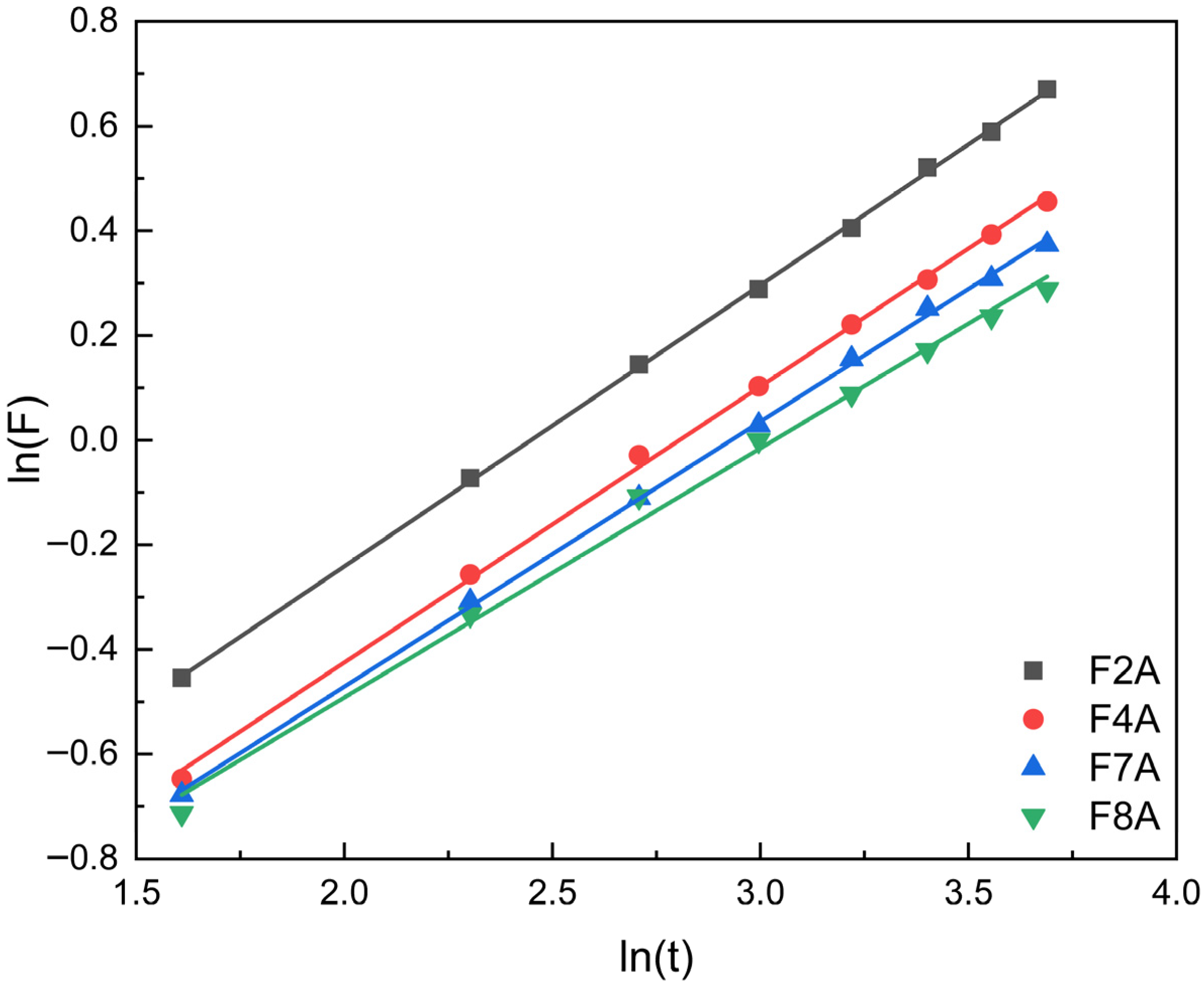
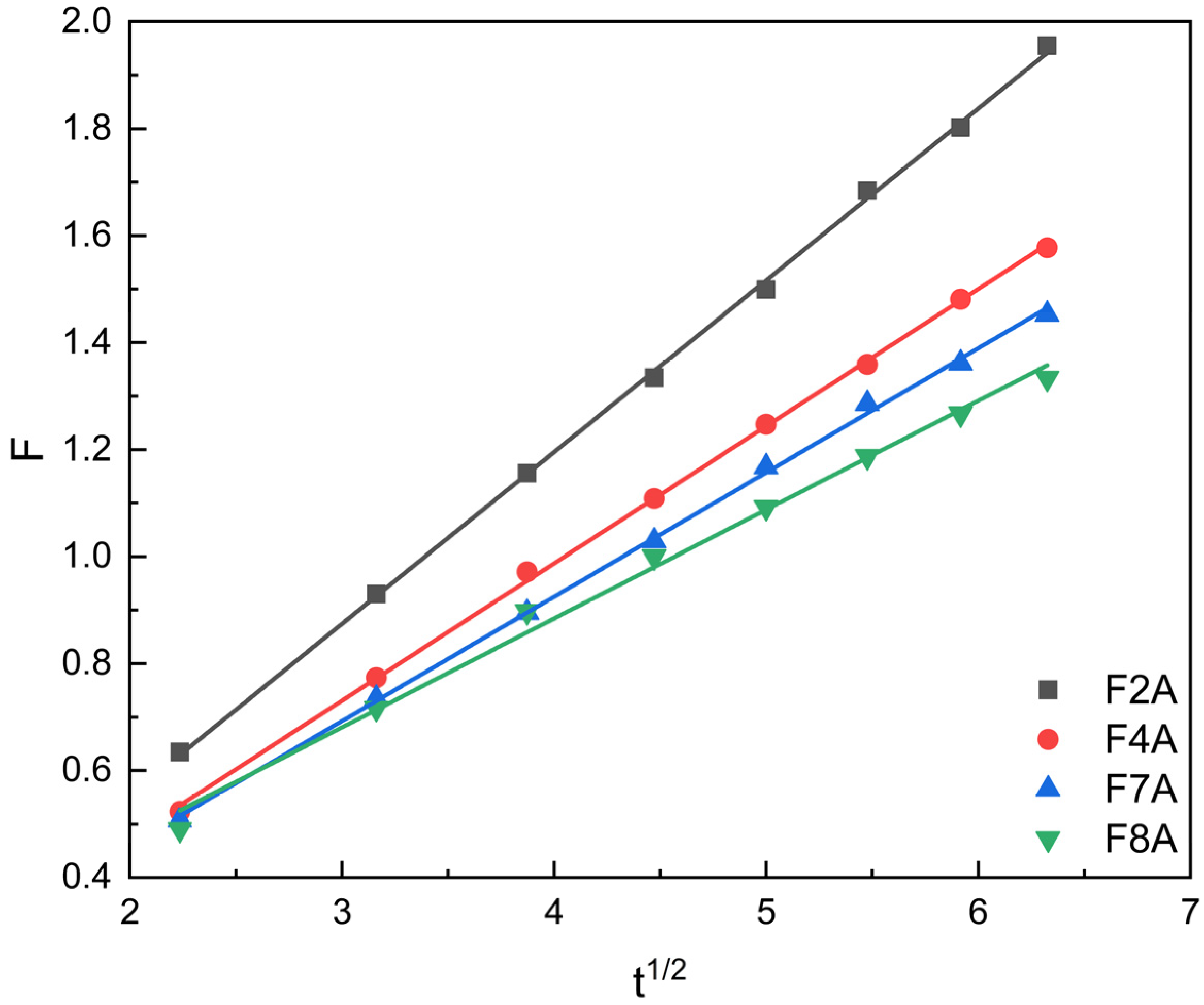
To measure these values, ln(F) vs. ln(T) was plotted in the initial stages of swelling (up to approximately 60% of maximum absorption). The n value was obtained from the slope of the line, and the diffusion constant (k) was calculated from the linear coefficient (Figure 8; Table 4). Similarly, F vs. t1/2 was plotted (Figure 9), and the diffusion coefficient (D) was calculated using Equation (4). (Table 5). All plots exhibited an excellent linear correlation (R2 > 0.99), indicating that Fick’s model effectively explains the swelling kinetics of the hydrogels.
The n values for the samples F2A, F7A and F4A are all above 0.5, indicating anomalous diffusion. F8A exhibited Fickian behavior (n = 0.476). The amount of crosslinking agent used in the formulation (1%) may effectively form new bonds between the polymeric chains, resulting in a more rigid molecular structure that slows solvent penetration within the hydrogel network.
According to Aouada, Muniz and Mattoso [71] and Jayaramudu et al. [74], higher values for n and D lead to higher SD values. So, the higher value of D (3.37 × 10⁻⁶ cm2 s−1, Table 5) and n (0.538) for F2A would result in a greater SD. Despite lower porosity, the higher n and D values are probably due to the high molecular mobility related to the high glycerol content and its interchain interactions, which are mostly physical. However, as shown in Figure 9 and Table 3, which show the swelling behavior and SD of the samples, respectively, the exposure time and nature of the hydrogels must be considered, as they are susceptible to hydrolysis, especially physically crosslinked hydrogels. Comparing the citric acid-containing hydrogels, a tendency can be observed.

3.8. Soil Water Holding Capacity (SWHC) and Seed Germination Rate (SGR)

In order to evaluate the potential of hydrogels for agricultural applications, taking into account water stress, the hydrogel with the best properties and, in particular, the highest SD (F4A) was subjected to SWHC and SGR and the results are presented in Table 6 and Table 7, respectively. An increase in water retention capacity was observed for all levels of the same hydrogel incorporated into the soil. Although progressively higher amounts of the same hydrogel incorporated into the soil were evaluated in the assays, the intermediate concentration (5%) exhibited the highest SWHC, with values significantly different from the other concentrations. The rapid swelling of the hydrogel increased water retention capacity by 19.26% in just a few minutes. Consequently, agricultural soil containing hydrogel can provide extra moisturization even when the contact with water is rapid; for example, in a short-duration rainfall, one of the consequences of climate change [75]. Similarly, when the hydrogel was used at a concentration of 5%, the germination rate showed the highest percentage (93%) (Table 7) compared with the control samples and the other hydrogel concentrations. The increase in soil moisture may have increased germination. In addition, the biodegradable nature of the hydrogel may increase the availability of macronutrients such as Carbon and Nitrogen.

4. Conclusions

Biodegradable superabsorbent hydrogels were obtained through a scalable, environmentally friendly, solvent-free process using a renewable, non-toxic crosslinking agent. The chemical crosslinking process via reactive extrusion was extremely efficient, as confirmed by the spectroscopic analysis. However, the combination of an acid crosslinker and a high thermomechanical environment partially hydrolyzed the biopolymer chains, but the hydrogel network formed can withstand considerable temperatures without losing its integrity. Among the samples, the hydrogel with the highest citric acid content (F4A, 3%) exhibited the highest swelling degree, mainly due to its high porosity. Furthermore, the hydrogel swells quickly, reaching equilibrium within a few hours. A 5% hydrogel concentration in the soil significantly increased the water-holding capacity, in which the extra moisture environment facilitated seed germination. In summary, the hydrogels produced in this research are suitable for agriculture and are fully sustainable, providing green alternatives for many contemporary environmental issues.

Author Contributions

Conceptualization, J.O.F.K. and S.M.; methodology, J.O.F.K., M.E.M.C., A.C.A., M.T.P.P. and S.M.; validation, J.O.F.K. and S.M.; formal analysis, J.O.F.K., A.C.A. and M.E.M.C.; investigation, J.O.F.K.; resources, S.M.; data curation, J.O.F.K.; writing—original draft preparation, J.O.F.K. and M.T.P.P.; writing—review and editing, J.O.F.K., M.T.P.P. and S.M.; visualization, J.O.F.K.; supervision, S.M.; project administration, S.M.; funding acquisition, S.M. All authors have read and agreed to the published version of the manuscript.

Funding

This research was funded by Coordination of Superior Level Staff Improvement (CAPES) and Funding Authority for Studies and Projects (FINEP) 01.21.0126.00—REF. 0128/2021.

Data Availability Statement

The data used to support the findings of this study can be made available by the authors upon request.

Acknowledgments

The authors would like to acknowledge the Laboratory of Spectroscopy (ESPEC), Laboratory of Electronic Microscopy and Microanalysis (LMEM) and Laboratory of Applied Nuclear Physics for the analysis. CAPES-Brazil for the doctorate grant of João Otávio Ferraro Kishima and Mayara Thamela Pessoa Paiva. During the preparation of this manuscript, the authors used ChatGPT (OpenAI, GPT-5.1, 2025) for the purposes of graphical abstract design. The authors have reviewed and edited the output and take full responsibility for the content of this publication.

Conflicts of Interest

The authors declare no conflicts of interest.

References

  1. European Environment Agency. Climate Change Is One of the Biggest Challenges of Our Times; European Environment Agency: Copenhagen, Denmark, 2023; Available online: https://www.eea.europa.eu/themes/climate/climate-change-is-one-of (accessed on 15 October 2024).
  2. Arora, N.K. Impact of climate change on agriculture production and its sustainable solutions. Environ. Sustain. 2019, 2, 95–96. [Google Scholar] [CrossRef]
  3. Bedair, H.; Alghariani, M.S.; Omar, E.; Anibaba, Q.A.; Remon, M.; Bornman, C.; Kiboi, S.K.; Rady, H.A.; Salifu, A.-M.A.; Ghosh, S.; et al. Global warming status in the African continent: Sources, challenges, policies, and future direction. Int. J. Environ. Res. 2023, 17, 45. [Google Scholar] [CrossRef]
  4. Skrzypczak, D.; Mikula, K.; Kossińska, N.; Widera, B.; Warchoł, J.; Moustakas, K.; Chojnacka, K.; Witek-Krowiak, A. Biodegradable hydrogel materials for water storage in agriculture—Review of recent research. Desalin. Water Treat. 2020, 194, 324–332. [Google Scholar] [CrossRef]
  5. De Wrachien, D.; Schultz, B.; Goli, M.B. Impacts of population growth and climate change on food production and irrigation and drainage needs: A worldwide view. Irrig. Drain. 2021, 70, 981–995. [Google Scholar] [CrossRef]
  6. Ahmad, Z.; Salman, S.; Khan, S.A.; Amin, A.; Rahman, Z.U.; Al-Ghamdi, Y.O.; Akhtar, K.; Bakhsh, E.M.; Khan, S.B. Versatility of hydrogels: From synthetic strategies, classification, and properties to biomedical applications. Gels 2022, 8, 167. [Google Scholar] [CrossRef]
  7. Batista, R.A.; Espitia, P.J.P.; Quintans, J.S.S.; Freitas, M.M.; Cerqueira, M.A.; Teixeira, J.A.; Cardoso, J.C. Hydrogel as an alternative structure for food packaging systems. Carbohydr. Polym. 2019, 205, 106–116. [Google Scholar] [CrossRef]
  8. Kabir, S.M.F.; Sikdar, P.P.; Haque, B.; Bhuiyan, M.A.R.; Ali, A.; Islam, M.N. Cellulose-based hydrogel materials: Chemistry, properties and their prospective applications. Prog. Biomater. 2018, 7, 153–174. [Google Scholar] [CrossRef] [PubMed]
  9. Parhi, R. Cross-linked hydrogel for pharmaceutical applications: A review. Adv. Pharm. Bull. 2017, 7, 515–530. [Google Scholar] [CrossRef] [PubMed]
  10. Wang, J.; Gao, S.; Tian, J.; Cui, F.; Shi, W. Recent developments and future challenges of hydrogels as draw solutes in forward osmosis process. Water 2020, 12, 692. [Google Scholar] [CrossRef]
  11. Grabowska-Polanowska, B.; Garbowski, T.; Bar-Michalczyk, D.; Kowalczyk, A. The benefits of synthetic or natural hydrogels application in agriculture: An overview article. J. Water Land Dev. 2021, 51, 208–224. [Google Scholar] [CrossRef]
  12. Kalhapure, A.; Kumar, R.; Singh, V.P.; Pandey, D.S. Hydrogels: A boon for increasing agricultural productivity in water-stressed environments. Curr. Sci. 2016, 111, 1773–1779. [Google Scholar] [CrossRef]
  13. Kaswala, A.; Dubey, P.K.; Neethu, T.M. Prospects and applications of hydrogel technology in agriculture. Int. J. Curr. Microbiol. Appl. Sci. 2018, 7, 3155–3162. [Google Scholar] [CrossRef]
  14. Abobatta, W. Impact of hydrogel polymer in agricultural sector. Adv. Agric. Environ. Sci. Open Access 2018, 1, 59–64. [Google Scholar] [CrossRef]
  15. Madduma-Bandarage, U.S.K.; Madihally, S.V. Synthetic hydrogels: Synthesis, novel trends, and applications. J. Appl. Polym. Sci. 2021, 138, 50376. [Google Scholar] [CrossRef]
  16. Alavarse, A.C.; Frachini, E.C.G.; da Silva, R.L.C.G.; Lima, V.H.; Shavandi, A.; Petri, D.F.S. Crosslinkers for polysaccharides and proteins: Synthesis conditions, mechanisms, and crosslinking efficiency—A review. Int. J. Biol. Macromol. 2022, 202, 558–596. [Google Scholar] [CrossRef]
  17. Khushbu; Warkar, S.G.; Kumar, A. Synthesis and assessment of carboxymethyl tamarind kernel gum-based novel superabsorbent hydrogels for agricultural applications. Polymer 2019, 182, 121823. [Google Scholar] [CrossRef]
  18. Tanan, W.; Panichpakdee, J.; Suwanakood, P.; Saengsuwan, S. Biodegradable hydrogels of cassava starch-g-polyacrylic acid/natural rubber/polyvinyl alcohol as environmentally friendly and highly efficient coating material for slow-release urea fertilizers. J. Ind. Eng. Chem. 2021, 101, 237–252. [Google Scholar] [CrossRef]
  19. Malik, R.; Warkar, S.G.; Saxena, R. Carboxymethyl tamarind kernel gum-based bio-hydrogel for sustainable agronomy. Mater. Today Commun. 2023, 35, 105473. [Google Scholar] [CrossRef]
  20. Xiong, H.; Peng, H.; Ye, X.; Kong, Y.; Wang, N.; Yang, F.; Meni, B.-H.; Lei, Z. High salt tolerance hydrogel prepared from hydroxyethyl starch and its ability to increase soil water holding capacity and decrease water evaporation. Soil Tillage Res. 2022, 222, 105427. [Google Scholar] [CrossRef]
  21. Fekete, T.; Borsa, J.; Takács, E.; Wojnárovits, L. Synthesis of carboxymethylcellulose/starch superabsorbent hydrogels by gamma-irradiation. Chem. Cent. J. 2017, 11, 46. [Google Scholar] [CrossRef]
  22. Das, S.; Dalei, G. In situ forming dialdehyde xanthan gum–gelatin Schiff-base hydrogels as potent controlled-release fertilizers. Sci. Total Environ. 2023, 875, 162660. [Google Scholar] [CrossRef]
  23. Pita-López, M.L.; Fletes-Vargas, G.; Espinosa-Andrews, H.; Rodríguez-Rodríguez, R. Physically cross-linked chitosan-based hydrogels for tissue engineering applications: A state-of-the-art review. Eur. Polym. J. 2021, 145, 110176. [Google Scholar] [CrossRef]
  24. Wihodo, M.; Moraru, C.I. Physical and chemical methods used to enhance the structure and mechanical properties of protein films: A review. J. Food Eng. 2013, 114, 292–302. [Google Scholar] [CrossRef]
  25. Adjuik, T.A.; Nokes, S.E.; Montross, M.D. Biodegradability of bio-based and synthetic hydrogels as sustainable soil amendments: A review. J. Appl. Polym. Sci. 2023, 140, e53655. [Google Scholar] [CrossRef]
  26. Klein, M.; Poverenov, E. Natural biopolymer-based hydrogels for use in food and agriculture. J. Sci. Food Agric. 2020, 100, 2337–2347. [Google Scholar] [CrossRef]
  27. Nordin, N.A.; Rahman, N.A.; Talip, N.; Yacob, N. Citric acid cross-linking of carboxymethyl sago starch-based hydrogel for controlled release application. Macromol. Symp. 2018, 382, 1800086. [Google Scholar] [CrossRef]
  28. Das, D.; Prakash, P.; Rout, P.K.; Bhaladhare, S. Synthesis and characterization of superabsorbent cellulose-based hydrogel for agriculture application. Starch–Stärke 2021, 73, 1900284. [Google Scholar] [CrossRef]
  29. Bueno, V.B.; Bentini, R.; Catalani, L.H.; Petri, D.F.S. Synthesis and swelling behavior of xanthan-based hydrogels. Carbohydr. Polym. 2013, 92, 1091–1099. [Google Scholar] [CrossRef]
  30. Simões, B.M.; Cagnin, C.; Yamashita, F.; Olivato, J.B.; Garcia, P.S.; Oliveira, S.M.; Grossmann, M.V. Citric acid as crosslinking agent in starch/xanthan gum hydrogels produced by extrusion and thermopressing. LWT 2020, 125, 108950. [Google Scholar] [CrossRef]
  31. Hasan, R.; Sumnu, G.; Sahin, S.; Oz, E.; Oz, F. The effects of citric acid crosslinking on fabrication and characterization of gelatin/curcumin-based electrospun antioxidant nanofibers. Antioxidants 2023, 12, 1387. [Google Scholar] [CrossRef] [PubMed]
  32. Liguori, A.; Uranga, J.; Panzavolta, S.; Guerrero, P.; de la Caba, K.; Focarete, M.L. Electrospinning of fish gelatin solution containing citric acid: An environmentally friendly approach to prepare crosslinked gelatin fibers. Materials 2019, 12, 1728. [Google Scholar] [CrossRef]
  33. Duquette, D.; Nzediegwu, C.; Portillo-Perez, G.; Dumont, M.-J.; Prasher, S. Eco-friendly synthesis of hydrogels from starch, citric acid, and itaconic acid: Swelling capacity and metal chelation properties. Starch–Stärke 2020, 72, 1900008. [Google Scholar] [CrossRef]
  34. Ye, J.; Luo, S.; Huang, A.; Chen, J.; Liu, C.; McClements, D.J. Synthesis and characterization of citric acid esterified rice starch by reactive extrusion: A new method of producing resistant starch. Food Hydrocoll. 2019, 92, 135–142. [Google Scholar] [CrossRef]
  35. Farhat, W.; Venditti, R.; Mignard, N.; Taha, M.; Becquart, F.; Ayoub, A. Polysaccharides and lignin-based hydrogels with potential pharmaceutical use as a drug delivery system produced by a reactive extrusion process. Int. J. Biol. Macromol. 2017, 104, 564–575. [Google Scholar] [CrossRef]
  36. Moad, G. Chemical modification of starch by reactive extrusion. Prog. Polym. Sci. 2011, 36, 218–237. [Google Scholar] [CrossRef]
  37. Cagnin, C.; Simões, B.M.; Yamashita, F.; Andrello, A.C. Hydrogels of starch/carboxymethyl cellulose crosslinked with sodium trimetaphosphate via reactive extrusion. J. Appl. Polym. Sci. 2021, 138, 50194. [Google Scholar] [CrossRef]
  38. Pereira, J.F.; Marim, B.M.; Mali, S. Chemical modification of cellulose using a green route by reactive extrusion with citric and succinic acids. Polysaccharides 2022, 3, 292–305. [Google Scholar] [CrossRef]
  39. Marim, B.M.; Mantovan, J.; Gil-Giraldo, G.A.; Pereira, J.P.; Simões, B.M.; Yamashita, F.; Mali, S. Reactive extrusion-assisted process to obtain starch hydrogels through reaction with organic acids. Polysaccharides 2022, 3, 792–803. [Google Scholar] [CrossRef]
  40. Gil-Giraldo, G.A.; Mantovan, J.; Marim, B.M.; Kishima, J.O.F.; Mali, S. Surface modification of cellulose from oat hull with citric acid using ultrasonication and reactive extrusion assisted processes. Polysaccharides 2021, 2, 218–233. [Google Scholar] [CrossRef]
  41. Marim, B.M.; Mantovan, J.; Giraldo, G.A.G.; Mali, S. Environmentally friendly process based on a combination of ultrasound and peracetic acid treatment to obtain cellulose from orange bagasse. J. Chem. Technol. Biotechnol. 2021, 96, 630–638. [Google Scholar] [CrossRef]
  42. Jastram, A.; Lindner, T.; Luebbert, C.; Sadowski, G.; Kragl, U. Swelling and Diffusion in Polymerized Ionic Liquids-Based Hydrogels. Polymers 2021, 13, 1834. [Google Scholar] [CrossRef]
  43. Sarmah, D.; Karak, N. Biodegradable superabsorbent hydrogel for water holding in soil and controlled-release fertilizer. J. Appl. Polym. Sci. 2020, 137, 48495. [Google Scholar] [CrossRef]
  44. de Lima, G.F.; de Souza, A.G.; Rosa, D.S. Nanocellulose as reinforcement in carboxymethylcellulose superabsorbent nanocomposite hydrogels. Macromol. Symp. 2020, 394, 2000126. [Google Scholar] [CrossRef]
  45. Uliniuc, A.; Hamaide, T.; Popa, M.; Băcăiță, S. Modified starch-based hydrogels cross-linked with citric acid and their use as drug delivery systems for levofloxacin. Soft Mater. 2013, 11, 483–493. [Google Scholar] [CrossRef]
  46. Uranga, J.; Nguyen, B.T.; Si, T.T.; Guerrero, P.; de la Gaba, K. The effect of cross-linking with citric acid on the properties of agar/fish gelatin films. Polymers 2020, 12, 291. [Google Scholar] [CrossRef] [PubMed]
  47. Prasad, C.; Park, S.Y.; Lee, J.S.; Park, J.J.; Jang, Y.; Lee, S.W.; Lee, B.-M.; Nam, Y.-R.; Rao, A.K.; Choi, H.Y. Modeling and investigation of swelling kinetics of sodium carboxymethyl cellulose/starch/citric acid superabsorbent polymer. Int. J. Biol. Macromol. 2023, 253, 127013. [Google Scholar] [CrossRef] [PubMed]
  48. Olivato, J.B.; Grossmann, M.V.E.; Yamashita, F.; Eiras, D.; Pessan, L.A. Citric acid and maleic anhydride as compatibilizers in starch/poly(butylene adipate-co-terephthalate) blends by one-step reactive extrusion. Carbohydr. Polym. 2012, 87, 2614–2618. [Google Scholar] [CrossRef]
  49. Nongnual, T.; Butprom, N.; Boonsang, S.; Kaewpirom, S. Citric acid crosslinked carboxymethyl cellulose edible films: A case study on preserving freshness in bananas. Int. J. Biol. Macromol. 2024, 267, 131135. [Google Scholar] [CrossRef]
  50. Smith, B.C. Infrared spectroscopy of polymers IX: Pendant ester polymers and polycarbonates. Spectroscopy 2022, 37, 16–19,31. [Google Scholar] [CrossRef]
  51. Monroy, Y.; Rivero, S.; García, M.A. Liquid and pressure-sensitive adhesives based on cassava starch and gelatin capsule residue: Green alternatives for the packaging industry. Foods 2023, 12, 3982. [Google Scholar] [CrossRef]
  52. Zheng, Y.; Liang, Y.; Zhang, D.; Sun, X.; Liang, L.; Li, J.; Liu, Y.-N. Gelatin-based hydrogels blended with gellan as an injectable wound dressing. ACS Omega 2018, 3, 4766–4775. [Google Scholar] [CrossRef]
  53. Wisotzki, E.I.; Hennes, M.; Schuldt, C.; Engert, F.; Knolle, W.; Decker, U.; Kas, J.A.; Zink, M.; Mayr, S.G. Tailoring the material properties of gelatin hydrogels by high-energy electron irradiation. J. Mater. Chem. B 2014, 2, 4297–4309. [Google Scholar] [CrossRef]
  54. Pinthong, T.; Yooyod, M.; Daengmankhong, J.; Tuancharoensri, N.; Mahasaranon, S.; Viyoch, J.; Jongjitwimol, J.; Ross, S.; Ross, G.M. Development of natural active agent-containing porous hydrogel sheets with high water content for wound dressings. Gels 2023, 9, 459. [Google Scholar] [CrossRef] [PubMed]
  55. Xu, E.; Campanella, O.H.; Ye, X.; Jin, X.; Liu, D.; BeMiller, J.M. Advances in conversion of natural biopolymers: A reactive extrusion (REX)–enzyme combined strategy for starch/protein-based food processing. Trends Food Sci. Technol. 2020, 99, 167–180. [Google Scholar] [CrossRef]
  56. Tisserat, B.; O’Kuru, R.H.; Hwang, H.; Mohamed, A.A.; Holser, R. Glycerol citrate polyesters produced through heating without catalysis. J. Appl. Polym. Sci. 2012, 125, 3429–3437. [Google Scholar] [CrossRef]
  57. Garcia, P.S.; Grossmann, M.V.E.; Yamashita, F.; Mali, S.; Dall’Antonia, L.H.; Barreto, W.J. Citric acid as multifunctional agent in blowing films of starch/PBAT. Quím. Nova 2011, 34, 1507–1510. [Google Scholar] [CrossRef]
  58. Ganji, F.; Vasheghani-Farahani, S.; Vasheghani-Farahani, E. Theoretical description of hydrogel swelling: A review. Iran. Polym. J. 2010, 19, 375–398. [Google Scholar]
  59. Kim, S.; Iyer, G.; Nadarajah, A.; Frantz, J.M.; Spongberg, A.L. Polyacrylamide hydrogel properties for horticultural applications. Int. J. Polym. Anal. Charact. 2010, 15, 307–318. [Google Scholar] [CrossRef]
  60. Zambrano, Y.; Contardo, I.; Moreno, M.C.; Bouchon, P. Effect of extrusion temperature and feed moisture content on the microstructural properties of rice-flour pellets and their impact on the expanded product. Foods 2022, 11, 198. [Google Scholar] [CrossRef]
  61. Zhang, A.; Han, Y.; Zhou, Z. Characterization of citric acid crosslinked chitosan/gelatin composite film with enterocin CHQS and red cabbage pigment. Food Hydrocoll. 2023, 135, 108144. [Google Scholar] [CrossRef]
  62. Wang, K.; Wang, W.; Ye, R.; Xiao, J.; Liu, Y.; Ding, J.; Zhang, S. Mechanical and barrier properties of maize starch–gelatin composite films: Effects of amylose content. J. Sci. Food Agric. 2017, 97, 3613–3622. [Google Scholar] [CrossRef] [PubMed]
  63. Chuaynukul, K.; Nagarajan, M.; Prodpran, T.; Benjakul, S.; Songtipya, P.; Songtipya, L. Comparative characterization of bovine and fish gelatin films fabricated by compression molding and solution casting methods. J. Polym. Environ. 2018, 26, 1239–1252. [Google Scholar] [CrossRef]
  64. Wan Ishak, W.H.; Rosli, N.A.; Ahmad, I.; Ramli, S.; Amin, M.G.I.W. Drug delivery and in vitro biocompatibility studies of gelatin–nanocellulose smart hydrogels cross-linked with gamma radiation. J. Mater. Res. Technol. 2021, 15, 7145–7157. [Google Scholar] [CrossRef]
  65. Zhuang, C.; Shi, C.; Tao, F.; Cui, Y. Honeycomb structural composite polymer network of gelatin and functional cellulose ester for controlled release of omeprazole. Int. J. Biol. Macromol. 2017, 105, 1644–1653. [Google Scholar] [CrossRef]
  66. Bulbul, V.J.; Bhushette, P.R.; Zambare, R.S.; Deshmukh, R.R.; Annapure, U.R. Effect of cold plasma treatment on xanthan gum properties. Polym. Test. 2019, 79, 106056. [Google Scholar] [CrossRef]
  67. Ojogbo, E.; Blanchard, R.; Mekonnen, T. Hydrophobic and melt-processable starch–laurate esters: Synthesis, structure–property correlations. J. Polym. Sci. A Polym. Chem. 2018, 56, 2611–2622. [Google Scholar] [CrossRef]
  68. Menzel, C.; Olsson, E.; Plivelic, T.S.; Andersson, R.; Johansson, C.; Kuktaite, R.; Järnström, L.; Koch, K. Molecular structure of citric acid cross-linked starch films. Carbohydr. Polym. 2013, 96, 270–276. [Google Scholar] [CrossRef]
  69. Dai, H.; Ou, S.; Huang, Y.; Liu, Z.; Huang, H. Enhanced swelling and multiple-responsive properties of gelatin/sodium alginate hydrogels by the addition of carboxymethyl cellulose isolated from pineapple peel. Cellulose 2018, 25, 593–606. [Google Scholar] [CrossRef]
  70. Coutinho, D.F.; Sant, S.V.; Shin, H.; Oliveira, J.T.; Gomes, M.E.; Neves, N.M.; Khademhosseini, A.; Reis, R.L. Modified gellan gum hydrogels with tunable physical and mechanical properties. Biomaterials 2010, 31, 7494–7502. [Google Scholar] [CrossRef] [PubMed]
  71. Aouada, F.A.; Muniz, E.C.; Vaz, C.M.P.; Mattoso, L.H.C. Correlação entre parâmetros da cinética de intumescimento com características estruturais e hidrofílicas de hidrogéis de poliacrilamida e metilcelulose. Quím. Nova 2009, 32, 1482–1490. [Google Scholar] [CrossRef]
  72. Rathna, G.V.N.; Mohan Rao, D.V.; Chatterji, P.R. Hydrogels of gelatin–sodium carboxymethyl cellulose: Synthesis and swelling kinetics. J. Macromol. Sci. Pure Appl. Chem. 1996, 33, 1199–1207. [Google Scholar] [CrossRef]
  73. Aydınoğlu, D. Investigation of pH-dependent swelling behavior and kinetic parameters of novel poly(acrylamide-co-acrylic acid) hydrogels with spirulina. e-Polymers 2015, 15, 81–93. [Google Scholar] [CrossRef]
  74. Jayaramudu, T.; Ko, H.-U.; Kim, H.C.; Kim, J.W.; Kim, J. Swelling behavior of polyacrylamide–cellulose nanocrystal hydrogels: Swelling kinetics, temperature, and pH effects. Materials 2019, 12, 2080. [Google Scholar] [CrossRef] [PubMed]
  75. Fowler, H.J.; Lenderink, G.; Prein, A.F.; Westra, S.; Allan, R.P.; Ban, N.; Barbero, R.; Berg, P.; Blenkinsop, S.; Do, H.X.; et al. Anthropogenic intensification of short-duration rainfall extremes. Nat. Rev. Earth Environ. 2021, 2, 107–122. [Google Scholar] [CrossRef]
Figure 1. Esterification (A), amide formation reaction (B) and esterification and amide formation in the same molecule (C). R1 = cellulose, starch, xanthan gum or gelatin. R2 = gelatin.
Biomass 05 00081 g001
Figure 2. ATR-FTIR spectra of the hydrogels.
Biomass 05 00081 g002
Figure 3. Surface micrography of the hydrogels, 50× magnified.
Biomass 05 00081 g003
Figure 4. Fractured micrography of the hydrogels, 50× magnified.
Biomass 05 00081 g004
Figure 5. Sample pore size distribution.
Biomass 05 00081 g005
Figure 6. Thermal analysis.
Biomass 05 00081 g006
Figure 7. Swelling behavior.
Biomass 05 00081 g007
Figure 8. ln(F) vs. ln (T) plot.
Biomass 05 00081 g008
Figure 9. F vs. t1/2 plot.
Biomass 05 00081 g009
Table 1. Composition of the different hydrogel samples.
Sample (%)F2AF4AF7AF8A
Starch14141414
Cellulose5555
Gelatin45454647
Xanthan gum7777
Glycerol29262626
Citric acid-321
Table 2. Porosity, open pores and closed pores of the samples.
SamplePorosity (%)Open Pores (%)Closed Pores (%)
F2A2.022 ± 0.216 c0.266 ± 0.142 b1.761 ± 0.333 b
F4A8.886 ± 1.043 a0.957 ± 0.310 a7.975 ± 1.117 a
F7A6.601 ± 0.106 ab0.691 ± 0.133 ab5.951 ± 0.082 a
F8A5.345 ± 2.137 b0.618 ± 0.133 ab5.154 ± 2.444 ab
Different lowercase letters indicate a significant difference in the same column (Tukey test, p ≤ 0.05).
Table 3. Swelling degree (SD) and gel fraction (GF) of samples after 24 h and 48 h of soaking at 25 °C.
SampleSD 24 h (g/g)GF 24 h (g/g)
F2A3.266 ± 0.028 c0.667 ± 0.004 a
F4A3.628 ± 0.014 a0.693 ± 0.026 a
F7A3.341 ± 0.004 b0.680 ± 0.024 a
F8A2.896 ± 0.088 d0.670 ± 0.008 a
Different lowercase letters indicate a significant difference in the same column (Tukey test, p ≤ 0.05).
Table 4. Swelling kinetics parameters at 25 °C.
SampleR2Diffusional Exponent (n)Swelling Rate Constant (K) s−1
F2A0.9990.5380.268
F4A0.9990.5270.229
F7A0.9990.5070.227
F8A0.9970.4760.236
Table 5. Diffusion parameters at 25 °C.
SampleR2Diffusion Coefficient (D × 106) cm2 s−1
F2A0.9993.37
F4A0.9992.15
F7A0.9991.76
F8A0.9931.36
Table 6. Soil water retention capacity in the absence and presence of hydrogels.
SampleSWHC (g)
Ct131.9 ± 3.4 c
H1143.1 ± 4.5 b
H5157.3 ± 3.5 a
H10146.24 ± 4.3 b
Ct = Control (Soil without hydrogel); H1 = Hydrogel at a concentration of 1% by weight in the soil; H5 = Hydrogel at a concentration of 5% by weight in the soil; H10 = Hydrogel at a concentration of 10% by weight in the soil. Different lowercase letters indicate a significant difference in the same column (Tukey test, p ≤ 0.05).
Table 7. Germination rate of corn seeds in the absence and presence of hydrogels.
SampleSGR (%)
Ct76.67
H166.67
H593.33
H1086.67
Ct = Control (Soil without hydrogel); H1 = Hydrogel at a concentration of 1% by weight in the soil; H5 = Hydrogel at a concentration of 5% by weight in the soil; H10 = Hydrogel at a concentration of 10% by weight in the soil.
Disclaimer/Publisher’s Note: The statements, opinions and data contained in all publications are solely those of the individual author(s) and contributor(s) and not of MDPI and/or the editor(s). MDPI and/or the editor(s) disclaim responsibility for any injury to people or property resulting from any ideas, methods, instructions or products referred to in the content.