Article

Risk Assessment of Biogas Production from Sugarcane Vinasse: Does the Anaerobic Bioreactor Configuration Affect the Hazards?


by
Renan Coghi Rogeri
1,
Katarzyna Stolecka-Antczak
2,
Priscila da Silva Maradini
1,
Priscila Rosseto Camiloti
3,
Andrzej Rusin
2 and
Lucas Tadeu Fuess
1,*
1
Biological Processes Laboratory, São Carlos School of Engineering, University of São Paulo, 1100 João Dagnone Avenue, São Carlos 13563-120, SP, Brazil
2
Department of Power Engineering and Turbomachinery, Silesian University of Technology, Konarskiego 18, 44-100 Gliwice, Poland
3
Institute of Energy and Environment, University of São Paulo, 1289 Professor Luciano Gualberto Avenue, Cidade Universitária, Butantã, São Paulo 05508-010, SP, Brazil
*
Author to whom correspondence should be addressed.
Biomass 2025, 5(4), 79; https://doi.org/10.3390/biomass5040079

Submission received: 30 October 2025 / Revised: 27 November 2025 / Accepted: 4 December 2025 / Published: 8 December 2025

Abstract

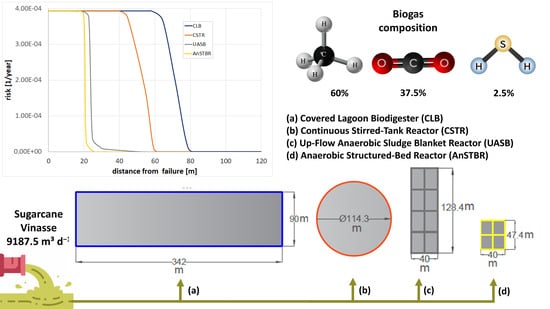
Anaerobic digestion of sugarcane vinasse is integral to enhancing ethanol distilleries’ environmental and energy performance by converting organic waste into biogas; however, the flammable and toxic nature of biogas has led to significant safety concerns, particularly in anaerobic bioreactors where biogas is produced and stored. This study provides a comparative risk assessment of different anaerobic reactor configurations—a covered lagoon biodigester (CLB), a continuous stirred-tank reactor (CSTR), an upflow anaerobic sludge blanket reactor (UASB), and an anaerobic structured-bed reactor (AnSTBR)—processing vinasse, focusing on fire, explosion, and hydrogen sulfide (H2S) toxicity hazards. Jet fire scenarios posed the most severe threat, with fatal outcomes extending up to 66 m, while the fireball scenario exhibited no lethal range. The risks to human life from explosions were minimal (1.2%). H2S toxicity was identified as the most critical consequence, with particularly severe impacts in CLB systems, where the hazardous zone was up to 20 times larger than in AnSTBR. Therefore, the design of anaerobic bioreactors for vinasse treatment must primarily address the risks associated with H2S-rich biogas, as reactor configuration plays a key role in mitigating or amplifying these hazards—high-rate systems such as AnSTBR and UASB demonstrating safer profiles due to their compact design and lower gas storage volumes.

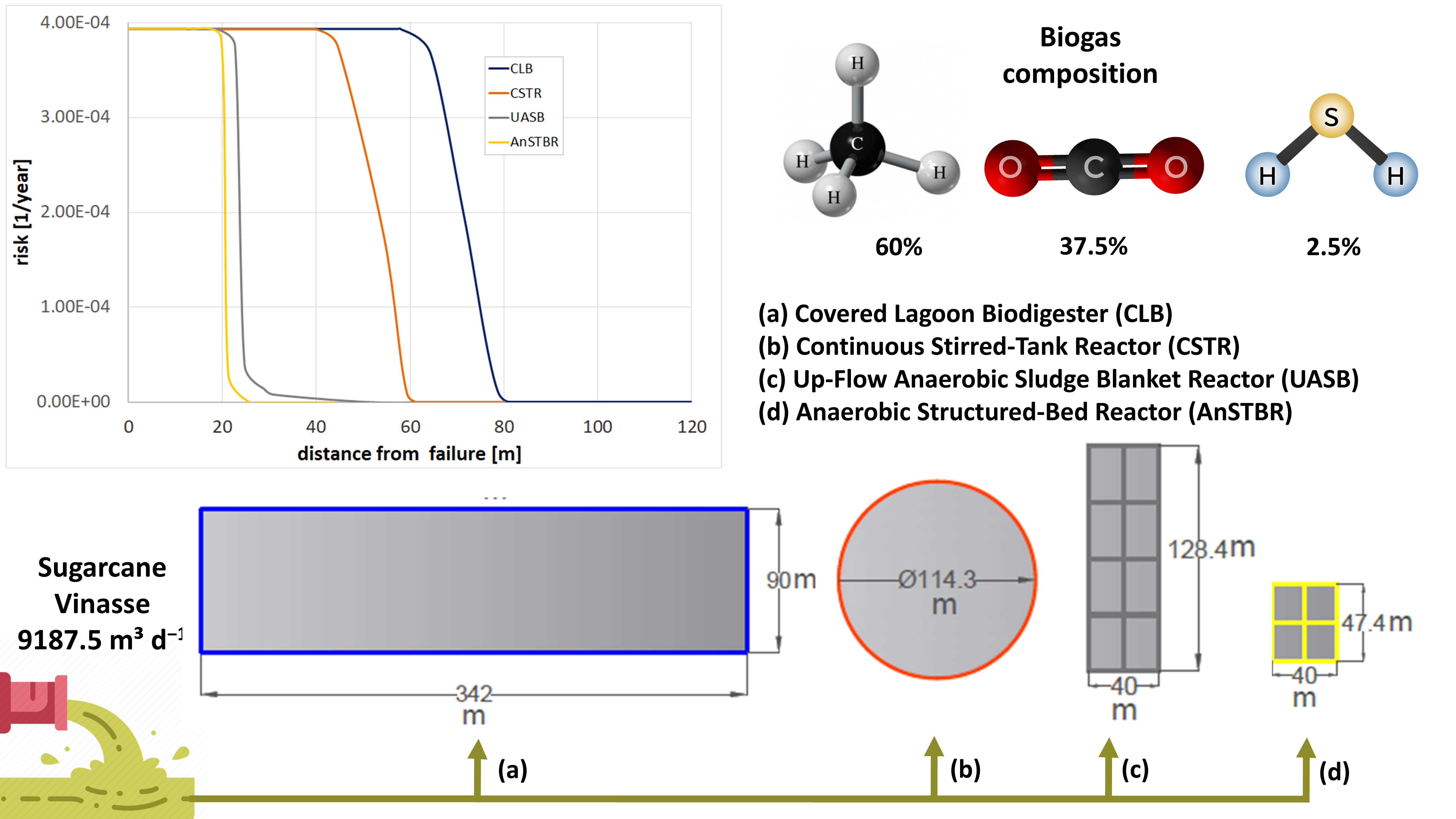
Graphical Abstract

1. Introduction

Finding sustainable solutions to interconnected challenges such as population growth, energy scarcity, and climate change is one of the major challenges of the 21st century. The global population has increased drastically over the last century, largely driven by industrialization supported by fossil fuels (oil, coal, and natural gas). However, in addition to being finite, these energy sources are central contributors to the current environmental crisis through greenhouse gas (GHG) emissions [1,2]. In this context, biofuels derived from renewable biomass have emerged as strategic alternatives for supporting the transition to cleaner energy systems [3]. Among them, biogas produced through anaerobic digestion (AD) is a versatile energy carrier that simultaneously enables energy generation and environmentally adequate waste treatment [4]. Depending on the purification level, biogas can be used for heat and power cogeneration or upgraded to biomethane (bioCH4; >90% CH4) as a substitute for natural gas (NG) [5,6].
Brazil, the world’s largest producer of sugarcane ethanol, holds significant potential for biogas generation within the same agroindustrial chain. During the 2022–2023 harvest, 31.3 billion liters of ethanol were produced [7], generating roughly 12 L of vinasse per liter of ethanol [8]. This corresponds to an estimated 375.6 billion liters of vinasse in a single season. The energetic potential of the biogas obtainable from this residue (14,486 GWh) would allow the substitution of 20% of national NG consumption or 90% of the electricity produced by coal-fired thermoelectric plants [9]. It is worth noting that the Brazilian sugarcane mills are located mostly in the southeast region (higher population density) and the season occurs in the months that show a lower rainfall index (April–November). Both factors might favor the electrical energy supply for the Brazilian matrix as a complementary source to avoid coal thermoelectrical power plants during the dry season, once the energy matrix depends almost completely on the hydroelectrical power plants [6].
Sugarcane vinasse is characterized by high concentrations of organic matter and sulfate (SO42−), both of which strongly influence biogas production and composition [10]. The availability of soluble and easily degradable organic matter such as carbohydrates, lactic acid, and glycerol [11,12] makes vinasse a great source of methane (CH4) production through AD. Methane is responsible for the energetic value of biogas and presents a lower heating value (LHV) of 35.82 MJ·Nm−3 [13]. Conversely, the presence of SO42− stimulates the activity of sulfate-reducing bacteria, producing hydrogen sulfide (H2S) as an end-product in both liquid and gaseous phases. H2S is a highly corrosive and toxic compound that can inhibit microbial activity [14]; impair gas utilization equipment through corrosion caused by sulfuric acid (H2SO4) formation when it reacts with water vapor [15,16]; and contribute to acid rain formation by releasing sulfur dioxide during combustion [17]. Biogas generated from vinasse typically contains 55–65% CH4, 35–45% CO2, and 1–4.5% H2S (10,000–45,000 ppm) [18], highlighting the relevance of H2S management.
Beyond technological implications, the composition of biogas poses critical safety risks. The bioenergy sector (i.e., ethanol, biodiesel, biomass, and biogas) records the highest number of accidents resulting in severe injuries and fatalities in biogas facilities [19]. Quantitative analyses reveal that accident rates in Europe have grown faster than the sector itself [20,21,22]. In these risk assessments, the “critical event” are biogas leakages, which may lead to explosive mixtures when CH4 is released into the atmosphere in the presence of air and potential ignition sources [20,21,22]. For biogas composed of 60% CH4 and 40% CO2, explosive atmospheres may form at concentrations between 8.5% and 20.7% of the mixture in air [23].
In turn, H2S poses severe risks to human health, even at relatively low concentrations. High-level exposure can lead to olfactory paralysis, respiratory failure, and death [22]. H2S is the second leading cause of inhalation-related fatalities after carbon monoxide [24], and lethal concentrations are reported at approximately 300 ppm [25]. Quantitative studies confirm that intoxication by H2S is one of the main causes of death in accidents in biogas plants. Even moderate exposures can trigger acute symptoms such as headaches, dizziness, and eye irritation [22], underscoring the need for strict monitoring. The critical unit in biogas plants is the anaerobic reactor due to the high concentration of biogas produced and stored [26]. Moreover, in a quantitative study [20] almost all accidents occurred in anaerobic reactors integrated with or without gasholders.
Despite the wide variety of anaerobic reactor technologies available for biogas production, there is a lack of studies examining how design parameters affect the safety performance of systems operating with sugarcane vinasse. The large volumes and high organic loads of vinasse require large-scale reactors, whose configuration directly affects both processing efficiency and potential hazards. Moreover, no previous study has evaluated the specific risks posed by the high H2S concentrations commonly found in biogas from vinasse digestion and their implications for worker health and plant safety. Therefore, this study aims to fill this gap by assessing how different reactor designs impact the risks of fire, explosion, and H2S toxicity in biogas production from sugarcane vinasse.

1.1. Technological Pathways for Anaerobic Digestion of Sugarcane Vinasse: Anaerobic Bioreactors

Despite the huge energy potential inherent in AD sugarcane vinasse, its utilization remains limited, with only 10 industrial-scale biogas production plants out of 355 distilleries across the Brazilian territory [27]. Among these biogas production plants, the most applied technologies are the covered lagoon bioreactors (CLBs) and continuous stirred-tank reactors (CSTRs) [5,27], albeit with constraints on organic loading rate processing capacity. CLB systems can withstand a maximum organic loading rate (OLR) of 2.0 kg-COD m−3 d−1, while these values should reach no more than 5.0 kg-COD m−3 d−1 in CSTRs [28]. Despite these limitations, CLB technology has found widespread adoption in Brazilian sugarcane biorefineries and in ethanol-producing regions across Asia (e.g., India, Pakistan, Thailand, and China) due to its simplicity, low implementation costs, and operational ease [27]. In turn, CSTR technology demands higher investment and operational costs than CLB, but it is mostly adopted for co-digestion along with other organic by-products from the sugar and ethanol production chain (e.g., filter cake and/or straw) [5,27].
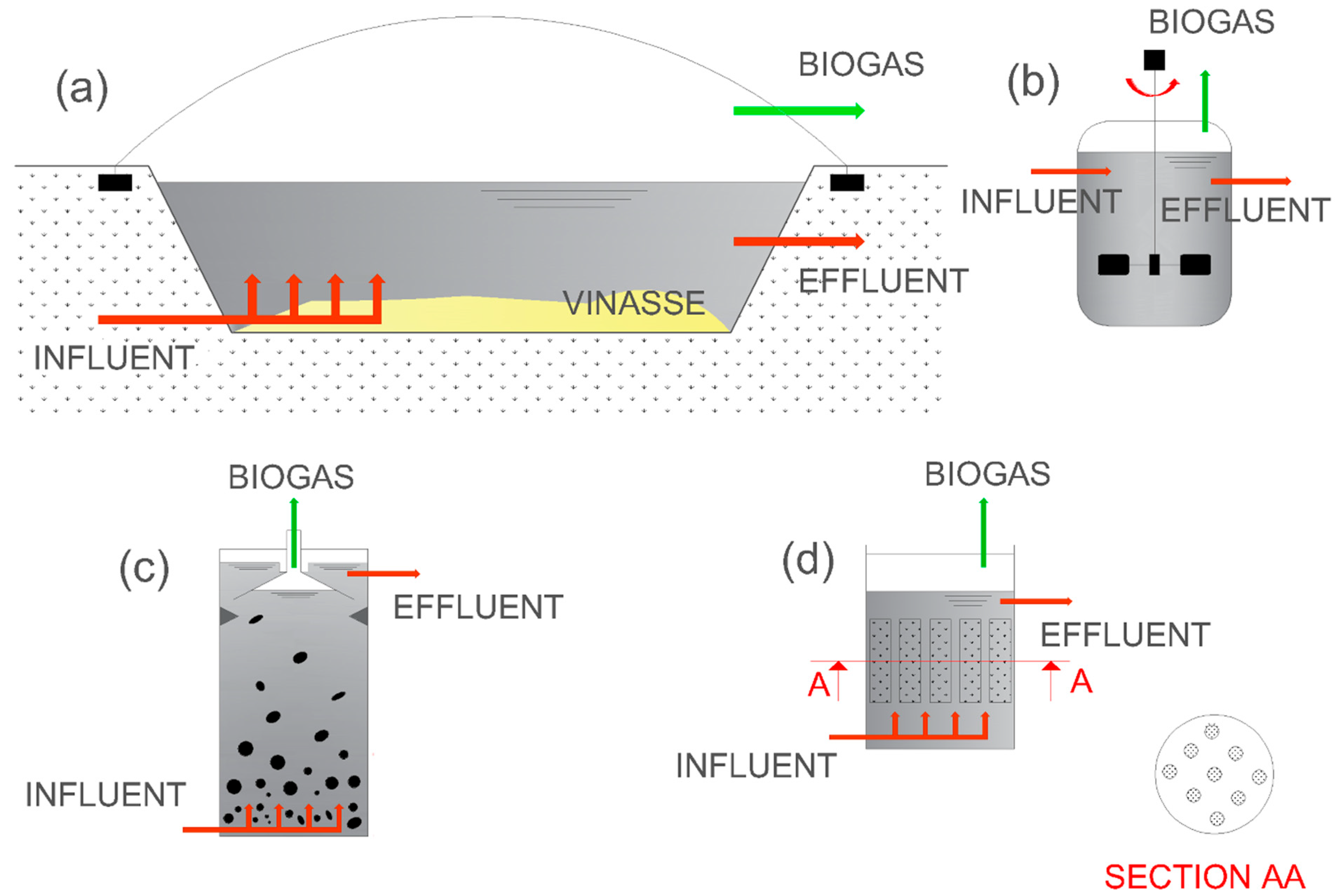
In the 1980s, significant efforts were made to scale up high-rate anaerobic bioreactors in Brazil, which are particularly suited for effluents with high organic matter concentrations, such as sugarcane vinasse. Among the various anaerobic bioreactors explored, the implementation of upflow anaerobic sludge blanket (UASB) reactors for sugarcane vinasse biodigestion began in 1986 with a mesophilic UASB system in São Paulo. Subsequent advancements in 1987 introduced a thermophilic variant at the São Martinho distillery, resulting in increased gas production compared to mesophilic processes. However, challenges related to operational costs and scalability hindered widespread industrial adoption during the late 1980s and early 1990s [5,27]. Despite these obstacles, ongoing research continues today, focusing on scaling up high-rate AD bioreactors that combine suspended and attached biomass growth. Promising developments include the anaerobic structured-bed reactor (AnSTBR) [29,30,31,32], which shows potential at the bench scale, and a new pilot-scale hybrid anaerobic bioreactor (HaNR) [33], which combines both granule- and biofilm-forming consortia. In this context, a schematic representation of each technology is presented in Figure 1, followed by a description of each technology in the subsequent subsections, as the reactor configuration is the only variable assessed in the present study.

1.1.1. Covered Lagoon Biodigesters (CLBs)

CLBs are very common in many developing countries due to their low cost and simple operation [27,34]. CLBs are typically applied for agro-industrial wastewaters (e.g., pig and cattle farming, dairy industry) with low solid concentrations (0.5–2%) and high hydraulic retention time (HRT) to guarantee the contact needed between the microorganisms and substrate (i.e., organic matter) [27,35]. Therefore, the maximum OLR applied in this technology is limited to approximately 2 kg-COD m−3 d−1 [28]. The CLB is a configuration with a horizontal flow often with no agitation or heating system, which limits the rate of biochemical reactions and consequent biogas yield compared with other configurations [34,36]. Demanding huge volumes, sometimes hundreds of thousands of cubic meters, to achieve the HRT required for the biological process, requires periodic cleaning due to the solid’s accumulation [34,37]. It consists of an anaerobic lagoon covered with a plastic or high-density polyethylene (HDPE) membrane to store the biogas produced; however, in many cases, the reactors do not present an adequate covering, showing many issues related to biogas leakage for the atmosphere [37,38].

1.1.2. Continuous Stirred-Tank Reactor (CSTR)

CSTRs are the most applied bioreactors for biogas production from agricultural plants and can cover many kinds of substrates, including effluents with high solid concentrations (3–16%) [35,37]. Compared with the CLB, the CSTR improves the rate of biochemical reactions due to the (theoretically complete) mixing conditions, which improve the contact between the substrate and microorganisms, as well as the temperature control, which enhances the growth rates for a defined temperature range (mesophilic or thermophilic) [34]. In this way, this reactor configuration can handle an OLR up to 5 kg-COD m−3 d−1 [28]. On the other hand, this configuration demands higher operational costs related to power consumption and mechanical parts maintenance [39]. The main drawback is that the HRT is equal to the solids retention time (SRT), i.e., the microorganisms and the substrate remain in the reactor during the same period; therefore, low HRT causes biomass washout [40]. In practical terms, the organic matter conversion efficiency is intrinsically related to the bacterial growth rate, and once these rates are slow, large volumes of reactors are still required to achieve suitable performance levels when processing high-strength wastewaters.

1.1.3. Upflow Anaerobic Sludge Blanket (UASB) Reactor

This reactor consists of a high-rate anaerobic reactor with granular sludge for wastewaters with a low solids concentration. In this configuration, the SRT is uncoupled from the HRT due to the biomass (sludge) retention inside the reactor because of the granulation and consequent high settleable capability of the sludge, in addition to the three-phase separator [41]. This characteristic guarantees a high biomass concentration in the sludge blanket (20–60 g L−1) which provides high SRT (>30 days) even under low HRT (4–8 h) [42,43]. Therefore, the volume of the reactor decreases significantly in comparison to the former configurations (CLB and CSTR), resulting in more compact units that can withstand higher OLR levels (ca. 10 kg-COD m−3 d−1) [18]. On the other hand, the UASB requires a lengthy start-up period due to biomass granulation, and the application of wastewaters with high suspended solids concentrations (such as sugarcane vinasse) is restricted. Additionally, the application of high effluent flows may lead to enhanced biomass washout [44,45,46].

1.1.4. Anaerobic Structured-Bed Reactor (AnSTBR)

AnSTBR is a high-rate anaerobic reactor with fixed film where packing media is placed for attached bacterial growth and, therefore, the SRT is also uncoupled from the HRT. The support material is fixed in stainless-steel rods that are located longitudinally and intercalated in a way that in a way that the bed zone is not completely filled, which ensures high porosity [30]. The packing material can be made of strips of polyurethane (PU) foam [30,31,32] or plastic materials, such as low-density polyethylene (LPDE) rings [11,12,47]. Therefore, the AnSTBR combines the advantages of the anaerobic filters and prevents the main limitation of fixed film reactors, i.e., the clogging of the bed zone due to biomass and solids accumulation [29,30]. This configuration presents the main advantages of fixed film reactors, including a short start-up period (once granulation is not required), good stability of the process when applied to high organic loads due to biomass retention, and a higher capacity to absorb toxic and organic loads [41,48]. Therefore, an OLR up to 25 kg-COD m−3 d−1 was reported [30]. However, it is important to stress that full-scale applications of the AnSTBR in the case of vinasse are still unavailable, with numerous promising results observed only in bench-scale reactors [29,30,31,32].

2. Materials and Methods

2.1. Design Criteria, Anaerobic Bioreactor Dimensions, and Biogas Characteristics

As previously discussed, each AD reactor configuration provides different conditions for biochemical reactions, which impact the processing capacity and, consequently, the volume of the reactors. In this study, the risks associated with the application of each of the four reactor configurations in the treatment of sugarcane vinasse to obtain biogas were evaluated. A distillery producing 205.5 × 10³ tons/season of sugar and 214.5 × 10³ m3/season of ethanol was used as the reference [10], resulting in a vinasse flow rate (VFR) of 9187.5 m3 d−1. The organic matter concentration (CODvinasse) was defined based on a distillery with the same production pattern (i.e., annexed distillery; sugar + ethanol production), which results in 33.5 kg-COD m−3 [12]. The working volume (VW) of each reactor was calculated based on the applied OLR, according to Equation (1). The design parameters and resulting reactor dimensions are shown in Table 1.
V w m 3 = V F R × C O D v i n a s s e O L R
The design criteria for the CLB (90 × 342 × 5 m; W × L × Hw) were based on the range of working height (3–5 m) and the “length/width” ratio (2:1–5:1) usually applied for this bioreactor [50]. In turn, for the CSTR, any tank size can be applied as long as the mixing process can be carried out [37]. Just one tank was considered in this study as a conservative approach, ensuring that the direct hazards comparison was based just on the OLR processing capacity. Therefore, the Hw was sized as 6 m based on a CSTR design characteristic reported elsewhere [51] and the resulting area used to design the diameter of the tank. The UASB has a hydraulic limitation once it is an upflow reactor with granular-based microbial growth and then needs to fulfill an optimal upflow velocity within 0.5–0.7 m h−1 range [43] to guarantee the mass transfer from the substrate to the sludge blanket as well as avoid biomass washout. Hence, the Hw was fixed at 6 m [43] and the area was divided into 8 rectangular modules (642 m2 each) that guaranteed an optimal upflow velocity (0.6 m h−1). Finally, the design criteria for the full-scale AD of sugarcane vinasse on the AnSTBR were adopted from previous research [49], resulting in a total of 6 modules of 316 m2 (totalizing 1896 m2; 6 modules of 20 × 15.8 m).
The biogas composition considered was based on the range reported in the literature for AD of the sugarcane vinasse in the Brazilian sugar and ethanol industry: 60% CH4; 37.5% CO2; 2.5% or 25,000 ppm H2S [18]. An internal pressure of 0.05 bar was considered, as it is the typical operational pressure of anaerobic bioreactors [36]. Additionally, an overpressure scenario of 1 bar was considered to evaluate the impact of a possible operational issue. The headspace volume was defined based on the ratio of “headspace/working volume” for each configuration reported elsewhere [34,49]. A sensitivity analysis regarding the headspace-to-liquid ratio was not performed in this study. The headspace volume adopted in the simulations was based directly on values reported in previous scientific publications and used as fixed design parameters for each technology.

2.2. Risk Assessment

2.2.1. Probability and Consequence Analysis

The technical risk (RISK) related to the failure in the anaerobic bioreactor is expressed as the product of the probability of occurrence of this failure (Pfi) and its consequences Ci (Equation (2)). When there is a high number of these failures, the risk is the sum of all risks related to individual events [52,53].
R I S K = i = 1 n P f i × C i
The consequences of the risk assessment process may include human fatalities or monetary losses. In the case of human casualties, the consequences of hazardous events associated with failures of technical installations can be determined by the severity of human injuries. Probit functions were used to estimate them, linking the size of the impact with the negative effects on people and the environment. The consequences of an accident, which determine the level of injury, can include, for example, the impact of a specific concentration of a chemical substance, an overpressure leading to an explosion phenomenon, or a heat flux resulting in a fire phenomenon. The general form of the equation for probit functions is shown in Equation (3) [52]. The exposure time assumed in this study was 10 s for all cases. In Equation (3), the term Pr is the probit function, which is a measure of the percentage of humans injured or dead as a result of exposure to a given type of load V; “a” and “b” are probit equation constants depending on the type of injury and type of load; and, V is the measure of the intensity of harmful effects (dose).
P r = a + b l n V

2.2.2. Hazardous Event Scenarios

The safety assessment of anaerobic digestion systems involves analyzing two main accident scenarios to evaluate the consequences of uncontrolled biogas releases. The first scenario focuses on the partial rupture of the bioreactor, leading to biogas leakage through openings of different sizes and pressures, and subsequent hazardous events such as fire, explosion, or toxic exposure. The second scenario represents a more critical condition characterized by the total structural failure of the bioreactor and the complete release of stored biogas to the atmosphere. By comparing both scenarios, the analysis aims to identify how variations in leak size and operating pressure influence the magnitude of hazardous zones and potential risks to workers, providing key insights for preventive design and emergency planning.
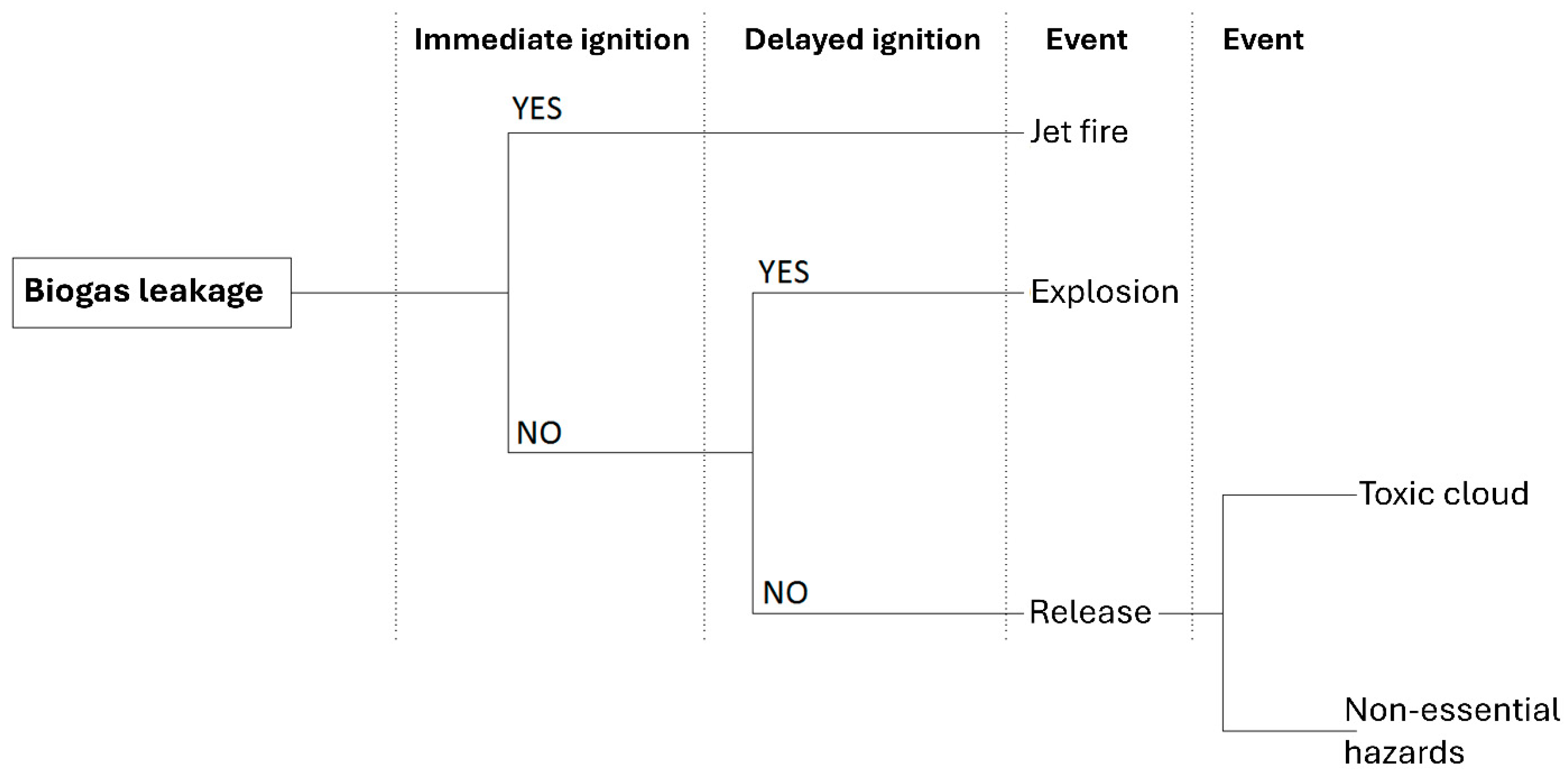
The identification of hazardous event scenarios was based on previous research that applied event tree analysis (ETA) and identified the uncontrolled biogas leak as a critical event [22]. Figure 2 summarizes all hazardous events that follow the biogas leakage from a partial rupture condition, like immediate ignition (jet fire), delayed ignition (explosion), or no ignition (H2S intoxication). In this study, a 200 mm rupture was selected as a conventional reference diameter widely used in risk assessment methodologies, whereas a 1000 mm tear was included to represent more severe, yet realistic membrane failures reported by operators of covered lagoons. Similarly, the pressures of 0.05 bar and 1 bar correspond to typical operating conditions and an abnormal overpressure scenario, enabling a broader evaluation of potential accident consequences.
The “Hazardous zone” (HZ; m2) is the area where the consequence (fire, explosion, or H2S toxicity) can result in some level of health injury or even death for the workers. Meanwhile, the term “Potential hazardous zone” (PHZ; m2) considers the total perimeter of each bioreactor (m) times the “Hazardous range” (m), i.e., the distance from the hole up to the farthest point from each HZ on the different injury levels or death.
The complete rupture scenario was characterized by the total damage of each bioreactor and the release of the whole biogas into the atmosphere. For this scenario, the consequence analysis evaluated the fireball, explosion, and H2S toxicity in terms of potential injuries or death, and just the HZ and HR were calculated, since the complete rupture causes consequences on the total perimeter of the bioreactor. Both scenarios (partial and complete rupture) were tested using the PHAST v6.7 software.

3. Results

3.1. Analysis of the Hazards Related to Failure of the Biogas Installation

The critical event is a failure related to the release of biogas from a partial or complete rupture, which may lead to various hazardous final events. The further development of hazardous event scenarios is related to the level of damage to the installation. The process of immediate and delayed ignition may result in a jet fire or a fireball, an explosion, the movement of a cloud of hazardous H2S toxic concentration, or no hazard whatsoever [53,54,55].

3.1.1. Fire

Hazards in biogas plants are significantly related to the geometry of the plant, the parameters of its operation, and the composition of the biogas produced, i.e., the content of flammable and/or toxic compounds. Fires caused by biogas ignition can occur in the form of a jet fire in the case of partial rupture. A jet fire occurs when biogas released from a pressurized source is ignited close to the source of the release. This type of fire is characterized by a long and stable flame. Each of the fires has negative effects on humans and the environment related to the direct impact of the flame and the generated heat flux. For example, the lower values of this heat flux at 2.5 kW m−2 cause human pain and the breaking of glass after a sufficiently long period of exposure. Higher values at 12.5–15 kW m−2 cause first-degree burns and melting of plastics. In turn, values at 25 kW m−2 cause significant injuries, and values above 37.5 kW m−2 can result in human deaths [56,57].
In the case of jet fire, the HZ regarding the heat flux after biogas release is equal for all bioreactors evaluated (CLB, CSTR, UASB, and AnSTBR) in each condition of pressure and hole size. In this scenario, the volume of the biogas stored in the headspace did not impact the HZ; meanwhile, the hole size and pressure were the parameters that impacted the range of the hazard (Table 2; HR). This phenomenon occurs because the main element in the estimation of HZ is the mass flux in the hole, which is not affected by the biogas volume stored. However, it should be noted that the volume of the gas will affect the duration of the fire phenomenon. In the case of a greater volume of biogas, the duration of its discharge will be longer and, therefore, it will affect the duration of the fire phenomenon and the impact of its consequences.
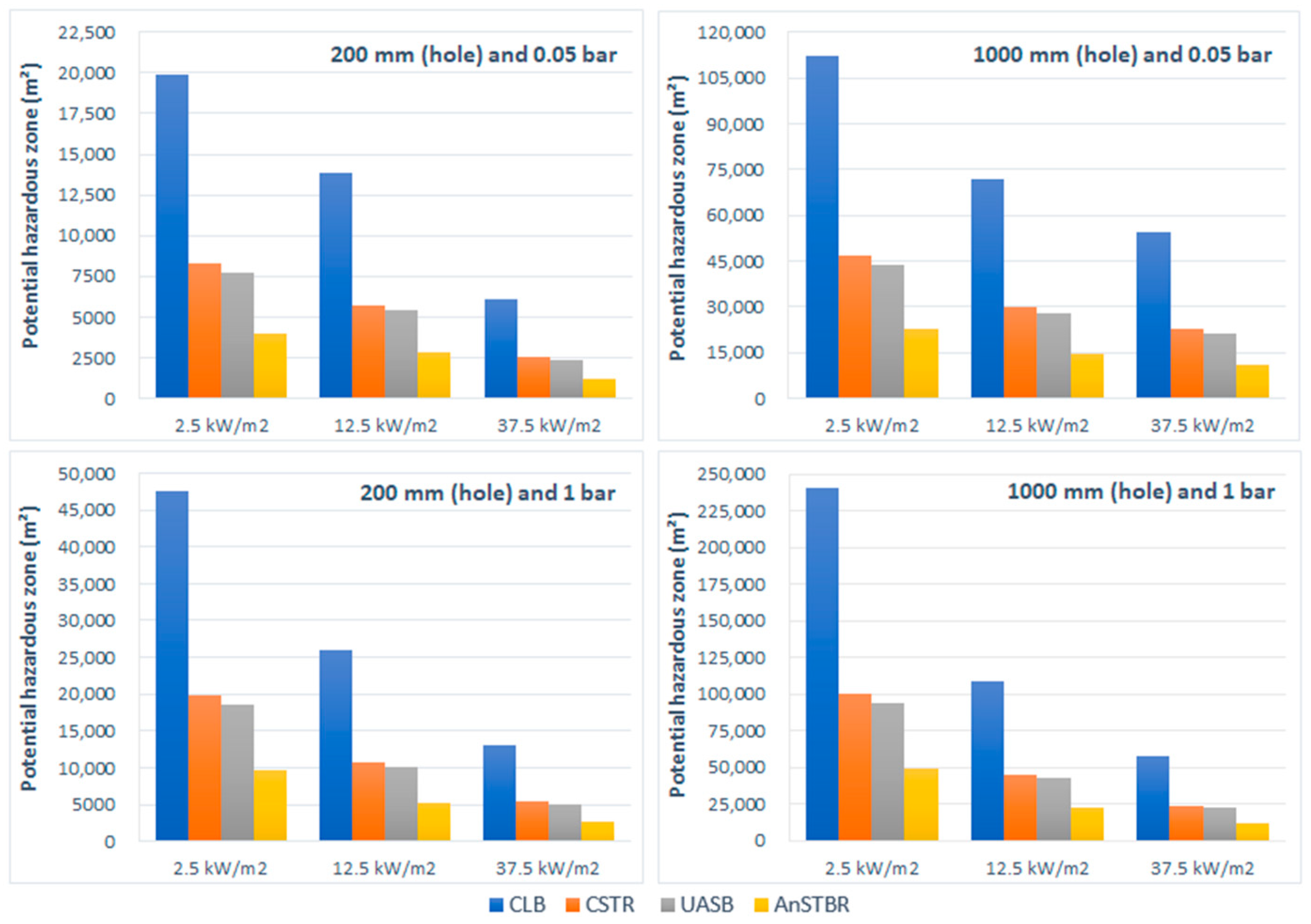
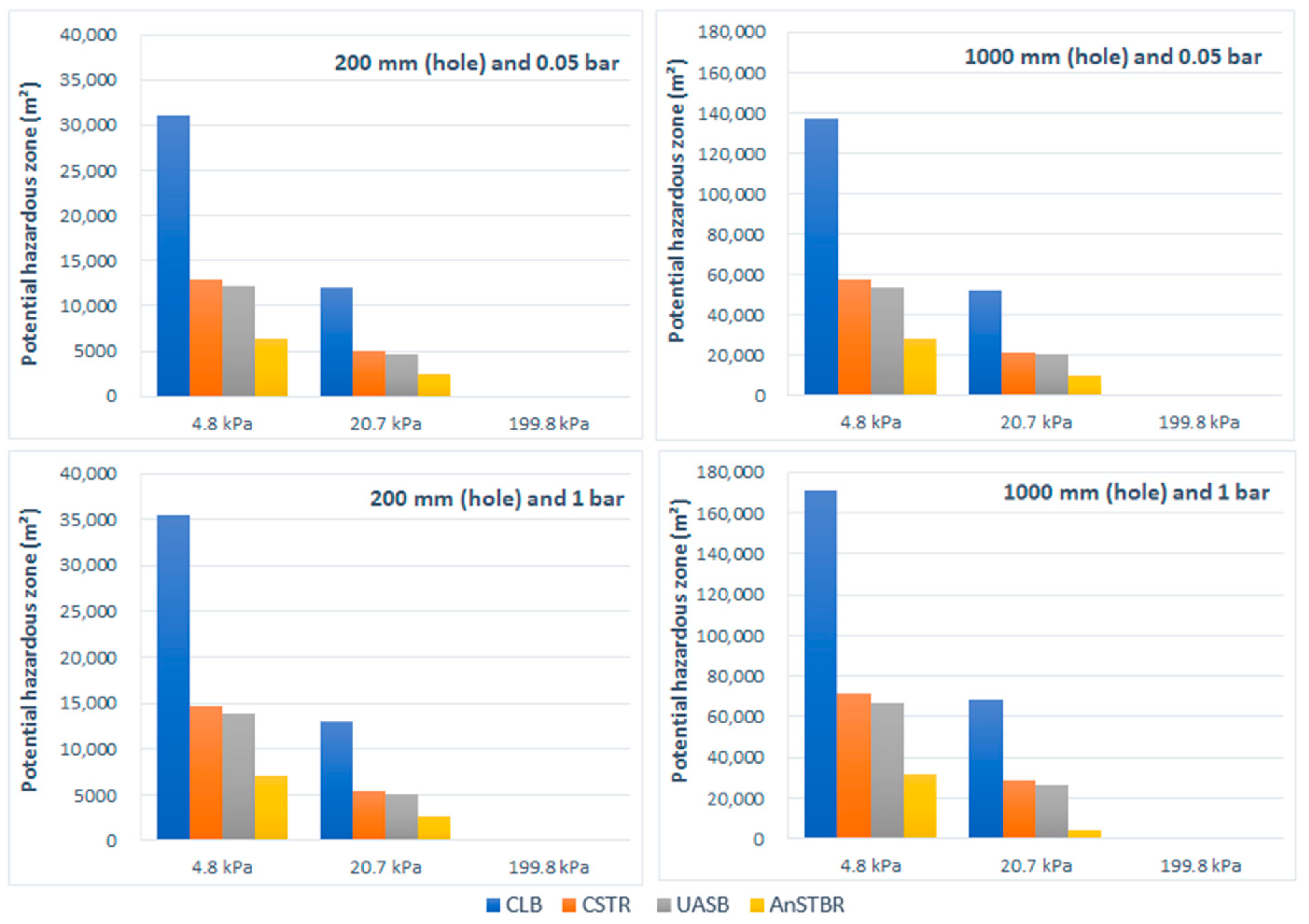
On the other hand, the “Potential Hazardous Zone” (Figure 3; PHZ) was directly affected by the perimeter of each bioreactor, i.e., geometry, which is intrinsically related to the OLR utilized in each technology and the resulting volume required to vinasse biodigestion. The PHZ with risks of death was up to 5-fold higher in the case of CLB in comparison with the AnSTBR for both conditions of hole size (200–1000 mm) and pressure (0.05–1 bar). The CLB achieved a PHZ with risk of death (i.e., 37 kW m−2) up to 57,024 m2. Meanwhile, for the AnSTBR, this area decreased to 11,537 m2 (1000 mm hole size; 1 bar).
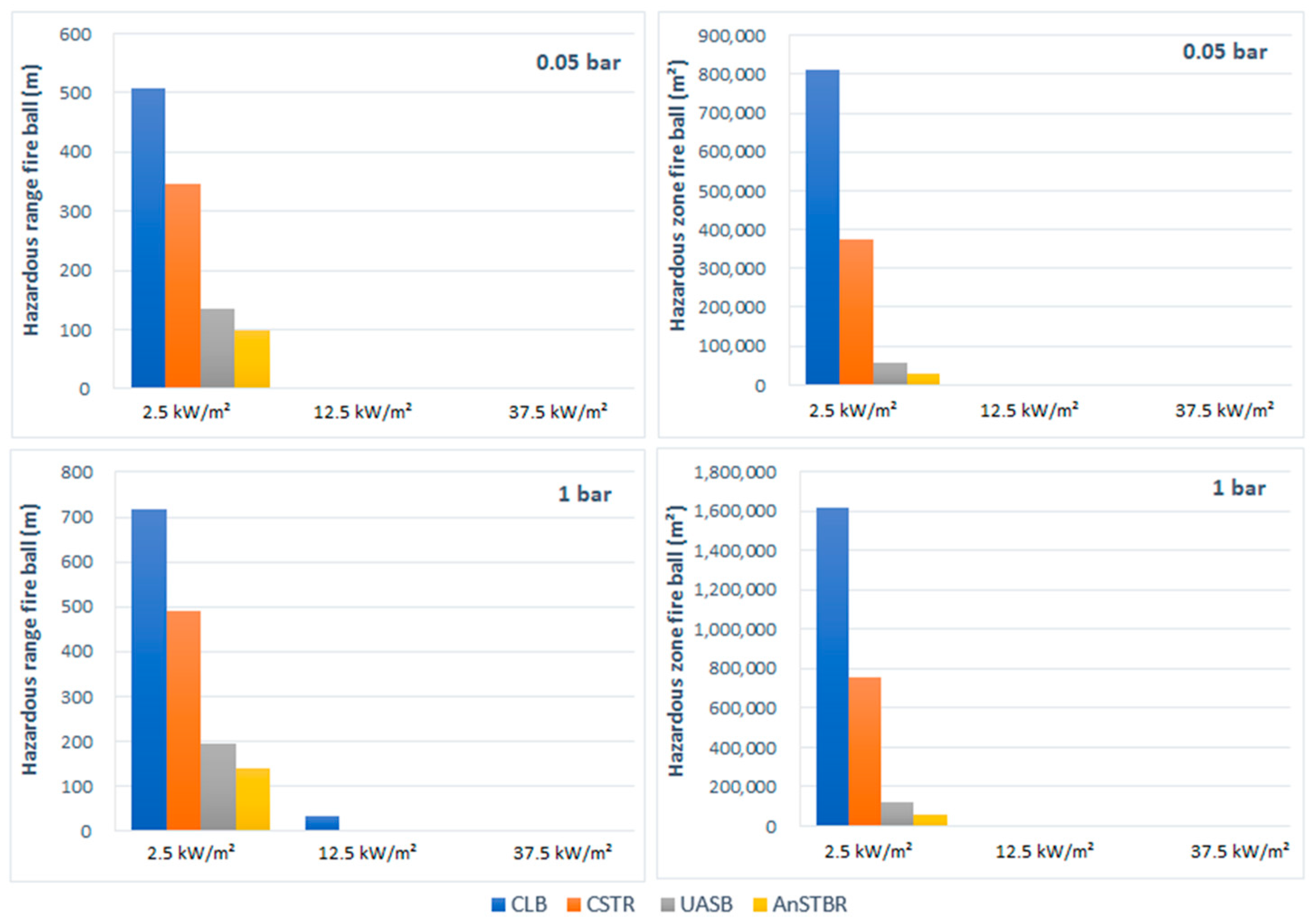
The “fireball” consequences caused by a complete rupture impacted both the hazardous area and range, resulting in the biogas volume stored in each bioreactor (Figure 4). In this case, there is no risk of death in any bioreactor under any pressure conditions, which is related, among other things, to the low storage pressure of biogas. The change in biogas pressure has significantly expanded the areas associated with the negative impact of the heat flux generated by the fire. For the first-degree burns (12.5 kW m−2), the CLB under 1 bar of pressure resulted in an area of 3886 m2 (HZ) and a range of 35 m (HR). However, the amount of pain caused by a 2.5 kW m−2 heat flux was considerably greater than that caused by jet fire, mainly in the technologies with a lower processing capacity (CLB and CSTR), which directly affected the reactor size and the resulting biogas stored. The CLB technology achieved up to an area of 1.61 million m2 (HZ) and a range of 717 m (HR) under 1 bar of pressure. Therefore, although a complete fire rupture (fireball) sounds like a very serious accident, the heat flux would not cause any direct risk of death like the jet fire. Conversely, the vicinity would be more affected since the heat flux could reach 508 to 717 m (HR) in the worst-case scenario (CLB; 0.05 to 1 bar).
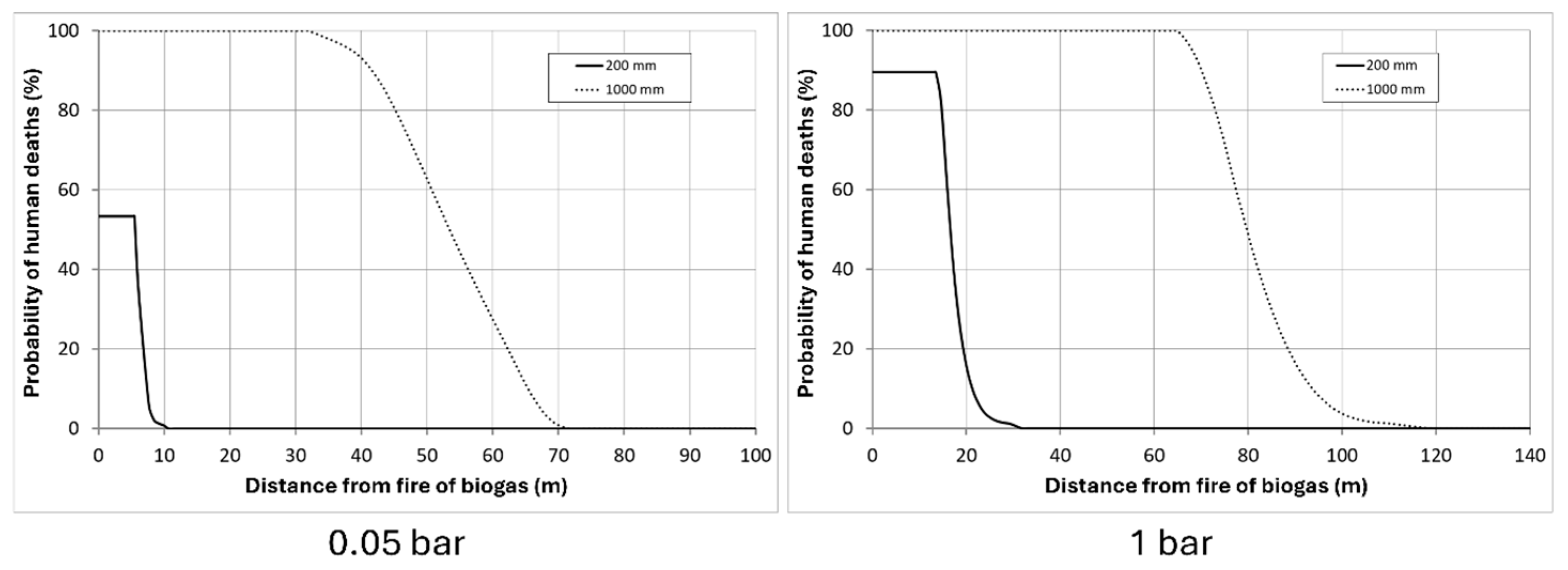
The probability of death resulting from various types of fires is shown in Figure 5 in the case of partial rupture (i.e., jet fire), because the fireball did not generate a level of heat flux capable of causing human death. A 100 probability of human death was noted for both analyzed levels of biogas pressure and the larger hole size (1000 mm) in the event of a biogas jet fire. The range of areas associated with 100% human deaths will be approximately 32 and 65 m for 0.5 and 1 bar, respectively. In the case of lower pressure and a smaller diameter of damage (200 mm), the probability of human death will be no more than approximately 55% and will extend to a range of about 5 m. In the case of higher pressure, the probability will be about 90% and will extend to a range of about 16 m.

3.1.2. Explosion

An explosion is another type of hazard associated with the flammable properties of biogas components. Under favorable conditions, it may be a consequence of the biogas installation’s partial or complete failure. The negative effects of this phenomenon are generated overpressure and flying debris from the ruptured installation. For example, overpressure of 0.21 kPa causes large glass windows to crack, 4.8 kPa damages building construction, and 20.7 kPa causes minor damage to heavy machinery and equipment. Higher values of the overpressure generated by the explosion, i.e., at 99.9 kPa, 137.8 kPa, and 199.8 kPa, result in 1%, 50%, and 99% human fatalities from lung damage, respectively [57,58].
For the partial rupture scenarios, the consequences of the explosion follow the same pattern as jet fire. The hazardous range was equal among the bioreactors and was affected just by the hole size and pressure (Table 3). However, no lethal consequence for the considered pressure wave (199.8 kPa; 99% human death) occurred during the explosion simulation. The PHZ (Figure 6) was also directly affected by the perimeter of each bioreactor, i.e., geometry, which is intrinsically related to the processing capacity of each technology and the resulting volume required for vinasse biodigestion.
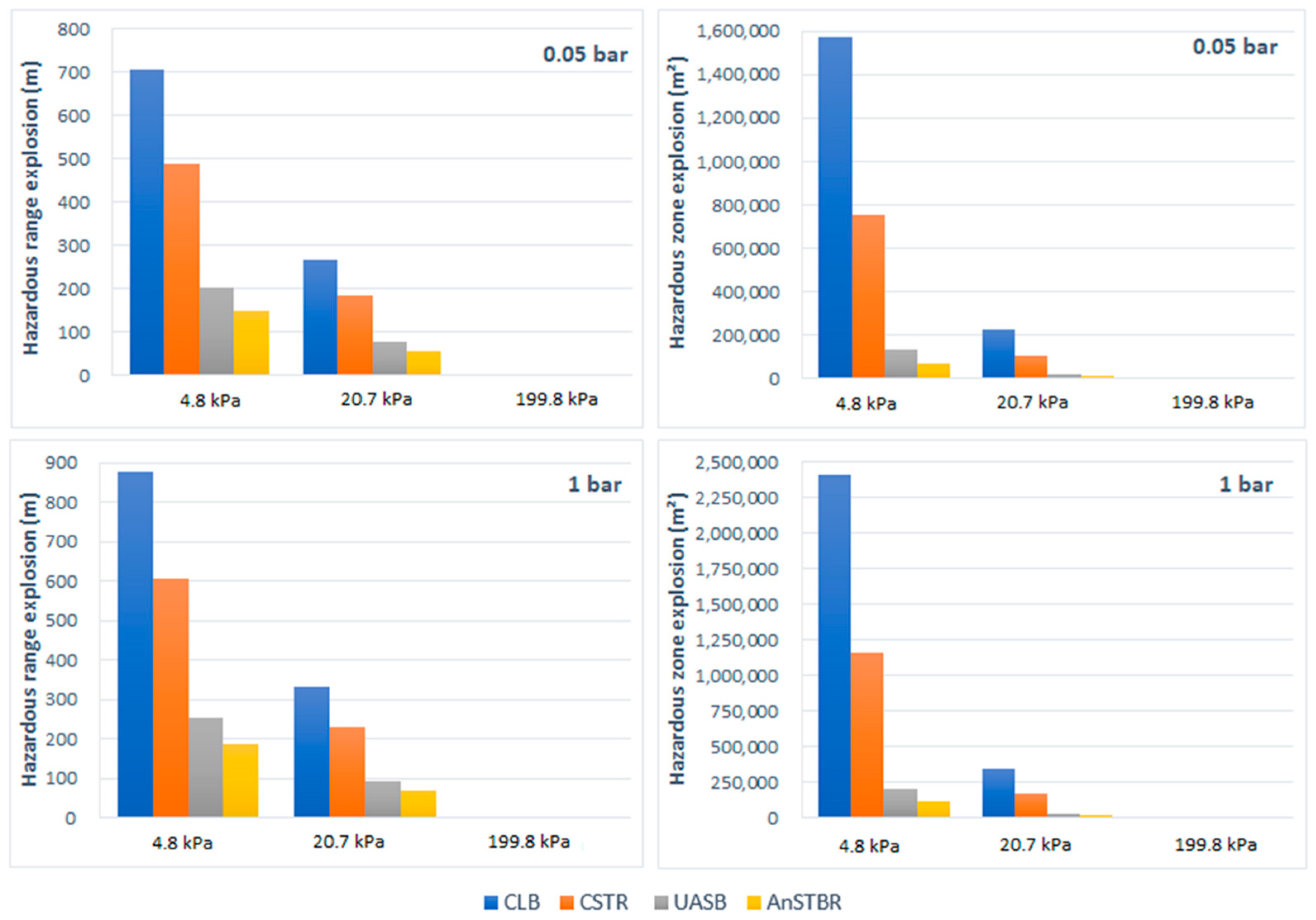
Similarly to the fireball scenario, no HZ or HR were associated with a pressure wave causing the death of humans in the complete rupture explosion simulations (Figure 7). Nonetheless, the range covered by the pressure wave of 4.8 kPa (damage to building construction) and 20.7 kPa (damage to heavy machinery and equipment) was considerably greater than the consequences caused by the partial rupture pressure wave (Table 3) or even the consequences of the fireball (Figure 4). In this case, considerable monetary loss and impact on buildings in the vicinity can occur as a consequence of a complete rupture and the following explosion. In this scenario, the HZ and HR were also affected by the reactor size and resulting biogas stored in the headspace. The 4.8 kPa pressure wave covered an area of up to 2.4 million m2 and 877 m range under 1 bar of pressure and 1.57 million m2 and a 708 m range under 0.05 bar of pressure for CLB technology. Conversely, for the high-rate AD bioreactors (UASB and AnSTBR), the consequences of the pressure wave were 11- and 3.5-fold lower for HZ and HR, respectively.
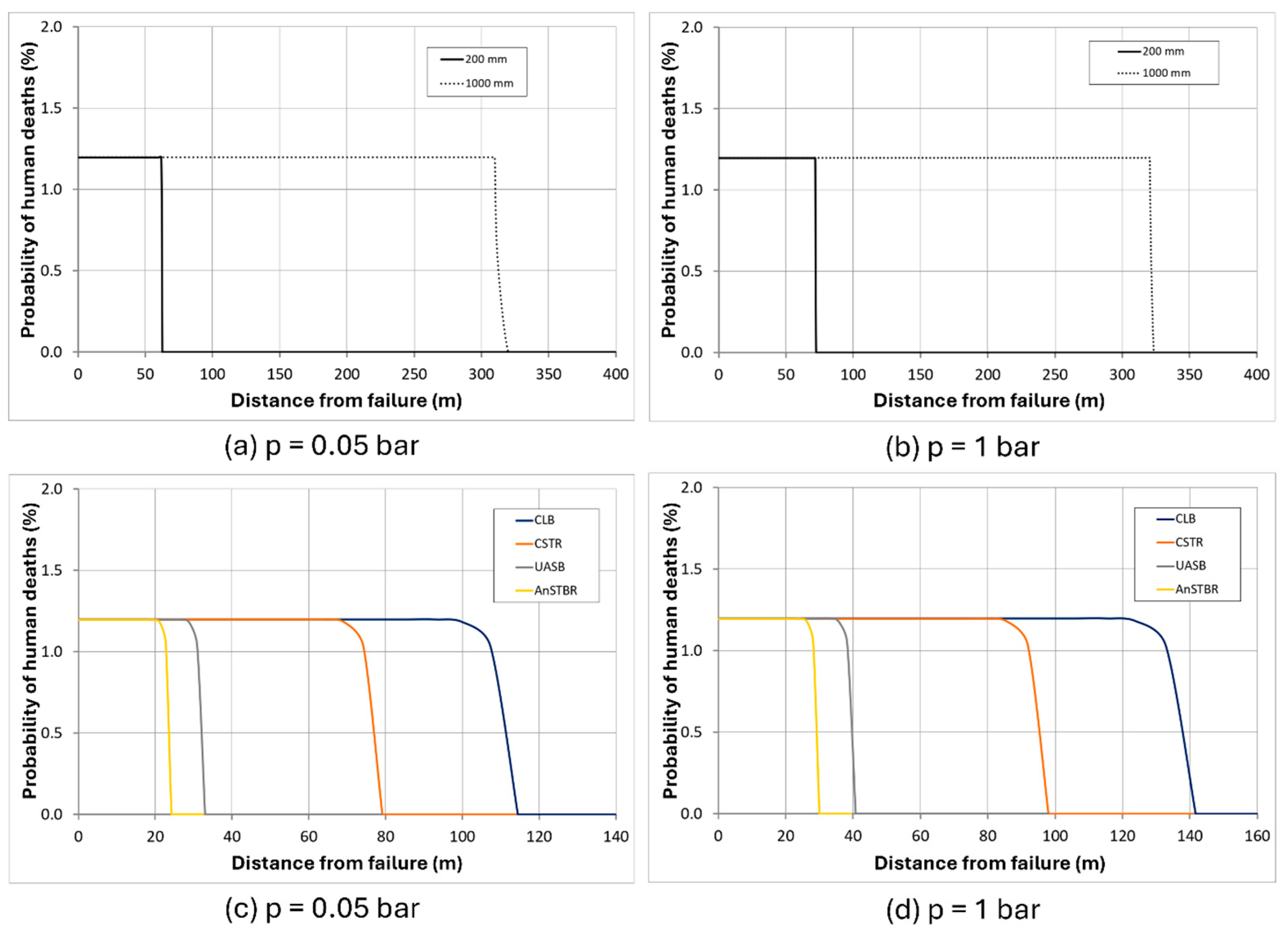
The probability of death as a consequence of partial or complete rupture followed by an explosion and pressure wave was very low for all conditions (1.2%; Figure 8). However, the distance from the bioreactor associated with this death risk increased, along with the hole size (Figure 6; partial rupture) and the volume of biogas stored in the different technologies (Figure 7; complete rupture). The overpressure scenario (from 0.05 to 1 bar) did not significantly impact these distances, unlike in the jet fire scenarios (Figure 3). On the other hand, unlike a fireball, despite the low probability, a complete rupture explosion can result in human death.

3.1.3. H2S Intoxication

Intoxication by H2S is one of the main causes of death in accidents in biogas plants [20,22]. There is no report in the literature that evaluates the impacts of the high H2S concentration usually found in the biogas evolved from vinasse on the health and safety of workers and operators of sugarcane vinasse biogas plants. H2S is extremely toxic: concentrations of 20–50 ppm can cause eye irritation (conjunctivitis) and lung irritation; concentrations of 150–200 ppm can affect one’s sense of smell and severely irritate the eyes and lungs; 500 ppm may cause sudden loss of consciousness (“syncope”); and concentrations above 1000 ppm are fatal [59].
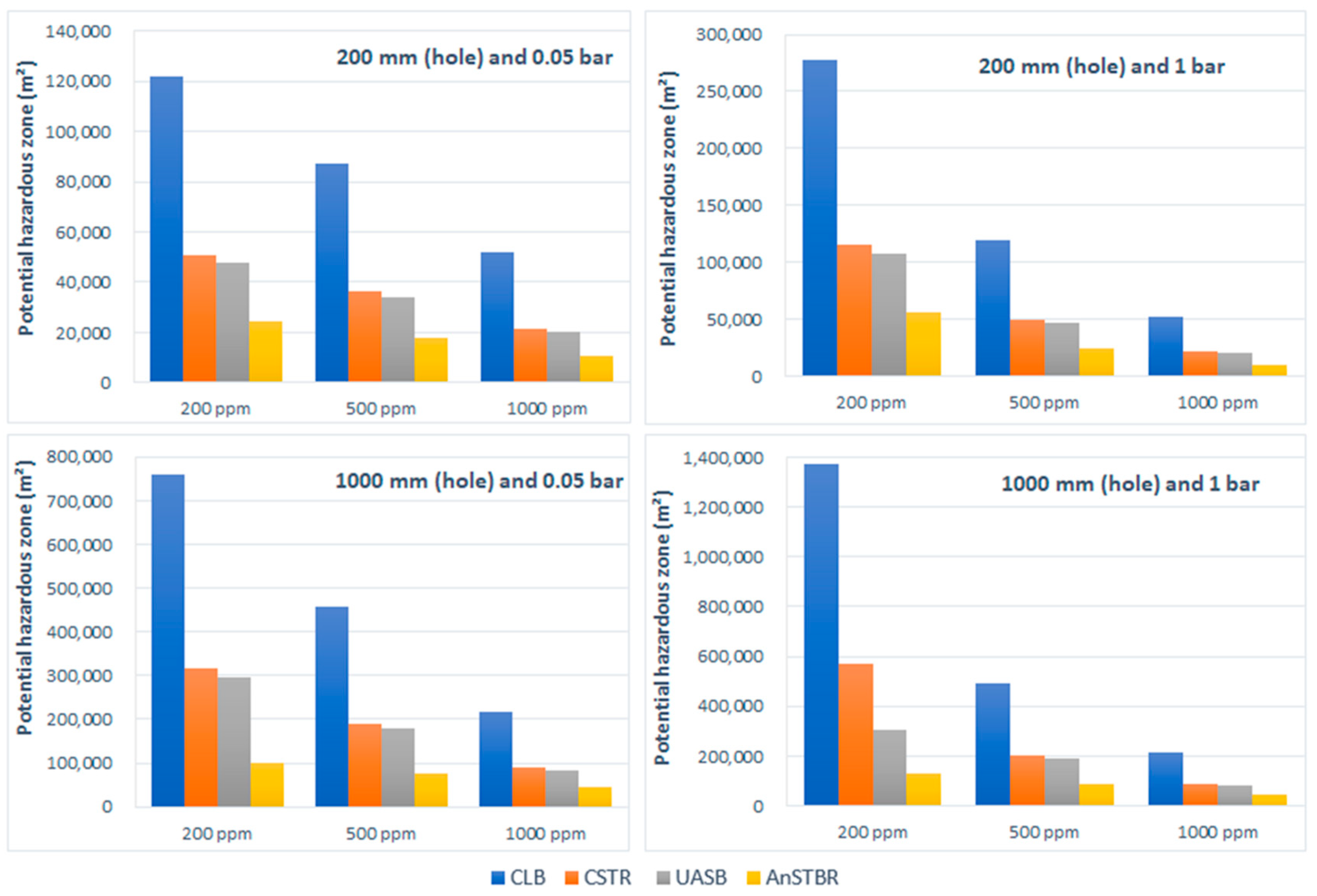
Among the potential hazards presented in biogas plants in the partial rupture scenarios, H2S intoxication presented a higher HR (Table 4) and PHZ (Figure 9) with risk of death. In this case, the pressure variation (0.05–1.0 bar) did not impact the area and range of the risk of death, but the hole size increased (60–252 m; 200–1000 mm; Table 4). The PHZ with death risks (1000 ppm; Figure 9) achieved an area that was up to 5-fold larger (CLB vs. AnSTBR), which was up to 217,000 and 44,000 m2 for CLB and AnSTBR (1000 mm; 0.05–1.0 bar; Figure 9), respectively. The HZ values were also equal for 200 mm holes at both pressures simulated (0.05–1.0 bar; Table 4) for all reactors considered in this study. Additionally, the larger hole size tested (1000 mm) was equal to the “death HZ” (1000 ppm; Table 4) and differed by 200 and 500 ppm at both simulated pressures (0.05 and 1 bar; Table 4). In this case, i.e., 1000 mm and 200–500 ppm, the reactor configuration impacts the hazardous range from a biogas leak in a partial rupture scenario, reaching higher values for the technologies with higher amounts of biogas stored (low-rate AD bioreactors, i.e., CLBs and CSTRs).
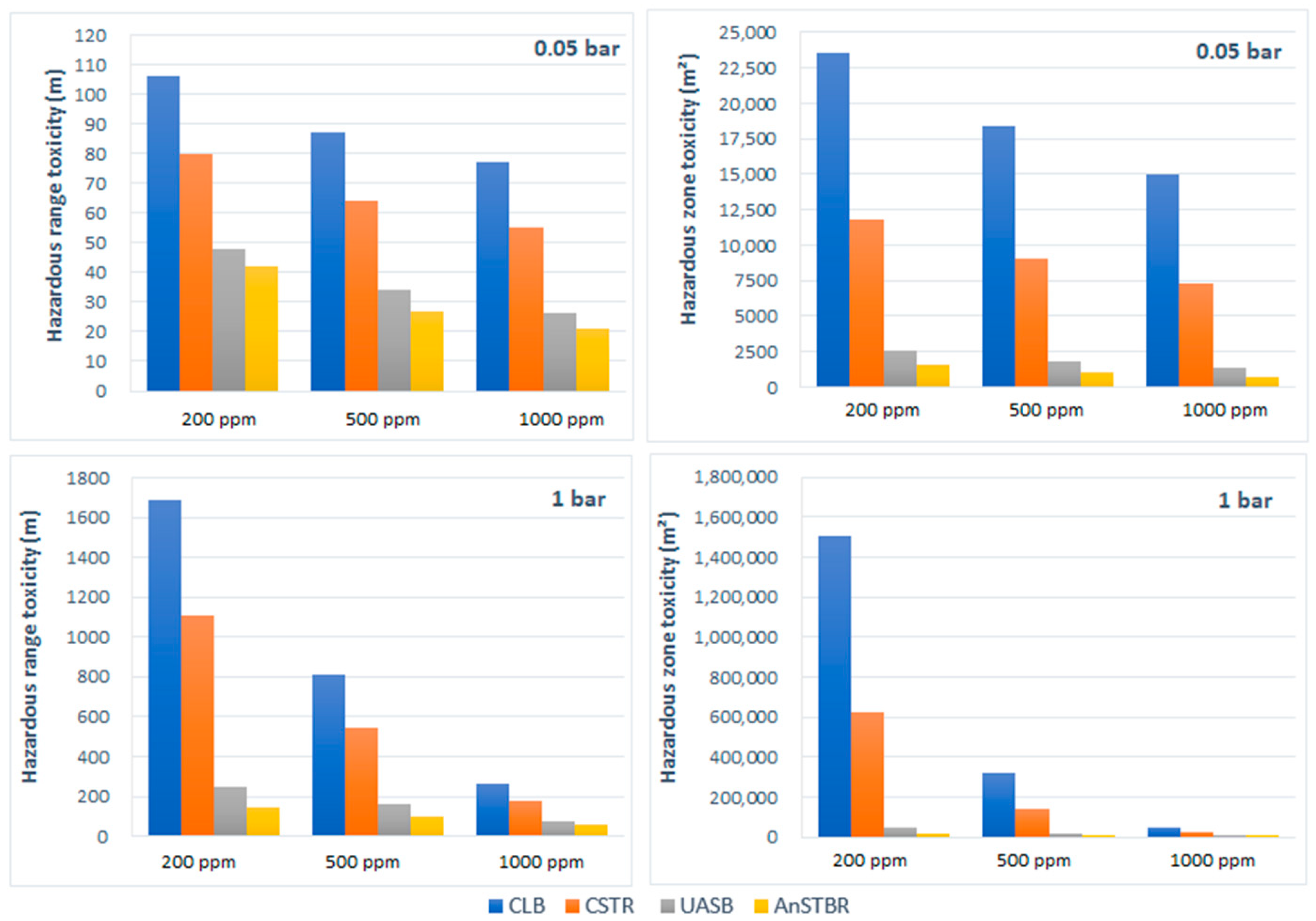
H2S intoxication was also associated with a larger hazardous zone, with a risk of death reported to be among the consequences of a complete rupture scenario, according to the evaluation performed in this study. On the other hand, the reactor configuration and pressure variation increased considerably in HZ and HR (Figure 10). The “death HR” (1000 ppm) increased up to 20-fold from the smaller (AnSTBR) to the bigger (CLB) reactor at both pressures tested. The death HZ was up to 753 and 14,963 m2 for the AnSTBR and CLB reactors, respectively, under 0.05 bar of pressure. Meanwhile, the death HZ increased to 2420 and 51,336 m2 for the AnSTBR and CLB reactors, respectively, along with the increased pressure (1.0 bar). It is worth highlighting the impact that the H2S concentration could have on the vicinity of the biogas plant in the case of a complete rupture. The lower concentrations considered in the simulations (200–500 ppm) can still be significantly hazardous to human life. A range of up to 1.7 km was achieved in the case of a complete rupture of a CLB under 1 bar of pressure. Meanwhile, the range of the high-rate AD reactors in the same condition was between 148 and 248 m for UASB and AnSTBR. Therefore, the reactor design parameters, i.e., OLR, significantly affected HZ and HR for H2S intoxication in the complete rupture scenario.
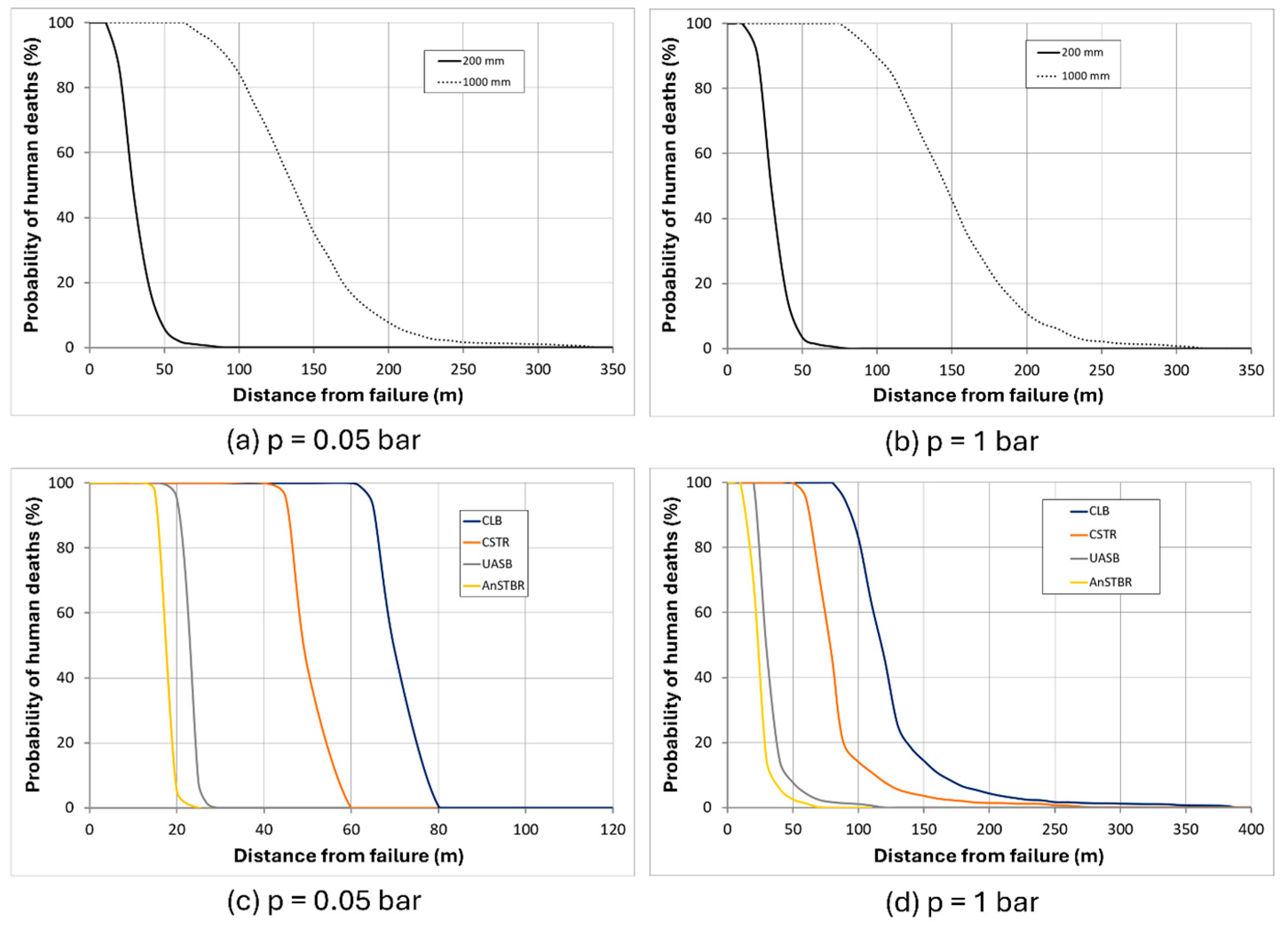
The probability of human death as a consequence of a partial and complete rupture followed by a toxic cloud of H2S at the sugarcane vinasse biogas site is extremely high and is impacted by the hole size (Figure 11a,b) and reactor configuration (Figure 11b,c), respectively. For the partial rupture scenarios, the overpressure scenario tested (from 0.05 to 1 bar) did not impact the probability of death as a function of the distance from the reactor either, but the hole size increased significantly. The range of the hazard zone related to a 100% probability of human deaths increased from 20 to 80 m along with the hole sizes (200 to 1000 mm; Figure 11a,b). Though no differences in the death zone ranges among the reactor technologies are presented for partial rupture scenarios (Table 4; 1000 ppm), the specific construction of the equipment can make each reactor configuration more susceptible to smaller or larger holes in the case of an uncontrolled biogas leak. In CLB technology, a plastic or HDPE covering is fixed on the sides of the lagoon, which is often inadequate and results in uncontrolled biogas leakage [37,38], resulting in greater susceptibility to larger holes in the cover fixation areas. For the complete rupture simulations, the high-rate AD bioreactors, i.e., UASB and AnSTBR, presented a 100% probability of human death within the 15–20 m range (0.05–1.0 bar; Figure 11c,d). Therefore, the complete rupture scenario of a high-rate AD bioreactor resulted in a death zone similar to a biogas leakage from a 200 mm hole size (Figure 9). On the other hand, the bigger bioreactor and biogas volume stored (CLB) showed a 100% probability of human deaths within the 60–80 m range (0.05–1.0 bar; Figure 11c,d) or 4-fold higher than the UASB and AnSTBR.

4. Discussion

Technical risk assessment represents the integration of two components: the probability of occurrence and the magnitude of the consequences associated with hazardous events. In biogas systems, the consequences of failure, driven by the physicochemical properties of CH4-, CO2-, and H2S-containing gas mixtures, include fire, explosions, and toxic clouds. The extent of these impacts is strongly influenced by reactor geometry, operational parameters (e.g., pressure), and the volume of biogas stored at the moment of failure.
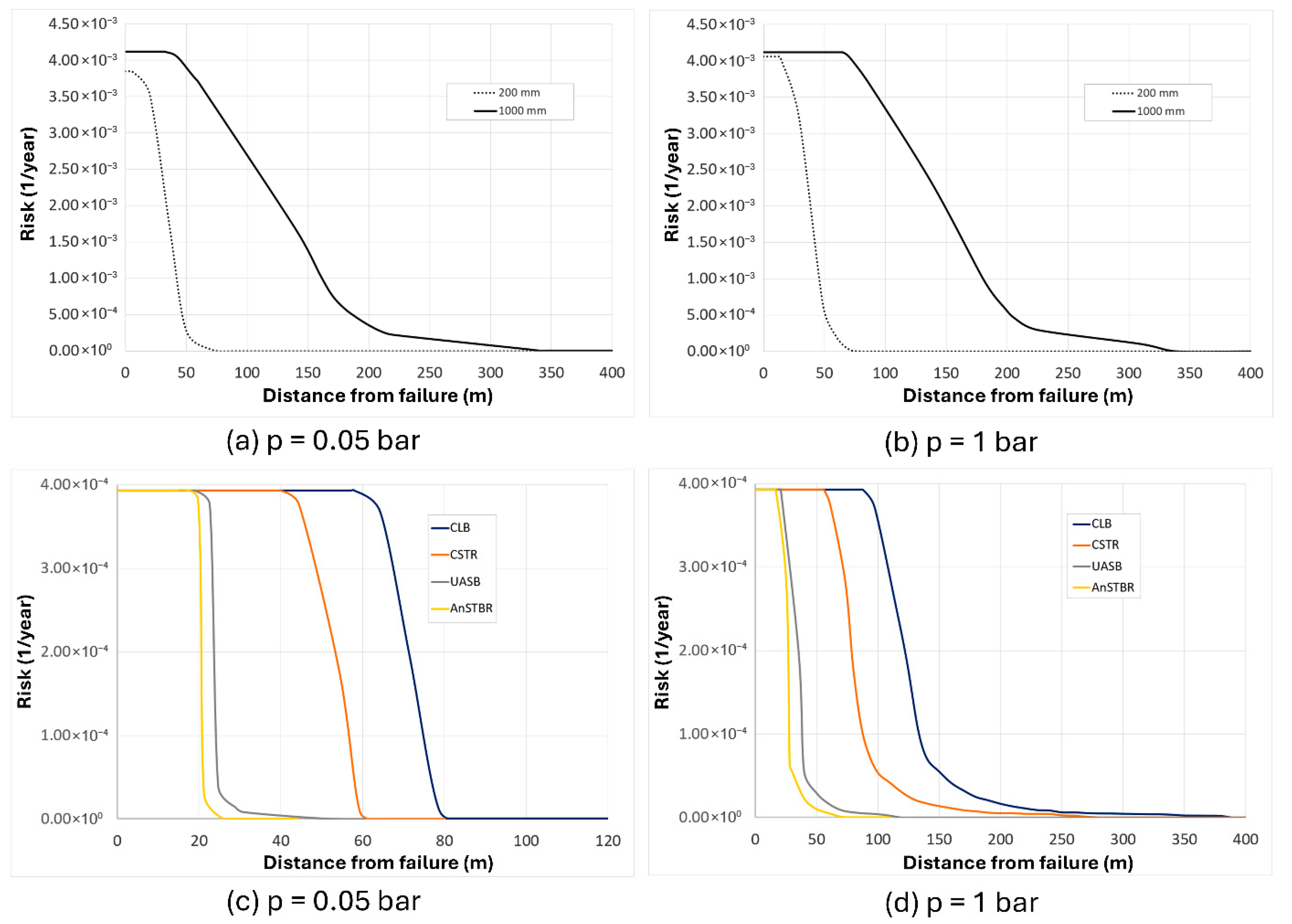
The analysis of partial rupture scenarios (Figure 12a,b) demonstrated that the operational pressure and hole diameter govern the spatial extent of hazardous zones, although the event frequency remains similar for the two leak sizes evaluated (200 and 1000 mm). Larger openings increased the radius of toxic concentrations, with risks reaching 4.1 × 10⁻³ year−1 and extending up to 75 m at 1 bar. These findings highlight how even moderate overpressures can exacerbate consequences, especially for reactors that temporarily accumulate large volumes of compressible biogas.
Complete rupture scenarios (Figure 12c,d) reinforced the central role of the reactor configuration. While the event frequency was identical for all technologies (4.1 × 10⁻⁴ year−1), the magnitude of the consequences varied markedly. High-rate reactors such as AnSTBR and UASB exhibited hazardous radii of only 16–20 m due to their compact geometry and minimal gas headspace. In contrast, low-rate, large-volume systems such as CLB exhibited much larger impact areas (up to 100 m at 1.0 bar). The sensitivity of CLB and CSTR to pressure increases, doubling the hazardous radius when pressurized from 0.05 to 1.0 bar, emphasizes the compounding effect of volume and overpressure on consequence severity.
A key finding is the strong agreement between the ranges of hazardous zones predicted in the risk assessment (Figure 12) and the results of the H2S toxicity simulations (Figure 11). H2S emerged as the dominant threat, capable of generating lethal atmospheres over extensive areas, independent of ignition. This reinforces that the design of vinasse AD systems must prioritize the mitigation of H2S exposure risks above all other failure modes. Reactor selection, therefore, directly influences safety performance: configurations with small gas headspaces inherently limit the scale of toxic releases.
The current widespread application of CLB for processing sugarcane vinasse in developing and ethanol-producing countries such as Brazil, China, Pakistan, Thailand, and India [5,27] presents alarming safety risks. Biogas derived from vinasse contains exceptionally high H2S concentrations, substantially increasing the likelihood of fatal intoxication in the event of a partial or complete rupture. This hazard is further aggravated by structural vulnerabilities inherent to CLB construction, making them highly susceptible to biogas leakage [37,38]. To mitigate these severe safety risks, it is crucial to shift this market pattern towards adopting high-rate anaerobic digestion systems like the UASB and AnSTBR. These bioreactors offer a safer and more compact configuration for vinasse treatment, substantially reducing the risks associated with the large volumes, high organic loads, and elevated SO42− concentrations characteristic of sugarcane vinasse. Prioritizing the development and implementation of safer, high-rate bioreactor technologies is imperative to safeguard human health and prevent potentially deadly incidents in these regions.
The 1980s witnessed significant advances in the tests of UASB technology in Brazilian sugarcane distilleries, but the challenges related to operational costs and scalability stunted widespread industrial adoption throughout the late 1980s and early 1990s [5,27]. Limitations in understanding the specific requirements of vinasse AD directly contributed to this failure. A good example refers to the use of the UASB technology, observing the need to install “secondary settlers” as a strategy to minimize the losses of non-granulated biomass. However, the current scientific development beckons a resurgence of interest and investment in the development and proliferation of high-rate AD bioreactors within sugarcane biorefineries. Current research, exemplified by the promising AnSTBR [29,30,49] and the innovative pilot-scale hybrid anaerobic bioreactor HaNR [33], underscores the viability and potential of these technologies. Currently, a critical limitation is the chemical dosing for pH control to sustain a high-rate and stable biological process [29,49]. Therefore, efforts must be made to overcome this operational limitation to develop technology that is cost-competitive with the existing cheaper low-OLR technologies (CLB and CSTR).

5. Conclusions

This study investigated the impact of anaerobic bioreactor design parameters on hazards such as fire, explosion, and H2S toxicity in biogas production from sugarcane vinasse. The highest potential hazardous zone (PHZ) from partial rupture scenarios was due to H2S toxicity (1000 ppm), with the covered lagoon biodigester (CLB) reactor showing a PHZ up to 5-fold larger than the Anaerobic Structured Bed Reactor (AnSTBR) for a 1000 mm hole size (216,000 m2 vs. 44,700 m2). Death risks from jet fires varied significantly with hole size, increasing from 7 to 66 m as the hole size increased from 200 to 1000 mm (0.05 bar). The CLB reactor had a PHZ up to 5-fold higher than the AnSTBR (57,024 m2 vs. 11,537 m2; 1000 mm hole size at 1 bar). Complete rupture scenarios posed less risk of death but could significantly impact the surrounding area with heat and pressure waves. Partial rupture was more likely (4.0 × 10⁻³ year−1) than complete rupture (4.0 × 10⁻⁴ year−1), with hazardous ranges of 15–75 m and 20–80 m, respectively, depending on the reactor configuration and pressure. These results highlight the critical role of reactor design in managing hazards associated with sugarcane vinasse biogas production, emphasizing the need for careful consideration of reactor configurations during the design phase to mitigate the risks inherent to this high-organic matter and sulfate-rich feedstock.

Author Contributions

Conceptualization, R.C.R.; Methodology, R.C.R. and K.S.-A.; Software, K.S.-A.; Validation, R.C.R., K.S.-A., A.R. and L.T.F.; Formal Analysis, K.S.-A. and A.R.; Investigation, R.C.R.; Resources, K.S.-A. and A.R.; Data Curation, R.C.R.; Writing—Original Draft Preparation, R.C.R. and K.S.-A.; Writing—Review and Editing, R.C.R., K.S.-A., A.R., L.T.F., P.d.S.M. and P.R.C.; Visualization, P.d.S.M.; Supervision, L.T.F., K.S.-A. and A.R.; Project Administration, R.C.R.; Funding Acquisition, K.S.-A. and A.R. All authors have read and agreed to the published version of the manuscript.

Funding

This research received no external funding.

Data Availability Statement

The data that support the findings of this study are available from the corresponding author, L.T.F., upon reasonable request.

Acknowledgments

The authors thank the Continuing Education Program of the Polytechnic School from the University of São Paulo (PECE-Poli/USP) for the scholarship to the course Environmental, Health and Safety Engineering specialization. The presented work was supported by the Silesian University of Technology with means from statutory research funds.

Conflicts of Interest

The authors report there are no competing interests to declare.

Abbreviations

The following abbreviations are used in this manuscript:
ADAnaerobic digestion
AnSTBRAnaerobic structured-bed reactor
bioCH4Biomethane
CLBCovered lagoon biodigester
CODChemical Oxygen Demand
CSTRContinuous stirred-tank reactor
HRHazardous range
HRTHydraulic retention time
HZHazardous zone
PHZPotential hazardous zone
OLROrganic loading rate
SRTSolids retention time
UASBUpflow anaerobic sludge blanket

References

  1. Höök, M.; Tang, X. Depletion of fossil fuels and anthropogenic climate change—A review. Energy Policy 2013, 52, 797–809. [Google Scholar] [CrossRef]
  2. Jones, G.A.; Warner, K.J. The 21st century population-energy-climate nexus. Energy Policy 2016, 93, 206–212. [Google Scholar] [CrossRef]
  3. Demirbas, A. Biofuels sources, biofuel policy, biofuel economy and global biofuel projections. Energy Convers. Manag. 2008, 49, 2106–2116. [Google Scholar] [CrossRef]
  4. Chozhavendhan, S.; Karthigadevi, G.; Bharathiraja, B.; Praveen Kumar, R.; Abo, L.D.; Venkatesa Prabhu, S.; Balachandar, R.; Jayakumar, M. Current and prognostic overview on the strategic exploitation of anaerobic digestion and digestate: A review. Environ. Res. 2023, 216 Pt 2, 114526. [Google Scholar] [CrossRef]
  5. Ferraz, A.D.N., Jr.; Etchebehere, C.; Perecin, D.; Teixeira, S.; Woods, J. Advancing anaerobic digestion of sugarcane vinasse: Current development, struggles and future trends on production and end-uses of biogas in Brazil. Renew. Sustain. Energy Rev. 2022, 157, 112045. [Google Scholar] [CrossRef]
  6. Silva Neto, J.V.; Gallo, W.L.R. Potential impacts of vinasse biogas replacing fossil oil for power generation, natural gas, and increasing sugarcane energy in Brazil. Renew. Sustain. Energy Rev. 2021, 135, 110281. [Google Scholar] [CrossRef]
  7. CONAB Acompanhamento da Safra Brasileira (Cana-de-Açúcar). Vol. 4o Levantamento. 2023. Available online: https://www.conab.gov.br/info-agro/safras/cana/boletim-da-safra-de-cana-de-acucar/item/download/47205_4d3411e94856841a815af389cab22b93 (accessed on 20 March 2024).
  8. Moraes, B.S.; Zaiat, M.; Bonomi, A. Anaerobic digestion of vinasse from sugarcane ethanol production in Brazil: Challenges and perspectives. Renew. Sustain. Energy Rev. 2015, 44, 888–903. [Google Scholar] [CrossRef]
  9. Santos, P.S.; Zaiat, M.; Oller do Nascimento, C.A.; Fuess, L.T. Does sugarcane vinasse composition variability affect the bioenergy yield in anaerobic systems? A dual kinetic-energetic assessment. J. Clean. Prod. 2019, 240, 118005. [Google Scholar] [CrossRef]
  10. Rogeri, R.C.; Fuess, L.T.; Araujo, M.N.; Eng, F.; Borges, A.V.; Damianovic, M.H.R.Z.; da Silva, A.J. Methane production from sugarcane vinasse: The alkalinizing potential of fermentative-sulfidogenic processes in two-stage anaerobic digestion. Energy Nexus 2024, 14, 100303. [Google Scholar] [CrossRef]
  11. Fuess, L.T.; Zaiat, M.; Nascimento, C.A.O. Novel insights on the versatility of biohydrogen production from sugarcane vinasse via thermophilic dark fermentation: Impacts of pH-driven operating strategies on acidogenesis metabolite profiles. Bioresour. Technol. 2019, 286, 121379. [Google Scholar] [CrossRef]
  12. Rogeri, R.C.; Fuess, L.T.; Eng, F.; Borges, A.V.; Araujo, M.N.; Damianovic, M.H.R.Z.; da Silva, A.J. Strategies to Control pH in the Dark Fermentation of Sugarcane Vinasse: Impacts on Sulfate Reduction, Biohydrogen Production and Metabolite Distribution. J. Environ. Manag. 2023, 325, 116495. [Google Scholar] [CrossRef]
  13. Larson, D.C.; Weinberger, C.B.; Lawley, A.; Thomas, D.H.; Moore, T.W. Fundamentals of Engineering Energy. J. Eng. Educ. 1994, 83, 325–330. [Google Scholar] [CrossRef]
  14. Lens, P.N.L.; Visser, A.; Janssen, A.J.H.; Hulshoff Pol, L.W.; Lettinga, G. Biotechnological treatment of sulfate-rich wastewaters. Crit. Rev. Environ. Sci. Technol. 1998, 28, 41–88. [Google Scholar] [CrossRef]
  15. Khan, I.U.; Othman, M.H.D.; Hashim, H.; Matsuura, T.; Ismail, A.F.; Rezaei-Dashtarzhandi, M.; Azelee, I.W. Biogas as a renewable energy fuel—A review of biogas upgrading, utilisation and storage. Energy Convers. Manag. 2017, 150, 277–294. [Google Scholar] [CrossRef]
  16. Sun, Q.; Li, H.; Yan, J.; Liu, L.; Yu, Z.; Yu, X. Selection of appropriate biogas upgrading technology-a review of biogas cleaning, upgrading and utilisation. Renew. Sustain. Energy Rev. 2015, 51, 521–532. [Google Scholar] [CrossRef]
  17. Andreides, M.; Pokorná-Krayzelová, L.; Bartáček, J.; Jeníč, P. Biological H2S removal from gases. In Environmental Technologies to Treat Sulphur Pollution: Principles and Engineering, 2nd ed.; Lens, P.N.L., Ed.; IWA Publishing: London, UK, 2020; pp. 345–375. [Google Scholar] [CrossRef]
  18. Leme, R.M.; Seabra, J.E.A. Technical-economic assessment of different biogas upgrading routes from vinasse anaerobic digestion in the Brazilian bioethanol industry. Energy 2017, 119, 754–766. [Google Scholar] [CrossRef]
  19. Moreno, V.C.; Cozzani, V. Major accident hazard in bioenergy production. J. Loss Prev. Process Ind. 2015, 35, 135–144. [Google Scholar] [CrossRef]
  20. Moreno, V.C.; Papasidero, S.; Scarponi, G.E.; Guglielmi, D.; Cozzani, V. Analysis of accidents in biogas production and upgrading. Renew. Energy 2016, 96, 1127–1134. [Google Scholar] [CrossRef]
  21. Trávníček, P.; Kotek, L.; Junga, P.; Vítěz, T.; Drápela, K.; Chovanec, J. Quantitative analyses of biogas plant accidents in Europe. Renew. Energy 2018, 122, 89–97. [Google Scholar] [CrossRef]
  22. Stolecka, K.; Rusin, A. Potential hazards posed by biogas plants. Renew. Sustain. Energy Rev. 2021, 135, 110225. [Google Scholar] [CrossRef]
  23. Admasu, A.; Bogale, W.; Mekonnen, Y.S. Experimental and simulation analysis of biogas production from beverage wastewater sludge for electricity generation. Sci. Rep. 2022, 12, 9107. [Google Scholar] [CrossRef] [PubMed]
  24. Jiang, J.; Chan, A.; Ali, S.; Saha, A.; Haushalter, K.J.; Lam, W.L.M.R.; Glasheen, M.; Parker, J.; Brenner, M.; Mahon, S.B.; et al. Hydrogen Sulfide-Mechanisms of Toxicity and Development of an Antidote. Sci. Rep. 2016, 6, 20831. [Google Scholar] [CrossRef]
  25. Hvitved-Jacobsen, T. Sulfur transformations in sewer networks: Effects, prediction and mitigation of impacts. In Environmental Technologies to Treat Sulfur Pollution: Principles and Engineering, 2nd ed.; Lens, P.N.L., Ed.; IWA Publishing: London, UK, 2020. [Google Scholar] [CrossRef]
  26. Moreno, V.C.; Guglielmi, D.; Cozzani, V. Identification of critical safety barriers in biogas facilities. Reliab. Eng. Syst. Saf. 2018, 169, 81–94. [Google Scholar] [CrossRef]
  27. Carvalho, J.C.; de Souza Vandenberghe, L.P.; Sydney, E.B.; Karp, S.G.; Magalhães, A.I.; Martinez-Burgos, W.J.; Medeiros, A.B.P.; Thomaz-Soccol, V.; Vieira, S.; Letti, L.A.J. Biomethane Production from Sugarcane Vinasse in a Circular Economy: Developments and Innovations. Fermentation 2023, 9, 349. [Google Scholar] [CrossRef]
  28. de Souza Moraes, B.; Palacios-Bereche, R.; Martins, G.; Nebra, S.A.; Fuess, L.T.; Silva, A.J.; da Silva Clementino, W.; Bajay, S.V.; Manduca, P.C.; Lamparelli, R.A.; et al. Biogas production: Technologies and applications. In Biofuels and Biorefining Volume 1: Current Technologies for Biomass Conversion; Elsevier: Amsterdam, The Netherlands, 2022; pp. 215–282. [Google Scholar] [CrossRef]
  29. Aquino, S.; Fuess, L.T.; Pires, E.C. Media arrangement impacts cell growth in anaerobic fixed-bed reactors treating sugarcane vinasse: Structured vs. randomic biomass immobilization. Bioresour. Technol. 2017, 235, 219–228. [Google Scholar] [CrossRef]
  30. Fuess, L.T.; Kiyuna, L.S.M.; Ferraz Júnior, A.D.N.; Persinoti, G.F.; Squina, F.M.; Garcia, M.L.; Zaiat, M. Thermophilic two-phase anaerobic digestion using an innovative fixed-bed reactor for enhanced organic matter removal and bioenergy recovery from sugarcane vinasse. Appl. Energy 2017, 189, 480–491. [Google Scholar] [CrossRef]
  31. Borges Ado, V.; Fuess, L.T.; Takeda, P.Y.; Alves, I.; Dias, M.E.S.; Damianovic, M.H.R.Z. Co-digestion of biofuel by-products: Enhanced biofilm formation maintains high organic matter removal when methanogenesis fails. J. Environ. Manag. 2022, 310, 114768. [Google Scholar] [CrossRef]
  32. Takeda, P.Y.; Oliveira, C.A.; Dias, M.E.S.; Paula, C.T.; Borges Ado, V.; Damianovic, M.H.R.Z. Enhancing the energetic potential of sugarcane biorefinery exchanging vinasse and glycerol in sugarcane off-season in an anaerobic reactor. Renew. Energy 2022, 195, 1218–1229. [Google Scholar] [CrossRef]
  33. Pierangeli, G.M.F.; Gregoracci, G.B.; Del Nery, V.; Pozzi, E.; de Araujo Junior, M.M.; Damianovic, M.H.R.Z.; Saia, F.T. Long-term temporal dynamics of total and potentially active microbiota affect the biogas quality from the anaerobic digestion of vinasse in a pilot-scale hybrid anaerobic reactor. Bioresour. Technol. Rep. 2024, 26, 101822. [Google Scholar] [CrossRef]
  34. Tápparo, D.C.; Cândido, D.; Steinmetz, R.L.R.; Etzkorn, C.; do Amaral, A.C.; Antes, F.G.; Kunz, A. Swine manure biogas production improvement using pre-treatment strategies: Lab-scale studies and full-scale application. Bioresour. Technol. Rep. 2021, 15, 100716. [Google Scholar] [CrossRef]
  35. Ghosh, R.; Bhattacherjee, S. A review study on anaerobic digesters with an Insight to biogas production. Int. J. Eng. Sci. Invent. 2013, 2, 2319–6734. Available online: http://ijesi.org/papers/Vol(2)3%20(Version-4)/B230817.pdf (accessed on 20 March 2024).
  36. van Haandel, A.; van der Lubbe, J. Anaerobic Sewage Treatment: Optimization of Process and Physical Design of Anaerobic and Complementary Processes; van Haandel, A., van der Lubbe, J., Eds.; IWA Publishing: London, UK, 2019; 400p. [Google Scholar] [CrossRef]
  37. Biogas Fachverband. Biowaste to Biogas—The Production of Energy and Fertilizer from Organic Waste. 2019. Available online: https://www.biogas.org/fileadmin/redaktion/dokumente/medien/broschueren/biowaste/biowaste-to-biogas.pdf (accessed on 20 March 2024).
  38. PROBIOGÁS Tecnologias De Digestão Anaeróbia Com Relevância Para O Brasil: Substratos, Digestores e Uso de Biogás. Ministério ds Cidades. 2015. Available online: https://www.giz.de/en/downloads/probiogas-tecnologias-biogas.pdf (accessed on 20 March 2024).
  39. Kress, P.; Nägele, H.J.; Oechsner, H.; Ruile, S. Effect of agitation time on nutrient distribution in full-scale CSTR biogas digesters. Bioresour. Technol. 2018, 247, 1–6. [Google Scholar] [CrossRef]
  40. Rittmann, B.E.; McCarty, P.L. Environmental Biotechnology: Principles and Applications; McGraw-Hill Education: Columbus, OH, USA, 2001; 768p. [Google Scholar]
  41. van Lier, J.B.; van der Zee, F.P.; Frijters, C.T.M.J.; Ersahin, M.E. Celebrating 40 years anaerobic sludge bed reactors for industrial wastewater treatment. Rev. Environ. Sci. Biotechnol. 2015, 14, 681–702. [Google Scholar] [CrossRef]
  42. Metcalf; Eddy, I. Wastewater Engineering: Treatment and Resource Recovery; Tchobanoglous, G., Stensel, H.D., Tsuchihashi, R., Burton, F., Eds.; McGraw-Hill Education: Columbus, OH, USA, 2013; pp. 1–2048. [Google Scholar]
  43. de Lemos Chernicharo, C.A.; Bressani-Ribeiro, T. (Eds.) Anaerobic Reactors for Sewage Treatment: Design, Construction and Operation; IWA Publishing: London, UK, 2019; 420p. [Google Scholar] [CrossRef]
  44. El-Kamah, H.; Tawfik, A.; Mahmoud, M.; Abdel-Halim, H. Treatment of high strength wastewater from fruit juice industry using integrated anaerobic/aerobic system. Desalination 2010, 253, 158–163. [Google Scholar] [CrossRef]
  45. Hamza, R.A.; Iorhemen, O.T.; Tay, J.H. Advances in biological systems for the treatment of high-strength wastewater. J. Water Process Eng. 2016, 10, 128–142. [Google Scholar] [CrossRef]
  46. Gobi, K.; Mashitah, M.D.; Vadivelu, V.M. Development and utilization of aerobic granules for the palm oil mill (POM) wastewater treatment. Chem. Eng. J. 2011, 174, 213–220. [Google Scholar] [CrossRef]
  47. Araujo, M.N.; Fuess, L.T.; Cavalcante, W.A.; Couto, P.T.; Rogeri, R.C.; Adorno, M.A.T.; Sakamoto, I.K.; Zaiat, M. Fixed bed in dark fermentative reactors: Is it imperative for enhanced biomass retention, biohydrogen evolution and substrate conversion? Int. J. Hydrogen Energy 2024, 52, 228–245. [Google Scholar] [CrossRef]
  48. Rajeshwari, K.V.; Balakrishnan, M.; Kansal, A.; Lata, K.; Kishore, V.V.N. State-of-the-art of anaerobic digestion technology for industrial wastewater treatment. Renew. Sustain. Energy Rev. 2000, 4, 135–156. [Google Scholar] [CrossRef]
  49. Fuess, L.T.; de Araújo Júnior, M.M.; Garcia, M.L.; Zaiat, M. Designing full-scale biodigestion plants for the treatment of vinasse in sugarcane biorefineries: How phase separation and alkalinization impact biogas and electricity production costs? Chem. Eng. Res. Des. 2017, 119, 209–220. [Google Scholar] [CrossRef]
  50. McCabe, B.; Harris, P.; Baillie, C.; Pittaway, P.; Yusaf, T. Assessing a new approach to covered anaerobic pond design in the treatment of abattoir wastewater. Aust. J. Multi-Discip. Eng. 2013, 10, 81–94. [Google Scholar] [CrossRef]
  51. Lemmer, A.; Naegele, H.J.; Sondermann, J. How efficient are agitators in biogas digesters? Determination of the efficiency of submersible motor mixers and incline agitators by measuring nutrient distribution in full-scale agricultural biogas digesters. Energies 2013, 6, 6255–6273. [Google Scholar] [CrossRef]
  52. Häring, I. Risk analysis and management: Engineering resilience. In Risk Analysis and Management: Engineering Resilience; Springer: Singapore, 2016; pp. 1–365. [Google Scholar] [CrossRef]
  53. Trávníček, P.; Kotek, L.; Koutný, T.; Vítĕz, T. Quantitative risk assessment of biogas plant—Determination of assumptions and estimation of selected top event. Period. Polytech. Chem. Eng. 2019, 63, 397–405. [Google Scholar] [CrossRef]
  54. Stolecka, K.; Rusin, A. Analysis of hazards related to syngas production and transport. Renew. Energy 2020, 146, 2535–2555. [Google Scholar] [CrossRef]
  55. Vílchez, J.A.; Espejo, V.; Casal, J. Generic event trees and probabilities for the release of different types of hazardous materials. J. Loss Prev. Process Ind. 2011, 24, 281–287. [Google Scholar] [CrossRef]
  56. Lachance, J.; Tchouvelev, A.; Engebo, A. Development of uniform harm criteria for use in quantitative risk analysis of the hydrogen infrastructure. Int. J. Hydrogen Energy 2011, 36, 2381–2388. [Google Scholar] [CrossRef]
  57. Rusin, A.; Stolecka-Antczak, K. Assessment of the Safety of Transport of the Natural Gas–Ammonia Mixture. Energies 2023, 16, 2472. [Google Scholar] [CrossRef]
  58. Khwayyir, H.H.S.; Maria, G.; Dinculescu, D. Simulation of the consequences of the ammonium nitrate explosion following the truck accident next to mihăileşti village (Romania) in 2004. Chem. Biochem. Eng. Q. 2021, 34, 277–287. [Google Scholar] [CrossRef]
  59. Guidotti, T.L. Hydrogen sulfide: Advances in understanding human toxicity. Int. J. Toxicol. 2010, 29, 569–581. [Google Scholar] [CrossRef] [PubMed]
Figure 1. Schematic representation of anaerobic bioreactors available for vinasse biodigestion. (a) Covered lagoon bioreactor; (b) continuous stirred-tank reactor; (c) upflow anaerobic sludge blanket reactor; (d) anaerobic structured-bed reactor.
Biomass 05 00079 g001
Figure 2. Event tree analysis for biogas leakage.
Biomass 05 00079 g002
Figure 3. Potential hazardous zones for jet fire heat flux.
Biomass 05 00079 g003
Figure 4. Hazardous zone and range for fireball heat flux.
Biomass 05 00079 g004
Figure 5. Probability of human deaths caused by a heat flux from jet fire.
Biomass 05 00079 g005
Figure 6. Potential hazardous zones for explosion consequences (partial rupture).
Biomass 05 00079 g006
Figure 7. Hazardous zones and range for explosion consequences (complete rupture).
Biomass 05 00079 g007
Figure 8. Probability of human deaths resulting from an explosion of biogas. Partial rupture (a,b), complete rupture (c,d).
Biomass 05 00079 g008
Figure 9. Potential hazardous zones for H2S intoxication (partial rupture).
Biomass 05 00079 g009
Figure 10. Hazardous zone and range for H2S intoxication (complete rupture).
Biomass 05 00079 g010
Figure 11. Probability of human deaths from a toxic concentration of biogas. Partial rupture (a,b), complete rupture (c,d).
Biomass 05 00079 g011
Figure 12. Risks of human deaths from a toxic concentration of biogas. Partial rupture (a,b), complete rupture (c,d).
Biomass 05 00079 g012
Table 1. Design parameters and dimension characteristics.
ParameterUnitBioreactor Configuration
CLBCSTRUASBAnSTBR
Organic loading rate (OLR)kg-COD m−3 d−12 a5 a10 a25 b
Working volume (VW)m3153,89161,55630,77812,311
Headspace m3141,579 c46,783 c3386 b1354 b
Working height (HW)m5 d6 e6 f6.5 b
Aream230,77810,25951301894
Dimension characteristics W × L or D (m) g90 × 342 d 114.3 h40 × 128.4 i40 × 47.4 j
Total perimeterm864509336.8174.8
Notes: a Leme and Seabra [18]; b Fuess et al. [49]; c Tápparo et al. [34]; d McCabe et al. [50]; e Lemmer et al. [51]; f Chernicharo and Bressani-Ribeiro [43]; g W: width; L: length; D: diameter; h 1 tank of 114.3 m diameter; i 8 (4 + 4) modules: 20 × 32.1 m; j 6 (3 + 3) modules: 20 × 15.8 m.
Table 2. Hazardous range (m) for jet fire heat flux (partial rupture).
Headspace Pressure0.05 bar1 bar
Heat Flux200 mm1000 mm200 mm1000 mm
2.5 kW m−22313055279
12.5 kW m−2168330126
37.5 kW m−27631566
Table 3. Hazardous range (m) of partial rupture for explosion consequences.
Headspace Pressure0.05 bar1 bar
Pressure Wave200 mm1000 mm200 mm1000 mm
4.8 kPa3615941198
20.7 kPa14601579
199.8 kPa0000
Table 4. Hazardous range (m) of partial rupture for H2S intoxication consequences.
Headspace Pressure0.05 bar1 bar
H2S Concentration200 mm1000 mm200 mm1000 mm
200 ppm141878–570 a 3211587–735 c
500 ppm101530–430 b139570–490 d
1000 ppm6025060252
Notes: a CLB/CSTR/UASB = 878 m; AnSTBR = 570 m; b CLB/CSTR/UASB = 530 m; AnSTBR = 430 m; c CLB/CSTR = 1587 m; UASB = 905 m; AnSTBR = 735 m; d CLB/CSTR/UASB = 570 m; AnSTBR = 490 m.
Disclaimer/Publisher’s Note: The statements, opinions and data contained in all publications are solely those of the individual author(s) and contributor(s) and not of MDPI and/or the editor(s). MDPI and/or the editor(s) disclaim responsibility for any injury to people or property resulting from any ideas, methods, instructions or products referred to in the content.