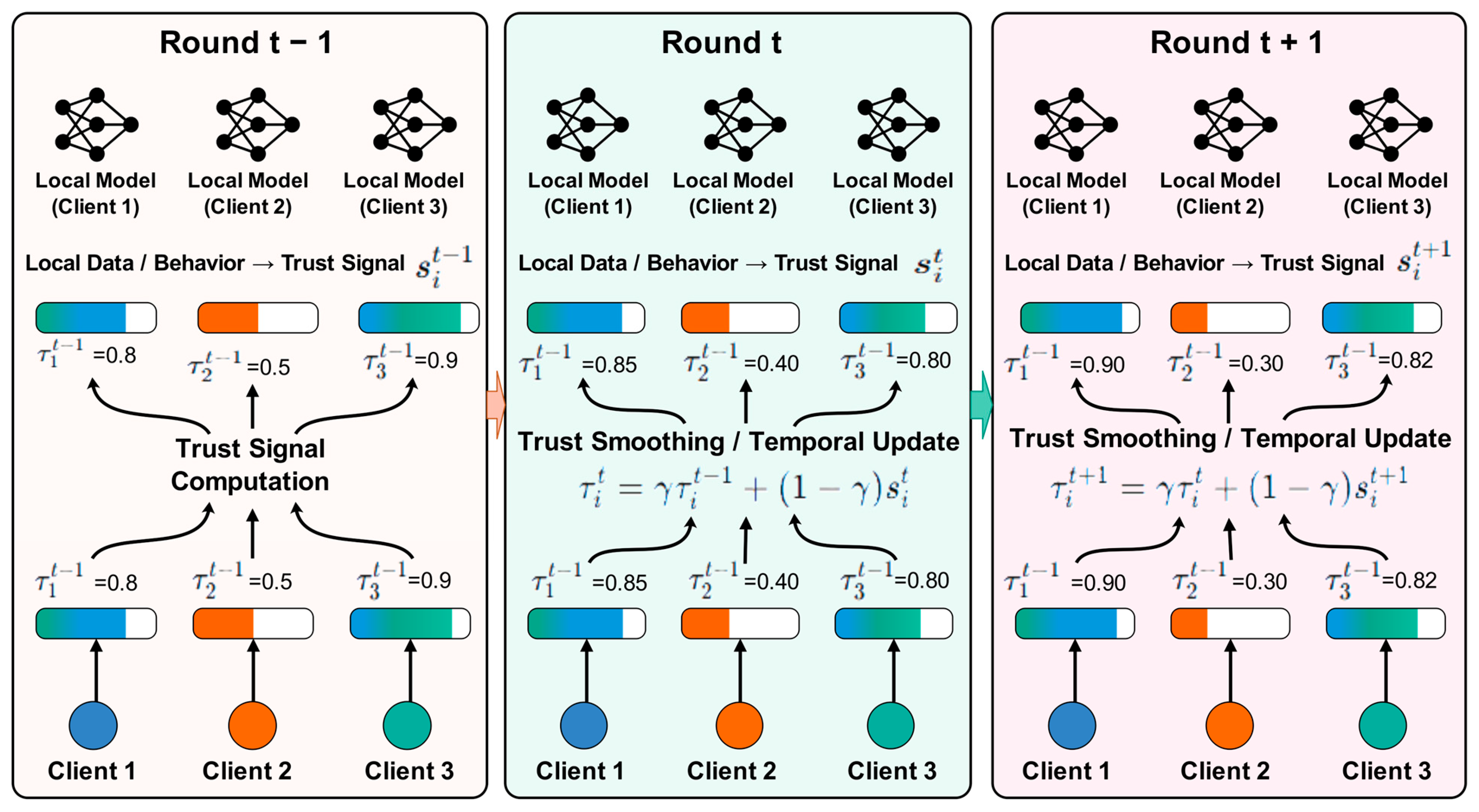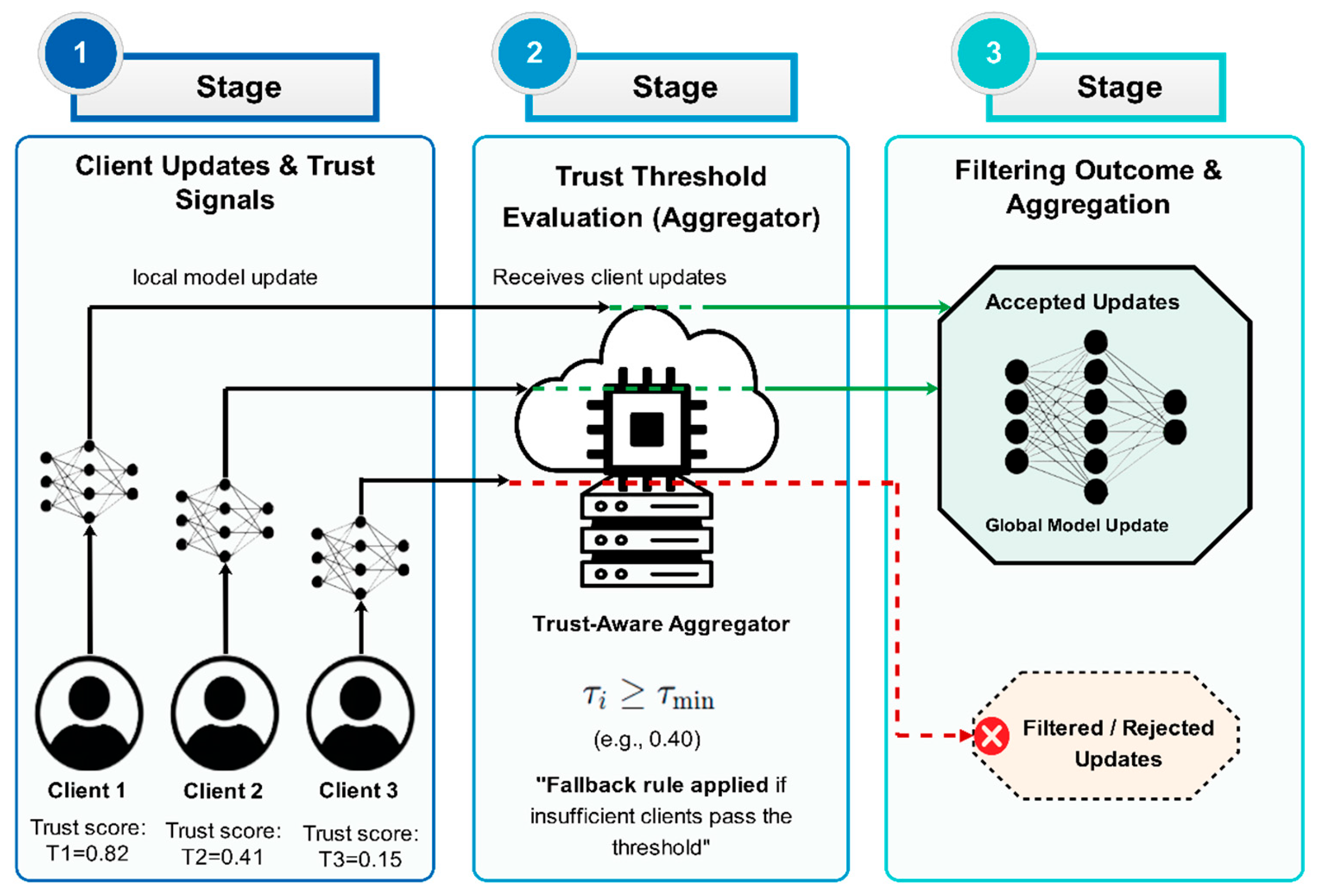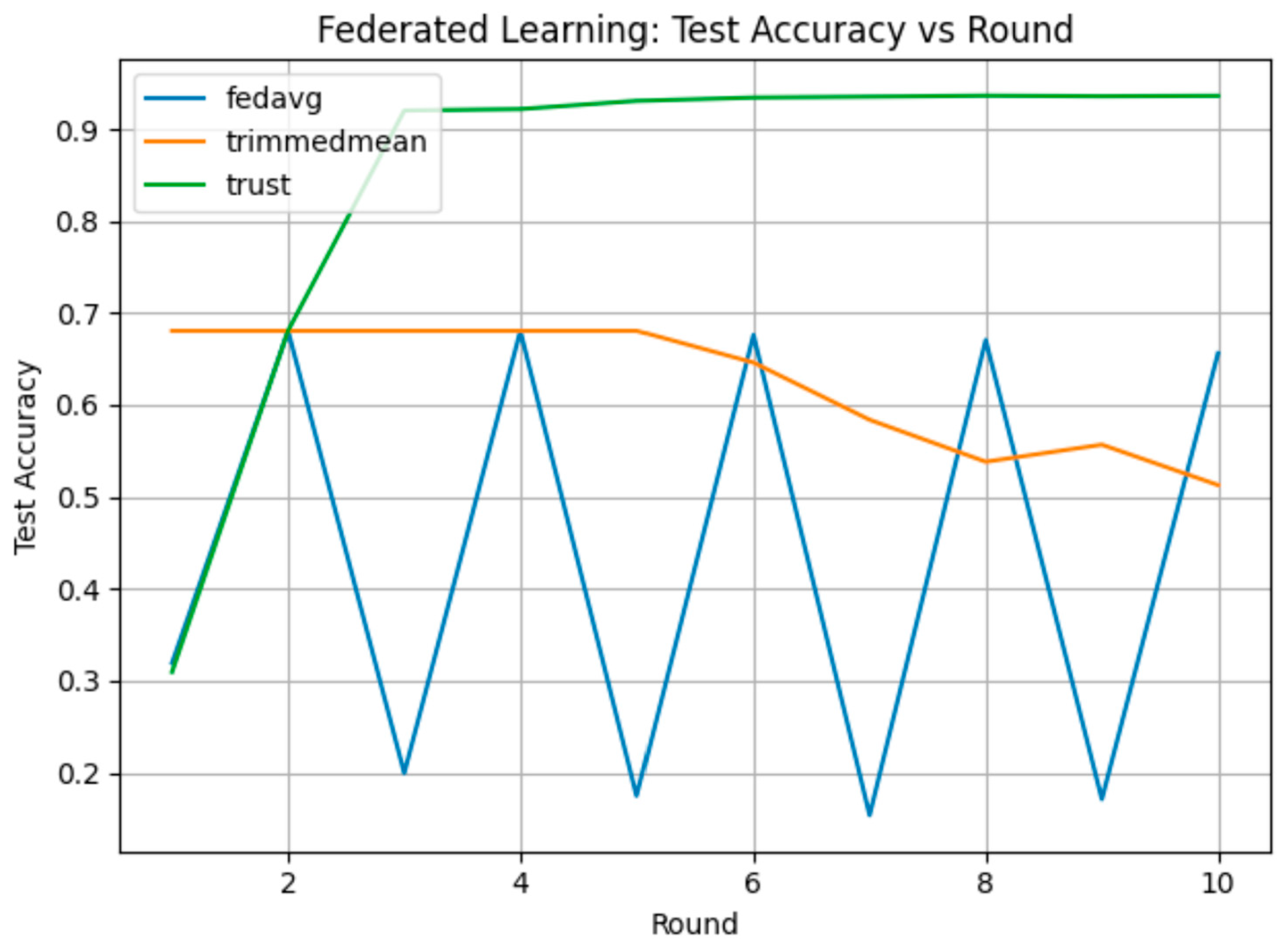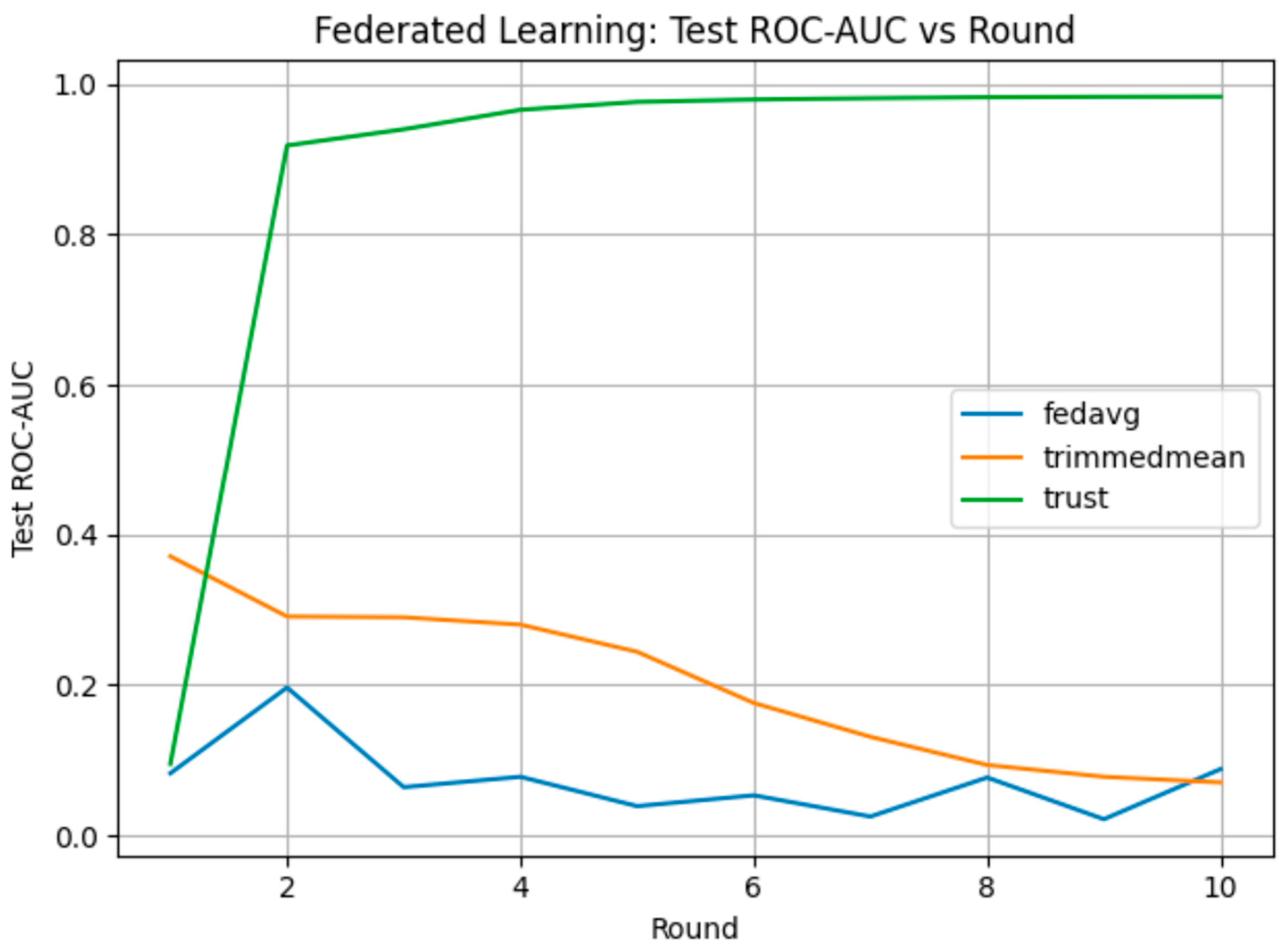

TAFL-UWSN: A Trust-Aware Federated Learning Framework for Securing Underwater Sensor Networks



Abstract
1. Introduction
- To design a novel FL algorithm that integrates behavior-driven trust scores into the model aggregation process, enhancing the system’s resilience against data poisoning, Sybil attacks, and other adversarial behaviors common in UASNs.
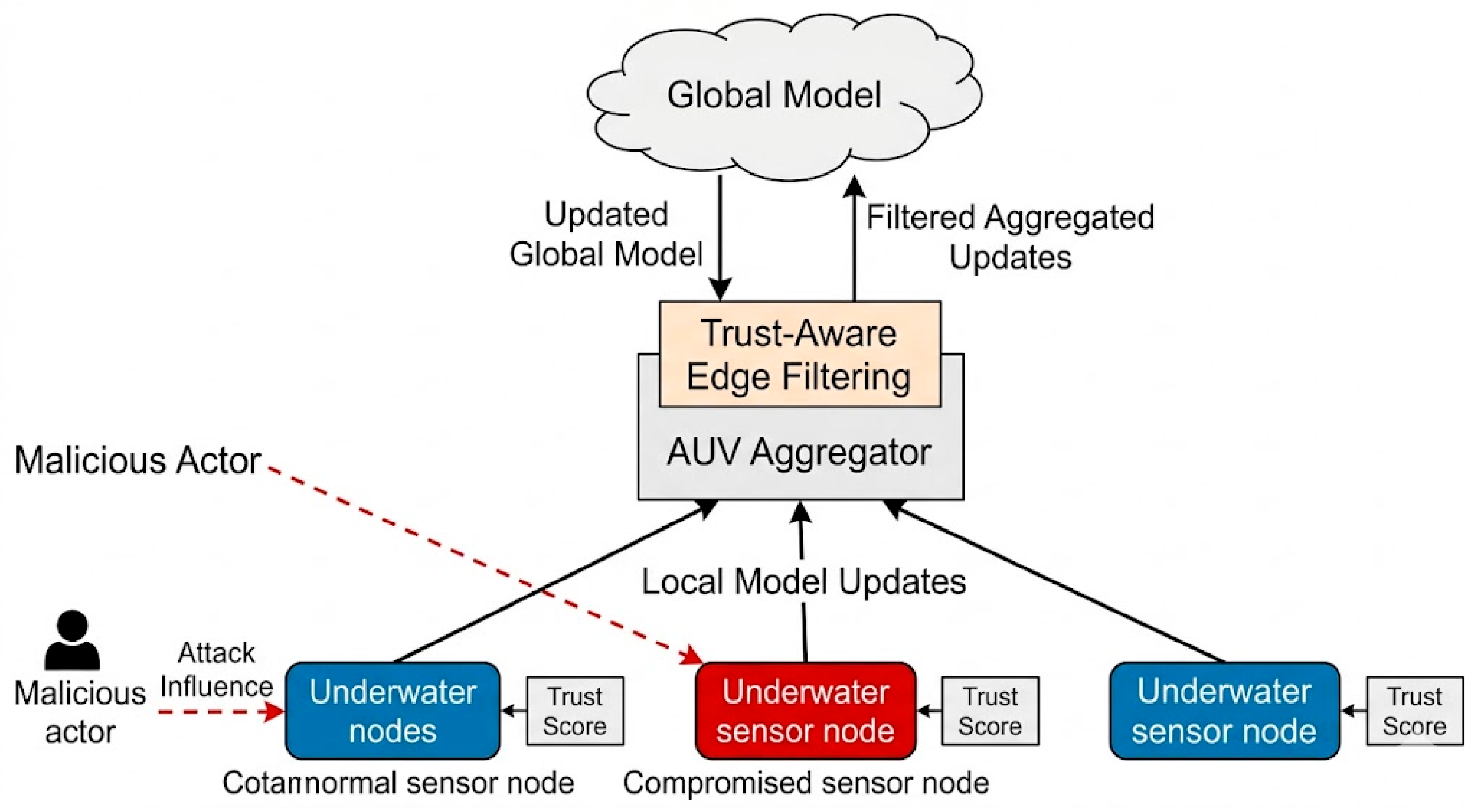
- To implement a trust-based pre-filtering mechanism at the edge layer, specifically within AUVs, that identifies and excludes low-trust updates before transmission to the cloud, thereby reducing communication costs and mitigating the impact of malicious nodes early in the learning cycle.
- To evaluate the proposed TAFL-UWSN framework through comprehensive simulations in Aqua-Sim/NS2, assessing performance under varying attack intensities and network scales in terms of model accuracy, false positive rates, communication overhead, and energy consumption.
- To operationalize zero-trust security principles within an FL architecture, demonstrating how continuous verification of node trustworthiness can support adaptive and lightweight defense strategies in decentralized and bandwidth-constrained underwater environments.
- We designed a novel FL algorithm that incorporates node-level trust scores into model aggregation, improving robustness against poisoning and Sybil attacks.
- We introduce trust-based pre-filtering at mobile AUV aggregators, reducing communication overhead and mitigating collusion by filtering malicious updates early.
- Through extensive simulations using Aqua-Sim/NS2, we demonstrate that TAFL-UWSN significantly outperforms conventional FL and security baselines in model accuracy, attack resilience, and energy efficiency.
- The proposed framework operationalizes zero-trust principles in decentralized, bandwidth-limited UASNs, offering a lightweight and adaptive defense mechanism suitable for real-world underwater deployments.
2. Literature Review
2.1. Trust Models in Underwater Sensor Networks
2.2. Federated Learning in Adversarial Environments
2.3. Zero-Trust Architectures and 6G Security
3. System Model and Threat Assumptions
3.1. Network Topology
3.1.1. Node Capabilities
3.1.2. Communication Characteristics
3.1.3. Trust Observations
3.2. Threat Model
- Blackhole attack: A malicious sensor drops all packets it is supposed to forward for others or refuses to report its sensing data, effectively creating a data blackhole. This disrupts routing and causes data loss. In the FL context, a blackhole node may simply not participate or drop model update messages of neighbors (if acting as a relay). We assume that our trust mechanism will catch this due to poor packet forwarding records [10].
- Sybil attack: A single physical node assumes multiple digital identities (either by impersonating other addresses or by obtaining multiple valid IDs). This node can then join the FL process or network routing in various roles, attempting to exert disproportionate influence. Sybil attackers can severely poison collaborative algorithms by acting as several colluding nodes [6]. We assume that an attacker can create a limited number of Sybil identities (not an unlimited number) and that the initial trust for new identities is neutral—the attacker must build trust in each one before causing damage.
- Data poisoning (Byzantine attack): A malicious node submits false data to disrupt decision-making. In sensor terms, it may falsify readings (e.g., spoofing an environmental reading). In FL terms, it computes an incorrect model update (e.g., manipulating gradients) to corrupt the global model’s accuracy [6]. Attackers might still follow the protocol (sending updates on time) but craft the content maliciously. We assume that they have some knowledge of the learning task (e.g., targeting a specific classification outcome).
- Denial-of-Service (DoS): Attackers can also jam acoustic channels or flood the network with junk data to waste energy and bandwidth. Jamming is hard to defend against but can often be detected by unusual interference patterns. In our context, a DoS attacker might attempt to disrupt the FL rounds by causing communication failures. We do not explicitly model jamming in our simulation; however, we account for its effect by incorporating random link failures. Trust can indirectly capture persistent disruptive behavior (if a node’s presence correlates with failed communications).
3.3. Assumptions
4. Methodology
4.1. Problem Formulation and Learning Objective
4.2. Dataset Description and Feature Engineering
4.2.1. UNSW-NB15 Dataset
4.2.2. Target Label Definition
4.2.3. Feature Exclusion and Selection
4.3. Data Preprocessing Pipeline
4.4. Federated Learning Configuration
4.4.1. Client Population and Data Distribution
4.4.2. Local Model Architecture and Training
4.5. Adversary and Attack Model
4.5.1. Malicious Client Selection Strategy
4.5.2. Poisoning Attack Implementations
4.6. Trust Modeling Framework
4.6.1. Trust Signal Components
4.6.2. Trust Update and Temporal Smoothing
4.7. Trust-Aware Client Filtering and Aggregation
4.7.1. Trust Thresholding and Client Acceptance
4.7.2. Trust-Weighted Federated Aggregation
4.8. Baseline Aggregation Methods
4.9. Evaluation Metrics and Experimental Protocol
5. Results and Performance Evaluation
5.1. Experimental Setup and Parameter Settings
5.2. Global Model Performance Under Adversarial Conditions
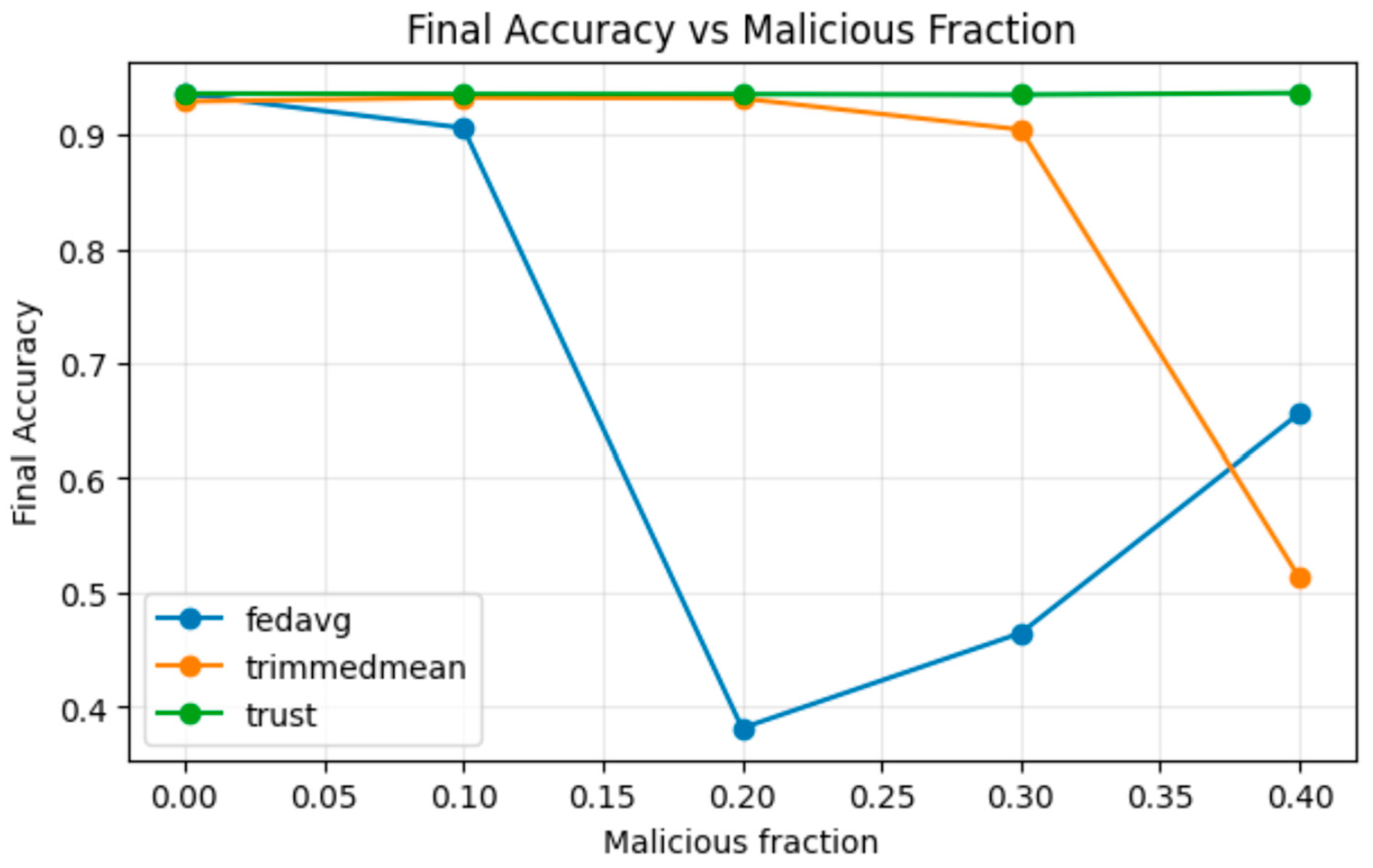
5.2.1. Accuracy Comparison
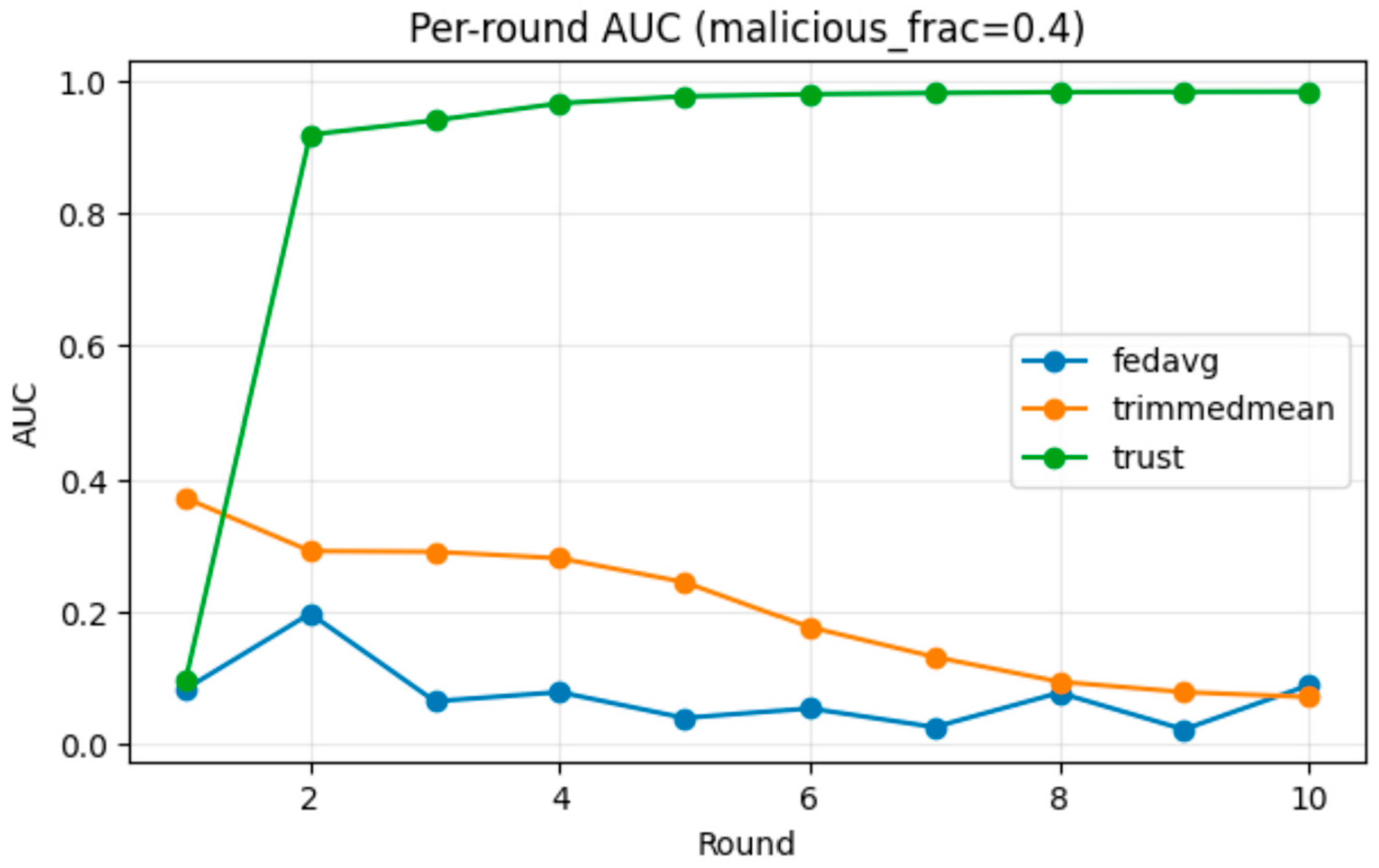
5.2.2. AUC Performance Analysis
5.3. Impact of Trust-Aware Filtering
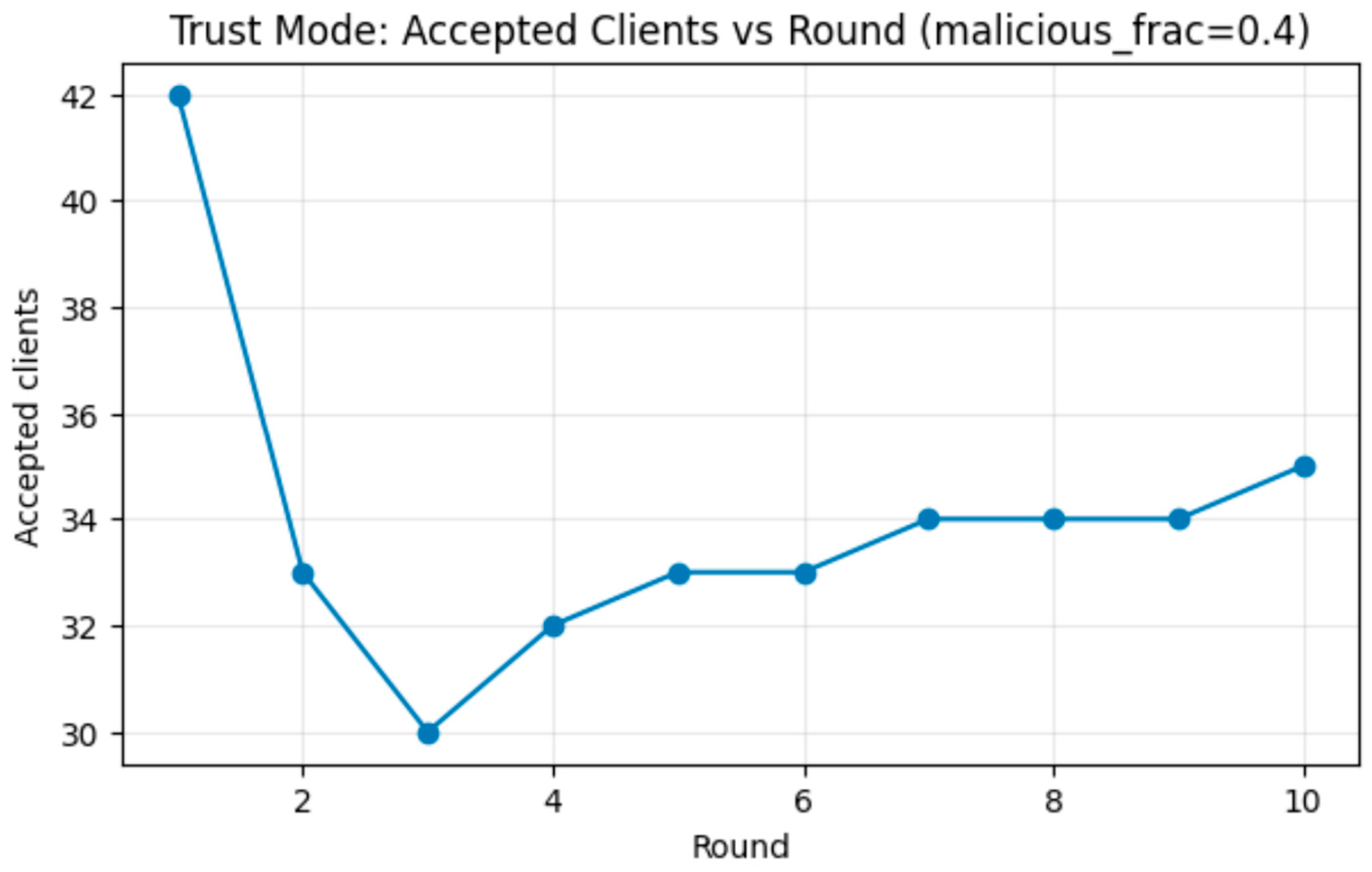
5.3.1. Client Acceptance Rate over Rounds
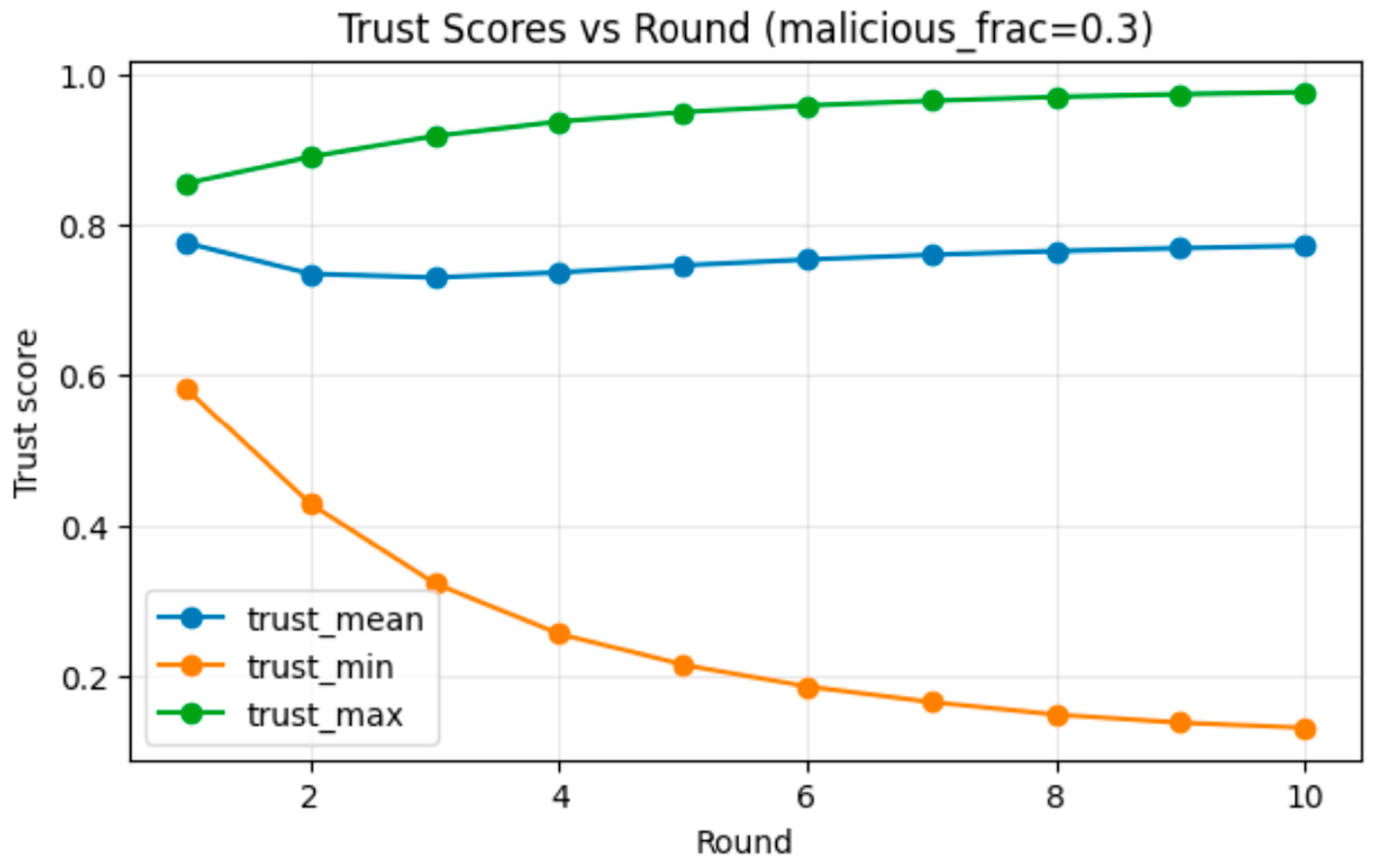
5.3.2. Trust Score Evolution
5.4. Convergence and Stability Analysis
5.5. Robustness Comparison with Byzantine Aggregation
5.6. Sensitivity Analysis to Malicious Client Ratio
5.7. Summary of Experimental Findings
6. Conclusions and Future Work
Author Contributions
Funding
Institutional Review Board Statement
Informed Consent Statement
Data Availability Statement
Conflicts of Interest
References
- Akyildiz, I.F.; Pompili, D.; Melodia, T. Underwater acoustic sensor networks: Research challenges. Ad Hoc Netw. 2005, 3, 257–279. [Google Scholar]
- Heidemann, J.; Li, Y.; Syed, A.; Wills, J.; Ye, W. Underwater Sensor Networking: Research Challenges and Potential Applications; Proceedings of the Technical Report ISI-TR-2005-603; USC/Information Sciences Institute: Marina Del Rey, CA, USA, 2005. [Google Scholar]
- Kilfoyle, D.B.; Baggeroer, A.B. The state of the art in underwater acoustic telemetry. IEEE J. Ocean. Eng. 2002, 25, 4–27. [Google Scholar] [CrossRef]
- Natarajan, V.P.; Jayapal, S. An improving secure communication using multipath malicious avoidance routing protocol for underwater sensor network. Sci. Rep. 2024, 14, 30210. [Google Scholar] [CrossRef] [PubMed]
- McMahan, B.; Moore, E.; Ramage, D.; Hampson, S.; y Arcas, B.A. Communication-efficient learning of deep networks from decentralized data. In Proceedings of the 20th International Conference on Artificial Intelligence and Statistics, Fort Lauderdale, FL, USA, 20–22 April 2017; pp. 1273–1282. [Google Scholar]
- Yin, D.; Chen, Y.; Kannan, R.; Bartlett, P. Byzantine-robust distributed learning: Towards optimal statistical rates. In Proceedings of the 35th International Conference on International Conference on Machine Learning, Stockholm, Sweden, 10–15 July 2018; pp. 5650–5659. [Google Scholar]
- Rose, S.; Borchert, O.; Mitchell, S.; Connelly, S. Zero Trust Architecture; NIST Special Publication 800-207; National Institute of Standards and Technology: Gaithersburg, MD, USA, 2020. [CrossRef]
- Ganeriwal, S.; Balzano, L.K.; Srivastava, M.B. Reputation-based framework for high integrity sensor networks. ACM Trans. Sens. Netw. TOSN 2008, 4, 15. [Google Scholar] [CrossRef]
- Sun, Y.; Han, Z.; Liu, K.R. Defense of trust management vulnerabilities in distributed networks. IEEE Commun. Mag. 2008, 46, 112–119. [Google Scholar] [CrossRef]
- Hosseinzadeh, M.; Haider, A.; Rahmani, A.M.; Aurangzeb, K.; Liu, Z.; Yousefpoor, M.S.; Yousefpoor, E.; Lee, S.-W.; Khoshvaght, P. A Q-learning-based trust model in underwater acoustic sensor networks (UASNs). Ad Hoc Netw. 2025, 178, 103918. [Google Scholar]
- Du, J.; Han, G.; Lin, C.; Martinez-Garcia, M. ITrust: An anomaly-resilient trust model based on isolation forest for underwater acoustic sensor networks. IEEE Trans. Mob. Comput. 2020, 21, 1684–1696. [Google Scholar] [CrossRef]
- Wang, B.; Yue, X.; Liu, Y.; Hao, K.; Li, Z.; Zhao, X. A Dynamic Trust Model for Underwater Sensor Networks Fusing Deep Reinforcement Learning and Random Forest Algorithm. Appl. Sci. 2024, 14, 3374. [Google Scholar] [CrossRef]
- Wu, X.; Wang, H.; Zhang, Y.; Zou, B.; Hong, H. A tutorial-generating method for autonomous online learning. IEEE Trans. Learn. Technol. 2024, 17, 1532–1541. [Google Scholar] [CrossRef]
- Zhu, R.; Li, W.; Boukerche, A.; Yang, Q. Energy-Aware DRL-Based Dual-Perception Fountain Codes for Resource-Constrained UASNs. IEEE Trans. Sustain. Comput. 2026. Early Access. [Google Scholar] [CrossRef]
- Kang, J.; Xiong, Z.; Niyato, D.; Xie, S.; Zhang, J. Incentive mechanism for reliable federated learning: A joint optimization approach to combining reputation and contract theory. IEEE Internet Things J. 2019, 6, 10700–10714. [Google Scholar] [CrossRef]
- Wahab, O.A.; Rjoub, G.; Bentahar, J.; Cohen, R. Federated against the cold: A trust-based federated learning approach to counter the cold start problem in recommendation systems. Inf. Sci. 2022, 601, 189–206. [Google Scholar] [CrossRef]
- Yan, L.; Wang, L.; Li, G.; Shao, J.; Xia, Z. Secure Dynamic Scheduling for Federated Learning in Underwater Wireless IoT Networks. J. Mar. Sci. Eng. 2024, 12, 1656. [Google Scholar] [CrossRef]
- Pokhrel, S.R.; Yang, L.; Rajasegarar, S.; Li, G. Robust zero trust architecture: Joint blockchain based federated learning and anomaly detection based framework. In Proceedings of the SIGCOMM Workshop on Zero Trust Architecture for Next Generation Communications, Sydney, Australia, 4–8 August 2024; pp. 7–12. [Google Scholar]
- Chen, X.; Feng, W.; Ge, N.; Zhang, Y. Zero trust architecture for 6G security. IEEE Netw. 2023, 38, 224–232. [Google Scholar] [CrossRef]
- Fu, Y.; Xie, Y.; Yi, W.; Poudel, B.; Cao, J.; Li, H. IPO-ZTA: An Intelligent Policy Orchestration Zero Trust Architecture for B5G and 6G. Comput. Netw. 2025, 269, 111450. [Google Scholar] [CrossRef]
- Liu, Y.; Hao, X.; Ren, W.; Xiong, R.; Zhu, T.; Choo, K.-K.R.; Min, G. A blockchain-based decentralized, fair and authenticated information sharing scheme in zero trust internet-of-things. IEEE Trans. Comput. 2022, 72, 501–512. [Google Scholar] [CrossRef]
- Xie, P.; Zhou, Z.; Peng, Z.; Yan, H.; Hu, T.; Cui, J.-H.; Shi, Z.; Fei, Y.; Zhou, S. Aqua-Sim: An NS-2 based simulator for underwater sensor networks. In Proceedings of the OCEANS 2009, Biloxi, MS, USA, 26–29 October 2009; pp. 1–7. [Google Scholar]
- Slay, N.M.J. UNSW-NB15 DataSet for Network Intrusion Detection Systems. 2014. Available online: https://research.unsw.edu.au/projects/unsw-nb15-dataset (accessed on 19 January 2026).



| Model (Year) | Key Technique | Federated Learning? | Detected Attacks | Accuracy (%) | Overhead |
|---|---|---|---|---|---|
| QLTM [10] | Q-learning trust adaptation per node based on packet forwarding rewards | No—routing only | Packet drop (blackhole) | ~90% (malicious detect) | Low (lightweight) |
| ITrust [11] | Isolation Forest anomaly detector for trust values | No—standalone trust | Data integrity attacks | 96% (true detect) | Moderate (global computation) |
| DRL-Trust [12] | Deep RL + Random Forest for dynamic trust scoring | No—standalone trust | Various (blackhole, tampering) | 99% (reported) | High (computational) |
| FL UCB-SC [15] | FL with MAB-based client scheduling and voting mechanism | Yes (FL without trust) | Random client drops (DoS) | ~92% (model accuracy) | Moderate (voting communication) |
| Blockchain-FL [18] | Blockchain-aided FL with anomaly detection at the aggregator (zero trust) | Yes (FL with blockchain) | Sybil, model poisoning | 95% (model accuracy) | High (>50% overhead) |
| Attack Type | Malicious Behavior (Node Actions) | Impact on Network/FL Process |
|---|---|---|
| Blackhole | Drops or refuses to forward packets from neighboring nodes and may withhold its own sensing data. | Causes data loss and routing disruption. In FL, updates from affected regions may be missing, and the node’s trust score decreases due to non-cooperative behavior. |
| Sybil | Uses multiple fake identities and participates in routing or FL under several node IDs. | Gains excessive influence in the FL process, increases the risk of model poisoning, and reduces trust because of identity inconsistency. |
| Data/Model Poisoning | Sends falsified sensing data or deliberately manipulates local training to generate harmful model updates. | Corrupts the global model, reduces accuracy, and may trigger false alarms. Trust decreases due to abnormal data or model deviation. |
| Denial-of-Service (DoS) | Jams the acoustic communication channels or floods the network with unnecessary messages. | Interrupts FL communication, increases energy consumption, and delays convergence. Trust decreases because of repeated interference. |
| Malicious Ratio | FedAvg | Trimmed Mean | TAFL (Proposed) |
|---|---|---|---|
| 0% | 94.6 | 94.2 | 94.8 |
| 10% | 88.3 | 91.1 | 93.5 |
| 20% | 81.4 | 88.6 | 92.1 |
| 30% | 73.2 | 85.0 | 90.4 |
| 40% | 65.7 | 81.2 | 88.9 |
| Malicious Ratio | FedAvg | Trimmed Mean | TAFL (Proposed) |
|---|---|---|---|
| 0% | 0.962 | 0.958 | 0.964 |
| 10% | 0.914 | 0.936 | 0.955 |
| 20% | 0.872 | 0.908 | 0.943 |
| 30% | 0.821 | 0.884 | 0.929 |
| 40% | 0.776 | 0.851 | 0.912 |
| Metric (30% Malicious) | Trimmed Mean | TAFL (Proposed) |
|---|---|---|
| Accuracy (%) | 85.0 | 90.4 |
| AUC | 0.884 | 0.929 |
| Convergence Rounds | 65 | 48 |
| Attacker Participation (%) | ~100 | <40 |
Disclaimer/Publisher’s Note: The statements, opinions and data contained in all publications are solely those of the individual author(s) and contributor(s) and not of MDPI and/or the editor(s). MDPI and/or the editor(s) disclaim responsibility for any injury to people or property resulting from any ideas, methods, instructions or products referred to in the content. |
© 2026 by the authors. Licensee MDPI, Basel, Switzerland. This article is an open access article distributed under the terms and conditions of the Creative Commons Attribution (CC BY) license.
Share and Cite
Anwar, R.W.; Abrar, M.; Salam, A.; Ullah, F. TAFL-UWSN: A Trust-Aware Federated Learning Framework for Securing Underwater Sensor Networks. Network 2026, 6, 18. https://doi.org/10.3390/network6010018
Anwar RW, Abrar M, Salam A, Ullah F. TAFL-UWSN: A Trust-Aware Federated Learning Framework for Securing Underwater Sensor Networks. Network. 2026; 6(1):18. https://doi.org/10.3390/network6010018
Chicago/Turabian StyleAnwar, Raja Waseem, Mohammad Abrar, Abdu Salam, and Faizan Ullah. 2026. "TAFL-UWSN: A Trust-Aware Federated Learning Framework for Securing Underwater Sensor Networks" Network 6, no. 1: 18. https://doi.org/10.3390/network6010018
APA StyleAnwar, R. W., Abrar, M., Salam, A., & Ullah, F. (2026). TAFL-UWSN: A Trust-Aware Federated Learning Framework for Securing Underwater Sensor Networks. Network, 6(1), 18. https://doi.org/10.3390/network6010018