Abstract
Goring during bullfights represents a penetrating trauma with a high risk of muscular, vascular, and vital injuries. Despite its frequency and severity, limited information is available on the immediate physiological response of the bullfighter at the moment of trauma. This case report describes the heart rate of a professional bullfighter who was gored during a bullfight, underwent surgery, and returned to fight the next bull. During the first fight, the bullfighter suffered a penetrating goring wound to the inner side of the lower third of his right thigh and a fracture of the ninth rib with intercostal rupture. Upon standing, he experienced a marked drop in heart rate and a feeling of loss of consciousness, possibly associated with vasovagal presyncope. He was transferred to the infirmary in hemodynamically stable condition. He was given local anesthesia, followed by surgical exploration, cleaning, and layered closure of the wound. After surgery, the bullfighter experienced a gradual increase in heart rate upon standing, possibly due to postural changes and postoperative sympathetic activation. He then returned to the bullring to resume activity. This case report highlights a possible vasovagal response to penetrating trauma, which may be relevant for trauma care, as a vasovagal or parasympathetic-predominant autonomic response could influence early clinical assessment.
1. Introduction
Considered an Intangible Cultural Heritage in Spain since 2013, bullfighting is regarded as an artistic activity of a cultural, traditional, and social nature, practiced in Spain, Portugal, southern France, and some Latin American countries [1,2,3,4]. Bullfighting involves bullfighters reaching maximum heart rate intensities [5,6,7,8]. Teba del Pino et al. [6] established the maximum heart rate (HRmax) of bullfighters at ∼185 bpm (∼97.4% HRmax). The average heart rate (HRmean), which represents the average intensity of the fight, is ∼156 bpm [5,6], accumulating an internal load (IL) of 91.83 TRIMPs (training impulses) during a fight with a brave bull [6].
During bullfighting, bullfighters must adapt to the unpredictable and variable behavior of the bull [6,8], a conditioning factor that influences the intensity of the fight [7] and establishes this variable as the main uncertainty in bullfighting activity [6]. The changing nature of the bullfighter’s responses, associated with the bull’s behavior, directly impacts the fighting method applied by the bullfighter [4,6], influencing concentration and decision-making. Injuries received during a bullfight can include goring (wounds caused by the bull’s horns) or a somersault, which can put a bullfighter’s life at risk. The degree of training and level of experience of bullfighters are key factors in avoiding possible injuries during a fight [6,9,10].
Bullfighters are aware that the risk of being gored by the bull is inherent in the activity of bullfighting [2,6,8,10,11,12,13]. The probability of being gored during a bullfight is 9.13%, and the mortality rate from being gored is 0.4% [2]. As a result, the fear of being gored is one of the main mechanisms that generate stress and anxiety in bullfighters before a bullfight [5,9,13]. This causes overstimulation of the autonomic nervous system [2,12], producing increases in heart rate (HR) and sweating as well as sensations of difficulty in breathing [5] in the moments prior to the bullfighting activity [7,8].
During a bullfight, the bullfighter’s position during the bull’s charge can influence both the evasion of goring and its severity if it occurs [14]. During a charge, the bull flexes its neck to extend it posteriorly, allowing it to reach and insert a horn into the bullfighter’s body [10,11,12,14]. Wounds caused by bull horns have special characteristics that make them different from any other type of wound [13,14]. This type of wound can have multiple trajectories, cause widespread tissue damage, and potentially introduce foreign bodies into the wound, increasing the possibility of infection [12,14]. These factors justify the presence of operating rooms and health personnel at bullrings [2,9,11].
However, even though the number of goring injuries from bulls represents 12.28% of the total bullfighting events held in Spain, Portugal, and southern France each year [2], knowledge about the psychophysiological effects produced by bull horn injuries in bullfighters is almost non-existent. The scarce scientific literature on this type of injury focuses on case studies or a series of cases in a particular hospital. As far as we know, when a bullfighter is gored, the sympathetic-adrenergic system is activated, and a series of endocrine mechanisms dedicated to reestablishing hemodynamic and metabolic balance is triggered [12]. However, this assumption is based on observation, and not on data analysis. Therefore, this case report aims to describe the autonomic response observed during a bull horn injury using continuous heart rate monitoring and to discuss its potential implications for early clinical assessment in trauma care.
2. Case Report
2.1. Part I: Heart Rate Response in the Moments Prior to the Bullfight
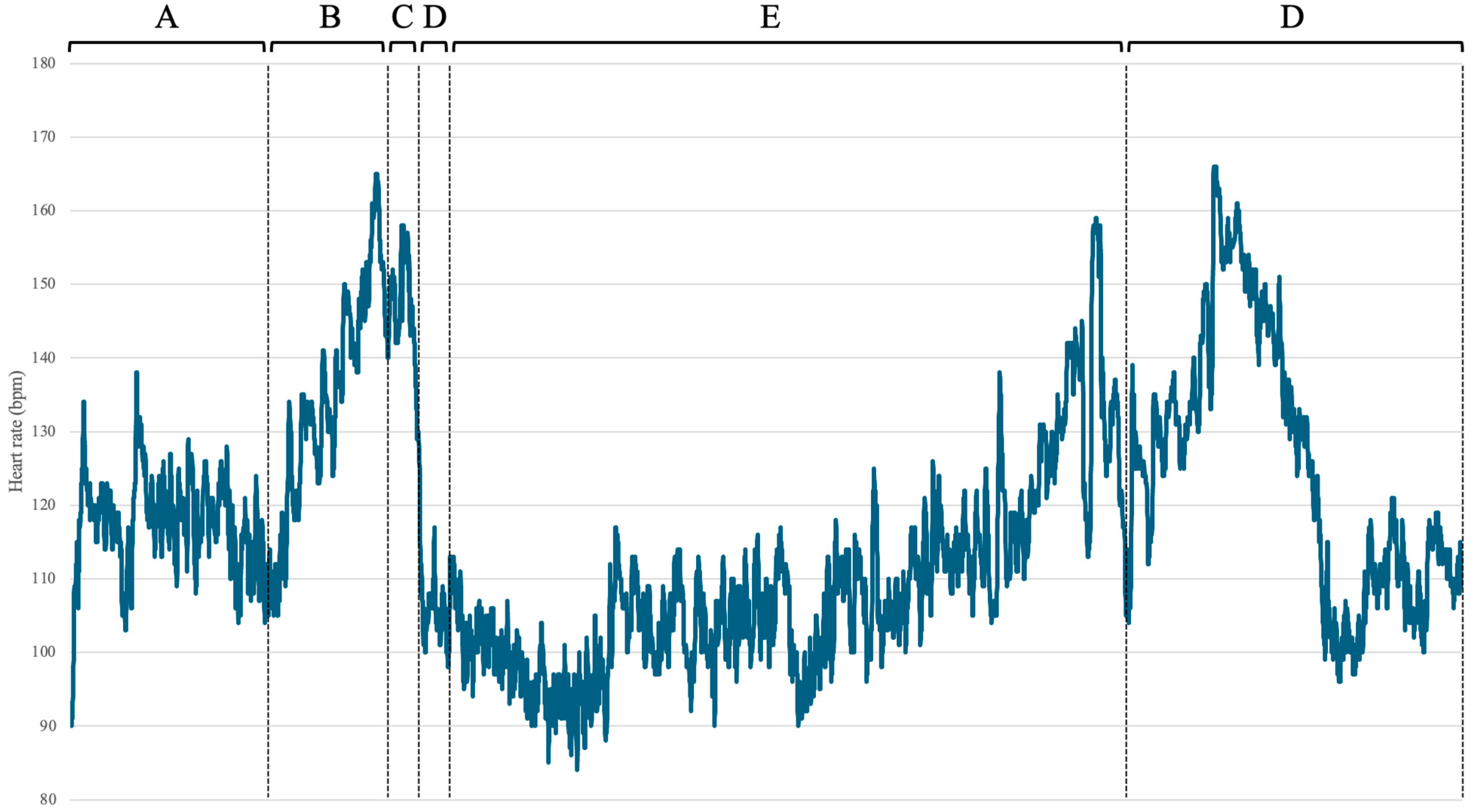
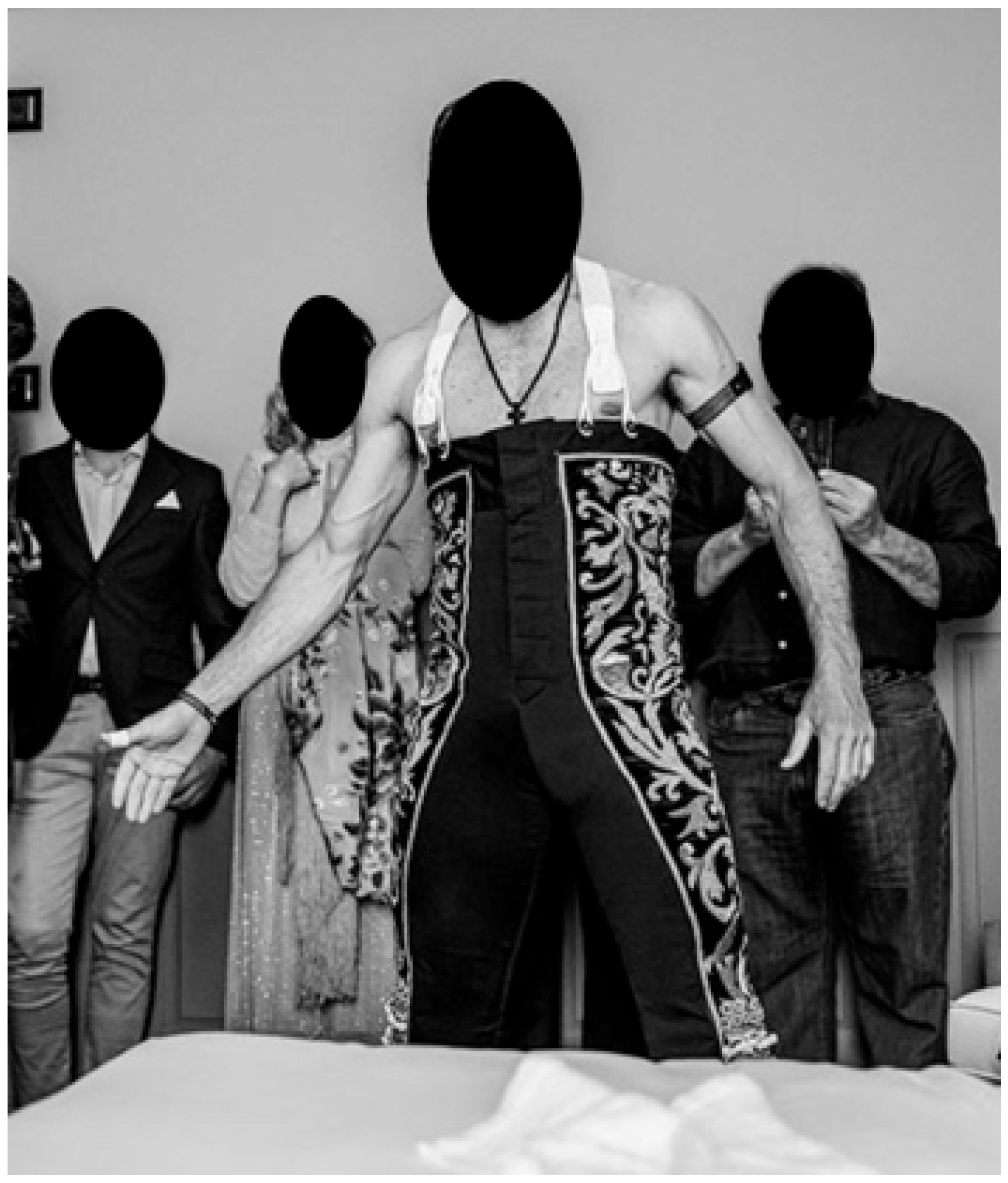
The subject of the study is a professional bullfighter (age: 39 years; height: 182.0 cm; and body weight: 73.5 kg). He has 20 years of experience as a professional bullfighter, covering more than 430 bullfights. In this study, heart rate (HR) monitoring was performed using a Polar Verity Sense device (Polar Electro, Kempele, Finland), located on the bullfighter’s left arm. The device was attached while the bullfighter was dressing in the “traje de luces” (the hotel suite used during the bullfight). Heart rate monitoring was used as a descriptive clinical tool to document physiological changes throughout the event. The HR recording began the moment the bullfighter dressed at the hotel (see Figure 1) and concluded on his return to the hotel after the bullfight, with a total recording time (TT) of 4 h and 6 min (see Figure 2).
Figure 1.
Complete HR monitoring (from the hotel to the exit from the bullring). A = start of monitoring and arrival at the bullring; B = moments before the start of the bullfight; C = beginning of the first fight; D = the bullfighter was gored and spent time in the ring injured before retiring to the infirmary; E = surgery and post-surgery; and D = second fight and completion of HR registration.
Figure 2.
Start of HR recording.
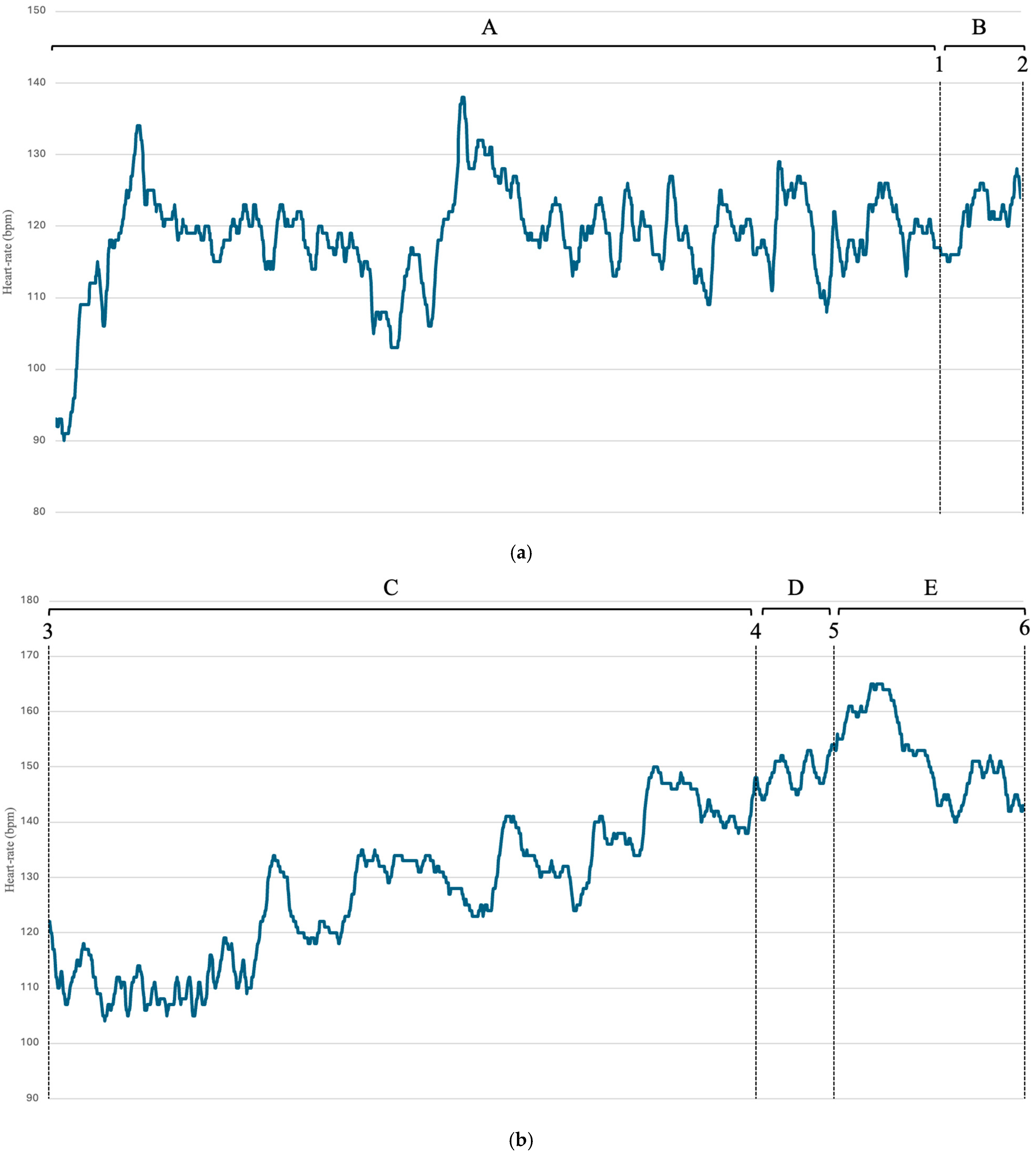
HR was recorded in a first-class bullring (a bullring of greater importance), where stress factors, such as expectations, spectator knowledge, and responsibility, influence the levels of anxiety before the bullfight [5,8,9]. Therefore, HR was continuously measured during the period prior to the start of the bullfight. Figure 3 and Table 1 show the HR data from the hotel until the start of the bullfight.
Figure 3.
HR monitoring from the hotel until just before the start of the first fight. (a) Legend: 1 = leaving the hotel; 2 = arrival at the bullring; A = dressing at the hotel; and B = trip to the bullring. (b) Legend: 3 = arrival of the bullfighter at the bullring; 4 = start of the “paseíllo”; 5 = end of the bullfight and start of the pre-fight; 6 = start of the first bullfight; C = Pre-bullfight; D = ”paseíllo”; E = before the first fight.
Table 1.
HR registration data while the bullfighter was dressing at the hotel and during his trip to the bullring.
At the hotel, HR response showed that the bullfighter had an intensity of between 60 and 70% of HRmax for 84% of the time, an intensity of 50–60% of HRmax for 11% of the time, and an intensity of <50% for 5% of the time, with an HRmean of 65.5% HRmax and a maximum HR of 76.5% HRmax. On the way from the hotel to the bullring (see Figure 3a), HR was between 60 and 70% of HRmax for 91% of the time, with an HRmean of 65% HRmax and a maximum HR of 71% HRmax.
2.2. Part II: Heart Rate Response During the Beginning of the Bullfight
Figure 3b illustrates the HR values recorded during the pre-bullfight period (the moments before the start of the bullfight), the “paseíllo” (parade and presentation of the participating bullfighters in the bullring), and the preparation time for the first bullfight. During the pre-bullfight, the bullfighter spent 46.02% of his TT at an intensity between 80 and 89% HRmax; the HRmean was 71% HRmax, and the maximum HR was 84% HRmax. During the “paseíllo”, the bullfighter spent 100% of the TT at an intensity between 80 and 89% HRmax, reaching an HRmean of 83% HRmax and a maximum HR of 85.24% HRmax. From the end of the “paseíllo” until the first bullfight began, the HRmean was 85% HRmax, and the maximum HR was 91.52% HRmax. During the pre-first fight period, the bullfighter spent 17.91% of the TT at an intensity between 70 and 79% HRmax, 70.61% of the TT at an intensity between 80 and 89% HRmax, and 11.49% of the TT at an intensity ≥ 90% HRmax (see Table 2).
Table 2.
HR recording data from the arrival of the bullfighter at the bullring until the start of the first fight.
2.3. Part III: HR Response During the First Fight
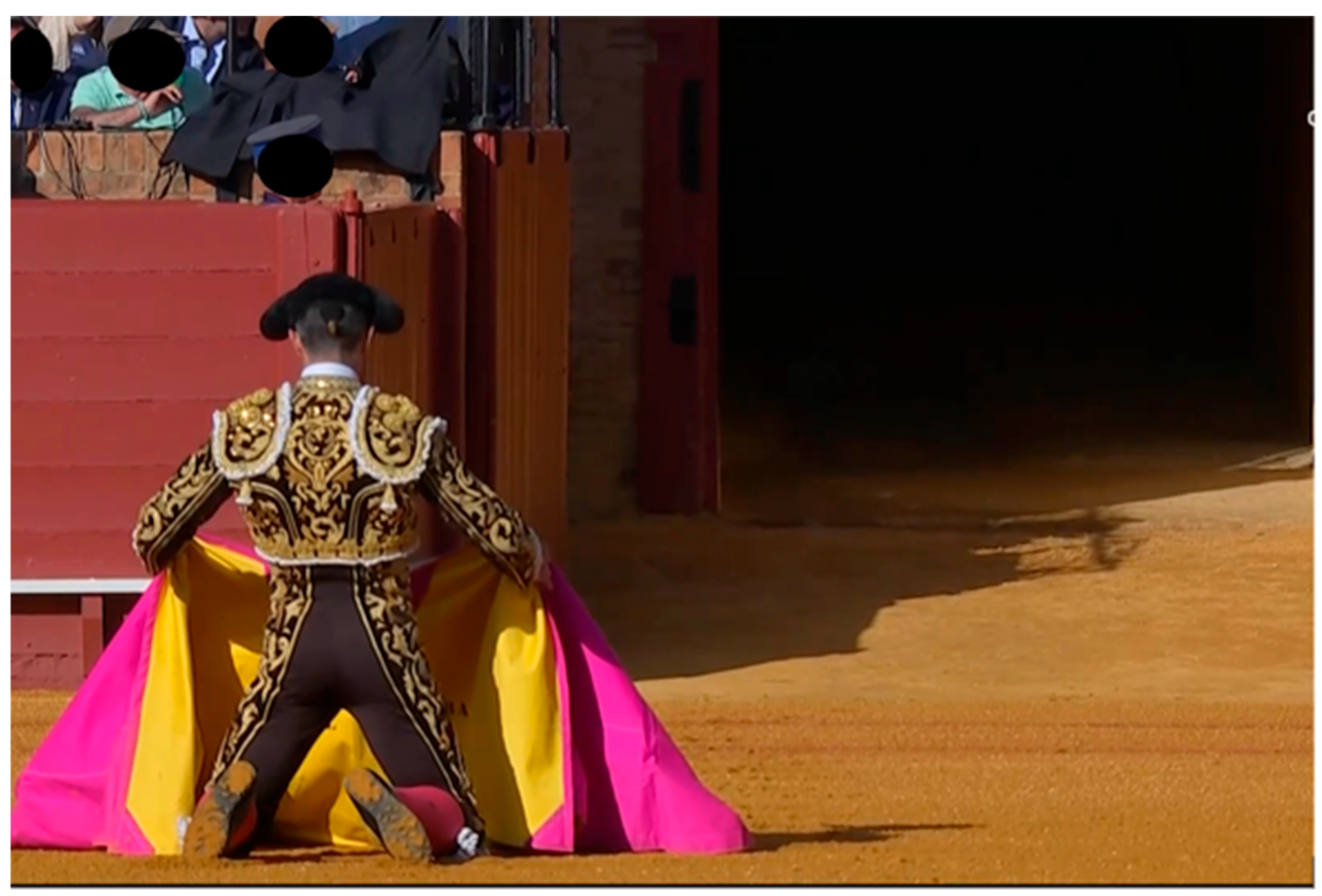
After the signal to start the first fight with the first bull, the bullfighter walks to the “puerta de toriles” (the place where the bull comes out to the bullring) to acknowledge the bull with a “larga cambiada” (technical–artistic gesture where the bullfighter has a high probability of being run over by the bull) to “portagayola” (a kneeling position where the bullfighter executes the “larga cambiada” when the bull exits) (see Figure 4). The results during this phase (see Table 3) showed that before going to the gate of the bull pen, the HRmean was 86.19% HRmax with a maximum HR of 87.26% HRmax. TT of this phase was 0:39, where for 53.85% of the TT the HR was 70–79% HRmax, and for 46.15% of the time it was 80–89% HRmax. Between the time when the bullfighter walked towards the gate of the pens and the bull emerged into the bullring the HRmean was 86.19% HRmax, reaching a maximum HR of 86.74% HRmax. The TT of this phase was 1:24, during which the intensity of the HR was 80–89% HRmax.
Figure 4.
The bullfighter kneels in front of the “puerta de toriles”.
Table 3.
HR registration data during the fight with the first bull, where the bull gored the bullfighter, until the start of the second fight after surgery.
2.4. Part IV: Goring During the Fight with the First Bull
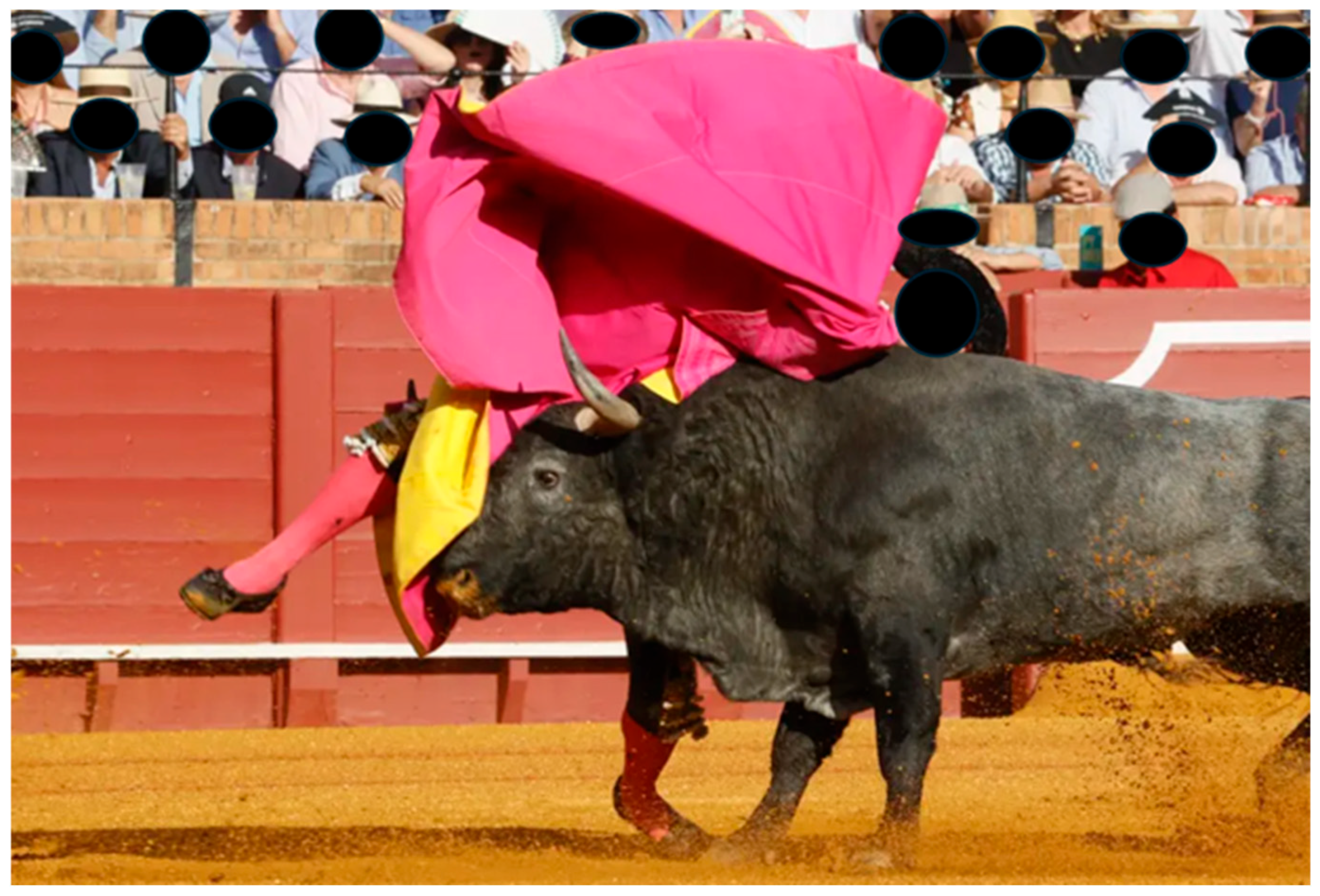
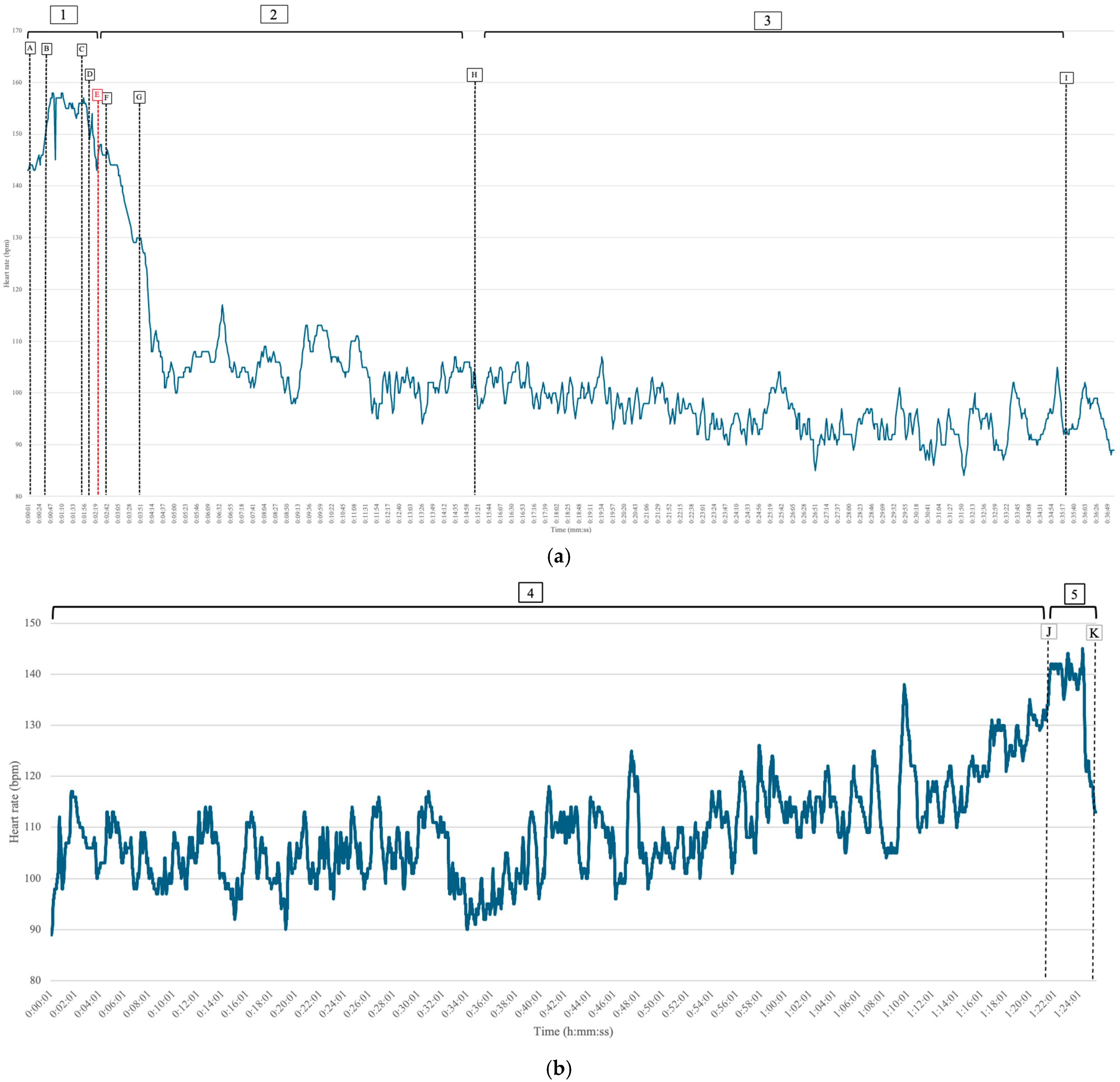
During the fourth “veronica” (technical–artistic action), the bullfighter was caught by the bull, with the right horn causing a penetrating wound on the inner side, lower third of the right thigh, measuring 12 cm (see Figure 5). In a second charge, with the bullfighter on the ground, the bull again attacked the bullfighter, causing a right rib contusion. The bullfighter’s HRmean was 81.22% HRmax, registering 147 bpm (81.54% HRmax) at the moment he was gored by the bull. After the goring, he was assisted to get up, suffering a reduction in consciousness (without complete loss of consciousness) and showed a substantial drop in HR a few seconds later. He left the bullring heading for the infirmary with an HR of 71.82% HRmax and an HRmean of 66.30% HRmax when he entered the infirmary at the bullring. Figure 6a shows the HR response from the beginning of the fight until the moment when the bullfighter entered the infirmary after the goring.
Figure 5.
The moment when the bull hurt the bullfighter.
Figure 6.
HR registration data during the fight with the first bull, when the bull gored the bullfighter, until the start of the second fight after surgery. (a) Legend: 1 = first fight; 2 = goring and pre-surgery; 3 = surgery; A = the bullfighter walks to the “puerta de toriles”; B = the bullfighter kneels in front of the “puerta de toriles”; C = the bull enters the bullring; D = the bullfighter makes a “larga cambiada” to the bull with the capote; E = the bullfighter receives the goring; F = the bullfighter is assisted by his assistants to get up from the ground after the goring; G = the bullfighter is taken to the infirmary by his assistants; H = the surgery begins; and I = the surgery ends. (b) Legend: 4 = post-surgery period; 5 = pre-second fight moment; J = the bullfighter returns to the bullring alley; and K = the second fight begins. The letter E is highlighted in red to indicate the exact moment of the goring, which represents the critical traumatic event and serves as the reference point for interpreting the subsequent HR response.
2.5. Part V: Surgery and Postoperative Period
After an initial examination and with the express authorization of the bullfighter, surgery was performed under local anesthesia. The procedure began with an examination of the wound to determine its extent, followed by cleaning of the wound with saline solution, and suturing of the wound. Intravenous paracetamol and dexketoprofen were administered, accompanied by serum to control dehydration. The duration of surgery was 20:44 with an HRmean of 53.04% HRmax (Table 3 and Figure 6a). After surgery, the medical team provided the following medical report:
“Wound caused by a bull’s horn on the inner side, lower third of the right thigh, 12 cm, affecting subcutaneous cellular tissue, without vascular involvement. Suturing was performed under local anesthesia. Good peripheral pulse in the MID. Right costal contusion, with no evidence of fracture. Good ventilation is verified in both lung fields and normal thoracic auscultation.”Prognosis: Less serious; the fight continues.
2.6. Part VI: Fighting the Second Bull
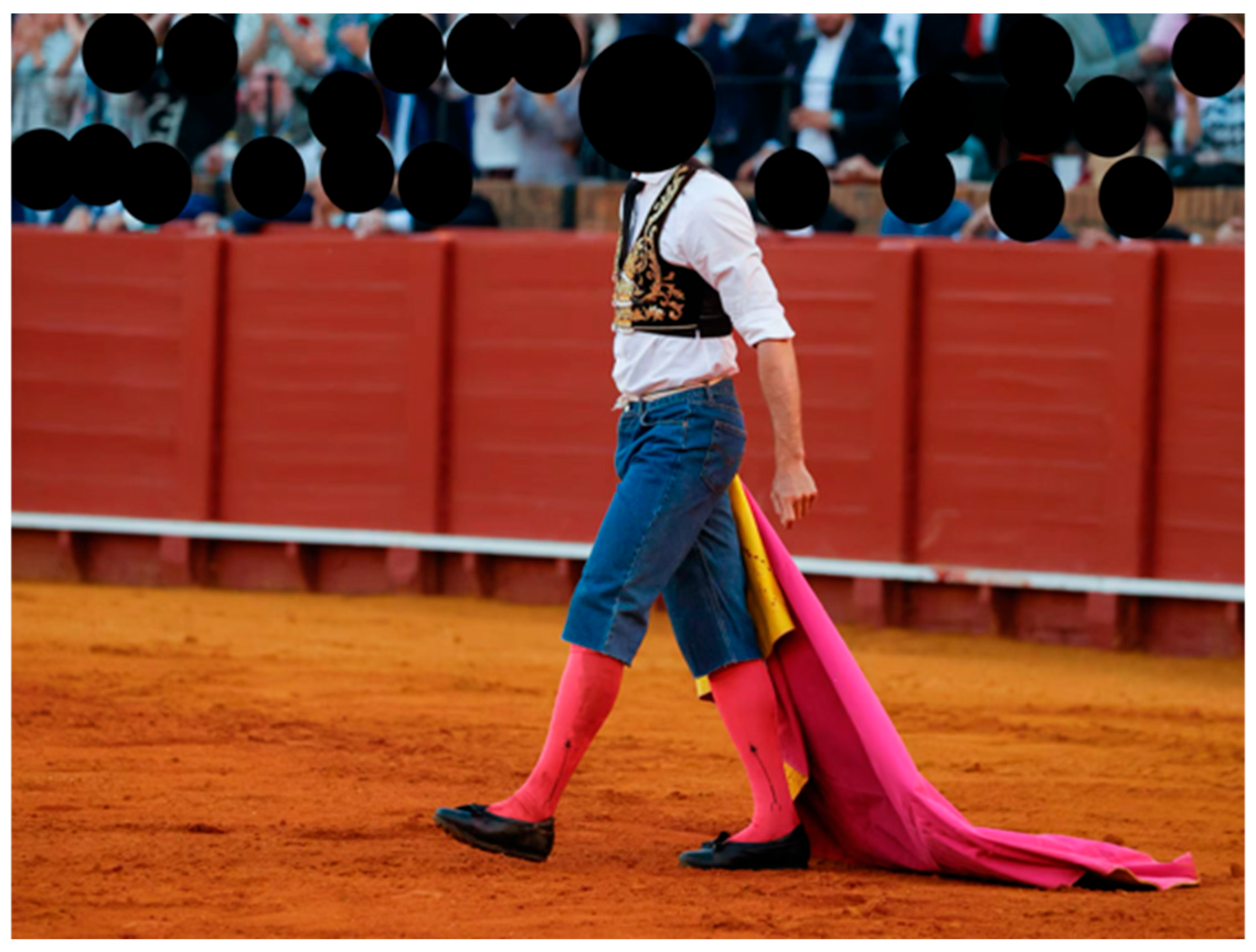
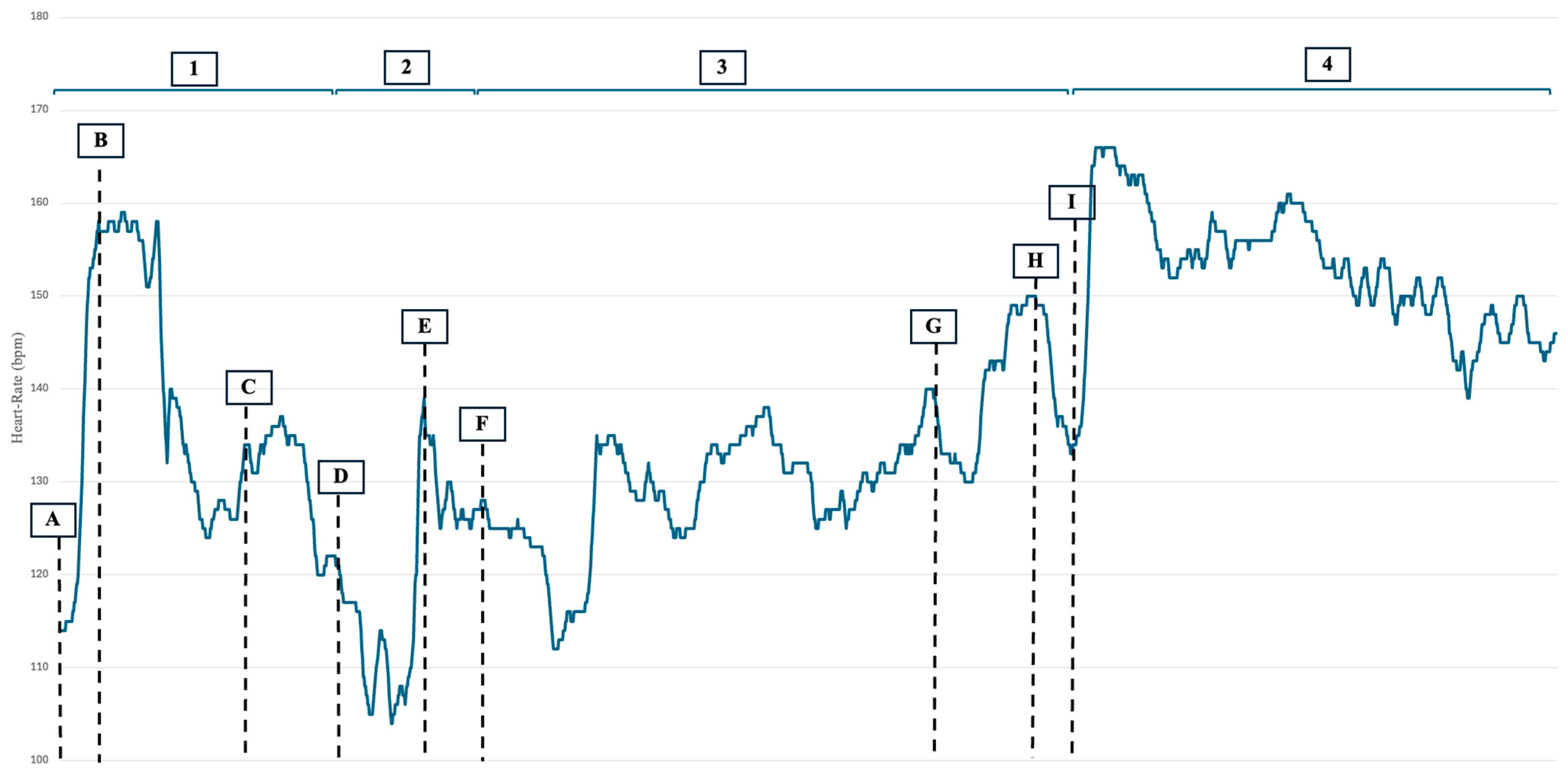
After undergoing surgery and completing a brief postoperative period, the bullfighter was ready to go back out into the bullring to fight his second bull (Figure 7). The HR monitoring (Figure 8) during the bullfight was described according to two parts (during and after the bullfight). The bullfight was subdivided into three stages according to bullfighting regulations. Each of the stages was subdivided into substages. The first stage involves the bullfighter walking towards the “puerta de toriles”, waiting for the bull to come out into the bullring, and fighting the bull. The second stage involves placing the first and second “banderillas” (a thin stick with a small spear used in bullfighting to spur the bull on). The third stage involves a pre-fight with the “muleta” (an instrument made of a stick and a red cloth that is used to fight the bull in the last third of the fight with the aim of tempering and directing the bull’s charge), a fight with the “muleta”, after which the bullfighter takes the sword for the final part of the third stage, and after the fight. HR data are presented in Table 4.
Figure 7.
The bullfighter begins the fight with the second bull after leaving the infirmary.
Figure 8.
FC registration data from the beginning of the second bullfight until the bullfighter left the bullring after the second bullfight had ended. Legend: 1 = stage 1; 2 = stage 2; 3 = stage 3; 4 = post-bullfight; A = the bullfighter walks towards the “puerta de toriles”; B = the bullfighter waits for the bull to come out into the bullring; C = the bullfighter fights the bull; D = end of the first part and beginning of the second part; E = first flag; F = second flag; G = pre-fight with the muleta; H = fight with the muleta; and I = bullfighter takes the sword and final stage.
Table 4.
FC registration data from the beginning of the second bullfight until the bullfighter left the bullring after the second bullfight had ended.
3. Discussion
This case report describes the HR response of a bullfighter during a bullfight where the bullfighter was gored, underwent surgery, and returned to fight his next bull. Somatic anxiety (SA) is one of the most common stress-generating factors in professional sport [15,16,17,18,19] and in bullfights [5,6,7,8,9]. During the practice of bullfighting, psychological factors associated with uncertainty, the type of challenge, responsibility, life risk, expectations, and the setting where the bullfight takes place influence the HR response in the moments prior to a bullfight [5,6,7,8,9]. The results of the present study established that the HRmean of the bullfighter minutes before moving to the bullring was 118 bpm. This value was higher than that provided by Reyes [9], who established that the HRmean of bullfighters during their stay at the hotel was 95 bpm. The difference between these results could be due to the sample size of the studies: Reyes [9] analyzed the HR responses of 12 bullfighters with different levels of experience, while the present study analyzed the HR of a single bullfighter. In addition, the HR recorded in the present study was before one of the most important bullfights of the season, which could increase the levels of pre-competitive anxiety [8,9]. While it is true that the increase in HR before going to the bullring could express the degree of SA of the bullfighter [5,9], future studies analyzing the HR response of a greater number of bullfighters, taking into account the type of bullring and their level of experience, could help professionals in charge of preparing bullfighters to understand the influence of anxiety on the HR response, thus establishing interventions that help to manage bullfighters’ pre-competitive anxiety levels.
During the “paseíllo”, external factors such as spectators could increase the levels of excitement prior to the start of the bullfight [7,9]. The results of the study showed that the bullfighter’s HRmean was 149 bpm during the TT (1:28) of the “paseíllo”. This result showed that as the start time of the first bullfight approached, the bullfighter’s HR increased. This fact may be due to the SA expressed in an increase in the bullfighter’s HR minutes before commencing the first fight. The results differ from those presented by Reyes [9], where the bullfighters reached 120 bpm during the “paseíllo”. The difference between the studies could be due to the order of the bullfight for the participating bullfighters, because participating in first position may increase a bullfighter’s HR due to a higher SA [7]. The bullfighter analyzed in the present article was bullfighting in first place (minutes after finishing the “paseíllo”), while Reyes [9] did not specify the bullfighting order for the bullfighters min his study, so they could have participated in second or third place, 20 min and 40 min later, respectively, which could affect the HR response at the time of the “paseíllo”. Future studies that analyze pre-competition anxiety, as well as the bullfighters’ HR responses, providing information on the order in which they participate in the bullfight, would allow us to assess the levels of SA depending on the order of participation.
While these findings are primarily interpreted within a psychophysiological and performance-related framework, they also provide relevant context for understanding baseline autonomic activation prior to traumatic injury, which may influence the subsequent physiological response following trauma.
3.1. First Fight
During the moments before the start of the fight with the first bull, bullfighters’ HRs increase due to the influence of the SA and excitation of the autonomic nervous system [7]. The results showed a gradual increase in the bullfighter’s HR from the start signal of the fight (143 bpm) until the bullfighter approached the bullpen door to receive the bull, demonstrating an exponential increase in HR until the bullfighter knelt in front of the bullpen door with an HRmax of 156 bpm. The influence of cognitive, emotional, and motivational factors, as well as situational perception, could explain this exponential increase in HR, since SA can influence HR in situations of extreme conditional stress with associated life-threatening risk, such as bullfighting [7], reducing vagal tone and increasing sympathetic activity and reducing parasympathetic activity [20,21]. Clemente-Suarez et al. [22] stated that less experienced skydivers (having less anxiety control) showed higher HR records and higher levels of SA than experienced skydivers. Saijo et al. [23] concluded that a state of greater arousal could influence an exponential increase in HR in Formula 1 drivers. Matsumura et al. [24] stated that the mental effort of karting drivers influenced the increase in HR during the race due to the activation of the β-adrenergic sympathetic nerve. Therefore, mental stress in the moments before bullfighting, as well as the influence of external factors such as expectations, the competitive location, and the type of bull, could increase sympathetic activity, leading to an exponential increase in the HR of professional bullfighters.
The results showed that the bullfighter’s HR was lower when he was bullfighting than in the moments before the fight. This could be due to the influence of anxiety control techniques. While the bullfighter walked towards the bullpen door, he was taking slow breaths with the aim of controlling physiological arousal and anxiety levels, thus reducing his HR [25,26] while maintaining concentration levels [27,28]. This fact could explain the decrease in HR in the moments prior to the first contact with the bull. Merlin et al. [29] stated that adolescent swimmers who performed slow breathing improved their ability to cope with pressure and challenges during training. Future studies analyzing the influence of slow-breathing exercises on HR could help bullfighters control their levels of excitement and SA.
3.2. Goring
The risk of being gored by the bull is an inherent factor in bullfighting [2,5,6,7,13,30]. The bullfighter was injured on the inner side of the lower third of the right thigh. This concurs with the results of Reguera-Teba et al. [2], who stated that 66% of gorings occur in the thigh region [2,10,31]. This may be due to the relationship between the bull and the bullfighter and the movement of the animal during the charge (bending the neck and lowering the head, bringing the horns to the height of the knees). If the bull raises its head during this action, it could reach the bullfighter at the height of the thigh [2,12], as happened in the present study. At the same time, the bullfighter suffered a fissure in the ninth costal arch, with a tear in the intercostal muscles due to a second charge by the bull when the bullfighter was on the ground. This agrees with the findings of De Miguel [30], who stated that sometimes gorings are accompanied by trauma and osteoarticular injuries, and with Byard [4], who stated that after the goring, other injuries can be caused by stomping, falls, or the impact of the charge. Such events reduce the possibility of continuing with the bullfight, forcing the bullfighter to go to the infirmary [12]. Given the injuries of the studied bullfighter, it was decided that going to the infirmary to receive medical attention, with the next bullfighter in order of performance taking charge of the bullfight, was appropriate.
The sensation of reduced consciousness (without complete loss of consciousness) when the bullfighter got up from the ground after the goring could have been caused by a vasovagal presyncope (VVPS) triggered by exposure to pain, emotional stress [31,32,33], and orthostasis [34], causing relative bradycardia and arterial hypotension after the goring [35,36]. This event suggests that autonomic responses following penetrating trauma may be more heterogeneous than traditionally assumed, particularly in situations in which pain, emotional stress, and orthostatic changes coexist. From a trauma care perspective, the occurrence of a vasovagal presyncope response may complicate early clinical assessment, as apparent hemodynamic stability could mask transient autonomic disturbances relevant for initial decision-making. Martínez-Ramos et al. [12] stated that the stress suffered by the bullfighter at the time of the goring would produce activation of the sympathetic–adrenergic system and activation of the neuroendocrine mechanisms destined to restore the hemodynamic and metabolic balance of the bullfighter, releasing endorphins that would activate the cerebral analgesic system. In the present case, continuous HR monitoring suggests a predominance of parasympathetic features during the immediate post-traumatic phase, highlighting the potential variability of autonomic responses following goring. Further case-based observations are required to better characterize this response and its clinical relevance.
3.3. Surgery
Bull horn wounds penetrate the superficial layers, penetrating the interior of the body, thus causing everything from bruising and muscle tears to rupture of blood vessels, nerves, and viscera [4,12,37]. These facts are mostly consistent with the wounds suffered by the bullfighter, who suffered a penetrating wound from a bull’s horn, damaging the superficial layers of the lateral-inner area of the lower third of the right thigh. Maity et al. [37] provided an algorithm for primary care to be carried out in the event of a bull horn wound, where if the bullfighter arrives at the infirmary in a stable hemodynamic state with a penetrating wound, the examination of the wound should begin. This is consistent with the actions of the medical team in charge of the assessment and surgery of the injured bullfighter in the present study. Prior to the observation, the bullfighter was anesthetized with local anesthesia. This fact is consistent with the guidelines set out by Martínez-Ramos et al. [12] who stated that the application of local or general anesthesia (depending on the severity of the bullfighter’s injuries) is necessary to be able to proceed with a correct observation and assessment of the wound, as well as the exhaustive cleaning of the wound, removing all fragments of horn, clothing, and sand present inside the wound.
3.4. Post-Surgery
At the end of surgery, the bullfighter’s heart rate (HR) began to increase compared to its preoperative status. This could be due to the change in body position, from prone to seated on the operating table, and the subsequent preparation for the second bull. Jans et al. [38] concluded that heart rate variability (HRV) decreases when the patient returns to work early after surgery, causing an early dysregulation of the cardiovascular response, increasing HR, and decreasing HRV. This could explain the increase in HR after the completion of the bullfighter’s surgery.
3.5. Fighting the Second Bull
The attenuated chronotropic response observed during the return to activity after surgery may be clinically relevant in trauma care, as it could influence the interpretation of functional recovery and physiological readiness following acute injury. After surgery and a brief postoperative period, the bullfighter was ready to fight his second bull. The results showed that the intensity did not reach the bullfighter’s 90% HRmax. Teba-del Pino et al. [5] showed that one bullfighter spent 8:49 at an intensity of ≥90% HRmax during his first bull and 4:11 during his second bull. Teba-del Pino et al. [6] analyzed six fights performed by three professional bullfighters where the bullfighters spent 6:42 at an intensity ≥ 90% HRmax. Teba-del Pino et al. [6] stated that the high CV in the time that the bullfighters were at an intensity ≥ 90% HRmax made it difficult to predict the time that bullfighters would spend at that intensity of HR. This could justify the difference between the results of the present study and its predecessors.
HRmax represents the maximum HR intensity that a bullfighter reaches during a bullfight. The HRmax reached by the bullfighter in the present study was 159 bpm, different from the 196 bpm obtained by Reyes [9], the 186 bpm (first bull) and 181 bpm (second bull) obtained by Teba del Pino et al. [5], and the 184.83 bpm obtained by Teba del Pino et al. [6]. These differences may be due to the high variability of the HRmax of the bullfighters [6], which could justify these differences.
The HRmean represents the average intensity of a bullfighter’s HR during a bullfight [7]. The results show that the HRmean for the bullfighter in this study was 136 bpm. This result differs from the 175 bpm obtained by Reyes [10], the 165 bpm (first bull) and 153 (second bull) obtained by Teba del Pino et al. [5], and the 156.33 bpm obtained by Teba del Pino et al. [6]. The unpredictable behavior of the bull, as well as the bullfighter’s style of bullfighting, could affect the bullfighter’s HR response during the bullfight [7] and could explain the differences between the results of the present study and those in the previous literature. Similar variations occurred with the accumulated IL in the fight, where the IL of the bullfighter after bullfighting was 56.17 TRIMPs, which was lower than the values obtained by Teba-del Pino et al. [5] during the fight with the first bull (92.5 TRIMPs) and the second bull (87.5 TRIMPs), and the 91.83 TRIMPs presented in the results obtained by Teba-del Pino et al. [6]. However, the results obtained in the present study are within the confidence interval presented by Teba-del Pino et al. [6]. This finding, together with the high coefficient of variation presented by these authors, reinforces the hypothesis that the unpredictable behavior of the bull influences bullfighters’ IL after the fight.
Despite the extraordinary fact that the bullfighter continued bullfighting after being operated on, the drugs given to the bullfighter (paracetamol, dexketoprofen, and saline solution) did not affect the HR [39,40]. Therefore, the pharmacological effect of the drugs given during the operation was unlikely to be the primary cause of the reduced HR presented by the bullfighter analyzed, which is contrary to that presented in previous scientific literature. As stated before, the unpredictable behavior of the bull, the bullfighter’s style, and the high variability in bullfighters’ HRs during bullfights [6,8] could explain why this bullfighter’s HR was lower than those presented in other studies in the scientific literature. An increase in HR was observed when the bullfighter finished the fight and received prizes. This is consistent with Reyes [10], who stated that whether a prize is obtained after a fight could influence the bullfighter’s HR. Therefore, the perceived effort and the outcome of the fight could influence bullfighters’ HR responses after the fight.
4. Conclusions
This case report provides a detailed description of heart rate behavior during a bull horn injury in a professional bullfighter. The possible presence of VVPS suggests that autonomic responses to penetrating trauma may not always follow the classical pattern of sympathetic–adrenergic predominance, highlighting a potential source of misinterpretation during early clinical assessment. The main limitation of this study is the presentation of a single case, which limits the solidity of the conclusions provided. Accordingly, the findings should be interpreted as descriptive and hypothesis-generating. Nevertheless, this observation may be of clinical interest for trauma care, as it underscores the need for cautious interpretation of apparent hemodynamic stability following penetrating injuries.
Author Contributions
Conceptualization, L.T.-d.-P., L.S.-A., and E.S.d.V.; methodology, L.T.-d.-P. and E.S.d.V.; formal analysis, L.S.-A. and E.S.d.V.; investigation, L.T.-d.-P.; writing—original draft preparation, L.T.-d.-P.; writing—review and editing, L.T.-d.-P.; supervision, L.S.-A. and E.S.d.V. All authors have read and agreed to the published version of the manuscript.
Funding
This research received no external funding.
Institutional Review Board Statement
Ethical review and approval were waived for this study because it is a retrospective case report based on the clinical observation of a single patient, with no experimental intervention and no modification of standard clinical care. All procedures were conducted in accordance with the Declaration of Helsinki and the local regulations and institutional policies.
Informed Consent Statement
Written informed consent was obtained from the patient for publication of this case report and any accompanying images.
Data Availability Statement
The data supporting the findings of this study are not publicly available due to privacy and ethical restrictions, as they contain personal health information. Data may be made available from the corresponding author upon reasonable request and with appropriate safeguards.
Conflicts of Interest
The authors declare no conflicts of interest.
Abbreviations
The following abbreviations are used in this manuscript:
| HR | Heart rate |
| HRmean | Average heart rate |
| HRmax | Maximum heart rate |
| %HRmax | Linear dichroism |
| HRV | Heart rate variability |
| VVPS | Vasovagal presyncope |
| SA | Somatic anxiety |
| TT | Total time |
| TRIMPs | Training impulses |
| IL | Internal load |
References
- Cozcolluela-Cabrejas, M.R.; Sanz-Salanova, L.A.; Jerez Oliveros, J.J.; Madrid Pérez, J.M.; Zalazar, L.R.; Pérez Omeñaca, F. Lesiones producidas en aficionados durante los festejos taurinos populares. Cir. Esp. 2019, 97, 34–39. [Google Scholar] [CrossRef]
- Reguera-Teba, A.; Martínez- Casas, I.; Torné-Poyatos, P.; Hernández- Cortés, P. Eight-year analysis of bullfighting injuries in Spain, Portugal and southern France. Sci. Rep. 2021, 11, 16006. [Google Scholar] [CrossRef]
- Navas-Mosqueda, Á.; Valera-Calero, J.A.; Varol, U.; Klich, S.; Navarro-Santana, M.J.; Fernández-de-las-Peñas, C.; Ríos-León, M.; Belón-Pérez, P.; Cimadevilla-Fernández-Pola, E.; Hervás-Pérez, J.P.; et al. The prevalence of shoulder disorders among professional bullfighters: A cross-sectional ultrasonography study. Tomography 2022, 8, 1726–1734. [Google Scholar] [CrossRef]
- Byard, R.W. Death and injuries caused by cattle: A forensic overview. Forensic Sci. Med. Pathol. 2024, 21, 401–405. [Google Scholar] [CrossRef]
- Teba del Pino, L.; Robles Aguilar, J.A.; Ramirez-Campillo, R.; Sáez de Villarreal, E. Respuestas Psicofisiológicas del toreo profesional real y simulado: Estudio de un CASO (psychophysiological responses to real and simulated professional bullfighting: A case study). Retos 2023, 51, 833–839. [Google Scholar] [CrossRef]
- Teba del Pino, L.; Robles Aguilar, J.A.; Sáez de Villarreal Sáez, E. Differences in the performance of bullfighters during a bullfight. Does bull behavior have direct influence on the variables determining professional bullfighter’s performance? Retos 2024, 53, 178–182. [Google Scholar] [CrossRef]
- Teba-del Pino, L. Análisis de las Variables Determinantes en el Rendimiento de los Toreros Profesionales. Ph.D. Thesis, Repositorio Institucional–Universidad Pablo de Olavide, Sevilla, Spain, 2024. [Google Scholar]
- Teba-del Pino, L.; Calleja-González, J.; Mielgo-Ayuso, J.; Sáez de Villarreal, E. Determinant variables related to performance of professional bullfighters: A narrative review. Retos 2025, 65, 1107–1119. [Google Scholar] [CrossRef]
- Reyes, G. El Corazón del Torero; Consejería de Gobernación. Junta de Andalucía: Sevilla, Spain, 2004.
- Rudloff, U.; Gonzalez, V.; Fernandez, E.; Holguin, E.; Rubio, G.; Lomelin, J.; Dittmar, M.; Barrera, R. Chirurgica Taurina: A 10-year experience of bullfight injuries. J. Trauma 2006, 61, 970–974. [Google Scholar] [CrossRef] [PubMed]
- Lehmann, V.; Lehmann, J. Cirurgia Taurina-die medizinische Versorgung der Toreros in Spanien. Zentralblatt Chir. 2003, 128, 685–690. [Google Scholar] [CrossRef]
- Martínez-Ramos, D.; Manuel Miralles-Tena, J.; Escrig-Sos, J.; Traver-Martínez, G.; Cisneros-Reig, I.; Luis Salvador-Sanchís, J. Heridas por Asta de Toro en el hospital general de castellón. Estudio de 387 Pacientes. Cir. Esp. 2006, 80, 16–22. [Google Scholar] [CrossRef]
- García-Marín, A.; Turégano-Fuentes, F.; Sánchez-Arteaga, A.; Franco-Herrera, R.; Simón-Adiego, C.; Sanz-Sánchez, M. Bullhorn and bullfighting injuries. Eur. J. Trauma Emerg. Surg. 2014, 40, 687–691. [Google Scholar] [CrossRef] [PubMed]
- Sánchez Cuellar, L.A. Herida por Asta de Toro en el área maxilofacial: Revisión de la literatura y Presentación de un Caso. Rev. Esp. Cir. Oral Maxilofac. 2008, 30, 363–364. [Google Scholar] [CrossRef][Green Version]
- Andrade Fernández, E.M.; Lois Río, G.; Arce Fernández, C. Propiedades psicométricas de la versión española del Inventariode Ansiedad Competitiva CSAI-2R en deportistas [Psychometric properties of the Spanish version of the Revised Competitive State Anxiety Inventory-2 with athletes]. Psicothema 2007, 19, 150–155. (In Spanish) [Google Scholar] [PubMed]
- Paul, M.; Garg, K. The effect of heart rate variability biofeedback on performance psychology of basketball players. Appl. Psychophysiol. Biofeedback 2012, 37, 131–144. [Google Scholar] [CrossRef] [PubMed]
- Ayuso-Moreno, R.; Fuentes-García, J.P.; Collado-Mateo, D.; Villafaina, S. Heart rate variability and pre-competitive anxiety according to the demanding level of the match in female soccer athletes. Physiol. Behav. 2020, 222, 112926. [Google Scholar] [CrossRef] [PubMed]
- Paludo, A.C.; Woodman, T.; Owen, J.A.; Rabelo, F.N.; Bernacikovà, M.; Simões, A.C. Pre-competitive anxiety and autonomic responses in professional U-20 futsal players: Effect of the competition phase and game location. Physiol. Behav. 2022, 254, 113903. [Google Scholar] [CrossRef] [PubMed]
- Fortes, L.S.; da Costa, B.D.V.; Paes, P.P.; do Nascimento Júnior, J.R.A.; Fiorese, L.; Ferreira, M.E.C. Influence of Competitive-Anxiety on Heart Rate Variability in Swimmers. J. Sports Sci. Med. 2017, 16, 498–504. [Google Scholar] [PubMed] [PubMed Central]
- Manresa-Rocamora, A.; Sarabia, J.M.; Javaloyes, A.; Flatt, A.A.; Moya-Ramón, M. Heart Rate Variability-Guided Training for Enhancing Cardiac-Vagal Modulation, Aerobic Fitness, and Endurance Performance: A Methodological Systematic Review with Meta-Analysis. Int. J. Environ. Res. Public Health 2021, 18, 10299. [Google Scholar] [CrossRef] [PubMed] [PubMed Central]
- Ribeiro, B.L.L.; Galvão-Coelho, N.L.; Almeida, R.N.; Dos Santos Lima, G.Z.; de Sousa Fortes, L.; Mortatti, A.L. Analysis of stress tolerance, competitive-anxiety, heart rate variability and salivary cortisol during successive matches in male futsal players. BMC Sports Sci. Med. Rehabil. 2022, 14, 187. [Google Scholar] [CrossRef] [PubMed] [PubMed Central]
- Clemente-Suárez, V.J.; Robles-Pérez, J.J.; Fernández-Lucas, J. Psychophysiological response in parachute jumps, the effect of experience and type of jump. Physiol. Behav. 2017, 179, 178–183. [Google Scholar] [CrossRef] [PubMed]
- Saijo, N.; Nishizono, R.; Kashino, M. Relationship between pre-driving heart rate and driving performance in formula car racing: A case study. Annu. Int. Conf. IEEE Eng. Med. Biol. Soc. 2021, 2021, 4957–4960. [Google Scholar] [CrossRef] [PubMed]
- Laborde, S.; Allen, M.S.; Borges, U.; Dosseville, F.; Hosang, T.J.; Iskra, M.; Mosley, E.; Salvotti, C.; Spolverato, L.; Zammit, N.; et al. Effects of voluntary slow breathing on heart rate and heart rate variability: A systematic review and a meta-analysis. Neurosci. Biobehav. Rev. 2022, 138, 104711. [Google Scholar] [CrossRef] [PubMed]
- Bentley, T.G.K.; D’Andrea-Penna, G.; Rakic, M.; Arce, N.; LaFaille, M.; Berman, R.; Cooley, K.; Sprimont, P. Breathing Practices for Stress and Anxiety Reduction: Conceptual Framework of Implementation Guidelines Based on a Systematic Review of the Published Literature. Brain Sci. 2023, 13, 1612. [Google Scholar] [CrossRef] [PubMed] [PubMed Central]
- Garg, P.; Mendiratta, A.; Banga, A.; Bucharles, A.; Victoria, P.; Kamaraj, B.; Qasba, R.K.; Bansal, V.; Thimmapuram, J.; Pargament, R.; et al. Effect of breathing exercises on blood pressure and heart rate: A systematic review and meta-analysis. Int. J. Cardiol. Cardiovasc. Risk Prev. 2023, 20, 200232. [Google Scholar] [CrossRef] [PubMed] [PubMed Central]
- Battaglini, M.P.; Pessôa Filho, D.M.; Calais, S.L.; Miyazaki, M.C.O.S.; Neiva, C.M.; Espada, M.C.; de Moraes, M.G.; Verardi, C.E.L. Analysis of Progressive Muscle Relaxation on Psychophysiological Variables in Basketball Athletes. Int. J. Environ. Res. Public Health 2022, 19, 17065. [Google Scholar] [CrossRef] [PubMed] [PubMed Central]
- Migliaccio, G.M.; Russo, L.; Maric, M.; Padulo, J. Sports Performance and Breathing Rate: What Is the Connection? A Narrative Review on Breathing Strategies. Sports 2023, 11, 103. [Google Scholar] [CrossRef] [PubMed] [PubMed Central]
- Merlin, Q.; Vacher, P.; Mourot, L.; Levillain, G.; Martinent, G.; Nicolas, M. Psychophysiological Effects of Slow-Paced Breathing on Adolescent Swimmers’ Subjective Performance, Recovery States, and Control Perception. J. Funct. Morphol. Kinesiol. 2024, 9, 23. [Google Scholar] [CrossRef] [PubMed] [PubMed Central]
- de Miguel, R. Fisioterapia y Osteopatía en el Mundo de la Tauromaquia: Toreros y Recortadores Rubén de Miguel Espeso; Círculo Rojo Editorial: Roquetas de Mar, Spain, 2019. [Google Scholar]
- Spiotta, A.M.; Matoses, S.M. Neurosurgical considerations after bull goring during festivities in Spain and Latin America. Neurosurgery 2011, 69, 455–461. [Google Scholar] [CrossRef] [PubMed]
- Kossaify, A.; Kallab, K. Neurocardiogenic syncope and associated conditions: Insight into autonomic nervous system dysfunction. Turk. Kardiyol. Dern. Ars. 2013, 41, 75–83. [Google Scholar] [CrossRef] [PubMed][Green Version]
- Ali, M.; Pachon Maetos, J.C.; Kichloo, A.; Masudi, S.; Grubb, B.P.; Kanjwal, K. Management strategies for vasovagal syncope. Pacing Clin. Electrophysiol. 2021, 44, 2100–2108. [Google Scholar] [CrossRef] [PubMed]
- Hockin, B.C.D.; Heeney, N.D.; Whitehurst, D.G.T.; Claydon, V.E. Evaluating the Impact of Orthostatic Syncope and Presyncope on Quality of Life: A Systematic Review and Meta-Analysis. Front. Cardiovasc. Med. 2022, 9, 834879. [Google Scholar] [CrossRef] [PubMed] [PubMed Central]
- Jensen, J.L.; Ohshimo, S.; Cassan, P.; Meyran, D.; Greene, J.; Ng, K.C.; Singletary, E.; Zideman, D. First Aid and Pediatric Task Forces of the International Liaison Committee on Resuscitation. Immediate Interventions for Presyncope of Vasovagal or Orthostatic Origin: A Systematic Review. Prehosp. Emerg. Care 2020, 24, 64–76. [Google Scholar] [CrossRef] [PubMed]
- van Rossum, I.A.; de Lange, F.J.; Benditt, D.G.; van Zwet, E.W.; van Houwelingen, M.; Thijs, R.D.; van Dijk, J.G. Variability of cardioinhibition in vasovagal syncope: Differences between subgroups during cardioinhibition and beyond. Clin. Auton. Res. 2023, 33, 749–755. [Google Scholar] [CrossRef] [PubMed] [PubMed Central]
- Maity, S.; Puranik, A.; Baskaran, S.; Sairam, M.V.; Kompally, P. Patterns and Management of Unprovoked Bull Attack Injuries: A Retrospective Case Series. Cureus 2022, 14, e33075. [Google Scholar] [CrossRef] [PubMed] [PubMed Central]
- Jans, Ø.; Brinth, L.; Kehlet, H.; Mehlsen, J. Decreased heart rate variability responses during early postoperative mobilization--an observational study. BMC Anesthesiol. 2015, 15, 120. [Google Scholar] [CrossRef] [PubMed] [PubMed Central]
- Yazar, M.A.; Inan, N.; Ceyhan, A.; Sut, E.; Dikmen, B. Postoperative analgesic efficacy of intravenous dexketoprofen in lumbar disc surgery. J. Neurosurg. Anesthesiol. 2011, 23, 193–197. [Google Scholar] [CrossRef] [PubMed]
- Vera, P.; Zapata, L.; Gich, I.; Mancebo, J.; Betbesé, A.J. Efectos hemodinámicos y antipiréticos del paracetamol, metamizol y dexketoprofeno en pacientes críticos [Hemodynamic and antipyretic effects of paracetamol, metamizol and dexketoprofen in critical patients]. Med. Intensiva 2012, 36, 619–625. (In Spanish) [Google Scholar] [CrossRef] [PubMed]
Disclaimer/Publisher’s Note: The statements, opinions and data contained in all publications are solely those of the individual author(s) and contributor(s) and not of MDPI and/or the editor(s). MDPI and/or the editor(s) disclaim responsibility for any injury to people or property resulting from any ideas, methods, instructions or products referred to in the content. |
© 2026 by the authors. Licensee MDPI, Basel, Switzerland. This article is an open access article distributed under the terms and conditions of the Creative Commons Attribution (CC BY) license.