


Abstract
Background: Cerliponase alfa is an intracerebroventricular (ICV) enzyme replacement therapy (ERT) and the only approved treatment for neuronal ceroid lipofuscinosis type 2 (CLN2) disease. While generally well tolerated, infusion-associated reactions (IARs), including hypersensitivity events and anaphylaxis, remain a recognized safety consideration. Methods: This single-center, retrospective study describes the incidence and management of IARs in pediatric patients with CLN2 receiving long-term ICV cerliponase alfa at Great Ormond Street Hospital, London, United Kingdom. Results: Over a 10-year period (2014–2024), 31 patients received approximately 2705 ICV infusions. Eleven patients experienced at least one IAR. Most reactions were mild and transient, typically consisting of pyrexia, vomiting, or rash, and were managed conservatively with antipyretics and antihistamines. Four patients required steroid intervention following recurrent or more pronounced symptoms, which led to improved infusion tolerance. One patient experienced a single episode of anaphylaxis that required treatment with intramuscular adrenaline and intravenous hydrocortisone. Therapy was continued with a revised pre-medication regime, with no further severe reactions. Conclusions: These findings demonstrate that IARs to ICV cerliponase alfa are typically mild and readily manageable within a multidisciplinary framework. They highlight the importance of structured infusion protocols, vigilant monitoring strategies, and a coordinated management approach to ensure the long-term safety of ERT for children with CLN2 disease.
1. Introduction
Neuronal ceroid lipofuscinosis type 2 (CLN2) disease is a lysosomal storage disease associated with a deficiency of the lysosomal TPP1 enzyme [1,2]. The lack of functional TPP1 leads to progressive neurodegeneration due to abnormal accumulation of storage material within neurons and other cell types. The disease predominantly affects the central nervous system and the retina, with initial clinical manifestations usually appearing before 4 years of age. Characteristic features include language delay, seizures, loss of motor and cognitive abilities, visual decline, and premature death, most often during late childhood or adolescence [3,4]. It is estimated that there are 14,000 individuals with CLN2 worldwide, and the incidence of the disease in the United Kingdom is approximately 0.78 per 100,000 births [4,5,6]. Although later-onset phenotypes have been described, the overall disease trajectory is relentlessly progressive. Diagnosis can be challenging and is frequently delayed, as the early signs overlap with a range of developmental and epileptic syndromes, and awareness of the condition remains limited [7].
Cerliponase alfa is currently the only approved therapy for any of the neuronal ceroid lipofuscinoses. This enzyme replacement therapy (ERT) for CLN2 disease consists of recombinant human TPP1 administered directly into the cerebrospinal fluid through an intracerebroventricular (ICV) device every 2 weeks. Clinical studies have shown that treatment with cerliponase alfa markedly slows the decline in motor and language function compared with untreated historical cohorts [8]. Longer-term follow-up, including real-world experience outside of clinical trial settings, has reinforced both the durability of its efficacy and its overall acceptable safety profile [9,10,11]. However, ERTs are associated with risks of infusion-associated reactions (IARs), including allergic reactions like anaphylaxis. Therefore, close monitoring is crucial in patients receiving lifelong, repeated infusions.
Clinical studies have demonstrated that although cerliponase alfa is generally well tolerated, IARs and hypersensitivity reactions represent the most frequent treatment-emergent adverse events associated with long-term therapy. In a multicenter trial, hypersensitivity reactions were reported in 63% of patients, typically of mild-to-moderate severity, alongside other common adverse events such as pyrexia and vomiting. No cases of anaphylaxis were reported, and all events resolved with appropriate symptomatic management, allowing continuation of therapy [8]. In the subsequent long-term open-label extension, it was observed that hypersensitivity occurred in approximately one-third of patients, most often manifesting as transient fever, rash, or vomiting, and no treatment discontinuations or deaths occurred due to adverse events [10]. A 2025 systematic review and meta-analysis integrating data from clinical and observational studies found pooled rates of hypersensitivity and IARs of 82.6% and 18.3%, respectively, with an estimated 3% incidence of anaphylaxis [12]. Although methodological heterogeneity was noted, these findings collectively underscore that IARs with cerliponase alfa are relatively common but predominantly non-serious, resolving with standard medical management. Together, these data reinforce the favorable overall safety profile of cerliponase alfa while highlighting the need for structured monitoring and individualized pre-medication approaches to mitigate hypersensitivity risk in clinical practice.
In the United Kingdom, the care of patients with CLN2 is coordinated through a multidisciplinary framework. At Great Ormond Street Hospital in London, the metabolic team oversees treatment, working in close partnership with neurosurgeons for device insertion and management of device-related complications. Clinical care routinely involves specialist nurses and physicians in pediatric inherited metabolic disorders, alongside allied health professionals such as physiotherapists, speech and language therapists, and psychologists. Given the complexity of CLN2, additional input is often required from neurology, neurodisability, and palliative care services. At Great Ormond Street Hospital, the prescribing, administration, and device access for cerliponase alfa infusions are delivered by highly trained metabolic clinical nurse specialists and advanced nurse practitioners.
Great Ormond Street Hospital has played a central role in the delivery of cerliponase alfa in the United Kingdom. The center was an early participant in the pivotal clinical trials of the therapy (2014–2020), subsequently provided access under compassionate use arrangements (2016–2019), and has continued to treat patients under the National Health Service (NHS) Managed Access Agreement since marketing authorization was granted in 2019. Until 2021, it was the only center capable of delivering cerliponase alfa across England, Scotland, and Northern Ireland. Over this decade of continuous experience, Great Ormond Street Hospital has built one of the largest single-center cohorts of children with CLN2 disease worldwide receiving long-term ICV cerliponase alfa. This unique patient population offers valuable real-world insights into treatment safety, including rare but clinically important adverse events such as anaphylaxis.
Although anaphylaxis is a rare complication of cerliponase alfa therapy, its potential severity makes systematic reporting essential. Current evidence on the incidence and management of hypersensitivity events in patients with CLN2 is limited, and long-term real-world data remain sparse. With one of the largest single-center cohorts of children receiving ICV cerliponase alfa, Great Ormond Street Hospital provides a unique opportunity to examine the occurrence, clinical features, and management of anaphylaxis in this patient population. The aim of this study is to describe the incidence of IARs within our 10-year cohort and to share practical experience on recognition and management strategies to inform clinical practice globally.
2. Methods
2.1. Study Design
This study is a single-center observational cohort analysis conducted at Great Ormond Street Hospital, London. The review spans a 10-year period from 2014 to 2024 and includes all patients with a confirmed diagnosis of CLN2 disease who received ICV infusions of cerliponase alfa at the center between January 2014 and September 2024. Data was obtained from patient medical records and clinical documentation. The objective of this analysis was to determine the incidence of IARs in this cohort and to describe the clinical features and management of these events.
2.2. Patients
31 patients with a confirmed diagnosis of CLN2 disease were included in this analysis. Eligibility for treatment required: a confirmed diagnosis of CLN2 based on clinical presentation, biallelic TPP1 mutations and/or enzymatic activity testing, absence of any additional progressive life-limiting condition in which long-term ERT would not provide clinical benefit, and a Motor-Language score of ≥2 on the CLN2 Clinical Rating Scale at the time of treatment initiation. Baseline evaluations were completed and recorded in the medical record prior to initiation of therapy.
Across the 10-year period, approximately 2705 ICV infusions of cerliponase alfa were administered at Great Ormond Street Hospital. As a standard precaution and in accordance with treatment guidelines, all patients were given oral paracetamol and an oral antihistamine (usually chlorphenamine) approximately 30 min before the start of infusions. All patients were monitored for hypersensitivity reactions at each infusion, including systematic documentation of IARs, clinical symptoms, and any suspected or confirmed episodes of anaphylaxis.
2.3. IAR Management
All suspected IARs following cerliponase alfa ICV infusion were managed by the metabolic, medical, and nursing team. Management strategies were individualized according to reaction severity. Mild reactions, such as transient pyrexia, vomiting, or rash, were treated symptomatically with antipyretics and/or antihistamines, while moderate reactions prompted escalation to corticosteroids pre-infusion. Severe reactions were treated in accordance with established anaphylaxis protocols, including administration of intramuscular adrenaline, IV hydrocortisone, and antihistamines, followed by close observation and multidisciplinary review. Adjustments to subsequent infusions, such as modification of pre-medication regimens or infusion schedules, were made collaboratively based on clinical response and tolerance.
For the purposes of this retrospective analysis, an IAR was defined as any new clinical symptom occurring during or within 24 h of cerliponase alfa infusion that was temporally associated with treatment and documented by the clinical team. Reaction severity was retrospectively categorized based on clinical presentation and management requirements: mild reactions included symptoms such as transient fever, vomiting, or rash managed with antipyretics and/or antihistamines; moderate reactions were those requiring corticosteroid intervention; and severe reactions were defined by features consistent with anaphylaxis requiring emergency management.
2.4. Ethics Statement
This study was approved by the London-Bloomsbury Research Ethics Committee (13/LO/0168) and the Health Research Authority (IRAS ID 95005) on 15 November 2023. All patient data were fully anonymized prior to analysis. All patients provided written informed consent to participate and received care in accordance with established clinical guidelines.
3. Results
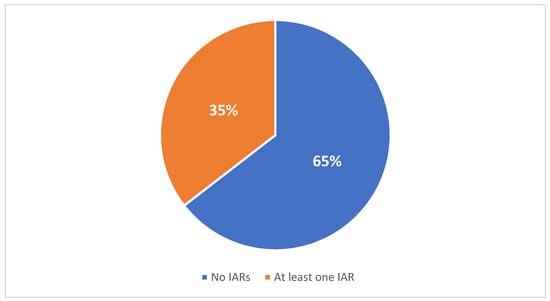
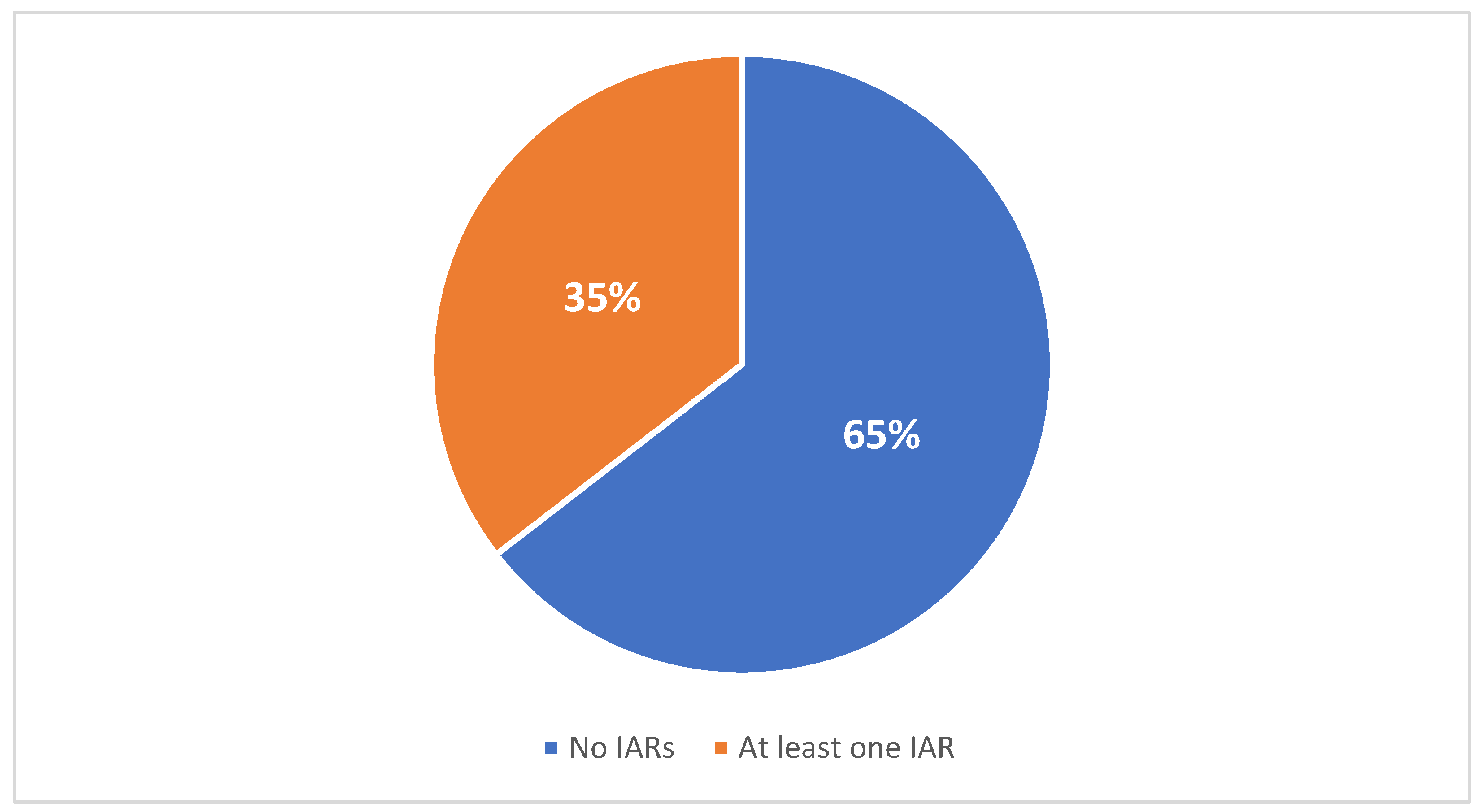
A total of 31 patients with CLN2 disease were included in this retrospective analysis, all of whom received ICV infusions of cerliponase alfa at Great Ormond Street Hospital over a 10-year period. Across the cohort, approximately 2705 ICV infusions were administered. IARs were retrospectively categorized as mild, moderate, or severe based on clinical severity and treatment escalation, as defined in the Methods section. A total of 11 patients experienced at least one IAR (Figure 1). Of these patients, only one experienced an episode of anaphylaxis, which led to a temporary interruption of cerliponase alfa administration on the day. The patient received treatment as usual 2 weeks later with appropriate medication. Patient characteristics of the cohort are summarized in Table 1. For patients who experienced IARs, a summary of symptoms and treatment approaches is listed in Table 2.
Figure 1.
Proportion of patients who experienced at least one IAR. IAR, infusion-associated reaction.
Table 1.
Patient characteristics and baseline standard pre-medication regimen.
Table 2.
Summary of symptoms and treatment approaches.
3.1. Management with Antipyretics and Antihistamines
Five patients (1, 9, 10, 15, and 24) received symptomatic management for fever or vomiting with oral ibuprofen and/or paracetamol. No patient in this subgroup required escalation of care, hospitalization beyond observation, or discontinuation of cerliponase alfa. The reactions resolved spontaneously or with minimal intervention, and subsequent infusions were generally tolerated with continuation of standard pre-medications. This subset therefore represents patients with milder hypersensitivity-type reactions that were effectively controlled with routine analgesic and antihistamine therapy alone.
3.2. Management with Corticosteroids
Five patients (5, 8, 14, 20, and 25) (excluding patient 2) required the introduction of corticosteroids as part of their management following recurrent or more pronounced IARs. The decision to initiate corticosteroid prophylaxis was typically prompted by persistent or escalating symptoms, such as high-grade pyrexia, vomiting, rash, or systemic hypersensitivity manifestations that did not fully respond to standard pre-medication.
In these patients, oral prednisolone or IV hydrocortisone (doses between 0.8 mg/kg and 2.0 mg/kg) was added to the pre-infusion medication regimen, alongside paracetamol and an antihistamine (usually chlorphenamine or cetirizine). In one patient, ondansetron was used for a short period. The introduction of corticosteroids resulted in improved tolerance to subsequent infusions and reduced symptom recurrence. For example, several patients who initially experienced febrile or vomiting episodes post-infusion later tolerated infusions without reaction when prednisolone was administered pre-emptively.
In three patients (14, 20, and 25), removal of prednisolone/IV hydrocortisone was attempted; however, none tolerated complete withdrawal. Patient 14 experienced a recurrence of IARs when the pre-infusion IV hydrocortisone dose was reduced from 2 mg/kg to 0.9 mg/kg. However, once the dose was increased to 1.25 mg/kg, infusions were tolerated without IARs. Patient 20 required two doses of prednisolone per infusion (2 mg/kg the night before and the morning of infusion). The morning dose was successfully removed, but IARs reappeared when the night dose was weaned to 1.25 mg/kg. The patient remained reaction-free at a dose of 1.75 mg/kg. Patient 25 was initially successfully weaned off prednisolone and did not experience IARs for a period of four months. However, reactions subsequently recurred, warranting recommencement of a 1 mg/kg prednisolone dose on the morning of infusions, which allowed for infusions to be successfully tolerated without IARs. None of the patients managed with corticosteroids required discontinuation of ERT, with adjustment of their pre-medication plans as clinically indicated.
3.3. Case Report: Patient 2
Patient 2 experienced a severe anaphylactic reaction during the third cerliponase alfa infusion. Approximately 3 h into the infusion, the patient developed generalized urticarial rash, facial swelling, and tachycardia, consistent with an acute anaphylactic event. Table 3 outlines the treatment this patient received at the time of the third infusion, along with details of future reactions and ongoing management.
Table 3.
Patient 2 treatment, ongoing management, and IARs (infusions 1–14).
This patient received partial infusions on two occasions; all other infusions were completed with additional medication and/or short pauses until symptoms resolved. From the fourteenth infusion onward, the patient was managed with standard pre-medications (oral paracetamol and chlorphenamine) and doses of IV hydrocortisone (2.0 mg/kg pre-infusion and midway through infusions). No further episodes of anaphylaxis occurred, and the patient continued therapy without recurrence of IARs.
After two years on treatment following the same medication protocol, the patient remained reaction-free and was therefore weaned off hydrocortisone over a number of infusions. Shortly after, the patient changed treatment centers, and so we are unable to comment on whether any corticosteroids were subsequently needed long-term. This case represents the only confirmed anaphylactic event within the cohort and highlights the importance of rapid and individualized intervention, as well as ongoing vigilance in managing hypersensitivity reactions to cerliponase alfa.
4. Discussion
This 10-year, single-center, retrospective analysis provides real-world insights into the incidence and clinical management of IARs among pediatric patients with CLN2 disease receiving long-term ICV cerliponase alfa therapy at Great Ormond Street Hospital. Across approximately 2705 infusions administered to 31 patients, 11 individuals experienced at least one IAR, and just a single patient experienced a confirmed episode of anaphylaxis. No patients had to stop cerliponase alfa infusions due to reactions.
The majority of reactions in this cohort were mild and transient, consisting primarily of fever, vomiting, or rash, and were effectively managed with symptomatic therapy, including antipyretics and antihistamines. In a subset of patients, recurrent or more pronounced symptoms prompted the introduction of corticosteroids, which successfully mitigated recurrence and allowed continuation of therapy without further complications. The lone episode of anaphylaxis was managed according to institutional protocols, with full recovery and subsequent safe recommencement of therapy under enhanced prophylaxis. Notably, patients who experienced IARs initiated treatment at a younger mean age than those without reactions (i.e., 57 months and 68 months, respectively); however, this observation is exploratory, and the study was not powered to formally assess age, disease stage, or infusion-related risk factors. Overall, our findings demonstrate that most IARs associated with cerliponase alfa are manageable without interruption of treatment, provided that careful observation, prompt escalation, and individualized adjustment of pre-medication are implemented.
These findings are consistent with those reported in the pivotal multicenter trial by Schulz et al., in which hypersensitivity reactions were common but predominantly grade 1–2; no cases of anaphylaxis were observed, and all events resolved with appropriate medical management, allowing treatment continuation [8]. Similarly, post-marketing pharmacovigilance data from the EudraVigilance database identified pyrexia as the most frequently reported suspected adverse reaction to cerliponase alfa, aligning with the symptom profile observed in our cohort [11]. The stepwise management strategies applied in our clinical practice, including symptomatic treatment, escalation to corticosteroids when required, and individualized pre-medication adjustments, closely mirror those used in clinical trials and real-world settings, supporting the generalizability of our approach.
In the context of lysosomal storage disorders treated with IV ERT, infusion reactions are relatively common and span a broad severity range. Single-center and registry studies report hypersensitivity/IARs in ~20–36% of patients, typically dominated by cutaneous symptoms and fever, with anaphylaxis occurring in a minority (e.g., 6/18 reactions in a pediatric mixed-lysosomal storage disorder cohort) [13,14,15]. In a cohort of patients with late-onset Pompe disease, most IARs were grade I–II with successful reintroduction via pre-medication alone or in combination with either a modified regimen or a desensitization protocol [16]. Large post-marketing Fabry surveillance similarly noted IARs in ~12.6%, with limited correlation to immunoglobulin G seroconversion [17]. Delayed (post-infusion) reactions are also described and can be as frequent as concurrent reactions, reinforcing the need for observation beyond infusion completion [18]. Against this background, our real-world experience with ICV cerliponase alfa, characterized by mostly mild, manageable reactions and only one episode of anaphylaxis, appears at the lower end of the reaction spectrum typically reported with IV ERT; however, this observation is contextual and should be interpreted cautiously in the absence of a direct comparator group. Our findings nonetheless align with clinical trial and extension data for cerliponase alfa, demonstrating frequent but largely non-serious hypersensitivity events and rare anaphylaxis [8,10].
From a mechanistic standpoint, IV ERT reactions are often linked to anti-drug antibody formation and, in a subset, immunoglobulin E-mediated hypersensitivity, with clinical impact varying by titer, neutralizing activity, and Fc-effector pathways [19]. Management approaches span pre-medication and infusion-rate modulation, through formal desensitization, to immune-tolerance strategies when needed [20,21,22]. By contrast, ICV delivery exposes the enzyme primarily to the cerebrospinal fluid/brain immune environment, with limited systemic antigen presentation; it is plausible that lower peripheral exposure and the relatively tolerogenic central nervous system contribute to less florid systemic reactions than are sometimes seen with IV ERT. Practical choices, such as conservative early infusion rates and stepwise adjustments, which have been associated with low IARs and limited seroconversion in Fabry cohorts, may further mitigate risk [23]. While speculative, these considerations are consistent with our observation that most ICV IARs were brief, responsive to symptomatic therapy or corticosteroid use pre-/post-infusion, and no patients required cessation of cerliponase alfa.
The experience from our cohort highlights the importance of robust infusion protocols, a multidisciplinary team structure, and individualized patient management in maintaining the long-term safety of ICV cerliponase alfa. Ongoing vigilance remains essential, particularly given the chronic, lifelong nature of therapy and the potential for delayed hypersensitivity. A limitation of our study is that since the opening of five new treatment centers across England and Northern Ireland from 2022, 23 out of the 31 patients transferred to newly set up centers. Therefore, the data reported is limited to the infusions received at Great Ormond Street Hospital. In addition, the small cohort size and single-center design, inherent to studies of rare diseases such as CLN2, limit statistical power and the generalizability of these findings. Furthermore, the retrospective classification of IAR severity in the absence of a prospectively applied standardized grading system may limit direct comparison with studies using formal adverse event scoring frameworks. Finally, the retrospective nature of the dataset and incomplete availability of infusion-level timing data limited the feasibility of calculating standardized incidence rates or performing temporal and risk factor analyses. Nevertheless, these findings support that ICV administration of cerliponase alfa can be delivered safely in a real-world setting, with low rates of IARs and sustained treatment continuity when managed through a well-defined, multidisciplinary approach.
5. Conclusions
In this single-center, 10-year retrospective review, IARs to ICV cerliponase alfa were mostly mild and effectively manageable with standard symptomatic treatment or corticosteroid prophylaxis when required. Only one case of anaphylaxis occurred, which was promptly treated without long-term sequelae or discontinuation of therapy. These findings reinforce the favorable safety profile of cerliponase alfa and demonstrate that, with vigilant monitoring, a coordinated multidisciplinary approach, and individualized management, long-term ERT can be safely maintained in children with CLN2 disease.
Author Contributions
Conceptualization, R.W. and P.G.; data curation, R.W. and P.G.; writing—original draft preparation, R.W. and P.G.; writing—reviewing and editing, M.K., M.M., M.D., M.A., S.B., E.F. and L.L.-C.; project administration, R.W. and P.G. All authors have read and agreed to the published version of the manuscript.
Funding
Medical writing support and article processing charges were funded by BioMarin Pharmaceutical Inc., which sponsored the manuscript development, but the funders had no role in the design of the study; in the collection, analysis, or interpretation of data; in the writing of the manuscript; or in the decision to publish the results.
Institutional Review Board Statement
The study was conducted in accordance with the Declaration of Helsinki and was approved by the London-Bloomsbury Research Ethics Committee (13/LO/0168, initial approval: 24 May 2013, amendment date: 15 November 2023) and the Health Research Authority (IRAS ID 95005).
Informed Consent Statement
Informed consent was obtained from all subjects’ parents or guardians involved in the study.
Data Availability Statement
The data that support the findings of this study are available from the corresponding author upon reasonable request.
Acknowledgments
Medical writing support was provided by Luqman Khan of Connect Communications, Dubai, UAE, and funded by BioMarin Pharmaceutical Inc.
Conflicts of Interest
The funders had no role in the design of the study; in the collection, analysis, or interpretation of data; in the writing of the manuscript; or in the decision to publish the results. Rebecca Whiteley received travel support fees from BioMarin. Megan Keating received speaker fees, travel support fees, and other fees from BioMarin, Sanofi, and Amicus. Mathilda Antonini received travel support fees from Sanofi. Paul Gissen received consulting payments, clinical trial investigation fees, speaker fees, and travel support fees from BioMarin. The other authors have no potential conflicts of interest to report.
Abbreviations
The following abbreviations are used in this manuscript:
| BNFC | British National Formulary for Children |
| CLN2 | ceroid lipofuscinosis type 2 |
| ERT | enzyme replacement therapy |
| GOSH | Great Ormond Street Hospital |
| IAR | infusion-associated reaction |
| ICV | intracerebroventricular |
| IM | intramuscular |
| IV | intravenous |
| NHS | National Health Service |
References
- Fietz, M.; AlSayed, M.; Burke, D.; Cohen-Pfeffer, J.; Cooper, J.D.; Dvorakova, L.; Giugliani, R.; Izzo, E.; Jahnova, H.; Lukacs, Z.; et al. Diagnosis of neuronal ceroid lipofuscinosis type 2 (CLN2 disease): Expert recommendations for early detection and laboratory diagnosis. Mol. Genet. Metab. 2016, 119, 160–167. [Google Scholar] [CrossRef] [Scilit] [PubMed]
- Kohlschutter, A.; Schulz, A. CLN2 Disease (Classic Late Infantile Neuronal Ceroid Lipofuscinosis). Pediatr. Endocrinol. Rev. 2016, 13, 682–688. [Google Scholar] [PubMed]
- Mazurkiewicz-Beldzinska, M.; Del Toro, M.; Haliloglu, G.; Huidekoper, H.H.; Kravljanac, R.; Muhlhausen, C.; Andersen, B.N.; Prpic, I.; Striano, P.; Auvin, S. Managing CLN2 disease: A treatable neurodegenerative condition among other treatable early childhood epilepsies. Expert. Rev. Neurother. 2021, 21, 1275–1282. [Google Scholar] [CrossRef] [Scilit] [PubMed]
- Williams, R.E.; Adams, H.R.; Blohm, M.; Cohen-Pfeffer, J.L.; de Los Reyes, E.; Denecke, J.; Drago, K.; Fairhurst, C.; Frazier, M.; Guelbert, N.; et al. Management Strategies for CLN2 Disease. Pediatr. Neurol. 2017, 69, 102–112. [Google Scholar] [CrossRef] [Scilit]
- Geraets, R.D.; Koh, S.; Hastings, M.L.; Kielian, T.; Pearce, D.A.; Weimer, J.M. Moving towards effective therapeutic strategies for Neuronal Ceroid Lipofuscinosis. Orphanet J. Rare Dis. 2016, 11, 40. [Google Scholar] [CrossRef] [Scilit]
- Sampaio, L.P.B.; Manreza, M.L.G.; Pessoa, A.; Gurgel-Giannetti, J.; Coan, A.C.; Junior, H.V.L.; Embirucu, E.K.; Henriques-Souza, A.M.M.; Kok, F. Clinical management and diagnosis of CLN2 disease: Consensus of the Brazilian experts group. Arq. Neuropsiquiatr. 2023, 81, 284–295. [Google Scholar] [CrossRef] [Scilit]
- Mole, S.E.; Schulz, A.; Badoe, E.; Berkovic, S.F.; de Los Reyes, E.C.; Dulz, S.; Gissen, P.; Guelbert, N.; Lourenco, C.M.; Mason, H.L.; et al. Guidelines on the diagnosis, clinical assessments, treatment and management for CLN2 disease patients. Orphanet J. Rare Dis. 2021, 16, 185. [Google Scholar] [CrossRef] [Scilit]
- Schulz, A.; Ajayi, T.; Specchio, N.; de Los Reyes, E.; Gissen, P.; Ballon, D.; Dyke, J.P.; Cahan, H.; Slasor, P.; Jacoby, D.; et al. Study of Intraventricular Cerliponase Alfa for CLN2 Disease. N. Engl. J. Med. 2018, 378, 1898–1907. [Google Scholar] [CrossRef] [Scilit]
- Schulz, A.; Schwering, C.; Wibbeler, E.; Westermann, L.M.; Hagenah, L.; Lezius, S.; Jha, A.; Hunt, A.; Slasor, P.; Reisewitz, P.; et al. Real-world clinical outcomes of patients with CLN2 disease treated with cerliponase alfa. Front. Neurol. 2025, 16, 1516026. [Google Scholar] [CrossRef] [Scilit]
- Schulz, A.; Specchio, N.; de Los Reyes, E.; Gissen, P.; Nickel, M.; Trivisano, M.; Aylward, S.C.; Chakrapani, A.; Schwering, C.; Wibbeler, E.; et al. Safety and efficacy of cerliponase alfa in children with neuronal ceroid lipofuscinosis type 2 (CLN2 disease): An open-label extension study. Lancet Neurol. 2024, 23, 60–70. [Google Scholar] [CrossRef] [Scilit]
- Ammendolia, I.; Sframeli, M.; Esposito, E.; Cardia, L.; Noto, A.; Curro, M.; Calapai, G.; De Pasquale, M.; Mannucci, C.; Calapai, F. Adverse Reactions to the Orphan Drug Cerliponase Alfa in the Treatment of Neurolipofuscinosis Type 2 (CLN2). Pharmaceuticals 2024, 17, 1513. [Google Scholar] [CrossRef] [Scilit] [PubMed]
- Oliveira, J.A.; Saddique, M.N.; Qadri, M.; Shahid, F.; de Jesus, A.; Sarmento, F.P. Treatment of Neuronal Ceroid Lipofuscinosis Type 2 with Cerliponase Alfa: A Systematic Review and Single-Arm Meta-Analysis of Two Studies. J. Child. Neurol. 2025, 41, 08830738251389180. [Google Scholar] [CrossRef] [Scilit] [PubMed]
- Miebach, E. Management of infusion-related reactions to enzyme replacement therapy in a cohort of patients with mucopolysaccharidosis disorders. Int. J. Clin. Pharmacol. Ther. 2009, 47, S100–S106. [Google Scholar] [CrossRef] [Scilit] [PubMed]
- Turgay Yagmur, I.; Unal Uzun, O.; Kucukcongar Yavas, A.; Kulhas Celik, I.; Toyran, M.; Gunduz, M.; Civelek, E.; Dibek Misirlioglu, E. Management of hypersensitivity reactions to enzyme replacement therapy in children with lysosomal storage diseases. Ann. Allergy Asthma Immunol. 2020, 125, 460–467. [Google Scholar] [CrossRef] [Scilit]
- Arik, E.; Keskin, O.; Albayrak, S.; Keskin, M.; Cesur, M.; Karaoglan, M.; Inal, G.; Yildirim, A.; Kucukosmanoglu, E. Allergic reactions to enzyme replacement therapy in children with lysosomal storage diseases and their management. J. Pediatr. Endocrinol. Metab. 2024, 37, 866–874. [Google Scholar] [CrossRef] [Scilit]
- Lessard, L.E.R.; Tard, C.; Salort-Campana, E.; Sacconi, S.; Behin, A.; Bassez, G.; Orlikowski, D.; Merle, P.; Nollet, S.; Gallay, L.; et al. Hypersensitivity infusion-associated reactions induced by enzyme replacement therapy in a cohort of patients with late-onset Pompe disease: An experience from the French Pompe Registry. Mol. Genet. Metab. 2023, 139, 107611. [Google Scholar] [CrossRef] [Scilit]
- Sasa, H.; Nagao, M.; Kino, K. Safety and effectiveness of enzyme replacement therapy with agalsidase alfa in patients with Fabry disease: Post-marketing surveillance in Japan. Mol. Genet. Metab. 2019, 126, 448–459. [Google Scholar] [CrossRef] [Scilit]
- Karimian, Z.; Whitley, C.B.; Rudser, K.D.; Utz, J.R.J. Delayed Infusion Reactions to Enzyme Replacement Therapies. JIMD Rep. 2016, 34, 63–70. [Google Scholar] [CrossRef] [Scilit]
- Lenders, M.; Brand, E. Mechanisms of Neutralizing Anti-drug Antibody Formation and Clinical Relevance on Therapeutic Efficacy of Enzyme Replacement Therapies in Fabry Disease. Drugs 2021, 81, 1969–1981. [Google Scholar] [CrossRef] [Scilit]
- Gragnaniello, V.; Carraro, S.; Rubert, L.; Gueraldi, D.; Cazzorla, C.; Massa, P.; Zanconato, S.; Burlina, A.B. A new strategy of desensitization in mucopolysaccharidosis type II disease treated with idursulfase therapy: A case report and review of the literature. Mol. Genet. Metab. Rep. 2022, 31, 100878. [Google Scholar] [CrossRef] [Scilit]
- Spataro, F.; Solimando, A.G.; Desantis, V.; Vacca, A.; Di Girolamo, A.; Ria, R. How to manage hypersensitivity reactions to enzyme replacement therapy in lysosomal storage diseases? Orphanet J. Rare Dis. 2025, 20, 287. [Google Scholar] [CrossRef] [Scilit]
- Inci, A.; Ezgu, F.S.; Tumer, L. Advances in Immune Tolerance Induction in Enzyme Replacement Therapy. Paediatr. Drugs 2024, 26, 287–308. [Google Scholar] [CrossRef] [Scilit]
- Mignani, R.; Americo, C.; Aucella, F.; Battaglia, Y.; Cianci, V.; Sapuppo, A.; Lanzillo, C.; Pennacchiotti, F.; Tartaglia, L.; Marchi, G.; et al. Reducing agalsidase beta infusion time in Fabry patients: Low incidence of antibody formation and infusion-associated reactions in an Italian multicenter study. Orphanet J. Rare Dis. 2024, 19, 38. [Google Scholar] [CrossRef] [Scilit]

Disclaimer/Publisher’s Note: The statements, opinions and data contained in all publications are solely those of the individual author(s) and contributor(s) and not of MDPI and/or the editor(s). MDPI and/or the editor(s) disclaim responsibility for any injury to people or property resulting from any ideas, methods, instructions or products referred to in the content. |
© 2026 by the authors. Licensee MDPI, Basel, Switzerland. This article is an open access article distributed under the terms and conditions of the Creative Commons Attribution (CC BY) license.