Case Report

Clinical Pilates Diagnostic Bullseye Concept for Neck and Shoulder Musculoskeletal Patients: Case Studies


by
Boon Chong Kwok
1,2,*,
Justin Xuan Li Lim
1 and
John Kok Hong Wong
3
1
Rehabilitation, Clinical Pilates Family Physiotherapy, Singapore 079906, Singapore
2
Health and Social Sciences, Singapore Institute of Technology, Singapore 828608, Singapore
3
Physiotherapy, The Rehab Circle, Singapore 640952, Singapore
*
Author to whom correspondence should be addressed.
Submission received: 26 November 2025 / Revised: 12 January 2026 / Accepted: 13 January 2026 / Published: 15 January 2026

Abstract

Background/Objectives: Pilates is a form of exercise that benefits people with bodily pain and movement limitations. The Clinical Pilates method assesses a patient through history taking and exercise testing to identify the patient’s problem side and directional preference. This study is a technical report of two case studies to evaluate the feasibility of the Clinical Pilates conceptual framework for the management of neck and shoulder musculoskeletal conditions. Methods: A conceptual framework on the use of the diagnostic bullseye for neck and shoulder movements are presented. To illustrate the application of the framework, two independent case studies with neck and shoulder pain were interpreted. These cases were assessed for upper and lower quadrant movement preferences using the Clinical Pilates method. Patient self-reported outcome measures included the pain numeric rating scale (/10), patient-specific functional scale (/10), and shoulder pain and disability index (%). Results: In both case studies, the clinical outcomes improved by more than 50% from the baseline. These improvements showed that the conceptualized framework is feasible for use among individuals with neck and musculoskeletal conditions. Conclusions: The neck and shoulder diagnostic bullseyes developed provide an extension from existing lower quadrant diagnostic bullseye. The feasibility of the Clinical Pilates method for neck and shoulder conditions was illustrated in the two case studies.

1. Introduction

Chronic musculoskeletal pain remains a highly prevalent issue, and a recent public survey showed that people with pain are unable to self-manage well [1]. Current conservative treatment approaches for managing chronic non-specific neck pain remains uncertain [2]. Among these conservative treatment approaches, the Pilates exercise method is a promising approach to manage patients with musculoskeletal conditions [3]. However, similar to other conservative treatment approaches, there is varying evidence ranging from low to moderate quality to support the use of Pilates to manage musculoskeletal pain [4,5,6]. The use of Pilates exercises remains inconclusive for the management of neck pain [7,8], possibly due to the lack of exercise specificity. Specific neck exercise can be useful in managing neck pain, but the assessments to guide treatment prescription lack clarity [9]. Adjacent shoulder pain can also accompany neck pain [10,11], increasing the complexity of pain management. Many versions of Pilates exist, and a boundary needs to be drawn between clinical and commercial use [12]. For instance, the term ‘Clinical Pilates’ can be freely used.
Among the various Clinical Pilates methods, a study theorized an algorithmic approach to manage chronic low back pain using the movement preference of individuals to customize exercises [13]. This Clinical Pilates method integrates Pilates with the McKenzie method, an efficacious method for managing neck and lower back pain [14,15]. Although a recent randomized controlled trial used ‘Clinical Pilates’ as an intervention for managing non-specific chronic neck pain [16], it differs from the Clinical Pilates method. Furthermore, the existing literature has not explained the concept of the Clinical Pilates method in managing neck and shoulder musculoskeletal pain.
In view of the present literature gap, this study was undertaken to expand previous knowledge about a Clinical Pilates method for neck and shoulder conditions. Case studies are used to guide the understanding in the use of the Clinical Pilates method. The novel contribution of this work includes four aspects: (1) proposed neck bullseye mapping, (2) proposed shoulder bullseye mapping, (3) integration rule for lower quadrant movement preference influencing upper quadrant exercise prescription, and (4) translation for the management of two clinical cases.

2. Materials and Methods

2.1. Conceptual Framework

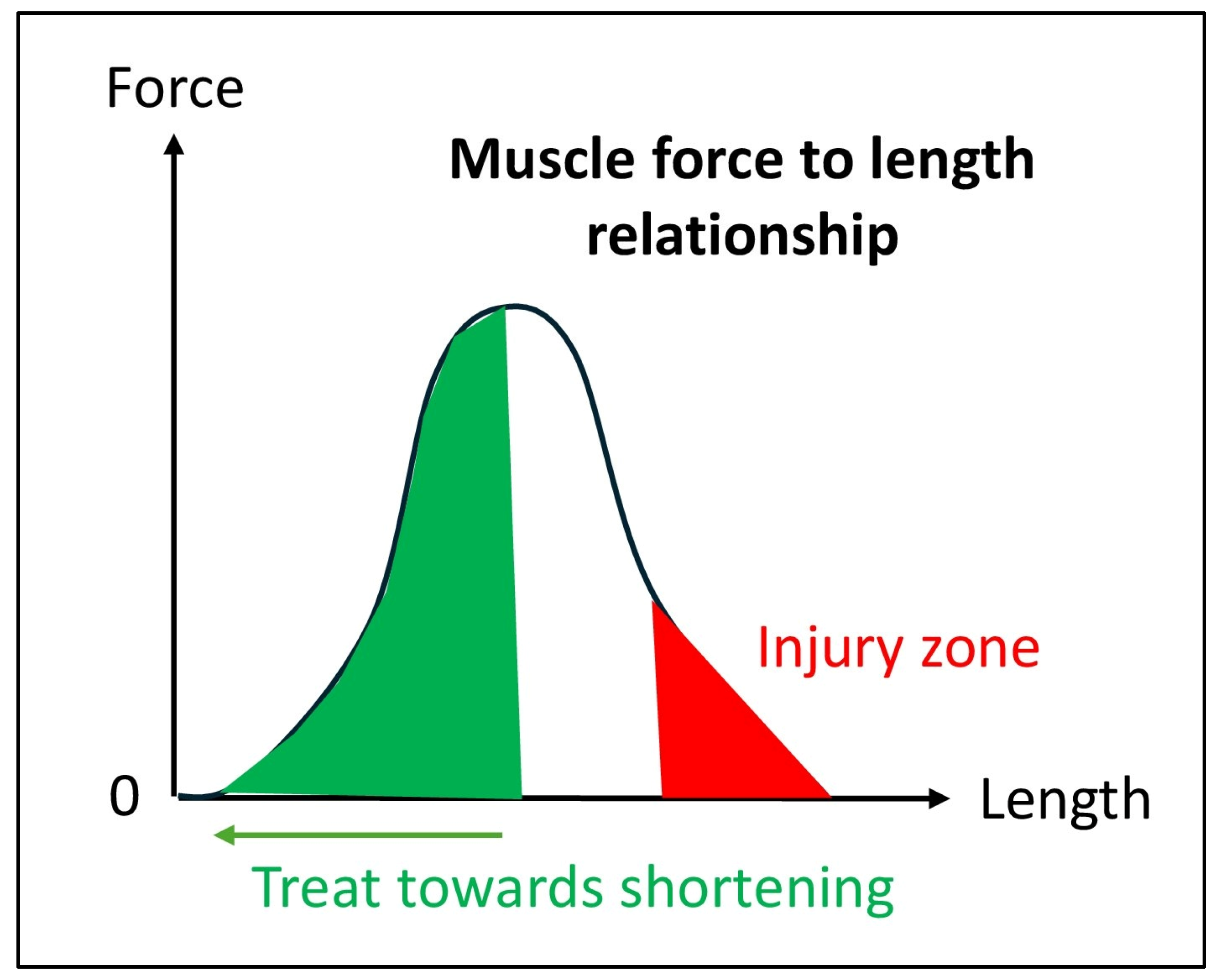
The original intent of the Clinical Pilates method is to move away from the specific identification of muscle impairments. The Clinical Pilates method focuses on simplicity to reach quicker clinical decisions and provide specific exercise treatment for patients. The Clinical Pilates method treats away from the direction of the injury [13], as shown in Figure 1. Manual therapy can also be incorporated during the exercise, which is known as movement with mobilization in the Mulligan technique [17]. Specifically, we focused on exercise prescription using the diagnostic bullseye of the Clinical Pilates method and explored its use to interpret impairments. First, lower quadrant movement preference is assessed followed by the upper quadrant., The cervical spine and shoulder complex movement preferences are extension of the existing method. After the frameworks for neck and shoulder are discussed, we provide an overview of muscle injury and treatment.

2.1.1. Neck (Cervical Spine)

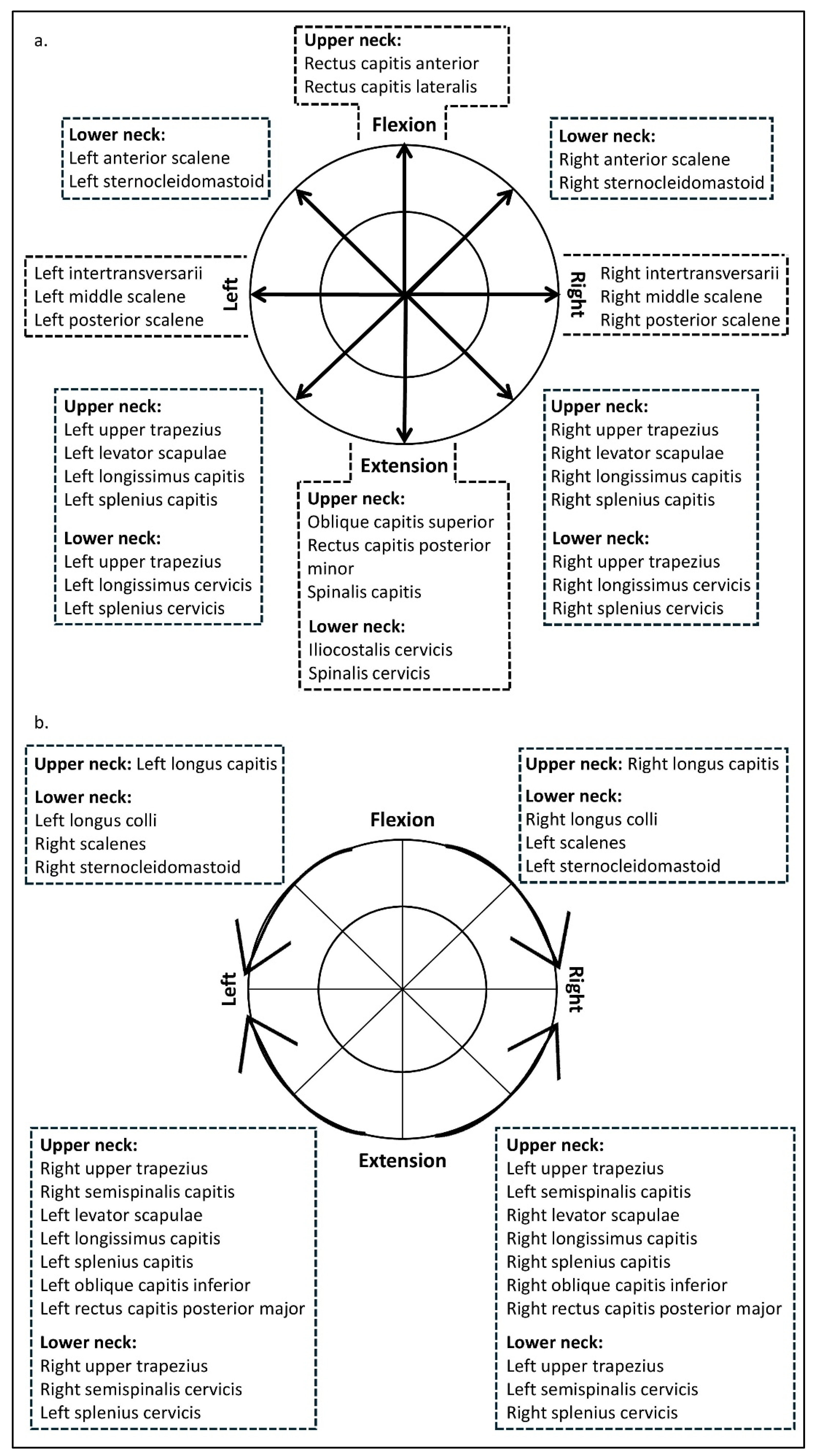
The neck joint movements are divided into upper (cervical spine levels one to three) and lower neck (cervical spine levels four to seven). These movements are controlled by many muscles for three planes of movements, flexion or extension, left or right side flexion (Figure 2a), and left or right rotation (Figure 2b). A unique muscle that works across the upper and lower neck is the upper fibers of trapezius (upper trapezius). Furthermore, the rotation action of the trapezius is in the opposite direction of its side flexion movement. Similarly in the flexor group of muscles, the sternocleidomastoid and scalene muscles have similar side flexion and rotation movements into opposite sides. Few muscles work in only one plane of movement, such as rectus capitis anterior and lateralis for upper neck flexion, intertransversarii for side flexion, and iliocostalis cervicis for lower neck extension.
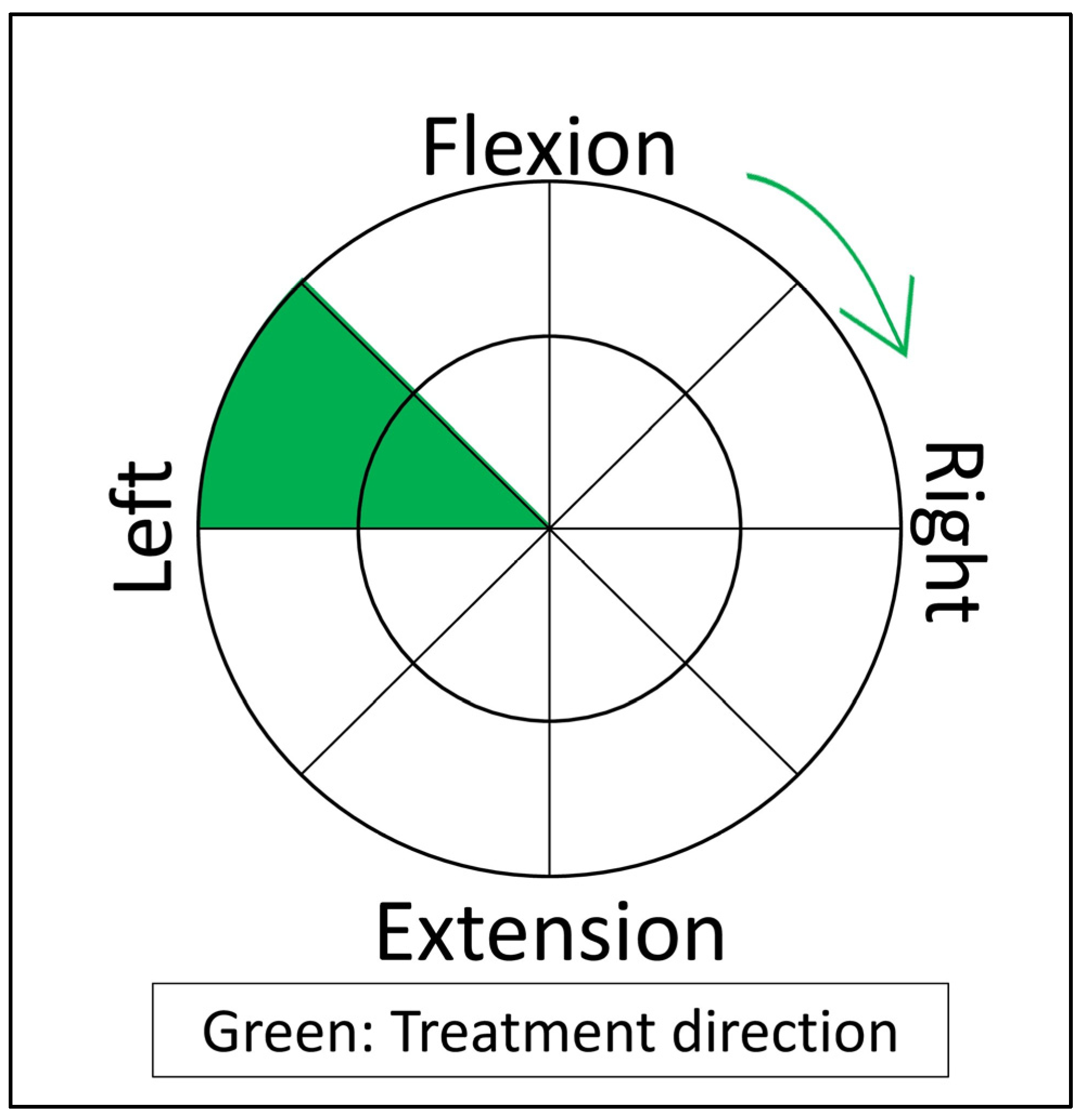
Patients may present with symptoms of acute pain and stiffness upon waking in the morning, reporting difficulty in lifting their head but are comfortable looking down and tilting their head to one side. For example, when the head is tilted to the left comfortably and the head rotated to the right, the Clinical Pilates method will chart the diagnostic bullseye in green, as shown in Figure 3. When Figure 2 and Figure 3 are interpreted together, the impairments are left sternocleidomastoid and anterior scalene muscles. The areas marked green are favorable movement directions to prescribe exercise and the Clinical Pilates method avoids stretching these two neck muscles to minimize spasmic response.
How to use the neck bullseye in clinical practice?
1.
Assess for lower quadrant movement preference (core).
2.
Assess for flexion or extension (primary) movement that is least symptomatic.
3.
Assess for left or right lateral flexion movement (secondary) that is least symptomatic and/or has more range.
4.
Assess for left or right rotation movement (secondary) that is least symptomatic and/or has more range.
5.
Based on movements identified in Points 2 to 4, indicate on the bullseye the treatment direction.

2.1.2. Shoulder

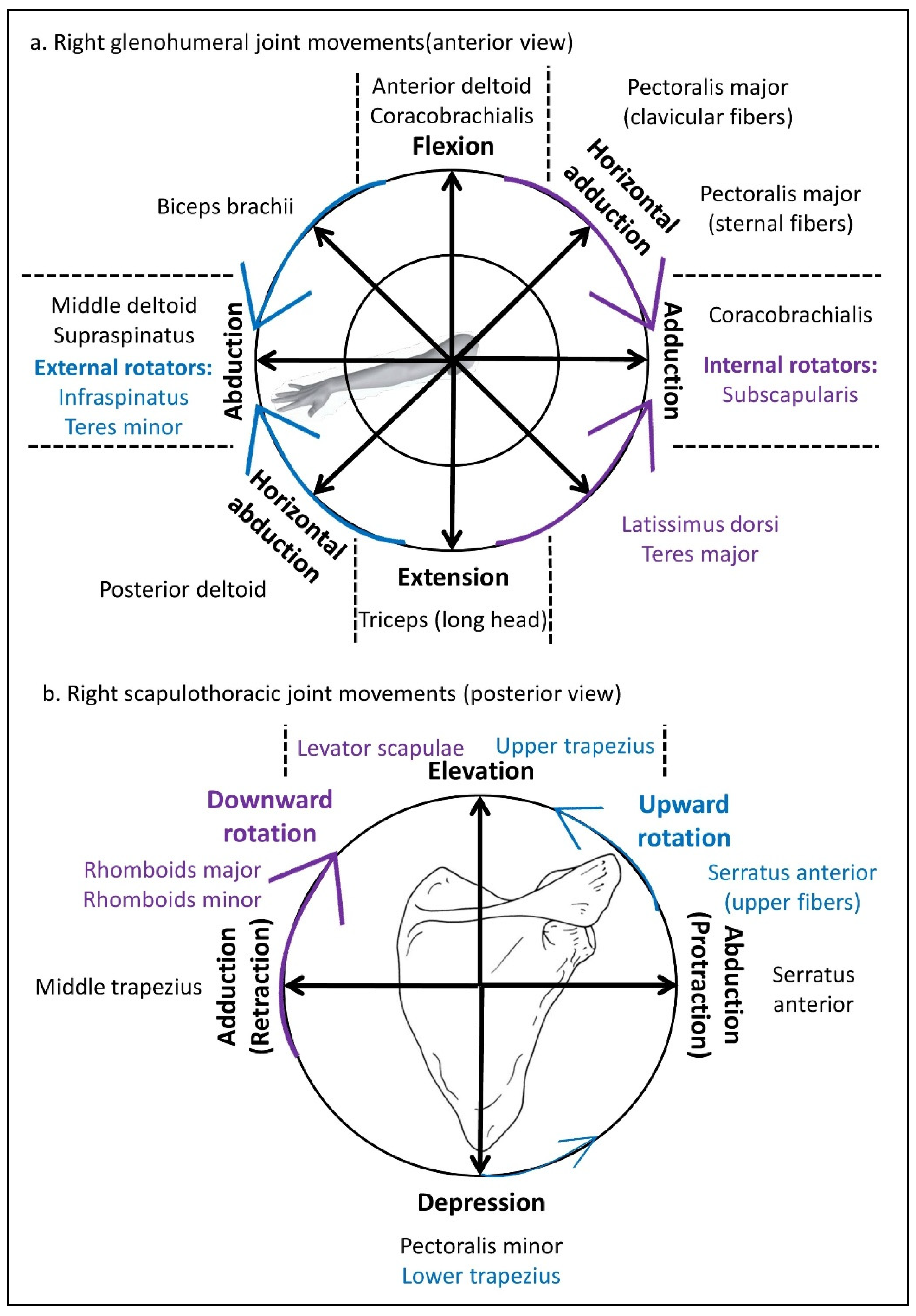
Shoulder movements occur with joint movement coupling, namely glenohumeral and scapulothoracic joint movements. The glenohumeral joint has four planes of movements: flexion or extension, abduction or adduction, external or internal rotation, and horizontal abduction or adduction (Figure 4a). Several muscles of the shoulder complex act across more than one joint in the body. For instance, the biceps brachii muscle that primarily acts on the elbow also acts on the shoulder into flexion and abduction. On the other hand, the coracobrachialis acts on the shoulder into flexion and adduction. Different fibers of pectoralis major lead to different plane coupling of horizontal adduction, with the clavicular fibers pulling towards the flexion plane while the sternal fibers are pulling towards the adduction plane. The latissimus dorsi and teres major contribute to three planes of movement at the glenohumeral joint, extension, adduction, and internal rotation. The other glenohumeral joint muscles primarily act in one specific plane of movement in relation to their muscle origins and insertions.
The scapulothoracic joint has three planes of movements, elevation or depression, abduction (protraction) or adduction (retraction), and upward or downward rotation (Figure 4b). Most of the muscles responsible for scapulothoracic movements act in two planes. The middle trapezius, pectoralis minor, and lower fibers of serratus anterior muscles primarily act in one plane of movement. The upper trapezius and levator scapulae muscles that act on the neck also elevate the scapula, with the upper trapezius muscle contributing to upward rotation while the levator scapulae muscles contribute to the downward rotation of the scapula. Although the lower trapezius muscle contributes similarly to the upper trapezius muscle in the upward rotation of the scapula, it is a scapula depressor. Lastly, the rhomboids muscle adducts and downward rotates the scapula.
The coupling of glenohumeral and scapulothoracic joint movements can be seen as synchronized. For instance, shoulder abduction will primarily involve the middle deltoid, supraspinatus, and serratus anterior muscles from the anatomical joint position and subsequently the upper and lower trapezius muscles. Shoulder adduction with hand behind back will involve the latissimus dorsi, teres major, subscapularis, middle trapezius, and rhomboids muscles. Correspondingly, shoulder flexion movement couples glenohumeral joint flexion and scapulothoracic joint elevation.
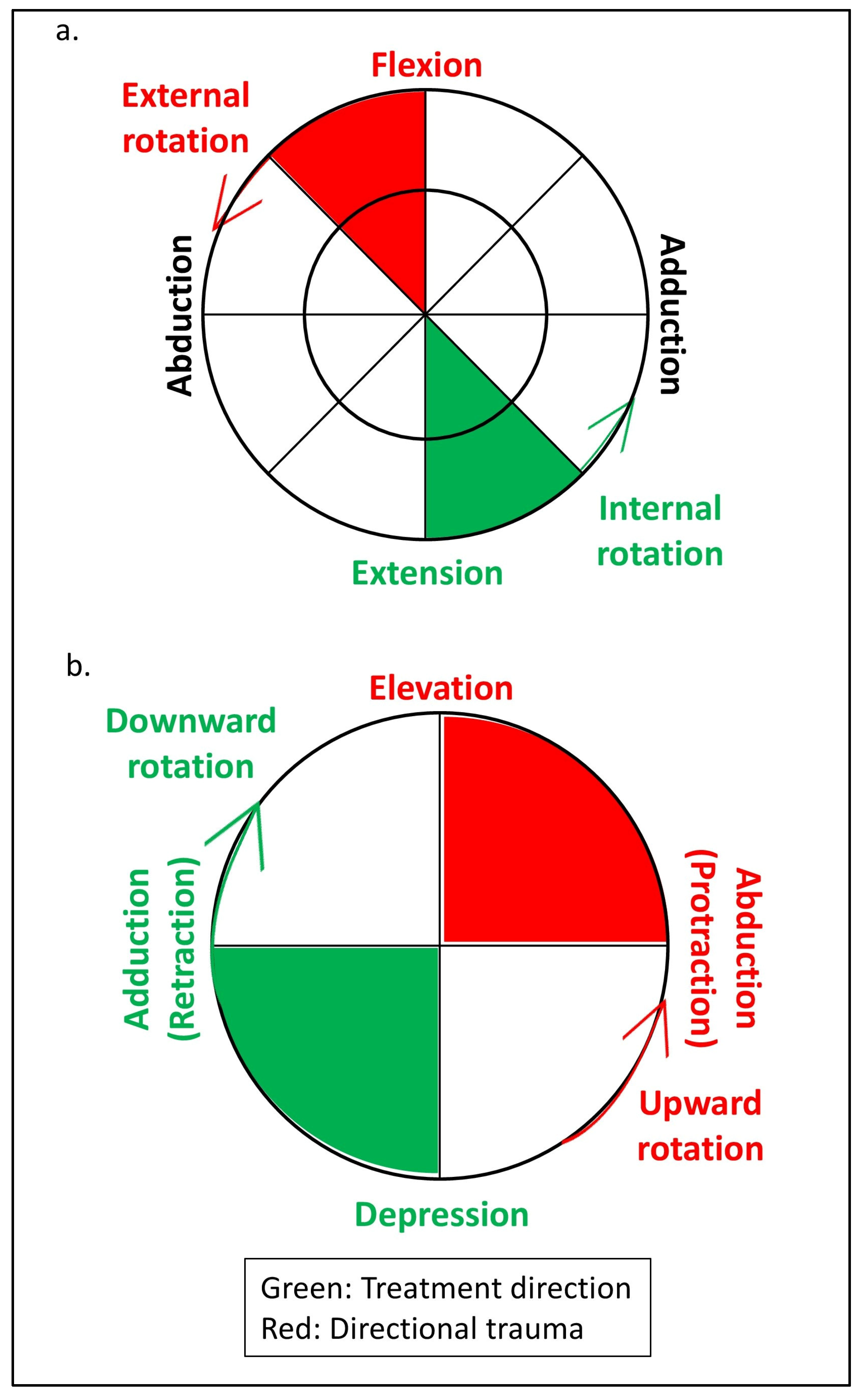
We used an overhead racket (overhead smash) sports injury as an example to illustrate the concept. The shoulder injury movements can be visualized in flexion and external rotation for the glenohumeral joint, and elevation and upward rotation for the scapulothoracic joint (see respective red markings in Figure 5a,b). In this instance, the lengthened muscles at risk of injury are the triceps (long head), posterior deltoid, latissimus dorsi, teres major, and subscapularis muscles at the glenohumeral joint, and the pectoralis minor, lower trapezius, and rhomboids muscles at the scapulothoracic joint. The corresponding movements that ease pain or discomfort will be into shoulder extension to shorten those injured muscles during rehabilitation (see respective green markings in Figure 5a,b). The position of the neck can also be an important consideration in some injuries during rehabilitation with the Clinical Pilates method. When the neck was in extension during the overhead smash injury, the shoulder exercises given may be coupled with neck flexion. To overcome complexity in the management of neck and shoulder conditions, the Clinical Pilates method uses movement preferences to individualize exercises.
How to use shoulder bullseyes in clinical practice?
  • Complete the aforementioned steps in neck bullseye.
  • Assess for glenohumeral flexion or extension movement that is least symptomatic and/or has more range preserved.
  • Assess for glenohumeral abduction or adduction movement that is least symptomatic and/or has more range preserved.
  • Assess for glenohumeral external or internal rotation movement that is least symptomatic and/or has more range.
  • Assess for glenohumeral horizontal abduction or adduction movement that is least symptomatic and/or has more range.
  • Based on movements identified in Points 2 to 5, indicate on the bullseye the treatment direction for shoulder glenohumeral bullseye.
  • Based on the treatment direction in Point 6, assess scapulothoracic movement that complements shoulder glenohumeral treatment direction, then chart the complementing movement using the scapulothoracic bullseye.

2.2. Case Studies

Two case studies are presented using the Case Report (CARE) guidelines to provide an understanding on the use of the conceptual framework to interpret findings and provide treatment directions. Both cases were managed by BCK and they provided written informed consent to participate and publish with their anonymity maintained. Clinical outcomes used in both case studies were pain score [18], patient-specific functional scale [19], and shoulder pain and disability index [20]. These self-reported outcomes were collected at the beginning of the first session during history taking (initial), the end of the first session, and the beginning of subsequent sessions. Patient self-reported outcomes mitigate bias from assessor-based outcomes when the assessor is also delivering the intervention. The outcome scores were independently verified by JXLL. Exercise figures were created by BCK using Clip Studio Paint.

2.2.1. Case 1

The patient is a young adult who presents with chronic left anterior shoulder pain towards end-range shoulder flexion (Table 1). He also has occasional left lower neck pain. The pain is exacerbated after he performs a shoulder front or side raise exercise (palm pronated and shoulder in slight internal rotation) with a 5 kg dumbbell on each side. There is no pain during the night unless he sleeps on the left shoulder. He is unable to recall how the pain came about and suspects it might have been from exercising with weights. He has not stopped his activities but has reduced the loads in his resistance exercises. His presenting symptoms indicate a Grade II neck pain, which is defined as no major structural pathology, but activities of daily living are impacted [21].
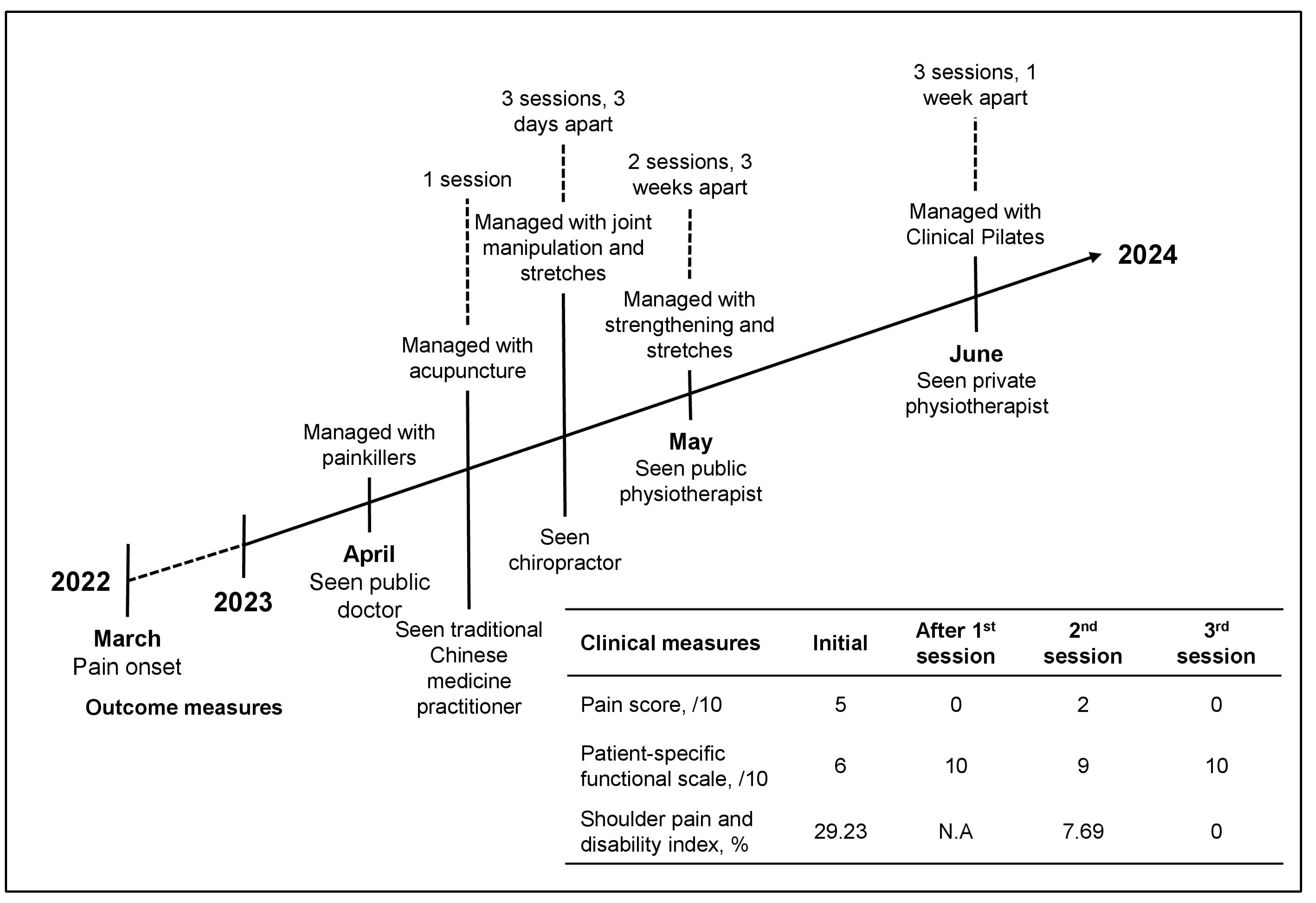
He was diagnosed with a rotator cuff strain and, while waiting for his scheduled public physiotherapy session, he saw a traditional Chinese medicine practitioner and was managed with acupuncture. However, his symptoms did not improve. Thereafter, he visited a chiropractor who suggested that his issue was related to lower cervical spine stiffness and he received spinal manipulation. Post-manipulation, he perceived that he was better. The following day when he resumed gym training, the symptoms were still persistent. He attended a total of three chiropractic sessions with minimal carry-over effects, where he was also taught upper trapezius and levator scapulae stretches. He then attended a public physiotherapy session and was taught rotator cuff strengthening exercises and the same neck stretches taught by the chiropractor. He attended a total of two physiotherapy sessions and discontinued because he did not find the sessions helpful.
Clinical Pilates Management
The easing factor for his neck was looking upwards (neck extension), while his shoulder symptoms gradually ease within 15 min of stopping the shoulder front raise or shoulder press exercise. Based on the history taking, it was postulated that he has a left lateral flexion with extension movement preference at the neck. Physical exercise testing was carried out using the Clinical Pilates method [22], which showed that he prefers flexion movements for trunk–hip without side impairments. Assessments showed left extension preference for his neck–shoulder complex (Table 1).
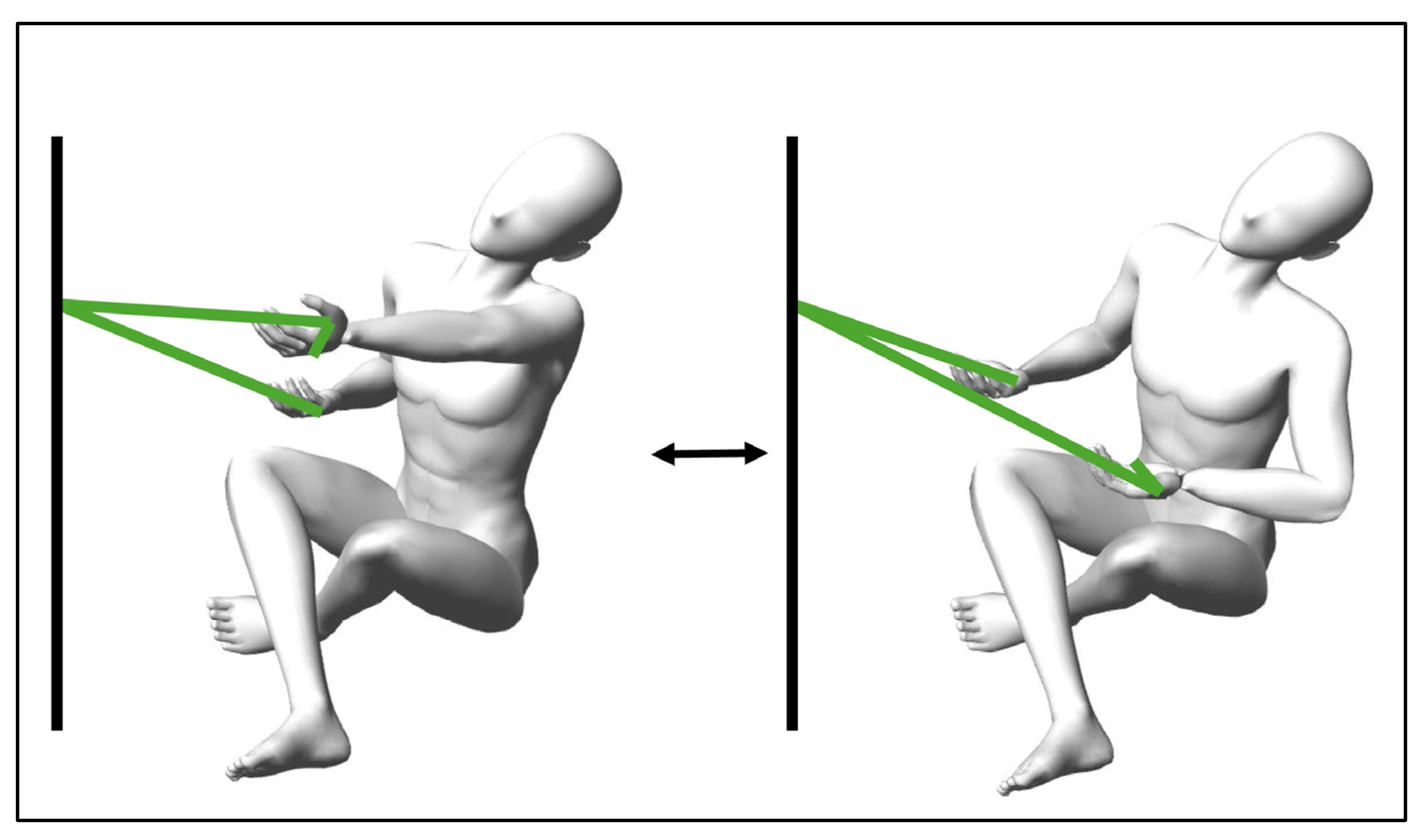
Based on the conceptual framework proposed in this paper, for movements into left lateral flexion with extension at the upper and lower neck (Figure 2), muscle impairment is likely left upper trapezius. While the pain provocation pattern can mimic the slump test, it is important to note that the symptoms are more muscular (aches and pain) than neurological (numbness and tingling). For the shoulder, a seated backward row exercise with a green resistance band was helpful in easing his symptoms. The left arm exercise starts with the glenohumeral joint in external rotation and 90° flexion, elbow fully extended, and forearm and palm supinated (Figure 6). The exercise movements of the seated row are shoulder extension with elbow flexion. His exercise was performed with neck extended and tilted to the left. The exercise keeps the left shoulder external rotators shortened as stabilizers, working on posterior deltoid, triceps (long head), middle trapezius, and rhomboids muscles, which can be seen as a reverse movement of the shoulder front raise exercise. The rate of perceived exertion of the exercise was 2/10, using the 10-point Borg’s scale [23], and the target was to keep ≤4/10. The shoulder front raise and shoulder press aggravating factors were tested immediately after the Clinical Pilates exercise, and the aggravating factors were no longer an issue. The home exercise was performed for three sets of ten repetitions, twice daily, and five minutes per session. Exercise progression or regression was dependent on three symptom responses—(1) if symptoms improved, the exercise is maintained, (2) if symptoms are in status quo, the exercise needs to be modified, (3) if symptoms worsened, the movement preference needs to be reviewed for exercise changes. The exercise pace demonstrated by the patient was fast and so more emphasis was placed on correcting breathing patterns during the exercise—breathing in during movement initiation and breathing out on return movement.
Results
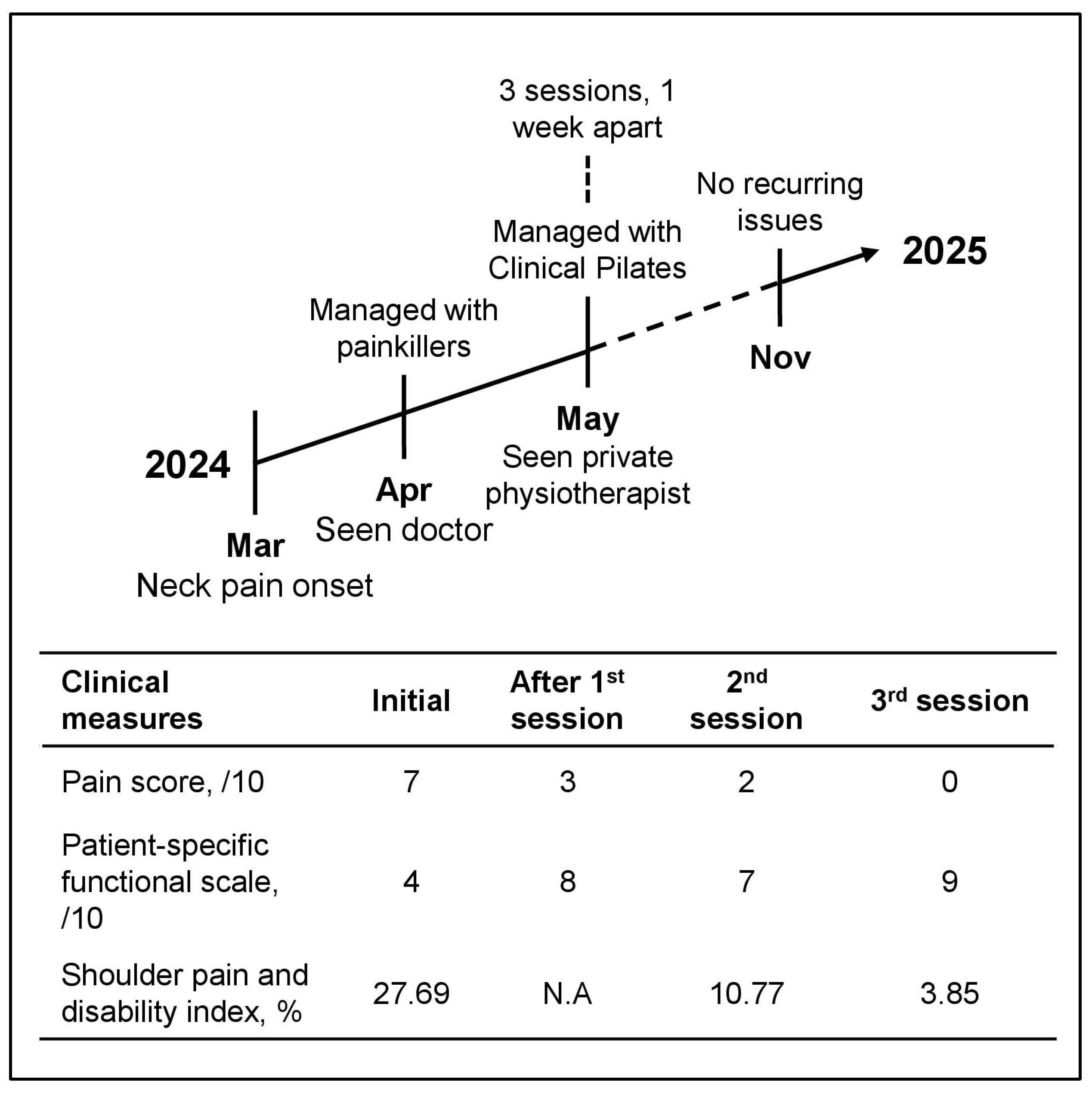
The timeline and outcome measures are presented in Figure 7. All clinical outcomes showed more than 50% improvements, close to full recovery. From the Clinical Pilates perspective, the anterior shoulder pain could be from the anterior deltoid, coracobrachialis, and pectoralis major (clavicular fibers) muscle-tendon strains acting as an agonist during shoulder flexion while being antagonized by the triceps (long head) and posterior deltoid muscles guarding against the movement. There could also be left upper trapezius strain during his gym exercise routine. At the scapula, the exercise targets the pectoralis minor, rhomboids, and middle trapezius muscles.
Patient Perspective
The patient was delighted with the treatment outcome as he felt that his long-term suffering had been resolved. He was surprised that a low intensity rehabilitation program using Clinical Pilates could yield better outcomes than his original beliefs in a moderate- to high-intensity strength training program. Overall, he felt confident and empowered to manage his symptoms.

2.2.2. Case 2

The patient is a young adult who presents with sub-acute left neck pain radiating to posterior shoulder (Table 1). He is positioned as a right paddler for his sport. Prior to these symptoms, he has a history of persistent left lower back pain that radiates to the posterolateral thigh for 4 years. He suspected that the neck and shoulder symptoms could be due to his Dragonboat rowing training, but at the same time he held doubts as he has been in the same position for several years. Radiological scans of his neck and left shoulder did not detect any abnormalities. His past radiological report for his lower back indicated lumbar spine levels four and five (L4–5) Grade II spondylolisthesis without fracture of pars interarticularis (degenerative type). He has discontinued the use of painkillers (tramadol) as he did not find the medication effective. He managed with neck stretches but the pain relief was temporary. Whilst there were no deficits in cervical and lumbosacral dermatome tests, there were mild weaknesses assessed for left cervical spine nerve roots at levels four and five (C4–5). This case was classified as Grade III neck pain because there was no major structural pathology, but neurological signs were present in the upper limb [21].
Clinical Pilates Management
Looking up (neck extension) or turning his head to left or right to ‘crack’ his neck somewhat eases his neck–shoulder symptoms. His symptoms worsened if he looked down and to the right, while left shoulder movements into extension and adduction strained the shoulder. His neck–shoulder trauma could be attributed to repetitive stress during rowing. Based on the history taking, he likely has a left neck extension rotation movement preference. For his lower back pain, the symptoms eased by standing up from a seated position or arching his trunk backwards while standing. Seated gym exercises such as shoulder press and lats pulldown worsened his lower back pain. Sitting for about 15 min also caused lower back discomfort and pain. The likely mechanical trauma was a sustained seated position with repetitive rotation to the right during Dragonboat rowing, and his pre-training stretches included the hamstrings muscle, a flexion movement. Hence, the lower quadrant movement preference was left extension. Clinical Pilates exercise testing confirmed a left extension rotation preference for neck, flexion and abduction for the left shoulder, and left extension preference for the lower quadrant (Table 1).
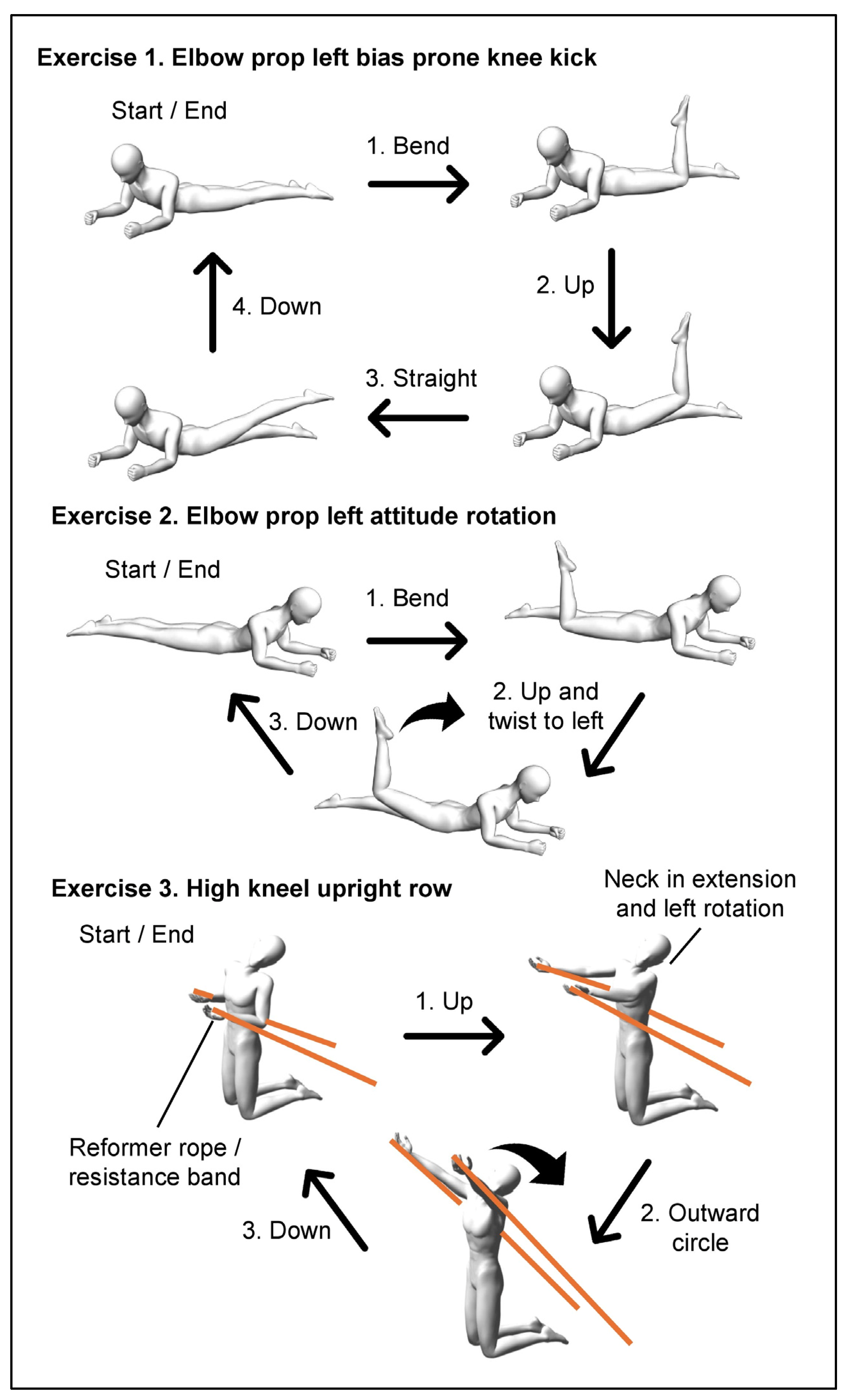
Based on the conceptual framework proposed in this paper, for movements into neck extension and left rotation (Figure 2), and based on superficial pain reported, the left levator scapulae muscle was strained. For the shoulder, he was able to perform shoulder press exercise comfortably and easily while standing with the left hip extended into tip-toe partial weight bearing, and weightbearing more on the right leg. He understood this strategy to modify his gym program to enhance his training outcomes. His rehabilitation exercise program consisted of three exercises (Figure 8). First, the prone single-leg kick exercise was prescribed for his left leg, modified with an elbow prop to position the spine into extension and allowing scapula elevation to shorten the levator scapulae muscle. Second, in the same elbow prop position, he performed the left attitude rotation exercise. Third, he was guided on the use of Pilates reformer (DMA Clinical Pilates, Melbourne, Australia) for upright row exercise in high kneeling coupled with neck extension and left rotation. The third exercise coordinates the levator scapulae muscle with shoulder flexors and abductors (particularly supraspinatus muscle) throughout the movement. The reformer-based exercise could be similarly performed at home with a resistance band to mimic the rope and spring of the reformer. The rate of perceived exertion of the exercises was rated 3/10 and the target was to keep ≤4/10. The home exercises were performed for three sets of ten repetitions each, once daily, and 15 min per session. Exercise progression or regression followed the rule in the first case study.
Results
The timeline and clinical outcomes are presented in Figure 9. All clinical outcomes showed improvements exceeding 50%, almost reaching full recovery. From the Clinical Pilates perspective, left neck pain is from the left levator scapulae muscle, while the left posterior shoulder pain is from supraspinatus and posterior deltoid muscle strains during rowing. The movement preferences at the lower quadrant indicate muscle activation favoring left erector spinae and internal oblique muscles.
Patient Perspective
The patient was highly satisfied with the treatment outcome. He shared that his previous perception of physical therapy was just general exercise prescription, so it is indifferent to self-management or personal training. Overall, he expressed satisfaction that his concerns had been addressed and that he could continue with his training pain-free.

3. Discussion

The case studies provided an interpretation of the use of the Clinical Pilates conceptual framework for managing neck and shoulder pain and dysfunction. Both cases showed the feasibility of the Clinical Pilates method in treating neck–shoulder musculoskeletal conditions. The diagnostic bullseyes for neck and shoulder serve as extensions from the lower quadrant to prescribe more specific exercises for the upper quadrant.
Decision making in the Clinical Pilates method relies on history taking, which is aligned with physiotherapy practice. Clinical decision making often leverages on heuristics to make quick decisions, but this approach can be influenced by the personal bias of physiotherapists [24]. To overcome this, the Clinical Pilates method proposed the use of a body chart, easing and aggravating factors, and trauma direction to predict movement preference, and then confirmed with exercise testing to individualize exercises [22]. This philosophy relates to the interconnection of muscles within the body, which is more commonly known as myofascial chains [25]. Hence, rehabilitation for musculoskeletal conditions should not only be joint-specific, but movement-specific. The recent literature suggests that a myofascial unit connects muscle fibers, nerves, blood vessels, fasciae, and interstitial connective tissue, and disorders to the unit can cause pain, altered proprioception, and muscle stiffness, weakness, and/or dysfunction [26]. This implies that the model of care in physiotherapy practice could progress towards movement-specific intervention. Management of patients with neck and shoulder conditions should consider lumbopelvic-hip movement preference assessment.
Whilst the biopsychosocial approach has become increasingly popular over the past decade [27,28], the biomedical aspect of the biopsychosocial model differs from movement-specific approaches, such as the McKenzie and Clinical Pilates methods. This conceptual framework can benefit the physical rehabilitation curriculum. A past study found that physical therapists have reduced preparedness and expertise in exercise prescription [29]. This could be related to the shift in focus towards psychological intervention in physiotherapy practice for neck pain management [30]. Hence, biopsychosocial and movement-specific approaches can be complementary, not mutually exclusive, and screening for red flags and directional preference can sit alongside psychosocial-informed care.
A key limitation in this report is that the patients were managed by an experienced physiotherapist, who is also a Clinical Pilates educator. Future studies should consider whether younger clinicians with less experience could use the Clinical Pilates method to the same level of proficiency. Next, there is a possibility of natural recovery, as there were no controls studied. However, in view of the chronicity of these cases, it is unlikely that natural recovery can provide immediate improvement in the first session. Also, the findings of this study are drawn from two case studies, so careful consideration is required in adopting this framework. Future larger studies are needed to verify the reliability, validity, and clinical effectiveness of this model.

4. Conclusions

The concepts of the Clinical Pilates method for the management of neck and shoulder musculoskeletal conditions provide an understanding of the use of the diagnostic bullseye in clinical reasoning. The feasibility of the use of the Clinical Pilates method was illustrated in the two case studies.

Author Contributions

Conceptualization, B.C.K., J.X.L.L. and J.K.H.W.; methodology, B.C.K. and J.X.L.L.; validation, B.C.K. and J.X.L.L.; formal analysis, B.C.K.; investigation, B.C.K., J.X.L.L. and J.K.H.W.; resources, B.C.K. and J.X.L.L.; data curation, B.C.K.; writing—original draft preparation, B.C.K.; writing—review and editing, B.C.K., J.X.L.L. and J.K.H.W.; visualization, B.C.K. and J.X.L.L.; supervision, B.C.K.; project administration, B.C.K. All authors have read and agreed to the published version of the manuscript.

Funding

This research received no external funding.

Institutional Review Board Statement

Ethical review and approval were waived for this study due to its classification as case studies.

Informed Consent Statement

Written informed consent has been obtained from the patients to publish this paper.

Data Availability Statement

All data are presented in this paper.

Conflicts of Interest

B.C.K. and J.X.L.L are physical therapists in the private practice, Clinical Pilates Family Physiotherapy. J.K.H.W. runs The Rehab Circle, a not-for-profit charity organization registered in Singapore. The authors declare no conflicts of interest.

References

  1. Kwok, B.C.; Chin, C.S.Y.; Wong, J.K.H.; Chan, M.A.W.K. Physiotherapy is least preferred for managing musculoskeletal pain—Findings from a pain prevalence survey. Musculoskelet. Care 2025, 23, e70090. [Google Scholar] [CrossRef] [PubMed]
  2. Castellini, G.; Pillastrini, P.; Vanti, C.; Bargeri, S.; Giagio, S.; Bordignon, E.; Fasciani, F.; Marzioni, F.; Innocenti, T.; Chiarotto, A.; et al. Some conservative interventions are more effective than others for people with chronic non-specific neck pain: A systematic review and network meta-analysis. J. Physiother. 2022, 68, 244–254. [Google Scholar] [CrossRef] [PubMed]
  3. Sivrika, A.P.; Kypraios, G.; Lamnisos, D.; Georgoudis, G.; Stasinopoulos, D. Pilates dosage in rehabilitation of patients with musculoskeletal conditions: A scoping review. Sports Health 2024, 17, 19417381241278263. [Google Scholar] [CrossRef] [PubMed]
  4. Barnet-Hepples, T.; Amorim, A.B.; de Azeyêdo Nogueira, C.; de Melo, M.C.S.; Dario, A.B.; Latey, P.; Gomes, S.R.A.; de Brito Macedo, L. Pilates lessens pain and disability and improves quality of life in people with musculoskeletal conditions in the extremities: A systematic review. Ann. Phys. Rehabil. Med. 2025, 68, 101973. [Google Scholar] [CrossRef] [PubMed]
  5. Patti, A.; Thornton, J.S.; Giustino, V.; Drid, P.; Paoli, A.; Schulz, J.M.; Palma, A.; Bianco, A. Effectiveness of pilates exercise on low back pain: A systematic review with meta-analysis. Disabil. Rehabil. 2024, 46, 3535–3548. [Google Scholar] [CrossRef]
  6. Denham-Jones, L.; Gaskell, L.; Spence, N.; Pigott, T. A systematic review of the effectiveness of pilates on pain, disability, physical function, and quality of life in older adults with chronic musculoskeletal conditions. Musculoskelet. Care 2022, 20, 10–30. [Google Scholar] [CrossRef]
  7. Martini, J.D.; Ferreira, G.E.; de Araujo, F.X. Pilates for neck pain: A systematic review and meta-analysis of randomised controlled trials. J. Bodyw. Mov. Ther. 2022, 31, 37–44. [Google Scholar] [CrossRef]
  8. Lazoura, E.; Savva, C.; Ploutarchou, G.; Papacharalambous, C.; Christofi, I.; Rentzias, P.; Karagiannis, C. Effectiveness of the pilates method in patients with chronic neck pain: A systematic review with meta-analysis. BMC Musculoskelet. Disord. 2025, 26, 629. [Google Scholar] [CrossRef]
  9. Villanueva-Ruiz, I.; Falla, D.; Lascurain-Aguirrebena, I. Effectiveness of specific neck exercise for nonspecific neck pain; usefulness of strategies for patient selection and tailored exercise-a systematic review with meta-analysis. Phys. Ther. 2022, 102, pzab259. [Google Scholar] [CrossRef]
  10. Peterson, G.; Pihlström, N. Factors associated with neck and shoulder pain: A cross-sectional study among 16,000 adults in five county councils in sweden. BMC Musculoskelet. Disord. 2021, 22, 872. [Google Scholar] [CrossRef]
  11. Requejo-Salinas, N.; Fernandez-Matias, R.; Cadogan, A.; Chester, R.; Roy, J.S.; Struyf, F.; Bateman, M.; Balster, S.; Haik, M.N.; Seitz, A.L.; et al. Neck or shoulder? Establishing consensus for spine screening in patients with shoulder pain: An international modified delphi study. Phys. Ther. 2025, 105, pzae133. [Google Scholar] [CrossRef]
  12. Lewitt, M.S.; McPherson, L.A. ‘Pilates’ in 2024: Useful clinical tool or commercial catchphrase? J. Integr. Complement. Med. 2024, 10, 100497. [Google Scholar] [CrossRef] [PubMed]
  13. Kwok, B.C.; Soh, R.E.C.; Smith, H.E.; Kong, P.W. Clinical pilates exercises for adults with chronic low back pain improves single-leg squat postural control and lumbopelvic-hip flexibility. Gait Posture 2025, 119, 127–134. [Google Scholar] [CrossRef] [PubMed]
  14. Baumann, A.N.; Orellana, K.; Landis, L.; Crawford, M.; Oleson, C.J.; Rogers, H.; Curtis, D.P.; Baldwin, K.D.; Crawford, M.T.; Curtis, D. The mckenzie method is an effective rehabilitation paradigm for treating adults with moderate-to-severe neck pain: A systematic review with meta-analysis. Cureus 2023, 15, e39218. [Google Scholar] [CrossRef] [PubMed]
  15. Lam, O.T.; Strenger, D.M.; Chan-Fee, M.; Pham, P.T.; Preuss, R.A.; Robbins, S.M. Effectiveness of the mckenzie method of mechanical diagnosis and therapy for treating low back pain: Literature review with meta-analysis. J. Orthop. Sports Phys. Ther. 2018, 48, 476–490. [Google Scholar] [CrossRef]
  16. Sahiner Picak, G.; Yesilyaprak, S.S. Effects of clinical pilates exercises in patients with chronic nonspecific neck pain: A randomized clinical trial. Ir. J. Med. Sci. 2023, 192, 1205–1214. [Google Scholar] [CrossRef]
  17. Barbosa-Silva, J.; Luc, A.; Sobral de Oliveira-Souza, A.I.; Martins de Abreu, R.; Cipriano, J.; de Schaetzen, M.; Pitance, L.; Armijo-Olivo, S. The effectiveness of mulligan’s techniques in non-specific neck pain: A systematic review and meta-analysis. Physiother. Res. Int. 2025, 30, e70045. [Google Scholar] [CrossRef]
  18. Michener, L.A.; Snyder, A.R.; Leggin, B.G. Responsiveness of the numeric pain rating scale in patients with shoulder pain and the effect of surgical status. J. Sport Rehabil. 2011, 20, 115–128. [Google Scholar] [CrossRef]
  19. Nazari, G.; Bobos, P.; Lu, Z.; Reischl, S.; MacDermid, J.C. Psychometric properties of patient-specific functional scale in patients with upper extremity disorders. A systematic review. Disabil. Rehabil. 2022, 44, 2958–2967. [Google Scholar] [CrossRef]
  20. Breckenridge, J.D.; McAuley, J.H. Shoulder pain and disability index (spadi). J. Physiother. 2011, 57, 197. [Google Scholar] [CrossRef]
  21. Verhagen, A.P. Physiotherapy management of neck pain. J. Physiother. 2021, 67, 5–11. [Google Scholar] [CrossRef]
  22. Kwok, B.C.; Lim, J.X.L.; Kong, P.W. The theoretical framework of the clinical pilates exercise method in managing non-specific chronic low back pain: A narrative review. Biology 2021, 10, 1096. [Google Scholar] [CrossRef] [PubMed]
  23. Borg, E.; Kaijser, L. A comparison between three rating scales for perceived exertion and two different work tests. Scand. J. Med. Sci. Sports 2006, 16, 57–69. [Google Scholar] [CrossRef] [PubMed]
  24. Walston, Z.; Whelehan, D.F.; O’Shea, N. Clinical decision making in physical therapy–exploring the ‘heuristic’in clinical practice. Musculoskelet. Sci. Pract. 2022, 62, 102674. [Google Scholar] [CrossRef] [PubMed]
  25. Wilke, J.; Krause, F.; Vogt, L.; Banzer, W. What is evidence-based about myofascial chains: A systematic review. Arch. Phys. Med. Rehabil. 2016, 97, 454–461. [Google Scholar] [CrossRef]
  26. Stecco, A.; Giordani, F.; Fede, C.; Pirri, C.; De Caro, R.; Stecco, C. From muscle to the myofascial unit: Current evidence and future perspectives. Int. J. Mol. Sci. 2023, 24, 4527. [Google Scholar] [CrossRef]
  27. Pincus, T.; Kent, P.; Bronfort, G.; Loisel, P.; Pransky, G.; Hartvigsen, J. Twenty-five years with the biopsychosocial model of low back pain-is it time to celebrate? A report from the twelfth international forum for primary care research on low back pain. Spine 2013, 38, 2118–2123. [Google Scholar] [CrossRef]
  28. van Erp, R.M.; Huijnen, I.P.; Jakobs, M.L.; Kleijnen, J.; Smeets, R.J. Effectiveness of primary care interventions using a biopsychosocial approach in chronic low back pain: A systematic review. Pain Pract. 2019, 19, 224–241. [Google Scholar] [CrossRef]
  29. Barton, C.J.; King, M.G.; Dascombe, B.; Taylor, N.F.; de Oliveira Silva, D.; Holden, S.; Goff, A.J.; Takarangi, K.; Shields, N. Many physiotherapists lack preparedness to prescribe physical activity and exercise to people with musculoskeletal pain: A multi-national survey. Phys. Ther. Sport 2021, 49, 98–105. [Google Scholar] [CrossRef]
  30. Farrell, S.F.; Edmunds, D.; Fletcher, J.; Martine, H.; Mohamed, H.; Liimatainen, J.; Sterling, M. Effectiveness of psychological interventions delivered by physiotherapists in the management of neck pain: A systematic review with meta-analysis. Pain Rep. 2023, 8, e1076. [Google Scholar] [CrossRef]
Figure 1. Muscle force to length injury and treatment rationale of the Clinical Pilates method.
Biomed 06 00003 g001
Figure 2. Neck movements mapped to the diagnostic bullseye, (a) flexion–extension and side flexion movements, and (b) rotation movements.
Biomed 06 00003 g002
Figure 3. Example of treatment direction documentation for neck.
Biomed 06 00003 g003
Figure 4. Right shoulder movements mapped to the diagnostic bullseye, (a) glenohumeral joint (anterior view), and (b) scapulothoracic joint (posterior view).
Biomed 06 00003 g004
Figure 5. Example of treatment and trauma directions documentation for shoulder complex: (a) glenohumeral and (b) scapulothoracic.
Biomed 06 00003 g005
Figure 6. Seated left row exercise using green resistance band with left lateral flexion and extension at neck for Case 1, start (left) and end (right) positions.
Biomed 06 00003 g006
Figure 7. Timeline and clinical outcomes of case study 1 (N.A: not applicable).
Biomed 06 00003 g007
Figure 8. Exercises prescribed for Case 2, orange lines indicate Pilates reformer rope or elastic resistance band.
Biomed 06 00003 g008
Figure 9. Timeline and clinical outcomes of case study 2 (N.A: not applicable).
Biomed 06 00003 g009
Table 1. Demographics of case studies.
DemographicsCase 1Case 2
Age, years3224
GenderMaleMale
Occupation/SportAdmin managerDragonboat
Symptom duration, months152
Key findingsBiomed 06 00003 i001Biomed 06 00003 i002
Directional preferencesLegend for diagnostic bullseye: Green indicates treatment direction and red indicates directional trauma.
Lower quadrantBiomed 06 00003 i003Biomed 06 00003 i004
NeckBiomed 06 00003 i005Biomed 06 00003 i006
ShoulderBiomed 06 00003 i007Left shoulder (top view):
Biomed 06 00003 i008
Intervention
  Frequency, /dayTwiceOnce
  Intensity, /1023
  Time, minutes515
  TypeDirection-specific movement controlDirection-specific movement control
Number of supervised sessions33
Follow-up interval, weeks11
Disclaimer/Publisher’s Note: The statements, opinions and data contained in all publications are solely those of the individual author(s) and contributor(s) and not of MDPI and/or the editor(s). MDPI and/or the editor(s) disclaim responsibility for any injury to people or property resulting from any ideas, methods, instructions or products referred to in the content.