
Perspective

SARS-CoV-2 and Smoker’s Paradox: Mediation by Ciliary Beat Frequency and Mucociliary Clearance?

School of Public Health Sciences, University of Waterloo, Waterloo, ON N2L 3G1, Canada
BioMed 2022, 2(1), 88-93; https://doi.org/10.3390/biomed2010009
Submission received: 29 January 2022 / Revised: 14 February 2022 / Accepted: 16 February 2022 / Published: 18 February 2022

Abstract

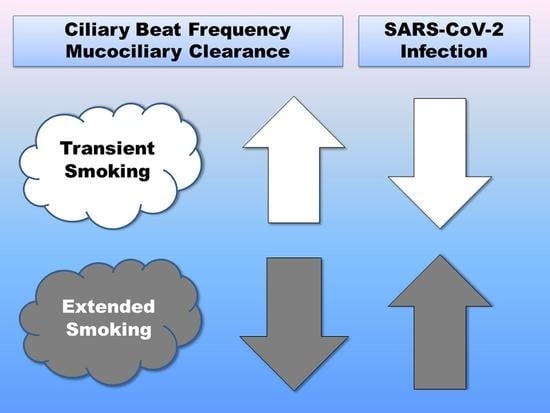
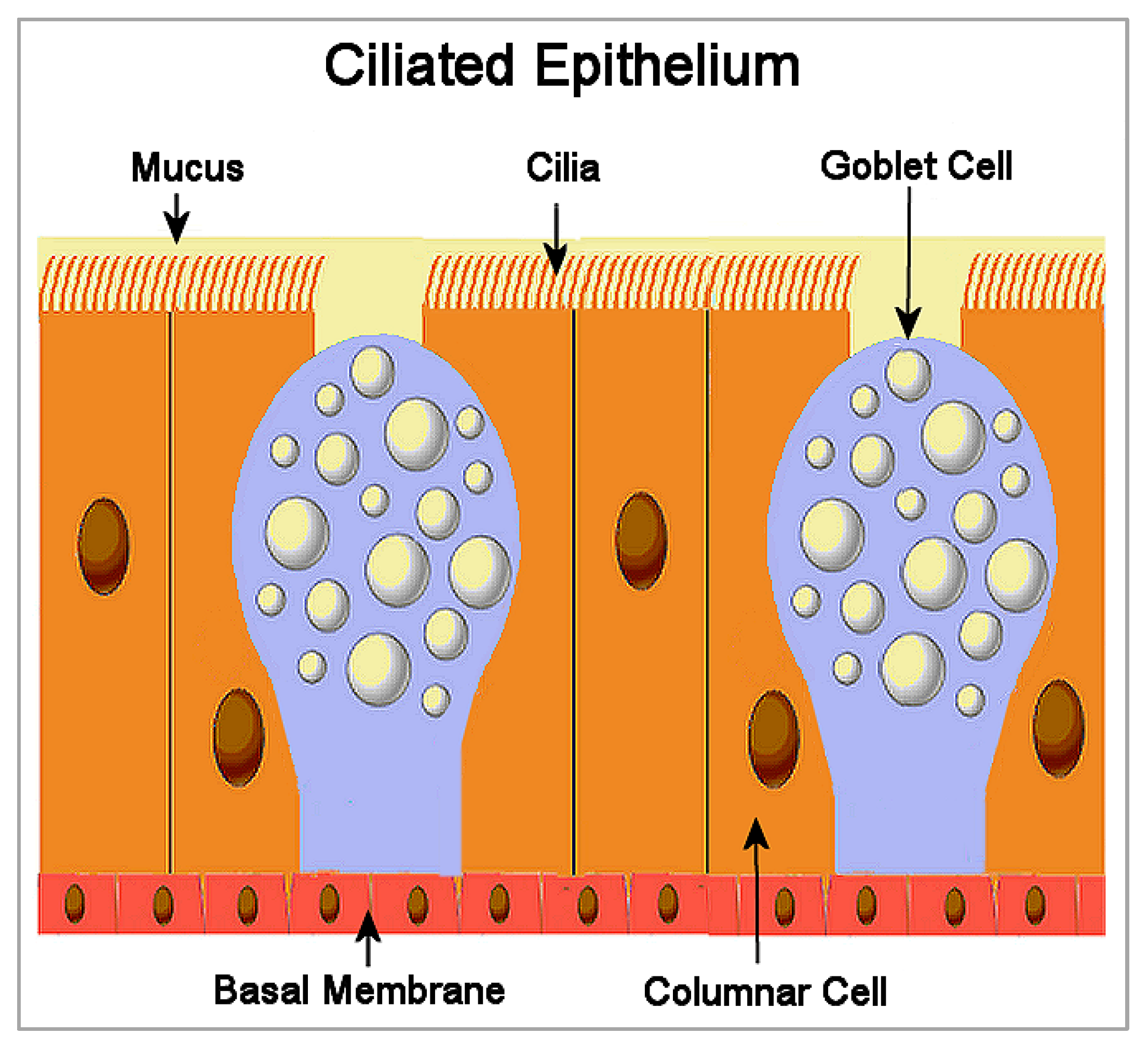
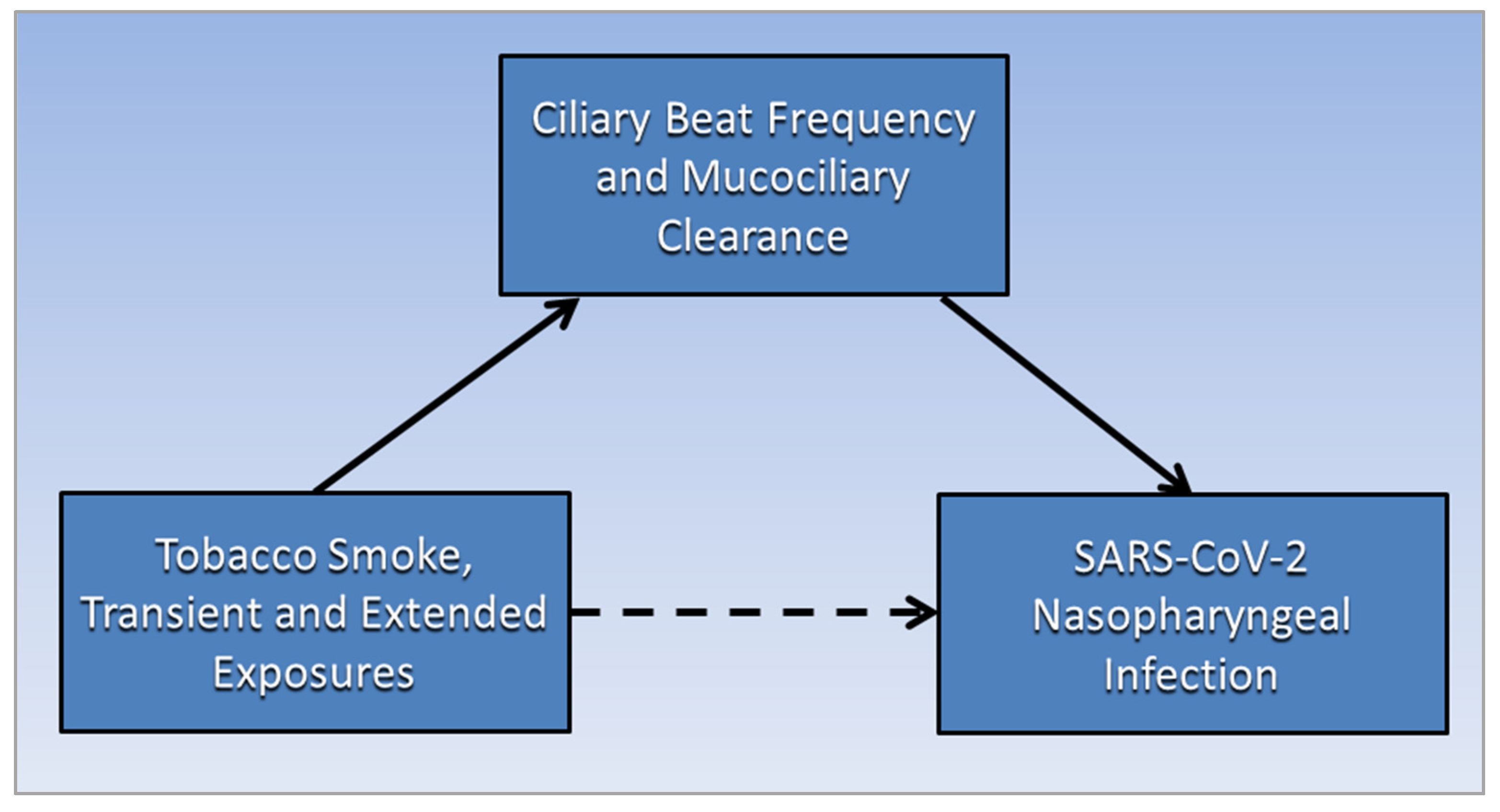
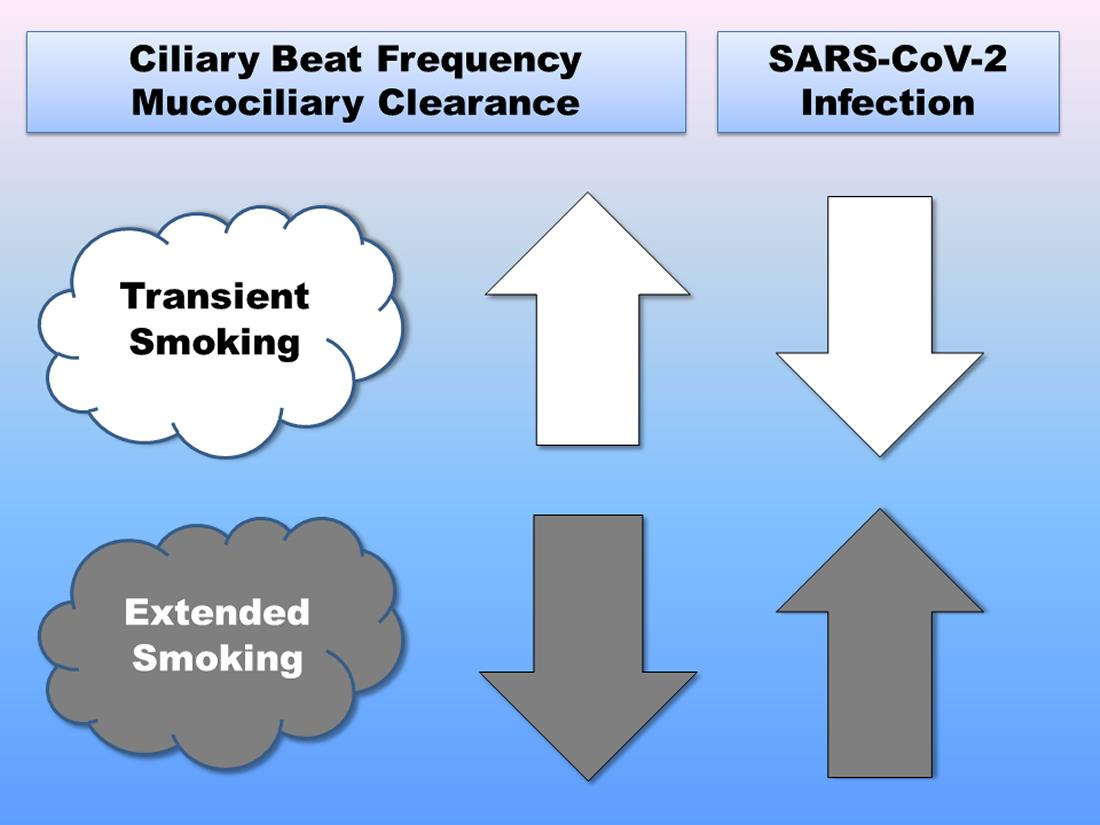
A COVID-19 smoker’s paradox was identified during the early days of the COVID-19 pandemic—many studies reported that smokers appeared to be protected against SARS-CoV-2 infections. Conversely, other studies added to the smoker’s paradox controversy with findings of increased risk for COVID-19 in heavy smokers. Ciliary beat frequency (CBF) within the ciliated epithelium of the nasal tract can be stimulated to a higher frequency and provide increased protection against transient exposure to airway irritants. Smokers as well as non-smokers exposed to secondhand tobacco smoke were found to have higher CBFs. However, with extended exposure to irritants, persistent upregulated CBF can damage and remodel the epithelial layer with fewer protective cilia. Additionally, mucociliary clearance (MCC), the innate defense mechanism of the respiratory system, traps particles and pathogens within the mucous layer of the epithelium and propels them out of the airways through ciliary activity. However, this mechanism becomes defective as disease progresses, increasing susceptibility to viral respiratory infections. This paper proposes that a smoker’s paradox associated with SARS-CoV-2 infection in COVID-19 patients may be mediated by upregulated ciliary beating frequency and mucociliary clearance with transient exposure to tobacco smoke, and downregulated CBF and MCC with extended exposure to tobacco smoke.
Keywords: COVID-19; SARS-CoV-2; smoker’s paradox; ciliary beat frequency; mucociliary clearance; tobacco exposure; ACE2; ciliated epithelium COVID-19; SARS-CoV-2; smoker’s paradox; ciliary beat frequency; mucociliary clearance; tobacco exposure; ACE2; ciliated epithelium
Graphical Abstract