1. Introduction
Despite decades of global efforts to promote gender equality, progress in women’s leadership remains limited. According to the World Economic Forum’s Global Gender Gap Report, around 68.8% of the global gender gap has been closed. However, at the current pace, achieving full gender parity is expected to take over a century—approximately 123 years [
1]. While significant gains have been made in health and education, major disparities persist in economic participation and leadership—areas most closely tied to power and advancement within organizations. Importantly, no country has yet achieved full gender equality, highlighting the deep-rooted structural and cultural barriers that continue to limit women’s access to leadership roles.
Gender equality outcomes also vary widely by region. European and North American economies consistently perform best, having closed more than 75% of their gender gaps [
1]. These regions benefit from transparent promotion systems, gender-sensitive legal frameworks, and broader societal acceptance of women in leadership. In contrast, many Asian countries—including Japan, South Korea, and several in Southeast Asia—continue to lag behind, despite achieving near parity in education and health [
2]. This gap reveals one of the most persistent paradoxes in global gender data: although women in Asia are highly educated, they remain underrepresented in organizational leadership. Recent developments in Japan may appear to indicate meaningful progress. Institutional reforms, such as initiatives to promote gender diversity and increase women’s political participation, have started to reshape formal expectations in organizations [
2]. Most notably, the election of Japan’s first female prime minister in 2025 marked a historic and symbolic moment, suggesting that even deeply traditional societies may be entering a phase of institutional change.
However, symbolic progress does not always translate into structural change. Long-term labor data show that despite a steady pipeline of highly educated women and a stable female labor force participation rate of around 40%, the share of women in managerial roles in Japan has increased only slightly—from 30.2% in 2003 to 35.4% in 2023 [
3]. Moreover, recent improvements in global gender indices have been driven mainly by advances in education, health, and political inclusion, rather than by significant changes in how organizations support leadership development. These patterns suggest that the mechanisms distributing authority, visibility, and promotion remain largely unchanged. This continued stagnation reveals the limitations of common metaphors like the sticky floor, glass ceiling, and glass cliff. While useful for identifying specific barriers, these concepts fail to explain the consistently flat trend in women’s leadership representation over time. If inequality were driven mainly by isolated obstacles, substantial progress would likely follow once those were addressed. Instead, the data suggest that gendered disadvantages operate continuously across the career journey, not just at key transition points.
Together, these global trends, regional disparities, and persistent organizational stagnation suggest that gender inequality in leadership is not best understood as a set of isolated barriers. Rather, they reflect a system of uneven career momentum, where the same organizational structures produce different outcomes for men and women. In response, this paper introduces the tailwind–headwind framework, which integrates cultural, structural, and psychological dynamics to explain how men accumulate career momentum, while women encounter ongoing resistance throughout their leadership paths. By viewing leadership careers as layered, dynamic processes rather than isolated transitions, the framework provides a clearer explanation for the persistent underrepresentation of women in leadership. It also offers a solid foundation for future research across organizational and institutional settings by clarifying why gender gaps in career advancement persist even within the same systems.
2. Literature Review
Over the past several decades, research on leadership careers has produced a substantial body of scholarship examining gender inequality from diverse theoretical perspectives. Much of this literature has focused on identifying the barriers women face in accessing, sustaining, and succeeding in leadership roles, offering critical insights into discrimination, bias, and structural exclusion within organizations. These contributions have been pivotal in demonstrating that leadership outcomes are profoundly shaped by gender. Nevertheless, the persistent underrepresentation of women in leadership across countries and organizational contexts suggests that existing explanations remain theoretically fragmented and insufficient to fully capture the dynamics of gendered career inequality.
A defining feature of this research stream is its reliance on stage-specific metaphors—most notably the sticky floor, glass ceiling, and glass cliff—to describe the disadvantages women encounter at different career stages. While these concepts have been effective in spotlighting key moments of exclusion, they tend to frame inequality as a series of discrete barriers, rather than as a cumulative and dynamic process unfolding over time. As a result, relatively little attention has been paid to how leadership careers evolve longitudinally within shared organizational environments—contexts in which advantages and disadvantages may accumulate, interact, and intensify over the course of a career.
From a comparative perspective, this stage-focused and women-centered approach has further constrained the field’s ability to explain how men’s and women’s leadership trajectories diverge, despite being situated within the same formal structures and governed by the same institutional rules. Although women’s constraints have been extensively documented, considerably less attention has been directed toward the cultural, structural, and psychological mechanisms that facilitate and normalize men’s advancement.
This imbalance reveals a critical gap in the review literature and underscores the need for an explicitly comparative synthesis. To address this gap, the following sections examine prior research on leadership careers through a gender-comparative lens.
Section 2.1 analyzes patterns in men’s leadership careers and the mechanisms that stabilize and accelerate their advancement.
Section 2.2 turns to women’s leadership careers, focusing on how constraints accumulate and intensify across the career cycle.
2.1. Male Career Patterns
Research on gender inequality in organizations consistently shows that disparities in leadership careers cannot be explained solely by interpersonal bias or individual differences. Instead, they are deeply rooted in the structural and cultural foundations of organizations. Foundational theories of gendered organizations, developed by Kanter and Acker, emphasize that job design, evaluation criteria, and career pathways have historically been shaped by masculine-coded norms—such as competitiveness, constant availability, and assertive self-promotion—which systematically advantage those who conform to these expectations [
4,
5]. Complementing this structural view, Ridgeway’s theory of gender as a primary frame highlights how gender stereotypes function as pervasive cognitive schemas that shape assumptions about competence, authority, and leadership legitimacy in daily organizational interactions [
6]. Within this broader gendered structure, men are more often perceived as aligned with dominant leadership prototypes and therefore face fewer challenges to their legitimacy across different stages of their careers.
Empirical research has illustrated how these structural and cultural dynamics contribute to distinctive patterns in men’s career advancement. Two widely cited metaphors in the literature help explain this process: the glass escalator and the think manager–think male stereotype. Studies on the glass escalator show that men in female-dominated professions—such as education, nursing, and human resources—often experience faster promotion into supervisory and managerial roles compared to equally qualified female colleagues [
7,
8,
9]. This accelerated mobility is often attributed to preferential mentoring, increased organizational visibility, and implicit beliefs that men possess stronger leadership potential. Similarly, Schein’s think manager–think male research demonstrates the ongoing association between leadership and masculine traits such as assertiveness and decisiveness, subtly shaping hiring, evaluation, and promotion practices—even within organizations that claim to be gender-neutral [
10,
11]. Together, these findings suggest that men benefit from a combination of cultural legitimacy and structural advantage, which reduces evaluative friction and facilitates steady upward career mobility.
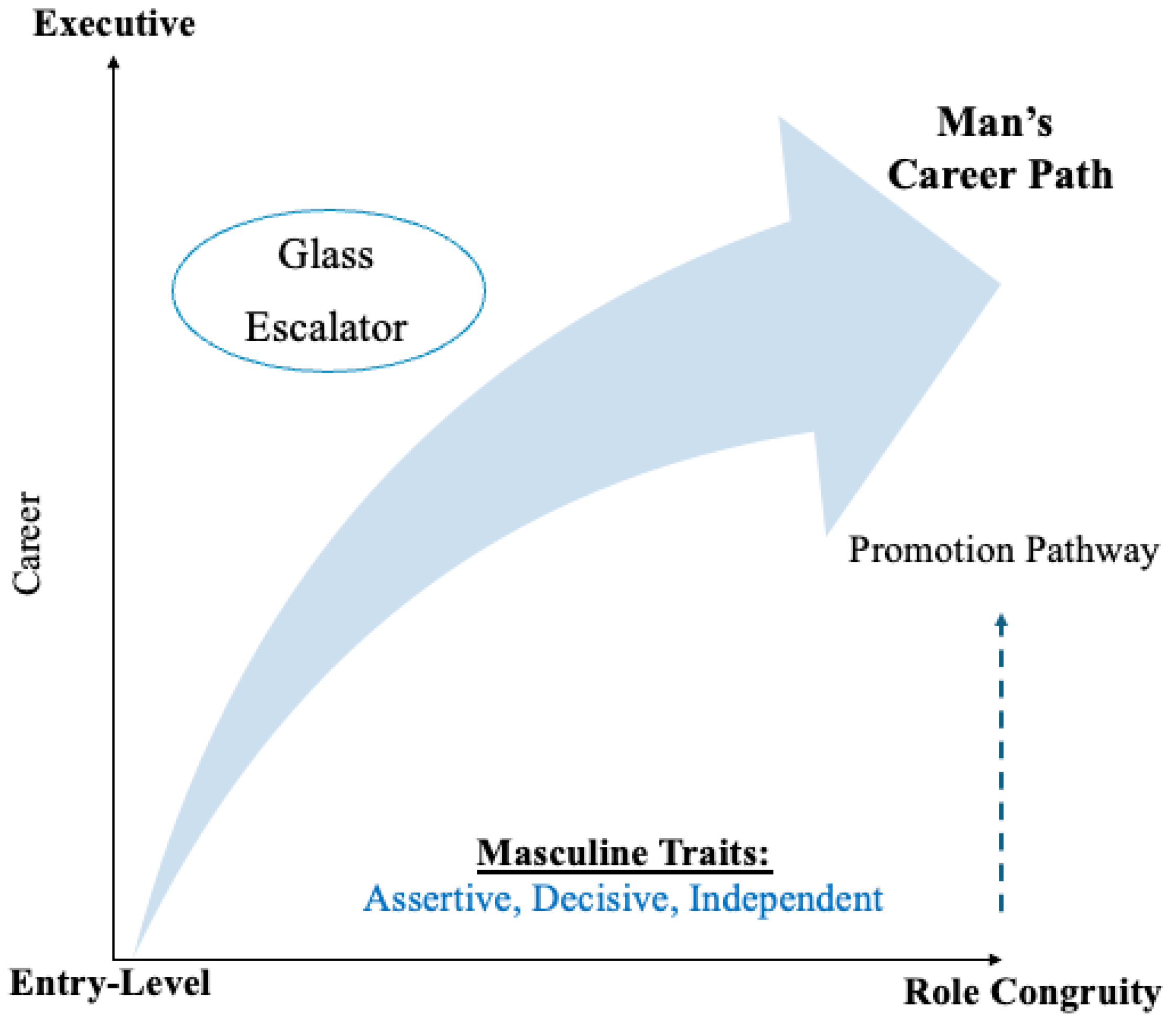
Figure 1 offers a stylized depiction of these dynamics by illustrating a typical male leadership trajectory within organizational hierarchies. The diagram shows how men’s careers often follow a relatively smooth and accelerating path from entry-level positions to executive roles. As indicated by the upward-curving arrow, early advantages—such as alignment with leadership prototypes, preferential mentoring, and institutional encouragement—tend to accumulate over time. These initial perceptions of legitimacy are gradually reinforced through ongoing organizational support, promoting continued upward movement across career stages. Importantly, the figure does not suggest that male advancement is automatic or effortless. Rather, it visually synthesizes how culturally and structurally embedded mechanisms—well documented in existing research—shape both the direction and pace of male career progression within hierarchical organizations.
Taken together, this body of literature suggests that men’s leadership careers are shaped not merely by the absence of obstacles, but by the presence of systemic conditions that consistently support upward mobility. While existing studies have examined these mechanisms individually—through concepts like the glass escalator and leadership prototype congruity—they rarely theorize how such advantages accumulate and interact over time to create sustained career momentum. This insight is critical, as it reveals a gap between identifying isolated benefits and understanding their long-term, directional effects throughout the career cycle. It also provides an important conceptual bridge to the tailwind concept introduced later in this study, which integrates these established findings into a unified framework for explaining how organizational environments generate and maintain momentum in men’s leadership careers.
2.2. Female Career Patterns
2.2.1. Entry Level
Research on gendered organizations has consistently argued that inequality in career advancement cannot be explained solely by individual choices or interpersonal bias, but is deeply embedded in the structural and cultural design of organizations. Kanter and Acker contend that organizational structures are inherently gendered, as job design, evaluation criteria, and career pathways are often organized around masculine-coded norms—such as autonomy, competition, and uninterrupted availability—while women’s work is more frequently positioned as supportive or peripheral [
4,
5]. A substantial body of empirical research demonstrates that these configurations systematically constrain early career mobility and limit women’s access to promotion pathways.
Building on this foundational perspective, later syntheses—including Lyness and Grotto’s comprehensive review of barriers to women’s leadership and the conceptual work of Galsanjigmed and Sekiguchi on gendered career constraints—have further documented the wide range of cultural and structural challenges women face across organizational settings. However, despite their descriptive richness, these studies offer limited theoretical integration of how cultural assumptions, structural arrangements, and career outcomes interact dynamically across multiple layers of the organizational environment. As a result, the multilevel processes through which gendered expectations become institutionalized as structural barriers—and subsequently normalized as enduring career constraints—remain under-theorized in existing frameworks [
6,
7].
Within this body of literature, two metaphors have been particularly influential in capturing the structural conditions that hinder women’s early career mobility: the sticky floor and the glass ceiling. The sticky floor metaphor describes the tendency for women to be disproportionately concentrated in low-wage, routine, or administrative roles, even when their qualifications are equivalent to those of men [
12]. This form of gendered immobility stems from a set of mutually reinforcing mechanisms, including gendered job design, exclusion from informal networks, and persistent assumptions regarding women’s caregiving responsibilities and leadership suitability.
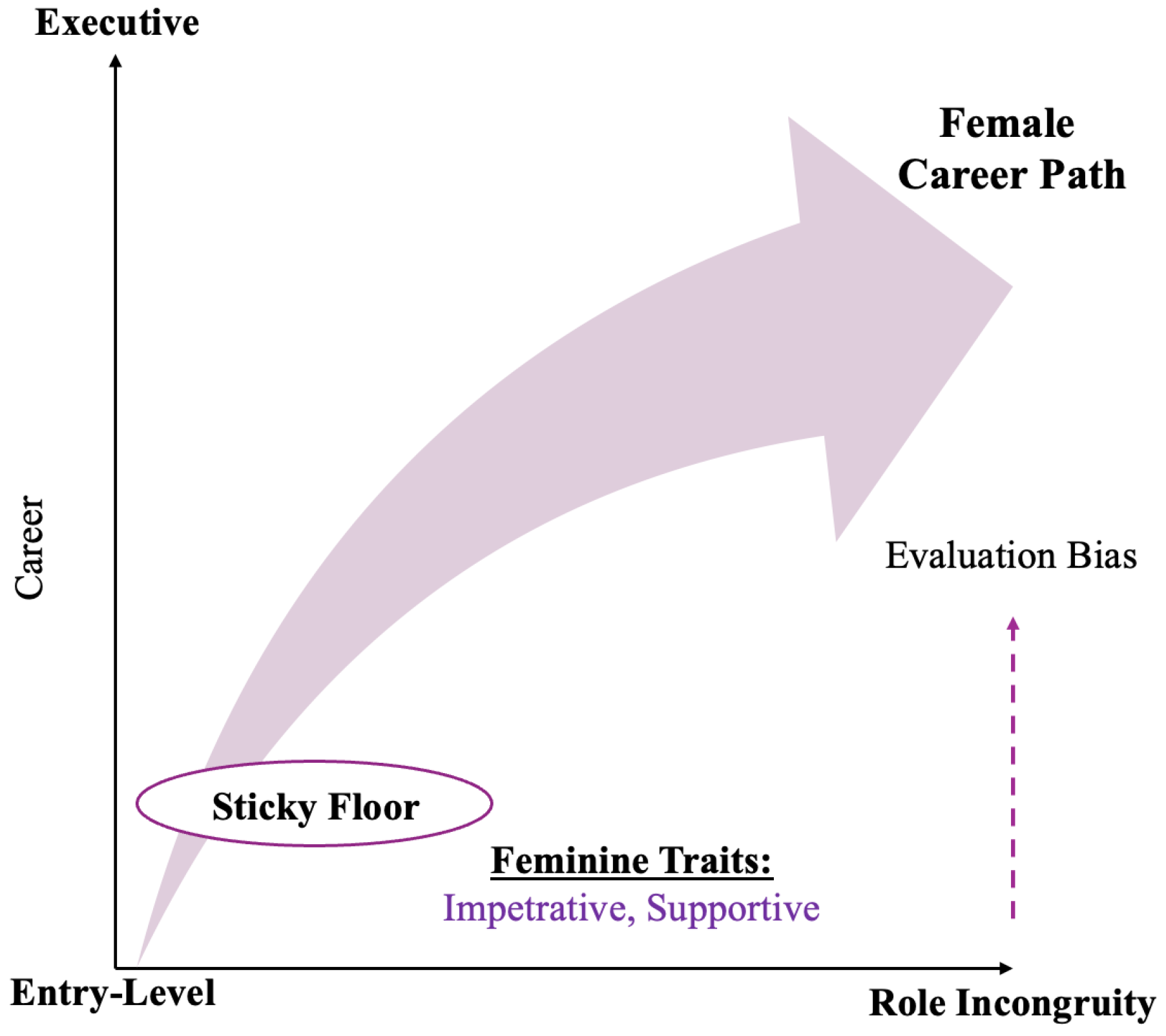
Figure 2 visually synthesizes these mechanisms by illustrating how early-stage organizational structures generate persistent friction that restricts women’s upward mobility. Rather than representing a single, discrete barrier, the figure emphasizes how restricted task allocation, limited developmental opportunities, and reduced visibility interact to normalize stalled movement at the lower levels of organizational hierarchies. In doing so, it underscores how early structural constraints lay the foundation for long-term inequality by shaping career trajectories well before formal promotion decisions are made.
2.2.2. Middle Level
Gender inequality in leadership roles beyond entry-level positions is widely understood as the result of a complex interplay between cultural norms and evaluative biases embedded within organizations. Gender stereotypes that associate women with communal traits—such as warmth, empathy, and cooperativeness—and men with agentic traits—such as assertiveness, decisiveness, and independence—function as cognitive schemas that shape perceptions of leadership suitability and legitimacy [
13,
14]. Role congruity theory explains how this misalignment creates systematic disadvantage for women: because communal traits are seen as incompatible with dominant leadership prototypes, women are often perceived as less suitable for leadership and are subjected to heightened scrutiny when they display the agentic behaviors required to lead effectively [
15]. This evaluative tension is commonly described as the double bind, in which women must navigate contradictory expectations—being assertive enough to appear competent, yet sufficiently communal to avoid social penalties—resulting in increased demands for self-regulation and emotional labor.
Moreover, these cultural expectations are reinforced by backlash mechanisms, whereby women who assert authority, negotiate for resources, or express anger are more likely to be labeled as aggressive, difficult, or unlikeable compared to men exhibiting the same behaviors [
16]. Such reactions reveal that evaluative bias operates not only through formal criteria but also through moralized emotional judgments that punish deviations from gender norms. Over time, these dynamics contribute to the formation of the glass ceiling, which restricts women’s access to senior leadership roles even when they demonstrate strong performance [
17,
18,
19,
20]. Consistent with the lack-of-fit model, high-performing women are frequently viewed as lacking essential leadership attributes, which limits their access to high-visibility assignments and critical developmental opportunities [
21,
22,
23]. As a result, women’s advancement pathways often become nonlinear and filled with friction—a pattern commonly conceptualized as the leadership labyrinth [
24].
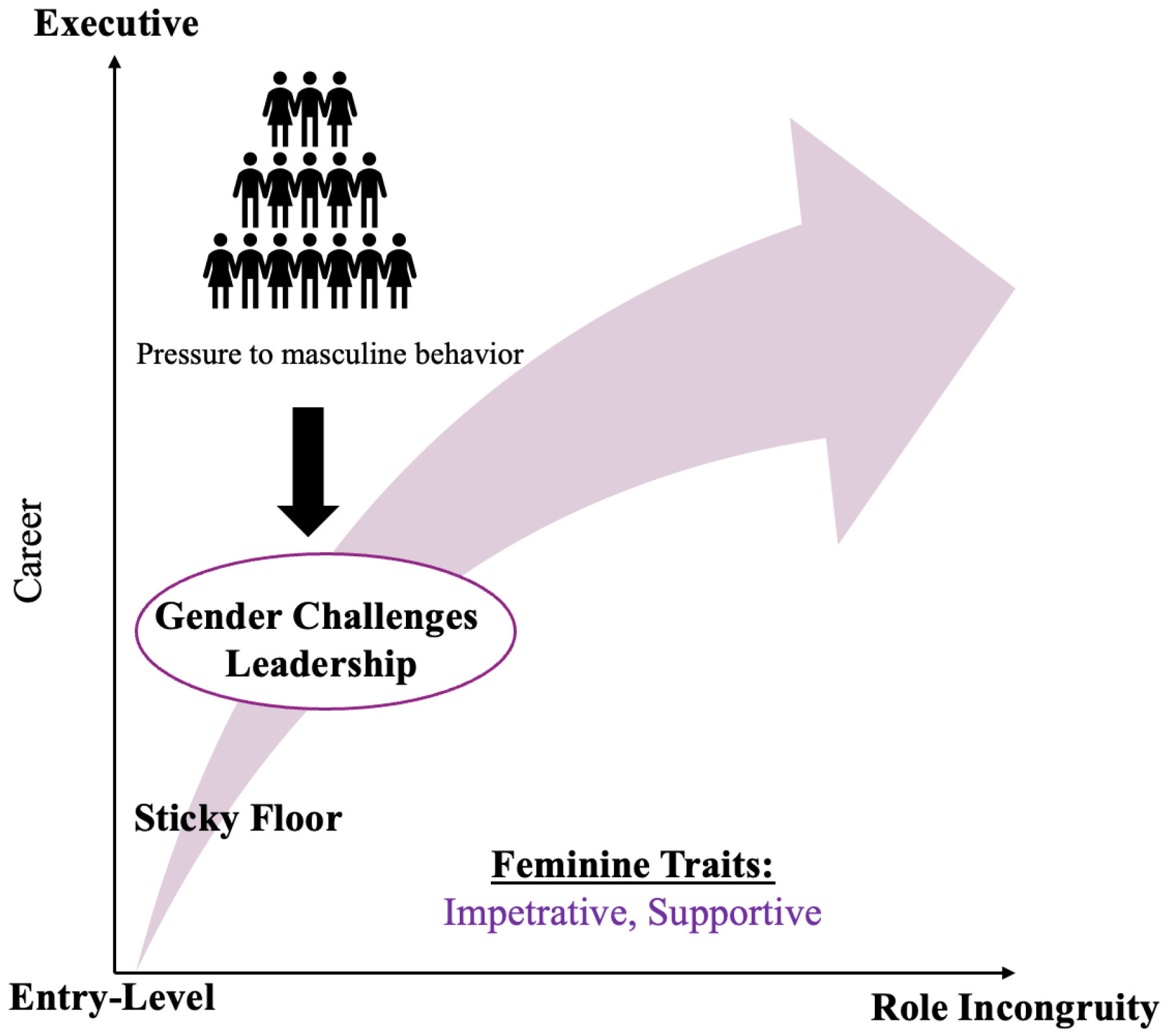
Figure 3 visually synthesizes these mechanisms by showing how gender increasingly challenges leadership during the mid-career stage. As illustrated, women’s upward trajectories are progressively shaped by the pressures of role incongruity as they advance beyond entry-level positions. With each step, women face intensified expectations to conform to masculine-coded leadership norms while simultaneously being judged according to feminine behavioral standards. In this context, leadership itself becomes a contested domain for women—one that must be continually negotiated under scrutiny, where gender directly challenges the enactment of leadership.
From this perspective, mid-career inequality does not stem from isolated promotion failures or individual shortcomings. Rather, it emerges from the cumulative effects of gendered evaluative processes that gradually narrow women’s leadership trajectories and turn advancement into a path marked by ongoing resistance. In this sense, the mid-career stage represents a pivotal phase in leadership development—one where gendered expectation surrounding leadership become most salient and exert a lasting influence on long-term career outcomes.
2.2.3. Senior Level
At senior levels, women face an additional and distinctive structural burden commonly referred to as the glass cliff. A substantial body of research shows that women are disproportionately appointed to leadership positions during periods of crisis, instability, or organizational decline—contexts marked by elevated risk, limited resources, and a low probability of success [
25,
26]. Although such appointments are often framed as progress toward gender equality, they frequently serve as symbolic rather than substantive inclusion. When organizational performance declines, women leaders are more likely to be held personally accountable, while the structural or historical roots of the crisis are downplayed or overlooked [
27,
28].
This recurring pattern reinforces gendered stereotypes about leadership competence and legitimizes the reappointment of men once failure is attributed to individual leadership rather than broader contextual factors—a process described as the revolving door of risk. Consequently, the glass cliff represents a dual condition: it appears to offer women access to senior leadership, while simultaneously exposing them to disproportionate reputational and career risk. Leadership opportunities thus become conditional granted primarily when stakes are highest and the margin for error is smallest. Rather than correcting inequality, these precarious appointments reinforce it by normalizing the association between women and failure or instability.
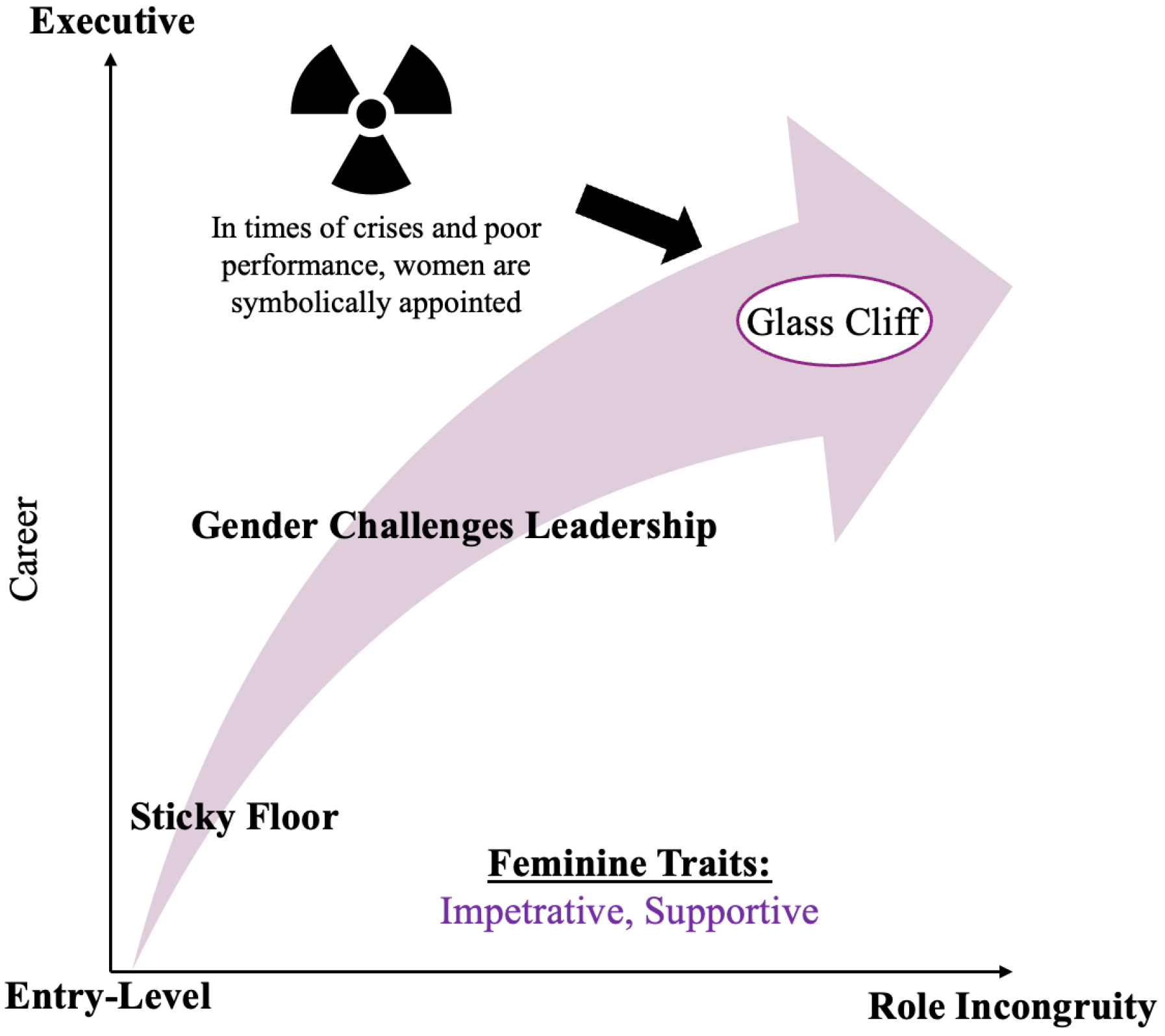
Figure 4 synthesizes these dynamics by illustrating how gender most acutely shapes leadership at the senior stage of the career trajectory. As shown, women’s advancement is already shaped by early structural constraints and mid-career role incongruity, culminating in their disproportionate appointment to high-risk leadership roles during periods of crisis. The figure highlights how evaluative bias intersects with structural vulnerability, showing that women’s access to top leadership is often conditional—most likely to occur when the probability of failure is highest and institutional support is weakest. Promotion at this level is therefore accompanied by elevated risk, limited resources, and intensified scrutiny. As a result, leadership roles at the apex of organizations are often precarious rather than empowering for women. In this sense,
Figure 4 demonstrates that inequality at the senior level is not the product of isolated promotion decisions, but the cumulative result of gendered processes that progressively transform leadership itself into a site of structural vulnerability.
Beyond these structural dynamics, glass cliff appointments also intensify the psychological pressures uniquely experienced by women in leadership. Persistent exposure to stereotype threat—the pressure to avoid confirming negative gender stereotypes—increases vigilance and emotional self-regulation demands [
29,
30]. Tokenism further heightens scrutiny by positioning women as symbolic representatives of their gender rather than as individual leaders, thereby raising the perceived cost of mistakes and narrowing the range of acceptable behaviors. Additionally, internalized gender norms can produce feelings of incongruity and diminished legitimacy, even among highly capable women, leading to self-limiting aspirations and constrained leadership expression [
31,
32,
33,
34]. Taken together, these cultural, structural, and psychological mechanisms suggest that senior-level inequality is maintained not only through exclusion, but also through women’s disproportionate exposure to risk, scrutiny, and accountability.
3. Conceptual Framework
Before introducing the tailwind–headwind framework, it is important to first clarify the nature of the observed gender disparities in leadership careers. A substantial body of large-scale survey, experimental, and comparative research consistently demonstrates that differences in men’s and women’s leadership trajectories cannot be explained by individual preferences, abilities, or effort alone. Despite similar levels of education and labor force participation, women remain systematically underrepresented in senior management positions—indicating that barriers arise within organizational environments rather than from individual qualifications [
1,
2].
Moreover, empirical studies have shown that women face greater evaluative scrutiny, harsher penalties for agentic behavior, and lower perceived leadership fit than men, even when objective performance is equivalent [
8,
17]. Psychological research further reinforces these findings by demonstrating that women disproportionately experience stereotype threat, tokenism pressure, and reduced leadership self-efficacy in male-dominated contexts. These responses reflect patterned reactions to unequal environments rather than inherent gender traits [
31,
32]. Taken together, this evidence suggests that although men and women operate within the same organizational systems, they encounter systematically different career conditions. Leadership careers, therefore, cannot be understood as linear outcomes of individual choice or merit. Instead, they must be examined as dynamic processes shaped by the ongoing interaction between individuals and their organizational environments. This perspective shifts the analytical focus away from isolated barriers or discrete career stages and toward the broader configuration of forces that enable or constrain career movement over time.
To conceptualize these dynamics, this study draws on Kurt Lewin’s field theory, which views behavior and change as the result of interacting driving and restraining forces within a structured field [
35,
36]. Building on this foundation, the following section develops the tailwind–headwind framework as a field-based explanation of how gendered organizational environments generate asymmetric career momentum for men and women across cultural, structural, and psychological dimensions.
3.1. Tailwind–Headwind Framework
This study is theoretically grounded in Kurt Lewin’s field theory, which offers a foundational lens for understanding behavior as the result of continuous interaction between individuals and their environments. Lewin famously conceptualized behavior as a function of the person and the environment (B = f(P, E)), arguing that individual actions cannot be adequately explained by personal attributes, preferences, or abilities alone. Instead, behavior must be understood within the structured social contexts in which it occurs. This perspective is particularly relevant to the study of leadership careers, where advancement, stagnation, or exit unfolds within organizational systems that shape opportunities, expectations, and evaluations over time. By foregrounding the environment as an active determinant of behavior, Lewin’s theory challenges individualistic explanations of career outcomes and shifts analytical attention toward the conditions under which career movement is made possible or constrained [
35,
36].
Central to Lewin’s theory is the concept of the field, defined as a dynamic configuration of forces that simultaneously enable and restrict action. Within this field, behavior is shaped by the interaction between driving forces, which propel movement in each direction, and restraining forces, which resist, slow, or redirect that movement. Crucially, Lewin emphasized that outcomes are not determined by isolated barriers or incentives, but by the overall configuration and accumulation of forces operating within the field. Change occurs not through the simple removal of a single obstacle, but through shifts in the balance of forces that define the field itself. When applied to organizational settings, this perspective suggests that leadership careers should not be understood as a linear sequence of discrete decisions or transitions, but rather as trajectories shaped by evolving configurations of force embedded within organizational environments.
Building on this theoretical foundation, the present study conceptualizes the organizational field as a multi-layered environment composed of cultural norms, structural systems, and psychological responses. These layers jointly constitute the environment (E) within which leadership behavior unfolds and interacts to generate forces that either enable or constrain movement over time. Within this layered field, some configurations act as tailwinds, reducing resistance and sustaining forward momentum, while others function as headwinds, increasing friction, vulnerability, and the risk of stagnation or reversal. Although men and women operate within the same formal organizational structures, they experience systematically different balances of driving and restraining forces across these layers. By translating Lewin’s force field analysis into the context of gendered leadership careers, the tailwind–headwind framework offers a dynamic and integrative lens for explaining why gender inequality persists even under formally identical career systems.
The following section expands this conceptualization by examining how tailwinds and headwinds operate across cultural, structural, and psychological layers to produce divergent leadership career trajectories for men and women.
3.2. Multi-Layered Gendered Leadership Dynamics: Tailwind and Headwind Mechanisms
As illustrated in
Table 1, the evolution of leadership careers within organizational environments is multifaceted, comprising three interdependent layers: cultural, structural, and psychological. When examined together, these layers form asymmetric force fields that shape the career trajectories of both men and women. Drawing on Lewin’s field theory, these layers collectively constitute the organizational environment (E), within which career behavior unfolds. Within this framework, tailwinds and headwinds operate as driving and restraining forces, respectively, translating environmental conditions into observable patterns of leadership career movement.
3.2.1. Cultural Layer
The cultural layer represents the foundational component of the tailwind–headwind framework, as it defines the shared societal and organizational beliefs through which leadership is perceived, evaluated, and legitimized. Across organizational contexts, leadership continues to be implicitly associated with masculine-coded traits such as assertiveness, decisiveness, and independence, while femininity remains linked to communal expectations such as warmth, empathy, and relational orientation. Consistent with Ridgeway’s concept of gender as a primary frame, these culturally embedded prototypes function as cognitive shortcuts that shape assumptions about competence, authority, and leadership fit—thereby creating an inherent asymmetry in how men and women are evaluated as potential leaders [
8].
Empirical syntheses further underscore the central role of cultural norms in reproducing gendered leadership outcomes. Drawing on a comprehensive review of U.S. leadership research, Lyness and Grotto demonstrate that despite incremental gains in women’s representation, deeply entrenched cultural expectations that equate leadership with masculinity remain largely intact. Their multilevel BAFFLE model (Barriers and Facilitators of Female Leader Empowerment) illustrates how organizational cultures systematically reproduce legitimacy biases that advantage men while subjecting women to heightened scrutiny [
6]. Notably, this research also points to a persistent imbalance in the literature: while significant attention has been paid to identifying barriers to women’s leadership, far less emphasis has been placed on theorizing how cultural mechanisms actively produce advantage for men or sustain inequality over time.
Within this cultural context, men benefit from immediate and often invisible advantages, as their behavior tends to be interpreted through assumptions of presumed competence and inherent leadership potential. This alignment with prevailing leadership norms grants men broader behavioral latitude and shields them from challenges to their legitimacy, thereby reducing evaluative friction throughout their careers. In contrast, women face persistent cultural headwinds rooted in role congruity pressures and the double bind, which simultaneously require them to display agency to signal competence and communality to avoid backlash. As a result, women must continuously navigate contradictory expectations under heightened scrutiny.
3.2.2. Structural Layer
The structural layer translates culturally embedded leadership norms into formal organizational practices that systematically shape career mobility. Building on Acker’s theory of gendered organizations, promotion systems, leadership pipelines, job rotation practices, and sponsorship networks are not neutral mechanisms; rather, they are calibrated to reward behaviors aligned with masculine-coded norms such as constant availability, competitiveness, and assertive self-promotion. In this way, organizational structures act as institutional conduits through which cultural assumptions about leadership are operationalized and stabilized.
Within these systems, men disproportionately benefit from what can be described as institutional lift. Empirical research on the glass escalator effect shows that men are more likely to gain access to influential networks, high-visibility assignments, and sponsorship relationships that accelerate advancement—even in environments where women are numerically dominant. These structural advantages do not operate in isolation; instead, they reinforce cultural assumptions of male leadership potential by embedding them within formal career progression systems. As a result, men’s upward mobility is both facilitated and normalized through the design of organizational structures.
In contrast, for women, the same structural arrangements generate persistent friction across career stages. Early career mobility is constrained by sticky floors, mid-career progression is blocked by glass ceilings, and access to senior leadership is often shaped by glass cliff conditions that expose women to greater risk and scrutiny. Even when women enter leadership pipelines, exclusion from critical developmental assignments and decision-making networks limits the accumulation of leadership capital necessary for sustained advancement. These structural headwinds do not reflect deficiencies in women’s ability or ambition but rather stem from a misalignment between organizational reward systems and non-masculine career trajectories. As Galsanjigmed and Sekiguchi (2023) argue, such structural mechanisms constitute key external forces that shape leadership mobility by regulating access to opportunities—thereby institutionalizing cultural norms into persistent patterns of gendered inequality [
6].
3.2.3. Psychological Layer
The psychological layer captures how individuals internalize and respond to the cumulative cultural and structural conditions embedded within organizational environments. Importantly, the psychological differences observed in men’s and women’s leadership careers are not conceptualized here as antecedent causes of inequality, but as downstream effects that arise through repeated and layered exposure to gendered norms, institutional arrangements, and evaluative practices. In this view, psychological responses represent the internalized expression of broader organizational forces, rather than innate gender-based traits.
For men, sustained access to culturally legitimized leadership roles and structurally supported career opportunities tends to foster psychological safety. Repeated validation through positive evaluations, sponsorship, and presumed leadership fit reinforces confidence, risk tolerance, and a stable alignment between self-concept and leadership identity. These psychological conditions, in turn, promote continued upward movement by lowering perceived risk and reducing the emotional costs of advancement. In this way, men’s psychological experiences serve to consolidate and extend the advantages generated at the cultural and structural levels.
In contrast, women’s psychological experiences are shaped by the cumulative effects of cultural incongruity and structural exclusion across career stages. Persistent exposure to role incongruity, heightened scrutiny, and limited access to influential opportunities gives rise to stereotype threat, tokenism pressure, and internalized gender norms. These responses—characterized by increased vigilance, emotional self-regulation, and self-monitoring—are not isolated reactions, but patterned adaptations to unequal organizational environments. As cultural expectations and structural barriers accumulate over time, psychological strain intensifies, particularly during mid-career and senior stages, when visibility and performance pressures are greatest. Consequently, psychological mechanisms function as amplifiers of inequality, translating external constraints into internalized limitations on aspiration, risk-taking, and perceived legitimacy.
Taken together, this perspective clarifies that psychological factors do not independently produce gendered leadership inequality. Rather, they reflect the cumulative impact of cultural and structural forces operating within the same organizational field. While men and women may navigate identical formal career systems, the differentiated balance of driving and restraining forces produces divergent psychological conditions that shape leadership trajectories in gendered ways. In Lewinian terms, psychological responses represent the internal dimension of asymmetric force fields—reinforcing tailwinds for men and intensifying headwinds for women across the course of their careers.
4. Conclusions
This study advances the understanding of gendered leadership career inequality by explaining why men’s and women’s trajectories diverge—not because they follow different organizational processes, but because the same organizational environments shape their careers in systematically different ways. Grounded in Kurt Lewin’s field theory, the tailwind–headwind framework conceptualizes leadership careers as dynamic movement within a shared organizational field, where cultural norms, structural arrangements, and psychological responses interact to produce asymmetric career momentum across gender.
By integrating cultural, structural, and psychological layers into a single explanatory model, this study moves beyond static, stage-specific metaphors such as sticky floors, glass ceilings, and glass cliffs. Instead, it shows that leadership inequality emerges from multi-layered and cumulative force configurations embedded in organizational contexts. Men tend to experience aligned tailwinds that reduce resistance and stabilize advancement, while women face accumulating headwinds that increase scrutiny, risk exposure, and self-regulatory demands throughout the career cycle. Crucially, these dynamics do not dissipate with promotion; rather, they often intensify as leadership roles become more visible and carry greater responsibility. In this sense, the framework underscores that leadership trajectories are shaped not only by access to opportunities, but also by the broader environmental conditions that continuously enable or constrain movement.
The theoretical contribution of this study lies in extending Lewin’s force field analysis from short-term behavioral change to long-term leadership career dynamics. By clarifying how cultural meanings are institutionalized through organizational structures and internalized as psychological experiences, the framework explains why gender disparities in leadership persist despite advances in education, labor market participation, and formal equality policies. The tailwind–headwind framework thus offers an integrated perspective for understanding leadership inequality as the outcome of layered environmental forces, rather than isolated barriers or individual deficits.
From a practical standpoint, the findings suggest that sustainable progress toward gender equality in leadership requires simultaneous interventions across cultural, structural, and psychological domains. Structural reforms—such as diversity targets or policy adjustments—are unlikely to yield lasting change if cultural legitimacy and psychological safety remain unevenly distributed. Organizations must therefore address evaluative norms, opportunity structures, and the psychological effects of unequal environments in a coordinated and comprehensive manner.
Several limitations of this study warrant acknowledgment. First, the tailwind–headwind framework is conceptual and has yet to be empirically tested. Future research should utilize longitudinal, multi-level data to examine how cultural, structural, and psychological forces interact over time and across different organizational and national contexts. Second, this study focuses primarily on hierarchical leadership careers within formal organizational structures. As non-traditional career paths—such as boundaryless or protean careers—continue to expand, future research should investigate whether similar asymmetric force configurations operate in less hierarchical or more self-directed contexts.
In conclusion, this study emphasizes the need to understand leadership careers as environmentally embedded, multi-layered processes. By demonstrating how organizational fields generate divergent career momentum for men and women through intersecting cultural, structural, and psychological forces, the tailwind–headwind framework offers a robust foundation for future empirical inquiry and more effective organizational interventions aimed at advancing sustainable gender equality in leadership.