Review

Improving Home Dialysis Education and Fellowship Training

Division of Nephrology, Icahn School of Medicine at Mount Sinai, New York, NY 10029, USA
*
Author to whom correspondence should be addressed.
Kidney Dial. 2025, 5(3), 35; https://doi.org/10.3390/kidneydial5030035

Submission received: 23 April 2025 / Revised: 10 June 2025 / Accepted: 1 July 2025 / Published: 8 July 2025

Abstract

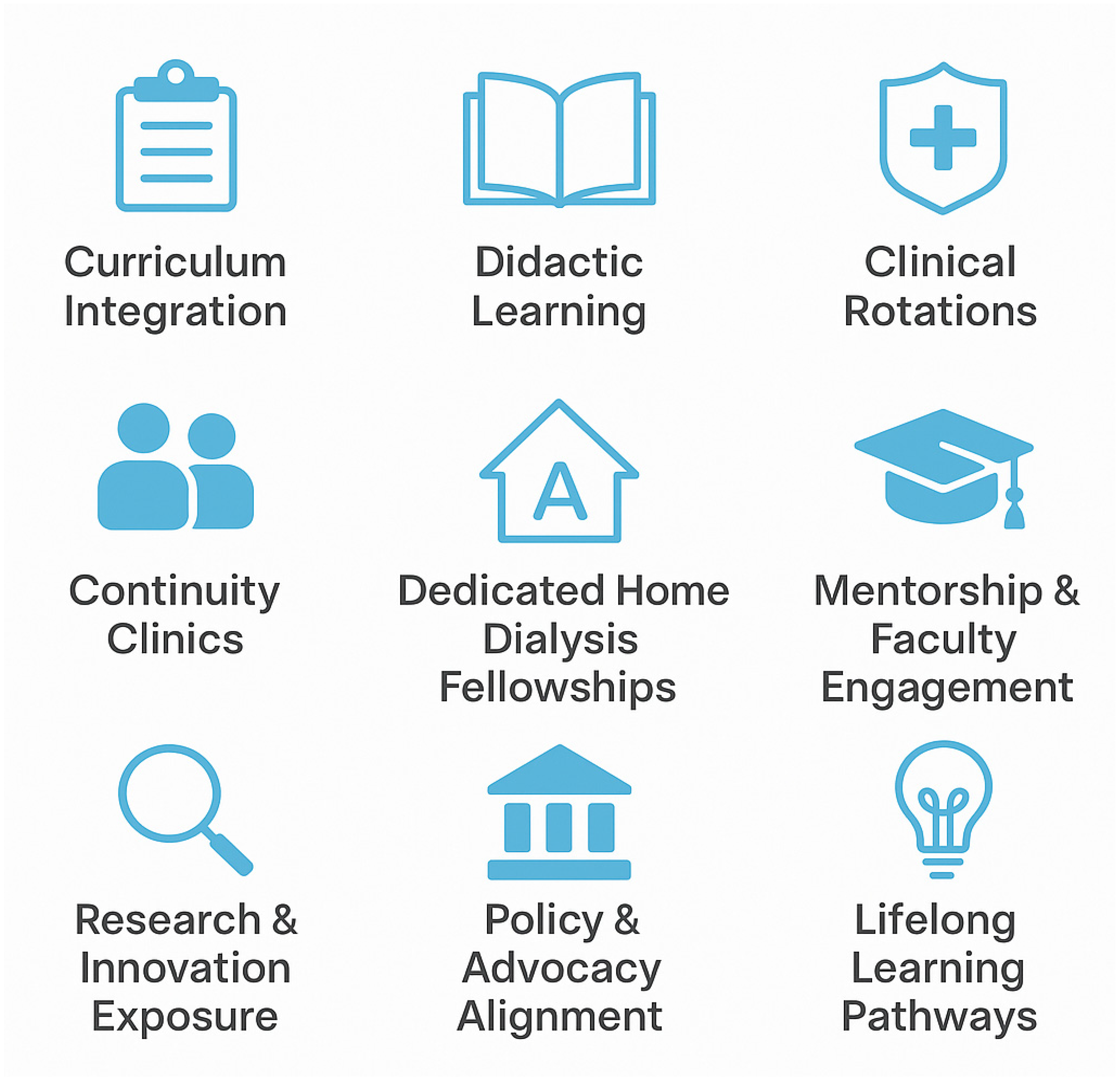
The prevalence of end-stage renal disease has surged significantly in recent decades, with an 88% increase reported in the United States between 2002 and 2022. Peritoneal dialysis and home hemodialysis offer numerous advantages over in-center hemodialysis, including improved quality of life, increased treatment flexibility, and reduced healthcare costs. Despite strong preferences among healthcare professionals and the documented benefits of home-based therapies, utilization remains limited in the U.S. One of the many factors that play a role in the underutilization of home therapies is inadequate training and perceived incompetence among nephrology fellows in initiating and managing home dialysis patients. Here in this article, we highlight the current educational gaps in home dialysis training and ways to overcome the barriers. There is a need for a multifaceted approach that includes home dialysis rotations and continuity clinics; a dedicated one-year Home Dialysis Fellowship; and continued medical education through didactics, symposiums, and conferences. Here we emphasize the need for structured, longitudinal programs that combine didactic learning with hands-on clinical in fellowship trainings and the importance of dedicated one-year fellowships in cultivating future leaders and experts in the field. By enhancing training pathways and expanding fellowship opportunities, nephrology education can better equip physicians to meet the growing demand for home dialysis, ultimately improving patient outcomes and advancing public health objectives.
Keywords: home dialysis fellowship; home dialysis education home dialysis fellowship; home dialysis education