


Predictive Values of Handgrip Strength for Protein-Energy Wasting Among Patients Undergoing Maintenance Hemodialysis: A Systematic Review and Meta-Analysis

 ,
,  , ,
, ,  ,
,  and
and 
Abstract
1. Introduction
2. Materials and Methods
2.1. Study Design and Search Strategy
2.2. Eligibility Criteria
2.3. Screening and Selection
2.4. Quality Appraisal
2.5. Data Extraction
2.6. Quantitative Synthesis
3. Results
3.1. Searching Results
3.2. Study Characteristics
3.3. Quality of the Included Studies
3.4. Predictive Values of HGS for Males
3.5. Predictive Values of HGS for Females
3.6. Publication Bias
4. Discussion
Strength and Limitations
5. Conclusions
Supplementary Materials
Author Contributions
Funding
Institutional Review Board Statement
Informed Consent Statement
Data Availability Statement
Acknowledgments
Conflicts of Interest
Abbreviations
| CKD | Chronic kidney disease |
| ISRNM | International Society of Renal Nutrition and Metabolism |
| MHD | Maintenance hemodialysis |
| MIS | Malnutrition Inflammation Score |
| HGS | Handgrip strength |
| KDOQI | Kidney Disease Outcomes Quality Initiative |
| PEW | Protein-energy wasting |
| PRISMA | Preferred Reporting Items for Systematic Reviews and Meta-Analyses |
| RCT | Randomized controlled trial |
| STARD | Standards for Reporting of Diagnostic Accuracy Studies |
| QUADAS-2 | Quality Assessment of Diagnostic Accuracy Study-2 |
| FP | False positive |
| FN | False negative |
| TP | True positive |
| TN | True negative |
| sROC | Summarized receiver operating characteristic |
| sAUC | Summarized area under the curve |
| GNRI | Geriatric Nutritional Risk Index |
| GLIM | Global Leadership Initiative on Malnutrition |
| UPS | Ubiquitin-proteasome system |
References
- Chen, S.; Ma, X.; Zhou, X.; Wang, Y.; Liang, W.; Zheng, L.; Zang, X.; Mei, X.; Qi, Y.; Jiang, Y. An updated clinical prediction model of protein-energy wasting for hemodialysis patients. Front. Nutr. 2022, 9, 933745. [Google Scholar] [CrossRef] [Scilit] [PubMed]
- Carrero, J.J.; Thomas, F.; Nagy, K.; Arogundade, F.; Avesani, C.M.; Chan, M.; Chmielewski, M.; Cordeiro, A.C.; Espinosa-Cuevas, A.; Fiaccadori, E. Global prevalence of protein-energy wasting in kidney disease: A meta-analysis of contemporary observational studies from the international society of renal nutrition and metabolism. J. Ren. Nutr. 2018, 28, 380–392. [Google Scholar] [CrossRef] [Scilit] [PubMed]
- Gracia-Iguacel, C.; González-Parra, E.; Mahillo, I.; Ortiz, A. Criteria for classification of protein–energy wasting in dialysis patients: Impact on prevalence. Br. J. Nutr. 2019, 121, 1271–1278. [Google Scholar] [CrossRef] [Scilit]
- Turkmen, K.; Ozer, H.; Kusztal, M. The relationship of epicardial adipose tissue and cardiovascular disease in chronic kidney disease and hemodialysis patients. J. Clin. Med. 2022, 11, 1308. [Google Scholar] [CrossRef] [Scilit] [PubMed]
- MacLaughlin, H.L.; Friedman, A.N.; Ikizler, T.A. Nutrition in kidney disease: Core curriculum 2022. Am. J. Kidney Dis. 2022, 79, 437–449. [Google Scholar] [CrossRef] [Scilit]
- Iseki, K. Nutrition and quality of life in chronic kidney disease patients: A practical approach for salt restriction. Kidney Res. Clin. Pract. 2022, 41, 657. [Google Scholar] [CrossRef] [Scilit]
- Filipska, A.; Bohdan, B.; Wieczorek, P.P.; Hudz, N. Chronic kidney disease and dialysis therapy: Incidence and prevalence in the world. Pharmacia 2021, 68, 463–470. [Google Scholar] [CrossRef] [Scilit]
- Bailey, A.; Brody, R.; Sackey, J.; Parrott, J.S.; Peters, E.; Byham-Gray, L. Current methods for developing predictive energy equations in maintenance dialysis are imprecise. Ann. Med. 2022, 54, 909–920. [Google Scholar] [CrossRef] [Scilit]
- Cohen-Cesla, T.; Azar, A.; Hamad, R.A.; Shapiro, G.; Stav, K.; Efrati, S.; Beberashvili, I. Usual nutritional scores have acceptable sensitivity and specificity for diagnosing malnutrition compared to GLIM criteria in hemodialysis patients. Nutr. Res. 2021, 92, 129–138. [Google Scholar] [CrossRef] [Scilit] [PubMed]
- García-Almeida, J.M.; García-García, C.; Ballesteros-Pomar, M.D.; Olveira, G.; Lopez-Gomez, J.J.; Bellido, V.; Bretón Lesmes, I.; Burgos, R.; Sanz-Paris, A.; Matia-Martin, P. Expert consensus on morphofunctional assessment in disease-related malnutrition. Grade review and Delphi study. Nutrients 2023, 15, 612. [Google Scholar] [CrossRef] [Scilit]
- Chrástecká, M.; Blanař, V.; Pospíchal, J. Risk of malnutrition assessment in hospitalised adults: A scoping review of existing instruments. J. Clin. Nurs. 2023, 32, 3397–3411. [Google Scholar] [CrossRef] [Scilit] [PubMed]
- Patoc, G.R., Jr.; Fajutag, J.D.; Blanco, J.L.J.; Villanueva, A.R.T.; Briones, M.V.A. Diagnostic value of the handgrip strength in detecting protein-energy wasting among patients on maintenance hemodialysis at National Kidney and Transplant Institute, Philippines. Clin. Nutr. Open Sci. 2024, 55, 48–56. [Google Scholar] [CrossRef] [Scilit]
- Ikizler, T.A.; Cuppari, L. The 2020 updated KDOQI clinical practice guidelines for nutrition in chronic kidney disease. Blood Purif. 2021, 50, 667–671. [Google Scholar] [CrossRef] [Scilit]
- Amparo, F.C.; Cordeiro, A.C.; Carrero, J.J.; Cuppari, L.; Lindholm, B.; Amodeo, C.; Kamimura, M.A. Malnutrition-inflammation score is associated with handgrip strength in nondialysis-dependent chronic kidney disease patients. J. Ren. Nutr. 2013, 23, 283–287. [Google Scholar] [CrossRef] [Scilit] [PubMed]
- Hasheminejad, N.; Namdari, M.; Mahmoodi, M.R.; Bahrampour, A.; Azmandian, J. Association of handgrip strength with malnutrition-inflammation score as an assessment of nutritional status in hemodialysis patients. Iran. J. Kidney Dis. 2016, 10, 30. [Google Scholar]
- Marini, A.C.; Pimentel, G.D. Is body weight or muscle strength correlated with the Malnutrition Inflammation Score (MIS)? A cross-sectional study in hemodialysis patients. Clin. Nutr. ESPEN 2019, 33, 276–278. [Google Scholar] [CrossRef] [Scilit]
- Page, M.J.; Moher, D.; Bossuyt, P.M.; Boutron, I.; Hoffmann, T.C.; Mulrow, C.D.; Shamseer, L.; Tetzlaff, J.M.; Akl, E.A.; Brennan, S.E. PRISMA 2020 explanation and elaboration: Updated guidance and exemplars for reporting systematic reviews. BMJ 2021, 372, 160. [Google Scholar] [CrossRef]
- Huang, Q.-X.; Huang, X.-W. QUADAS-2 tool for quality assessment in diagnostic meta-analysis. Ann. Palliat. Med. 2022, 11, 1844845. [Google Scholar] [CrossRef] [Scilit]
- Iqhrammullah, M.; Yusnaini, R.; Amirah, S.; Mulya, I.C.; Tsurayya, G.; Naufal, M.A.; Santosa, S.F.; Harapan, H.; Zulkifli, B. Effect of tuberculosis-specific antigen stimulation on the diagnostic accuracy of interferon-γ inducible protein-10 in distinguishing active and latent tuberculosis infection: A meta-analysis. Microbes Infect. 2024, 26, 105396. [Google Scholar] [CrossRef] [Scilit]
- Abdulan, I.M.; Ștefăniu, R.; Maștaleru, A.; Lefter, N.; Alexa, I.D.; Mocanu, V. Cut-off values of anthropometric measurements, handgrip strength, physical activity and geriatric scores for the malnutrition risk among older patients with chronic kidney disease. Med. Surg. J. 2020, 124, 19–26. [Google Scholar]
- Lonardo, M.S.; Cacciapuoti, N.; Chiurazzi, M.; Di Lauro, M.; Guida, B.; Damiano, S.; Cataldi, M. Combined use of handgrip strength and hemoglobin as markers of undernutrition in patients with stage 3–5 chronic kidney disease. Nutr. Metab. Cardvasc. Dis. 2023, 33, 2169–2178. [Google Scholar] [CrossRef] [Scilit] [PubMed]
- Vogt, B.P.; Borges, M.C.C.; de Goés, C.R.; Caramori, J.C.T. Handgrip strength is an independent predictor of all-cause mortality in maintenance dialysis patients. Clin. Nutr. 2016, 35, 1429–1433. [Google Scholar] [CrossRef] [Scilit]
- Bakkal, H.; Dizdar, O.S.; Erdem, S.; Kulakoğlu, S.; Akcakaya, B.; Katırcılar, Y.; Uludag, K. The relationship between hand grip strength and nutritional status determined by malnutrition inflammation score and biochemical parameters in hemodialysis patients. J. Ren. Nutr. 2020, 30, 548–555. [Google Scholar] [CrossRef] [Scilit]
- Sostisso, C.F.; Olikszechen, M.; Sato, M.N.; Oliveira, M.d.A.S.C.; Karam, S. Handgrip strength as an instrument for assessing the risk of malnutrition and inflammation in hemodialysis patients. Braz. J. Nephrol. 2020, 42, 429–436. [Google Scholar] [CrossRef] [Scilit]
- Silva, L.F.; Matos, C.M.; Lopes, G.B.; Martins, M.T.S.; Martins, M.S.; Arias, L.U.; Pisoni, R.L.; Lopes, A.A. Handgrip strength as a simple indicator of possible malnutrition and inflammation in men and women on maintenance hemodialysis. J. Ren. Nutr. 2011, 21, 235–245. [Google Scholar] [CrossRef] [Scilit] [PubMed]
- Garcia, M.F.; Wazlawik, E.; Moreno, Y.M.F.; Führ, L.M.; González-Chica, D.A. Diagnostic accuracy of handgrip strength in the assessment of malnutrition in hemodialyzed patients. e-SPEN J. 2013, 8, e181–e186. [Google Scholar] [CrossRef] [Scilit]
- Duta, T.F.; Zulfa, P.O.; Alina, M.; Henira, N.; Tsurayya, G.; Fakri, F.; Acharya, Y. Efficacy of acetazolamide and loop diuretics combinatorial therapy in congestive heart failure: A meta-analysis. Narra X 2024, 2, e124. [Google Scholar] [CrossRef] [Scilit]
- Song, F.; Khan, K.S.; Dinnes, J.; Sutton, A.J. Asymmetric funnel plots and publication bias in meta-analyses of diagnostic accuracy. Int. J. Epidemiol. 2002, 31, 88–95. [Google Scholar] [CrossRef] [Scilit]
- Lim, C.-K.-M.; Lim, J.-H.; Ibrahim, I.; Chan, Y.-M.; Zakaria, N.F.; Yahya, R.; Daud, Z.A.M. Bioelectrical impedance analysis derived-phase angle as a pragmatic tool to detect protein energy wasting among multi-ethnic hemodialysis patients. Diagnostics 2021, 11, 1745. [Google Scholar] [CrossRef] [Scilit]
- Mitch, W.E.; Goldberg, A.L. Mechanisms of muscle wasting—The role of the ubiquitin–proteasome pathway. N. Engl. J. Med. 1996, 335, 1897–1905. [Google Scholar] [CrossRef] [Scilit]
- Chan, J.; Lu, Y.-C.; Yao, M.M.-S.; Kosik, R.O. Correlation between hand grip strength and regional muscle mass in older Asian adults: An observational study. BMC Geriatr. 2022, 22, 206. [Google Scholar] [CrossRef] [Scilit] [PubMed]
- Vanden Wyngaert, K.; Celie, B.; Calders, P.; Eloot, S.; Holvoet, E.; Van Biesen, W.; Van Craenenbroeck, A.H. Markers of protein-energy wasting and physical performance in haemodialysis patients: A cross-sectional study. PLoS ONE 2020, 15, e0236816. [Google Scholar] [CrossRef] [Scilit] [PubMed]
- Chan, W. Chronic kidney disease and nutrition support. Nutr. Clin. Pract. 2021, 36, 312–330. [Google Scholar] [CrossRef] [Scilit]
- Ko, G.-J.; Kalantar-Zadeh, K. How important is dietary management in chronic kidney disease progression? A role for low protein diets. Korean J. Intern. Med. 2021, 36, 795. [Google Scholar] [CrossRef] [Scilit]
- Norman, K.; Stobäus, N.; Gonzalez, M.C.; Schulzke, J.-D.; Pirlich, M. Hand grip strength: Outcome predictor and marker of nutritional status. Clin. Nutr. 2011, 30, 135–142. [Google Scholar] [CrossRef] [Scilit]
- Kaegi-Braun, N.; Tribolet, P.; Baumgartner, A.; Fehr, R.; Baechli, V.; Geiser, M.; Deiss, M.; Gomes, F.; Kutz, A.; Hoess, C.; et al. Value of handgrip strength to predict clinical outcomes and therapeutic response in malnourished medical inpatients: Secondary analysis of a randomized controlled trial. Am. J. Clin. Nutr. 2021, 114, 731–740. [Google Scholar] [CrossRef] [Scilit] [PubMed]
- Fountotos, R.; Munir, H.; Goldfarb, M.; Lauck, S.; Kim, D.; Perrault, L.; Arora, R.; Moss, E.; Rudski, L.G.; Bendayan, M. Prognostic value of handgrip strength in older adults undergoing cardiac surgery. Can. J. Cardiol. 2021, 37, 1760–1766. [Google Scholar] [CrossRef] [Scilit]
- Parahiba, S.M.; Spillere, S.R.; Zuchinali, P.; Padilha, G.d.R.; Duarte, M.B.; da Silveira, I.V.; Dias, L.H.; Knobloch, I.d.S.; Perry, I.S.; Souza, G.C. Handgrip strength in patients with acute decompensated heart failure: Accuracy as a predictor of malnutrition and prognostic value. Nutrition 2021, 91–92, 111352. [Google Scholar] [CrossRef] [Scilit]
- Nogueira, Á.; Álvarez, G.; Barril, G. Impact of the Nutrition–Inflammation Status on the Functionality of Patients with Chronic Kidney Disease. Nutrients 2022, 14, 4745. [Google Scholar] [CrossRef] [Scilit]
- Ikizler, T.A.; Burrowes, J.D.; Byham-Gray, L.D.; Campbell, K.L.; Carrero, J.-J.; Chan, W.; Fouque, D.; Friedman, A.N.; Ghaddar, S.; Goldstein-Fuchs, D.J. KDOQI clinical practice guideline for nutrition in CKD: 2020 update. Am. J. Kidney Dis. 2020, 76, S1–S107. [Google Scholar] [CrossRef] [Scilit]
- Sahathevan, S.; Khor, B.-H.; Ng, H.-M.; Abdul Gafor, A.H.; Mat Daud, Z.A.; Mafra, D.; Karupaiah, T. Understanding development of malnutrition in hemodialysis patients: A narrative review. Nutrients 2020, 12, 3147. [Google Scholar] [CrossRef] [Scilit] [PubMed]
- Panagidi, M.; Papazoglou, A.S.; Moysidis, D.V.; Vlachopoulou, E.; Papadakis, M.; Kouidi, E.; Galanos, A.; Tagarakis, G.; Anastasiadis, K. Prognostic value of combined preoperative phase angle and handgrip strength in cardiac surgery. J. Cardiothorac. Surg. 2022, 17, 227. [Google Scholar] [CrossRef] [Scilit] [PubMed]
- Page, M.J.; McKenzie, J.E.; Bossuyt, P.M.; Boutron, I.; Hoffmann, T.C.; Mulrow, C.D.; Shamseer, L.; Tetzlaff, J.M.; Akl, E.A.; Brennan, S.E.; et al. The PRISMA 2020 statement: An updated guideline for reporting systematic reviews. BMJ 2021, 372, n71. [Google Scholar] [CrossRef] [Scilit] [PubMed]
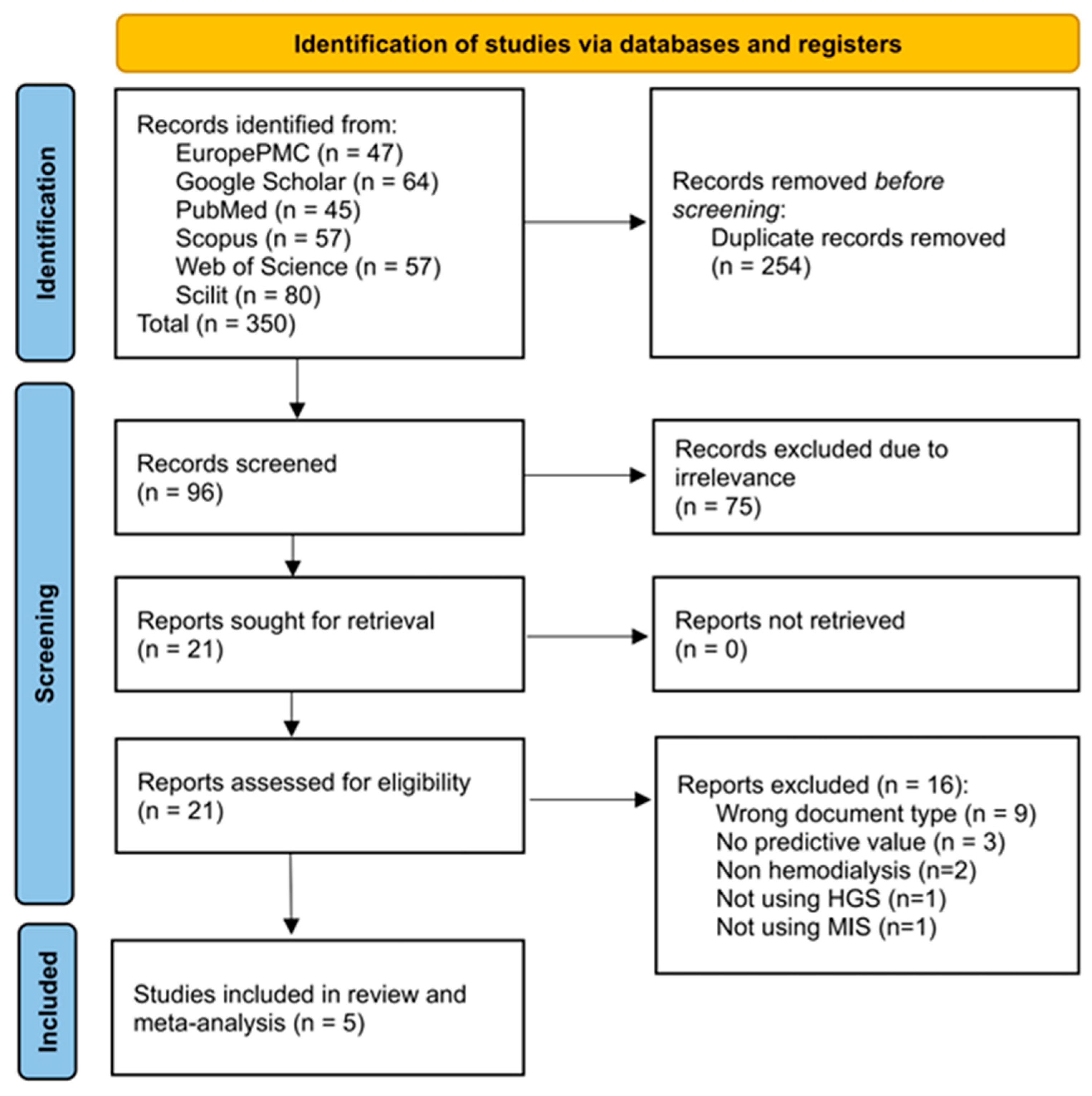
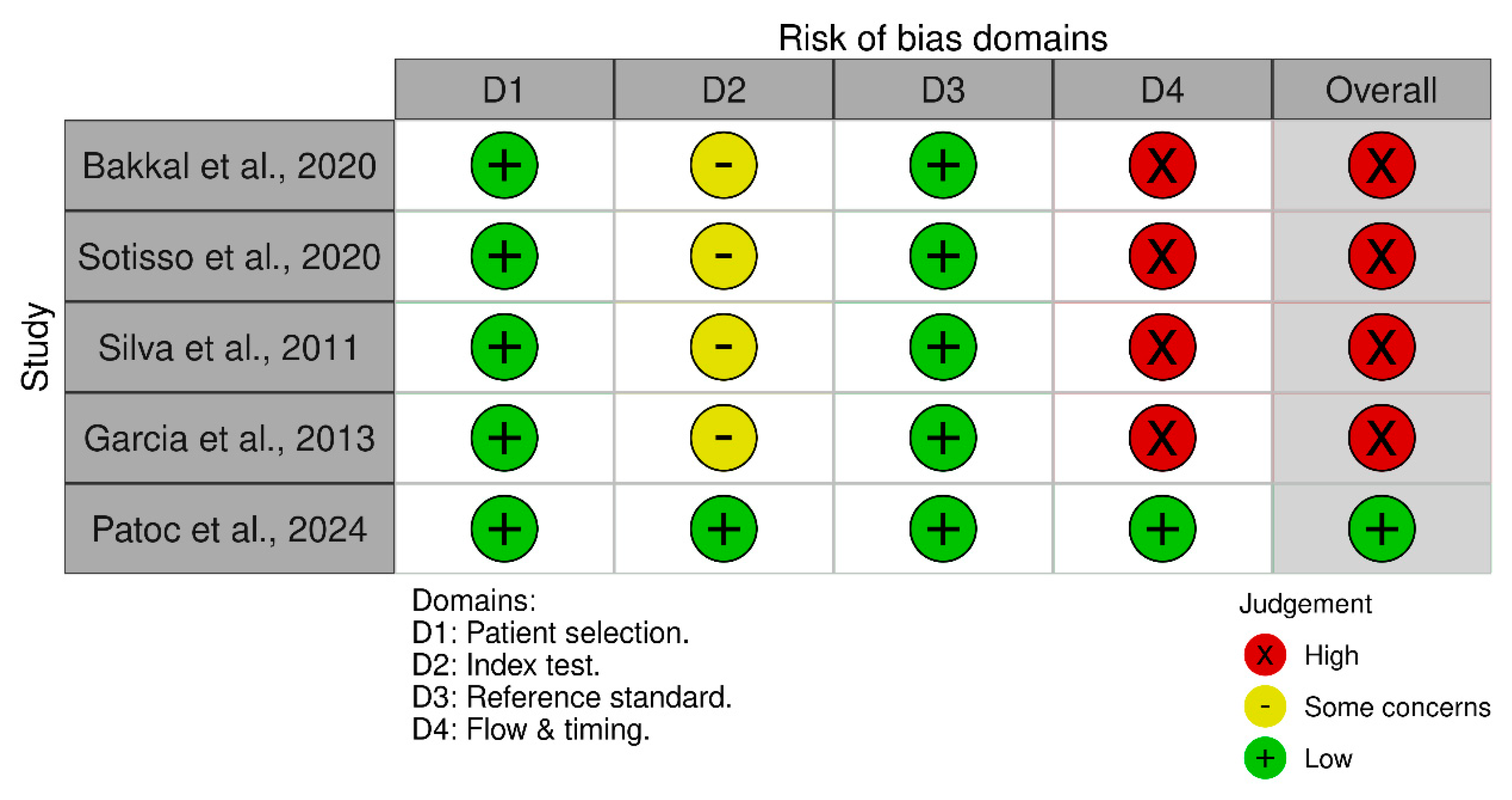
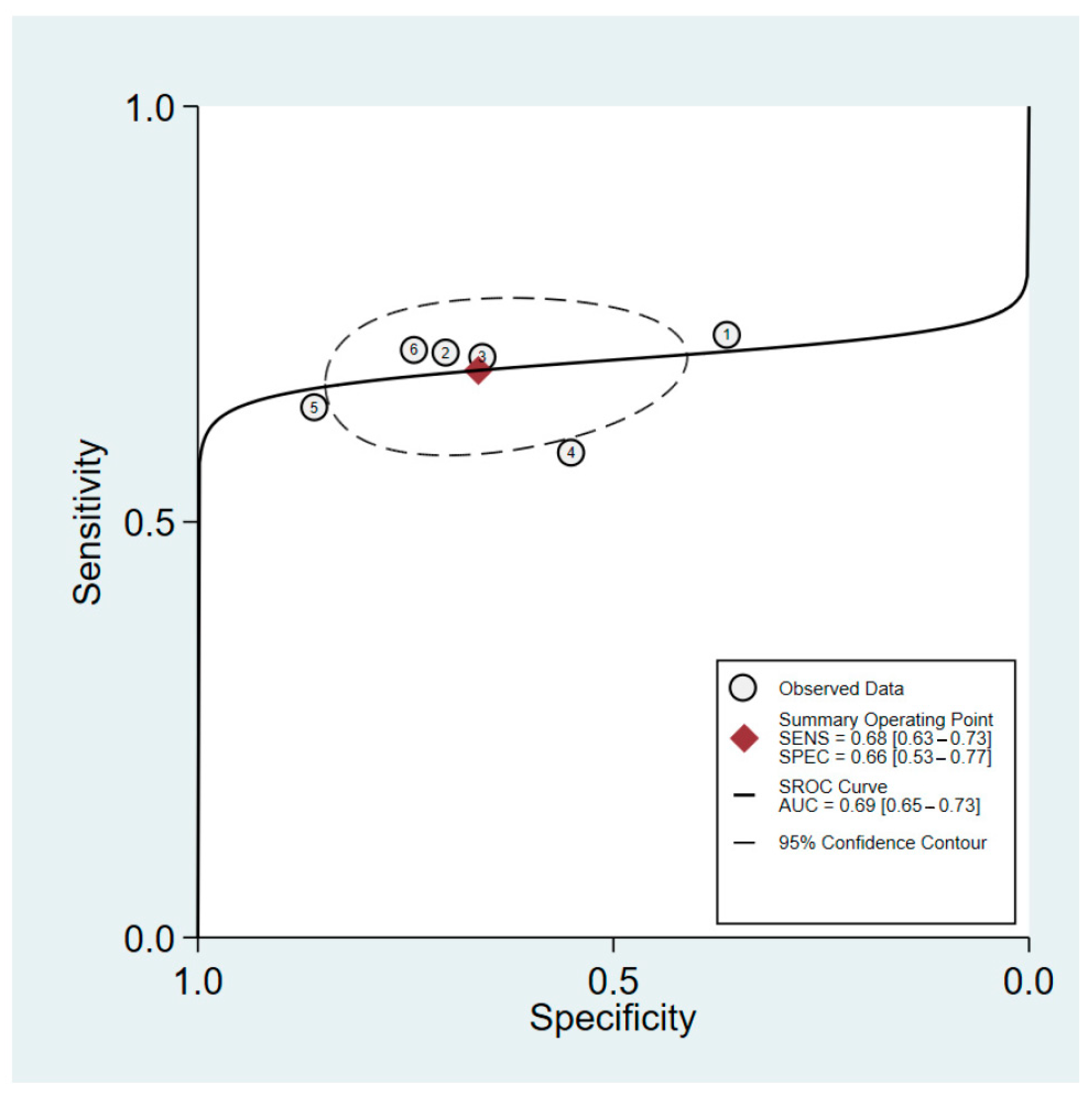
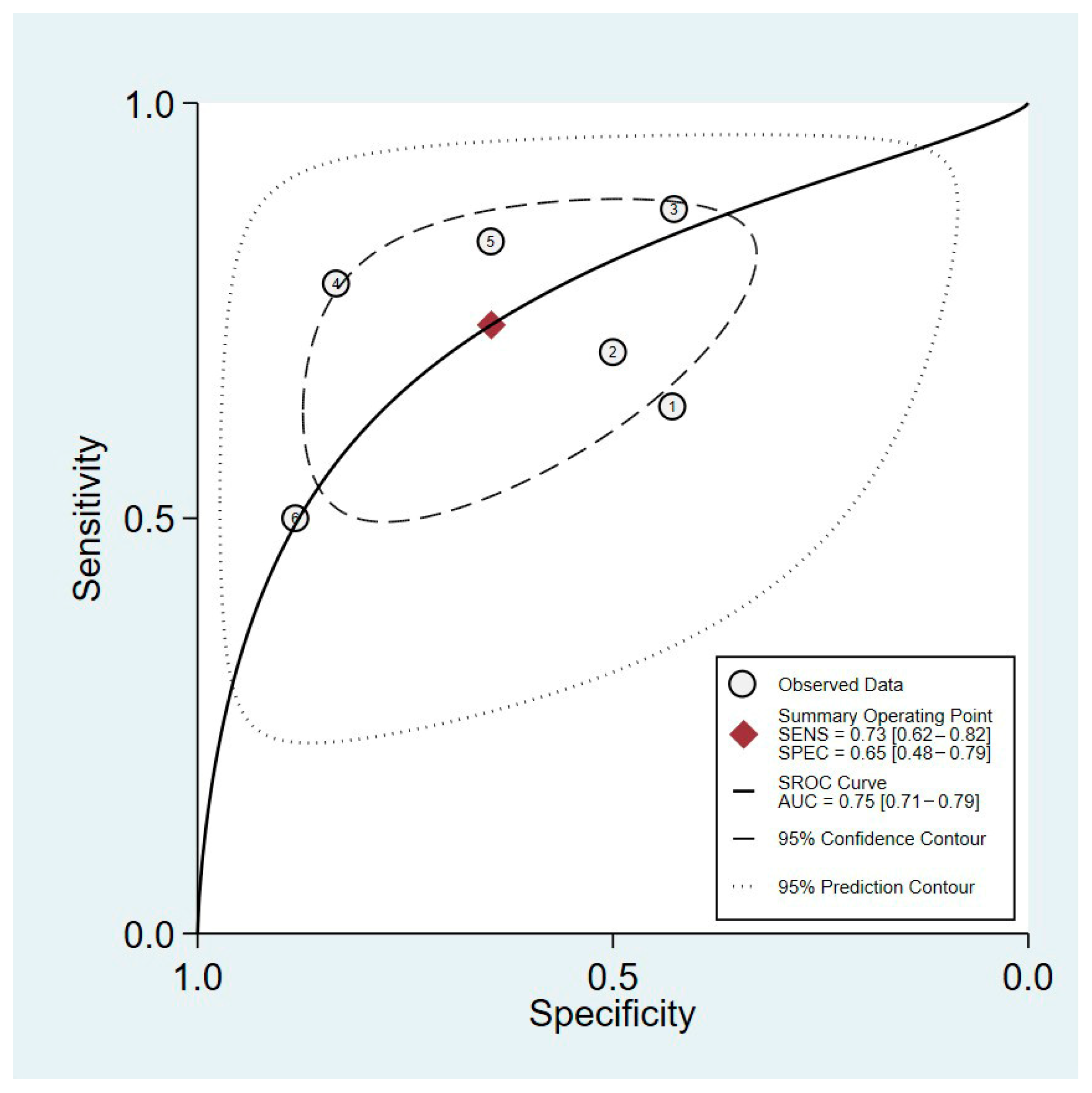

| Database | Search Terms |
|---|---|
| Scopus | TITLE((handgrip OR “grip strength” OR “hand strength” OR “muscle strength dynamometer” OR “dynamometer” OR “sphygmomanometer”) AND (“Malnutrition-Inflammation Score” OR “Protein-Energy Wasting” OR malnutrition OR undernutrition OR wasting OR underweight OR overweight)) |
| PubMed | (handgrip [Title] OR “grip strength” [Title] OR “hand strength” [Title] OR “muscle strength dynamometer”[Title] OR “dynamometer” [Title] OR “sphygmomanometer” [Title]) AND (malnutrition [Title] OR undernutrition [Title] OR wasting [Title] OR underweight [Title] OR overweight [Title] OR “Malnutrition-Inflammation Score” [Title] OR “Protein-Energy Wasting” [Title]) |
| Google Scholar | allintitle: malnutrition OR undernutrition OR wasting OR underweight OR overweight “handgrip” |
| EuropePMC | TITLE:((handgrip OR (grip AND strength) OR (hand AND strength) OR (muscle AND strength AND dynamometer) OR dynamometer OR sphygmomanometer) AND ((protein AND energy AND wasting) OR (Malnutrition AND Inflammation AND Score) OR malnutrition OR undernutrition OR wasting OR underweight OR overweight)) |
| Scilit | TITLE:((handgrip OR (grip AND strength) OR (hand AND strength) OR (muscle AND strength AND dynamometer) OR dynamometer OR sphygmomanometer) AND ((protein AND energy AND wasting) OR (Malnutrition AND Inflammation AND Score) OR malnutrition OR undernutrition OR wasting OR underweight OR overweight)) |
| Web of Science | TITLE((handgrip OR “grip strength” OR “hand strength” OR “muscle strength dynamometer” OR “dynamometer” OR “sphygmomanometer”) AND (“Malnutrition-Inflammation Score” OR “Protein-Energy Wasting” OR malnutrition OR undernutrition OR wasting OR underweight OR overweight)) |
| Study | Country | Study Design | Patients’ Characteristics | Dialysis Regimen | Cutoff Determination Method | Time of Measurement | Predictive Performance | ||||||
|---|---|---|---|---|---|---|---|---|---|---|---|---|---|
| M/F, n | Mean Age (years) | Mean BMI (kg/m2) | Freq. (Per Week) | Median Duration (Months) | Sex | Cut-Off (kg) | Sensitivity (%) | Specificity (%) | |||||
| Bakkal et al., 2020 [23] | Turkey | Cross-sectional | 73/59 | 56.90 | 24.45 | 3 times | 51.4 | Maximizing sensitivity and specificity | Pre-HD | M | 29.1 | 72.5 | 63.6 |
| F | 20.1 | 63.5 | 57.1 | ||||||||||
| Sostisso et al., 2020 [24] | Brazil | Cross-sectional | 132/106 | 59.00 | 24.94 | 3 times | 25 | Maximizing sensitivity and specificity | Post-HD | M | 23.5 | 70.0 | 70.0 |
| F | 14.5 | 70.0 | 50.0 | ||||||||||
| Silva et al., 2011 [25] | Brazil | Cross-sectional | 274/162 | 47.33 | 22.76 | 3 times | 22 | Maximizing sensitivity and specificity | Pre-HD | M | 28.3 | 70.0 | 66.0 |
| F | 23.4 | 87.0 | 43.0 | ||||||||||
| Garcia et al., 2013 [26] | Brazil | Cross-sectional | 85/53 | 55.36 | 24.90 | 3 times | 36 | Maximizing sensitivity and specificity | Post-HD | M | 28.5 | 59.6 | 55.3 |
| F | 18.0 | 79.3 | 81.8 | ||||||||||
| Patoc et al., 2024 [12] | Philippines | Cross-sectional | 108/35 | 52.00 | NR | 3 times (81%) 2 times (19%) | 24 | Closest-to-(0, 1) criterion | Pre-HD | M | 16.3 | 63.8 | 86.0 |
| F | 18.6 | 83.3 | 64.7 | ||||||||||
| Post-HD | M | 17.9 | 70.7 | 74.0 | |||||||||
| F | 12.0 | 50.0 | 88.2 | ||||||||||
Disclaimer/Publisher’s Note: The statements, opinions and data contained in all publications are solely those of the individual author(s) and contributor(s) and not of MDPI and/or the editor(s). MDPI and/or the editor(s) disclaim responsibility for any injury to people or property resulting from any ideas, methods, instructions or products referred to in the content. |
© 2025 by the authors. Licensee MDPI, Basel, Switzerland. This article is an open access article distributed under the terms and conditions of the Creative Commons Attribution (CC BY) license (https://creativecommons.org/licenses/by/4.0/).
Share and Cite
Ghifari, M.H.; Al-Gunaid, S.T.; Rampengan, D.D.C.H.; Wira, J.F.; Syukri, M.; Yufika, A.; Habiburrahman, M.; Iqhrammullah, M. Predictive Values of Handgrip Strength for Protein-Energy Wasting Among Patients Undergoing Maintenance Hemodialysis: A Systematic Review and Meta-Analysis. Kidney Dial. 2025, 5, 16. https://doi.org/10.3390/kidneydial5020016
Ghifari MH, Al-Gunaid ST, Rampengan DDCH, Wira JF, Syukri M, Yufika A, Habiburrahman M, Iqhrammullah M. Predictive Values of Handgrip Strength for Protein-Energy Wasting Among Patients Undergoing Maintenance Hemodialysis: A Systematic Review and Meta-Analysis. Kidney and Dialysis. 2025; 5(2):16. https://doi.org/10.3390/kidneydial5020016
Chicago/Turabian StyleGhifari, Muhammad Haneef, Seba Talat Al-Gunaid, Derren David Christian Homenta Rampengan, Juan Fransiscus Wira, Maimun Syukri, Amanda Yufika, Muhammad Habiburrahman, and Muhammad Iqhrammullah. 2025. "Predictive Values of Handgrip Strength for Protein-Energy Wasting Among Patients Undergoing Maintenance Hemodialysis: A Systematic Review and Meta-Analysis" Kidney and Dialysis 5, no. 2: 16. https://doi.org/10.3390/kidneydial5020016
APA StyleGhifari, M. H., Al-Gunaid, S. T., Rampengan, D. D. C. H., Wira, J. F., Syukri, M., Yufika, A., Habiburrahman, M., & Iqhrammullah, M. (2025). Predictive Values of Handgrip Strength for Protein-Energy Wasting Among Patients Undergoing Maintenance Hemodialysis: A Systematic Review and Meta-Analysis. Kidney and Dialysis, 5(2), 16. https://doi.org/10.3390/kidneydial5020016

