

Article

High Levels of IgG Antibodies Against the Spike Antigen of SARS-CoV-2 Among Health Care Workers in Kosovo

1
National Institute of Public Health of Kosovo, 10000 Prishtina, Kosovo
2
Faculty of Medicine, University of Prishtina “Hasan Prishtina”, 10000 Prishtina, Kosovo
3
Department of Biomedical Sciences, College of Integrated Health Sciences, University at Albany, Albany, NY 12222, USA
4
Wadsworth Center, New York State Department of Health, Albany, NY 12222, USA
5
Alma Mater Europaea Campus College “REZONANCA”, 10000 Prishtina, Kosovo
6
Medical Faculty, University of Rijeka, 51000 Rijeka, Croatia
*
Author to whom correspondence should be addressed.
COVID 2026, 6(7), 108; https://doi.org/10.3390/covid6070108 (registering DOI)
Submission received: 26 May 2026 / Revised: 15 June 2026 / Accepted: 18 June 2026 / Published: 25 June 2026
(This article belongs to the Section COVID Public Health and Epidemiology)

Abstract

Introduction: From 12 March 2020, when the first cases of COVID-19 were registered in Kosovo, to 9 March 2023, there were a total of 273,310 reported cases of COVID-19 and 3211 reported deaths in Kosovo (CFR: 1.17%). Health care workers (HCWs) have been at a higher risk of contracting SARS-CoV-2 infection; nevertheless, data on seroprevalence of SARS-CoV-2 antibodies among HCWs in Kosovo are very limited. Methodology: A cross-sectional serology study with 1654 healthcare professionals throughout Kosovo was conducted to determine the presence of antibodies against the spike antigen of SARS-CoV-2. In addition, a structured questionnaire was administered to study participants to obtain basic demographic data, and information on prior infection and COVID-19 vaccination status. Results: Antibodies against the spike antigen of SARS-CoV-2 were detected in almost all (99.8%) HCWs that participated in the study. The average antibody titer was 8030.8 AU/mL in women and 9533.7 AU/mL in men. Sixty-four percent of HCWs in this study reported prior infection with SARS-CoV-2, 6% of whom were hospitalized. Over 98% of study participants had received SARS-CoV-2 vaccination. Conclusions: Almost all HCWs participating in the study had antibodies against the spike antigen of SARS-CoV-2. This is most probably the result of the high COVID-19 vaccination rate in Kosovo as well as infection with SARS-CoV-2.

1. Introduction

Coronavirus disease 2019 (COVID-19) emerged as a new disease at the end of 2019 in Wuhan, China [1]. As of 25 March 2023 (the time-period of completion of the study), the global cumulative incidence of COVID-19 had reached 761,263,520 reported cases and 6,900,636 associated deaths, indicating a case-fatality ratio (CFR) of 0.91% [2]. From 12 March 2020, when the first cases of COVID-19 were registered in Kosovo, to 9 March 2023, there were a total number of 273,310 reported cases of COVID-19 and 3211 reported deaths in Kosovo (CFR: 1.17%) [3,4].
Infection with SARS-CoV-2 induces diverse humoral and cellular immune responses [5,6]. Humoral immunity includes antibodies of several immunoglobulin isotypes targeting SARS-CoV-2 proteins, most notably spike (S) and nucleocapsid (N). Antibodies could be from a recent infection, due to immunological memory of older infections or vaccination. Detection of these antibodies during seroprevalence studies provides good estimates of the infected proportion of a population [7]. Anti-SARS-CoV-2 IgG antibody level is one of the key indicators for population-level immunity. Neutralizing antibodies bind to viral surface proteins, blocking the virus from interacting with human cell receptors, thereby inhibiting infection and transmission [8].
Health care workers (HCWs) have been at a higher risk of contracting SARS-CoV-2 infection when compared to the general population because of their frequent exposure to COVID-19 patients in healthcare facilities and hospitals. In this regard, data on seroprevalence of SARS-CoV-2 antibodies among HCWs in Kosovo are very limited. In this study, our aim was to determine the presence of antibodies to the spike antigen [spike receptor-binding domain (RBD)] of SARS-CoV-2 among HCWs working at the public health institutions of Kosovo as one of the indicators of immune status against infection with SARS-CoV-2.

2. Materials and Methods

This was a cross-sectional cohort study implemented among HCWs of three health care levels of the Kosovo public health sector, from whom blood samples were collected for detecting anti-spike IgG antibodies against SARS-CoV-2. The study included 1654 healthcare professionals from all seven regions of Kosovo, including Prishtina, Mitrovica, Peja, Prizren, Ferizaj, Gjilan and Gjakova. The study was conducted during the period October 2022 and March 2023 with prior ethical approval from the Ethical Board of the Kosovo Chamber of Doctors (approval no. 120/2022, date 15 August 2022). At the beginning of the study, participants were informed of the study title, purpose, and protection of personal information. They were also notified that their participation was voluntary and that they could withdraw from the study at any time. All participants provided informed consent prior to participating in the study. Blood was collected by trained and experienced staff of the National Institute of Public Health (NIPH) of Kosovo and the Regional Public Health Centres. Blood samples were tested at the Department of Microbiology, NIPH, Prishtina, Kosovo, with the serological test SARS-CoV-2 IgG II Quant, performed on the Abbott Architect i2000, with chemiluminescent microparticle immunoassay (CMIA). The Abbott Architect SARS-CoV-2 IgG II assay, run under an emergency use authorization from the United States (US) Food and Drug Administration (FDA), is a quantitative test designed to detect IgG antibodies to the spike protein of SARS-CoV-2 in serum and plasma from individuals with an adaptive immune response to SARS-CoV-2, indicating recent or prior infection. Results are reported as AU/mL (arbitrary units per millilitre). Reactive (positive ≥ 50.0 AU/mL) results may be due to immunization or past or present infection with SARS-CoV-2. Testing was conducted based on the manufacturer’s instructions. In addition, a questionnaire was administered to study participants for completion, which included basic demographic data, any prior COVID-19 infection and COVID-19 vaccination status.
Statistical analyses: 
Data were analyzed with the statistical package IBM SPSS 22.0 for Windows. The presence of anti-spike antibodies to SARS-CoV-2 among HCWs in Kosovo, with prevalence and confidence intervals, with 95% reliability (CI 95%), was determined. The prevalence of SARS-CoV-2 infection according to different age groups, gender and specialty of HCWs is also presented. Statistical analysis included Chi-square test (X2 test), Fisher’s exact test and multiple regression analysis. A p-value of <0.05 was considered significant.

3. Results

The study included 1654 HCWs at all three levels of the Kosovo health system, of which 1306 (79.0%) were female. Most of the HCW study participants were in the age groups 40–49 (30.6%) and 50–59 (30.2%). The majority of HCWs were from primary health care institutions, in fact, family medicine centres (52.2%), followed by staff of regional general hospitals (22.9%) and the University Clinical Centre of Kosovo (UCCK) in Prishtina (13%). The study included healthcare professionals from all seven regions of Kosovo, Prishtina, Mitrovica, Peja, Prizren, Ferizaj, Gjilan and Gjakova, where most of the study participants were from health care institutions of the Prishtina region (34.6%), which is also the largest region of Kosovo (Table 1).
The study revealed that 1651 (99.8%) of HCWs had antibodies to spike SARS-CoV-2, and only three HCWs (0.2%) did not (Table 2).
The average antibody titer was 8030.8 AU/mL in women and 9533.7 AU/mL in men. A higher number of study participants were female, but the male participants had a higher average antibody titer (t = 3.0786; p = 0.002) (Table 3). Titers of antibodies against the anti-spike protein of SARS-CoV-2 among HCWs were highest within the age group 60–65 years (10,449.0 AU/mL; F = 15.24879; p < 0.001), followed by the age group 50–59 years (9779.8 AU/mL). Titers of anti-spike SARS-CoV-2 antibodies were highest among HCWs of UCCK and other health institutions compared to staff of regional general hospitals and family medicine centres (Table 3).
The vast majority of HCWs had been vaccinated against SARS-CoV-2 (98.2%) and those vaccinated had significantly higher titers of antibodies compared to those who were not vaccinated (t = 3.281; p = 0.001). The majority of HCW in Kosovo had been vaccinated with the Pfizer–BioNTech COVID-19 vaccine (55.3%), while those who had been vaccinated with both vaccines (19.6%) administered in Kosovo, AstraZeneca and Pfizer–BioNTech COVID-19, had the highest titers of antibodies (F = 15.5716; p < 0.001) (Table 3). According to the analyzed data regarding the number of vaccine doses received by HCWs, the highest percentage were vaccinated with two doses (69%), while a small percentage (0.12%) were vaccinated with four doses. The average antibody titer was significantly higher amongst those who received greater than three doses of vaccine (Table 3).
Most (63.9%) of HCW reported infection with SARS-CoV-2, while the remainder reported either that they had not been infected (27.0%) or that they did not know whether they had been infected (9.1%). Those HCWs who reported that they had been infected with SARS-CoV-2 had higher titers of anti-spike antibodies compared to HCWs who reported that they had not been infected or that they did not know if they had been infected with SARS-CoV-2 (F = 9.43; p < 0.001) (Table 3). Almost 2/3 of HCWs participating in the study reported that they had been infected once with SARS-CoV-2, while almost 1/3 reported that they had been infected twice. A small percentage (3.5%) reported that they had been infected with SARS-CoV-2 three or more times. There was no significant difference in antibody titers in relation to the number of infections with SARS-CoV-2 (Table 3).
The HCW reported being infected with SARS-CoV-2 and vaccinated showed higher IgG antibody titers than vaccinated individuals without a prior infection. The median IgG level in the vaccinated-only group was 4724 AU/mL (IQR 2581, 9218). Meanwhile, participants who were both vaccinated and previously infected had a higher median level of IgG antibody titer of 6165 AU/mL (IQR 3261, 11,373). Similarly, the geometric mean titer (GMT) was much higher in the previously infected group at 6054 AU/mL (95% CI 5724, 6404) compared to the vaccinated-only group, which had a GMT of 4656 AU/mL (95% CI 4224, 5131) (Figure 1).
Using multiple regression analysis, we examined the impact of age, gender, COVID-19 vaccination status, as well as infection and hospitalization due to SARS-CoV-2 infection, on the titer of antibodies against the SARS-CoV-2 spike protein. Among the analyzed variables, age, gender, and hospitalization due to SARS-CoV-2 infection had a significant impact on antibody titers (p < 0.0001) (Table 4).
Six percent of the HCWs in the study reported that they had been hospitalized due to COVID-19. Among female HCWs, 6.5% were hospitalized, while amongst male 4.5% (Table 5).
The most common signs and symptoms of SARS-CoV-2 infection among HCWs were fatigue (81.66%), fever (68.6%), cough (51.9%), loss of taste (50.2%), back pain (38.6%) and breathing difficulties (20.6%) (Table 6).

4. Discussion

HCWs were at the forefront of the response to the pandemic, as the recommendation to the general public was to limit physical contact to minimize transmission of SARS-CoV-2. Initial data related to SARS-CoV-2 infection indicated that HCWs were among the first group to have high SARS-CoV-2 infection rates [9,10,11,12,13]. The risk of being infected was also dependent on the phase of the pandemic since HCWs lived in communities of active transmission or were exposed to infected contacts during different events [14]. Some studies highlighted that overall, the incidence of severe disease in HCWs (9.9%) was significantly lower than the incidence among all SARS-CoV-2 positive patients (29.4%) and that the mortality rate among HCWs (0.3%) was also significantly lower than that of all patients (2.3%) [15].
According to the Kosovo Chamber of Doctors, by August 2020, twenty-one medical doctors, representing 0.6% of all medical doctors working in the public sector of Kosovo, had fatal outcomes due to infection with SARS-CoV-2 [16]. A study conducted by Halili et al. during December 2020 showed the prevalence of IgM/IgG antibodies at 17% among HCWs at the Primary Health Care facilities of the Prishtina municipality [17]. Additionally, the Kosovo Chamber of Doctors reported that by the end of March 2021, 4141 HCWs, representing 30.7% of the total number of people working at health care institutions in Kosovo, had been infected with SARS-CoV-2 [18]. In a Kosovo-wide seroprevalence study with 2204 participants conducted during May and June 2021, the overall prevalence of IgG antibodies was 37.0%, with the highest percentage (48.7%) found in the 60–69-year age group [19]. These data, obtained in approximately the same time period, suggest that the prevalence of infection among HCWs in Kosovo could be similar to the prevalence of infection among the general population.
The number of 99.8% of HCW in Kosovo with presence of anti-spike IgG antibodies in this study is believed to be a result of infection with COVID-19 during different waves of the pandemic (63.9%) and as a result of large enrollment (98.2%) into the vaccination programme. This result shows that COVID-19 vaccine uptake for HCWs was not a significant challenge. The vaccination process against COVID-19 in Kosovo started at the end of March 2021, initially with a few hundred HCWs being prioritized. The two vaccines used in Kosovo for the vaccination of the general population, including HCWs, were AstraZeneca and Pfizer–BioNTech COVID-19 vaccines. In general, there was a high positive response to vaccination against COVID-19 among the population, with coverage of 85% of 60–69-year-olds being the highest vaccinated population in Kosovo by the end of March 2023 (unpublished document from the National Institute of Public Health of Kosovo).
Seroprevalence studies reporting the presence of antibodies against SARS-CoV-2 conducted with HCWs in other countries during the second part of 2022 and the first part of 2023 indicate similar prevalence data with our study [20,21,22]. A high COVID-19 vaccine uptake among HCWs, followed by a high presence of IgG antibodies to SARS-CoV-2, has been reported previously [23,24].
Our results revealed that the levels of anti-SARS-CoV-2 spike antibodies were significantly higher in infected HCWs and vaccinated against SARS-CoV-2 than in non-infected participants and those vaccinated. In addition, according to study results, those who have received three or more dosses of vaccines have significantly higher levels of antibodies studied. Compared to individuals with either vaccination or infection alone, levels of anti-Spike IgG antibodies were higher with an increasing number of vaccine doses, and in individuals with hybrid immunity, which was reported previously as well [25,26].
The IgG generally provides long-term immunity, neutralizes viruses, opsonizes them for immune cell recognition, and triggers antibody-dependent cellular cytotoxicity. The concentration of antibodies in blood varies substantially between individuals and with time since infection [27,28]. Levels of anti-Spike antibodies correlate with SARS-CoV-2-neutralizing anti-receptor-binding domain antibody titer [29]. The IgG anti-S titters (“binding antibodies”) after natural infection and vaccination correlate with (pseudo)neutralizing titters and neutralizing titters, in turn, correlate with protection against disease [30,31,32]. The kinetics of IgG anti-S “binding antibodies”, neutralizing antibodies and protective immunity often show a similar course in studies [33,34]. Higher anti-spike IgG antibody titers were associated with reduced risk of incident SARS-CoV-2 infection [26,35]. Therefore, the high prevalence of IgG antibodies to the spike protein of SARS-CoV-2 among Kosovo HCW present in our study could present substantial protection against SARS-CoV-2 infection at the time of sample collection.
Neither vaccination nor prior infection had a significant effect on anti-spike antibody levels against SARS-CoV-2, according to study results. Both parameters are very well known to have a clear impact on antibody levels against SARS-CoV-2 but in this case the absence of a significant association between previous SARS-CoV-2 infection, vaccination status, and anti-spike IgG levels may be explained by the high vaccination coverage among healthcare workers (98.2%), the presence of high level of antibody titers (99.8%), hybrid immunity and possible undetected asymptomatic infections. Furthermore, repeated occupational exposure to SARS-CoV-2 and individual differences in immune responses may have contributed to antibody levels, thereby diminishing the independent impact of infection or vaccination status [36,37].
Systematic reviews and meta-analyses conducted among HCWs symptomatic for SARS-CoV-2 infection revealed that the most frequently reported symptoms were fever and dry cough, and less frequently malaise, myalgia and headaches [38]. Among the HCWs, severe disease was estimated in 5%. Finally, an estimated 0.4–0.5% of all the HCWs reported as infected by SARS-CoV-2 died because of complications of the disease [38,39]. These data are in line with findings from the Kosovo data presented in this publication.
Despite gaining important information on presence of IgG antibodies against SARS-CoV-2 among HCW in Kosovo, the study encompasses limitations due to lack of assessment of in vitro neutralizing antibodies against SARS-CoV-2 variants current in circulation, lack of assessment of anti-nucleocapsid antibodies to enable differentiation of infection with SARS-CoV-2 after vaccination with vaccines based on the S protein, and lack of time interval assessment between date of infection and vaccination and SARS-CoV-2 antibody levels at the time of blood sampling due to the fact that vast majority of respondents did not provide this information through the questioner. In addition, the accuracy of the data from questionnaires taken during the interview process is based on individual responses and could be subjective.

5. Conclusions

Our study findings revealed that as high as 99.8% of HCWs in Kosovo had antibodies against the spike antigen of SARS-CoV-2. This situation has resulted most probably due to the high enrolment into the COVID-19 vaccination programme offered in Kosovo, and additionally as a result of infection/s with SARS-CoV-2. High rate of infection with SARS-CoV-2 necessitated the need for proper and timely implementation of infection prevention programmes among HCW during the pandemic. Additionally, the quantitative determination of IgG antibodies against the spike protein of SARS-CoV-2 may help facilitate longitudinal monitoring of the antibody response among HCWs. Implementation of studies that provide information on seroprotection among HCWs against newly emerging SARS-CoV-2 variants is needed.

Author Contributions

X.J. and D.P.H.: conceptualisation, methodology, investigation, original draft preparation, formal analysis, visualization, supervision, project administration, writing, review and editing; N.P.T., A.K., A.J. and R.H. (Rubik Hajdari): writing, review and editing; M.Z.T., G.K., A.B., N.M. and B.I.: investigation, original draft preparation, formal analysis; R.H. (Rina Hoxha) and S.G.: original draft preparation, formal analysis, visualization; B.K.: formal analysis, visualization; I.H.: conceptualisation, methodology, investigation, original draft preparation, writing, review and editing, Methodology, Investigation, Original draft preparation, Writing, Review and Editing. All authors have read and agreed to the published version of the manuscript.

Funding

The study was implemented without any research grant. Small-scale financial support has been provided by the WHO Office in Prishtina, Kosovo, WHO reference 2022/1303568-0 for the implementation of the questionnaire.

Institutional Review Board Statement

Ethical approval for the study was received from the ethics committee of the Kosovo Doctors Chamber (approval no. 120/2022, date 15 August 2022). The study was carried out in accordance with the guidelines of the Helsinki Declaration for human participant data.

Informed Consent Statement

Prior to the study, informed consent was obtained from every participant as detailed in the text.

Data Availability Statement

The datasets used and/or analyzed during the current study are available from the corresponding author on reasonable request.

Acknowledgments

Acknowledgements to the World Health Organization Office in Prishtina, Kosovo, for supporting the implementation of the survey with health care workers in Kosovo on the presence of IgG antibodies against the spike antigen of SARS-CoV-2 during the year 2023.

Conflicts of Interest

The authors declare no conflicts of interest.

Abbreviations

AU/mLArbitrary Units per millilitre
CIConfidence Interval
CMIAChemiluminescent Microparticle Immunoassay
CFRCase Fatality Rate
COVID-19Coronavirus Disease 2019
FDAFood and Drug Administration
GMTGeometric Mean Titer
HCW/HCWsHealth Care Worker(s)
IgGImmunoglobulin G
IgMImmunoglobulin M
IQRInterquartile Range
NNucleocapsid (protein)
NIPHNational Institute of Public Health
RBDReceptor-Binding Domain
SSpike (protein)
SARS-CoV-2Severe Acute Respiratory Syndrome Coronavirus 2
SPSSStatistical Package for the Social Sciences
UCCKUniversity Clinical Centre of Kosovo
USUnited States
WHOWorld Health Organization
X2 (Chi-square test)Chi-square statistical test

References

  1. Chen, N.; Zhou, M.; Dong, X.; Qu, J.; Gong, F.; Han, Y.; Qiu, Y.; Wang, J.; Liu, Y.; Wei, Y.; et al. Epidemiological and clinical characteristics of 99 cases of 2019 novel coronavirus pneumonia in Wuhan, China: A descriptive study. Lancet 2020, 395, 507–513. [Google Scholar] [CrossRef] [PubMed]
  2. World Health Organization. COVID-19 Situation Updates for Week 12 (19–25 March 2023) [Internet]. 2023. Available online: https://www.emro.who.int/pandemic-epidemic-diseases/covid-19/covid-19-situation-updates-for-week-12-1925-march-2023.html (accessed on 13 September 2024).
  3. Bojaj, G.; Agahi, R.; Hoxha, I. Treatment of the first COVID-19 case in Kosovo and management of the pandemic. Sci. Prog. Res. 2021, 1, 58–62. [Google Scholar] [CrossRef]
  4. Johns Hopkins University Coronavirus Resource Center. Coronavirus Cases—Kosovo [Internet]. 9 March 2023. Available online: https://www.indexmundi.com/coronavirus/country/xk (accessed on 3 October 2024).
  5. Rosado, J.; Pelleau, S.; Cockram, C.; Merkling, S.H.; Nekkab, N.; Demeret, C.; Meola, A.; Kerneis, S.; Terrier, B.; Fafi-Kremer, S.; et al. Multiplex assays for the identification of serological signatures of SARS-CoV-2 infection: An antibody-based diagnostic and machine learning study. Lancet Microbe 2021, 2, e60–e69. [Google Scholar] [CrossRef] [PubMed]
  6. Dan, J.M.; Mateus, J.; Kato, Y.; Hastie, K.M.; Yu, E.D.; Faliti, C.E.; Grifoni, A.; Ramirez, S.I.; Haupt, S.; Frazier, A.; et al. Immunological memory to SARS-CoV-2 assessed for up to 8 months after infection. Science 2021, 371, eabf4063. [Google Scholar] [CrossRef] [PubMed]
  7. Gruell, H.; Vanshylla, K.; Weber, T.; Barnes, C.O.; Kreer, C.; Klein, F. Antibody-mediated neutralization of SARS-CoV-2. Immunity 2022, 55, 925–944. [Google Scholar] [CrossRef] [PubMed]
  8. Pelleau, S.; Woudenberg, T.; Rosado, J.; Donnadieu, F.; Garcia, L.; Obadia, T.; Gardais, S.; Elgharbawy, Y.; Velay, A.; Gonzalez, M.; et al. Kinetics of the severe acute respiratory syndrome coronavirus 2 antibody response and serological estimation of time since infection. J. Infect. Dis. 2021, 224, 1489–1499. [Google Scholar] [CrossRef] [PubMed]
  9. Zhan, M.; Qin, Y.; Xue, X.; Zhu, S. Death from COVID-19 of 23 health care workers in China. N. Engl. J. Med. 2020, 382, 2267–2268. [Google Scholar] [CrossRef] [PubMed]
  10. Remuzzi, A.; Remuzzi, G. COVID-19 and Italy: What next? Lancet 2020, 395, 1225–1228. [Google Scholar] [CrossRef] [PubMed]
  11. Nguyen, L.H.; Drew, D.A.; Graham, M.S.; Joshi, A.D.; Guo, C.G.; Ma, W.; Mehta, R.S.; Warner, E.T.; Sikavi, D.R.; Lo, C.H.; et al. Risk of COVID-19 among front-line health-care workers and the general community: A prospective cohort study. Lancet Public Health 2020, 5, e475–e483. [Google Scholar] [CrossRef] [PubMed]
  12. CDC COVID-19 Response Team. Characteristics of health care personnel with COVID-19—United States, February 12–April 9, 2020. MMWR Morb. Mortal. Wkly. Rep. 2020, 69, 477–481. [Google Scholar] [CrossRef] [PubMed]
  13. Houlihan, C.F.; Vora, N.; Byrne, T.; Lewer, D.; Kelly, G.; Heaney, J.; Gandhi, S.; Spyer, M.J.; Beale, R.; Cherepanov, P.; et al. Pandemic peak SARS-CoV-2 infection and seroconversion rates in London frontline health-care workers. Lancet 2020, 396, e6–e7. [Google Scholar] [CrossRef] [PubMed]
  14. Bansal, A.; Trieu, M.C.; Eriksson, E.M.; Zhou, F.; McVernon, J.; Brokstad, K.A.; Cox, R.J. SARS-CoV-2 infection rates and associated risk factors in healthcare workers: Systematic review and meta-analysis. Sci. Rep. 2025, 15, 4705. [Google Scholar] [CrossRef] [PubMed]
  15. Sahu, A.K.; Amrithanand, V.T.; Mathew, R.; Aggarwal, P.; Nayer, J.; Bhoi, S. COVID-19 in health care workers: A systematic review and meta-analysis. Am. J. Emerg. Med. 2020, 38, 1727–1731. [Google Scholar] [CrossRef] [PubMed]
  16. Kosovo Agency for Statistics. Health Statistics 2020 [Internet]. Oct 2021. Available online: https://askapi.rks-gov.net/Custom/d40527d3-3630-40f2-ae44-117b19037991.pdf (accessed on 12 June 2024).
  17. Halili, R.; Bunjaku, J.; Gashi, B.; Hoxha, T.; Kamberi, A.; Hoti, N.; Agahi, R.; Basha, V.; Berisha, V.; Hoxha, I. Seroprevalence of anti-SARS-CoV-2 antibodies among staff at primary healthcare institutions in Prishtina. BMC Infect. Dis. 2022, 22, 57. [Google Scholar] [CrossRef] [PubMed]
  18. Kosovo Agency for Statistics. Health Statistics 2021 [Internet]. Sep 2022. Available online: https://www.suharekaonline.com/wp-content/uploads/2022/10/statistikat-e-shendetesise-2021.pdf (accessed on 7 November 2024).
  19. Ramadani, N.; Hoxha-Gashi, S.; Gexha-Bunjaku, D.; Kalaveshi, A.; Jakupi, X.; Humolli, I.; Vaughan, A.; Pebody, R.; Kacaniku-Gunga, P.; Jashari, V. Prevalence of SARS-CoV-2 antibodies in Kosovo-wide population-based seroepidemiological study. Influenza Other Respir. Viruses 2024, 18, e70004. [Google Scholar] [CrossRef] [PubMed]
  20. Trifonova, I.; Ngoc, K.; Gladnishka, T.; Ivanova, V.; Kunchev, M.; Mutafchiyski, V.; Christova, I. A study of anti-SARS-CoV-2 antibodies among healthcare personnel and the general population. Biotechnol. Biotechnol. Equip. 2023, 37, 2256417. [Google Scholar] [CrossRef]
  21. Ristić, M.; Vuković, V.; Patić, A.; Marković, M.; Petrović, V. Seroepidemiology of SARS-CoV-2 virus in healthcare workers before circulation of the Omicron sublineages BA.4/BA.5 in Vojvodina, Serbia. Vaccines 2022, 10, 2168. [Google Scholar] [CrossRef] [PubMed]
  22. Song, X.D.; Gao, H.X.; Tan, H.; Xie, Y.Y.; Zhang, X.; Zhang, C.M.; Wang, Y.L.; Dai, E.H. Prevalence of infection and reinfection among health care workers in a hospital of Northern China between BA.5/BF.7 and XBB.1.5 wave. Am. J. Infect. Control 2025, 53, 228–238. [Google Scholar] [CrossRef] [PubMed]
  23. Chen, C.H.; Chao, D.Y.; Kor, C.T.; Kuo, S.F.; Lin, J.S.; Lai, H.W.; Liu, Y.T.; Lin, C.H.; Chen, M.K. A cross-sectional study of SARS-CoV-2 antibodies among healthcare workers in a tertiary care hospital in Taiwan: Implications for protection against the Omicron variants. BMC Infect. Dis. 2024, 24, 529. [Google Scholar] [CrossRef] [PubMed]
  24. Yan, Y.; Ito, K.; Fukuda, H.; Nojiri, S.; Urasaki, W.; Yamamoto, T.; Horiuchi, Y.; Hori, S.; Takahashi, K.; Naito, T.; et al. SARS-CoV-2 seroprevalence among healthcare workers in a highly vaccinated Japanese medical center from 2020–2023. Hum. Vaccin. Immunother. 2024, 20, 2337984. [Google Scholar] [CrossRef] [PubMed]
  25. Hatabah, D.; Gupta, S.L.; Mantus, G.; Sullivan, P.; Heilman, S.; Camacho-Gonzalez, A.; Leake, D.; Le, M.; Griffiths, M.; Norwood, C.; et al. Longitudinal surveillance of COVID-19 antibodies in pediatric healthcare workers. Vaccines 2025, 13, 163. [Google Scholar] [CrossRef] [PubMed]
  26. Seekircher, L.; Astl, M.; Tschiderer, L.; Wachter, G.A.; Penz, J.; Pfeifer, B.; Huber, A.; Afonso, P.M.; Gaber, M.; Schennach, H.; et al. Anti-spike IgG antibodies as correlates of protection against SARS-CoV-2 infection in the pre-Omicron and Omicron era. J. Med. Virol. 2024, 96, e29839. [Google Scholar] [CrossRef] [PubMed]
  27. Abril, A.G.; Alejandre, J.; Mariscal, A.; Alserawan, L.; Rabella, N.; Roman, E.; Lopez-Contreras, J.; Navarro, F.; Serrano, E.; Nomdedeu, J.F.; et al. Titers of IgG and IgA against SARS-CoV-2 proteins and their association with symptoms in mild COVID-19 infection. Sci. Rep. 2024, 14, 12725. [Google Scholar] [CrossRef] [PubMed]
  28. To, K.K.; Tsang, O.T.; Leung, W.S.; Tam, A.R.; Wu, T.C.; Lung, D.C.; Yip, C.C.; Cai, J.P.; Chan, J.M.; Chik, T.S.; et al. Temporal profiles of viral load in posterior oropharyngeal saliva samples and serum antibody responses during infection by SARS-CoV-2: An observational cohort study. Lancet Infect. Dis. 2020, 20, 565–574. [Google Scholar] [PubMed]
  29. Perkmann, T.; Koller, T.; Perkmann-Nagele, N.; Klausberger, M.; Duerkop, M.; Holzer, B.; Hartmann, B.; Mucher, P.; Radakovics, A.; Ozsvar-Kozma, M.; et al. Spike protein antibodies mediate the apparent correlation between SARS-CoV-2 nucleocapsid antibodies and neutralization test results. Microbiol. Spectr. 2021, 9, e00218-21. [Google Scholar] [CrossRef] [PubMed]
  30. Legros, V.; Denolly, S.; Vogrig, M.; Boson, B.; Siret, E.; Rigaill, J.; Pillet, S.; Grattard, F.; Gonzalo, S.; Verhoeven, P.; et al. A longitudinal study of SARS-CoV-2-infected patients reveals a high correlation between neutralizing antibodies and COVID-19 severity. Cell. Mol. Immunol. 2021, 18, 318–327. [Google Scholar] [CrossRef] [PubMed]
  31. Khoury, D.S.; Cromer, D.; Reynaldi, A.; Schlub, T.E.; Wheatley, A.K.; Juno, J.A.; Subbarao, K.; Kent, S.J.; Triccas, J.A.; Davenport, M.P. Neutralizing antibody levels are highly predictive of immune protection from symptomatic SARS-CoV-2 infection. Nat. Med. 2021, 27, 1205–1211. [Google Scholar] [CrossRef] [PubMed]
  32. Cromer, D.; Steain, M.; Reynaldi, A.; Schlub, T.E.; Wheatley, A.K.; Juno, J.A.; Kent, S.J.; Triccas, J.A.; Khoury, D.S.; Davenport, M.P. Neutralising antibody titres as predictors of protection against SARS-CoV-2 variants and the impact of boosting: A meta-analysis. Lancet Microbe 2022, 3, e52–e61. [Google Scholar] [CrossRef] [PubMed]
  33. Gilbert, P.B.; Montefiori, D.C.; McDermott, A.B.; Fong, Y.; Benkeser, D.; Deng, W.; Zhou, H.; Houchens, C.R.; Martins, K.; Jayashankar, L.; et al. Immune correlates analysis of the mRNA-1273 COVID-19 vaccine efficacy clinical trial. Science 2022, 375, 43–50. [Google Scholar] [CrossRef] [PubMed]
  34. Bergwerk, M.; Gonen, T.; Lustig, Y.; Amit, S.; Lipsitch, M.; Cohen, C.; Mandelboim, M.; Levin, E.G.; Rubin, C.; Indenbaum, V.; et al. COVID-19 breakthrough infections in vaccinated health care workers. N. Engl. J. Med. 2021, 385, 1474–1484. [Google Scholar] [CrossRef] [PubMed]
  35. Perry, J.; Osman, S.; Wright, J.; Richard-Greenblatt, M.; Buchan, S.A.; Sadarangani, M.; Bolotin, S. Does a humoral correlate of protection exist for SARS-CoV-2? A systematic review. PLoS ONE 2022, 17, e0266852. [Google Scholar] [CrossRef] [PubMed]
  36. Cheetham, N.J.; Kibble, M.; Wong, A.; Silverwood, R.J.; Knuppel, A.; Williams, D.M.; Hamilton, O.K.; Lee, P.H.; Bridger Staatz, C.; Di Gessa, G.; et al. Antibody levels following vaccination against SARS-CoV-2: Associations with post-vaccination infection and risk factors in two UK longitudinal studies. eLife 2023, 12, e80428. [Google Scholar] [CrossRef] [PubMed]
  37. Reusch, J.; Wagenhäuser, I.; Gabel, A.; Eggestein, A.; Höhn, A.; Lâm, T.T.; Frey, A.; Schubert-Unkmeir, A.; Dölken, L.; Frantz, S.; et al. Influencing factors of anti-SARS-CoV-2-spike-IgG antibody titers in healthcare workers: A cross-section study. J. Med. Virol. 2022, 95, e28300. [Google Scholar] [CrossRef] [PubMed]
  38. Nguyen, N.N.; Nguyen, Y.N.; Hoang, V.T.; Million, M.; Gautret, P. SARS-CoV-2 reinfection and severity of the disease: A systematic review and meta-analysis. Viruses 2023, 15, 967. [Google Scholar] [CrossRef] [PubMed]
  39. Gómez-Ochoa, S.A.; Franco, O.H.; Rojas, L.Z.; Raguindin, P.F.; Roa-Díaz, Z.M.; Wyssmann, B.M.; Guevara, S.L.; Echeverría, L.E.; Glisic, M.; Muka, T. COVID-19 in health-care workers: A living systematic review and meta-analysis of prevalence, risk factors, clinical characteristics, and outcomes. Am. J. Epidemiol. 2021, 190, 161–175. [Google Scholar] [CrossRef] [PubMed]
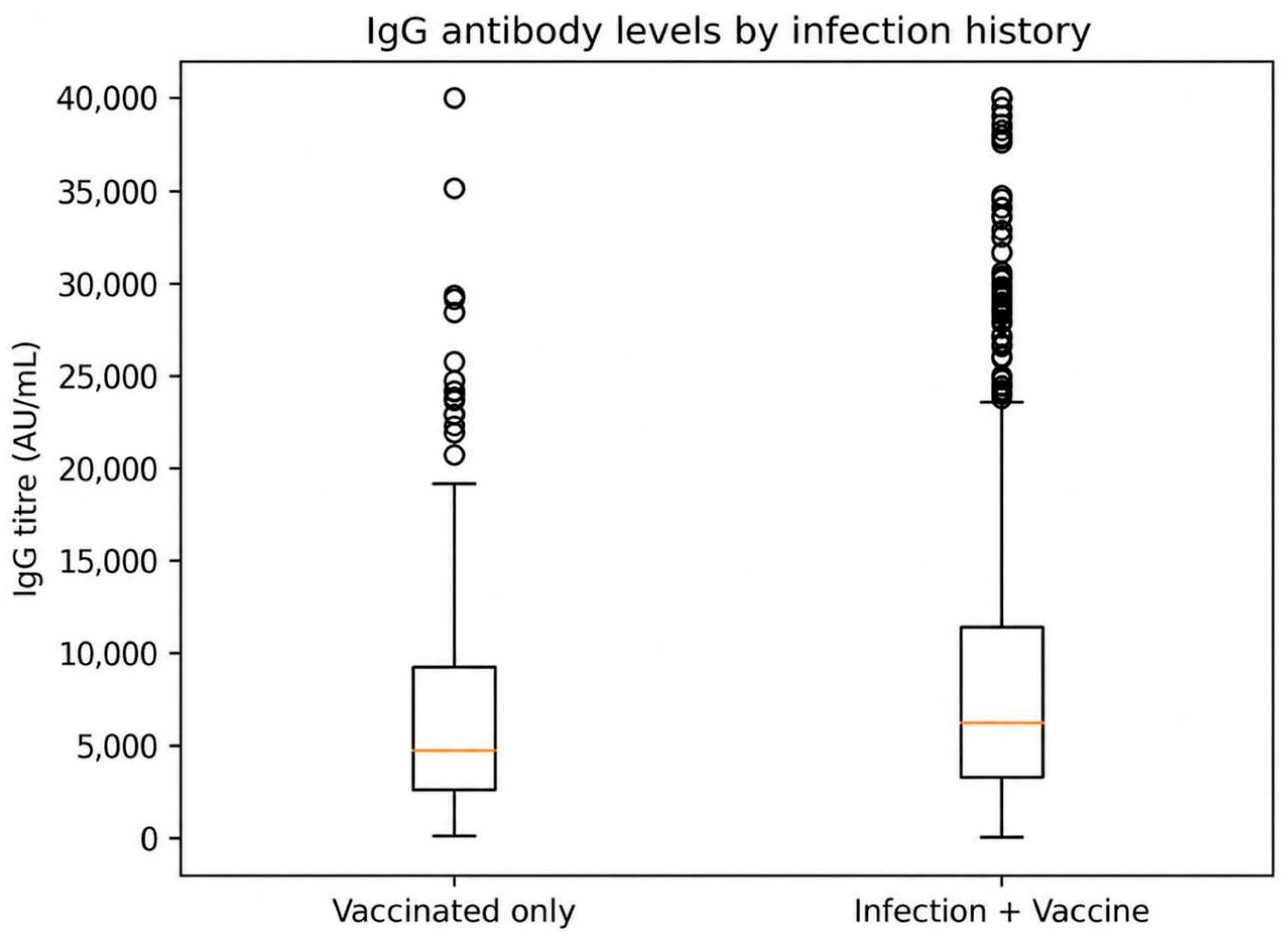
Figure 1. Distribution of anti–SARS-CoV-2 IgG antibody titers among vaccinated healthcare workers according to prior infection status.
Covid 06 00108 g001
Table 1. General characteristics of the health care workers/study responders.
Age GroupFemale (%)Male (%)Total (%)
18–29124 (9.5)32 (9.2)156 (9.4)
30–39194 (14.9)62 (17.8)256 (15.5)
40–49409 (31.3)97 (27.9)506 (30.6)
50–59390 (29.9)110 (31.6)500 (30.2)
60–65189 (14.5)47 (13.5)236 (14.3)
Public institution of employment
Family medicine centres694 (53.1)170 (48.9)864 (52.2)
General Hospital299 (22.9)79 (22.7)378 (22.9)
University Clinical Centre of Kosova173 (13.2)42 (12.1)215 (13.0)
Other health institutions140 (10.7)57 (16.4)197 (11.9)
Region of employment
Prishtina464 (35.5)109 (31.3)573 (34.6)
Mitrovica151 (11.6)32 (9.2)183 (11.1)
Peja168 (12.9)54 (15.5)222 (13.4)
Prizren65 (5.0)23 (6.6)88 (5.3)
Ferizaj85 (6.5)33 (9.5)118 (7.1)
Gjilan188 (14.4)39 (11.2)227 (13.7)
Gjakova185 (14.2)58 (16.7)243 (14.7)
Total1306 (79.0)348 (21.0)1654 (100)
Table 2. Presence of anti-spike SARS-CoV-2 antibodies among health care workers in Kosovo.
Age GroupPositive (%)Negative (%)Total (%)
18–29155 (99.4)1 (0.6)156 (100.0)
30–39256 (100.0)-256 (100.0)
40–49506 (100.0)-506 (100.0)
50–59499 (99.8)1 (0.2)500 (100.0)
60–65235 (99.6)1 (0.4)236 (100.0)
Total1651 (99.8)3 (0.2)1654 (100.0)
Gender
Female1303 (99.8)3 (0.2)1306 (100.0)
Male348 (100.)-348 (100.0)
Total1651 (99.8)3 (0.2)1654 (100)
Table 3. Antibody titers against the spike protein of SARS-CoV-2 in healthcare workers according to different variables.
GenderNumber (%)Average Titter AU/mLCI 95%
AU/mL
Min
AU/mL
Max
AU/mL
ANOVA Test;
p-Value
Female1306 (79.0)8030.87610–84600.4540,000t = 3.0786;
p = 0.002
Male348 (21.0)9533.78590–10,500284.140,000
Total165483477960–87400.4540,000
Age group
18–29156 (9.4)6929.75880–79800.540,000F = 15.24879;
p < 0.001
30–39256 (15.5)6310.75520–7110333.540,000
40–49506 (30.6)7418.16820–8020177.540,000
50–59500 (30.2)9779.89000–10,6000.540,000
60–65236 (14.3)10,44910,300–10,6000.840,000
Total165483477960–87400.540,000
Institution of employment
Family medicine864 (52.2)7993.77470–85200.4540,000F = 5.8612;
p < 0.001
General hospital378 (22.9)7742.16980–850039040,000
UCCK215 (13.0)8939.47790–10,1000.7740,000
Other health institution197 (11.9)10,4119120–11,700177.540,000
Total165483477960–87400.4540,000
Vaccination status
Vaccinated1625 (98.2)8425.98030–88200.540,000t = 3.281;
p = 0.001
Not vaccinated29 (1.8)3929.42390–5470560.121,451
Total165483477960–87400.540,000
Vaccines used
AstraZeneca408 (25.1)6824.16100–75500.840,000F = 15.5716;
p < 0.001
Pfizer–BioNTech898 (55.3)8533.68010–90500.540,000
Both319 (19.3)10,171.59180–11,200177.540,000
Total16258425.98030–88200.540,000
Number of vaccine doses received
One80 (4.9)8071.16190–9950333.540,000F = 9.7369;
p < 0.001
Two1122 (69.0)7770.47320–82200.4540,000
Three420 (25.8)10,207.19370–11,00051040,000
Four2 (0.12)20,14315,530–24,75615,53024,756
Total10578994.18460–95300.540,000
COVID-19 infection status
Infected1057 (63.9)8994.18480–95100.540,000F = 9.43;
p < 0.001
Not infected446 (27.0)7155.86490–78200.540,000
Unknown151 (9.1)7335.86260–8420224.940,000
Total165483477960 to 87400.540,000
Number of times infected with COVID-19
Once680 (64.3)8860.38200–95200.540,000F = 0.2551;
p = 0.77
Twice340 (32.2)9290.78420–10,200730.340,000
Three or more times37 (3.5)8728.35870–11,600642.140,000
Total10578994.18460–95300.540,000
Table 4. Regression analysis for antibody titers to the anti-spike protein of SARS-CoV-2.
Valuet-Ratiop-ValueSignificant
Age4.507<0.001Yes
Gender2.1090.035Yes
Vaccination against COVID-19 1.3330.183No
Infection with COVID-190.63680.524No
Hospitalization due to infection with COVID-193.4980.001Yes
Table 5. Hospitalization of healthcare workers due to COVID-19.
Hospitalization Due to COVID-19Female (%)Male (%)Total (%)
Hospitalized56 (6.5)9 (4.5)65 (6.1)
Not hospitalized800 (93.5)192 (95.5)992 (93.9)
Total8562011057
Table 6. Signs/symptoms among health workers infected with SARS-CoV-2.
Signs/SymptomsN%
Fatigue86281.6
Fever72568.6
Cough54951.9
Loss of taste53150.2
Back-pain40838.6
Breathing difficulty21820.6
Other22421.2
Disclaimer/Publisher’s Note: The statements, opinions and data contained in all publications are solely those of the individual author(s) and contributor(s) and not of MDPI and/or the editor(s). MDPI and/or the editor(s) disclaim responsibility for any injury to people or property resulting from any ideas, methods, instructions or products referred to in the content.



