Article

The Usage-Trust Gap: Information Sources, Trust, and COVID-19 Knowledge Among American Indian and Alaska Native Adults in Rural Michigan


1
Department of Internal Medicine, University of California Davis, Sacramento, CA 95817, USA
2
Department of Foundational Sciences, Covenant Healthcare College of Medicine, Central Michigan University, Mount Pleasant, MI 48859, USA
3
School of Medicine, University of California San Diego, San Diego, CA 92093, USA
*
Author to whom correspondence should be addressed.
COVID 2026, 6(5), 80; https://doi.org/10.3390/covid6050080
Submission received: 14 March 2026 / Revised: 26 April 2026 / Accepted: 5 May 2026 / Published: 8 May 2026
(This article belongs to the Section COVID Public Health and Epidemiology)

Abstract

American Indian and Alaska Native (AI/AN) communities experienced disproportionate COVID-19 morbidity and mortality, particularly in rural areas with limited public health infrastructure. This study examined primary COVID-19 information sources among AI/AN adults in rural Michigan and evaluated how trust in these sources relates to health knowledge, attitudes, and vaccination behaviors. We conducted a prospective, randomized pre-post interventional study among 273 adults at a tribal health clinic in rural Isabella County, Michigan (2022–2024). Participants were assigned to receive a culturally tailored educational video or infographic, and surveys assessed COVID-19 knowledge, vaccine attitudes, information sources, and perceived reliability. Social media was the most frequently used information source but was rated as less reliable, whereas healthcare workers (HCWs) were considered the most trusted. Reliance on HCWs and personal relationships was associated with higher baseline vaccine knowledge and greater uptake of influenza vaccination. Both educational formats resulted in modest improvements in COVID-19 knowledge and vaccine attitudes. While no consistent differences were observed between formats overall, infographic-based education was associated with greater gains in select vaccine knowledge domains among participants who relied on trusted interpersonal or clinical information sources. These findings highlight a “usage-trust gap” in rural AI/AN health communication, where frequently used information channels are not necessarily the most trusted. Culturally tailored messaging delivered through trusted clinical and interpersonal networks may enhance the effectiveness of public health communication and support vaccine uptake in underserved communities.

1. Introduction

American Indian and Alaska Native (AI/AN) communities have long experienced profound health inequities rooted in historical trauma, systemic underfunding of tribal health services, and enduring barriers to care. These structural injustices have manifested in disproportionately high burdens of chronic disease and a persistent mistrust of mainstream healthcare institutions [1]. The COVID-19 pandemic intensified these disparities, with AI/AN populations experiencing some of the highest infection, hospitalization, and mortality rates in the United States. Contributing factors included socioeconomic vulnerability, crowded housing, comorbid conditions, and disruptions to food and healthcare systems [2].
In this context, culturally congruent and trusted health communication became essential. However, messaging in AI/AN communities is shaped by longstanding federal neglect and skepticism toward external authorities [3]. Identifying which information channels AI/AN adults rely upon—and how trust in those sources influences health decision-making—is critical to designing effective interventions. Prior research emphasizes the importance of trusted messengers, including local healthcare workers (HCWs) and tribal leaders, yet there remains limited empirical evidence linking specific information sources to measurable changes in health knowledge, attitudes, or behaviors in AI/AN populations [4,5,6,7,8].
This study addresses these gaps by examining both the primary COVID-19 information sources used by AI/AN adults and how trust in these sources relates to measurable outcomes, including health knowledge, vaccine attitudes, and vaccination behaviors. Despite growing literature on health communication in AI/AN populations, limited evidence directly links specific information sources to quantifiable changes in knowledge or behavior, particularly in rural AI/AN communities [9,10]. These questions are particularly relevant in rural Michigan, where tribal communities face provider shortages, transportation barriers, and limited broadband access [11]. Michigan represents a critical yet understudied setting in AI/AN health research. The majority of existing literature has focused on tribal populations in the Western and Southwestern United States, leaving Midwestern and Eastern AI/AN communities comparatively underrepresented despite potentially distinct sociocultural and healthcare contexts [9,12,13]. This study evaluates the effectiveness of culturally tailored educational tools and examines for whom—and through which information pathways—they function most effectively. In addition, we further hypothesize the presence of a “usage-trust gap,” in which frequently accessed information sources may not align with those perceived as most credible, and explore this dynamic through a proposed Relational-Cultural Trust Model.

2. Methods

2.1. Study Design and Setting

We conducted a pre/post-intervention, randomized, prospective study to assess the effectiveness of two educational modalities, video and infographic, in improving COVID-19 knowledge and vaccine-related attitudes among AI/AN adults in rural Michigan. In this study, “effectiveness” was defined as the extent to which educational interventions improve COVID-19-related knowledge in the short term. This study represents a pre-specified secondary exploratory analysis, focusing specifically on information sources and perceived reliability, of a previously published prospective, randomized educational intervention dataset [14]. Rural status was defined using RUCC classifications, with nonmetropolitan counties (RUCC 4–9) considered rural. The participating clinic is located in Isabella County, Michigan, classified as RUCC 6 (nonmetropolitan county with an urban population of 2500–19,999, adjacent to a metropolitan area).
Data were collected between February 2022 and January 2024 at a single outpatient Indian Health Service (IHS) clinic affiliated with the Saginaw Chippewa Indian Tribe and Central Michigan University (CMU). The clinic provides primary care services to approximately 4100 active patients annually.
After obtaining informed consent, participants completed a pre-survey, were randomly assigned to view either a short educational video or an infographic, and then completed a post-survey. The intervention and data collection process were completed in a single clinic visit. The CMU College of Medicine Institutional Review Board and the Saginaw Chippewa Indian Tribe approved all study procedures.

2.2. Participants

Eligible participants were English-speaking adults aged 18 years or older who received care at the participating IHS clinic. Research assistants recruited participants from the clinic’s waiting area using convenience sampling during routine operating hours. Exclusion criteria included individuals under 18 years old, non-patients, or those unable to provide informed consent. Participants completed the survey using a study-provided tablet or their personal device via QR code access. Upon completion, participants received a $10 gift card as compensation.

2.3. Survey Instruments and Educational Interventions

Participants were randomly assigned to a 1:1 ratio using a computer-generated randomization sequence embedded within the survey platform, ensuring allocation concealment at the point of enrollment. Both educational interventions, a video or static infographic, conveyed information about COVID-19 transmission, prevention, and vaccination safety. Both materials were culturally tailored through collaboration with clinicians, tribal leaders, and individuals familiar with AI/AN health communication practices. Tailoring included framing of health messages to align with community values and experiences. After viewing the assigned material, participants completed an identical post-intervention survey. Survey items measured seven COVID-19 knowledge domains and two vaccine attitude constructs. Knowledge items were scored from 0 (incorrect) to 2 (correct), while vaccine acceptance and concern were rated from 1 (unlikely) to 7 (most likely). The educational materials were based on information from the Centers for Disease Control and Prevention (CDC) and World Health Organization (WHO). Content validity was established through expert review by clinicians and public health researchers.

2.4. Statistical Analysis

We used paired-sample t-tests to compare pre- and post-intervention mean scores within each group. Mann–Whitney U tests compared changes between intervention types. Given the exploratory nature of this analysis, adjustments for multiple comparisons were not applied; findings should therefore be interpreted cautiously. All analyses were conducted usingIBM SPSS Statistics version 29 (IBM Corp., Armonk, NY, USA), with statistical significance set at p < 0.05. The Central Michigan University Institutional Review Board approved the study protocol.

3. Results

3.1. Participant Demographics and Survey Reliability

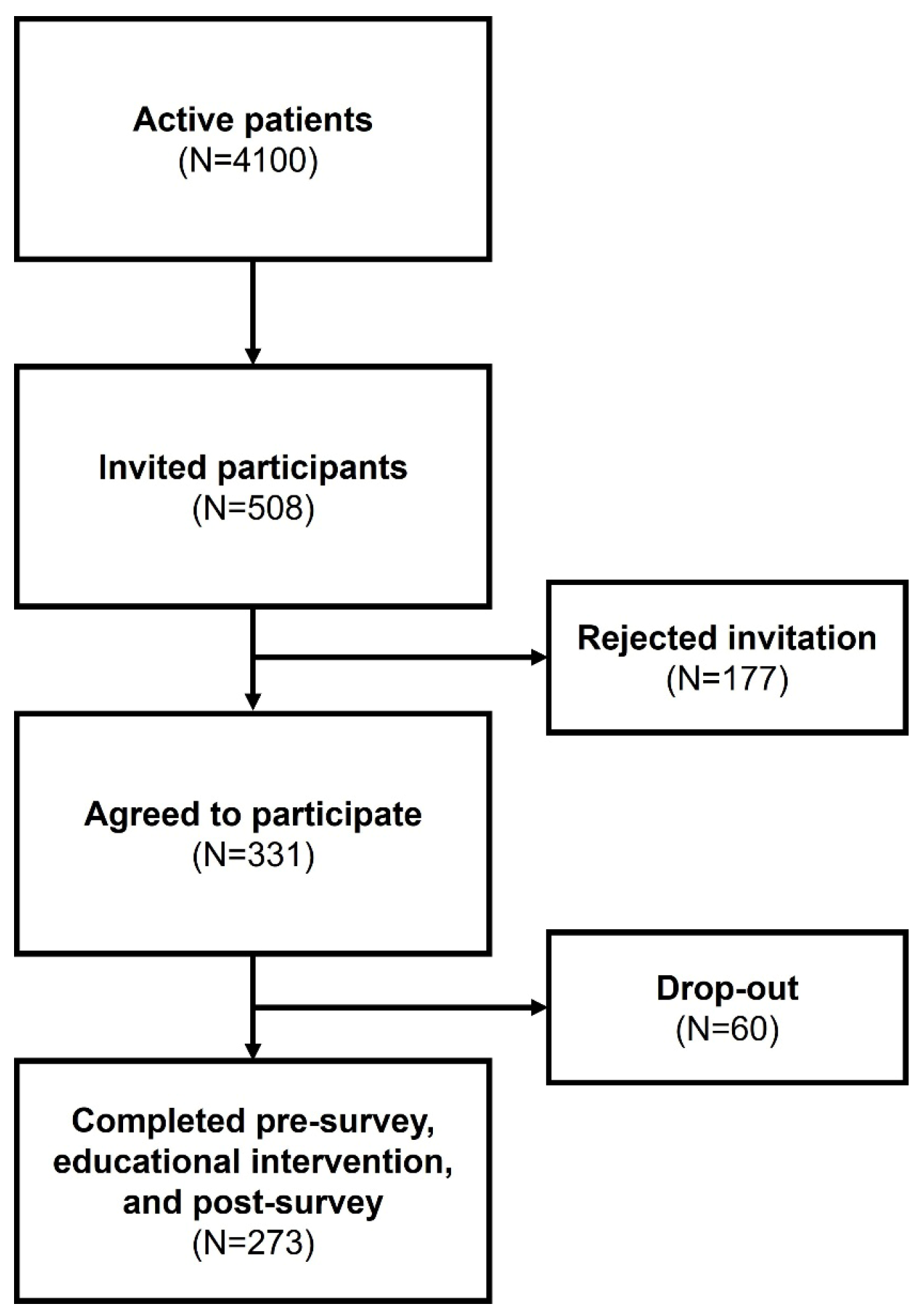
A total of 273 participants completed the study (Figure 1). The majority were female (n = 183, 67.0%) and non-Hispanic (n = 224, 91.1%). Age distribution ranged from 18–24 years (14.2%) to 65+ years (10.3%), with most participants residing in a nonmetropolitan, micropolitan county (RUCC 6) (n = 216, 79.4%). Political affiliation was diverse, including Democrats (29.7%), Independents (24.2%), Republicans (14.9%), and other affiliations (31.2%) (Table 1).
Regarding COVID-19 experiences, over half reported employment impacts due to the pandemic (n = 128, 54.7%), and 50.9% identified themselves or a household member as an essential worker. Most participants had been tested for COVID-19 (87.5%), and 90.1% reported that they or someone in their social circle had tested positive. Additionally, 57.9% personally knew someone who had been hospitalized or died from COVID-19. Self-reported risk factors for severe COVID-19 ranged from none (20.5%) to two or more (33.0%). Participants followed a median of five CDC-recommended precautions (IQR 3–8), with 48.9% following more than five precautions (Table 1).
The internal consistency of the survey items was acceptable, with Cronbach’s alpha coefficients of 0.663 for the 29-item questionnaire and 0.725 for the 7-item multiple-choice questions, indicating adequate reliability of the survey instrument. Missing data were handled conservatively; cases were excluded only when both pre- and post-survey responses were missing.

3.2. Primary Information Sources and Perceived Reliability

Participants reported multiple sources of COVID-19 information, with social media (n = 126), healthcare workers (HCWs, n = 104), and television (TV, n = 98) identified as the top three sources (Table 2). Although social media was the most frequently used source, it received moderate reliability ratings (M = 2.86, SD = 0.98). HCWs were rated as the most reliable source overall (M = 4.13, SD = 0.90), followed by governors (M = 3.71, SD = 0.95) and TV (M = 3.45, SD = 1.01). Personal relationships (M = 3.42, SD = 0.99) were also moderately reliable, whereas religious leaders were rated the lowest (M = 2.10, SD = 1.79).

3.3. Associations Between Information Sources and COVID-19 Knowledge and Attitudes

Analysis of pre-survey differences indicated that participants who primarily relied on healthcare workers (HCWs) demonstrated significantly higher knowledge scores on several vaccine-related items compared to non-users. Specifically, HCW users scored higher on vaccine effectiveness (user M = 1.63, non-user M = 1.28, p = 0.002), actions after vaccination (user M = 1.51, non-user M = 1.27, p = 0.034), reduce the risk of transmission of COVID-19 (user M = 1.24, non-user M = 1.03, p = 0.004), ways COVID-19 spreads (user M = 1.58, non-user M = 1.33, p = 0.012), vaccine facts and protection (user M = 1.60, non-user M = 1.29, p = 0.011), and vaccine development and safety (user M = 0.89, non-user M = 0.66, p = 0.038). Web-based sources were also associated with higher scores on vaccine facts and protection (user M = 1.67, non-user M = 1.33, p = 0.013) and vaccine development and safety (user M = 0.95, non-user M = 0.69, p = 0.048). Participants who relied on personal relationships demonstrated significantly higher scores on reduce the risk of transmission of COVID-19 (user M = 1.24, non-user M = 1.04, p = 0.008), ways COVID-19 spreads (user M = 1.61, non-user M = 1.32, p = 0.002), and vaccine facts and protection (user M = 1.60, non-user M = 1.30, p = 0.011) (Table 3). No significant differences were observed across groups for knowledge regarding vaccine side effects.

3.4. Impact of Educational Intervention Format on Knowledge and Attitudes

Post-intervention analyses compared video- versus infographic-based education across nine primary information sources (Table 4). Mann–Whitney U tests were used due to the ordinal nature of the Likert-scale items. No consistent pattern of significant differences was observed across most knowledge and attitude domains. However, participants obtaining information from HCWs and personal relationships demonstrated significantly higher post-survey scores on select vaccine knowledge and attitude items (e.g., understanding of vaccine protection, knowledge about actions post-vaccination) following infographic interventions (p < 0.05). Additional pre- and post-intervention analyses of vaccine attitudes, beliefs, and behavioral intentions across information sources are provided in Tables S1 and S2.
Overall, both infographic and video interventions were associated with modest improvements in post-survey attitudes, suggesting that either format may enhance knowledge and perceptions of COVID-19. Further investigation is warranted to determine the relative effectiveness of the two formats across different information sources.

3.5. Relationship Between Information Source and Vaccination Behaviors

Significant associations were observed between primary information sources and both influenza vaccination in the past year and plans to receive the influenza vaccine during the current season (Table 5). A significant relationship emerged between information source and receipt of the influenza vaccine in the prior year. Participants who relied on healthcare workers had one of the highest influenza vaccination rates (67.0%, p = 0.017). Similarly, those using personal relationships as their main source also demonstrated high uptake (66.3%, p = 0.038). These findings suggest that interpersonal or clinician-based information pathways were associated with higher real-world vaccination behavior.
Information source was also significantly associated with intent to receive a flu vaccine this season, with meaningful differences observed among participants who relied on healthcare workers (p = 0.006) and personal relationships (p = 0.016). Both groups demonstrated high intention to vaccinate: 65.6% among healthcare-worker users and 63.5% among those drawing primarily on personal relationships. These patterns further reinforce the influence of trusted interpersonal networks in shaping preventive health behaviors.

4. Discussion

4.1. Variability in COVID-19 Knowledge Across Information Sources

Findings from this study demonstrate that COVID-19 knowledge among AI/AN adults varies meaningfully based on their primary information source. While social media was the most utilized channel, it was simultaneously rated among the least reliable. This duality reflects its role as both a low-barrier communication tool and a potential source of misinformation [15]. The moderate reliability scores observed in this cohort parallel national trends: while social media facilitates rapid dissemination, it frequently propagates non-evidence-based content that may contribute to public confusion and undermine trust in government and healthcare institutions [16]. These patterns are particularly salient in AI/AN communities, where historical trauma and structural underfunding have already strained relationships with mainstream health systems.
Despite these challenges, social media remains a viable platform for culturally tailored outreach, provided that digital literacy disparities and information saturation are addressed [17,18]. However, mitigation efforts such as automated content filtering may encounter resistance in marginalized populations due to political polarization and a deep-seated mistrust of external authorities [19].
Conversely, participants who relied on HCWs or print media exhibited higher baseline knowledge across multiple vaccine domains. This finding is consistent with prior literature supporting the role of clinician-delivered health communication. Prior research suggests that information delivered by clinicians or reputable print sources correlates with higher vaccine acceptance [20]. The high reliability ratings attributed to HCWs in this study underscore their essential role in delivering accurate, evidence-based information to AI/AN communities. Website-based sources also yielded higher scores in vaccine effectiveness knowledge, suggesting that high-quality digital resources can enhance health literacy when the content is perceived as transparent and trustworthy.
These findings align with a growing body of literature emphasizing the importance of culturally congruent and trust-centered health communication in Indigenous populations. A systematic review identified key components of effective communication, including cultural congruence, Indigenous involvement in message design, and the use of trusted messengers [7,21]. However, prior work has also highlighted a persistent lack of empirically grounded, community-specific interventions in AI/AN populations, with many programs relying on adaptations of non-indigenous models [10,22]. The present findings contribute to this gap by illustrating measurable differences in knowledge associated with information source trust within a rural AI/AN population.

4.2. COVID-19-Related Behaviors Stratified by Information Sources

Rural AI/AN communities frequently face structural barriers including limited broadband access, transportation challenges, and persistent health workforce shortages. In such contexts, reliance on high-volume digital messaging alone could exacerbate disparities, particularly in settings with limited broadband access or digital infrastructure. These findings suggest that embedding culturally tailored materials within existing rural clinical sites may help mitigate these structural limitations.
Information sources not only shaped knowledge but also influenced health behaviors. Participants relying on web-based sources reported higher adherence to CDC-recommended precautions and greater booster vaccination intentions, consistent with research linking high-quality online information to public health compliance [23].
Furthermore, participants who identified HCWs as their primary source were more likely to have received the influenza vaccine and intended to receive future doses. This is consistent with prior international studies showing that clinician recommendations are among the strongest predictors of vaccine uptake [24]. Notably, interpersonal networks also played a crucial role; participants citing personal connections as their primary source exhibited higher knowledge scores, suggesting that peer-to-peer communication remains a vital, albeit informal, complementary pathway of health information exchange.
The observed influence of HCWs and interpersonal networks is consistent with prior studies in AI/AN communities, where trust-based relationships play a central role in shaping health behaviors. For example, research in AN and Southwest tribal communities has demonstrated that vaccine decision-making is frequently influenced by trusted individuals, including clinicians, elders, and community health representatives [25]. These findings support the hypothesis that interpersonal and relational pathways may function as critical conduits for translating health information into action.

4.3. Media Trust and the Role of Health Literacy

No consistent superiority of one educational format was observed overall. However, infographic delivery appeared particularly effective among participants who relied on clinician-based and interpersonal information pathways. Overall, the findings suggest a highly uneven trust landscape within AI/AN communities. HCWs received the highest reliability scores, highlighting their status as the most credible messengers. While government and web-based sources also scored relatively well, this contrasts with previous literature highlighting a legacy of federal mistrust in AI/AN healthcare contexts [3]. Meanwhile, social media usage continues to outpace trust, reflecting a persistent “usage-trust gap” consistent with national Pew Research findings [26].
This pattern may reflect broader historical and cultural factors shaping trust in health information. For many AI/AN individuals, trust is not merely a reflection of content accuracy but a measure of cultural congruence—the degree to which information respects tribal sovereignty and indigenous knowledge [7]. Historical legacies of unethical research and “faceless” institutional bureaucracies have often fostered a protective distrust of mainstream media and federal messaging. Consequently, for information to be deemed “culturally acceptable,” it must often bypass traditional top-down channels and be filtered through community-based participatory frameworks [4].
In this context, the high reliability of HCWs likely stems from their ability to provide interpersonal, relational accountability that national media outlets lack. Ultimately, the variability across sources emphasizes the need for communication strategies that elevate trusted community messengers while strengthening the cultural resonance of the digital channels frequently used by AI/AN adults.
More broadly, these findings are consistent with literature highlighting structural and informational barriers in rural populations. Rural residents often experience reduced access to high-quality health information and may have lower health literacy, particularly in settings with limited broadband infrastructure [27,28]. At the same time, clinicians remain among the most trusted sources of health information in rural communities, reinforcing the importance of embedding communication strategies within existing care relationships [22,29]. Importantly, the literature suggests that effective messaging in both rural and AI/AN populations should prioritize culturally grounded, non-fear-based approaches that emphasize protection of family and community rather than top-down or fear-driven messaging strategies [10]. This may help explain why interpersonal and clinician-based communication pathways were associated with stronger knowledge and behavioral outcomes in this study.

4.4. Proposed Model: The Relational-Cultural Trust Framework

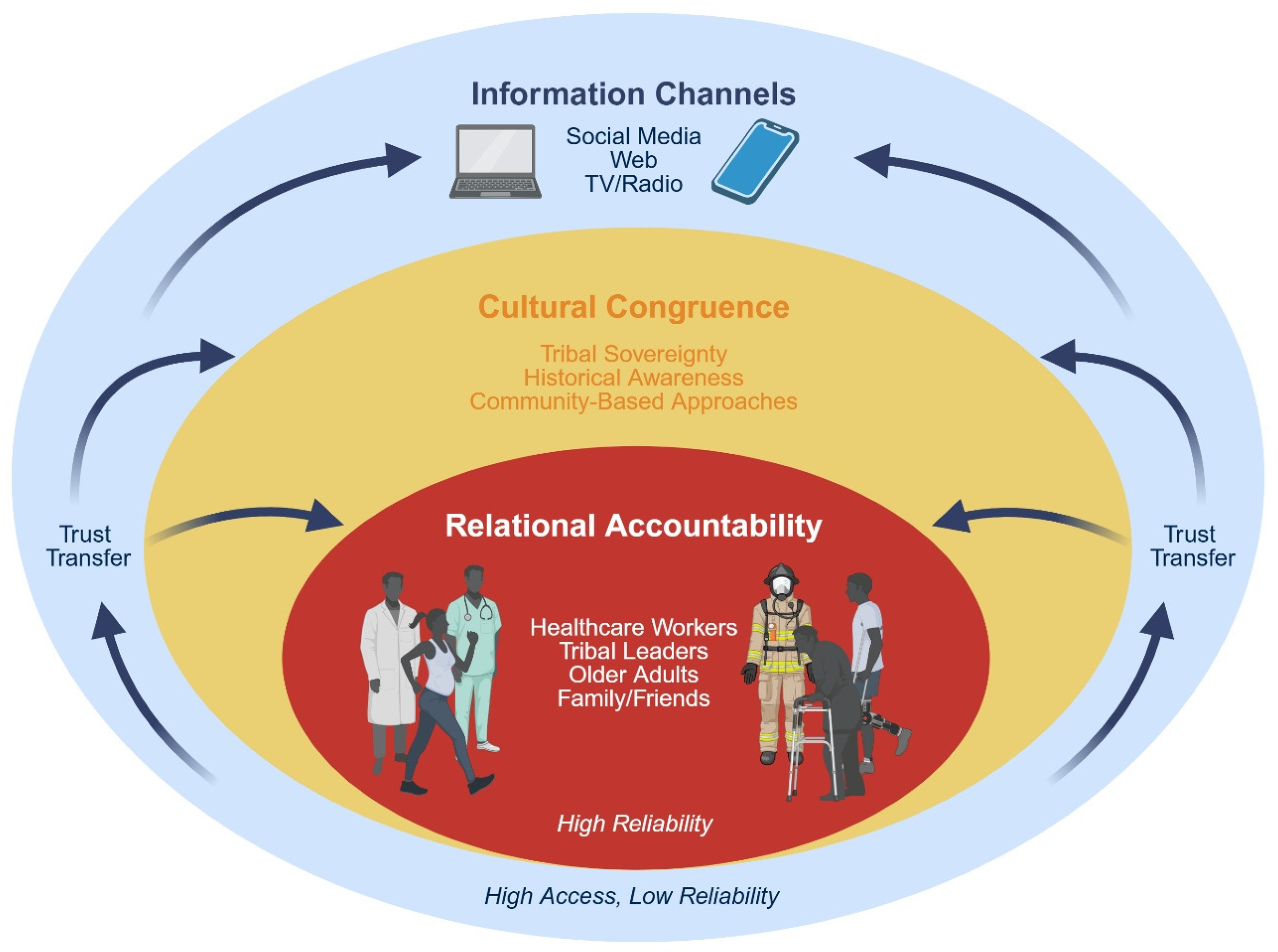
Based on these findings, we propose the Relational-Cultural Trust Model (RCTM) as a framework for understanding health communication within AI/AN communities (Figure 2). In rural tribal settings, where public health infrastructure and specialty access are limited, clinician-patient relationships may serve as the primary conduit for evidence-based information. These findings highlight the potential importance of strengthening rural tribal health workforce capacity alongside digital communication strategies.
At the core of the RCTM are “Primary Trusted Messengers,” specifically healthcare workers and interpersonal networks, who provide the relational depth necessary to overcome historical institutional mistrust [5]. Surrounding this core are “Secondary Information Channels,” such as social media and web-based resources, which serve as high-volume access points but lack the inherent reliability required to drive behavior change on their own. The effectiveness of these secondary channels may depend on their alignment with the values and messaging of trusted interpersonal sources.
The RCTM is further supported by evidence from Community Health Representative (CHR) and community health worker models in Indigenous populations. CHRs, tribally embedded health workers, have demonstrated measurable improvements in chronic disease outcomes, screening uptake, and patient engagement through culturally grounded, relationship-based interventions [29]. These models emphasize that trust, cultural alignment, and relational continuity are central mechanisms through which health information leads to behavior change. Notably, the existing evidence base for CHR-led and culturally grounded interventions is heavily concentrated in Southwestern tribal communities, with relatively limited data from Midwestern and Eastern AI/AN populations [9]. This geographic gap further illustrates the importance of examining trust and communication pathways in settings such as rural Michigan.
By prioritizing this relational-cultural hierarchy, public health strategies may move beyond broad-based messaging toward approaches that are more responsive to community context and trust dynamics. While the RCTM is informed by observed patterns in the data, it should be interpreted as a conceptual and hypothesis-generating framework rather than a formally validated model. The model is intended to provide a structured lens through which to understand how trust, cultural congruence, and information pathways interact in AI/AN communities.

4.5. Limitations

While this study provides valuable insights into health communication within AI/AN communities, several limitations warrant consideration. First, the single-center design may restrict the generalizability of these findings to other geographically and socioculturally diverse tribal nations with differing healthcare infrastructures. Second, the use of convenience sampling among clinic patients introduces potential selection bias. Participants engaged in healthcare systems may be more likely to trust healthcare workers and possess higher baseline health literacy, potentially inflating the observed association between clinician-based information sources and positive health behaviors. This may limit the applicability of findings to individuals with lower healthcare access or engagement. Third, the reliance on self-reported data may be subject to recall or social desirability biases, potentially affecting the accuracy of reported vaccination histories and trust ratings. Fourth, the absence of measures assessing prior exposure to misinformation and baseline trust in information sources may introduce residual confounding, complicating interpretation of observed associations within this AI/AN sample. Finally, the study’s focus on immediate pre–post changes precludes conclusions regarding long-term knowledge retention or sustained behavioral shifts. Future multi-site, longitudinal research is needed to build upon these foundational findings and further explore the durability of information pathways in diverse AI/AN contexts.

5. Conclusions

This study highlights the critical role of trusted messengers and culturally congruent communication in addressing health disparities within AI/AN communities. Our findings reveal a distinct “usage-trust gap”: while social media serves as a primary information gateway, HCWs and personal networks remain the most credible drivers of health literacy and preventive behavior. The significant association between HCW-led communication and higher reported vaccination rates reinforces the necessity of relational accountability in public health strategy. Furthermore, while both video and infographic interventions proved effective for short-term knowledge gains, their impact was most pronounced when they aligned with the values of trusted interpersonal sources. These findings should be interpreted in light of the study’s single-center design and potential selection bias, which may limit generalizability. Broader multi-site and longitudinal studies are needed to confirm these patterns and evaluate their applicability across diverse Indigenous populations.
Ultimately, these results support the proposed RCTM, suggesting that effective health communication in AI/AN contexts must move beyond top-down messaging. For rural AI/AN communities, effective pandemic response strategies must extend beyond digital campaigns and invest in the stability of tribal health systems. Investment in rural clinician workforce development, community health representative programs, and culturally grounded messaging partnerships may yield more sustainable gains in vaccine uptake and public health preparedness than broad, centralized communication strategies alone.

Supplementary Materials

The following supporting information can be downloaded at: https://www.mdpi.com/article/10.3390/covid6050080/s1, Table S1: Pre-post changes in vaccine attitudes and beliefs among participants exposed to television, healthcare worker, and social media messages; Table S2: Change in vaccine-related attitudes and beliefs by information source.

Author Contributions

Conceptualization, M.A.T. and N.R.; methodology, M.A.T. and N.R.; formal analysis, M.A.T. and A.R.H.; investigation, M.A.T.; data curation, M.A.T. and A.R.H.; writing—original draft preparation, M.A.T. and H.M.; writing—review and editing, M.A.T., H.M., A.R.H. and N.R.; visualization, M.A.T.; supervision, M.A.T. and N.R.; project administration, M.A.T. and N.R.; funding acquisition, M.A.T. and N.R. All authors have read and agreed to the published version of the manuscript.

Funding

This research was funded by Michigan State Medical Society Foundation, grant number P64840, and the Blue Cross Blue Shield of Michigan, grant number 2022010089.SAP.

Institutional Review Board Statement

This study was conducted in accordance with the Declaration of Helsinki and approved by the Institutional Review Board of Central Michigan University (Protocol 2021-1028 on 2 December 2021).

Informed Consent Statement

Informed consent was obtained from all subjects involved in the study.

Data Availability Statement

The data presented in this study are available on request from the corresponding author due to privacy.

Acknowledgments

The authors express their profound gratitude to the following individuals for their contributions Simone T. Rhodes, Jun Hwan Kim, Maxwell King, Stephanie Soukar, Chad Martin, Angela Sasaki Cole, Arlene Chan, Ciara Brennan, Lisa Mun, and Katharine Keener for their efforts in data collection; Michael Huber for securing clinic approval for data collection; Nicholas Haddad for his expertise in infectious diseases and contributions to the educational interventions; and Donald Blubaugh for creating and refining the videographic informational intervention. We also extend our sincere thanks to the anonymous Indian Health Service clinic for their cooperation.

Conflicts of Interest

The authors declare no conflicts of interest.

Abbreviations

The following abbreviations are used in this manuscript:
AbbreviationDefinition
AI/ANAmerican Indian and Alaska Native
CDCCenters for Disease Control and Prevention
CMUCentral Michigan University
COVID-19Coronavirus Disease 2019
HCWsHealthcare Workers
IHSIndian Health Service
IQRInterquartile Range
RCTMRelational-Cultural Trust Model
RUCCRural–Urban Continuum Codes
SDStandard Deviation
SPSSStatistical Package for the Social Sciences
TVTelevision
QRQuick Response

References

  1. Warne, D.; Frizzell, L.B. American Indian health policy: Historical trends and contemporary issues. Am. J. Public Health 2014, 104, S263–S267. [Google Scholar] [CrossRef] [PubMed]
  2. Huyser, K.R.; Horse, A.J.Y.; Kuhlemeier, A.A.; Huyser, M.R. COVID-19 Pandemic and Indigenous Representation in Public Health Data. Am. J. Public Health 2021, 111, S208–S214. [Google Scholar] [CrossRef] [PubMed]
  3. Goodkind, J.R.; Ross-Toledo, K.; John, S.; Hall, J.L.; Ross, L.; Freeland, L.; Coletta, E.; Becenti-Fundark, T.; Poola, C.; Roanhorse, R.; et al. Rebuilding TRUST: A Community, Multi-Agency, State, and University Partnership to Improve Behavioral Health Care for American Indian Youth, their Families, and Communities. J. Community Psychol. 2011, 39, 452–477. [Google Scholar] [CrossRef]
  4. Sabo, S.; Lee, N.; Sears, G.; Jiménez, D.J.; Tutt, M.; Santos, J.; Gomez, O.; Teufel-Shone, N.; Bennet, M.; Nashio, J.T.N.; et al. Community Health Representatives as Trusted Sources for Increasing Representation of American Indian Communities in Clinical Research. Int. J. Environ. Res. Public Health 2023, 20, 4391. [Google Scholar] [CrossRef]
  5. Skewes, M.C.; Gonzalez, V.M.; Gameon, J.A.; FireMoon, P.; Salois, E.; Rasmus, S.M.; Lewis, J.P.; Gardner, S.A.; Ricker, A.; Reum, M. Health Disparities Research with American Indian Communities: The Importance of Trust and Transparency. Am. J. Community Psychol. 2020, 66, 302–313. [Google Scholar] [CrossRef]
  6. Warne, D.; Baker, T.; Burson, M.; Kelliher, A.; Buffalo, M.; Baines, J.; Whalen, J.; Archambault, M.; Jinnett, K.; Mohan, S.V.; et al. Barriers and unmet needs related to healthcare for American Indian and Alaska Native communities: Improving access to specialty care and clinical trials. Front. Health Serv. 2025, 5, 1469501. [Google Scholar] [CrossRef] [PubMed]
  7. Boyd, A.D.; Furgal, C.M. Communicating Environmental Health Risks with Indigenous Populations: A Systematic Literature Review of Current Research and Recommendations for Future Studies. Health Commun. 2019, 34, 1564–1574. [Google Scholar] [CrossRef]
  8. Maximiano-Barreto, M.A.; Monteiro, D.Q.; Alves, L.C.d.S.; Raminelli, A.O.; Coelho, H.E.R.; Inouye, K.; Bas-Sarmiento, P.; Luchesi, B.M. Sociodemographic and health-related factors associated with low health literacy among Indigenous populations: A systematic review. Health Promot. Int. 2025, 40, daaf018. [Google Scholar] [CrossRef]
  9. Geana, M.V.; Greiner, K.A.; Cully, A.; Talawyma, M.; Daley, C.M. Improving health promotion to American Indians in the midwest United States: Preferred sources of health information and its use for the medical encounter. J. Community Health 2012, 37, 1253–1263. [Google Scholar] [CrossRef][Green Version]
  10. Walters, K.L.; Johnson-Jennings, M.; Stroud, S.; Rasmus, S.; Charles, B.; John, S.; Allen, J.; Kaholokula, J.K.; Look, M.A.; de Silva, M.; et al. Growing from Our Roots: Strategies for Developing Culturally Grounded Health Promotion Interventions in American Indian, Alaska Native, and Native Hawaiian Communities. Prev. Sci. 2020, 21, 54–64. [Google Scholar] [CrossRef]
  11. Michigan Department of Health and Human Services. RHEP—Rural Health Equity Plan Final Report; Michigan Department of Health and Human Services: Lansing, MI, USA, 2024.
  12. Weber, T.L.; Copeland, G.; Pingatore, N.; Schmid, K.K.; Jim, M.A.; Watanabe-Galloway, S. Using Tribal Data Linkages to Improve the Quality of American Indian Cancer Data in Michigan. J. Health Care Poor Underserved 2019, 30, 1237–1247. [Google Scholar] [CrossRef]
  13. Breathett, K.; Sims, M.; Gross, M.; Jackson, E.A.; Jones, E.J.; Navas-Acien, A.; Taylor, H.; Thomas, K.L.; Howard, B.V.; on behalf of the American Heart Association Council on Epidemiology and Prevention; et al. Cardiovascular Health in American Indians and Alaska Natives: A Scientific Statement From the American Heart Association. Circulation 2020, 141, e948–e959. [Google Scholar] [CrossRef]
  14. Takagi, M.A.; Rhodes, S.T.; Kim, J.H.; King, M.; Soukar, S.; Martin, C.; Cole, A.S.; Chan, A.; Brennan, C.; Zyzanski, S.; et al. Evaluating Two Educational Interventions for Enhancing COVID-19 Knowledge and Attitudes in a Sample American Indian/Alaska Native Population. Vaccines 2024, 12, 787. [Google Scholar] [CrossRef]
  15. Kbaier, D.; Kane, A.; McJury, M.; Kenny, I. Prevalence of Health Misinformation on Social Media-Challenges and Mitigation Before, During, and Beyond the COVID-19 Pandemic: Scoping Literature Review. J. Med. Internet Res. 2024, 26, e38786. [Google Scholar] [CrossRef]
  16. Gallotti, R.; Valle, F.; Castaldo, N.; Sacco, P.; De Domenico, M. Assessing the risks of ‘infodemics’ in response to COVID-19 epidemics. Nat. Hum. Behav. 2020, 4, 1285–1293. [Google Scholar] [CrossRef]
  17. Ahmed, M.H.; Guadie, H.A.; Ngusie, H.S.; Teferi, G.H.; Gullslett, M.K.; Hailegebreal, S.; Hunde, M.K.; Donacho, D.O.; Tilahun, B.; Siraj, S.S.; et al. Digital Health Literacy During the COVID-19 Pandemic Among Health Care Providers in Resource-Limited Settings: Cross-sectional Study. JMIR Nurs. 2022, 5, e39866. [Google Scholar] [CrossRef] [PubMed]
  18. Bogic, M.; Garcia, J.K.; Morgan, E.; Louise-Hsu, Y.-C.; Boyd, A. Misinformation and digital health literacy among American Indian and Alaska Native people. Digit. Health 2025, 11, 20552076251338893. [Google Scholar] [CrossRef] [PubMed]
  19. Camacho-García, M.; Serrano-Macías, M.; Ortega-Martin, E.; Alvarez-Galvez, J. Drivers of health polarization during the COVID-19 pandemic: A systematic review. Sci. Adv. 2025, 11, eady5064. [Google Scholar] [CrossRef]
  20. Xu, B.; Song, B.; Chang, S.; Gu, S.; Xi, H. Heuristics in vaccination Decision-Making for newly developed Vaccines: Understanding the public’s imitative behavior. Prev. Med. Rep. 2024, 37, 102548. [Google Scholar] [CrossRef] [PubMed]
  21. Dickerson, D.; Baldwin, J.A.; Belcourt, A.; Belone, L.; Gittelsohn, J.; Kaholokula, J.K.; Lowe, J.; Patten, C.A.; Wallerstein, N. Encompassing Cultural Contexts Within Scientific Research Methodologies in the Development of Health Promotion Interventions. Prev. Sci. 2020, 21, 33–42. [Google Scholar] [CrossRef]
  22. Lumpkins, C.Y.; Goeckner, R.; Hale, J.; Lewis, C.; Gunville, J.; Gunville, R.; Daley, C.M.; Daley, S.M. In Our Sacred Voice-An Exploration of Tribal and Community Leader Perceptions as Health Communicators of Disease Prevention among American Indians in the Plains. Health Commun. 2022, 37, 1180–1191. [Google Scholar] [CrossRef]
  23. Zhang, X.; Du, L.; Huang, Y.; Luo, X.; Wang, F. COVID-19 information seeking and individuals’ protective behaviors: Examining the role of information sources and information content. BMC Public Health 2024, 24, 316. [Google Scholar] [CrossRef]
  24. Lu, P.J.; Srivastav, A.; Amaya, A.; Dever, J.A.; Roycroft, J.; Kurtz, M.S.; O’HAlloran, A.; Williams, W.W. Association of provider recommendation and offer and influenza vaccination among adults aged ≥18 years-United States. Vaccine 2018, 36, 890–898. [Google Scholar] [CrossRef] [PubMed]
  25. Zhao, J.; Jaggad, R.; Zhang, Y.; Campbell, J.E.; Ghosh, P.K.; Kennedye, J.R.; Ali, T. Multi-level determinants of vaccination of the American Indian and Alaska Native population: A comprehensive overview. Front. Public Health 2025, 13, 1490286. [Google Scholar] [CrossRef]
  26. Eddy, K.; Shearer, E. How Americans’ Trust in Information from News Organizations and Social Media Sites Has Changed Over Time. Pew Research Center. Available online: https://www.pewresearch.org/short-reads/2025/10/29/how-americans-trust-in-information-from-news-organizations-and-social-media-sites-has-changed-over-time/ (accessed on 1 January 2026).
  27. Chen, X.; Orom, H.; Hay, J.L.; Waters, E.A.; Schofield, E.; Li, Y.; Kiviniemi, M.T. Differences in Rural and Urban Health Information Access and Use. J. Rural Health 2019, 35, 405–417. [Google Scholar] [CrossRef] [PubMed]
  28. Williams, S.A.; Shriver, R.C.; Juhala, C.C. Bridging the Gap: Health Education Needs Among Rural Populations with Chronic Illness and Low Health Literacy in Unincorporated Communities in Southern California. Int. J. Environ. Res. Public Health 2025, 23, 21. [Google Scholar] [CrossRef] [PubMed]
  29. Sacca, L.; Shegog, R.; Hernandez, B.; Peskin, M.; Rushing, S.C.; Jessen, C.; Lane, T.; Markham, C. Barriers, frameworks, and mitigating strategies influencing the dissemination and implementation of health promotion interventions in indigenous communities: A scoping review. Implement. Sci. 2022, 17, 18. [Google Scholar] [CrossRef] [PubMed]
Figure 1. Participant Recruitment and Enrollment Flow Diagram. A total of 508 individuals were invited to participate in the study. Of these, 437 were determined to be eligible, following the exclusion of 17 individuals who had previously participated in the intervention. The final analytical sample consisted of 331 participants who agreed to participate and completed the study procedures, resulting in an estimated response rate of approximately 76% (331/437). Of the 331 participants who consented and initiated the study, 273 completed both pre- and post-surveys and were included in the final analysis. Participants with incomplete paired data were excluded from analytic comparisons.
Covid 06 00080 g001
Figure 2. The Relational-Cultural Trust Model (RCTM) for AI/AN Health Communication. This model illustrates the hierarchical nature of information processing in AI/AN communities. At the core is Relational Accountability, where trust is highest and behavior change is most likely (i.e., HCWs and family). This is encased by the Cultural Congruence filter, which evaluates the relevance of external messaging based on tribal sovereignty and indigenous knowledge. The outer layer represents Information Channels, which provide high volume and reach but require “trust-transfer” from the inner layers to influence health outcomes effectively. Created in BioRender. Takagi, M. (2026) https://BioRender.com/h1v9du7.
Covid 06 00080 g002
Table 1. Demographic characteristics of participants. Descriptive statistics of participant characteristics, including gender, age, ethnicity, residence, political affiliation, COVID-19–related experiences, and adherence to Centers for Disease Control and Prevention (CDC)–recommended precautions. CDC-recommended precautions include measures such as mask-wearing, hand hygiene, physical distancing, and vaccination. Values are presented as n (%) or median (interquartile range).
VariableTotal n (%)
Gender273
Female183 (67.0%)
Male85 (31.0%)
Other5 (1.8%)
Age Group273
18–24 years old 39 (14.2%)
25–34 years old 60 (22.0%)
35–44 years old 57 (20.9%)
45–54 years old 45 (16.5%)
55–64 years old 44 (16.1%)
65+ years old 28 (10.3%)
Ethnicity246
Hispanic22 (8.9%)
Non-Hispanic224 (91.1%)
Residence272
Metropolitan35 (12.9%)
Micropolitan216 (79.4%)
Non-Metropolitan21 (7.7%)
Political Affiliation269
Republican40 (14.9%)
Democrat80 (29.7%)
Independent65 (24.2%)
Something else84 (31.2%)
Was your employment status impacted by the COVID-19 pandemic?234
Yes128 (54.7%)
No106 (45.3%)
Essential worker/household has essential worker273
Self/Family139 (50.9%)
No134 (49.1%)
Since January 2020, have you been tested for the COVID-19 virus?273
Yes239 (87.5%)
No31 (11.4%)
Not Sure3 (1.1%)
Have you or anyone in your social circle ever tested positive for COVID-19?273
Yes246 (90.1%)
No22 (8.1%)
Not Sure5 (1.8%)
Do you personally know someone who has been hospitalized or died from COVID-19?273
Yes158 (57.9%)
No106 (38.8%)
Not Sure9 (3.3%)
Self-Risk273
None/Don’t Know56 (20.5%)
One risk127 (46.5%)
Two or more risks90 (33.0%)
Other-Risk237
None/Don’t Know65 (23.8%)
One risk110 (40.3%)
Two or more risks98 (35.9%)
Following CDC-recommended COVID-19 precautions268
At least 5 precautions137 (51.1%)
More than 5 precautions131 (48.9%)
Median Number of CDC precautions followed from list5.00 (3.00–8.00)
Table 2. Mean reliability scores for nine sources of COVID-19 information. Mean and standard deviation (SD) of participants’ perceived reliability for various information sources, including television, radio, print, social media, websites, healthcare workers, personal relationships, religious leaders, and government representatives. Higher scores indicate greater perceived reliability. All values are presented as n, mean, and SD.
SourceTotal Count
(n)
Reliability Count
(n)
Mean Reliability Score
(M)
SD
TV98853.451.01
Radio36302.971.29
Print26242.541.06
Social media1261182.860.98
Web61573.281.19
Healthcare Worker1041014.130.90
Personal Relationships96933.420.99
Religious Leader16102.101.79
Governor27243.710.95
Table 3. Association between information source use and COVID-19–related knowledge, attitudes, and vaccine beliefs. Comparison of virus knowledge, vaccine knowledge, attitudes, and precautionary behaviors among users and non-users of nine information sources. Data are presented as mean (SD) or median (interquartile range) where appropriate. p-values are derived from non-parametric Mann-Whitney U tests.
MeasureGroupTelevisionRadioPrintSocial MediaWebsitesHealthcare WorkersPersonal RelationshipsReligious LeadersGovernment
Demographics          
Median number of CDC precautions followed from listMedian (IQR)6.00 (4.00–9.00)7.00 (5.00–9.75)6.00 (4.75–8.00)5.00 (4.00–7.25)6.00 (5.00–8.00)6.00 (5.00–8.00)6.00 (4.00–8.00)6.50 (5.00–9.75)7.00 (5.00–10.00)
Virus Knowledge          
Reduce the risk of transmission of COVID-19User1.05 (0.52)1.03 (0.60)1.12 (0.51)1.11 (0.54)1.23 (0.52)1.24 (0.51)1.24 (0.49)1.19 (0.40)1.11 (0.50)
 Non-User1.14 (0.60)1.12 (0.57)1.11 (0.58)1.11 (0.61)1.08 (0.58)1.03 (0.60)1.04 (0.60)1.11 (0.59)1.11 (0.58)
 p-value0.1810.3740.9960.9660.0730.0040.0080.6370.967
Ways COVID-19 spreadsUser1.46 (0.70)1.39 (0.73)1.50 (0.64)1.39 (0.73)1.43 (0.71)1.58 (0.62)1.61 (0.58)1.38 (0.71)1.52 (0.70)
 Non-User1.40 (0.73)1.43 (0.68)1.41 (0.73)1.45 (0.72)1.42 (0.72)1.33 (0.77)1.32 (0.77)1.42 (0.72)1.41 (0.72)
 p-value0.5390.6200.6660.4350.9880.0120.0020.7140.445
Vaccine Attitudes and Beliefs          
Concern about taking COVID-19 vaccineUser2.28 (1.11)2.26 (1.09)2.50 (1.10)2.40 (1.13)2.13 (1.08)2.22 (1.07)2.35 (1.10)2.38 (1.08)2.22 (0.97)
 Non-User2.43 (1.17)2.39 (1.68)2.36 (1.16)2.36 (1.17)2.45 (1.17)2.47 (1.19)2.39 (1.18)2.38 (1.16)2.39 (1.17)
 p-value0.3150.5380.5450.7860.0640.0920.8580.9740.491
Vaccine Knowledge          
Vaccine facts and protectionUser1.35 (0.89)1.58 (0.77)1.62 (0.75)1.39 (0.90)1.67 (0.67)1.60 (0.74)1.60 (0.74)1.62 (0.71)1.41 (0.93)
 Non-User1.44 (0.87)1.38 (0.89)1.38 (0.89)1.42 (0.86)1.33 (0.92)1.29 (0.94)1.30 (0.93)1.39 (0.89)1.41 (0.87)
 p-value0.3450.230.2280.8590.0130.0110.0110.3760.887
Vaccine effectivenessUser1.47 (0.86)1.58 (0.80)1.65 (0.74)1.38 (0.92)1.59 (0.78)1.63 (0.75)1.55 (0.80)1.56 (0.81)1.67 (0.73)
 Non-User1.38 (0.92)1.39 (0.91)1.39 (0.91)1.44 (0.88)1.36 (0.92)1.28 (0.95)1.34 (0.94)1.40 (0.90)1.39 (0.91)
 p-value0.5140.2350.1670.6070.1060.0020.0910.5480.136
Actions after vaccinationUser1.49 (0.81)1.47 (0.81)1.54 (0.81)1.37 (0.89)1.44 (0.84)1.51 (0.82)1.46 (0.84)1.44 (0.81)1.56 (0.80)
 Non-User1.29 (0.94)1.34 (0.91)1.34 (0.90)1.35 (0.91)1.33 (0.91)1.27 (0.93)1.31 (0.93)1.35 (0.90)1.34 (0.91)
 p-value0.1120.5380.3060.8540.4880.0340.2190.8700.248
Awareness of side effectsUser1.29 (0.85)1.33 (0.83)1.31 (0.84)1.29 (0.86)1.39 (0.80)1.35 (0.81)1.44 (0.76)1.13 (0.96)1.33 (0.83)
 Non-User1.35 (0.85)1.32 (0.85)1.33 (0.85)1.36 (0.84)1.31 (0.86)1.31 (0.87)1.27 (0.88)1.34 (0.84)1.33 (0.85)
 p-value0.4960.9670.8370.4370.5630.9420.1780.3780.972
Vaccine development and safetyUser0.80 (0.90)0.92 (0.96)0.85 (0.96)0.68 (0.87)0.95 (0.93)0.89 (0.93)0.84 (0.92)0.50 (0.81)1.07 (0.95)
 Non-User0.73 (0.91)0.73 (0.90)0.74 (0.90)0.81 (0.94)0.69 (0.90)0.66 (0.89)0.70 (0.90)0.77 (0.91)0.72 (0.90)
 p-value0.4760.2620.6070.3190.0480.0380.1900.2700.054
Statistically significant results are presented in bold.
Table 4. Comparison of COVID-19 knowledge and vaccine perceptions by message format (video vs. infographic) across nine information sources. Mean (SD) scores for virus knowledge, vaccine concerns, vaccine knowledge, and attitudes following exposure to video or infographic materials across different information channels. p-values represent differences between video and infographic groups.
MeasureGroupTelevisionRadioPrintSocial MediaWebsitesHealthcare WorkersPersonal RelationshipsReligious LeadersGovernment
Virus Knowledge          
Reduce the risk of transmission of COVID-19Video1.22 (0.74)1.32 (0.67)1.46 (0.52)1.40 (0.71)1.41 (0.62)1.48 (0.68)1.48 (0.64)0.89 (0.78)1.31 (0.75)
 Infographic1.33 (0.68)1.41 (0.79)1.38 (0.77)1.44 (0.63)1.59 (0.66)1.50 (0.66)1.55 (0.63)1.29 (0.95)1.57 (0.76)
 p-value0.5190.5941.0000.9200.1710.9080.4960.4080.350
Ways COVID-19 spreadsVideo1.31 (0.79)1.26 (0.80)1.31 (0.86)1.42 (0.73)1.55 (0.63)1.52 (0.71)1.55 (0.68)1.44 (0.73)1.31 (0.95)
 Infographic1.35 (0.75)1.12 (0.85)1.31 (0.75)1.39 (0.72)1.53 (0.67)1.57 (0.56)1.54 (0.69)0.86 (0.69)1.50 (0.65)
 p-value0.8520.6390.9200.7750.9660.9820.9300.1420.793
Vaccine Concern          
Concern about taking the COVID-19 vaccine
Video2.31 (1.19)2.42 (1.17)2.85 (1.06)2.62 (1.24)2.21 (1.18)2.15 (1.15)2.67 (1.20)2.0 (1.20)2.0 (0.95)
 Infographic2.13 (1.07)2.40 (1.18)1.92 (0.90)2.13 (0.99)2.23 (1.12)2.20 (0.97)2.11 (0.92)2.33 (0.82)2.15 (0.90)
 p-value0.4850.9730.0400.0230.9140.6640.0170.5730.611
Vaccine Knowledge          
Understanding of vaccine protectionVideo1.10 (0.96)1.32 (0.95)1.23 (1.01)1.45 (0.88)1.69 (0.66)1.44 (0.85)1.45 (0.85)1.11 (1.05)1.38 (0.96)
 Infographic1.57 (0.79)1.35 (0.93)2.0 (0.0)1.73 (0.65)1.81 (0.54)1.75 (0.64)1.84 (0.50)2.0 (0.0)1.86 (0.54)
 p-value0.0100.9250.1010.0560.3940.0250.0070.1420.302
Vaccine effectivenessVideo1.51 (0.85)1.74 (0.78)1.77 (0.60)1.48 (0.86)1.79 (0.56)1.67 (0.72)1.53 (0.82)1.67 (0.71)1.38 (0.96)
 Infographic1.65 (0.75)1.76 (0.57)2.0 (0.0)1.67 (0.71)1.75 (0.67)1.68 (0.69)1.73 (0.65)2.0 (0.0)1.86 (0.54)
 p-value0.3500.8760.5110.2170.9610.9620.1690.4700.302
Knowledge about actions post-vaccinationVideo1.45 (0.84)1.42 (0.84)1.54 (0.78)1.39 (0.89)1.69 (0.66)1.46 (0.85)1.33 (0.88)1.33 (0.87)1.38 (0.96)
 Infographic1.57 (0.82)1.47 (0.87)1.38 (0.96)1.64 (0.76)1.66 (0.75)1.55 (0.81)1.63 (0.78)1.43 (0.98)1.86 (0.54)
 p-value0.3490.8020.8400.0680.950.5140.0490.7580.302
Awareness of vaccine side effectsVideo1.33 (0.90)1.58 (0.77)1.77 (0.60)1.42 (0.84)1.59 (0.73)1.48 (0.80)1.63 (0.63)1.22 (0.97)1.15 (0.99)
 Infographic1.45 (0.79)1.59 (0.80)1.54 (0.78)1.52 (0.80)1.66 (0.70)1.57 (0.71)1.54 (0.71)1.43 (0.98)1.64 (0.75)
 p-value0.5920.9250.5110.4930.6390.6310.6040.6810.259
Vaccine development and safetyVideo0.84 (0.87)0.84 (0.90)0.92 (0.86)0.94 (0.92)0.93 (0.92)1.10 (0.85)0.88 (0.94)0.44 (0.53)1.0 (1.0)
 Infographic0.86 (0.87)0.88 (0.99)1.0 (0.91)0.89 (0.89)1.34 (0.90)1.05 (0.90)0.98 (0.88)1.00 (1.0)1.14 (0.86)
 p-value0.8960.9500.8400.7960.0770.7640.5470.2990.756
Statistically significant results are presented in bold.
Table 5. Relationship between information source and vaccination behaviors (influenza and COVID-19). Frequencies and percentages of participants reporting influenza vaccination in the past year, plans to receive the influenza vaccine during the current season, and COVID-19 vaccination status, stratified by primary information source. Associated p-values represent results of Pearson’s Chi-Square tests. For variables in which Pearson’s Chi-Square test assumptions are violated, Fishers Exact test/Likelihood Ratio test and associated p-values are reported.
MeasureCategoryTVRadioPrintSocial MediaWebsitesHealthcare WorkersPersonal RelationshipsReligious LeadersGovernment
Received Flu Shot in the Past Yearn97362612361103951626
 Yes34 (35.1%)21 (58.3%)12 (46.2%)71 (57.7%)37 (60.7%)69 (67.0%)63 (66.3%)9 (56.3%)18 (69.2%)
 No63 (64.9%)15 (41.7%)14 (53.8%)52 (42.3%)24 (39.3%)34 (33.0%)32 (33.7%)7 (43.8%)8 (30.8%)
 p-value0.0760.9540.2020.9580.6190.0170.0380.8910.218
Plans to Get Flu Shot This Seasonn98362612661104961627
 Yes58 (59.2%)22 (61.1%)13 (50.0%)65 (51.6%)40 (65.6%)66 (63.5%)59 (61.5%)9 (56.3%)19 (70.4%)
 Don’t Know/Undecided11 (11.2%)3 (8.3%)3 (11.5%)23 (18.3%)6 (9.8%)15 (14.4%)16 (16.7%)0 (0.0%)3 (11.1%)
 No29 (29.6%)11 (30.6%)10 (38.5%)38 (30.2%)15 (24.6%)23 (22.1%)21 (21.9%)7 (43.8%)5 (18.5%)
 p-value0.1730.3740.7720.3330.0540.0060.0160.2010.126
COVID-19 Vaccination Statusn98362612661104961627
 Vaccinated60 (61.2%)21 (58.3%)16 (61.5%)67 (53.2%)45 (73.8%)69 (66.3%)62 (64.6%)9 (56.3%)19 (70.4%)
 Unvaccinated, Hesitant25 (25.5%)11 (30.6%)7 (26.9%)44 (34.9%)13 (21.3%)25 (24.0%)27 (28.1%)6 (37.5%)5 (18.5%)
 Unvaccinated, Not Hesitant13 (13.3%)4 (11.1%)3 (11.5%)15 (11.9%)3 (4.9%)10 (9.6%)7 (7.3%)1 (6.3%)3 (11.1%)
 p-value0.1990.9660.8870.1520.0300.1440.3620.7700.346
Statistically significant results are presented in bold.
Disclaimer/Publisher’s Note: The statements, opinions and data contained in all publications are solely those of the individual author(s) and contributor(s) and not of MDPI and/or the editor(s). MDPI and/or the editor(s) disclaim responsibility for any injury to people or property resulting from any ideas, methods, instructions or products referred to in the content.