Article

Vaccination with Two Doses of AstraZeneca® (ChAdOx1-S) and Pfizer® (BNT162b2) Induces the Production of Immunoglobulin G for COVID-19 Without Damaging Hematological, Biochemical, Inflammatory and Oxidative Biomarkers


by
Laura Smolski dos Santos
1,
Genifer Erminda Schreiner
1,
Elizandra Gomes Schmitt
1,
Mariana Larré da Silveira
1,
Camila Berny Pereira
2,
Luana Tamires Maders
2,
Silvia Muller de Moura
3,
Mohammad Prudêncio Mustafá
3,
Itamar Luís Gonçalves
4,*,
Ilson Dias da Silveira
5 and
Vanusa Manfredini
1,*
1
Postgraduate Program in Biochemistry, Federal University of Pampa, BR 472, km 585, Uruguaiana 97501-970, RS, Brazil
2
Pharmacy Course, Federal University of Pampa, BR 472, km 585, Uruguaiana 97501-970, RS, Brazil
3
Multicenter Postgraduate Program in Physiological Sciences, Federal University of Pampa, BR 472, km 585, Uruguaiana 97501-970, RS, Brazil
4
Health Sciences Department, Regional Integrated University of Alto Uruguay and Missions, Sete de Setembro Avenue, 1621, Erechim 99709-910, RS, Brazil
5
Medicine Course, Federal University of Pampa, BR 472, km 585, Uruguaiana 97501-970, RS, Brazil
*
Authors to whom correspondence should be addressed.
COVID 2026, 6(1), 15; https://doi.org/10.3390/covid6010015
Submission received: 16 November 2025 / Revised: 27 December 2025 / Accepted: 31 December 2025 / Published: 6 January 2026
(This article belongs to the Special Issue COVID and Public Health)

Abstract

Background: In 2019, a new virus caused by SARS-CoV-2, called COVID-19, spread throughout the world, causing a pandemic state. As the pandemic progressed and cases continued to increase, safe vaccines were developed for the entire population. In Brazil, AstraZeneca® (ChAdOx1-S) and Pfizer® (BNT162b2) vaccines were among those administered to the population. Objectives: The objective of this study was to analyze whether immunoglobulin G (IgG) is produced for COVID-19 in individuals immunized with two doses of AstraZeneca (ChAdOx1-S) and Pfizer (BNT162b2) vaccines and to evaluate several parameters in order to understand how our bodies respond to this immunization. Methods: The study involved the participation of 120 individuals: 49 in the control group, 44 vaccinated with the AstraZeneca vaccine, and 27 the vaccinated with Pfizer vaccine. Results: Hematological, biochemical, inflammatory, and oxidant/antioxidant parameters and the production of IgG antibodies were analyzed. An increase in some inflammatory parameters was observed in vaccinated individuals, which may have been caused by an immune reaction after vaccination. In terms of hematological parameters, the changes caused by vaccination appear to be transient and quickly resolved after immunization. In terms of biochemical parameters, an increase in IgG antibodies was observed in the group vaccinated with the Pfizer® vaccine; however, the AstraZeneca® and control groups also produced IgG, although to a lesser extent. In terms of the remaining parameters, there was little change after vaccination. Regarding the levels of oxidants/antioxidants, it was observed that there was a compensation by antioxidants due to the increase in oxidant parameters, which may act as corrective mechanism. Conclusions: Both the AstraZeneca® and Pfizer® vaccines induced anti-SARS-CoV-2 IgG production, accompanied by inflammatory, hematological, and oxidative changes.

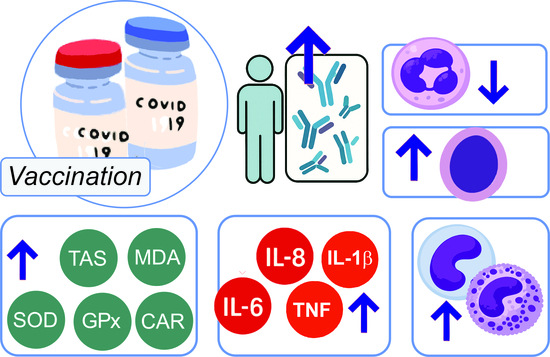
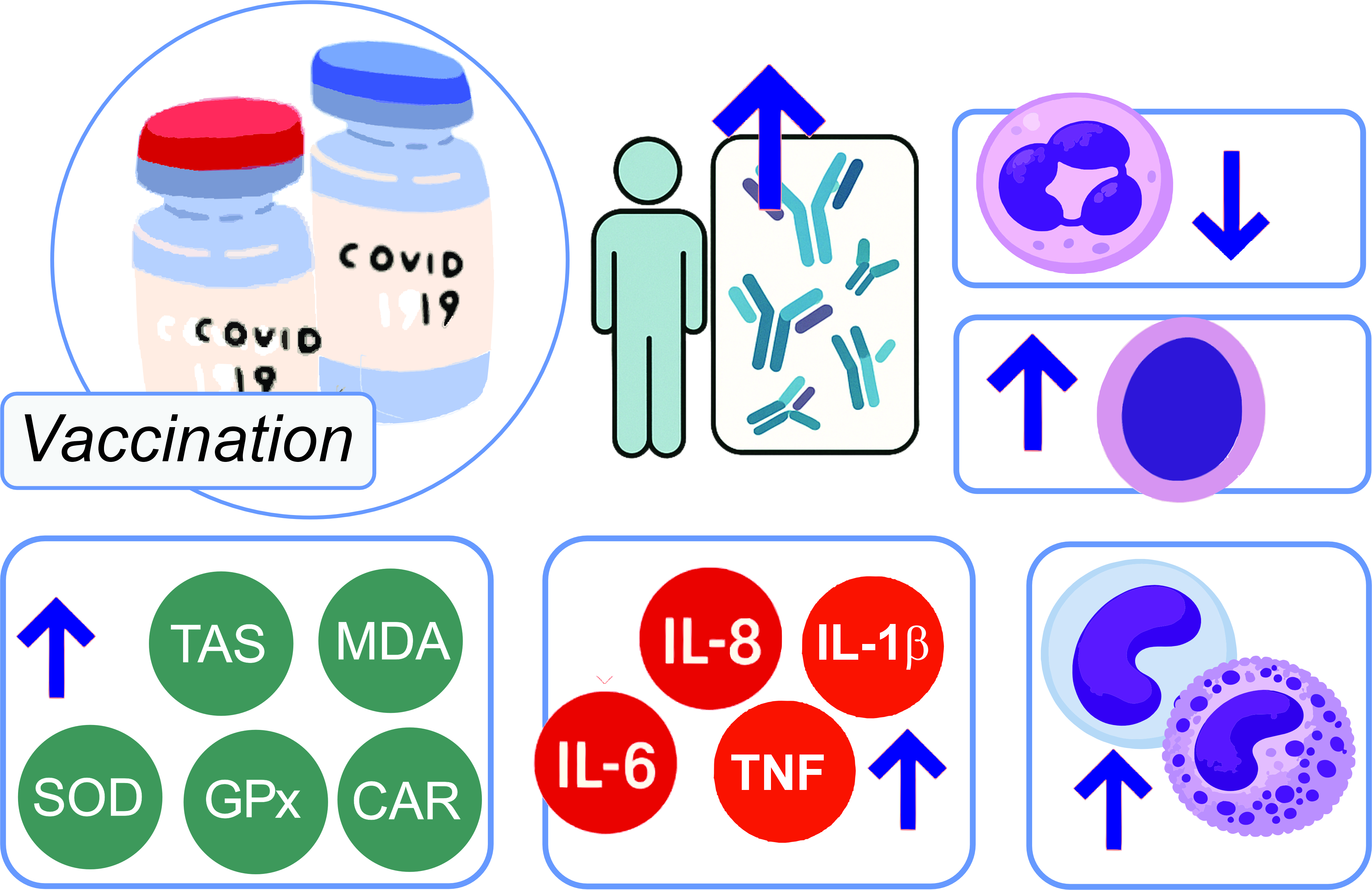
Graphical Abstract

1. Introduction

In December 2019, there was an outbreak of severe pneumonia cases in the city of Wuhan, China, caused by the spread of a new Coronavirus (CoV), causing severe acute respiratory syndrome (SARS-CoV-2) [1,2]. This new virus was named SARS-CoV-2, while the disease it causes was named COVID-19 by the International Committee on Taxonomy of Viruses (ICTV). In March 2020, due to the high spread of the virus worldwide, it was considered a pandemic by the World Health Organization [1,2,3].
With the increasing advance of the COVID-19 pandemic, there was a need for rapid action to develop a vaccine in a very short time frame, as short as possible. Thanks to preclinical development data from vaccines for SARS-CoV and MERS-CoV, the initial exploratory stage was omitted and the production processes were adapted from existing vaccines, and as a result, the clinical phases overlapped and the trials were staggered. The Food and Drug Administration produced a document to guide the development and licensing of vaccines, requiring a minimum efficacy of 50% [4,5]. In Brazil, the AstraZeneca® (ChAdOx1-S) and Pfizer® (BNT162b2) vaccines were the most administered in the state of Rio Grande do Sul [6].
SARS-CoV-2 virus enters the cell through the S protein, divided into the S1 domain, which is essential for binding to the receptor through the receptor-binding domain (RBD), and the S2 domain, essential for the fusion of the viral membrane with the cell membrane [7]. The interaction between SARS-CoV-2 and the renin–angiotensin–aldosterone system (RAAS) impairs homeostasis, as ACE2 facilitates the entry of the virus through the S protein, which binds to the ACE2 receptor in the host cell, infecting the epithelial cells of the airways and initiating a localized inflammation that causes the exacerbated release of cytokines [8]. COVID-19 vaccines induce the endogenous expression of the SARS-CoV-2 spike protein, which can interact with angiotensin-converting enzyme 2 (ACE2) receptors expressed in multiple cell types. This interaction may promote ACE2 internalization and transient modulation of ACE2 availability, mechanisms that have been associated with inflammatory signaling pathways and molecular events partially overlapping with those observed during SARS-CoV-2 infection [9,10].
Neutralizing antibodies target the spike protein block receptor binding or membrane fusion, and those targeting the RBD inhibit its binding to ACE2, blocking the virus entry process [11,12]. Levels of neutralizing antibodies tend to increase with COVID-19 severity, with severe cases exhibiting a more robust humoral immune response compared to mild or asymptomatic infections. Severe disease is also associated with elevated production of pro-inflammatory cytokines, reflecting heightened immune activation [13,14].
Therefore, the aim of this study was to analyze whether there was production of IgG antibodies for COVID-19 in individuals immunized with two doses of the AstraZeneca® (ChAdOx1-S) and Pfizer® (BNT162b2) vaccines for COVID-19 and to evaluate their hematological, biochemical, inflammatory and oxidative/antioxidant parameters in order to understand how our body responds to this immunization.

2. Materials and Methods

2.1. Ethical Aspects

The participants were invited to take part in the investigation and subsequently completed a structured survey designed to collect clinical information. Before participating, they signed the Informed Consent Form. The protocol for this investigation was approved by the Ethics Committee of UNIPAMPA under approval number 4.231.736.

2.2. Study Population

A total of 120 participants took part in the investigation: 49 in the control group, 44 in the AstraZeneca® group, and 27 in the Pfizer® group. The control group used in all analyses consisted of individuals with no prior history of pathological conditions, and samples were collected before the emergence of the COVID-19 pandemic. For the analysis of post-vaccination anti-spike IgG antibody responses, the control group consisted of individuals with prior SARS-CoV-2 infection. This approach enabled a meaningful comparison of antibody responses between vaccinated individuals and the control group, since uninfected subjects would be expected to exhibit undetectable antibody levels, thereby precluding quantitative evaluation of the immune response.
Sample collection was conducted between June and November 2021. For participants vaccinated with Pfizer–BioNTech, the second dose was administered between 9 August and 22 November 2021, whereas for those vaccinated with AstraZeneca, the second dose was administered between 16 July and 18 October 2021. All samples were collected after completion of the vaccination schedule, with variable intervals between the second dose and sample collection. These wide intervals reflect the observational nature of the study, in which the timing of sample collection was not predefined or controlled.
The inclusion criteria required participants to have completed the full vaccination schedule with two doses of the specified vaccines. Exclusion criteria included incomplete vaccination (only one dose), vaccination with more than two doses of any vaccine, the presence of COVID-19 symptoms at the time of sample collection or within the preceding three days, age under 18 or over 60 years, and vaccination with other vaccines available in the public health system due to shorter intervals between doses and limited availability during the study period.
The most commonly used vaccines in Brazil rely on different immunization technologies. AstraZeneca® uses a non-replicating chimpanzee adenoviral vector to express the SARS-CoV-2 spike protein, with 62% to 67% efficacy after two doses given 4 to 12 weeks apart. Pfizer® employs synthetic mRNA technology encoding the same protein, showing approximately 95% efficacy after two doses administered at least 21 days apart [15].

2.3. Sample Obtaining and Preparing

Blood samples were collected from participants vaccinated with two doses of Pfizer® (BNT162b2) and AstraZeneca® (ChAdOx1-S) COVID-19 vaccines. The control group consisted of participants who had never been vaccinated. Blood was collected in tubes with EDTA for plasma and BD Vacutainer® for serum. Plasma was separated by centrifugation, aliquoted, and stored at −80 °C. The analyses were conducted at the Cytology and Hematology Laboratory of the Federal University of Pampa (UNIPAMPA, Uruguaiana, RS, Brazil) and at BioSul Laboratory, also located in Uruguaiana.

2.4. Analytical Determinations

2.4.1. Immunoglobulin G

The quantification of IgG antibodies against COVID-19 was performed on serum samples using the commercial SARS-CoV-2 IgG II kit (Abbott®) and chemiluminescence as the analytical method (Architect i1000SR, Abbott Laboratories®, Abbott Park, IL, USA). This assay detects immunoglobulin G (IgG) antibodies, including neutralizing antibodies, directed against the receptor-binding domain (RBD) of the S1 subunit of the SARS-CoV-2 spike protein. Data were expressed in units per milliliter (U/mL), with antibody production considered positive for values above 50 U/mL and negative for values below this threshold.

2.4.2. Inflammatory Cytokines

The quantification of inflammatory markers (IL-1β, IL-6, IL-8, IL-10, and C-reactive protein) was performed using serum samples and laboratory kits from Thermo Fisher Scientific® (Waltham, MA, USA). The analytical method employed was ELISA. Results were expressed in pg/mL for interleukins and in mg/mL for C-reactive protein.

2.4.3. Hematological Parameters

Whole-blood samples were used for hematological measurements, conducted with a Sysmex XN-550™ flow cytometer (Kobe, Hyogo, Japan). Differential blood cell counts were expressed as percentages, while platelet and leukocyte counts were reported in 1000 cells/μL. Hemoglobin levels were expressed in g/dL.

2.4.4. Biochemical Parameters

LDH was quantified using a LabTest kit by a spectrophotometric assay using a LabMax 240 (Labtest Diagnóstica S.A.®, Lagoa Santa, MG, Brazil) whit monitoring at 545 nm and expressed in U/L. Ferritin was determined using a kit from Abbott® and Architect equipment (Abbott Laboratories®, Abbott Park, IL, USA) in a chemiluminescent assay and the results was reported in g/dL. The quantification of vitamin D was performed in serum samples using a dry chemistry method, and data were expressed in ng/mL.

2.4.5. Oxidative Stress Analysis

Plasma samples were used to analyze oxidative stress markers. Protein carbonylation was quantified following the protocol developed by Levine et al. (1990) [16], with absorbance measured at 370 nm using a SpectraMax M5 plate reader (Molecular Devices®, Sunnyvale, CA, USA). Results were expressed as nmol of carbonyl/mg of protein. Oxidative damage to lipids was assessed via the thiobarbituric acid reactive substance (TBARS) method described by Ohkawa et al. (1979) [17]. Quantification was performed at 532 nm using a spectrophotometer, with results expressed as nmol of malondialdehyde (MDA)/mL.
Serum samples were used to determine vitamin C levels and TAS. Vitamin C quantification followed protocol developed by Silva et al. (2001), with absorbance measured at 520 nm using a BioSpectro SP-22 spectrophotometer (Shimadzu®, Kyoto, Japan) [18]. Results were expressed in mg/L [18]. TAS was quantified using the RANDOX kit (São Paulo, Brazil), with readings at 600 nm on a Shimadzu spectrophotometer (Shimadzu Corporation®, Kyoto, Japan), and results were expressed as nmol/L.
Catalase activity was measured using Aebi’s method (1984), with absorbance read on a Shimadzu spectrophotometer at 240 nm, and results were expressed as U/mg of protein [19]. Superoxide dismutase (SOD) activity was determined using the RANDOX kit (São Paulo, Brazil), with absorbance recorded at 505 nm using a BioSpectro spectrophotometer. Results were expressed as U/g of protein. Glutathione peroxidase (GPx) activity was assessed using the RANDOX kit, with absorbance measured at 340 nm on a BioSpectro SP-22 spectrophotometer (Shimadzu, Kyoto, Japan), and results were reported as U/g of hemoglobin. Total protein levels were determined using the Labtest kit (Labtest Diagnóstica S.A.®, Lagoa Santa, MG, Brazil) at 545 nm, with results expressed in g/dL.

2.5. Data Analysis

The laboratory determinations were expressed as mean ± standard deviation, and data normality was assessed using Shapiro–Wilk test. Subsequently, the values of the three groups were compared using non-parametric analysis of variance, followed by Dunn’s test. To obtain an overview of the dataset, Principal Component Analysis (PCA) was performed. p-values below 0.05 were considered statistically significant. All analyses were conducted using GraphPad Prism version 9.2.

3. Results

3.1. Characterization of the Study Population

The study included 120 participants: 44 vaccinated with AstraZeneca® (33.09 ± 11.35 years), 27 vaccinated with Pfizer® (30.52 ± 8.47 years), and 49 unvaccinated controls (28.18 ± 6.23 years). For the AstraZeneca® group, the interval between the first and second doses was less than 3 months. In contrast, participants vaccinated with Pfizer® had an interval of approximately 4 months between doses (Table 1).

3.2. Inflammatory Markers

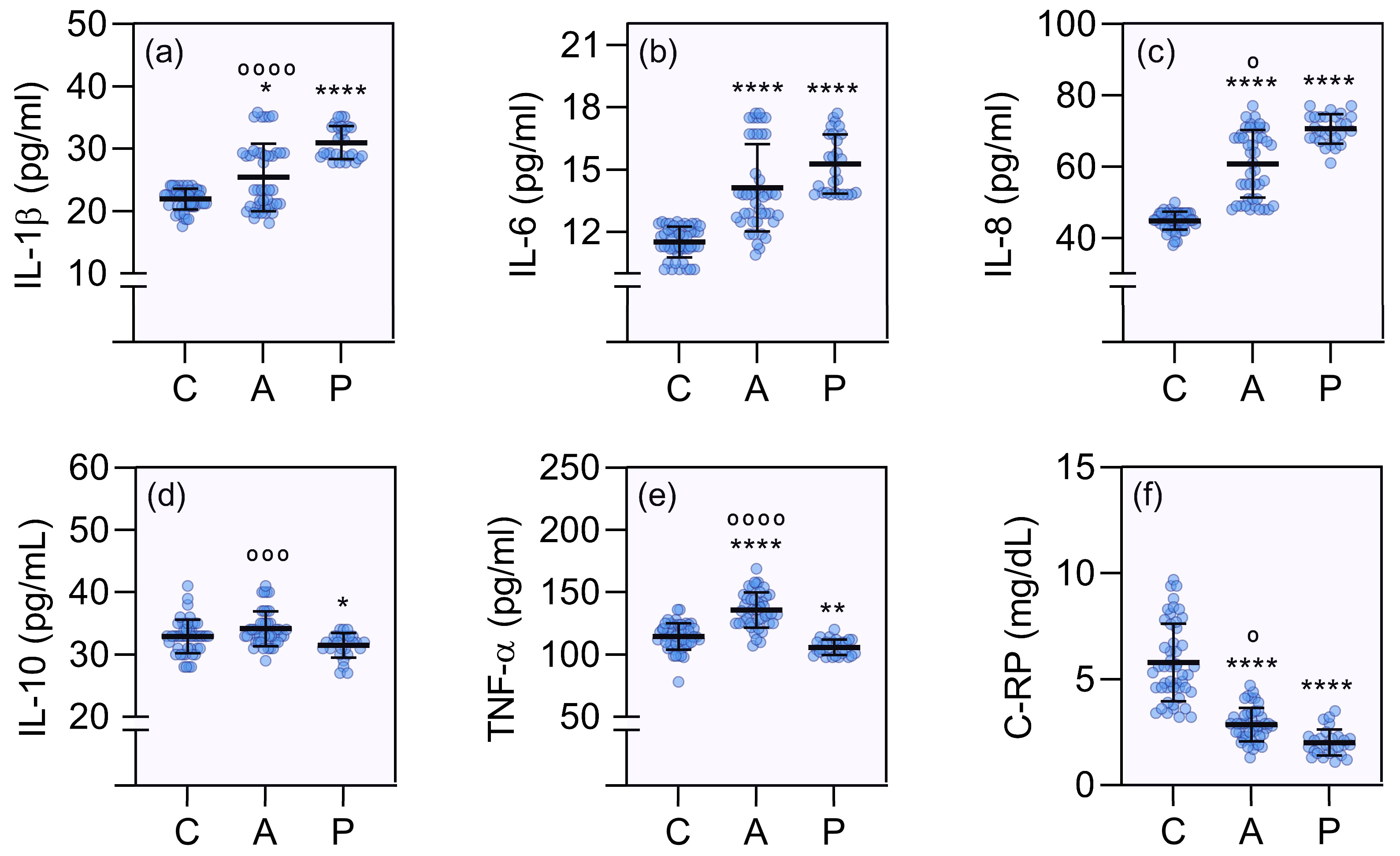
Both vaccination protocols increased the levels of IL-1β compared to the control group, with this difference being more pronounced in the Pfizer group, as shown in Figure 1a. For IL-6 and IL-8 (Figure 1b,c), both vaccination schemes similarly elevated the serum levels. IL-10 and TNF-α were affected to a lesser extent by the treatments, as depicted in Figure 1d,e. Conversely, vaccination with both protocols reduced the levels of C-reactive protein (CRP), as illustrated in Figure 1f. When comparing the two vaccines, the most significant changes were observed in IL-1β and TNF-α levels, which were higher in the AstraZeneca group.

3.3. Hematological Parameters

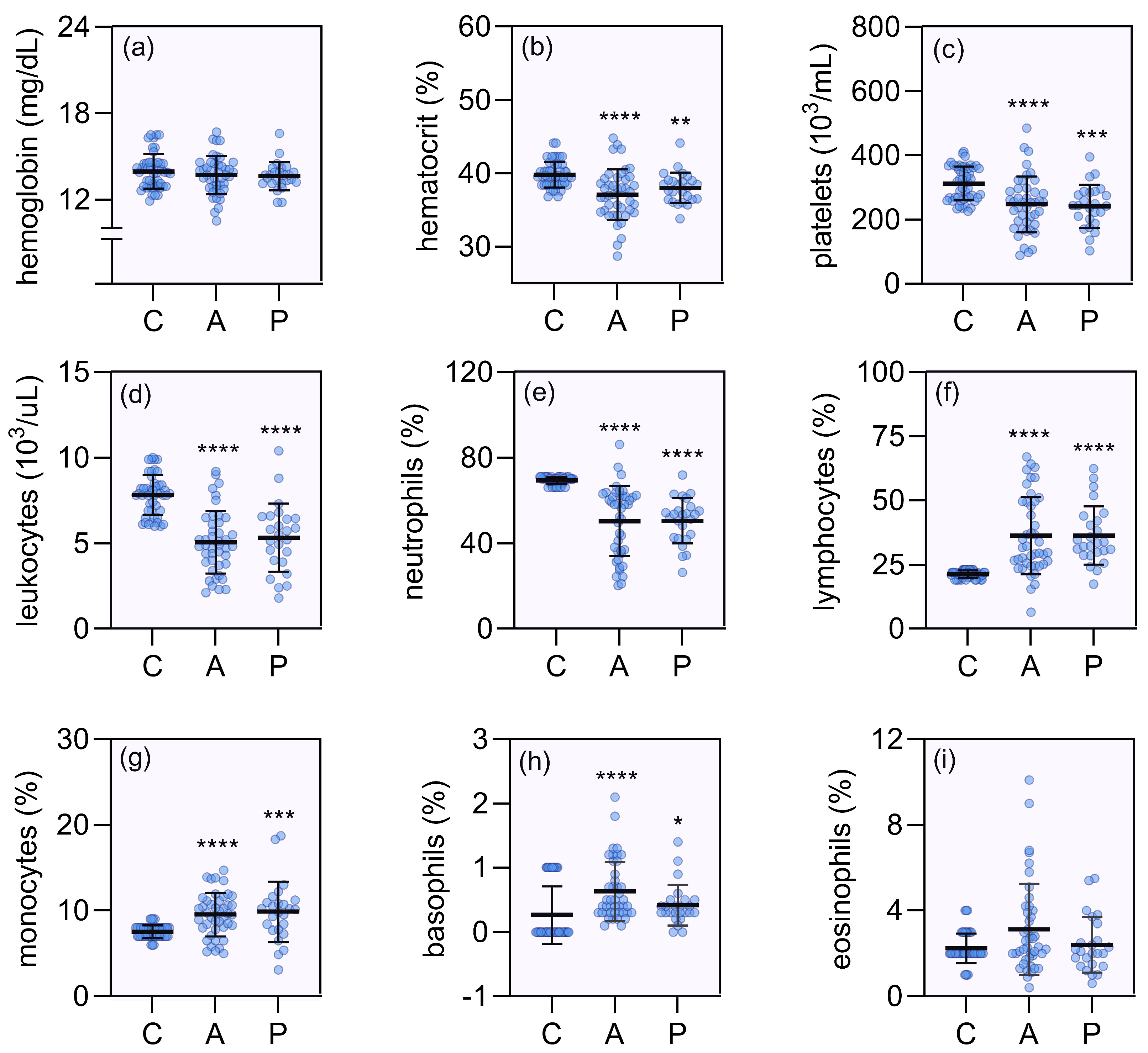
The hemoglobin content was not affected by either vaccination protocol (Figure 2a); however, both experimental groups showed a decrease in hematocrit values (Figure 2a). Platelet counts were significantly reduced by both vaccination protocols, as shown in Figure 2c. Regarding white blood cell counts, vaccination with AstraZeneca® and Pfizer® resulted in decrease in total leukocytes (Figure 2d) and neutrophils (Figure 2e). Conversely, vaccination increased lymphocytes (Figure 2f), monocytes (Figure 2g), and, to a lesser extent, basophils (Figure 2h). Eosinophil counts were not affected by either vaccine (Figure 2i). No significant differences in hematological parameters were observed between the Pfizer® and AstraZeneca® vaccines.

3.4. Biochemical Parameters

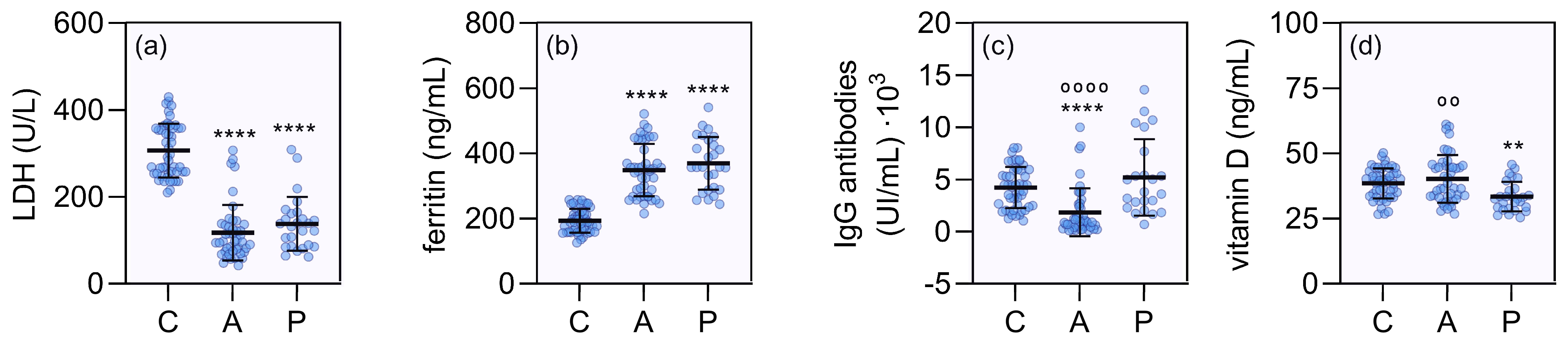
Regarding the biochemical parameters, levels of lactate dehydrogenase, ferritin, total IgG antibodies and vitamin D were investigated. Both vaccination protocols produced intense decrease in lactate dehydrogenase levels (Figure 3a) and increase in ferritin levels (Figure 3b). Post-vaccination anti-spike IgG response antibody levels were lower in the AstraZeneca® group, showing a significant difference compared to both the control and Pfizer® groups, as shown in Figure 3c. Regarding vitamin D levels, a slight decrease was observed in the Pfizer® group compared to the control and AstraZeneca® groups (Figure 3d).

3.5. Oxidative Stress Parameters

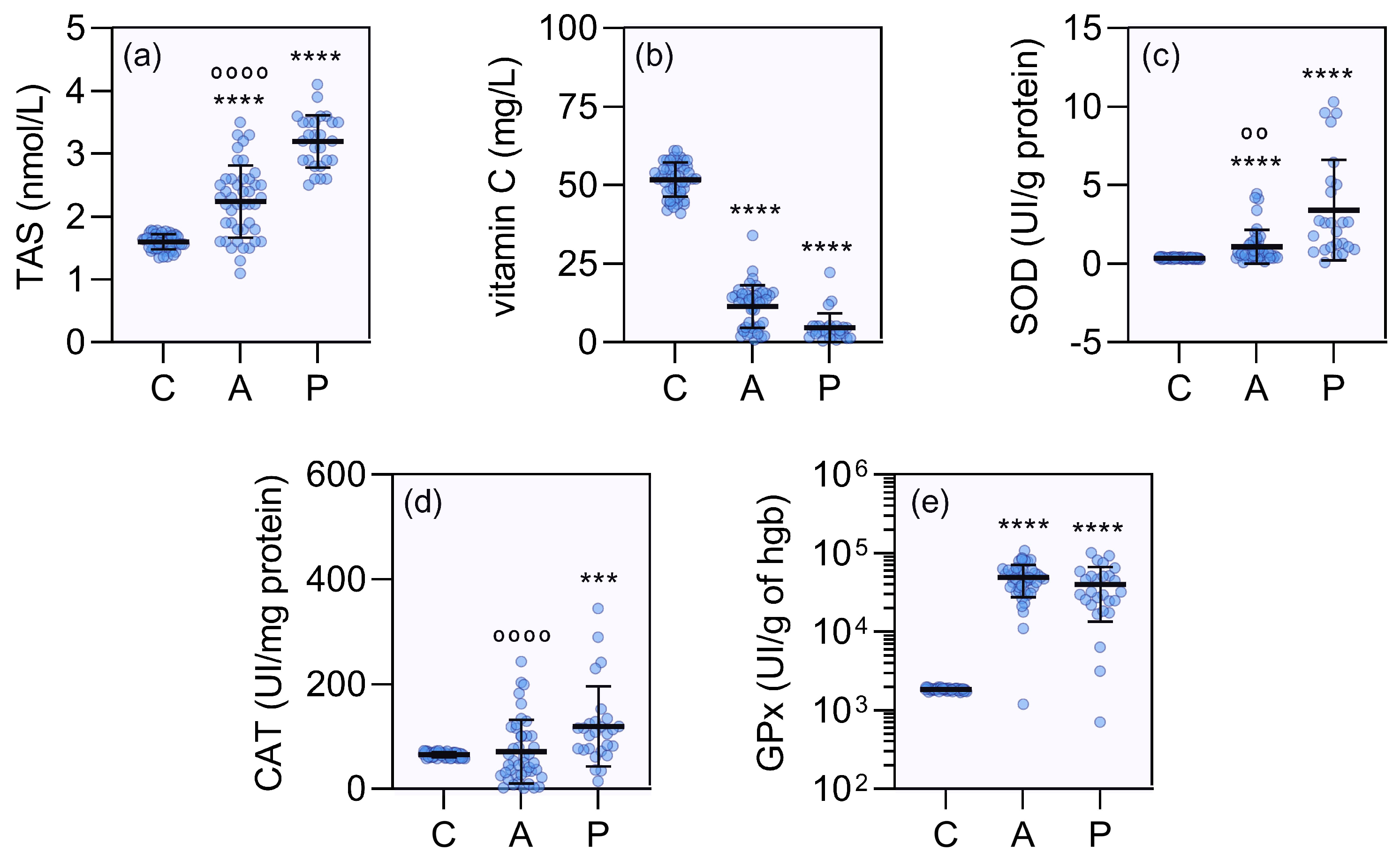
The role of vaccines in modulating oxidative stress markers was also investigated. Both vaccination protocols led to increases in certain antioxidant systems, as evidenced by the significant elevations in TAS (Figure 4a), SOD (Figure 4c), and GPx (Figure 4e). However, CAT levels were specifically affected by the Pfizer® vaccine, as shown in Figure 4d. The enhancement in the activity of antioxidant defense systems occurred concomitantly with a depletion of vitamin C in both groups (Figure 4b). Notably, the Pfizer® vaccine elicited a more pronounced response in these parameters compared to the AstraZeneca® vaccine, with a significant difference.
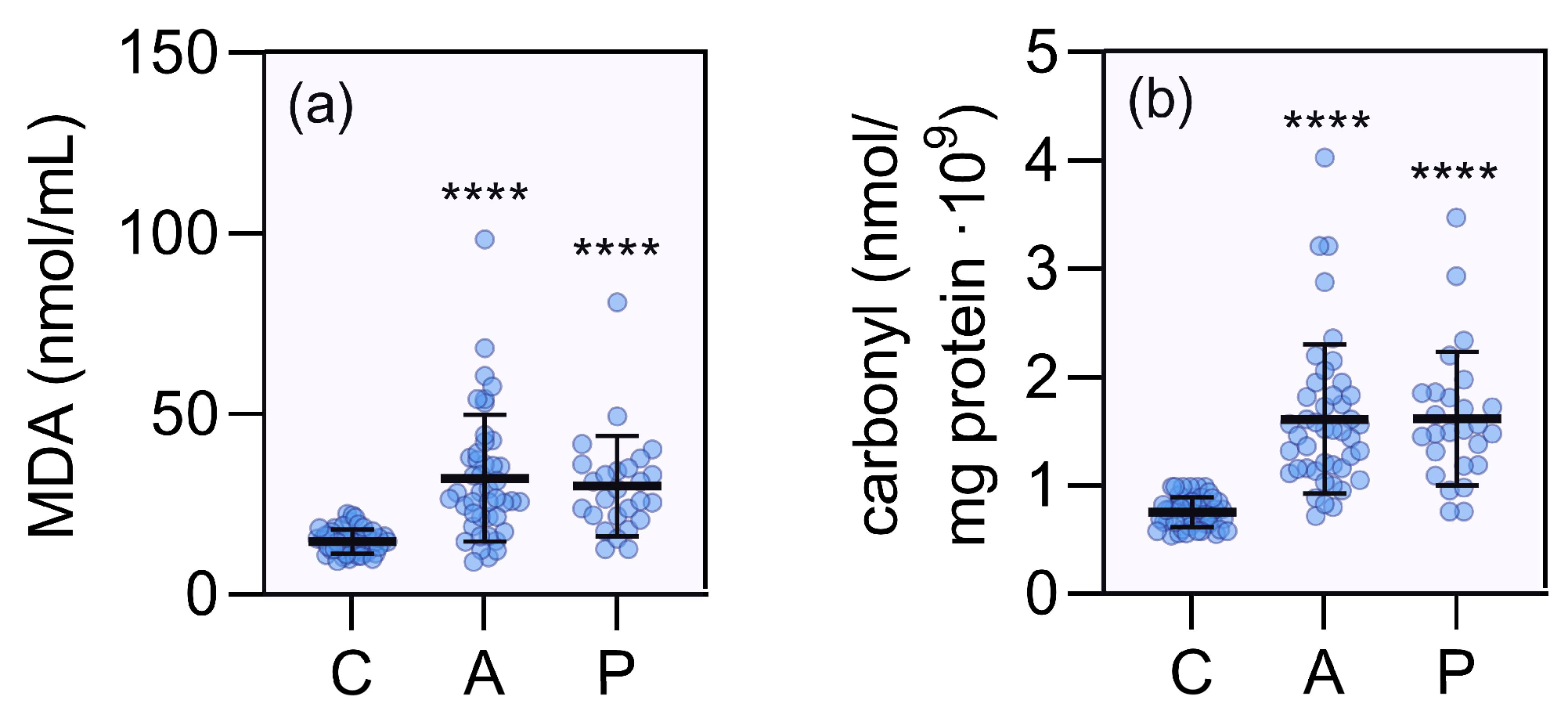
Regarding oxidative stress markers, damage to lipids was quantified using the TBARS assay, while protein damage was assessed using the carbonyl assay. Both vaccination protocols resulted in a similar increase in TBARS (Figure 5a) and carbonyl levels (Figure 5b). No significant differences in TBARS or carbonyl levels were observed between the Pfizer® and AstraZeneca® vaccines.

3.6. Principal Component Analysis

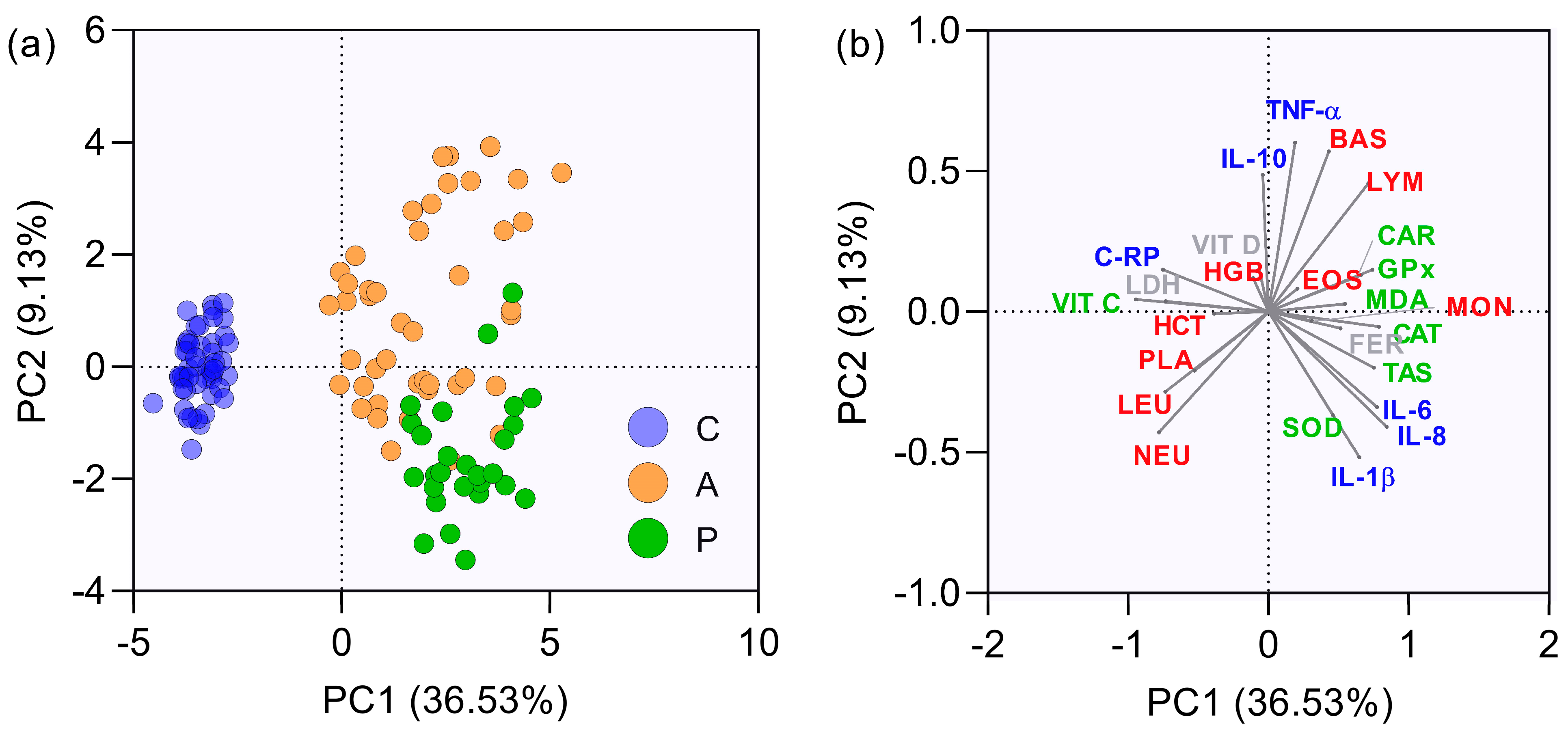
To better summarize the key laboratory parameters for participant clustering, a Principal Component Analysis (PCA) was conducted. Initially, three separate PCA analyses were performed for inflammatory, hematological, and oxidative stress-related parameters. In all cases, the control group was clearly distinguished, while the vaccinated groups showed varying degrees of overlap. Based on these results, and to gain an insight into the relationships among all variables, a unified PCA incorporating all parameters simultaneously was carried out, as represented in Figure 6. Importantly, this analysis maintained an observations-to-variables ratio of approximately 4.8, ensuring adequate model stability and robustness.
The original 25 variables, when reduced to PC1 and PC2, accounted for a cumulative 45.66% of data variability. Figure 6a shows that the control group is positioned on the left side of the plot, with a high degree of separation from the experimental groups along the PC1 axis, which are placed on the right. Lower levels of IL-1β, IL-6, IL-8, GPx, and TAS, combined with higher levels of total leukocytes, percentage of neutrophils, LDH, and vitamin C, contribute to the distinct placement of the control group relative to the two experimental groups. These findings are supported by the strong horizontal projection of the vectors for these variables in Figure 6b. The Pfizer® and AstraZeneca® groups exhibit partial separation along the PC2 axis.
In Figure 6a, the points with the lowest PC2 values correspond to the Pfizer® group. This group exhibited higher levels of TAS, SOD, IL-1β, IL-6, and IL-8, as previously shown in earlier figures. The vectors associated with these variables display high negative projections on the y-axis, as observed in Figure 6b, contributing significantly to the negative PC2 values. Additionally, the separation along the y-axis is influenced by vectors linked to IL-10 and TNF-α levels, which were notably higher in the AstraZeneca® group.
Figure 6b also reveals important expected correlations, validating our analysis. These include the inverse correlations between vitamin C and MDA, lymphocytes and neutrophils, as well as IL-10 and certain inflammatory cytokines (IL-1β, IL-6, and IL-8).

4. Discussion

Overall, the findings indicate that both vaccine platforms effectively elicited a humoral immune response, accompanied by measurable changes in inflammatory, oxidative, and antioxidant parameters. Although most inflammatory markers increased after vaccination, C-reactive protein was lower in both groups, suggesting the absence of a sustained systemic inflammatory response. The lack of clinically relevant alterations in the hematological profile further supports the short-term safety of both vaccination protocols. The observed reduction in LDH and ferritin levels may reflect a normalization of metabolic and inflammatory status following immunization. In parallel, the increase in key antioxidant defenses, such as superoxide dismutase, glutathione peroxidase, and total antioxidant status, suggests an adaptive redox response to vaccination. Nevertheless, the elevation of oxidative stress markers, including TBARS and protein carbonyls, indicates that vaccination is associated with transient oxidative challenges.
Regarding the data collected in the questionnaire, data from the Rio Grande do Sul Health Department, updated on 30 April 2023, show that the majority of the state’s population was vaccinated in greater numbers with the vaccines evaluated in this study, AstraZeneca® and Pfizer®. Regarding age groups, data from the Department also show that the age group that was most vaccinated with the first and second doses was 18 to 29 years old, corroborating the data found in this study. Regarding SARS-CoV-2 variants, the World Health Organization classifies viral lineages as variants of interest or variants of concern based on criteria such as transmissibility, epidemiological impact, and implications for public health interventions. Among the major variants that have reached this status globally are Alpha (B.1.1.7), Beta (B.1.351), Gamma (P.1), Delta (B.1.617.2), and Omicron (B.1.1.529) [20].
Concerning neutralizing antibodies, previous investigations have demonstrated that the Pfizer-BioNTech vaccine elicits a stronger neutralizing antibody response and provides higher levels of protection against SARS-CoV-2. These findings are consistent with our results, as individuals vaccinated with Pfizer-BioNTech also exhibited markedly higher antibody production compared to the control group [21,22]. Previous investigations measuring anti-spike IgG antibody levels in vaccinated and unvaccinated individuals have consistently shown significantly higher antibody titers in vaccinated populations [23]. However, it is worth remembering that the study control group for neutralizing antibodies was composed of individuals with COVID-19 infection, and since the reference value for neutralizing antibodies was above 50 U/mL, it can be observed that in this control group there was a production of neutralizing antibodies, and that it also occurred in the group vaccinated with AstraZeneca, which showed no significant difference in relation to the control group but which also produced neutralizing antibodies.
The assay employed in this study serves as a supportive tool for evaluating the immune status of individuals by detecting IgG antibodies directed against the receptor-binding domain (RBD) of the SARS-CoV-2 spike protein. The gold standard for assessing vaccine-induced humoral immunity remains viral neutralization assays, including plaque reduction neutralization tests using the live virus. Although serological assays are widely applied, they are not fully standardized. Differences in antigen targets (such as full-length spike protein, RBD, S1, or S2 subunits) and variations in laboratory protocols limit the direct comparability of results across studies [24]. Nevertheless, serological methods are extensively used in research to quantify immune responses following infection or vaccination. In the present study, this assay was employed exclusively for the evaluation of immune responses and not for diagnostic purposes [25].
Since the second doses of the vaccines were administered between July and November 2021, the circulation of the Delta variant was increasing during this period, accounting for approximately 25% of cases in July and reaching up to 96% in October, according to epidemiological data from Rio Grande do Sul, Brazil [26]. Although the vaccines were developed based on the original SARS-CoV-2 strain identified in December 2019, accumulating evidence indicates that both the AstraZeneca and Pfizer vaccines reduced susceptibility to infection by the Delta variant, with the Pfizer vaccine showing higher efficacy, reaching approximately 84% after the second dose [27,28].
The vaccines used during this period were based on the ancestral spike (S) protein, and the antibody responses elicited were primarily directed against this antigen. The observed decline in correlations across variants (wild-type > Alpha > Delta > Beta > Gamma) reflects the increasing antigenic distance among SARS-CoV-2 variants and indicates that assays based on the 2019 strain progressively lose accuracy when applied to more divergent variants circulating in 2021. Consequently, antibody titers measured against the ancestral strain may underestimate the true neutralizing capacity against these variants [29]. Nevertheless, given that the vaccines administered in 2021 were derived from the ancestral virus, the measurement of antibody titers against the original strain remained informative for assessing vaccine-induced immune responses in the epidemiological context of that period.
Stebbings et al. (2022) [30] reported that there were modest/transient changes in hematologic parameters in mice induced by the AstraZeneca vaccine immediately after immunization, resulting in lower platelets 24 to 72 h after immunization, lower total white blood cell counts 12 to 24 h after immunization, and higher neutrophil counts 2 h after immunization. Regarding neutrophils, they say that they correspond to the expected initial cytokine and chemokine responses to adenoviral infection [30]. Previous studies have reported transient hematological changes following vaccination with different platforms. In a randomized clinical trial, a high frequency of neutropenia was observed among individuals vaccinated with the ChAdOx1 nCoV-19 (AstraZeneca) vaccine, affecting approximately 46% of participants, whereas only 7% of individuals in the control group, who received a meningococcal conjugate vaccine, presented this alteration [31]. Consistently, evaluations of neutrophil counts before and after vaccination with different Shigella vaccine platforms demonstrated that post-vaccination neutropenia is a common and generally benign finding [32]. In addition, an increase in lymphocyte counts following vaccination with adenovirus-based (AstraZeneca) and mRNA-based (Moderna) vaccines has been reported in healthcare professionals, indicating activation of the adaptive immune response and expansion of lymphocyte subpopulations involved in antiviral defense [33]. In the present study, no significant changes in hemoglobin levels were observed; however, a reduction in hematocrit was detected in the vaccinated groups. Although rare, immune-mediated hematological disorders have been described following vaccination. In this context, cases of aplastic anemia have been reported after administration of mRNA vaccines, such as Pfizer-BioNTech, potentially associated with molecular mimicry between the spike protein and hematopoietic epitopes [34].
Platelet, total white blood cell, and neutrophil counts remained unchanged at subsequent time points, suggesting that the changes induced by AstraZeneca vaccination are transient and rapidly resolved after immunization. In our study, platelets appear decreased in the vaccine groups but are still within the expected reference values (150 to 450·103/uL). A study by Kalaska and collaborators (2022) also shows that AstraZeneca vaccine did not affect blood clotting, platelet count, and activation markers in rats [35]. Rare but clinically relevant adverse hematological events have also been reported following vaccination with adenoviral vector-based platforms. A landmark study identified cases of immune thrombotic thrombocytopenia associated with the ChAdOx1 nCoV-19 (AstraZeneca) vaccine, characterized by thrombosis in combination with thrombocytopenia and platelet-activating antibodies against platelet factor 4 [36]. Mechanistic insights into adenovirus–platelet interactions have been previously described, showing that adenoviral vectors can interfere with platelet adhesion and promote platelet activation. In this context, von Willebrand factor and P-selectin were shown to contribute to platelet activation and accelerated platelet clearance following adenovirus exposure [37].
Regarding interleukins, Park et al. (2021) [38] explain that there is a cascade of immune reaction after vaccination, as the COVID-19 vaccine is recognized by MHC I and II molecules on antigen-presenting cells and activates T cells and B cells. In antigen-presenting cells, mRNA detects TLR7 and 8, resulting in the activation of the descending cascade and secretion of pro-inflammatory cytokines and type I interferons is stimulated. Inflammatory interleukins were also elevated, while interleukin 10, which is anti-inflammatory, was slightly elevated only in those vaccinated with AstraZeneca [38]. Wang et al. (2023) conducted a study in COVID-19 patients who were consecutively hospitalized during three periods of the pandemic, correlated with the original lineage, Delta, and Omicron. Levels of the inflammatory markers ferritin, LDH, and C-reactive protein were lower in the period of the Omicron variant compared to that of Delta, with more than 80% of patients in 2022 receiving two or more doses of the available vaccines [39]. In our study, C-reactive protein was decreased, but C-reactive protein was within its reference values (<6 mg/dL). In contrast, Ali et al. (2024) reported that C-reactive protein is generally elevated after vaccination, reflecting the acute phase of the immune response; however, in the present study, sample collection was not performed immediately after vaccination [40]. A recent study evaluating individuals who had recovered from COVID-19 and were subsequently vaccinated with Pfizer-BioNTech or CoronaVac reported a reduction in C-reactive protein (CRP) levels after vaccination, consistent with evidence that vaccine-induced systemic inflammation is transient and tends to resolve over time [41]. Furthermore, inflammation levels, as quantified by CRP and IL-6, were significantly lower in patients with antibody titers > 1200 BAU/mL, as demonstrated in a multicenter cohort study including 1031 hospitalized COVID-19 patients from five hospitals [42].
Studies assessing lactate dehydrogenase (LDH) levels before and after COVID-19 vaccination have reported stable concentrations following immunization with Pfizer-BioNTech and CoronaVac, indicating no significant vaccine-associated increase in this marker of cellular damage [43]. In contrast, investigations involving individuals with confirmed COVID-19 infection have shown that unvaccinated patients exhibit higher LDH levels compared to vaccinated individuals, suggesting a protective effect of vaccination against excessive tissue injury [44]. As elevated LDH levels are associated with disease severity and unfavorable clinical outcomes, these findings support the interpretation that vaccination induces a controlled and transient inflammatory response, characterized by cytokine activation and increased acute-phase reactants, while simultaneously limiting markers of severe systemic inflammation and cellular damage, such as CRP and LDH.
The total proteins in this study were shown to be significantly reduced, and Nagumo et al. (2014) mention that albumin, the most abundant protein in plasma, is an antioxidant and plays an important role in the homeostasis of the intravascular environment, with low albumin concentrations associated with a decrease in antioxidant capacity, since antioxidants, in general, are not present in large quantities in plasma, causing albumin to become a dominant antioxidant in plasma, which may explain why total protein levels are so low [45].
A study by Lymperaki et al. (2022) showed that SARS-CoV-2 infection led to a lower immune response when compared with a second dose of vaccination [46]. Province et al. (2022) [47] conducted a study that included young adults from 21 to 24 years old who had mild symptoms of COVID-19 and were evaluated monthly for a period of 6 months. When TBARS and carbonyl assessments were performed, it was found that TBARS levels were 5× higher and carbonyl levels 6× higher, suggesting that lipid peroxidation and damage to carbonyl proteins can persist for months [47]. However, a study by Mehri et al. (2021) showed that SOD levels were greatly increased in relation to the also high levels of oxidative stress, acting as a corrective mechanism in order to neutralize the effects of oxidative stress [48]. It also showed that SOD and CAT are involved and play an important role in this neutralization of free radicals, and that SOD and GPx are increased in individuals with COVID-19. These studies corroborate our findings, as there was also an increase in TBARS and carbonyl and an increase in antioxidant levels in our cohort. However, Mehri’s study found no significant difference in total antioxidant status, while ours showed an increase in antioxidant levels.
Vaccines based on adenoviral vectors, such as AstraZeneca, have been reported to elicit more pronounced pro-inflammatory responses than mRNA-based platforms, including Pfizer-BioNTech [49]. Enhanced inflammatory activation is closely associated with increased oxidative stress [50]. Consequently, alterations in the consumption and regulation of antioxidant defenses, such as catalase, may occur, potentially explaining the lower catalase levels observed in individuals vaccinated with AstraZeneca compared to those receiving Pfizer-BioNTech. These observations are consistent with our findings, which demonstrated increased lipid peroxidation and protein oxidation, as evidenced by elevated TBARS and carbonyl levels, alongside an upregulation of antioxidant parameters.
As reported in other investigations under a wide range of contexts, higher levels of serum vitamin C presented a negative correlation with lipid peroxidation, causing a decrease in TBARS [51,52]. In the present study, it was observed that vitamin C levels were significantly reduced, so it may have been consumed due to high levels of TBARS and protein carbonylation. The multivariate approach (Figure 6) also revealed inverse correlations between neutrophil and lymphocyte counts, as well as between IL-10 and the pro-inflammatory cytokines IL-1β, IL-6, and IL-8.
Transient neutropenia has been described following vaccination with different platforms and is generally considered benign [32]. The observed inverse cytokine correlations are consistent with the well-established anti-inflammatory role of IL-10 in counterbalancing pro-inflammatory mediators, particularly within the immune response elicited after COVID-19 vaccination. Moreover, cytokines act as key regulators of inflammation and adaptive immune activation following vaccination, contributing to the development and maintenance of vaccine-induced immunity [53].
Regarding vitamin D, available evidence suggests no significant association between vitamin D status and the antibody response to vaccination with the Pfizer vaccine in healthy adult populations [54]. Furthermore, in relation to the response to the first or second vaccine dose, neither the maximum antibody concentrations achieved nor their decline over time appear to be influenced by vitamin D status [55]. These data corroborate our study, as there was no difference between our control group and the AstraZeneca group, while in the Pfizer group, there was a decrease in vitamin D, but it was still within the reference values (above 30 ng/mL).

5. Conclusions

Based on the results presented, it can be suggested that vaccination with AstraZeneca® and Pfizer® induces the production of IgG antibodies, confirming their efficacy in providing immunization, but this production is more pronounced in individuals vaccinated with Pfizer® compared to AstraZeneca®. Regarding biochemical, inflammatory, and hematological parameters, only minor changes were observed, remaining within their baseline values, and they may have been due to vaccination. Notably, antioxidant defense levels increased, which may represent a compensatory response to elevated markers of oxidative stress in lipids and proteins. This oxidative stress may also have contributed to the reduction in vitamin C and total protein levels, as these were likely consumed to counteract oxidative damage.

Author Contributions

L.S.d.S.: writing—original draft, writing—review and editing, investigation, methodology. G.E.S.: investigation, methodology. C.B.P.: investigation, methodology. E.G.S.: investigation, methodology. M.L.d.S.: investigation, methodology. L.T.M.: investigation, methodology. S.M.d.M.: investigation, methodology. M.P.M.: investigation, methodology. I.L.G.: formal analysis, writing—review and editing. I.D.d.S.: supervision, writing—review and editing. V.M.: writing—original draft, writing—review and editing, supervision, methodology, conceptualization. All authors have read and agreed to the published version of the manuscript.

Funding

No specific funding was received for this study.

Institutional Review Board Statement

The protocol for this investigation was approved by the Ethics Committee of UNIPAMPA under approval number 4.231.736, approval date 24 August 2020.

Informed Consent Statement

Informed consent was obtained from all subjects involved in this study.

Data Availability Statement

The data supporting the conclusions of this article will be made available by the corresponding authors on request.

Acknowledgments

The authors thank the Brazilian agencies CNPq, CAPES and FAPERGS for their support. The authors also acknowledge the clinical analysis laboratory Biosul for performing the analyses.

Conflicts of Interest

The authors declare that they have no known competing of interest.

References

  1. Farahmandfar, R.; Asnaashari, M.; Hesami, B. Monitoring of new coronavirus (SARS-CoV-2): Origin, transmission, and food preservation methods. J. Food Process. Preserv. 2021, 45, e15564. [Google Scholar] [CrossRef]
  2. Shereen, M.A.; Khan, S.; Kazmi, A.; Bashir, N.; Siddique, R. COVID-19 infection: Emergence, transmission, and characteristics of human coronaviruses. J. Adv. Res. 2020, 24, 91–98. [Google Scholar] [CrossRef] [PubMed]
  3. Goodnow, C.C. COVID-19, varying genetic resistance to viral disease and immune tolerance checkpoints. Immunol. Cell Biol. 2021, 99, 177–191. [Google Scholar] [CrossRef] [PubMed]
  4. Krammer, F. SARS-CoV-2 vaccines in development. Nature 2020, 586, 516–527. [Google Scholar] [CrossRef] [PubMed]
  5. Lima, E.J.d.F.; Almeida, A.M.; Kfouri, R.d.Á. Vaccines for COVID-19—State of the art. Rev. Bras. Saúde Matern. Infant. 2021, 21, 13–19. [Google Scholar] [CrossRef]
  6. SES_RS Monitoramento da Imunização COVID-19. Available online: https://vacina.saude.rs.gov.br/ (accessed on 1 November 2025).
  7. Moazzam, M.; Sajid, M.I.; Shahid, H.; Butt, J.; Bashir, I.; Jamshaid, M.; Shirazi, A.N.; Tiwari, R.K. Understanding COVID-19: From origin to potential therapeutics. Int. J. Environ. Res. Public Health 2020, 17, 5904. [Google Scholar] [CrossRef]
  8. Sieck, G. Physiology in perspective: A key role of physiology in understanding COVID-19. Physiology 2020, 35, 286–287. [Google Scholar] [CrossRef]
  9. Cao, Z.; Wu, Y.; Faucon, E.; Sabatier, J.M. SARS-CoV-2 & COVID-19: Key-roles of the ‘Renin-Angiotensin’ system/vitamin D impacting drug and vaccine developments. Infect. Disord.-Drug Targets 2020, 20, 348–349. [Google Scholar]
  10. Angeli, F.; Reboldi, G.; Trapasso, M.; Zappa, M.; Spanevello, A.; Verdecchia, P. COVID-19, vaccines and deficiency of ACE2 and other angiotensinases. Closing the loop on the “Spike effect”. Eur. J. Intern. Med. 2022, 103, 23–28. [Google Scholar] [CrossRef]
  11. Du, L.; Yang, Y.; Zhang, X. Neutralizing antibodies for the prevention and treatment of COVID-19. Cell. Mol. Immunol. 2021, 18, 2293–2306. [Google Scholar] [CrossRef]
  12. Wajnberg, A.; Amanat, F.; Firpo, A.; Altman, D.R.; Bailey, M.J.; Mansour, M.; McMahon, M.; Meade, P.; Mendu, D.R.; Muellers, K.; et al. Robust neutralizing antibodies to SARS-CoV-2 infection persist for months. Science 2020, 370, 1227–1230. [Google Scholar] [CrossRef]
  13. Legros, V.; Denolly, S.; Vogrig, M.; Boson, B.; Siret, E.; Rigaill, J.; Pillet, S.; Grattard, F.; Gonzalo, S.; Verhoeven, P.; et al. A longitudinal study of SARS-CoV-2-infected patients reveals a high correlation between neutralizing antibodies and COVID-19 severity. Cell. Mol. Immunol. 2021, 18, 318–327. [Google Scholar] [CrossRef]
  14. Vacharathit, V.; Srichatrapimuk, S.; Manopwisedjaroen, S.; Kirdlarp, S.; Srisaowakarn, C.; Setthaudom, C.; Inrueangsri, N.; Pisitkun, P.; Kunakorn, M.; Hongeng, S.; et al. SARS-CoV-2 neutralizing antibodies decline over one year and patients with severe COVID-19 pneumonia display a unique cytokine profile. Int. J. Infect. Dis. 2021, 112, 227–234. [Google Scholar] [CrossRef]
  15. ANVISA. Vacinas—COVID-19. Available online: https://www.gov.br/anvisa/pt-br/assuntos/paf/coronavirus/vacinas (accessed on 10 May 2023).
  16. Levine, R.L. Carbonyl modified proteins in cellular regulation, aging, and disease. Free. Radic. Biol. Med. 2002, 32, 790–796. [Google Scholar] [CrossRef]
  17. Ohkawa, H.; Ohishi, N.; Yagi, K. Assay for lipid peroxides in animal tissues by thiobarbituric acid reaction. Anal. Biochem. 1979, 95, 351–358. [Google Scholar] [CrossRef] [PubMed]
  18. Jacques-Silva, M.C.; Nogueira, C.W.; Broch, L.C.; Flores, E.M.; Rocha, J.B. Diphenyl diselenide and ascorbic acid changes deposition of selenium and ascorbic acid in liver and brain of mice. Pharmacol. Toxicol. 2001, 88, 119–125. [Google Scholar] [CrossRef]
  19. Aebi, H. Catalase In Vitro. In Methods in Enzymology; Academic Press: Cambridge, MA, USA, 1984; Volume 105, pp. 121–126. [Google Scholar]
  20. WHO. Tracking SARS-CoV-2 Variants. Available online: https://www.who.int/activities/tracking-SARS-CoV-2-variants/2020-DON305 (accessed on 23 December 2025).
  21. Voulgaridi, I.; Sarrou, S.; Dadouli, A.; Peristeri, A.M.; Nasika, A.; Onoufriadis, I.; Kyritsi, M.A.; Anagnostopoulos, L.; Theodoridou, A.; Avakian, I.; et al. Intensity of humoral immune responses, adverse reactions, and post-vaccination morbidity after adenovirus vector-based and mRNA anti-COVID-19 vaccines. Vaccines 2022, 10, 1268. [Google Scholar] [CrossRef] [PubMed]
  22. Sarker, P.; Akhtar, E.; Kuddusi, R.U.; Alam, M.M.; Haq, M.A.; Hosen, M.B.; Chanda, B.C.; Haque, F.; Alam, M.; Razzaque, A.; et al. Comparison of the Immune Responses to COVID-19 Vaccines in Bangladeshi Population. Vaccines 2022, 10, 1498. [Google Scholar] [CrossRef]
  23. Pedachenko, Y.E.; Vasilieva, I.G.; Chopik, N.G.; Tsiubko, O.I.; Oleksenko, N.P.; Dmytrenko, A.; Makarova, T.A.; Shuba, I.M. Molecular characteristics of blood serum after COVID-19 vaccination in a remote period. Mikrobiolohichnyi Zhurnal 2024, 86, 75–89. [Google Scholar] [CrossRef]
  24. Wang, Y. Standardised neutralising antibody assays are needed for evaluating COVID-19 vaccines. eBioMedicine 2021, 73, 103677. [Google Scholar] [CrossRef] [PubMed]
  25. Abbott. SARS-CoV-2 IgG II Quant. 2022. Available online: https://share.google/41KTkAPmF5QZkn2Mu (accessed on 5 January 2025).
  26. Gularte, J.S.; da Silva, M.S.; Mosena, A.C.S.; Demoliner, M.; Hansen, A.W.; Filippi, M.; Pereira, V.M.d.A.G.; Heldt, F.H.; Weber, M.N.; de Almeida, P.R.; et al. Early introduction, dispersal and evolution of Delta SARS-CoV-2 in Southern Brazil, late predominance of AY.99.2 and AY.101 related lineages. Virus Res. 2022, 311, 198702. [Google Scholar] [CrossRef] [PubMed]
  27. Pattni, K.; Hungerford, D.; Adams, S.; Buchan, I.; Cheyne, C.P.; García-Fiñana, M.; Hall, I.; Hughes, D.M.; Overton, C.E.; Zhang, X.; et al. Effectiveness of the BNT162b2 (Pfizer-BioNTech) and the ChAdOx1 nCoV-19 (Oxford-AstraZeneca) vaccines for reducing susceptibility to infection with the Delta variant (B.1.617.2) of SARS-CoV-2. BMC Infect. Dis. 2022, 22, 270. [Google Scholar] [CrossRef]
  28. Pormohammad, A.; Zarei, M.; Ghorbani, S.; Mohammadi, M.; Aghayari Sheikh Neshin, S.; Khatami, A.; Turner, D.L.; Djalalinia, S.; Mousavi, S.A.; Mardani-Fard, H.; et al. Effectiveness of COVID-19 vaccines against Delta (B.1.617.2) variant: A systematic review and meta-analysis of clinical studies. Vaccines 2022, 10, 23. [Google Scholar] [CrossRef]
  29. Lin, Y.-C.J.; Evans, D.H.; Robbins, N.F.; Orjuela, G.; Hu, Q.; Samson, R.; Abe, K.T.; Rathod, B.; Colwill, K.; Gingras, A.-C.; et al. Utilization of the Abbott SARS-CoV-2 IgG II quant assay to identify high-titer anti-SARS-CoV-2 neutralizing plasma against wild-type and variant SARS-CoV-2 viruses. Microbiol. Spectr. 2022, 10, e02811-22. [Google Scholar] [CrossRef]
  30. Stebbings, R.; Jones, C.; Cotton, P.; Armour, G.; Maguire, S.; Skellett, V.; Tang, C.M.; Goodman, J.; Brady, T.; Takahashi, V.; et al. SARS-CoV-2 spike protein expression in vitro and hematologic effects in mice vaccinated with AZD1222 (ChAdOx1 nCoV-19). Front. Immunol. 2022, 13, 836492. [Google Scholar] [CrossRef] [PubMed]
  31. Folegatti, P.M.; Ewer, K.J.; Aley, P.K.; Angus, B.; Becker, S.; Belij-Rammerstorfer, S.; Bellamy, D.; Bibi, S.; Bittaye, M.; Clutterbuck, E.A.; et al. Safety and immunogenicity of the ChAdOx1 nCoV-19 vaccine against SARS-CoV-2: A preliminary report of a phase 1/2, single-blind, randomised controlled trial. Lancet 2020, 396, 467–478. [Google Scholar] [CrossRef]
  32. Muturi-Kioi, V.; Lewis, D.; Launay, O.; Leroux-Roels, G.; Anemona, A.; Loulergue, P.; Bodinham, C.; Aerssens, A.; Groth, N.; Saul, A.; et al. Neutropenia as an adverse event following vaccination: Results from randomized clinical trials in healthy adults and systematic review. PLoS ONE 2016, 11, e0157385. [Google Scholar] [CrossRef]
  33. Huang, W.-T.; Weng, S.-W.; Tzeng, H.-T.; Yen, F.-C.; Chiang, Y.-S.; You, H.-L. Lymphocyte subpopulations associated with neutralizing antibody levels of SARS-CoV-2 for COVID-19 vaccination. Vaccines 2022, 10, 1550. [Google Scholar] [CrossRef] [PubMed]
  34. Datta, S.S.; Srivastava, K.; Rophina, M.; Scaria, V.; Liew, Y.W.; Morrison, J.; Millard, G.M.; Flegel, W.A. Molecular characterization of variant D antigen expression among 56,445 blood donors in East India. Blood Transfus. 2025, 23, 409–417. [Google Scholar]
  35. Kalaska, B.; Miklosz, J.; Swieton, J.; Jakimczuk, A.; Pawlak, D.; Mogielnicki, A. The effect of ChAdOx1 nCov-19 vaccine on arterial thrombosis development and platelet aggregation in female rats. Vaccine 2022, 40, 1996–2002. [Google Scholar] [CrossRef]
  36. Greinacher, A.; Thiele, T.; Warkentin, T.E.; Weisser, K.; Kyrle, P.A.; Eichinger, S. Thrombotic thrombocytopenia after ChAdOx1 nCov-19 vaccination. N. Engl. J. Med. 2021, 384, 2092–2101. [Google Scholar] [CrossRef]
  37. Othman, M.; Labelle, A.; Mazzetti, I.; Elbatarny, H.S.; Lillicrap, D. Adenovirus-induced thrombocytopenia: The role of von Willebrand factor and P-selectin in mediating accelerated platelet clearance. Blood 2007, 109, 2832–2839. [Google Scholar] [CrossRef] [PubMed]
  38. Park, J.W.; Yu, S.N.; Chang, S.H.; Ahn, Y.H.; Jeon, M.H. Multisystem Inflammatory syndrome in an adult after COVID-19 vaccination: A case report and literature review. J. Korean Med. Sci. 2021, 36, e312. [Google Scholar] [CrossRef]
  39. Wang, J.; Choy, K.W.; Lim, H.Y.; Ho, P. Laboratory markers of severity across three COVID-19 outbreaks in Australia: Has Omicron and vaccinations changed disease presentation? Intern. Emerg. Med. 2023, 18, 43–52. [Google Scholar] [PubMed]
  40. Ali, K.M.; Ali, A.M.; Atta, P.M.; Mahmood, K.I.; Rostam, H.M. A study on the side effects caused by the Pfizer/BioNTech COVID-19 vaccine: Focus on IgG antibodies and serological biomarkers. Cent. Eur. J. Immunol. 2024, 49, 2–10. [Google Scholar] [PubMed]
  41. Gur, C.; Solak, S.K.; Gundogan, E.; Pektas, F.; Uzun, H. Sex-specific longitudinal changes in metabolic, endocrine, renal, cardiovascular, and inflammatory biomarkers of vaccinated COVID-19 survivors: 30-month follow-up study. Medicina 2025, 61, 1510. [Google Scholar] [CrossRef]
  42. Mink, S.; Drexel, H.; Leiherer, A.; Frick, M.; Reimann, P.; Saely, C.H.; Fraunberger, P. Interplay of inflammatory markers and anti-SARS-CoV-2 antibodies in COVID-19 mortality: A prospective cohort study. Int. J. Infect. Dis. 2024, 143, 107016. [Google Scholar] [CrossRef]
  43. Ng, M.-Y.; Tam, C.H.; Lee, Y.P.; Fong, H.T.A.; Wong, C.-K.; Ng, W.K.C.; Yeung, M.H.Y.; Ling, W.-H.I.; Tsao, S.; Wan, E.Y.F.; et al. Post-COVID-19 vaccination myocarditis: A prospective cohort study pre and post vaccination using cardiovascular magnetic resonance. J. Cardiovasc. Magn. Reson. 2023, 25, 74. [Google Scholar] [CrossRef]
  44. Lagadinou, M.; Eleftherakis, G.; Papageorgiou, D.; Chioni, A.; Paraskevas, T.; Platanaki, C.; Marangos, M.; Velissaris, D. Alterations in Laboratory Parameters Related to Disease Severity in Vaccinated Patients Against SARS-CoV-2. J. Clin. Med. Res. 2022, 14, 487–491. [Google Scholar] [CrossRef]
  45. Nagumo, K.; Tanaka, M.; Chuang, V.T.; Setoyama, H.; Watanabe, H.; Yamada, N.; Kubota, K.; Tanaka, M.; Matsushita, K.; Yoshida, A.; et al. Cys34-cysteinylated human serum albumin is a sensitive plasma marker in oxidative stress-related chronic diseases. PLoS ONE 2014, 9, e85216. [Google Scholar] [CrossRef]
  46. Lymperaki, E.; Kazeli, K.; Tsamesidis, I.; Nikza, P.; Poimenidou, I.; Vagdatli, E. A preliminary study about the role of reactive oxygen species and inflammatory process after COVID-19 vaccination and COVID-19 disease. Clin. Pract. 2022, 12, 599–608. [Google Scholar] [CrossRef]
  47. Province, V.M.; Szeghy, R.E.; Stute, N.L.; Augenreich, M.A.; Behrens, C.E.; Stickford, J.L.; Stickford, A.S.L.; Ratchford, S.M. Tracking peripheral vascular function for six months in young adults following SARS-CoV-2 infection. Physiol. Rep. 2022, 10, e15552. [Google Scholar] [CrossRef]
  48. Mehri, F.; Rahbar, A.H.; Ghane, E.T.; Souri, B.; Esfahani, M. Changes in oxidative markers in COVID-19 patients. Arch. Med. Res. 2021, 52, 843–849. [Google Scholar] [CrossRef] [PubMed]
  49. Jiang, M.; Väisänen, E.; Kolehmainen, P.; Huttunen, M.; Ylä-Herttuala, S.; Meri, S.; Österlund, P.; Julkunen, I. COVID-19 adenovirus vector vaccine induces higher interferon and pro-inflammatory responses than mRNA vaccines in human PBMCs, macrophages and moDCs. Vaccine 2023, 41, 3813–3823. [Google Scholar]
  50. Biswas, S.K. Does the Interdependence between Oxidative Stress and Inflammation Explain the Antioxidant Paradox? Oxidative Med. Cell. Longev. 2016, 2016, 5698931. [Google Scholar] [CrossRef]
  51. Besler, H.T.; Çomoğlu, S.; OkÇu, Z. Serum levels of antioxidant vitamins and lipid peroxidation in multiple sclerosis. Nutr. Neurosci. 2002, 5, 215–220. [Google Scholar] [CrossRef] [PubMed]
  52. Paraboni, M.L.R.; Kalinoski, J.; Braciak, B.G.; Wilk, A.E.; dos Santos, L.S.; Schmitt, E.G.; Manfredini, V.; Gonçalves, I.L. Protein carbonyl products, malondialdehyde, glutathione and vitamins C/E of breast cancer patients subjected to chemotherapy. Braz. J. Oncol. 2022, 18, e20220302. [Google Scholar] [CrossRef]
  53. Bergamaschi, C.; Terpos, E.; Rosati, M.; Angel, M.; Bear, J.; Stellas, D.; Karaliota, S.; Apostolakou, F.; Bagratuni, T.; Patseas, D.; et al. Systemic IL-15, IFN-γ, and IP-10/CXCL10 signature associated with effective immune response to SARS-CoV-2 in BNT162b2 mRNA vaccine recipients. Cell Rep. 2021, 36, 109504. [Google Scholar] [CrossRef]
  54. Carr, A.C.; Gombart, A.F. Multi-level immune support by vitamins C and D during the SARS-CoV-2 pandemic. Nutrients 2022, 14, 689. [Google Scholar] [CrossRef] [PubMed]
  55. Chillon, T.S.; Demircan, K.; Heller, R.A.; Hirschbil-Bremer, I.M.; Diegmann, J.; Bachmann, M.; Moghaddam, A.; Schomburg, L. Relationship between vitamin D status and antibody response to COVID-19 mRNA vaccination in healthy adults. Biomedicines 2021, 9, 1714. [Google Scholar] [CrossRef]
Figure 1. Differences in the inflammatory profile of participants vaccinated with AstraZeneca® (A), Pfizer® (P), and the control group (C). In (a), levels of IL-1β are shown; in (b), levels of IL-6; in (c), levels of IL-8; in (d), levels of IL-10; in (e), levels of TNF-α; and in (f), levels of C-reactive protein. * denotes a significant difference compared to the control group (* p < 0.05, ** p < 0.01, *** p < 0.001, **** p < 0.0001), and ° denotes a significant difference compared to the Pfizer group, according to the Kruskal–Wallis test followed by Dunn’s test. Blue dots represent individual data points.
Covid 06 00015 g001
Figure 2. Hematological parameters in the three experimental groups (C: control; A: Aztrazeneca®; and P: Pfizer®). Figure (ac) shows red cell parameters and platelets and (di) shows white cell parameters, which are total leucocytes (d), percentage of neutrophils (e), percentage of lymphocytes (f) percentage of monocytes (g), percentage of basophils (h), and percentage of eosinophils (i). * denotes a significant difference compared to the control group (* p < 0.05, ** p < 0.01, *** p < 0.001, **** p < 0.0001), and ° denotes a significant difference compared to the Pfizer® group, according to the Kruskal–Wallis test followed by Dunn’s test. Blue dots represent individual data points.
Covid 06 00015 g002
Figure 3. Biochemical measurements were assessed in the three experimental groups (control, Pfizer®, and AstraZeneca®). Panel (a) shows LDH levels, panel (b) shows ferritin levels, panel (c) presents IgG antibody levels, and panel (d) depicts vitamin D levels. Asterisks (*) indicate a significant difference compared to the control group (* p < 0.05, ** p < 0.01, *** p < 0.001, **** p < 0.0001), while the symbol (°) indicates a significant difference compared to the Pfizer® group. Statistical analysis was performed using the Kruskal–Wallis test followed by Dunn’s multiple comparisons test.
Covid 06 00015 g003
Figure 4. Antioxidant defense marker profiles of participants vaccinated with AstraZeneca® (A) and Pfizer® (P) and of the control group (C). In (a), levels of TAS are shown; in (b), levels of vitamin C; in (c), levels of SOD; in (d), levels of CAT; and in (e) levels of GPx. * denotes a significant difference compared to the control group (* p < 0.05, ** p < 0.01, *** p < 0.001, **** p < 0.0001), and ° denotes a significant difference compared to the Pfizer® group, according to the Kruskal–Wallis test followed by Dunn’s test.
Covid 06 00015 g004
Figure 5. Oxidative stress markers in the three experimental groups (C: Control; A: AstraZeneca®; P: Pfizer®). In (a), TBARS levels are represented, while in (b) carbonyl levels. Significant differences compared to the control group are denoted by asterisks (* p < 0.05, ** p < 0.01, *** p < 0.001, **** p < 0.0001), determined using the Kruskal–Wallis test followed by Dunn’s post hoc test.
Covid 06 00015 g005
Figure 6. Principal Component Analysis (PCA) for inflammatory (blue), hematological (red), biochemical (gray), and oxidant/antioxidant parameters (green). Panel (a) shows the distribution of participants based on PC1 and PC2 scores, while panel (b) presents the vector plot illustrating the effects of the variables. Abbreviations: Inflammatory markers: IL-10 (interleukin-10), TNF-α (tumor necrosis factor α), IL-1β (interleukin-1β), IL-6 (interleukin-6), IL-8 (interleukin-8). Hematological parameters: LEU (total leukocytes), NEU (neutrophils, %), LYM (lymphocytes, %), MON (monocytes, %), BAS (basophils, %), EOS (eosinophils, %), HCT (hematocrit), HGB (hemoglobin), PLA (platelets). Biochemical markers: LDH (lactate dehydrogenase), FER (ferritin), VIT D (vitamin D). Antioxidant parameters: TAS (total antioxidant status), VIT C (vitamin C), SOD (superoxide dismutase), CAT (catalase), GPx (glutathione peroxidase), MDA (malondialdehyde), CAR (protein carbonyls).
Covid 06 00015 g006
Table 1. Participant vaccination data: Descriptive analysis.
Groups
ParametersTotal
(N = 120)
Control
(n = 49)
AstraZeneca
(n = 44)
Pfizer
(n = 27)
Age 28.18 ± 6.2333.09 ± 11.3530.52 ± 8.47
Vaccination periodFirst doseNot applicable15/05/2021 to
12/08/2021
25/05/2021 to
24/09/2021
Second doseNot applicable16/07/2021 to
18/10/2021
09/08/2021 to
22/11/2021
Disclaimer/Publisher’s Note: The statements, opinions and data contained in all publications are solely those of the individual author(s) and contributor(s) and not of MDPI and/or the editor(s). MDPI and/or the editor(s) disclaim responsibility for any injury to people or property resulting from any ideas, methods, instructions or products referred to in the content.