1. Introduction
Bubble behavior in various fluids, such as water, soft drinks, volcano magma, molten glass, or plasma, with or without surfactants, etc., has been studied extensively in the literature regarding bubble drainage and bursting dynamics. On specific subjects of the bubble shape, lifetime and rupture process, various opinions have been promoted. These features in viscous fluids, whether they are Newtonian fluids or non-Newtonian fluids, however, remain limited in the literature. In particular, the measurements of flow fields around a bursting bubble are very difficult as the phenomena are excessively rapid.
Pioneering investigations on bubble rupture began in the 19th century [
1,
2]. Experimental and theoretical works have been reported ever since. Ranz et al. [
3] observed a constant velocity for the recession of ruptured liquid film under the effect of surface tension. The film withdraws from the point of puncture as a circular rim. Taylor [
4] and Culick [
5] found that the retraction speed of rupture film could be predicted by the following equation:
where
is the speed of the rim,
and
are the fluid density and surface tension, and
is the supposed rupture thickness of the bubble cap film.
Keller [
6] extended this theme by considering sheets of non-uniform thickness. Keller and Miksis [
7] investigated time-dependent flows around a wedge-shaped initial free surface with a self-similar approach and inviscid assumption. Savva and Bush [
8] demonstrated that the retraction speed could be achieved even in the viscous limit, where there is fluid motion upstream of the tip. On the other hand, further investigations [
9,
10] began to consider the drainage of the liquid film around bubbles at a liquid surface. Experiments performed on single bubbles in a silicon oil indicated exponential decay of the bubble cap thickness following a force balance between extensional viscous stresses and gravitational drainage:
where
is the initial film thickness,
α is the thinning rate of the film,
is time, and
is the viscous–gravity time scale for extensional flow, with
as the liquid viscosity,
the liquid density,
the gravitational acceleration, and
the bubble equivalent radius calculated via bubble volume [
11]. Experimental results laid the fundamental conclusion that the dimensionless thinning rate of the thin film of a bubble cap converges toward the asymptotic value of
α ≈ 0.2 with increasing bubble size.
After liquid film drainage and rupture, a bursting bubble can generate fast Worthington jets [
12] responsible for the ejection of aerosol droplets away from a contaminated liquid source. This topic of jet formation was considered in a recent work [
13] including both Newtonian and non-Newtonian fluids.
In the present work, we investigated the bursting dynamics of bubbles in both Newtonian and non-Newtonian fluids, with a focus on the fast evolution of the flow fields in the liquid just below the free surface. It was observed that bursting initiates with a small hole rupturing the film, which opens quickly until it retracts completely. The puncture does not typically appear at the apex of the bubble since the thinning of the film is not uniform, arguably due to the partial regeneration mechanism [
12]. During the bursting, the formation of aerosols may be triggered due to the following mechanisms: satellite droplets ejected from disaggregation of the thin liquid film during rupture [
4,
5,
12], jet droplets due to the Worthington effect [
9,
10,
13], or the formation of daughter bubbles [
10]. Among the above-mentioned mechanisms, the latter two depend on the film thickness at burst, itself conditioned by the thinning rate and lifetime of the bubble, thus the interest in studying the entire process.
2. Materials and Methods
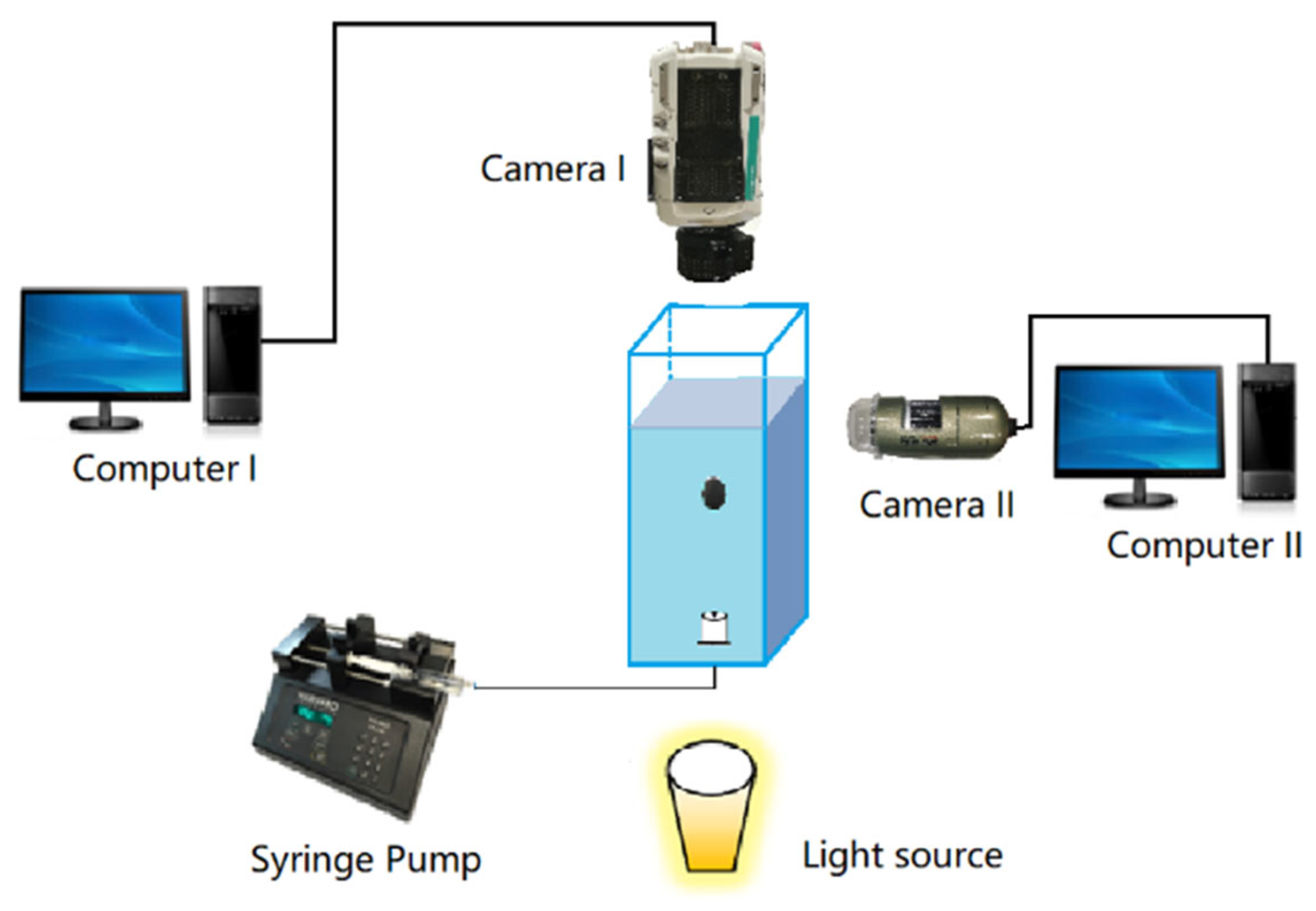
The experiments on bubble generation and lifetime measurement were conducted using the setup illustrated in
Figure 1. The liquid was contained in a transparent square tank with a size of 4 cm × 4 cm × 8 cm that was first cleaned with a soapy solution, then thoroughly rinsed 3 times with distilled water and dried prior to each experiment. Air bubbles were generated from orifices in the middle bottom of the tank, which had diameters of 0.2 mm, 0.5 mm, 1 mm, 2 mm, and 5 mm for choice. Air was injected with a precision syringe pump (PHD 2000, Harvard Apparatus, Holliston, MA, USA) to form bubbles whose radius ranged from 1.2 to 4.0 mm. This range was selected because it is large enough to clearly capture features of the bubble cap while smaller than 5 times the capillary length,
lc, which implies that gravitational drainage cannot be neglected [
12]. For each experimental condition (bubble size and fluid), measurements were repeated on typically 10–20 generated bubbles. Reported lifetimes correspond to mean values with ±5% standard deviations. This variability increases with bubble size due to sensitivity to local perturbations and film heterogeneities.
After a bubble formed at the orifice outlet, the micro-pump was immediately stopped to prevent further growth or the formation of additional bubbles. In the viscous liquids, bubbles rose vertically through the fluid and reached the free surface, stabilizing near the center of the tank, where boundary effects were assumed to be negligible. The entire process was continuously recorded using a camera. In the present setup, the bubble traveled approximately 7.0 cm from the orifice to the liquid surface. The time t0 was defined as the instant when the bubble was first detected at the surface, corresponding to the moment when the spherical apex of the bubble reached the surface level. From this instant, a timer was initiated to measure the bubble lifetime t.
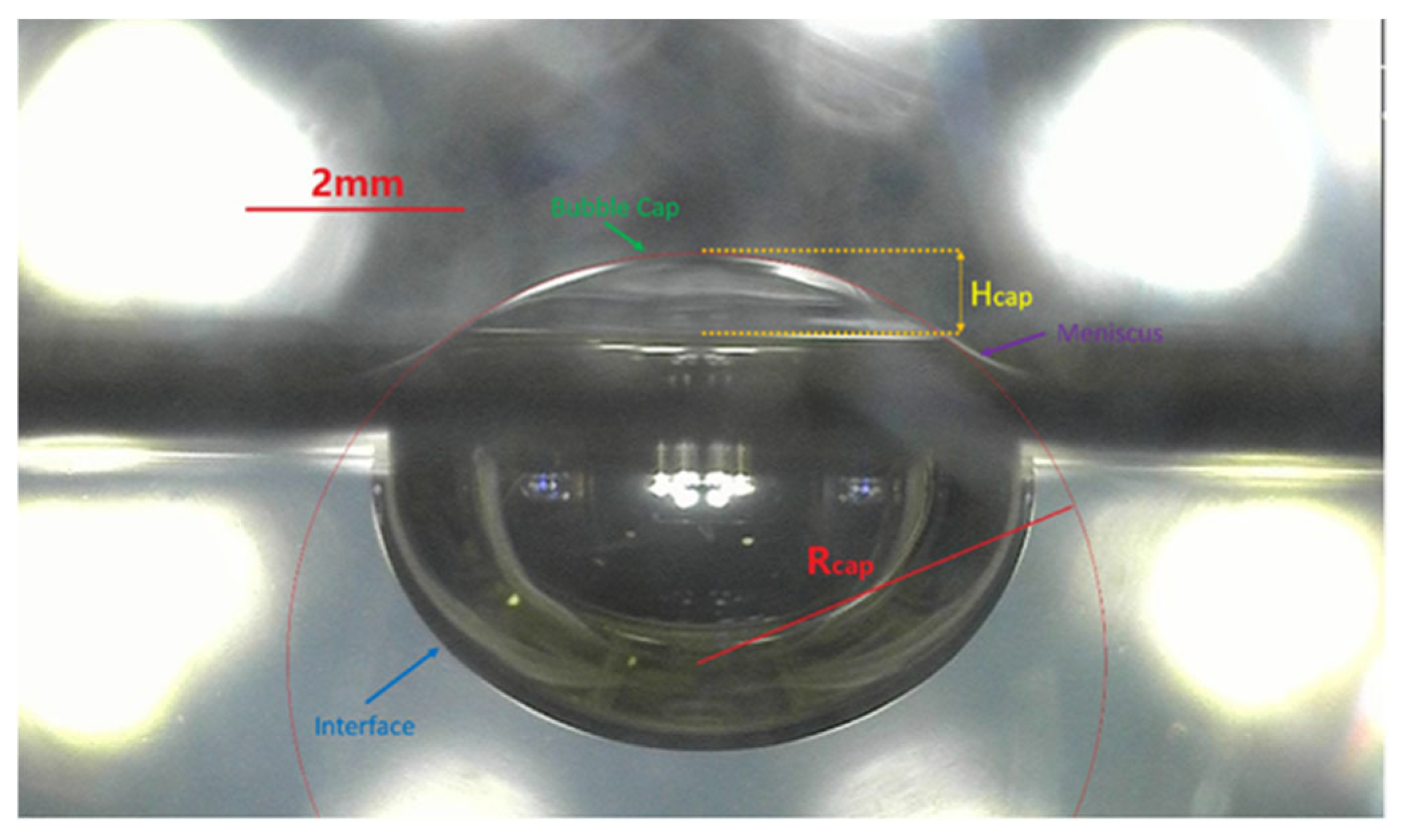
Bubble bursting was recorded using a high-speed camera (Phantom V711, Vision Research, Wayne, NJ, USA) equipped with a macro lens (EF 100 mm f/2.8, Canon, Tokyo, Japan) at a frame rate of 25,000 fps. Image acquisition was controlled automatically using the camera’s native software (Dynamic Studio, Vision Research, Murrieta, CA, USA). The experimental setup was back-illuminated using a planar LED light source positioned opposite the camera. Bubble diameters calibrated for accuracy were extracted from the recorded images by assuming axisymmetry of the bubbles; the bubble volume was calculated and converted to an equivalent spherical diameter as shown in
Figure 2.
Three different fluids were employed to study the bubble bursting dynamics at a free liquid surface:
- -
One Newtonian fluid: 20 wt.% of highly viscous polyalkylene glycol (Emkarox HV45, Cargill, Minneapolis, MN, USA).
- -
Two non-Newtonian fluids: 1 wt.% of high-viscosity Carboxymethyl Cellulose (HV CMC, Fluka, Eschborn, Germany) with a molecular weight ranging from 3 × 10² to 5 × 10² kg·mol−1 and 1 wt.% of viscoelastic Polyacrylamide (PAAm, SNF Floerger, Andrézieux-Bouthéon, France) with a molecular weight ranging from 1.0 × 10⁴ to 1.3 × 10⁴ kg·mol−1. These polydisperse polymers were dissolved in tap water.
It is worth mentioning that the use of tap water in the preparation was just to facilitate the dissolution of the polydisperse polymers CMC and PAAm. Despite this, intense agitation for 24 h was still necessary, with the gradual addition of polymer powders. Furthermore, the rheology of these fluids was rigorously characterized on our rheometer. It was the actual measured rheological properties that were used in our experiments. In fact, a protocol for preparing a polymer solution cannot guarantee the rheology of a fluid due to the inevitable adhesion of polymer powders to the stirrer and the walls of the container during addition. Some physical properties of the liquids are listed in
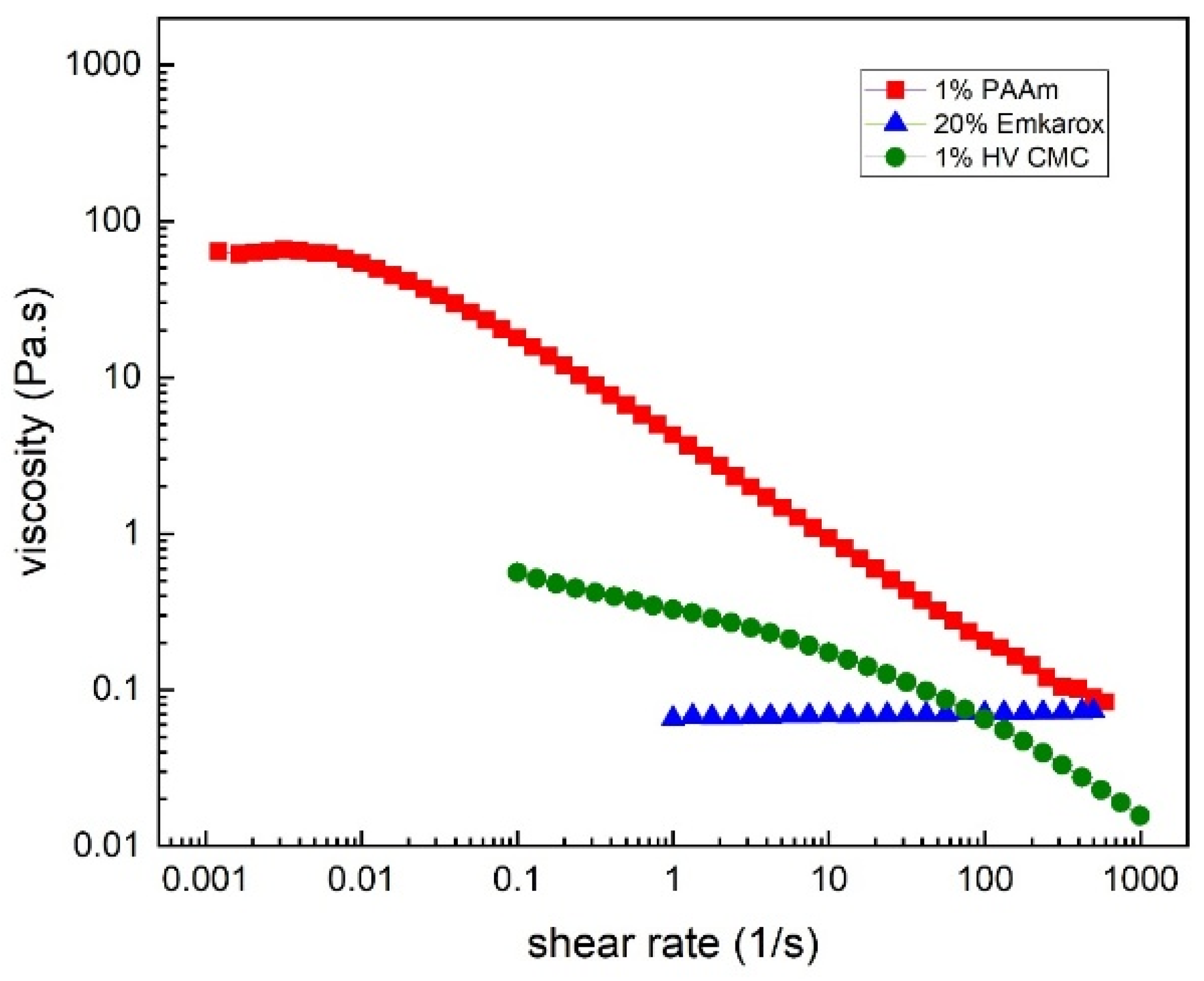
Table 1. All rheological properties were measured with AR G2 rheometers (TA Instruments, New Castle, DE, USA) and displayed in
Figure 3. Zero shearing viscosities were taken to calculate various parameters for both the CMC and PAAm solutions. All experiments were performed at room temperature, T = 20 °C.
The liquid film thickness was inferred from the speed at which the leading piercing rim retracted as the bubble burst, as described by the Taylor–Culick velocity [
5,
14] in Equation (1). However, this expression is strictly valid for inertia-dominated Newtonian films. In highly viscous and viscoelastic fluids, additional dissipation and elastic stresses are expected to reduce the retraction velocity. Therefore, the inferred thickness should be interpreted as a Newtonian-equivalent thickness to highlight the deviation caused by non-Newtonian effects, rather than as a literal measure of film thickness.
Additionally, an initial cap-film thickness
h0 is defined for the estimation of the film thinning rate. Nguyen et al. [
11] estimated the thinning time as the film drains from an initial thickness of
~100 μm down to a final thickness of
~100 nm based on the relation
.
Particle image velocimetry (PIV), including microscale PIV (µ-PIV), has been extensively used in our group to study multiphase flows and interfacial phenomena [
15]. In particular, an original µ-PIV device was developed, enabling high-frequency velocity measurements in microscale multiphase flows with reliable accuracy.
For the µ-PIV experiments, hollow silver-coated tracer particles (mean diameter 10 μm, S-HGS-10, Dantec Dynamics, Skovlunde, Denmark) were dispersed at an appropriate concentration and ultrasonicated using a UP200Ht ultrasonic processor (Hielscher, Teltow, Germany) before dilution in the working fluid. These tracer particles used in this study are hydrophilic and were added at an extremely low volume fraction () to not affect the flow pattern. At these concentrations, the particles are fully wetted and do not bridge the air–liquid interface to facilitate dewetting. To validate this, we conducted control experiments comparing the bubble lifetime of seeded vs. unseeded fluids and found no statistically significant difference in rupture frequency or location. The low particle concentration ensured that the probability of a particle being located exactly in the sub-micrometer rupture region was negligible.
The Stokes relaxation time of tracer particles is given by , where ρp, dp, and η0 are the particle density, diameter, and fluid viscosity, respectively. The Stokes relaxation time is 1.94 µs, 0.26 µs and 2.45 ns in Emkarox, HV CMC and PAAm solutions, respectively. In view of these very small values, the tracer particles can respond instantaneously to the fluid flow without delay. The Newtonian and non-Newtonian fluids were stirred for 24 h and allowed to rest for 12 h prior to the experiments with a view to restoring the polymer spatial configuration in the solution.
3. Results and Discussion
3.1. Bubble Lifetime
Air bubbles were generated using orifices of different diameters (0.2, 0.5, 1, 2, and 5 mm), producing bubbles with equivalent radii
in the range 1.2–4.0 mm. All experiments were performed at a constant injection rate of 50 μL·min
−1. At this rate, bubble growth was sufficiently slow and continuous to ensure detachment from the injected airflow; air feeding was stopped immediately after bubble detachment to avoid the generation of a new bubble. In the viscoelastic 1% PAAm solution, successive bubbles were generated with a 30 min interval to allow the complete relaxation of possible memory effects [
16].
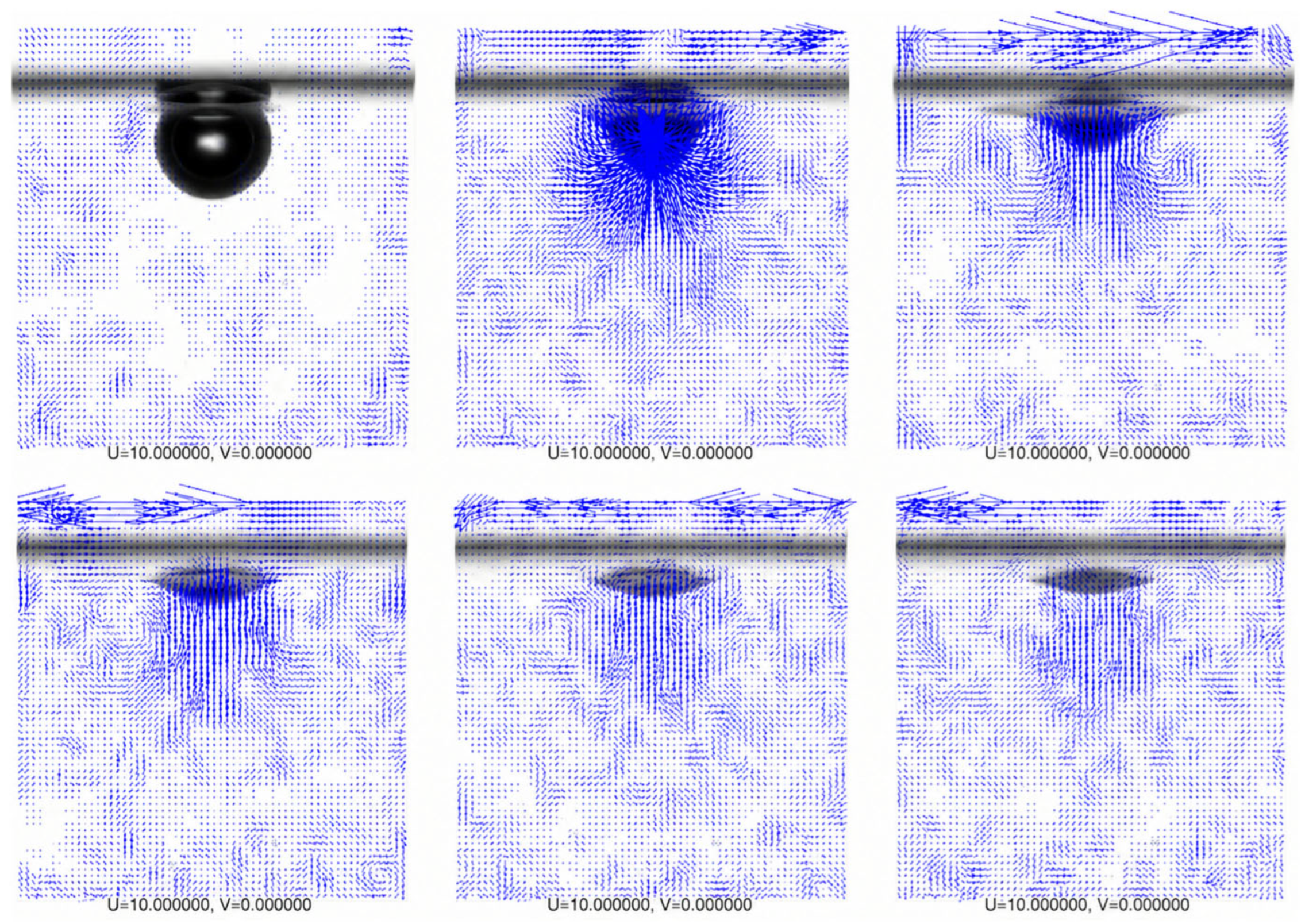
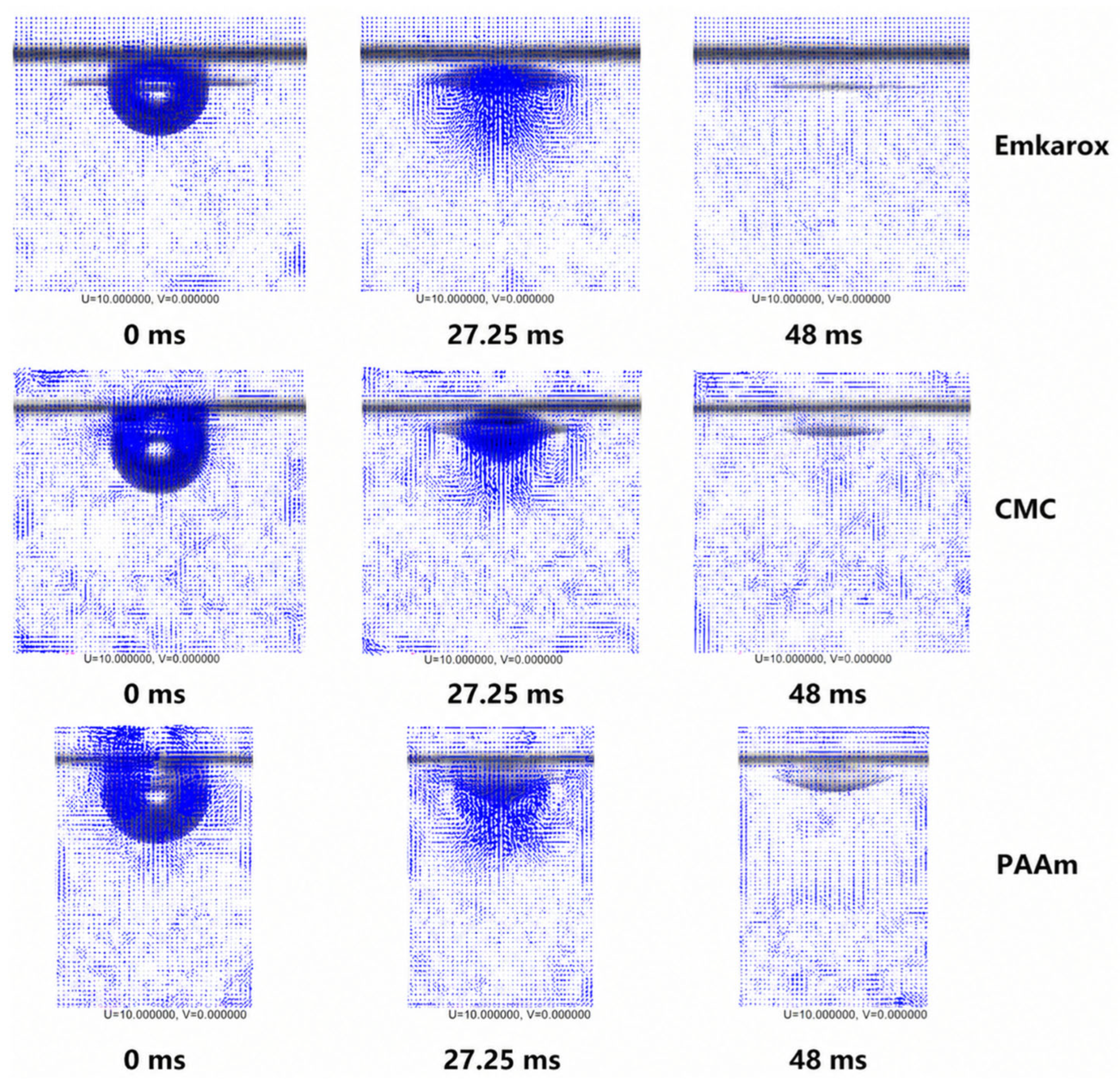
A typical bursting sequence of an air bubble of 3.31 mm diameter is illustrated in
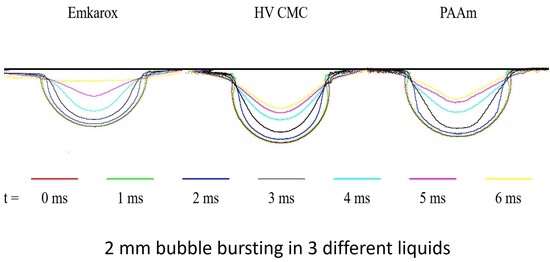
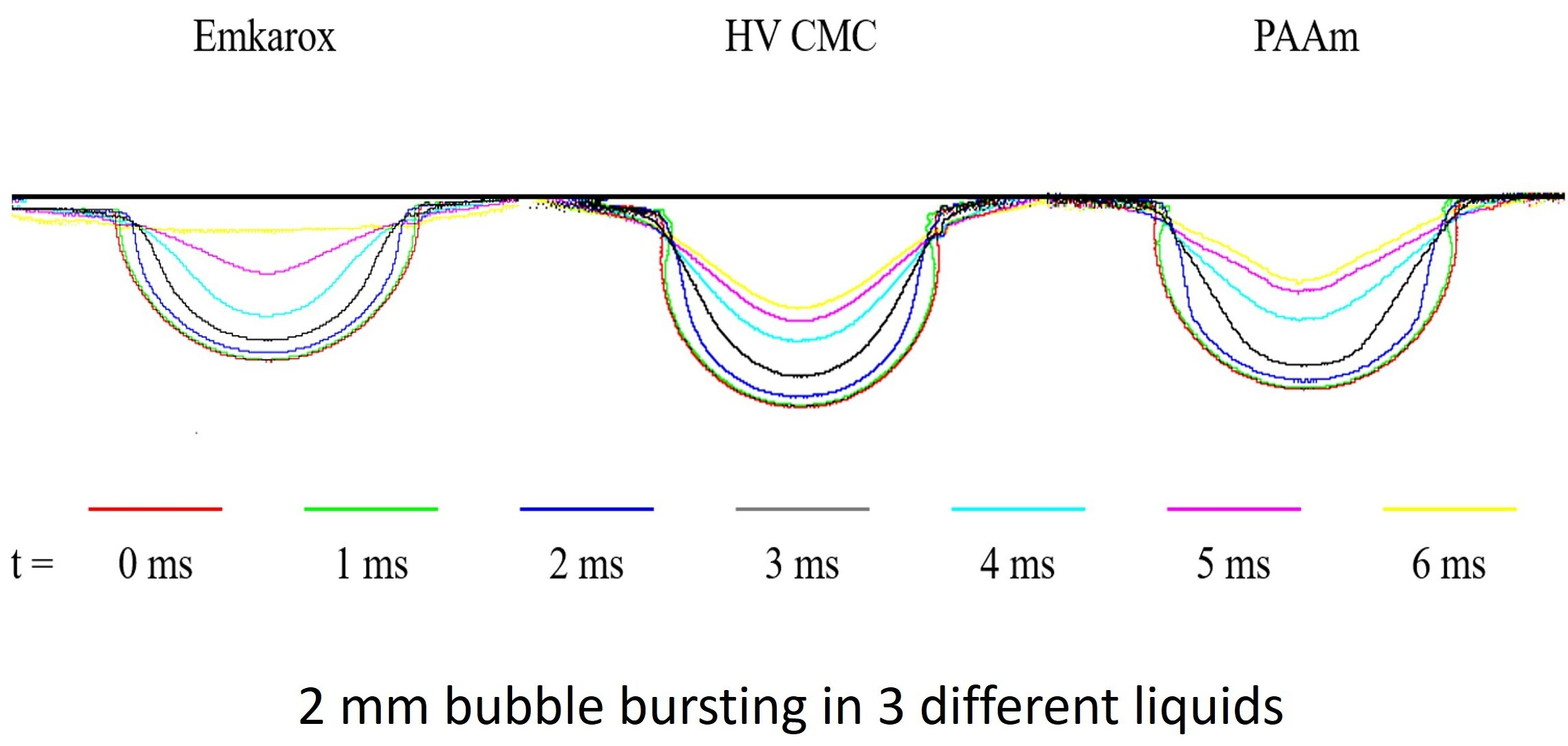
Figure 4 in 1% HV CMC solution; the bubble collapse consecutively induces the flow fields in the liquid. The dependence of bubble lifetime on bubble radius is shown in
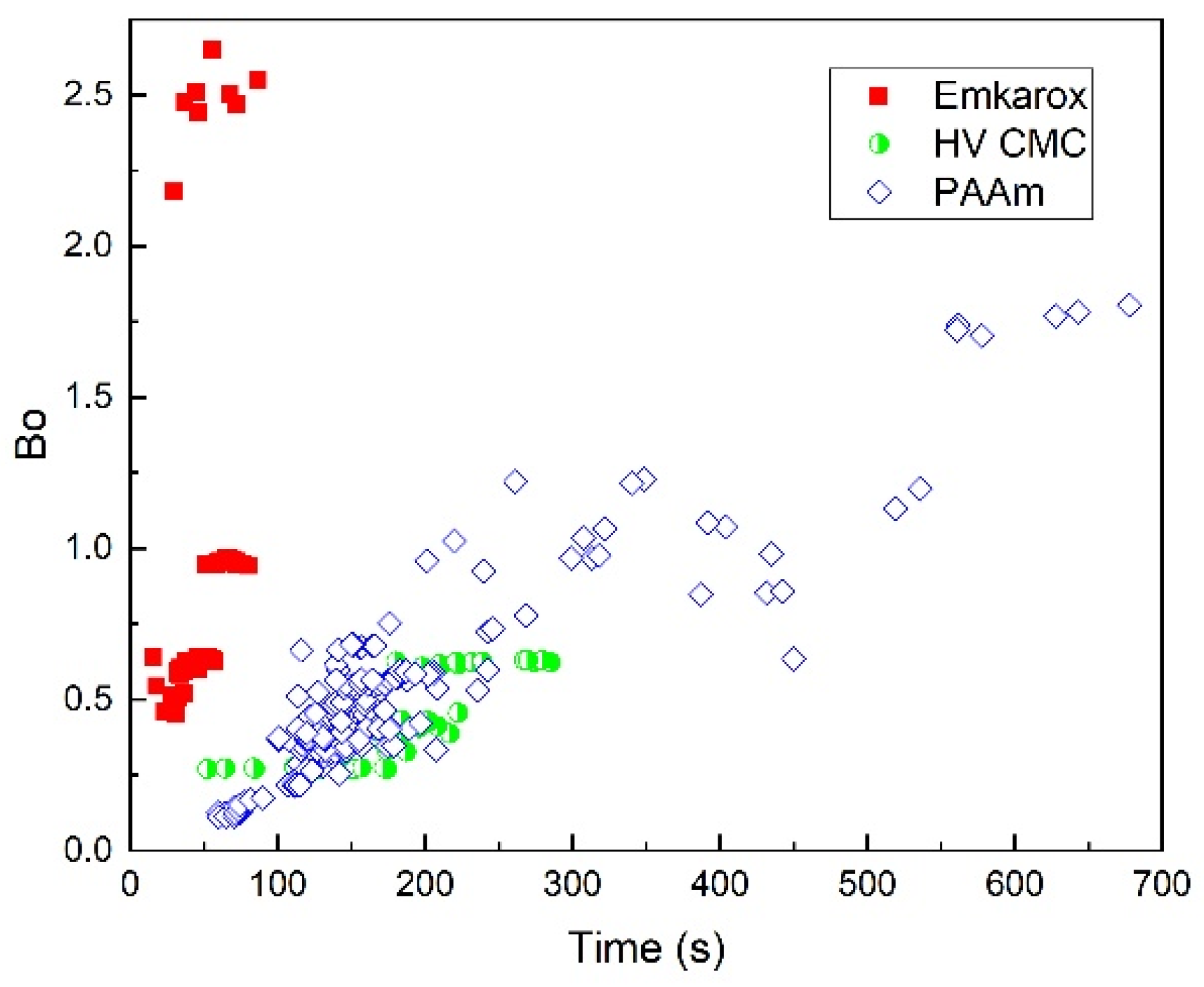
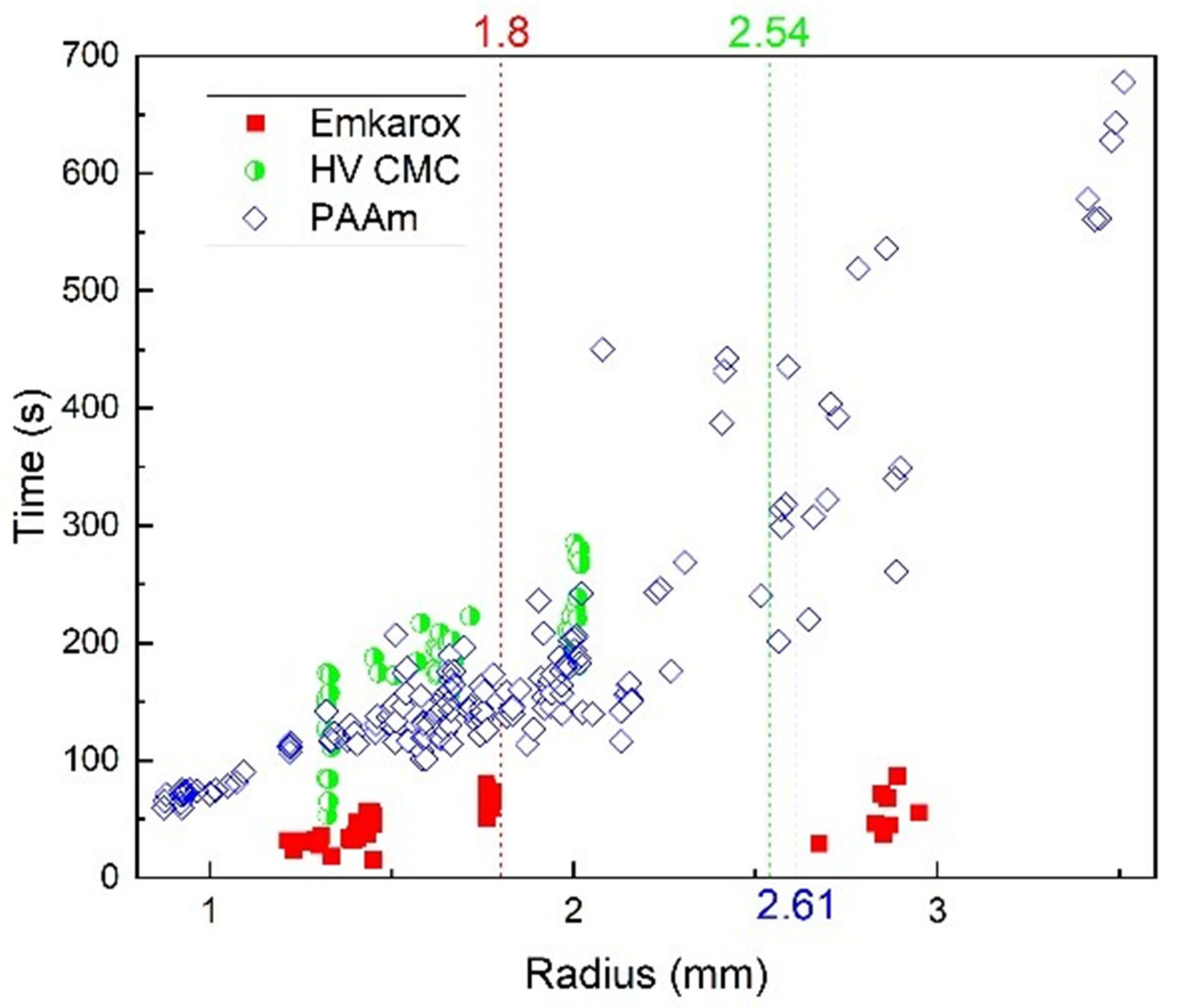
Figure 5. Distinct trends are observed for the different fluids when the lifetime distributions are examined. Within the investigated size range, bubble lifetimes in non-Newtonian fluids generally increase with increasing bubble radius. For a given radius, bubbles in HV CMC solution exhibit slightly shorter rise times than those in Emkarox and PAAm solutions. In addition, as the bubble radius increases, the lifetime data display increased scatter, indicating noticeable variability in the measured lifetimes.
In the literature, dimensionless numbers are usually employed to compare bubble bursting involving complex mechanisms. In particular, the Bond number quantifies the relative importance of the two primary driving mechanisms for film drainage: gravitational drainage in the limit Bo ≫ 1 and capillary-driven drainage for Bo ≪ 1. In general, bubble lifetimes are governed by the thinning dynamics of the intervening liquid film.
Nguyen et al. [
11] experimentally showed that bubbles with Bo < 0.25, classified as small bubbles, remain approximately spherical, whereas bubbles with Bo > 0.25 undergo shape deformation. As shown in
Figure 5, most bubbles in the present experiments had Bo > 0.25, indicating non-spherical shapes. Nevertheless, the observed deformations do not appear to be the dominant factor responsible for reversing the observed lifetime trends in this study.
Kočárková et al. [
17] related the curvature radius of the bubble cap to the dimensionless film thinning rate. They showed that bubble deformation leads to a reduction in the thinning-rate parameter
a, which asymptotically approaches
a → 0.34 as Bo → ∞. In contrast, Nguyen et al. [
11] reported a smaller value in their experiments,
a = 0.2 for Bo ≫ 1, possibly due to the presence of surface contaminants inducing additional Marangoni stresses. Despite these quantitative differences, both studies indicate that the decrease in the dimensionless thinning rate with increasing Bond number is primarily governed by bubble shape.
Furthermore, as revealed by Pigeonneau and Sellier [
18] and Atasi et al. [
19], for a given bubble size, the liquid film at the apex of the bubble cap thins more rapidly for bubbles with small Bo than for those with large Bo, consistent with the observations of Kočárková et al. [
17]. For a fixed equivalent radius
the Bond number of bubbles in the HV CMC solution is slightly larger than that in the PAAm solution, implying a smaller exponential thinning rate
a in the HV CMC case. Consequently, as shown in
Figure 6, bubbles in the HV CMC solution exhibit longer lifetimes than those in the PAAm solution. In addition to the shear viscosity, extensional rheology could play a critical role in film drainage and rupture dynamics. In viscoelastic fluids such as PAAm solutions, polymer chains undergo stretching under extensional flow within the thinning film, leading to a significant increase in extensional viscosity. To quantify the relevance of extensional effects, we estimated the characteristic strain rates. During slow gravitational drainage, the extensional strain rate is
, approximated as the inverse of the viscous–gravity time. For a typical bubble of
mm,
s
−1 for the HV CMC solution and
s
−1 for the PAAm solution (
Table 1). Using relaxation times inferred from the relaxation times λ ≈ 15 s for PAAm and λ ≈ 0.25 s for CMC, the Weissenberg number
is ~5.25 for PAAm and ~9.50 for CMC. Thus, in the PAAm solution, polymer chains are stretched during the film-thinning phase, leading to a significant increase in extensional viscosity that slows drainage and extends the bubble lifetime. During the subsequent rim retraction stage, the strain rate jumps to
s
−1 (
for both fluids), but this ultrafast event does not govern the overall lifetime. These order-of-magnitude estimates fully support the claim that extensional rheology could play an important role in the film drainage of the viscoelastic PAAm solution, while it remains negligible for the shear-thinning HV CMC solution. Such mechanisms are not captured by shear viscosity alone and may explain deviations from purely viscous scaling.
Although the bubble lifetime increases with the radius, the large variation in zero-shear viscosity, spanning nearly three orders of magnitude, significantly alters the drainage time scale. The viscous–gravity thinning time scales as , indicating that viscosity can dominate over geometric effects, particularly in highly viscous and viscoelastic fluids.
3.2. Bubble Bursting
High-speed imaging was used to carefully examine and quantify the expansion speed of the liquid rims at the bubble cap. The rupture does not always initiate at the apex of the bubble; it can also be triggered by external factors such as foreign microparticles, unexpected vibrations, or localized thinning due to drainage.
Figure 6 indicates that larger bubbles generally exhibit longer lifetimes. Hence, the main controlling factor should be the film drainage leading to the final rupture, especially located at the most drained area. Random perturbations, such as residual microparticles, may contribute to variability in the data but have a limited effect. In some studies, humidity- and temperature-controlled covers were employed to minimize such external perturbations.
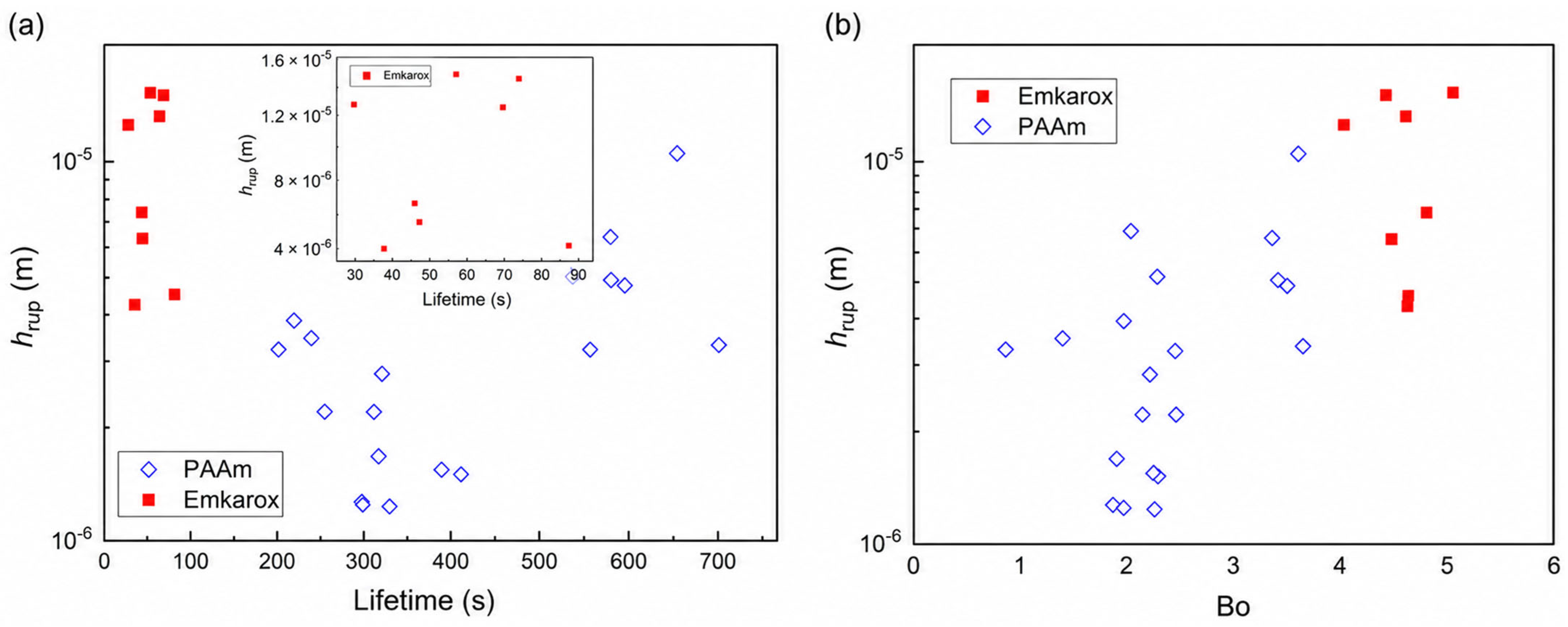
Figure 7 displays the variation in bubble rupture thickness as a function of both lifetime and Bond number. For bubbles in the Newtonian fluid, the rupture thickness exhibits little variation, likely due to the limited range of bubble radii and lifetimes. The measured rim retraction speed for the Newtonian Emkarox ranges from 2.0 to 4.0 m·s
−1; the rupture thickness derived from the Taylor–Culick relation then varies from 16.08 ± 0.80 to 4.02 ± 0.20 μm. These values are consistent with those for the silicone oil of comparable viscosity and surface tension used by Nguyen et al. [
11]. In contrast, for the non-Newtonian fluids, a minimum rupture thickness is observed for bubbles with longer lifetimes. It is worth noting that for the PAAm solution, the rupture thickness is only a Newtonian-equivalent value that does not account for viscoelastic effects. As in the above-mentioned quantification, PAAm polymer chains are stretched during the film-thinning stage, leading to a significant increase in extensional viscosity that slows drainage and then extends the bubble lifetime. When analyzed in terms of the Bond number, the results suggest that bubble rupture thickness is closely related to bubble shape, which is influenced by both liquid properties and bubble size.
3.3. Flow Fields Around a Bursting Bubble in Liquids by µ-PIV
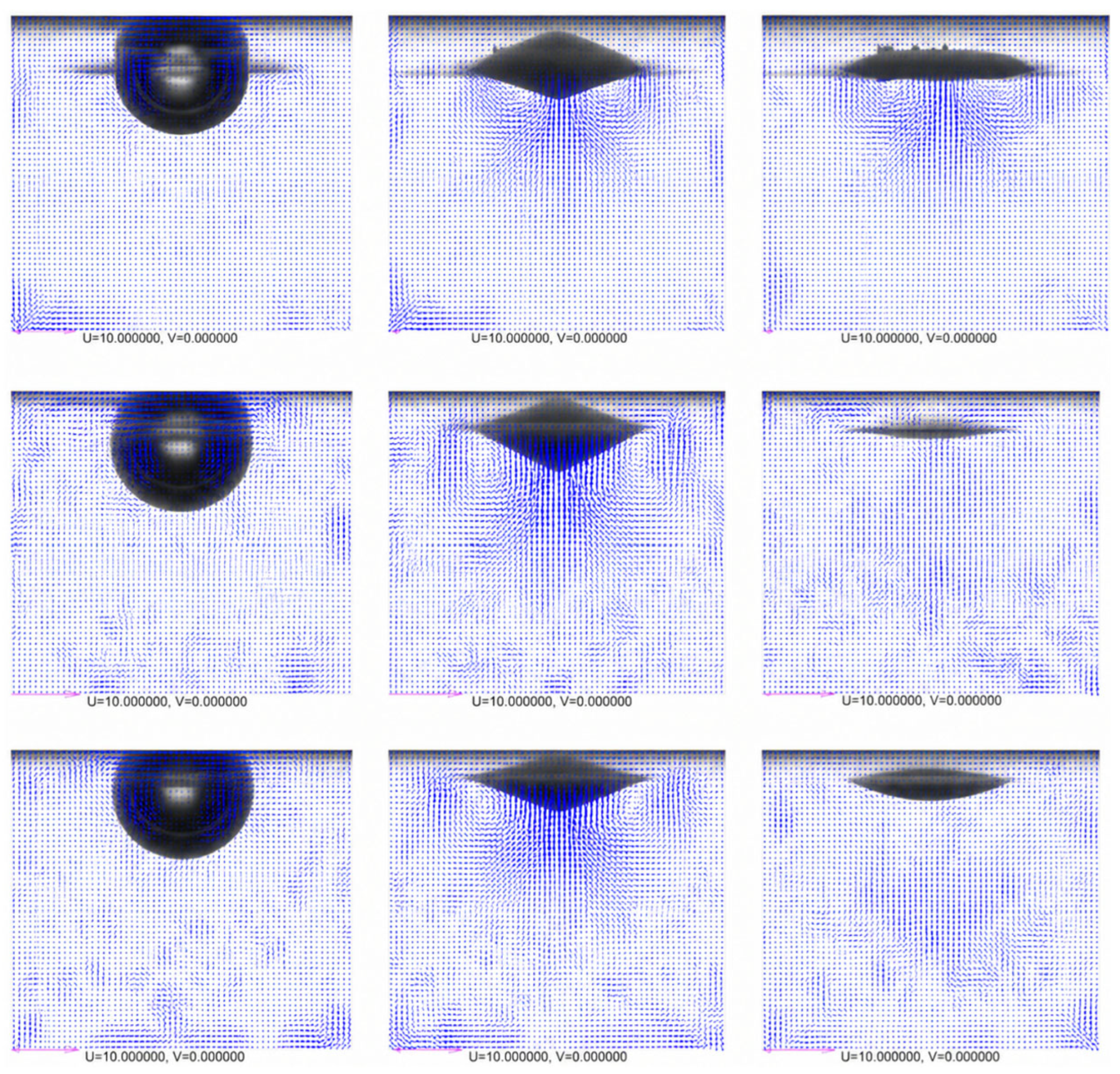
During and after the bursting of the bubble, the micro-PIV technique allows the velocity fields in the liquid phase to be tracked using the tracer particles at an extremely low volume fraction. The flow fields obtained using µ-PIV are shown in
Figure 8 and
Figure 9 for two different bubble sizes. The main difference between the cases is the duration of the rupture process, beginning at
t = 0 when the retracting rim forms at the bubble cap, progressing toward the meniscus and then the subsurface interface, and ending when the flow fields subside—often before the air–liquid interface returns to a horizontal position. Larger bubbles require more time for the flows to vanish, consistent with the observed relationship between bubble size and lifetime.
One of the most notable features of the evolving flow fields is their dependence on both the bubble size and fluid properties. Larger bubbles are expected to entrain greater volumes of fluid along their perimeter during retraction at the studied scales. Furthermore, the temporal evolution of the flow fields indicates that fluid viscoelasticity has a significant influence on film drainage and rupture dynamics.
The bubble rupture sequences indicate that the retraction process can be divided into at least two stages. In Stage 1, the fluid is drawn primarily from the sides, while in Stage 2, the fluid is drawn from beneath the bubble. In general, fluid motion occurs both radially and axially toward the bubble center. However, portions of the rim that first reach the surface initially draw fluid from the horizontal sides rather than from below. As a result, the bubble subsurface assumes a conical shape during Stage 2, as illustrated in the middle panels of
Figure 8 and
Figure 9.
For bubbles in the Newtonian Emkarox fluid, the interface retracts rapidly, with most flow vectors directed vertically upward. These flow fields visually corroborate the formation of daughter droplets, as the rapid upward motion of fluid promotes their ejection into the air. In contrast, for non-Newtonian fluids such as viscoelastic PAAm solution, the upward flow is comparatively weaker, and significant horizontal components reduce the likelihood of daughter droplet formation.
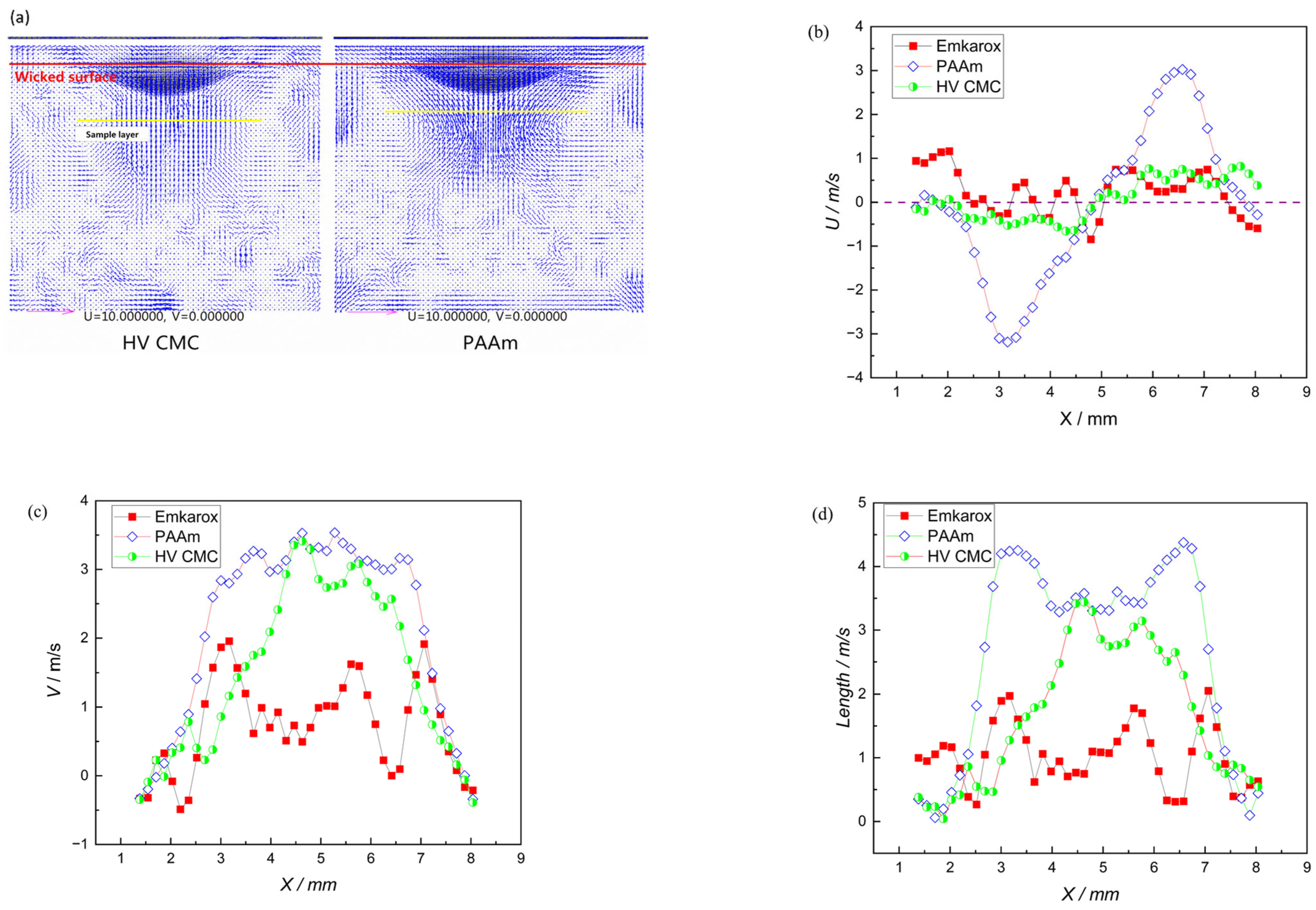
The differences between bubbles in the viscous HV CMC and viscoelastic PAAm fluids, as revealed by µ-PIV, are noteworthy. To highlight these differences, flow fields for the two non-Newtonian fluids were compared at
t = 11 ms after bubble rupture, as shown in
Figure 10.
Figure 10a presents snapshots of the flow fields, which exhibit approximate axial symmetry. The corresponding velocity profiles along the radial and vertical directions are shown in
Figure 10b and
Figure 10c, respectively. At the same spatial scale and time, a larger fraction of the PAAm fluid is directed sideways, whereas no vortical structures are observed for either fluid.
For bubbles in the Newtonian Emkarox fluid, rupture occurs gently just below the surface, and the velocity fields show no pronounced peaks or troughs in either direction. In contrast, the flow dynamics in viscous HV CMC and viscoelastic PAAm fluids are more complex. Radial velocities in the HV CMC fluid are similar to those in Emkarox fluid but exhibit a more regular, centrosymmetric pattern. In the PAAm fluid, horizontal velocities indicate that bubble bursting draws fluid more strongly toward the center of the bubble hemisphere compared with the other two fluids. Vertically, bursting in the HV CMC fluid generates velocities that dominate the overall flow field. Further investigation of daughter droplet formation from bubbles bursting at the surfaces of either HV CMC or PAAm fluids may reveal comparable effects in terms of droplet volume or number. The presence of elastic stresses may redistribute vorticity and promote anisotropic flow structures, as evidenced by the enhanced radial velocity components in PAAm solution. This suggests that, although classical vortices are suppressed, complex flow organization persists due to viscoelastic effects.