Article

Performance Analysis of Seawater Desalination Using Reverse Osmosis and Energy Recovery Devices in Nouadhibou


1
Renewable Energies and Systems Dynamics Laboratory, Faculty of Sciences Aîn Chock, Hassan II University, El-Jadida Road Km9, Maarif, Casablanca P.O. Box 5366, Morocco
2
LaRTID Laboratory, National School of Applied Sciences, Cadi Ayyad University, UCA, Bd. Abdelkrim El Khattabi, B.P. 575 Guéliz, Marrakesh 40000, Morocco
*
Author to whom correspondence should be addressed.
Submission received: 28 October 2025 / Revised: 17 December 2025 / Accepted: 19 December 2025 / Published: 24 December 2025
(This article belongs to the Special Issue Energy Transfer in Liquids)

Abstract

Arid zones, such as the MENA regions and the Sahara countries, are experiencing significant water stress. To address this global challenge, desalination technologies provide a crucial solution, particularly the reverse osmosis (RO) technique, which is widely used to treat Seawater or Brackish water. Mauritania is among the countries facing a scarcity of potable water resources and relies on desalination technologies to meet its water demand. In this work, a numerical and experimental study was carried out on the functional and productive parameters of the Nouadhibou desalination plant in Mauritania using MATLAB/Simulink (R2016a). The study considered two operating scenarios: with and without the energy recovery unit. The objective of this paper is to perform an analytical study of the operating procedures of the Nouadhibou RO desalination plant by varying several parameters, such as the pressure exchanger, and the feed water mixing ratio in the pressure exchanger unit, etc., in order to determine the system’s optimal operating point. This paper analyzes the system’s performance under different conditions, including recovery rate, feed water temperature, and PEX splitter ratio. In Case No. 1 (without a pressure recovery unit), and with a recovery rate of 20%, doubling the plant’s productivity from 400 to 800 m3/d requires 400 kW of power. In contrast, in Case No. 2 (with a pressure recovery unit), achieving the same productivity requires only 100 kW, with a 75% of energy saving. When the desalination plant operates at a productivity of 400 m3/d@40%, the SPC decreases from 6 kWh/m3 (Case No. 1) to 2.7 kWh/m3 (Case No. 2), resulting in a 55% specific power consumption saving. The results also indicate that power consumption increases with both feed water temperature and PEX splitter ratio, while variations in these parameters have a negligible effect on permeate salinity.

1. Introduction

Water is the most valuable resource on Earth, widely used in agriculture, urban development, industry, and to meet population needs. The global population is expected to increase by approximately 1 billion people, which means that agriculture worldwide will need an additional 1 trillion cubic meters of water annually; this is roughly 20 times the annual flow of the Nile River [1,2]. According to a UN study, by 2025, around 30 countries could face a severe water crisis on a global scale [3]. To address water scarcity, it is essential to promote water reuse, develop new water sources, and reduce unnecessary consumption. Water desalination plays a key role in this context by treating saline or used water, removing salt and undesirable minerals to produce potable freshwater [4].
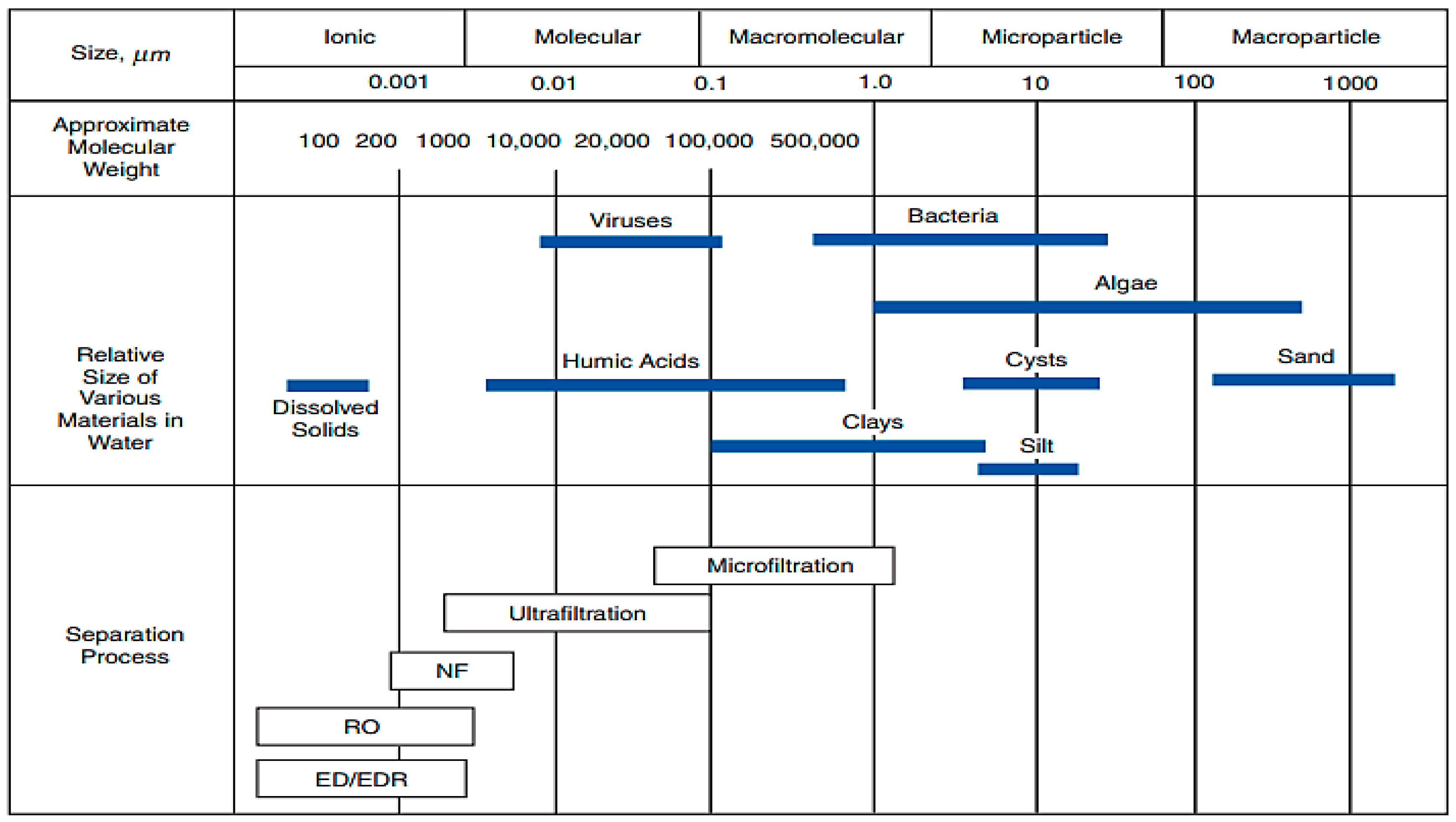
Worldwide, over 15,000 operational desalination plants supply drinking water to more than 300 million people across 150 countries [5,6]. Approximately half of the global desalination capacity is located in the Persian and Oman Gulfs, as well as the Red Sea [7]. In 2020, nearly 100 million cubic meters (or 100 billion liters) of desalinated water were produced daily worldwide. Desalination is rapidly expanding, with an average annual growth rate of 7.5% since 2010 [8]. Recently, large-scale Sea Water Reverse Osmosis (SWRO) plants have been constructed, notable examples including the Taweelah plant (909,200 m3/day) in the United Arab Emirates and the Rabigh 3 plant (600,000 m3/day) in Saudi Arabia [9]. Desalination technique are technologies are used to convert seawater or brackish water into freshwater by removing salts and impurities. The main techniques include Reverse Osmosis (RO), in which water is filtered through a semi-permeable membrane; Multi-Stage Flash Distillation (MSF), which involves heating and condensing water in multiple stages; Multi-Effect Distillation (MED), a more energy-efficient version of MSF that reuses heat from earlier stages; Mechanical Vapor Compression (MVC), which employs a compressor to condense vapor into freshwater; and Electrodialysis (ED), which separates ions using an electric field typically applied to brackish water. These methods differ in terms of energy efficiency, scalability, and cost, and are essential for addressing global water scarcity. Figure 1 illustrates the molecular weight and relative size of various substances in water, as relevant to some membrane-based technologies. The most commonly used membranes for reverse osmosis are typically made from polyamide. These membranes are valued for their high filtration efficiency, durability, and chemical resistance. They can be composed of multiple layers and feature different pore configurations to meet specific water purification requirements. The most reputable brands in this field include Dow and Hydranautic. Reverse osmosis membranes are generally fabricated either as hollow fibers or as several alternating layers of flat membranes and open “spacer” material wounds in a spiral configuration [10,11].
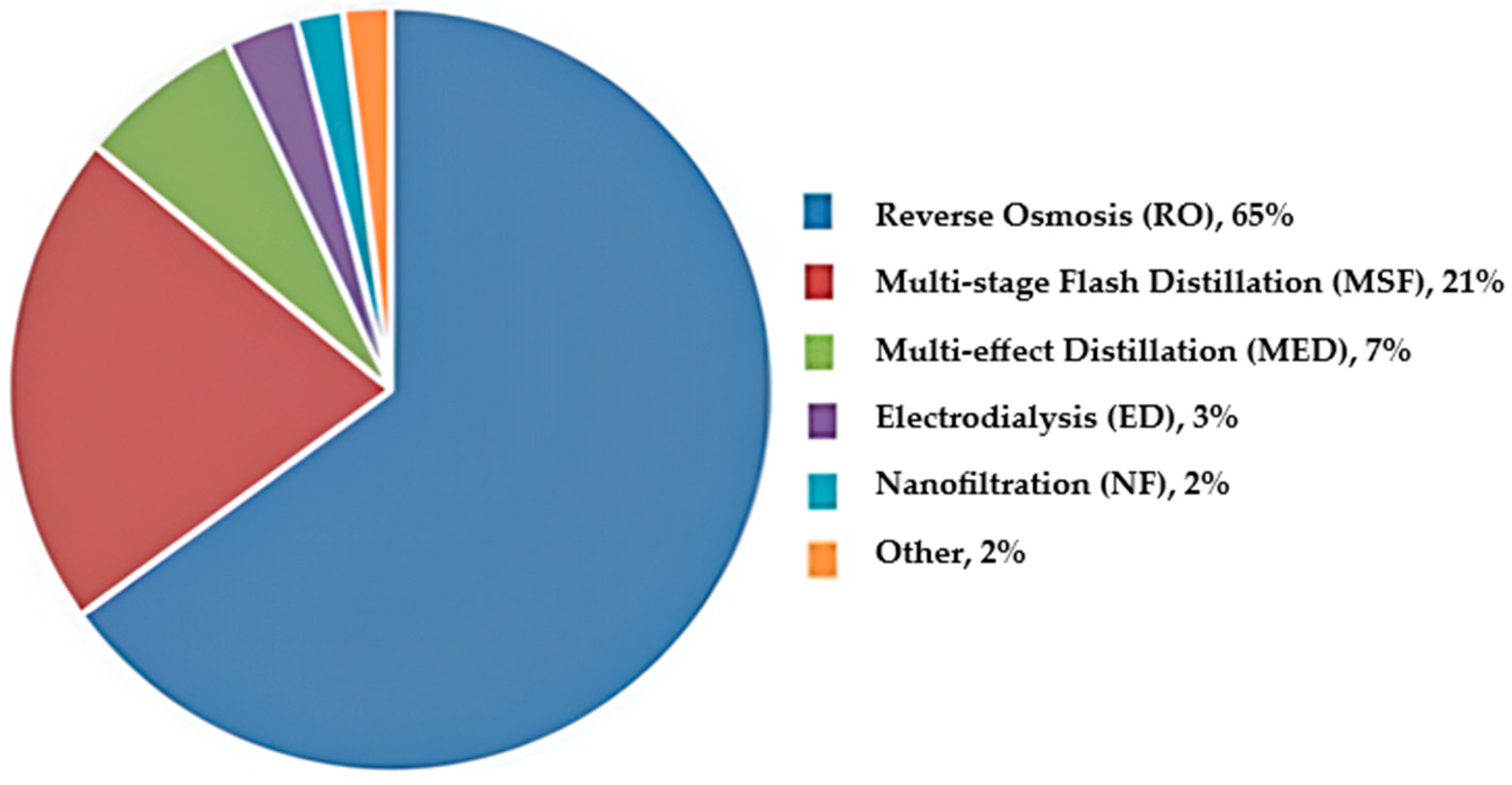
Over the last decade, membrane technology has established itself as an effective separation method. It has become an increasingly reliable and cost-effective tool for both in seawater desalination and in the treatment of water contaminated with heavy metals [12,13]. Among all desalination processes, the reverse osmosis is the most dominant technology, offering several technical and energy advantages compared to other desalination processes [14,15], and currently holds a 65% share of the market (see Figure 2) [14,16]. However, the energy consumption of the reverse osmosis system is a significant factor in overall plant cost, as electricity accounts for more than 30% of operational expenses [17].
A. Adda et al. [18] conducted a study on a desalination plant in Algeria, and their results demonstrated that the energy recovery system based on a pressure exchanger is by far the most efficient device, achieving a minimum specific energy consumption ranging from 2.17 to 2.27 kWh/m3. Essa et al. [19] focused on improving the operation of reverse osmosis (RO) systems integrated with Pelton turbines under various conditions. In this integrated RO system, the Pelton turbine is employed as a more cost-effective alternative to the traditional pressure exchanger (PX). The experimental results indicated that increasing the RO operating pressure led to a higher permeate flow rate. However, it was also observed that a 30% increase in pressure resulted in a significant reduction in turbine power, with a decrease of approximately 71.8%. A.A. Alanezi et al. [20] developed a computational model to evaluate the energy requirements for reverse osmosis (RO) desalination, considering the effects of energy recovery device (ERD) efficiencies and pretreatment processes. The study showed that the specific power consumption (SPC) of the RO system increased with increasing recovery rate when an ERD was incorporated. The results indicated that the RO process could still achieve the desired desalination capacity at a lower recovery rate by increasing the feed flow rate and employing a high-efficiency energy recovery device (ERD). A slight reduction in the total desalination energy was observed when the feed flow rate was increased from 7 m3/h to 8 m3/h, and the recovery rate was reduced from 46% to 44%, by integrating the RO system with an ERD having an efficiency of 95%. In addition, A.Al-Zahrani et al. [21] performed a thermodynamic analysis of a reverse osmosis (RO) desalination unit, evaluating configurations with and without energy recovery devices (ERDs). The study considered three configurations: one employing a throttling valve for brine rejection, and two others incorporating a hydraulic turbine and a pressure exchanger system (PES), respectively. The findings emphasized the importance of using an energy recovery device (ERD), particularly under conditions of high feed salinity. Fangli Lou et al. [22] investigated the performance of an integrated energy recovery and pressure-boost device in a seawater reverse osmosis (SWRO) system. Their results demonstrated that the use of the energy recovery device (ERD) reduced the system’s energy consumption by 25.7%, while achieving a freshwater recovery rate of 24.2% and production capacity of 10 m3/day.
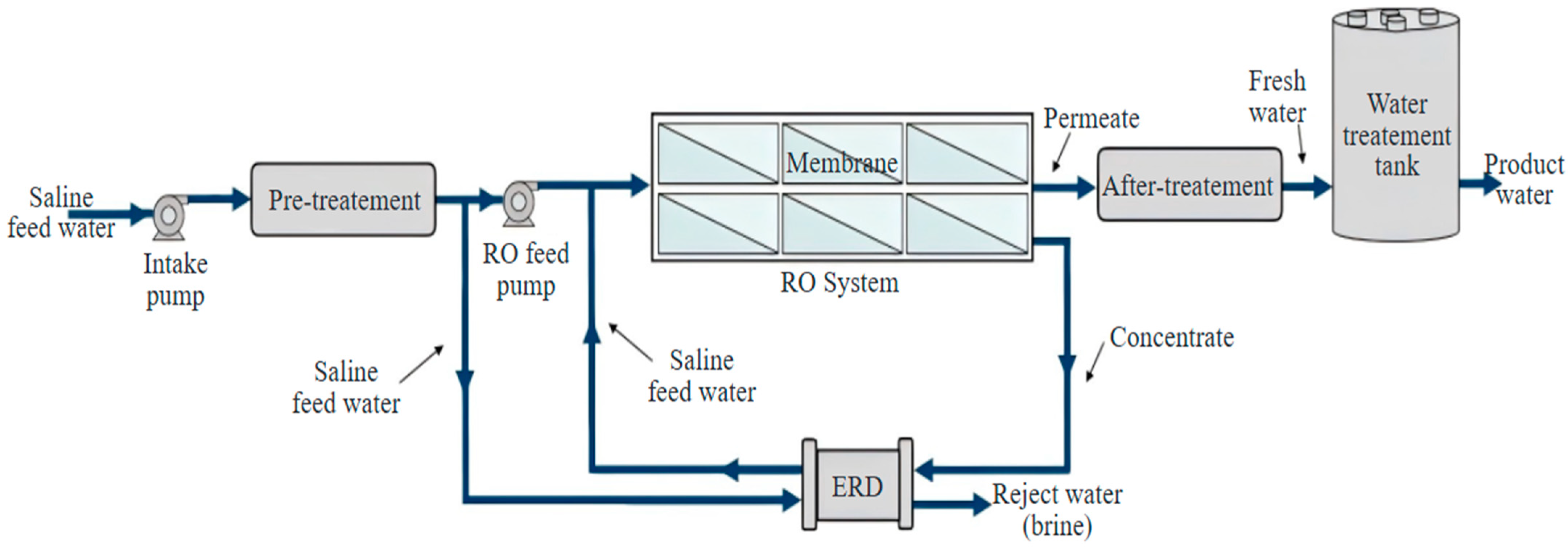
This study evaluates the performance of the Nouadhibou seawater reverse osmosis (SWRO) plant under two configurations: without energy recovery devices (ERDs) and with ERDs. This study focuses on analyzing variations in production rate (m3/h), permeate salinity in relation to both inlet feed water salinity and operating pressure, and the specific energy consumption (SEC) of the plant. Simulations are carried out using MATLAB/Simulink, and the results are compared with real-world data from the plant when ERDs are employed. The objective is to assess the impact of ERDs on energy efficiency and overall performance, with the final discussion highlighting key differences in SEC and the benefits of implementing ERDs for optimizing plant operation (see Figure 3).

2. Energy Recovery Devices

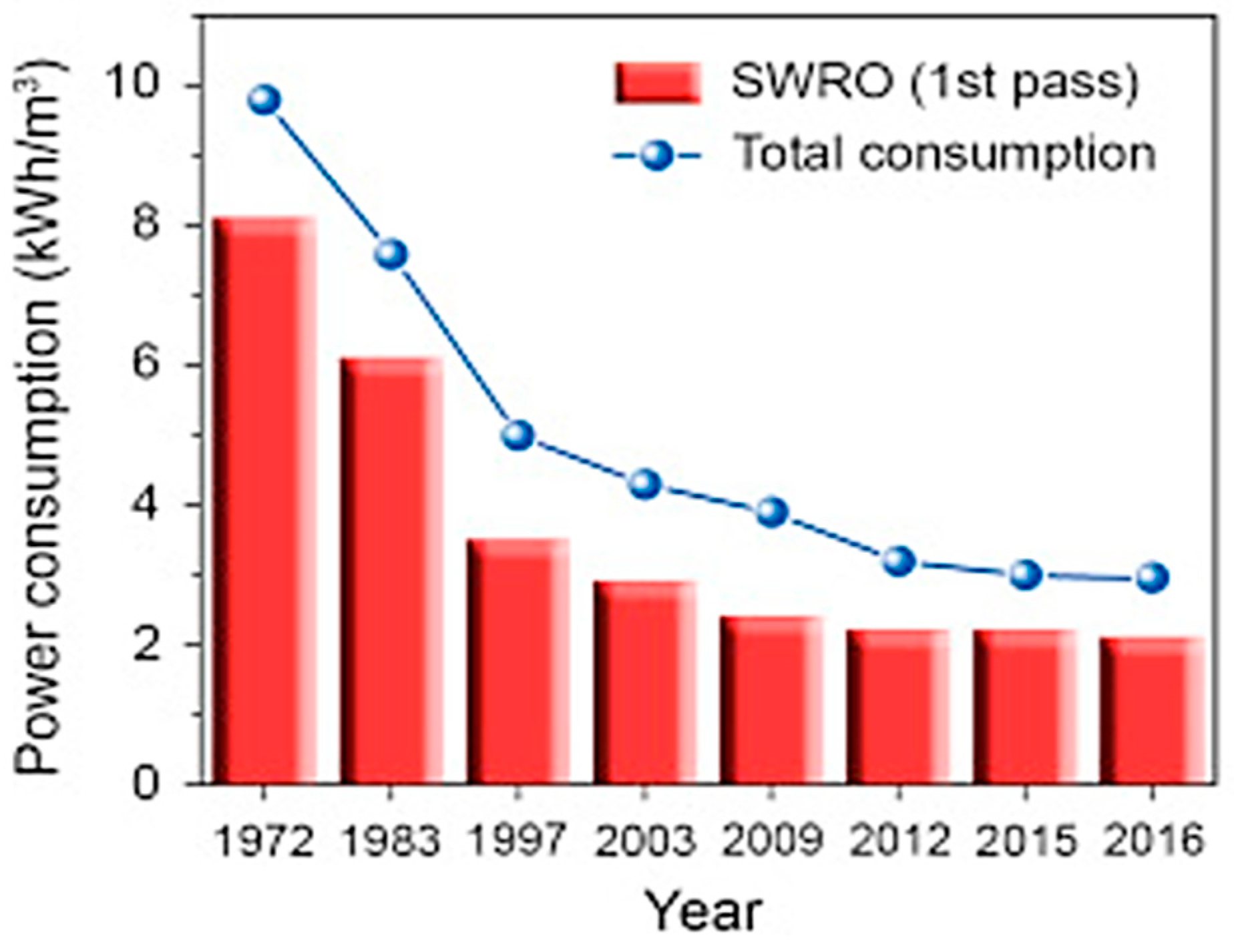
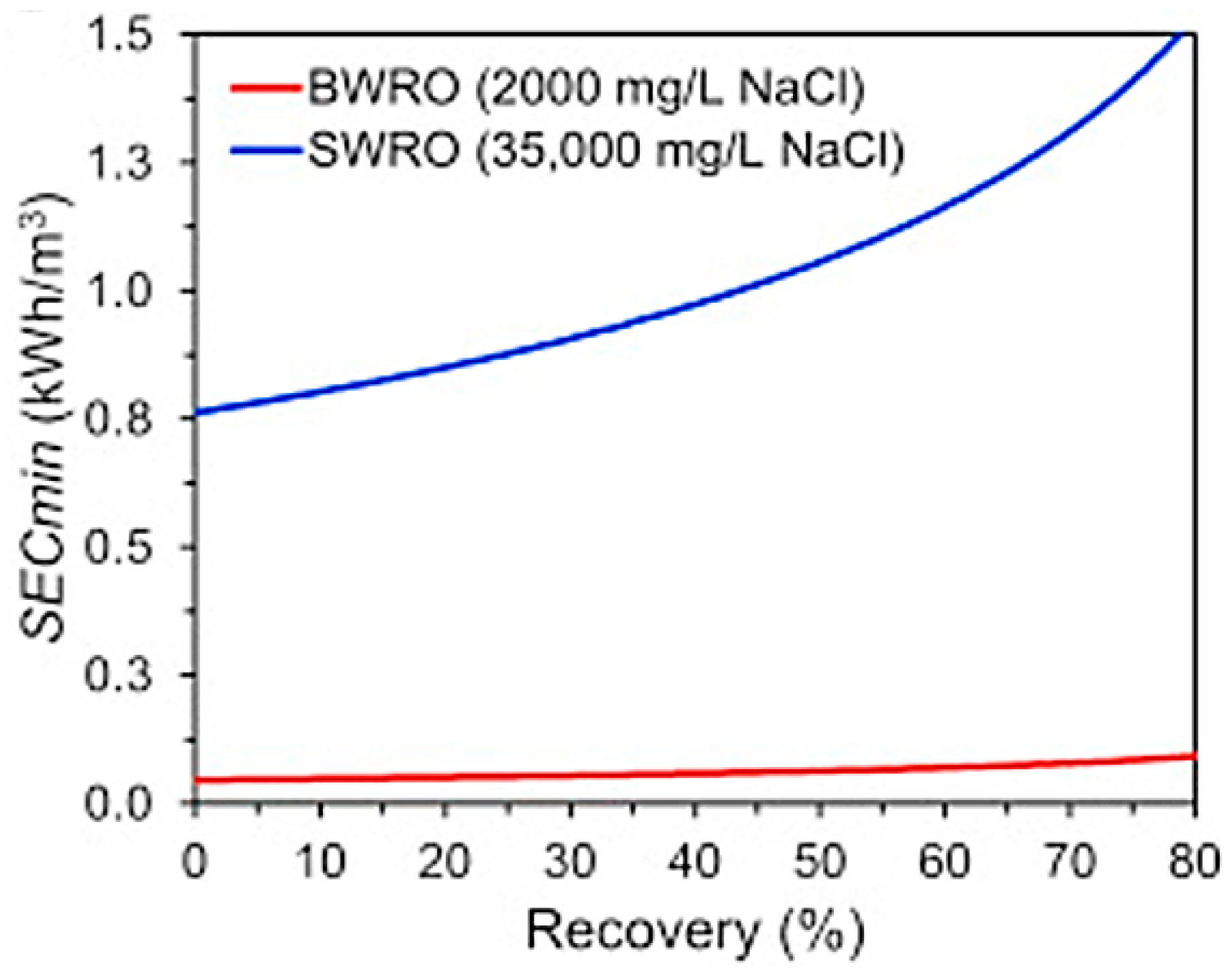
The energy consumption of SWRO plants has steadily decreased over the past 50 years, with the specific power consumption (SPC, the amount of energy consumed per cubic meter of water produced) reaches 3 kWh.m−3 (See Figure 4). This reduction is attributed to technological advances such as the development of high-permeability membranes, more efficient pumps, and the implementation of energy recovery devices [23,24]. In a typical SWRO desalination plant, the membrane unit alone accounts for 70 to 85% of the total energy consumption, while the remaining 15–30% is attributed to other system components, such as intake, pre/post-treatment, and brine discharge [23]. As a result, the membrane unit is the most energy-intensive component of the plant. Figure 5 illustrates the behavior of the theoretical minimum SPC of both the SWRO and the BWRO systems as a function of recovery.
The technology of Energy recovery devices (ERDs) is generally categorized into two principal types: centrifugal and isobaric. Centrifugal ERDs typically operate with a Pelton turbine, converting the centrifugal energy into mechanical energy to assist the high-pressure pump. However, their maximum efficiency does not exceed 70% under optimal operating conditions [25,26]. The second category of energy recovery systems is divided into:
  • Pressure exchangers (PEXs): these reduce the energy consumption of the HP-pump unit, due to the high efficiency of the PEX by transferring the concentrate pressure at the outlet of the membrane system to the raw feed water [27].
  • These isobaric ERDs have an operating efficiency of up 98% [28]. This technique is widely used in large-scale reverse osmosis (SWRO) desalination plants [27]. Pressure exchangers provide similar or slightly higher energy recovery efficiency, often with lower capital and maintenance costs. Their compact and modular design makes them suitable for systems with space limitations, and their simpler mechanical components contribute to higher reliability and easier maintenance [27,28].

3. Description of the Studied Plant

Mauritania receives an average rainfall contribution of 251 billion cubic meters per year. Maximum temperatures are often between 38° and 42°, and lows oscillate between 20 °C and 31 °C, while they are higher in the south of the country [29]. Groundwater reserves in Mauritania are estimated at 50 billion cubic meters. The contribution of the Senegal River that supplies the country is estimated at 10.4 billion cubic meters per year. The Trarza aquifer is the largest freshwater reservoir in the country. It is exploited by intensive abstraction from the Idini, Boulenoir and Tiguent catchment fields and a hundred boreholes supplying rural and semi-urban power plants [30]. In terms of desalination, Mauritania also has seawater desalination units, which can go up to 5000 cubic meters per day. Nouakchott is also awaiting funding for a water desalination unit capable of handling 200,000 cubic meters per day, which would be revolutionary for the city [31].
Nouadhibou city is located in the northern region of Mauritania; at geographic coordinates 20.9425° N, 17.0362° W, it faces recurring water scarcity issues. With a population of approximately 118,000 inhabitants, it is sometimes exposed to difficulties in water supply. According to the Minister of Hydraulics and Sanitation, the situation is particularly concerning due to the city’s economic and tourist characteristics, which attract investors as well as visitors, especially during the summer, thanks to its pleasant climate. In response to this scarcity, measures have been taken, including the delivery of water by tanker trucks. The minister emphasized that the situation is gradually improving due to the joint efforts of local and municipal authorities [32,33].
The SWRO Nouadhibou desalination plant, which is the focus of our study, is managed by the National Water Company (SNDE) and was inaugurated in 2019. Initially, it was designed to provide 5000 cubic meters of potable water per day, with the aim of also supplying the neighboring city of Cansado. A second-phase project is planned to increase its capacity to 15,000 cubic meter per day in order to meet the growing water demand in the region, including that of the small city of Cansado, located south of Nouadhibou.
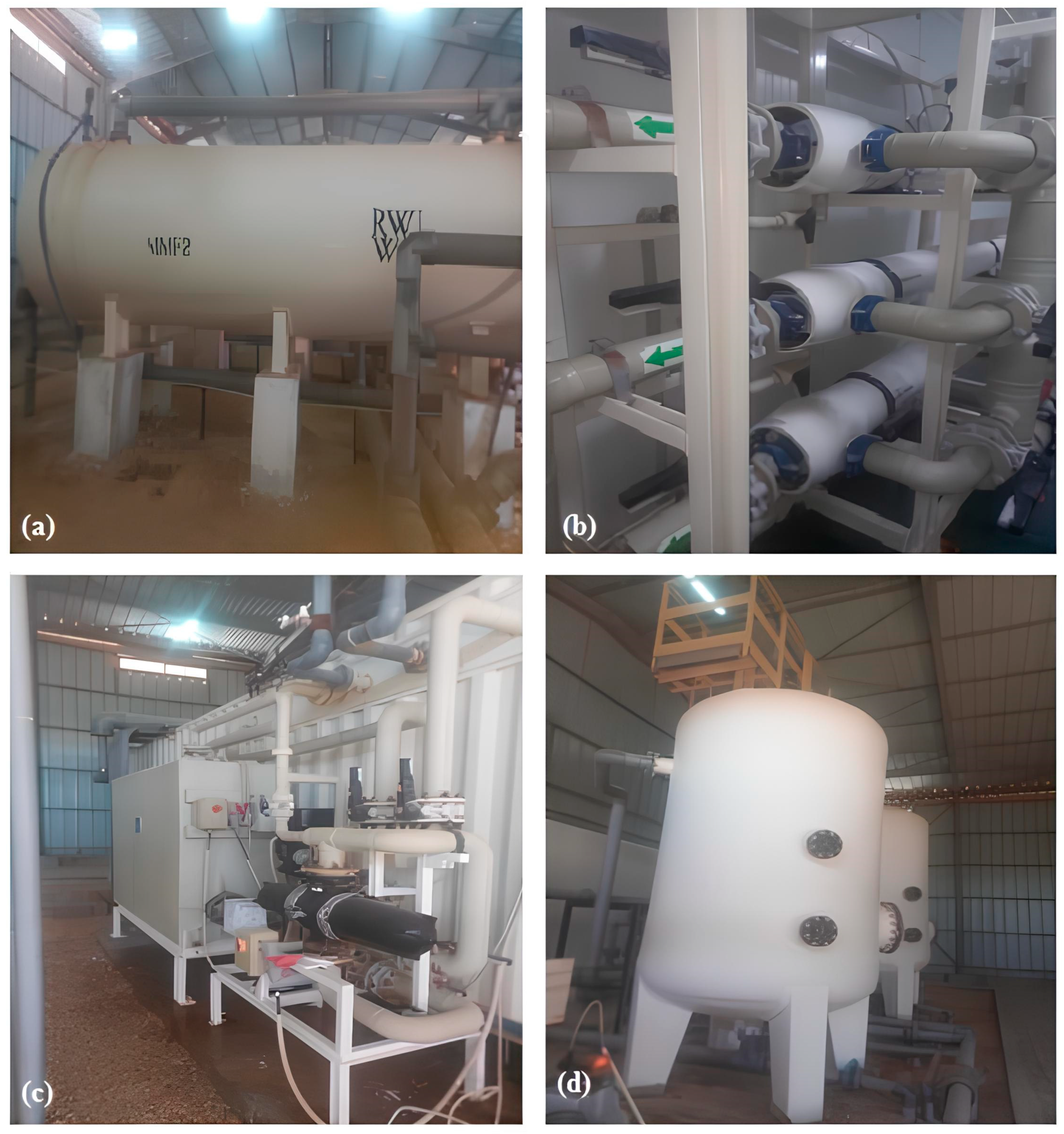
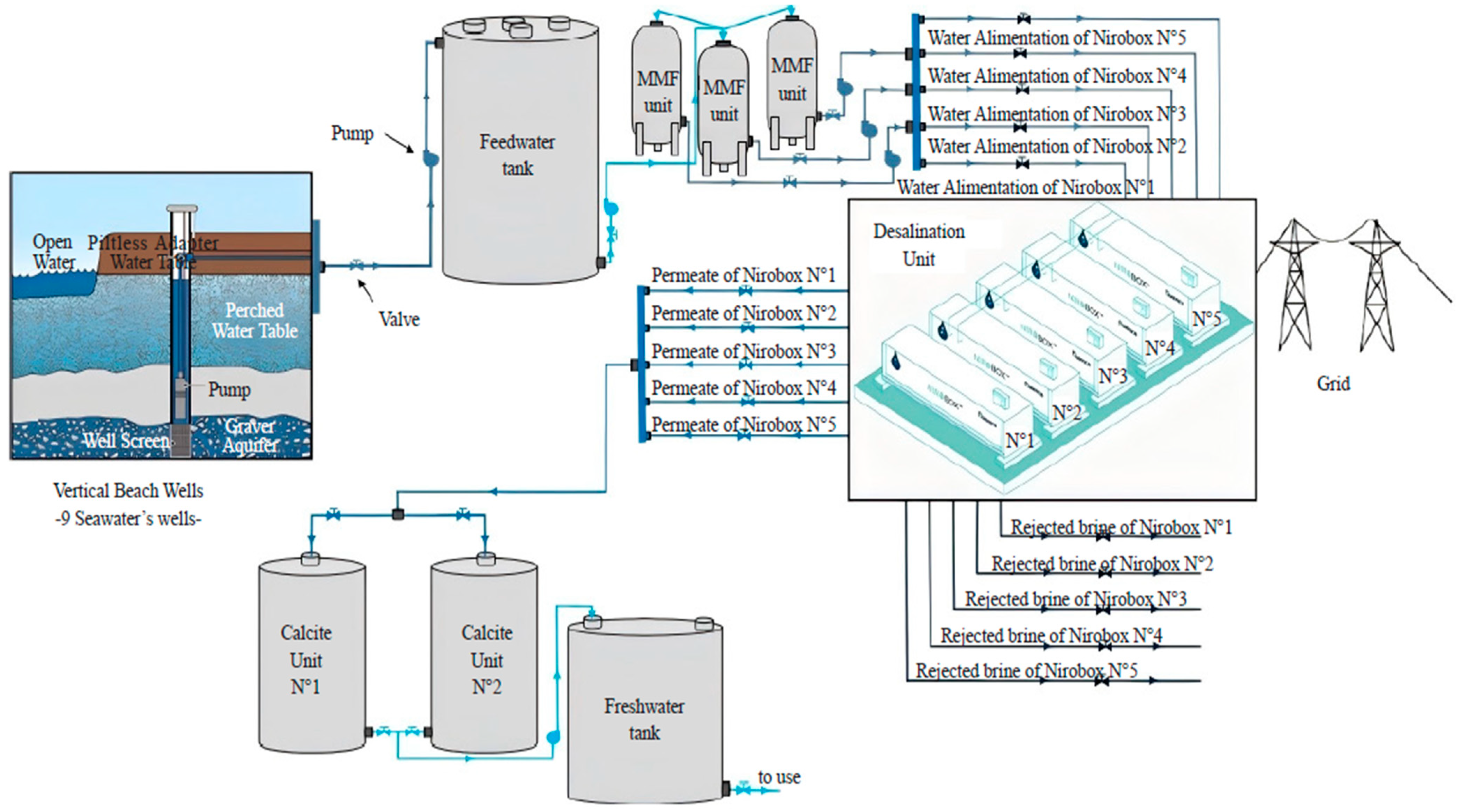
Table 1 presents average values of some physicochemical properties of seawater from the Atlantic Ocean, where the Nouadhibou Seawater Reverse Osmosis (SWRO) plant, studied in this research, is located. The seawater is pumped from nine boreholes to the plant’s feed tank. Before the desalination process begins, a pretreatment phase is essential to remove suspended solids and other impurities. In this plant, pretreatment is carried out using a multimedia filtration unit (MMF) (Figure 6a). This step is very important to protect the reverse osmosis membranes from fouling, extend their lifespan and improve the overall production performance. The water treated by the MMF unit is sent directly to the plant’s reverse osmosis units, which are grouped into five Nirobox; each unit contains three Codeline Aquiline-type cartridge filters (Figure 6b) installed in parallel to obtain a higher quantity of filtrate and to protect the desalination membranes as effectively as possible from undesirable elements.
The Nouadhibou plant is equipped too with a high-performance Grundfos high-pressure (HP) unit with a power of 90 kW. This unit generates the high operating pressure required to separate water from salt, retaining both monovalent and polyvalent ions, etc. while allowing pure water to pass through the semi-permeable membranes of the RO unit.
Regarding the plant’s RO unit, each Nirobox contains 50 reverse osmosis membranes of the LG Chem 440 ES model (arranged as 5 membranes per pressure vessel × 10 pressure vessels). This unit forms the core of the entire desalination plant and is responsible for determining both the quality and quantity of the produced permeate. The concentrate discharged from this unit consists primarily of a high salt concentration.
The plant integrates an energy recovery system based on iSave-type pressure exchangers (see Table 2). This technology recovers the pressure energy of the concentrate and transfers it to the high-pressure (HP) pump unit, which reduces the overall electricity consumption of the plant.
To ensure the smooth operation of the plant, an innovative automatic cleaning-in-place (CIP) system is integrated (Figure 6c). This system is automatically activated when the desalination process is stopped, providing automated cleaning of the membrane filtration equipment (such as cartridge filters and RO membranes), in order to maintain optimal performance and reliability of the desalination plant.
The permeate also requires pH adjustment and remineralization, which is the role of the post-treatment unit (Figure 6d). This process is achieved by adding sulfuric acid (H2SO4), sodium hypochlorite (NaOCl), and sodium hydroxide (NaOH) to the desalinated water to make it potable according to international drinking water standards. The treated water is then sent to the plant’s storage tank (Figure 7) before being distributed through the regional supply network to meet the local population’s potable water needs.

4. System Modeling and Mathematical Formulation

To describe the phenomena and issues under investigation, computer-based tools are required to model the system using mathematical equations and algorithms. This approach allows the complex problem to be reformulated, more flexible and easier to analyze [34]. In the 20th century, the whole world recognized a very rapid technological and informational advancement, which influenced the data analysis and numerical modeling domains (such as engineering and science) through mathematical algorithms, using powerful computers and computing workstations. The purpose of modeling is to identify effective solutions and determine appropriate parameter settings for the problem at hand, in order to optimize the design process. To achieve this, several advanced software tools are available that allow for the study and analysis of complex phenomena through various stages of design modeling [35]. In the field of desalination, mathematical modeling plays a crucial role, as it enables the simulation, understanding, and optimization of the process, thereby reducing equipment, construction and production costs while fostering the development of innovative and optimized solutions. It also facilitates the analysis of system performance and the investigation of underlying physical phenomena. Additionally, numerical modeling enables virtual experimentation under variable operating conditions, eliminating the need for physical testing and thereby accelerating the design and enhancement of desalination technologies.
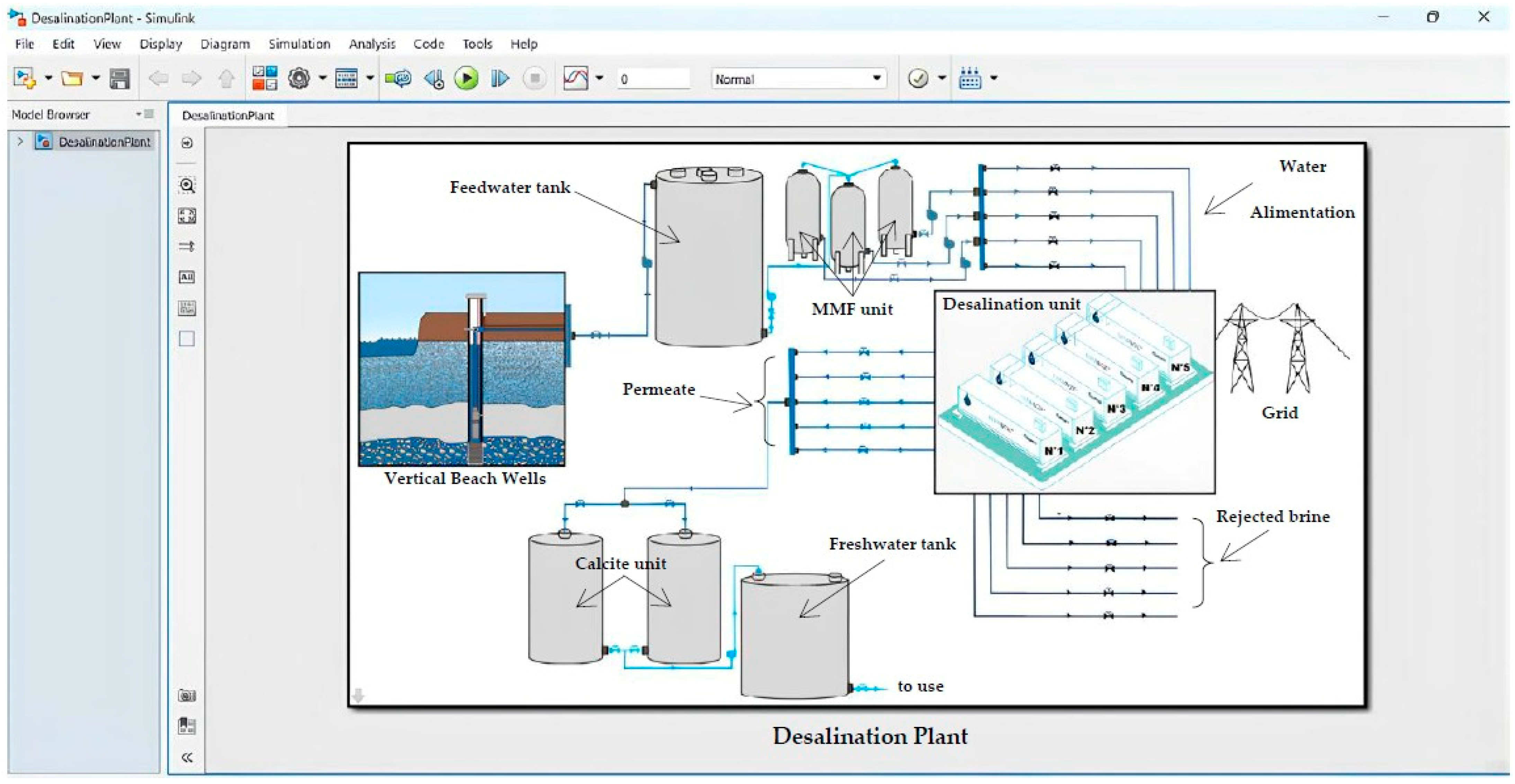
In this study, a numerical and analytical investigation of the performance of the Nouadhibou desalination plant was conducted using MATLAB software (Figure 8). The objective was to evaluate the plant’s operating mode, particularly that of RO unit, by adjusting several system parameters, such as productivity and seawater temperature, and demonstrating the critical role of the pressure exchanger (PEX) unit in enhancing system energy efficiency.

4.1. RO Mathematical Model

In the literature, several mathematical models have been developed to study the fundamental behavior of the reverse osmosis membranes [14,36]. The two primary theoretical approaches used are the thermodynamic model and the convection–diffusion model, which describes solvent transport through the membrane. In this study, we focus on the latter approach, which will be presented in detail.
The RO membrane is a semi-permeable barrier that separates water under a pressure gradient. The flow occurs tangentially along the membrane surface, passing through the semi-permeable film that allows only water molecules and certain monovalent ions to permeate. During this process, the feed water is divided into two streams with different concentrations [37,38,39]:
  • Permeate, which passes through the membrane;
  • Concentrate (retentate), which is retained by the semi-permeable film; contains the rejected salts and other particles.
The selected model is based on the solution–diffusion mechanism, which considers two components: the solvent (water) and the solute (ions), both at the membrane surface layer and as they diffuse through the membrane.
Modeling the reverse osmosis unit makes it possible to optimize the amount of equipment required in the plant, thereby reducing both the cost and duration of the desalination process [1,38], using the following mathematical model [6,7,14,16,36,39,40,41,42,43]:
In this study, the feed flow rate M f   (kg/s) is calculated based on power load on the high-pressure pump HPP (kW); the density ( ρ ) ; pump efficiency ( η p ), and the pressure difference across the pump ( P )
M f = H P P × ρ T , X f × η p P
The RO unit productivity M p   (kg/s) is calculated as follows:
M p = R R × M f
where RR is the recovery ratio.
The product salt mass concentration X p   (g/kg) is given by the following expression:
X p = X f × ( 1 S R )
where Xf (g/kg) is the feed salinity ratio, and SR is the salt rejection percentage (SR = ~0.98).
The rejected brine M b (kg/s) is the difference between the feed flow rate and the product flow rate as follows:
M b = M f M p
Based on the mass and salt balances, the rejected salt concentration X b (g/kg) is then calculated;
X b = M f × X f M p × X p M b
The average salt concentration X a v   (kg/m3):
X a v = M f × X f + M b × X b M f + M b
The temperature correction factor T C F (°C) [36,38,39]:
T C F = e x p 2700 × 1 T + 273 1 298
The membrane water permeability kW [36,38,39]:
k w = 6.84 × 10 8 × 18.6865 0.177 × X b T + 273
The salt permeability ks is [36,38,39]:
k s =   F F × T C F × 4.72 × 10 7 × 0.06201 5.31 × 10 5 × T + 273
where FF is the membrane fouling factor (=0.775).
The osmotic pressure for brine side ( Π b ) ; feed side ( Π f ) ; and distillate product side ( Π d ) are found as follows:
Π f = 75.84 × X f
Π b = 75.84 × X b
Π d = 75.84 × X d
The average osmotic pressure on the feed side:
Π a v = 0.5 × Π f + Π b
The net osmotic pressure across the membrane:
Δ Π = Π a v Π d
The net pressure difference across the membrane:
Δ P = M d 3600 × T C F × F F × A e × n e × N v ×   k w +   Δ Π
where Ae (m2) is the RO surface; Nv is the Nbr of pressure vessels, and ne is Nbr of RO elements.
The Specific Power Consumption S P C (kWh/m3) is:
S P C = 1000 × H P P 3600 × M p
where HPP is the high-pressure pump, and M p is the product flow rate.

4.2. ERDs Mathematical

4.2.1. Splitter Unit

PEX outlet pressure, kPa:
P f , P E X = P O = P f , R O
where P f , R O (bar) is the inlet pressure in the pressure vessels and P O (bar) is the outlet pressure from the HPP.
Pressure exchanger unit feed flow rate M f , P E X (m3/h):
M f , P E X = η P E X × M f , t
Splitted feed flow rate M f , R O (m3/h):
M f , R O = ( 1 η P E X ) × M f , t
PEX feed water salinity X f , P E X (kg/m3):
X f , P E X = X f × M f , P E X
Splitted feed water salinity X f , R O (kg/m3):
X f , R O = X f × M f , R O
where η P E X is Pressure exchanger Splitter ratio; X f (kg/m3) is Feed water salinity, and M f , t (m3/h) is inlet feed flow rate.

4.2.2. High Pressure Pump Unit

Pump power (power required) HPP (kW):
H H P = 1000 × M f P P f i 3600 × ρ f × η H P
Feed temperature TO (°C):
T O = H H P M f × C p × η H P + T i
where M f (m3/h) is Feed flow rate of High-Pressure Pump unit; ρ f is the density of water; P f i (bar) is the HPP inlet pressure; η H P is the HPP efficiency; and Cp is the specific heat capacity.

4.2.3. Mixer Unit

Total flow rate salinity of mixer unit X f , t (g/m3) is:
X f , t = M f , s p l × X f , s p l + M f , b p × X f , b p M f , t
where M f , s p l   is the splitted feed flow; X f , s p l is the splitted feed salinity; M f , b p   is booster pump feed flow rate; and X f , b p   is booster pump feed salinity.
Mixer unit total flow rate M f , t (m3/h):
M f , t = M f , s p l + M f , b p

4.2.4. Booster Pump Unit

Booster pump power H P b p (kW):
H P b p = 1000 × M f , o × ( P P f i ) 3600 × ρ f × η b p
where M f , o (m3/h) is Feed flow rate to mixer; P f i (kPa) is Outlet feed pressure; and η b p is Booster pump efficiency.

4.2.5. Pressure Exchanger Unit

Outlet feed pressure P f o (kPa) is:
P f o = M b i × P b i 275 + M f i × P f i × η f , P E X M b o × P b o M f o
Outlet brine salinity X b o (g/m3):
X b o = X b i 0.03 × X b i
Outlet feed salinity:
X f o = X f i + 0.03 × X f i M f o
PEX power H P P E X (kW):
H P P E X = M b o × P b o + M f o × P f o 3600
where M b O (m3/h) is Outlet brine flow rate ( = M b i ); M f O (m3/h) is Outlet feed flow rate ( = M f i ); P b O (kPa) is Outlet brine pressure ( = P f i ); and η f , P E X is the PEX efficiency.
Density ρ w (kg/m3) is calculated as following function [36,38,39,42]:
ρ w = 0.5 × a 0 + a 1 × Y + a 2 × 2 × Y 2 1 + a 3 × 4 × Y 3 3 × Y × 1000
where:
a 0 = 2.01611 + 0.115313 × σ + 0.000326 × 2 × σ 2 1
a 1 = 0.0541 + 0.001571 × σ + 0.000423 × 2 × σ 2 1
a 2 = 0.006124 + 0.00174 × σ + 0.000009 × 2 × σ 2 1
a 3 = 0.000346 + 0.00008 × σ + 0.000053 × 2 × σ 2 1
This equation is applicable in the salinity range of 0 to 160 g/kg and for temperature from 10 °C to 180 °C:
Specific heat capacity C p (J/kg °C) of seawater is [36,38,39,42]:
C p = 1 1000 × ( a p + b p × T + c p × T 2 + d p × T 3 )
where:
a p = 4206.8 6.6197 × X + 1.2288 × 10 2 × X 2
b p = 1.1262 + 5.4178 × 10 2 × X 2.2719 × 10 4 × X 2
c p = 1.2026 × 10 2 5.3566 × 10 4 × X + 1.8906 × 10 6 × X 2
d p = 6.8774 × 10 7 + 1.517 × 10 6 × X 4.4268 × 10 9 × X 2

5. Results and Discussions

Table 3 presents a comparative study between the numerical model results and the experimental data from the Nouadhibou desalination plant. Experimentally, the feed pressure measured at the HPP (High-Pressure Pump) is 60.6 bar, which corresponds perfectly to the numerical value obtained (58.62 bar) from the numerical model developed in Matlab/Simulink software. For the feed flow rate, the experimentally measured value is identical to that obtained numerically using the same numerical model, approximately 80 m3/h. The concentrate flow rate, measured experimentally (58.33 m3/h), is also very close to the numerically calculated value (59.5 m3/h). Regarding permeate and concentrate salinity, the developed model provides results that are in excellent agreement with experimental measurements, with low uncertainties. These findings confirm the accuracy and reliability of the numerical model developed for the study and optimization of the Nouadhibou desalination plant.
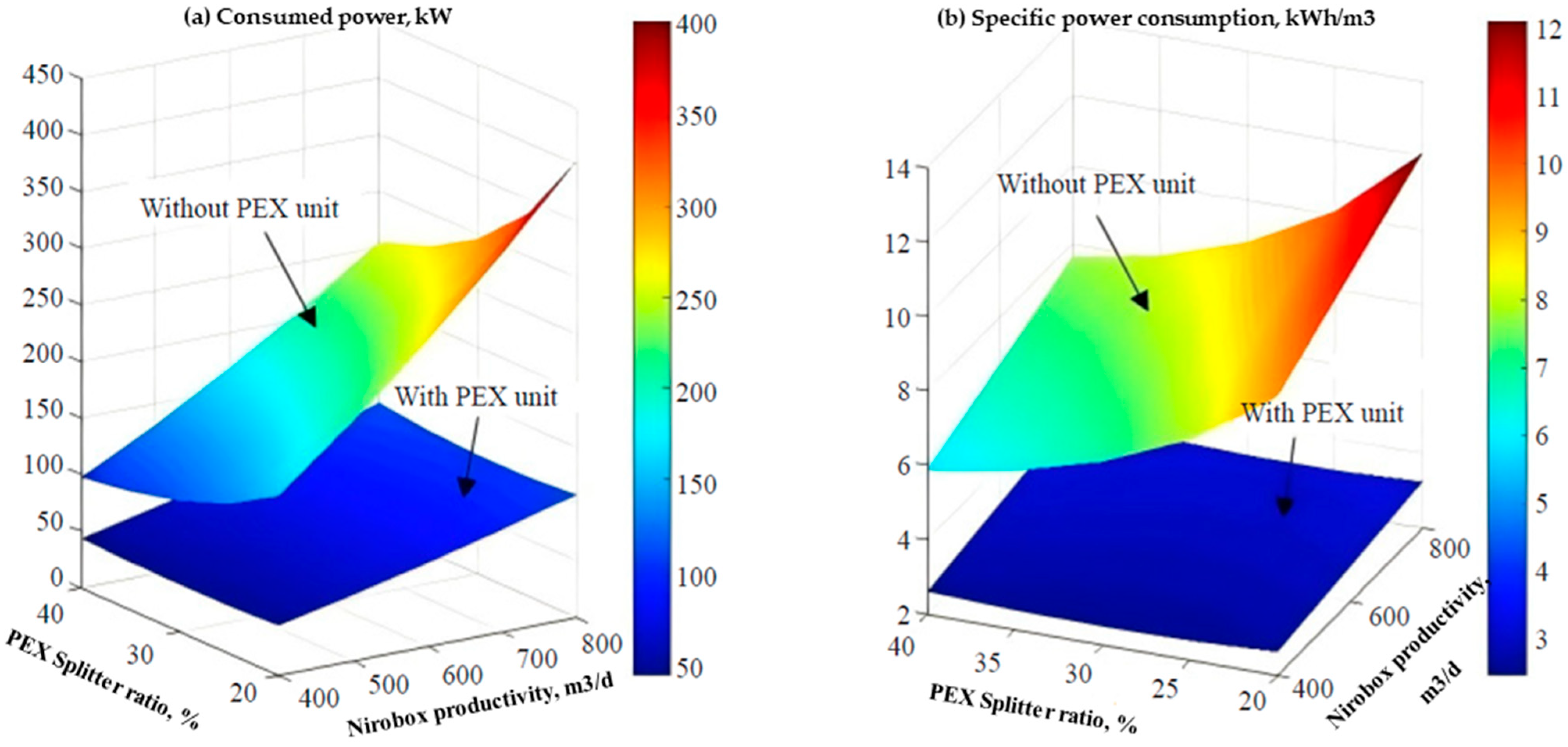
Figure 9 shows an analytical study of the energy performance results of the RO unit of the desalination plant studied (specifically for Nirobox No. 2). The specific energy consumption varies depending on the productivity of the RO unit, m3/day, and the PEX Splitter ratio, %. In the case where the desalination plant operates without a pressure exchanger (Case No. 1), Figure 9a shows that the electrical consumption of the plant is significantly higher than that of the same desalination plant equipped with a pressure exchanger (Case No. 2). This variation is mainly influenced by the productivity of the RO unit and the rejection rate. Indeed, increasing the productivity to 800 m3/day at a low retention rate of 20% requires 400 kW of energy (Case No. 1). On the contrary, in Case No. 2, the RO-PEX system requires no more than 100 kW of energy, resulting in a 75% reduction in the plant’s power consumption. Furthermore, increasing the PEX Splitter ratio of the RO unit has a direct impact on the plant’s energy consumption. In fact, when the productivity reaches 800 m3/day at a 40% of at a PEX Splitter ratio, the power consumption of the installation (Nirobox, Nouadhibou, Mauritania) decreases to approximately 124 kW.
In terms of specific power consumption (Figure 9b), in Case No. 1, this value ranges from 6 to 14 kWh/m3, which negatively affects the cost of producing one cubic meter of desalinated water (high cost). Indeed, when the PEX Splitter ratio varies between 20% and 25%, the SPC of Nirobox No. 2 also ranges between 8 and 14 kWh/m3. This high desalination cost is mainly due to the elevated feed pressure required, which results in significant power consumption. For a production rate of 600 m3/day, the specific power consumption (SPC) of the installation also varies with the PEX Splitter ratio. It is observed that in the case without the pressure exchanger (Case No. 1), the SPC reaches a very high value at a rejection rate of 20% compared to that at 40%. In Case No. 2, the SPC has a minimum value. For a production rate of 400 m3/day at a PEX Splitter ratio of 40%, the SPC is reduced from 6 kWh/m3 to 2.7 kWh/m3 for the system without and with an energy recovery unit, respectively. Furthermore, for a production rate of 800 m3/day and a PEX Splitter ratio of 22%, the specific power consumption decreases from 14.5 kWh/m3 to 5 kWh/m3 when equipped with the PEX unit, representing a specific power consumption saving of approximately 75%. This considerable reduction clearly highlights the effectiveness of incorporating a pressure exchanger, as it significantly lowers both operating costs and the overall power consumption, etc. of the desalination plant studied.
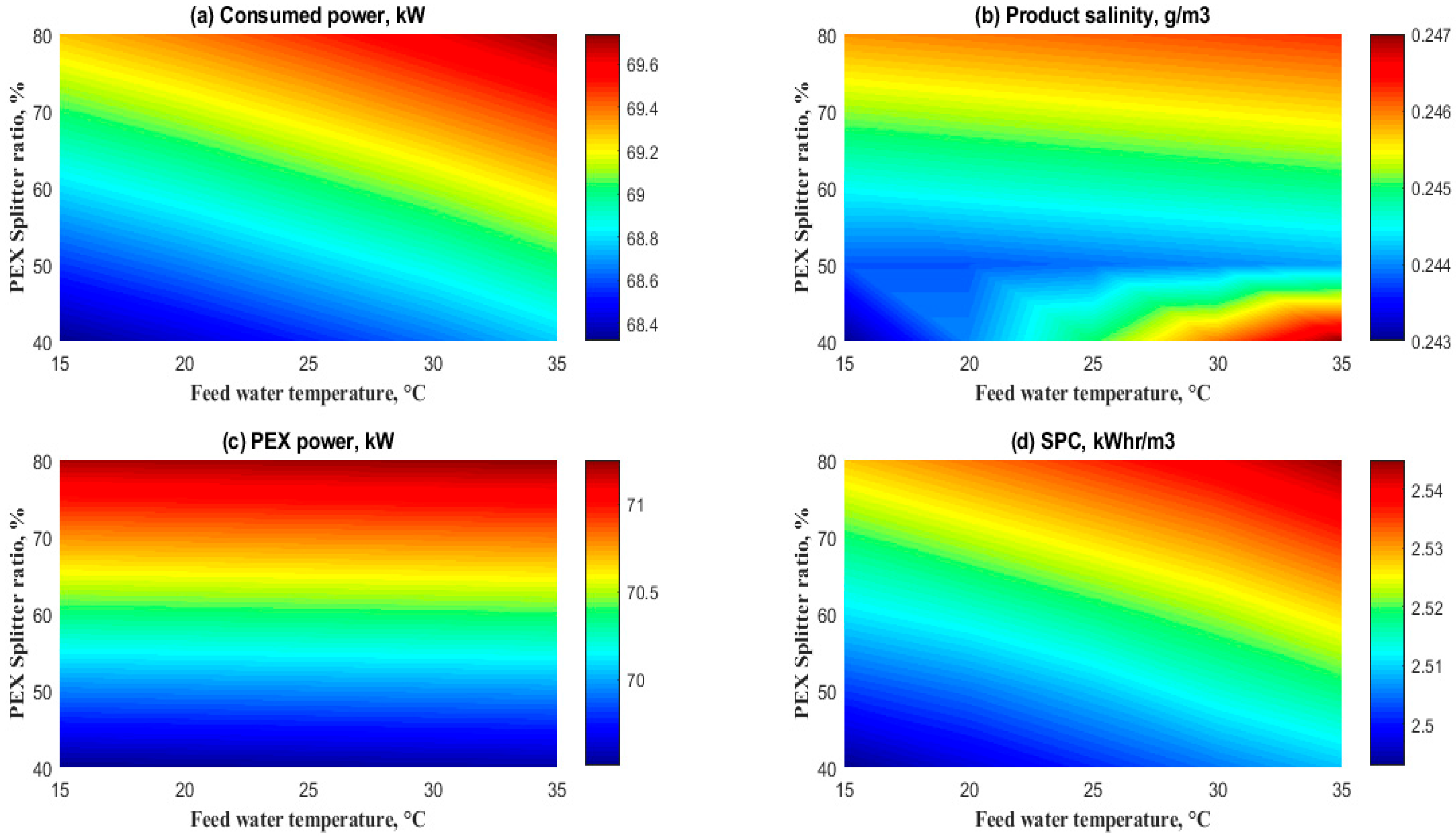
Figure 10 illustrates the effect of varying Feed Water Temperature, °C, and PEX splitter ratio, %, on Consumed Power, kW, Product Salinity, g/m3, PEX power, kW, and Specific Power Consumption, kWh/m3, of the desalination system. Regarding the consumed power of the system, Figure 10a clearly shows that this parameter increases with both feed water temperature and PEX splitter ratio, affecting the system’s operating mode. A maximum consumption of 70 kW occurs when the feed water temperature is 35 °C and the PEX splitter ratio is 80%. Conversely, a minimum consumption of 68 kW is observed when the feed water temperature is 15 °C and the pressure exchanger splitter ratio is 40%. Interestingly, varying the feed water temperature and PEX splitter ratio has a relatively insignificant effect on the system’s consumed power. Regarding product salinity, g/m3, Figure 10b also shows that varying the feed water temperature and PEX splitter ratio has a negligible effect on this parameter. In fact, a maximum value of 0.247 g/m3 was observed at 35 °C and 40%, while a minimum value of approximately 0.243 g/m3 was observed at 15 °C and 40%. Figure 10c shows that the PEX power variation is independent of the feed water temperature. However, it is influenced by the PEX splitter ratio. Notably, the maximum PEX power of approximately 71.5 kW was observed when the PEX splitter ratio reached its maximum value of 80%. Regarding the SPC of the system, Figure 10d shows that SPC varies with both PEX splitter ratio and feed water temperature. Notably, high values of feed water temperature and PEX splitter ratio correspond to high SPC values. Conversely, the SPC exhibits a very low variation, approximately 0.01 kWh/m3, over a temperature range of 15–35 °C at 40% PEX splitter ratio, and less than 0.01 kWh/m3 at 15–35 °C and 80% PEX splitter ratio.
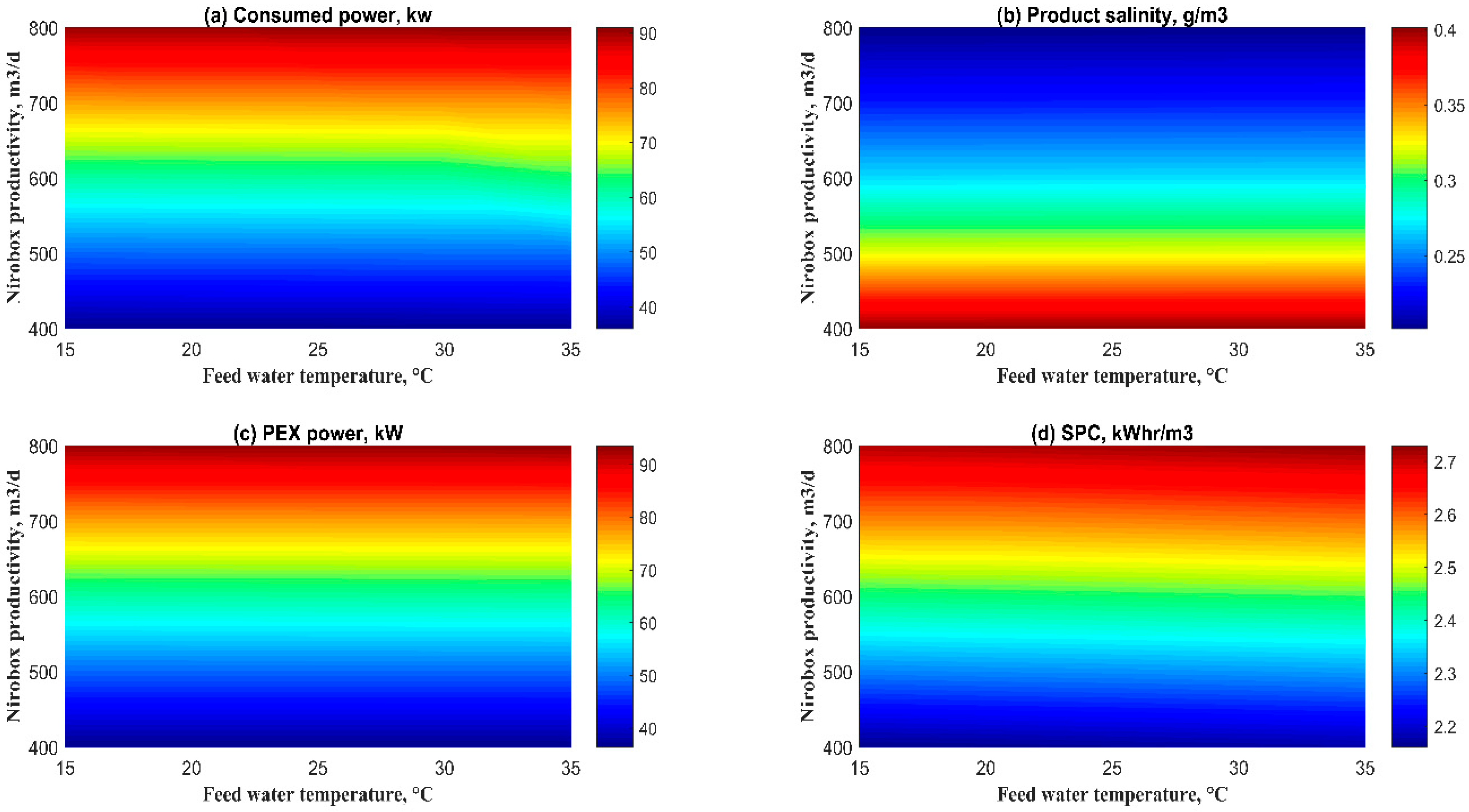
Figure 11 illustrates the impact of varying feed water temperature, °C, and Nirobox productivity, m3/d, on consumed power, kW, product salinity, g/m3, PEX power, kW, and SPC, kWh/m3, of the desalination unit. Notably, the system’s productivity significantly influences the installation’s performance, whereas the feed water temperature has a negligible impact.
Physically, as the seawater temperature increases, its dynamic viscosity decreases, leading to a reduction in hydraulic head losses due to internal friction within the pump and throughout the hydraulic circuit. This reduction in losses allows the pump to deliver the same flow rate and pressure with lower energy consumption compared to operation at lower temperatures. Consequently, the energy recovery unit operates more efficiently, ensuring better energy recovery. As a result, the power absorbed by the pump decreases, which directly translates into a reduction in the overall plant SPC (Specific Power Consumption), as illustrated in Figure 10 and Figure 11.
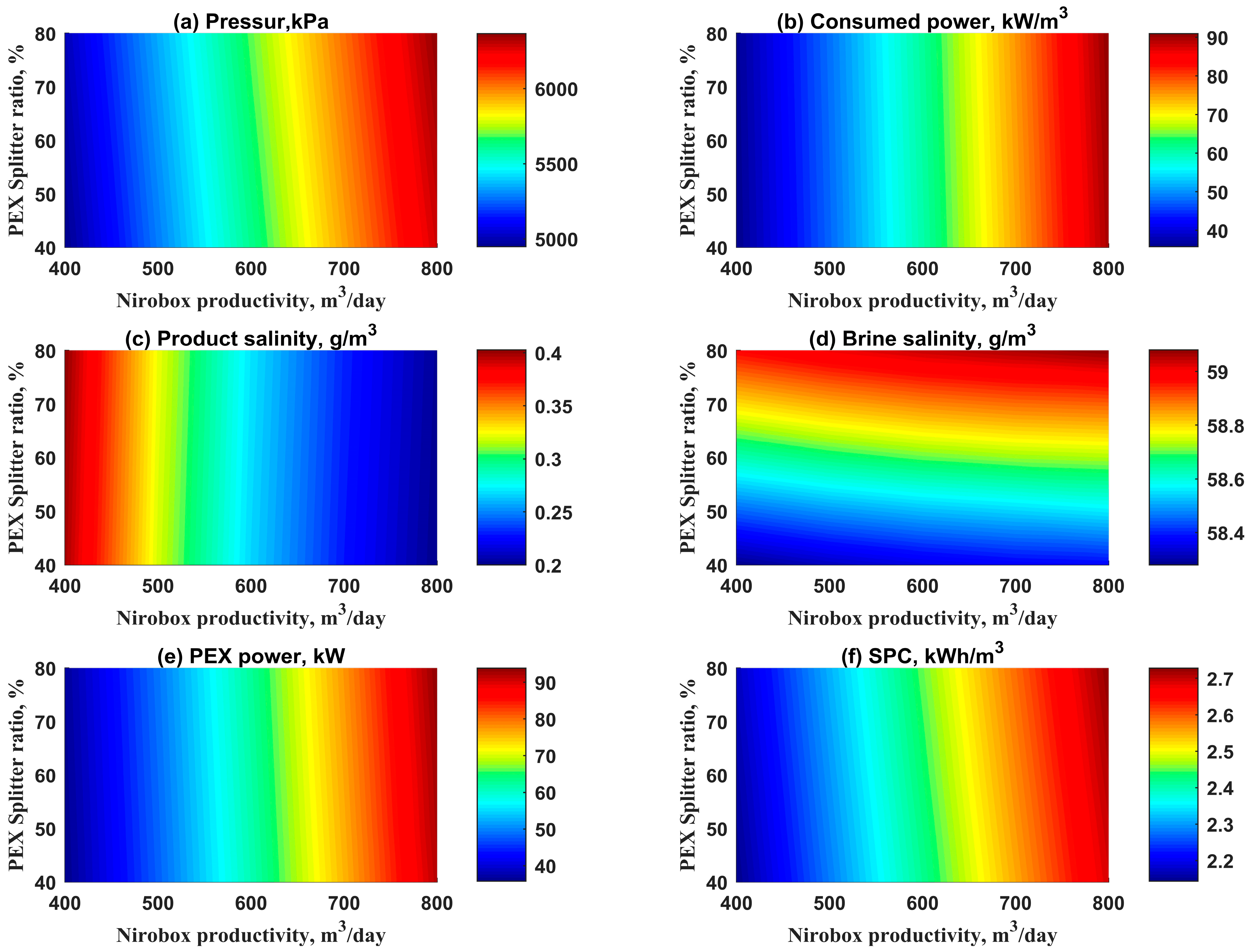
Figure 12 presents the effect of the PEX splitter ratio and the RO unit’s productivity on the performance of the Nouahadibou plant (Nirobox No. 2) in the case of coupling the pressure exchanger unit with the RO unit. Figure 12a shows the impact of variations in the PEX splitter ratio, as well as the productivity of the Nirobox No. 2 module, on the pressure applied to the RO membranes unit. Notably, increasing the feed water ratio while boosting productivity leads to a significant surge in system pressure, potentially clogging the RO membrane pores and driving up the power consumption (Figure 12b). When the productivity is 800 m3/d, the desalination unit exhibits high power consumption (approximately 80 kW) with a pressure exchanger splitter ratio of 40%, whereas increasing the PEX Splitter ratio to 80% reduces power consumption to 90 kW. The quality of the permeate produced is an important factor in desalination plants; in this study (Figure 12c), it is analyzed to evaluate the overall performance and efficiency of the RO-PEX system. This study shows that varying the PEX splitter ratio has a negligible effect on the permeate salinity, which remains practically unchanged. On the other hand, the same figure shows that salinity is inversely proportional to the system’s productivity; in fact, for a productivity of 400 m3/day to 800 m3/day, the permeate salinity decreases from 0.35 g/m3 to 0.18 g/m3, respectively. Figure 12d shows that variations in the productivity of the desalination unit have a negligible effect on brine salinity. However, adjusting the pressure exchanger splitter ratio results in a noticeable increase in brine salinity. As the salinity rises from 58.2 to 58.98 g/m3, the pressure exchanger splitter ratio increases from 40% to 80%. Figure 12e shows the variation in power generated by the pressure exchanger system as a function of the desalination plant productivity and pressure exchanger splitter ratio. The productivity is significantly affecting the power output. For a pressure exchanger splitter ratio of 40%, the power recovered by the pressure exchanger system increases from 38 kW@400 m3/day to 90 kW@800 m3/day. In contrast, the pressure exchanger splitter ratio has a negligible impact on the power delivered by the pressure exchanger system.
Figure 12f shows also the specific power consumption, kW/m3 variation. The PEX Splitter ratio RO desalination plant and the productivity influence this factor. Notably, the productivity has a significant impact. impact on the specific power consumption, with higher productivity resulting in higher specific power consumption. However, increasing the pressure exchanger splitter ratio from 40% to 80% reduces the specific power consumption. This is particularly beneficial in the field of desalination, as it reduces the energy consumption and the overall cost of the process. During normal operation of the Nouadhibou plant, Nirobox No. 2 requires approximately 60 kW of output power (for a production rate of 600 m3/day), which is very close to the measured value of 58 kW under conditions where the pressure exchanger splitter ratio is 64.5%. Additionally, the SPC is estimated to be 2.65 kWh/m3, reasonably close to the actual value of 2.52 kWh/m3. However, the calculated system pressure of 58.62 bars is somewhat lower than that measured (60.60 bars). In terms of product salinity, the numerical value (0.24 g/m3) closely matches the measured one (0.29 g/m3). Finally, the estimated brine salinity is 58.85 g/m3.

6. Conclusions

The aim of this paper is to evaluate and analyze the performance of a seawater desalination system, specifically a RO unit desalination coupled with a pressure exchanger (PEX) energy recovery unit, supported by the local power grid. Focusing on Nouadhibou plant, Mauritania (Africa), a region experiencing significant water scarcity despite substantial renewable energy potential, this work demonstrates the efficiency of the coupled RO-PEX unit. Operating at a freshwater production rate of 400–800 m3/day, the system exhibits highly efficient operational performance. A numerical model, developed using the MATLAB/Simulink interface and validated with experimental data from the same desalination system, highlights the critical role of the PEX Splitter ratio, the feed temperature and the recovery rate in influencing the SPC, the permeate salinity and the power consumption. The results show that variations in the pressure exchanger splitter ratio of the energy recovery unit have a minimal impact on the permeate salinity, and that changes in system productivity exhibit a strong inverse correlation with permeate quality, also that the specific power consumption of the RO unit increased as the recovery rate rose with using PEX. Despite these efficiencies, the energy consumption of the desalination process remains high. Therefore, further optimization of the plant and the integration of renewable energy sources are necessary and will be addressed in future research.

Author Contributions

Conceptualization, A.G. and A.L.; methodology, A.G., A.L. and S.E.; software, A.G. and A.L.; validation, A.B., H.F. and D.S.; formal analysis, H.F.; investigation, S.E.; resources, A.G. and A.L.; data curation, A.L.; writing—original draft preparation, A.G.; writing—review and editing, A.G., S.E. and A.L.; visualization, A.G. and A.L.; supervision, A.B., H.F. and D.S.; project administration, A.B. All authors have read and agreed to the published version of the manuscript.

Funding

This research received no external funding.

Data Availability Statement

The original contributions presented in this study are included in the article. Further inquiries can be directed to the corresponding author, Ahmed Ghadhy, or Amine Lilane.

Conflicts of Interest

The authors declare no conflicts of interest.

Nomenclature

AArea, m2
BFBacking factor, %
CIPCleaning-In-Place
CpSpecific heat capacity, kJ/kg °C @ constant pressure
FFFill factor, %
HPHigh pressure, bar
HHPHigh pressure pump
LFLoad factor, %
LPLow pressure, bar
MMass flow rate, m3/h, kg/s
MaxMaximum
MinMinimum
Nbr, N, n, Number, #
PPower, kW, or Pressure, bar
PEXPressure exchanger
pHpotential Hydrogen, #
ROReverse Osmosis
RRRecovery ratio, %
SPCSpecific power consumption, kWh/m3
SRSalt rejection, %
TTemperature, °C
TDSTotal Dissolved Solids, ppm
kPermeability
XSalinity ratio, g/kg (ppm)
YExtraction percentage, %
Subscripts
a, ambAmbient
avAverage
bBrine
dDistillate product, discharge
eElement
fFeed
hHigh, Hour
iIn
oOut
pProduct or pump
thThermal
totalTotal
sSalt
splSplitted feed
tTime
wWater
Greek symbol
ΔDifference
ηEfficiency, %
ρDensity, kg/m3
πOsmotic pressure, kPa

References

  1. Tianbao, S.; Lu, L.; Jianwei, B.; Xidong, X.; Yulian, Y.; Chunyou, P. Key points of design and equipment selection of reverse osmosis seawater desalination high-pressure system. Water Purif. Technol. 2019, 38, 131–134. [Google Scholar]
  2. Kalyan, I.; Nayak, A.K.; Khobragade, M.U. Addressing the global water crisis: A comprehensive review of nanobiohybrid applications for water purification. In Nanobiohybrids for Advanced Wastewater Treatment and Energy Recovery; IWA Publishing: London, UK, 2023; p. 9. [Google Scholar]
  3. Wheeler, W. Global Water Crisis: Too Little, Too Much, or Lack of a Plan; Christian Science Monitor: Boston, MA, USA, 2012; p. 2. [Google Scholar]
  4. Baseer, M.A.; Kumar, V.V.; Izonin, I.; Dronyuk, I.; Velmurugan, A.K.; Swapna, B. Novel hybrid optimization techniques to enhance reliability from reverse osmosis desalination process. Energies 2023, 16, 713. [Google Scholar] [CrossRef]
  5. Bartels, C.; Franks, R.; Andes, K. Operational performance and optimization of RO wastewater treatment plants. Singap. Int. Water Week Singap. 2010. Available online: https://membranes.com/wp-content/uploads/Documents/Technical-Papers/Application/Waste/Operational-Performance-and-Optimization-of-RO-Wastewater-Treatment-Plants-1.pdf (accessed on 28 October 2025).
  6. Panagopoulos, A.; Haralambous, K.-J. Environmental impacts of desalination and brine treatment-Challenges and mitigation measures. Mar. Pollut. Bull. 2020, 161, 111773. [Google Scholar] [CrossRef] [PubMed]
  7. Kress, N. Marine Impacts of Seawater Desalination: Science, Management, and Policy; Elsevier: Amsterdam, The Netherlands, 2019. [Google Scholar]
  8. Eke, J.; Yusuf, A.; Giwa, A.; Sodiq, A. The global status of desalination: An assessment of current desalination technologies, plants and capacity. Desalination 2020, 495, 114633. [Google Scholar] [CrossRef]
  9. Kurihara, M. Sustainable seawater reverse osmosis desalination as green desalination in the 21st century. J. Membr. Sci. Res. 2020, 6, 20–29. [Google Scholar]
  10. Aroussy; Saifaoui, D.; Lilane, A. Exergetic and thermo-economic analysis of different multi-effect configurations powered by solar power plants. Desalination Water Treat 2021, 235, 26–38. [Google Scholar] [CrossRef]
  11. Al-Karaghouli, A.; Kazmerski, L.L. Energy consumption and water production cost of conventional and renewable-energy-powered desalination processes. Renew. Sustain. Energy Rev. 2013, 24, 343–356. [Google Scholar] [CrossRef]
  12. Jones, E.; Qadir, M.; van Vliet, M.T.; Smakhtin, V.; Kang, S. The state of desalination and brine production: A global outlook. Sci. Total Environ. 2019, 657, 1343–1356. [Google Scholar] [CrossRef]
  13. Lilane, A.; Saifaoui, D.; Aroussy, Y.; Hariss, S.; Oulhazzan, M. Experimental study of a pilot membrane desalination system: The effects of transmembrane pressure. Mater. Today Proc. 2020, 30, 970–975. [Google Scholar] [CrossRef]
  14. Lilane, A.; Saifaoui, D.; Aroussy, Y.; Chouiekh, M.; Eldean, M.S.; Mabrouk, A. Simulation and optimization of pilot reverse osmosis desalination plant powered by photovoltaic solar energy. Desalination Water Treat. 2022, 258, 16–42. [Google Scholar] [CrossRef]
  15. Stover, R.L. Seawater reverse osmosis with isobaric energy recovery devices. Desalination 2007, 203, 168–175. [Google Scholar] [CrossRef]
  16. Kettani, M.; Bandelier, P. Techno-economic assessment of solar energy coupling with large-scale desalination plant: The case of Morocco. Desalination 2020, 494, 114627. [Google Scholar] [CrossRef] [PubMed]
  17. Stover, R.L. Retrofits to improve desalination plants. Desalination Water Treat. 2010, 13, 33–41. [Google Scholar] [CrossRef]
  18. Adda, A.; Naceur, W.M.; Abbas, M. Modélisation et optimisation de la consommation d’énergie d’une station de dessalement par procédé d’osmose inverse en Algérie. J. Renew. Energ. 2016, 19, 157–164. [Google Scholar] [CrossRef]
  19. Essa, F.A.; Selim, F. Improving the operation of small reverse osmosis plant using Pelton turbine and supplying emergency electric loads. Energy Sources Part. Recovery Util. Environ. Eff. 2023, 45, 12040–12055. [Google Scholar] [CrossRef]
  20. Alanezi, A.A.; Altaee, A.; Sharif, A.O. The effect of energy recovery device and feed flow rate on the energy efficiency of reverse osmosis process. Chem. Eng. Res. Des. 2020, 158, 12–23. [Google Scholar] [CrossRef]
  21. Al-Zahrani, A.; Orfi, J.; Al-Suhaibani, Z.; Salim, B.; Al-Ansary, H. Thermodynamic analysis of a reverse osmosis desalination unit with energy recovery system. Procedia Eng. 2012, 33, 404–414. [Google Scholar] [CrossRef]
  22. Lou, F.; Nie, S.; Yin, F.; Lu, W.; Ji, H.; Ma, Z.; Kong, X. Numerical and experimental research on the integrated energy recovery and pressure boost device for seawater reverse osmosis desalination system. Desalination 2022, 523, 115408. [Google Scholar] [CrossRef]
  23. Voutchkov, N. Energy use for membrane seawater desalination–current status and trends. Desalination 2018, 431, 2–14. [Google Scholar] [CrossRef]
  24. Park, K.; Kim, J.; Yang, D.R.; Hong, S. Towards a low-energy seawater reverse osmosis desalination plant: A review and theoretical analysis for future directions. J. Membr. Sci. 2020, 595, 117607. [Google Scholar] [CrossRef]
  25. Fievrez, E.; Bonnélye, V. Impact environnemental du dessalement: Contraintes et avancées. Rev. THE 2009, 142, 103–110. [Google Scholar]
  26. Schunke, A.J.; Herrera, G.A.H.; Padhye, L.; Berry, T.-A. Energy recovery in SWRO desalination: Current status and new possibilities. Front. Sustain. Cities 2020, 2, 9. [Google Scholar] [CrossRef]
  27. Wang, C.; Wang, S.; Wang, K.; Xiao, Y.; Ma, Q.; Song, D.; Wang, R.; Zhang, Y. Developmental impediment and prospective trends of desalination energy recovery device. Desalination 2024, 578, 117465. [Google Scholar] [CrossRef]
  28. Ruiz-García, A.; Nuez, I.; Khayet, M. Performance assessment and modeling of an SWRO pilot plant with an energy recovery device under variable operating conditions. Desalination 2023, 555, 116523. [Google Scholar] [CrossRef]
  29. Niasse, M.; Afouda, A.; Amani, A. Reducing West Africa’s Vulnerability to Climate Impacts on Water Resources, Wetlands, and Desertification: Elements for a Regional Strategy for Preparedness and Adaption; IUCN–the World Conservation Union: Gland, Switzerland, 2004. [Google Scholar]
  30. Noureddine, G.; Eslamian, S.; Katlane, R. Status of water resources and Climate change in Maghreb regions (Mauritania, Morocco, Algeria, Tunisia and Libya). Int. J. Water Sci. Environ. Technol. Sci. Press. Int. Ltd. 2021, 6, 67–94. [Google Scholar]
  31. Okafor, J.C.; Ononogbu, O.A.; Ojimba, A.C.; Ani, C.C. Trans-border Mobility and Security in the Sahel: Exploring the Dynamics of Forced Migration and Population Displacements in Burkina Faso and Mali. Society 2023, 60, 345–358. [Google Scholar] [CrossRef] [PubMed]
  32. Ntaghry, K.; Thiam, A.; Habib, S.M.S.; Faye, K.; Faye, M. Evaluation of suitable sites for concentrated solar power desalination systems: Case study of Mauritania. Environ. Res. Commun. 2024, 6, 085020. [Google Scholar] [CrossRef]
  33. Yacoub, E.; Tayfur, G. Spatial and temporal of variation of meteorological drought and precipitation trend analysis over whole Mauritania. J. Afr. Earth Sci. 2020, 163, 103761. [Google Scholar] [CrossRef]
  34. Maddah, H.A.; Alzhrani, A.S.; Almalki, A.M.; Bassyouni, M.; Abdel-Aziz, M.H.; Zoromba, M.; Shihon, M.A. Determination of the treatment efficiency of different commercial membrane modules for the treatment of groundwater. J. Mater. Env. Sci. 2017, 8, 2006–2012. [Google Scholar]
  35. Mengesha, A.; Sahu, O. Sustainability of membrane separation technology on groundwater reverse osmosis process. Clean. Eng. Technol. 2022, 7, 100457. [Google Scholar] [CrossRef]
  36. Lilane, A.; Saifaoui, D.; Ettami, S.; Chouiekh, M.; Aroussy, Y.; Eldean, M.A.S. Modeling and simulation of solar chimney/HWT power plant for the assistance of reverse osmosis desalination and electric power generation. Desalination Water Treat. 2023, 286, 1–15. [Google Scholar] [CrossRef]
  37. Dang, A.; Bennett, J.M.; Marchuk, A.; Marchuk, S.; Biggs, A.J.W.; Raine, S.R. Validating laboratory assessment of threshold electrolyte concentration for fields irrigated with marginal quality saline-sodic water. Agric. Water Manag. 2018, 205, 21–29. [Google Scholar] [CrossRef]
  38. Sharaf, M.A. Thermo-economic comparisons of different types of solar desalination processes. J. Sol. Energy Eng. 2012, 134, 031001. [Google Scholar] [CrossRef]
  39. Lilane, A.; Saifaoui, D.; Ettami, S.; Chouiekh, M.; Aroussy, Y. Simulation and optimization of a RO/EV pilot reverse osmosis desalination plant powered by PV solar energy: The application to brackish water at low concentration. Eur. Phys. J. Appl. Phys. 2022, 97, 82. [Google Scholar] [CrossRef]
  40. Lilane, A.; Saifaoui, D.; Hariss, S.; Jenkal, H.; Chouiekh, M. Modeling and simulation of the performances of the reverse osmosis membrane. Mater. Today Proc. 2020, 24, 114–118. [Google Scholar] [CrossRef]
  41. Ahmed, F.E.; Hashaikeh, R.; Diabat, A.; Hilal, N. Mathematical and optimization modelling in desalination: State-of-the-art and future direction. Desalination 2019, 469, 114092. [Google Scholar] [CrossRef]
  42. Sharaf, M.A. Design and Simulation of Solar Desalination Systems; Suez Canal University: Ismailia, Egypt, 2011. [Google Scholar]
  43. Hussain, Y.; Irfan, M.; Gul, S. Modeling Approach to Estimate Energy Consumption of Reverse Osmosis and forward Osmosis Membrane Separation Processes for Seawater Desalination. Mater. Proc. 2024, 17, 17. [Google Scholar] [CrossRef]
Figure 1. Different membrane types pore-size, sizes of solutes and particles [12].
Liquids 06 00002 g001
Figure 2. Desalination techniques shares in the market.
Liquids 06 00002 g002
Figure 3. SWRO plant process flow diagram.
Liquids 06 00002 g003
Figure 4. Values of specific power consumption of SWRO over years.
Liquids 06 00002 g004
Figure 5. Theoretical minimum SPC of BWRO and SWRO systems.
Liquids 06 00002 g005
Figure 6. (a) Multi-media filtration units. (b) Cartridge filters. (c) CIP system. (d) Calcite units.
Liquids 06 00002 g006
Figure 7. Schema of the Nouadhibou SWRO plant.
Liquids 06 00002 g007
Figure 8. System model browser under MATLAB/Simulink environment.
Liquids 06 00002 g008
Figure 9. (a) Consumed power, kW, (b) SPC, kWh.m−3.
Liquids 06 00002 g009
Figure 10. Effect of sea water temperature and PEX Splitter ratio on the system performance.
Liquids 06 00002 g010
Figure 11. Effect of sea water temperature and Nirobox productivity on the system performance.
Liquids 06 00002 g011
Figure 12. Performance results of the RO unit’s Nirobox N°2 coupled with a pressure exchanger unit.
Liquids 06 00002 g012
Table 1. Nouadhibou Seawater specifications.
ElementMg2+Ca2+Na+K+SO42−HCO3ClpHT (°C)Turbidity
TDS
(mg/L)
140344111,6404282920152.820,9328.1725.5<1
Table 2. System’s specifications.
Operating SpecificationsValue
LG Chem 440ES membraneSurface41 m2
Rejection ration99.8%
Min. Salt Rejection99.6%
Max. HP Applied 82.7 bar
Max. Chlorine concentration<0.1 ppm
Max. Temperature of operation 45 °C
pH Range, Continuous (Cleaning)2–11 (2–13)
Max. Feedwater turbidity1.0 NTU
Max. Feed flow17 m3/h
Max. Pressure drop(1.0 bar)
PEX iSave 50Max. HP out—HP in5 bar
Max. HP out 83 bar
Min. HP out 40 bar
Max. LP in (MAWP) 5 bar
Min. HP in2 bar
Min. pressure LP in2 bar
Differential pressure (LP in, max—LP out, max)0.53 bar
Speed [525–650] rpm
Flow at min. speed, HP out, in 42 m3/h
Flow at max. speed, HP out52 m3/h
Max. allowable working flow, LP in57.2 m3/h
Salinity at 40% RR2–3%
Motor Efficiency at 60 bar93.7%
Pressure vesselProducer companyBelvessel
ModelBEL8-S-1000
Max. operating pressure69 bar
Min. operating pressure1 bar
Max. operating pressure49 °C
Min. operating temperature5 °C
Table 3. Numerical and experimental data results of the PEX unit.
MATLAB ResultsExperimental Results
Specified parameters
Tamb, °C2525
TSeawater, °C2020
Feed water salinity, kg/m33838
Nbr of pressure elements, -55
Nbr of vessels, -1010
RO surface, m24141
Total surface, m220502050
HPP efficiency, %8080
Recovery ratio, %34.2534.25
Feed splitter ratio, %6867
RO-PEX system performance data
SPC, kWh/m32.522.55
Pressure, kPa58626060
Feed flow rate, m3/h8080
Brine flow rate, m3/h52.6052.60
Brine salinity, kg/m358.85--
Product salinity, kg/m30.24510.291
Salt rejection, %99.3798.44
Product flow rate, m3/h27.427.4
Feed to the booster pump, m3/h54.456.9
Split flow rate by PEX unit, m3/h26.627.4
Disclaimer/Publisher’s Note: The statements, opinions and data contained in all publications are solely those of the individual author(s) and contributor(s) and not of MDPI and/or the editor(s). MDPI and/or the editor(s) disclaim responsibility for any injury to people or property resulting from any ideas, methods, instructions or products referred to in the content.