1. Introduction
The ability to quantitate bacterial concentrations in a pure culture is a critical step in obtaining accurate and reproducible results from research projects. Many different methods to accurately enumerate bacteria have been developed. The most commonly used method is Colony Forming Units (CFU), which allows for direct quantification of viable cells [
1]. However, it does not differentiate individual bacteria from clumps and relies on the growth of bacteria on a solid surface. For some bacteria, this can require specialized media and long growth periods [
2]. Other methods can include direct microscopic visualization with or without staining, flow cytometry with or without staining, and quantitative real-time PCR (qPCR) [
1,
3]. Each of these methods varies by what they measure, how long they take to perform, the need for specialized equipment, and their sensitivity to confounding factors such as dead cells and other debris [
3].
Mycoplasmas are among the smallest free-living bacterial cells [
4,
5]. They are also noted for their lack of a cell wall and small genome size [
4]. These attributes limit the methods that can be used to quantitate mycoplasma. Their small physical size limits their ability to be viewed via microscopy and their light scattering limits detection by flow cytometry. Mycoplasmas are known to vary greatly in their ability to grow on solid media compared to liquid media, with different strains of the same species exhibiting different growth characteristics, and low-passage strains with higher virulence often having slower growth and decreased numbers compared to high-passage low-virulence strains [
6]. This has led to the preferred use of Color Change Units (CCU), a serial dilution endpoint method, over the use of CFU for determining mycoplasma counts [
6,
7].
Standardizing live bacteria at the beginning of an experiment is difficult. The standard methods for determining bacterial counts can be used for ultimate determination of the number of bacteria used in an experiment. However, due to the slow growth of mycoplasma, getting these results can take days to weeks [
4]. The most common method of estimating the number of bacteria used in an experiment is determining the optical density (OD), usually at a wavelength of 600 nm [
8]. This method uses the light scattered by the bacteria in culture to estimate the number of bacteria in the culture, is very fast, and provides a good estimation when performed properly [
9]. However, optical density is of limited use for mycoplasmas due to their small size (decreased light scattering ability) and the presence of a phenol red pH indicator in many mycoplasma media formulations [
10].
Previous work has shown good correlation between DNA content and counts determined by CCU, including direct fluorescence of purified genomic DNA [
6,
7]. This manuscript describes a new rapid method for estimating
Mycoplasma gallisepticum culture concentrations based on the direct use of genomic DNA released from lysed cells and quantitation using a fluorimeter to estimate the amount of DNA present. The determined DNA content can be used to rapidly and effectively estimate
Mycoplasma gallisepticum concentration by comparing it to previously quantitated standards.
3. Results
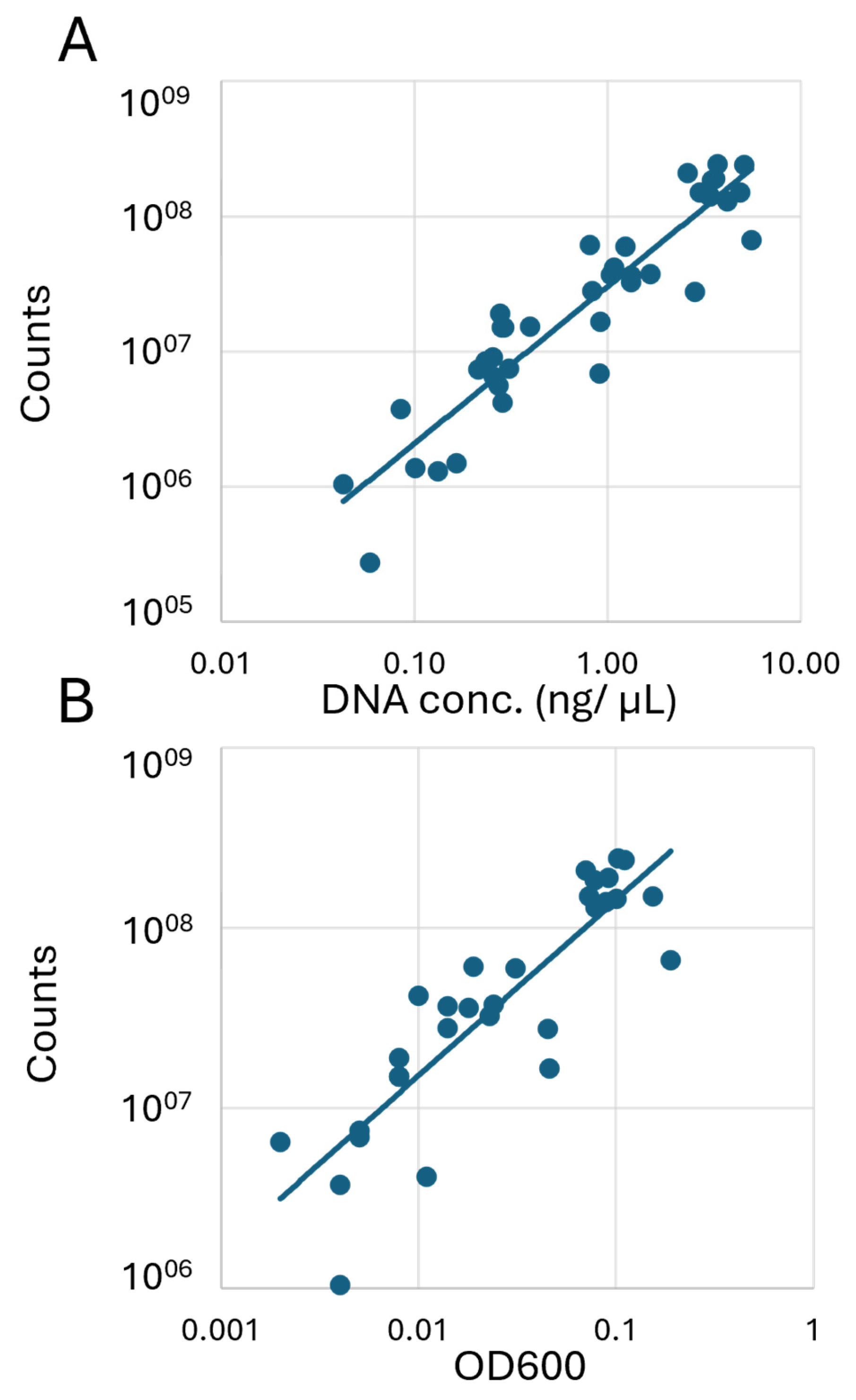
Results were obtained by estimating mycoplasma concentration and determining DNA concentration, which showed an approximate three orders of magnitude range (
Figure 1A). A greater range may be possible; however, it appears that media components retained with the mycoplasma, which adhered to the 1.5 mL tube, resulted in an artificial background. This was demonstrated by blank (uninoculated media) controls with a reading equivalent to between 0.1 and 0.22 ng/µL DNA. Blanks from multiple experiments were averaged together and the resulting average value (0.181 ng/µL) was subtracted from all DNA concentration results to yield the corrected DNA concentration. Samples at or below zero after correction were removed from the analysis.
All samples were taken when the culture was estimated to be in log-phase growth based on a phenol red color. Based on the DNA concentration versus CCU graph (
Figure 1A,B), it can be inferred that all samples tested with phenol red colors between red and yellow/orange were still in the log-phase growth. Interestingly, a set of cultures was maintained at 37 °C for 48 h after the phenol red indicator turned yellow and showed a 1–2 log decrease in viable mycoplasma as measured by CCU. The calculated counts were 2.5 logs higher than actual CCU when counts were estimated by DNA concentration, and 3.5 logs higher when counts were estimated by OD600, showing that both methods are sensitive to debris after bacterial death, although estimation by DNA concentration may result in a more minimal effect.
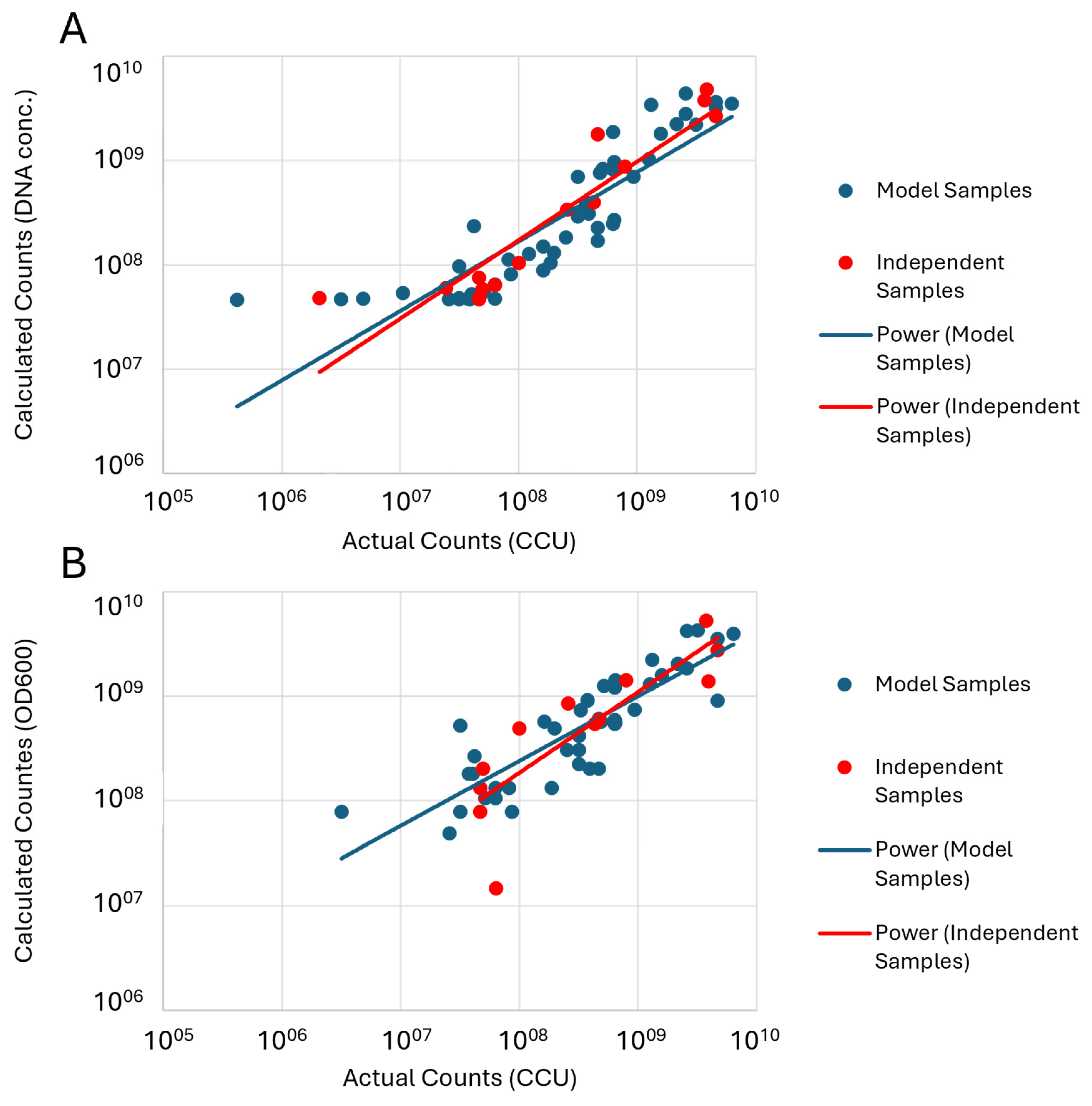
Comparison of independently tested cultures (
Figure 2) shows that the calculated values are nearly identical to the measured values, whether the counts were estimated by DNA concentration or by OD600. Calculating bacterial counts by DNA concentration (
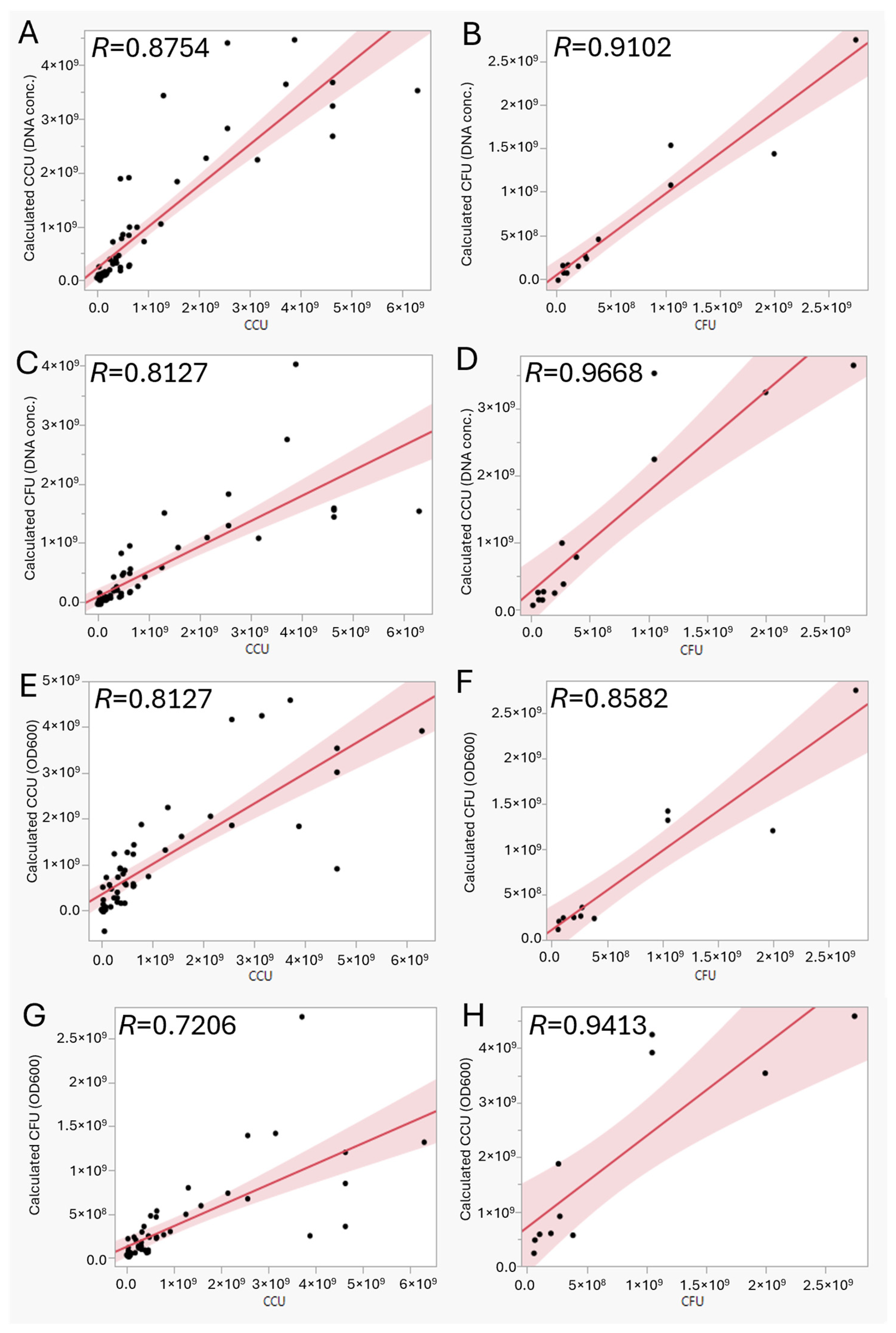
Figure 2A) flattens out at a low DNA concentration, indicating that at very low DNA concentrations below 0.08 ng/µL, bacterial counts cannot be estimated correctly, most likely due to them being within the variable background range due to media components bound to the tube. These results still suggest that calculation by DNA concentration is more accurate at lower cell concentrations as OD600 measurements drop to 0 when the DNA concentration is around 0.3 ng/µL. Linear regression of the measured versus calculated results for CCU and/or CFU by DNA concentration and/or OD600 was performed. The Pearson correlation coefficients showed that measurement by CFU had the best correlation using any of the four models, although only very limited CFU data is available, reducing statistical power (
Figure 3). For each data set, the model based on DNA concentration (Qubit data) was more accurate than the model based on optical density (OD600 data).
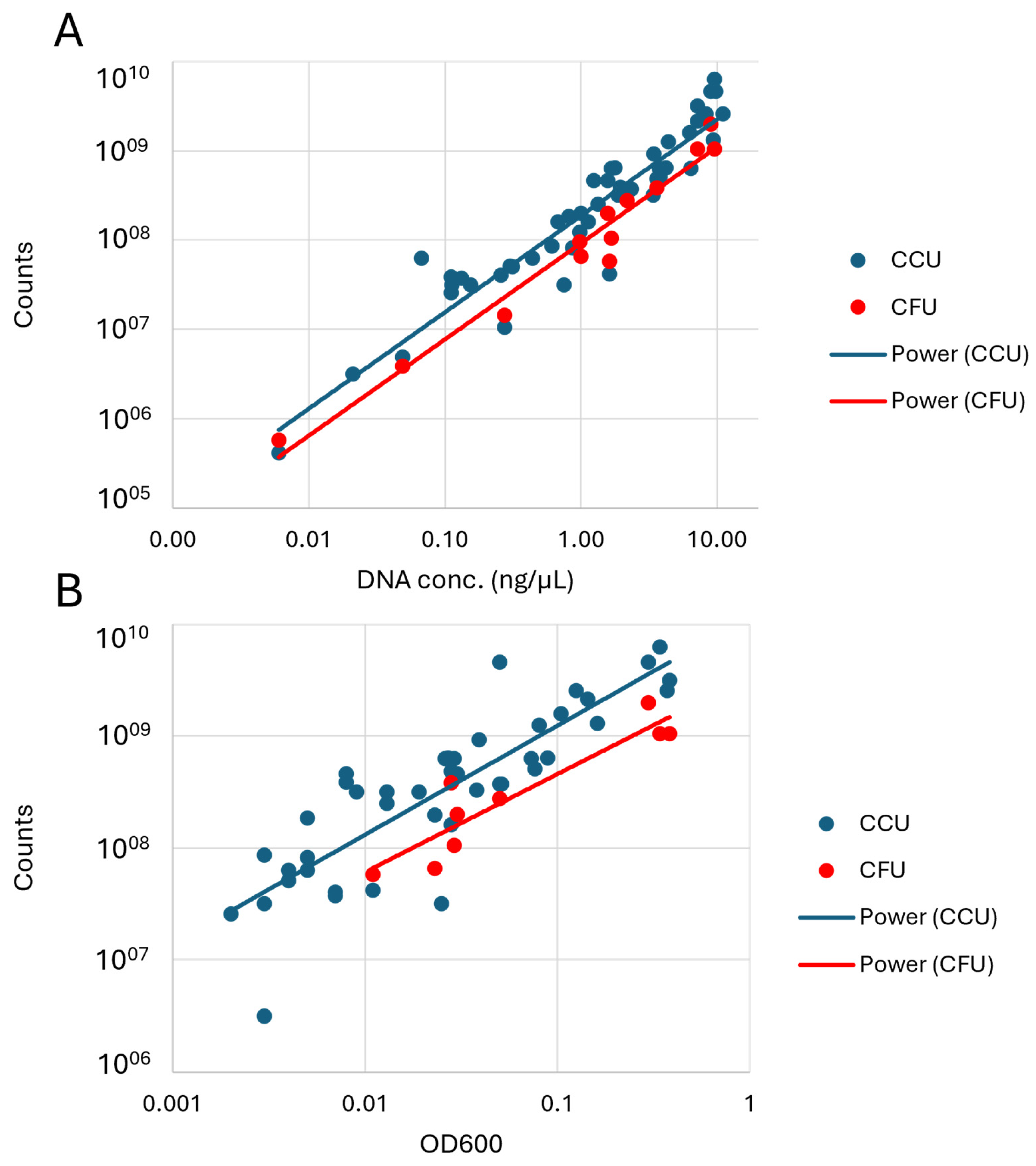
Mycoplasma gallinarum was also tested to determine if equivalent results would be obtained. Only CFU results are available, as
M. gallinarum growth does not result in a significant pH change, so the media does not change colors because of growth. The
M. gallinarum results are similar to the results for the
M. gallisepticum R-low strain, except strain k5446A does not grow to as high a density based on CFU, so its graphed CFU versus DNA content or CFU versus OD600 appear to approach the stationary phase sooner, with fewer CFU/mL produced (
Figure 4). This also resulted in fewer usable samples for OD600 measurement, limiting the data available to generate the graph. At best, there is a 2.5-log range when estimated by OD600, while there is at least a 3-log range when estimated by DNA concentration (Qubit). The power trendline of
M. gallinarum samples suggests similar but more accurate results for estimation of bacterial counts by DNA concentration (R
2 = 0.6763) and by OD600 (R
2 = 0.5275).
Different strains of mycoplasmas within the same species may have different growth rates and different results when estimating bacterial counts. As a preliminary test to determine how this might impact the estimation methods, a small data set of measurements for the
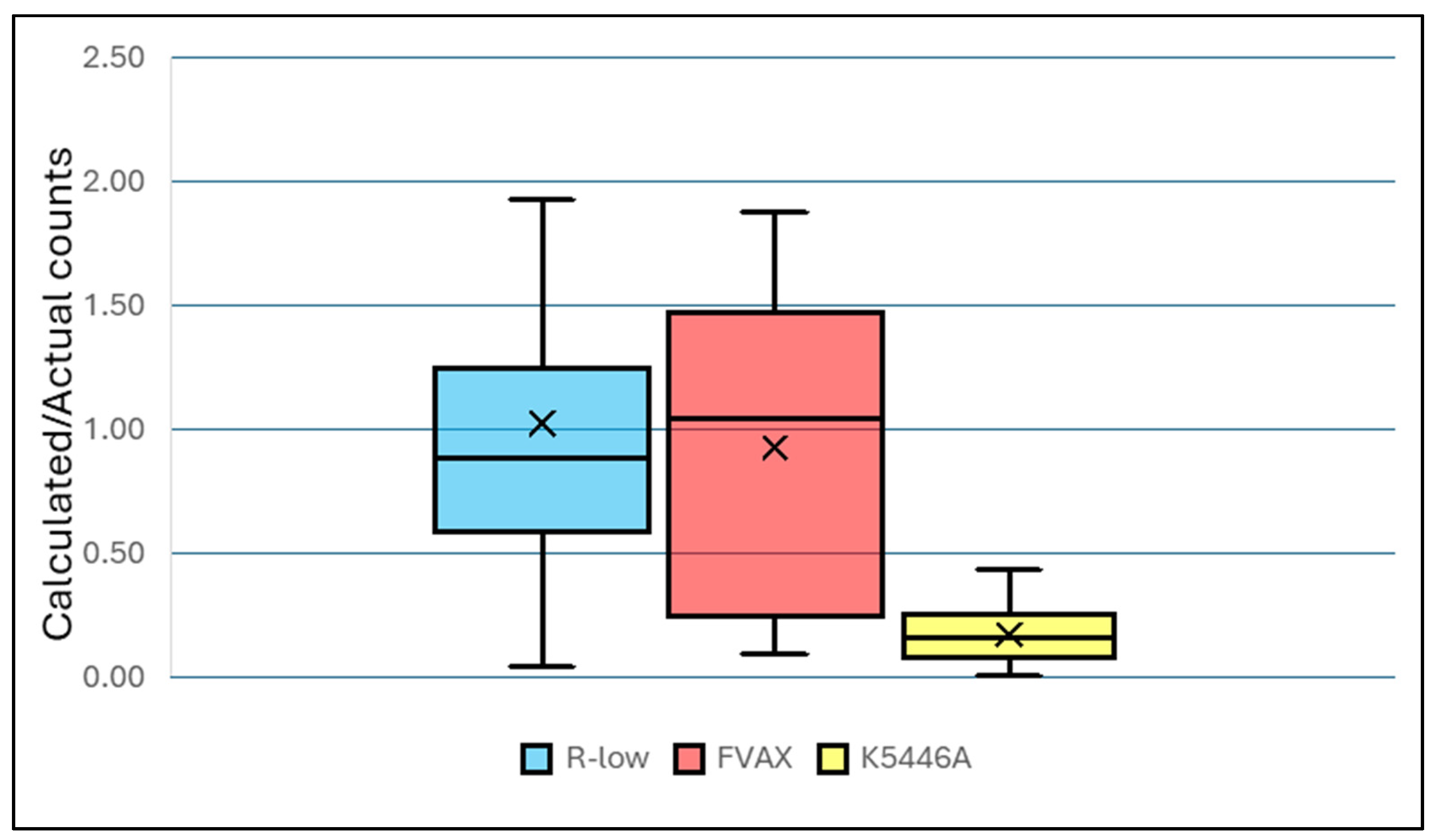
M. gallisepticum strain F, a well-characterized vaccine strain that has been cultured in the lab for decades, was compared with the results for the R-low strain: a pathogenic strain that has undergone minimal culturing in the lab since isolation. Actual counts were divided by counts calculated using the equation developed from the R-low strain data and plotted in a box and whisker plot (
Figure 5). The results for the R-low strain and the F strain are remarkably similar, although the F strain results are spread more consistently through the same range. This may be due to the limited data available or differences in how the two different strains grow. At least in this case, counts for both
M. gallisepticum strains can be calculated using the same equation. However, this is not true for the
M. gallinarum strain k5446A (
Figure 5). In this case, the
M. gallinarum strain results are much lower than the R-low strain results. This suggests that a new equation should be generated for each species, although that may not be necessary for strains within a species.
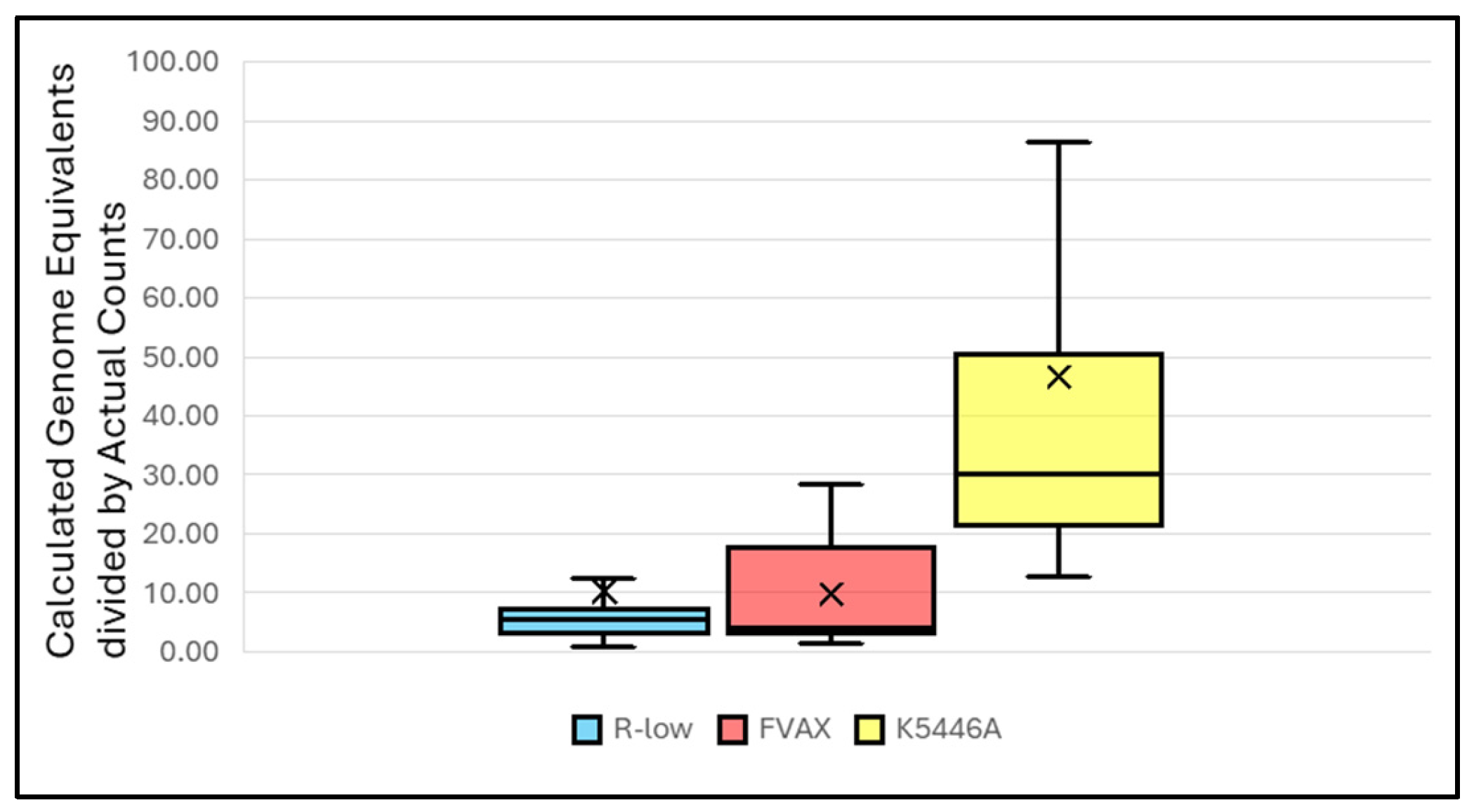
To assess the accuracy of the results, the number of genomes per mL (genome equivalents) was calculated from the obtained DNA concentration data. This data was plotted against the CCU data for the
M. gallisepticum R-low and F-strain data and CFU for the
M. gallinarum data (
Figure 6). The presence of multiple genome equivalents per CCU/CFU was expected as mycoplasma grew in filamentous chains, although the presence of dead cells may also artificially inflate the number of genome equivalents. Interestingly, these results suggest that R-low strains grow in short chains, the F strains grow in somewhat longer chains, and the
M. gallinarum K5446A strain grows in significantly longer chains, as evidenced by the increasing number of genomes per CCU/CFU. These results may explain the difference between the
M. gallisepticum strain and the
M. gallinarum strain from the calculated results in
Figure 5. If
M. gallinarum grows in longer chains than the
M. gallisepticum strains, the CFU counts would be lower compared to the number of copies of the present genome.
4. Discussion
These results show that estimation of mycoplasma culture concentration by quantitation of DNA content is a viable method, consistent with previous work that compared methods of enumerating viable mycoplasma in a pure culture [
7,
19]. The results are also consistent with those of Garcia-Morante et al. [
6]. While studying methods to measure
Mycoplasma hyopneumoniae growth curves, they demonstrated that the DNA content coincided well with both qPCR and a method looking at ATP concentration.
Comparison of the DNA content results with optical density results showed similar results. However, estimation of bacterial concentration by DNA content results had better accuracy and a slightly larger range of detection than when estimated by optical density. Both systems require the development of standard curves to ensure accurate results. As with any measurement system, there are tradeoffs. Estimation of bacterial concentration by optical density is fast and most labs have access to a spectrophotometer to perform the measurements. Estimation of bacterial concentration by DNA requires additional time (about 15 min) and equipment (fluorimeter) compared to optical density, as a tradeoff for the additional accuracy.
M. gallisepticum has a doubling time of about 120 min, so a small increase in the time to perform estimation of bacterial counts is not affected by
M. gallisepticum growth [
20]. For bacteria with a faster growth rate, this could be an issue.
Estimation by optical density comes with its own issues that need to be addressed. Standardization is difficult when the media contains a pH indicator as a means of tracking growth. It has previously been shown that the presence of chromophores, pigments, and fluorescent proteins impacts optical density readings and the calculated bacterial concentration [
8,
21]. One method to overcome this is to standardize the wavelength used to determine optical density based on the color of the media or interfering pigments and chromophores to minimize interference [
8,
21,
22]. A wavelength of 600 nm is commonly used because it minimizes the effects of the yellow coloration of the media used for bacterial growth [
22]. However, the presence of a pH indicator that changes color as a representation of the amount of bacterial growth in culture causes a problem when choosing a wavelength. A shorter wavelength of 540 nm is recommended when no pH indicator is present [
10]. The use of 600 nm with the addition of a set volume of sodium phosphate at a final concentration of 100 mM to shift the pH to approximately 6.8 was performed to minimize the influence of the phenol red pH indicator, as well as the impact of the yellow color of Frey’s media at pH 6.8.
Estimation of the mycoplasma growth phase (logarithmic, stationary, etc.) is difficult to obtain due to the need to estimate cell growth along with cell viability. This is complicated by the changes in growth rate due to batch-to-batch variation in the complex medium components (e.g., swine serum and liquid yeast extract) in mycoplasma media. A change in pH has been tested as a means of measuring
M. gallisepticum growth [
19]. These results showed a high correlation with a change in viability, but poor batch-to-batch reproducibility. Therefore, changes in the phenol red indicator color included in the medium are suggestive of the growth phase, and a color change from orange to yellow suggests that cultures are changing from logarithmic phase to stationary phase, but this is suggestive only [
15]. Rapid estimation of bacterial count in the culture provides another method for tracking the culture during growth.
How mycoplasma strains are grown is a complicating factor in quantitating mycoplasma. While CFU has been the most common method for determining the number of bacteria in a culture, it has not always worked as well for mycoplasma. This is due in part to the poor growth of some strains on solid media, particularly those recently isolated from their host [
6]. The R-low strain has a low number of passages since it was isolated from its host, likely causing difficulties in obtaining more CFU data [
23]. Stemke and Robertson compared CFU and CCU for two different mycoplasma species and found that CFU underestimated the true number of bacteria, while the CCU results agreed more closely with their estimation of bacterial numbers based on genomes calculated from total cellular DNA [
7]. However, mycoplasma can grow in a filamentous form that varies between mycoplasma species and strains, and the filament length may also vary by growth stage in media [
24,
25,
26]. Growth in a filamentous form impacts bacterial counts compared to the amount of genomic DNA present [
9]. While the amount of genomic DNA present may be more representative of the total number of mycoplasma cells present, it might not match established experimental protocols without new standardization for each strain.
The ability of mycoplasma strains to grow as filaments of different lengths is consistent with the difference in results for the
M. gallisepticum and
M. gallinarum strains. Comparing the results in
Figure 1 and
Figure 4 shows that the
M. gallinarum CFU results are around 10-fold lower than those of
M. gallisepticum R-low results. This is consistent with the difference in the number of genome equivalents shown in
Figure 6, suggesting that these methods may aid in estimating mycoplasma filament length.
One consistent issue is the background level of DNA detection in the samples. This appears to be due to the media components retained on the tube or with the mycoplasma cells. This impacts the lowest counts that can be estimated. The mycoplasma media used in this study is a rich, undefined medium which includes swine serum and yeast extract [
14]. It is possible that different types of mycoplasma media or batches of the same medium could have different background levels, although this was not a significant issue based on the three different media batches made and used during this study.
The method of quantitating bacterial DNA presented in this work was designed specifically to work with mycoplasma in a pure culture. One test was attempted with Escherichia coli in a pure culture with inconsistent results. Since mycoplasma lacks a cell wall, this may be a contributing factor that will need to be addressed to use this method with other bacterial species. However, it may be of limited value with other bacterial species that have short doubling times and extra-chromosomal DNA.