
Effects of Probiotic Lactic Acid Bacteria on Oral Pathobionts and on Oral Health: A Review


Abstract
1. Introduction
2. Microbiota in the Oral Cavity
3. Microbial Balance and Diseases in the Oral Cavity
Oral Pathobionts and Prevalent Oral Diseases
4. Role of Oral Probiotic Microorganisms and Criteria for Their Selection
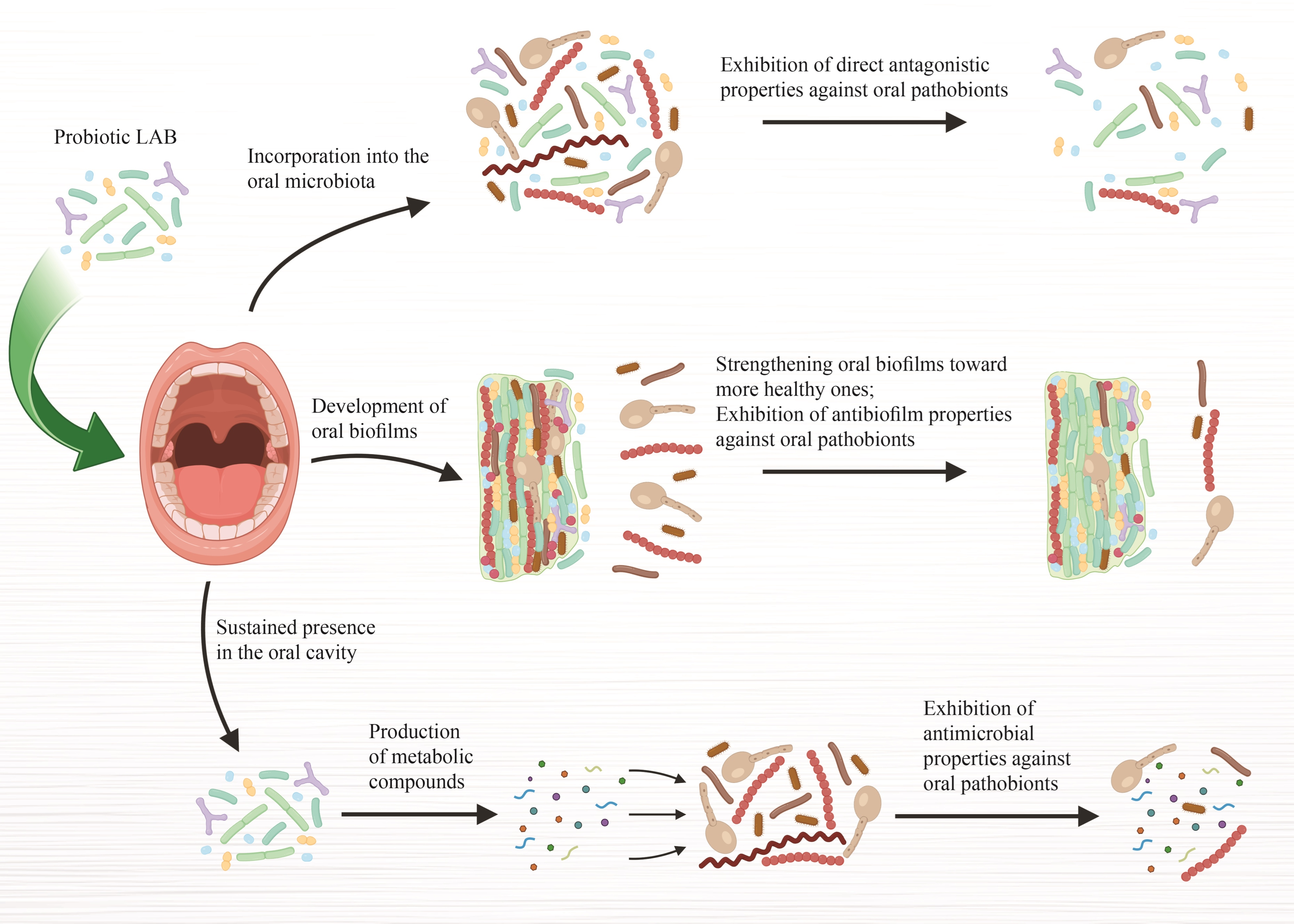
5. Specific Mechanisms of Probiotic Activity of Lactic Acid Bacteria in the Oral Cavity
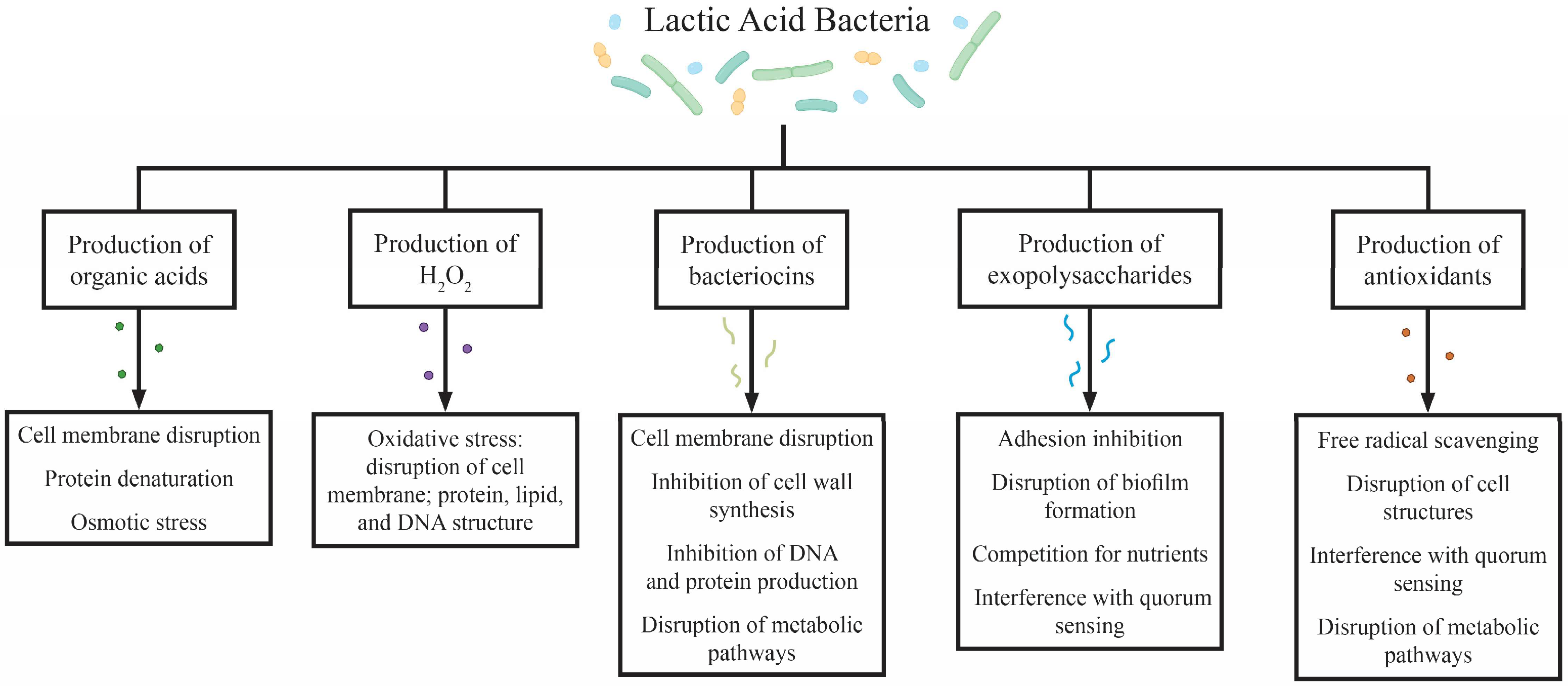
5.1. Production of Antimicrobial Metabolic Compounds
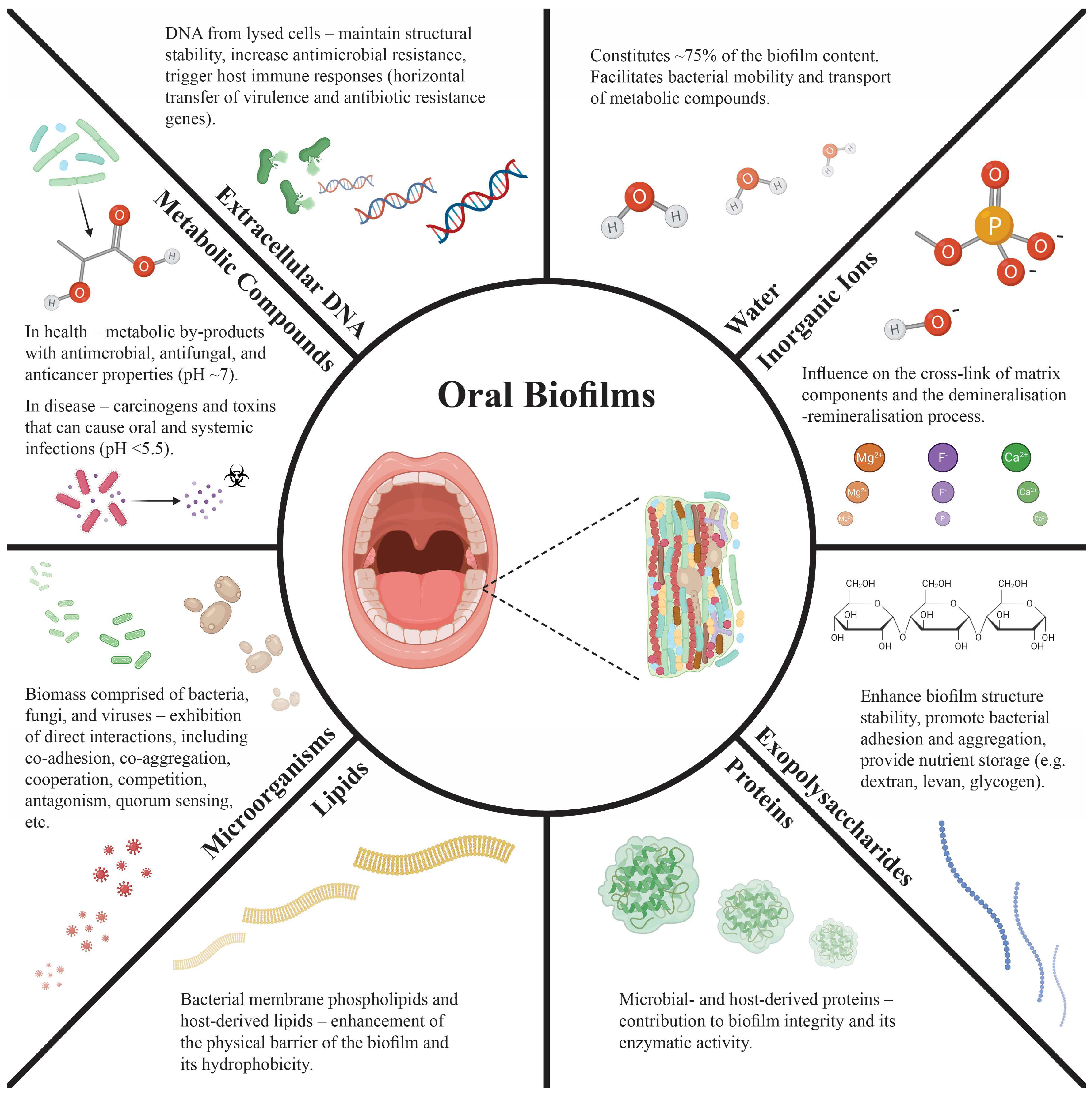
5.2. Formation and Activity of Oral Biofilms
6. In Vitro and Clinical Trials Evidence and Application of Lactic Acid Bacteria in Delivery Systems
6.1. In Vitro and Clinical Research Viewpoint
6.2. Delivery Systems Viewpoint
6.3. Critical Analysis
7. Challenges and Future Perspectives in Oral Probiotics Development
8. Conclusions
Author Contributions
Funding
Data Availability Statement
Conflicts of Interest
Abbreviations
| LAB | Lactic acid bacteria |
| GIT | Gastrointestinal tract |
| eHOMD | Expanded human oral microbiome database |
| CFU | Colony-forming units |
| UGT | Urogenital tract |
| EPSs | Exopolysaccharides |
| ROS | Reactive oxygen species |
| AI-2 | Autoinducer-2 |
| AIP | Auto-inducing peptide |
| QS | Quorum sensing |
References
- Das, T.K.; Pradhan, S.; Chakrabarti, S.; Mondal, K.C.; Ghosh, K. Current status of probiotic and related health benefits. App. Food Res. 2022, 2, 100185. [Google Scholar] [CrossRef]
- De Filippis, F.; Pasolli, E.; Ercolini, D. The food-gut axis: Lactic acid bacteria and their link to food, the gut microbiome and human health. FEMS Microbiol. Rev. 2020, 44, 454–489. [Google Scholar] [CrossRef]
- Rajasekaran, J.J.; Krishnamurthy, H.K.; Bosco, J.; Jayaraman, V.; Krishna, K.; Wang, T.; Bei, K. Oral Microbiome: A Review of Its Impact on Oral and Systemic Health. Microorganisms 2024, 12, 1797. [Google Scholar] [CrossRef]
- Sedghi, L.; DiMassa, V.; Harrington, A.; Lynch, S.V.; Kapila, Y.L. The oral microbiome: Role of key organisms and complex networks in oral health and disease. Periodontology 2000 2021, 87, 107–131. [Google Scholar] [CrossRef] [PubMed]
- Inchingolo, A.D.; Inchingolo, A.M.; Palumbo, I.; Guglielmo, M.; Riccaldo, L.; Morolla, R.; Inchingolo, F.; Palermo, A.; Dipalma, G. The role of probiotics in preventing dental caries: A systematic review of clinical evidence. Front. Oral Health 2025, 6, 1720036. [Google Scholar] [CrossRef]
- Ma, Z.; Zuo, T.; Frey, N.; Rangres, A.Y. A systematic framework for understanding the microbiome in human health and disease: From basic principles to clinical translation. Signal Transduct. Target Ther. 2024, 9, 237. [Google Scholar] [CrossRef] [PubMed]
- Moutsopoulos, N.M.; Konkel, J.E. Tissue-Specific Immunity at the Oral Mucosal Barrier. Trends Immunol. 2018, 39, 276–287. [Google Scholar] [CrossRef]
- Stašková, A.; Nemcová, R.; Lauko, S.; Jenča, A. Oral Microbiota from the Stomatology Perspective; IntechOpen: London, UK, 2020; pp. 279–300. [Google Scholar] [CrossRef]
- Zhang, Y.; Wang, X.; Li, H.; Ni, C.; Du, Z.; Yan, F. Human oral microbiota and its modulation for oral health. Biomed. Pharmacother. 2018, 99, 883–893. [Google Scholar] [CrossRef]
- Barboza-Solís, C.; Acuña-Amador, L.A. The Oral Microbiota: A Literature Review for Updating Professionals in Dentistry. Part I. Odovtos Int. J. Dent. Sci. 2020, 22, 59–68. [Google Scholar] [CrossRef]
- Sharma, N.; Bhatia, S.; Sodhi, A.S.; Batra, N. Oral microbiome and health. AIMS Microbiol. 2018, 4, 42–66. [Google Scholar] [CrossRef] [PubMed]
- Fernandes, G.V.O.; Mosley, G.A.; Ross, W.; Dagher, A.; dos Santos Martins, B.G.; Fernandes, J.C.H. Revisiting Socransky’s Complexes: A Review Suggesting Updated New Bacterial Clusters (GF-MoR Complexes) for Periodontal and Peri-Implant Diseases and Conditions. Microorganisms 2024, 12, 2214. [Google Scholar] [CrossRef] [PubMed]
- Abdulkareem, A.A.; Al-Taweel, F.B.; Al-Sharqi, A.J.B.; Gul, S.S.; Sha, A.; Chapple, I.L.C. Current concepts in the pathogenesis of periodontitis: From symbiosis to dysbiosis. J. Oral Microbiol. 2023, 15, 2197779. [Google Scholar] [CrossRef]
- Thomas, C.; Minty, M.; Vinel, A.; Canceill, T.; Loubières, P.; Burcelin, R.; Kaddech, M.; Blasco-Baque, V.; Laurencin-Dalicieux, S. Oral Microbiota: A Major Player in the Diagnosis of Systemic Diseases. Diagnostics 2021, 11, 1376. [Google Scholar] [CrossRef]
- Popowski, W.; Domanowska, D.; Koseski, D.; Ostrowski, R.; Zalewska, M.; Małecka-Giełdowska, M.; Łasica, A.; Popowska, M. Analysis of the oral microbiome composition of healthy individuals and the in vitro antibacterial activity of platelet-rich fibrin from these individuals against oral pathogenic bacteria. Front. Microbiol. 2025, 16, 1691046. [Google Scholar] [CrossRef] [PubMed]
- Sampaio-Maia, B.; Caldas, I.M.; Pereira, M.L.; Pérez-Mongiovi, D.; Araujo, R. The Oral Microbiome in Health and Its Implication in Oral and Systemic Diseases. Adv. Appl. Microbiol. 2016, 97, 171–210. [Google Scholar] [CrossRef]
- Lee, Y.-H.; Chung, S.W.; Auh, Q.-S.; Hong, S.-J.; Lee, Y.-A.; Jung, J.; Lee, G.-J.; Park, H.J.; Shin, S.-I.; Hong, J.-Y. Progress in Oral Microbiome Related to Oral and Systemic Diseases: An Update. Diagnostics 2021, 11, 1283. [Google Scholar] [CrossRef] [PubMed]
- Pedersen, A.M.L.; Belstrøm, D. The role of natural salivary defences in maintaining a healthy oral microbiota. J. Dent. 2019, 80, S3–S12. [Google Scholar] [CrossRef]
- Kane, S.F. The effects of oral health on systemic health. Gen. Dent. 2017, 65, 30–34. [Google Scholar]
- Farooq, I.; Bugshan, A. The role of salivary contents and modern technologies in the remineralization of dental enamel: A narrative review. F1000Research 2020, 9, 171. [Google Scholar] [CrossRef]
- Lim, Y.; Totsika, M.; Morrison, M.; Punyadeera, C. Oral Microbiome: A New Biomarker Reservoir for Oral and Oropharyngeal Cancers. Theranostics 2017, 7, 4313–4321. [Google Scholar] [CrossRef]
- Vila, T.; Rizk, A.M.; Sultan, A.S.; Jabra-Rizk, M.A. The power of saliva: Antimicrobial and beyond. PLoS Pathog. 2019, 15, e1008058. [Google Scholar] [CrossRef]
- Ferrari, C.R.; Hannig, M.; Buzalaf, M.A.R. Acquired pellicle engineering: A fascinating approach to prevent demineralization. J. Appl. Oral Sci. 2025, 33, e20240359. [Google Scholar] [CrossRef]
- Flemming, J.; Hannig, C.; Hannig, M. Caries Management—The Role of Surface Interactions in De- and Remineralization-Processes. J. Clin. Med. 2022, 11, 7044. [Google Scholar] [CrossRef] [PubMed]
- Radaic, A.; Kapila, Y.L. The oralome and its dysbiosis: New insights into oral microbiome-host interactions. Comput. Struct. Biotechnol. J. 2021, 19, 1335–1360. [Google Scholar] [CrossRef]
- Butera, A.; Scribante, A. Editorial for Oral Microbes and Human Health. Microorganisms 2025, 13, 922. [Google Scholar] [CrossRef]
- Larsen, T.; Fiehn, N.E. Dental biofilm infections—An update. J. Pathol. Microbiol. Immunol. 2017, 125, 376–384. [Google Scholar] [CrossRef]
- Maier, T. Oral Microbiome in Health and Disease: Maintaining a Healthy, Balanced Ecosystem and Reversing Dysbiosis. Microorganisms 2023, 11, 1453. [Google Scholar] [CrossRef] [PubMed]
- Nagakubo, D.; Kaibori, Y. Oral Microbiota: The Influences and Interactions of Saliva, IgA, and Dietary Factors in Health and Disease. Microorganisms 2023, 11, 2307. [Google Scholar] [CrossRef] [PubMed]
- Rebelo, M.B.; Oliveira, C.S.; Tavaria, F.K. Novel Strategies for Preventing Dysbiosis in the Oral Cavity. Front. Biosci. Elite 2023, 15, fbe1504023. [Google Scholar] [CrossRef]
- Sedghi, L.M.; Bacino, M.; Kapila, Y.L. Periodontal Disease: The Good, The Bad, and The Unknown. Front. Cell. Infect. Microbiol. 2021, 11, 766944. [Google Scholar] [CrossRef]
- Peres, M.A.; Macpherson, L.M.D.; Weyant, R.J.; Daly, B.; Venturelli, R.; Mathur, M.R.; Listl, S.; Celeste, R.K.; Guarnizo-Herreño, C.C.; Kearns, C.; et al. Oral diseases: A global public health challenge. Lancet 2019, 394, 249–260. [Google Scholar] [CrossRef] [PubMed]
- Barranca-Enríquez, A.; Romo-González, T. Your health is in your mouth: A comprehensive view to promote general wellness. Front. Oral Health 2022, 3, 971223. [Google Scholar] [CrossRef] [PubMed]
- Patel, J.; Wallace, J.; Doshi, M.; Gadanya, M.; Ben Yahya, I.; Roseman, J.; Srisilapanan, P. Oral health for healthy ageing. Lancet Healthy Longev. 2021, 2, e521–e527. [Google Scholar] [CrossRef]
- Kassebaum, N.J.; Smith, A.G.C.; Bernabé, E.; Fleming, T.D.; Reynolds, A.E.; Vos, T.; Murray, C.J.L.; Marcenes, W. GBD 2015 Oral Health Collaborators. Global, Regional, and National Prevalence, Incidence, and Disability-Adjusted Life Years for Oral Conditions for 195 Countries, 1990–2015: A Systematic Analysis for the Global Burden of Diseases, Injuries, and Risk Factors. J. Dent. Res. 2017, 96, 380–387. [Google Scholar] [CrossRef]
- Bharathi, S.; Rajan, Y.A.P.A.S.; Prakash, S.; Immanuel, G.; Ramasubburayan, R. Pathobionts in the microbiome: Drivers of disease and targets for treatment. Microb. Pathog. 2026, 211, 108268. [Google Scholar] [CrossRef]
- Spatafora, G.; Li, Y.; He, X.; Cowan, A.; Tanner, A.C.R. The Evolving Microbiome of Dental Caries. Microorganisms 2024, 12, 121. [Google Scholar] [CrossRef]
- Baumann, T.; Bereiter, R.; Lussi, A.; Carvalho, T.S. The effect of different salivary calcium concentrations on the erosion protection conferred by the salivary pellicle. Sci. Rep. 2017, 7, 12999. [Google Scholar] [CrossRef]
- Warreth, A.; Abuhijleh, E.; Almaghribi, M.A.; Mahwal, G.; Ashawish, A. Tooth surface loss: A review of literature. Saudi Dent. J. 2020, 32, 53–60. [Google Scholar] [CrossRef] [PubMed]
- Pitts, N.B.; Zero, D.T.; Marsh, P.D.; Ekstrand, K.; Weintraub, J.A.; Ramos-Gomez, F.; Tagami, J.; Twetman, S.; Tsakos, G.; Ismail, A. Dental caries. Nat. Rev. Dis. Primers 2017, 3, 17030. [Google Scholar] [CrossRef] [PubMed]
- Zhu, Y.; Wang, Y.; Zhang, S.; Li, J.; Li, X.; Ying, Y.; Yuan, J.; Chen, K.; Deng, S.; Wang, Q. Association of polymicrobial interactions with dental caries development and prevention. Front. Microbiol. 2023, 14, 1162380. [Google Scholar] [CrossRef]
- Chen, X.; Daliri, E.B.-M.; Chelliah, R.; Oh, D.-H. Isolation and Identification of Potentially Pathogenic Microorganisms Associated with Dental Caries in Human Teeth Biofilms. Microorganisms 2020, 8, 1596. [Google Scholar] [CrossRef]
- Ursu, R.G.; Iancu, L.S.; Porumb-Andrese, E.; Damian, C.; Cobzaru, R.G.; Nichitean, G.; Ripa, C.; Sandu, D.; Luchian, I. Host mRNA Analysis of Periodontal Disease Patients Positive for Porphyromonas gingivalis, Aggregatibacter actinomycetemcomitans and Tannerella forsythia. Int. J. Mol. Sci. 2022, 23, 9915. [Google Scholar] [CrossRef]
- Tonetti, M.S.; Jepsen, S.; Jin, L.; Otomo-Corgel, J. Impact of the global burden of periodontal diseases on health, nutrition and wellbeing of mankind: A call for global action. J. Clin. Periodontol. 2017, 44, 456–462. [Google Scholar] [CrossRef]
- Kinane, D.F.; Stathopoulou, P.G.; Papapanou, P.N. Periodontal diseases. Nat. Rev. Dis. Primers 2017, 3, 17038. [Google Scholar] [CrossRef]
- Xiao, X.; Liu, S.; Deng, H.; Song, Y.; Zhang, L.; Song, Z. Advances in the oral microbiota and rapid detection of oral infectious diseases. Front. Microbiol. 2023, 14, 1121737. [Google Scholar] [CrossRef]
- Belibasakis, G.N.; Belstrøm, D.; Eick, S.; Gursoy, U.K.; Johansson, A.; Könönen, E. Periodontal microbiology and microbial etiology of periodontal diseases: Historical concepts and contemporary perspectives. Periodontology 2000 2023, 1–17. [Google Scholar] [CrossRef]
- Di Spirito, F.; Di Palo, M.P.; De Benedetto, G.; Piedepalumbo, F.; Galdi, M.; Cannatà, D.; Cafà, N.; Contaldo, M. Periodontal Microbial Profiles Across Periodontal Conditions in Pediatric Subjects: A Narrative Review. Microorganisms 2025, 13, 1813. [Google Scholar] [CrossRef] [PubMed]
- Yekani, M.; Dastgir, M.; Fattahi, S.; Shahi, S.; Dizaj, S.M.; Memar, M.Y. Microbiological and molecular aspects of periodontitis pathogenesis: An infection-induced inflammatory condition. Front. Cell. Infect. Microbiol. 2025, 15, 1533658. [Google Scholar] [CrossRef] [PubMed]
- Asan, M.F.; Babu, G.S.; Bhat, S. Effect of probiotics on oral Candida—A review. Gulhane Med. J. 2022, 64, 289–294. [Google Scholar] [CrossRef]
- Jin, X.; Zheng, Q.; Nguyen, T.T.M.; Yang, S.-J.; Park, S.-J.; Yi, G.-S.; Yi, T.-H. Lactic Acid Bacteria from Kiwi: Antifungal and Biofilm-Inhibitory Activities Against Candida albicans. Appl. Sci. 2025, 15, 1647. [Google Scholar] [CrossRef]
- Arya, N.R.; Rafiq, N.B. Candidiasis. In StatPearls [Internet]; StatPearls Publishing: Treasure Island, FL, USA, 2025. Available online: https://www.ncbi.nlm.nih.gov/books/NBK560624/ (accessed on 10 December 2025).
- Zeise, K.D.; Woods, R.J.; Huffnagle, G.B. Interplay between Candida albicans and Lactic Acid Bacteria in the Gastrointestinal Tract: Impact on Colonization Resistance, Microbial Carriage, Opportunistic Infection, and Host Immunity. Clin. Microbiol. Rev. 2021, 34, e0032320. [Google Scholar] [CrossRef]
- Izidoro, C.; Botelho, J.; Machado, V.; Reis, A.M.; Proença, L.; Alves, R.C.; Mendes, J.J. Revisiting Standard and Novel Therapeutic Approaches in Halitosis: A Review. Int. J. Environ. Res. Public Health 2022, 19, 11303. [Google Scholar] [CrossRef]
- Han, H.S.; Yum, H.; Cho, Y.D.; Kim, S. Improvement of halitosis by probiotic bacterium Weissella cibaria CMU: A randomized controlled trial. Front. Microbiol. 2023, 14, 1108762. [Google Scholar] [CrossRef] [PubMed]
- Shah, A.B.; Baiseitova, A.; Zahoor, M.; Ahmad, I.; Ikram, M.; Bakhsh, A.; Shah, M.A.; Ali, I.; Idress, M.; Ullah, R.; et al. Probiotic significance of Lactobacillus strains: A comprehensive review on health impacts, research gaps, and future prospects. Gut Microbes 2024, 16, 2431643. [Google Scholar] [CrossRef]
- Sarita, B.; Samadhan, D.; Hassan, M.Z.; Kovaleva, E.G. A comprehensive review of probiotics and human health-current prospective and applications. Front. Microbiol. 2025, 15, 1487641. [Google Scholar] [CrossRef]
- Matsubara, V.H.; Bandara, H.M.; Ishikawa, K.H.; Mayer, M.P.; Samaranayake, L.P. The role of probiotic bacteria in managing periodontal disease: A systematic review. Expert Rev. Anti Infect. Ther. 2016, 14, 643–655. [Google Scholar] [CrossRef] [PubMed]
- Beattie, R.E. Probiotics for oral health: A critical evaluation of bacterial strains. Front. Microbiol. 2024, 15, 1430810. [Google Scholar] [CrossRef]
- Frencken, J.E.; Sharma, P.; Stenhouse, L.; Green, D.; Laverty, D.; Dietrich, T. Global epidemiology of dental caries and severe periodontitis–a comprehensive review. J. Clin. Periodontol. 2017, 44, S94–S105. [Google Scholar] [CrossRef] [PubMed]
- Longo, M.; de Souza Ramos, T.C.; Nunes, C.M.M.; Santamaria, M.P.; Jardini, M.A.N. Probiotic therapy as a novel approach in the prevention and treatment of gingivitis. A review. Braz. Dent. Sci. 2018, 21, 367–376. [Google Scholar] [CrossRef]
- Zaura, E.; Twetman, S. Critical Appraisal of Oral Pre- and Probiotics for Caries Prevention and Care. Caries Res. 2019, 53, 514–526. [Google Scholar] [CrossRef]
- Rad, A.H.; Pourjafar, H.; Mirzakhani, E. A comprehensive review of the application of probiotics and postbiotics in oral health. Front. Cell. Infect. Microbiol. 2023, 13, 1120995. [Google Scholar] [CrossRef]
- Zymovets, V.; Rakhimova, O.; Schmidt, A.; Bronnec, V.; Limanska, N.; Brundin, M.; Kelk, P.; Landström, M.; Vestman, N.R. Inhibition of infection-associated oral bacteria adhesion by probiotics: In vitro and in vivo models. IScience 2025, 28, 112412. [Google Scholar] [CrossRef] [PubMed]
- Sabatini, S.; Lauritano, D.; Candotto, V.; Silvestre, F.J.; Nardi, G.M. Oral probiotics in the management of gingivitis in diabetic patients: A double blinded randomized controlled study. J. Biol. Regul. Homeost. Agents 2017, 31, 197–202. [Google Scholar] [PubMed]
- Keller, M.K.; Brandsborg, E.; Holmstrøm, K.; Twetman, S. Effect of tablets containing probiotic candidate strains on gingival inflammation and composition of the salivary microbiome: A randomised controlled trial. Benef. Microbes 2018, 9, 487–494. [Google Scholar] [CrossRef] [PubMed]
- Grusovin, M.G.; Bossini, S.; Calza, S.; Cappa, V.; Garzetti, G.; Scotti, E.; Gherlone, E.F.; Mensi, M. Clinical efficacy of Lactobacillus reuteri-containing lozenges in the supportive therapy of generalized periodontitis stage III and IV, grade C: 1-year results of a double-blind randomized placebo-controlled pilot study. Clin. Oral Investig. 2020, 24, 2015–2024. [Google Scholar] [CrossRef]
- Fu, D.; Shu, X.; Yao, L.; Zhou, G.; Ji, M.; Liao, G.; Zhu, Y.; Zou, L. Unveiling the dual nature of Lactobacillus: From cariogenic threat to probiotic protector—A critical review with bibliometric analysis. Front. Oral Health 2025, 6, 1535233. [Google Scholar] [CrossRef]
- Sidhu, G.K.; Mantha, S.; Murthi, S.; Sura, H.; Kadaru, P.; Jangra, J.K. Evaluation of Lactobacillus and Streptococcus mutans by addition of probiotics in the form of curd in the diet. J. Int. Oral Health JIOH 2015, 7, 85–89. [Google Scholar]
- Huang, X.; Schulte, R.M.; Burne, R.A.; Nascimento, M.M. Characterization of the arginolytic microflora provides insights into pH homeostasis in human oral biofilms. Caries Res. 2015, 49, 165–176. [Google Scholar] [CrossRef]
- Salvetti, E.; Torriani, S.; Felis, G.E. The Genus Lactobacillus: A Taxonomic Update. Probiotics Antimicrob. Proteins 2012, 4, 217–226. [Google Scholar] [CrossRef]
- Sun, Z.; Harris, H.M.; McCann, A.; Guo, C.; Argimón, S.; Zhang, W.; Yang, X.; Jeffery, I.B.; Cooney, J.C.; Kagawa, T.F.; et al. Expanding the biotechnology potential of lactobacilli through comparative genomics of 213 strains and associated genera. Nat. Commun. 2015, 6, 8322. [Google Scholar] [CrossRef]
- Caufield, P.W.; Schön, C.N.; Saraithong, P.; Li, Y.; Argimón, S. Oral Lactobacilli and Dental Caries: A Model for Niche Adaptation in Humans. J. Dent. Res. 2015, 94, 110S–118S. [Google Scholar] [CrossRef]
- de Melo Pereira, G.V.; de Oliveira Coelho, B.; Magalhães Júnior, A.I.; Thomaz-Soccol, V.; Soccol, C.R. How to select a probiotic? A review and update of methods and criteria. Biotechnol. Adv. 2018, 36, 2060–2076. [Google Scholar] [CrossRef]
- Atanasov, N.; Evstatieva, Y.; Nikolova, D. Probiotic Potential of Lactic Acid Bacterial Strains Isolated from Human Oral Microbiome. Microbiol. Res. 2023, 14, 262–278. [Google Scholar] [CrossRef]
- Tumbarski, Y.; Peykova-Shapkova, I.; Ivanova, M.; Cholakov, R.; Dutkiewicz, A.; Grzymajło, K. Characterization and Selection of Lactobacillus Strains with Potential Probiotic Applications. Appl. Sci. 2025, 15, 2902. [Google Scholar] [CrossRef]
- Yousuf, A.; Sidiq, M.; Ganta, S.; Nagaraj, A.; Vishnani, P.; Jan, I. Effect of Freeze Dried Powdered Probiotics on Gingival Status and Plaque Inhibition: A Randomized, Double-blind, Parallel Study. Contemp. Clin. Dent. 2017, 8, 116–121. [Google Scholar] [CrossRef]
- Saïz, P.; Taveira, N.; Alves, R. Probiotics in Oral Health and Disease: A Systematic Review. Appl. Sci. 2021, 11, 8070. [Google Scholar] [CrossRef]
- Liu, W.; Pang, H.; Zhang, H.; Cai, Y. Biodiversity of Lactic Acid Bacteria. In Lactic Acid Bacteria: Fundamentals and Practice; Springer: Dordrecht, The Netherlands, 2014; Volume 2014, pp. 103–203. [Google Scholar] [CrossRef]
- Anumudu, C.K.; Miri, T.; Onyeaka, H. Multifunctional Applications of Lactic Acid Bacteria: Enhancing Safety, Quality, and Nutritional Value in Foods and Fermented Beverages. Foods 2024, 13, 3714. [Google Scholar] [CrossRef]
- Wedajo, B. Lactic acid bacteria: Benefits, selection criteria and probiotic potential in fermented food. J. Probiotics Health 2015, 3, 129. [Google Scholar] [CrossRef]
- Bintsis, T. Lactic acid bacteria: Their applications in foods. J. Bacteriol. Mycol. 2018, 6, 89–94. [Google Scholar] [CrossRef]
- Hatti-Kaul, R.; Chen, L.; Dishisha, T.; Enshasy, H.E. Lactic acid bacteria: From starter cultures to producers of chemicals. FEMS Microbiol. Lett. 2018, 365, fny213. [Google Scholar] [CrossRef]
- Hakim, B.N.A.; Xuan, N.J.; Oslan, S.N.H. A Comprehensive Review of Bioactive Compounds from Lactic Acid Bacteria: Potential Functions as Functional Food in Dietetics and the Food Industry. Foods 2023, 12, 2850. [Google Scholar] [CrossRef]
- Ruiz-Rodríguez, L.; Bleckwedel, J.; Eugenia Ortiz, M.; Pescuma, M.; Mozzi, F. Lactic Acid Bacteria. In Industrial Biotechnology; Wittmann, C., Liao, J.C., Eds.; John Wiley & Sons: Hoboken, NJ, USA, 2017. [Google Scholar] [CrossRef]
- Bertuci, M.L.; Souza, C.V.B.; Alves, C.A., Jr.; Todorov, S.D.; Penna, A.L.B.; da Silva Barretto, A.C. Bioprotective and Technological Roles of Lactic Acid Bacteria in Reduced-Sodium Fermented Sausages. Foods 2025, 14, 3758. [Google Scholar] [CrossRef]
- Yu, J.; Fu, J.; Liu, H.; Kang, C.; Wang, Z.; Jin, Y.; Wu, S.; Li, T.; Yang, R.; Jin, M.; et al. Application of Recombinant Lactic Acid Bacteria (LAB) Live Vector Oral Vaccine in the Prevention of F4+ Enterotoxigenic Escherichia coli. Vaccines 2024, 12, 304. [Google Scholar] [CrossRef]
- Walter, J.; O’Toole, P.W. Microbe Profile: The Lactobacillaceae. Microbiology 2023, 169, 001414. [Google Scholar] [CrossRef]
- Tulumoglu, S.; Yuksekdag, Z.N.; Beyatli, Y.; Simsek, O.; Cinar, B.; Yaşar, E. Probiotic properties of lactobacilli species isolated from children’s feces. Anaerobe 2013, 24, 36–42. [Google Scholar] [CrossRef]
- Ruiz, L.; Margolles, A.; Sánchez, B. Bile resistance mechanisms in Lactobacillus and Bifidobacterium. Front. Microbiol. 2013, 4, 396. [Google Scholar] [CrossRef]
- Mokoena, M.P.; Mutanda, T.; Olaniran, A.O. Perspectives on the probiotic potential of lactic acid bacteria from African traditional fermented foods and beverages. Food Nutr. Res. 2016, 60, 29630. [Google Scholar] [CrossRef]
- Liu, Z.; Cao, Q.; Wang, W.; Wang, B.; Yang, Y.; Xian, C.J.; Li, T.; Zhai, Y. The Impact of Lactobacillus reuteri on Oral and Systemic Health: A Comprehensive Review of Recent Research. Microorganisms 2025, 13, 45. [Google Scholar] [CrossRef]
- Chugh, P.; Dutt, R.; Sharma, A.; Bhagat, N.; Dhar, M.S. A critical appraisal of the effects of probiotics on oral health. J. Funct. Foods 2020, 70, 103985. [Google Scholar] [CrossRef]
- Bangar, S.P.; Suri, S.; Trif, M.; Ozogul, F. Organic acids production from lactic acid bacteria: A preservation approach. Food Biosci. 2022, 46, 101615. [Google Scholar] [CrossRef]
- Salvatore, M.M.; Maione, A.; Buonanno, A.; Guida, M.; Andolfi, A.; Salvatore, F.; Galdiero, E. Biological activities, biosynthetic capacity and metabolic interactions of lactic acid bacteria and yeast strains from traditional home-made kefir. Food Chem. 2025, 470, 142657. [Google Scholar] [CrossRef]
- Saha, S.; Chopra, A.; Kamath, S.U.; Kashyap, N.N. Can acid produced from probiotic bacteria alter the surface roughness, microhardness, and elemental composition of enamel? An in vitro study. Odontology 2023, 111, 929–941. [Google Scholar] [CrossRef]
- Campus, G.; Cagetti, M.G.; Lehrkinder, A.; Alshabeeb, A.; Caimoni, N.; Lingström, P. The Probiotic Effects of Lactobacillus brevis CD2 on Caries Related Variables of Dental Plaque Biofilm. Int. Dent. J. 2025, 75, 1662–1671. [Google Scholar] [CrossRef]
- Huang, C.B.; Alimova, Y.; Myers, T.M.; Ebersole, J.L. Short- and medium-chain fatty acids exhibit antimicrobial activity for oral microorganisms. Arch. Oral Biol. 2011, 56, 650–654. [Google Scholar] [CrossRef]
- Ahn, Y.J.; Kim, Y.-S.; Kim, J.-H.; Kim, H.; Kang, N.-K. Balancing the oral microbiome based on the hydrogen peroxide-producing bacteria. Int. J. Clin. Prev. Dent. 2021, 17, 155. [Google Scholar] [CrossRef]
- Miko, E.; Barakonyi, A. The Role of Hydrogen-Peroxide (H2O2) Produced by Vaginal Microbiota in Female Reproductive Health. Antioxidants 2023, 12, 1055. [Google Scholar] [CrossRef]
- Hertzberger, R.; Arents, J.; Dekker, H.L.; Pridmore, R.D.; Gysler, C.; Kleerebezem, M.; de Mattos, M.J. H2O2 production in species of the Lactobacillus acidophilus group: A central role for a novel NADH-dependent flavin reductase. Appl. Environ. Microbiol. 2014, 80, 2229–2239. [Google Scholar] [CrossRef]
- Chen, L.J.; Tsai, H.T.; Chen, W.J.; Hsieh, C.Y.; Wang, P.C.; Chen, C.S.; Wang, L.; Yang, C.C. In vitro antagonistic growth effects of Lactobacillus fermentum and Lactobacillus salivarius and their fermentative broth on periodontal pathogens. Braz. J. Microbiol. 2012, 43, 1376–1384. [Google Scholar] [CrossRef]
- Mann, S.; Park, M.S.; Johnston, T.V.; Ji, G.E.; Hwang, K.T.; Ku, S. Oral probiotic activities and biosafety of Lactobacillus gasseri HHuMIN D. Microb. Cell Factories 2021, 20, 75. [Google Scholar] [CrossRef]
- Tagg, J.R.; Harold, L.K.; Jain, R.; Hale, J.D.F. Beneficial modulation of human health in the oral cavity and beyond using bacteriocin-like inhibitory substance-producing streptococcal probiotics. Front. Microbiol. 2023, 14, 1161155. [Google Scholar] [CrossRef]
- Kumariya, R.; Garsa, A.K.; Rajput, Y.S.; Sood, S.K.; Akhtar, N.; Patel, S. Bacteriocins: Classification, synthesis, mechanism of action and resistance development in food spoilage causing bacteria. Microb. Pathog. 2019, 128, 171–177. [Google Scholar] [CrossRef]
- Solis-Balandra, M.A.; Sanchez-Salas, J.L. Classification and Multi-Functional Use of Bacteriocins in Health, Biotechnology, and Food Industry. Antibiotics 2024, 13, 666. [Google Scholar] [CrossRef]
- Messaoudi, S.; Manai, M.; Kergourlay, G.; Prévost, H.; Connil, N.; Chobert, J.M.; Dousset, X. Lactobacillus salivarius: Bacteriocin and probiotic activity. Food Microbiol. 2013, 36, 296–304. [Google Scholar] [CrossRef]
- Gautam, N.; Sharma, N. A study on characterization of new bacteriocin produced from a novel strain of Lactobacillus spicheri G2 isolated from Gundruk—A fermented vegetable product of North East India: A novel bacteriocin production from Lactobacillus spicheri G2. J. Food Sci. Technol. 2015, 52, 5808–5816. [Google Scholar] [CrossRef][Green Version]
- da Silva, A.R.S.; de Souza de Azevedo, P.O.; Converti, A.; de Souza Oliveira, R.P. Cultivation of Lactic Acid Bacteria and Evaluation of the Antimicrobial Potential of Partially Purified Bacteriocin-like Inhibitory Substances against Cariogenic and Food Pathogens. Fermentation 2022, 8, 400. [Google Scholar] [CrossRef]
- Abdalla, A.K.; Ayyash, M.M.; Olaimat, A.N.; Osaili, T.M.; Al-Nabulsi, A.A.; Shah, N.P.; Holley, R. Exopolysaccharides as Antimicrobial Agents: Mechanism and Spectrum of Activity. Front. Microbiol. 2021, 12, 664395. [Google Scholar] [CrossRef]
- Aguirre-Garcia, Y.L.; Cerda-Alvarez, N.C.; Santiago-Santiago, R.M.; Chantre-López, A.R.; Rangel-Ortega, S.D.C.; Rodríguez-Herrera, R. The Metabolites Produced by Lactic Acid Bacteria and Their Role in the Microbiota–Gut–Brain Axis. Fermentation 2025, 11, 378. [Google Scholar] [CrossRef]
- Castro-Bravo, N.; Wells, J.M.; Margolles, A.; Ruas-Madiedo, P. Interactions of surface exopolysaccharides from Bifidobacterium and Lactobacillus within the intestinal environment. Front. Microbiol. 2018, 9, 2426. [Google Scholar] [CrossRef]
- Tu, Y.; Ren, H.; He, Y.; Ying, J.; Chen, Y. Interaction between microorganisms and dental material surfaces: General concepts and research progress. J. Oral Microbiol. 2023, 15, 2196897. [Google Scholar] [CrossRef]
- Cugini, C.; Shanmugam, M.; Landge, N.; Ramasubbu, N. The Role of Exopolysaccharides in Oral Biofilms. J. Dent. Res. 2019, 98, 739–745. [Google Scholar] [CrossRef]
- Atanasov, N.; Evstatieva, Y.; Nikolova, D. Antagonistic Interactions of Lactic Acid Bacteria from Human Oral Microbiome against Streptococcus mutans and Candida albicans. Microorganisms 2023, 11, 1604. [Google Scholar] [CrossRef] [PubMed]
- Li, S.; Huang, R.; Shah, N.P.; Tao, X.; Xiong, Y.; Wei, H. Antioxidant and antibacterial activities of exopolysaccharides from Bifidobacterium bifidum WBIN03 and Lactobacillus plantarum R315. J. Dairy Sci. 2014, 97, 7334–7343. [Google Scholar] [CrossRef] [PubMed]
- Mahdhi, A.; Leban, N.; Chakroun, I.; Chaouch, M.A.; Hafsa, J.; Fdhila, K.; Mahdouani, K.; Majdoub, H. Extracellular polysaccharide derived from potential probiotic strain with antioxidant and antibacterial activities as a prebiotic agent to control pathogenic bacterial biofilm formation. Microb. Pathog. 2017, 109, 214–220. [Google Scholar] [CrossRef]
- Allonsius, C.N.; van den Broek, M.F.L.; De Boeck, I.; Kiekens, S.; Oerlemans, E.F.M.; Kiekens, F.; Foubert, K.; Vandenheuvel, D.; Cos, P.; Delputte, P.; et al. Interplay between Lactobacillus rhamnosus GG and Candida and the involvement of exopolysaccharides. Microb. Biotechnol. 2017, 10, 1753–1763. [Google Scholar] [CrossRef]
- Rosca, I.; Petrovici, A.R.; Peptanariu, D.; Nicolescu, A.; Dodi, G.; Avadanei, M.; Ivanov, I.C.; Bostanaru, A.C.; Mares, M.; Ciolacu, D. Biosynthesis of dextran by Weissella confusa and its In vitro functional characteristics. Int. J. Biol. Macromol. 2018, 107, 1765–1772. [Google Scholar] [CrossRef] [PubMed]
- Torshabi, M.; Bardouni, M.M.; Hashemi, A. Evaluation of Antioxidant and Antibacterial Effects of Lyophilized Cell-Free Probiotic Supernatants of Three Lactobacillus spp. and Their Cytocompatibility Against Periodontal Ligament Stem Cells. Iran. J. Pharm. Res. 2023, 22, e136438. [Google Scholar] [CrossRef]
- Hu, Y.; Zhao, Y.; Jia, X.; Liu, D.; Huang, X.; Wang, C.; Zhu, Y.; Yue, C.; Deng, S.; Lyu, Y. Lactic acid bacteria with a strong antioxidant function isolated from “Jiangshui,” pickles, and feces. Front. Microbiol. 2023, 14, 1163662. [Google Scholar] [CrossRef]
- Khurdal, A.S.; Mani, S.; Toshniwal, N.G.; Manerikar, R.; Mishra, S. Antioxidants: Oral health and diseases. J. Global Oral Health 2024, 7, 115–118. [Google Scholar] [CrossRef]
- Rwubuzizi, R.; Kim, H.; Holzapfel, W.H.; Todorov, S.D. Beneficial, safety, and antioxidant properties of lactic acid bacteria: A next step in their evaluation as potential probiotics. Heliyon 2023, 9, e15610. [Google Scholar] [CrossRef]
- Feng, T.; Wang, J. Oxidative stress tolerance and antioxidant capacity of lactic acid bacteria as probiotic: A systematic review. Gut Microbes 2020, 12, 1801944. [Google Scholar] [CrossRef]
- Jo, R.; Nishimoto, Y.; Umezawa, K.; Yama, K.; Aita, Y.; Ichiba, Y.; Murakami, S.; Kakizawa, Y.; Kumagai, T.; Yamada, T.; et al. Comparison of oral microbiome profiles in stimulated and unstimulated saliva, tongue, and mouth-rinsed water. Sci. Rep. 2019, 9, 16124. [Google Scholar] [CrossRef] [PubMed]
- Lima-Holanda, A.T.; de Sousa, E.T.; Nobre-Dos-Santos, M.; Steiner-Oliveira, C. The role of mechanical control of biofilm in the salivary pH after sucrose exposure in children with early childhood caries. Sci. Rep. 2021, 11, 7496. [Google Scholar] [CrossRef] [PubMed]
- Mirghani, R.; Saba, T.; Khaliq, H.; Mitchell, J.; Do, L.; Chambi, L.; Diaz, K.; Kennedy, T.; Alkassab, K.; Huynh, T.; et al. Biofilms: Formation, drug resistance and alternatives to conventional approaches. AIMS Microbiol. 2022, 8, 239–277. [Google Scholar] [CrossRef]
- Kolenbrander, P.E.; Palmer, R.J., Jr.; Periasamy, S.; Jakubovics, N.S. Oral multispecies biofilm development and the key role of cell-cell distance. Nat. Rev. Microbiol. 2010, 8, 471–480. [Google Scholar] [CrossRef]
- Lv, C.; Wang, Z.; Li, Z.; Shi, X.; Xiao, M.; Xu, Y. Formation, architecture, and persistence of oral biofilms: Recent scientific discoveries and new strategies for their regulation. Front. Microbiol. 2025, 16, 1602962. [Google Scholar] [CrossRef]
- Reichhardt, C.; Parsek, M.R. Confocal Laser Scanning Microscopy for Analysis of Pseudomonas aeruginosa Biofilm Architecture and Matrix Localization. Front. Microbiol. 2019, 10, 677. [Google Scholar] [CrossRef]
- Bell, R.D.; Cann, E.A.; Mishra, B.; Valencia, M.; Zhang, Q.; Huang, M.; Yang, X.; Carli, A.; Bostrom, M.; Ivashkiv, L.B. Staphyloccocus aureus biofilm, in absence of planktonic bacteria, produces factors that activate counterbalancing inflammatory and immune-suppressive genes in human monocytes. J. Orthop. Res. 2024, 42, 2582–2592. [Google Scholar] [CrossRef]
- Alvarez, S.; Leiva-Sabadini, C.; Schuh, C.M.A.P.; Aguayo, S. Bacterial adhesion to collagens: Implications for biofilm formation and disease progression in the oral cavity. Crit. Rev. Microbiol. 2022, 48, 83–95. [Google Scholar] [CrossRef]
- Serrage, H.J.; Jepson, M.A.; Rostami, N.; Jakubovics, N.S.; Nobbs, A.H. Understanding the Matrix: The Role of Extracellular DNA in Oral Biofilms. Front. Oral Health 2021, 2, 640129. [Google Scholar] [CrossRef]
- Maier, B. How physical interactions shape bacterial biofilms. Annu. Rev. Biophys. 2021, 50, 401–417. [Google Scholar] [CrossRef] [PubMed]
- Panlilio, H.; Rice, C.V. The role of extracellular DNA in the formation, architecture, stability, and treatment of bacterial biofilms. Biotechnol. Bioeng. 2021, 118, 2129–2141. [Google Scholar] [CrossRef]
- Nagi, M.; Chapple, I.L.C.; Sharma, P.; Kuehne, S.A.; Hirschfeld, J. Quorum Sensing in Oral Biofilms: Influence on Host Cells. Microorganisms 2023, 11, 1688. [Google Scholar] [CrossRef]
- Mion, S.; Carriot, N.; Lopez, J.; Plener, L.; Ortalo-Magne, A.; Chabriere, E.; Culioli, G.; Daude, D. Disrupting quorum sensing alters social interactions in Chromobacterium violaceum. NPJ Biofilms Microbiomes 2021, 7, 40. [Google Scholar] [CrossRef]
- Che, J.; Shi, J.; Fang, C.; Zeng, X.; Wu, Z.; Du, Q.; Tu, M.; Pan, D. Elimination of Pathogen Biofilms via Postbiotics from Lactic Acid Bacteria: A Promising Method in Food and Biomedicine. Microorganisms 2024, 12, 704. [Google Scholar] [CrossRef]
- Chen, N.; Cai, P.; Lin, X.; Song, Z.M.; He, J.; Li, Z.; Li, Z.; Zhang, D.; Song, Y.; Li, Y.X. Autoinducing peptides regulate antibiotic production to potentially shape root microbiome. Sci. Adv. 2025, 11, eadw5076. [Google Scholar] [CrossRef]
- Kurtzman, G.M.; Horowitz, R.A.; Johnson, R.; Prestiano, R.A.; Klein, B.I. The systemic oral health connection: Biofilms. Medicine 2022, 101, e30517. [Google Scholar] [CrossRef] [PubMed]
- Santacroce, L.; Passarelli, P.C.; Azzolino, D.; Bottalico, L.; Charitos, I.A.; Cazzolla, A.P.; Colella, M.; Topi, S.; Godoy, F.G.; D’Addona, A. Oral microbiota in human health and disease: A perspective. Exp. Biol. Med. 2023, 248, 1288–1301. [Google Scholar] [CrossRef]
- Zanetta, P.; De Giorgis, V.; Barberis, E.; Manfredi, M.; Amoruso, A.; Pane, M.; Azzimonti, B. Lactobacillus probiotic cell-free supernatants and vitamin D influence interleukin-6 production and mitigate oral periodontopathogens-induced cytotoxicity in FaDu cells. Front. Microbiol. 2025, 16, 1578267. [Google Scholar] [CrossRef]
- Giordani, B.; Parolin, C.; Vitali, B. Lactobacilli as Anti-biofilm Strategy in Oral Infectious Diseases: A Mini-Review. Front. Med. Technol. 2021, 3, 769172. [Google Scholar] [CrossRef] [PubMed]
- Kang, C.E.; Park, Y.J.; Kim, J.H.; Lee, N.K.; Paik, H.D. Probiotic Weissella cibaria displays antibacterial and anti-biofilm effect against cavity-causing Streptococcus mutans. Microb. Pathog. 2023, 180, 106151. [Google Scholar] [CrossRef] [PubMed]
- Barzegari, A.; Kheyrolahzadeh, K.; Khatibi, S.M.H.; Sharifi, S.; Memar, M.Y.; Vahed, S.Z. The Battle of Probiotics and Their Derivatives Against Biofilms. Infect. Drug Resist. 2020, 13, 659–672. [Google Scholar] [CrossRef]
- Wasfi, R.; El-Rahman, O.A.A.; Zafer, M.M.; Ashour, H.M. Probiotic Lactobacillus sp. inhibit growth, biofilm formation and gene expression of caries-inducing Streptococcus mutans. J. Cell. Mol. Med. 2018, 22, 1972–1983. [Google Scholar] [CrossRef] [PubMed]
- Lee, D.; Im, J.; Park, D.H.; Jeong, S.; Park, M.; Yoon, S.; Park, J.; Han, S.H. Lactobacillus plantarum Lipoteichoic Acids Possess Strain-Specific Regulatory Effects on the Biofilm Formation of Dental Pathogenic Bacteria. Front. Microbiol. 2021, 12, 758161. [Google Scholar] [CrossRef]
- Kim, H.J.; Yoo, H.J. Inhibitory effects of Streptococcus salivarius K12 on formation of cariogenic biofilm. J. Dent. Sci. 2023, 18, 65–72. [Google Scholar] [CrossRef] [PubMed]
- Parolin, C.; Croatti, V.; Laghi, L.; Giordani, B.; Tondi, M.R.; De Gregorio, P.R.; Foschi, C.; Vitali, B. Lactobacillus Biofilms Influence Anti-Candida Activity. Front. Microbiol. 2021, 12, 750368. [Google Scholar] [CrossRef]
- James, K.M.; MacDonald, K.W.; Chanyi, R.M.; Cadieux, P.A.; Burton, J.P. Inhibition of Candida albicans biofilm formation and modulation of gene expression by probiotic cells and supernatant. J. Med. Microbiol. 2016, 65, 328–336. [Google Scholar] [CrossRef]
- Alp, D.; Kuleaşan, H. Adhesion mechanisms of lactic acid bacteria: Conventional and novel approaches for testing. World J. Microbiol. Biotechnol. 2019, 35, 156. [Google Scholar] [CrossRef]
- Lin, T.H.; Lin, C.H.; Pan, T.M. The implication of probiotics in the prevention of dental caries. Appl. Microbiol. Biotechnol. 2018, 102, 577–586. [Google Scholar] [CrossRef]
- Burton, J.P.; Drummond, B.K.; Chilcott, C.N.; Tagg, J.R.; Thomson, W.M.; Hale, J.D.F.; Wescombe, P.A. Influence of the probiotic Streptococcus salivarius strain M18 on indices of dental health in children: A randomized double-blind, placebo-controlled trial. J. Med. Microbiol. 2013, 62, 875–884. [Google Scholar] [CrossRef]
- Kim, J.H.; Jang, H.J.; Lee, N.; Paik, H. Antibacterial and Antibiofilm Effect of Cell-Free Supernatant of Lactobacillus brevis KCCM 202399 Isolated from Korean Fermented Food against Streptococcus mutans KCTC 5458. J. Microbiol. Biotechnol. 2022, 32, 56–63. [Google Scholar] [CrossRef] [PubMed]
- Luo, S.C.; Wei, S.M.; Luo, X.T.; Yang, Q.Q.; Wong, K.H.; Cheung, P.C.K.; Zhang, B.B. How probiotics, prebiotics, synbiotics, and postbiotics prevent dental caries: An oral microbiota perspective. NPJ Biofilms Microbiomes 2024, 10, 14. [Google Scholar] [CrossRef]
- Rickard, A.H.; Gilbert, P.; High, N.J.; Kolenbrander, P.E.; Handley, P.S. Bacterial coaggregation: An integral process in the development of multi-species biofilms. Trends Microbiol. 2003, 11, 94–100. [Google Scholar] [CrossRef]
- Lai, W.-K.; Lu, Y.-C.; Hsieh, C.-R.; Wei, C.-K.; Tsai, Y.-H.; Chang, F.-R.; Chan, Y. Developing Lactic Acid Bacteria as an Oral Healthy Food. Life 2021, 11, 268. [Google Scholar] [CrossRef]
- Malfa, P.; Brambilla, L.; Giardina, S.; Masciarelli, M.; Squarzanti, D.F.; Carlomagno, F.; Meloni, M. Evaluation of Antimicrobial, Antiadhesive and Co-Aggregation Activity of a Multi-Strain Probiotic Composition against Different Urogenital Pathogens. Int. J. Mol. Sci. 2023, 24, 1323. [Google Scholar] [CrossRef]
- Tukaram, K.S.; Sopanrao, S.R.; Kacharu, L.O. Unveiling The Therapeutic Potential of Probiotics: A Review. J Future Foods 2025. [Google Scholar] [CrossRef]
- Seminario-Amez, M.; López-López, J.; Estrugo-Devesa, A.; Ayuso-Montero, R.; Jané-Salas, E. Probiotics and oral health: A systematic review. Med. Oral Patol. Oral Cir. Bucal 2017, 22, e282–e288. [Google Scholar] [CrossRef]
- Pujia, A.M.; Costacurta, M.; Fortunato, L.; Merra, G.; Cascapera, S.; Calvani, M.; Gratteri, S. The probiotics in dentistry: A narrative review. Eur. Rev. Med. Pharmacol. Sci. 2017, 21, 1405–1412. [Google Scholar] [PubMed]
- Veiga, P.; Suez, J.; Derrien, M.; Elinav, E. Moving from probiotics to precision probiotics. Nat. Microbiol. 2020, 5, 878–880. [Google Scholar] [CrossRef] [PubMed]
- Petti, S.; Tarsitani, G.; D’Arca, A.S. Antibacterial activity of yoghurt against viridans streptococci in vitro. Arch. Oral Biol. 2008, 53, 985–990. [Google Scholar] [CrossRef] [PubMed]
- Mendi, A.; Köse, S.; Uçkan, D.; Akca, G.; Yilmaz, D.; Aral, L.; Gültekin, S.E.; Eroğlu, T.; Kiliç, E.; Uçkan, S. Lactobacillus rhamnosus could inhibit Porphyromonas gingivalis derived CXCL8 attenuation. J. Appl. Oral Sci. 2016, 24, 67–75. [Google Scholar] [CrossRef] [PubMed]
- Khalaf, H.; Nakka, S.S.; Sandén, C.; Svärd, A.; Hultenby, K.; Scherbak, N.; Aili, D.; Bengtsson, T. Antibacterial effects of Lactobacillus and bacteriocin PLNC8 αβ on the periodontal pathogen Porphyromonas gingivalis. BMC Microbiol. 2016, 16, 188. [Google Scholar] [CrossRef] [PubMed]
- Strahinic, I.; Busarcevic, M.; Pavlica, D.; Milasin, J.; Golic, N.; Topisirovic, L. Molecular and biochemical characterizations of human oral lactobacilli as putative probiotic candidates. Oral Microbiol. Immunol. 2007, 22, 111–117. [Google Scholar] [CrossRef]
- Zanetta, P.; Squarzanti, D.F.; di Coste, A.; Rolla, R.; Valletti, P.A.; Garzaro, M.; Dell’Era, V.; Amoruso, A.; Pane, M.; Azzimonti, B. In Vitro Selection of Lactobacillus and Bifidobacterium Probiotic Strains for the Management of Oral Pathobiont Infections Associated to Systemic Diseases. Int. J. Mol. Sci. 2022, 23, 16163. [Google Scholar] [CrossRef]
- Squarzanti, D.F.; Dell’Atti, F.; Scalia, A.C.; Najmi, Z.; Cochis, A.; Malfa, P. Exploring the In Vitro Antibacterial Potential of Specific Probiotic Strains against Oral Pathogens. Microorganisms 2024, 12, 441. [Google Scholar] [CrossRef]
- Van Holm, W.; Carvalho, R.; Delanghe, L.; Eilers, T.; Zayed, N.; Mermans, F.; Bernaerts, K.; Boon, N.; Claes, I.; Lebeer, S.; et al. Antimicrobial potential of known and novel probiotics on in vitro periodontitis biofilms. NPJ Biofilms Microbiomes 2023, 9, 3. [Google Scholar] [CrossRef]
- Vazquez-Munoz, R.; Thompson, A.; Russell, J.T.; Sobue, T.; Zhou, Y.; Dongari-Bagtzoglou, A. Insights from the Lactobacillus johnsonii Genome Suggest the Production of Metabolites with Antibiofilm Activity Against the Pathobiont Candida albicans. Front. Microbiol. 2022, 13, 853762. [Google Scholar] [CrossRef]
- Etebarian, A.; Sheshpari, T.; Kabir, K.; Sadeghi, H.; Moradi, A.; Hafedi, A. Oral Lactobacillus species and their probiotic capabilities in patients with periodontitis and periodontally healthy individuals. Clin. Exp. Dent. Res. 2023, 9, 746–756. [Google Scholar] [CrossRef]
- Sakata, S.; Sakamaki, Y.; Yuki, M.; Sugaya, T.; Hirota, T. Screening of heat-killed lactic acid bacteria based on inhibitory activity against oral bacteria and effects of oral administration of heat-killed Ligilactobacillus salivarius CP3365 on periodontal health in healthy participants: A double-blinded, randomized, placebo-controlled trial. J. Oral Microbiol. 2023, 15, 2250649. [Google Scholar] [CrossRef] [PubMed]
- Twetman, S.; Derawi, B.; Keller, M.; Ekstrand, K.; Yucel-Lindberg, T.; Stecksen-Blicks, C. Short-term effect of chewing gums containing probiotic Lactobacillus reuteri on the levels of inflammatory mediators in gingival crevicular fluid. Acta Odontol. Scand. 2009, 67, 19–24. [Google Scholar] [CrossRef] [PubMed]
- Nishihara, T.; Suzuki, N.; Yoneda, M.; Hirofuji, T. Effects of Lactobacillus salivarius-containing tablets on caries risk factors: A randomized open-label clinical trial. BMC Oral Health 2014, 14, 110. [Google Scholar] [CrossRef]
- Wattanarat, O.; Makeudom, A.; Sastraruji, T.; Piwat, S.; Tianviwat, S.; Teanpaisan, R.; Krisanaprakornkit, S. Enhancement of salivary human neutrophil peptide 1–3 levels by probiotic supplementation. BMC Oral Health 2015, 15, 19. [Google Scholar] [CrossRef]
- Srivastava, S.; Saha, S.; Kumari, M.; Mohd, S. Effect of Probiotic Curd on Salivary pH and Streptococcus mutans: A Double Blind Parallel Randomized Controlled Trial. J. Clin. Diagn. Res. 2016, 10, ZC13–ZC16. [Google Scholar] [CrossRef]
- Laleman, I.; Pauwels, M.; Quirynen, M.; Teughels, W. A dual-strain Lactobacilli reuteri probiotic improves the treatment of residual pockets: A randomized controlled clinical trial. J. Clin. Periodontol. 2020, 47, 43–53. [Google Scholar] [CrossRef]
- Invernici, M.M.; Furlaneto, F.A.C.; Salvador, S.L.; Ouwehand, A.C.; Salminen, S.; Mantziari, A.; Vinderola, G.; Ervolino, E.; Santana, S.I.; Silva, P.H.F.; et al. Bifidobacterium animalis subsp lactis HN019 presents antimicrobial potential against periodontopathogens and modulates the immunological response of oral mucosa in periodontitis patients. PLoS ONE 2020, 15, e0238425. [Google Scholar] [CrossRef]
- Kang, M.S.; Lee, D.S.; Lee, S.A.; Kim, M.S.; Nam, S.H. Effects of probiotic bacterium Weissella cibaria CMU on periodontal health and microbiota: A randomised, double-blind, placebo-controlled trial. BMC Oral Health 2020, 20, 243. [Google Scholar] [CrossRef]
- Sarmento, É.G.; Cesar, D.E.; Martins, M.L.; de Oliveira Góis, E.G.; Martins, E.M.F.; da Rocha Campos, A.N.; Del’Duca, A.; de Oliveira Martins, A.D. Effect of probiotic bacteria in composition of children’s saliva. Food Res. Int. 2019, 116, 1282–1288. [Google Scholar] [CrossRef] [PubMed]
- Lee, D.S.; Kim, M.; Nam, S.H.; Kang, M.S.; Lee, S.A. Effects of Oral Probiotics on Subjective Halitosis, Oral Health, and Psychosocial Health of College Students: A Randomized, Double-Blind, Placebo-Controlled Study. Int. J. Environ. Res. Public Health 2021, 18, 1143. [Google Scholar] [CrossRef]
- Bhalla, M.; Ingle, N.A.; Kaur, N.; Yadav, P. Mutans streptococci estimation in saliva before and after consumption of probiotic curd among school children. J. Int. Soc. Prev. Community Dent. 2015, 5, 31–34. [Google Scholar] [CrossRef] [PubMed]
- Edwards, W.P. The Science of Sugar Confectionery, 2nd ed.; The Royal Society of Chemistry: London, UK, 2018; ISBN 978-1-78801-133-4. [Google Scholar] [CrossRef]
- Witzler, J.J.P.; Pinto, R.A.; de Valdez, G.F.; Cavallini, D.C.U. Development of a Potential Probiotic Lozenge containing Enterococcus faecium CRL 183. LWT 2017, 77, 193–199. [Google Scholar] [CrossRef]
- Çaglar, E.; Kuscu, O.O.; Cildir, S.K.; Kuvvetli, S.S.; Sandalli, N. A probiotic lozenge administered medical device and its effect on salivary mutans streptococci and lactobacilli. Int. J. Paediatr. Dent. 2008, 18, 35–39. [Google Scholar] [CrossRef] [PubMed]
- Kraft-Bodi, E.; Jørgensen, M.R.; Keller, M.K.; Kragelund, C.; Twetman, S. Effect of Probiotic Bacteria on Oral Candida in Frail Elderly. J. Dent. Res. 2015, 94, 181S–186S. [Google Scholar] [CrossRef]
- Vivekananda, M.R.; Vandana, K.L.; Bhat, K.G. Effect of the probiotic Lactobacilli reuteri (Prodentis) in the management of periodontal disease: A preliminary randomized clinical trial. J. Oral Microbiol. 2010, 2, 5344. [Google Scholar] [CrossRef]
- Teughels, W.; Durukan, A.; Ozcelik, O.; Pauwels, M.; Quirynen, M.; Haytac, M.C. Clinical and microbiological effects of Lactobacillus reuteri probiotics in the treatment of chronic periodontitis: A randomized placebo-controlled study. J. Clin. Periodontol. 2013, 40, 1025–1035. [Google Scholar] [CrossRef]
- Sharma, A.; Rath, G.K.; Chaudhary, S.P.; Thakar, A.; Mohanti, B.K.; Bahadur, S. Lactobacillus brevis CD2 lozenges reduce radiation- and chemotherapy-induced mucositis in patients with head and neck cancer: A randomized double-blind placebo-controlled study. Eur. J. Cancer 2012, 48, 875–881. [Google Scholar] [CrossRef]
- Shah, M.P.; Gujjari, S.K.; Chandrasekhar, V.S. Evaluation of the effect of probiotic (inersan®) alone, combination of probiotic with doxycycline and doxycycline alone on aggressive periodontitis—A clinical and microbiological study. J. Clin. Diagn. Res. 2013, 7, 595–600. [Google Scholar] [CrossRef]
- Holz, C.; Alexander, C.; Balcke, C.; Moré, M.; Auinger, A.; Bauer, M.; Junker, L.; Grünwald, J.; Lang, C.; Pompejus, M. Lactobacillus paracasei DSMZ16671 Reduces Mutans Streptococci: A Short-Term Pilot Study. Probiotics Antimicrob. Proteins 2013, 5, 259–263. [Google Scholar] [CrossRef]
- Toiviainen, A.; Jalasvuori, H.; Lahti, E.; Gursoy, U.; Salminen, S.; Fontana, M.; Flannagan, S.; Eckert, G.; Kokaras, A.; Paster, B.; et al. Impact of orally administered lozenges with Lactobacillus rhamnosus GG and Bifidobacterium animalis subsp. lactis BB-12 on the number of salivary mutans streptococci, amount of plaque, gingival inflammation and the oral microbiome in healthy adults. Clin. Oral Investig. 2015, 19, 77–83. [Google Scholar] [CrossRef]
- Çaglar, E.; Cildir, S.K.; Ergeneli, S.; Sandalli, N.; Twetman, S. Salivary mutans streptococci and lactobacilli levels after ingestion of the probiotic bacterium Lactobacillus reuteri ATCC 55730 by straws or tablets. Acta Odontol. Scand. 2006, 64, 314–318. [Google Scholar] [CrossRef] [PubMed]
- Iniesta, M.; Herrera, D.; Montero, E.; Zurbriggen, M.; Matos, A.R.; Marín, M.J.; Sánchez-Beltrán, M.C.; Llama-Palacio, A.; Sanz, M. Probiotic effects of orally administered Lactobacillus reuteri-containing tablets on the subgingival and salivary microbiota in patients with gingivitis. A randomized clinical trial. J. Clin. Periodontol. 2012, 39, 736–744. [Google Scholar] [CrossRef] [PubMed]
- Shimauchi, H.; Mayanagi, G.; Nakaya, S.; Minamibuchi, M.; Ito, Y.; Yamaki, K.; Hirata, H. Improvement of periodontal condition by probiotics with Lactobacillus salivarius WB21: A randomized, double-blind, placebo-controlled study. J. Clin. Periodontol. 2008, 35, 897–905. [Google Scholar] [CrossRef] [PubMed]
- Suzuki, N.; Yoneda, M.; Tanabe, K.; Fujimoto, A.; Iha, K.; Seno, K.; Yamada, K.; Iwamoto, T.; Masuo, Y.; Hirofuji, T. Lactobacillus salivarius WB21-containing tablets for the treatment of oral malodor: A double-blind, randomized, placebo-controlled crossover trial. Oral Surg. Oral Med. Oral Pathol. Oral Radiol. 2014, 117, 462–470. [Google Scholar] [CrossRef]
- Dodds, M.; Hsieh, S.; Johnson, D.A. The effect of increased mastication by daily gum chewing on salivary flow and dental plaque acidogenicity. J. Dent. Res. 1991, 70, 1474–1478. [Google Scholar] [CrossRef]
- Biria, M.; Eslami, G.; Taghipour, E.; Akbarzadeh Baghban, A. Effects of Three Mastic Gums on the Number of Mutans Streptococci, Lactobacilli and PH of the Saliva. J. Dent. 2014, 11, 672–679. [Google Scholar]
- Çaglar, E.; Kavaloglu, S.C.; Kuscu, O.O.; Sandalli, N.; Holgerson, P.L.; Twetman, S. Effect of chewing gums containing xylitol or probiotic bacteria on salivary mutans streptococci and lactobacilli. Clin. Oral Investig. 2007, 11, 425–429. [Google Scholar] [CrossRef]
- Butera, A.; Gallo, S.; Maiorani, C.; Molino, D.; Chiesa, A.; Preda, C.; Esposito, F.; Scribante, A. Probiotic Alternative to Chlorhexidine in Periodontal Therapy: Evaluation of Clinical and Microbiological Parameters. Microorganisms 2021, 9, 69. [Google Scholar] [CrossRef]
- Nikolova, D.; Hoxha, R.; Atanasov, N.; Trifonova, E.; Dobreva, L.; Nemska, V.; Evstatieva, Y.; Danova, S. From Traditional Bulgarian Dairy Products to Functional Foods. In Current Issues and Advances in the Dairy Industry; Ibrahim, S., Ed.; IntechOpen: London, UK, 2022. [Google Scholar] [CrossRef]
- Başyiğit, G.; Kuleaşan, H.; Karahan, A.G. Viability of human-derived probiotic lactobacilli in ice cream produced with sucrose and aspartame. J. Ind. Microbiol. Biotechnol. 2006, 33, 796–800. [Google Scholar] [CrossRef]
- Singh, R.P.; Damle, S.G.; Chawla, A. Salivary mutans streptococci and lactobacilli modulations in young children on consumption of probiotic ice-cream containing Bifidobacterium lactis Bb12 and Lactobacillus acidophilus La5. Acta Odontol. Scand. 2011, 69, 389–394. [Google Scholar] [CrossRef] [PubMed]
- Chinnappa, A.; Konde, H.; Konde, S.; Raj, S.; Beena, J.P. Probiotics for future caries control: A short-term clinical study. Indian J. Dent. Res. 2013, 24, 547–549. [Google Scholar] [CrossRef] [PubMed]
- Nagarajappa, R.; Daryani, H.; Sharda, A.J.; Asawa, K.; Batra, M.; Sanadhya, S.; Ramesh, G. Effect of Chocobar Ice Cream Containing Bifidobacterium on Salivary Streptococcus mutans and Lactobacilli: A Randomised Controlled Trial. Oral Health Prev. Dent. 2015, 13, 213–218. [Google Scholar] [CrossRef] [PubMed]
- Ashwin, D.; Ke, V.; Taranath, M.; Ramagoni, N.K.; Nara, A.; Sarpangala, M. Effect of Probiotic Containing Ice-cream on Salivary Mutans Streptococci (SMS) Levels in Children of 6–12 Years of Age: A Randomized Controlled Double Blind Study with Six-months Follow Up. J. Clin. Diagn. Res. 2015, 9, ZC06–ZC09. [Google Scholar] [CrossRef]
- Näse, L.; Hatakka, K.; Savilahti, E.; Saxelin, M.; Pönkä, A.; Poussa, T.; Korpela, R.; Meurman, J.H. Effect of long-term consumption of a probiotic bacterium, Lactobacillus rhamnosus GG, in milk on dental caries and caries risk in children. Caries Res. 2001, 35, 412–420. [Google Scholar] [CrossRef] [PubMed]
- Ahola, A.J.; Yli-Knuuttila, H.; Suomalainen, T.; Poussa, T.; Ahlström, A.; Meurman, J.H.; Korpela, R. Short-term consumption of probiotic-containing cheese and its effect on dental caries risk factors. Arch. Oral Biol. 2002, 47, 799–804. [Google Scholar] [CrossRef]
- Hatakka, K.; Ahola, A.J.; Yli-Knuuttila, H.; Richardson, M.; Poussa, T.; Meurman, J.H.; Korpela, R. Probiotics reduce the prevalence of oral candida in the elderly—A randomized controlled trial. J. Dent. Res. 2007, 86, 125–130. [Google Scholar] [CrossRef]
- Juneja, A.; Kakade, A. Evaluating the effect of probiotic containing milk on salivary mutans streptococci levels. J. Clin. Pediatr. Dent. 2012, 37, 9–14. [Google Scholar] [CrossRef]
- Rodríguez, G.; Ruiz, B.; Faleiros, S.; Vistoso, A.; Marró, M.L.; Sánchez, J.; Urzúa, I.; Cabello, R. Probiotic Compared with Standard Milk for High-caries Children: A Cluster Randomized Trial. J. Dent. Res. 2016, 95, 402–407. [Google Scholar] [CrossRef]
- Teanpaisan, R.; Piwat, S. Lactobacillus paracasei SD1, a novel probiotic, reduces mutans streptococci in human volunteers: A randomized placebo-controlled trial. Clin. Oral Investig. 2014, 18, 857–862. [Google Scholar] [CrossRef]
- Ritthagol, W.; Saetang, C.; Teanpaisan, R. Effect of Probiotics Containing Lactobacillus paracasei SD1 on Salivary Mutans Streptococci and Lactobacilli in Orthodontic Cleft Patients: A Double-Blinded, Randomized, Placebo-Controlled Study. Cleft Palate Craniofac. J. 2014, 51, 257–263. [Google Scholar] [CrossRef]
- Jindal, G.; Pandey, R.K.; Agarwal, J.; Singh, M. A comparative evaluation of probiotics on salivary mutans streptococci counts in Indian children. Eur. Arch. Paediatr. Dent. 2011, 12, 211–215. [Google Scholar] [CrossRef] [PubMed]
- Stensson, M.; Koch, G.; Coric, S.; Abrahamsson, T.R.; Jenmalm, M.C.; Birkhed, D.; Wendt, L.K. Oral administration of Lactobacillus reuteri during the first year of life reduces caries prevalence in the primary dentition at 9 years of age. Caries Res. 2014, 48, 111–117. [Google Scholar] [CrossRef] [PubMed]
- Ishikawa, K.H.; Mayer, M.P.; Miyazima, T.Y.; Matsubara, V.H.; Silva, E.G.; Paula, C.R.; Campos, T.T.; Nakamae, A.E. A multispecies probiotic reduces oral Candida colonization in denture wearers. J. Prosthodont. 2015, 24, 194–199. [Google Scholar] [CrossRef]
- Tehrani, M.H.; Akhlaghi, N.; Talebian, L.; Emami, J.; Keyhani, S.E. Effects of probiotic drop containing Lactobacillus rhamnosus, Bifidobacterium infantis, and Lactobacillus reuteri on salivary Streptococcus mutans and Lactobacillus levels. Contemp. Clin. Dent. 2016, 7, 469–474. [Google Scholar] [CrossRef]
- Penala, S.; Kalakonda, B.; Pathakota, K.R.; Jayakumar, A.; Koppolu, P.; Lakshmi, B.V.; Pandey, R.; Mishra, A. Efficacy of local use of probiotics as an adjunct to scaling and root planing in chronic periodontitis and halitosis: A randomized controlled trial. J. Res. Pharm. Pract. 2016, 5, 86–93. [Google Scholar] [CrossRef]
- Morales, A.; Carvajal, P.; Silva, N.; Hernandez, M.; Godoy, C.; Rodriguez, G.; Cabello, R.; Garcia-Sesnich, J.; Hoare, A.; Diaz, P.I.; et al. Clinical Effects of Lactobacillus rhamnosus in Non-Surgical Treatment of Chronic Periodontitis: A Randomized Placebo-Controlled Trial with 1-Year Follow-Up. J. Periodontol. 2016, 87, 944–952. [Google Scholar] [CrossRef]
- Sañudo, A.I.; Luque, R.; Díaz-Ropero, M.P.; Fonollá, J.; Bañuelos, Ó. In vitro and in vivo anti-microbial activity evaluation of inactivated cells of Lactobacillus salivarius CECT 5713 against Streptococcus mutans. Arch. Oral Biol. 2017, 84, 58–63. [Google Scholar] [CrossRef]
- Van Holm, W.; Lauwens, K.; De Wever, P.; Schuermans, A.; Zayed, N.; Pamuk, F.; Saghi, M.; Fardim, P.; Bernaerts, K.; Boon, N.; et al. Probiotics for oral health: Do they deliver what they promise? Front. Microbiol. 2023, 14, 1219692. [Google Scholar] [CrossRef]
- Inchingolo, F.; Inchingolo, A.M.; Malcangi, G.; De Leonardis, N.; Sardano, R.; Pezzolla, C.; de Ruvo, E.; Di Venere, D.; Palermo, A.; Inchingolo, A.D.; et al. The Benefits of Probiotics on Oral Health: Systematic Review of the Literature. Pharmaceuticals 2023, 16, 1313. [Google Scholar] [CrossRef]
- Lundtorp-Olsen, C.; Markvart, M.; Twetman, S.; Belstrøm, D. Effect of Probiotic Supplements on the Oral Microbiota—A Narrative Review. Pathogens 2024, 13, 419. [Google Scholar] [CrossRef]
- Passadakis, G.; Neophytou, C.; Davidopoulou, S.; Papadimitriou, K. Effectiveness of Probiotics in Managing Oral Halitosis: A Systematic Review of Randomized Controlled Trials. J. Int. Soc. Prev. Community Dent. 2025, 15, 301–312. [Google Scholar] [CrossRef] [PubMed]
- Nizami, M.Z.I.; Chu, S.; Chu, S.; Chu, C.H. Probiotics for caries prevention: A narrative review. J. Appl. Biomater. Funct. Mater. 2025, 23, 22808000251376427. [Google Scholar] [CrossRef] [PubMed]
- Wen, Z.T.; Huang, X.; Ellepola, K.; Liao, S.; Li, Y. Lactobacilli and human dental caries: More than mechanical retention. Microbiology 2022, 168, 001196. [Google Scholar] [CrossRef] [PubMed]
- Suvorov, A.; Karaseva, A.; Kotyleva, M.; Kondratenko, Y.; Lavrenova, N.; Korobeynikov, A.; Kozyrev, P.; Kramskaya, T.; Leontieva, G.; Kudryavtsev, I.; et al. Autoprobiotics as an Approach for Restoration of Personalised Microbiota. Front. Microbiol. 2018, 9, 1869. [Google Scholar] [CrossRef]
- Koroleva, I.; Mikhaylova, E.; Zhukovskaia, E.; Kraeva, L.; Suvorov, A. Clinical and microbiological evaluation of the efficacy of autoprobiotics in the combination treatment of chronic generalized periodontitis. Rev. Latinoam. Hipertens. 2021, 16, 15–32. [Google Scholar] [CrossRef]
- Lalowski, P.; Zielińska, D. The Most Promising Next-Generation Probiotic Candidates—Impact on Human Health and Potential Application in Food Technology. Fermentation 2024, 10, 444. [Google Scholar] [CrossRef]
- Ramírez, A.; Bermúdez-Luque, A.; Román-Camacho, J.J.; Martín-García, F.J.; Moreno-García, J.; Güngörmüşler, M.; Ruiz-Castilla, F.J. Exploring the future of probiotics with innovations in delivery systems and market insights. Food Biosci. 2025, 71, 107029. [Google Scholar] [CrossRef]
- Wang, G.; Chen, Y.; Xia, Y.; Song, X.; Ai, L. Characteristics of Probiotic Preparations and Their Applications. Foods 2022, 11, 2472. [Google Scholar] [CrossRef] [PubMed]
- Wang, Z.-D.; Zhang, W.; Liang, T.-X. Advancements in Oral Delivery Systems for Probiotics Based on Polysaccharides. Polymers 2025, 17, 144. [Google Scholar] [CrossRef]
- Gregório, M.; Araújo, M.; Albuquerque, A.; Rodrigues, T.; Santos, N.C.; Fonseca, M.T.; da Costa, M.E.; Tomé, A.; Gomes, J.; Gouveia, D.; et al. Probiotication of Plum Pulp and Conditions Effects Freeze-Drying in Cell Viability, Functional Properties and Antioxidant Activity. Foods 2024, 13, 3551. [Google Scholar] [CrossRef]



| Phylum | Taxon | Genome | 16S rRNA Refseq |
|---|---|---|---|
| Methanobacteriota | 1 | 5 | 4 |
| Actinomycetota | 133 | 1463 | 728 |
| Bacillota | 269 | 3342 | 2653 |
| Bacteroidota | 133 | 865 | 877 |
| Chlamydiota | 1 | 10 | 5 |
| Chlorobiota | 3 | 3 | 3 |
| Chloroflexota | 3 | 5 | 6 |
| Cyanobacteriota | 1 | 7 | 3 |
| Eremiobacterota | 1 | 0 | 0 |
| Fusobacteriota | 40 | 431 | 662 |
| Mycoplasmatota | 12 | 41 | 32 |
| Patescibacteria | 37 | 108 | 70 |
| Pseudomonadota | 139 | 1799 | 1417 |
| Spirochaetota | 53 | 70 | 112 |
| Synergistota | 8 | 17 | 20 |
| Verrucomicrobiota | 2 | 11 | 8 |
| Total | 836 | 8177 | 6600 |
| Type of Study | Probiotic Strain/s | Assessment | Results | Reference |
|---|---|---|---|---|
| in vitro | S. thermophilus, L. delbrueckii subsp. bulgaricus | Individual antagonistic evaluation of collection of LAB strains in planktonic form | Selective activity against S. mutans and presumed bactericidal effect of LAB in vivo | [163] |
| L. rhamnosus ATCC 9595 | Gingival stromal stem cells pretreatment with LAB strain and stimulation with P. gingivalis ATCC33277 | Modulation of inflammatory signals by the LAB strain and induction of CXCL8 chemokine secretion to initiate rapid and effective immune response | [164] | |
| L. plantarum 44,048 and NC8 | Antimicrobial evaluation of cell-free supernatants and two-peptide bacteriocin PLNC8 αβ | Growth inhibition of P. gingivalis from supernatants and PLNC8 αβ bacteriocins could prevent its colonization and subsequent pathogenicity | [165] | |
| L. salivarius BGHO1, Lactobacillus delbrueckii subsp. lactis BGHO99 | Antimicrobial and antagonistic evaluation and pronase E bacteriocin signaling | Qualitative bacteriocin production and antagonistic activity against S. mutans and Streptococcus pneumoniae but not against C. albicans | [166] | |
| L. rhamnosus DSM16605, B. longum DSM 24706 | Antagonistic and antibiofilm evaluation | Antagonistic activity against S. mutans and A. actinomycetemcomitans and efficacy in reduction of biofilm accumulation | [167] | |
| Lactobacillus crispatus, L. paracasei, L. gasseri, L. plantarum, L. rhamnosus strains | Preventive and treatment evaluation of inhibitory properties | Better expressed inhibition in the preventive rather than the treatment model, as well as decreasing the growth of S. mutans and A. actinomycetemcomitans | [168] | |
| S. salivarius AMBR074, AMBR075, AMBR024, and AMBR158 | Antagonistic evaluation of direct interactions and flow cytometric evaluation of cell-free supernatants | Qualitative antagonistic properties and quantitative inhibitory activity against P. intermedia, P. gingivalis, and F. nucleatum | [169] | |
| Lactobacillus johnsonii MT4 | Inhibition of planktonic and biofilm growth evaluation | Planktonic growth inhibition and reduction in metabolic activity of biofilms from C. albicans in a dose–response pattern | [170] | |
| L. crispatus, L. gasseri, Limosilactobacillus fermentum, L. salivarius | Adhesion to oral mucosal cells, salivary-coated hydroxyapatite and antibacterial evaluation | Expression of adherence to oral mucosal cells and salivary-coated hydroxyapatite, as well as antibacterial activity against A. actinomycetemcomitans and A. naeslundii | [171] | |
| L. salivarius CP3365 | Inhibitory viability evaluation of heat-killed LAB cells | Significant decrease in viable cell count of P. gingivalis and F. nucleatum | [172] | |
| Clinical | L. reuteri ATCC 55730 and ATCC PTA 5289 | Double-blind, placebo-controlled trial with 42 participants consuming chewing gum for 2 weeks | Improved bleeding on probing, significant decrease in gingival crevicular fluid volume, tumor necrosis factor-α, interleukin-8, and interleukin-1-β, but unchanged levels of interleukin-6 and -10 during and after the trial | [173] |
| L. salivarius WB21 | Open-label comparative trial with 64 volunteers consuming an oral tablet a single time and short-term administration trial with 8 volunteers consuming oral tablets for 2 weeks | Open-label comparative trial—decrease in S. mutans levels, significant increase in LAB levels, no change in salivary flow and salivary pH, significant increase in salivary buffering capacity. Short-term administration trial—significant decrease in S. mutans levels after the trial. | [174] | |
| L. paracasei SD1 | Randomized, double-blinded, placebo-controlled trial with 60 participants consuming milk for 12 months | Increase in salivary human neutrophil peptides 1–3, significant decrease in S. mutans counts and caries increment during and after the trial | [175] | |
| L. acidophilus strain | Double-blind parallel randomized trial with 60 volunteers consuming curd for 7 days | Significant increase in salivary pH and significant reduction in S. mutans counts after the trial | [176] | |
| L. reuteri ATCC PTA 5289 and DSM 17938 | Randomized, double-blind, placebo-controlled trial with 39 participants consuming a single-time drop and lozenges for 12 weeks | No effect from the probiotic drops were observed. Significant decrease in probing pocket depth, gingival recession, clinical attachment level, full-mouth plaque and bleeding scores after 12 and 24 weeks. No influence in A. actinomycetemcomitans, F. nucleatum, P. gingivalis, and P. intermedia levels was observed. | [177] | |
| B. animalis subsp. lactis HN019 | Randomized placebo-controlled trial with 30 participants consuming lozenges for 30 days | Decrease in plaque index and marginal gingival bleeding was observed and higher expression of βdefensin-3, toll-like receptor 4, and cluster of differentiation-4 during and after the trial | [178] | |
| Weissella cibaria CMU | Randomized, double-blind, placebo-controlled trial with 92 participants consuming tablets for 8 weeks | Improved bleeding on probing was observed, no change in probing depth, gingival index and plaque index, and significant change in the F. nucleatum levels during and after the trial | [179] | |
| L. casei strain | Randomized placebo-controlled trial with 41 participants consuming Swiss cheese for 28 days | Decrease in the total number of S. mutans, A. actinomycetemcomitans, and P. gingivalis during and after the trial | [180] | |
| W. cibaria CMU | Randomized, double-blind, placebo-controlled trial with 92 participants consuming tablets for 8 weeks | Significant reduction in subjective halitosis and improvement in quality of life of oral health after the trial | [181] | |
| L. salivarius CP3365 | Randomized, placebo-controlled trial with 64 participants consuming oral tablets for 8 weeks | Plaque control record, bleeding on probing, and probing pocket depth parameters were decreased during the trial but no changes in P. gingivalis and F. nucleatum abundance | [172] |
Disclaimer/Publisher’s Note: The statements, opinions and data contained in all publications are solely those of the individual author(s) and contributor(s) and not of MDPI and/or the editor(s). MDPI and/or the editor(s) disclaim responsibility for any injury to people or property resulting from any ideas, methods, instructions or products referred to in the content. |
© 2026 by the authors. Licensee MDPI, Basel, Switzerland. This article is an open access article distributed under the terms and conditions of the Creative Commons Attribution (CC BY) license.
Share and Cite
Atanasov, N.; Borisov, D.; Evstatieva, Y.; Nikolova, D. Effects of Probiotic Lactic Acid Bacteria on Oral Pathobionts and on Oral Health: A Review. Appl. Microbiol. 2026, 6, 37. https://doi.org/10.3390/applmicrobiol6030037
Atanasov N, Borisov D, Evstatieva Y, Nikolova D. Effects of Probiotic Lactic Acid Bacteria on Oral Pathobionts and on Oral Health: A Review. Applied Microbiology. 2026; 6(3):37. https://doi.org/10.3390/applmicrobiol6030037
Chicago/Turabian StyleAtanasov, Nikola, Denis Borisov, Yana Evstatieva, and Dilyana Nikolova. 2026. "Effects of Probiotic Lactic Acid Bacteria on Oral Pathobionts and on Oral Health: A Review" Applied Microbiology 6, no. 3: 37. https://doi.org/10.3390/applmicrobiol6030037
APA StyleAtanasov, N., Borisov, D., Evstatieva, Y., & Nikolova, D. (2026). Effects of Probiotic Lactic Acid Bacteria on Oral Pathobionts and on Oral Health: A Review. Applied Microbiology, 6(3), 37. https://doi.org/10.3390/applmicrobiol6030037