
Microbial Synergy Between Azospirillum brasilense and Glomus iranicum Promotes Root Biomass and Grain Yield in Andean Quinoa Cultivars

 ,
,
Abstract
1. Introduction
2. Materials and Methods
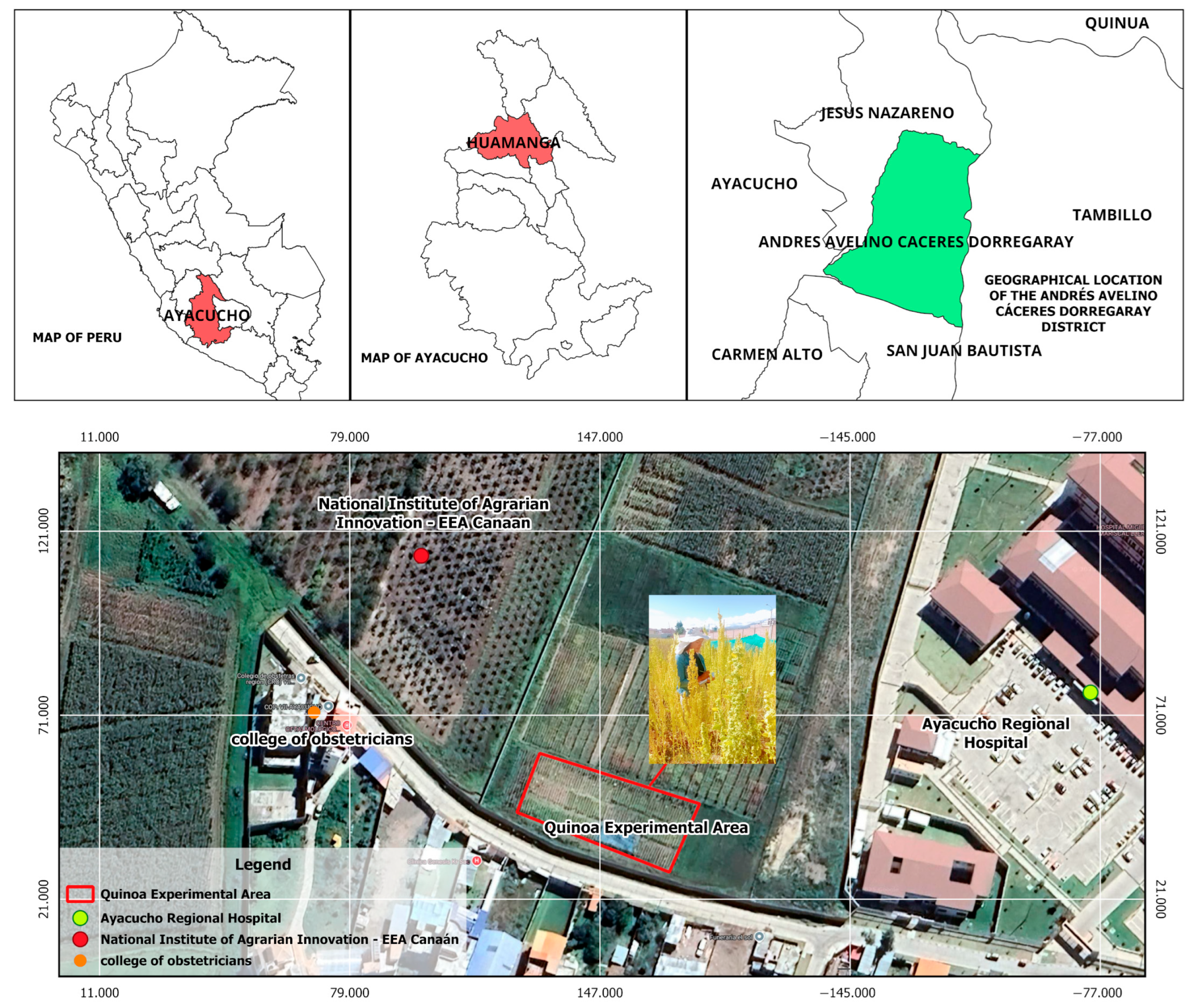
2.1. Study Site
2.2. Soil Physicochemical Properties
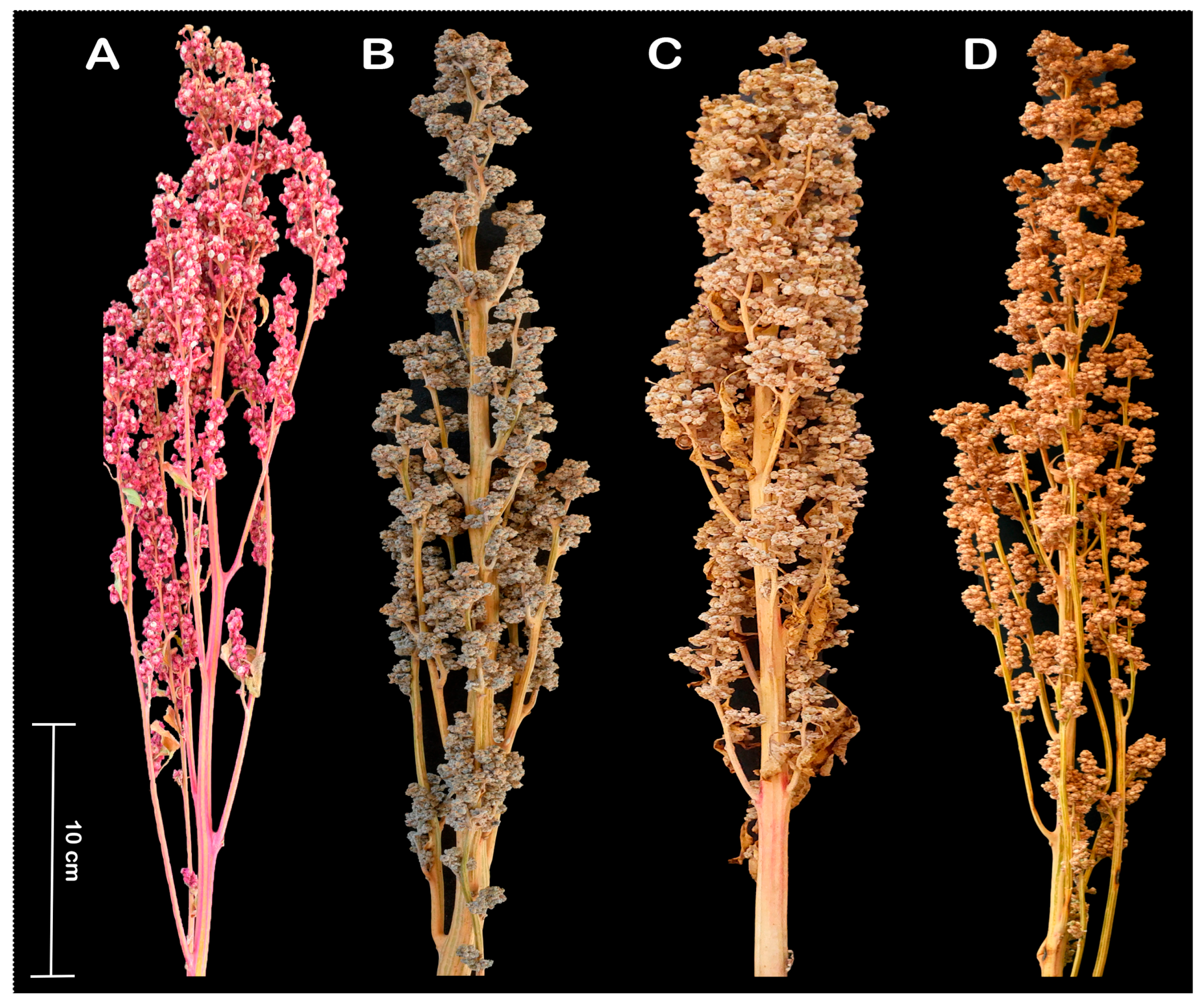
2.3. Plant Material
2.4. Experimental Design
2.5. Fertilization and Agronomic Management
2.6. Microbial Seed Inoculation Procedure
2.7. Agronomic Measurements
2.7.1. Vegetative Parameters
2.7.2. Yield Parameters
2.7.3. Root Development Parameters
2.8. Statistical Analysis
3. Results
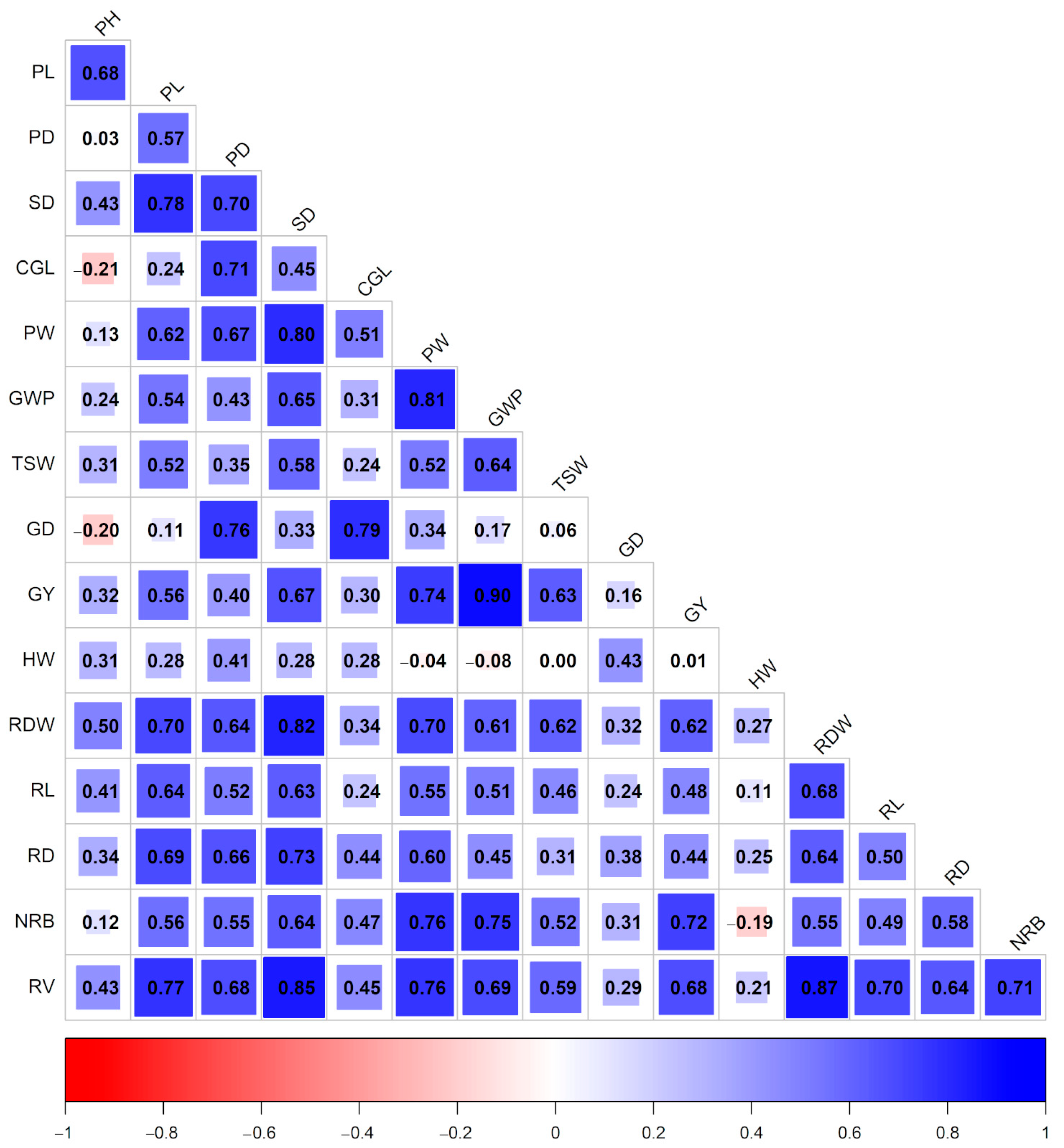
3.1. Correlation Analysis
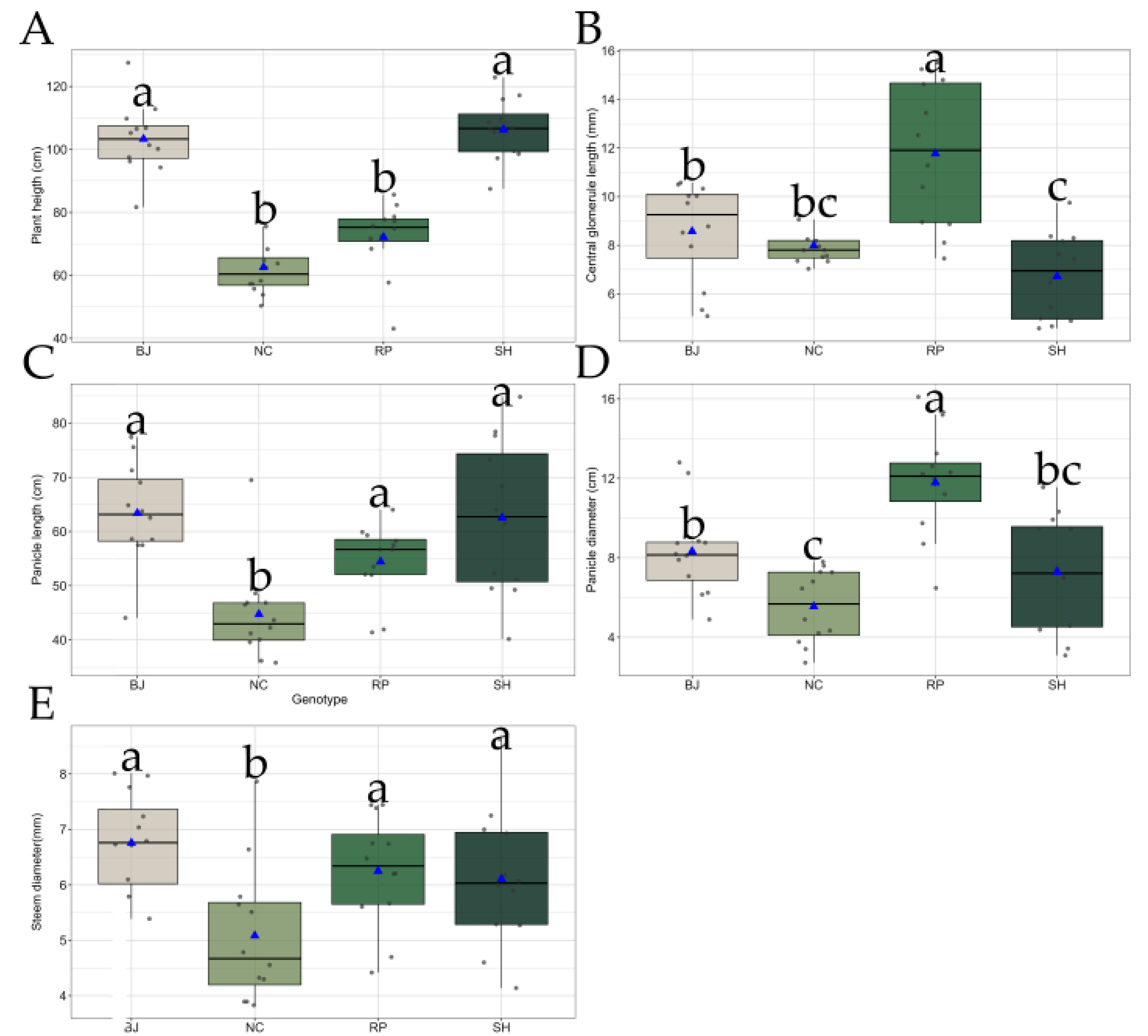
3.2. Response of Vegetative Parameters
3.2.1. Genotypic Effects
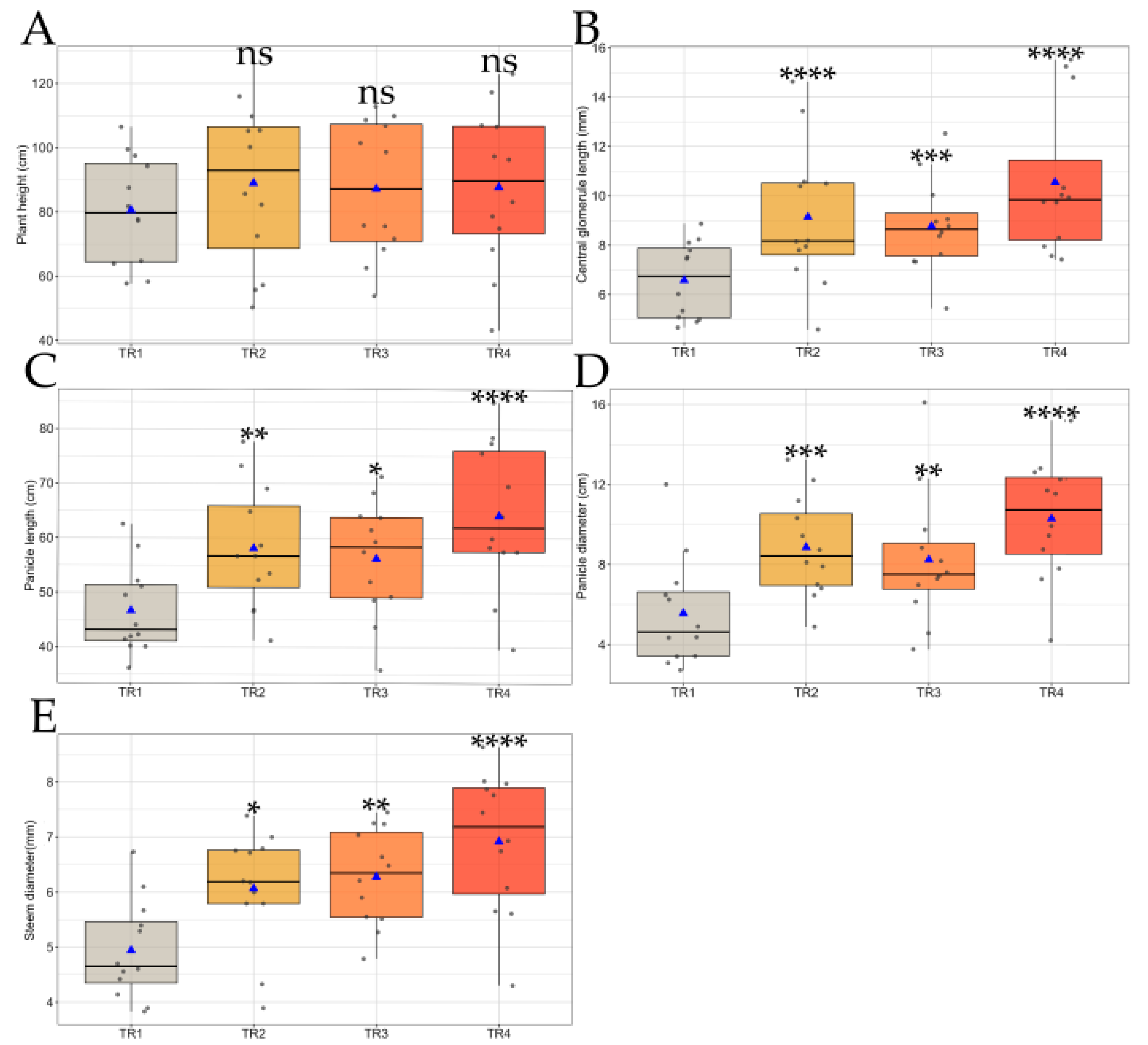
3.2.2. Treatment Effects
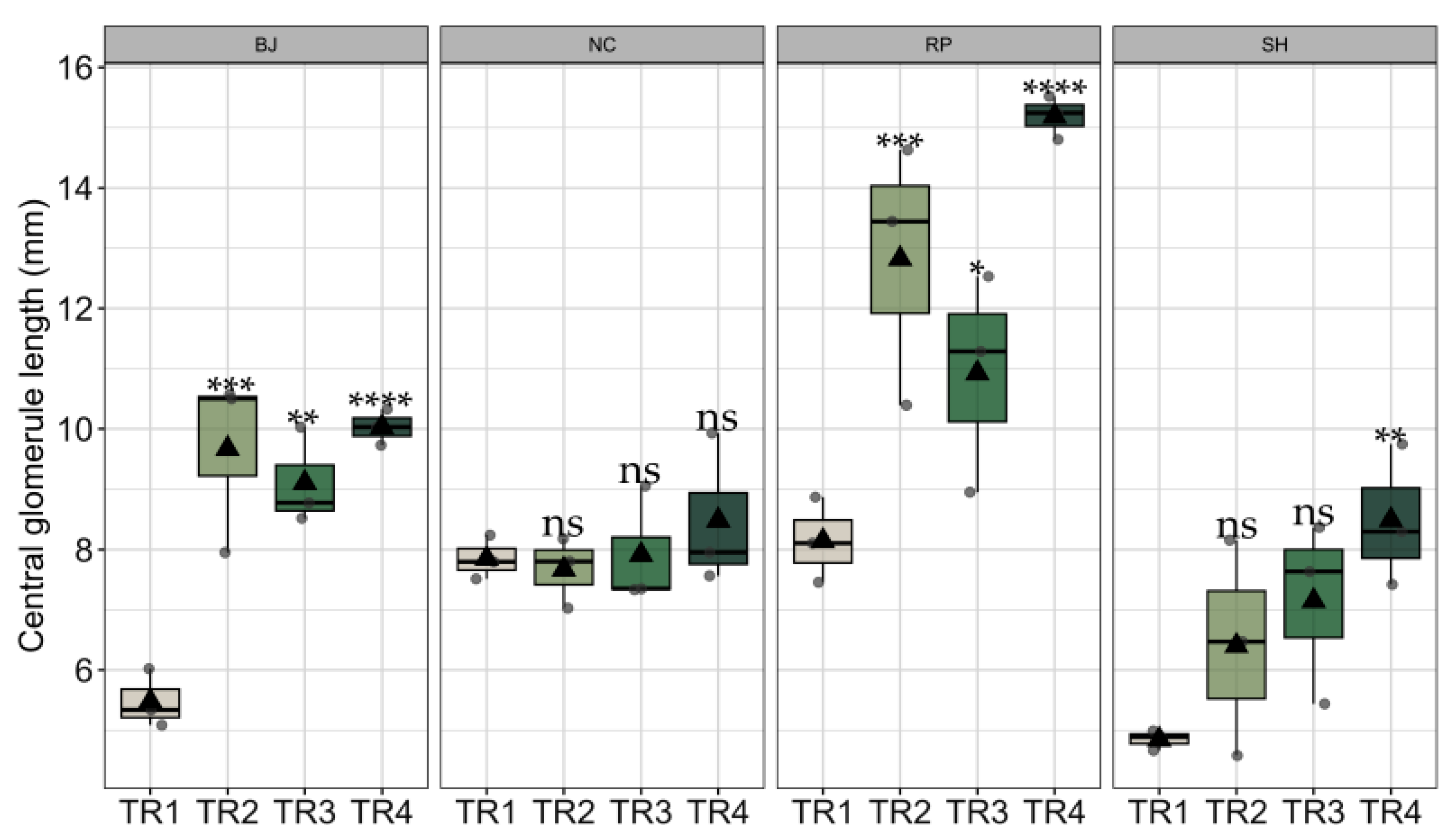
3.2.3. Genotype by Treatment for Glomerule Central Length (mm)
3.3. Response of Yield Parameters
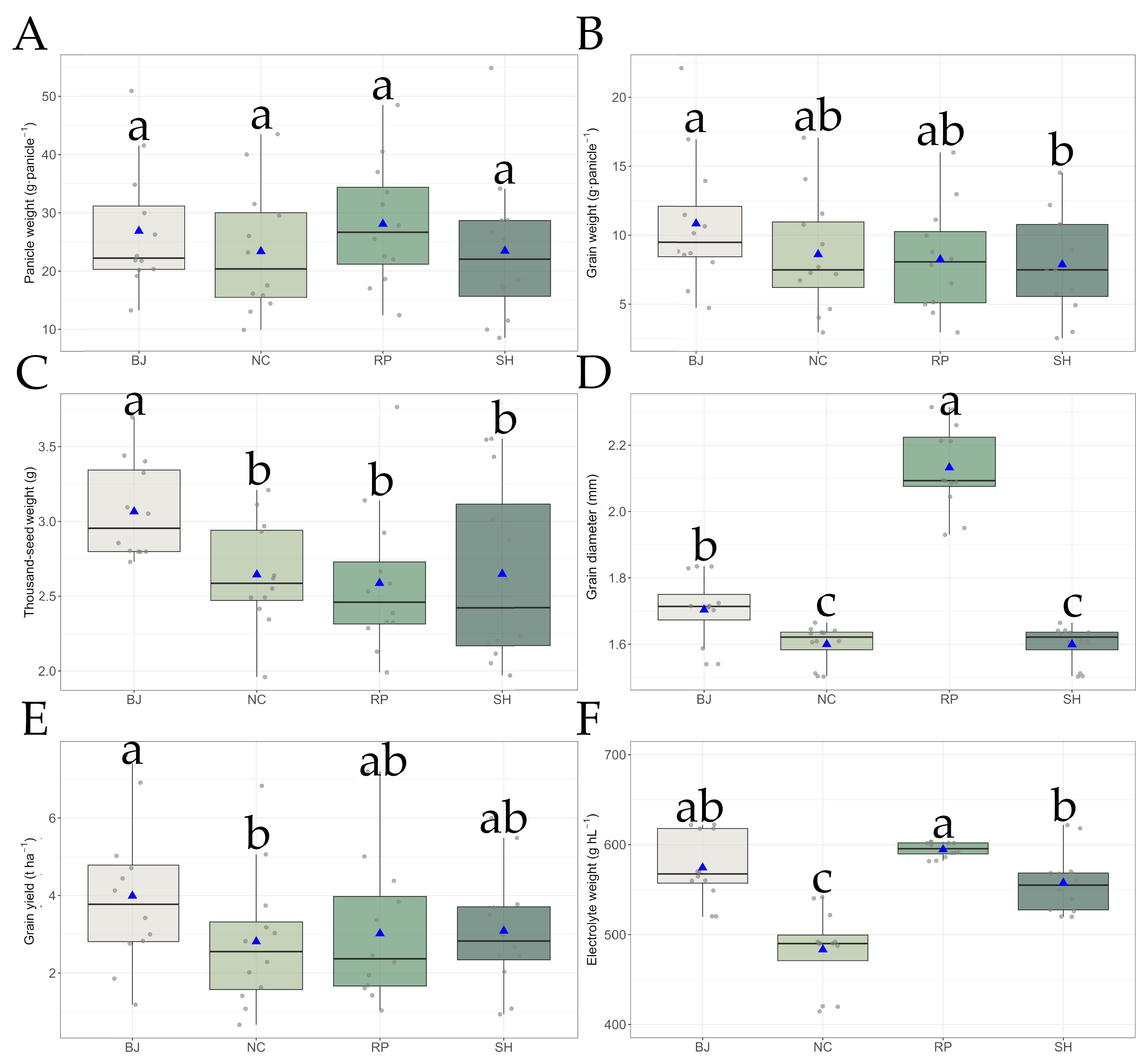
3.3.1. Genotype Effects
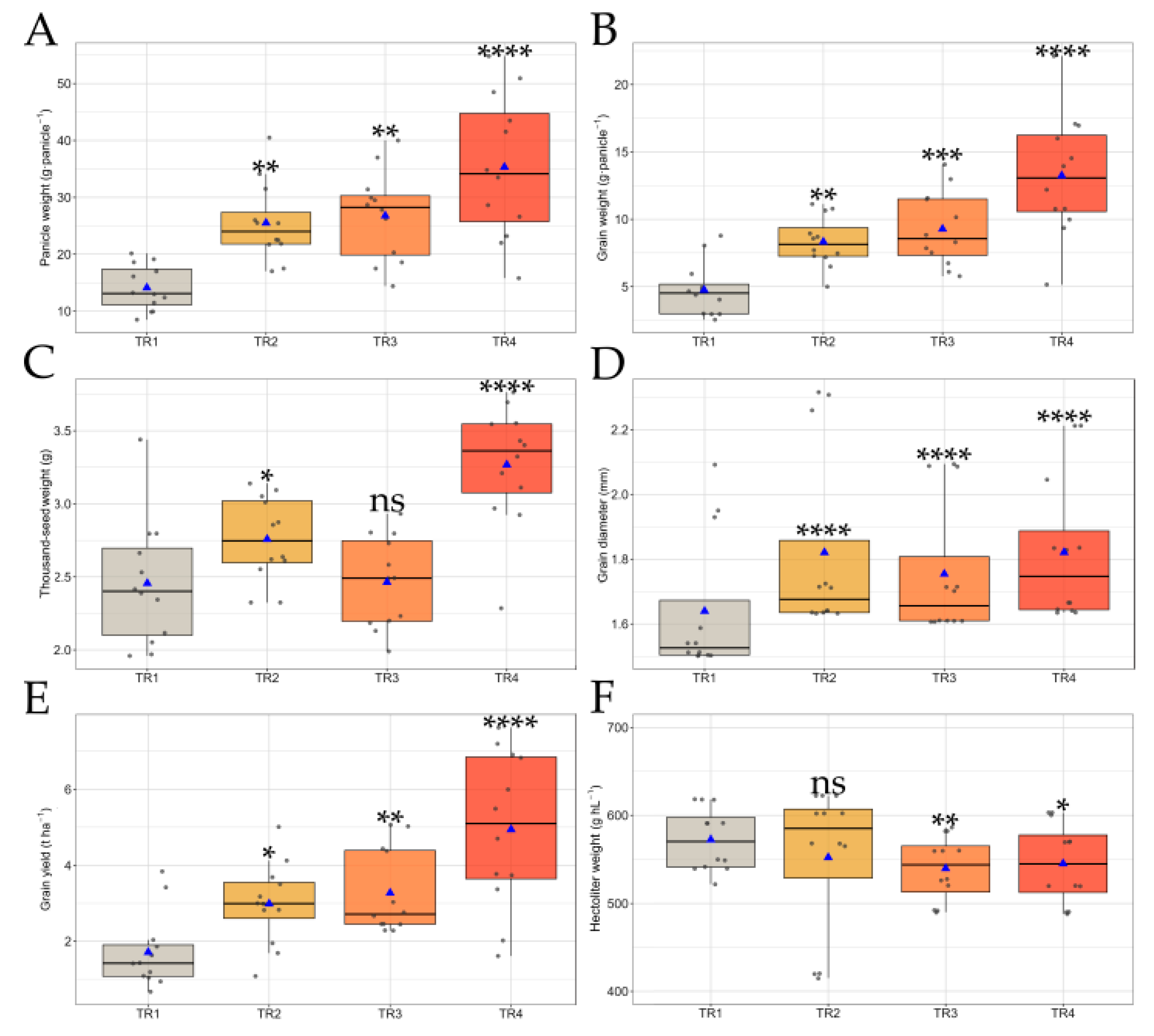
3.3.2. Treatment Effects
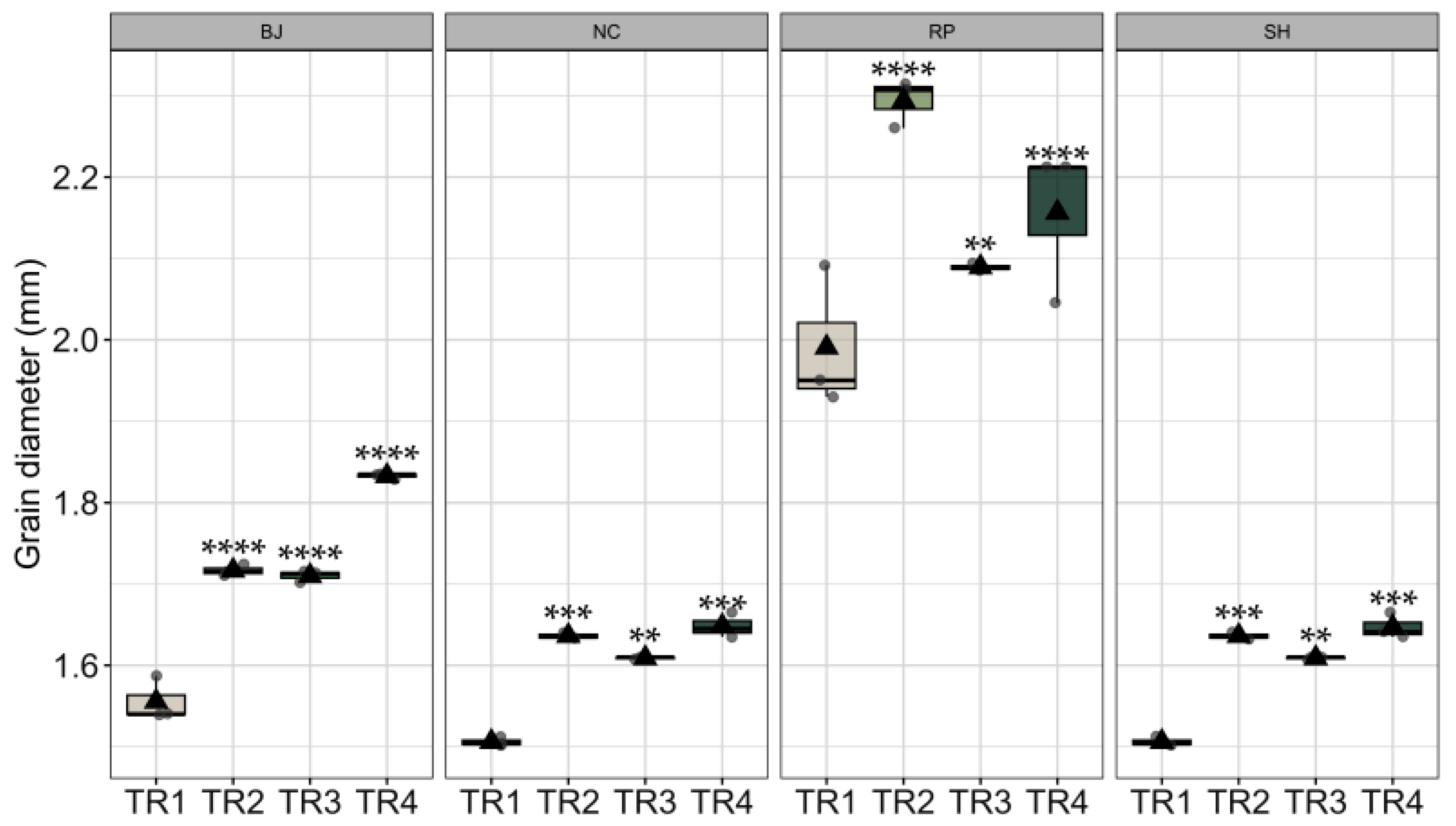
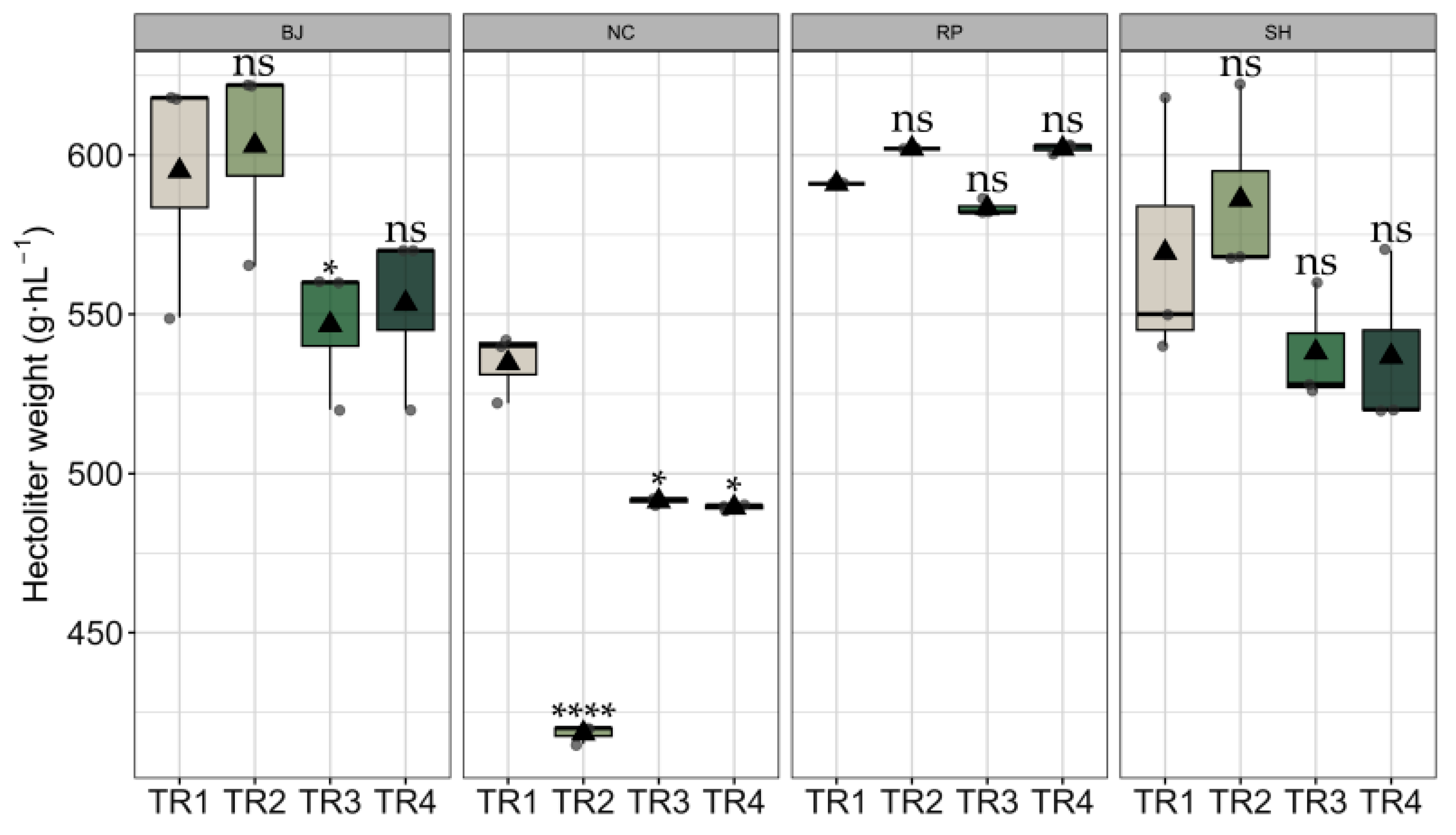
3.3.3. Genotypes by Treatment for Grain Diameter and Hectoliter Weight
3.4. Root Parameters
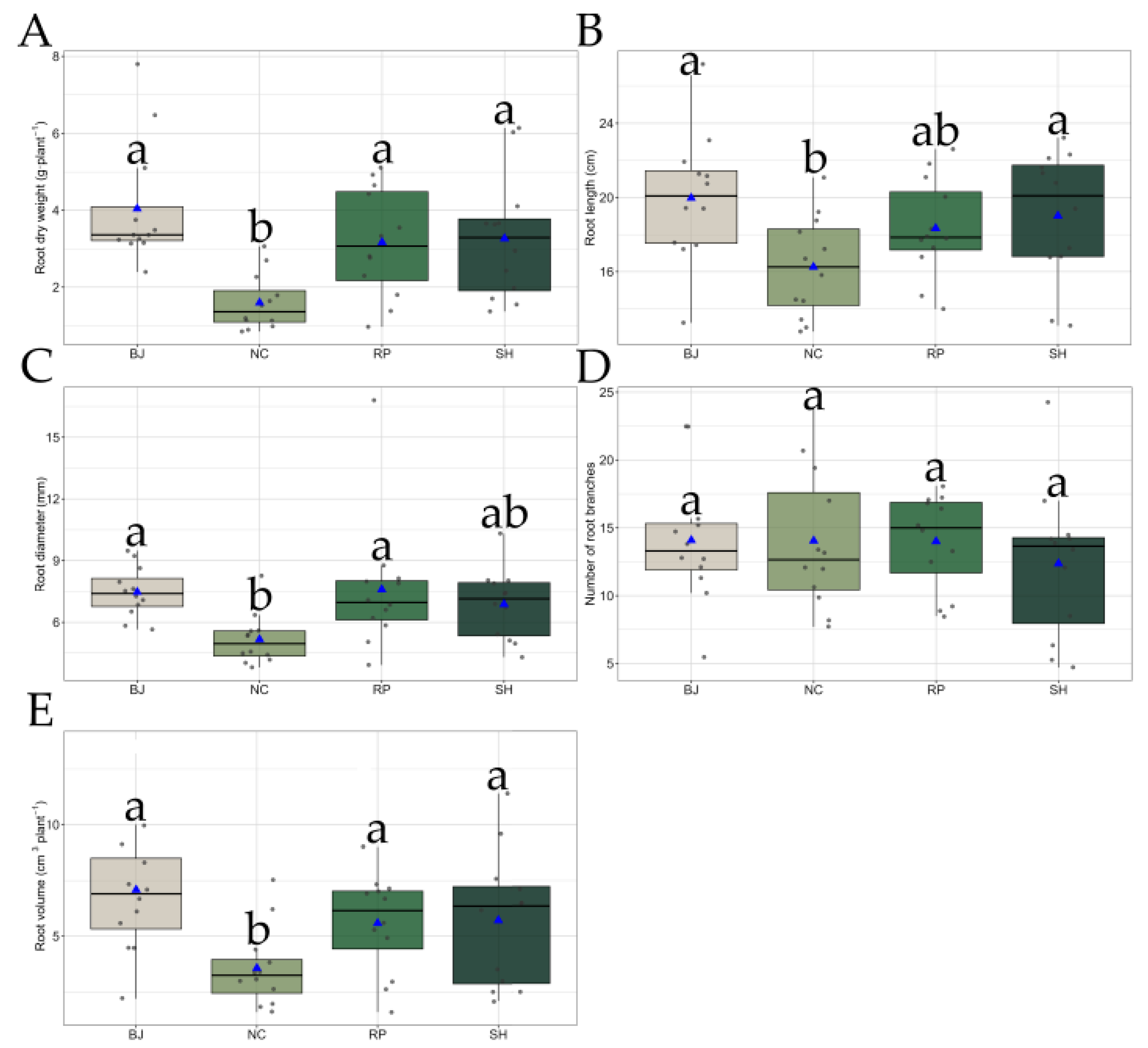
3.4.1. Genotype Effects
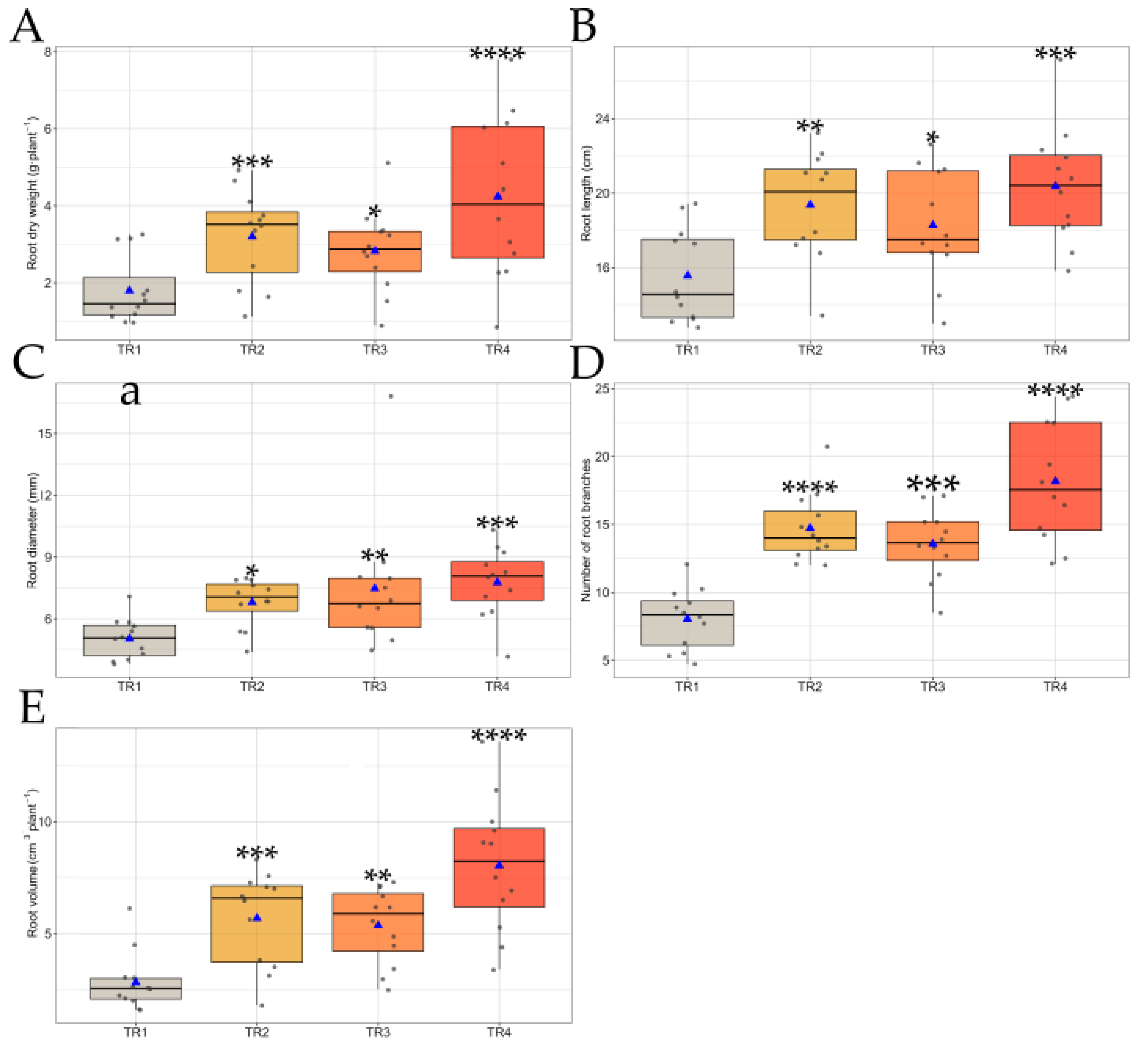
3.4.2. Treatment Effects
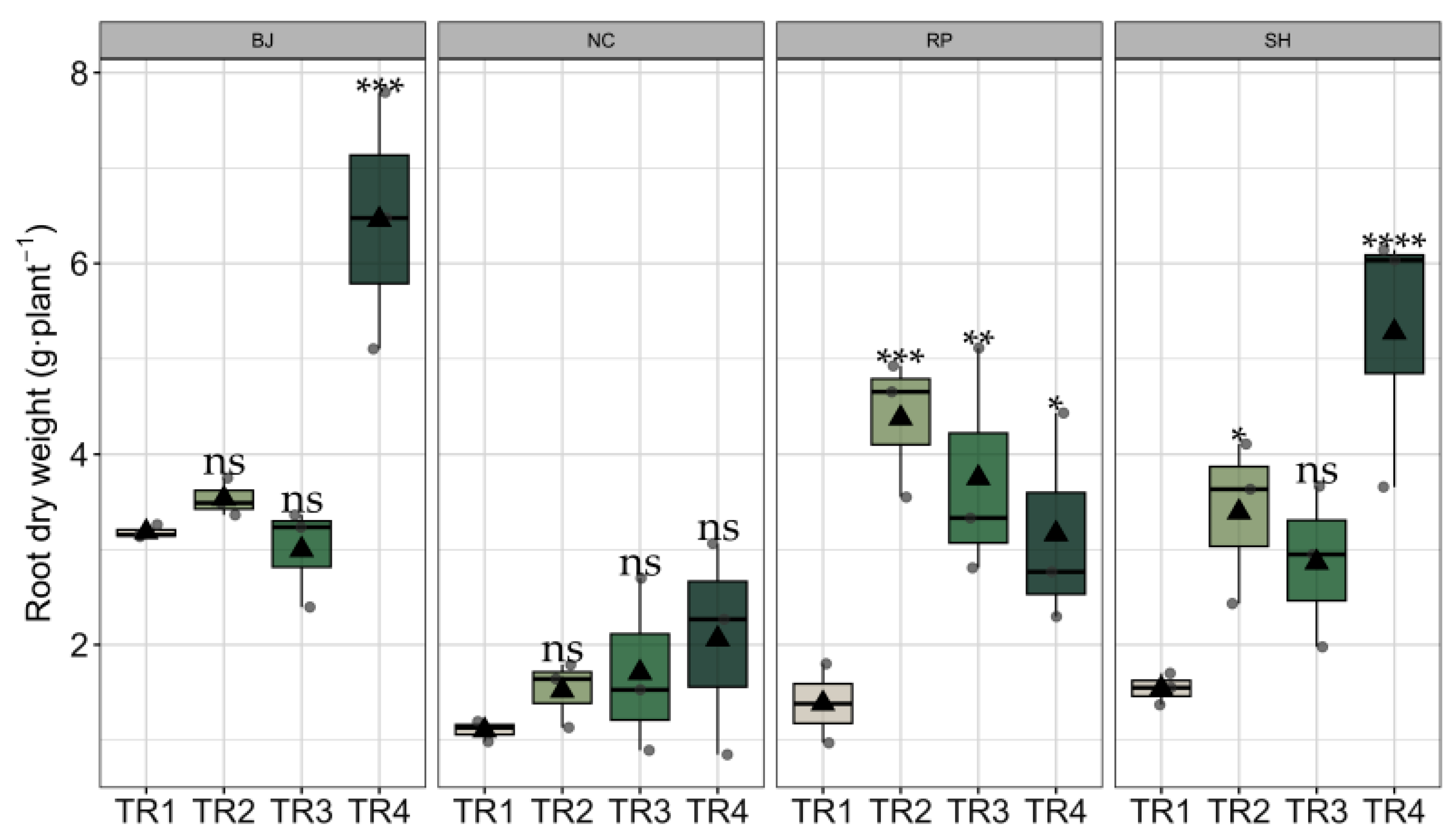
3.4.3. Genotype by Treatment Root Dry Weight (g·plant−1)
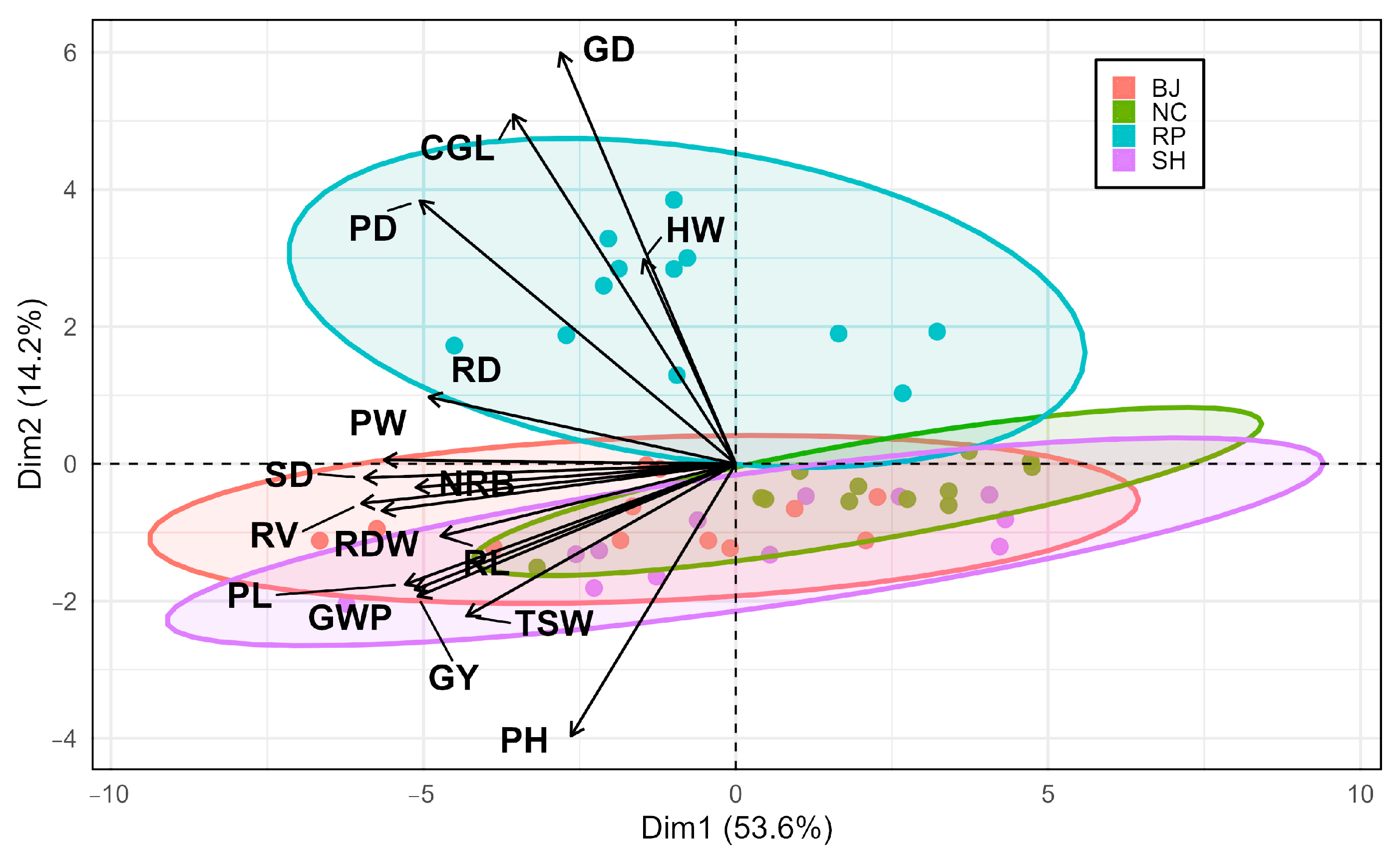
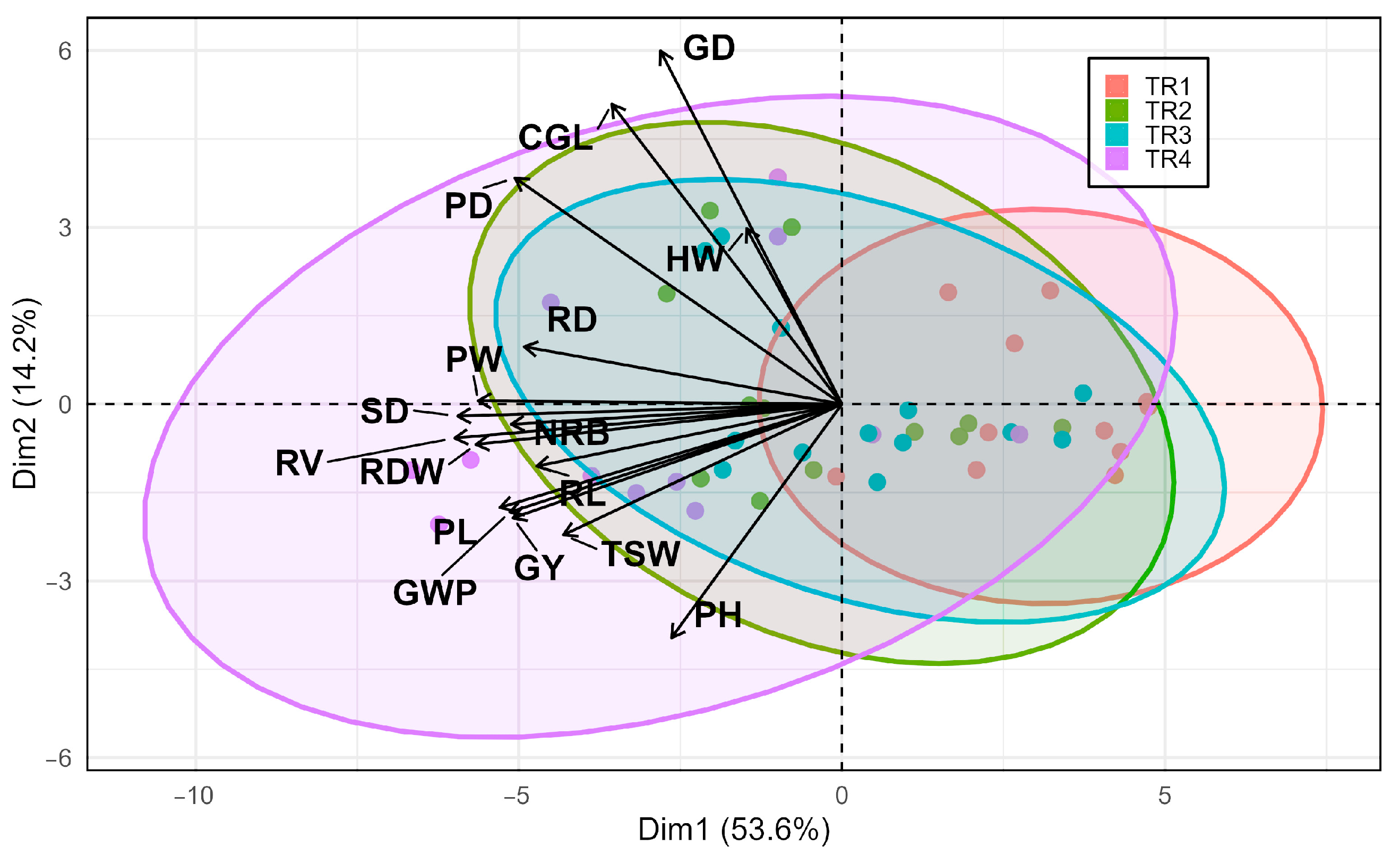
3.5. PCA
4. Discussion
5. Conclusions
Supplementary Materials
Author Contributions
Funding
Institutional Review Board Statement
Data Availability Statement
Conflicts of Interest
Abbreviations
| PGPMs | Plant growth-promoting microorganisms |
| PGPR | Plant Growth-Promoting Rhizobacterium |
| BJ | Blanca de Junín |
| SH | INIA 441 Señor del Huerto |
| RP | INIA 415 Pasankalla |
| NC | INIA 420 Negra Collana |
| PCA | Principal Component Análisis |
| RCBD | Randomized Complete Block Design |
| ANOVA | Analysis of Variance |
| IAA | Indole-3-Acetic Acid |
| INIA | The National Institute of Agrarian Innovation |
| SENAMHI | National Service of Meteorology and Hydrology of Peru |
| LABSAF | Soil, Water and Foliar Analysis Laboratory |
| CANAÁN | Canaán Experimental Station |
| NPK | Nitrogen, Phosphorus, Potassium |
| FOCAM | Camisea Socioeconomic Development Fund |
| NFb | Nitrogen-free medium |
| CFU | Colony-Forming Units |
| PH | Plant Height |
| PD | Panicule Diameter |
| CGL | Central Glomerule Length |
| PL | Panicle Length |
| SD | Stem Diameter |
| GD | Grain Diameter |
| TSW | Thousand Seed Weight |
| PW | Panicle Weight |
| GWP | Grain Weight per Panicle |
| GY | Grain Yield |
| HW | Hectoliter Weight |
| RD | Root Diameter |
| RL | Root Length |
| NRB | Number of Roots |
| RDW | Root Dry Weight |
| RV | Root Volumen |
References
- Barba-Ostria, C.; Guamán-Bautista, J.; Tosi-Vélez, A.A.; Puente-Pineda, J.A.; Cedeño-Zambrano, M.A.; Teran, E.; Guamán, L.P. Recent Advances in the Therapeutic Potential of Bioactive Molecules from Plants of Andean Origin. Nutrients 2025, 17, 1749. [Google Scholar] [CrossRef] [Scilit] [PubMed]
- De La Cruz-Arango, J. Quinoa in Peru: Andean Pseudocereal, a food for present and future generations. J. Selva Andin. Biosph. 2023, 11, 1–3. [Google Scholar] [CrossRef] [Scilit]
- Gaur, M.; Yadav, S.; Soni, A.; Tomar, D.; Jangra, A.; Joia, S.; Kumar, A.; Mehra, R.; Trajkovska Petkoska, A. Quinoa (Chenopodium quinoa Willd): Nutritional Profile, Health Benefits, and Sustainability Considerations. Discov. Food 2025, 5, 1–14. [Google Scholar] [CrossRef] [Scilit]
- Afzal, I.; Haq, M.Z.U.; Ahmed, S.; Hirich, A.; Bazile, D. Challenges and Perspectives for Integrating Quinoa into the Agri-Food System. Plants 2023, 12, 3361. [Google Scholar] [CrossRef] [Scilit]
- Kopeć, P. Climate Change—The Rise of Climate-Resilient Crops. Plants 2024, 13, 490. [Google Scholar] [CrossRef] [Scilit]
- Slatni, T.; Ben Slimene, I.; Harzalli, Z.; Taamalli, W.; Smaoui, A.; Abdelly, C.; Elkahoui, S. Enhancing quinoa (Chenopodium quinoa) Growth in Saline Environments through Salt-Tolerant Rhizobacteria from Halophyte Biotope. Physiol. Plant. 2024, 176, 4. [Google Scholar] [CrossRef] [Scilit]
- Haldar, S.; Kumari, A.; Ghosh, A.; Ghosh, A. Influence of Biotic and Abiotic Stresses on Quinoa Cultivation: Insights into Microbe-Assisted Stress Tolerance. In Biology and Biotechnology of Quinoa; Varma, A., Ed.; Springer: Singapore, 2021; pp. 167–193. [Google Scholar] [CrossRef] [Scilit]
- Bazile, D. Global Trends in the Worldwide Expansion of Quinoa Cultivation. Biol. Life Sci. Forum 2023, 25, 13. [Google Scholar] [CrossRef] [Scilit]
- Hinojosa, L.; Leguizamo, A.; Carpio, C.; Muñoz, D.; Mestanza, C.; Ochoa, J.; Castillo, C.; Murillo, A.; Villacréz, E.; Monar, C.; et al. Quinoa in Ecuador: Recent Advances under Global Expansion. Plants 2021, 10, 298. [Google Scholar] [CrossRef] [Scilit]
- Barakat, H.; Al-Qabba, M.M.; Algonaiman, R.; Radhi, K.S.; Almutairi, A.S.; Al Zhrani, M.M.; Mohamed, A. Impact of Sprouting Process on the Protein Quality of Yellow and Red Quinoa (Chenopodium quinoa). Molecules 2024, 29, 404. [Google Scholar] [CrossRef] [Scilit]
- Malek Mahdavi, A.; Javadivala, Z.; Khalili, Y.; Khalili, M. Effects of Quinoa (Chenopodium quinoa) on Inflammatory Mediators: A Systematic Review of Pre-clinical Studies. Inflammopharmacology 2023, 31, 241–251. [Google Scholar] [CrossRef] [Scilit]
- Pan, Y.; Zheng, J.; Wang, Z.; Lin, S.; Jia, H.; Pei, H.; Ju, R. Quinoa and Colonic Health: A Review of Bioactive Components and Mechanistic Insights. Curr. Issues Mol. Biol. 2025, 47, 815. [Google Scholar] [CrossRef] [Scilit]
- Sharma, S.; Kataria, A.; Singh, B. Effect of Thermal Processing on the Bioactive Compounds, Antioxidative, Antinutritional and Functional Characteristics of Quinoa (Chenopodium quinoa). LWT 2022, 160, 113256. [Google Scholar] [CrossRef] [Scilit]
- Irfan, M.; Ashiq Hussain, S.; Mubashir Ramzan, M.; Muzamil, M.; Aslam, S.; Fatima, E.; Bilal Haider, M.; Khaliq, B.; Murtaza, G.; Saeed, M. Chenopodium Quinoa: Nutritional Benefits, Disease Remedies, and Product Development Applications with Emphasis on Protein Supplementation. J. Xi’an Shiyou Univ. 2024, 20, 361–385. Available online: http://xisdxjxsu.asia (accessed on 20 November 2025).
- Wanniarachchi, P.C.; Pavalakumar, D.; Jayasinghe, M.A. Pseudocereals: Nutrition, Health Benefits, and Potential Applications in Gluten-free Food Product Developments. Curr. Nutr. Food Sci. 2022, 19, 377–385. [Google Scholar] [CrossRef] [Scilit]
- Ministerio de Agricultura y Riego. Perfil Productivo y Competitivo de los Principales Cultivos del Sector. Available online: https://siea.midagri.gob.pe/siea_bi/ (accessed on 20 November 2025).
- Badran, A.; Eid, N.A.; Hassan, A.R.; Mahmoudi, H. Differential Responses in Some Quinoa Genotypes of a Consortium of Beneficial Endophytic Bacteria against Bacterial Leaf Spot Disease. Front. Microbiol. 2023, 14, 1167250. [Google Scholar] [CrossRef] [Scilit]
- Meena, R.S.; Kumar, S.; Datta, R.; Lal, R.; Vijayakumar, V.; Brtnicky, M.; Sharma, M.P.; Yadav, G.S.; Jhariya, M.K.; Jangir, C.K.; et al. Impact of Agrochemicals on Soil Microbiota and Management: A Review. Land 2020, 9, 34. [Google Scholar] [CrossRef] [Scilit]
- Bargaz, A.; Lyamlouli, K.; Chtouki, M.; Zeroual, Y.; Dhiba, D. Soil Microbial Resources for Improving Fertilizers Efficiency in an Integrated Plant Nutrient Management System. Front. Microbiol. 2018, 9, 364232. [Google Scholar] [CrossRef] [Scilit] [PubMed]
- Ali, S.; Hameed, S.; Shahid, M.; Iqbal, M.; Lazarovits, G.; Imran, A. Functional Characterization of Potential PGPR Exhibiting Broad-Spectrum Antifungal Activity. Microbiol. Res. 2020, 232, 126389. [Google Scholar] [CrossRef] [Scilit]
- Maheshwari, D.K.; Dheeman, S.; Agarwal, M. Phytohormone-Producing PGPR for Sustainable Agriculture. In Sustainable Agriculture: Reviews; Springer: Berlin/Heidelberg, Germany, 2015; pp. 159–182. [Google Scholar] [CrossRef] [Scilit]
- Ganesh, J.; Hewitt, K.; Devkota, A.R.; Wilson, T.; Kaundal, A. IAA-Producing Plant Growth Promoting Rhizobacteria from Ceanothus velutinus Enhance Cutting Propagation Efficiency and Arabidopsis Biomass. Front. Plant Sci. 2024, 15, 1374877. [Google Scholar] [CrossRef] [Scilit]
- Uzma, M.; Nisar, A.; Iqbal, A.; Hasnain, S.; Mahmoud, M.H.; Rahim, M.A.; Gull, T.; Castro-Muñoz, R.; Zongo, E. Exploring the Efficacy of Drought-Tolerant, IAA-Producing Plant Growth-Promoting Rhizobacteria for Sustainable Agriculture. Plant Signal. Behav. 2025, 20, 1. [Google Scholar] [CrossRef] [Scilit]
- Al-Turki, A.; Murali, M.; Omar, A.F.; Rehan, M.; Sayyed, R.Z. Recent Advances in PGPR-Mediated Resilience toward Interactive Effects of Drought and Salt Stress in Plants. Front. Microbiol. 2023, 14, 1214845. [Google Scholar] [CrossRef] [Scilit]
- Calvo, P.; Ormeño-Orrillo, E.; Martínez-Romero, E.; Zúñiga, D. Characterization of Bacillus Isolates of Potato Rhizosphere from Andean Soils of Peru and Their Potential PGPR Characteristics. Braz. J. Microbiol. 2010, 41, 899–906. [Google Scholar] [CrossRef] [Scilit]
- Yuan, J.; Zhang, N.; Huang, Q.; Raza, W.; Li, R.; Vivanco, J.M.; Shen, Q. Organic Acids from Root Exudates of Banana Help Root Colonization of PGPR Strain Bacillus amyloliquefaciens NJN-6. Sci. Rep. 2015, 5, 13438. [Google Scholar] [CrossRef] [Scilit]
- Contreras-Pino, D.L.; Pizarro, S.; Verastegui-Martinez, P.; Solórzano-Acosta, R.; Requena-Rojas, E.J. Effects of Glomus iranicum Inoculation on Growth and Nutrient Uptake in Potatoes Associated with Broad Beans Under Greenhouse Conditions. Microbiol. Res. 2025, 16, 164. [Google Scholar] [CrossRef] [Scilit]
- Fernández-Martín, F.; Juarez-Molina, J.; Nicolás-Nicolás, E.; Alarcón, J.J.; Kirchmair, M.; García, F.J.; Bernabe-García, A.J.; Bernal, C. Application of Arbuscular Mycorrhizae Glomus iranicum var. tenuihypharum var. nova in Intensive Agriculture: A Study Case. J. Agric. Sci. Technol. B 2017, 7, 4. [Google Scholar] [CrossRef] [Scilit]
- Parniske, M. Arbuscular Mycorrhiza: The Mother of Plant Root Endosymbioses. Nat. Rev. Microbiol. 2008, 6, 763–775. [Google Scholar] [CrossRef] [Scilit] [PubMed]
- Pivato, B.; Offre, P.; Marchelli, S.; Barbonaglia, B.; Mougel, C.; Lemanceau, P.; Berta, G. Bacterial effects on arbuscular mycorrhizal fungi and mycorrhiza development as influenced by the bacteria, fungi, and host plant. Mycorrhiza 2009, 19, 81–90. [Google Scholar] [CrossRef] [Scilit] [PubMed]
- García-Parra, M.; Cuellar-Rodríguez, L.Á.; Balaguera-López, H.E. Arbuscular Mycorrhiza Symbiosis in Quinoa (Chenopodium quinoa Willd.): A Systematic Review. Rev. Fac. Nac. Agron. Medellín 2022, 75, 9853–9865. [Google Scholar] [CrossRef] [Scilit]
- Kellogg, J.A.; Reganold, J.P.; Murphy, K.M.; Carpenter-Boggs, L.A. A Plant-Fungus Bioassay Supports the Classification of Quinoa (Chenopodium quinoa Willd.) as Inconsistently Mycorrhizal. Microb. Ecol. 2021, 82, 135–144. [Google Scholar] [CrossRef] [Scilit] [PubMed]
- Urcelay, C.; Acho, J.; Joffre, R. Fungal Root Symbionts and Their Relationship with Fine Root Proportion in Native Plants from the Bolivian Andean Highlands above 3700 m Elevation. Mycorrhiza 2011, 21, 323–330. [Google Scholar] [CrossRef] [Scilit]
- Belimov, A.A.; Shaposhnikov, A.I.; Azarova, T.S.; Makarova, N.M.; Safronova, V.I.; Litvinskiy, V.A.; Nosikov, V.V.; Zavalin, A.A.; Tikhonovich, I.A. Microbial Consortium of PGPR, Rhizobia and Arbuscular Mycorrhizal Fungus Makes Pea Mutant SGECdt Comparable with Indian Mustard in Cadmium Tolerance and Accumulation. Plants 2020, 9, 975. [Google Scholar] [CrossRef] [Scilit] [PubMed]
- Sandepogu, P.; Mamatha, M. Effect of Vesicular-Arbuscular Mycorrhiza (VAM) and PGPR on Plant Growth Response of Two Cultivars of Quinoa (Chenopodium quinoa Willd.) in Both Field and Pot Experiments. Open Access Res. J. Sci. Technol. 2022, 4, 001–008. [Google Scholar] [CrossRef] [Scilit]
- Cai, D.; Xu, Y.; Zhao, F.; Zhang, Y.; Duan, H.; Guo, X. Improved Salt Tolerance of Quinoa (Chenopodium quinoa Willd.) Contributed by Pseudomonas sp. Strain M30-35. PeerJ 2021, 9, e10702. [Google Scholar] [CrossRef] [Scilit]
- Rafique, E.; Mumtaz, M.Z.; Ullah, I.; Rehman, A.; Qureshi, K.A.; Kamran, M.; Rehman, M.U.; Jaremko, M.; Alenezi, M.A. Potential of Mineral-Solubilizing Bacteria for Physiology and Growth Promotion of Quinoa (Chenopodium quinoa Willd.). Front. Plant Sci. 2022, 13, 1004833. [Google Scholar] [CrossRef] [Scilit]
- Hnini, M.; Rabeh, K.; Oubohssaine, M. Interactions between beneficial soil microorganisms (PGPR and AMF) and host plants for environmental restoration: A systematic review. Plant Stress 2024, 11, 100391. [Google Scholar] [CrossRef] [Scilit]
- Tahiri, A.; Meddich, A.; Raklami, A.; Raklmi, A.; Alahmad, N.; Anli, M.; Göttfert, M.; Heulin, T.; Achouak, W.; Oufdou, K. Assessing the potential role of compost, PGPR, and AMF in improving tomato plant growth, yield, fruit quality, and water stress tolerance. J. Soil Sci. Plant Nutr. 2022, 22, 743–764. [Google Scholar] [CrossRef] [Scilit]
- Bellone, C.H.; Carrizo de Bellone, S. Interaction of Azospirillum brasilense and Glomus intraradix in sugar cane roots. Indian J. Microbiol. 2012, 52, 70–75. [Google Scholar] [CrossRef] [Scilit]
- Lira-Saldivar, R.H.; Hernández, A.; Valdez, L.A.; Cárdenas, A.; Ibarra, L.; Hernández, M.; Ruiz, N. Azospirillum brasilense and Glomus intraradices co-inoculation stimulates growth and yield of cherry tomato under shadehouse conditions. Phyton (B. Aires) 2014, 83, 133–138. Available online: https://www.scielo.org.ar/scielo.php?script=sci_arttext&pid=S1851-56572014000100017 (accessed on 15 November 2025).
- Bhíll Thoño Rondinel Huanaco; Quispe-Medina, E.R.; Garcia-Blásquez Morote, C.; Quispe-Tenorio, J.A.; Velásquez Mantari, J.; Paitamala Campos, O.; Díaz Morales, L.A.; Matsusaka Quiliano, D.C. Efectos sinérgicos de bioinoculantes microbianos en el desarrollo radicular de variedades de maíz morado (Zea mays L.). Rev. Investig. Agroprod. Sustentable 2025, 30, 1088. [Google Scholar] [CrossRef] [Scilit]
- Neina, D. Role of Soil pH in Plant Nutrition and Soil Remediation. Appl. Environ. Soil Sci. 2019, 2019, 5794869. [Google Scholar] [CrossRef] [Scilit]
- Molua, C.O. Investigating the Influence of Soil Electrical Conductivity on Crop Yield for Precision Agriculture Advancements. Int. J. Agric. Anim. Prod. 2021, 12, 23–34. [Google Scholar] [CrossRef] [Scilit]
- King, A.E.; Ali, G.A.; Gillespie, A.W.; Wagner-Riddle, C. Soil organic matter as catalyst of crop resource capture. Front. Environ. Sci. 2020, 8, 50. [Google Scholar] [CrossRef] [Scilit]
- Ali, A.; Jabeen, N.; Farruhbek, R.; Chachar, Z.; Laghari, A.A.; Chachar, S.; Ahmed, N.; Ahmed, S.; Yang, Z. Enhancing Nitrogen Use Efficiency in Agriculture by Integrating Agronomic Practices and Genetic Advances. Front. Plant Sci. 2025, 16, 1543714. [Google Scholar] [CrossRef] [Scilit]
- Muindi, E.M. Understanding soil phosphorus. Int. J. Plant Soil Sci. 2019, 31, 1–18. [Google Scholar] [CrossRef] [Scilit]
- Xu, X.; Du, X.; Wang, F.; Sha, J.; Chen, Q.; Tian, G.; Zhu, Z.; Ge, S.; Jiang, Y. Effects of Potassium Levels on Plant Growth, Accumulation and Distribution of Carbon, and Nitrate Metabolism in Apple Dwarf Rootstock Seedlings. Front. Plant Sci. 2020, 11, 904. [Google Scholar] [CrossRef] [Scilit]
- Verma, R.C.; Singh, N.; Gangavati, A.R.; Ashoka, P.; Kesarwani, A.; Ali, I.; Singh, B.V. A Review of Long-Term Effects of Mineral Fertilizers on Soil Microorganisms. Int. J. Plant Soil Sci. 2023, 35, 1145–1155. [Google Scholar] [CrossRef] [Scilit]
- Tripathi, S.; Srivastava, P.; Devi, R.S.; Bhadouria, R. Influence of Synthetic Fertilizers and Pesticides on Soil Health and Soil Microbiology. In Agrochemicals Detection, Treatment and Remediation; Elsevier: Amsterdam, The Netherlands, 2020; pp. 25–54. [Google Scholar] [CrossRef] [Scilit]
- Palomino-Malpartida, J.R.; Esquivel-Quispe, R.; Huamancusi-Morales, J.L.; Alarcón-Romani, S.M.; Blásquez-Morote, C.G. Azospirillum brasilense y ácido indol-3-butírico en el enraizamiento de tallos de palto (Persea americana Mill.). Bioagro 2022, 35, 69–74. [Google Scholar] [CrossRef] [Scilit]
- Condori, T.; Alarcón, S.; Huasasquiche, L.; García-Blásquez, C.; Padilla-Castro, C.; Velásquez, J.; Solórzano, R. Inoculation with Azospirillum brasilense as a Strategy to Reduce Nitrogen Fertilization in Cultivating Purple Maize (Zea mays L.) in the Inter-Andean Valleys of Peru. Microorganisms 2024, 12, 2107. [Google Scholar] [CrossRef] [Scilit]
- Posit Team. RStudio: Integrated Development Environment for R; Posit Software, PBC: Boston, MA, USA, 2025; Available online: http://www.posit.co/ (accessed on 20 October 2025).
- Hou, Y.; Xu, D.; Xu, Y.; Cong, S.; Guo, X.; Wu, N. Using Phosphorus-Dissolving Microorganisms for Quinoa Quality Enhancement: Effects on Root and Leaf Traits and Nutrient Composition of Quinoa Seedlings in Coastal Wetlands. Qual. Assur. Saf. Crops Foods 2025, 17, 298–309. [Google Scholar] [CrossRef] [Scilit]
- Karimi, G.; Pourakbar, L.; Siavash Moghaddam, S.; Rezaee Danesh, Y.; Popović-Djordjević, J. Effectiveness of Fungal Bacterial Biofertilizers on Agrobiochemical Attributes of Quinoa (Chenopodium quinoa Willd.) under Salinity Stress. Int. J. Environ. Sci. Technol. 2022, 19, 11989–12002. [Google Scholar] [CrossRef] [Scilit]
- Leon Ttacca, B.; Ortiz Calcina, N.; Pauro Flores, L.; Borja Loza, R.; Mendoza-Coari, P.; Palao Iturregui, L. Inoculation Methods of Native Strains of Trichoderma sp. and Their Effect on the Growth and Yield of Quinoa. Rev. Fac. Agron. (LUZ) 2022, 39, e223955. [Google Scholar] [CrossRef] [Scilit]
- Toubali, S.; Ait-El-Mokhtar, M.; Boutasknit, A.; Anli, M.; Ait-Rahou, Y.; Benaffari, W.; Ben-Ahmed, H.; Mitsui, T.; Baslam, M.; Meddich, A. Root Reinforcement Improved Performance, Productivity, and Grain Bioactive Quality of Field-Droughted Quinoa (Chenopodium quinoa). Front. Plant Sci. 2022, 13, 860484. [Google Scholar] [CrossRef] [Scilit] [PubMed]
- Yang, A.; Akhtar, S.S.; Fu, Q.; Naveed, M.; Iqbal, S.; Roitsch, T.; Jacobsen, S.E. Burkholderia Phytofirmans PsJN Stimulate Growth and Yield of Quinoa under Salinity Stress. Plants 2020, 9, 672. [Google Scholar] [CrossRef] [Scilit] [PubMed]
- Ortuño, N.; Castillo, J.; Claros, M.; Navia, O.; Angulo, M.; Barja, D.; Gutiérrez, C.; Angulo, V. Enhancing the Sustainability of Quinoa Production and Soil Resilience by Using Bioproducts Made with Native Microorganisms. Agronomy 2013, 3, 732–746. [Google Scholar] [CrossRef] [Scilit]
- Zahoor, S.; Naz, R.; Keyani, R.; Roberts, T.H.; Hassan, M.N.; Yasmin, H.; Nosheen, A.; Farman, S. Rhizosphere Bacteria Associated with Quinoa (Chenopodium quinoa) Promote Resistance to Alternaria alternata in Tomato. Sci. Rep. 2022, 12, 19027. [Google Scholar] [CrossRef] [Scilit]
- Amado-Rodríguez, J.L.; Humeje-Pan, N.P.; Blanco-Valbuena, J.O.; Torres-Merchán, N.Y.; García-Parra, M.A. Effect of Plant Growth Promoting Bacteria on the Phenology of the Amarilla Maranganí Quinoa Cultivar. Rev. Colomb. Cienc. Hortícolas 2022, 16, 1. [Google Scholar] [CrossRef] [Scilit]
- Álvarez Flores, R.A.; Winkel, T.; Nguyen-Thi-Truc, A.; Joffre, R.; Álvarez, R. Root Foraging Capacity Depends on Root System Architecture and Ontogeny in Seedlings of Three Andean Chenopodium Species. Plant Soil 2014, 382, 415–428. [Google Scholar] [CrossRef] [Scilit]
- Kakabouki, I.P.; Roussis, I.; Hela, D.; Papastylianou, P.; Folina, A.; Bilalis, D. Root Growth Dynamics and Productivity of Quinoa (Chenopodium quinoa Willd.) in Response to Fertilization and Soil Tillage. Folia Hortic. 2019, 31, 285–299. [Google Scholar] [CrossRef] [Scilit]
- Yang, P.; Condrich, A.; Scranton, S.; Hebner, C.; Lu, L.; Ali, M.A. Utilizing Plant Growth-Promoting Rhizobacteria (PGPR) to Advance Sustainable Agriculture. Bacteria 2024, 3, 434–451. [Google Scholar] [CrossRef] [Scilit]
- Koffi, G.A.; Anno, H.F.A.; Guei, N.K.R.; N’Doye, F.; Fall, D.; Diouf, D.; Dabonné, S. Synergistic Effects of Dual Inoculation with Rhizobia and Arbuscular Mycorrhizal Fungi Selected on Peanut Seedlings Growth Parameters. Microbiol. Res. J. Int. 2025, 35, 1–9. [Google Scholar] [CrossRef] [Scilit]
- Nanjundappa, A.; Bagyaraj, D.J.; Saxena, A.K.; Kumar, M.; Chakdar, H. Interaction between Arbuscular Mycorrhizal Fungi and Bacillus spp. in Soil Enhancing Growth of Crop Plants. Fungal Biol. Biotechnol. 2019, 6, 1–10. [Google Scholar] [CrossRef] [Scilit] [PubMed]
- Xie, L.; Lehvävirta, S.; Timonen, S.; Kasurinen, J.; Niemikapee, J.; Valkonen, J.P.T. Species-Specific Synergistic Effects of Two Plant Growth-Promoting Microbes on Green Roof Plant Biomass and Photosynthetic Efficiency. PLoS ONE 2018, 13, e0209432. [Google Scholar] [CrossRef] [Scilit] [PubMed]
- Timea, H.-J.; Mirjana, J.; Simonida, D.; Dragana, S. Effect of Co-Inoculation with Different Groups of Beneficial Microorganisms on the Microbiological Properties of Soil and Yield of Maize (Zea mays L.). Ratar. Povrt. 2012, 49, 183–188. [Google Scholar] [CrossRef] [Scilit]
- Zeffa, D.M.; Fantin, L.H.; Koltun, A.; De Oliveira, A.L.M.; Nunes, M.P.B.A.; Canteri, M.G.; Gonçalves, L.S.A. Effects of Plant Growth-Promoting Rhizobacteria on Co-Inoculation with Bradyrhizobium in Soybean Crop: A Meta-Analysis of Studies from 1987 to 2018. PeerJ 2020, 8, e7905. [Google Scholar] [CrossRef] [Scilit] [PubMed]
- Cassán, F.; Coniglio, A.; López, G.; Molina, R.; Nievas, S.; de Carlan, C.L.N.; Donadio, F.; Torres, D.; Rosas, S.; Pedrosa, F.O.; et al. Everything You Must Know about Azospirillum and Its Impact on Agriculture and Beyond. Biol. Fertil. Soils 2020, 56, 461–479. [Google Scholar] [CrossRef] [Scilit]
- Ganušová, E.E.; Banerjee, I.; Seats, T.; Alexandre, G. Indole-3-Acetic Acid (IAA) Protects Azospirillum brasilense from Indole-Induced Stress. Appl. Environ. Microbiol. 2025, 91, 4. [Google Scholar] [CrossRef] [Scilit]
- Iqbal, R.; Valipour, M.; Ali, B.; Zulfiqar, U.; Aziz, U.; Zaheer, M.S.; Sarfraz, A.; Javed, M.A.; Afridi, M.S.; Ercisli, S.; et al. Maximizing Wheat Yield through Soil Quality Enhancement: A Combined Approach with Azospirillum brasilense and Bentonite. Plant Stress 2024, 11, 100321. [Google Scholar] [CrossRef] [Scilit]
- Fernández, F.; Vicente-Sánchez, J.; Maestre-Valero, J.F.; Bernabé, A.J.; Nicolás, E.; Pedrero, F.; Alarcón, J.J. Physiological and Growth Responses of Young Tomato Seedlings to Drip-Irrigation Containing Two Low Doses of the Arbuscular Mycorrhizal Fungus Glomus iranicum var. tenuihypharum sp. nova. J. Hortic. Sci. Biotechnol. 2014, 89, 679–685. [Google Scholar] [CrossRef] [Scilit]
- Couillerot, O.; Ramírez-Trujillo, A.; Walker, V.; von Felten, A.; Jansa, J.; Maurhofer, M.; Keel, C.; Défago, G.; Prigent-Combaret, C.; Spaepen, S.; et al. Comparison of Prominent Azospirillum Strains in Azospirillum–Pseudomonas–Glomus Consortia for Promotion of Maize Growth. Appl. Microbiol. Biotechnol. 2013, 97, 4639–4649. [Google Scholar] [CrossRef] [Scilit]
- Glick, B.R. Plant Growth-Promoting Bacteria: Mechanisms and Applications. Scientifica 2012, 2012, 1–15. [Google Scholar] [CrossRef] [Scilit]
- Nadeem, S.M.; Ahmad, M.; Zahir, Z.A.; Javaid, A.; Ashraf, M. The Role of Mycorrhizae and Plant Growth-Promoting Rhizobacteria (PGPR) in Improving Crop Productivity under Stressful Environments. Biotechnol. Adv. 2014, 32, 429–448. [Google Scholar] [CrossRef] [Scilit]
- Wang, M.; Yang, B.; Wang, H.; Zhu, Y.; Cao, X.; Yuan, Y. Functioning Mechanisms of Ectomycorrhizal Fungi and Ectomycorrhiza Associated with Plant in the Tolerance to Heavy Metal Toxicity. In Proceedings of the 2020 The 9th International Conference on Informatics, Environment, Energy and Applications, Bangkok, Thailand, 10–12 March 2020; pp. 36–40. [Google Scholar] [CrossRef] [Scilit]
- Diagne, N.; Ngom, M.; Djighaly, P.I.; Fall, D.; Hocher, V.; Svistoonoff, S. Roles of arbuscular mycorrhizal fungi on plant growth and performance: Importance in biotic and abiotic stressed regulation. Diversity 2020, 12, 370. [Google Scholar] [CrossRef] [Scilit]
- Saboor, A.; Ali, M.A.; Hussain, S.; Enshasy, H.A.E.; Hussain, S.; Ahmed, N.; Datta, R. Zinc nutrition and arbuscular mycorrhizal symbiosis effects on maize (Zea mays L.) growth and productivity. Saudi J. Biol. Sci. 2021, 28, 6339–6351. [Google Scholar] [CrossRef] [Scilit]
- Harrison, M.; Dewbre, G.R.; Liu, J. A phosphate transporter from Medicago truncatula involved in the acquisition of phosphate released by arbuscular mycorrhizal fungi. Plant Cell 2002, 14, 2413–2429. [Google Scholar] [CrossRef] [Scilit]
- Banasiak, J.; Jamruszka, T.; Murray, J.D.; Jasiński, M. A roadmap of plant membrane transporters in arbuscular mycorrhizal and legume–rhizobium symbioses. Plant Physiol. 2021, 187, 2071–2091. [Google Scholar] [CrossRef] [Scilit]
- Chaturvedi, R.; Favas, P.J.; Pratas, J.; Varun, M.; Paul, M.S. Harnessing Pisum sativum–Glomus mosseae symbiosis for phytoremediation of soil contaminated with lead, cadmium, and arsenic. Int. J. Phytoremediation 2021, 23, 279–290. [Google Scholar] [CrossRef] [Scilit]
- Glick, B.R. Bacteria with ACC deaminase can promote plant growth and help to feed the world. Microbiol. Res. 2014, 169, 30–39. [Google Scholar] [CrossRef] [Scilit]
- Kaushal, M.; Wani, S.P. Rhizobacterial–plant interactions: Strategies ensuring plant growth promotion under drought and salinity stress. Agric. Ecosyst. Environ. 2016, 231, 68–78. [Google Scholar] [CrossRef] [Scilit]
- Ullah, S.; Bano, A.; Ullah, A.; Shahid, M.A.; Khan, N. A comparative study of plant growth promoting rhizobacteria (PGPR) and sowing methods on nutrient availability in wheat and rhizosphere soil under salinity stress. Rhizosphere 2022, 23, 100571. [Google Scholar] [CrossRef] [Scilit]
- Saleem, M.; Arshad, M.; Hussain, S.; Bhatti, A. Perspective of Plant Growth Promoting Rhizobacteria (PGPR) Containing ACC Deaminase in Stress Agriculture. J. Ind. Microbiol. Biotechnol. 2007, 34, 635–648. [Google Scholar] [CrossRef] [Scilit]
- Bui, V.C.; Franken, P. Acclimatization of Rhizophagus irregularis enhances Zn tolerance of the fungus and the mycorrhizal plant partner. Front. Microbiol. 2018, 9, 3156. [Google Scholar] [CrossRef] [Scilit]
- Miransari, M. Arbuscular mycorrhizal fungi and heavy metal tolerance in plants. In Arbuscular Mycorrhizas and Stress Tolerance of Plants; Wu, Q.S., Ed.; Springer: Singapore, 2017. [Google Scholar] [CrossRef] [Scilit]
- Xie, M.M.; Zou, Y.N.; Wu, Q.S.; Zhang, Z.Z.; Kuča, K. Single or Dual Inoculation of Arbuscular Mycorrhizal Fungi and Rhizobia Regulates Plant Growth and Nitrogen Acquisition in White Clover. Plant Soil Environ. 2020, 66, 287–294. [Google Scholar] [CrossRef] [Scilit]
- Khan, M.S.; Zaidi, A. Synergistic Effects of the Inoculation with Plant Growth-Promoting Rhizobacteria and an Arbuscular Mycorrhizal Fungus on the Performance of Wheat. Turk. J. Agric. For. 2007, 31, 355–362. [Google Scholar]
- Aly, A.A.; Al-Barakah, F.N.; El-Mahrouky, M.A. Salinity Stress Promotes Drought Tolerance of Chenopodium quinoa Willd. Commun. Soil Sci. Plant Anal. 2018, 49, 1331–1343. [Google Scholar] [CrossRef] [Scilit]
- Hinojosa, L.; González, J.A.; Barrios-Masias, F.H.; Fuentes, F.; Murphy, K.M. Quinoa Abiotic Stress Responses: A Review. Plants 2018, 7, 106. [Google Scholar] [CrossRef] [Scilit] [PubMed]
- Huan, X.; Li, L.; Liu, Y.; Kong, Z.; Liu, Y.; Wang, Q.; Liu, J.; Zhang, P.; Guo, Y.; Qin, P. Integrating Transcriptomics and Metabolomics to Analyze Quinoa (Chenopodium quinoa Willd.) Responses to Drought Stress and Rewatering. Front. Plant Sci. 2022, 13, 988861. [Google Scholar] [CrossRef] [Scilit]
- Al-Barakaha, F.N.; Alghamdi, A.G. Plant-Growth-Promoting Rhizobacteria as a Sustainable Strategy for Enhancing Quinoa Resilience to Salt Stress in Arid Regions. Sustainability 2025, 17, 9048. [Google Scholar] [CrossRef] [Scilit]
- Backer, R.; Rokem, J.S.; Ilangumaran, G.; Lamont, J.; Praslickova, D.; Ricci, E.; Subramanian, S.; Smith, D.L. Plant Growth-Promoting Rhizobacteria: Context, Mechanisms of Action, and Roadmap to Commercialization of Biostimulants for Sustainable Agriculture. Front. Plant Sci. 2018, 9, 1473. [Google Scholar] [CrossRef] [Scilit]
- Gonzales, V.; Huallpan, M.; Ramirez, X.; San Miguel, Y.; Dubey, M.; Jensen, D.F.; Karlsson, M.; Crespo, C. Rhizosphere bacteria from the Bolivian highlands improve drought tolerance in quinoa (Chenopodium quinoa Willd.). J. Appl. Microbiol. 2024, 135, lxae296. [Google Scholar] [CrossRef] [Scilit]
- Maestro-Gaitán, I.; Granado-Rodríguez, S.; Redondo-Nieto, M.; Battaglia, A.; Poza-Viejo, L.; Matías, J.; Bolaños, L.; Reguera, M. Unveiling Changes in Rhizosphere-Associated Bacteria Linked to the Genotype and Water Stress in Quinoa. Microb. Biotechnol. 2023, 16, 2326–2344. [Google Scholar] [CrossRef] [Scilit] [PubMed]
- Zhalnina, K.; Louie, K.B.; Hao, Z.; Mansoori, N.; Da Rocha, U.N.; Shi, S.; Cho, H.; Karaoz, U.; Loqué, D.; Bowen, B.P.; et al. Dynamic Root Exudate Chemistry and Microbial Substrate Preferences Drive Patterns in Rhizosphere Microbial Community Assembly. Nat. Microbiol. 2018, 3, 470–480. [Google Scholar] [CrossRef] [Scilit]
- Gopal, M.; Gupta, A. Microbiome Selection Could Spur Next-Generation Plant Breeding Strategies. Front. Microbiol. 2016, 7, 209912. [Google Scholar] [CrossRef] [Scilit] [PubMed]
- Moreno-Lora, A.; Velasco-Sánchez, Á.; Delgado, A. Effects of Microbial Inoculants and Organic Amendments on Wheat Nutrition and Development in a Variety of Soils. J. Soil Sci. Plant Nutr. 2023, 23, 3329–3342. [Google Scholar] [CrossRef] [Scilit]
- Schmidt, S.K.; Sobieniak-Wiseman, L.C.; Kageyama, S.A.; Halloy, S.R.P.; Schadt, C.W. Mycorrhizal and Dark-Septate Fungi in Plant Roots above 4270 Meters Elevation in the Andes and Rocky Mountains. Arct. Antarct. Alp. Res. 2018, 40, 576–583. [Google Scholar] [CrossRef] [Scilit]
- Gómez-Bellot, M.J.; Ortuño, M.F.; Nortes, P.A.; Vicente-Sánchez, J.; Martín, F.F.; Bañón, S.; Sánchez-Blanco, M.J. Protective Effects of Glomus iranicum var. tenuihypharum on Soil and Viburnum tinus Plants Irrigated with Treated Wastewater under Field Conditions. Mycorrhiza 2015, 25, 399–409. [Google Scholar] [CrossRef] [Scilit]
- Ramasamy, K.; Joe, M.M.; Kim, K.-Y.; Lee, S.-M.; Shagol, C.; Rangasamy, A.; Chung, J.-B.; Islam, M.R.; Sa, T.-M. Synergistic Effects of Arbuscular Mycorrhizal Fungi and Plant Growth Promoting Rhizobacteria for Sustainable Agricultural Production. Korean J. Soil Sci. Fertil. 2011, 44, 637–649. [Google Scholar] [CrossRef] [Scilit]
- Savastano, N.; Bais, H. Synergism or Antagonism: Do Arbuscular Mycorrhizal Fungi and Plant Growth-Promoting Rhizobacteria Work Together to Benefit Plants? Int. J. Plant Biol. 2024, 15, 944–958. [Google Scholar] [CrossRef] [Scilit]
- Fukami, J.; Cerezini, P.; Hungria, M. Azospirillum: Benefits That Go Far Beyond Biological Nitrogen Fixation. AMB Express 2018, 8, 73. [Google Scholar] [CrossRef] [Scilit]
- Filho, M.C.M.T.; Shintate Galindo, F.; Buzetti, S.; Santini, J.M.K. Inoculation with Azospirillum brasilense Improves Nutrition and Increases Wheat Yield in Association with Nitrogen Fertilization. In Wheat Improvement, Management and Utilization; IntechOpen: London, UK, 2017. [Google Scholar] [CrossRef] [Scilit]
- Marinho Viana, M.; Matheus Araujo Silva, L.; Castro Ramos, K.A.; Barbosa, W.A.; Silva Carvalho, C.; Zonta, J.B.; Partelli, F.L.; de Oliveira Reis, F.; Jones, D.L.; Braun, H. Maize Seed Inoculated with Azospirillum brasilense as Strategy to Improve Photosynthetic Nitrogen Use Efficiency in the Amazonian Periphery. J. Plant Nutr. 2024, 47, 4017–4032. [Google Scholar] [CrossRef] [Scilit]
- Geneva, M.; Zehirov, G.; Djonova, E.; Kaloyanova, N.; Georgiev, G.; Stancheva, I. The Effect of Inoculation of Pea Plants with Mycorrhizal Fungi and Rhizobium on Nitrogen and Phosphorus Assimilation. Plant Soil Environ. 2006, 52, 435–440. [Google Scholar] [CrossRef] [Scilit]
- Shinde, B.; Thakur, J. The Effect of Co-Inoculation of Pea Plants with Arbuscular Mycorrhizal Fungi and Rhizobium on the Nodulation, Growth and Productivity. Int. J. Bioassays 2016, 5, 4954. [Google Scholar] [CrossRef] [Scilit]
- Symanczik, S.; Courty, P.E.; Boller, T.; Wiemken, A.; Al-Yahaya ei’, M. Impact of water regimes on an experimental community of four desert arbuscular mycorrhizal fungal (AMF) species, as affected by the introduction of a non-native AMF species. Mycorrhiza 2015, 25, 639–647. [Google Scholar] [CrossRef] [Scilit]
- Antunes, P.M.; Koch, A.M.; Dunfield, K.E.; Hart, M.; Dowing, A.; Rilling, M.; Klironomos, J. Influence of commercial inoculation with Glomus intraradices on the structure and functioning of an AM fungal community from an agricultural site. Plant Soil 2009, 317, 257–266. [Google Scholar] [CrossRef] [Scilit]
- Yao, Q.; Zhu, H.-H.; Hu, Y.-L.; Li, L.-Q. Differential Influence of Native and Introduced Arbuscular Mycorrhizal Fungi on Growth of Dominant and Subordinate Plants. Plant Ecol. 2008, 196, 261–268. [Google Scholar] [CrossRef] [Scilit]
- Trabelsi, D.; Mhamdi, R. Microbial inoculants and their impact on soil microbial communities: A review. Biomed Res. Int. 2013, 2013, 1–11. [Google Scholar] [CrossRef] [Scilit]
- Conesa, M.R.; López-Martínez, L.; Conejero, W.; Vera, J.; Ruiz-Sánchez, M.C. Arbuscular Mycorrhizal Fungus Stimulates Young Field-Grown Nectarine Trees. Sustainability 2021, 13, 8804. [Google Scholar] [CrossRef] [Scilit]
- Giri, A.; Verma, R.; Mehta, S. Biofertilizers: A Sustainable Solution for Enhanced Crop Yield and Soil Health in Modern Agriculture. Int. J. Plant Soil Sci. 2025, 37, 562–576. [Google Scholar] [CrossRef] [Scilit]
- O’Callaghan, M.; Ballard, R.A.; Wright, D. Soil Microbial Inoculants for Sustainable Agriculture: Limitations and Opportunities. Soil Use Manag. 2022, 38, 1340–1369. [Google Scholar] [CrossRef] [Scilit]
- Vasconcelos, J.C.S.; Arantes, C.S.; Gomes, E.A.; de Oliveira-Paiva, C.A.; de Sousa, S.M.; Speranza, E.A.; Antunes, J.F.G.; Lana, U.G.d.P.; Cançado, G.M.d.A. Bacillus-Based Inoculants Enhance Drought Resilience in Soybean: Agronomic Performance and Remote Sensing Analysis from Multi-Location Trials in Brazil. Front. Plant Sci. 2025, 16, 1630127. [Google Scholar] [CrossRef] [Scilit]
- Malik, L.; Sanaullah, M.; Mahmood, F.; Hussain, S.; Siddique, M.H.; Anwar, F.; Shahzad, T. Unlocking the Potential of Co-Applied Biochar and Plant Growth-Promoting Rhizobacteria (PGPR) for Sustainable Agriculture under Stress Conditions. Chem. Biol. Technol. Agric. 2022, 9, 1–29. [Google Scholar] [CrossRef] [Scilit]
- Nadeem, S.M.; Imran, M.; Naveed, M.; Khan, M.Y.; Ahmad, M.; Zahir, Z.A.; Crowley, D.E. Synergistic Use of Biochar, Compost and Plant Growth-Promoting Rhizobacteria for Enhancing Cucumber Growth under Water Deficit Conditions. J. Sci. Food Agric. 2017, 97, 5139–5145. [Google Scholar] [CrossRef] [Scilit] [PubMed]



| Parameter | Result |
|---|---|
| Sand (%) | 40 |
| Silt (%) | 46 |
| Clay (%) | 14 |
| Texture | Franco |
| pH | 7.80 |
| Electrical conductivity (mS m−1) | 0.13 |
| Organic matter (%) | 2.30 |
| N (%) | 0.12 |
| P (ppm) | 15.79 |
| K (ppm) | 380.26 |
| Ca (cmol(+) kg−1) | 37.63 |
| Mg (cmol(+) kg−1) | 6.10 |
| K (cmol(+) kg−1) | 1.99 |
| Na (cmol(+) kg−1) | 0.46 |
| CEC (cmol(+) kg−1) | 46.48 |
| Microorganism | Code |
|---|---|
| Uninoculated (control) | TR1 |
| Azospirillum brasilense | TR2 |
| Glomus iranicum | TR3 |
| Azospirillum brasilense and Glomus iranicum | TR4 |
Disclaimer/Publisher’s Note: The statements, opinions and data contained in all publications are solely those of the individual author(s) and contributor(s) and not of MDPI and/or the editor(s). MDPI and/or the editor(s) disclaim responsibility for any injury to people or property resulting from any ideas, methods, instructions or products referred to in the content. |
© 2026 by the authors. Licensee MDPI, Basel, Switzerland. This article is an open access article distributed under the terms and conditions of the Creative Commons Attribution (CC BY) license.
Share and Cite
Gutierrez, M.; Quispe-Medina, E.; García-Blásquez Morote, C.; Quispe-Tenorio, J.A.; Cántaro-Segura, H.; Díaz-Morales, L.; Matsusaka, D. Microbial Synergy Between Azospirillum brasilense and Glomus iranicum Promotes Root Biomass and Grain Yield in Andean Quinoa Cultivars. Appl. Microbiol. 2026, 6, 12. https://doi.org/10.3390/applmicrobiol6010012
Gutierrez M, Quispe-Medina E, García-Blásquez Morote C, Quispe-Tenorio JA, Cántaro-Segura H, Díaz-Morales L, Matsusaka D. Microbial Synergy Between Azospirillum brasilense and Glomus iranicum Promotes Root Biomass and Grain Yield in Andean Quinoa Cultivars. Applied Microbiology. 2026; 6(1):12. https://doi.org/10.3390/applmicrobiol6010012
Chicago/Turabian StyleGutierrez, Miriam, Eugenia Quispe-Medina, Cayo García-Blásquez Morote, José Antonio Quispe-Tenorio, Héctor Cántaro-Segura, Luis Díaz-Morales, and Daniel Matsusaka. 2026. "Microbial Synergy Between Azospirillum brasilense and Glomus iranicum Promotes Root Biomass and Grain Yield in Andean Quinoa Cultivars" Applied Microbiology 6, no. 1: 12. https://doi.org/10.3390/applmicrobiol6010012
APA StyleGutierrez, M., Quispe-Medina, E., García-Blásquez Morote, C., Quispe-Tenorio, J. A., Cántaro-Segura, H., Díaz-Morales, L., & Matsusaka, D. (2026). Microbial Synergy Between Azospirillum brasilense and Glomus iranicum Promotes Root Biomass and Grain Yield in Andean Quinoa Cultivars. Applied Microbiology, 6(1), 12. https://doi.org/10.3390/applmicrobiol6010012