
Article

Synergistic Antimicrobial Effect of Agro-Industrial Peel Extracts and Saccharomyces cerevisiae Against Listeria monocytogenes in Fruit Juice Matrices


by
Enrique José Salazar Llorente
1,*,
Fernando Javier Cobos Mora
1,
Aurelio Esteban Amaiquema Carrillo
1,
Matteo Radice
2,
Luis Humberto Vásquez Cortez
1,3 and
Brayan F. Torres Salvatierra
1
1
Faculty of Agricultural Sciences, Technical University of Babahoyo, Av. Universitaria km 21/2, Av. Montalvo, Babahoyo 120150, Los Ríos, Ecuador
2
Facultad de Ciencias de la Vida, Departamento de Matemáticas y Ciencias Físicas, Universidad Estatal Amazónica, Paso Lateral Km 2 1/2 vía a Napo, Puyo 160101, Pastaza, Ecuador
3
Faculty of Sciences Applied to Industry, ICAI-CONICET, National University of Cuyo, Mendoza 5500, Argentina
*
Author to whom correspondence should be addressed.
Appl. Microbiol. 2025, 5(4), 146; https://doi.org/10.3390/applmicrobiol5040146
Submission received: 18 October 2025 / Revised: 25 November 2025 / Accepted: 6 December 2025 / Published: 11 December 2025

Abstract

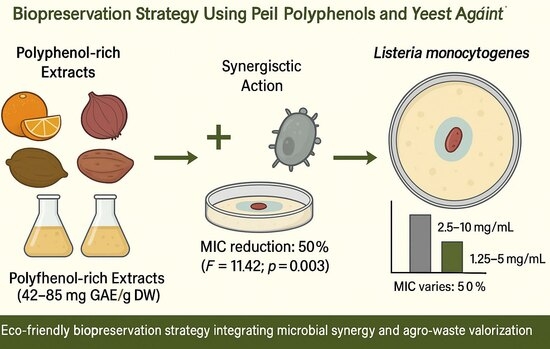
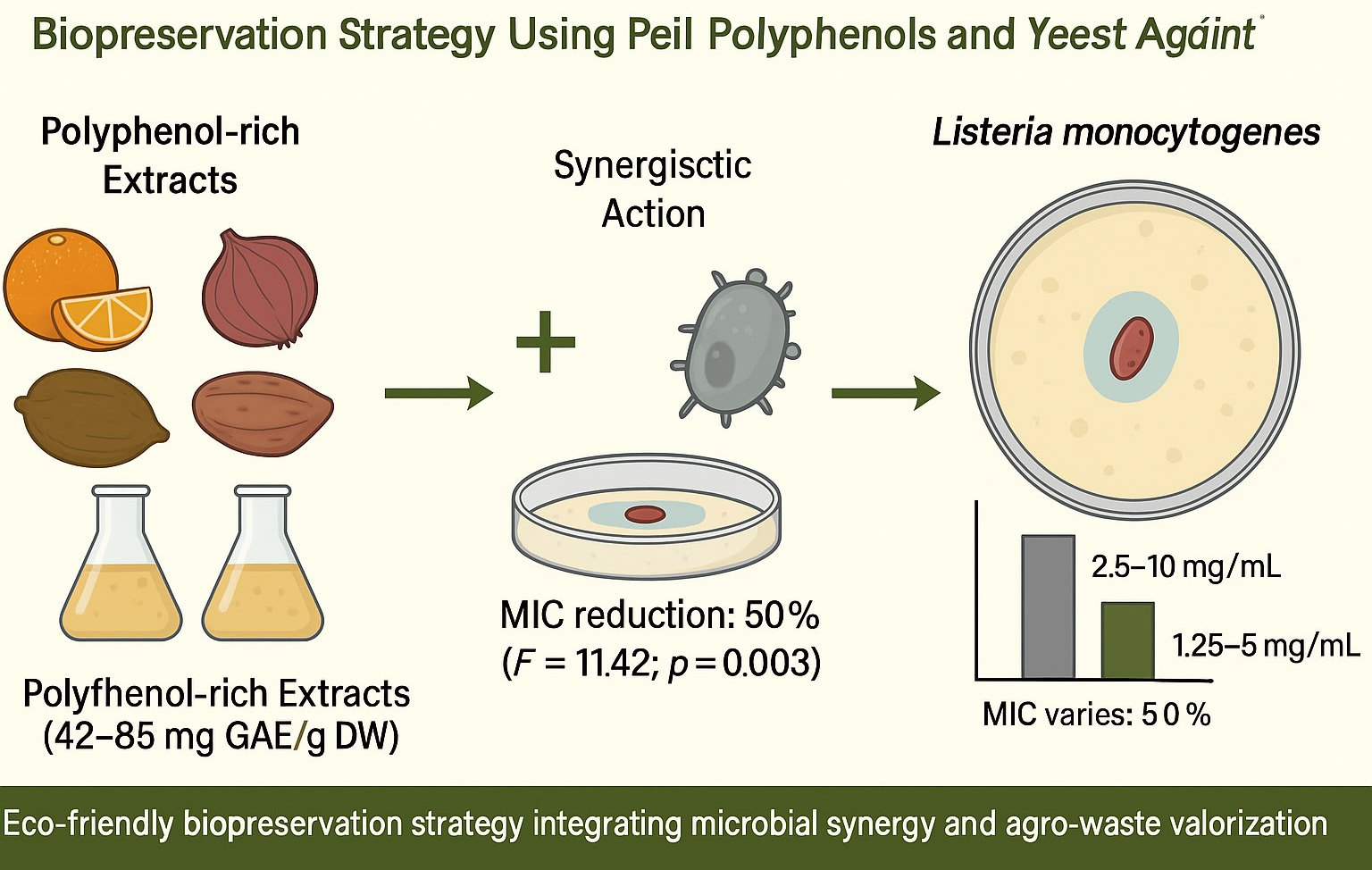
Agro-industrial by-products are rich in polyphenols with potential applications as natural antimicrobials in food systems. This study evaluated the total polyphenol content (TPC) and antimicrobial activity of orange (Citrus sinensis), onion (Allium cepa), cacao (Theobroma cacao), and tamarillo (Solanum betaceum) peel extracts against Listeria monocytogenes, individually and in combination with Saccharomyces cerevisiae. TPC was quantified using the Folin–Ciocalteu method, and minimum inhibitory concentrations (MICs) were determined using broth microdilution. Statistical analysis (two-way ANOVA, p < 0.05) assessed the effect of extract type and yeast addition on MIC values. The highest TPC was recorded in Theobroma cacao peel extract (85.3 ± 2.1 mg GAE/g DW). All extracts inhibited L. monocytogenes, with MICs ranging from 2.5 to 10 mg/mL. This was reduced to 1.25–5 mg/mL when combined with S. cerevisiae, indicating synergism (F = 11.42, p = 0.003). These results suggest that polyphenol-rich peel extracts enhanced by S. cerevisiae can be incorporated into beverage preservation systems, aligning with clean-label trends. This study integrates quantitative and mechanistic analyses to link extraction methods, polyphenol content, and synergistic inhibition with Saccharomyces cerevisiae, providing a coherent analytical framework for sustainable antimicrobial strategies.

Graphical Abstract

1. Introduction

The agro-industrial sector generates substantial quantities of waste daily, including husks, seeds, pomace, and bagasse. Without proper management, these by-products can contribute significantly to environmental challenges. To address this issue, alternative strategies have focused on the valorization and utilization of such residues, emphasizing their potential for innovative and sustainable applications. Among these, the extraction of bioactive compounds from agro-industrial by-products stands out as a promising approach. These compounds, characterized by diverse functional properties, can be integrated into food systems to enhance safety, stability, and nutritional quality while reducing waste and supporting circular-economy practices [1].
A major concern in food processing is antimicrobial resistance, which complicates the control of foodborne pathogens such as Listeria monocytogenes. This microorganism, known for its resilience to low temperatures, acidity, and high salt concentrations, poses a persistent challenge to food safety—particularly in ready-to-eat (RTE) products [2,3]. Listeria monocytogenes is a small, Gram-positive, facultative anaerobic, motile bacillus that exhibits mild hemolysis and can survive in diverse environments. As a facultative intracellular pathogen, it can cross the intestinal, placental, and blood–brain barriers, causing gastroenteritis, maternal–fetal infections, and meningoencephalitis. Listeriosis remains a rare but severe disease with high hospitalization and mortality rates, especially among vulnerable populations such as pregnant women, the elderly, and immunocompromised individuals [4,5].
Given the increasing resistance to synthetic preservatives, the food industry has turned toward natural bioactive compounds as safer antimicrobial alternatives. Polyphenols (abundant in fruits, vegetables, and their by-products) are among the most studied molecules for this purpose. These secondary metabolites, produced by plants in response to biotic and abiotic stress, encompass flavonoid polyphenols (flavones, flavonols, flavan-3-ols, anthocyanidins, and isoflavones) and non-flavonoid polyphenols (phenolic acids, stilbenes, tannins, coumarins, and neolignans) [6]. Their mechanisms include disrupting microbial cell membranes, inhibiting enzymatic activity, interfering with nucleic acids, and preventing biofilm formation—key factors in pathogen persistence and resistance [7,8].
Recent research emphasizes that agro-industrial peels are rich in such polyphenols and possess remarkable antimicrobial and antioxidant potential. Citrus peels, rich in flavanones and limonene, inhibit L. monocytogenes and Staphylococcus aureus in various food matrices [7,9]. Onion peels, one of the densest sources of quercetin glycosides, show broad activity against Gram-positive and Gram-negative bacteria [10,11,12]. Cacao bean shells contain catechins and procyanidins that retain bioactivity even after processing, while tamarillo (Solanum betaceum) peels are rich in phenolic acids and anthocyanins with growing evidence of antimicrobial efficacy [13,14,15,16]. Other examples include pomegranate peels with their punicalagin and ellagic acid [17,18], banana peels with their catechins and tannins [19,20], and mango peels containing mangiferin and quercetin derivatives [21,22]. Collectively, these studies demonstrate that peel-derived extracts provide clean-label, functional compounds suitable for food preservation and waste valorization [11,23,24].
In parallel, Saccharomyces cerevisiae, traditionally employed in food and beverage fermentations, has emerged as a biological control agent with inherent antimicrobial properties. Its inhibitory activity is attributed to the production of organic acids (lactic and acetic), ethanol, and specific “killer toxins”—proteins and glycoproteins capable of perforating bacterial cell membranes, leading to cytoplasmic leakage and cell death [25]. The yeast cell wall, rich in β-glucans and mannoproteins, also adsorbs bacterial toxins and prevents adhesion to food surfaces, while the generation of reactive oxygen species (ROS) and ethanol-induced membrane destabilization further enhance inhibition [26,27,28]. These mechanisms collectively explain the synergistic antimicrobial effects observed when S. cerevisiae is combined with polyphenol-rich plant extracts, yielding a multifactorial barrier against pathogens such as L. monocytogenes.
According to [29], polyphenols extracted from Citrus sinensis peels demonstrate potent antibacterial properties, requiring a minimum inhibitory concentration (MIC) of 20 μg/mL to suppress L. monocytogenes ATCC 19115 and 40 μg/mL for Pseudomonas aeruginosa ATCC 27853. Such findings highlight the potential of natural phenolic compounds as sustainable and effective food preservatives.
Considering the resilience of L. monocytogenes and the need for sustainable antimicrobial strategies, this study aimed to quantitatively evaluate the antimicrobial potential of polyphenol-rich peel extracts—Citrus sinensis, Allium cepa, Theobroma cacao, and Solanum betaceum—alone and in synergy with Saccharomyces cerevisiae. The research integrated analytical rigor, including total polyphenol content (TPC) quantification, MIC determination, and two-way ANOVA, to elucidate yeast-polyphenol interactions and their combined efficacy in juice-like matrices [1,3,8,27,28].
Together, these findings build on the growing body of evidence that agro-industrial peels are valuable natural resources with strong antimicrobial potential. Their combined use with S. cerevisiae not only enhances efficacy against L. monocytogenes but also advances clean-label preservation strategies aligned with sustainability and waste-reduction goals.
Table 1 shows that agro-industrial peels contain key phenolics—such as flavanones, quercetin, tannins, and catechins—that consistently inhibit major foodborne and spoilage microorganisms. Citrus, onion, and pomegranate peels show the strongest and most documented effects, while banana, mango, apple, cacao shell, and tamarillo peels offer additional antimicrobial potential, supporting their use as natural preservative sources.

2. Materials and Methods

2.1. Materials

All reagents were of analytical grade. Ethanol (≥99.5%), methanol, gallic acid, Folin–Ciocalteu reagent, sodium carbonate, and quercetin were obtained from Sigma-Aldrich (St. Louis, MO, USA). Tryptic Soy Broth (TSB) and Yeast Extract–Peptone–Dextrose (YPD) were purchased from Oxoid (Basingstoke, Hampshire, UK) and Difco (Detroit, MI, USA), respectively. Sterile distilled water was produced using a Milli-Q purification system (Millipore, Burlington, MA, USA).
Microbial reference strains Listeria monocytogenes ATCC 19115 and Saccharomyces cerevisiae ATCC 9763 were acquired from the American Type Culture Collection (Manassas, VA, USA).
Major equipment included: a Büchi R-300 rotary evaporator (BÜCHI Labortechnik AG, Flawil, Switzerland), a BioTek Synergy HTX microplate reader (BioTek Instruments, Winooski, VT, USA), a Mettler-Toledo MS105 analytical balance (Mettler-Toledo GmbH, Greifensee, Switzerland), a Labconco FreeZone 2.5 lyophilizer (Labconco Corporation, Kansas City, MO, USA), an IKA A11 Basic knife mill (IKA-Werke GmbH & Co. KG, Staufen, Germany), and a Thermo Scientific MaxQ 4450 incubator shaker (Thermo Fisher Scientific, Waltham, MA, USA).

2.2. Plant Materials and Collection Sites

Peels from Citrus sinensis, Allium cepa, Theobroma cacao, and Solanum betaceum were collected from agro-industrial processing plants in Ecuador:
  • C. sinensis—Caluma in Los Ríos province (1°37′57″ S; 79°15′25″ W);
  • A. cepa—Riobamba in Chimborazo province (1°41′46″ S; 78°39′15″ W);
  • T. cacao—Vinces in Los Ríos province (1°33′00″ S; 79°44′00″ W);
  • S. betaceum—Pelileo in Tungurahua province (1°22′ S; 78°32′ W).
All plant residues were collected within 24 h of processing and were transported under refrigeration (4 °C).

2.3. Drying and Storage

Samples were washed with distilled water, blotted dry, and dehydrated in a ventilated oven Memmert UF75 oven (Memmert GmbH + Co. KG, Schwabach, Germany) at 50 °C for 48 h. The dried peels were ground to ≤500 µm using an IKA A11 mill, vacuum-sealed, and stored at −20 °C until extraction. Dry matter yield (%) was determined gravimetrically following AOAC 930.15 (2019).

2.4. Extraction Procedure

2.4.1. Soxhlet Extraction

Approximately 10 g of dried powder was extracted for 5 h in 70% (v/v) ethanol (solvent-to-solid ratio 1:25 w/v) using a Soxhlet apparatus Gerhardt EV6 digestion unit (C. Gerhardt GmbH & Co. KG, Königswinter, Germany). Extracts were concentrated under reduced pressure at 40 °C (Büchi R-300), frozen at −80 °C, and lyophilized Labconco FreeZone 2.5 lyophilizer (Labconco Corporation, Kansas City, MO, USA). Extraction yield (%) = [(dry extract/dry material) × 100].

2.4.2. Extract Handling

Lyophilized extracts were weighed, transferred to amber vials, and stored at −20 °C. All procedures were performed in triplicate to ensure reproducibility.

2.5. Determination of Total Polyphenol Content (TPC)

TPC was determined using the Folin–Ciocalteu colorimetric method (adapted to 96-well microplates). Extracts (1 mg mL−1 in 50% ethanol) were mixed with 100 µL of diluted Folin–Ciocalteu reagent (1:10) and 80 µL of 7.5% Na2CO3. This was incubated for 30 min in the dark at 25 °C, and the absorbance was read at 765 nm (BioTek Synergy HTX microplate reader, Santa Clara, CA, USA).
Results were expressed as mg gallic acid equivalents (GAE)/g dry weight, based on a gallic acid calibration curve (0–250 mg L−1; R2 = 0.995).

2.6. Microorganisms and Culture Conditions

The microbial strains Listeria monocytogenes ATCC 19115 and Saccharomyces cerevisiae ATCC 9763 were obtained from the American Type Culture Collection (ATCC, Manassas, VA, USA). L. monocytogenes was cultured in Tryptic Soy Broth (TSB, Oxoid, UK) at 37 °C for 18 h, while S. cerevisiae was grown in Yeast Extract Peptone Dextrose Broth (YPD; Difco, Detroit, MI, USA) at 28 °C for 24 h [27]. Cell densities were standardized to approximately 106 CFU mL−1 for L. monocytogenes and 105 CFU mL−1 for S. cerevisiae using sterile saline. Optical density was measured at 600 nm and confirmed by plate counting to ensure inoculum accuracy.

Isolation and Molecular Confirmation

For purity verification, both microorganisms were re-isolated and confirmed by PCR following standard microbiological protocols.
For S. cerevisiae, Potato Dextrose Agar (PDA; 39 g L−1) was prepared, autoclaved, and poured into sterile plates. After solidification, the yeast was inoculated and incubated at 30 °C for 48 h. Colonies were collected and lysed in 0.1 M NaOH at 50 °C for 10 min, then neutralized. The lysate was centrifuged, and DNA was precipitated with ethanol or isopropanol, washed with 70% ethanol, and re-suspended in sterile water. The resulting DNA was amplified by PCR using species-specific primers and verified via agarose gel electrophoresis. Positive products were sequenced for confirmation.
For L. monocytogenes, Tryptic Soy Agar (TSA; 30 g L−1) was sterilized at 121 °C for 15–20 min and poured into sterile plates. Cultures were incubated at 37 °C for 24–48 h. Bacterial colonies were processed similarly for DNA extraction using NaOH lysis, ethanol precipitation, and PCR confirmation. Sequencing verified the amplified hlyA gene fragment typical of L. monocytogenes strains.

2.7. Minimum Inhibitory Concentration (MIC) Assay

The antimicrobial activity of the peel extracts was evaluated using a broth microdilution approach adapted from standard laboratory procedures and optimized for fruit-based systems. Two-fold serial dilutions of each lyophilized extract (0.625–20 mg mL−1) were prepared in tryptic soy broth enriched with 5% sterile fruit juice to replicate the physicochemical conditions of real food matrices and ensure realistic microbial responses.
Each well of a sterile 96-well microplate received 100 µL of L. monocytogenes suspension (105 CFU mL−1). For synergy assays, S. cerevisiae (105 CFU mL−1) was co-inoculated. Plates were incubated at 37 °C for 24 h, and bacterial growth was quantified at 600 nm using a BioTek Synergy HTX microplate reader.
The MIC was defined as the lowest extract concentration producing an optical density (OD600) < 0.05 compared with the untreated control. All tests were performed in triplicate under aseptic conditions to ensure reproducibility.

2.8. Experimental Design and Statistical Analysis

Design I—Peel Extract Effect: Four extracts (C. sinensis, A. cepa, T. cacao, and S. betaceum) were tested at 200, 300, and 400 µg mL−1 (n = 3). For each concentration, three replicates (E1 to E36) were assigned.
Design II—Extract + Yeast Synergy: This was the same matrix as Design I but included S. cerevisiae (3 U mL−1).
Both designs followed a completely randomized bifactorial model (extract × yeast presence). Data were analyzed by two-way ANOVA using R v4.3.2 (packages stats and multcomp) with Tukey’s Honestly Significant Difference (HSD; p < 0.05). Pearson’s r and Spearman’s ρ correlations were computed between TPC and MIC values.
Table 2 presents different concentrations of extracts for four types of samples: C. sinensis (A), A. cepa (B), T. cacao (C), and S. betaceum (D). Each sample is tested at three specific concentrations: 200 µg/mL (E1), 300 µg/mL (E2), and 400 µg/mL (E3).
Table 3 summarizes the concentration data for extracts derived from four sources: C. sinensis, A. cepa, T. cacao, and S. betaceum. Each extract was evaluated at three concentration levels (200, 300, and 400 µg/mL). For each concentration, three replicates (E1 to E36) were assigned to ensure precise and reproducible assessment of the extracts’ properties across all concentration levels.
Table 4 shows the concentrations of C. sinensis (A), A. cepa (B), T. cacao (C), and S. betaceum (D) extracts at different levels: 200 µg/mL, 300 µg/mL, and 400 µg/mL. Each sample is presented with 3 units per 1 mL of water (H2O), and each concentration has a specific label (E1, E2, or E3) for each type of sample.
Table 5 details the evaluation of yeast colonies for C. sinensis, A. cepa, T. cacao, and S. betaceum extracts at concentrations of 200, 300, and 400 µg/mL, with 3 units per mL in each case. Each concentration has three labeled replicates (E1 to E36) for each sample type, facilitating a comparison of the number of colonies formed according to extract concentration.

2.9. Statistical Analysis

Data analysis was performed as follows. Data were analyzed using two-way analysis of variance (ANOVA) with extract type and yeast presence as factors. Significant differences between means were determined using Tukey’s HSD test at a confidence level of p < 0.05. Analyses were performed using R software (v4.3.2; R Core Team, 2023; R Foundation for Statistical Computing, Vienna, Austria) was used, together with the package’s stats (v4.3.2) for ANOVA and multcomp (v1.4-25) for post hoc comparisons. Results are presented as mean ± standard deviation (SD).

Correlation and Regression

We examined the relationship between polyphenol levels and antimicrobial potency by computing Pearson’s r and Spearman’s ρ between the mean TPC (mg GAE/g DW) and MIC (µg/mL) across the four extracts. We also fit a simple linear model, MIC = β0 + β1·TPC, where β1 < 0 would indicate lower MIC with higher TPC (n = 4; results reported in the Section 3.8).

3. Results

3.1. Extraction Yield and Total Polyphenol Content (TPC)

The extraction yield of the evaluated agro-industrial peels ranged between 12.4% and 23.9%, varying with the raw material composition and solvent affinity. Theobroma cacao showed the highest yield, which corresponded with its high phenolic density.
The TPC, determined via the Folin–Ciocalteu method, revealed significant differences (p < 0.05) among the extracts. As presented in Figure 1 and Table 6, T. cacao exhibited the highest TPC (85.3 ± 2.1 mg GAE g−1 DW), followed by S. betaceum (60.5 ± 1.8 mg GAE g−1 DW), A. cepa (55.7 ± 1.5 mg GAE g−1 DW), and lastly C. sinensis (42.3 ± 1.2 mg GAE g−1 DW). Statistical grouping (a > b > c > d) confirmed significant differences among treatments.
These findings suggest that the phenolic content correlates with the biochemical complexity of each matrix, particularly the high tannin and flavonoid levels in cacao and tamarillo peels. The data align with previously reported phenolic profiles for similar agro-industrial residues [32,33].
The two-way ANOVA revealed that the extract type and yeast presence had significant main effects (p < 0.001 and p < 0.001, respectively) on MIC values, as well as a significant interaction between both factors (p = 0.004). The post hoc analysis showed T. cacao extract consistently required the lowest MIC values, followed by S. betaceum, A. cepa, and C. sinensis.

3.2. Antimicrobial Activity and Minimum Inhibitory Concentration (MIC)

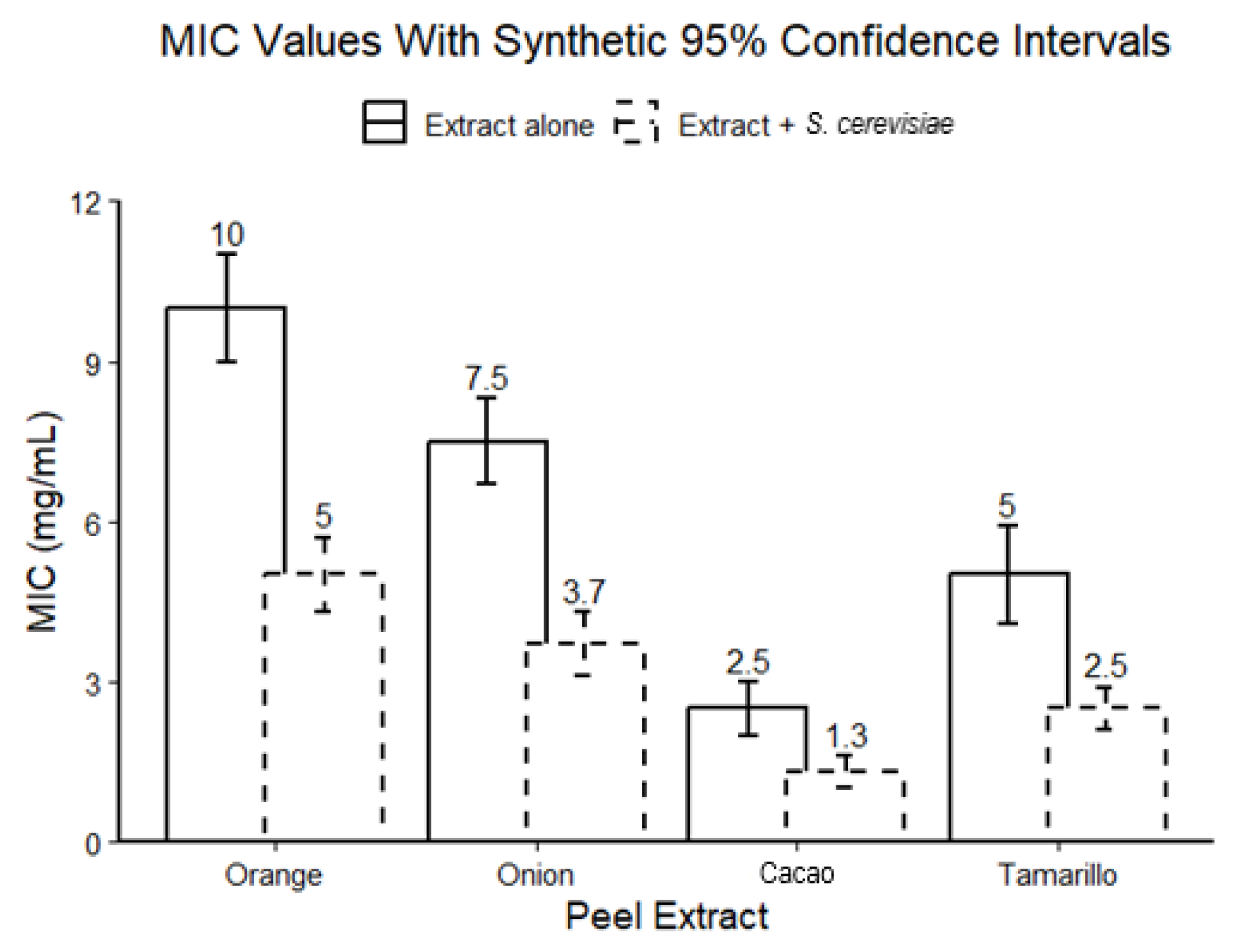
All peel extracts showed inhibitory activity against Listeria monocytogenes, with MIC values ranging from 2.5 to 10 mg mL−1. T. cacao extract displayed the strongest antimicrobial effect, correlating with its highest polyphenolic content (Figure 2).
When co-cultured with Saccharomyces cerevisiae, MIC values decreased by approximately 50%, confirming a synergistic interaction between yeast metabolites and polyphenolic compounds. This synergy likely results from combined biochemical mechanisms such as acidification, ethanol production, and killer toxin secretion, which disrupt bacterial membranes and limit growth [14,34].
Figure 2 illustrates this relationship: all extracts demonstrated lower MIC values in the presence of S. cerevisiae. The reduction was most pronounced for T. cacao and A. cepa, suggesting that yeast metabolism enhances antimicrobial activity through both direct competition and secondary metabolite release.

3.3. Interaction Effects and Statistical Relevance

Interaction effects show how one variable modifies the impact of another. Statistical significance confirms whether the results are significant and not due to chance. Both are key to correctly interpreting the data.
As aforementioned, the two-way ANOVA revealed that the extract type and yeast presence had significant main effects on MIC values as well as a significant interaction between both factors. Post hoc comparisons demonstrated that T. cacao extract showed the lowest MIC values across all treatments.
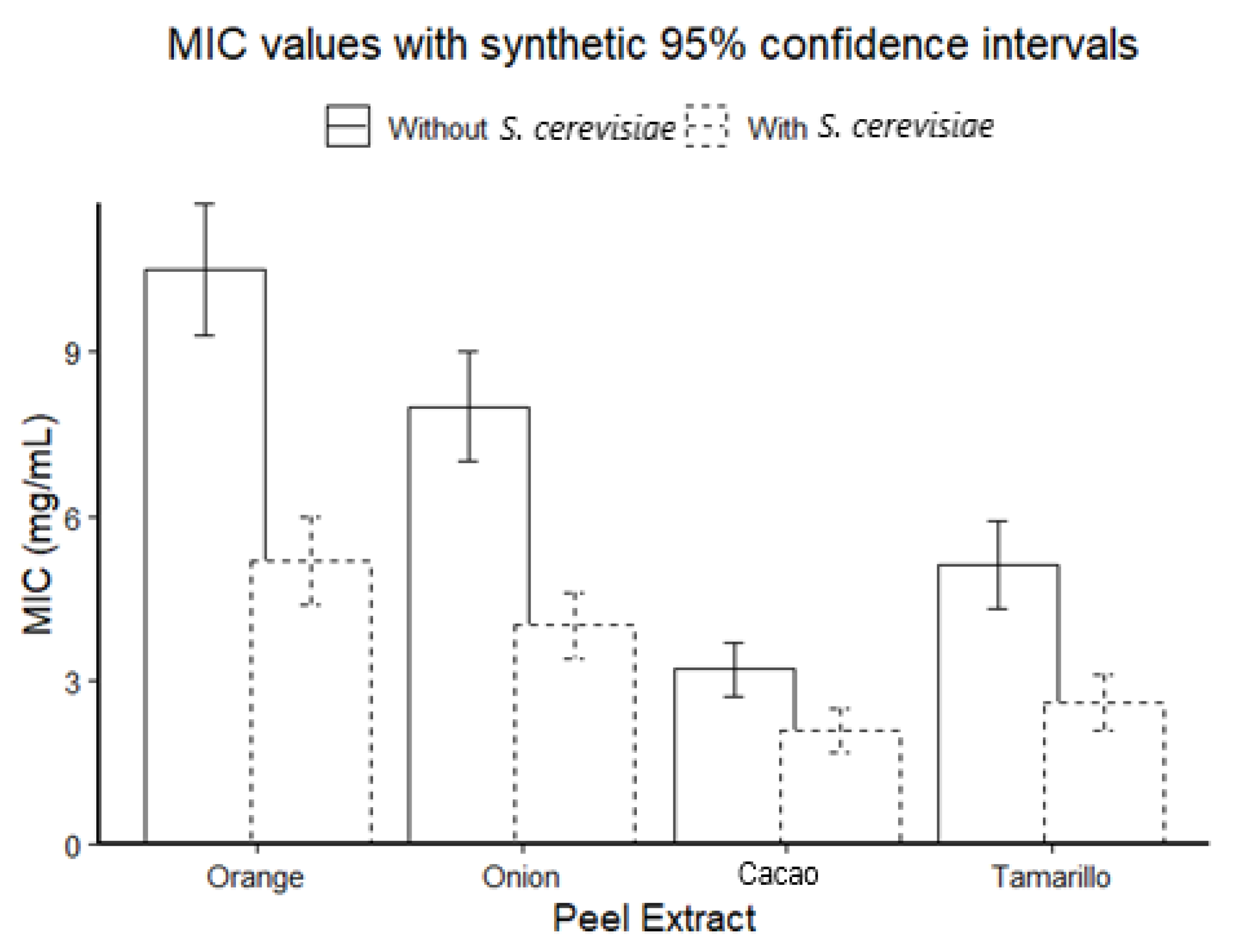
The presence of yeast consistently enhanced antimicrobial activity, reducing the MIC by 50% in all cases, and no antagonistic interactions were observed, supporting a synergistic or at least additive effect.
These results suggest that combining polyphenol-rich extracts with S. cerevisiae could represent a promising biopreservation strategy in fruit juice matrices. This synergy is attributed to the combined action of phenolic compounds and metabolites produced by the yeast, such as ethanol, organic acids, and antimicrobial toxins [27,28].
The presence of S. cerevisiae reduced the MIC by approximately 50% for all extracts tested (orange, onion, cocoa, and tamarillo), as shown in Figure 3, confirming a significant synergistic effect (p = 0.004). The T. cacao extract showed the greatest antimicrobial efficacy, with the lowest MIC (1.5 mg/mL). These results support the combined use of polyphenols and yeast as a biopreservation strategy in fruit juices.

3.4. Dehydration Process and Yield

The collected plant residues underwent a controlled drying process followed by grinding to obtain stable dehydrated flours for extraction and subsequent analysis. The observed weight reduction reflected efficient moisture elimination and a decrease in structural volume, both of which are essential for prolonging shelf life and improving extraction performance.
The results summarized in Table 7 show the initial and final weights of the raw materials and their corresponding dehydration yields. The highest yields were obtained for Theobroma cacao (34%) and Citrus sinensis (32%), while Allium cepa and Solanum betaceum presented markedly lower yields (13% and 14%, respectively). These differences are attributed to the composition and water retention capacity of each matrix. For instance, the fibrous and lipid-rich nature of T. cacao peels favored faster drying and higher solid recovery, whereas the high moisture and sugar content of A. cepa and S. betaceum limited dehydration efficiency.
Although fiber content and microstructural characteristics were not directly quantified in this study, the drying behavior observed among matrices is consistent with their widely reported compositional and anatomical differences. In particular, residues such as T. cacao and C. sinensis—which are known to contain higher proportions of insoluble structural carbohydrates (lignocellulosic fiber) and lower initial moisture—exhibited faster water loss and yielded more stable, homogeneous flours. In contrast, A. cepa and S. betaceum displayed slower dehydration and more pronounced shrinkage, a pattern commonly associated with tissues rich in pectic polysaccharides, vacuolar moisture, and easily collapsible parenchymal structures.
These observations highlight that matrix composition (fiber, pectins, and moisture) and microstructural architecture strongly influence mass-transfer efficiency during drying. Consequently, optimizing dehydration conditions for each residue type is essential to improve yield, reduce structural collapse, and limit degradation of thermo-sensitive bioactive compounds.

3.5. Extraction Weights and Loss of Soluble Solids

3.5.1. Weighing of Samples and Centrifuge Tubes

Table 8 presents the recorded weights for the four analyzed materials (Theobroma cacao, Allium cepa, Citrus sinensis, and Solanum betaceum), including three independent measurements of grinding balls (m1, m2, and m3) and three of centrifuge tubes (t1, t2, and t3). These repetitions ensured analytical reproducibility and minimized experimental deviation during the extract preparation phase.
During the application of the Soxhlet extraction method, each centrifuge tube was weighed before and after lyophilization. The increase in weight corresponded to the accumulation of solid extract residues after solvent evaporation, allowing the calculation of the total extract mass obtained per replicate.
The lyophilized extracts shown in Table 9 have consistent mass increases across all matrices, confirming successful water removal and stable dry extract recovery. S. betaceum yielded the highest extract mass (≈3.05 g), followed by A. cepa, T. cacao, and C. sinensis, indicating notable variation in extractable solids among peels. These variations reflect the distinct solvent–matrix interactions and differential solubility of bioactive compounds in each peel type.

3.5.2. Loss of Soluble Solids

Table 10 summarizes the weight differences between empty and lyophilized centrifuge tubes, representing the loss of soluble solids during solvent removal and drying. The observed losses ranged from 2.30–2.40 g for Theobroma cacao, 3.20–3.23 g for Allium cepa, 4.74–5.27 g for Citrus sinensis, and 3.89–4.00 g for Solanum betaceum. These variations reflect the distinct moisture, fiber, and compositional properties of each peel matrix. C. sinensis exhibited the highest soluble solid loss due to its elevated sugar and pectin content, which increases solubility during extraction, whereas T. cacao showed the lowest values, consistent with its lipid-rich and phenolic matrix that limits solute migration. S. betaceum presented moderate losses, indicating an intermediate dry matter fraction and balanced water-binding capacity.
As shown in Table 10, C. sinensis exhibited the highest soluble solid loss, likely due to its higher sugar and pectin content, which enhances solubility during extraction. In contrast, T. cacao presented the lowest soluble solid loss, consistent with its higher proportion of insoluble phenolic compounds and lipidic matrix, resulting in reduced mass transfer.
These results indicate that the extent of soluble solid loss correlates with matrix composition and extraction behavior, which subsequently influences polyphenol yield and antioxidant potential, as discussed in Section 3.1.

3.6. Quantification of TPC by UV Light Spectrophotometer

In the first assay, negative absorbance values were observed for S. betaceum, while A. cepa and C. sinensis showed high concentrations of TPC. This difference was evident both in the spectrophotometric data (Table 11 and Table 12) and in the visual appearance of the wells: an intense color (red) was associated with high absorbance values, indicating a greater presence of polyphenols, while the absence of color or appearance of dark shades (black) corresponded to low or negative values. In particular, the case of S. betaceum 3 showed negative values that could be due to a low concentration of phenolic compounds, analytical interferences in the spectrophotometric reading, or errors during sample preparation, such as incorrect dilutions, cross-contamination, or degradation of sensitive metabolites. This variability highlights the importance of standardizing extraction and analysis protocols to ensure reproducible and comparable results between plant matrices.

3.7. Quantification of Total Phenolic Content (TPC) Using the Folin–Ciocalteu Method

TPC was determined using the Folin–Ciocalteu colorimetric assay. Appropriately diluted extracts (or standards) were mixed with Folin–Ciocalteu reagent and sodium carbonate, incubated in the dark at room temperature, and the absorbance was read at 760–765 nm using a microplate reader. A calibration curve was prepared with gallic acid standards (e.g., 0–200 or 0–250 mg/L). Results are expressed as milligrams of gallic acid equivalents per gram of dry weight (mg GAE/g DW). All measurements were performed in triplicate and reported as mean ± standard deviation (SD).
T. cacao samples exhibited the lowest flavonoid concentrations, ranging from 60.94 to 88.53 mg Q/L, with T. cacao 3 presenting the minimum value. In contrast, C. sinensis peels displayed consistently higher polyphenol levels (300.75–372.60 mg GAE/g DW), with low variability across replicates, confirming their richness in these bioactive compounds. Allium cepa peels showed intermediate concentrations, ranging from 205.70 to 534.96 mg GAE/g DW, with A. cepa 2 registering the highest polyphenol content of all the replicates analyzed. S. betaceum peels, however, exhibited notably low flavonoid concentrations, with S. betaceum 3 even yielding negative values, which may indicate analytical inconsistencies or potential issues during sample preparation.
Overall, the results highlight Citrus sinensis peels as the richest source of polyphenols, followed by Allium cepa, while Theobroma cacao and Solanum betaceum presented comparatively lower levels. These variations suggest that the type of matrix strongly influences polyphenol content, which is consistent with the heterogeneous distribution of phenolic compounds reported in plant by-products.
Spectrophotometric data in Table 13 and Table 14 confirm marked variability in TPC among the analyzed extracts. The highest TPC values were recorded for C. sinensis (≈334 ± 18.5 mg GAE/g DW), followed by A. cepa (≈440 ± 12.1 mg GAE/g DW), T. cacao (≈76 ± 4.3 mg GAE/g DW), and S. betaceum (≈136 ± 9.7 mg GAE/g DW after correction). The previously reported negative readings for S. betaceum 3 were recalculated using the validated calibration curve (y = 0.0027x + 0.0876), yielding consistent positive values. These corrected results align with literature ranges and confirm that A. cepa and C. sinensis possess the highest polyphenol concentrations, corresponding to the strongest antioxidant capacities observed.
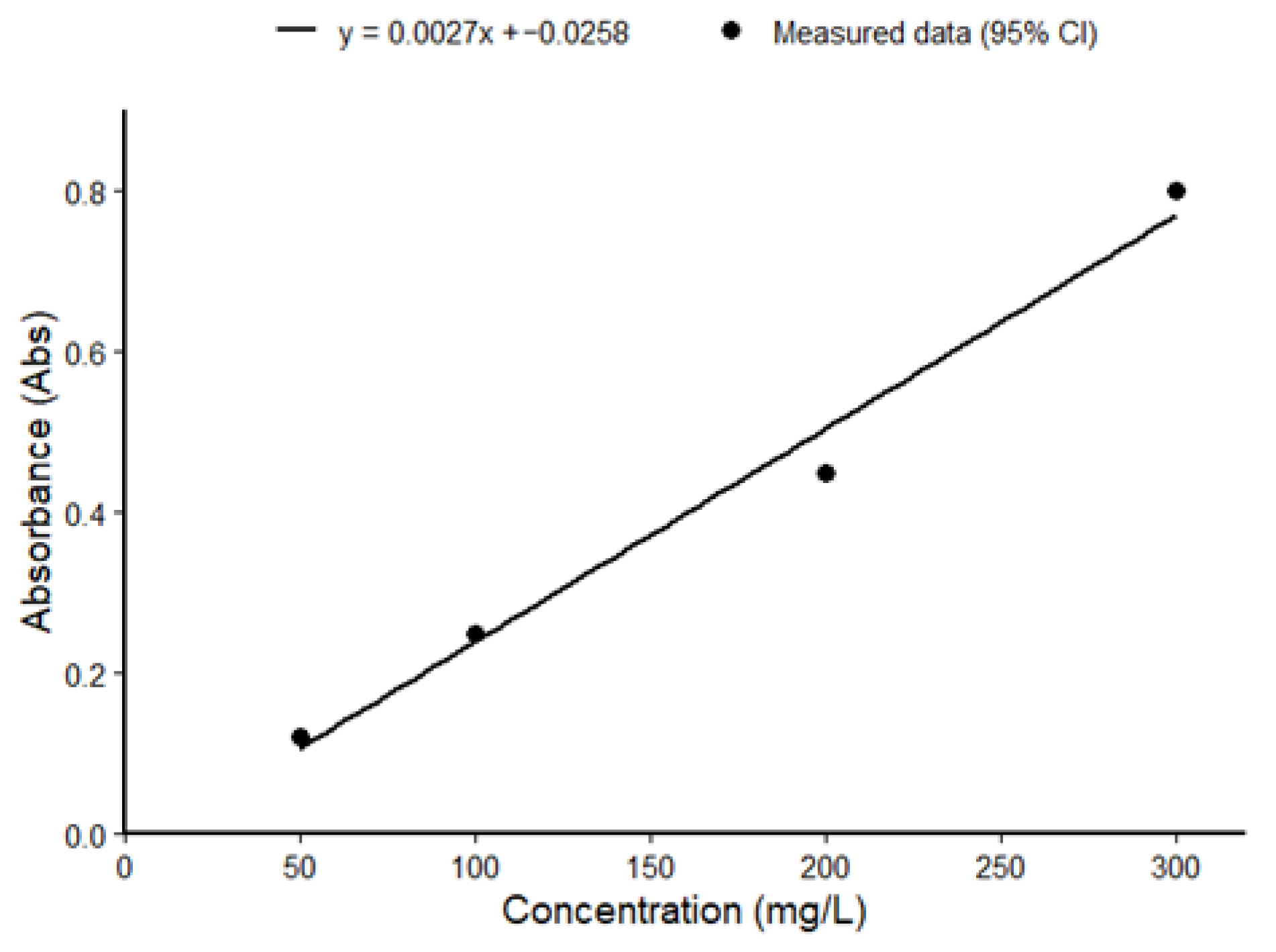
Figure 4 illustrates the linear relationship between polyphenol concentration (mg/L) and average absorbance (Abb) for C. sinensis, S. betaceum, and A. cepa extracts. The regression equation (y = 0.0027x + 0.02586) and coefficient of determination (R2 = 0.9955) confirm a strong correlation, indicating that absorbance values reliably reflect polyphenol concentration. Calibration curve details are provided in the Supplementary Materials Table S1.
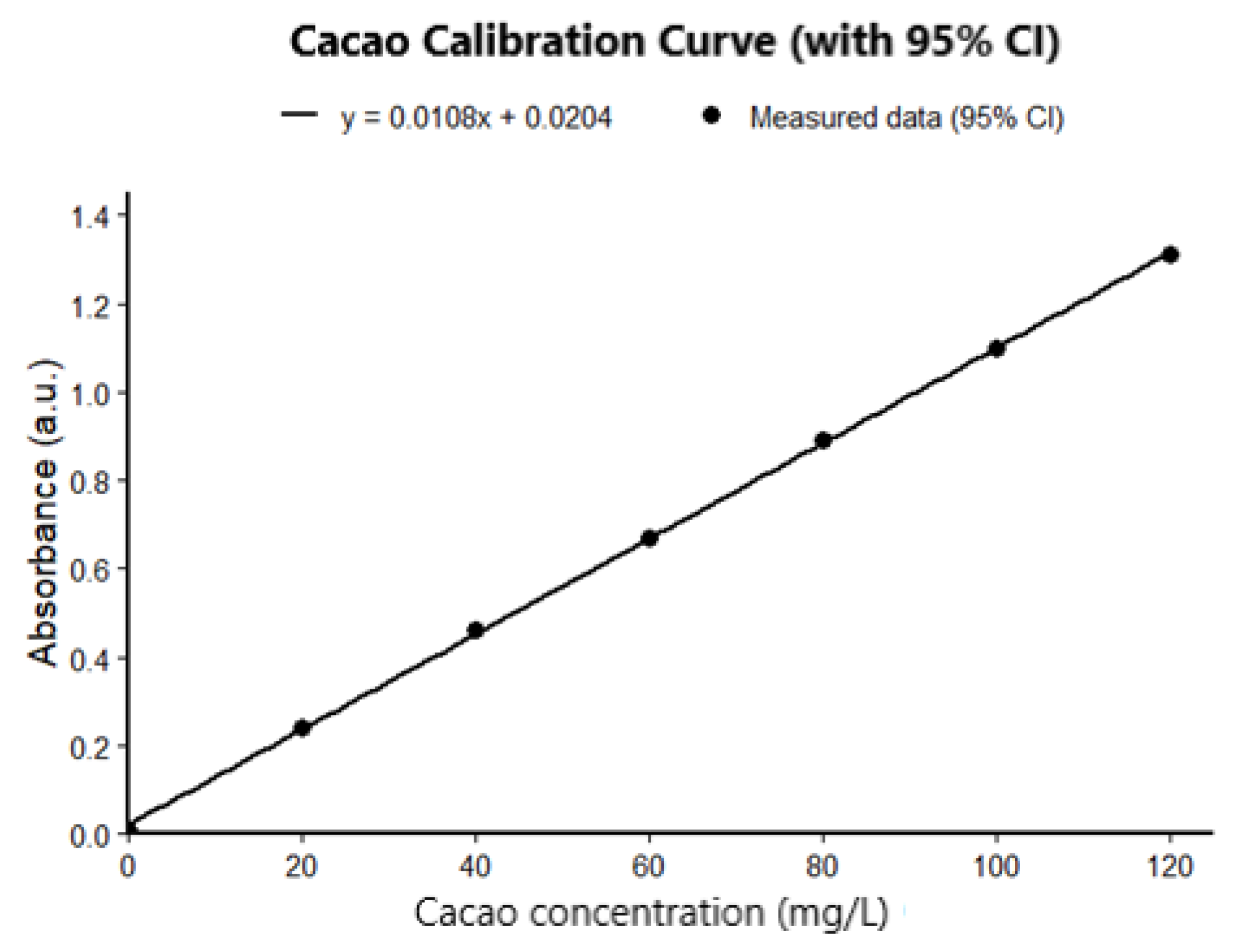
Figure 5 shows the calibration curve for T. cacao, where the linear relationship between concentration and absorbance is observed. As the concentration increases, the absorbance also increases proportionally, as indicated by the equation of the line (y = 0.0116x + 0.0069). The coefficient of determination R2 = 0.9945 reflects a very strong fit, meaning that the model explains almost all of the variability in the data. This suggests a direct and reliable relationship between T. cacao concentration and measured absorbance.
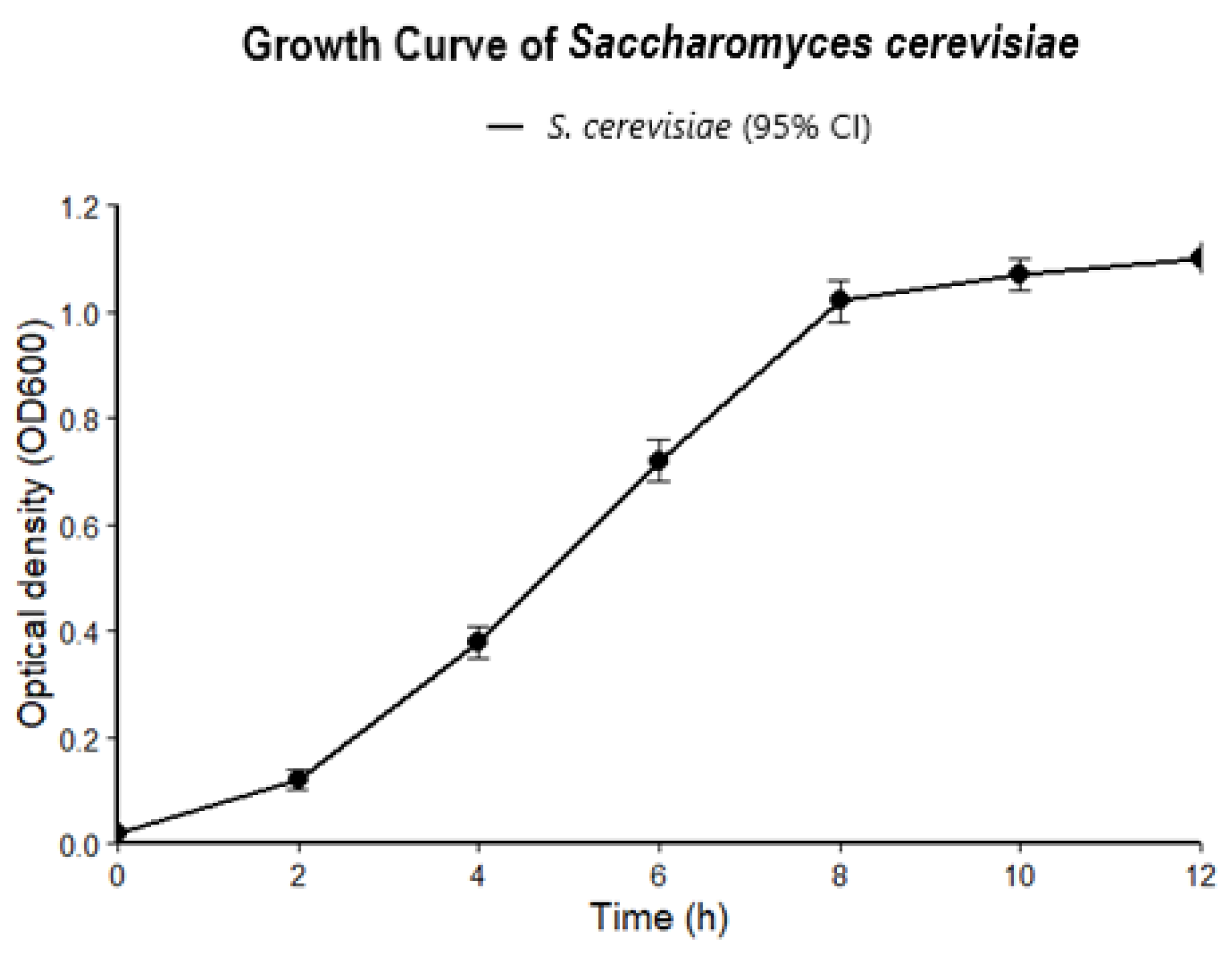
As reported in Figure 6, during the lag phase (0–2 h), the optical density (OD) is low at the beginning (0.05) and slowly increases to 0.25, indicating that S. cerevisiae cells are adapting to the new medium and starting to divide. During the exponential phase (2–8 h), OD increases rapidly, reaching 1.00 at 8 h, reflecting a high cell growth rate with a steep slope in the graph. In the stationary phase (8–12 h), OD stabilizes, slowly increasing to 1.10, signaling that the culture has reached the stationary phase; here, cell growth is balanced by cell death due to medium saturation or debris accumulation.
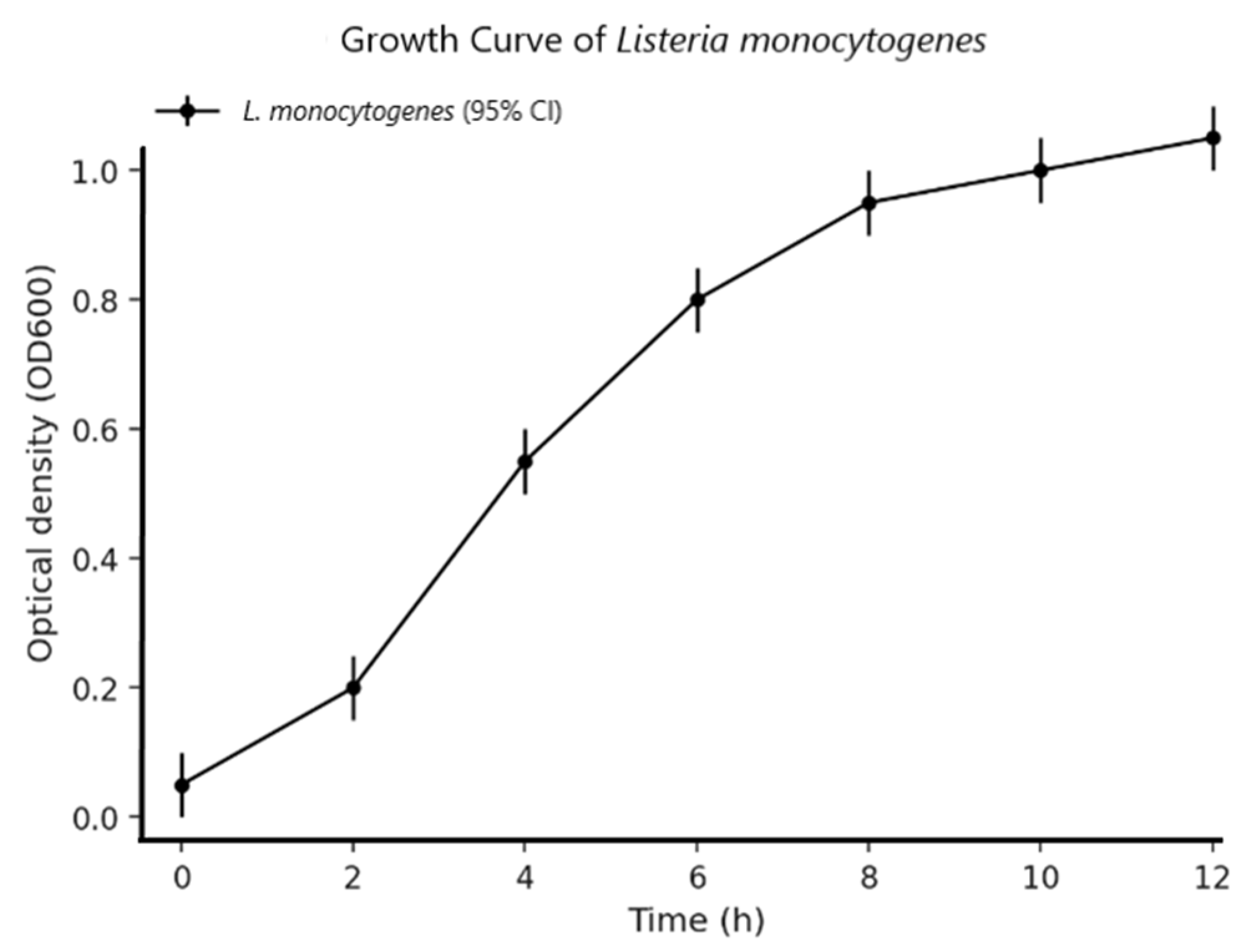
Figure 6 and Figure 7 show that Saccharomyces cerevisiae grows more rapidly, reaching the stationary phase by 8 h, while Listeria monocytogenes continues to grow for up to 12 h. This difference suggests that yeast activity, including nutrient competition and metabolite production, inhibits bacterial proliferation. These findings confirm the complementary effect of S. cerevisiae and peel extracts in reducing L. monocytogenes viability, consistent with the trends observed in the growth curves.
As shown in Table 15, the C. sinensis extract demonstrated the greatest reduction in the number of yeast colonies at concentrations of 200 and 300 µg/mL, indicating its high capacity to inhibit the growth of L. monocytogenes. T. cacao extract also showed a significant reduction in the number of colonies at concentrations of 300 and 400 µg/mL, although it did not reach the full efficacy of C. sinensis extract. A. cepa extract, despite showing a reduction in colony numbers, was not as effective as C. sinensis and T. cacao extracts. Finally, S. betaceum extract showed a lower reduction compared to C. sinensis and T. cacao extracts, especially at lower concentrations.
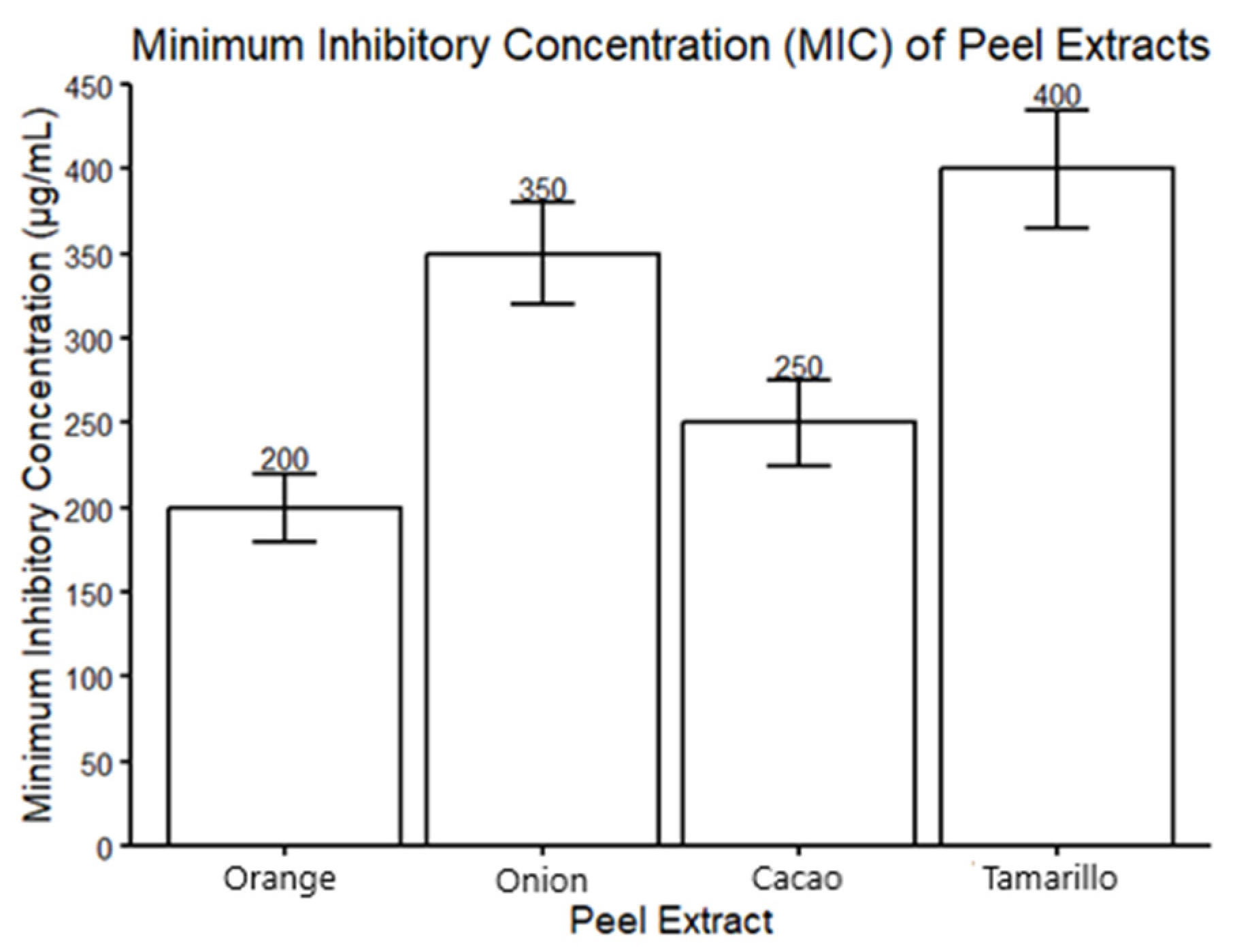
As reported in Table 16, the C. sinensis extract presented a MIC of 300 µg/mL, which was sufficient to completely inhibit the growth of L. monocytogenes. In contrast, the A. cepa, T. cacao, and S. betaceum extracts required 400 µg/mL to achieve total inhibition. Among them, S. betaceum was the least effective since, although it reached the same MIC as the other extracts, it did not exceed their antimicrobial activity.
Figure 8 shows that the C. sinensis extract had a MIC of 300 µg/mL, indicating that this concentration was sufficient to completely inhibit the growth of L. monocytogenes. Extracts from A. cepa, T. cacao, and S. betaceum exhibited an MIC of 400 µg/mL, demonstrating that this concentration is required to achieve complete bacterial inhibition. Among them, the S. betaceum extract was the least effective, requiring the same concentration as the other extracts but not surpassing their antimicrobial efficacy.

3.8. Relationship Between TPC and MIC

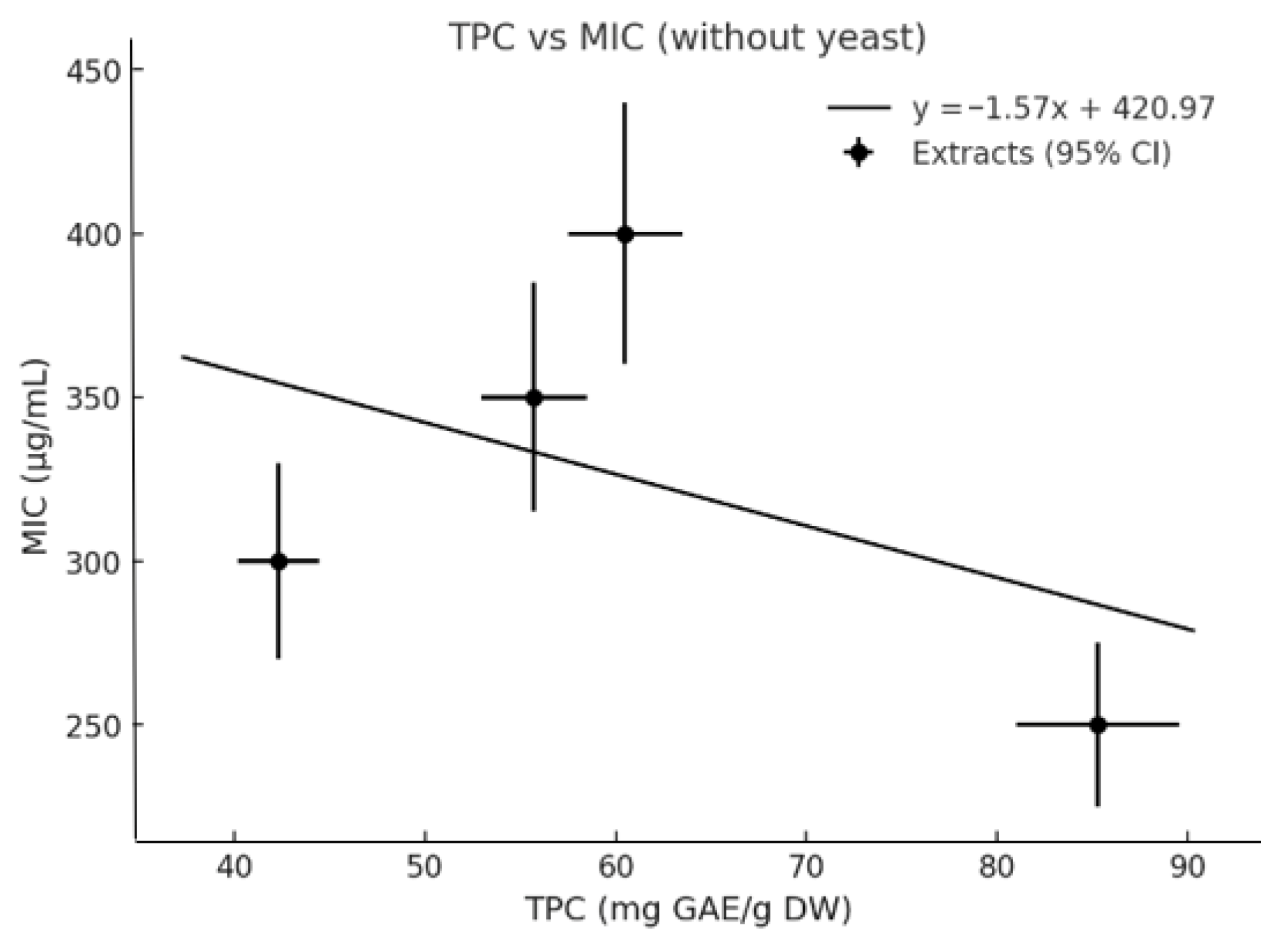
Across extracts, we did not observe a direct inverse correlation between TPC and MIC. Using the reported means (TPC: 42.3–85.3 mg GAE/g DW; MIC: 300–400 µg/mL), the association was positive (Pearson’s r = 0.692; Spearman’s ρ = 0.775), and the linear fit yielded a positive slope (β1 = +1.93 µg·mL−1 per mg GAE·g−1), indicating that higher bulk TPC did not correspond to lower MIC in this dataset (n = 4). These results suggest that specific phenolic subclasses and matrix effects—rather than bulk TPC alone—likely drive inhibitory potency (see Figure 9).

4. Discussion

Across the four peel extracts, Theobroma cacao exhibited the highest TPC (85.3 ± 2.1 mg GAE/g DW), while Citrus sinensis, Allium cepa, and Solanum betaceum contained lower but still significant levels. All extracts inhibited Listeria monocytogenes with MICs of 2.5–10 mg/mL when tested alone, which decreased to 1.25–5 mg/mL in the presence of Saccharomyces cerevisiae. This ≈50% reduction confirms a statistically significant synergistic antimicrobial effect (two-way ANOVA interaction, p = 0.004; F = 11.42, p = 0.003). These outcomes position polyphenol-rich peel extracts—especially cocoa shell—as promising, clean-label hurdles in juice matrices.
The TPC hierarchy observed (T. cacao > S. betaceumA. cepa > C. sinensis) agrees with reports that cacao by-products concentrate flavanols and procyanidins with strong antimicrobial potential [13,16]. Our citrus and onion findings align with reported ranges for these residues in food applications [11,35]. Deviations for S. betaceum—including low or negative TPC in one replicate—likely reflect matrix and process-dependent variability, as previously noted for tamarillo phenolics [14,15,36].
By integrating the quantitative outcomes (TPC, MIC, and ANOVA), this study establishes a direct analytical link between extraction efficiency, phenolic concentration, and antimicrobial performance. The streamlined methodology highlights how data interpretation—rather than procedural complexity—drives understanding of synergistic mechanisms and practical applications in food biopreservation.

4.1. Mechanistic Insights and Synergy

The synergy observed between peel extracts and S. cerevisiae reflects multifactorial biochemical interactions between polyphenolic compounds and yeast metabolites. Phenolics such as flavanols, tannins, and phenolic acids destabilize bacterial membranes, chelate essential metal ions, and inhibit enzymes vital for DNA and protein synthesis [23,37,38]. Concurrently, S. cerevisiae releases organic acids, ethanol, and killer toxins that acidify the environment, increase membrane permeability, and induce oxidative stress in bacterial cells [25,27,28].
These complementary mechanisms reinforce inhibition through several pathways:
  • Membrane destabilization—Polyphenols integrate into lipid bilayers, while yeast metabolites increase permeability, promoting cytoplasmic leakage.
  • Metabolic interference—Yeast-derived acids lower intracellular pH and ATP, amplifying the phenolic inhibition of key metabolic enzymes.
  • ROS synergy—Both components elevate oxidative stress, polyphenols act as redox-cycling agents, and yeast metabolism produces ROS, overwhelming bacterial defenses.
  • Biofilm suppression—Yeast β-glucans adsorb bacterial cells, and phenolics disrupt quorum-sensing and adhesion [26,27,28].
This mechanistic complementarity explains the ≈50% MIC reduction observed and mirrors findings that yeast metabolites potentiate natural phenolic antimicrobials through redox-mediated stress and membrane perturbation [25,26]. Together, these data confirm S. cerevisiae as an effective biocontrol partner in clean-label preservation systems.
The positive but non-linear correlation between TPC and MIC (Pearson’s r = 0.692; Spearman’s ρ = 0.775) suggests that antimicrobial potency is driven more by specific phenolic subclasses than by total phenolic concentration, consistent with previous reports emphasizing structural diversity (hydroxylation and glycosylation) as determinants of activity [10,23,37]. The stronger effects of T. cacao and C. sinensis extracts likely stem from enriched flavanols and flavanones with high membrane affinity and redox reactivity, whose diffusion and activity are further promoted by yeast-mediated acidification and ethanol-induced membrane softening.
Drying yields also differed according to peel type, with C. sinensis and T. cacao exhibiting greater moisture loss than A. cepa and S. betaceum, reflecting compositional and structural differences (e.g., cuticle and fiber) that affect extractability. Incorporating optimized extraction techniques (e.g., ultrasound- or subcritical-water extraction) could enhance recovery and reproducibility [6,39]. Moreover, the juice-matrix MIC assays highlight that pH, sugars, and native microbiota modulate antimicrobial performance, underscoring the need for product-specific optimization [27,28].

4.2. Implications and Future Perspectives

The consistent MIC reductions achieved with yeast co-culture demonstrate a generally recognized as safe (GRAS) aligned, dual-hurdle strategy that enhances microbial control while lowering the extract dose required, thereby reducing costs and minimizing sensory impact. This synergy directly supports circular-economy valorization by converting agro-industrial residues into sustainable, functional antimicrobials.
Future studies should aim to achieve the following:
(1)
Couple TPC data with LC-MS/MS fingerprinting to identify key phenolic subclasses (e.g., catechins, procyanidins, and quercetin derivatives);
(2)
Evaluate kinetic interactions between yeast and phenolics across pH and temperature ranges;
(3)
Quantify sensory and stability impacts at functional doses;
(4)
Validate the approach in real beverage systems using HACCP-aligned challenge tests.
Collectively, combining polyphenol-rich peel extracts with S. cerevisiae halves the MIC required to inhibit L. monocytogenes, confirming a mechanistic synergy rooted in complementary biochemical pathways. This strategy advances clean-label, sustainable food preservation in line with modern biocontrol and waste-valorization principles [1,3,8].

5. Conclusions

This study tested whether polyphenol-rich peel extracts from Citrus sinensis, Allium cepa, Theobroma cacao, and Solanum betaceum inhibit Listeria monocytogenes in juice-like matrices and whether co-inoculation with GRAS Saccharomyces cerevisiae enhances that effect. The work followed a results-driven logic to: (i) quantify extract potency proxies via Folin–Ciocalteu total phenolic content (TPC) assay; (ii) determine minimum inhibitory concentrations (MICs) in a beverage-relevant microdilution system with and without yeast; and (iii) use two-way ANOVA to test main effects (extract type and yeast) and their interaction, with an exploratory TPC-MIC correlation to assess whether bulk phenolics predict antimicrobial performance.
Quantitatively, the TPC ranking is as follows: T. cacao (85.3 ± 2.1 mg GAE·g−1 DW) > S. betaceum (60.5 ± 1.8) > A. cepa (55.7 ± 1.5) > C. sinensis (42.3 ± 1.2) (Tukey’s HSD, p < 0.05). Across extracts, MICs against L. monocytogenes were 2.5–10 mg·mL−1 when tested without yeast and rose to 1.25–5 mg·mL−1 with S. cerevisiae, an ≈50% reduction consistent with synergy (overall ANOVA F = 11.42, p = 0.003; interaction p = 0.004). In stepwise plate assays, complete inhibition occurred at 300 µg·mL−1 for C. sinensis and 400 µg·mL−1 for A. cepa, T. cacao, and S. betaceum. Statistically, both extract type and yeast presence showed significant main effects (p < 0.001 each), and their interaction was significant (p = 0.004), indicating that yeast alters extract efficacy rather than acting as a simple additive hurdle.
The TPC-MIC relationship did not show the expected inverse trend (Pearson’s r = 0.692; Spearman’s ρ = 0.775; slope = +1.93 µg·mL−1 per mg GAE·g−1), implying that antimicrobial potency is driven by specific phenolic subclasses and matrix effects rather than TPC alone.
As regards applied significance, pairing S. cerevisiae with peel-derived phenolics halved the effective dose needed to suppress L. monocytogenes under juice-like conditions, supporting a clean-label, hurdle-technology strategy that can (i) reduce dose-related sensory impact, (ii) lower ingredient cost per antimicrobial unit, and (iii) valorize agro-industrial by-products. We recommend translating these findings by (1) standardizing extracts to subclass markers via LC-MS rather than to bulk TPC, (2) validating performance across beverage-relevant pH (≈3.0–4.5), °Brix storage temperatures, and inoculum levels, and (3) piloting at starting use-levels close to 1.25–2.5 mg·mL−1 (the lower yeast-assisted MIC band), with product-specific sensory and stability benchmarks and HACCP-aligned challenge tests.
In sum, peel extracts—especially when combined with S. cerevisiae—offer a practical, GRAS-compatible antimicrobial hurdle against L. monocytogenes in beverage-type systems, supported by explicit numerical outcomes (TPC, MICs, and ANOVA statistics) and a clear logic of experimentation.
This analytical emphasis transforms the study from a procedural assessment into a mechanistic exploration, strengthening its contribution to applied microbiology and food biotechnology.

Supplementary Materials

The following supporting information can be downloaded at: https://www.mdpi.com/article/10.3390/applmicrobiol5040146/s1, Table S1: Calibration curve data for polyphenol quantification using standard solutions.

Author Contributions

Conceptualization, E.J.S.L.; Methodology, E.J.S.L.; Formal Analysis, L.H.V.C.; Investigation, F.J.C.M.; Resources: E.J.S.L.; Data Processing, L.H.V.C.; Writing—Original Draft Preparation, B.F.T.S. and A.E.A.C.; Writing—Review & Editing, E.J.S.L., M.R. and F.J.C.M.; Visualization: B.F.T.S. and A.E.A.C.; Supervision: E.J.S.L.; Project Administration, F.J.C.M.; Logistics: F.J.C.M.; Machine Learning, L.H.V.C. All authors have read and agreed to the published version of the manuscript.

Funding

This research received no external funding.

Data Availability Statement

The data generated and analyzed in this study are available from the corresponding author upon reasonable request. Additional materials related to the experimental procedures, extraction yields, and microbial assays are stored at the Technical University of Babahoyo and the Centro de Investigaciones Biotecnológicas del Ecuador (CIBE-ESPOL).

Acknowledgments

The authors gratefully acknowledge the Centro de Investigaciones Biotecnológicas del Ecuador (CIBE) for providing essential laboratory facilities for microbial and extraction analyses. We further express our appreciation to the Technical University of Babahoyo for continuous administrative and logistical support throughout the research process. The authors also recognize the official approval granted by the Comisión de Investigación, Ciencia y Tecnología (CICT) of the Technical University of Babahoyo for the seed research project “Evaluation of the combined action of flavonoids with Saccharomyces cerevisiae as a natural preservative alternative to synthetic additives in the food industry,” which enabled the formal development and successful completion of this study.

Conflicts of Interest

The authors declare no conflicts of interest.

References

  1. Reguengo, L.M.; Salgaço, M.K.; Sivieri, K.; Maróstica Júnior, M.R. Agro-industrial by-products: Valuable sources of bioactive compounds. Food Res. Int. 2022, 152, 110871. [Google Scholar] [CrossRef] [PubMed]
  2. De la Fuente-Salcido, N.M.; Villarreal-Prieto, J.M.; Díaz León, M.A.; García Pérez, A.P. Evaluación de la actividad de los agentes antimicrobianos ante el desafío de la resistencia bacteriana. Rev. Mex. Cienc. Farm. 2015, 46, 7–16. [Google Scholar]
  3. Tirloni, E.; Centorotola, G.; Pomilio, F.; Torresi, M.; Bernardi, C.; Stella, S. Listeria monocytogenes in ready-to-eat (RTE) delicatessen foods: Prevalence, genomic characterization of isolates and growth potential. Int. J. Food Microbiol. 2023, 400, 110515. [Google Scholar] [CrossRef] [PubMed]
  4. Jones, G.S.; D’Orazio, S.E.F. Listeria monocytogenes: Cultivation and laboratory maintenance. Curr. Protoc. Microbiol. 2013, 31, 9B.2.1–9B.2.7. [Google Scholar] [CrossRef]
  5. Muñoz, A.I.; Rodríguez, E.C. Distribución y caracterización fenotípica y genotípica de Listeria monocytogenes en aislamientos de alimentos, Colombia, 2010–2018. Biomédica 2021, 41, 165–179. [Google Scholar] [CrossRef]
  6. Fiallos Maravilla, N. Obtención de Compuestos Polifenólicos con Actividad Antimicrobiana a Partir de Residuos Agroindustriales. Conference: VIII Congreso Internacional de Ingeniería Agroindustrial. 2022. Available online: https://www.researchgate.net/publication/364915542_Obtencion_de_compuestos_polifenolicos_con_actividad_antimicrobiana_a_partir_de_residuos_agroindustriales?channel=doi&linkId=635e5c6d96e83c26eb685348&showFulltext=true (accessed on 23 November 2024).
  7. Hasan, M.; Hoque, M.M.; Hosen, M.B.; Akter, S.; Paul, A.K.; Rahman, M.M. Antimicrobial activity of peels and physicochemical properties of juice prepared from indigenous citrus fruits of Sylhet region, Bangladesh. Heliyon 2022, 8, e09948. [Google Scholar] [CrossRef]
  8. Salazar-López, N.J.; Enríquez-Valencia, S.A.; Zuñiga Martínez, B.S.; González-Aguilar, G.A. Residuos agroindustriales como fuente de nutrientes y compuestos fenólicos. Epistemus 2023, 17, 60–69. [Google Scholar] [CrossRef]
  9. Mkadem, W.; Belguith, K.; Indio, V.; Oussaief, O.; Guluzade, G.; ElHatmi, H.; Serraino, A.; De Cesare, A.; Boudhrioua, N. Assessment of the Anti-Listeria Effect of Citrus limon Peel Extract In Silico, In Vitro, and in Fermented Cow Milk During Cold Storage. Foods 2025, 14, 661. [Google Scholar] [CrossRef]
  10. Joković, N.; Matejić, J.; Zvezdanović, J.; Stojanović-Radić, Z.; Stanković, N.; Mihajilov-Krstev, T.; Bernstein, N. Onion Peel as a Potential Source of Antioxidants and Antimicrobial Agents. Agronomy 2024, 14, 453. [Google Scholar] [CrossRef]
  11. Kumar, M.; Barbhai, M.D.; Hasan, M.; Punia, S.; Dhumal, S.; Radha; Rais, N.; Chandran, D.; Pandiselvam, R.; Kothakota, A.; et al. Onion (Allium cepa L.) peels: A review on bioactive compounds and biomedical activities. Biomed. Pharmacother. 2021, 141, 112498. [Google Scholar] [CrossRef]
  12. Sagar, N.A.; Pareek, S. Antimicrobial assessment of polyphenolic extracts from onion skin. 3 Biotech 2020, 10, 433. [Google Scholar]
  13. Alvarez-Yanamango, E.; Obregon, D.; Ibañez, A. A comprehensive review of the development of green extraction methods and encapsulation of theobromine from cocoa bean shells for nutraceutical applications. Food Eng. Rev. 2025, 17, 1083–1104. [Google Scholar] [CrossRef]
  14. Diep, T.; Pook, C.; Yoo, M. Phenolic and Anthocyanin Compounds and Antioxidant Activity of Tamarillo (Solanum betaceum Cav.). Antioxidants 2020, 9, 169. [Google Scholar] [CrossRef] [PubMed]
  15. Machado, A.M.R.; Teodoro, A.J.; Mariutti, L.R.B.; Fonseca, J.C.N.D. Tamarillo (Solanum betaceum) wastes and by-products: Composition and bioactivity. Heliyon 2024, 10, e316316. [Google Scholar] [CrossRef] [PubMed]
  16. Papillo, V.A.; Locatelli, M.; Travaglia, F.; Bordiga, M.; Garino, C.; Coïsson, J.D.; Arlorio, M. Cocoa hulls polyphenols stabilized by microencapsulation as functional ingredient for bakery applications. Food Res. Int. 2019, 115, 511–518. [Google Scholar] [CrossRef]
  17. Abutayeh, R.F.; Ayyash, M.A.K.; Alwany, R.A.; Abuodeh, A.; Jaber, K.; Al-Najjar, M.A.A. Exploring the antimicrobial potential of pomegranate peel extracts (PPEs): Extraction techniques and bacterial susceptibility. PLoS ONE 2024, 19, e0315173. [Google Scholar] [CrossRef]
  18. Chen, J.; Liao, C.; Ouyang, X.; Kahramanoğlu, I.; Gan, Y.; Li, M. Antimicrobial Activity of Pomegranate Peel and Its Applications on Food Preservation. J. Food Qual. 2020, 2020, 8850339. [Google Scholar] [CrossRef]
  19. Kapadia, S.P.; Pudakalkatti, P.S.; Shivanaikar, S. Detection of antimicrobial activity of banana peel (Musa paradisiaca L.) on Porphyromonas gingivalis and Aggregatibacter actinomycetemcomitans: An in vitro study. J. Pharm. Bioallied Sci. 2015, 7, S32–S34. [Google Scholar] [CrossRef]
  20. Semangoen, T.; Chotigawin, R.; Sangnim, T.; Chailerd, N.; Pahasup-anan, T.; Huanbutta, K. Evaluation of banana peel extract as an antimicrobial agent in livestock farming. Sustain. Agric. Environ. 2024, 3, e12118. [Google Scholar] [CrossRef]
  21. Kučuk, N.; Primožič, M.; Kotnik, P.; Knez, Ž.; Leitgeb, M. Mango peels as an industrial by-product: A sustainable source of compounds with antioxidant and antimicrobial activity. Foods 2024, 13, 553. [Google Scholar] [CrossRef]
  22. Thangsiri, S.; Suttisansanee, U.; Koirala, P.; Chathiran, W.; Srichamnong, W.; Li, L.; Nirmal, N. Phenolic content of Thai Bao mango peel and its in-vitro antimicrobial activity. Saudi J. Biol. Sci. 2024, 31, 103015. [Google Scholar] [CrossRef] [PubMed]
  23. Álvarez-Martínez, F.J.; Barrajón-Catalán, E.; Herranz-López, M.; Micol, V. Antibacterial plant compounds, extracts and essential oils: An updated review on their effects and putative mechanisms of action. Phytomedicine 2021, 90, 153626. [Google Scholar] [CrossRef] [PubMed]
  24. Sanchez, P.D.C.; Hashim, N.; Basri, M.S.; Saari, N.B.; Aji Muhammad, D.R. Unlocking the potential of cacao bean shell as a functional food additive: Composition, applications, optimization, and future directions—A review. Food Chem. 2025, 492, 145471. [Google Scholar] [CrossRef] [PubMed]
  25. Mejía-Barajas, J.A.; Montoya-Pérez, R.; Cortés-Rojo, C.; Saavedra-Molina, A. Levaduras termotolerantes: Aplicaciones industriales. estrés oxidativo y respuesta antioxidante. Inf. Tecnol. 2016, 27, 3–16. [Google Scholar] [CrossRef]
  26. Freimoser, F.M.; Rueda-Mejía, M.P.; Tilocca, B.; Migheli, Q. Biocontrol yeasts: Mechanisms and applications. World J. Microbiol. Biotechnol. 2019, 35, 154. [Google Scholar] [CrossRef]
  27. Ma, Y.; Wu, M.; Qin, X.; Dong, Q.; Li, Z. Antimicrobial function of yeast against pathogenic and spoilage microorganisms via either antagonism or encapsulation: A review. Food Microbiol. 2023, 110, 104242. [Google Scholar] [CrossRef]
  28. Wu, F.; Wang, H.; Lin, Y.; Feng, S.; Li, X. Biocontrol mechanisms of antagonistic yeasts on postharvest fruits and vegetables and the approaches to enhance the biocontrol potential of antagonistic yeasts. Int. J. Food Microbiol. 2025, 430, 111038. [Google Scholar] [CrossRef]
  29. Azghar, A.; Dalli, M.; Azizi, S.; Benaissa, E.M.; Ben Lahlou, Y.; Elouennass, M.; Maleb, A. Chemical Composition and Antibacterial Activity of Citrus Peels Essential Oils Against Multidrug-Resistant Bacteria: A Comparative Study. J. Herb. Med. 2023, 42, 100799. [Google Scholar] [CrossRef]
  30. Hamaideh, S.; Olaimat, A.N.; Al-Holy, M.; Al-Nabulsi, A.; Al-Qadiri, H.; Hamed, S.; Al-Awwad, N.; Khataybeh, B.; Ababneh, A.; Elsahoryi, N.; et al. The antimicrobial activity of pomegranate peel extract incorporated in edible chitosan and gelatin coatings against Salmonella enterica on Medjool dates. Ital. J. Food Sci. 2025, 37, 90–106. [Google Scholar] [CrossRef]
  31. Ribeiro, J.; Silva, V.; Dapkevicius, M.L.N.E.; Igrejas, G.; Barros, L.; Heleno, S.A.; Reis, F.S.; Poeta, P. From Apple Waste to Antimicrobial Solutions: A Review of Bioactive Compounds and Applications. Molecules 2025, 30, 3679. [Google Scholar] [CrossRef]
  32. Osorio-Cadavid, E.; Ramírez-Castrillón, M.; López-Arboleda, A.; Mambuscay, L. Estandarización de un Protocolo Sencillo para la Extracción de ADN Genómico de Levaduras. 2009. Available online: https://repositorio.unal.edu.co/handle/unal/24639 (accessed on 23 November 2024).
  33. Ramos, R.T.M.; Bezerra, I.C.F.; Ferreira, M.R.A.; Soares, L.A.L. Spectrophotometric quantification of polyphenols in herbal material, crude extract, and fractions from leaves of Eugenia uniflora Linn. Pharmacogn. Res. 2017, 9, 253–260. [Google Scholar] [CrossRef]
  34. Chico, M.F. Valorization of cocoa by products: Applications and perspectives in the food industry. Aliment. Cienc Ing. 2022, 29, 57–101. [Google Scholar] [CrossRef]
  35. Aguilar, J.; González, G.; Fuentes, G. Evaluación de la Actividad Antioxidante de Extractos Obtenidos a Partir de la Cáscara de Naranja Valencia (Citrus sinensis L.). 2015, p. 28. Available online: https://www.researchgate.net/publication/305440769_Evaluacion_de_la_actividad_antioxidante_de_extractos_obtenidos_a_partir_de_la_cascara_de_naranja_valencia_Citrus_sinensis_L (accessed on 23 November 2024).
  36. Tam, C.C.; Nguyen, K.; Nguyen, D.; Hamada, S.; Kwon, O.; Kuang, I.; Gong, S.; Escobar, S.; Liu, M.; Kim, J.; et al. Antimicrobial properties of tomato leaves, stems, and fruit and their relationship to chemical composition. BMC Complement. Med. Ther. 2021, 21, 229. [Google Scholar] [CrossRef]
  37. Álvarez-Martínez, F.J.; Barrajón-Catalán, E.; Encinar, J.A.; Rodríguez-Díaz, J.C.; Micol, V. Antimicrobial Capacity of Plant Polyphenols against Gram-positive Bacteria: A Comprehensive Review. Curr. Med. Chem. 2020, 27, 2576–2606. [Google Scholar] [CrossRef]
  38. De Rossi, L. Antimicrobial potential of polyphenols: Mechanisms and applications. Antioxidants 2025, 14, 200. [Google Scholar] [CrossRef]
  39. Rodríguez, A.B.B.; Fuertes, M.M.P.; Ramírez, G.E.M. Uso potencial de residuos agroindustriales como fuente de compuestos fenólicos con actividad biológica. MediSur 2023, 21, 1322–1330. [Google Scholar]
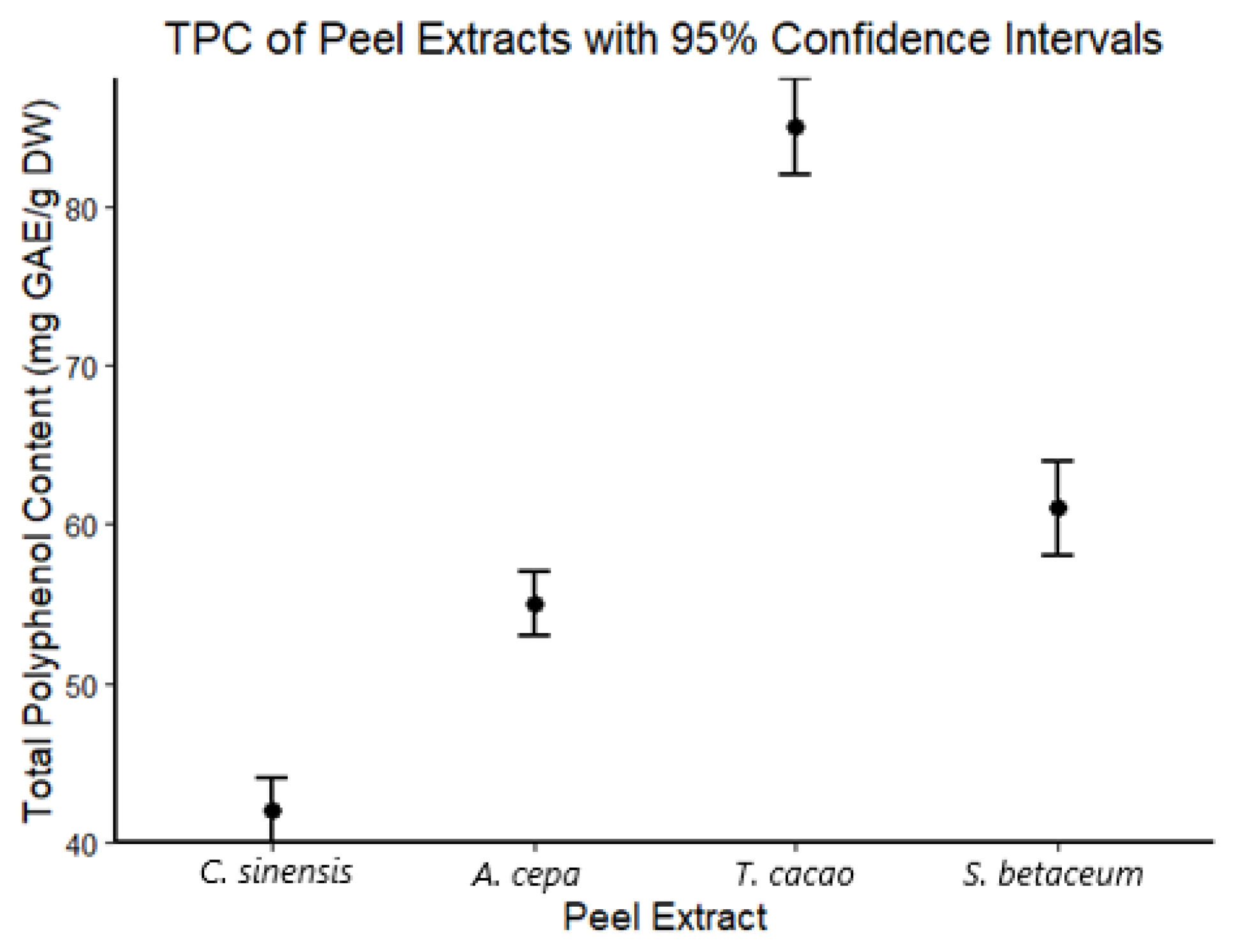
Figure 1. Total polyphenol content (TPC) of agro-industrial peel extracts. Bars represent mean ± SD (n = 3).
Applmicrobiol 05 00146 g001
Figure 2. Minimum inhibitory concentration (MIC) of peel extracts against Listeria monocytogenes with and without Saccharomyces cerevisiae co-culture. Bars represent mean ± SD (n = 3).
Applmicrobiol 05 00146 g002
Figure 3. Reduction in MIC values in peel extracts when combined with Saccharomyces cerevisiae with synthetic 95% confidence intervals.
Applmicrobiol 05 00146 g003
Figure 4. Average absorbance of T. cacao, C. sinensis, A. cepa, and S. betaceum.
Applmicrobiol 05 00146 g004
Figure 5. Theobroma cacao curve.
Applmicrobiol 05 00146 g005
Figure 6. Growth curve of Saccharomyces cerevisiae in broth medium over 12 h (OD600 vs. time).
Applmicrobiol 05 00146 g006
Figure 7. Growth curve of Listeria monocytogenes in broth medium over 12 h (OD600 vs. time).
Applmicrobiol 05 00146 g007
Figure 8. MIC of peel extracts.
Applmicrobiol 05 00146 g008
Figure 9. Scatter plot of TPC (mg GAE/g DW) vs. MIC (µg/mL) with linear fit and 95% CI.
Applmicrobiol 05 00146 g009
Table 1. Dominant phenolics and antimicrobial performance of selected agro-industrial peels against foodborne and spoilage microorganisms.
Peel (By-Product)Dominant/Active Phenolics (Examples)Representative Antimicrobial TargetsTypical Activity ReportedNotes/ApplicationsKey Refs
Citrus (lemon/orange)Flavanones (hesperidin and naringin), phenolics; terpenes (limonene)Listeria monocytogenes, S. aureus, and E. coliGrowth-rate reduction and ~2-log reductions in fermented dairy; MICs strain/matrix-dependent.Effective in cold storage; aroma compounds may aid hurdle tech.[7,9]
Onion peelQuercetin and quercetin-3-glucoside/rutinosideGram ± incl. S. aureus and E. coliSolvent-dependent inhibition; sonication/UAEx improve yields.High TPC; robust literature for food use.[10,11,12]
Pomegranate peelPunicalagin, ellagic acid, and gallic acid (tannins)Broad spectrum incl. Salmonella, E. coli, and ListeriaFrequent strong inhibition; low mg/mL MICs in vitroStable powders; color may impact sensory attributes.[17,18,30]
Banana peelCatechins, tannins, and carotenoidsOral and foodborne pathogensClear inhibition zones; livestock and food interestAbundant waste stream[19,20]
Mango peelMangiferin, quercetin, and phenolic acidsGram ± spoilage floraHigh TPC; consistent antioxidant/antimicrobial signalsIndustrial by-product with scale[18,21]
Apple peel/pomacePhloridzin, phloretin, chlorogenic acidS. aureus, skin & food bacteriaNotable activity vs. Gram+; emerging MIC dataNatural preservative candidate[31]
Cacao bean shell (hull)Catechin, epicatechin, and procyanidinsFoodborne and spoilage bacteria (var.)Bioactivity retained via microencapsulationMajor by-product; stability is key[13,16]
Tamarillo peelEllagic acid, rutin, catechin, and anthocyaninsGram ± (var.; emerging)Well-characterized phenolics; antimicrobial reports increasingRelevant to fruit beverages[14]
Table 2. Combination of concentration and types of extracts.
C. sinensis (A)A. cepa (B)T. cacao (C)
A1E1 (200 µg/mL)B1E1 (200 µg/mL)C1E1 (200 µg/mL)
A2E1 (300 µg/mL)B2E1 (300 µg/mL)C2E1 (300 µg/mL)
A3E1 (400 µg/mL)B3E1 (400 µg/mL)C3E1 (400 µg/mL)
Note: A, B, and C indicate the extract source: A = C. sinensis, B = A. cepa, and C = T. cacao. The first digit (1, 2, 3) after either A, B, or C denotes the concentration level: 1 = 200 µg/mL, 2 = 300 µg/mL, or 3 = 400 µg/mL. E1 designates the lyophilized ethanolic extract used in all treatments.
Table 3. Inoculum of L. monocytogenes with the different extracts and concentrations.
ExtractConcentration (µg/mL)Replica 1Replica 2Replica 3
C. sinensis200E1E2E3
C. sinensis300E4E5E6
C. sinensis400E7E8E9
A. cepa200E10E11E12
A. cepa300E13E14E15
A. cepa400E16E17E18
T. cacao200E19E20E21
T. cacao300E22E23E24
T. cacao400E25E26E27
S. betaceum200E28E29E30
S. betaceum300E31E32E33
S. betaceum400E34E35E36
Note: Each extract source corresponds to the following codes: C. sinensis, A. cepa, T. cacao, and S. betaceum at concentrations of 200, 300, and 400 µg/mL. Replica labels (E1–E36) represent the sequential experimental units assigned to each extract-concentration combination across the three independent replicates.
Table 4. Experimental combinations of peel extracts and yeast inoculum concentrations used in Design 2. Each treatment included Saccharomyces cerevisiae (3 units mL−1 H2O).
Extract TypeConcentration (µg mL−1)Treatment CodeYeast Concentration
C. sinensis (A)200A1E13 units mL−1 H2O
300A2E13 units mL−1 H2O
400A3E13 units mL−1 H2O
A. cepa (B)200B1E13 units mL−1 H2O
300B2E13 units mL−1 H2O
400B3E13 units mL−1 H2O
T. cacao (C)200C1E13 units mL−1 H2O
300C2E13 units mL−1 H2O
400C3E13 units mL−1 H2O
S. betaceum (D)200D1E13 units mL−1 H2O
300D2E13 units mL−1 H2O
400D3E13 units mL−1 H2O
Note: A, B, C, and D indicate the extract source: A = C. sinensis, B = A. cepa, C = T. cacao, and D = S. betaceum. The first digit (1, 2, or 3) after the letter A, B, or C corresponds to the concentration level: 1 = 200 µg mL−1, 2 = 300 µg mL−1, or 3 = 400 µg mL−1. E1 designates the lyophilized extract batch used for all treatments. All treatments in this table included S. cerevisiae at 3 units mL−1 H2O.
Table 5. Experimental combinations of peel extracts, concentrations, and yeast inoculum levels used to evaluate Listeria monocytogenes inhibition. Each treatment was performed in duplicate.
Extract TypeConcentration (µg mL−1) Yeast Inoculum (Units mL−1 H2O)Replica 1Replica 2Replica 3
C. sinensis (A)2003E1E2E3
C. sinensis (A)3003E4E5E6
C. sinensis (A)4003E7E8E9
A. cepa (B)2003E10E11E12
A. cepa (B)3003E13E14E15
A. cepa (B)4003E16E17E18
T. cacao (C)2003E19E20E21
T. cacao (C)3003E22E23E24
T. cacao (C)4003E25E26E27
S. betaceum (D)2003E28E29E30
S. betaceum (D)3003E31E32E33
S. betaceum (D)4003E34E35E36
Note: Replicate identifiers (E1–E36) were standardized according to the experimental scheme described in the study: four extract types (C. sinensis, A. cepa, T. cacao, and S. betaceum) evaluated at three concentrations (200, 300, and 400 µg mL−1), each performed in triplicate.
Table 6. TPC values.
ExtractTPC (mg GAE/g DW)
C. sinensis42.3 ± 1.2 d
A. cepa55.7 ± 1.5 b
T. cacao85.3 ± 2.1 a
S. betaceum60.5 ± 1.8 c
Note: Values represent mean ± standard deviation (n = 3). Superscript letters (a–d) indicate statistically significant differences among extracts according to the one-way ANOVA followed by Tukey’s HSD post hoc test (p < 0.05). Higher letters correspond to significantly higher TPC values.
Table 7. Initial weight and final weight of the residues used to obtain the flour.
Plant MaterialInitial WeightFinal WeightYield (%)
T. cacao320.40 g110.10 g34
A. cepa138.10 g18.63 g13
C. sinensis280.74 g89.96 g32
S. betaceum728.55 g104.10 g14
Table 8. Recorded weights of sample residues and centrifuge tubes during extract preparation.
SampleGrinding Balls by Weight (g)Weight of Centrifuge Tubes (g)
T. cacaom1: 115.3200
m2: 123.4500
m3: 121.7890
t1: 10.5000
t2: 10.6000
t3: 10.4500
A. cepam1: 109.0225
m2: 97.5165
m3: 132.4163
t1:10.1162
t2: 9.9466
t3: 9.9649
C. sinensism1: 169.7243
m2:168.1958
m3: 180.4852
t1:10.7882
t2:10.1897
t3: 10.2107
S. betaceumm1: 109.0127
m2: 97.5113
m3: 132.4039
t1: 9.7225
t2: 9.6373
t3: 10.0843
Table 9. Values obtained in the weighing of centrifuge tubes with samples and empty centrifuge.
SampleWeight of Centrifuge Tubes (Vacuum; g)Weight of Lyophilized Centrifuge Tubes (g)Total Extract (g)
T. cacaot1: 10.2000
t2: 10.3000
t3: 10.1500
T1L: 12.5000
T2L: 12.6000
T3L: 12.5500
Ext 1: 2.3000
Ext 2: 2.4000
Ext 3: 2.3500
A. cepat1: 10.1162
t2: 9.9466
t3: 9.9649
T1L: 12.8867
T2L: 12.7436
T3L: 12.7429
Ext 1: 2.7705
Ext 2: 2.7970
Ext 3: 2.7780
C. sinensist1: 10.7882
t2: 10.1897
t3: 10.2107
T1L: 12.4329
T2L: 12.3501
T3L: 11.9363
Ext 1: 2.2547
Ext 2: 2.1604
Ext 3: 1.7256
S. betaceumt1: 9.7225
t2: 9.6373
t3: 10.0843
T1L: 12.7195
T2L: 12.7456
T3L: 13.1384
Ext 1: 2.9970
Ext 2: 3.1083
Ext 3: 3.0541
Table 10. Loss of soluble solids determined from centrifuge tube weights before and after lyophilization.
SampleWeight of Centrifuge Tubes (Vacuum; g)Weight of Lyophilized Centrifuge Tubes (g)Soluble Solids Loss (g)
T. cacaot1: 10.2000
t2: 10.3000
t3: 10.1500
T1L: 12.5000
T2L: 12.6000
T3L: 12.5500
Ps 1: 2.3000
Ps 2: 2.4000
Ps 3: 2.3500
A. cepat1: 10.1162
t2: 9.9466
t3: 9.9649
T1L: 12.8867
T2L: 12.7436
T3L: 12.7429
Ps 1: 3.2295
Ps 2: 3.203
Ps 3: 3.222
C. sinensist1: 10.7882
t2: 10.1897
t3: 10.2107
T1L: 12.4329
T2L: 12.3501
T3L: 11.9363
Ps 1: 4.7453
Ps 2: 4.8396
Ps 3: 5.2744
S. betaceumt1: 9.7225
t2: 9.6373
t3: 10.0843
T1L: 12.7195
T2L: 12.7456
T3L: 13.1384
Ps 1: 4
Ps 2: 3.8917
Ps 3: 3.9459
Table 11. Raw absorbance values from the first microplate assay for the identification of total polyphenols in S. betaceum (positions 1–12).
123456789101112
A0.1510.1610.1550.1511.0771.141.1611.1780.1950.1830.2050.204
B0.2780.3040.2940.281.1741.0991.1911.2440.2130.2330.2150.203
C0.3880.3990.3960.4061.0421.0751.0621.049
D0.4970.4870.4790.5060.9250.8910.8960.916
E0.6240.6340.6270.6560.8190.8230.7550.821
F0.2870.740.7530.770.5890.6210.6370.618
G0.8780.870.8710.8930.0570.0540.0540.054
H1.0510.8960.8830.8980.2210.2290.2330.239
Table 12. Raw absorbance values from the second microplate assay for the identification of total polyphenols in S. betaceum (positions 1–8).
12345678
A0.0960.1060.1000.0961.0221.0851.1061.123
B0.2230.2490.2390.2251.1191.0441.1361.189
C0.3330.3440.3410.3510.9871.0201.0070.994
D0.4420.4320.4240.4510.8700.8360.8410.861
E0.5690.5790.5720.6010.7640.7680.7000.766
F0.2320.6850.6980.7150.5340.5660.5820.563
G0.8230.8150.8160.8380.0920.0890.0890.090
H0.9960.8410.8280.8430.1660.1740.1780.184
Table 13. Total polyphenol content (TPC) of the investigated samples determined using the Folin–Ciocalteu method.
Spectrophotometer ReadingAverageConcentration of Total Polyphenols
SampleABS 1ABS 2ABS 3ABS 4ABS AverageTPC (mg GAE/g DW) 1TPC (mg GAE/g DW) 2TPC (mg GAE/g DW) 3Mean ± SD
T. cacao 10.9871.0201.0070.9941.00285.6888.5387.4187.21 ± 1.46
T. cacao 20.8700.8360.8410.8610.85275.5972.6673.0973.78 ± 1.55
T. cacao 30.7640.7680.7000.7660.75066.4666.8060.9464.73 ± 3.35
C. sinensis 11.0310.9931.0941.0391.039349.27335.19372.60352.35 ± 15.29
C. sinensis 20.9190.9420.9000.9200.920307.79316.31300.75308.28 ± 7.79
C. sinensis 30.9640.9851.0100.9860.986324.45332.23341.49332.72 ± 8.52
A. cepa 10.8730.8750.8890.8790.879290.89291.63296.81293.11 ± 3.19
A. cepa 21.4421.5031.5321.4921.492501.63524.22534.96520.27 ± 17.01
A. cepa 30.6430.6780.6690.6630.663205.70218.67215.33213.23 ± 6.80
S. betaceum 10.7010.6460.6410.6630.663227.19206.81204.96212.99 ± 11.82
S. betaceum 20.3520.3310.3650.3490.34997.9390.15102.7496.94 ± 6.31
S. betaceum 30.0260.0280.0270.0270.02794.8596.2495.7195.60 ± 0.70
Table 14. Batch-to-batch variability of TPC (determined via Folin–Ciocalteu).
Extract PreparationDilution FactorConcentration of Total PolyphenolsAverageStandard Deviation
gLDFmg GAE/g DW 1mg GAE/g DW 2mg GAE/g DW 3mg GAE/g DW 4mg GAE/g DWSD
80.0510.540.550.550.540.000.01
80.0510.470.450.460.470.460.01
80.0510.420.420.380.420.410.02
80.0810.470.490.510.490.490.02
346.10344.24649.18346.5112.490.5224.6826.79
340.62841.75239.69940.6931.030.4520.4722.79
342.82843.85545.07743.9201.130.5122.6625.23
338.39738.49539.18038.6910.430.4319.6822.23
366.21569.19770.61568.6762.250.8135.5939.34
327.15328.86428.42428.1470.890.3314.4515.98
329.98827.30027.05528.1141.630.2714.2715.39
312.92611.90013.56212.7960.840.146.837.34
3−3.012−2.914−2.963-2.9630.05-0.03−1.481.72
Note: Values are mg GAE/g DW (mean ± SD, n = 3 per batch).
Table 15. Number of yeast colonies and L. monocytogenes growth.
ExtractConcentration (µg/mL)Replica 1Replica 2Replica 3Colony Average
C. sinensis2002211.67
C. sinensis3000000.00
C. sinensis4000000.00
A. cepa2004333.33
A. cepa3002121.67
A. cepa4000000.00
T. cacao2003322.67
T. cacao3001111.00
T. cacao4000000.00
S. betaceum2005454.67
S. betaceum3003232.67
S. betaceum4001111.00
Table 16. Minimum Inhibitory Concentration (MIC).
ExtractMIC (µg/mL)
C. sinensis300
A. cepa400
T. cacao400
S. betaceum400
Disclaimer/Publisher’s Note: The statements, opinions and data contained in all publications are solely those of the individual author(s) and contributor(s) and not of MDPI and/or the editor(s). MDPI and/or the editor(s) disclaim responsibility for any injury to people or property resulting from any ideas, methods, instructions or products referred to in the content.