Article

Influence of Dissolved Oxygen on the Pseudomonas aeruginosa 6K-11 Rhamnolipid Production

by
Ingrid Alarcon-Ancajima
,
Fernando Merino
and
Susana Gutierrez-Moreno
*
Microbiology and Biotechnology Laboratory, Universidad Nacional Mayor de San Marcos, Lima 15081, Peru
*
Author to whom correspondence should be addressed.
Appl. Microbiol. 2025, 5(4), 147; https://doi.org/10.3390/applmicrobiol5040147
Submission received: 25 September 2025 / Revised: 27 November 2025 / Accepted: 5 December 2025 / Published: 11 December 2025

Abstract

Rhamnolipids (RL) are biosurfactants produced mainly by Pseudomonas aeruginosa strains that have environmental and industrial applications. However, their industrial-scale production still faces the challenge of improving the efficiency and cost-effectiveness of the process. The aim of this work was to optimize the cultivation conditions to increase the RL production by using Response Surface Methodology with key parameters of the process, such as oxygen level, agitation, temperature, nutrients, and residual frying oil as a low-cost carbon source. The optimized parameters were 3.04 g/L of nitrogen, 0.5 vvm of aeration and 180 rpm of agitation, with which 52.2 g/L was obtained in 168 h. The critical micellar concentration (CMC) of this RL was 3.14 g/L, and the Oil Spreading assay confirmed the presence of surface-active compounds in the purified RL that generated an average halo area of 2746.7 ± 72.0 mm2, which represents an increase of 2063.41% ± 28.36% compared to the negative control. These advances could contribute to more sustainable, cost-effective RL production, promoting its application in bioremediation processes and other industries.

1. Introduction

Biosurfactants are surface-active molecules produced by diverse microorganisms and are valued for their biodegradability, low toxicity, and high efficiency in reducing surface and interfacial tension. These characteristics make them an environmentally friendly alternative to synthetic surfactants, which often persist in ecosystems and pose ecological risks [1]. Among microbial biosurfactants, rhamnolipids (RL) produced mainly by Pseudomonas aeruginosa and certain Burkholderia species [2] have attracted considerable interest due to their broad industrial applicability. Their emulsifying capacity and ability to enhance hydrocarbon degradation make RL suitable for bioremediation and other applied processes. However, despite being among the most studied biosurfactants, RL production at the commercial scale remains limited compared to synthetic surfactant manufacturing, which benefits from low production costs but contributes to environmental pollution due to its poor biodegradability [3].
A major barrier to large-scale biosurfactant implementation is the limited technological development of cost-effective biological production systems. Consequently, RL struggles to compete economically with chemically synthesized surfactants [3,4]. Improving the economic feasibility of RL production requires optimization of cultivation parameters and identification of low-cost substrates, such as waste cooking oils [5], while also determining physicochemical conditions—particularly nitrogen and phosphate availability—that regulate biosurfactant synthesis [6].
Scaling up from laboratory to industrial processes, rhamnolipid production demands prior optimization of temperature, dissolved oxygen (DO), pH, agitation speed (rpm), and volumetric airflow rate (vvm) at small scale [7,8]. Previous studies in P. aeruginosa have shown that low DO concentrations promote specific growth rates, whereas high DO levels increase the specific rhamnolipid formation rate [9]. Since aeration (vvm) and agitation (rpm) are the main operational parameters controlling oxygen availability [10], determining appropriate values for these factors is crucial to achieve optimal dissolved oxygen levels that improve RL yield.
At the Laboratory of Microbiology and Microbial Biotechnology (UNMSM), several foundational studies have contributed to understanding the behavior of the native strain Pseudomonas aeruginosa 6K-11. Martínez [11] conducted a comparative evaluation of hydrophilic and hydrophobic carbon sources—including glucose, glycerol, corn oil, fish oil, and waste soybean oil—and demonstrated that hydrophobic substrates, particularly 7% corn oil, resulted in the highest RL production. This established the rationale for selecting lipid-rich, cost-effective carbon sources to maximize RL yield.
Subsequently, Guzmán [12] optimized physicochemical cultivation parameters for strain 6K-11 using response surface methodology (RSM), identifying optimal ranges of pH, temperature, agitation, and inoculum concentration when using both organic and inorganic nitrogen sources. These findings provided an important experimental framework for defining small-scale fermentation conditions.
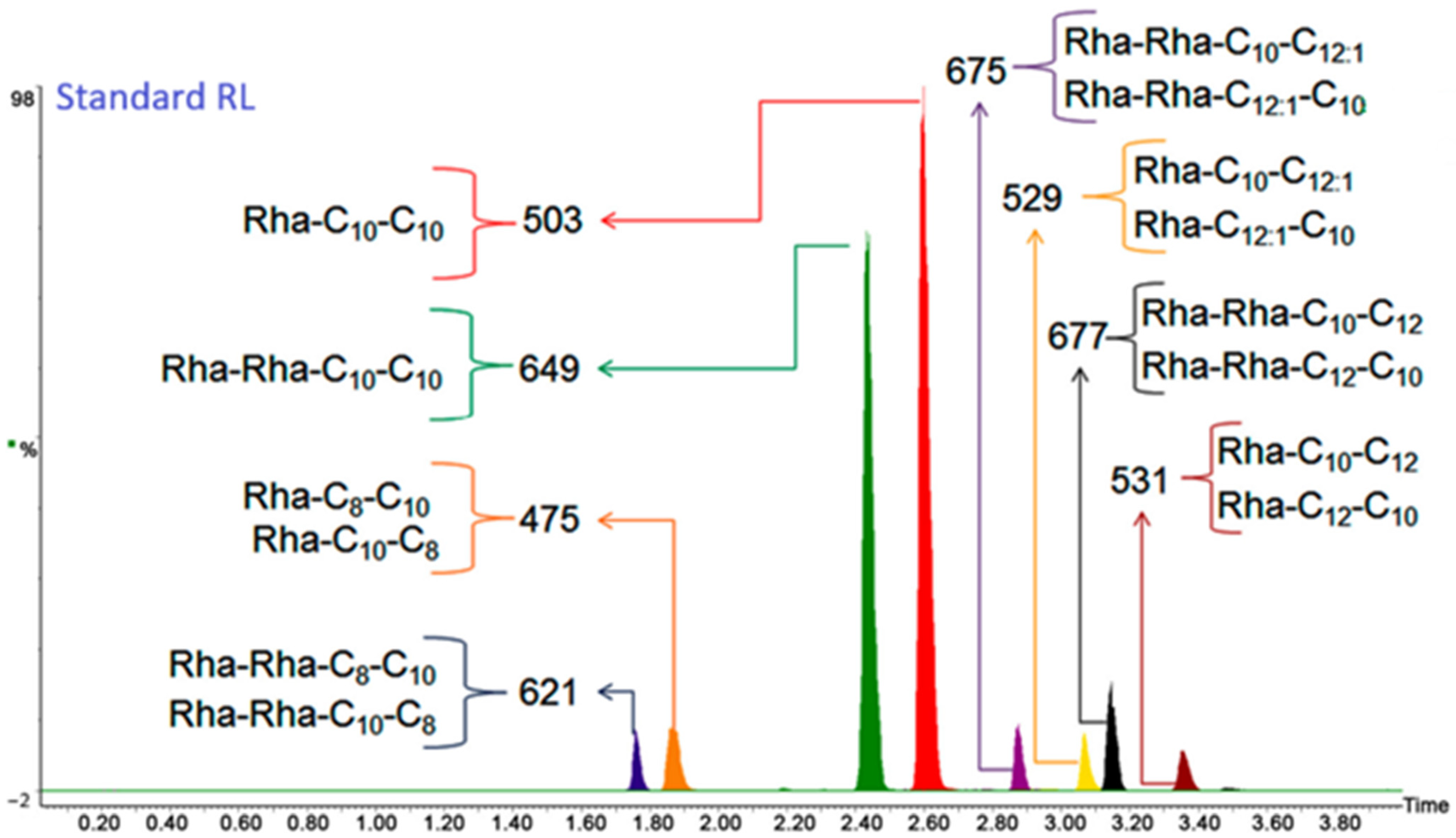
Calleja [13] later conducted the first detailed chemical characterization of RL produced by strain 6K-11 using UPLC-MS/MS, revealing a diverse profile of mono- and di-rhamnolipids across multiple CTAB/MB agar bands (Figure A1). This work established a molecular baseline for the structural diversity of RL synthesized by the strain.
Building on these previous efforts, the present study aims to determine the optimal aeration and agitation conditions for RL production by P. aeruginosa 6K-11 under nitrogen-limited conditions and using recycled waste frying oil as a low-cost carbon source. Collectively, these results contribute to defining a scalable and cost-effective strategy for sustainable RL production.

2. Materials and Methods

2.1. Strain Reactivation and Scale-Up

Pseudomonas aeruginosa 6K-11 was isolated from an oil-contaminated site in Talara, Perú. The strain was selected as an RL hyperproducer after a screening of 2517 isolates, of which 749 belonged to the Pseudomonas genus and 251 displayed RL-producing capacity [14].
The strain was reactivated in 3 mL of tryptic soy broth (TSB) and incubated at 35 °C for 18–24 h to obtain the preinoculum. A stepwise scale-up was performed, transferring sequentially into 3 mL, 30 mL, and finally 250 mL. Biomass from the preinoculum was harvested by centrifugation at 14,500 rpm for 10 min, washed twice with 0.85% NaCl, and resuspended in 30 mL of Siegmund and Wagner (SW) mineral medium optimized by Alcalde [15]. The composition of the medium was: KH2PO4 (4.3 g/L), NaNO3 (3.31 g/L), MgSO4·7H2O (1.783 g/L), FeSO4·7H2O (0.005 g/L), and CaCl2 (0.038 g/L). Waste frying oil (70 g/L), previously identified as a suitable carbon source [16,17], was supplied by a local food vendor.
The 30 mL culture was incubated at a temperature 31.3 °C and 186 rpm, with an initial pH of 6.76, in an orbital shaker incubator Steady Shake 757L (Amerex Instruments, Inc., Concord, CA, USA), parameters used by Guzman [12]. Once the culture reached an OD620 of 0.06 after 1:80 dilution, 7.34% (v/v) was used to inoculate a 1 L bioreactor containing 250 mL of SW medium.

2.2. Evaluation of Bacterial Growth

Bacterial growth under different aeration (0.5, 0.55, 0.6, 0.65, and 0.7 vvm) and agitation (160, 170, 180, 190, and 200 rpm) conditions was monitored every 24 h over 15 days. Optical density was measured in triplicate at 620 nm using a Genesys 150 UV-Vis spectrophotometer (Thermo Fisher Scientific, Waltham, MA, USA). Each 1 mL sample was centrifuged (14,500 rpm, 10 min) using an Eppendorf MiniSpin Plus (Eppendorf SE, Barkhausenweg, Hamburg, Germany). The supernatant was retained for RL quantification, while the biomass was washed twice with 0.85% NaCl. Biomass concentration (g/L) was calculated using the calibration curve previously established for this strain [10].

2.3. Dissolved Oxygen (DO) Concentration Monitoring

Since the bioreactor lacked an integrated dissolved oxygen (DO) sensor, measurements were taken every 24 h using a HI9147-04 portable oximeter with galvanic cell sensor (Hanna Instruments, Woonsocket, RI, USA), following the recommendation by Bazsefidpar et al. [9]. The sensor was sterilized with ultraviolet exposure for 15 min prior to sampling.

2.4. Monitoring of Rhamnolipid (RL) Production

Daily RL quantification was performed using the resorcinol colorimetric method as described by Monsigny [18]. Prior to the assay, RL were purified from the culture supernatant.

2.5. Purification of Rhamnolipids

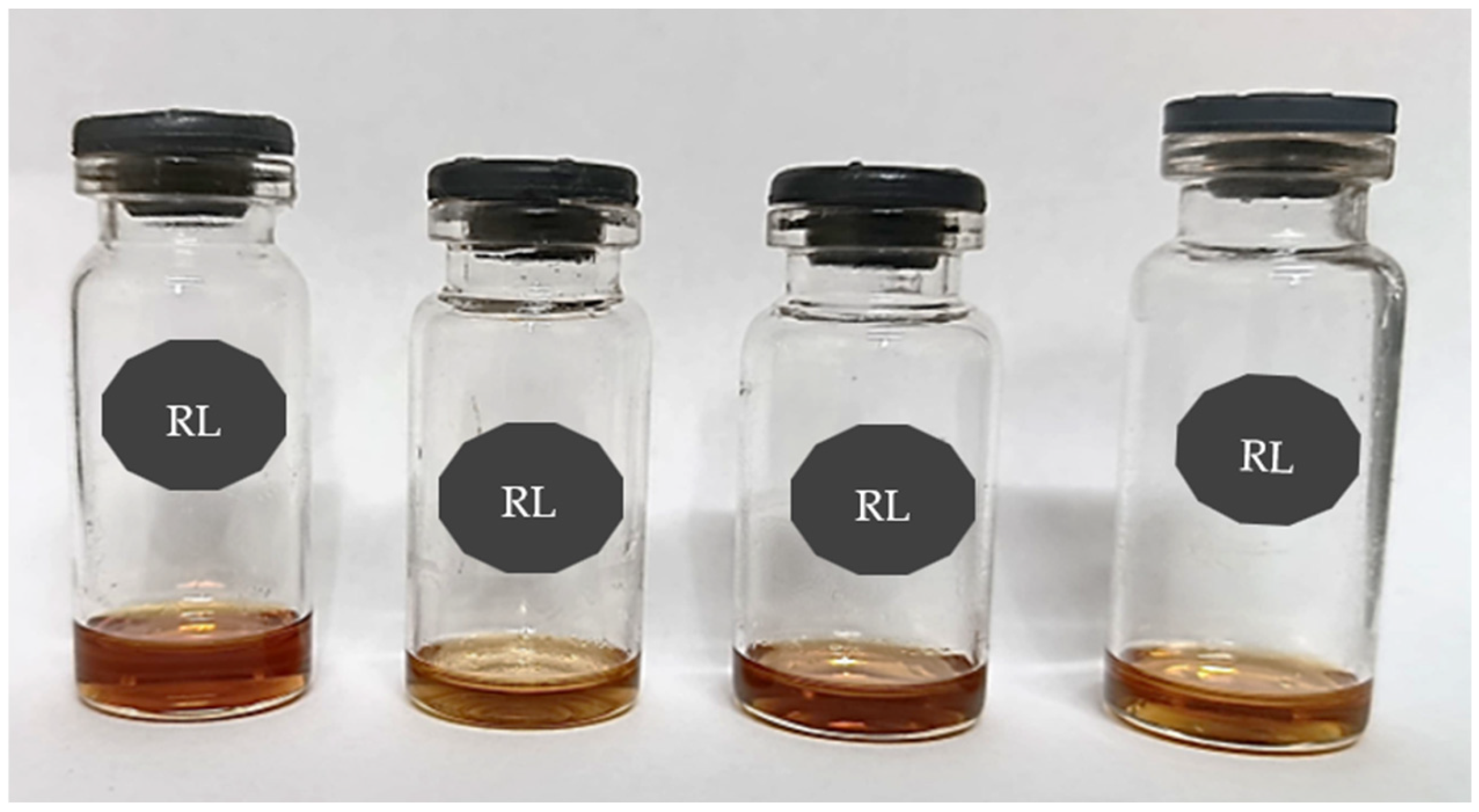
After biomass removal by centrifugation, residual oil in the supernatant was eliminated by gentle decantation using a sterile cotton swab. The supernatant was acidified with concentrated HCl to pH 2.0 and incubated at 4 °C overnight to facilitate RL precipitation. Samples were then centrifuged (14,500 rpm for 15 min for 2 mL tubes; 4500 rpm for 30 min for 50 mL tubes). The pellet was resuspended in 1 or 15 mL of ultrapure water, depending on sample volume, and extracted with chloroform:ethanol (2:1, v/v) under vigorous agitation for 20 min. The mixture was centrifuged, and the organic phase was collected and evaporated at 80 °C to obtain purified RL exhibiting an oily appearance (Figure A2). RL concentration was calculated gravimetrically as the mass of purified product per original culture volume.

2.6. Rhamnolipids Quantification

For the colorimetric assay by resorcinol, 300 µL of purified RL solution in basic ultrapure water (pH 9) was mixed with 300 µL of resorcinol (0.6%) and 1.5 mL of H2SO4 (75%). Tubes were incubated at 90 °C for 30 min in the dark, then cooled on ice. Absorbance at 480 nm was measured using a UV–Vis spectrophotometer and RL concentration was determined using a rhamnose standard curve [11,12].

2.7. Effect of Aeration on Dissolved Oxygen and RL Production

Aeration rate was evaluated using a factorial design and Response Surface Methodology (RSM) to assess its interaction with the test variable, agitation speed, and its effect on the response variables: DO concentration and rhamnolipid production. The effect of aeration rate was evaluated at air flow levels of 0.5, 0.55, 0.6, 0.65, and 0.7 vvm. The air was injected and purified through an Olive 10 L oxygen concentrator (Prolab Solutions, Lima, Peru). Volumetric air flow rates were regulated using a 0.5–2 L/min 5-way flow splitter (Longfian Scitech Co., Ltd., Baoding, Hebei, China). This device was used to regulate the air flow volume per medium volume. Additionally, according to Ramesh et al. [19], the oxygen transfer coefficient (kLa) was calculated to directly relate the aeration rate and stirring speed to the dissolved oxygen concentration in the culture. The kLa was calculated using the mass balance equation for oxygen [20], outlined below:
Δ [ O 2 ] Δ t = ( k L a ) × ( C O 2 C O 2 ) ( q O 2 × C X )
where:
Δ [ O 2 ] Δ t : rate of change of oxygen concentration over time.
k L a : volumetric oxygen transfer coefficient.
C O 2 : oxygen concentration in air.
C O 2 : dissolved oxygen concentration in the culture.
q O 2 : O2 consumption rate of microorganisms.
C X : concentration of the microorganism in the medium (biomass).

2.8. Effect of Agitation on DO and RL Production

Agitation was evaluated at 160, 170, 180, 190, and 200 rpm using the same RSM factorial design. This parameter is known to influence oxygen transfer and RL synthesis [3,21].

2.9. Influence of Sodium Nitrate Concentration on RL Production

Sodium nitrate (NaNO3) concentration was assessed using the RSM factorial design at five levels: 1.5, 1.95, 2.4, 2.85, and 3.3 g/L.

2.10. Determination of Critical Micelle Concentration

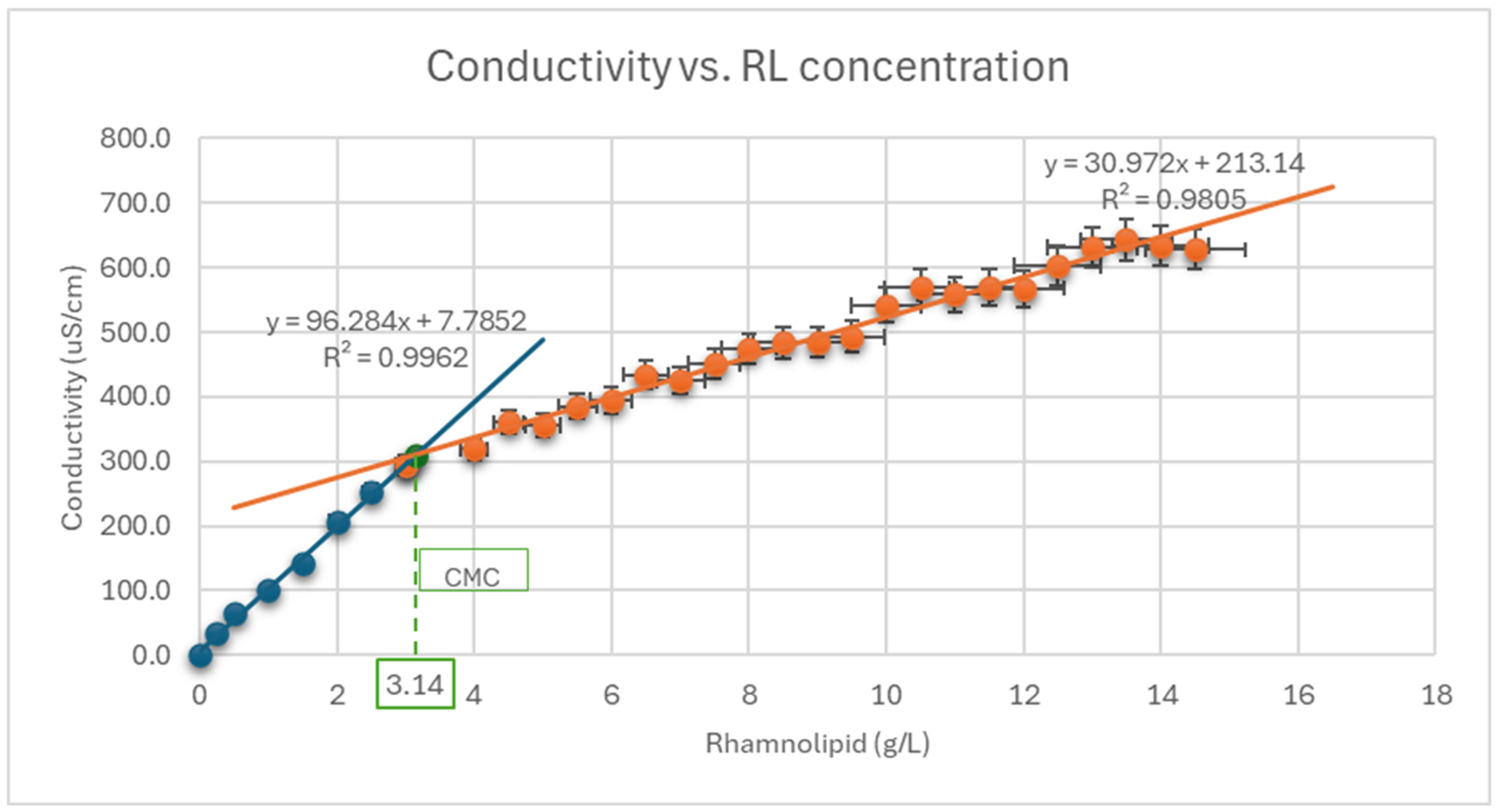
Critical micelle concentration (CMC) was determined by preparing RL solutions ranging from 15 to 0.5 g/L and measuring conductivity using an EC800 digital conductivity meter (APERA, San Jose, CA, USA). Measurements were conducted in triplicate at room temperature. The CMC was obtained from the inflection point on the conductivity-concentration plot [22].

2.11. Oil Spreading Activity

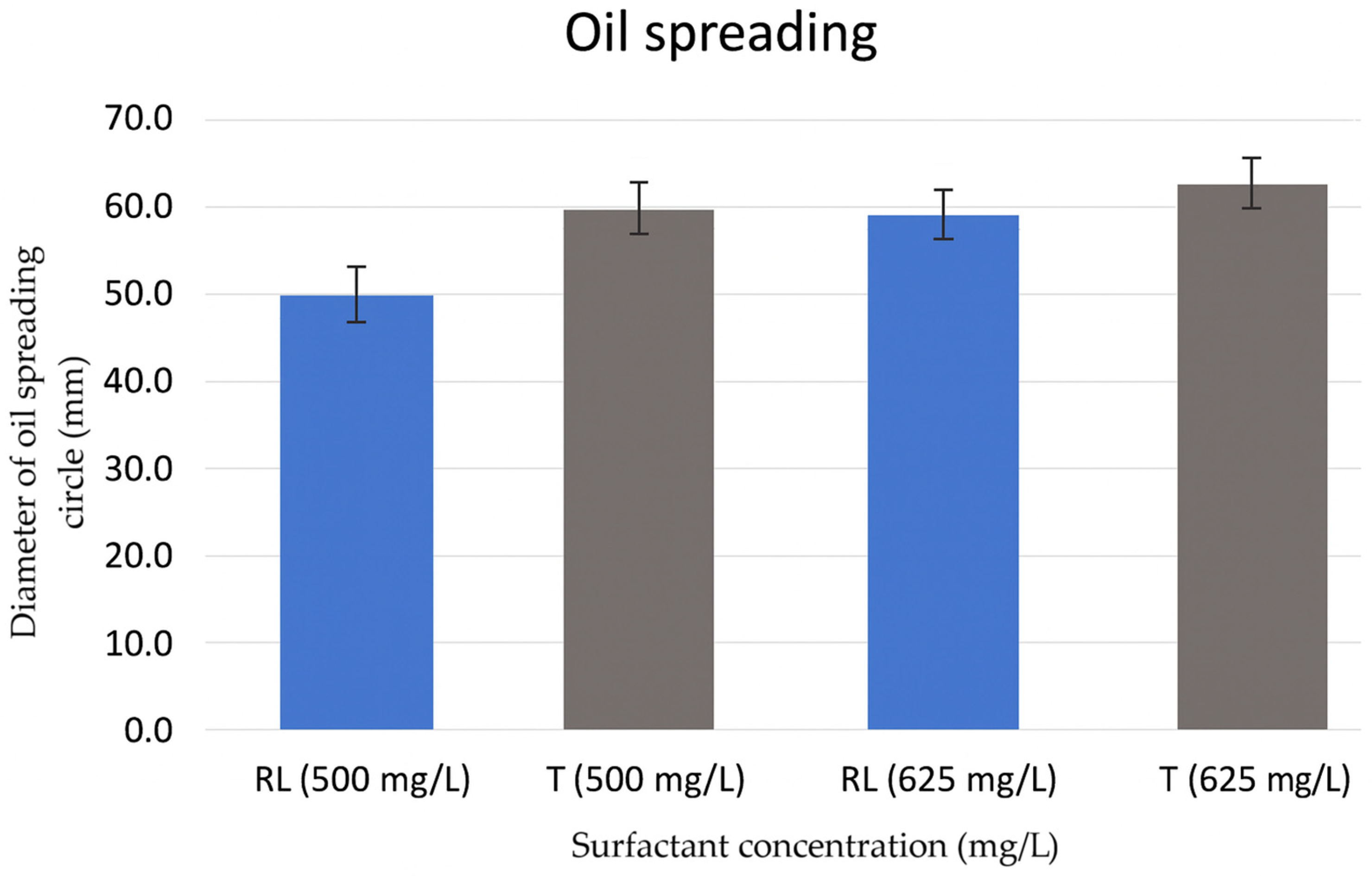
RL solutions at 500 and 625 mg/L were prepared. In a 15 mm × 90 mm Petri dish, 25 mL of distilled was added followed by 15 µL of crude oil spread across the surface. Then, 10 µL of RL solution was dispensed onto the center. The diameter of the resulting clearing zone was measured using ImageJ program (ImageJ 1.54g; Java 1.8.0_345 [64-bit], following Zhao et al. [23,24]. Distilled water and Polysorbate 80 (Central Drug House (P) Ltd., New Delhi, Delhi, India) served as negative and positive controls, respectively.

2.12. Statistical Analysis

Each experiment was performed in triplicate. Response Surface Methodology (RSM) was applied using Design-Expert 11.0 to optimize agitation speed and aeration rate. The response variables were analyzed through a Central Composite Design (CCD), which generated a predictive equation for RL production (Equation (1)). Model distribution, variance, and significance of factors (DO and RL concentration) were analyzed using ANOVA.

3. Results and Discussion

3.1. Growth Kinetics

Monitoring the growth of P. aeruginosa 6K-11 biomass using kinetics revealed distinct behaviors depending on the variation in the kinetics parameters evaluated. For example, with the parameters which corresponded to the central points or values of the experimental design (repetitions of the experiment at the mean level of all factors studied), 2.4 g/L NaNO3, 0.6 vvm and 180 rpm, the bacteria developed with a specific microbial growth rate (μ) of 0.7 and reached the stationary phase between 120 and 216 h (Figure 1), within which they reached a maximum RL production of 20.4 g/L between 144 and 168 h, averaged over the three replicates performed with the central points of the experimental model. Previous studies demonstrated that NaNO3 is a suitable nitrogen source for RL synthesis by strain 6K-11, outperforming KNO3, NH4Cl, (NH4)2SO4 and urea [15]. The use of frying oil as the sole carbon source for rhamnolipid (RL) production by P. aeruginosa 6K-11 is a sustainable and economical alternative, as it is a waste product; furthermore, it contains a mixture of fatty acids that P. aeruginosa efficiently metabolizes [25]. Using this approach, P. aeruginosa 6K-11 was grown under controlled conditions to utilize the frying oil, thereby maximizing RL production. The bacteria produced 20.4 g/L over 144 to 168 h. This favorable result demonstrates the adaptive capacity of P. aeruginosa 6K-11 to metabolize waste oil. The presence of saturated and monounsaturated fatty acids, particularly oleic acid, in frying oil, favors oil stability. Therefore, it can be beneficial for microbial growth. However, it is also important to note that frying oil may contain degraded compounds released after use, which could negatively affect RL production. Therefore, the oil must be analyzed before it is used as a carbon source, to ensure that any contaminants present do not interfere with the fermentation process [26].

3.2. Dissolved Oxygen Concentration (DO)

Monitoring dissolved oxygen (DO) concentration in the culture during production yielded different values of the volumetric oxygen transfer coefficient (kLa), providing insight into the impact of agitation, aeration and biomass was 0.033 s−1 and for the central points, during the peak of RL production, a kLa of 0.43 s−1s1 was determined, with a specific oxygen consumption rate (qO2) of 1.67 nmol O2 g cell−1 h−1 and OD concentration of 117% at 10.17 mg/L. These values were calculated using the mass balance equation for oxygen, as applied by Ramesh et al. [19], as described by García-Ochoa and Gómez [20].
Dissolved oxygen (DO) concentration is a critical parameter in microbial physiology, as it influences cellular respiration and, consequently, the production of secondary metabolites such as RL. Several studies show that maintaining DO at adequate levels is essential for P. aeruginosa metabolic activity and enhances RL production [27,28]. When DO falls below 2 mg/L, it results in hypoxic conditions that may impair RL production due to limitations in metabolic activity [27]. In the present study, an inverse relationship between DO and RL production was observed, particularly on the day of maximum RL synthesis, when DO registered its lowest value in the kinetic profile. This behavior is consistent with the observations of Bazsefidpar et al. [9], who reported that DO levels around 40% favored RL production—similar to some DO values recorded in this study—although the average DO at peak production under central conditions reached 117%. Kronemberger et al. [29] reported RL productivities of 30.0 mg/L·h using DO levels of 4.0–6.0 mg/L, supporting the finding that peak RL production in this work occurred at 10.17 mg/L. Together, these results highlight the complex and non-linear relationship between DO and RL synthesis, with no universally optimal DO value across different systems.
The oxygen transfer coefficient (kLa) is a pivotal parameter in submerged culture bioprocesses, as it determines the rate of oxygen transfer from the gas to the liquid phase. A sufficiently high kLa ensures adequate oxygen availability, supporting aerobic metabolism and promoting metabolite production. Conversely, a low kLa impairs oxygen uptake, potentially limiting biomass formation and RL yield [29,30]. Therefore, identifying a kLa that maximizes oxygen transfer without inducing cellular stress is critical.
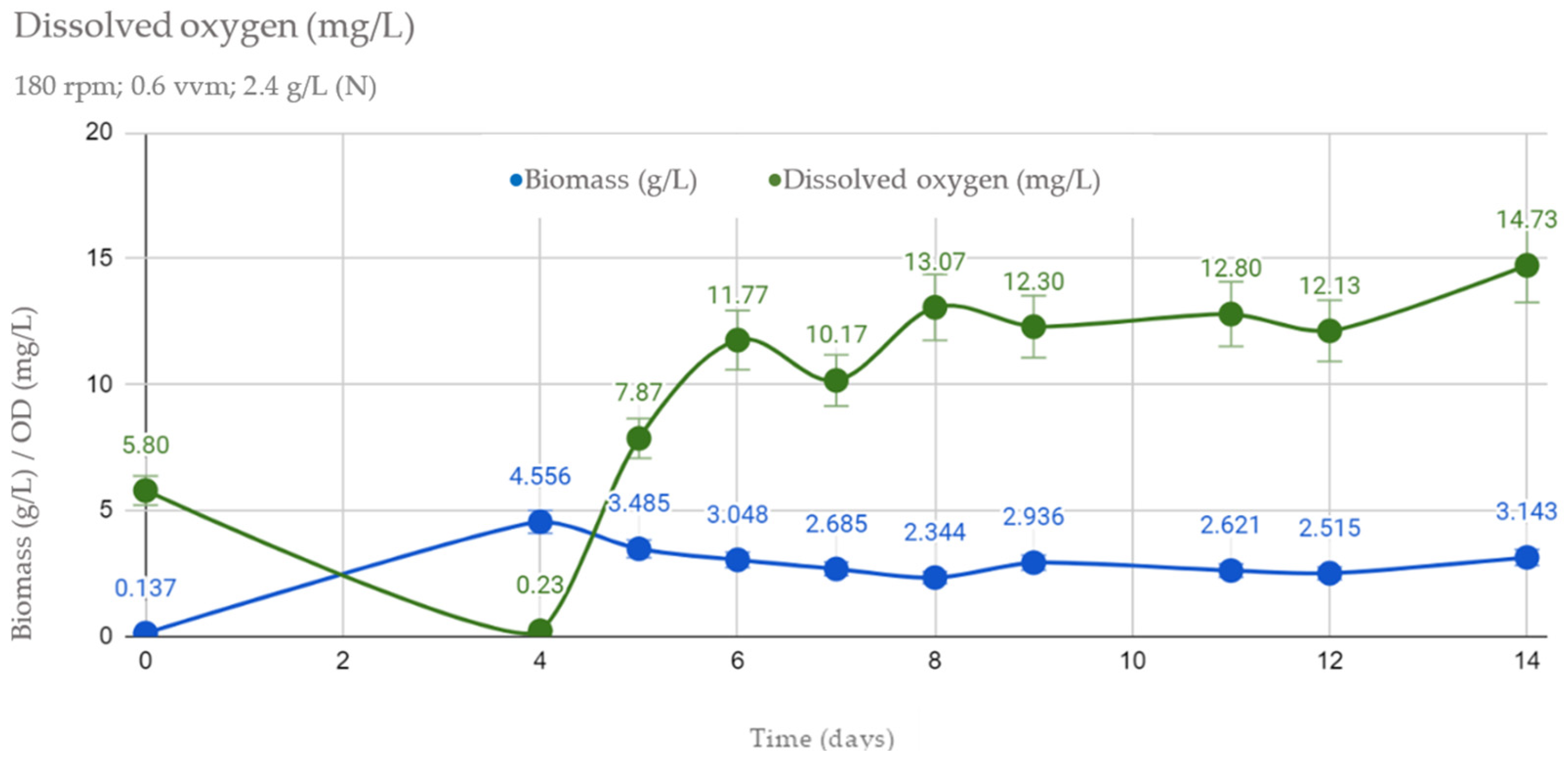
Figure 2 illustrates the temporal behavior of biomass production and dissolved oxygen concentration in the culture under the central point conditions of the experimental design. For example, this figure presents only the relationship obtained at the central values of the agitation speed, aeration rate, and nitrogen concentration: 180 rpm, 0.6 vvm and 2.4 g/L—The Central Composite Design includes both central and axial values for these parameters. Under these conditions, the calculated kLa values indicated efficient oxygen transfer, which supported RL biosynthesis [31]
During the initial cultivation phase (days 1–4), the dissolved oxygen (DO) concentration declined sharply despite constant stirring and aeration. This behavior can be attributed to the metabolic adaptation and rapid proliferation of the microorganisms, which temporarily increased oxygen consumption beyond the oxygen transfer rate (kLa). At this stage, the culture transitions from adaptation to exponential growth, leading to a transient imbalance between oxygen demand and supply. Additionally, physicochemical factors, such as medium viscosity or foam formation, may have influenced gas–liquid transfer efficiency, further contributing to the observed fluctuations. After this period, the system reached a dynamic equilibrium between oxygen transfer and consumption, resulting in the stabilization of DO levels observed from day 5 onward. This trend corresponds to the increase in biomass production shown in Figure 2, where dissolved oxygen depletion coincides with intensified cellular growth and metabolic activity. At this stage, the culture transitions from adaptation to exponential growth, leading to a transient imbalance between oxygen demand and supply. Additionally, physicochemical factors such as medium viscosity and foam formation may have influenced gas–liquid transfer efficiency, further contributing to the observed fluctuations. After this period, the system reached a dynamic equilibrium between oxygen transfer and consumption, resulting in the stabilization of DO levels observed from day 5 onward. This trend corresponds to the increase in biomass production shown in Figure 2, dissolved oxygen depletion coincides with intensified cellular growth and metabolic activity.

3.3. Experimental Design and Predictive Model for Rhamnolipid Production

The experiments were carried out according to the conditions established by Central Composite Design (CCD). Three factors were evaluated at five levels each, using randomized combinations to minimize experimental bias and ensure statistical robustness.
A total of 39 experimental runs were performed, including triplicate axial points and duplicate central points (Table A1). The RL yields obtained under the CCD conditions are summarized in Table 1 to provide an overview of the system’s performance across the evaluated parameter space. The average experimental RL yield was 25.21 ± 2.54 mg/L, whereas the model-predicted values averaged 24.32 ± 2.28 mg/L. The close agreement between experimental and predicted results indicates that the fitted model reliably represents the behavior of the system within the studied range.
The experimental results allowed the development of a mathematical model to predict theoretical RL production (g/L), which is described by Equation (1).
Equation (1) Mathematical model to predict theoretical rhamnolipid production (g/L)
Y = 1571.64277 34.50277 A 2791.66276 B + 26.98438 C 40.69630 A B + 0.104102 A C + 0.721167 B C + 9.21411 A 2 + 2286.04322 B 2 0.075571 C 2
where:
Y: RL production
A: nitrogen source concentration
B: aeration rate
C: agitation speed

3.4. Model Reliability

The proposed quadratic model describing RL production as a function of sodium nitrate source concentration, aeration rate, and agitation speed yielded a coefficient of determination (R2) of 0.8946, indicating that the model explains 89.46% of the variability in the experimental data. Additionally, the adjusted R2 (0.8619) and predicted R2 (0.8112) are both high and differ by less than 0.2, suggesting good predictive power and a satisfactory model fit (Table 2).
The analysis of variance (ANOVA) confirmed that the model is statistically significant (p < 0.0001), with an F-value of 27.36. Most of the terms included in the model—namely the main effects (A, B, C), the interactions (AB, AC), and the quadratic terms (B2, C2)—were significant (p < 0.05), which supports the robustness of the model. Although the term A2 was not statistically significant (p = 0.2267), its inclusion did not adversely affect the model’s overall performance (Table 3).
Since the quadratic model is free of aliasing and balances simplicity and explanatory power, it can be considered reliable and appropriate for describing and predicting rhamnolipid production under the evaluated conditions.

3.5. Influence of Aeration Rate, Agitation Speed and Sodium Nitrate Concentration

RL production was evaluated under varying aeration rates, agitation speeds, and sodium nitrate (NaNO3) concentrations to identify the conditions that maximize biosurfactant yield. Overall, the experimental design showed that RL synthesis was enhanced at the lowest aeration rate tested (0.5 vvm), although considerable production also occurred at the highest aeration rate (0.7 vvm). According to the predictive model, the aeration value that generated the highest theoretical RL production (51.58 g/L) was 0.5 vvm, reinforcing that lower airflow favored biosynthesis within the evaluated range.
Agitation speed emerged as another critical variable influencing RL output. Stirring speeds between 160 and 200 rpm were assessed, and results indicated that agitation of 180 rpm or higher consistently supported greater RL production, whereas lower speeds were less favorable. The predictive model identified 180.5 rpm as the optimal agitation speed. These observations align with previous reports indicating that 180–200 rpm enhances oxygen distribution and microbial activity in RL-producing Pseudomonas strains [31,32]. In this study, the highest RL concentrations were obtained between 175 and 190 rpm under continuous aeration, particularly at the minimum airflow of 0.5 vvm. Agitation values below 180 rpm likely induced oxygen-limited conditions, reducing RL synthesis [33]. Conversely, when cultures were subjected to higher aeration (0.7 vvm) combined with agitation speeds >190 rpm, RL production decreased. This reduction was attributed to excessive bubble formation and persistent foaming, which interfered with microbial metabolism and mass transfer efficiency. Foam formation was visibly pronounced in bioreactors under these conditions, requiring the implementation of an intermittent aeration strategy. Airflow was paused every 2 h and then resumed cyclically, which proved effective in reducing foam accumulation while maintaining sufficient oxygen availability. Xu et al. [34] reported similar results using integrated foam control and repeated fed-batch fermentation, demonstrating that modulated or intermittent aeration effectively minimizes foam formation without compromising productivity. NaNO3 concentration, used as the sole nitrogen source, also significantly influenced RL production. Concentrations below 2.85 g/L yielded lower RL levels compared to 3.3 g/L, the highest concentration evaluated. The model predicted an optimal NaNO3 value of 3.04 g/L, corresponding to a maximum theoretical RL yield of 51.58 g/L. These findings support the notion that controlled nitrogen limitation stimulates RL biosynthesis. During the stationary phase of P. aeruginosa, nitrogen depletion triggers a metabolic shift toward secondary metabolite formation, including RLs [35,36]. Furthermore, the specific role of NaNO3 has been highlighted by Shatila et al. [37], who demonstrated that this nitrate salt—unlike urea or ammonium-based sources—effectively restricts nitrogen availability and promotes RL synthesis. Alcalde [15] similarly reported NaNO3 as more effective than other nitrogen sources such as ammonium nitrate or urea in enhancing RL production by strain 6K-11. In addition, limiting conditions for NaNO3 do not necessarily correspond to the lowest concentrations. Wu et al. [38] found that the most productive RL yields occurred at their highest tested NaNO3 concentrations (4–6 g/L), suggesting that an optimal “limiting” concentration must be high enough to trigger metabolic shifts without oversaturating the system.

3.6. Response Surface Results

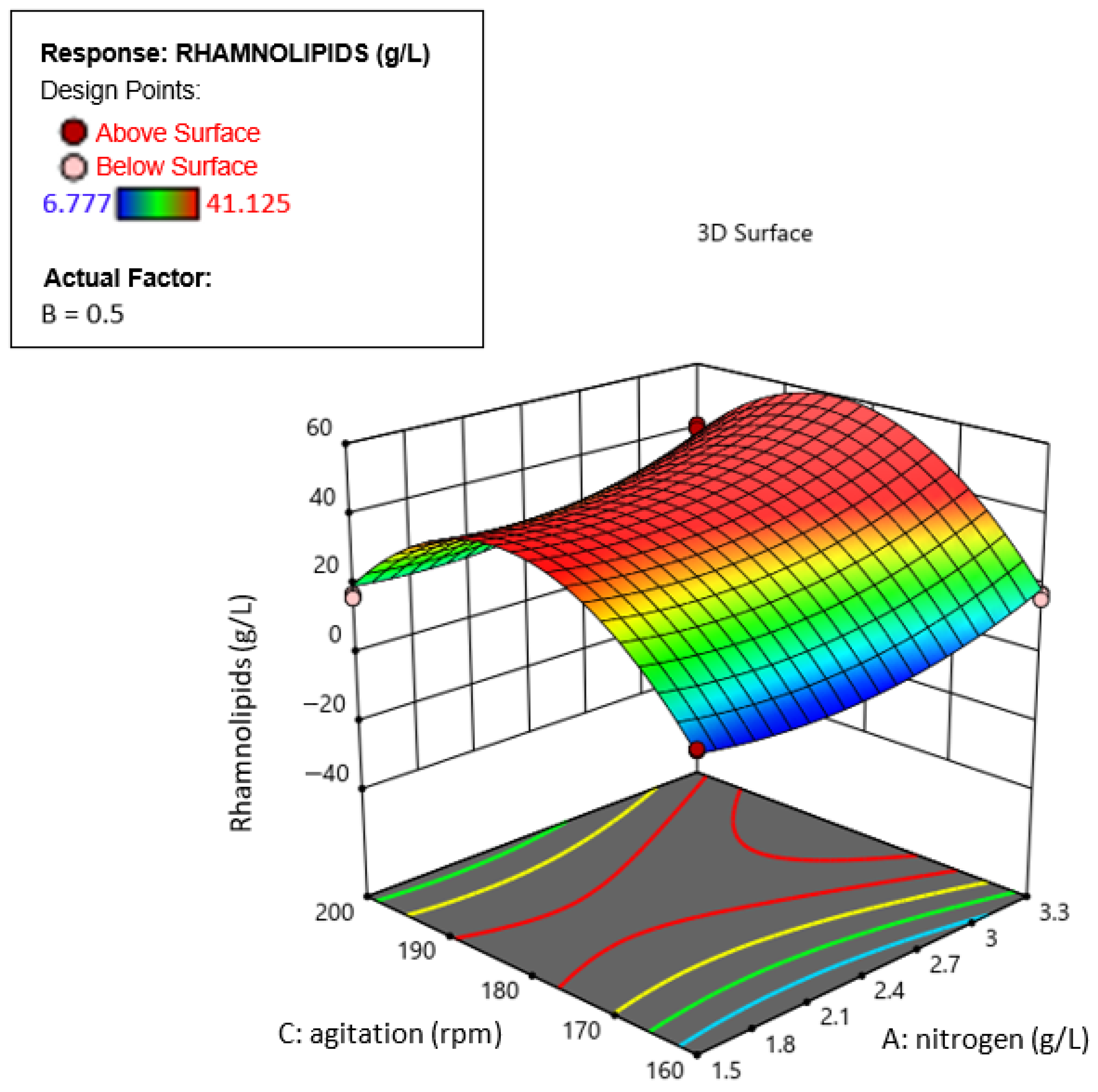
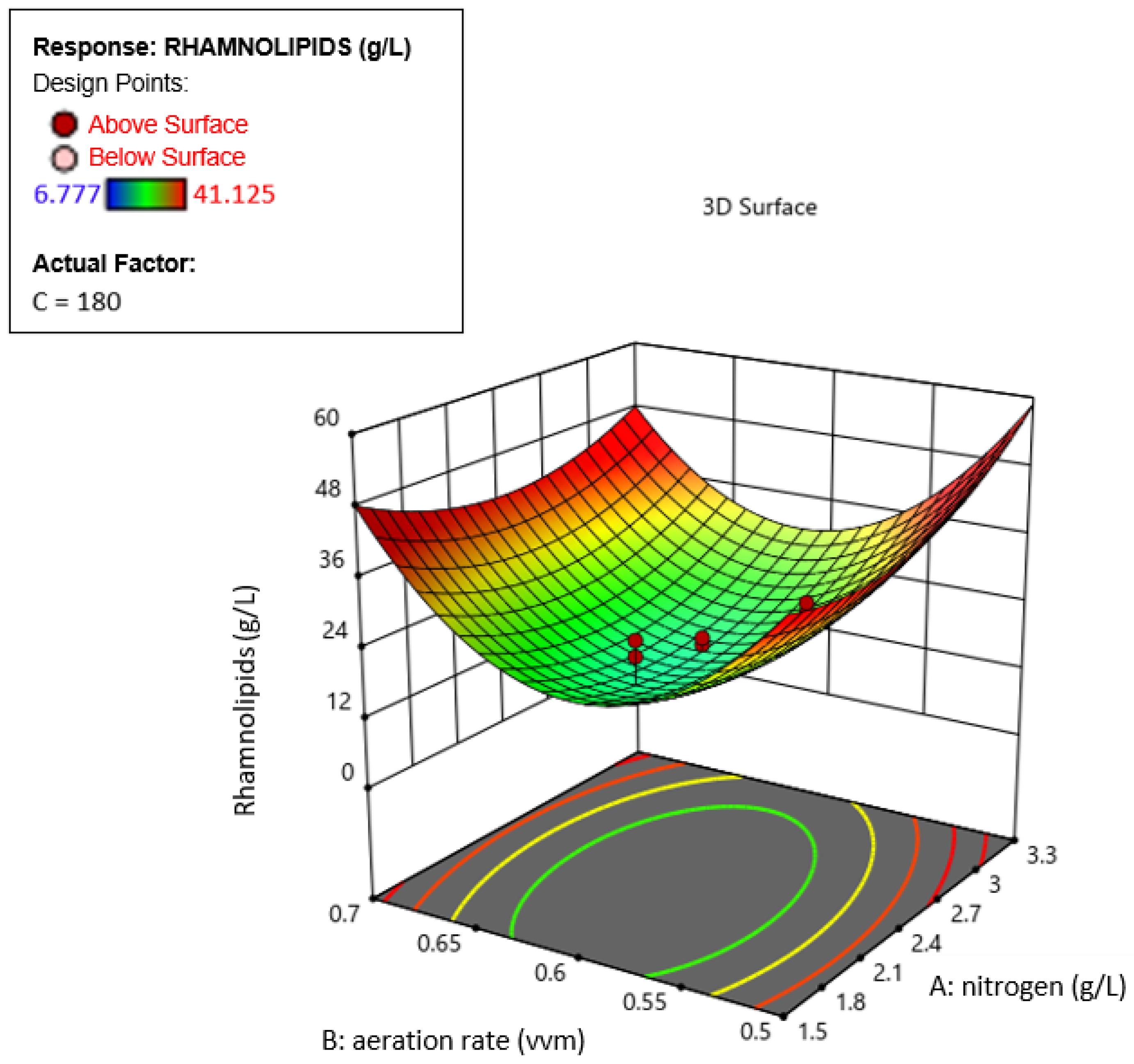
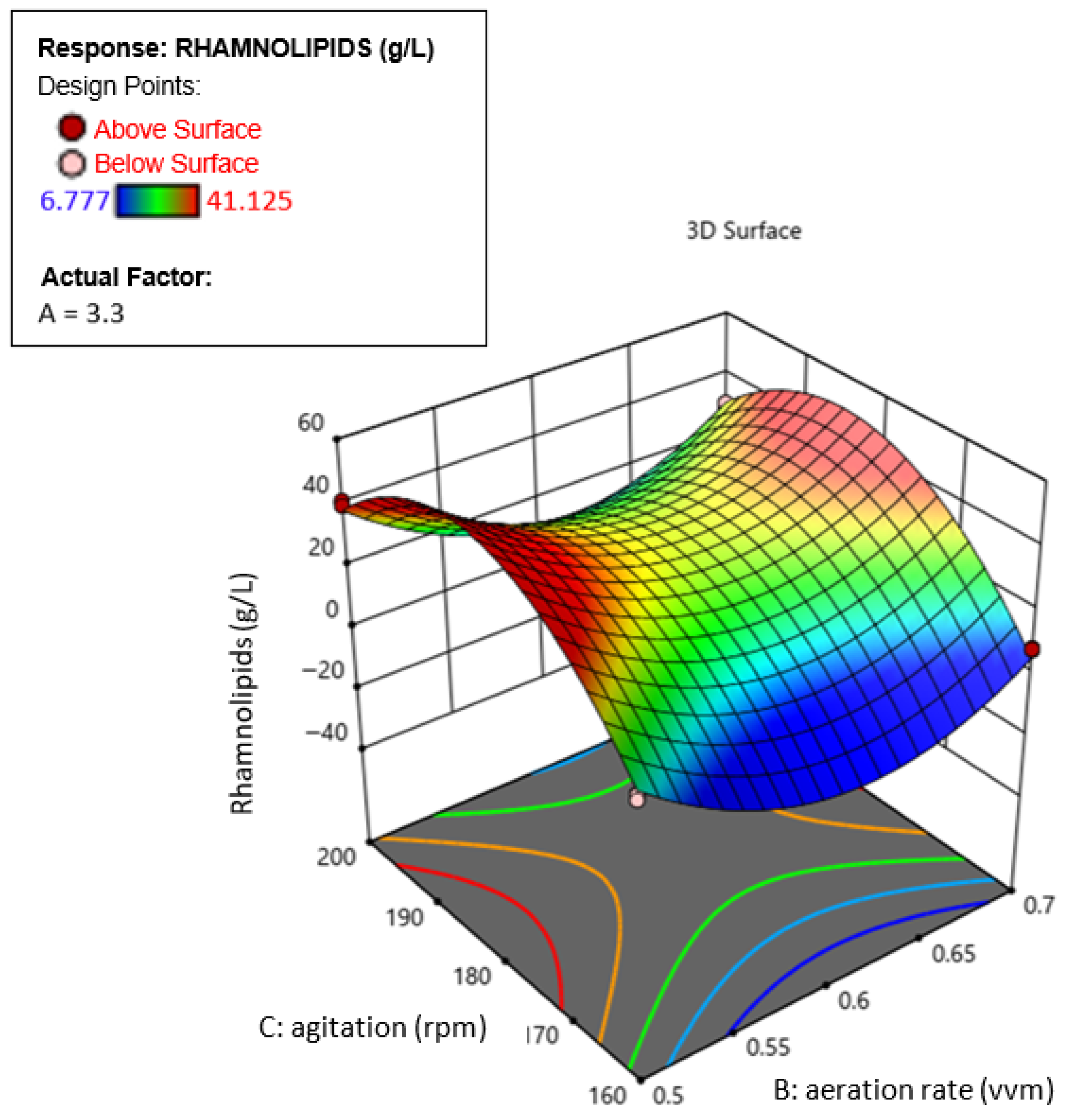
The interactions among agitation speed, aeration rate, and NaNO3 concentration were examined using three-dimensional response surface plots. Figure 3 shows that the highest RL yields were obtained at NaNO3 concentrations above 2.7 g/L combined with an aeration rate of 0.5 vvm. As illustrated in Figure 4, agitation speeds between 175 and 190 rpm consistently supported elevated RL production across all NaNO3 concentrations, particularly when nitrogen levels exceeded 2.7 g/L. Figure 5 further confirms that RL production increased as agitation and aeration approached 180 rpm and 0.5 vvm, respectively. These trends align with the design and analytical approaches reported by Jamal et al. [39], who applied Central Composite Design (CCD) and Response Surface Methodology (RSM) to optimize RL production by modifying pH, temperature, agitation, and inoculum size, increasing yields from 2.27 to 4.44 g/L. Similarly, Bazsefidpar et al. [9] used CCD and RSM to enhance RL production more than tenfold by optimizing temperature, pH, agitation, and DO, highlighting the importance of oxygen transfer and mixing intensity. Overall, the present findings underscore the necessity of balancing oxygen availability, agitation intensity, and nitrogen limitation to achieve maximum RL yield.

3.7. Optimization of Rhamnolipid (RL) Production

Optimal conditions for maximizing RL production were identified with a desirability value of 1.0. The complete list of optimized parameters is presented in Table 4. Experimental validation of these optimized conditions—3.04 g/L NaNO3, 0.5 vvm aeration, and 180.5 rpm agitation—resulted in a maximum RL yield of 52.2 g/L after 168 h of incubation. This value represents a substantial 48.6% increase compared to the 35.124 g/L reported by Alcalde [15], who also applied Response Surface Methodology (RSM) to optimize inorganic salts in the Siegmund–Wagner (SW) medium. Those optimized conditions served as a reference framework for the present study, highlighting the effectiveness of iterative RSM-based optimization for this strain. The enhanced RL production achieved by P. aeruginosa 6K-11 in this work resulted not only from the application of RSM but also from the careful selection of carbon and nitrogen sources, alongside the optimization of bioprocess conditions. Agitation speed, aeration rate, and temperature played fundamental roles in promoting RL biosynthesis, demonstrating the importance of integrating nutrient composition with oxygen transfer dynamics for maximizing productivity.

3.8. Critical Micelle Concentration

The CMC of the purified RL was 3.14 g/L, based on conductivity measurements (Figure 6). This value is higher than those reported by Arkhipov et al. [22] (0.33 g/L) and Albasri et al. [40] (0.15 g/L), although the latter determined CMC based on surface tension, which is more sensitive.
Differences in CMC values may be attributed to media composition, ionic strength, or potential residual components from purification. Mineral media are preferred for surface tension-based CMC analyses to minimize interference [21].

3.9. Oil Spreading Activity

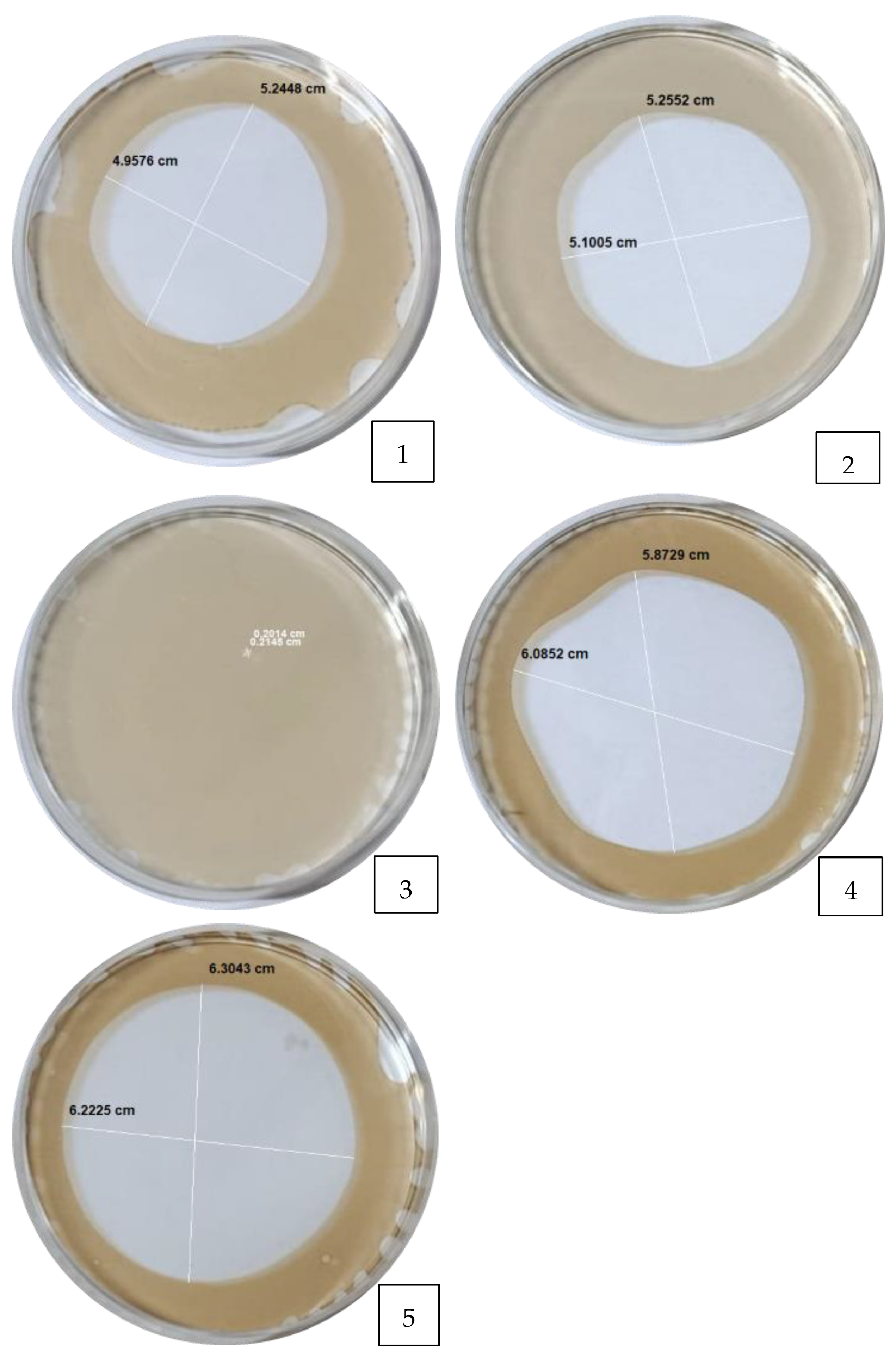
The Oil Spreading assay applied in this study effectively confirmed the presence of surface-active compounds in the purified RL product, as demonstrated by the formation of clear halos on the oil-covered water surface. The presence of such halos indicates the biosurfactant’s ability to reduce interfacial tension; in contrast, in the negative control, where no displacement of the oil layer occurred (Figure A3).
The RL produced in this study generated an average halo area of 2746.7 ± 72.0 mm2, representing a 2063.41% ± 28.36% increase relative to the negative control. This value is comparable to the findings of Rojas et al. [41], who reported a halo increase of 1094.56% ± 40.46% under similar conditions. The larger halo area obtained in the present study suggests greater surface activity of the RL produced here, potentially attributable to differences in congener composition or variations in production and purification conditions.
Furthermore, when replicating the conditions described by Zhao et al. [23]—who reported oil displacement halo diameters of 36.8 mm and 44.5 mm using RL solutions at 500 mg/L and 625 mg/L, respectively—our results yielded larger halo diameters of 49.8 mm and 59.1 mm (Figure 7). This indicates a superior interfacial displacement capacity of the RL produced in this study at equivalent concentrations, possibly associated with a higher proportion of di-rhamnolipid congeners or increased biosurfactant stability under the tested conditions.

4. Conclusions

These results allow us to conclude that the combination of an agitation speed between 175 and 190 rpm and an aeration rate of 0.5 vvm provided optimal oxygen distribution, thereby increasing RL production by P. aeruginosa 6K-11 to 52.2 g/L. Additionally, the use of residual frying oil as a low-cost carbon source proved to be an effective and sustainable alternative, offering a value-added approach for the reuse of this waste material.

Author Contributions

I.A.-A. (Conceptualization, Investigation, Methodology, Validation, Writing—original draft), F.M. (Conceptualization, Methodology, Writing—review & editing), S.G.-M. (Conceptualization, Project administration, Supervision, Writing—review & editing). All authors have read and agreed to the published version of the manuscript.

Funding

This research was supported by the Vice-Rectorate for Research and Postgraduate Studies at National University of San Marcos—Rector’s Resolution N° 03556-R-19 and project number B19100241. The authors have reviewed and edited the output and take full responsibility for the content of this publication.

Data Availability Statement

Further information can be found via the following link https://hdl.handle.net/20.500.12672/26122. The corresponding author will share any other underlying data related to this article upon reasonable request.

Conflicts of Interest

The authors declare no conflicts of interest.

Abbreviations

The following abbreviations are used in this manuscript:
CCDCompound Central Design
CMCCritical Micelle Concentration
RSMResponse Surface Methodology
DODissolved Oxygen
RLRhamnolipid
SWSiegmund and Wagner

Appendix A

Appendix A.1

Figure A1. Chromatogram of RL 6K-11, produced by P. aeruginosa 6K-11. Detection of 14 types of RL by UPLC-MS/MS (Performed by Calleja, 2016 [13]).
Applmicrobiol 05 00147 g0a1

Appendix A.2

Table A1. Factors and levels used in the CCD, as well as experimental and theoretical values of RL production of P. aeruginosa 6k-11.
Factor A:
Nitrogen Source (g/L)
Factor B:
Aeration Rate
(vvm)
Factor C:
Agitation Speed
(rpm)
Response:
Rhamnolipids
(g/L)
ExperimentalTheoretical
13.30.516017.34518.913
21.950.618027.20319.591
32.40.6518019.18624.447
42.40.61707.3877.374
51.50.51608.7848.053
62.40.618018.48519.545
71.50.71607.0619.239
82.40.619016.25616.602
92.40.618021.91619.545
103.30.720030.45930.535
112.40.61706.7777.374
122.40.5518029.73526.074
131.50.720027.94326.831
141.50.720029.25226.831
153.30.720028.89330.535
162.40.619016.54116.602
171.50.51609.3488.053
181.50.520017.55719.875
191.50.71606.9799.239
203.30.520039.71038.230
213.30.520041.12538.230
223.30.520040.36738.230
231.50.51609.3418.053
243.30.720028.91530.535
251.950.618024.43719.591
262.40.6518019.58524.447
273.30.516015.95118.913
282.40.5518031.54426.074
292.40.618020.76819.545
301.50.71607.1429.239
313.30.71608.6645.448
322.850.618017.57423.232
333.30.516017.73818.913
343.30.71608.1925.448
351.50.520016.77019.875
363.30.71608.4485.448
371.50.720028.97726.831
381.50.520016.31519.875
392.850.618015.43923.232

Appendix A.3

Figure A2. Purified RL samples. Golden oily substances are observed.
Applmicrobiol 05 00147 g0a2

Appendix A.4

Figure A3. Clarification zones or oils spreading circles generated by the action of the surfactants and the negative control. 1. RL (500 mg/L). 2. Polysorbate 80 (500 mg/L). 3. Distillate water. 4. RL (625 mg/L). 5. Polysorbate 80 (625 mg/L).
Applmicrobiol 05 00147 g0a3

References

  1. Sarubbo, L.A.; Silva, M.d.G.C.; Durval, I.J.B.; Bezerra, K.G.O.; Ribeiro, B.G.; Silva, I.A.; Twigg, M.S.; Banat, I.M. Biosurfactants: Production, properties, applications, trends, and general perspectives. Biochem. Eng. J. 2022, 181, 108377. [Google Scholar] [CrossRef]
  2. Liu, Y.; Zeng, G.; Zhong, H.; Wang, Z.; Liu, Z.; Cheng, M.; Liu, G.; Yang, X.; Liu, S. Effect of rhamnolipid solubilization on hexadecane bioavailability: Enhancement or reduction? J. Hazard. Mater. 2017, 322, 394–401. [Google Scholar] [CrossRef] [PubMed]
  3. Sekhon-Randhawa, K.K.; Rahman, P.K. Rhamnolipid biosurfactants: Past, present, and future scenario of global market. Front. Microbiol. 2014, 5, 106124. [Google Scholar] [CrossRef] [PubMed]
  4. Gong, Z.; Peng, Y.; Wang, Q. Rhamnolipid production, characterization and fermentation scale-up by Pseudomonas aeruginosa with plant oils. Biotechnol. Lett. 2015, 37, 2033–2038. [Google Scholar] [CrossRef]
  5. Pérez-Armendáriz, B.; Cal-Y-Mayor-Luna, C.; El-Kassis, E.G.; Ortega-Martínez, L.D. Use of waste canola oil as a low-cost substrate for rhamnolipid production using Pseudomonas aeruginosa. AMB Express 2009, 9, 61. [Google Scholar] [CrossRef]
  6. Clarke, K.G.; Ballot, F.; Reid, S.J. Enhanced rhamnolipid production by Pseudomonas aeruginosa under phosphate limitation. World J. Microbiol. Biotechnol. 2010, 26, 2179–2184. [Google Scholar] [CrossRef]
  7. Amani, H. Application of a Dynamic Method for the Volumetric Mass Transfer Coefficient Determination in the Scale-Up of Rhamnolipid Biosurfactant Production. J. Surfactants Deterg. 2018, 21, 827–833. [Google Scholar] [CrossRef]
  8. Paciello, L.; Parascandola, P. Determination of Volumetric Oxygen Transfer Coefficient to Evaluate the Maximum Performance of Lab Fermenters. CET J.—Chem. Eng. Trans. 2020, 79, 73. [Google Scholar]
  9. Bazsefidpar, S.; Mokhtarani, B.; Panahi, R.; Hajfarajollah, H. Overproduction of rhamnolipid by fed-batch cultivation of Pseudomonas aeruginosa in a lab-scale fermenter under tight DO control. Biodegradation 2019, 30, 59–69. [Google Scholar] [CrossRef]
  10. Zhu, L.; Yang, X.; Xue, C.; Chen, Y.; Qu, L.; Lu, W. Enhanced rhamnolipids production by Pseudomonas aeruginosa based on a pH stage-controlled fed-batch fermentation process. Bioresour. Technol. 2012, 117, 208–213. [Google Scholar] [CrossRef]
  11. Martinez, D.G. Optimization of the Carbon Source for the Production of a Rhamnolipid Surfactant by a Native Strain of Pseudomonas aeruginosa 6K11. Master’s Thesis, National University of San Marcos, Lima, Peru, 2015. Available online: https://cybertesis.unmsm.edu.pe/item/1c88b6ba-66e4-42d5-aeaa-869dcb8d5262f230 (accessed on 21 November 2025).
  12. Guzmán, J.A. Optimization of Fermentation Parameters for the Production of Rhamnolipids by Pseudomonas aeruginosa 6K-11 in Submerged Cultures at Laboratory Scale. Master’s Thesis, National University of San Marcos, Lima, Peru, 2016. Available online: https://cybertesis.unmsm.edu.pe/item/0900ab87-ffd1-41ee-aced-dd958d68a8e0 (accessed on 21 November 2025).
  13. Calleja, G.M. Identification of Rhamnolipids Produced by Pseudomonas aeruginosa 6k-11 Contained in Halos Revealed on CTAB/MB Agar Using UPLC–MS/MS. Master’s Thesis, National University of San Marcos, Lima, Peru, 2016. Available online: https://cybertesis.unmsm.edu.pe/item/3a388105-2f79-4a60-82d0-07bf62c4f230 (accessed on 21 November 2025).
  14. Tabuchi, T.; Martínez, D.; Hospinal, M.; Merino, F.; Gutiérrez, S. Optimización y modificación del método para la detección de ramnolípidos. Revista Peruana de Biología 2015, 22, 247–258. [Google Scholar] [CrossRef]
  15. Alcalde, M.A.; Merino-Rafael, F.A.; Gutiérrez-Moreno, S.M. Optimization of mineral nutrients to improve rhamnolipid production by Pseudomonas aeruginosa 6K-11. J. Chem. Technol. Biotechnol. 2024, 99, 2170–2177. [Google Scholar] [CrossRef]
  16. Sun, H.; Wang, L.; Nie, H.; Diwu, Z.; Nie, M.; Zhang, B. Optimization and characterization of rhamnolipid production by Pseudomonas aeruginosa NY3 using waste frying oil as the sole carbon. Biotechnol. Prog. 2021, 37, e3155. [Google Scholar] [CrossRef] [PubMed]
  17. Shi, J.; Chen, Y.; Liu, X.; Li, D. Rhamnolipid production from waste cooking oil using newly isolated halotolerant Pseudomonas aeruginosa M4. J. Clean. Prod. 2021, 278, 123944. [Google Scholar] [CrossRef]
  18. Monsigny, M.; Petit, C.; Roche, A.-C. Colorimetric determination of neutral sugars by a resorcinol sulfuric acid micromethod. Anal. Biochem. 1988, 175, 525–530. [Google Scholar] [CrossRef]
  19. Ramesh, H.; Mayr, T.; Hobisch, M.; Borisov, S.; Klimant, I.; Krühne, U.; Woodley, J.M. Measurement of oxygen transfer from air into organic solvents. J. Chem. Technol. Biotechnol. 2016, 91, 832–836. [Google Scholar] [CrossRef]
  20. Garcia-Ochoa, F.; Gomez, E. Oxygen Transfer Rate Determination: Chemical, Physical and Biological Methods. In Encyclopedia of Industrial Biotechnology; Wiley: Hoboken, NJ, USA, 2010; pp. 1–21. [Google Scholar] [CrossRef]
  21. Beuker, J.; Steier, A.; Wittgens, A.; Rosenau, F.; Henkel, M.; Hausmann, R. Integrated foam fractionation for heterologous rhamnolipid production with recombinant Pseudomonas putida in a bioreactor. AMB Express 2016, 6, 11. [Google Scholar] [CrossRef]
  22. Arkhipov, V.P.; Arkhipov, R.V.; Petrova, E.V.; Filippov, A. Micellar and solubilizing properties of rhamnolipids. Magn. Reason. Chem 2023, 61, 345–355. [Google Scholar] [CrossRef]
  23. Zhao, F.; Liang, X.; Ban, Y.; Han, S.; Zhang, J.; Zhang, Y.; Ma, F. Comparison of Methods to Quantify Rhamnolipid and Optimization of Oil Spreading Method. Tenside Surfactants Deterg. 2016, 53, 243–248. [Google Scholar] [CrossRef]
  24. Rasband, W. ImageJ 1.41o; National Institutes of Health: Washington, DC, USA, 2013. Available online: https://imagej.net/ij/ (accessed on 9 June 2025).
  25. Wang, M.; Li, Y.; Cheng, Z.; Zhong, C.; Ma, W. Evolution and equilibrium of a green technological innovation system: Simulation of a tripartite game model. J. Clean. Prod. 2021, 278, 123944. [Google Scholar] [CrossRef]
  26. Pathania, A.S.; Jana, A.K. Utilization of waste frying oil for rhamnolipid production by indigenous Pseudomonas aeruginosa: Improvement through co-substrate optimization. J. Environ. Chem. Eng. 2020, 8, 104304. [Google Scholar] [CrossRef]
  27. Nur-Asshifa, M.N.; Zambry, N.S.; Salwa, M.S.; Yahya, A.R.M. The influence of agitation on oil substrate dispersion and oxygen transfer in Pseudomonas aeruginosa USM-AR2 fermentation producing rhamnolipid in a stirred tank bioreactor. 3 Biotech. 2017, 7, 189. [Google Scholar] [CrossRef] [PubMed]
  28. Kahraman, H.; Erenler, S.O. Rhamnolipid production by Pseudomonas aeruginosa engineered with the Vitreoscilla hemoglobin gene. Appl. Biochem. Microbiol. 2012, 48, 188–193. [Google Scholar] [CrossRef]
  29. de Kronemberger, F.A.; Anna, L.M.M.S.; Fernandes, A.C.L.B.; de Menezes, R.R.; Borges, C.P.; Freire, D.M.G. Oxygen-controlled Biosurfactant Production in a Bench Scale Bioreactor. Appl. Biochem. Biotechnol. 2008, 147, 33–45. [Google Scholar] [CrossRef]
  30. Schmidt, A.; Hammerbacher, A.S.; Bastian, M.; Nieken, K.J.; Klockgether, J.; Merighi, M.; Lapouge, K.; Poschgan, C.; Kölle, J.; Acharya, K.R.; et al. Oxygen-dependent regulation of c-di- GMP synthesis by SadC controls alginate production in Pseudomonas aeruginosa. Environ. Microbiol. 2016, 18, 3390–3402. [Google Scholar] [CrossRef]
  31. Zhao, F.; Shi, R.; Ma, F.; Han, S.; Zhang, Y. Oxygen effects on rhamnolipids production by P. aeruginosa. Microb. Cell Factories 2018, 17, 39. [Google Scholar] [CrossRef]
  32. Vanavil, B.; Perumalsamy, M.; Seshagiri Rao, A. Studies on the Effects of Bioprocess Parameters and Kinetics of Rhamnolipid Production by P. aeruginosa NITT 6L. Chem. Biochem. Eng. Q. 2014, 28, 383–390. [Google Scholar] [CrossRef]
  33. Chayabutra, C.; Wu, J.; Ju, L.-K. Rhamnolipid production by Pseudomonas aeruginosa under denitrification: Effects of limiting nutrients and carbon substrates. Biotechnol. Bioeng. 2001, 72, 25–33. [Google Scholar] [CrossRef]
  34. Xu, N.; Liu, S.; Xu, L.; Zhou, J.; Xin, F.; Zhang, W.; Qian, X.; Li, M.; Dong, W.; Jiang, M. Enhanced rhamnolipids production using a novel bioreactor system based on integrated foam-control and repeated fed-batch fermentation strategy. Biotechnol Biofuels 2020, 13, 80. [Google Scholar] [CrossRef]
  35. Azemi, M.A.F.M.; Rashid, N.F.M.; Saidin, J.; Effendy, A.W.M.; Bhubalan, K. Application of Sweetwater as Potential Carbon Source for Rhamnolipid Production by Marine Pseudomonas aeruginosa UMTKB-5. Int. J. Biosci. Biochem. Bioinform. 2016, 6, 50–58. [Google Scholar] [CrossRef][Green Version]
  36. Sodagari, M.; Ju, L. Addressing the critical challenge for rhamnolipid production: Discontinued synthesis in extended stationary phase. Process Biochem. 2020, 91, 83–89. [Google Scholar] [CrossRef]
  37. Shatila, F.; Diallo, M.M.; Şahar, U.; Ozdemir, G.; Yalçın, H.T. The effect of carbon, nitrogen and iron ions on mono-rhamnolipid production and rhamnolipid synthesis gene expression by Pseudomonas aeruginosa ATCC 15442. Arch. Microbiol. 2020, 202, 1407. [Google Scholar] [CrossRef]
  38. Wu, T.; Jiang, J.; He, N.; Jin, M.; Ma, K.; Long, X. High-Performance Production of Biosurfactant Rhamnolipid with nitrogen Feeding. J. Surfactants Deterg. 2019, 22, 395–402. [Google Scholar] [CrossRef]
  39. Jamal, A.; Qureshi, M.; Ali, N.; Ali, M.; Hameed, A. Enhanced Production of rhamnolipid by P. aeruginosa using Response Surface Methodology. Asian J. Chem. 2014, 26, 1044–1048. [Google Scholar] [CrossRef]
  40. Albasri, H.M.; Almohammadi, A.A.; Alhhazmi, A.; Bukhari, D.A.; Waznah, M.S.; Mawad, A.M.M. Production and characterization of rhamnolipid biosurfactant from thermophilic Geobacillus stearothermophilus bacterium isolated from Uhud mountain. Front. Microbiol. 2024, 15, 1358175. [Google Scholar] [CrossRef]
  41. Rojas, J.O.; Velásquez, W.; Chacón, Z.; Ball, M. Evaluación de la capacidad de ramnolípidos crudos para la remoción y emulsificación de hidrocarburos en un sistema modelo. Sci. J. Exp. Fac. Sci. Univ. Zulia 2015, 23, 39–50. [Google Scholar]
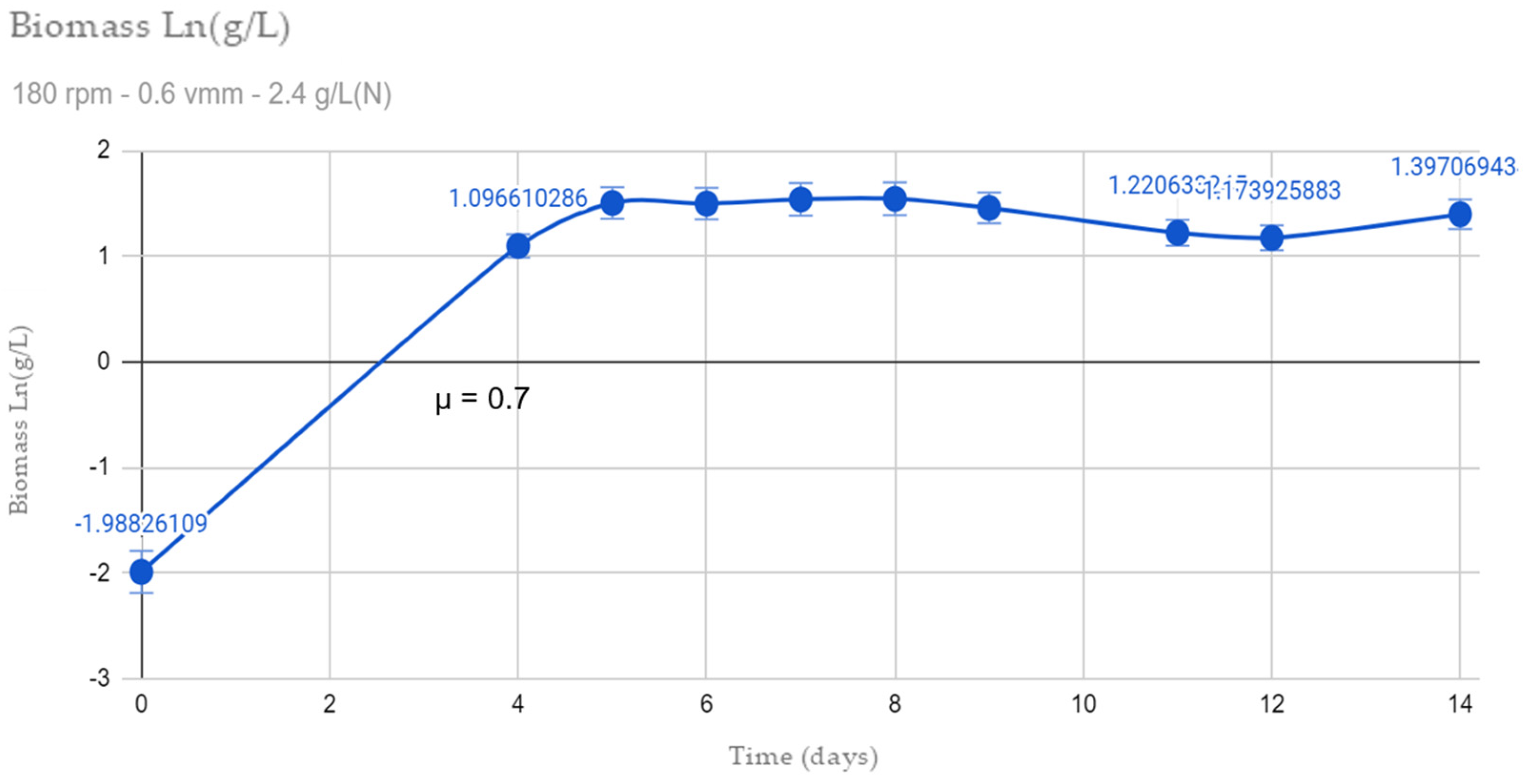
Figure 1. Growth kinetics of P. aeruginosa 6k-11 under fermentation conditions corresponding to the central points of the experimental design: 2.4 g/L NaNO3, 0.6 vvm and 180 rpm.
Applmicrobiol 05 00147 g001
Figure 2. Progression of OD vs. growth of P. aeruginosa 6k11 over time for the central points.
Applmicrobiol 05 00147 g002
Figure 3. Effect of aeration rate and NaNO3 concentration on RL production.
Applmicrobiol 05 00147 g003
Figure 4. Effect of agitation speed and NaNO3 concentration on RL production.
Applmicrobiol 05 00147 g004
Figure 5. Effect of agitation speed and aeration rate on RL production.
Applmicrobiol 05 00147 g005
Figure 6. Critical micelle concentration (CMC) of RL produced by P. aeruginosa 6K-11. The plotted values represent the average of three replicate treatments. The blue points and regression line represent conductivity measurements at low RL concentrations (pre-CMC region), where conductivity increases sharply with RL concentration. The orange points and regression line correspond to higher RL concentrations (post-CMC region), where the slope decreases following micelle formation. The green markers indicate the intersection of both regression lines, identifying the critical micelle concentration (CMC) at 3.14 g/L.
Applmicrobiol 05 00147 g006
Figure 7. Comparison of diameters of the oil spreading circle obtained with surfactant solution at different concentrations. RL: rhamnolipids de P. aeruginosa 6K-11. T: Tween 80 (Polysorbate 80).
Applmicrobiol 05 00147 g007
Table 1. RL yield average with standard error.
Rhamnolipid Yield (mg/L)ExperimentalTheoretical
Mean ± SE25.21 ± 2.5424.32 2.28
Table 2. Quality and adequacy indicators were evaluated in each mathematical model determined by the CDD. The suggested mathematical model is presented in bold.
Sourcep-Value SequentialLack of FitAdjusted R2Predicted R2Annotation
Linear<0.0001<0.00010.64550.6038
2FI0.0017<0.00010.75670.7545
Quadratic0.0002<0.00010.86190.8112Suggested
Cubic<0.00010.08000.99050.9849Aliased
Table 3. Analysis of Variance (ANOVA) of the quadratic Response Surface model for RL production with P. aeruginosa strain 6k-11.
ParmeterSum of SquaresDfMean of SquaresF-Valuep-Value
Model3354.049372.6727.36<0.0001
A-Nitrogen concentration331.421331.4224.33<0.0001
B-Aeration rate66.19166.194.860.0356
C-Agitation2127.1712127.17156.18<0.0001
AB321.961321.9623.64<0.0001
AC84.27184.276.190.0189
BC49.93149.933.670.0655
A220.78120.781.530.2267
B2194.971194.9714.310.0007
C2340.901340.9025.03<0.0001
Residual394.982913.62
Lack of adjustment374.37574.8787.22<0.0001
Pure Error20.60240.8585
Cor Total3749.0138
Table 4. Optimization of factors for RL production. The Optimal conditions that were tested are shown in bold.
Nitrogen Source (g/L)Aeration Rate (vvm)Agitation Speed
(rpm)
RL
(g/L)
Desirability
13.0410.503180.49151.5771.000
23.2070.507176.33650.4971.000
33.1280.509179.78850.3401.000
43.2570.508175.54950.3191.000
53.1450.502191.39649.9421.000
62.8920.502181.57149.8261.000
73.2570.511190.31449.5121.000
83.2460.518180.10449.0531.000
92.8060.501183.69048.8711.000
103.1350.511187.92748.8661.000
113.0470.502175.74148.7811.000
Disclaimer/Publisher’s Note: The statements, opinions and data contained in all publications are solely those of the individual author(s) and contributor(s) and not of MDPI and/or the editor(s). MDPI and/or the editor(s) disclaim responsibility for any injury to people or property resulting from any ideas, methods, instructions or products referred to in the content.