Article

Repellent and Lethal Effects of Different Wavelengths of Light-Emitting Diodes (LEDs) Against Tetranychus urticae


1
Department of Plant Protection, Faculty of Agriculture, Akdeniz University, Antalya 07070, Türkiye
2
Department of Environmental Protection Technology, Vocational School of Technical Sciences, Akdeniz University, Antalya 07070, Türkiye
3
Department of Agricultural Machinery and Technologies Engineering, Faculty of Agriculture, Akdeniz University, Antalya 07070, Türkiye
*
Author to whom correspondence should be addressed.
Crops 2026, 6(2), 39; https://doi.org/10.3390/crops6020039
Submission received: 21 February 2026 / Revised: 24 March 2026 / Accepted: 30 March 2026 / Published: 1 April 2026

Abstract

The two-spotted spider mite, Tetranychus urticae Koch, is a major agricultural pest that causes economic losses in the cultivation of most crops worldwide. Pesticide resistance and the phase-out of many active pesticidal substances have accelerated research into alternative methods for pest management. The effects of light-emitting diodes (LEDs) on plants, as well as their potential use in pest management, have attracted the attention of researchers for the last 25 years. In this study, the repellent effects of UV-A, blue, and red LEDs on T. urticae were investigated using choice tests in laboratory conditions. The lethal effect of red LED light on adult individuals was determined by a no-choice test. Importantly, red LED caused 67.0 ± 4.5% (mean ± SE) mortality in adults in the no-choice test. Second, the UV-A LED clearly had a strong repellent effect on T. urticae in the choice tests. In the “UV-A vs. white LED” and “UV-A vs. darkness” choice tests, the egg-laying percentage in the UV-A part remained below 0.55%. Furthermore, UV-A also had a significant repellent effect on T. urticae larvae. In the choice tests, the larval ratio in the UV-A part was less than 5%. The results of laboratory experiments indicated that red and UV-A LEDs have significant lethal and repellent effects on T. urticae. Comprehensive investigations should be performed in greenhouses using different strategies to optimize how these potential effects can be used in pest management.

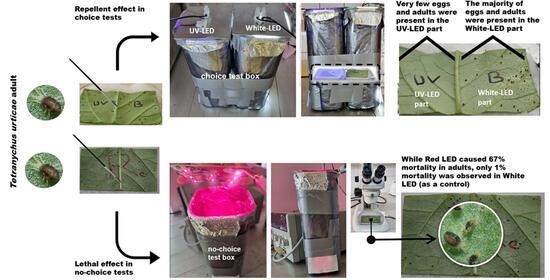
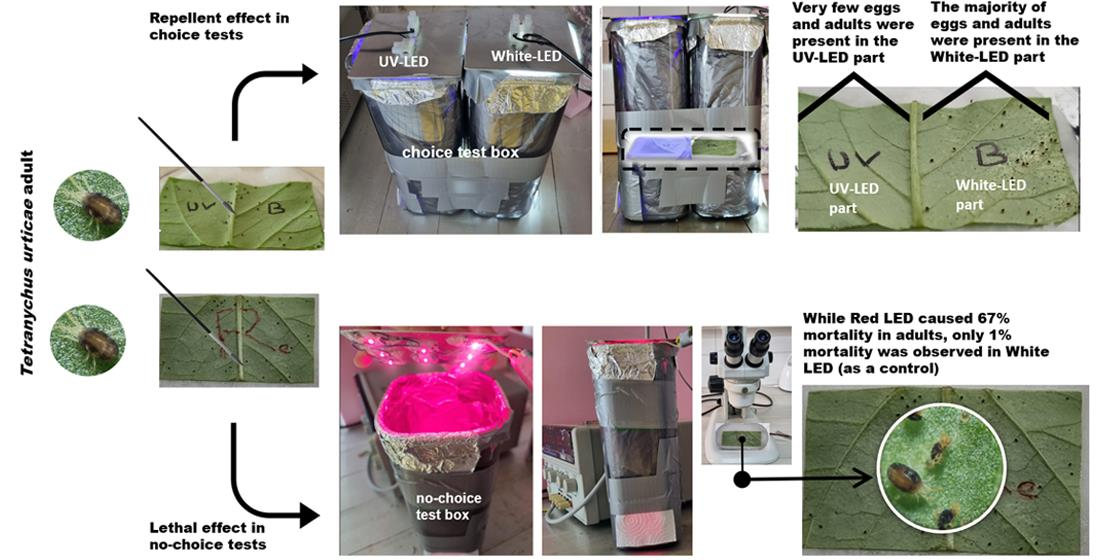
Graphical Abstract

1. Introduction

Light, the primary energy source for photosynthesis, also functions as a signal in processes that trigger gene expression, physiology, morphology, and metabolism in plants [1]. Additionally, the wavelength and intensity of light, as well as the location of the host plant, can positively or negatively affect the activities of insects associated with crops [2]. Changing the photoperiod may directly or indirectly alter the activity of both beneficial and pest insects that depend on plants, such as food plant location, herbivore host or prey finding, dispersion, and daily rhythms [3,4]. Pest reactions to light are influenced by several factors, including light intensity, exposure time, wavelength, the contrast between light and colour, and the ambient light. Thus, behavioural studies of biological control agents under modified light environments are critical for predicting their activity and potential impact on integrated pest management in greenhouses. The impact of light on insect varies both qualitatively and quantitatively depending on the light source (light bulb or light-emitting diode) [5,6]; therefore, the effects of light on pests may be direct or indirect.
Light-emitting diodes (LEDs), which are semiconductor light sources, could be promising light sources for use in pest traps. The selective wavelengths and intensities of LEDs allow them to be specifically tailored to targeting pests, reducing damage to beneficial and neutral insects to some extent [7]. Owing to these advantages, LEDs can be used directly or indirectly as traps against pests [8] and can provide significant benefits in this field.
In the related literature, the number of studies on the use of LEDs against agricultural pests has increased significantly in the last 25 years. Many of these studies have investigated the most effective LED wavelengths for attracting and trapping different species, from greenhouse pests to stored product pests [7,9,10,11,12,13,14,15,16,17,18]. In addition, the repellent effects of some LED wavelengths against pests have been revealed [19]. Recently, more complex studies have been performed with LEDs. For example, some changes caused by LEDs on the chemistry of plants and their effects on pests and pest–natural enemy working systems have been investigated as a whole [20,21]. In some studies, the effects of LEDs on both harmful species and their natural enemies were examined together to reveal the effects of LEDs in biological control applications [22].
In this context, investigating the potential effects of LEDs, which stand out as an alternative physical control method, against the two-spotted spider mite Tetranychus urticae Koch (Acari: Tetranychidae) by observing different factors could lead to important findings. T. urticae is a major phytophagous pest that is widespread worldwide, causing severe damage to many economically valuable agricultural crops, including fruits, vegetables, ornamentals, and field crops [23,24,25,26]. The use of insecticides/acaricides against T. urticae is still common in many parts of the world. T. urticae has developed resistance to most chemical groups very quickly because of its short life cycle, arrhenotoky, and high reproductive capacity [23,27,28,29,30,31,32,33,34,35,36,37,38,39].
Previous studies have shown that instantaneous and high-dose applications of UV-B and UV-C have a lethal and strong suppressive effect on T. urticae [40,41,42,43]. UV-B significantly reduced both survival and egg production in T. urticae [40]. In non-diapausing females, median effective doses of UV-C and UV-B caused 50% mortality, while UV-A showed a repellent effect [41]. UV-C exposure resulted in 97–99% mortality of T. urticae [42]. Application of UV-C at a dose of 350 J m−2 twice weekly after sunset also strongly suppressed T. urticae populations [43]. However, in the majority of these studies, UV-B and UV-C wavelengths obtained from several light sources other than LEDs were applied. In our study, we aimed to contribute to the findings revealed in the past with new results by investigating the potential effects of LED-based UV-A, blue, and red wavelengths on T. urticae. The main reason for choosing UV-A, blue, and red wavelengths in our research was that these wavelengths are widely used in controlled-environment plant production due to their positive effects on plant growth, morphology, and yield. Therefore, understanding their potential impact on pest dynamics is important for developing integrated lighting strategies that support crop production. In this context, our study aimed to determine how a lighting system consisting of these LED wavelengths would influence pest behavior and survival when applied during plant cultivation. In some studies, it has been observed that the combination of UV-A (383–426 nm), red (623–673 nm), and blue (427–478 nm) LEDs resulted in an increase in fresh biomass [44], while the combination of white, blue (449–548 nm), and red (660 nm) LED light was found to enhance chlorophyll and carotenoid content [45]. For this purpose, according to the findings of our preliminary studies, the repellent effects of UV-A, blue, and red light and the lethal effects of red light against T. urticae were determined under controlled conditions using choice and no-choice tests.

2. Materials and Methods

2.1. Lighting System and Radiometric Characterization

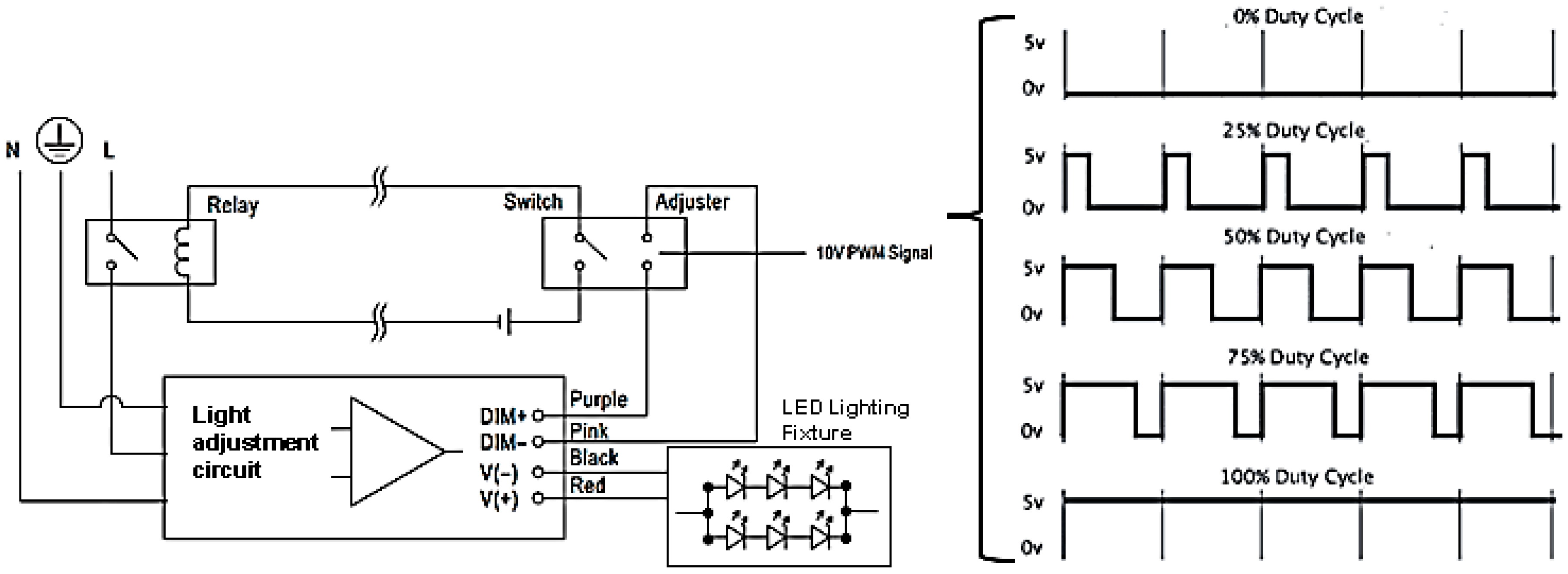
In this study, LED arrays with specific spectral outputs were developed as light sources, each driven by independent constant-current drivers (Figure 1). To ensure precise control over luminous intensity, Pulse Width Modulation (PWM) was utilized, allowing for incremental adjustments of light levels from 0% to 100% via duty cycle modulation. A standardized energy baseline was established by configuring the PWM settings to maintain a uniform total electrical power of 6.0 W across all experimental groups (6 × 1 W LEDs for white, red, and blue treatments; 2 × 3 W LEDs for the UV-A treatment). Following preliminary intensity-response trials, a 100% duty cycle was selected for all definitive choice and no-choice bioassays to ensure a maximum stabilized spectral output and to eliminate potential stroboscopic effects (flicker) that might otherwise confound the behavioral responses of T. urticae [46,47].
Given that photometric units (luminous flux in lm) are biased toward human spectral sensitivity and are technically inappropriate for non-visible spectra such as UV-A, the light dose delivered to the leaf surface was quantified using radiometric units. To ensure scientific accuracy, the irradiance (Ee) at the leaf surface was derived by considering the total radiant flux (Φe) distributed over the target area (A) at a standardized distance of 16 cm (r = 0.16 m), applying the inverse square law principle adjusted for the LED projection area (A ≈ π·r2) [48]:
E e = Φ e A
where Ee is the irradiance (W·m−2), Φe is the radiant flux (W), and A is the target area. For the visible spectrum LEDs, Φe was derived from the luminous flux (Φυ) using the luminous efficacy of radiation, K(λ), specific to each peak wavelength, according to the following relation:
Φ e = Φ υ K ( λ )
Here, K(λ) represents the spectral-specific conversion factor (expressed in lm·W−1) derived from the ISO/CIE 23539:2023 [49] photopic spectral luminous efficiency function. This factor accounts for the sensitivity of the human eye at different wavelengths, calculated based on the standard values for each peak wavelength (K(λ) ≈ 683 × V(λ)) is the photopic spectral sensitivity function). This conversion ensures that the photometric values provided by the manufacturer are accurately translated into radiometric units, allowing for a direct energetic comparison with the non-visible UV-A spectrum, which was characterized directly via radiometric specifications.
For the visible spectrum LEDs, the total radiant flux was converted from luminous flux by using the luminous efficacy of radiation specific to each peak wavelength [50]. Furthermore, the photosynthetic photon flux density (PPFD) was determined by calculating the energy of individual photons (Ep) at the respective peak wavelengths using the Planck-Einstein relation [48,51]:
E P = h · c λ · 10 9
P P F D = E e E p · N A
where h is Planck’s constant (6.626 × 10⁻³⁴ j·s), λ is wavelength (nm), c is the speed of light (2.998 × 10⁸ m·s−1), and NA is Avogadro’s number (6.022 × 10²³ mol−1). Consequently, irradiance (W·m−2) and PPFD (μmol·m−2·s−1) were characterized as detailed in Table 1. This normalization of electrical power, contrasted with the inherent variations in surface irradiance, facilitated a robust evaluation of whether the biological responses were mediated by spectral quality (wavelength) or energy quantity (irradiance) [52]. To prevent spectral cross-contamination, each light treatment was isolated within separate controlled environmental chambers.
A timer was used to automate the photoperiod. The lighting environment was characterized using two complementary measurement approaches to ensure radiometric precision. Illuminance levels were measured using a digital lux meter (Model TES 1339, TES Electrical Electronic Corp., Taipei, Taiwan) with a measuring range of 0.01 to 999,900 lx and an accuracy of ±3% rdg ±5 digits. To provide biologically relevant data, the photosynthetic photon flux density (PPFD) and total irradiance at the leaf surface (at a 16 cm distance) were quantified using a calibrated Apogee MQ-510 Full-Spectrum Quantum Meter (Apogee Instruments, Inc., Logan, UT, USA). This device, featuring an accuracy of ±5%, is specifically optimized for precise measurements under narrow-band LED sources. These empirical readings were further cross-validated with the theoretical radiometric conversion equations (Equations (1)–(4)) based on the specific spectral power distribution of each LED treatment, ensuring a robust and standardized light dose across all experimental groups (Table 1).
Figure 1. LED light level control circuit diagram and PWM signal. Adapted from HLG-40H series datasheet (Mean Well Enterprises Co., Ltd., New Taipei City, Taiwan) [55] and modified by the authors.
Crops 06 00039 g001

2.2. Tetranychus urticae and Rearing Method

In all the experiments within the study, a red form of the two spotted spider mites, T. urticae, obtained from a greenhouse in Antalya, was used. This population was confirmed to be T. urticae [56] and was maintained in the climate chamber at Akdeniz University Faculty of Agriculture Plant Protection Department. The T. urticae population was reared on clean cowpea plants (Vigna sinensis L.) in a climate chamber at 24 ± 2 °C under 65 ± 10% humidity and a 16:8 (L:D) photoperiod. The cowpea plants used to maintain T. urticae were grown in another clean climate chamber under the same conditions, with insecticide-free cowpea seeds sown in a mixture of turf (Klasmann-Deilmann GmbH Germany Geeste) and perlite (Ultraper, Mersin, Turkey). No fertilizer was used. Additionally, the rectangular leaf parts used in the choice and no-choice tests were obtained by cutting the most suitable leaves from these cowpea plants. All clean cowpea plants were grown in the climate chamber under normal fluorescent lamps.

2.3. Choice and No-Choice Test Experiments

The repellent effects of UV-A, blue and red LEDs on T. urticae adults, egg laying site preferences and larvae (in the larval test) were determined with the choice tests. Furthermore, the lethal effects of red LEDs on the adults were detected by no-choice tests.

2.3.1. Choice Tests

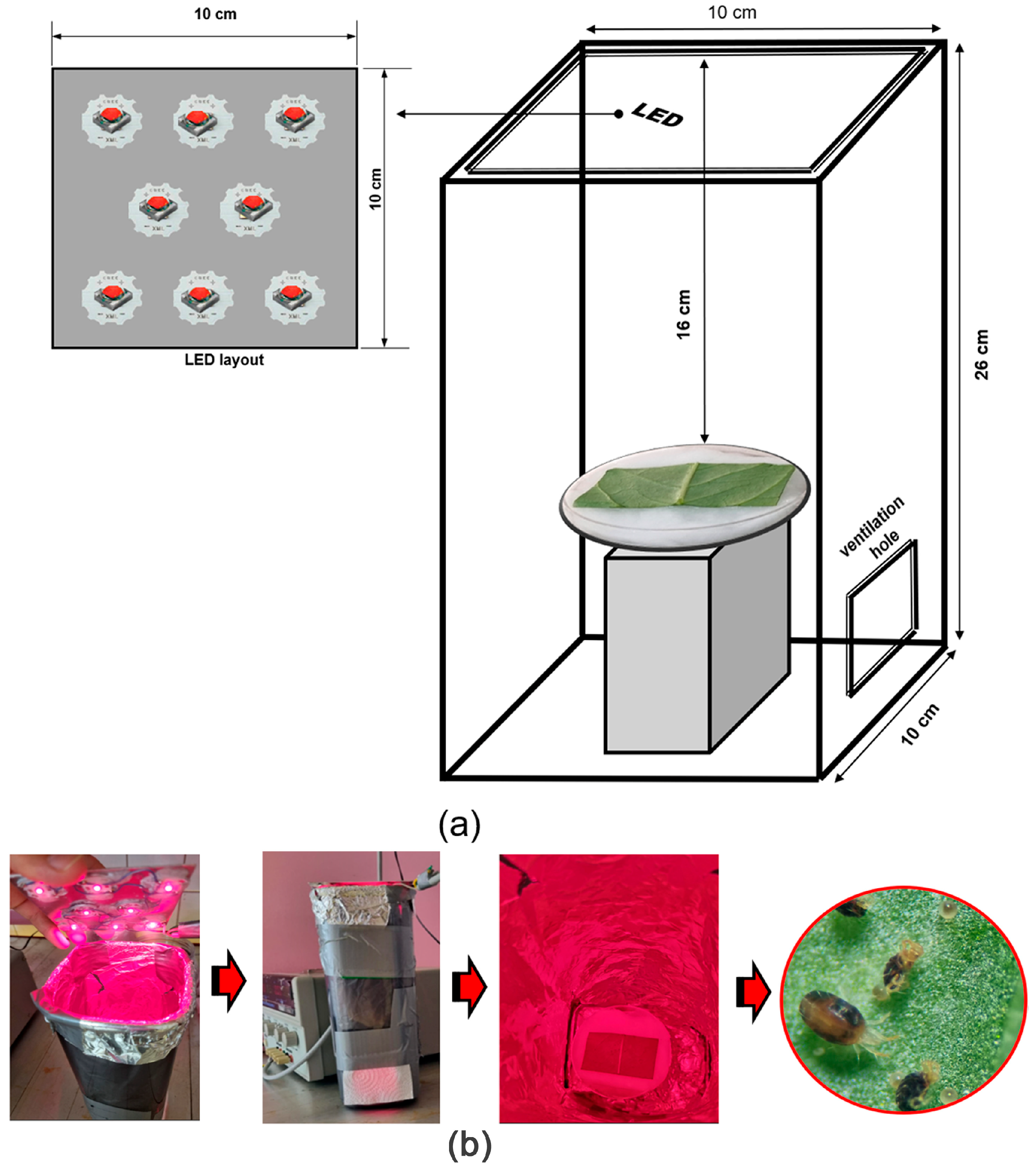
The choice test box was designed: To design this box, two separate plastic boxes that were 26 cm in height × 10 cm in width × 10 cm in length were used (Figure 2a,b). A small ventilation hole was opened into one side of each box near the bottom. The insides of the plastic boxes were covered with aluminium foil, and these two boxes were positioned side by side and sealed with tape. A section of the surface where the boxes were joined side by side (16 cm below the top) was cut out to accommodate a Petri dish measuring 1.5 cm height × 5 cm diameter. In this way, when a Petri dish containing a rectangular cowpea leaf piece measuring 4.5 cm × 2.5 cm in size was placed in the open part of these two boxes, one half of the rectangular leaf was positioned in one box, and the other half was positioned in the other half of the box. When the panels carrying LEDs were placed on the lids of the boxes, half of the 4.5 cm × 2.5 cm leaf remained on one side with one LED and the other half was on the other side with the other LED (or non-LED = darkness). This design allowed the different LED lights (or darkness) in these two boxes to leak slightly to the other box through the gap in the Petri dish. Therefore, during the experiment, this situation provides the opportunity for the adults and larvae on the leaf to perceive the wavelengths present in both boxes, and they can freely decide which way to go or where to lay eggs. The distance between the metal plate carrying the LEDs and the leaf surface where the tested spider mites were located was 16 cm. The detailed technical specifications of the LEDs used here are given in Table 1.
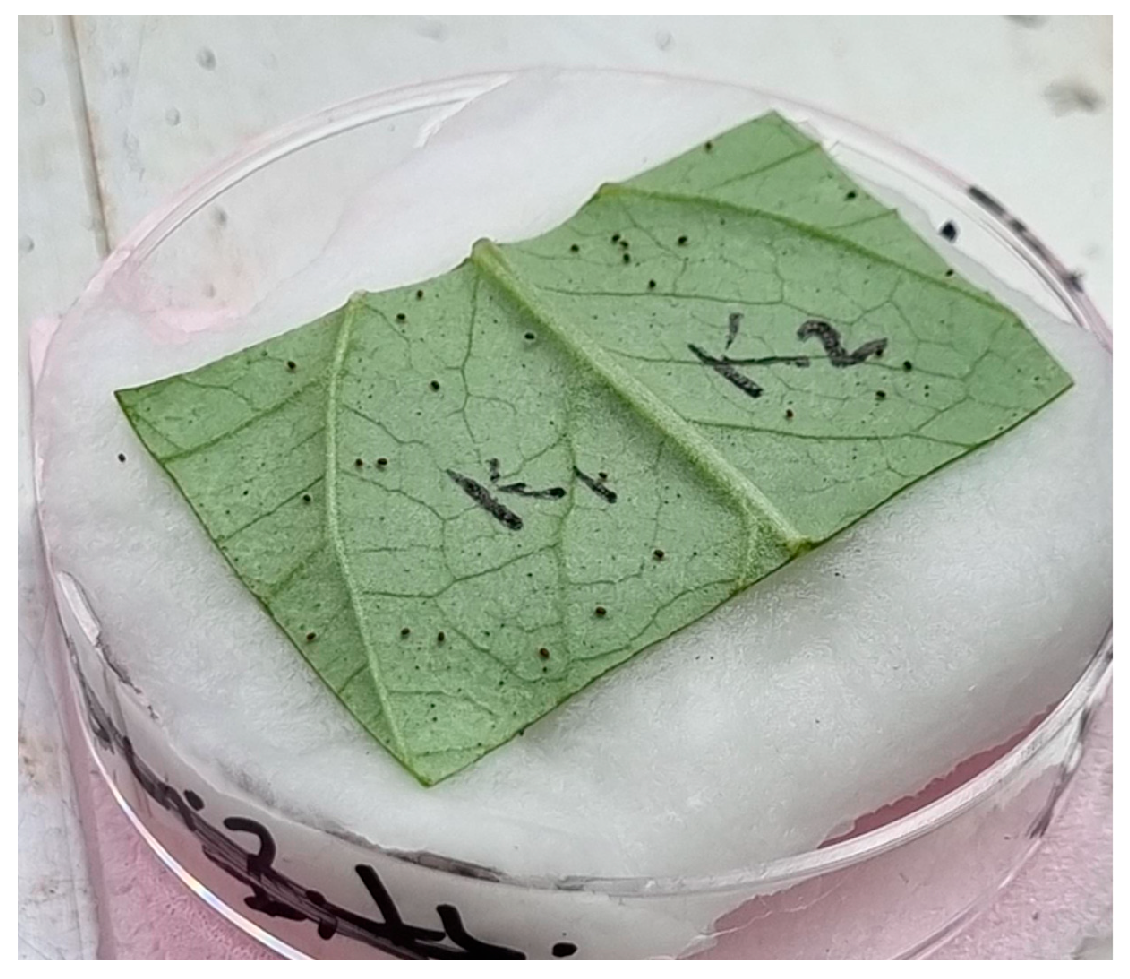
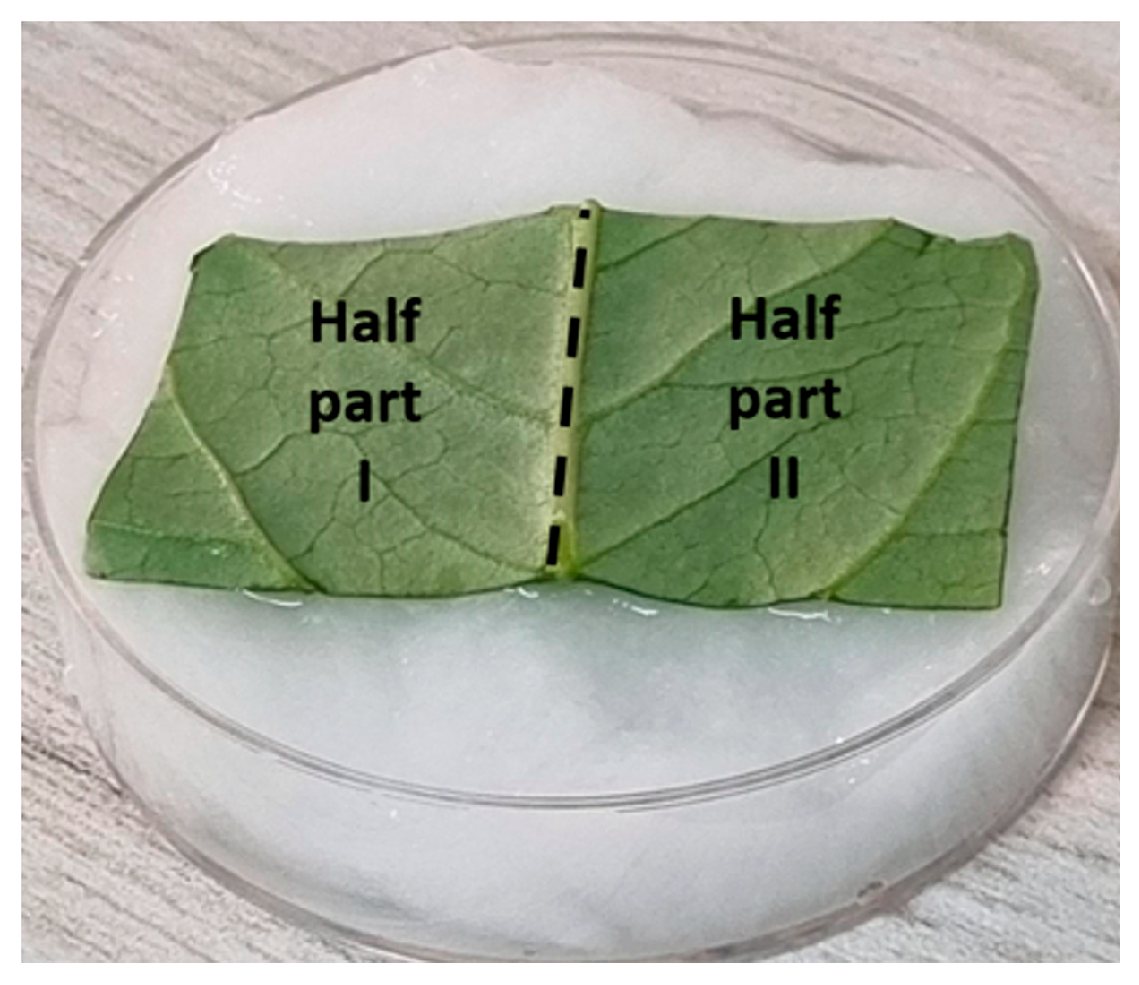
Choice test experiments: Leaves that were smooth and had a symmetrical appearance on both parts of the midrib were selected from 10–15-day-old cowpea plants grown in the climate chamber. Rectangular leaf pieces (4.5 cm × 2.5 cm) were cut with scissors, with their midribs left in the middle, and they were placed on wet cotton in a Petri dish (Figure 3). As shown in Figure 3, the midrib divides the entire leaf area into 2 equal parts. Thirty adult females were left on the abaxial leaf surface with a soft brush. After a short period, adults presented a homogeneous distribution in both parts of the leaf area (Figure 4). This Petri dish was subsequently placed in the relevant space in the choice test box such that the midrib of the leaf was exactly at the junction of the two boxes. The LED panels were placed on the lids of the boxes, the power units were turned on, and the experiment was started (Figure 2). The experiments were terminated after 24 h. Since adults or larvae are mobile, their positions can quickly change between two parts of the leaf when the LEDs are turned off. For this reason, just before the LEDs were turned off, the positions and numbers of mites in the leaf arena were determined by taking photographs. Afterwards, the Petri dish was removed from the choice test box, and the eggs in parts I and II of the leaf area were counted separately under a stereo microscope (Nikon C-LED). In the choice experiments, two different LED wavelengths (or LED and non-LED = darkness) were tested simultaneously during each test. To determine the repellent effects of LEDs against T. urticae, the following dual LED combinations and the number of egg, adult and replicate are given in Table 2. In the repellent effect test for larvae, UV-A vs. darkness and UV-A vs. white dual LED combinations were used (Table 3).
In choice experiments, the “white LED vs. darkness” dual test was considered a control and included in the analyses. Furthermore, within the same climate chamber as the LED experiments, the survival, oviposition, and leaf surface distribution of T. urticae adults transferred to rectangular leaf surface prepared as in the LED experiments were monitored under standard white LED (tube, 4200 lm) light exposure, both outside and inside the LED test units. These tests were designated as additional controls-1 and -2. Additional controls (add-controls-1 and -2) were considered a strong indicator that the experiments were conducted in a suitable environment, both in terms of materials used and methods employed. Tetranychus urticae adults were collected from the same population used for the LED tests at the same time as the LED tests and were monitored under standard white LEDs in the same climate environment. The fact that the majority of the adults or larvae used in the additional controls generally remained on the rectangular leaf surface (did not escape), that there was almost no mortality, and that they were distributed in close proportions in both halves of the rectangular leaf area is significant in demonstrating the health of the experiments. In add. controls-1,-2 for the choice tests, the adults and laid eggs were generally distributed homogeneously and were found in similar numbers on both halves of the entire leaf surface, indicating the reliability of the evaluation of the repellent effects (Figure 4). In the add. control-1, the average percentages of eggs and adults in one-half of the leaf area were 50.7 ± 1.58% and 49.9 ± 1.53%, respectively (5113 eggs and 29 replicates; 834 adult and 29 replicates were used). Similarly, in the add. control-2, the average percentages of eggs and adults in one-half of the leaf area were 47.6 ± 2.01% and 48.9 ± 1.99%, respectively (2748 eggs and 14 replicates; 395 adult and 14 replicates were used). Furthermore, add. control for the choice tests performed on larvae, the numbers of larvae in both halves of the entire leaf surface area were similar. The average numbers of larvae in one-half of the leaf area in the add. control-1 (1122 larvae and 6 replicates) and add. control-2 (746 larvae and 4 replicate) were 49.6 ± 5.15% and 50.7 ± 3.35%, respectively. The homogeneous distribution of adults, eggs and larvae (in the larvae test) on the leaf surface used in the additional controls and their presence in close numbers on both halves of the leaf surface is an important criterion for accurate experimental conditions. An example photograph showing that adults are found in close numbers on both halves of the rectangular leaf surface is given in Figure 4. In adult choice experiments, all tests were repeated at least 3 or more times on different days. In each replicate, approximately 30 adult females were placed on the leaf surface. Adult females of mixed ages were used in the tests. These females were taken from maintaining T. urticae culture and used in the LED tests within approximately one hour. Therefore, the adult females used in the tests were not starved. Adult females were placed on the midrib of a rectangular leaf surface using a fine brush. Shortly thereafter, they were observed to spread evenly across both leaf surfaces homogeneously. During the 24-h test period, the adults remained in the tested leaf arena and largely maintained their initial numbers; however, in some tests, only a few adults escaped from the leaf surface. The number of adults escaping from the leaf surface remained below six in all tests (However, the number of adults escaping was slightly higher in the “UV-A vs. darkness” test). Adults escaping from the leaf surface remained dead in the wet cotton and were not included in the analyses. In the larval experiments, in order to obtain a sufficient number of newly hatched larvae, adult females first laid eggs on the standard rectangular leaf surface used in the tests for 24 h. Six days later, under a stereo microscope, it was observed that the hatched larvae (newly hatched larvae aged 0–24 h, in the 3-legged stage) were walking and were distributed homogeneously on the leaf surface. Larvae at this stage were used for the larval experiments. The rectangular leaf with a sufficient number of larvae was placed in the choice test unit to test the repellent effects of UV-A on larvae. Larval tests were conducted in four replicates, replicate containing 71 to 199 larvae (Table 3).
At the end of the choice test experiments, the numbers of adults, eggs, and larvae (only in larval tests) were recorded in the first and second halves of the rectangular leaf surface. Thus, the numbers in the total test arena and the numbers in the halves exposed to different LEDs were obtained as raw data for statistical analysis. The numbers in parts I or II were then proportioned relative to the total number, and the percentages in these parts were obtained for each replicate.

2.3.2. No-Choice Tests

For the no-choice experiments, a no-choice test box designed with only one plastic container that was 26 cm high × 10 cm wide × 10 cm long was used (Figure 5a,b). First, a small ventilation hole was opened in one side of the box near its bottom. The inner surface of the plastic container was subsequently covered with aluminium foil. The metal panel carrying the LEDs was placed on the top of the box as a lid. In the no-choice test, unlike in the choice test, the adult spider mites were forcibly exposed to the selected LED wavelength. As explained in the choice test section, a 4.5 cm × 2.5 cm rectangular piece of cowpea leaf was placed in a Petri dish containing wetted cotton. Thirty adult females were released on abaxial surface the rectangular leaf arena with a soft brush, and this Petri dish was placed inside the test box. As in the choice tests, there was a distance of 16 cm between the LEDs and the leaf surface bearing the spider mites. The number of adult females and replicates used in no-choice test experiments are given in Table 4.
Red LED was tested to determine its lethal effect level. A white LED was used as a control and included in the analyses. White LED and red LED caused similar temperatures on the leaf surface in the no-choice test box (Table 5). Furthermore, additional controls (142 adults and 5 replicates) were also performed under standard white LED (tube) light in the same climate chamber where these tests were conducted. No mortality was observed in the additional controls. For each replicate, 30 adult females were used. The experiments were continued for 24 h, and at the end of this period, the adults exposed to LEDs were taken from the test boxes. The number of living and dead adults was recorded using a stereo microscope.

2.4. Leaf Surface Temperatures in the Choice and No-Choice Tests

The specific energy carried by the LED wavelengths used in the tests, as well as the temperatures inside the test boxes or leaf surface, may affect the behavioural preferences or survival of the tested spider mites. Therefore, during the experiments, the leaf surface temperatures on both sides were measured separately (UNI-T UT300B thermometer; Uni-Trend Technology Co., Ltd., Dongguan, China; −18 to 380 °C). In the choice tests, temperatures were measured in both halves of the rectangular leaf surface during the last minutes of the 24-h experiments. Similarly, leaf surface temperatures were also recorded during the no-choice tests (Table 5). In the no-choice test, measurements were taken at the exact center of the rectangular leaf surface. The lowest and highest leaf surface temperatures were found to be between 25 °C and 30 °C. The development, reproduction, and life cycle parameters of T. urticae were investigated in detail under laboratory conditions at temperatures ranging from 13 °C to 33 °C [57]. On the basis of these findings, T. urticae can develop and reproduce over a wide temperature range, and temperatures between 27 °C and 30 °C are the most suitable conditions for the development, survival, and reproduction of this species [57]. Considering this information, the leaf surface temperatures during both the choice and no-choice tests of our study remained between 25 °C and 30 °C, indicating that the temperature did not have a significant effect on the survival of the tested spider mites and that the main effect was due to the specific energies from the applied LED wavelengths. The analyses conducted within this study showed that leaf surface temperature, included as a covariate, had no significant effect on egg or adult distribution (laying site preference) (p > 0.05).

2.5. Statistical Analysis

During the choice tests, the numbers of adults and eggs on the half of the rectangular cowpea leaf arena exposed to different LEDs were compared with the total number of adults and eggs on the entire rectangular leaf arena. In this way, the percentages of adults, eggs, and larvae (only larvae tests) present in parts I and II of the entire test leaf surface were calculated. In the no-choice tests, the mortality ratios of adults exposed to LEDs separately were calculated as percentages.
All datasets were first tested for normality and homogeneity of variances. When these assumptions were met, one-way analysis of variance (ANOVA) was used to evaluate differences in the percentages of eggs and adults present on one half of the rectangular leaf arena among LED treatments. Leaf surface temperature generated by the LEDs during both choice and no-choice tests was monitored to evaluate potential confounding effects. Since temperature differences among treatments were negligible, subsequent comparisons of behavioural and mortality responses were performed using one-way ANOVA. When significant treatment effects were detected, Tukey’s honestly significant difference (HSD) test was applied for post hoc mean separation.
In addition, independent-sample t-tests were conducted to compare (i) the proportion of larvae on one half of the rectangular leaf arena values between T. urticae larvae subjected to “UV-A LED vs. darkness” and “UV-A LED vs. white LED” treatments, and (ii) the adult mortality rates between white LED and red LED treatments.
All statistical analyses were conducted using IBM SPSS Statistics 23 (IBM Corp., Armonk, NY, USA). Statistical significance was determined at p < 0.05.

3. Results

3.1. Repellent Effect of LEDs on Tetranychus urticae in Choice Tests

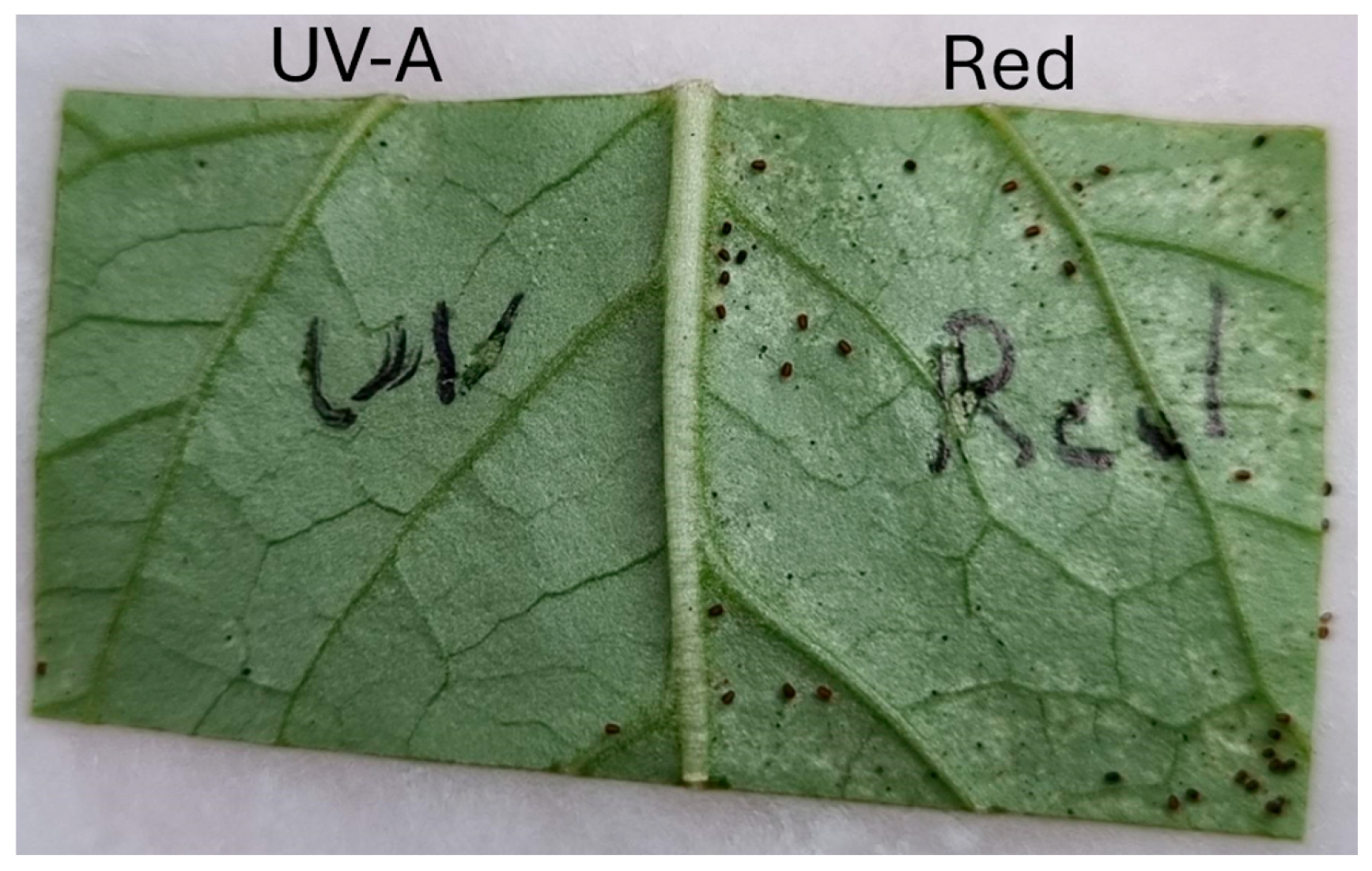
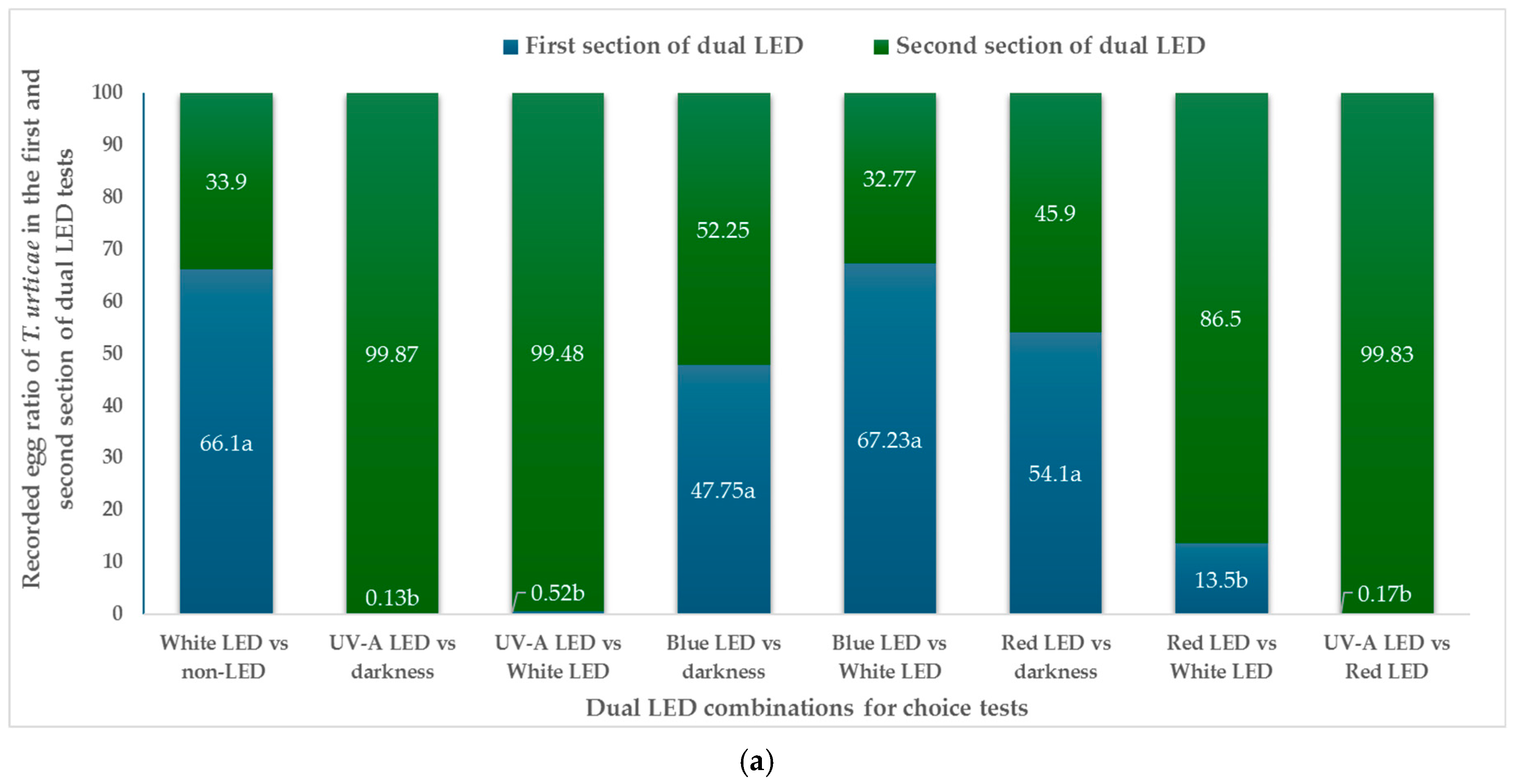
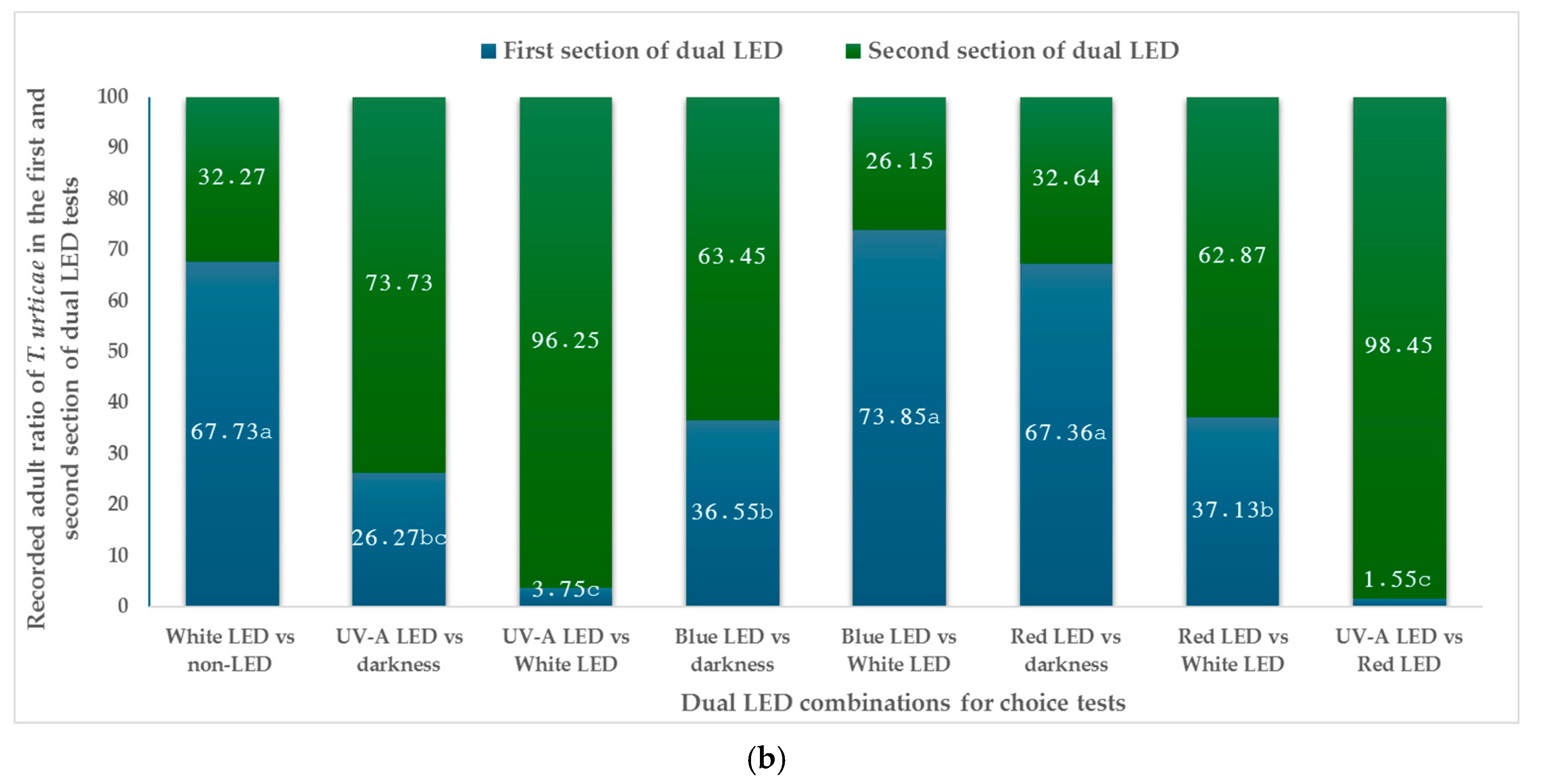
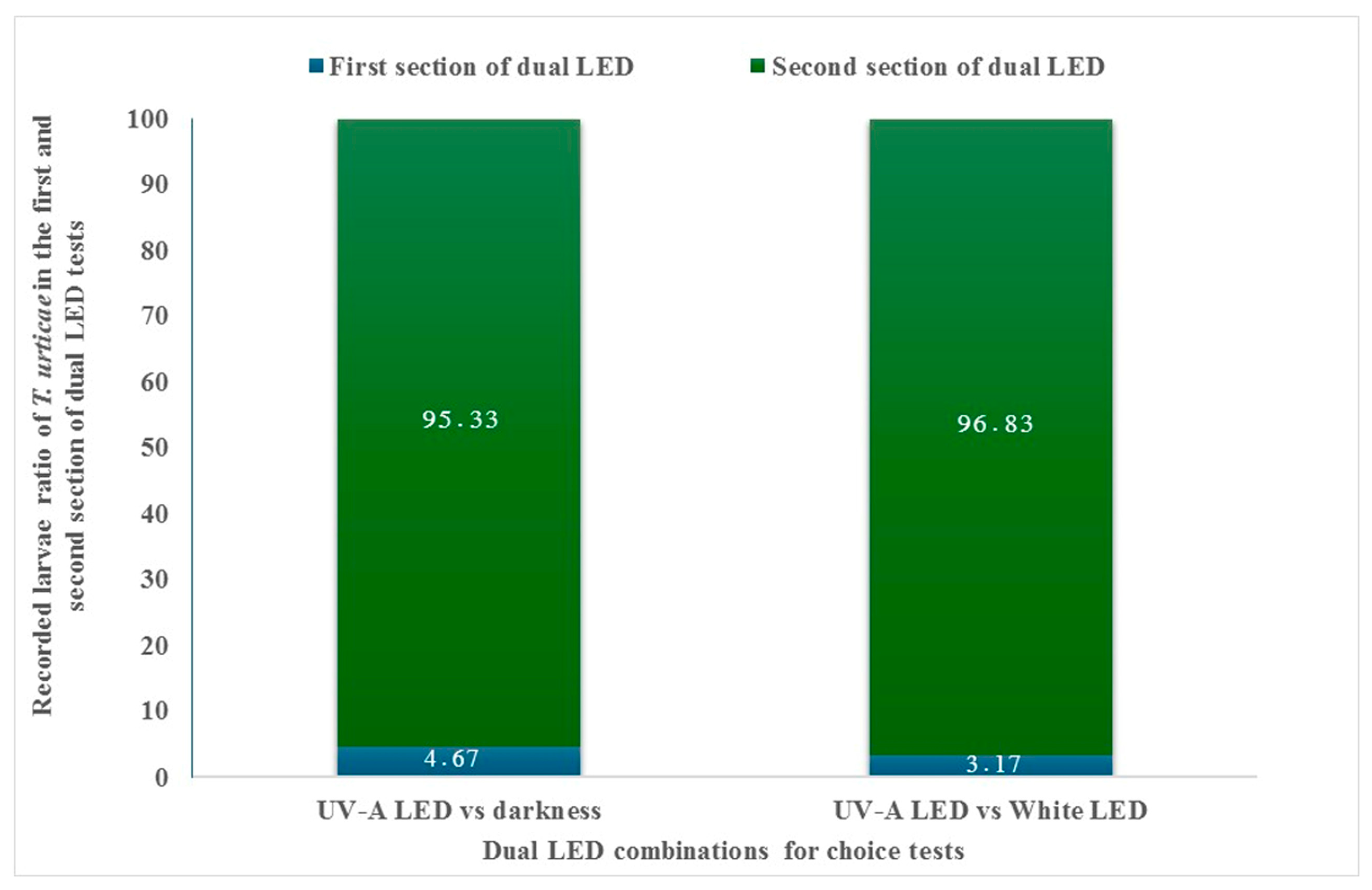
In the dual-LED experiments, the UV-A LED clearly had the greatest repellent effect on T. urticae (Figure 6 and Figure 7). The repellent effects of LEDs on the oviposition site and feeding/settling down location of adult females of T. urticae during 24 h under dual LED combination choice tests are given in Figure 7a,b. The repellent effects of UV-A LEDs on larvae in the choice tests are presented in Figure 8.
In all choice test combinations, the proportion of eggs deposited on UV-A-exposed leaf halves was extremely low (mean < 0.5%). Adult females showed a strong oviposition avoidance response to UV-A illumination, laying the vast majority of eggs on the white LED-exposed or dark halves of the arena (Figure 7a). This pattern was statistically supported by ANOVA followed by Tukey’s HSD test, which indicated that oviposition on UV-A-exposed surfaces was significantly lower than that observed in the alternative treatments (p < 0.001). In this study, as expected, in the choice tests designed with two different LED wavelengths, the “mean eggs ratio data” recorded on both sides provide more stable and stronger evidence than the “mean adult ratio data”, as the adults were free to move between the two sides during the 24-h period. However, the “mean adult ratio” data given in Figure 7b may also contribute, provided that it is interpreted cautiously. For example, determining which part of the leaf shows more intense adult feeding traces may be a useful criterion. The percentages of adults in the UV-A part were 4 and 26%, respectively. Larvae exhibited a strong avoidance response to UV-A illumination. The proportion of larvae present on UV-A-exposed leaf halves was very low in both choice test combinations. However, this proportion did not differ significantly between the “UV-A LED vs. darkness” and “UV-A LED vs. white LED” treatments (independent-samples t-test: t(6) = −0.70, p = 0.513). Specifically, 4.67% of larvae were recorded on the UV-A-exposed halves in the “UV-A LED vs. darkness” test, whereas 3.17% were recorded in the “UV-A LED vs. white LED” test (Figure 8).
In the choice tests, the blue LED did not have a clear repellent effect on T. urticae. In contrast, it was attractive, to some extent, in tests using white LEDs. In the “Blue LED vs. White LED” test, the percentages of eggs and adults present in the blue LED part were 67% and 74%, respectively (Figure 7a,b). In the “Blue LED vs. darkness” test, the percentages of eggs and adults present in the leaf area in the blue LED part were 48% and 37%, respectively (Figure 7a,b).
In the “Red LED vs. darkness” tests, the percentages of eggs and adults present in the red LED section were 54% and 67%, respectively (Figure 7a,b). In short, the red LED did not have a repellent effect in the dark environment during the experiment. In the “Red LED vs. White LED” choice tests, the percentages of eggs and adults present in the red LED section were 14% and 37%, respectively (Figure 7a,b). Although red LEDs are thought to have a repellent effect on white light environments, this effect is more likely due to the attractiveness of white LEDs. In the “Red LED vs. darkness” test, the red LED did not have a repellent effect in the dark. However, in the “White LED vs. darkness” choice test, the percentages of eggs and adults in the white LED area were 66% and 68%, respectively (Figure 7a,b). In brief, adults prefer white LED light over darkness to some extent, both for feeding and for laying eggs. Choice tests with red LEDs exhibited different characteristics. In the choice tests with red LEDs, it was determined that some of the adults died in both the red LED section and the white LED or darkness parts. In the “Red LED vs. darkness” test, 67% of adults in the red half and 48% of adults in the darkness half were found dead. Similarly, in the “Red LED vs. White LED” test, 72% of adults in the red half and 9% of adults in the white half were found dead. Considering the findings of the no-choice test under the red LED, some amount of dead adults in the red LED part may be expected in the choice tests. The no-choice test results indicated that red LEDs caused 67% mortality in adults (Figure 9). However, in addition to the red LED part, dead adults were also found in both the white LED and darkness parts. In other choice test combinations, the absence of dead adults in the parts treated with white LEDs or darkness suggests that white LEDs and darkness do not have a lethal effect. At this point, our hypothesis regarding why some adults were found dead in white LED or dark areas in preference tests conducted with red LEDs is as follows: In the choice tests, the experiments were continued for 24 h. During the test, adults may have spent a long part of this 24-h period under the red LED part and then, probably when they were about to die, they moved to the white LED or dark parts and died there. Although red LEDs have a lethal effect, it is interesting that adults do not tend to move from the red LED part to the dark part over 24 h of exposure.
The choice test with the “UV-A LED vs. red LED” against T. urticae revealed extremely important findings. In the “UV-A LED vs. red LED” choice test, the percentages of eggs and adults in the UV-A LED part were 0.2% and 1.6%, respectively (Figure 7a,b). As expected, the UV-A LED caused almost all the adults to be repelled to the red LED section. Furthermore, 69% of the adults in the red LED section died.
In the choice test for larvae, UV-A LED was also found to have a strong repellent effect. In the “UV-A vs. darkness” and “UV-A vs. white LED” tests, the number of larvae in the UV-A side remained at 4.7% and 3.2%, respectively.

3.2. Lethal Effects of Red LEDs on Adult Tetranychus urticae in No-Choice Tests

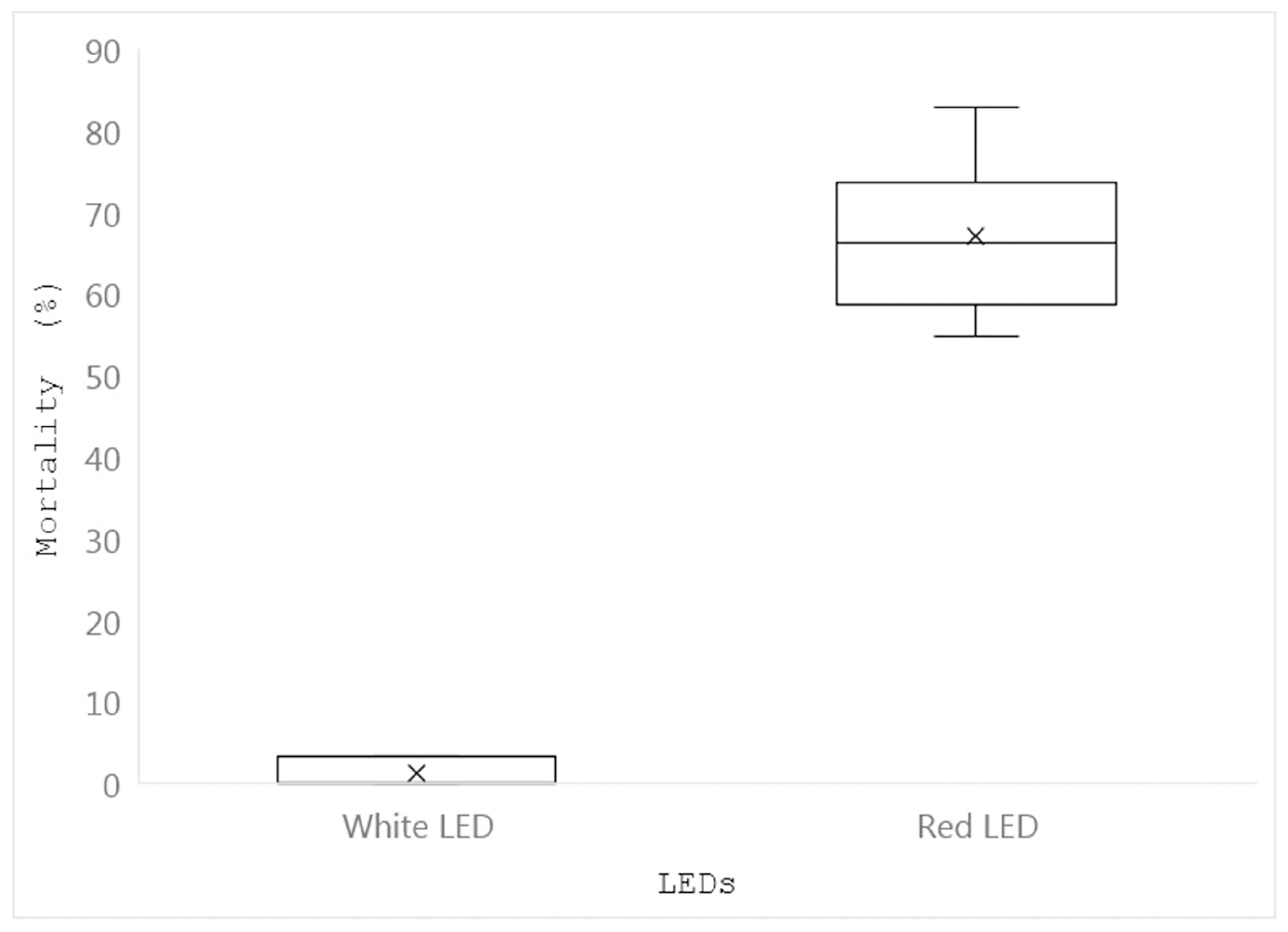
The lethal effects of red LED on adults in no-choice tests are presented in Figure 9. In the no-choice tests, 67% of the adult females exposed to red LED died after a period of 24 h (Figure 9). Only 1% of the adults exposed to control (white LED) died (Figure 9).
Based on the experimental observations within the scope of the study, it would be useful to include one important detail related to the red or UV-A irradiation time-response effect on T. urticae. Applying a UV-A LED for a very short period (such as 15 min) is sufficient for a repellent effect. However, short-term exposure, such as for 15 min, was not sufficient for the lethal effect of red LED light. To achieve a lethal effect, the red LED will probably need to be applied for periods of 24 h or slightly less. As long as the UV-A LED is active, its repellent effect on T. urticae continues. When the UV-A LED was turned off, T. urticae adults were observed to immediately pass to the UV-A part, feed and lay eggs. These findings suggest that applying UV-A for 24 h did not cause a permanent change in the leaf content and that UV-A may have a direct effect on adult mites. A detailed investigation of the mechanisms by which UV-A can rapidly repel T. urticae may provide important clues for managing this pest.

4. Discussion

The significant lethal effect of red LED against T. urticae at a level of 67% and the strong repellent effect of UV-A LED were important results of this study and provide an update to the literature in this field. However, no similar study has investigated the direct lethal effect of red LED on adult T. urticae females. On the other hand, the number of Thrips palmi was significantly lower in melon (Cucumis melo) seedlings irradiated with red LED (620–630 nm) for 24 h than in control seedlings [20]. To elucidate the mechanisms by which red LEDs cause mortality in T. urticae adults, additional investigations are needed. According to our hypothesis, the application of red LED may have caused damage to the cuticles (probably the wax layer) of adult females, leading to the death of the spider mites. When we examined the body morphology of dead spider mites, we observed that the body volume decreased (due to desiccation), resulting in a darker colour (Figure 5b). If the wax layer on the cuticle was damaged by the red LED, a significant amount of water may have escaped from the inside of the body. This damage may have caused the dead adults to take on a desiccated and smaller body form. Although red LED application caused death in adults, no phytotoxic effects such as yellowing, wilting, etc., were observed on the cowpea leaves on which they were fed. When investigating the effects of LED on pests (or beneficials), both the chemical and physical changes in pests and plants caused by LED need to be examined together to analyse the findings correctly. The following two studies provide good examples of comprehensive research that examines the effects of LED on both the plant–pest–natural enemy relationship [21] and the pest–natural enemy relationship [22]. Specific changes caused by far-red LED (735 nm) on the chemistry and physiology of plants and the indirect effects of these changes on pest-beneficial working systems have been studied in detail [21]. The effects of a far-red LED (735 nm) on volatile organic compound (VOC)-mediated attraction of the predatory mite Phytoseiulus persimilis to tomato plants infested with T. urticae and its ability to suppress T. urticae populations were investigated. The results revealed that far-red LED application significantly affected the herbivore-induced VOC emissions of tomato plants. However, this treatment did not appear to affect the herbivore-induced attraction of P. persimilis to plants. Additional far-red LED application led to an increase in the T. urticae population and P. persimilis numbers. It was concluded that far-red light could alter herbivore-induced VOC emissions but did not affect the attractiveness of the predator P. persimilis [21]. A similar comprehensive study was conducted by Savi et al. [47]. The effects of applying red, blue, or far-red LEDs for 3 h during daytime or nighttime on leaf reflectance indices, elemental composition, and phenolic profiles of tomato plants, as well as whether these LED applications affected the performance of T. urticae and its predator P. persimilis on the same plants, were investigated [47]. Nighttime LED applications significantly altered the elemental composition within the leaves. Red LED application increased K levels, blue LED application increased Mg levels, and far-red LEDs increased Mn and Cu levels while decreasing Zn levels. Among the daytime LED applications, blue LEDs decreased Zn levels. Nighttime LED applications (except far-red) significantly increased leaf gland trichome densities and decreased total phenolic content. Among a range of leaf reflectance indices, ARI and CRI significantly increased with nighttime red and blue LED applications, but decreased with far-red LED applications. T. urticae populations in nighttime LED-treated plants were found to be significantly lower than those in daytime LED-treated and control plants. It was determined that LED applications, generally except for the daytime blue LED regime, did not affect the predator P. persimilis population and feeding capacity. The findings of the study showed that timed LED regimes have the potential to strategically manipulate plant–prey–predator interactions. To improve the biological control of Bemisia tabaci (Hemiptera:Aleyrodidae), the effects of LED with different wavelengths on the settlement of the predator Nesidiocoris tenuis were investigated under laboratory conditions [22]. The most attractive wavelength for N. tenuis was 385 nm. The same wavelength was also found to be quite attractive for B. tabaci. It has been reported that a UV LED with a wavelength of 385 nm can be used to improve the effectiveness of the biological control of B. tabaci [22].
In the past, many comprehensive studies have been conducted to demonstrate the effects of UV-A, UV-B, and UV-C on T. urticae. However, in most of these studies, UV wavelengths from special lamps other than LED were used and were generally applied for a short time and at high doses [40,41,42,43]. It would be useful to compare and discuss the effects of the LED-based UV-A light (390–410 nm) used in our study on T. urticae with the effects of UV wavelengths obtained other than those from LED used in previous studies on the same species. The effects of UV-A and UV-B on T. urticae were studied in detail using non-LED lamps [40]. In this study, UVL-53 or UVL-57 UV lamps were used to obtain UV-A and UV-B. The results revealed that UV-A (778.3 W cm−2; 12 kJ m−2 d) had no effect on T. urticae adults or eggs. In contrast, UV-B (667.1 W cm−2; 12 kJ m−2 d) strongly suppressed the survival and egg production of T. urticae [40]. In our research, LED UV-A did not have a lethal effect under the conditions we applied, but it had a strong repellent effect on T. urticae adults and larvae.
The lethal and repellent effects of UV-A (350 nm), UV-B (300 nm), and UV-C (250 nm) on diapausing and non-diapausing T. urticae were investigated [41]. In non-diapausing females, the median effective doses for 50% mortality were 21 (UV-C) and 104 kJ m−2 (UV-B). Diapausing females were observed to be less affected by even high doses of UV radiation, but more than half of these females escaped at low doses. In this study, the finding that (non-LED) UV-A had no significant effect on the lethality or oviposition of T. urticae but only had a repellent effect was similar to our result showing that LED UV-A had a strong repellent effect [41].
It has been clearly demonstrated that UV-C emitted by (non-LED) UV lamps, such as UV-B lamps, has a strong suppressive effect on T. urticae [42,43]. UV-C light obtained from a special UV lamp at intensities of 254 nm and 0.237 W m−2 for 60 s was applied nightly to potted strawberry plants infested with T. urticae [42]. As a result of this application, UV-C caused 97–99% mortality of T. urticae on strawberries. Additionally, this application did not cause any phytotoxic effects on plants [42].
The effectiveness of UV-C against T. urticae in a strawberry field with an autonomous robot designed with a special UV lamp was investigated [43]. Applying UV-C at a dose of 350 J m−2 twice a week after sunset strongly suppressed T. urticae under field conditions [43].
The effects of applying UV-B (304 nm) alone or in combination with white light at 25 °C for 12 h day−1 on the egg hatching rates of T. urticae, T. kanzawai Kishida, T. piercei McGregor, and T. okinawanus Ehara were investigated [58]. Under UV-B irradiation alone, no eggs of any species were able to hatch, even at doses as low as 0.02 W m−2. However, when UV-B was applied together with 4.0 W m−2 white light, the egg hatching rate increased to above 90% [58].
Nansen et al. [59] investigated the phototactic effects of seven different wavelengths [ambient (control), UV-C, UV-B, blue, red, white, and near-infrared (NIR)] on T. urticae under experimental conditions. They also determined how the effects of these wavelengths on T. urticae influenced the success rate of acaricide applications. It was found that T. urticae showed a significantly negative phototactic response to UV-B and a positive phototactic response to blue wavelength. The effectiveness of the acaricides Pyrethrins and Beauveria bassiana increased when UV-B and blue wavelengths were applied. Nansen et al. [59] presented different and important findings in their study, showing that different wavelengths lead to positive and negative phototaxis on T. urticae and that this can be used as a method to increase the effectiveness of acaricide applications.
Findings in the literature indicate that UV-B and UV-C have strong suppressive effects on T. urticae and can be used as control methods in practice. Knowing how these applications affect predators will shed light on the extent to which UV applications are compatible with biological control. The effects of UV-C (200–280 nm) at doses of 0, 200 and 350 J m−2 on eggs of predatory mites (Neoseiulus cucumeris Oudemans, Amblyseius swirskii Athias-Henriot, and Phytoseiulus persimilis Athias-Henriot) and eggs of T. urticae were compared [60]. The results showed that the UV-C 200 J m−2 dose affected the hatching of A. swirskii eggs less than it affected that of T. urticae eggs; thus, more A. swirskii eggs survived at this dose. Additionally, UV-C treatments of 200 and 350 J m−2 did not significantly affect the predation by P. persimilis adult females on T. urticae eggs. These results suggest that UV-C application could be used in a compatible method for the biological control of T. urticae by timing it correctly before the release of predators [60].
Considering the findings of the choice tests in our study, UV-A, blue, and red LED did not strongly attract T. urticae; in contrast, UV-A had a strong repellent effect. However, many studies have revealed that different LED wavelengths have significant attractive potential for various pest and beneficial insect species [9,13,15,18].

5. Conclusions

T. urticae is a major phytophagous acarid pest worldwide and causes severe economic losses in numerous agricultural crops. Managing this species with chemicals is not easy because of the prevalence of populations resistant to most active substances. Additionally, most classic synthetic active substances are expected to be phased out in the medium- and long-term worldwide. This situation has made it necessary to search for alternative control methods against pests. As in previous studies on different pest species, this study revealed that LEDs had potentially important effects on T. urticae. The first of the most important findings is that red LEDs cause 67% mortality in T. urticae adults. The second important finding was that the UV-A LED clearly had a strong repellent effect on T. urticae. UV-A not only removed T. urticae adult females from the UV-A part but also prevented them from laying eggs in the UV-A section. Moreover, UV-A had a significant repellent effect on larvae. These LEDs, or combinations of LEDs, have shown significant effects in laboratory experiments, and further research is needed to confirm their effectiveness under greenhouse conditions. It would be appropriate for greenhouse studies to test the effects of different combinations of UV-A and red LEDs in greenhouses used in the production of edible fruits such as strawberries, in which T. urticae infestation is a consistent problem. Furthermore, the extent to which LEDs of different wavelengths can affect the reproduction and development potential of major pests and their natural enemies should be clarified in future studies.

Author Contributions

F.D., N.T., N.Ç. and D.K. conceptualization and experimental design; F.D., N.T. and N.Ç. conducted the experiments; D.K. contributed to data analysis; F.D. and N.T. prepared the first draft of the manuscript. All authors have read and agreed to the published version of the manuscript.

Funding

This research received no external funding.

Data Availability Statement

The original contributions presented in this study are included in the article. Further inquiries can be directed to the corresponding author.

Conflicts of Interest

The authors declare that they have no conflicts of interest or common interests.

References

  1. Berkovich, Y.A.; Krivobok, N.M.; Smolyanina, S.O.; Erokhin, A.N. Kosmicheskie Oranzherei: Nastoyashcheei Budushchee (Space Greenhouses: Now and in Future); Slovo: Moscow, Russia, 2005. [Google Scholar]
  2. Burdick, S.C.; Prischmann Voldseth, D.A.; Harmon, J.P. Density and distribution of soybean aphid, Aphis glycines Matsumura (Hemiptera: Aphididae) in response to UV radiation. Popul. Ecol. 2015, 57, 457–466. [Google Scholar] [CrossRef]
  3. Sanders, D.; Kehoe, R.; Tiley, K.; Bennie, J.; Cruse, D.; Davies, T.W.; van Veen, F.J.F.; Gaston, K.J. Artificial nighttime light changes aphid-parasitoid population dynamics. Sci. Rep. 2015, 5, 1523. [Google Scholar] [CrossRef] [PubMed]
  4. Bennie, J.; Davies, T.W.; Cruse, D.; Gaston, K.J. Ecological effects of artificial light at night on wild plants. J. Ecol. 2016, 104, 611–620. [Google Scholar] [CrossRef]
  5. Honda, K. Reactions to light in insects and practical applications. J. Soc. Biomech. 2011, 35, 233–236. [Google Scholar]
  6. Johansen, N.S.; Pinto, D.M.; Nissinen, A.I.; Shipp, L. In the light of new greenhouse technologies: 2. Direct effects of artificial lighting on arthropods and integrated pest management in greenhouse crops. Ann. Appl. Biol. 2011, 159, 1–27. [Google Scholar] [CrossRef]
  7. Zhang, J.; Li, H.; Liu, M.; Zhang, H.; Sun, H.; Wang, H.; Miao, L.; Li, M.; Shu, R.; Qin, Q.A. Greenhouse test to explore and evaluate Light-Emitting Diode (LED) insect traps in the monitoring and control of Trialeurodes vaporariorum. Insects 2020, 11, 94. [Google Scholar] [CrossRef] [PubMed]
  8. Chu, C.; Umeda, K.; Chen, T.; Simmons, A.; Henneberry, T.H. Insect Trap Catch Improvement with Light-Emitting Diode Modification. HortScience 2004, 39, 871–872. [Google Scholar] [CrossRef]
  9. Chen, T.Y.; Chu, C.C.; Fitzgerald, G.; Natwick, E.T.; Henneberry, T.J. Trap evaluation for thrips (Thysanoptera: Thripidae) and hoverflies (Diptera: Syrphidae). Environ. Entomol. 2004, 33, 1416–1420. [Google Scholar] [CrossRef]
  10. Nakamoto, Y.; Kuba, H. The effectiveness of a green light emitting diode (LED) trap at capturing the West Indian sweet potato weevil, Euscepes postfasciatus (Fairmaire) (Coleoptera: Curculionidae) in a sweet potato field. Appl. Entomol. Zool. 2004, 39, 491–495. [Google Scholar] [CrossRef]
  11. Duehl, A.J.; Cohnstaedt, L.W.; Arbogast, R.T.; Teal, P.E.A. Evaluating light attraction to increase trap efficiency for Tribolium castaneum (Coleoptera: Tenebrionidae). J. Econ. Entomol. 2011, 104, 1430–1435. [Google Scholar] [CrossRef]
  12. Oh, M.S.; Lee, C.H.; Lee, S.G.; Lee, H.S. Evaluation of high power light emitting diodes (HPLEDs) as potential attractants for adult Spodoptera exigua (Hübner) (Lepidoptera: Noctuidae). J. Korean Soc. Appl. Biol. Chem. 2011, 54, 416–422. [Google Scholar] [CrossRef]
  13. Jeon, J.H.; Oh, M.S.; Cho, K.S.; Lee, H.S. Phototactic response of the rice weevil, Sitophilus oryzae Linnaeus (Coleoptera: Curculionidae), to light-emitting diodes. J. Korean Soc. Appl. Biol. Chem. 2012, 55, 35–39. [Google Scholar] [CrossRef]
  14. Kim, M.G.; Yang, J.Y.; Chung, N.H.; Lee, H.S. Photo-response of tobacco whitefly, Bemisia tabaci Gennadius (Hemiptera: Aleyrodidae), to light-emitting diodes. J. Korean Soc. Appl. Biol. Chem. 2012, 55, 567–569. [Google Scholar] [CrossRef]
  15. Kim, M.G.; Lee, H.S. Attractive effects of American serpentine leafminer, Liriomyza trifolii (Burgess), to Light-Emitting Diodes. J. Insect Behav. 2014, 27, 127–132. [Google Scholar] [CrossRef]
  16. Zheng, L.X.; Zheng, Y.; Wu, W.J.; Fu, Y.G. Field evaluation of different wavelengths light-emitting diodes as attractants for adult Aleurodicus disperses Russell (Hemiptera: Aleyrodidae). Neotrop. Entomol. 2014, 43, 409–414. [Google Scholar] [CrossRef]
  17. Stukenberg, N.; Gebauer, K.; Poehling, H.M. Light emitting diode (LED)-based trapping of the greenhouse whitefly (Trialeurodes vaporariorum). J. Appl. Entomol. 2015, 139, 268–279. [Google Scholar] [CrossRef]
  18. Pan, H.; Liang, G.; Lu, Y. Response of Different Insect Groups to Various Wavelengths of Light under Field Conditions. Insects 2021, 12, 427. [Google Scholar] [CrossRef] [PubMed]
  19. Athanasiadou, M.; Meyhöfer, R. Blue and UV light-emitting diodes (LEDs) disturb the greenhouse whitefly (Trialeurodes vaporariorum) from its host. J. Pest Sci. 2023, 97, 1355–1367. [Google Scholar] [CrossRef]
  20. Katai, Y.; Ishikawa, R.; Doi, M.; Masui, S. Efficacy of Red LED Irradiation for controlling Thrips palmi in greenhouse melon cultivation. Jpn. J. Appl. Entomol. Zool. 2015, 59, 1–6. [Google Scholar] [CrossRef][Green Version]
  21. Meijer, D.; van der Vleut, J.; Weldegergis, B.T.; Costaz, T.; Duarte, M.V.A.; Pekas, A.; van Loon, J.J.A.; Dicke, M. Effects of far-red light on tritrophic interactions between the two-spotted spider mite (Tetranychus urticae) and the predatory mite Phytoseiulus persimilis on tomato. Pest Manag. Sci. 2023, 79, 1820–1828. [Google Scholar] [CrossRef] [PubMed]
  22. Park, Y.G.; Lee, J.H. UV-LED lights enhance the establishment and biological control efficacy of Nesidiocoris tenuis (Reuter) (Hemiptera: Miridae). PLoS ONE 2021, 16, e0245165. [Google Scholar] [CrossRef] [PubMed]
  23. Grbić, M.; Van Leeuwen, T.; Clark, R.M.; Rombauts, S.; Rouzé, P.; Grbić, V.; Osborne, E.J.; Dermauw, W.; Ngoc, P.C.T.; Ortego, F.; et al. The genome of Tetranychus urticae reveals herbivorous pest adaptations. Nature 2011, 479, 487–492. [Google Scholar] [CrossRef]
  24. Çobanoğlu, S.; Kumral, N.A. The biodiversity, density and population trend of mites (Acari) on Capsicum annuum L. in temperate and semiarid zones of Turkey. Syst. Appl. Acarol. 2016, 21, 907–918. [Google Scholar] [CrossRef]
  25. Assouguem, A.; Kara, M.; Mechchate, H.; Bulak Korkmaz, Y.; Benmessaoud, S.; Ramzi, A.; Abdullah, K.R.; Noman, O.M.; Farah, A.; Lazraq, A. Current situation of Tetranychus urticae (Acari: Tetranychidae) in Northern Africa: The sustainable control methods and priorities for future research. Sustainability 2022, 14, 2395. [Google Scholar] [CrossRef]
  26. Migeon, A.; Dorkeld, F. Spider Mites Web: A Comprehensive Database for the Tetranychidae. Available online: https://www1.montpellier.inra.fr/CBGP/spmweb (accessed on 25 April 2025).
  27. Croft, B.A.; van de Baan, H.E. Ecological and genetic factors influencing evolution of pesticide resistance in tetranychid and phytoseiid mites. Exp. Appl. Acarol. 1988, 4, 277–300. [Google Scholar] [CrossRef]
  28. Campos, F.; Krupa, D.A.; Dybas, R.A. Susceptibility of populations of two-spotted spider mite (Acari: Tetranychidae) from Florida, Holland and the Canary Islands to abamectin and characterization of abamectin resistance. J. Econ. Entomol. 1996, 89, 594–601. [Google Scholar] [CrossRef]
  29. Stumpf, N.; Nauen, R. Biochemical markers linked to abamectin resistance in Tetranychus urticae. Pestic. Biochem. Physiol. 2002, 72, 111–121. [Google Scholar] [CrossRef]
  30. Sato, M.E.; Silva, M.Z.; Raga, A.; Filho, M.F.S. Abamectin resistance in Tetranychus urticae Koch (Acari: Tetranychidae): Selection, crossresistance and stability of resistance. Neotrop. Entomol. 2005, 34, 991–998. [Google Scholar] [CrossRef]
  31. Yorulmaz, S.; Ay, R. Multiple resistance, detoxifying enzyme activity, and inheritance of abamectin resistance in Tetranychus urticae Koch (Acarina: Tetranychidae). Turk. J. Agric. For. 2009, 33, 393–402. [Google Scholar] [CrossRef]
  32. Van Leeuwen, T.; Vontas, J.; Tsagkarakou, A.; Dermauw, W.; Tirry, L. Acaricide resistance mechanisms in the two-spotted spider mite Tetranychus urticae and other important Acari: A review. Insect Biochem. Mol. Biol. 2010, 40, 563–572. [Google Scholar] [CrossRef] [PubMed]
  33. Khajehali, J.; Nieuwenhuyse, P.V.; Demaeght, P.; Tirry, L.; Van Leeuwen, T. Acaricide resistance and resistance mechanisms in Tetranychus urticae populations from rose greenhouses in the Netherlands. Pest Manag. Sci. 2011, 67, 1424–1433. [Google Scholar] [CrossRef] [PubMed]
  34. Monteiro, V.B.; Gondim, M.G.C., Jr.; Oliveira, J.E.D.M.; Siqueira, H.A.A.; Sousa, J.M. Monitoring Tetranychus urticae Koch (Acari: Tetranychidae) resistance to abamectin in vineyards in the Lower Middle Sao Francisco Valley. Crop Prot. 2015, 69, 90–96. [Google Scholar] [CrossRef]
  35. Çağatay, N.S.; Menault, P.; Riga, M.; Vontas, J.; Ay, R. Identification and characterization of abamectin resistance in Tetranychus urticae populations from greenhouses in Turkey. Crop Prot. 2018, 112, 112–117. [Google Scholar] [CrossRef]
  36. Yalçın, K.; Döker, İ.; Kazak, C. Acaricide resistance in Tetranychus urticae red form (Acari: Tetranychidae) collected from strawberry in southern Turkey: Bioassay and biochemical studies. Syst. Appl. Acarol. 2018, 23, 2279–2287. [Google Scholar] [CrossRef]
  37. İnak, E.; Alpkent, Y.N.; Çobanoğlu, S.; Toprak, U.; Van Leeuwen, T. Incidence of spiromesifen resistance and resistance mechanisms in Tetranychus urticae populations collected from strawberry production areas in Turkey. Crop Prot. 2022, 160, 106049. [Google Scholar] [CrossRef]
  38. IRAC. Insecticide Resistance Action Committee. Resistance Management for Sustainable Agriculture and Improved Public Health. Available online: http://www.irac-online.org/pests/tetranychus-urticae/ (accessed on 8 February 2024).
  39. Mota-Sanchez, D.; Wise, J.C. The Arthropod Pesticide Resistance Database (APRD). Available online: http://www.pesticideresistance.org/ (accessed on 25 May 2025).
  40. Ohtsuka, K.; Osakabe, M.H. Deleterious Effects of UV-B Radiation on Herbivorous Spider Mites: They Can Avoid It by Remaining on Lower Leaf Surfaces. Environ. Entomol. 2009, 38, 920–929. [Google Scholar] [CrossRef]
  41. Suzuki, T.; Watanabe, M.; Takeda, M. UV tolerance in the two-spotted spider mite, Tetranychus urticae. J. Insect Physiol. 2009, 55, 649–654. [Google Scholar] [CrossRef]
  42. Short, B.D.; Janisiewicz, W.; Takeda, F.; Leskey, T.C. UV-C irradiation as amanagement tool for Tetranychus urticae on strawberries. Pest Manag. Sci. 2018, 74, 2419–2423. [Google Scholar] [CrossRef]
  43. Montemayor, J.D.; Smith, H.A.; Peres, N.A.; Lahiri, S. Potential of UV-C for management of two-spotted spider mites and thrips in Florida strawberry. Pest Manag. Sci. 2023, 79, 891–898. [Google Scholar] [CrossRef] [PubMed]
  44. Chang, C.L.; Chang, K.P. The growth response of leaf lettuce at different stages to multiple wavelength-band light-emitting diode lighting. Sci. Hortic. 2014, 179, 78–84. [Google Scholar] [CrossRef]
  45. Chen, X.L.; Xu, X.Z.; Guo, W.Z.; Wang, L.C.; Qiao, X.J. Growth and nutritional properties of lettuce affected by mixed irradiation of white and supplemental light provided by light-emitting diode. Sci. Hortic. 2016, 200, 111–118. [Google Scholar] [CrossRef]
  46. Shimoda, M.; Honda, K.I. Insect reactions to light and its applications to pest management. Appl. Entomol. Zool. 2013, 48, 413–421. [Google Scholar] [CrossRef]
  47. Savi, P.; Hall, S.; Hernandez, M.; Mantri, A.; Kliebenstein, D.; Nansen, C. Effects of timed LED regimes on tomato plant traits, performance of two-spotted spider mites, and predatory mites (Phytoseiulus persimilis). Pest Manag. Sci. 2025, 81, 2300–2311. [Google Scholar] [CrossRef]
  48. Keitz, H.A.E. Light Calculations and Measurements: An Introduction to the System of Quantities and Units in Light-Technology, and to Photometry, 2nd ed.; Macmillan Education: London, UK, 1971. [Google Scholar]
  49. ISO/CIE 23539:2023; Photometry—The CIE System of Physical Photometry. ISO/CIE; International Organization for Standardization: Geneva, Switzerland; International Commission on Illumination: Vienna, Austria, 2023.
  50. Zalewski, E.F. Radiometry and Photometry. In Handbook of Optics: Volume II—Devices, Measurements, and Properties, 2nd ed.; Bass, M., Ed.; McGraw-Hill: New York, NY, USA, 1995; pp. 24.1–24.50. [Google Scholar]
  51. McCree, K.J. The action spectrum, absorptance and quantum yield of photosynthesis in crop plants. Agric. Meteorol. 1972, 9, 191–216. [Google Scholar] [CrossRef]
  52. Nelson, J.A.; Bugbee, B. Economic analysis of greenhouse lighting: Light emitting diodes vs. high intensity discharge fixtures. PLoS ONE 2014, 9, e99010. [Google Scholar] [CrossRef]
  53. Cree Inc. XLamp High Power LED Datasheet. Available online: http://www.cree-led.com/products/leds/xlamp/ (accessed on 29 March 2026).
  54. Edison Inc. Edixeon Emitter High Power LED Datasheet. Available online: https://www.ledlamp.it/files/EDISON.pdf (accessed on 8 February 2024).
  55. Mean Well Enterprises Co., Ltd. HLG-40H Series: 40W Constant Voltage + Constant Current LED Driver Datasheet; Mean Well: New Taipei City, Taiwan, 2024; Available online: https://www.meanwell.com/webapp/product/search.aspx?prod=HLG-40H (accessed on 19 March 2026).
  56. Auger, P.; Migeon, A.; Ueckermann, E.A.; Tiedt, L.; Navajans, M. Evidence for synonymy between Tetranychus urticae and Tetranychus cinnabarinus (Acari, Prostigmata, Tetranychidae): Review and new data. Acarologia 2013, 53, 383–415. [Google Scholar] [CrossRef]
  57. Riahi, E.; Shishehbor, P.; Nemati, A.R.; Saeidi, Z. Temperature Effects on Development and Life Table Parameters of Tetranychus urticae (Acari: Tetranychidae). J. Agric. Sci. Technol. 2013, 15, 661–672. [Google Scholar]
  58. Suzuki, T.; Yoshioka, Y.; Tsarsitalidou, O.; Ntalia, V.; Ohno, S.; Ohyama, K.; Kitashima, Y.; Gotoh, T.; Takeda, M.; Koveos, D.S. An LED-based UV-B irradiation system for tiny organisms: System description and demonstration experiment to determine the hatchability of eggs from four Tetranychus spider mite species from Okinawa. J. Insect Physiol. 2014, 62, 1–10. [Google Scholar] [CrossRef]
  59. Nansen, C.; Savi, P.J.; Ward, T.; Khodaverdi, H.; Lieth, J.H.; Mantri, A.V. Manipulation of Phototactic Responses by Two-Spotted Spider Mites to Improve Performance of Miticides. Crops 2024, 4, 568–583. [Google Scholar] [CrossRef]
  60. Montemayor, J.D.; Smith, H.A.; Peres, N.A.; De Marchi, B.R.; Lahiri, S. Is UV-C light compatible with biological control of twospotted spider mite? Biol. Control 2023, 183, 105269. [Google Scholar] [CrossRef]
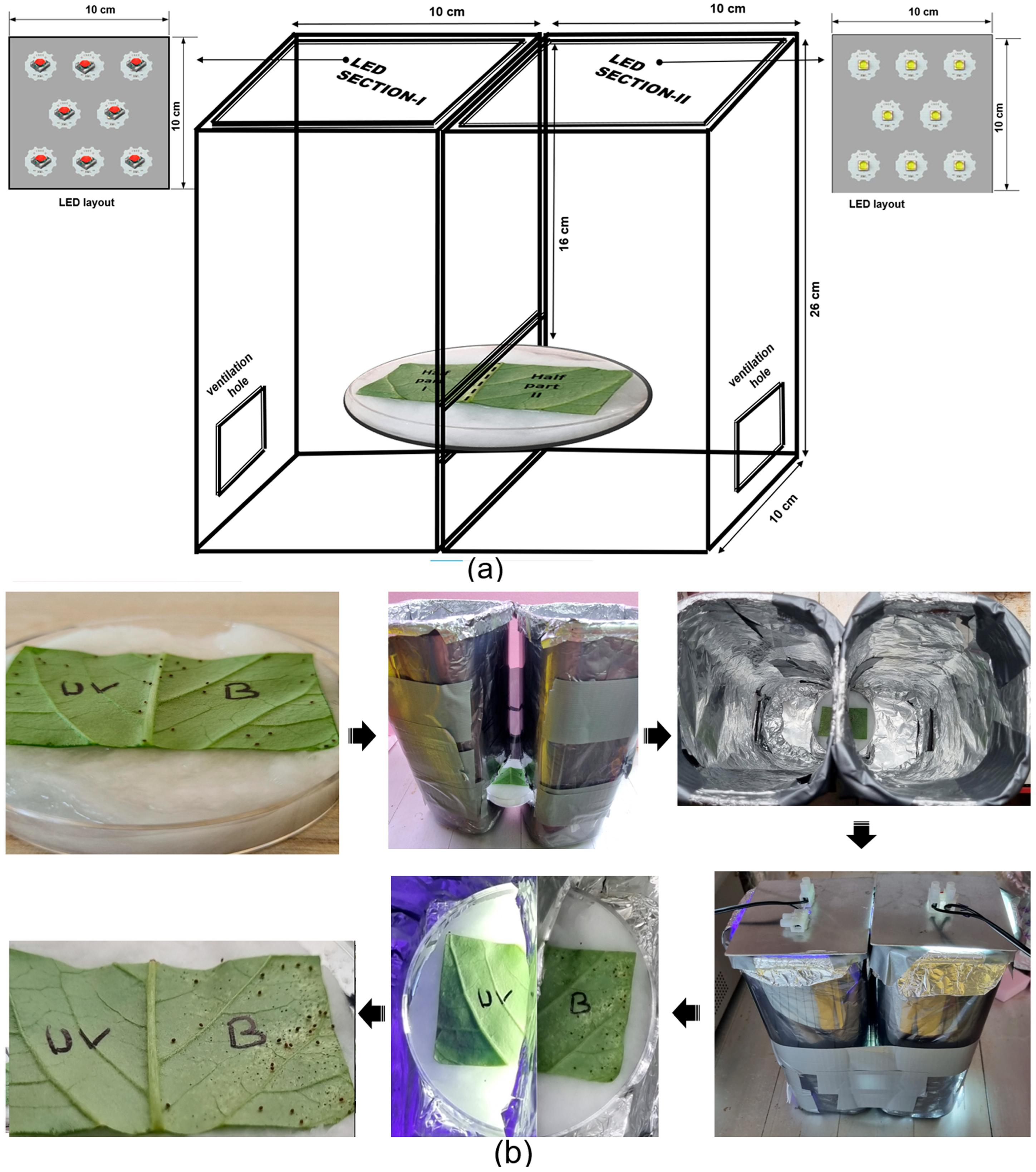
Figure 2. Schematic representation of the choice test unit (a), choice test experiment for repellent effects of different LED combinations against Tetranychus urticae adults such as “UV-A vs. white LED” (b). Clarity.
Crops 06 00039 g002
Figure 3. A rectangular piece of cowpea leaf was used for feeding and monitoring of Tetranychus urticaes adults, eggs, and larvae in both choice and no-choice tests. As seen in the photo, the midrib is located in the middle of the entire leaf area and divides the entire leaf surface into two equal parts.
Crops 06 00039 g003
Figure 4. A photograph showing Tetranychus urticae adults homogeneously distributed on the leaf surface shortly after being placed on the midrib of a rectangular leaf part in the climate chamber under standard white light.
Crops 06 00039 g004
Figure 5. Schematic representation of the no-choice test unit (a), no-choice test experiment for lethal effects of red LED against Tetranychus urticae adults (b). Clarity.
Crops 06 00039 g005
Figure 6. The photo indicates that when Tetranychus urticae adults were exposed to the UV-A LED in the choice tests, almost all the adults moved away from the UV-A LED part and settled in the red LED part.
Crops 06 00039 g006
Figure 7. Repellent effects of LEDs on the oviposition site (a) and feeding/presence site (b) of adult females Tetranychus urticae after 24 h in choice tests. ANOVA indicated significant effects of LED treatments on oviposition site (F7,23 = 37.78, p = 3.86 × 10⁻¹¹) and feeding/presence site (F7,23 = 25.33, p = 2.25 × 10⁻⁹). Means within a group followed by the same letter are not significantly different at p = 0.05 according to Tukey’s HSD test.
Crops 06 00039 g007aCrops 06 00039 g007b
Figure 8. Repellent effects of LEDs on larvae of Tetranychus urticae after 24 h in choice tests. An independent-samples t-test indicated that the proportion of larvae present on the LED-exposed leaf halves did not differ significantly between the “UV-A LED vs. darkness” and “UV-A LED vs. white LED” treatments (t(6) = −0.70, p = 0.513, two-tailed).
Crops 06 00039 g008
Figure 9. Lethal effects of Red LED on Tetranychus urticae adult after 24 h in no-choice tests. Adult mortality differed significantly between the white LED and red LED treatments (independent-samples t-test: t(9) = −12.88, p = 4.25 × 10⁻⁷, two-tailed).
Crops 06 00039 g009
Table 1. Absolute maximum ratings and technical characteristics of the LED light sources used in the experimental setup.
CharacteristicVisible Spectrum LEDs 1Non-Visible Spectrum LED 2,3
Crops 06 00039 i001
White
Crops 06 00039 i002
Red
Crops 06 00039 i003
Blue
Crops 06 00039 i004
UV-A
Wavelength range (nm)400–700620–630465–485390–410
Peak wavelength (nm)450–600625460395
Luminous flux per LED (lm)10045.723.5
Radiant flux per LED (mW)---528
Total luminous flux (lm)600274.2141-
Total radiant flux, Φe (mW) 1056
Irradiance, Ee (W·m−2)18.8411.122.9213.14
Photon flux density (μmol·m−2·s−1)74.757.688.243.4
Electrical power per LED (W)1113
Number of LEDs6662
Total electrical power (W)6666
Notes: 1 Visible spectrum (White, Red, Blue) treatments: Cree XLamp XP-C serie (Cree LED, Durham, NC, USA) [53]. 2 Non-visible spectrum (UV-A) treatment: Edison Edixeon S series (Edison Opto Corp., New Taipei City, Taiwan) [54]. 3 All radiometric values (W·m−2 and μmol/m2·s) were empirically verified at 16 cm using an Apogee MQ-510 m. Full methodological details, Equations (1)–(4), and conversion procedures are provided in Section 2.1.
Table 2. Dual LED combinations and the number of egg, adult, and replicate used in the choice test experiments with Tetranychus urticae.
Dual-LED Combinations in Choice-Testsn a (Replicate) for Eggn b (Replicate) for Adult Female
White LED vs. non-LED (=darkness) (control)982 (4)120 (4)
UV-A LED vs. darkness526 (3)64 (3)
UV-A LED vs. White LED1029 (4)110 (4)
Blue LED vs. darkness823 (4)112 (4)
Blue LED vs. White LED1194 (4)105 (4)
Red LED vs. darkness337 (5)131 (5)
Red LED vs. White LED 530 (3)88 (3)
UV-A LED vs. Red LED 304 (4)114 (4)
a Total number of eggs laid by adults during the tests, b Total number of adult females used in the tests.
Table 3. Dual LED combinations and the number of larvae, and replicate used in the choice test experiments with Tetranychus urticae.
Dual-LED Combinations in Choice-Testsn a (Replicate)
UV-A LED vs. darkness797 (4)
UV-A LED vs. White LED614 (4)
a Total number of larvae used in the tests.
Table 4. The LEDs and the number of adult female, and replicate used in no-choice test experiment with Tetranychus urticae.
LEDn a (Replicate)
White LED (control)147 (5)
Red LED 180 (6)
a Total number of adult females used in the tests.
Table 5. Temperature levels caused by LEDs on the leaf surface in the choice and no-choice tests.
Choice TestsTemperatures (°C)
White-LED vs. darkness28.4 vs. 26.6
UV-A LED vs. darkness25.2 vs. 25.0
UV-A LED vs. White LED26.5 vs. 27.7
Blue LED vs. darkness27.5 vs. 26.3
Blue LED vs. White LED29.3 vs. 29.3
Red LED vs. darkness29.3 vs. 26.8
Red LED vs. White LED30.0 vs. 30.0
UV-A LED vs. Red LED26.0 vs. 28.0
No-choice Tests
White LED28.1
Red LED29.6
Disclaimer/Publisher’s Note: The statements, opinions and data contained in all publications are solely those of the individual author(s) and contributor(s) and not of MDPI and/or the editor(s). MDPI and/or the editor(s) disclaim responsibility for any injury to people or property resulting from any ideas, methods, instructions or products referred to in the content.