Review

Advances in Rice Agronomic Technologies in Latin America in the Face of Climate Change

by
Sergio Salgado-Velázquez
1,
Edwin Barrios-Gómez
2,
Leonardo Hernández-Aragón
2,
Pablo Ulises Hernández-Lara
1,
Fabiola Olvera-Rincón
3,
Dante Sumano-López
1,
Hector Daniel Inurreta-Aguirre
4 and
David Julián Palma-Cancino
5,*
1
Instituto Nacional de Investigaciones Forestales Agrícolas y Pecuarias (INIFAP), Huimanguillo Experimental Field, Huimanguillo C.P. 86400, Tabasco, Mexico
2
Instituto Nacional de Investigaciones Forestales Agrícolas y Pecuarias (INIFAP), Zacatepec Experimental Field, Zacatepec C.P. 62780, Morelos, Mexico
3
Colegio de Postgraduados, Campus Tabasco, Environment Area, Cárdenas C.P. 86500, Tabasco, Mexico
4
Instituto Nacional de Investigaciones Forestales Agrícolas y Pecuarias (INIFAP), Cotaxtla Experimental Field, Veracruz C.P. 94284, Veracruz, Mexico
5
Colegio de Postgraduados, Campus Campeche, Technological Innovation for Sustainable Tropical Agriculture Area, Champotón C.P. 24450, Campeche, Mexico
*
Author to whom correspondence should be addressed.
Crops 2026, 6(1), 8; https://doi.org/10.3390/crops6010008 (registering DOI)
Submission received: 8 October 2025 / Revised: 3 December 2025 / Accepted: 22 December 2025 / Published: 4 January 2026

Abstract

Rice (Oryza sativa L.) is one of the most important crops globally. However, its production faces significant challenges due to climate change, reduced arable land, and increased demand. In this context, the present study conducted a systematic literature review (SLR) on technological advances in rice production in Latin America. Recognized scientific databases were consulted, and rigorous inclusion and exclusion criteria were applied to synthesize current knowledge on the subject. The results show that the main innovations include genetically improving varieties with greater resistance to biotic and abiotic stresses; implementing advanced water management techniques, such as intermittent irrigation; and applying biofertilizers and organic amendments to improve soil fertility. Additionally, precision agriculture tools, such as remote sensing and artificial intelligence-based modeling, have optimized crop monitoring and input efficiency. Brazil, Mexico, and Colombia are the main generators of rice production technologies in the region. Despite the progress made, challenges remain regarding the adoption of these innovations by producers, highlighting the need for comprehensive policies to facilitate technology transfer. This review establishes a foundation for researchers and policymakers interested in the sustainable development of rice production in Latin America.

1. Introduction

Rice (Oryza sativa L.) is the second-largest source of food worldwide. It is grown on 163.2 million hectares, with an average annual production of 740.9 million tons [1]. It has been estimated that global rice production will need to increase by 116 million tons by 2035 to meet the growing demand for rice [2]. However, the arable land used for rice production has decreased in recent years due to urbanization and industrialization [3], threatening the ability to increase global rice production. Rice is cultivated in 26 Latin American and Caribbean countries, which produce 22 million tons of paddy rice annually. Improvements in technologies and production systems have been achieved in this area; however, demand continues to increase and outstrip production. This region has an annual net deficit of about one million tons of rice, which translates to a net income of over 300 million USD and a per capita consumption of approximately 30 kg of rice among its 511 million inhabitants. Additionally, the economy of rice producers is influenced by macroeconomic variables and productivity due to soil and climatic conditions that can favor pest or disease attacks and weed proliferation [1].
Climate change has reduced the water supply in all regions of the Americas, posing a significant risk to rice production. Many rice varieties are sensitive to temperature increases. According to Sánchez-Bermúdez et al. [4], rice cultivation is expected to suffer yield losses of 3.2% for every one-degree Celsius increase in the global average temperature. In the near future, heat and drought stress will be the combination of stresses affecting agriculture. In rice, heat stress under water deficit conditions during flowering and grain filling has been observed to cause pollen sterility, tissue dehydration, and oxidative damage to chloroplasts, thereby reducing grain yield [5].
In Latin America and the Caribbean, rice production faces many challenges due to neglect by producers and authorities. Clearly and precisely defining the constraints to production is important for establishing a foundation for future research. A systematic literature review (SLR) identifies potential gaps in research on a specific issue and guides practitioners and researchers conducting new studies on the issue. An SLR accesses all relevant studies from electronic databases, synthesizes them, and presents them to answer the defined research questions. SLRs lead to new insights and help new researchers understand the state of the art [6]. Therefore, this study aimed to define the state of rice crop production technology advances in Latin America using an SLR.

2. Materials and Methods

2.1. Research Protocol

In order to carry out a systematic literature review (SLR), it is essential to establish a review protocol. In this case, the protocol was developed based on the guidelines of Kitchenham et al. [7]. The process begins with the formulation of the research questions and continues with the selection of reference databases (Science Direct, Scopus, Web of Science, Springer Link, Wiley and Google Scholar) to locate relevant studies on the topic.
In addition to the research questions, the places of publication, search strings and selection criteria are defined. The studies found are subjected to exclusion and quality filters, after which the relevant data are extracted [7]. This information includes details on authors, year of publication, type of publication and specific aspects related to the questions posed.
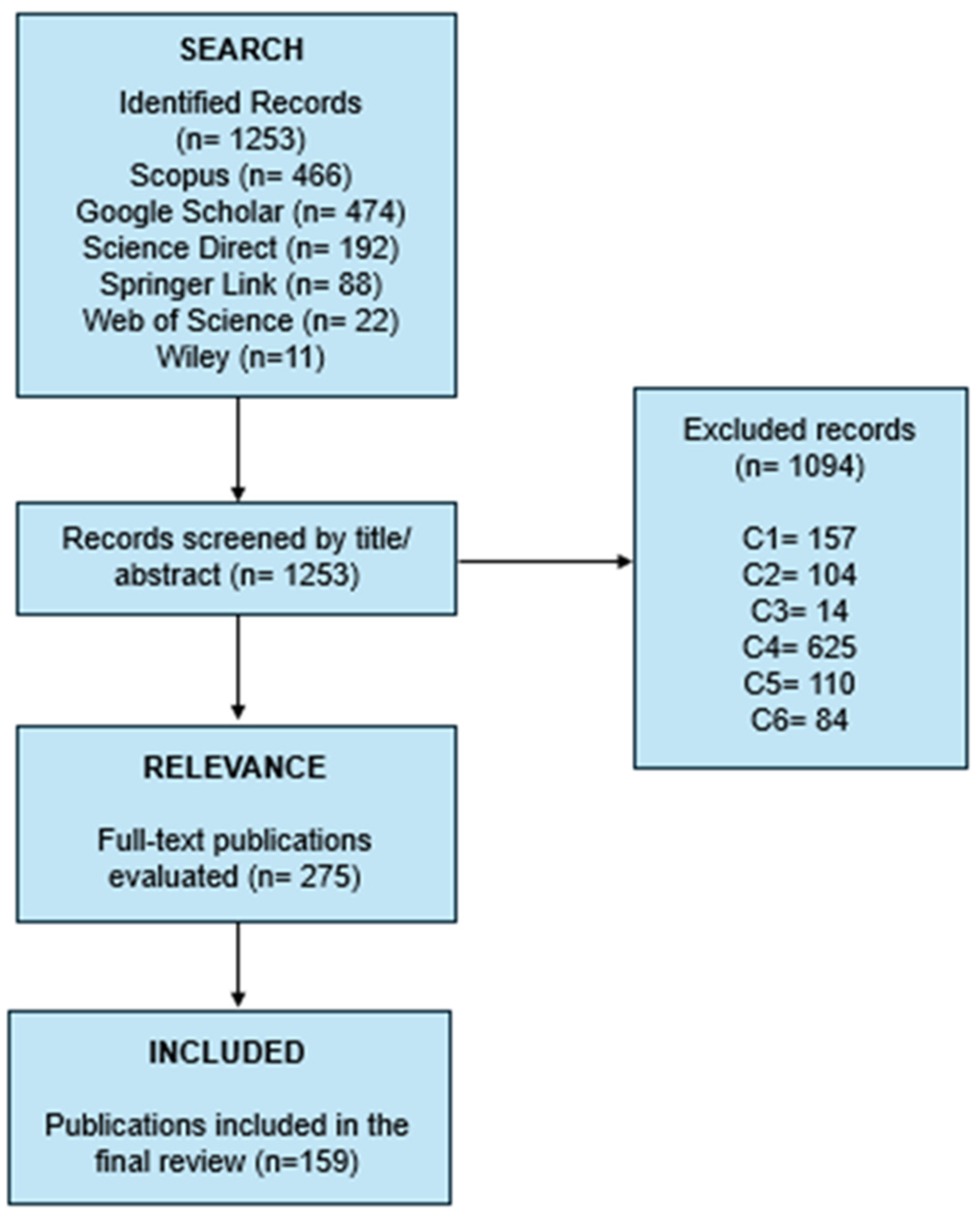
Finally, the findings are synthesized to provide an overview of relevant work to date. In the final step, called the review report, the findings are documented and research questions are addressed [7]. Figure 1 illustrates each of these steps within the review protocol.

2.2. Research Questions

The main purpose of this SLR is to obtain information from published studies on rice production technologies in the Americas. For this work, the following six research questions (RQs) have been defined.
What kind of problems do rice production technologies solve in the Americas?
What technologies have been generated and/or applied to improve rice crop production in the Americas?
Which countries are generating and/or researching technologies for rice production in the Americas?
PI 4. What production systems are most commonly used in research?
What are the technological trends in rice cultivation in the Americas?
What are the challenges reported in the literature for rice production in the Americas?

2.3. Search Strategy

The search was performed by restricting the basic concepts that are relevant to the scope of this review. The basic search was performed using an automatic search. The initial input for the search was “rice”, “production”, “technologies” and “management techniques”. After running this search string, 1253 studies were retrieved. The articles were retrieved and the abstracts were read to find synonyms for the keywords. For this systematic literature review, the following databases were used: Scopus, Google scholar, Web of Science, Science Direct, Springer Link and Wiley. These databases were selected to ensure good coverage of the topic in question [6]. Also, in all databases, the same words were entered as input, using a search equation including synonyms, technical terms, and Boolean operators (AND, OR, NOT) to ensure a better frame of reference. The equation was as follows in:
(“rice” OR “paddy rice” OR “Oryza sativa”) AND (“agricultural technology” OR “technological innovation” OR “precision agriculture” OR “digital agriculture” OR “smart farming” OR “remote sensing” OR “GIS” OR “drones” OR “UAV” OR ‘photogrammetry’ OR “NDVI” OR “yield prediction” OR “machine learning” OR “IoT” OR “irrigation management” OR “water-saving irrigation” OR “alternate wetting and drying” OR “fertilization” OR “nutrient management” OR “nitrogen management” OR “weed control” OR “herbicides” OR ‘breeding’ OR “genetic improvement” OR “biotechnology”) AND (“Latin America” OR “South America” OR “Central America” OR “Mexico” OR “Brazil” OR “Colombia” OR “Peru” OR “Ecuador” OR “Bolivia” OR “Argentina” OR ‘Uruguay’ OR “Paraguay”).

2.4. Exclusion and Selection Criteria

Exclusion criteria are used to ensure that only relevant studies are processed. Relevant studies, in this case, are studies that contain data that can be used to answer the research questions. The criteria are determined in advance to reduce the possibility of biased criteria [7]. For an article to be included, all exclusion criteria must be false. The exclusion criteria used were as follows:
Exclusion Criteria 1. The publication is not related to the rice sector and production technologies in the Americas.
Exclusion Criteria 2. The publication is not written in English, Spanish and/or Portuguese.
Exclusion Criteria 3. Publication that is a duplicate or already retrieved from another database.
Exclusion Criteria 4. The full text of the publication is not available.
Exclusion Criteria 5. The publication is a review document.
Exclusion Criteria 6. Publication published before 2010.
Ensuring the availability of the full text was established as a priority criterion to guarantee the included studies could be evaluated thoroughly. Duplicate articles were removed to avoid introducing bias into the analysis. Review articles were used solely to identify relevant studies and understand the general context of the research; however, they were not considered original technological advances and were therefore not included in the main analysis. The decision to focus on articles published since 2010 is based on substantial evidence of an increase in rice research since that time, reflecting a boom in relevant, up-to-date knowledge generation.
To answer the research questions, data from the selected studies was extracted and synthesized. The retrieved information focused on determining whether the studies met the exclusion criteria requirements and on answering the research questions. After applying the exclusion criteria and processing all search results, the final results report was prepared [8].

2.5. Reference Database

A total of 787 publications were reviewed in all databases. After the six exclusion criteria were applied, 75 studies were selected for further analysis. In Table 1, we show the number of articles retrieved initially (NIP) and the number of articles after the exclusion and selection criteria (NPAC) were applied. As shown in Table 1 and Figure 2, most articles were retrieved from Google Scholar, followed by Scopus, Science Direct and Springer Link.
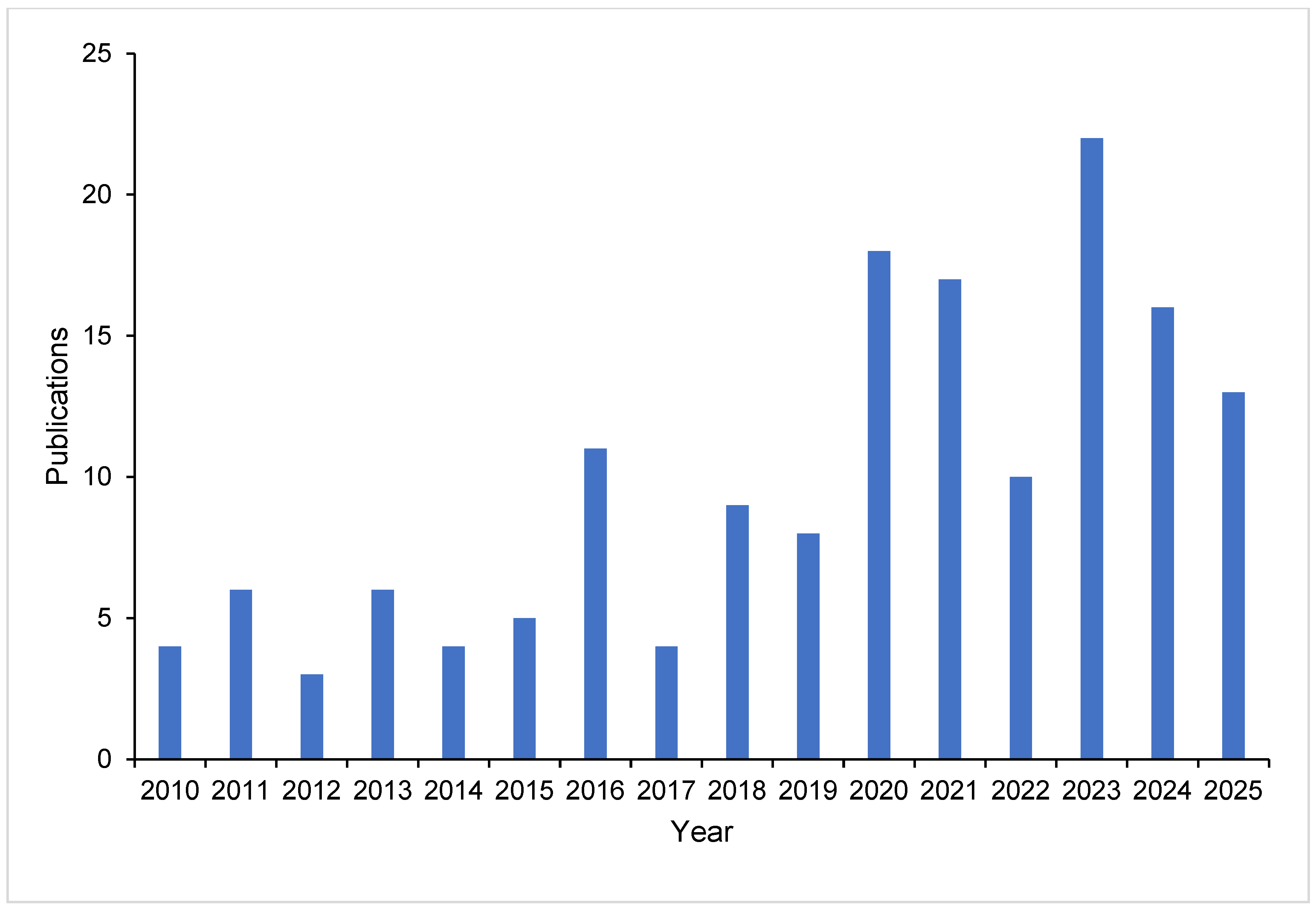
Figure 3 shows the distribution of the selected publications according to the years of publication. It can be observed that there is an increase in the application of technologies in America to increase rice yields.

3. Results

3.1. Major Problems and Overall Technological Advance for Rice Production in Latin America

Low yields due to biotic factors, such as pest and disease attacks, and abiotic factors, such as drought stress, high temperatures, salinity, and acidity, are major problems in Latin American rice production. These problems are being addressed by generating and validating varieties that are resistant to these factors [9]. Another important issue is reducing inputs in rice production, such as using new irrigation techniques, seed planters, and different fertilizer sources [10,11]. A third problem is the emission of greenhouse gases in rice cultivation. New production systems, water management, and varieties with lower emissions are being explored as alternatives to mitigate these emissions [12]. Finally, remote sensing is being introduced as a technique to monitor rice crops, detect stress during growth, and obtain relevant information, such as estimated crop evapotranspiration (ETc) and water consumption (ETc) [13].
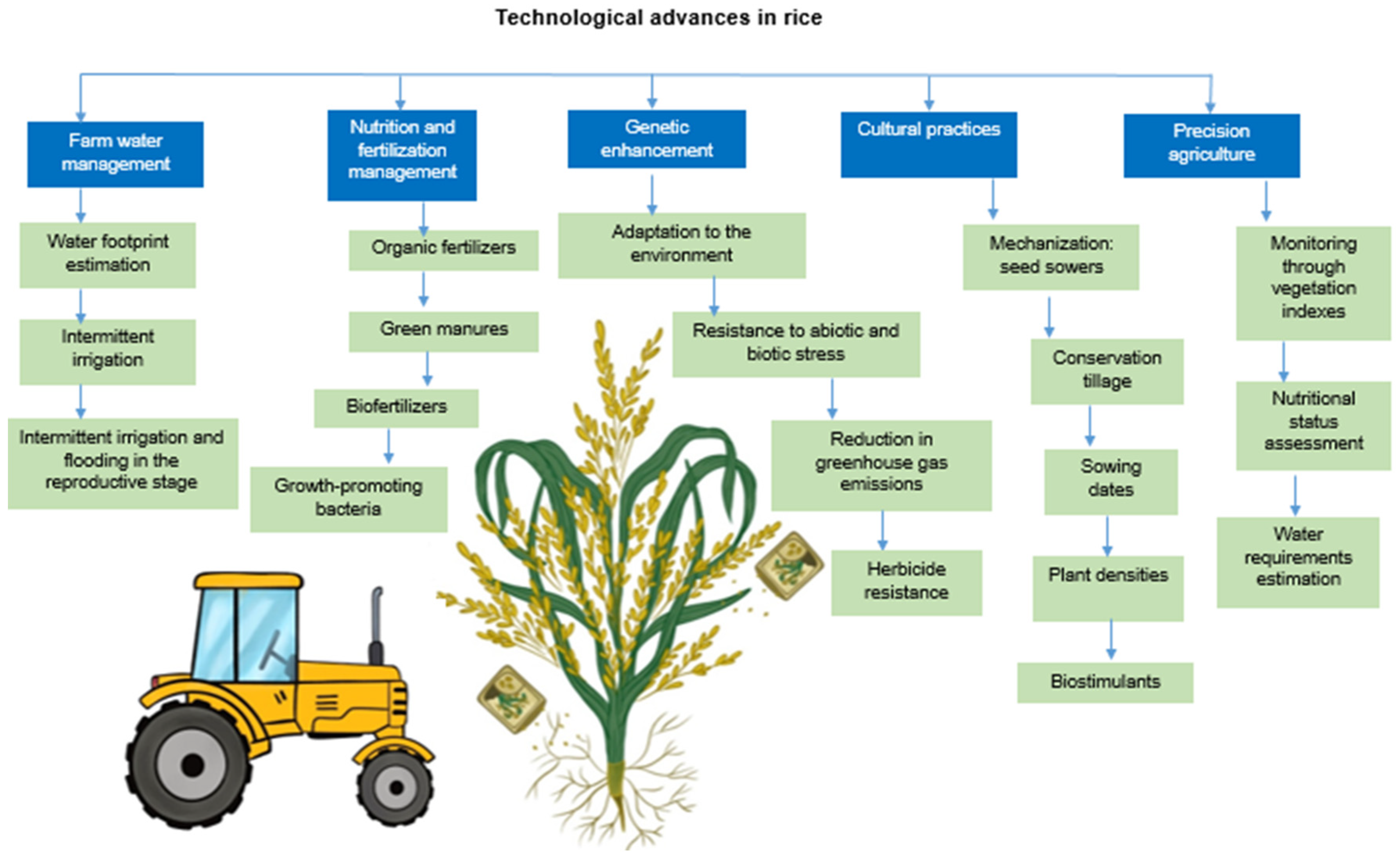
Figure 4 illustrates the technological advancements in rice cultivation, which are organized into five categories: water management, nutrient management, genetic improvement, cultural practices, and precision agriculture. The blocks highlight strategies that optimize production, utilize resources more efficiently, and reduce environmental impact. These strategies include intermittent irrigation techniques, the use of biofertilizers, the selection of resistant varieties, and the adoption of precision farming methods.

3.2. Precision Agriculture and Rice Simulation Models in Latin America

Heinemann et al. [14] used the Oryza2000 model, which was calibrated using real field data from the BRS Primavera variety, to simulate the behavior of rainfed rice over more than three decades (1980–2012) at 51 weather stations. They considered different soil types and planting dates in their simulations. Based on these simulations, the authors identified three major groups of environments within the target population: highly favorable (19%), favorable (44%), and less favorable (37%). These groups present different combinations of water stress, ranging from stress-free scenarios to terminal or reproductive stress, which can reduce yield by up to 34%. This detailed characterization revealed that not all environments require the same selection strategy and that drought is not uniform but rather a set of patterns with varying impacts on crops. Based on this, the article proposes more precise and realistic improvement strategies, such as selecting varieties specifically adapted to optimal environments, opting for broad adaptation to stress in intermediate regions, or applying weighted selection in areas where several drought patterns coexist. While this approach incurs initial costs due to the need to calibrate models, conduct multi-environment trials, and employ specialized personnel, it enables more efficient resource allocation and program optimization in the long term. However, adoption faces practical barriers, such as the gap between prediction and field validation, institutional resistance to simulation-based approaches, and the need for effective mechanisms to disseminate these advances to producers. Thus, while the study shows enormous potential for improving the resilience of rainfed rice, its impact will ultimately depend on the ability to integrate these tools into real agricultural innovation systems.
EMBRAMPA (The Brazilian Agricultural Research Corporation, Portuguese: Empresa Brasileira de Pesquisa Agropecuária) analyzed 596 Crop Value and Use (VCU) trials of rainfed rice, conducted between 1984 and 2010 in 81 locations, using 264 elite lines. They used a mixed REML/BLUP model together with the HMRPGV index to evaluate yield, adaptability, and stability simultaneously. This approach identified significant genetic progress. For instance, the CNA 8555 line yielded 13.28% above the overall average. Three other promising genotypes (AB 062008, AB 062041, and AB 062037) were identified as having high adaptability and stability, and are candidates for commercial release [15]. Although very powerful for large-scale work, this method requires many years of multi-environment trials, well-managed unbalanced data, and specialized statistical personnel. In addition, it may favor very stable genotypes with lower peak yields in highly favorable environments, which somewhat limits their maximum yield potential. In practical terms, its successful implementation depends on the institutional capacity to maintain long-term trials, validate genotypes in actual production, and ensure that the identified materials effectively reach farmers through extension programs.
Santos et al. [16] applied the SEBAL model (Surface Energy Balance Algorithm for Land) to estimate heat flows and evapotranspiration using remote sensing data. This demonstrated that the SEBAL model can accurately represent the energy balance and actual water use in agricultural systems. Therefore, it is a valuable tool for planning irrigation, assessing water stress, and optimizing resource management. The main advantage of the SEBAL model is that it provides spatially detailed information without requiring intensive field instrumentation. However, its practical application necessitates high-quality satellite images, reliable local meteorological data, and the technical capacity to process and calibrate the model. These requirements imply high initial costs and infrastructure that are not always available to small producers or institutions. Additionally, adoption faces barriers such as the need for trained personnel, integrating results into actual agronomic decisions, and acquiring the necessary images in a timely manner. Nevertheless, when institutional support and access to data are available, SEBAL is economically viable and can transform water management in agriculture.
The spectral-temporal metrics derived from Sentinel-2 and the Random Forest algorithm, allow for highly accurate mapping of irrigated rice in Brazil. This national model exceeds 80% accuracy and avoid the overestimation observed in regional models [17]. This strategy stands out because it can capture the crop’s temporal dynamics and relies on free satellite data, making it scalable and economical. However, adopting this strategy requires cloud-free time series, field data to train the model, and processing capacity. It also requires overcoming limitations, such as confusion with spectrally similar crops and variability in planting and management dates. While it is economically viable in the medium term, especially for institutions requiring continuous monitoring, transferring it to real production contexts requires overcoming practical barriers, such as the availability of validation data and technical infrastructure. Additionally, the model must be adapted to regions with different agricultural dynamics than those used for training.
In the western region of Rio Grande do Sul, Brazil, particularly in the vicinity of the municipality of Uruguaiana within the Pampa biome and the Uruguay River floodplains, Crisóstomo de Castro Filho et al. [18] evaluated the ability of spectral indices obtained from Sentinel-2 images to accurately predict the grain yield and above-ground biomass of rice. They identified that indices based on the red-edge and near-infrared spectrum offer superior performance during critical stages, such as maximum vegetative development and antithesis. The extensive areas of irrigated rice and flat topography in these agroecological conditions favor remote sensing and allow the proposed approach to be validated. However, its adoption in the field still faces barriers, such as the need for technological infrastructure and analytical capabilities and the costs associated with time series processing. This suggests that integrating multispectral remote sensing could substantially improve agricultural monitoring and decision-making in rice-producing regions.
Castillo-Villamor et al. [19] conducted a study on the Ibagué Plateau in Colombia. They developed an approach for detecting anomalies in irrigated rice using Sentinel-2 and PlanetScope images. They applied a simple method based on thresholds derived from vegetation index histograms. This method allows problem areas to be identified with an accuracy of close to 80%. Their results showed that anomalies detected at critical stages, such as heading, were directly related to subsequent decreases in yield. This makes the tool a valuable aid for improving crop management. However, adoption of the approach faces barriers such as dependence on cloud-free images, the need for field data to validate detected patterns, and the requirement of technical capabilities to process time series. These limitations are especially relevant for small producers. Nevertheless, since the methodology is based on free data and a computationally accessible procedure, it has high potential for application and scalability in rice systems in similar regions.
In the northern coastal region of Peru, vegetation indices derived from Sentinel-2 images and multiple machine learning algorithms were used to predict rice yield at the plot scale. It was found that regression, random forest, and XGBoost models achieved high accuracy values by leveraging spectral data during critical phenological stages [20]. This methodology is notable for its ability to estimate rice yield using accessible satellite data, which makes it scalable and potentially cost-effective for irrigated rice systems. However, implementing this methodology requires cloud-free time series of images, field data for calibration, processing infrastructure, and trained technical personnel. These factors may limit its adoption by small producers. Nevertheless, by reducing the need for extensive field measurements and providing early yield estimates, this methodology offers a promising approach to improving rice crop management in coastal areas of Peru. Peru also reports the highest number of studies on using remote sensors with machine learning modeling techniques to estimate agricultural parameters [21,22,23,24].

3.3. Genetic Improvement of Rice in Latin America

Important advances have been reported in the genetic improvement of rice cultivation in Latin America, such as the generation of disease-resistant varieties or hybrids that are more productive and resilient in the face of current climate change [25]. In organic production systems, using varieties with disease resistance is essential for achieving high yields [11].
In Mexico, the National Institute of Forestry, Agricultural and Livestock Research (INIFAP) runs a rice program through which different varieties adapted to the specific conditions of each producing region have been generated [5,26,27,28]. Over the course of INIFAP’s 30-year breeding program, more than 2500 genetic recombinations have been carried out in rice, including single, double, and triple crosses. These involved different high-yield donor progenitors with 50:50 harvest indexes (50% grain and 50% straw), dwarfing and semi-dwarfing genes for lodging resistance, and resistance to diseases such as leaf and grain scorch caused by the fungus Pyricularia oryzae. Photoinsensitivity, high yield potential and good industrial grain quality have also been incorporated.
To optimize the type and quality of the grain in varieties of the Morelos series of coarse-grain rice varieties, fraternal crosses have been used for irrigation and mutagenesis purposes. Similarly, varieties of agricultural and industrial interest have been developed for irrigated and rainfed thin-grain [29]. Recently, efforts have focused on genetically improving the new rainfed rice (NRR) to counteract the effects of climate change [30]. Additionally, synergies have been established with the Latin American Irrigated Rice Fund (FLAR) to evaluate genetic materials of long-grain rice with a view to its possible cultivation in Mexico. Finally, there is a collaboration with the Centro de Productos Bióticos (CEPROBI) of the Instituto Politécnico Nacional (IPN) to develop differentiated grain rices, such as “sushi rice” [30]. Recently “Lombardy FLAR 13” variety was evaluated in fields in Michoacán, the state that produces the most rice in Mexico. Results showed that this genotype equaled or exceeded the morphological and productive variables of “Milagro Filipino,” with yields reaching over 9 tons per hectare. It also showed productive stability during the evaluated cycles, making it competitive with the conventional variety, Milagro Filipino [28]. Similarly, the Nayarita 22 variety was evaluated for its resistance to lodging, rice blast (Pirycularia rice burn), and grain spotting, as well as its stability in all regions of Mexico. Yields ranged from 5.9 to 8.7 t ha−1 [27].
New rainfed varieties have been generated with the capacity to counteract the effects of climate change. These conditions consist mainly of excessively high or low temperatures that favor greater virulence of diseases, as well as periods of drought and heat waves during the summer, and abrupt flooding in the fall. For this reason, INIFAP made several multiple crosses from which several progenies were derived from which three NAT varieties were generated, named Orona A-17, Tabasqueña A-17 and Veracruzana A21 [29]. FullPage technology, which represents a new generation of rice seeds with tolerance to herbicides of the imidazolinone chemical group. FullPage hybrids show a significant improvement in tolerance to these herbicides, offering the grower greater flexibility in herbicide application and in the initiation of crop irrigation. This technology is designed to improve weed control and optimize rice productivity [31].
In Cuba, at the National Institute of Agricultural Sciences (INCA), the INCA LP-10, J-104, and LP-7 varieties were tested for their response to salinity to evaluate their resistance to abiotic factors [32]. Seven days after sowing, the number of germinated seeds was evaluated, and the germination percentage was determined. Fifteen days later, the following were evaluated in ten seedlings per replicate: seedling height, root length, accumulated fresh and dry biomass, and the salinity tolerance index. Varietal differences were observed in the varieties’ live response to salt concentrations. The cultivars INCA LP-7 and INCA LP-10 showed the best tolerance indexes to these abiotic stress conditions. In Ecuador, under greenhouse conditions, six lines stood out: Puyón/JP003 P11-106716, Puyón/JP002 P8-30552, Puyón/JP003 P11-103115, Puyón/JP002 P8-294930, JP002/JP001 P × P 5P 1322 and JP001/JP003 P1 × 11P 413, with higher tolerance to salinity than the control in terms of plant vigor, panicles per plant, grains per panicle, 1000-grain weight and yield (g plant−1) [33]. Under field conditions, two lines, Puyon/JP003 P11-106716 and Puyon/JP003 P11-103115, stood out for having better agronomic results in cultivars and yield. The results showed the importance of the use of interspecific crosses between O. sativa ssp. japonica × O. rufipogon, as well as the use of the japonica type line to improve rice salinity tolerance and guarantee high yield potential in salinized soils.
Genetic improvement has been carried out in Latin America focused on developing varieties adapted to specific conditions. In Mexico, varieties have been developed to tolerate acid soils in the southeastern region (pH < 5) due to a high concentration of trivalent aluminum (Al3+). In this sense, the effect of three concentrations of Al (0, 200 and 400 µM) was evaluated in three Mexican rice varieties (Temporalero, Huimanguillo, Tres Ríos) and one Japanese variety (‘Koshihikari’) grown in greenhouses [26]. The Tres Ríos variety was found to concentrate less aluminum than the Temporalero and Huimanguillo varieties (0.57 vs. 0.61 and 0.71 mg kg−1, respectively), and did not decrease its magnesium levels with aluminum applications. Additionally, Tres Ríos exhibited the least impact from aluminum on phosphorus (P) concentration; even with 400 µM aluminum, its P content decreased by only 5% compared to control plants (0 µM aluminum). In contrast, Temporalero decreased its P content by 38%, and Huimanguillo decreased its P content by 55%. It can be concluded that the Mexican rice variety Tres Ríos is tolerant of aluminum because it did not exhibit root tissue damage and was able to accumulate lower levels of aluminum and higher levels of magnesium and phosphorus in the leaves [30].
Over more than 20 years, the Latin American Fund for Irrigated Rice (FLAR) and the National Agricultural Research Institute (INIA) in Uruguay evaluated 284 genotypes to genetically and phenotypically characterize grain quality traits, including milling yield, appearance, and cooking quality. They used genome-wide association studies (GWAS), marker-assisted selection, and genomic selection to identify functional markers that explained between 51% and 75% of the variability of certain quality attributes [34]. Molecular breeding technology enables faster progress in improving grain quality for specific markets and reduces breeding cycles. However, it depends on costly genotyping and requires data infrastructure. Additionally, it involves complex genetic-environment interactions. This technology is more applicable to established breeding programs in the region that have access to germplasm, molecular tools, and demanding markets. It can be economically beneficial due to the added value of high-quality grain. However, its practical adoption faces barriers, such as limited availability of seeds for new varieties, a lack of training to interpret and apply genomic data, and resistance to advanced technologies by some stakeholders, which slows the transition from laboratory findings to widespread use in production systems.
A study was conducted in irrigated rice fields in Colombia to evaluate the methane (CH4) emissions, root traits, and grain yield of different cultivars of rice, a breeding line, an inbred variety, and two commercial hybrids. The study found that the hybrids emitted 29% to 62% more methane per unit area than the inbred variety and breeding line, though emissions per unit of grain were similar [35]. The study suggests that genetic differences in above-ground biomass, root length, and root surface area may explain the variability in methane emissions. Cultivar selection could be an effective strategy for reducing greenhouse gases without significantly impacting yield. One advantage of this approach is that it allows for a direct reduction in the carbon footprint of rice through varietal improvement. However, one disadvantage is that low CH4 cultivars may not be commercially available or may be less locally adapted. This approach is feasible in irrigated rice systems in Latin America and the Caribbean where infrastructure for varietal trials is available. Its economic viability could increase if it were included in carbon schemes or climate incentives. Nevertheless, the practical adoption of this technology faces significant barriers, such as the need for access to seeds of new varieties, acceptance by producers, agronomic adjustments, and the lack of compensation policies for emission reductions. These barriers limit the rapid transition of this technology from experimentation to widespread use in the field.
A study conducted by EMBRAMPA in Brazil evaluated rice breeding program through recurrent selection in the CNA6 population of upland rice over five cycles and identified a realized genetic gain of approximately 215 kg ha−1 (3.08% per year) for grain yield [36]. This population improvement strategy has clear advantages, such as raising the genetic mean of the population and facilitating the identification of superior genotypes. However, it has disadvantages, including the large investment of time and resources required for several selection cycles and dependence on sufficient genetic variability. This strategy is especially applicable to well-established improvement programs with trial structures in multiple environments. From an economic standpoint, accelerating genetic gain can increase program profitability. However, practical barriers include maintaining an extensive trial infrastructure, managing robust data, and ensuring that program advances reach farmers through variety release and adoption, which can hinder the transition from experimental results to commercial production.
Another study, conducted at the University of Arkansas (USA) under controlled conditions with rice and wild rice cultivars native to Brazil, evaluated the morphological, photosynthetic, and gene expression (HSPs and HSFs) responses to heat and drought stress [37]. The study found that certain weed rice genotypes showed greater stress tolerance than cultivated cultivars and that the overexpression of heat shock genes is associated with better performance under such conditions. While this research has advantages, such as identifying more resistant alternative germplasm and highlighting key molecular mechanisms, it also has disadvantages. For example, the research was conducted in controlled environments that may not fully reflect field conditions, and the genetic and phenotypic manipulation of these traits still requires further validation. The study’s findings are particularly relevant for breeding programs seeking to increase abiotic stress tolerance in rice. However, economic viability depends on developing varieties that reach producers without excessively increasing costs. Practical barriers to adoption include the need for molecular analysis infrastructure, availability of new variety seeds, validation in real production contexts, and acceptance of varietal changes by farmers.
Raimondi et al. [38] evaluated the genetic base of 40 upland rice cultivars developed in southern Brazil (Rio Grande do Sul state) using molecular markers. They concluded that the cultivars are closely related, indicating a high risk of genetic vulnerability. This assessment highlights the advantage of knowing the available germplasm for improvement. Awareness of limited genetic diversity opens the door to introducing new variability and reducing future risks. However, the regional varietal program’s reliance on a narrow gene pool limits its ability to respond to biotic or abiotic stress [38]. The results are directly relevant to breeding programs in Argentina, Uruguay, and Brazil that focus on rainfed or flooded rice in southern South America because they provide critical data for planning new genetic incorporations. From an economic standpoint, diversifying the genetic base can increase crop stability and resilience, as well as reduce losses. However, barriers to its practical adoption include the need for access to diverse germplasm, as well as the costs associated with phenotyping and genotyping. Additionally, institutional inertia that favors the continued use of already adapted varieties makes it difficult for these findings to be quickly translated into new varieties that are released and adopted in the field.
A study in the United States examined southern long-grain rice varieties and representative samples from Latin America [39]. The researchers evaluated the grain quality of these samples phenotypically and genotypically (length, width, waxy content, starch content, and gelatinization temperature) to identify key differences between USA and Latin American rice. They found that amylose content was the main differentiating factor and was strongly correlated with the Waxy and Alk genes. The researchers proposed crossing USA germplasm with Latin American varieties to align with the quality preferences of the Latin American market [39]. This strategy has clear advantages, such as targeting genetic improvement toward specific markets, reducing quality mismatches, and expanding commercial competitiveness. However, it also has disadvantages, including investment in genotyping, market complexity, and the need to adapt varieties to multiple environments. This strategy is particularly applicable to breeding programs targeting Latin American export markets. From an economic standpoint, it can generate added value by producing grain that aligns with consumer demands. However, barriers to adoption include access to suitable germplasm, varietal development costs, and integrating new varieties into established production systems. These factors limit the rapid transfer of this technology from the laboratory to producers.
Research conducted in Ecuador evaluated ten local rice varieties and nine control varieties [40]. The study combined morphological and culinary quality evaluations with molecular analyses (using SSR markers and SNP digestion in the waxy gene) to classify the amylose content of the grain. This methodology allows for the early and efficient selection of germplasm according to texture and market preferences. One advantage is that it enables breeding programs to identify varieties that align with consumer demand, thereby reducing development cycles. However, it requires genotyping infrastructure and specialized technical capacity, which may not be accessible to all regional programs. This methodology is most applicable in breeding contexts that seek to improve the quality of tropical rice adapted to specific markets. From an economic standpoint, it can increase the value of a variety by better aligning it with consumer preferences. However, its practical adoption faces barriers, such as the availability of accessible markers, access to diverse germplasm, and the integration of molecular data into the traditional variety release process. These barriers can slow the transition from the laboratory to the field.

3.4. Water Management and Irrigation in Rice Cultivation in Latin America

Innovations focused on reducing greenhouse gas emissions have been implemented in the agricultural water management component. Flooded rice cultivation is a major source of greenhouse gas emissions. The main GHGs are carbon dioxide, methane, and nitrous oxide. The emission of each gas varies according to crop, farm, and irrigation management [41]. Traditional irrigation methods such as continuous flooding result in the loss of water and nitrogen resources and turn rice fields into major sources of methane (CH4) [42]. Conversely, good agricultural management practices and genetically improved rice varieties can reduce emissions by 20% to 50%. Non-continuous irrigation methods have been developed to reduce water use by up to 38% without affecting yield [43]. According to Nunes et al. [12], intermittent irrigation reduces greenhouse gas emissions by up to 12% compared to flood irrigation without affecting the grain yield of different rice varieties and hybrids. The alternating wetting and drying (AWD) irrigation method is one of the most widely studied and used methods worldwide [44]. It consists of cycles of soil wetting and drying, which lead to changes in soil moisture and redox conditions. This irrigation regime has been shown to reduce greenhouse gas (GHG) emissions by up to 40% because it decreases methane (CH4) emissions by enhancing aerobic processes in the soil during the drying period [45].
Research conducted in irrigated tropical rice systems in Valle del Cauca, Colombia evaluated whether alternate wet-dry (AWD) irrigation could reduce water use and greenhouse gas (GHG) emissions without affecting yield over four consecutive cycles [46]. Two drainage levels (AWD5 cm and AWD10 cm) were compared to conventional continuously flooded management. The control group had the highest water consumption (9260–16,559 m3 ha−1 per harvest), while the AWD groups reduced water use by 19–56% and CH4 emissions by 72–100%. Additionally, they decreased N2O by 12–70%, achieving GWP cuts of 25–73% without significantly compromising yield (5.2–8.2 Mg ha−1). AWD offers environmental benefits and water savings but requires frequent monitoring of the water table and technical training. It is more applicable to irrigated rice with controllable infrastructure. Economically, it can reduce irrigation costs; however, adoption faces barriers such as resistance to change, infrastructure limitations, limited technical assistance, and farmers’ perception of risk. In the Piura region on the north coast of Peru [46], AWD reduced methane emissions by up to 99% and increased nitrous oxide emissions by 66–273%, compared with flooding systems. However, global warming potential decreased by 76–80%, and yield decreased by only 2% in the best-case scenario (AWD10). Water use efficiency improved to 0.96 kg m−3. Advantages include a reduced carbon footprint, water savings, and minimal yield loss. Disadvantages include increased N2O emissions, a greater need for monitoring, and a risk of water stress if the method is not applied properly. AWD is applicable in areas with water constraints and suitable soils for controlled management. It can be economically viable due to water savings and the potential for environmental incentives. However, it requires investment in infrastructure and training. Barriers to implementation include resistance to change, a lack of technical expertise, and the limited availability of irrigation control systems.
In another study, five water management technologies in rice were evaluated over three seasons in the rice-growing district of Lagoa da Confusão in the Brazilian Cerrado [47]. The technologies were continuous flooding, two types of intermittent irrigation, saturated soil, and an aerobic system. Two nitrogen doses were also evaluated. The results showed that the aerobic system and intermittent irrigation significantly reduced water use and improved nitrogen efficiency without affecting yield, thereby increasing water productivity and nitrogen (N) recovery. However, these systems have disadvantages, including an increased risk of water stress, increased weed pressure, and the need for constant monitoring. Their applicability depends on the availability of flexible infrastructure, well-drained soils, and technical training. They can be economically profitable due to water and fertilizer savings, though they require an initial investment and adjustments to management. The main barriers to adoption are lack of infrastructure, perceived risk, poor training, new emerging weeds, and lack of institutional incentives to conserve water.
In lowland rice fields in Brazil, sprinkler irrigation was evaluated by regulating soil tension during the vegetative and reproductive phases [42]. Maintaining moisture at around 10 kPa resulted in higher yields, whereas tensions exceeding 40 kPa significantly reduced yields, with potential losses estimated at up to 6 t ha−1. Although sprinkler irrigation has advantages, such as lower water use thanks to rainfall and management flexibility, it carries risks of reduced yields if the soil dries out too much. Sprinkler irrigation is more applicable where flooding is difficult or costly and where the necessary infrastructure to monitor moisture is available. Economically, sprinkler irrigation can be profitable by reducing water costs, though it requires investment in sprinklers and sensors. The main practical barriers include the need for technical training, varietal adaptation, initial infrastructure, and producers’ perception of risk when transitioning from flooded systems.

3.5. Nutrition and Fertilization Management in Rice Cultivation in Latin America

In the component of nutrition and fertilization management in rice cultivation, research has sought alternatives that reduce the use of chemical fertilizers without reducing yields. Among the strategies proposed is the application of biofertilizers and organic or green manures. For example, inoculation with Azospirillum strains has shown promise in partially reducing nitrogen fertilizers, showing significant increases in fresh and dry mass of shoots and roots, plant height, root volume, and number of tillers and leaves [48]. Likewise, inoculation of rice seeds with Bacillus spp. strains doubled phosphate uptake compared to a non-inoculated control [49]. Endophytic bacteria (Burkholderia spp., Pseudomonas spp., Bacillus spp. and Herbaspirillum spp.) with the capacity to fix nitrogen, solubilize phosphate and produce indole-acetic acid have also been identified, contributing to the fertility of soils with low nutrient availability and reducing the need for agrochemicals [50]. In Brazil, different phenological stages of flooding were evaluated in an organic production system, with two planting dates, 10 October and 2 December 2019, to measure weed incidence, morpho-physiological characteristics and grain yield. Early flooding and compost application (15 t ha−1) allowed controlling weeds of the genus Echinochloa spp. without reducing yield [11]. Similarly, the use of organic biopreparations complementary to traditional fertilization was analyzed in the SFL 11 variety, applying leached and fermented earthworm humus from Gliricidia sepium (3, 5, 8 and 10 L ha−1), a conventional treatment with foliar fertilizer and an absolute control. According to the 5% Tukey analysis, the dose of 10 L ha−1 (T4) achieved the greatest plant height (104.37 cm), an average of 14.05 tillers per plant and 239.5 panicles m−2, with 138.95 grains per panicle and a yield of 8650 kg ha−1 of paddy rice [51].
Green manure is presented as an environmentally friendly technology to supply nutrients, improve fertility, mitigate soil degradation and reduce the dependence on inorganic fertilizers. In Peru, the use of Crotalaria juncea (CroJ) and Canavalia ensiforme (CanE), combined with doses of nitrogen fertilizer at 75% (FN75) and 100% (FN100), reduced by 2.82% the number of tillers affected by the “white leaf virus” and achieved yields of up to 8.36 t ha−1 when using CanE-FN100, without altering the nutritional quality of the grain [52].
Rice yield is influenced by multiple factors, and improving cultural practices to increase productivity without compromising resource use efficiency remains a challenge for modern agriculture. Several researchers have proposed approaches to improve cultural practices, ranging from soil preparation and planting to applying amendments and biostimulants. One such approach is soil decompaction by deep tillage, which has been proposed as an alternative for irrigated rice cultivation in rotation with soybeans. This method reduces soil density and increases macroporosity, microporosity, and total porosity. However, rice cultivation leads to a decrease in macroporosity and an increase in microporosity, resulting in greater irrigation water usage. Nevertheless, deep tillage does not affect seeding operational parameters or grain yield [53]. Conversely, the use of graphite as a solid lubricant during the rice seed dosing process (density of 100 kg ha−1) has been studied. While it decreases mechanical damage, it can reduce homogeneity in distribution. Thus, its application in sowing small grains with a grooved rotor shows promise [54].
The adoption of no-till or conservation tillage in Brazilian agriculture has improved soil aggregation, porosity, and water availability. This has increased microbial activity in the surface layer and reduced CH4 emissions by up to 21% without increasing N2O emissions. Over time, crop yields tend to be similar to those of conventional tillage [55]. Strategically choosing the planting date is essential to avoiding abiotic stress at critical stages and maximizing solar radiation capture [56]. Studies in different regions have determined optimal planting dates for maximizing yield in various rice varieties [27,57]. In Colombia, for instance, the effects of three planting dates (May, July, and August) with and without biofertilization (biological nitrogen fixation and bacterial phosphorus solubilization) were evaluated. The best results were obtained in August: yield increased by 18.92% compared to the control, and profitability reached 35.18% compared to local practices. This positive performance was due to a higher carbon balance during flowering (11.56% and 54.04% higher than in July and May, respectively) and an increased use of radiation (17.56% and 41.23% higher). Additionally, the optimal foliar nitrogen concentration (>3%) was attributed to the activity of nitrogen-fixing and phosphate-solubilizing bacteria [58].
Research on the use of agricultural biostimulants has also been conducted. Biostimulants are defined as natural substances or microorganisms applied to plants, seeds, or the rhizosphere to improve growth, nutrient use efficiency, and stress tolerance [59]. Chitosan, a substance within this group, has been used in agriculture for its antifungal effect, its ability to prolong the shelf life of fruits and vegetables, and its ability to stimulate crop growth and yield. Treating rice seeds (cultivar INCA LP 5) with 1 g L−1 of chitosan and performing two foliar sprays (360 mg L−1) at 25 and 60 days after germination produced the best response in terms of plant height and yield components [60]. Similarly, adding Bacillus spp., Pseudomonas spp., and Azospirillum spp., facilitates micronutrient absorption while mitigating chemical accumulation in plant tissue, soil, and water [61]. Finally, amendments such as leonardite, gypsum, vinasse, compost, cachaza (sugarcane waste), and porquinaza (pig production waste) have been evaluated to counteract salinity in rice-growing soils. At a salinity level of 7.44 dS m−1, the application of compost, cachaza, and leonardite improved plant morphology, increased yield, and increased the concentration of N, K, Ca, S, and P. Notably, applying 150 kg ha−1 of leonardite significantly increased plant height, the number of tillers and panicles, and the thousand-grain weight. Therefore, Medina [62] recommends using organic amendments to improve the physical, chemical, and biological conditions of soil irrigated with saline water.
A study in Peru’s San Martín region evaluated the potential of native, growth-promoting bacterial consortia (PGP) as an alternative to intensive nitrogen fertilizer use in rice. The study isolated 27 rhizospheric strains, selected five through multivariate analysis, and validated three in the field: Burkholderia ubonensis la3c3, Burkholderia vietnamensis la1a4, and Citrobacter bitternis p9a3m. These strains increased aerial dry weight, tillering, grain quality, and yield. They also allowed for a 25% reduction in nitrogen fertilizer without compromising productivity, significantly improving crop profitability and usefulness [63]. The use of PGP microorganisms offers advantages such as reduced dependence on synthetic inputs, improved soil quality, and economic benefits. However, their performance depends on environmental conditions and compatibility with local management practices. Their application is especially viable in systems with limited fertilization or in regions seeking to transition to more sustainable agriculture. However, adoption faces barriers such as the lack of commercially available quality inoculants, limited technical training, and producers’ mistrust of biological technologies. This hinders the transition from experimental results to widespread adoption.
Another study conducted at INIA’s El Porvenir experimental station in San Martín, Peru evaluated the effects of incorporating green manure (Crotalaria juncea and Canavalia ensiformis) and applying two doses of nitrogen fertilizer to rice. The study found that C. ensiformis reduced the incidence of White Leaf Virus and achieved the highest yield (8.36 tons per hectare) when combined with FN100 without altering the grain’s nutritional quality. However, using green manure caused fluctuations in soil parameters, particularly decreases in carbon and nitrogen due to microbial activity [52]. Green manure offers advantages such as reducing diseases, improving the environment, and reducing dependence on synthetic fertilizers. However, it requires more time to show full effects and demands proper management. Its applicability is more feasible in systems with labor availability and an agroecological orientation. Green manure’s economic viability may be favorable due to the reduction in chemical inputs in the medium term. However, its adoption faces barriers such as limited dissemination, lack of incentives, and poor technical training. This makes it difficult to transfer this technology from the experimental stage to producers in small agricultural communities.
Regarding the production systems component, results were found that make inroads into the intensive system of rice cultivation (SRI), which has demonstrated satisfactory results in parts of Asia and Africa and combines some of the components mentioned above [64]. This agroecological and climate-smart approach seeks to maximize productivity with reduced use of water, seed and fertilizer through changes in plant, soil and nutrient management. In practice, SRI consists of intermittent irrigation to avoid water stress, alternating periods of dry soil with aerobic soil stages, and flooding only during the flowering phase. In addition, individual seedlings are transplanted at a minimum distance of 25 cm to reduce competition, and soil fertility and biological activity are promoted by incorporating organic matter, which maintains adequate yields [44].

3.6. Pest and Weed Control in Rice Crops in Latin America

In terms of pest management, the use of new molecules to control weeds in rice crops has been reported. Alternative herbicides, such as atrazine, clethodim, imazamox, diuron, flazasulfuron, glufosinate, oxyfluorfen, quizalofop, and tembotrione, provided high levels of control in populations of Eleusine indica in Colombia [65]. A study was conducted in Costa Rica to evaluate the effects of silicon application on soil fertility, pest and disease incidence, yield and milling quality in CR 4477 rice variety. Soil silicon was applied 15 days before planting at a dose of 100 kg SiO2 ha−1 and foliar silicon was applied twice at 4 L ha−1 at 17 and 30 days after planting. The results showed no significant effect of silicon on soil fertility, disease and insect pest incidence, or yield and milling quality variables. This suggests that silicon is an alternative for controlling diseases in rice cultivation [66].
The control of weeds of the Cyperaceae family, such as nutsedge (Cyperus rotundus), is essential in rice cultivation due to its negative impact on yield. A study conducted in Los Ríos province, Ecuador, evaluated the efficacy of several systemic herbicides in the control of Cyperaceae weeds in rainfed rice. Treatments included different doses of Pyrazosulfuron ethyl and Bispyribac sodium, as well as combinations of both. Results indicated that the application of Pyrazosulfuron ethyl at a dose of 300 g ha−1 achieved effective weed control and improved agronomic variables such as plant height and crop yield [67]. In Costa Rica, the efficacy of different hormonal herbicides and sulfonylureas in the combat of Cyperus iria in rice was evaluated. The results showed that sulfonylureas, such as bensulfuron-ethyl and pyrazosulfuron-methyl, were the most effective, achieving significant weed control and increasing rice yield. Without C. iria control, the weed reduced crop yield by 50% [68]. In Veracruz, Mexico, alternatives to propanil were evaluated for the control of resistant Echinochloa colona and Cyperus iria in rainfed rice. The study found that certain herbicides, such as bispyribac-sodium and cyhalofop-butyl, were effective in managing these weeds without negatively affecting the crop [69].
A study evaluated the composition and structure of weeds in 79 rice fields under various rotation systems and geographical areas in the municipalities of Granada and Fuente de Oro, located in Colombia’s Ariari rice-growing region [70]. Additionally, it examined the level of resistance of Ischaemum rugosum to the herbicide bispyribac-sodium. Sampling revealed an average infestation of 540 plants per square meter, with I. rugosum present in all fields and representing 51% of all individuals and 30% of the coverage. Subsequently, seeds collected from fields with at least five years of herbicide use were subjected to dose–response tests in a greenhouse. These tests demonstrated that 65% of the populations were resistant, with resistance indices ranging from 2 to 42. There were no clear differences between rotation systems, but the highest infestation occurred in the rice–crop–rice rotation. These results demonstrate the necessity of systematic monitoring, resistance assessment, and rotation adjustment for integrated management. The advantages of these technologies include reducing control failures and future costs. However, they face barriers such as historical dependence on chemical control, limited adoption of diversified rotations, lack of early diagnosis, and higher initial costs associated with more complex strategies. This limits their applicability to systems with technical assistance, regional monitoring, and the capacity to implement integrated practices beyond the repeated use of a single herbicide.
A study conducted in three rice-producing areas in the Tolima department of Colombia (Center, Meseta, and North) analyzed the dynamics of weed communities and the effectiveness of post-emergence control programs used by farmers from July 2012 to February 2013 [71]. A total of 384 hectares were evaluated using 0.2 × 0.2 m2 random sampling to quantify density, coverage, and level of control. Forty-two species belonging to 20 families were identified, with the northern zone having the greatest diversity. Before the first post-emergence application, maximum weed densities were recorded in all three areas. After treatment, density decreased by 41% at the departmental level. Efficiencies were 29%, 34%, and 52% in the Central, Meseta, and Northern regions, respectively. These differences were statistically significant (p < 0.05). The greater control in the northern region was associated with earlier applications, reflecting the weeds’ greater susceptibility in the early stages. The second application produced smaller reductions (an average of 12%), with no statistical differences. This was associated with more developed weeds and variations in application timing. The cumulative reductions among the four evaluations were 50.6% in the Central region, 34.7% in the Meseta region, and 69.7% in the Northern region. Multivariate analysis showed that density was the most influential variable in community structure. The persistence of herbicides, such as pendimethalin, propanil, and bispyribac-sodium, modulated reinfestation. Compared to other methods, post-emergence applications have advantages, such as high initial efficacy, ease of adoption, and moderate costs. However, they have disadvantages, such as lower effectiveness in advanced stages, risk of resistance, and dependence on the timing of application. Post-emergence applications are most effective when weeds are in the early stages and the logistics are in place for timely applications. While economically viable, practical barriers such as scheduling mismatches, climate variability, and limited technical training make it difficult to transfer experimental efficacy to the field.
This study, conducted on irrigated rice in Brazil, evaluated 50 commercial mixtures of post-emergence herbicides for the control of imidazolinone-resistant Echinochloa crus-galli. The results showed that antagonism was the predominant effect (64%), reducing control efficacy and affecting crop yield. The few synergistic combinations showed partial improvements but not enough to overcome resistance. Among the advantages of using mixtures is the possibility of integrating multiple modes of action and delaying the evolution of resistance [72]. However, disadvantages include lower efficacy, increased risk of control failures, and additional costs for re-applications. Their applicability depends on prior validation of the compatibility of active ingredients, weed physiology, and timing of application. Although some mixtures may be economically viable, practical barriers include high antagonism, limited technical training, limited product availability, and lack of local recommendations, which hinder their adoption in the field.
A study of irrigated rice in southern Brazil confirmed the presence of an Echinochloa crus-galli biotype with resistance to three modes of action (ALS, ACCase, and synthetic auxins) [73]. This problem is exacerbated by monoculture and the repeated use of similar herbicides. The trials showed that propanil was the only herbicide that maintained adequate efficacy; cyhalofop-butyl, penoxsulam, and quinclorac were insufficient, even at high doses. Using herbicide mixtures or rotation has the advantage of diversifying modes of action but has disadvantages such as increased costs, risk of antagonism, and the need for greater technical assistance. The applicability of this method depends on management systems that can integrate chemical and cultural practices, especially in pre-germination schemes where pre-emergents are limited. Although propanil is an economically viable alternative, practical barriers include increased cost per hectare, a shortage of effective options, and a lack of training to implement integrated management strategies in the field.
An evaluation of 35 populations of Echinochloa crus-galli, collected in the rice-growing regions of Daule and Yaguachi in the province of Guayas, Ecuador, was performed to determine their sensitivity to bispyribac-sodium [74]. Four resistant populations were identified with 100% survival even at multiplied doses (320–640 g a.i. ha−1), with resistance indices (RI) greater than 16 in several cases, and the ability to produce viable seeds after treatment. In at least one population, resistance was associated with P450 monooxygenase-mediated metabolism (non-site-dependent resistance), as the application of malathion significantly reduced its survival. In addition, resistant populations also showed tolerance to other herbicides such as penoxsulam (another ALS inhibitor) and varying degrees of sensitivity to an ACCase inhibitor. The advantages of this knowledge include the early detection of resistant biotypes and evidence of more complex resistance mechanisms that require integrated management strategies. The disadvantages are the risk of erosion of the efficacy of key herbicides if not managed properly, along with the costs and the need for continuous monitoring. Its application is possible in rice systems in Ecuador, but economic viability will depend on implementing alternative management programs (chemical rotation, use of other herbicides) and supporting farmers with training. Practical barriers include the lack of availability of effective alternative herbicides, low awareness of resistance, and the difficulty of changing traditional management strategies.

3.7. Technological Advances Trends by Country in Rice Production

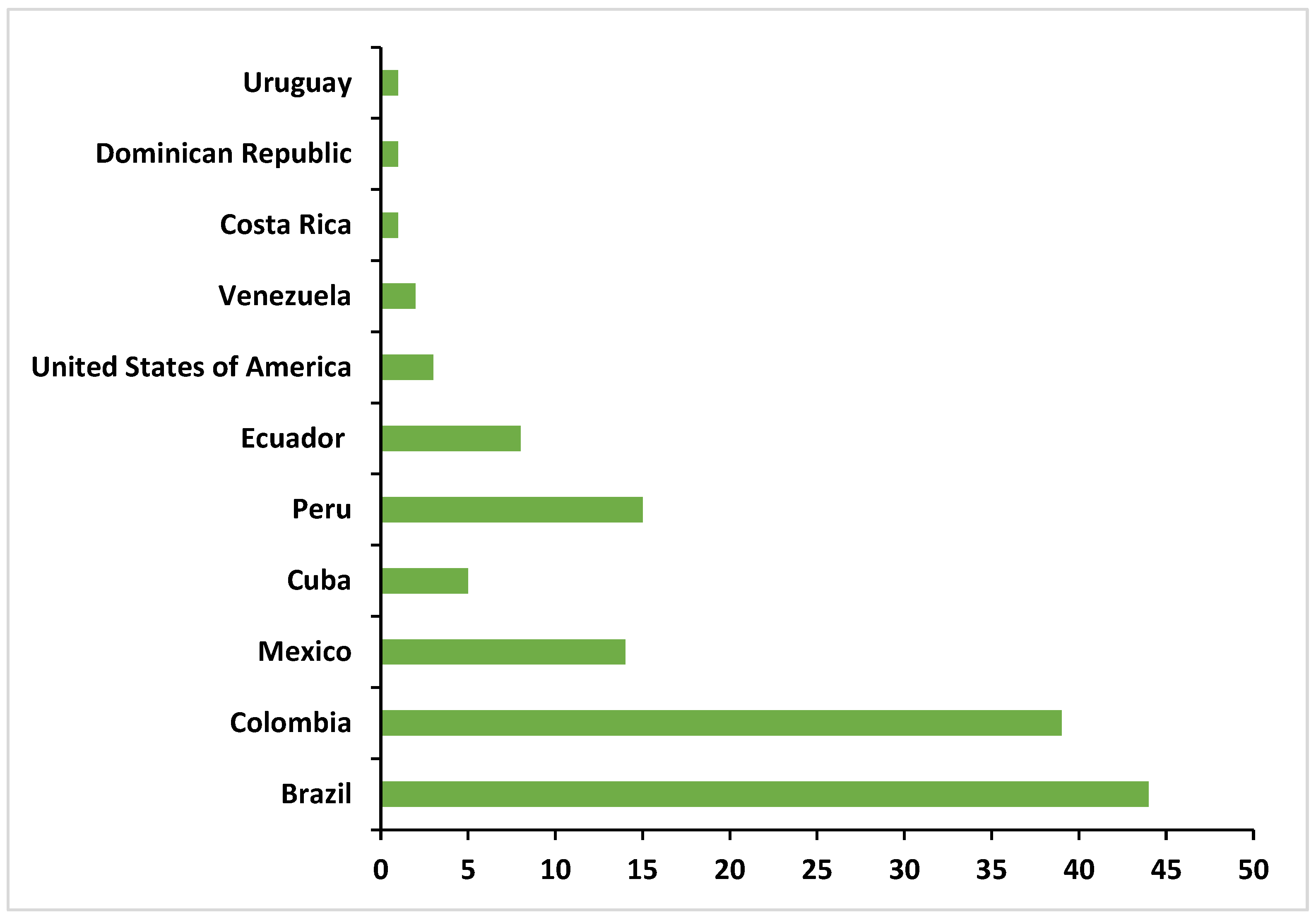
Brazil, Colombia and Mexico are the countries that in recent years have published their advances in technologies (Figure 5). As the leading rice producer in South America, Brazil contributes approximately 45% of the region’s total production, with 10.7 million metric tons in 2024. Rice is fundamental to the Colombian diet and represents a key source of calories. The country produced 3.3 million metric tons in 2023 [1]. Although Mexico’s rice production is lower than Brazil’s and Colombia’s, rice is an essential component of the Mexican diet. To improve the efficiency of the crop, reduce its environmental impact, and make it more resilient to climate change, Mexico has increased its rice research and genetic improvement [29].
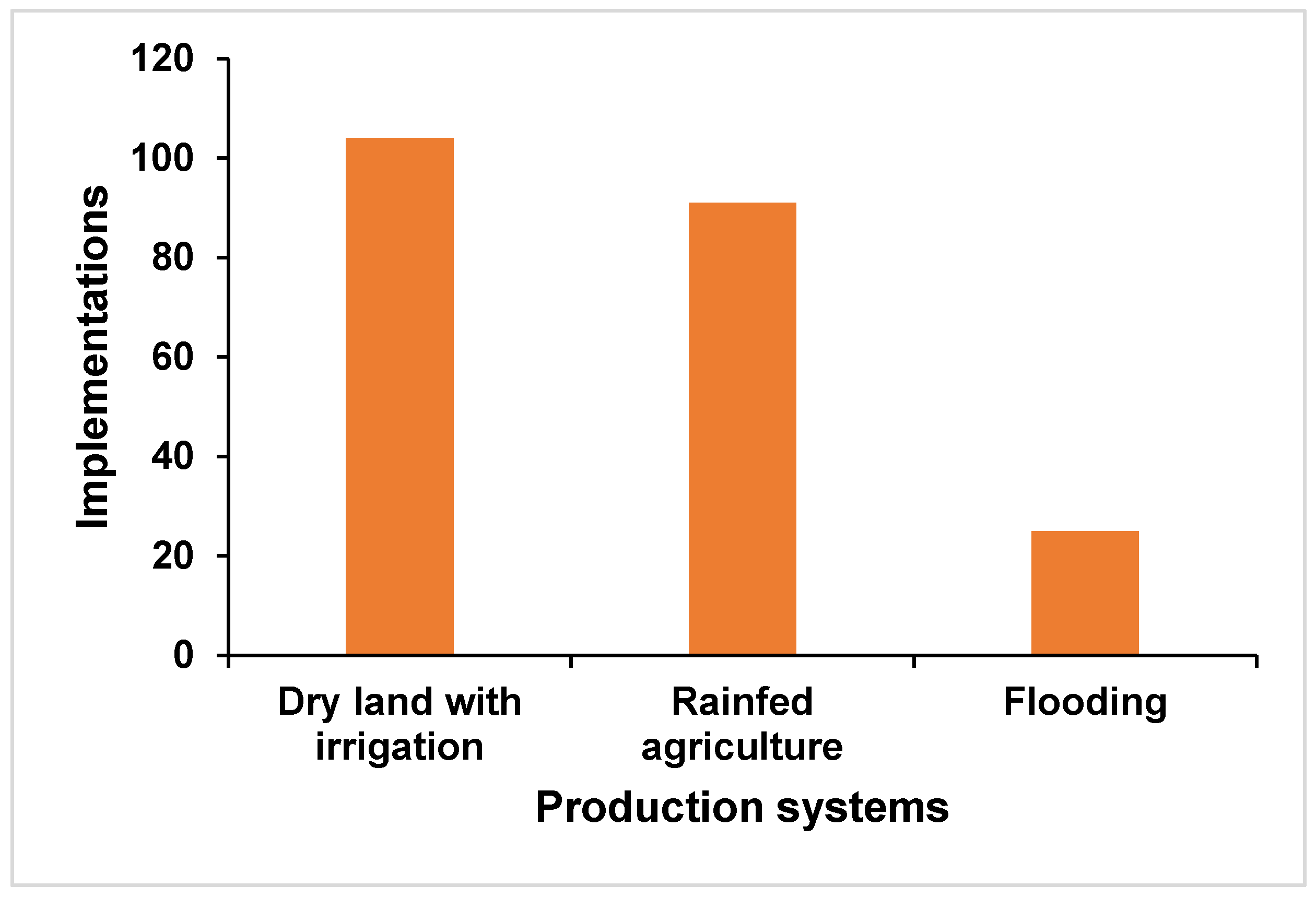
It was found that dry land cultivation with irrigation, rainfed and full flooding were the most used (Figure 6). The choice of these production systems as the focus of research responds to the need to improve the sustainability and efficiency of rice cultivation, adapting to the specific conditions of each region and facing the challenges imposed by climate change and the availability of water resources. For example, the seasonal rainfall-dependent rainfed system is common in regions with well-defined wet seasons.
The current climate change scenario has prompted the search for innovations to strengthen and sustain rice production. Genetic improvement has emerged as the most relevant trend due to the urgent need for plant material that can adapt to the current climate [75]. The application of technological tools to optimize crop management has begun to be explored, yielding promising results. For instance, the estimation of nitrogen content in rice leaves using multispectral images captured by cameras mounted on unmanned aerial vehicles (UAVs) has been studied. Using machine learning algorithms, correlations of R2 > 0.90 were achieved [76].
Methods to estimate crop water requirements using vegetation indices derived from multispectral imagery obtained with UAVs have also been addressed. A study conducted in Peru monitored 5900 m2 of rice under continuous flood irrigation (CI) and 2600 m2 under the AWD technique, in addition to plots with lateral infiltration. Ten flights were conducted with two UAV systems (Matrice 210 with multispectral camera Parrot Sequoia and Matrice 300 RTK with thermal camera H20T) from tillering to flowering stages. With the field data (NDVI, IAF and radiometer) fitted to the multispectral and thermal images, the components of the surface energy balance were estimated. Mean crop evapotranspiration (ETc) values were 6.34 ± 1.49 mm d−1 for IC and 5.84 ± 0.41 mm d−1 for AWD, with a water saving of 42% in the latter case and a yield reduction of 14%. These results provide guidelines for proper irrigation management [13].
In Cuba, the relationship between soil spatial variability and vegetation indices has been studied in rice fields. To this end, systematic sampling was conducted in an area of 100 hectares with 100 georeferenced points. Organic matter samples were extracted from a chromic Vertisol at depths of 0 to 0.20 m. NDVI, SAVI, and CI spectral indices were calculated from a Landsat 9 image, and linear regression analyses were performed with organic matter content. A high correlation and a coefficient of determination close to 98% were obtained. Spatial variability analysis using Surfer 8 showed that the exponential model was the best fit. These results suggest that spectral indices can be used to estimate the amount of organic matter in rice agroecosystems under similar conditions [77].
Several studies point out that the adoption of technological innovations by rice producers, whether generated or transferred by research institutes or centers, is one of the main challenges for this crop [44,63]. Additionally, there has been a general decline in the area under rice cultivation over the last 20 years, increasing dependence on foreign markets and creating unfair competition for grain prices. This generates the need for technologies that increase yields and reduce external dependence [12,27,30]. Paradoxically, rice remains one of the most widely consumed foods in the American diet [78].

4. Discussion

Over the last fifteen years, evidence has shown that technological innovations in rice cultivation in Latin America are moving towards a more resilient, efficient, and sustainable agricultural model. This shift is driven by climate pressures, water use constraints, soil degradation, and the need to increase productivity. The literature agrees that climate change is the dominant force behind the adoption of new rice technologies in the region. Increases in temperature, greater water variability, soil salinization, and a higher incidence of combined stresses (heat and drought) directly threaten the sustainability of production. Studies such as that of Sánchez-Bermúdez et al. [4] indicate a 3.2% loss for each additional degree Celsius, encouraging investment in tolerant varieties, alternative water management, and monitoring tools. The main findings are discussed below and organized by topic. They explain the reasons behind these trends, persistent knowledge gaps, contributions from leading countries, and implications for public policy and the productive sector.
Genetic improvement has emerged as the dominant trend in modernizing rice cultivation in Latin America because it addresses the agronomic, climatic, economic, and commercial needs of the crop. This trend is not coincidental but rather the result of a combination of external pressures, primarily climatic and market-related, and the internal advantages this strategy offers over other technological alternatives [34]. Genetic improvement is the most efficient way to increase yield and resilience without causing drastic disruptions to established production systems. Unlike changes in management practices, which often require significant changes to infrastructure, schedules, training, and private investment, a new variety with stress tolerance, higher yield potential, or improved quality can be incorporated into existing systems with minimal adjustments. This allows for a more direct, rapid, and scalable agronomic impact. This efficiency is why national research programs prioritize generating improved genetic materials [73].
Local adaptation is another decisive factor that establishes genetic improvement as a priority trend. Latin America has enormous environmental heterogeneity, ranging from humid tropical regions to areas with high temperatures and acidic soils containing exchangeable aluminum. Other areas experience marked thermal variability and progressive salinity [39]. These environmental contrasts render a uniform strategy for the region infeasible, necessitating varieties adapted to specific combinations of soil, climate, and irrigation systems. Breeding programs in Mexico, Brazil, Colombia, Uruguay, and Ecuador address this need by generating materials tolerant of aluminum, resistant to Pyricularia oryzae, more stable under intermittent drought conditions, and with a better response to alternate irrigation systems [28,29,40]. The ability to produce varieties adapted to local conditions while maintaining high yield and quality standards makes genetic improvement a strategic tool for addressing climate change and spatial variability in Latin American production systems [35,36].
In addition to environmental demands, there is a growing pressure to improve grain quality in both domestic and export markets. Specific consumer preferences include attributes such as grain length and width, amylose content, cooking behavior, and industrial appearance. These attributes directly affect the price and competitiveness of the product. These demands have led to the incorporation of advanced phenotyping tools, marker-assisted selection, and, more recently, genome-wide association studies (GWASs) and genomic selection into breeding programs in countries such as Brazil and Ecuador [40,79]. Differentiation by quality is no longer optional but rather a requirement to maintain market share in markets that severely penalize inconsistency in grain parameters. This pressure motivates breeders to improve the genetic characterization of cultivars, resulting in more homogeneous and predictable lines that align with consumer demands.
The predominance of genetic improvement can be explained by the existence of mature institutional programs that have been consolidated over decades and are backed by substantial public investment. INIFAP in Mexico, EMBRAPA in Brazil, INIA in Uruguay, FEDEARROZ in Colombia, and FLAR as a regional platform are examples of these robust scientific structures, which combine multi-environmental evaluation, germplasm banks, genetic material exchange networks, and agronomic validation systems in the field [29,34,36,60]. These institutions generate varieties and support long-term research to address future threats, such as new pathogen strains, increased heat waves, and intensified water restrictions. Their work maintains a constant flow of improved materials that incorporate tolerance, productive stability, water use efficiency, compatibility with sustainable management systems, and emission reduction attributes, aligning with national climate change adaptation policies. Thus, rice genetic improvement’s predominance in the region is a structural solution that addresses growing abiotic stress, meets stringent quality demands, maintains producer profitability, and ensures supply stability amid climate and economic uncertainty. The improvement programs of institutions such as INIFAP, EMBRAPA, INIA, FEDEARROZ, CIAT, and FLAR are some of the most solid pillars of agricultural resilience in Latin America. These programs will continue to be fundamental drivers of innovation in the region [30,34,35,80].
However, the use of advanced techniques for genetic improvement is limited in Latin America. Mexico is a particular case, as genetic improvement is still commonly carried out using conventional methods, such as backcrossing or pyramiding. These methods require high operational costs, long timescales for releasing new varieties, and labor that is currently scarce in Latin American countries. Therefore, new lines of research should focus on using molecular technologies in rice cultivation. Using molecular markers reduces the time required to generate new varieties and lowers costs. Likewise, the use of molecular markers has been confirmed to allow for the detection of the presence or absence of genes in genetic improvement programs in Latin America. Some of the cases reported in this review are from Brazil, which has begun using molecular markers for genetic improvement.
Given that rice is one of the crops most dependent on water resources and one of the most intensive in methane emissions when managed under continuous flooding schemes, water management has become one of the central pillars of the technological transformation of rice cultivation in Latin America [81]. Around 5000 L of water are needed to produce 1 kg of rice [82]. Historically, permanent flooding has been the predominant system in the region because it facilitates weed control, stabilizes soil temperature, and ensures a constant water supply for the crop. However, this model involves extremely high water consumption, making it unsustainable in a context of increasing water scarcity, competition for the resource, and greater climate variability [83]. Additionally, continuous flooding creates anaerobic conditions that favor methanogenic activity, resulting in high levels of CH4 emissions that undermine the national mitigation commitments established in the Nationally Determined Contributions (NDCs) under the Paris Agreement. In this context, alternative water management practices such as intermittent irrigation and the Alternate Wetting and Drying (AWD) system have emerged as prominent trends due to their ability to balance productivity, water efficiency, and environmental sustainability [84]. These technologies allow the soil to undergo controlled cycles of saturation and exposure, periodically interrupting the water film to promote temporary aerobic conditions [85]. According to various studies conducted in countries such as Brazil, Colombia, and Peru, this alternation has been shown to significantly reduce water consumption by between 20% and 56%, representing a strategic advantage in regions where low-flow periods have intensified [42,43,86].
At the same time, reducing methane emissions is one of the most consistent and relevant benefits of AWD and intermittent irrigation. Introducing oxygen into the soil during dry phases inhibits the activity of methanogenic microorganisms responsible for CH4 production. Some trials report reductions of nearly 75%, particularly in well-managed systems and when combined with varieties adapted to variable moisture conditions and tolerant of temporary water stress [42]. This impact is significant because rice accounts for a large percentage of agricultural methane emissions in the region. The adoption of practices that reduce these emissions without affecting productivity makes rice a crucial crop for achieving national climate goals.
Contrary to what one might assume, implementing AWD does not always result in lower yields. Various studies show that when applied properly—that is, when a minimum level of moisture is maintained during critical stages such as flowering and grain filling—yields remain stable or may even increase slightly. This is because periodic soil oxygenation improves root health, reduces diseases associated with excessively anaerobic conditions, and optimizes nutrient absorption. Alternate wetting and drying combined with genetically adapted varieties has shown synergistic effects that enhance crop productivity and resilience [84]. This change in water management directly aligns with national and international agendas that aim to reduce greenhouse gas emissions, increase water use efficiency, and promote sustainable agricultural systems. Brazil, Uruguay, and Colombia have already introduced incentives, research initiatives, and pilot programs to encourage these practices, recognizing that transitioning from continuous flooding to smarter, more efficient methods are crucial for addressing climate change challenges. As reflected in the recent literature, water management in rice is no longer just an agronomic issue but also a strategic component of adaptation and mitigation policies that preserve the long-term viability of the crop and food security. Therefore, genetic improvement programs in Latin America must prioritize developing experimental lines and new varieties that exhibit greater water use efficiency while simultaneously reducing methane emissions. This ensures that these advances do not negatively affect crop yields.
The application of precision agriculture to rice cultivation in Latin America has established itself as an emerging technological trend that addresses the need for detailed, timely, and spatially explicit information on crop and environmental conditions. Precision agriculture is essentially a set of tools and approaches based on acquiring, integrating, and analyzing data from multiple sources. These sources include remote sensors, unmanned aerial vehicles (UAVs), multispectral and radar (SAR) satellite imagery, bioclimatic models, machine learning algorithms, and geographic information systems. This allows for characterizing the spatial and temporal variability of crops, optimizing the use of resources, and improving agronomic decision-making [87]. The sustained decline in remote sensing costs, the democratization of access to free satellite data (e.g., Sentinel-1/2 and Landsat 8/9), and the growing availability of AI-based analysis platforms and accessible computing infrastructure have accelerated this technological revolution [88].
The literature not only lists tools but also shows that these technologies have become dominant trends for profound structural reasons. First, rice cultivation in the region is under significant climatic pressure, characterized by greater precipitation variability, increased extreme temperatures, inconsistent water availability, and the proliferation of climate-change-related diseases and pests. The need for early diagnosis and more efficient water management has driven the adoption of methods that can detect heat stress, nutritional deficiencies, waterlogging, incipient drought, and changes in biomass. These methods can anticipate issues in ways that traditional methods cannot [22,23,24]. Second, today’s agricultural markets demand greater traceability, environmental certification, and productive sustainability. This requires clear, verifiable data that these technologies can generate. Third, the opportunity costs of late or erroneous decisions are higher in systems with narrow profit margins. Therefore, precision technologies improve efficiency and reduce losses [76].
Several factors have led to the success of Brazil, Colombia, and Peru. Brazil has a robust agricultural science and technology infrastructure through EMBRAPA, which has specific programs for monitoring, spatial modeling, and yield prediction in irrigated rice [17,89,90]. Colombia has coordinated academic, trade association, and productive research through FEDEARROZ and partnerships with universities. This has led to significant advances in yield prediction models, biomass monitoring using unmanned aerial vehicles (UAVs), and machine learning applications for early disease detection [19]. Peru’s heterogeneous agroecological conditions and climate vulnerability have strongly encouraged the development of remote sensing-based tools for irrigation planning, phenological monitoring, and yield prediction [13,20]. The combination of modernization-oriented agricultural policies, growing investment in R&D, pressure for competitiveness, and availability of technical capabilities has enabled these countries to position themselves as regional leaders. However, critical analysis reveals significant gaps that limit the full consolidation of precision agriculture in the region. While academic research has advanced in developing algorithms, spectral indices, and predictive models, many of these innovations are still in the experimental or local validation stages, with no evidence of regional or commercial scalability. While most studies focus on evaluating technical performance—such as the accuracy of NDVI estimation, the efficiency of stress classification, and the correlation with yield [18]—they lack in-depth economic analyses to determine the viability of adoption by farmers. Additionally, there is a lack of understanding regarding the sociocultural and logistical barriers affecting the use of these tools in small- and medium-sized systems, which constitute the majority of rice producers in Latin America. Additional gaps that require attention include limited interoperability between platforms, a shortage of effective technology transfer models, and the need to improve the training of agricultural extension workers.
In relation to the challenges mentioned in the introduction, particularly climate change and resource scarcity, precision agriculture presents clear opportunities but also significant limitations. These technologies optimize water use by providing more accurate evapotranspiration (ETc) estimates, identifying areas of the field with excess or deficient water, anticipating stress episodes, and efficiently adjusting irrigation strategies [91]. Similarly, these technologies contribute to emissions mitigation by improving water management in AWD or intermittent irrigation systems and enabling finer control of anaerobic soil conditions [46]. Regarding nutrients, the early detection of deficiencies using spectral indices reduces the use of excessive fertilizer, providing economic and environmental benefits. However, these technologies depend on infrastructure, connectivity, and technical capabilities that are not equally distributed across all territories. Additionally, interpreting images and models requires specialized training and expensive software in some cases, which can hinder adoption by small producers [65].
Based on the findings, strategic recommendations can be made to researchers, policymakers, and farmers. Researchers should conduct studies that integrate technical, economic, and social aspects to generate evidence that allows for the establishment of realistic adoption pathways. Standardized methods must also be developed for sensor calibration, model validation, and comparison between unmanned aerial vehicle (UAV), satellite, and terrestrial platforms. Public policymakers must support the development of rural digital infrastructure, promote incentives for adopting precision technologies, and strengthen data-based agricultural extension programs. They must also prioritize creating regulatory frameworks that facilitate the use of drones, agricultural data management, and interoperability between systems. The key recommendation for farmers is to start with accessible tools, such as free satellite platforms through mobile applications, to become familiar with them. Then, they can incorporate more advanced solutions as they gain experience and institutional support.

4.1. Research Gaps and Future Directions

Despite the remarkable technological advances in rice cultivation in Latin America, particularly in genetic improvement, efficient water management, precision agriculture, and emerging biotechnologies, a review of the literature shows that deep gaps remain. These gaps limit the scaling up, practical adoption, and real impact of these innovations in production systems. One of the most obvious gaps is the lack of coordination between scientific developments and their application by producers. Numerous tools, varieties, and methodologies have been developed, yet adoption in the field remains limited. This is due to a lack of studies evaluating the real costs of implementation and producer perceptions, as well as the socioeconomic barriers that influence their willingness to adopt new technologies. Regional research tends to focus on technical validation but rarely delves into effective technology transfer models that translate scientific innovation into sustainable, economically viable production practices [92].
Adding to this gap is the notable absence of rigorous economic analysis. Most studies focus on agronomic aspects, such as yield, physiological efficiency, and spectral indicators. However, there is still little evidence comparing the profitability of different technologies, evaluating the costs of transitioning from traditional systems to models such as AWD or SRI, and determining the financial incentives needed for farmers to adopt sustainable management practices. Without comprehensive economic analysis, it is impossible to estimate risk, measure return on investment, or understand viability at different production scales. This is crucial in a region dominated by small- and medium-sized producers who are highly sensitive to cost variations [93].
Another significant gap is the lack of studies examining the long-term effects of emerging technologies on agricultural systems. While extensive experimental research exists on intermittent irrigation, variable moisture management, biofertilizers, and stress-tolerant varieties, most of this research is based on trials lasting only one or two seasons. This makes it impossible to identify the cumulative effects on soil health, biogeochemical dynamics, multi-year water efficiency, and yield stability under different climate scenarios. For instance, the long-term effects of prolonged cycles of intermittent irrigation on soil physical structure, carbon balance, and methane behavior remain unknown. Additionally, there is insufficient evidence regarding the persistence of biofertilizer effects or the productive plasticity of resilient varieties when faced with repeated combined stresses [94].
Another critical gap is the lack of integration of big data, artificial intelligence, and digital monitoring systems. While some studies use machine learning, unmanned aerial vehicle (UAV) platforms, or satellite analysis for yield prediction or stress detection, the region lacks standardized platforms that integrate multi-source data at the regional scale. The absence of robust climate-agronomic monitoring networks limits the ability to generate reliable predictive models. Additionally, the lack of integration between information systems and extension services reduces the practical usefulness of these technologies for producers. Consequently, structural barriers, including insufficient infrastructure, data fragmentation, and a lack of interoperability between platforms, limit the transformative potential of digital agriculture.
Despite these gaps, the analyzed technologies show great promise in addressing key challenges in rice cultivation in Latin America, such as climate change, resource scarcity, soil degradation, and the evolution of resistant pests and weeds. Heat-, drought-, and salinity-tolerant varieties are essential for maintaining productivity under extreme conditions, mitigating losses associated with heat waves, marginal soils, and water variability. Additionally, practices such as intermittent irrigation and the AWD system contribute to climate change adaptation and mitigation by significantly reducing water consumption and decreasing methane emissions from continuous flooding. This dual economic and environmental impact is crucial for the crop’s sustainability.
In contexts of resource scarcity, adopting biofertilizers, microbial inoculants, and biological agricultural strategies is a viable alternative to reducing dependence on synthetic fertilizers. The costs and environmental externalities of synthetic fertilizers have increased in recent years [63,95,96]. Simulation models, remote sensing, and precision agriculture complement this approach by enabling localized management of inputs and the early detection of nutritional deficiencies, water stress, and phytosanitary problems, optimizing resource use [14].
Soil degradation, a widely documented problem in intensive rice systems, can be mitigated through practices such as using organic amendments, managing crop residue, using cover crops, and using green manure. These practices improve soil structure, increase organic matter, and favor greater carbon sequestration. These are all fundamental elements for sustaining long-term productivity [97,98]. Additionally, the spread of resistant pests and weeds remains one of the most challenging issues in rice cultivation, particularly in systems where the repeated use of the same active ingredients intensifies selection pressure [70,72]. Despite the development of new molecules, innovative formulations, and rotation strategies, evidence shows that resistance evolves rapidly. Thus, advances in this area are often merely palliative, highlighting the importance of integrating integrated management practices, data-driven preventive strategies, and continuous research on resistance mechanisms [99].

4.2. Recommendations for Researchers, Decision Makers, and Farmers

This review reveals that strengthening agricultural innovation systems for rice cultivation in Latin America requires a coordinated effort among the scientific community, policymakers, and producers. An essential priority for researchers is to focus their efforts on studies that go beyond traditional agronomic experimentation and incorporate the analysis of technology adoption, economic costs, and scalability. Scientific advances in areas such as precision agriculture, efficient water management, and genetic improvement are limited by the lack of evaluation of how these innovations are integrated into production systems and the socioeconomic barriers that hinder their adoption [93]. A concrete example of how collaboration between science, public policy, and producers can lead to tangible advances in rice yields comes from the Mekong Delta in Vietnam. Ho & Shimada [100] demonstrated that adopting Climate-Smart Agriculture (CSA) practices, as promoted through government training and technology transfer programs, increased producers’ technical efficiency by 5–8% and raised overall efficiency in the face of climate change by 14%. These results demonstrate that agronomic innovations have a greater impact when accompanied by institutional strategies that facilitate adoption and adapt technology to actual production conditions. The Vietnamese experience is therefore a relevant benchmark for Latin America because it shows that incorporating modern technologies, such as efficient irrigation, improved water management, low-impact practices, and climate-informed decision-making, only reaches its potential when there is effective coordination between researchers, sectoral authorities, and producers.
It is also essential to develop standardized regional protocols that allow for the consistent evaluation of emerging technologies, such as unmanned aerial vehicle (UAV) platforms, remote sensing systems, artificial intelligence (AI) algorithms, and simulation models. These protocols ensure that the evidence generated is comparable, reproducible, and scalable to different agroecological contexts. China’s experience demonstrates that smart agriculture can significantly improve the efficiency and sustainability of rice cultivation with strong public investment in agricultural digitization. Recent studies show that smart agriculture relies on advanced communication technologies, big data analysis, high-performance sensors, and automated machinery to improve the efficiency and effectiveness of agricultural systems [87].
China has promoted policies to advance these technologies, develop smart equipment, and strengthen specialized training. The country recognizes that agricultural modernization is fundamental to its food security. However, the country’s significant climatic and geographical diversity, the great heterogeneity of its crops, and its large population mean that the process of adopting technology faces significant challenges. Proposed solutions include the differentiated development of smart agriculture according to each province’s resources, expanding online technical services, and creating standards to guide research and technological innovation. These lessons are particularly relevant for Latin America, where the structural challenges are similar [101]. Likewise, Japan’s experience is a valuable reference point for how a country with similar structural challenges, such as an aging agricultural population, land abandonment, and increasing corporate incursion, has modernized rice cultivation with smart technologies. Recent studies show that the Japanese government has promoted the adoption of smart agriculture on large farms with a policy package including demonstration projects, support services, training, and technological standardization. One of the most advanced models is “NoshoNavi1000,” which integrates essential smart agriculture components: real-time data collection, professional data analysis, and accurate agronomic feedback. Its implementation has led to proven improvements in yield, production efficiency, and profitability. This case study shows that smart agriculture depends on technology, a coherent institutional ecosystem, sustained public investment, and effective technology transfer mechanisms [102].
Further research is needed on genotype-environment-management interactions, especially under combined stress scenarios. These scenarios increasingly represent the region’s climate and determine yield resilience and stability. There is evidence that varieties improved for drought tolerance, such as Sahbhagi Dhan and lines derived from IR64 (IR64-drought/DRR Dhan 42), increase yield stability in rainfed rice systems. However, studies indicate that the actual gain is maximized when these varieties are integrated into management packages, such as adjusted planting dates, intermittent or efficient irrigation, and nutrient management. This confirms the importance of genotype-environment-management interactions [103]. Therefore, it is recommended that the scientific community strengthen integrated technical, economic, and social studies that allow for the simultaneous evaluation of agronomic efficiency, financial viability, and producer acceptance. Standardized protocols are necessary for validating technologies, especially in precision agriculture and water management, to ensure comparability between studies and reduce the methodological heterogeneity identified in the literature. Multi-year studies and evaluations under G × E × M interaction scenarios should also be promoted given that many practices show significant environmental and management-dependent variations, which limits the extrapolation of preliminary results.
Public policymakers recognize that technological progress requires institutional frameworks to consolidate it. Clear economic incentives that facilitate the transition to sustainable management systems are crucial. These systems include intermittent irrigation, AWD, biofertilization, low-carbon practices, and precision agriculture. These incentives can take various forms, such as targeted subsidies, preferential loans, climate index-based insurance, or payment schemes for ecosystem services. These mechanisms reduce financial uncertainty during the initial adoption period. Public policies should also prioritize constructing and financing regional research networks focused on artificial intelligence and digital agriculture for rice production. These networks should promote interoperability, data exchange, and the creation of shared analysis platforms between countries. Likewise, it is essential to strengthen established institutions, such as INIFAP, EMBRAPA, and FLAR. These entities play a strategic role in generating adapted germplasm, validating management practices, training highly specialized personnel, and transferring technology to producers. Without sustained investment in these institutions, scientific innovations risk becoming fragmented or failing to achieve their potential impact. At the same time, priority must be given to investing in rural digital infrastructure, which is essential for expanding precision agriculture. Finally, regulatory frameworks must be established to guarantee data interoperability and facilitate the integration of satellite information, sensors, platforms, and decision models.
For farmers, gradually incorporating accessible innovations is a key step toward improving production efficiency and reducing risks associated with climate change. Using remote monitoring tools, such as vegetation indices based on free satellite imagery or phenological tracking platforms, offers a tangible way to improve decision-making without high initial costs. This transition can be complemented by adopting biofertilizers, microbial inoculants, and organic farming strategies. These strategies reduce the costs of synthetic fertilization and improve soil health and system sustainability. Selecting varieties that are tolerant of heat, drought, or salinity can significantly reduce climate risk, particularly in regions where water variability has intensified. Additionally, participating in training programs focused on efficient water management, such as intermittent irrigation and water conservation practices, is essential for consolidating long-term productive resilience. Together, these recommendations promote the technological modernization of rice cultivation and ensure this process is inclusive, economically viable, and adapted to the region’s diverse needs.

4.3. Limitations

This systematic review offers a thorough and current overview of technologies used for rice cultivation in Latin America. However, as with any scientific synthesis, it is subject to limitations inherent in the adopted methodological decisions and the characteristics of the available literature. One limitation relates to language coverage. The review was limited to studies published in English, Spanish, and Portuguese. This reflects the dominant distribution of scientific production in the region but implies the possibility of excluding relevant research published in other languages, particularly in Asian or European contexts, where applicable technologies are developed. This language restriction may have reduced the diversity of available methodological and comparative approaches, thereby limiting the overall spectrum of evidence.
It should be noted that the time frame selected, which focuses on studies published since 2010, ensures the inclusion of recent technologies and contemporary approaches. However, it excludes earlier work that could provide a broader historical perspective on the evolution of trends, particularly in areas such as genetic improvement, water management, and early advances in remote sensing. While this approach prioritizes the timeliness of the analysis, it limits the ability to evaluate the full trajectory of certain innovations and their relationship to policies, institutional transformations, and technology transfer processes that occurred decades ago.
The review faces additional limitations due to its reliance on widely used indexed databases in international scientific literature. While these databases offer extensive coverage and rigorous content curation, the analysis may have excluded gray literature, technical reports, theses, institutional documents, and reports from government or private agencies. These sources often contain valuable information on technology adoption, field performance, and local case studies. This potential omission is particularly relevant in Latin America, where many agronomic innovations are initially disseminated through institutional reports before being formally published.
Another factor limiting the full integration of the findings is the significant methodological heterogeneity among the reviewed studies. The research analyzed differs in terms of spatial and temporal scales, types of sensors used, analysis platforms, experimental designs, agronomic metrics, statistical models, and evaluation criteria. This diversity complicates direct comparisons and hinders the identification of common patterns, particularly in context-dependent technologies such as water management systems, spectral indices, and stress-tolerant variety trials. Heterogeneity affects not only the integration of results but also reflects the lack of regional standardization in methodologies for evaluating emerging technologies. Due to this variability, a quantitative meta-analysis could not be performed to consolidate average effects or estimate the comparative magnitude of impact between technologies. Absent standardized data, reports on dispersion measures, and indicators used by the authors, the results could not be statistically integrated. While this limitation is common in emerging and highly innovative fields, it underscores the need for future research to report more complete and consistent information to enable rigorous quantitative synthesis.
Despite its limitations, this study provides a robust, systematic overview of the current state of rice cultivation technologies in Latin America. In addition to identifying established trends, the review reveals critical gaps and suggests clear opportunities for new research agendas, stronger public policies, and more effective, sustainable agricultural innovation processes. Thus, this analysis provides a valuable resource for understanding regional technological dynamics and supporting strategic decision-making in a rapidly changing agricultural context.

5. Conclusions

This review summarizes and analyzes the key agronomic innovations transforming rice production in Latin America. These innovations include advances in genetic improvement, more efficient water management practices, and the increasing use of precision agriculture technologies. Together, these results demonstrate that the region is transitioning to more resilient and sustainable production systems, albeit at varying rates among countries. Brazil, Colombia, and Peru are cases in point, demonstrating that a combination of institutional capacity, research investment, and consistent support policies is crucial to accelerating the adoption of key technologies and effectively addressing the challenges posed by climate change and environmental variability.
This study provides a clear, applicable knowledge base to guide public policy, research, and agronomic management decisions. By identifying regional trends, evidence of impact, and enabling factors, this review serves as a practical guide for institutions, researchers, and producers interested in strengthening crop sustainability and improving the efficiency with which resources are used. The review also provides a useful frame of reference for prioritizing innovation efforts and strengthening technology transfer systems necessary for scaling up modern practices in the Latin American rice sector.
Based on the identified gaps, several future research directions emerge. First, it will be essential to develop multi-year, methodologically standardized studies that allow for a robust evaluation of technology performance in diverse environments. Additionally, interdisciplinary research integrating agronomic, economic, and social components must be promoted, particularly to understand the determinants of adoption among small producers. Similarly, we must deepen our understanding of genotype × environment × management (G × E × M) interactions under extreme climate scenarios to design coherent, adaptive recommendations. There is also an urgent need to integrate molecular biology tools that accelerate genetic improvement programs and generate varieties with greater adaptability to changing climatic conditions. Finally, to sustain the modernization and sustainability of rice in Latin America, it is critical to expand the development of interoperable data platforms and strengthen government subsidy and regional technology transfer schemes.

Author Contributions

Conceptualization, S.S.-V., E.B.-G. and L.H.-A.; methodology, S.S.-V., F.O.-R. and D.J.P.-C.; software, P.U.H.-L. and D.S.-L.; validation, H.D.I.-A. and D.J.P.-C.; formal analysis, S.S.-V. and D.J.P.-C.; investigation, S.S.-V., E.B.-G. and L.H.-A.; resources, L.H.-A. and D.S.-L.; data curation, F.O.-R.; writing—original draft preparation, S.S.-V., P.U.H.-L. and D.S.-L.; writing—review and editing, L.H.-A. and D.J.P.-C.; visualization, E.B.-G.; supervision, L.H.-A. and D.S.-L.; project administration, E.B.-G. and H.D.I.-A.; funding acquisition, L.H.-A. and D.S.-L. All authors have read and agreed to the published version of the manuscript.

Funding

This research received no external funding.

Data Availability Statement

The original contributions presented in this study are included in the article. Further inquiries can be directed to the corresponding author.

Acknowledgments

To the Instituto Nacional de Investigaciones Forestales Agrícolas y Pecuarias (INIFAP) for the facilities to provide the digital tools used during this work.

Conflicts of Interest

The authors declare no conflicts of interest.

References

  1. FAOSTAT. Food and Agriculture Organization for the United Nations. FAOSTAT Data Base. 2023. Available online: https://www.fao.org/faostat/es/#data/QCL (accessed on 13 June 2025).
  2. Yamano, T.; Arouna, A.; Labarta, R.A.; Huelgas, Z.M.; Mohanty, S. Adoption and impacts of international rice research technologies. Glob. Food Secur. 2016, 8, 1–8. [Google Scholar] [CrossRef]
  3. Long, P.Y. Development of hybrid rice to ensure food security. Rice Sci. 2014, 21, 1. [Google Scholar] [CrossRef]
  4. Sánchez-Bermúdez, M.; Del Pozo, J.C.; Pernas, M. Effects of combined abiotic stresses related to climate change on root growth in crops. Front. Plant Sci. 2022, 13, 918537. [Google Scholar] [CrossRef] [PubMed]
  5. López-Hernández, M.B.; López-Castañeda, C.; Kohashi-Shibata, J.; Miranda-Colín, S.; Barrios-Gómez, E.J.; Martínez-Rueda, C.G. Drought and heat tolerance in rice (Oryza sativa). Ecosistemas Recur. Agropecu. 2018, 5, 373–385. [Google Scholar] [CrossRef]
  6. Slob, N.; Catal, C.; Kassahun, A. Application of machine learning to improve dairy farm management: A systematic literature review. Prev. Vet. Med. 2021, 187, 105237. [Google Scholar] [CrossRef]
  7. Kitchenham, B.; Charters, S.; Budgen, D.; Brereton, P.; Turner, M.; Linkman, S.; Visaggio, G. Guidelines for Performing Systematic Literature Reviews in Software Engineering; Keele University: Keele, UK; University of Durham: Durham, UK, 2007. [Google Scholar]
  8. Van Klompenburg, T.; Kassahun, A.; Catal, C. Crop yield prediction using machine learning: A systematic literature review. Comput. Electron. Agric. 2020, 177, 105709. [Google Scholar] [CrossRef]
  9. Pandey, A.; Dou, F.; Morgan, C.L.; Guo, J.; Deng, J.; Schwab, P. Modeling organically fertilized flooded rice systems and its long-term effects on grain yield and methane emissions. Sci. Total Environ. 2021, 755, 142578. [Google Scholar] [CrossRef]
  10. Oliveira, V.A.; Brasil, E.P.F.; Teixeira, W.G.; Santos, F.D.; Silva, A.D. Yield response of upland rice as influenced by enhanced-efficiency nitrogen fertilizers in the Brazilian Cerrado. J. Agric. Sci. 2020, 12, 98–106. [Google Scholar] [CrossRef]
  11. Prochnow, M.H.; Marchesan, E.; Fleck, G.; Riste, U.S.; Cassanego, E.I.; Pfeifer, J.G. Irrigation start time in organic rice production system. Rev. Ciências Agrárias 2021, 44, 11–20. [Google Scholar] [CrossRef]
  12. Nunes, J.A.S.; Marchesan, E.; Giacomini, S.J.; Grohs, M.; Taschetto, Â.M.; Fortuna, C.R.; Donato, G. Emission of greenhouse gases and yield-scaled global warming potential of rice cultivars under permanent and intermittent irrigation. Bragantia 2022, 81, e2122. [Google Scholar] [CrossRef]
  13. Ramos-Fernández, L.; Quispe-Tito, D.; Altamirano-Gutiérrez, L.; Cruz-Grimaldo, C.; Quille-Mamani, J.A.; Carbonell-Rivera, J.P.; Torralba, J.; Ruiz, L.Á. Estimation of evapotranspiration from high-resolution UAV imagery for irrigation systems in rice fields on the northern coast of Peru. Sci. Agropecu. 2024, 15, 7–21. [Google Scholar] [CrossRef]
  14. Heinemann, A.B.; Barrios-Pérez, C.; Ramírez-Villegas, J.; Arango-Londoño, D.; Bonilla-Findji, O.; Medeiros, J.C.; Jarvis, A. Variation and impact of drought-stress patterns across upland rice target population of environments in Brazil. J. Exp. Bot. 2015, 66, e126. [Google Scholar] [CrossRef] [PubMed]
  15. Colombari Filho, J.M.; de Resende, M.D.V.; de Morais, O.P.; de Castro, A.P.; Guimaraes, E.P.; Pereira, J.A.; Breseghello, F. Upland rice breeding in Brazil: A simultaneous genotypic evaluation of stability, adaptability and grain yield. Euphytica 2013, 192, 117–129. [Google Scholar] [CrossRef]
  16. Santos, T.V.D.; Fontana, D.C.; Alves, R.C.M. Evaluation of heat fluxes and evapotranspiration using SEBAL model with data from ASTER sensor. Pesqui. Agropecuária Bras. 2010, 45, 488–496. [Google Scholar] [CrossRef]
  17. Fernandes, F.A.S.; Fonseca, L.M.; Bendini, H.D.N. Mapping irrigated rice in Brazil using Sentinel-2 spectral–temporal metrics and random forest algorithm. Remote Sens. 2024, 16, 2900. [Google Scholar] [CrossRef]
  18. Crisóstomo de Castro Filho, H.; Abílio de Carvalho Júnior, O.; Ferreira de Carvalho, O.L.; Pozzobon de Bem, P.; dos Santos de Moura, R.; Olino de Albuquerque, A.; Rosa Silva, C.; Guimarães Ferreira, P.H.; Fontes Guimarães, R.; Trancoso Gomes, R.A. Rice Crop Detection Using LSTM, Bi-LSTM, and Machine Learning Models from Sentinel-1 Time Series. Remote Sens. 2020, 12, 2655. [Google Scholar] [CrossRef]
  19. Castillo-Villamor, L.; Hardy, A.; Bunting, P.; Llanos-Peralta, W.; Zamora, M.; Rodriguez, Y.; Gomez-Latorre, D.A. The Earth Observation-based Anomaly Detection (EOAD) system: A simple, scalable approach to mapping in-field and farm-scale anomalies using widely available satellite imagery. Int. J. Appl. Earth Obs. Geoinf. 2021, 104, 102535. [Google Scholar] [CrossRef]
  20. Jarro-Espinal, I.; Huanuqueño-Murillo, J.; Quille-Mamani, J.; Quispe-Tito, D.; Ramos-Fernández, L.; Pino-Vargas, E.; Torres-Rua, A. Field-Scale rice yield prediction in Northern Coastal Region of Peru Using Sentinel-2 vegetation indices and machine learning models. Agriculture 2025, 15, 2054. [Google Scholar] [CrossRef]
  21. Medina-Medina, A.J.; Salas-López, R.; Zabaleta-Santisteban, J.A.; Tuesta-Trauco, K.M.; Turpo-Cayo, E.Y.; Huaman-Haro, N.; Gómez-Fernández, D. An analysis of the rice-cultivation dynamics in the lower Utcubamba river basin using SAR and optical imagery in Google Earth Engine (GEE). Agronomy 2024, 14, 557. [Google Scholar] [CrossRef]
  22. Ramos-Fernández, L.; Peña-Amaro, R.; Huanuqueño-Murillo, J.; Quispe-Tito, D.; Maldonado-Huarhuachi, M.; Heros-Aguilar, E.; Torres-Rua, A. Water use efficiency in rice under alternative wetting and drying technique using energy balance model with UAV information and Aquacrop in Lambayeque, Peru. Remote Sens. 2024, 16, 3882. [Google Scholar] [CrossRef]
  23. Quille-Mamani, J.; Ramos-Fernández, L.; Huanuqueño-Murillo, J.; Quispe-Tito, D.; Cruz-Villacorta, L.; Pino-Vargas, E.; Ángel Ruiz, L. Rice yield prediction using spectral and textural indices derived from UAV imagery and machine learning models in Lambayeque, Peru. Remote Sens. 2025, 17, 632. [Google Scholar] [CrossRef]
  24. Rivera-Cartagena, A.; Mejia-Cabrera, H.I.; Arcila-Diaz, J. Detection of Tagosodes orizicolus in aerial images of rice crops using machine learning. AgriEngineering 2025, 7, 147. [Google Scholar] [CrossRef]
  25. Silva, A.S.; Cicero, S.M.; Silva, F.F.D.; Gomes-Junior, F.G. X-ray, multispectral and chlorophyll fluorescence images: Innovative methods for evaluating the physiological potential of rice seeds. J. Seed Sci. 2023, 45, e202345003. [Google Scholar] [CrossRef]
  26. Marín-Garza, T.; Gómez-Merino, F.C.; Trejo-Téllez, L.I.; Muñoz-Orozco, A.; Tavitas-Fuentes, L.; Hernández-Aragón, L.; Santacruz-Varela, A. Physiological and nutritional responses of rice varieties to aluminum concentration. Rev. Fitotec. Mex. 2010, 33, 37–44. [Google Scholar]
  27. Barrios-Gómez, E.J.; González, G.F.; Canul-Ku, J.; Hernández-Arenas, M. Evaluation of advanced coarse grain rice lines in Morelos, Mexico. Rev. Mex. Cienc. Agrícolas 2016, 7, 1091–1102. [Google Scholar] [CrossRef]
  28. Álvarez-Hernández, J.C.; Tapia-Vargas, L.M.; Hernández-Aragón, L.; Tavitas-Fuentes, L.; Apaez-Barrios, M. Production potential of rice ‘Lombardy FLAR 13’ long and thin grain genotype from the rice-growing area of Michoacán. Rev. Mex. Cienc. Agrícolas 2022, 13, 1117–1127. [Google Scholar] [CrossRef]
  29. Hernández-Aragón, L.; Tavitas-Fuentes, L.; Álvarez-Hernandez, J.C.; De La O-Olán, M. Origin and characteristics of rice genetic diversity in Mexico. Rev. Fitotec. Mex. 2023, 46, 461–469. [Google Scholar] [CrossRef]
  30. Hernández-Aragón, L.; Tavitas-Fuentes, L. Rice in Mexico Technical Book No. 14; National Institute of Forestry, Agricultural and Livestock Research (INIFAP): Zacatepec, Mexico, 2016. [Google Scholar]
  31. Butts, T.R.; Davis, B.M.; Houston, M.; Norsworthy, J.K.; Scott, R.C.; Barber, L.T. Pest Management: Weeds; Arkansas Rice Research Studies: Stuttgart, AR, USA, 2018. [Google Scholar]
  32. Cristo-Valdés, E.; González, M.C.; Ventura, E.; Rodríguez, A.T. Effect of salinity in the initial stages of the development of three rice cultivars (Oryza sativa L.). Cultiv. Trop. 2018, 39, 65–70. [Google Scholar]
  33. Cobos-Mora, F.; Gómez-Pando, L.R.; Reyes-Borja, W.O.; Ruilova-Cueva, M.; Medina-Litardo, R.C.; Hufana-Duran, D. Selecting advanced rice lines (Oryza sp.) as an alternative for sustainable management of soils degraded by salinity. Cienc. Tecnol. Agropecu. 2022, 23, e2398. [Google Scholar]
  34. Cruz, M.; Arbelaez, J.D.; Loaiza, K.; Cuasquer, J.; Rosas, J.; Graterol, E. Genetic and phenotypic characterization of rice grain quality traits to define research strategies for improving rice milling, appearance, and cooking qualities in Latin America and the Caribbean. Plant Genome 2021, 14, e20134. [Google Scholar] [CrossRef]
  35. Soremi, P.A.S.; Chirinda, N.; Graterol, E.; Alvarez, M.F. Potential of rice (Oryza sativa L.) cultivars to mitigate methane emissions from irrigated systems in Latin America and the Caribbean. All Earth 2023, 35, 149–157. [Google Scholar] [CrossRef]
  36. Pereira de Castro, A.; Breseghello, F.; Furtini, I.V.; Utumi, M.M.; Pereira, J.A.; Cao, T.V.; Bartholomé, J. Population improvement via recurrent selection drives genetic gain in upland rice breeding. Heredity 2023, 131, 201–210. [Google Scholar] [CrossRef] [PubMed]
  37. Piveta, L.B.; Roma-Burgos, N.; Noldin, J.A.; Viana, V.E.; Oliveira, C.D.; Lamego, F.P.; Avila, L.A.D. Molecular and physiological responses of rice and weedy rice to heat and drought stress. Agriculture 2020, 11, 9. [Google Scholar] [CrossRef]
  38. Raimondi, J.V.; Marschalek, R.; Nodari, R.O. Genetic base of paddy rice cultivars of Southern Brazil. Crop Breed. Appl. Biotechnol. 2014, 14, 194–199. [Google Scholar] [CrossRef]
  39. Guerra, R.; Angira, B.; Kongchum, M.; Famoso, A.N. Phenotypic and genotypic characterization of grain quality in US and Latin American rice and implications for breeding. J. Sci. Food Agric. 2025, 105, 7159–7168. [Google Scholar] [CrossRef]
  40. Pérez-Almeida, I.; Navia-Pesantes, O.; Celi-Herán, R. Assessment of rice amylose content and grain quality through marker-assisted selection. Int. J. Plant Biol. 2025, 16, 52. [Google Scholar] [CrossRef]
  41. Mascarenhas, Y.S.; Silva, M.A.S.D.; Correchel, V.; Santos, A.B.D.; Carvalho, M.T.D.M.; Madari, B.E.; Caetano, P.H.P. Emission of nitrous oxide in flooded rice cultivation in tropical area of Brazil. Pesqui. Agropecuária Bras. 2020, 55, e01497. [Google Scholar] [CrossRef]
  42. Pinto, M.A.B.; Parfitt, J.M.B.; Timm, L.C.; Faria, L.C.; Concenço, G.; Stumpf, L.; Nörenberg, B.G. Sprinkler irrigation in lowland rice: Crop yield and its components as a function of water availability in different phenological phases. Field Crops Res. 2020, 248, 107714. [Google Scholar] [CrossRef]
  43. Echegaray-Cabrera, I.; Cruz-Villacorta, L.; Ramos-Fernández, L.; Bonilla-Cordova, M.; Heros-Aguilar, E.; Flores del Pino, L. Effect of Alternate Wetting and Drying on the Emission of Greenhouse Gases from Rice Fields on the Northern Coast of Peru. Agronomy 2024, 14, 248. [Google Scholar] [CrossRef]
  44. Cedeño-Plaza, J.W.; Campoverde, J.M.Q.; Montealegre, V.J.G.; Unda, S.A.B.; Aguilar, M.A.E. Economic comparison between the traditional system and the intensive system of rice production in Ecuador. South Fla. J. Dev. 2022, 3, 985–995. [Google Scholar] [CrossRef]
  45. Riccetto, S.; Capurro, M.C.; Roel, Á. Strategies to minimize rice crop water consumption in Uruguay while maintaining its productivity. Agrociencia Urug. 2017, 21, 109–119. [Google Scholar] [CrossRef]
  46. Loaiza, S.; Verchot, L.; Valencia, D.; Guzmán, P.; Amezquita, N.; Garcés, G.; Pittelkow, C.M. Evaluating greenhouse gas mitigation through alternate wetting and drying irrigation in Colombian rice production. Agric. Ecosyst. Environ. 2024, 360, 108787. [Google Scholar] [CrossRef]
  47. de Borja Reis, A.F.; de Almeida, R.E.M.; Lago, B.C.; Trivelin, P.C.; Linquist, B.; Favarin, J.L. Aerobic rice system improves water productivity, nitrogen recovery and crop performance in Brazilian weathered lowland soil. Field Crops Res. 2018, 218, 59–68. [Google Scholar] [CrossRef]
  48. Brasil, M.D.S.; Souza, M.S.T.D.; Guimarães, S.L.; Koswoski, S.L.; Batistela, M.W.A. Initial development of upland rice plants inoculated with the MAY12 strain of Azospirillum spp. Cienc. Rural 2021, 51, e20200824. [Google Scholar] [CrossRef]
  49. Gomez-Ramirez, L.F.; Uribe-Velez, D. Phosphorus solubilizing and mineralizing Bacillus spp. contribute to rice growth promotion using soil amended with rice straw. Curr. Microbiol. 2021, 78, 932–943. [Google Scholar] [CrossRef]
  50. Barbosa-Garcia, A.; Cordero, A.P.; Vergara, D.E.M. Bioprospecting of Endophytic Bacteria with Plant Growth Promoting Activity Associated with Rice Varieties From The Colombian Caribbean. J. Namib. Stud. Hist. Politics Cult. 2022, 32, 193–216. [Google Scholar]
  51. Victor, I.S.; Moran, W.E.; Antonio, Á.M.; Darlyn, A.M. Effectiveness of biopreparations in rice fertilization in the canton of Nobol (Guayas, Ecuador). J. Surv. Fish. Sci. 2023, 10, 693–702. [Google Scholar]
  52. Arévalo-Aranda, Y.; Rodríguez, T.E.; Rosillo, C.L.; Díaz-Chuquizuta, H.; Torres, C.E.E.; Cruz-Luis, J.; Siqueira, B.R.C.; Pérez, W.E. Green manuring and fertilization on rice cultivation: A peruvian Amazon study. Rev. FCA UNCuyo 2024, 56, 1–13. [Google Scholar] [CrossRef]
  53. Fleck, A.G.; Marchesan, E.; Schlosser, J.F.; Oliveira, D.S.D.; Prochnow, M.H.; Soares, C.F.; Herzog, D. Soil deep tillage performed before soybean cultivation on the rice cultivation in the following harvest. Cienc. Rural 2022, 53, e20210621. [Google Scholar] [CrossRef]
  54. Savi, D.; Zimmermann, G.G.; Jasper, S.P.; Sobenko, L.R. Use of graphite in the distribution of rice seeds with constant flow seed metering device. Rev. Bras. Eng. Agríc. Ambient. 2023, 27, 64–69. [Google Scholar] [CrossRef]
  55. Sousa, R.O.D.; Carlos, F.S.S.; Silva, L.S.D.; Scivittaro, W.B.; Ribeiro, P.L.; Lima, C.L.R.D. No-tillage for flooded rice in Brazilian subtropical paddy fields: History, challenges, advances and perspectives. Rev. Bras. Ciênc. Solo 2021, 45, e0210102. [Google Scholar] [CrossRef]
  56. Camero, A.S.; Maqueira López, L.A.; Torres de la Noval, W.; Pozo, A.L.; Torres, K. Growth behavior of two rice cultivars at different sowing dates and its influence on yield. Advances 2014, 16, 306–316. [Google Scholar]
  57. Maqueira López, L.A.; Torres de la Nova, W.; Pérez, M.S.A.; Díaz, P.D.; Roján, H.O. Influence of environmental temperature and sowing date on the duration of phenological phases in four rice (Oryza sativa L.) cultivars. Trop. Crops 2016, 37, 65–70. [Google Scholar] [CrossRef]
  58. Quevedo-Amaya, Y.M.; Beltrán-Medina, J.I.; Hoyos-Cartagena, J.Á.; Calderón-Carvajal, J.E.; Barragán-Quijano, E. Sowing date selection and biofertilization as alternatives to improve yield and profitability of rice variety F68. Colomb. Agron. 2020, 38, 61–72. [Google Scholar] [CrossRef]
  59. Espinosa-Antón, A.A.; Hernández-Herrera, R.M.; González-González, M. Bioactive seaweed extracts as biostimulants for plant growth and protection. Plant Biotechnol. 2020, 20, 257–282. [Google Scholar]
  60. Rodríguez-Pedroso, A.T.; Ramírez-Arrebato, M.Á.; Falcón-Rodríguez, A.; Bautista-Baños, S.; Ventura-Zapata, E.; Valle-Fernández, Y. Effect of Quitomax® on yield and its components of rice cultivar (Oryza sativa L.) var. INCA LP 5. Trop. Crops 2017, 38, 156–159. [Google Scholar]
  61. Pico, Y.A.B.; Paz, R.A.O.; Rayo, S.L. Optimizing Iron, Manganese, and Zinc Fertilization in Rice (Oryza sativa L.) Through Bacillus, Pseudomonas, and Azospirillum bacteria. Rev. Fac. De Cienc. Básicas 2022, 18, 83–101. [Google Scholar] [CrossRef]
  62. Medina-Litardo, R.C. Technological Alternatives to Mitigate Salinity Effects on Rice (Oryza sativa L.) in San Jacinto de Yaguachi, Ecuador; National Agrarian University: La Molina, Ecuador, 2022. [Google Scholar]
  63. Ríos-Ruiz, W.F.; Torres-Chávez, E.E.; Torres-Delgado, J.; Rojas-García, J.C.; Bedmar, E.J.; Valdez-Nuñez, R.A. Inoculation of bacterial consortium increases rice yield (Oryza sativa L.) reducing applications of nitrogen fertilizer in San Martin region, Peru. Rhizosphere 2020, 14, 100200. [Google Scholar] [CrossRef]
  64. Barrett, C.B.; Islam, A.; Mohammad-Malek, A.; Pakrashi, D.; Ruthbah, U. Experimental evidence on adoption and impact of the system of rice intensification. Am. J. Agric. Econ. 2021, 104, 4–32. [Google Scholar] [CrossRef]
  65. Plaza, G.; Hoyos, V.; Vázquez-García, J.G.; Alcántara-de la Cruz, R.; De Prado, R. First case of multiple resistance to EPSPS and PSI in Eleusine indica (L.) Gaertn. collected in rice and herbicide-resistant crops in Colombia. Agronomy 2021, 11, 96. [Google Scholar] [CrossRef]
  66. Furcal-Beriguete, P.; Herrera-Barrantes, A. Efecto del silicio y plaguicidas en la fertilidad del suelo y rendimiento del arroz. Agron. Mesoam. 2013, 24, 12537. [Google Scholar] [CrossRef]
  67. Camino, M.I.A. Evaluation of Systemic Herbicides in the Control of Cyperaceous Weeds in Rice (Oryza sativa L.) Crop, Under Rainfed Conditions. Bachelor’s Thesis, UTB, Babahoyo, Ecuador, 2018. [Google Scholar]
  68. Herrera, F.; Agüero, A.R. Control of flatsedge (Cyperus iria L.) in rice. Agron. Mesoam. 2016, 6, 124–129. [Google Scholar] [CrossRef]
  69. Esqueda-Esquivel, V.A.; Tosquy-Valle, O.H. Chemical control of propanil-resistant Echinochloa colona (L.) Link and Cyperus iria L. in rainfed rice (Oryza sativa L.) in Tres Valles, Veracruz. Univ. Y Cienc. 2013, 29, 113–121. [Google Scholar]
  70. Plaza, G.; Hernández, F.A. Effect of zone and crops rotation on Ischaemum rugosum and resistance to bispyribac-sodium in Ariari, Colombia. Planta Daninha 2014, 32, 591–599. [Google Scholar] [CrossRef]
  71. Ramírez, J.G.; Plaza, G. Effect of post-emergence herbicide applications on rice crop weed communities in Tolima, Colombia. Planta Daninha 2015, 33, 499–508. [Google Scholar] [CrossRef]
  72. Matzenbacher, F.D.O.; Kalsing, A.; Dalazen, G.; Markus, C.; Merotto, A., Jr. Antagonism is the predominant effect of herbicide mixtures used for imidazolinone-resistant barnyardgrass (Echinochloa crus-galli) control. Planta Daninha 2015, 33, 587–597. [Google Scholar] [CrossRef]
  73. Eberhardt, D.S.; Oliveira, N.A.M.; Noldin, J.A.; Vanti, R.M. Barnyardgrass with multiple resistance to synthetic auxin, ALS and ACCase inhibitors. Planta Daninha 2016, 34, 823–832. [Google Scholar] [CrossRef]
  74. Fuentes, P.D.; Peñaherrera, L.A.; Bustos, R.D.; Raffo, L.A.; Yanniccari, M.E. First case of resistance to bispyribac-sodium in barnyardgrass (Echinochloa crus-galli) from Ecuador. Adv. Weed Sci. 2025, 43, e020250098. [Google Scholar] [CrossRef]
  75. Getz, B.; Silva, R.M.D.; Luz, V.K.D.; Sousa, R.O.D.; Magalhães Júnior, A.M.D.; Barbosa, N.J.F.; Oliveira, A.C.D. Identificação de famílias mutantes de arroz com tolerância ao frio. Pesqui. Agropecuária Bras. 2024, 59, e03408. [Google Scholar] [CrossRef]
  76. Colorado, J.D.; Cera-Bornacelli, N.; Caldas, J.S.; Petro, E.; Rebolledo, M.C.; Cuellar, D.; Calderon, F.; Mondragon, I.F.; Jaramillo-Botero, A. Estimation of Nitrogen in Rice Crops from UAV-Captured Images. Remote Sens. 2020, 12, 3396. [Google Scholar] [CrossRef]
  77. García-Reyes, R.A.; Ruíz-Pérez, M.E. Relationship of Organic Matter Content with Spectral Indices in Soil Dedicated to Rice Cultivation. J. Cienc. Técnicas Agropecu. 2023, 32, 1–9. [Google Scholar]
  78. Barona, M.A.; Díaz, R.S.; Suárez, R.R. Adaptability and grain yield stability of rice hybrids and varieties in Venezuela. Bioagro 2021, 33, 181–190. [Google Scholar] [CrossRef]
  79. Acevedo-Siaca, L.G.; Coe, R.; Quick, W.P.; Long, S.P. Evaluating natural variation, heritability, and genetic advance of photosynthetic traits in rice (Oryza sativa). Plant Breed. 2021, 140, 754–757. [Google Scholar] [CrossRef]
  80. Sanchez-Reinoso, A.D.; Garces-Varon, G.; Restrepo-Diaz, H. Biochemical and physiological characterization of three rice cultivars under different daytime temperature conditions. Chil. J. Agric. Res. 2014, 74, 373–379. [Google Scholar] [CrossRef]
  81. Hussain, S.; Huang, J.; Huang, J.; Ahmad, S.; Nanda, S.; Anwar, S.; Shakoor, A.; Zhu, C.; Zhu, L.; Cao, X.; et al. Rice production under climate change: Adaptations and mitigating strategies. In Environment, Climate, Plant and Vegetation Growth; Fahad, S., Hasanuzzaman, M., Alam, M., Ullah, H., Saeed, M., Khan, A., Adnan, M., Eds.; Springer International Publishing: Cham, Switzerland, 2020; pp. 659–686. [Google Scholar] [CrossRef]
  82. Jarin, A.S.; Islam, M.M.; Rahat, A.; Ahmed, S.; Ghosh, P.; Murata, Y. Drought stress tolerance in rice: Physiological and biochemical insights. Int. J. Plant Biol. 2024, 15, 692–718. [Google Scholar] [CrossRef]
  83. Wang, J.; Han, M.; Huang, Y.; Zhao, J.; Liu, C.; Ma, Y. Flooding tolerance of rice: Regulatory pathways and adaptive mechanisms. Plants 2024, 13, 1178. [Google Scholar] [CrossRef]
  84. Carracelas, G.; Hornbuckle, J.; Rosas, J.; Roel, A. Irrigation management strategies to increase water productivity in Oryza sativa (rice) in Uruguay. Agric. Water Manag. 2019, 222, 161–172. [Google Scholar] [CrossRef]
  85. Fan, Y.; Amgain, N.R.; Rabbany, A.; Manirakiza, N.; Bai, X.; VanWeelden, M.; Bhadha, J.H. Assessing flood-depth effects on water quality, nutrient uptake, carbon sequestration, and rice yield cultivated on Histosols. Clim. Smart Agric. 2024, 1, 100005. [Google Scholar] [CrossRef]
  86. da Silva, E.H.F.M.; Hoogenboom, G.; Boote, K.J.; Cuadra, S.V.; Porter, C.H.; Scivittaro, W.B.; Cerri, C.E.P. Implications of water management on methane emissions and grain yield in paddy rice: A case study under subtropical conditions in Brazil using the CSM-CERES-Rice model. Agric. Water Manag. 2025, 307, 109234. [Google Scholar] [CrossRef]
  87. Guo, Z.; Cai, D.; Bai, J.; Xu, T.; Yu, F. Intelligent rice field weed control in precision agriculture: From weed recognition to variable rate spraying. Agronomy 2024, 14, 1702. [Google Scholar] [CrossRef]
  88. Prova, N.N.I. Enhancing agricultural research with an attention-based hybrid model for precise classification of rice varieties. Int. J. Cogn. Comput. Eng. 2025, 6, 412–430. [Google Scholar] [CrossRef]
  89. Klering, V.E.; Cybis, F.D.; Serafini, R.V.; Marques-Alves, R.C.; Berlato, M.A. Modelo agrometeorológico-espectral para estimativa da produtividade de grãos de arroz irrigado no Rio Grande do Sul. Bragantia 2016, 75, 247–256. [Google Scholar] [CrossRef]
  90. Garcia, A.D.B.; Sanches, I.D.A.; Prudente, V.H.R.; Trabaquini, K. Characterization of Irrigated Rice Cultivation Cycles and Classification in Brazil Using Time Series Similarity and Machine Learning Models with Sentinel Imagery. AgriEngineering 2025, 7, 65. [Google Scholar] [CrossRef]
  91. Machaca-Pillaca, R.; Pino-Vargas, E.; Ramos-Fernández, L.; Quille-Mamani, J.; Torres-Rua, A. Estimación de la evapotranspiración con fines de riego en tiempo real de un olivar a partir de imágenes de un dron en zonas áridas, caso La Yarada, Tacna, Perú. Idesia 2022, 40, 55–65. [Google Scholar] [CrossRef]
  92. Quijada, F.; Salazar, C.; Cabas, J. Technical efficiency, production risk and sharecropping: The case of rice farming in Chile. Lat. Am. Econ. Rev. 2022, 31, 1–16. [Google Scholar] [CrossRef]
  93. Martinez, J.M.; Labarta, R.A.; Gonzalez, C.; Lopera, D.C. Joint adoption of rice technologies among Bolivian farmers. Agric. Resour. Econ. Rev. 2021, 50, 252–272. [Google Scholar] [CrossRef]
  94. Dumas, P.; Wirsenius, S.; Searchinger, T.; Andrieu, N.; Vogt-Schilb, A. Options to Achieve Net-Zero Emissions from Agriculture and Land Use Changes in Latin America and the Caribbean (No. IDB-WP-01377); IDB Working Paper Series; Inter-American Development Bank (IDB): Washington, DC, USA, 2022. [Google Scholar]
  95. Gitti, D.D.C.; Arf, O.; Portugal, J.R.; Corsini, D.C.D.C.; Rodrigues, R.A.F.; Kaneko, F.H. Cover crops, nitrogen rates and seeds inoculation with Azospirillum brasilense in upland rice under no-tillage. Bragantia 2012, 71, 509–517. [Google Scholar] [CrossRef]
  96. Mattos, M.L.T.; Valgas, R.A.; Martins, J.F.D.S. Evaluation of the agronomic efficiency of Azospirillum brasilense strains Ab-V5 and Ab-V6 in flood-irrigated rice. Agronomy 2022, 12, 3047. [Google Scholar] [CrossRef]
  97. da Silva, E.C.; Muraoka, T.; Bastos, A.V.S.; Franzin, V.I.; Buzetti, S.; Soares, F.A.L.; Bendassolli, J.A. Biomass and nutrient accumulation by cover crops and upland rice grown in succession under no-tillage system as affected by nitrogen fertilizer rate. J. Crop Sci. Biotechnol. 2020, 23, 117–126. [Google Scholar] [CrossRef]
  98. Deshmukh, V.; Kamoshita, A.; Lopez-Galvis, L.; Pineda, D. Ecophysiology of drill-seeded rice under reduced nitrogen fertilizer and reduced irrigation during El Niño in Central Colombia. Plant Prod. Sci. 2021, 24, 418–432. [Google Scholar] [CrossRef]
  99. Seibt, T.A.; Boller, W.; Ulguim, A.D.R.; Avila, R.C.; Lopes, L.D.L.; Melo, A.A. Herbicide florpyrauxifen-benzyl via drone with different nozzles and spray volumes for weed control in rice crops. Ciência Rural 2025, 55, e20240187. [Google Scholar] [CrossRef]
  100. Ho, T.T.; Shimada, K. The effects of climate smart agriculture and climate change adaptation on the technical efficiency of rice farming—An empirical study in the Mekong Delta of Vietnam. Agriculture 2019, 9, 99. [Google Scholar] [CrossRef]
  101. Wu, W.; Feng, X.; Lu, C. The rise of smart agriculture in China: Current situation and suggestions for further development. Exp. Agric. 2024, 60, e28. [Google Scholar] [CrossRef]
  102. Li, D.; Nanseki, T.; Chomei, Y.; Kuang, J. A review of smart agriculture and production practices in Japanese large-scale rice farming. J. Sci. Food Agric. 2023, 103, 1609–1620. [Google Scholar] [CrossRef]
  103. Dar, M.H.; Waza, S.A.; Shukla, S.; Zaidi, N.W.; Nayak, S.; Hossain, M.; Singh, U.S. Drought tolerant rice for ensuring food security in Eastern India. Sustainability 2020, 12, 2214. [Google Scholar] [CrossRef]
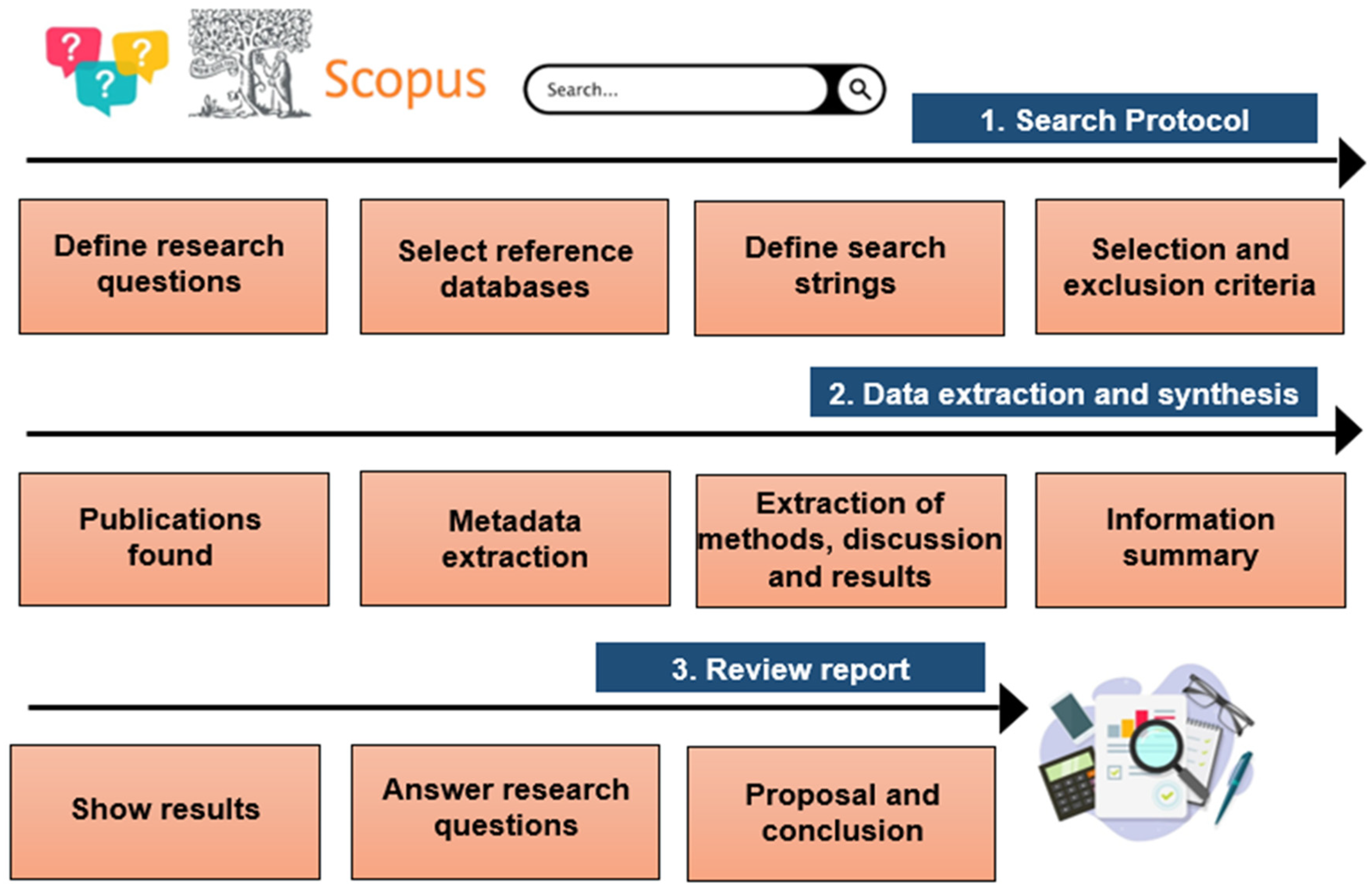
Figure 1. Review protocol process.
Crops 06 00008 g001
Figure 2. Flowchart of the search process, application of exclusion criteria, and numbers of publications used in each process.
Crops 06 00008 g002
Figure 3. Distribution of publications according to year of publication in all the databases used.
Crops 06 00008 g003
Figure 4. Technological advances reported in the Americas. Source: own elaboration.
Crops 06 00008 g004
Figure 5. Main countries in the Americas that have published the most research on technologies for rice production.
Crops 06 00008 g005
Figure 6. Production systems most commonly used in the publications revised during this review.
Crops 06 00008 g006
Table 1. Distribution of publications according to the databases used. NIP = number of initial publications; NPAC = number of publications after applying exclusion criteria, PP = percentage of publications according to the database, and ECA = Exclusion criteria applied.
DatabaseNIPNPACPP (%)ECA
Scopus4668251.61, 2, 4–6
Google Scholar4745534.61, 2, 4–6
Science Direct192127.51–6
Springer Link8874.41–6
Web of science2221.34, 5
Wiley1110.61–6
Total1253159100.0NA
Disclaimer/Publisher’s Note: The statements, opinions and data contained in all publications are solely those of the individual author(s) and contributor(s) and not of MDPI and/or the editor(s). MDPI and/or the editor(s) disclaim responsibility for any injury to people or property resulting from any ideas, methods, instructions or products referred to in the content.