
Exploring the Potential of Gamified E-Learning for Improving Heavy Vehicle Drivers’ Safety Knowledge: A Feasibility Study in Ethiopia


Abstract
1. Introduction
2. Materials and Methods
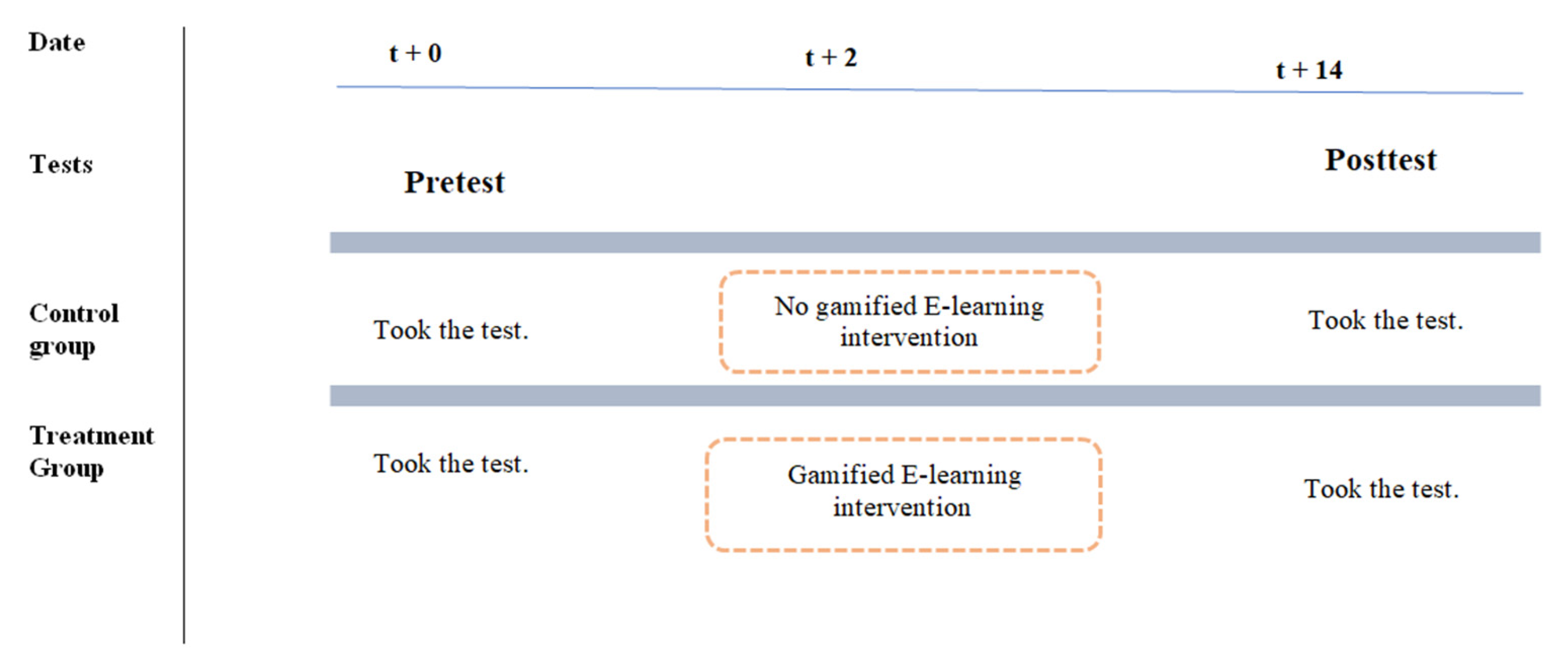
2.1. Study Design
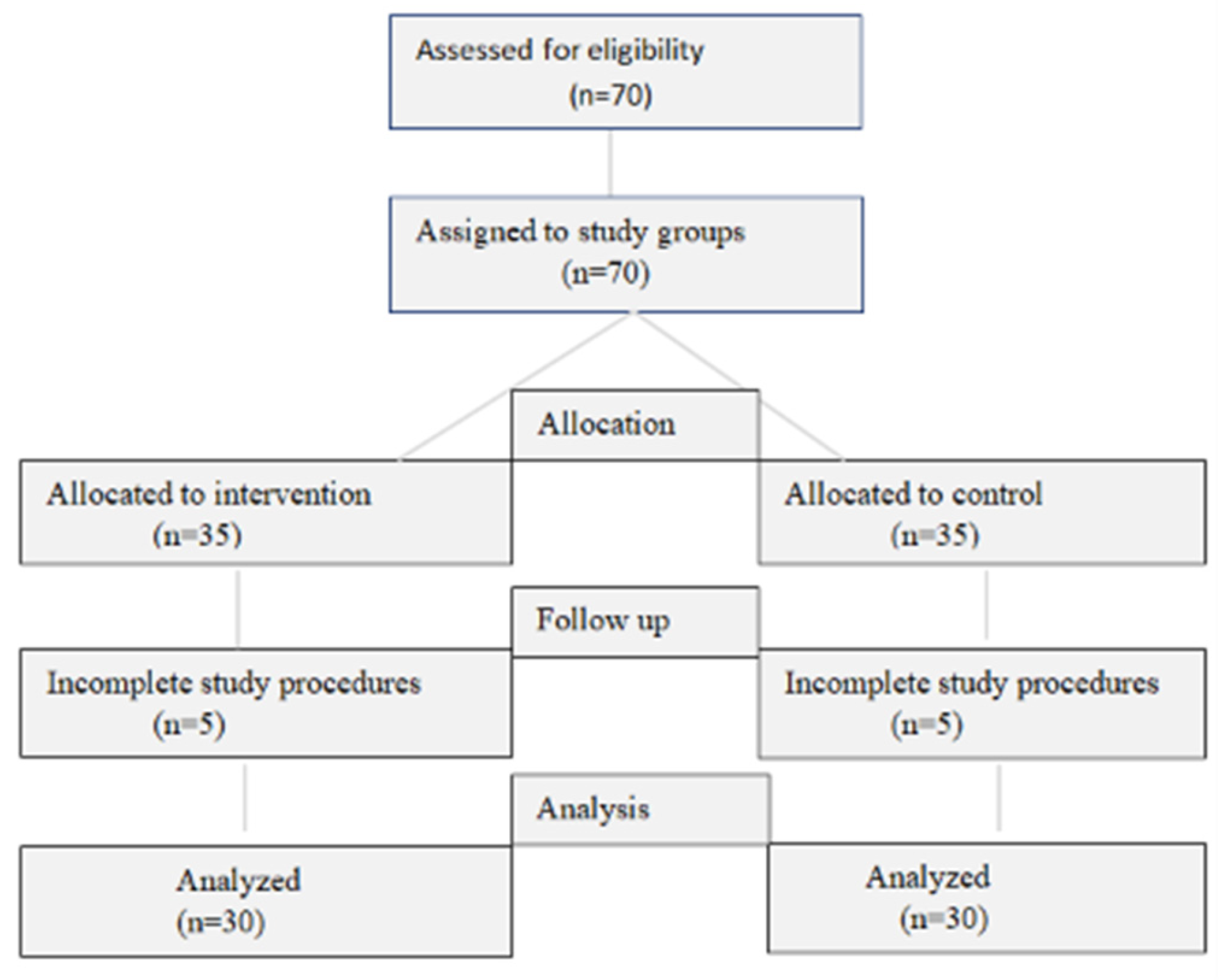
2.2. Participants and Sampling
2.3. Ethical Considerations
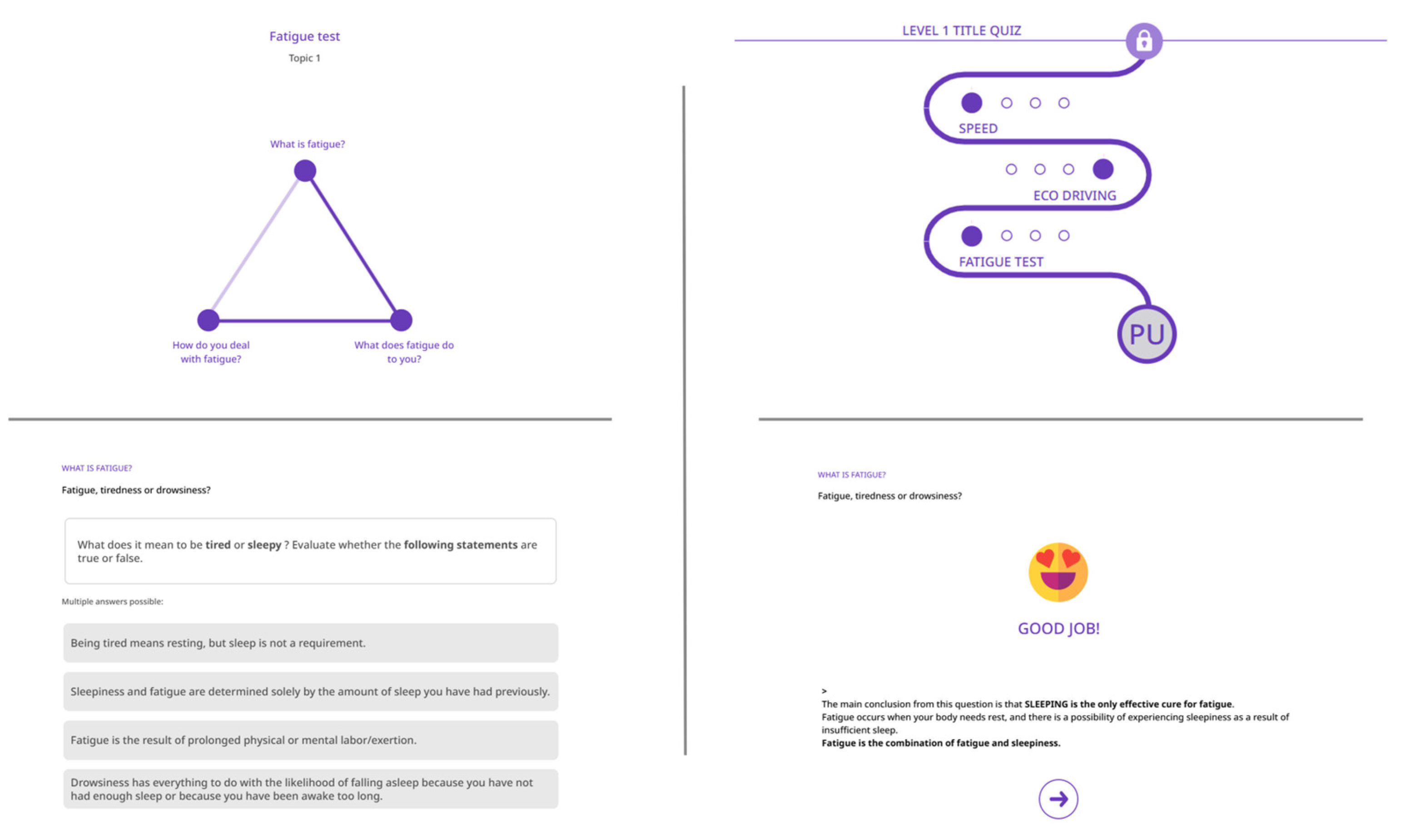
2.4. Description of the E-Learning Intervention
2.5. Measures and Instruments
2.5.1. Knowledge and Awareness Measures
2.5.2. User Acceptance Measures
2.6. Data Collection Procedure
2.7. Data Analysis
3. Results
3.1. Participant Characteristics and Baseline Comparability
3.2. Assumption Testing
3.3. Effects of the E-Learning Intervention on Eco-Driving Performance
3.4. Effects of the E-Learning Intervention on Speed Behavior
3.5. Effects of the E-Learning Intervention on Fatigue Management
3.6. User Acceptance of the E-Learning Modules
4. Discussion
4.1. Impact Potential of Gamified E-Learning for Driver Safety Training
4.2. Practical and Policy Implications
4.3. Limitations and Future Research
5. Conclusions
Author Contributions
Funding
Institutional Review Board Statement
Informed Consent Statement
Data Availability Statement
Acknowledgments
Conflicts of Interest
References
- World Health Organization. Global Status Report on Road Safety 2023: Country and Territory Profiles; World Health Organization: Geneva, Switzerland, 2024. [Google Scholar]
- Ahlstrom, C.; Anund, A. Development of sleepiness in professional truck drivers: Real-road testing for driver drowsiness and attention warning (DDAW) system evaluation. J. Sleep Res. 2025, 34, e14259. [Google Scholar] [PubMed]
- Camden, M.C.; Soccolich, S.A.; Hickman, J.S.; Hanowski, R.J. Reducing risky driving: Assessing the impacts of an automatically-assigned, targeted web-based instruction program. J. Saf. Res. 2019, 70, 105–115. [Google Scholar] [CrossRef]
- Ahmed, M.M.; Yang, G.; Gaweesh, S. Development and Assessment of a Connected Vehicle Training Program for Truck Drivers. Transp. Res. Rec. J. Transp. Res. Board 2019, 2673, 113–126. [Google Scholar] [CrossRef]
- Mase, J.M.; Majid, S.; Mesgarpour, M.; Torres, M.T.; Figueredo, G.P.; Chapman, P. Evaluating the impact of Heavy Goods Vehicle driver monitoring and coaching to reduce risky behaviour. Accid. Anal. Prev. 2020, 146, 105754. [Google Scholar] [CrossRef] [PubMed]
- Watson-Brown, N.; Mills, L.; Senserrick, T.; Freeman, J.; Davey, J.; Scott-Parker, B. A complex system of learning to drive: The instructor’s perspective. Saf. Sci. 2021, 136, 105172. [Google Scholar] [CrossRef]
- Gherheș, V.; Stoian, C.E.; Fărcașiu, M.A.; Stanici, M. E-Learning vs. Face-To-Face Learning: Analyzing Students’ Preferences and Behaviors. Sustainability 2021, 13, 4381. [Google Scholar] [CrossRef]
- Nguyen, T. The effectiveness of online learning: Beyond no significant difference and future horizons. MERLOT J. Online Learn. Teach. 2015, 11, 309–319. [Google Scholar]
- Jovanov, N.; Vranješ, Đ.; Jovanov, G.; Otić, G.; Vasiljević, J.; Petrić, Ž.; Aleksić, S. Implementation of the E-Learning Model for Sustainability of Driver Rehabilitation Program. Sustainability 2021, 13, 11484. [Google Scholar] [CrossRef]
- Poondej, C.; Lerdpornkulrat, T. Gamification in e-learning: A Moodle implementation and its effect on student engagement and performance. Interact. Technol. Smart Educ. 2020, 17, 56–66. [Google Scholar]
- Bekelcho, T.; Birgoda, G.T.; Leul, H.; Maile, M.; Alemayehu, M.; Olani, A.B. Near miss road traffic accidents and associated factors among truck drivers in Gamo zone, southern Ethiopia by using a contributory factors interaction model. Front. Public Health 2024, 12, 1386521. [Google Scholar] [CrossRef] [PubMed]
- Sadiq, I.Z.; Usman, A.; Muhammad, A.; Ahmad, K.H. Sample size calculation in biomedical, clinical and biological sciences research. J. Umm Al-Qura Univ. Appl. Sci. 2025, 11, 133–141. [Google Scholar]
- Boeker, M.; Andel, P.; Vach, W.; Frankenschmidt, A. Game-based e-learning is more effective than a conventional instructional method: A randomized controlled trial with third-year medical students. PLoS ONE 2013, 8, e82328. [Google Scholar] [CrossRef] [PubMed]
- Owen, C.E. E-Learning vs. Traditional Learning: A Comparative Study of English Language Acquisition. Asia-Pac. J. Converg. Res. Interchange (APJCRI) 2025, 11, 377–386. [Google Scholar] [CrossRef]
- Cohen, J. Statistical Power Analysis for the Behavioral Sciences, 2nd ed.; Routledge: New York, NY, USA, 2013. [Google Scholar]
- Le, H.N. Development, Implementation and Testing of a Gamified e-Learning Platform for the Improvement of (Motor) Cycling Knowledge & Skills of Vietnamese Adolescents. Ph.D. Thesis, Hasselt University, Hasselt, Belgium, 2024. [Google Scholar]
- Cheng, Y.-M. Roles of interactivity and usage experience in e-learning acceptance: A longitudinal study. Int. J. Web Inf. Syst. 2014, 10, 2–23. [Google Scholar] [CrossRef]
- Hagos, E.; Brijs, T.; Brijs, K.; Wets, G.; Teklu, B. Safety Culture among Transport Companies in Ethiopia: Are They Ready for Emerging Fleet Technologies? Sustainability 2023, 15, 3232. [Google Scholar] [CrossRef]
- Brijs, T.; Brijs, K.; Kaiser, S.; Talbot, R.; Lourenço, A.; Antoniou, C.; Yannis, G.; Avenoso, A.; Wets, G. i-DREAMS: An intelligent driver and road environment assessment and monitoring system. In Proceedings of the 8th Transport Research Arena TRA 2020; Hasselt University: Hasselt, Belgium, 2020. [Google Scholar]
- Bahaa-Eldin, A.R.; Bani, I.; Yagoub, U. Awareness level of safe driving knowledge and practice of specific population drivers: Behavioral assessment and educational intervention. Eur. J. Trauma Emerg. Surg. 2022, 48, 4119–4129. [Google Scholar] [CrossRef]
- Davis, F.D. Perceived Usefulness, Perceived Ease of Use, and User Acceptance of Information Technology. Manag. Inf. Syst. Q. 1989, 13, 319–340. [Google Scholar] [CrossRef]
- Venkatesh, V.; Davis, F.D. A theoretical extension of the technology acceptance model: Four longitudinal field studies. Manag. Sci. 2000, 46, 186–204. [Google Scholar] [CrossRef]
- Pozueco, L.; Tuero, A.G.; Paneda, A.G.; Paneda, X.G.; Melendi, D.; Garcia, R.; Orueta, G.D.; Rionda, A. Analytic System to Evaluate Efficient Driving Programs in Professional Fleets. IEEE Trans. Intell. Transp. Syst. 2019, 20, 1099–1111. [Google Scholar] [CrossRef]
- Huang, Y.-H.; Roetting, M.; McDevitt, J.R.; Melton, D.; Smith, G.S. Feedback by technology: Attitudes and opinions of truck drivers. Transp. Res. Part F Traffic Psychol. Behav. 2005, 8, 277–297. [Google Scholar] [CrossRef]
- Donelli, M. Design of broadband metal nanosphere antenna arrays with a hybrid evolutionary algorithm. Opt. Lett. 2013, 38, 401–403. [Google Scholar] [CrossRef] [PubMed]
- Al Kurdi, B.; Alshurideh, M.; Salloum, S.A. Investigating a theoretical framework for e-learning technology acceptance. Int. J. Electr. Comput. Eng. (IJECE) 2020, 10, 6484–6496. [Google Scholar] [CrossRef]
- Jang, H.; Kim, H.K. Effects of Driver Expertise and Device Type on Digital Traffic Safety Education: An Experimental Study. Appl. Sci. 2025, 15, 9175. [Google Scholar] [CrossRef]
- Beyene, S.; Brijs, K.; Mohammed, J.; Wodajo, B.; Brijs, T.; Wets, G.; Ross, V. Exploring Heavy Goods Vehicle Operators’ Opinions on E-Learning for Enhanced Road Safety in Ethiopia: Insights from the Addis Ababa-Djibouti Trade Corridor. Safety 2026, 12, 23. [Google Scholar] [CrossRef]
- Seter, H.; Hansen, L.; Arnesen, P. Comparing user acceptance of integrated and retrofit driver assistance systems—A real-traffic study. Transp. Res. Part F Traffic Psychol. Behav. 2021, 79, 139–156. [Google Scholar] [CrossRef]
- van der Kint, S.T.; van Schagen, I.; Vlakveld, W.; Mons, C.; de Zwart, R.; Hoekstra, T. A brief pc-based hazard prediction training program improves young novice drivers’ hazard perception skills compared to a control group over time. Transp. Res. Part F Traffic Psychol. Behav. 2024, 102, 64–76. [Google Scholar] [CrossRef]
- Pełka, M.; Rosiński, A. Evaluation of the Effectiveness of Driver Training in the Use of Advanced Driver Assistance Systems. Appl. Sci. 2025, 15, 8169. [Google Scholar] [CrossRef]
- Dritsas, E.; Trigka, M. Methodological and Technological Advancements in E-Learning. Information 2025, 16, 56. [Google Scholar] [CrossRef]
- Barteit, S.; Guzek, D.; Jahn, A.; Bärnighausen, T.; Jorge, M.M.; Neuhann, F. Evaluation of e-learning for medical education in low- and middle-income countries: A systematic review. Comput. Educ. 2020, 145, 103726. [Google Scholar] [CrossRef] [PubMed]
- Tiesteel, E.; Watkins, R.C.; Stringer, C.; Grigorie, A.; Sultana, F.; Hughes, J.C. Where Are the Costs? Using an Economic Analysis of Educational Interventions Approach to Improve the Evaluation of a Regional School Improvement Programme. Educ. Sci. 2024, 14, 957. [Google Scholar] [CrossRef]
- Lampropoulos, G.; Sidiropoulos, A. Impact of Gamification on Students’ Learning Outcomes and Academic Performance: A Longitudinal Study Comparing Online, Traditional, and Gamified Learning. Educ. Sci. 2024, 14, 367. [Google Scholar] [CrossRef]



| Domain | Sub-Topic | Number of Items | Example Question | Answer Options | Correct Answer(s) |
|---|---|---|---|---|---|
| Fatigue | What is fatigue? | 5 | What does it mean to be tired or sleepy? Evaluate which of the following statements are true. |
| Options 1, 2 & 3 |
| What does fatigue do to you? | 5 | If you drive four hours in a row, your reaction time is already seriously affected by fatigue. How much influence can fatigue have on your reaction speed? |
| Option 2 | |
| How do you deal with fatigue? | 5 | What are effective short-term countermeasures against fatigue? Multiple answers are possible. |
| Options 2 & 4 | |
| Eco-driving | What is eco-driving? | 5 | Eco-driving and hills seem like an impossible combination. Yet it is possible. Which statements indicate how to achieve optimal fuel consumption on a hilly route? Multiple answers are possible. |
| Options 2 & 3 |
| What is fuel efficiency? | 5 | The higher a vehicle’s fuel efficiency, the more distance it can travel relative to the amount of fuel it consumes. |
| Option 1 | |
| How do you drive eco-efficiently? | 5 | After starting the engine, it is better to leave immediately and let the engine warm up gradually while driving. |
| Option 1 | |
| Speeding | What is speed management? | 5 | To properly manage your speed, you only need to pay close attention to the brake lights of the vehicle in front of you. |
| Option 2 |
| What is inappropriate speed? | 5 | Speed limits are targets that must be reached to ensure smooth traffic. |
| Option 2 | |
| How do you manage speed under different circumstances? | 5 | What factors, in addition to rain, can make roads dangerously slippery? Multiple answers are possible. |
| Options 1 & 2 |
| Control Group | Intervention Group | p-Value | |||
|---|---|---|---|---|---|
| Frequency (N = 30) | Percent (%) | Frequency (N = 30) | Percent (%) | ||
| Gender | |||||
| Male | 30 | 100 | 30 | 100 | - |
| Age | 0.291 | ||||
| 35–40 | 9 | 30 | 4 | 13.33 | |
| 40–45 | 11 | 36.67 | 12 | 40 | |
| 45–50 | 9 | 30 | 9 | 30 | |
| 50–55 | 1 | 3.33 | 3 | 10 | |
| 55–60 | 0 | - | 2 | 6.67 | |
| Level of education | 0.79 | ||||
| 9–12 grades | 18 | 60 | 19 | 63.33 | |
| Degree or diploma holder | 12 | 40 | 11 | 36.67 | |
| Driving experience years | 0.48 | ||||
| 5–10 years | 6 | 20 | 4 | 13.33 | |
| More than 10 years | 24 | 80 | 26 | 86.67 | |
| Last-three-year traffic crashes | |||||
| Yes, once | 11 | 36.66 | 11 | 36.67 | 0.87 |
| Yes, twice | 18 | 60 | 17 | 56.67 | |
| Yes, three times or more | 1 | 3.33 | 2 | 6.66 | |
| Mode of Training | |||||
| In person | 30 | 100 | 30 | 100 | - |
| Outcome | Group | Time | M | SD | n |
|---|---|---|---|---|---|
| Eco-driving | Control | Pre-test | 28.89 | 6.32 | 30 |
| Post-test | 31.38 | 6.31 | 30 | ||
| Treatment | Pre-test | 29.56 | 5.50 | 30 | |
| Post-test | 47.89 | 8.04 | 30 | ||
| Speed | Control | Pre-test | 43.03 | 9.58 | 30 |
| Post-test | 44.27 | 9.10 | 30 | ||
| Treatment | Pre-test | 44.33 | 9.07 | 30 | |
| Post-test | 79.70 | 14.18 | 30 | ||
| Fatigue | Control | Pre-test | 32.16 | 15.08 | 30 |
| Post-test | 34.18 | 14.25 | 30 | ||
| Treatment | Pre-test | 31.04 | 9.56 | 30 | |
| Post-test | 77.49 | 15.23 | 30 |
| Outcome | Effect | F (1, 58) | p | Partial η2 |
|---|---|---|---|---|
| Eco-driving | Time | 291.41 | <0.001 | 0.834 |
| Time × Group | 168.74 | <0.001 | 0.744 | |
| Speed | Time | 227.97 | <0.001 | 0.797 |
| Time × Group | 191.51 | <0.001 | 0.768 | |
| Fatigue | Time | 188.04 | <0.001 | 0.764 |
| Time × Group | 163.55 | <0.001 | 0.738 |
| Outcome | Comparison | Mean Difference | 95% CI | p |
|---|---|---|---|---|
| Eco-driving | Pre vs. Post | 10.41 | [9.19, 11.63] | <0.001 |
| Speed | Pre vs. Post | 18.30 | [15.63, 20.97] | <0.001 |
| Fatigue | Pre vs. Post | 24.23 | [21.02, 27.44] | <0.001 |
Disclaimer/Publisher’s Note: The statements, opinions and data contained in all publications are solely those of the individual author(s) and contributor(s) and not of MDPI and/or the editor(s). MDPI and/or the editor(s) disclaim responsibility for any injury to people or property resulting from any ideas, methods, instructions or products referred to in the content. |
© 2026 by the authors. Licensee MDPI, Basel, Switzerland. This article is an open access article distributed under the terms and conditions of the Creative Commons Attribution (CC BY) license.
Share and Cite
Hagos, E.; Brijs, T.; Brijs, K.; Wets, G.; Teklu, B.; Abegaz, T. Exploring the Potential of Gamified E-Learning for Improving Heavy Vehicle Drivers’ Safety Knowledge: A Feasibility Study in Ethiopia. Future Transp. 2026, 6, 142. https://doi.org/10.3390/futuretransp6040142
Hagos E, Brijs T, Brijs K, Wets G, Teklu B, Abegaz T. Exploring the Potential of Gamified E-Learning for Improving Heavy Vehicle Drivers’ Safety Knowledge: A Feasibility Study in Ethiopia. Future Transportation. 2026; 6(4):142. https://doi.org/10.3390/futuretransp6040142
Chicago/Turabian StyleHagos, Ehitayhu, Tom Brijs, Kris Brijs, Geert Wets, Bikila Teklu, and Teferi Abegaz. 2026. "Exploring the Potential of Gamified E-Learning for Improving Heavy Vehicle Drivers’ Safety Knowledge: A Feasibility Study in Ethiopia" Future Transportation 6, no. 4: 142. https://doi.org/10.3390/futuretransp6040142
APA StyleHagos, E., Brijs, T., Brijs, K., Wets, G., Teklu, B., & Abegaz, T. (2026). Exploring the Potential of Gamified E-Learning for Improving Heavy Vehicle Drivers’ Safety Knowledge: A Feasibility Study in Ethiopia. Future Transportation, 6(4), 142. https://doi.org/10.3390/futuretransp6040142