


Feasibility and Challenges of Pilotless Passenger Aircraft: Technological, Regulatory, and Societal Perspectives


Abstract
1. Introduction
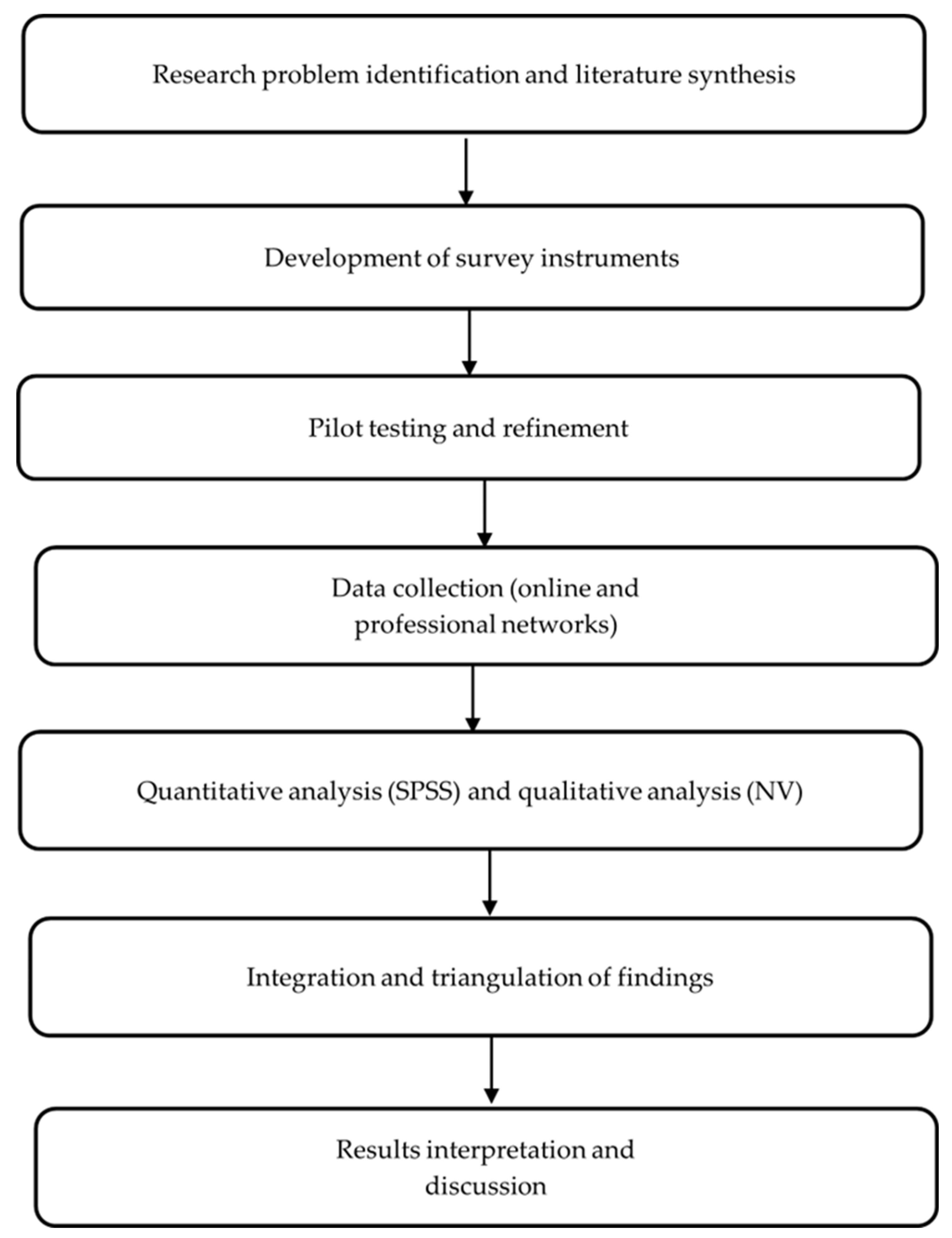
2. Research Design, Sampling Strategy, and Data Collection Procedures
2.1. Research Design and Sampling Strategy
2.2. Data Collection Procedures
3. Results and Analysis
3.1. Passenger Questionnaire Results
3.2. Pilot Survey Results
- Demonstrated fail-safe redundancy (80%);
- Global regulatory approval (67%);
- Transparent safety data from operational trials (60%).
3.3. Integrated Findings
4. Discussion
4.1. Safety and Reliability of Autonomous Systems
4.2. Human Factors and Trust in Automation
4.3. Ethical, Societal, and Workforce Implications
4.4. Regulatory and Certification Challenges
4.5. Economic and Operational Considerations
4.6. Synthesis and Implications
- Demonstrated Reliability proven through incremental operational experience in non-passenger contexts.
- Transparent Oversight: regulatory certification and continuous human monitoring.
- Ethical Stewardship: clear accountability and workforce adaptation.
- Regulatory agencies must codify assurance methodologies for adaptive algorithms and foster data-sharing among manufacturers.
- Industry stakeholders should prioritize transparency and public engagement to narrow the trust gap.
- Academic research should focus on longitudinal studies capturing evolving attitudes as demonstrator programs mature.
5. Conclusions and Future Work Directions
Author Contributions
Funding
Institutional Review Board Statement
Informed Consent Statement
Data Availability Statement
Conflicts of Interest
Abbreviations
| AI | Artificial Intelligence |
| FMS | Flight Management Systems |
| VTOL | Vertical Take-Off and Landing |
| PPAs | Pilotless Passenger Aircraft |
| UAV | Unmanned Aerial Vehicles |
| ICAROUS | Integrated Configurable Algorithms for Reliable Operations of Unmanned Systems |
| ATTOL | Autonomous Taxi, Take-Off, and Landing |
| FAA | Federal Aviation Administration |
| ML | Machine learning |
| GDPR | General Data Protection Regulation |
References
- International Air Transport Association (IATA). 2023 Safety Performance—2024 Press Release. IATA. Available online: https://www.iata.org/en/pressroom/2024-releases/2024-02-28-01/ (accessed on 28 February 2024).
- Airbus. Airbus Concludes ATTOL with Fully Autonomous Flight Tests. Airbus Press Release. Available online: https://www.airbus.com/en/newsroom/press-releases/2020-06-airbus-concludes-attol-with-fully-autonomous-flight-tests (accessed on 29 June 2020).
- Consiglio, M.; Muñoz, C.; Hagen, G.; Narkawicz, A.; Balachandran, S. ICAROUS: Integrated Configurable Algorithms for Reliable Operations of Unmanned Systems. NASA Technical Reports Server; 2016. Available online: https://ntrs.nasa.gov/citations/20170001936 (accessed on 20 July 2024).
- Federal Aviation Administration (FAA). Roadmap for Artificial Intelligence Safety Assurance. FAA. Available online: https://www.faa.gov/media/82891 (accessed on 23 July 2024).
- Reliable Robotics. News: Successful uncrewed Cessna 208B Flight (Remote/Autonomous Cargo). Reliable Robotics. Available online: https://reliable.co/news (accessed on 21 November 2023).
- European Union Aviation Safety Agency (EASA). Easy Access Rules for U-space (Regulation (EU) 2021/664). EASA. Available online: https://www.easa.europa.eu/en/document-library/easy-access-rules/easy-access-rules-u-space-regulation-eu-2021664 (accessed on 29 May 2024).
- Bennett, R.; Vijaygopal, R. Air passenger attitudes towards pilotless aircraft. Res. Transp. Bus. Manag. 2021, 41, 100656. [Google Scholar] [CrossRef]
- Dekker, S. The Field Guide to Understanding Human Error; Ashgate: Derbyshire, UK, 2014. [Google Scholar]
- Slovic, P. The Perception of Risk; Foundational Text on Public Risk Perception and the “Dread/Unknown” Dimensions; Earthscan: Barcelona, Spain, 2000. [Google Scholar]
- Koh, L.Y.; Yuen, K.F. Public acceptance of autonomous vehicles: Examining the joint influence of perceived vehicle performance and intelligent in-vehicle interaction quality. Transp. Res. Part A Policy Pract. 2023, 178, 103864. [Google Scholar] [CrossRef]
- Chancey, E.T.; Politowicz, M.S. Public trust and acceptance for concepts of remotely operated urban air mobility transportation. Proc. Hum. Factors Ergon. Soc. Annu. Meet. 2020, 64, 1044–1048. [Google Scholar] [CrossRef]
- Vascik, P.D.; Hansman, R.J. Evaluation of key operational constraints affecting on-demand mobility for aviation in the Los Angeles basin: Ground infrastructure, air traffic control and noise. In Proceedings of the 17th AIAA Aviation Technology, Integration, and Operations Conference, Denver, CO, USA, 5–9 June 2017; p. 3084. [Google Scholar] [CrossRef]
- Kyriakidis, M.; Happee, R.; de Winter, J.C.F. Public opinion on automated driving: Results of an international questionnaire among 5000 respondents. Transp. Res. F 2015, 32, 127–140. [Google Scholar] [CrossRef]
- Harris, D. Single-pilot airline operations: Designing the aircraft may be the easy part. Aeronaut. J. 2023, 127, 1171–1191. [Google Scholar] [CrossRef]
- Shi, Y. Pilots in the evolving urban air mobility: From manned to unmanned aviation. In Proceedings of the IEEE International Conference on Unmanned Aircraft Systems (ICUAS), Warsaw, Poland, 6–9 June 2023; pp. 63–70. [Google Scholar] [CrossRef]
- Sun, Y.; Smith, H. Review and prospect of supersonic business jet design. Prog. Aerosp. Sci. 2017, 90, 12–38. [Google Scholar] [CrossRef]
- Reliable Robotics. Reliable Robotics Performs Automated Cargo Deliveries for U.S. Air Force. Business Wire. 23 August 2024. Available online: https://www.businesswire.com/news/home/20240823677064/en/Reliable-Robotics-Performs-Automated-Cargo-Deliveries-for-U.S.-Air-Force (accessed on 9 December 2025).
- Creswell, J.W.; Plano Clark, V.L. Designing and Conducting Mixed Methods Research, 3rd ed.; Sage: Thousand Oaks, CA, USA, 2018. [Google Scholar]
- Johnson, R.B.; Onwuegbuzie, A.J. Mixed methods research: A research paradigm whose time has come. Educ. Res. 2004, 33, 14–26. [Google Scholar] [CrossRef]
- Tepylo, N.; Straubinger, A.; Laliberte, J. Public perception of advanced aviation technologies: A review and roadmap to acceptance. Prog. Aerosp. Sci. 2023, 138, 100899. [Google Scholar] [CrossRef]
- Etikan, I.; Musa, S.A.; Alkassim, R.S. Comparison of convenience sampling and purposive sampling. Am. J. Theor. Appl. Stat. 2016, 5, 1–4. [Google Scholar] [CrossRef]
- Dillman, D.A.; Smyth, J.D.; Christian, L.M. Internet, Phone, Mail, and Mixed-Mode Surveys: The Tailored Design Method; Wiley: Hoboken, NJ, USA, 2014. [Google Scholar]
- Braun, V.; Clarke, V. Using thematic analysis in psychology. Qual. Res. Psychol. 2006, 3, 77–101. [Google Scholar] [CrossRef]
- British Educational Research Association (BERA). Ethical Guidelines for Educational Research, 5th ed.; BERA: London, UK, 2024. [Google Scholar]
- UK Parliament. Data Protection Act 2018; The Stationery Office: London, UK, 2018. [Google Scholar]
- European Parliament; Council of the European Union. Regulation (EU) 2016/679 of the European Parliament and of the Council of 27 April 2016 (General Data Protection Regulation); European Union: Brussels, Belgium, 2016. [Google Scholar]
- Matalonga, S.; White, S.; Hartmann, J.; Riordan, J. A Review of the Legal, Regulatory and Practical Aspects Needed to Unlock Autonomous Beyond Visual Line of Sight Unmanned Aircraft Systems Operations. J. Intell. Robot. Syst. 2022, 106, 10. [Google Scholar] [CrossRef]
- IATA. Future of Aviation Workforce Report 2024; International Air Transport Association: Montreal, QC, Canada, 2024. [Google Scholar]
- European Union Aviation Safety Agency (EASA). Artificial Intelligence Concept Paper v2.0; EASA: Cologne, Germany, 2023. [Google Scholar]
- Lee, J.D.; See, K.A. Trust in automation: Designing for appropriate reliance. Hum. Factors 2004, 46, 50–80. [Google Scholar] [CrossRef] [PubMed]
- Endsley, M.R. Toward a theory of situation awareness in dynamic systems. Hum. Factors 1995, 37, 32–64. [Google Scholar] [CrossRef]
- Tokadlı, G.; Dorneich, M.C. Comparison and synthesis of two aerospace case studies to develop human-autonomy teaming characteristics and requirements. Front. Aerosp. Eng. 2023, 1, 1214115. [Google Scholar] [CrossRef]
- European Union Aviation Safety Agency (EASA). EASA Artificial Intelligence Roadmap 2.0: A Human-Centric Approach to AI in Aviation; EASA: Cologne, Germany, 2023; Available online: https://www.easa.europa.eu/en/document-library/general-publications/easa-artificial-intelligence-roadmap-20 (accessed on 6 June 2025).
- International Civil Aviation Organization (ICAO). Advanced Air Mobility Study Group (AAM SG) [Online]; ICAO: Montreal, QC, Canada, 2024. Available online: https://www.icao.int/UA/advanced-air-mobility-study-group-aam-sg (accessed on 5 December 2025).
- Perez-Cerrolaza, J.; Abella, J.; Borg, M.; Donzella, C.; Cerquides, J.; Cazorla, F.J.; Englund, C.; Tauber, M.; Nikolakopoulos, G.; Flores, J.L. Artificial intelligence for safety-critical systems in industrial and automotive: A survey. ACM Comput. Surv. 2024, 56, 1–40. [Google Scholar] [CrossRef]
- Ukwandu, E.; Ben-Farah, M.A.; Hindy, H.; Bures, M.; Atkinson, R.; Tachtatzis, C.; Andonovic, I.; Bellekens, X. Cyber-security challenges in aviation industry: A review of current and future trends. Information 2022, 13, 146. [Google Scholar] [CrossRef]
- Vascik, P.D.; Hansman, R.J.; Dunn, N.S. Analysis of urban air mobility operational constraints. J. Air Transp. 2018, 26, 133–146. [Google Scholar] [CrossRef]
- US Defense Advanced Research Projects Agency (DARPA). Human–Machine Teaming Research Program; DARPA: Arlington, VA, USA, 2023. Available online: https://www.darpa.mil/news/2019/trusted-human-machine-partnerships (accessed on 5 December 2025).
- Morvan, H. Why a Detachable Cabin Probably Won’t Save Your Life in a Plane Crash. The Conversation. 2022. Available online: https://theconversation.com/why-a-detachable-cabin-probably-wont-save-your-life-in-a-plane-crash-53532 (accessed on 2 January 2025).
- Koo, T.T.; Molesworth, B.R.; Dunn, M.J.; Lodewijks, G.; Liao, S. Trust and user acceptance of pilotless passenger aircraft. Res. Transp. Bus. Manag. 2022, 45, 100876. [Google Scholar] [CrossRef]
- Bate, A. AI IN THE SKY Incredible Plan for World’s First AI Passenger Plane with NO PILOT Where Travellers Can Sit in Cockpit & Enjoy the View. The Sun. 2 October 2024. Available online: https://www.thesun.co.uk/tech/30816923/incredible-plan-ai-passenger-plane-pilot-cockpit/ (accessed on 2 January 2025).

| Variable | Category | N | % |
|---|---|---|---|
| Age | 18–34 | 290 | 93 |
| 35–54 | 19 | 6 | |
| 55+ | 3 | 1 | |
| Gender | Male | 206 | 66 |
| Female | 102 | 33 | |
| Others/no response | 4 | 1 | |
| Flights per year | 1–5 | 265 | 85 |
| 6–10 | 31 | 10 | |
| >10 | 16 | 5 |
| Response Option | N | % |
|---|---|---|
| Highly likely | 96 | 31 |
| Likely | 148 | 47 |
| Unlikely | 46 | 15 |
| Highly unlikely | 11 | 4 |
| Indifferent | 11 | 4 |
| Variable | Category | N | % |
|---|---|---|---|
| Experience (years) | 0–5 | 5 | 33 |
| 6–10 | 4 | 27 | |
| 11–20 | 2 | 14 | |
| 21+ | 4 | 26 | |
| Sector | commercial | 8 | 53 |
| private | 5 | 33 | |
| military | 2 | 14 |
| Statement | Agree (%) | Neutral (%) | Disagree (%) |
|---|---|---|---|
| Automation has improved flight safety | 93 | 7 | 0 |
| PPAs could operate safely without human pilots | 7 | 13 | 80 |
| Automation can replace human decision-making in emergencies | 0 | 7 | 93 |
| I trust AI systems for routine operations | 60 | 20 | 20 |
| Acceptance Condition | n | % |
|---|---|---|
| Demonstrated technical redundancy | 12 | 80 |
| Global regulatory certification | 10 | 67 |
| Public trust and social readiness | 9 | 60 |
| Clear liability framework | 8 | 53 |
| Job transition support | 7 | 47 |
| Variable | Survey Item/Dimension | Response Category | Percentage of Respondents (%) |
|---|---|---|---|
| Awareness of pilotless passenger aircraft | Have you heard of pilotless passenger aircraft before this survey? | Yes | 58 |
| No | 42 | ||
| Primary source of awareness | Channel through which respondents first heard of PPAs | Online media/news websites | 46 |
| Social media | 29 | ||
| Aviation/industry publications | 17 | ||
| Other (friends, word of mouth, etc.) | 8 | ||
| Willingness to fly | Would you board a pilotless passenger aircraft? | Definitely or probably would | 23 |
| Neutral/Unsure | 16 | ||
| Unlikely or very unlikely | 61 |
| Variable | Survey Item/Dimension | Response Category | Percentage of Respondents (%) |
|---|---|---|---|
| Trust in full automation | Confidence that a fully automated aircraft can manage all flight phases safely | Low or Very Low | 68 |
| Moderate | 20 | ||
| High or Very High | 12 | ||
| Perceived safety benefit | Belief that automation generally improves overall flight safety | Agree or Strongly Agree | 42 |
| Neutral | 33 | ||
| Disagree or Strongly Disagree | 25 | ||
| Primary concerns | — | Technical reliability of automated systems | 73 |
| Cybersecurity vulnerabilities | 62 | ||
| Automated decision-making in emergencies | 55 |
Disclaimer/Publisher’s Note: The statements, opinions and data contained in all publications are solely those of the individual author(s) and contributor(s) and not of MDPI and/or the editor(s). MDPI and/or the editor(s) disclaim responsibility for any injury to people or property resulting from any ideas, methods, instructions or products referred to in the content. |
© 2025 by the authors. Licensee MDPI, Basel, Switzerland. This article is an open access article distributed under the terms and conditions of the Creative Commons Attribution (CC BY) license.
Share and Cite
Elbasyouny, O.; Dababneh, O. Feasibility and Challenges of Pilotless Passenger Aircraft: Technological, Regulatory, and Societal Perspectives. Future Transp. 2026, 6, 3. https://doi.org/10.3390/futuretransp6010003
Elbasyouny O, Dababneh O. Feasibility and Challenges of Pilotless Passenger Aircraft: Technological, Regulatory, and Societal Perspectives. Future Transportation. 2026; 6(1):3. https://doi.org/10.3390/futuretransp6010003
Chicago/Turabian StyleElbasyouny, Omar, and Odeh Dababneh. 2026. "Feasibility and Challenges of Pilotless Passenger Aircraft: Technological, Regulatory, and Societal Perspectives" Future Transportation 6, no. 1: 3. https://doi.org/10.3390/futuretransp6010003
APA StyleElbasyouny, O., & Dababneh, O. (2026). Feasibility and Challenges of Pilotless Passenger Aircraft: Technological, Regulatory, and Societal Perspectives. Future Transportation, 6(1), 3. https://doi.org/10.3390/futuretransp6010003

