Case Report

Therapeutic Management of Patients with Metastatic BRAF-Mutated Melanoma: A Case Series Encompassing Different Clinical Scenarios


by
Ana Arance
1,2,*,
Roberto Díaz
3,
Eva Muñoz-Couselo
4,
Teresa Puértolas
5,
Almudena García Castaño
6,†,
Rafael López Castro
7,
Gretel Benítez López
8,
Rubén de Toro
9,
María Quindós
10,
Enrique Espinosa
11,
Pablo Ayala de Miguel
12 and
Margarita Majem
13
1
Department of Medical Oncology, Hospital Clínic Barcelona, C/Villarroel 170, 08036 Barcelona, Spain
2
Institut d’Investigacions Biomèdiques August Pi i Sunyer (IDIBAPS), 08036 Barcelona, Spain
3
Hospital Universitari i Politècnic La Fe, 46026 Valencia, Spain
4
Hospital Universitari Vall d’Hebron y Vall d’Hebron Institute of Oncology (VHIO), 08035 Barcelona, Spain
5
Hospital Universitario Miguel Servet, 50009 Zaragoza, Spain
6
Hospital Universitario Marqués de Valdecilla, 39008 Santander, Spain
7
Hospital Clínico Universitario de Valladolid, 47003 Valladolid, Spain
8
Hospital Universitario Insular de Gran Canaria, 35016 Las Palmas, Spain
9
Hospital Universitario Virgen de la Macarena, 41009 Seville, Spain
10
Complejo Hospitalario Universitario de A Coruña, 15006 A Coruña, Spain
11
Hospital Universitario La Paz, Universidad Autónoma de Madrid, CIBERONC, 28046 Madrid, Spain
12
Hospital Universitario San Pedro de Alcántara, 10002 Cáceres, Spain
13
Hospital de la Santa Creu i Sant Pau, 08041 Barcelona, Spain
*
Author to whom correspondence should be addressed.
Deceased author.
Submission received: 15 September 2025 / Revised: 20 December 2025 / Accepted: 29 December 2025 / Published: 15 January 2026

Simple Summary

Despite therapeutic advances in BRAF-mutant melanoma, optimal first-line treatment and sequencing strategies remain unclear. In this article, we present three real-life cases of patients with BRAF-mutant melanoma who were treated by experienced oncologists in Spain. These cases reflect common but complex situations, including newly diagnosed metastatic disease, and early or late relapse after adjuvant treatment. By discussing these cases in expert meetings, we aimed to explore the practical decision-making process to support clinicians in selecting treatments more effectively. This work underscores the importance of adaptable, patient-tailored strategies and contributes to ongoing efforts to improve the real-world management of advanced melanoma.

Abstract

In the context of advanced BRAF-mutant melanoma, the treatment landscape has undergone a paradigm shift due to the impact of immune checkpoint inhibitors and BRAF/MEK inhibitors. This article presents three clinically illustrative melanoma cases that served as focal points for in-depth discussions during 12 expert meetings held across Spain. These include a treatment-naïve metastatic melanoma patient, a patient experiencing a recurrence while on anti-PD-1 adjuvant therapy, and a third patient whose melanoma relapsed ≥6 months after the end of adjuvant therapy. The discussions revolved around optimal treatment sequencing, emphasizing the challenges and alternatives discussed in each scenario. The common view aligned towards a nuanced approach that involves navigating the complexities of treatment choices. The conclusions underscore the need for personalized therapeutic strategies and highlight the ongoing challenge of refining real-life evidence-based algorithms for the management of metastatic BRAF-mutant melanoma.

1. Introduction

About 40% of patients with advanced melanoma (unresectable stage III and IV) harbor an activating v-RAF murine sarcoma viral oncogene homolog B (BRAF) mutation in their tumor, principally in the Val600 codon [1]. These mutations activate the mitogen-activated protein kinase (MAPK) pathway and are responsible for disease progression [2].
The emergence of immune checkpoint inhibitors (ICIs) targeting Programmed Cell Death Protein 1 (PD-1) and Cytotoxic T-Lymphocyte Antigen 4 (CTLA-4), along with the more recent regulatory approval of Lymphocyte Activation Gene 3 (LAG-3) inhibition, has changed the prognosis of this disease [3]. This benefit has been observed not only in the metastatic setting, but also in the adjuvant and neoadjuvant setting [4,5]. Similarly, the combination of BRAF and MEK inhibitors has demonstrated efficacy in the treatment of patients with BRAFV600 mutation-positive metastatic melanoma and in earlier stages of disease, including the adjuvant setting [6,7,8,9,10]. In patients with advanced BRAF-mutant melanoma and no contraindications to ICIs (such as autoimmune disease or organ transplant), two prospective studies (SECOMBIT and DREAMseq) support the preferential use of frontline combination ICIs over targeted therapies. The SECOMBIT trial, a phase II non-comparative study, suggested that initiating treatment with ipilimumab plus nivolumab, or using a “sandwich approach” (targeted therapy followed by ICIs and then targeted therapy again), may offer superior long-term outcomes compared to starting with BRAF and MEK inhibitors [11]. The DREAMseq trial, specifically designed to compare sequencing strategies, demonstrated a clinically meaningful overall survival advantage for patients who received combination ICIs first, followed by targeted therapy at progression, compared to the reverse sequence [12]. These findings support the preferential use of dual ICI therapy as first-line treatment in eligible patients whose tumours harbour BRAF mutations.
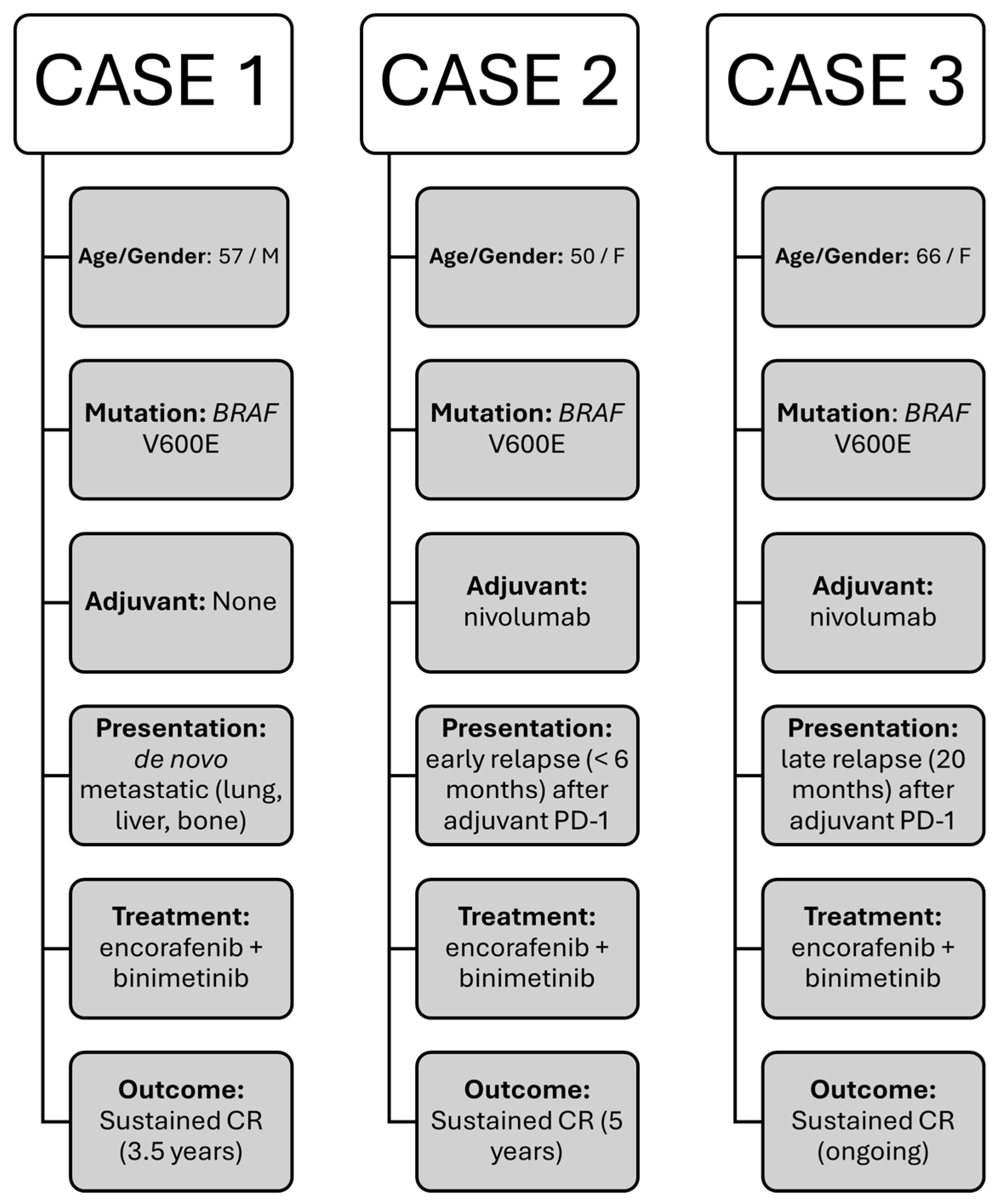
The results of the most recent clinical trials need to be complemented with real-life data on different clinical scenarios in patients with advanced BRAF-mutant melanoma. It might be reasonable to consider frontline BRAF and MEK-directed therapy in patients with BRAFV600 mutation who require a fast response due to rapid and/or symptomatic disease progression. The recommended sequence of these treatments remains a major topic of interest, as sequencing data derive from trials using ipilimumab plus nivolumab. Although anti-PD-1 monotherapy is widely used in clinical practice due to its favourable tolerability profile, evidence supporting its role in the sequencing paradigm for BRAF-mutant melanoma remains limited. Similarly, the approved combination of anti-PD-1 plus anti-LAG-3 (relatlimab plus nivolumab) has yet to be evaluated in this context. Validated predictive biomarkers to guide sequencing decisions are currently lacking; treatment selection relies primarily on clinical factors. Preliminary SECOMBIT analyses identified JAK loss-of-function mutations and low baseline serum interferon-γ as potential predictors of favourable outcomes [13], though these require prospective validation. Biomarker development remains a critical unmet need in this setting. In this document, a group of oncologists with a special interest in the treatment of advanced melanoma discuss several aspects of the therapeutic management of different patient profiles in the context of three clinical cases (Figure 1).

2. Detailed Case Series Description

2.1. Case 1. Choice of First Line Therapy for a Patient with BRAF-Mutant Metastatic Melanoma with High Tumor Burden

A fifty-seven-year-old Caucasian male, with skin phototype III and a history of a stage IIA melanoma (as defined in the eight edition of the Cancer Staging Manual of the American Joint Committee on Cancer, AJCC 8th ed.) with Breslow 2.1 mm and without ulceration, was diagnosed in 1998. The patient was monitored with dermatological follow-up every six months during the first five years after the initial diagnosis, and annually thereafter. He was admitted in January 2021 with dyspnea, right pleuritic chest pain, moderate anorexia, asthenia and 10 kg of weight loss. A chest X-ray revealed a pleural effusion, and a cytological analysis of the pleural fluid demonstrated melanoma cells. Sanger sequencing detected a BRAFV600E mutation. A full body CT scan showed the presence of distant metastases in lungs, bones and liver (M1c). An MRI of the brain showed no metastases. LDH concentration was 1.5 times the upper limit of normality (ULN) (331 U/L).
Combination encorafenib 450 mg once daily and binimetinib 45 mg twice daily was initiated; the patient’s chest symptoms improved rapidly, and he was able to return to work two days after the start of treatment. Pleurodesis or additional thoracentesis have not been required, and 3.5 years later the patient is still on treatment and in complete response.

2.2. Case 2. Management of an Early Relapse to Adjuvant PD-1 Therapy

This is a 50-year-old Caucasian female, with skin phototype II and no relevant medical history who complained of a lump in her left popliteal fossa in December 2019. An MRI and biopsy of the tumor mass confirmed an amelanotic melanoma metastasis, and further mutational analysis by Sanger sequencing showed a BRAFV600E mutation. No additional metastatic sites were detected, it was a melanoma of unknown primary (MUP), and LDH concentration was within normal range.
A surgical resection of the popliteal mass was performed, and adjuvant therapy with nivolumab 3 mg/kg twice a month started two months later. The treatment was well tolerated, presenting only mild toxicity such as grade 1 skin rash and diarrhea according to the National Cancer Institute Common Terminology Criteria for Adverse Events, version 5.0, CTCAE 5.0 [14]. After 6 months of treatment, a right mediastinal lymphadenopathy, a pulmonary nodule, and two nodules in the left popliteal area were detected. No brain metastases were found, and LDH was normal. The patient started treatment with encorafenib 450 mg once daily plus binimetinib 45 mg twice daily, orally. After five years of ongoing treatment, the patient maintains a complete radiological response.
Interestingly, she has been receiving targeted therapy and actively working from the beginning of treatment, achieving a long-lasting response. She reports skin rash, dry skin and pruritus, alopecia and diarrhea, all grade 1 (according to CTCAE 5.0).

2.3. Case 3. Management of a Late Relapse to Adjuvant PD-1 Therapy

This is a 66-year-old Caucasian female, with skin phototype III, no family history of melanoma, former smoker, treated for dyslipidemia and anxiety-depressive illness, and with a previous diagnosis of meningioma. In June 2017, she was diagnosed with stage IIA (AJCC 8th ed.) melanoma of the dorsal skin; a sentinel-node procedure was performed as part of the staging work-up.
Nine months later, a left preauricular skin metastasis was detected and resected, with no signs of disease in the surgical margins, and a BRAFV600E mutation using Sanger sequencing was identified. A PET-CT scan and an MRI of the brain showed no evidence of further disease. Adjuvant therapy with anti-PD-1 (nivolumab) was administered for one year. Twenty months later, several skin and lung metastases were shown on a repeat PET-CT scan. A treatment regimen based on encorafenib 450 mg once daily combined with binimetinib 45 twice daily was started. A clinical and radiological complete response was documented after two months of treatment. Toxicity was mild, with grade 1 arthralgia and nausea (according to CTCAE 5.0). The patient is still receiving targeted therapy, with no need for dose modifications.

3. Discussion

Twelve expert meetings were held in different regions in Spain to discuss the management of BRAF-mutant advanced melanoma patients representing different types of clinical scenarios physicians may encounter in clinic. In this article, we report how three of these real-world cases were managed by their oncologists: (1) choice of first line treatment for a patient diagnosed with BRAF-mutant melanoma, and (2) and (3) management of early and late relapses to adjuvant anti-PD-1 therapy, respectively. The structure and content of all meetings was identical, consisting of a detailed presentation of the cases by a speaker, followed by a list of questions discussed by clinicians with a special interest in melanoma. The meetings were recorded, and after each session, key discussion points and consensus statements were documented. These were subsequently reviewed collectively by the author group, and consensus was reached through iterative discussion and agreement among the participating experts. The main conclusions are summarized in Table 1.
The treatment patterns described in our cases are consistent with international real-world evidence [15,16], where first-line immunotherapy is preferred when feasible and targeted therapy is reserved for patients requiring rapid disease control. Treatment selection is guided by similar clinical factors across regions, including LDH levels, symptomatic burden, and performance status, supporting that our clinical practice aligns with international standards. While treatment principles are broadly consistent internationally, regional differences may influence practice, including drug access, reimbursement policies, oncologist experience with specific regimens, and institutional capacity to manage immune-related toxicities [15,16]. In centers with less experience managing severe immune-related adverse events, it is possible targeted therapy may be favored given its more predictable safety profile.

3.1. Choice of First Line Treatment for a Patient Diagnosed with Advanced BRAF-Mutant Melanoma and Symptomatic Disease Progression

The DREAMseq trial established that initiating treatment with ipilimumab plus nivolumab, followed by dabrafenib plus trametinib at progression, results in superior outcomes compared to the reverse sequence [12]. Updated 5-year data presented by Atkins et al. confirmed a 29.4% absolute difference in OS favoring the ICI-first approach, along with fewer and later CNS relapses [17,18]. However, certain limitations warrant consideration: the trial was stopped early at the pre-planned interim analysis, enrolled patients with good performance status who were fit for combination ICIs, and used dabrafenib plus trametinib as the targeted regimen, whether similar results would be observed with alternative BRAF/MEK inhibitors remains uncertain. Additionally, approximately 18% of patients randomized to targeted therapy first never crossed over to ICIs due to rapid progression, underscoring the importance of close monitoring when this sequence is chosen [12]. SECOMBIT provides complementary evidence supporting frontline ICI therapy and introduced the “sandwich approach” [19]. However, its phase II, non-comparative design and relatively small sample size per arm limit definitive conclusions; these findings should be considered hypothesis-generating. Both DREAMseq and SECOMBIT exclusively used ipilimumab plus nivolumab, leaving uncertainty about optimal sequencing when anti-PD-1 monotherapy or anti-PD-1 plus anti-LAG-3 combinations are employed.
Frontline BRAF and MEK-targeted therapy may be a reasonable option for patients with a BRAFV600 mutation who require a rapid response due to accelerated and/or symptomatic disease progression. The EBIN trial evaluated whether induction with encorafenib plus binimetinib prior to ipilimumab plus nivolumab would improve outcomes compared to upfront combination ICIs [20]. The primary endpoint was not met: PFS showed no statistically significant difference between arms (HR 0.87; 95% CI, 0.67–1.12), with the confidence interval crossing 1.0. While the point estimate numerically favored targeted therapy induction, these results do not support routine use of this approach in unselected patients. Three BRAF/MEK inhibitor combinations are approved for BRAFV600-mutant advanced melanoma: dabrafenib plus trametinib, vemurafenib plus cobimetinib, and encorafenib plus binimetinib. No head-to-head trials exist, and efficacy appears broadly similar across regimens. Tolerability profiles differ, pyrexia is more common with dabrafenib plus trametinib, photosensitivity with vemurafenib plus cobimetinib, and gastrointestinal toxicity with encorafenib plus binimetinib [6,9,10,21]. Treatment selection is usually guided by anticipated toxicity, comorbidities, and local availability.
Both ESMO and NCCN guidelines recommend ICIs as the preferred first-line treatment for unresectable stage III/IV BRAF-mutant melanoma in patients fit for immunotherapy [22,23]. However, both guidelines acknowledge that BRAF and MEK inhibitors may be appropriate in specific clinical scenarios. Elevated LDH, a well-established poor prognostic factor, has been associated with reduced efficacy of ICIs and may indicate rapidly proliferative disease where the speed of response becomes critical. Similarly, high symptomatic burden, extensive visceral involvement, or impending organ compromise may favor frontline targeted therapy given its higher response rate and faster time to response. In such cases, the priority is achieving rapid disease control to preserve performance status and enable subsequent treatment options.
The “sandwich approach” evaluated in SECOMBIT and EBIN, targeted therapy induction for 8–12 weeks followed by ipilimumab plus nivolumab, with targeted therapy resumed at progression, offers an innovative strategy combining rapid initial response with the durable benefit of ICIs [19,20]. The experts considered this an appealing concept; however, practical feasibility warrants consideration. Sequential exposure to both drug classes may result in cumulative toxicity, and the transition between regimens requires careful timing to avoid disease flare upon targeted therapy discontinuation. Additionally, patients who achieve deep responses on targeted therapy may be reluctant to switch to ICIs, and optimal induction duration remains undefined. In EBIN and SECOMBIT, toxicity was manageable across arms, but real-world implementation may differ given less stringent patient selection. A deeper understanding of clinical characteristics and biomarkers predicting sustained responses to targeted therapy is needed to identify patients who may benefit from prolonged targeted therapy versus early switch to ICIs.
The group concluded that the role of triple therapy (combining anti-PD-1 with BRAF and MEK inhibition) [24] remains limited in routine practice. While this approach has demonstrated similar primary resistance rates to targeted therapy alone with modest improvement in secondary resistance, it has not been directly compared to sequential strategies using combination ICIs followed by targeted therapy. Triple therapy may still be considered in highly selected patients—for example, those requiring rapid response who are also candidates for immunotherapy intensification, though robust evidence to guide patient selection is lacking. Ongoing trials such as STARBOARD (ClinicalTrials.gov identifier: NCT04657991) and PORTSIDE (ClinicalTrials.gov identifier: NCT05926960) may help clarify the role of triple combinations.

3.2. Management of Early and Late Relapse Following Adjuvant PD-1 Therapy

The availability of effective adjuvant systemic therapies, such as nivolumab, dabrafenib plus trametinib and pembrolizumab has markedly transformed the management of melanoma patients post-surgery who are at high-risk of disease recurrence and mortality. These therapies have demonstrated a relapse-free survival (RFS) benefit and a favorable tolerability. Although RFS benefit has been proven, a considerable number of patients experience disease recurrence, and optimal subsequent management for these cases lacks definition from clinical trial data. For classifying resistance to PD-1 therapy in the adjuvant setting, a distinction between early relapse (recurrence occurring during or less than 12 months after completion of adjuvant treatment) and late relapse (recurrence ≥12 months after termination of adjuvant treatment) is commonly made in clinical practice [25]. The approach to subsequent therapy in these patients depends on several factors, such as the type of adjuvant treatment received, BRAF mutation status, timing of relapse, and site of disease recurrence. Two recent retrospective studies have examined recurrence patterns and therapeutic strategies in patients previously treated with adjuvant anti-PD-1 or targeted therapy [26,27].
Owen et al. examined recurrence patterns in patients who relapsed during or after adjuvant anti-PD-1. Patients who relapsed while on adjuvant therapy showed primary resistance to anti-PD-1 monotherapy (0% response), limited response to ipilimumab-based regimens (24%), but high response rates to BRAF and MEK inhibitors (78%). Patients who relapsed after completing therapy retained some immunotherapy sensitivity (40% response rates), with 90% responding to BRAF and MEK inhibitors [27]. Therefore, in patients with melanoma recurrence despite adjuvant anti-PD-1, systemic therapy can be active, but response rates appear to vary according to drug class and whether patients recur during or after therapy.
When selecting first-line systemic therapy for metastatic disease in patients with BRAF-mutant melanoma who relapse after adjuvant anti-PD-1—as illustrated in the cases described—a shared decision-making process between the oncologist and the patient is essential. Although these patients have prior exposure to anti-PD-1 in the adjuvant setting, they are treatment-naïve in the metastatic context, which influences expected response rates. Treatment selection should consider efficacy, toxicity profile, comorbidities, ECOG performance status, and patient preferences. Owen et al. reported response rates of 82% for BRAF and MEK inhibitors and 26% for ipilimumab-based regimens in this population—comparable to outcomes in patients with no prior systemic therapy [27]. Notably, combination ICIs (anti-CTLA-4 plus anti-PD-1) appear more effective than ipilimumab alone following anti-PD-1 exposure; a phase II study in 70 patients who progressed on anti-PD-1 (including 19% from the adjuvant setting) demonstrated a response rate of 29% [28].
For patients with BRAF-mutant melanoma, targeted therapy with BRAF and MEK inhibitors offers a high likelihood of rapid disease control, which is particularly valuable in patients with high symptomatic burden. However, responses to targeted therapy tend to be less durable than those achieved with immunotherapy, and long-term survival outcomes generally favor ICI-based approaches when feasible [12,17]. In one of the cases presented here, this patient experienced an early relapse during adjuvant anti-PD-1 monotherapy, the symptom alleviation obtained after the start of targeted therapy with encorafenib plus binimetinib was consistent with the published efficacy and health-related quality of life data from the COLUMBUS trial [21] and other targeted therapy trials in melanoma [6,9,10]. The patient experienced a long-term disease control reported for approximately 35% of targeted therapy-treated patients in the first-line metastatic setting. The combination of anti-CTLA-4 and anti-PD-1 remains a therapeutic option for selected patients with BRAF-mutant melanoma who relapse after adjuvant anti-PD-1 therapy. However, due to the established resistance to prior anti-PD-1 exposure, the efficacy of this regimen appears to be notably lower to its use in treatment-naïve patients [28].
Distant recurrence is the most common pattern of relapse in patients with stage III and IV melanoma following adjuvant anti-PD-1 therapy. In the KEYNOTE-054 trial, 63% of recurrences occurred at distant sites, primarily lymph nodes, lung, and liver, while 36% were locoregional [29]. The relapse patterns observed in our cases are consistent with these data. In Case 2, the patient experienced an early relapse during adjuvant nivolumab with distant metastases involving the mediastinal lymph nodes, lung, and soft tissue. Similarly, Case 3 presented with a late relapse manifesting as skin and lung metastases. Both cases illustrate the predominance of distant recurrence observed in clinical trials and underscore the need for vigilant systemic surveillance during and after adjuvant therapy. Among stage II patients, the distribution between locoregional and distant recurrences appears more balanced, with an overall recurrence rate of 9% at 2 years [30,31].
The group highlighted brain metastases as a worrying and common site of relapse for melanoma patients, with important implications for clinical management. In asymptomatic patients, intracranial response rates are comparable to extracranial disease: 51–54% for nivolumab plus ipilimumab and 21–26% for anti-PD-1 monotherapy, with 5-year intracranial PFS reaching 53% for the combination [32]. These data support the use of combination ICIs as the preferred systemic approach in asymptomatic brain metastases, potentially avoiding or delaying local therapies such as surgery or stereotactic radiosurgery. In contrast, symptomatic brain metastases are associated with markedly reduced ICI efficacy (intracranial ORR of 17% and 6%, respectively; 3-year intracranial PFS of 28%) [33], likely partially influenced by the frequent need for corticosteroids in this population. For symptomatic patients, BRAF-targeted therapy or local treatment modalities should be prioritized to achieve rapid intracranial disease control. These findings emphasize the importance of regular brain imaging during surveillance to detect CNS involvement early, when systemic therapy alone may be effective.
For patients with BRAFV600-mutant melanoma and brain metastases, BRAF-targeted therapy offers rapid intracranial disease control. In COMBI-MB, dabrafenib plus trametinib achieved an intracranial ORR of 58% in asymptomatic, untreated patients, though median intracranial PFS was limited to 5.6 months [34]. The E-BRAIN study demonstrated an intracranial ORR of 71% with encorafenib plus binimetinib regardless of symptom status. These findings support BRAF-targeted therapy as a preferred option when urgent intracranial control is needed, particularly in symptomatic patients or those requiring corticosteroids. However, limited response durability highlights the importance of integrating local therapies and considering transition to immunotherapy when feasible [35].

4. Conclusions

The cases and expert discussions presented here illustrate that treatment decisions in advanced BRAF-mutant melanoma must be individualized based on disease tempo, symptomatic burden, LDH levels, and prior adjuvant therapy exposure. In symptomatic cases requiring rapid disease control, BRAF and MEK inhibitors represent a reasonable first-line option in some cases, as illustrated by Case 1, where prompt symptom relief was achieved within days of initiating encorafenib plus binimetinib. Several factors influenced this decision among the expert group, including elevated LDH, high tumor burden, and performance status, alongside patient preferences and anticipated tolerability. The timing of relapse during or after adjuvant anti-PD-1 therapy further guided treatment selection: early relapse favored targeted therapy given primary resistance to anti-PD-1, while late relapse allowed consideration of ICI rechallenge. Optimal treatment sequencing remains challenging in real-world practice, emphasizing the need for continued generation of real-world evidence to refine therapeutic recommendations. While evidence-based frameworks are essential to reduce unwarranted treatment variation, they must be applied with flexibility to accommodate individual patient characteristics. The recommendations presented here are intended to guide, not dictate, clinical decision-making. This balance between standardization and personalization is key to optimizing outcomes for patients with advanced BRAF-mutant melanoma.
This work has several limitations. Firstly, the cases presented reflect the clinical experience and therapeutic preferences of oncologists in Spain, which may not be generalizable to other healthcare settings or populations. Secondly, the expert discussions were qualitative in nature and not based on systematic evidence synthesis or formal consensus methodology. Thirdly, although the cases illustrate common clinical scenarios, they represent individual patient outcomes and cannot be used to draw conclusions about treatment efficacy. Finally, the rapidly evolving treatment landscape for BRAF-mutant melanoma means that some recommendations may require reassessment as new data emerge.

Author Contributions

Conceptualization, visualization, methodology, writing and supervision, A.A.; validation, formal analysis, investigation, resources, data curation, review and editing, project administration, and funding acquisition, all authors. All authors have read and agreed to the published version of the manuscript.

Funding

This work was funded by Pierre Fabre. The workshops were organized by Pierre Fabre as part of its portfolio of medical education activities.

Institutional Review Board Statement

Ethical review and approval were waived for this study due to its nature as a non-interventional expert opinion article based on anonymized clinical case discussions, with no prospective data collection or patient interaction involved.

Informed Consent Statement

Patient consent was waived due to the use of fully anonymized retrospective data and the non-interventional, descriptive nature of the study, which did not involve direct patient contact or identifiable personal information.

Data Availability Statement

The data presented in this study are available on reasonable request from the corresponding author.

Acknowledgments

The authors would like to thank Laura Hidalgo (Medical Science Consulting, Valencia, Spain) for medical writing support. This paper is dedicated to the memory of Almudena García Castaño.

Conflicts of Interest

E.M.-C. has served on advisory boards for Amgen, Bristol-Myers Squibb (BMS), Merck Sharp & Dohme (MSD), Novartis, Pierre Fabre, Roche, Sanofi, and Regeneron; received honoraria from the same companies; and participated as principal investigator in clinical trials sponsored by Amgen, BMS, GlaxoSmithKline (GSK), MSD, Novartis, Pierre Fabre, Roche, Sanofi, Regeneron, and Incyte. P.A.d.M. has received honoraria for advisory roles from Sanofi and Sun Pharma, and speaking grants and travel/accommodation support from MSD, Pierre Fabre, and Novartis. G.B.L. has participated in talks, advisory boards, and congresses. E.E. received honoraria from Pierre Fabre for a conference presentation. R.d.T. has received speaker fees from Glaxo, AstraZeneca, Roche, Novartis, Eisai, Lilly, Pierre Fabre, Seagen, Gilead, and Pfizer; served as a consultant for Novartis; and received travel support from Daichii, Gilead, Novartis, MSD, GSK, and Pierre Fabre. M.Q. has served as a consultant or advisor for AstraZeneca, GSK, Novartis, MSD, BMS, Pierre Fabre, and Inmunocore; received speaker fees from Pharmamar, AstraZeneca, MSD, Novartis, GSK, BMS, and Pierre Fabre; and received support to attend scientific meetings from AstraZeneca, Novartis, MSD, GSK, and Pierre Fabre. A.G.C. has received honoraria for participation in scientific and commercial events from BMS, MSD, Merck Serono, Novartis, Sanofi Aventis, Pierre Fabre, and Roche; for advisory board participation from BMS, MSD, Merck Serono, Novartis, Sanofi Aventis, and Pierre Fabre; and travel support from BMS, Novartis, MSD, and Pierre Fabre. R.L.C. has served as a consultant or advisor for Novartis, MSD, BMS, Pierre Fabre, and Inmunocore; received speaker fees from Immunocore, BMS, and Pierre Fabre; and received support to attend scientific meetings from Novartis, MSD, and Pierre Fabre. T.P. has served as a consultant or advisor for BMS, Pierre Fabre, Seagen, Sun Pharma, and Novartis; received speaker fees from Pierre Fabre and Novartis; and received travel and accommodation support from MSD, Novartis, and Pierre Fabre. M.M. has served as a consultant or advisor for AstraZeneca, Roche, BMS, MSD, Pfizer, Boehringer Ingelheim, Novartis, Helsinn Therapeutics, Takeda, Sanofi, Janssen Oncology, Pierre Fabre, and BeiGene; received research funding through her institution from BMS, AstraZeneca, and Roche; and received travel and accommodation support from AstraZeneca, Roche, MSD Oncology, and Pfizer. A.A. has received travel support from MSD, Pierre Fabre, and BMS, and served in advisory roles for Biontech, BMS, MSD, Pierre Fabre, and Moderna. R.D. declares no conflicts of interest.

References

  1. Long, G.V.; Menzies, A.M.; Nagrial, A.M.; Haydu, L.E.; Hamilton, A.L.; Mann, G.J.; Hughes, T.M.; Thompson, J.F.; Scolyer, R.A.; Kefford, R.F. Prognostic and clinicopathologic associations of oncogenic BRAF in metastatic melanoma. J. Clin. Oncol. 2011, 29, 1239–1246. [Google Scholar] [CrossRef]
  2. Fedorenko, I.V.; Gibney, G.T.; Sondak, V.K.; Smalley, K.S. Beyond BRAF: Where next for melanoma therapy? Br. J. Cancer 2015, 112, 217–226. [Google Scholar] [CrossRef]
  3. Tawbi, H.A.; Schadendorf, D.; Lipson, E.J.; Ascierto, P.A.; Matamala, L.; Castillo Gutiérrez, E.; Rutkowski, P.; Gogas, H.J.; Lao, C.D.; De Menezes, J.J.; et al. Relatlimab and Nivolumab versus Nivolumab in Untreated Advanced Melanoma. N. Engl. J. Med. 2022, 386, 24–34. [Google Scholar] [CrossRef] [PubMed]
  4. Amaria, R.N.; Postow, M.; Burton, E.M.; Tetzlaff, M.T.; Ross, M.I.; Torres-Cabala, C.; Glitza, I.C.; Duan, F.; Milton, D.R.; Busam, K.; et al. Neoadjuvant relatlimab and nivolumab in resectable melanoma. Nature 2022, 611, 155–160. [Google Scholar] [CrossRef]
  5. Amaria, R.N.; Postow, M.A.; Tetzlaff, M.T.; Ross, M.I.; Glitza, I.C.; McQuade, J.L.; Wong, M.K.K.; Gershenwald, J.E.; Goepfert, R.; Keung, E.Z.-Y.; et al. Neoadjuvant and adjuvant nivolumab (nivo) with anti-LAG3 antibody relatlimab (rela) for patients (pts) with resectable clinical stage III melanoma. J. Clin. Oncol. 2021, 39, 9502. [Google Scholar] [CrossRef]
  6. Ascierto, P.A.; Dréno, B.; Larkin, J.; Ribas, A.; Liszkay, G.; Maio, M.; Mandalà, M.; Demidov, L.; Stroyakovskiy, D.; Thomas, L.; et al. 5-Year Outcomes with Cobimetinib plus Vemurafenib in BRAFV600 Mutation-Positive Advanced Melanoma: Extended Follow-up of the coBRIM Study. Clin. Cancer Res. 2021, 27, 5225–5235. [Google Scholar] [CrossRef] [PubMed]
  7. Dummer, R.; Flaherty, K.T.; Robert, C.; Arance, A.; de Groot, J.W.B.; Garbe, C.; Gogas, H.J.; Gutzmer, R.; Krajsová, I.; Liszkay, G.; et al. COLUMBUS 5-Year Update: A Randomized, Open-Label, Phase III Trial of Encorafenib Plus Binimetinib Versus Vemurafenib or Encorafenib in Patients With BRAF V600-Mutant Melanoma. J. Clin. Oncol. 2022, 40, 4178–4188. [Google Scholar] [CrossRef]
  8. Long, G.V.; Hauschild, A.; Santinami, M.; Atkinson, V.; Mandalà, M.; Chiarion-Sileni, V.; Larkin, J.; Nyakas, M.; Dutriaux, C.; Haydon, A.; et al. Adjuvant Dabrafenib plus Trametinib in Stage III BRAF-Mutated Melanoma. N. Engl. J. Med. 2017, 377, 1813–1823. [Google Scholar] [CrossRef]
  9. Long, G.V.; Stroyakovskiy, D.; Gogas, H.; Levchenko, E.; de Braud, F.; Larkin, J.; Garbe, C.; Jouary, T.; Hauschild, A.; Grob, J.J.; et al. Dabrafenib and trametinib versus dabrafenib and placebo for Val600 BRAF-mutant melanoma: A multicentre, double-blind, phase 3 randomised controlled trial. Lancet 2015, 386, 444–451. [Google Scholar] [CrossRef]
  10. Robert, C.; Grob, J.J.; Stroyakovskiy, D.; Karaszewska, B.; Hauschild, A.; Levchenko, E.; Chiarion Sileni, V.; Schachter, J.; Garbe, C.; Bondarenko, I.; et al. Five-Year Outcomes with Dabrafenib plus Trametinib in Metastatic Melanoma. N. Engl. J. Med. 2019, 381, 626–636. [Google Scholar] [CrossRef]
  11. Ascierto, P.A.; Mandalà, M.; Ferrucci, P.F.; Guidoboni, M.; Rutkowski, P.; Ferraresi, V.; Arance, A.; Guida, M.; Maiello, E.; Gogas, H.; et al. Sequencing of Checkpoint or BRAF/MEK Inhibitors on Brain Metastases in Melanoma. NEJM Evid. 2024, 3, EVIDoa2400087. [Google Scholar] [CrossRef]
  12. Atkins, M.B.; Lee, S.J.; Chmielowski, B.; Tarhini, A.A.; Cohen, G.I.; Truong, T.G.; Moon, H.H.; Davar, D.; O’Rourke, M.; Stephenson, J.J.; et al. Combination Dabrafenib and Trametinib Versus Combination Nivolumab and Ipilimumab for Patients With Advanced BRAF-Mutant Melanoma: The DREAMseq Trial-ECOG-ACRIN EA6134. J. Clin. Oncol. 2023, 41, 186–197. [Google Scholar] [CrossRef] [PubMed]
  13. Ascierto, P.A.; Casula, M.; Bulgarelli, J.; Pisano, M.; Piccinini, C.; Piccin, L.; Cossu, A.; Mandalà, M.; Ferrucci, P.F.; Guidoboni, M.; et al. Sequential immunotherapy and targeted therapy for metastatic BRAF V600 mutated melanoma: 4-year survival and biomarkers evaluation from the phase II SECOMBIT trial. Nat. Commun. 2024, 15, 146. [Google Scholar] [CrossRef]
  14. NCI. Common Terminology Criteria for Adverse Events (CTCAE), Version 5. 2017. Available online: https://ctep.cancer.gov/protocoldevelopment/electronic_applications/docs/ctcae_v5_quick_reference_5x7.pdf (accessed on 1 November 2025).
  15. Betof Warner, A.; Tarhini, A.; Kang, B.; Nakasato, A.; Ling, Y.L.; Shah, R.; Tang, J.; Patel, J. Real-world outcomes of different lines and sequences of treatment in BRAF-positive advanced melanoma patients. Melanoma Res. 2023, 33, 38–49. [Google Scholar] [CrossRef] [PubMed]
  16. Weichenthal, M.; Svane, I.M.; Kandolf Sekulovic, L.; Mangana, J.; Mohr, P.; Marquez-Rodas, I.; Schmidt, H.; Ziogas, D.C.; Bender, M.; Ellebaek, E.; et al. EMRseq: Registry-based outcome analysis on 1000 patients with BRAF V600–mutated metastatic melanoma in Europe treated with either immune checkpoint or BRAF-/MEK inhibition. J. Clin. Oncol. 2022, 40, 9540. [Google Scholar] [CrossRef]
  17. Atkins, M.B.; Lee, S.J.; Chmielowski, B.; Tarhini, A.A.; Cohen, G.I.; Gibney, G.T.; Truong, T.-G.; Davar, D.; Stephenson, J.; Curti, B.D.; et al. DREAMseq: A phase III trial of treatment sequences in BRAFV600-mutant (m) metastatic melanoma (MM)—Final clinical results. J. Clin. Oncol. 2025, 43, 9506. [Google Scholar] [CrossRef]
  18. Atkins, M.B. A phase III trial of treatment sequences in BRAFV600-mutant (m) metastatic melanoma (MM)—Final clinical results. In Proceedings of the ASCO Annual Meeting 2025, Chicago, IL, USA, 30 May–3 June 2025. [Google Scholar]
  19. Ascierto, P.A.; Mandalà, M.; Ferrucci, P.F.; Guidoboni, M.; Rutkowski, P.; Ferraresi, V.; Arance, A.; Guida, M.; Maiello, E.; Gogas, H.; et al. Sequencing of Ipilimumab Plus Nivolumab and Encorafenib Plus Binimetinib for Untreated BRAF-Mutated Metastatic Melanoma (SECOMBIT): A Randomized, Three-Arm, Open-Label Phase II Trial. J. Clin. Oncol. 2023, 41, 212–221. [Google Scholar] [CrossRef]
  20. Robert, C.; Kicinski, M.; Dutriaux, C.; Routier, É.; Govaerts, A.S.; Bührer, E.; Neidhardt, E.M.; Durando, X.; Baroudjian, B.; Saiag, P.; et al. Combination of encorafenib and binimetinib followed by ipilimumab and nivolumab versus ipilimumab and nivolumab in patients with advanced melanoma with BRAF(V600E) or BRAF(V600K) mutations (EBIN): An international, open-label, randomised, controlled, phase 2 study. Lancet Oncol. 2025, 26, 781–794. [Google Scholar] [CrossRef]
  21. Gogas, H.; Dummer, R.; Ascierto, P.A.; Arance, A.; Mandala, M.; Liszkay, G.; Garbe, C.; Schadendorf, D.; Krajsova, I.; Gutzmer, R.; et al. Quality of life in patients with BRAF-mutant melanoma receiving the combination encorafenib plus binimetinib: Results from a multicentre, open-label, randomised, phase III study (COLUMBUS). Eur. J. Cancer 2021, 152, 116–128. [Google Scholar] [CrossRef] [PubMed]
  22. Michielin, O.; van Akkooi, A.C.J.; Ascierto, P.A.; Dummer, R.; Keilholz, U. Cutaneous melanoma: ESMO Clinical Practice Guidelines for diagnosis, treatment and follow-up†. Ann. Oncol. 2019, 30, 1884–1901. [Google Scholar] [CrossRef]
  23. Swetter, S.M.; Johnson, D.; Albertini, M.R.; Barker, C.A.; Bateni, S.; Baumgartner, J.; Bhatia, S.; Bichakjian, C.; Boland, G.; Chandra, S.; et al. NCCN Guidelines® Insights: Melanoma: Cutaneous, Version 2.2024. J. Natl. Compr. Cancer Netw. 2024, 22, 290–298. [Google Scholar] [CrossRef]
  24. Gutzmer, R.; Stroyakovskiy, D.; Gogas, H.; Robert, C.; Lewis, K.; Protsenko, S.; Pereira, R.P.; Eigentler, T.; Rutkowski, P.; Demidov, L.; et al. Atezolizumab, vemurafenib, and cobimetinib as first-line treatment for unresectable advanced BRAFV600 mutation-positive melanoma (IMspire150): Primary analysis of the randomised, double-blind, placebo-controlled, phase 3 trial. Lancet 2020, 395, 1835–1844. [Google Scholar] [CrossRef] [PubMed]
  25. Kluger, H.M.; Tawbi, H.A.; Ascierto, M.L.; Bowden, M.; Callahan, M.K.; Cha, E.; Chen, H.X.; Drake, C.G.; Feltquate, D.M.; Ferris, R.L.; et al. Defining tumor resistance to PD-1 pathway blockade: Recommendations from the first meeting of the SITC Immunotherapy Resistance Taskforce. J. Immunother. Cancer 2020, 8, e000398. [Google Scholar] [CrossRef]
  26. Bhave, P.; Pallan, L.; Long, G.V.; Menzies, A.M.; Atkinson, V.; Cohen, J.V.; Sullivan, R.J.; Chiarion-Sileni, V.; Nyakas, M.; Kahler, K.; et al. Melanoma recurrence patterns and management after adjuvant targeted therapy: A multicentre analysis. Br. J. Cancer 2021, 124, 574–580. [Google Scholar] [CrossRef] [PubMed]
  27. Owen, C.N.; Shoushtari, A.N.; Chauhan, D.; Palmieri, D.J.; Lee, B.; Rohaan, M.W.; Mangana, J.; Atkinson, V.; Zaman, F.; Young, A.; et al. Management of early melanoma recurrence despite adjuvant anti-PD-1 antibody therapy(☆). Ann. Oncol. 2020, 31, 1075–1082. [Google Scholar] [CrossRef] [PubMed]
  28. Olson, D.J.; Eroglu, Z.; Brockstein, B.; Poklepovic, A.S.; Bajaj, M.; Babu, S.; Hallmeyer, S.; Velasco, M.; Lutzky, J.; Higgs, E.; et al. Pembrolizumab Plus Ipilimumab Following Anti-PD-1/L1 Failure in Melanoma. J. Clin. Oncol. 2021, 39, 2647–2655. [Google Scholar] [CrossRef]
  29. Eggermont, A.M.M.; Kicinski, M.; Blank, C.U.; Mandala, M.; Long, G.V.; Atkinson, V.; Dalle, S.; Haydon, A.; Meshcheryakov, A.; Khattak, A.; et al. Five-Year Analysis of Adjuvant Pembrolizumab or Placebo in Stage III Melanoma. NEJM Evid. 2022, 1, EVIDoa2200214. [Google Scholar] [CrossRef]
  30. Long, G.V.; Del Vecchio, M.; Hoeller, C.; Weber, J.S.; Grob, J.J.; Mohr, P.; Grabbe, S.; Dutriaux, C.; Chiarion Sileni, V.; Mackiewicz, J.; et al. 1077MO Adjuvant nivolumab v placebo in stage IIB/C melanoma: 3-year results from CheckMate 76K. Ann. Oncol. 2024, 35, S713–S714. [Google Scholar] [CrossRef]
  31. Luke, J.J.; Rutkowski, P.; Queirolo, P.; Del Vecchio, M.; Mackiewicz, J.; Chiarion-Sileni, V.; de la Cruz Merino, L.; Khattak, M.A.; Schadendorf, D.; Long, G.V.; et al. Pembrolizumab versus placebo as adjuvant therapy in completely resected stage IIB or IIC melanoma (KEYNOTE-716): A randomised, double-blind, phase 3 trial. Lancet 2022, 399, 1718–1729. [Google Scholar] [CrossRef]
  32. Tawbi, H.A.; Forsyth, P.A.; Algazi, A.; Hamid, O.; Hodi, F.S.; Moschos, S.J.; Khushalani, N.I.; Lewis, K.; Lao, C.D.; Postow, M.A.; et al. Combined Nivolumab and Ipilimumab in Melanoma Metastatic to the Brain. N. Engl. J. Med. 2018, 379, 722–730. [Google Scholar] [CrossRef]
  33. Long, G.V.; Hauschild, A.; Santinami, M.; Kirkwood, J.M.; Atkinson, V.; Mandala, M.; Merelli, B.; Sileni, V.C.; Nyakas, M.; Haydon, A.; et al. Final Results for Adjuvant Dabrafenib plus Trametinib in Stage III Melanoma. N. Engl. J. Med. 2024, 391, 1709–1720. [Google Scholar] [CrossRef] [PubMed]
  34. Davies, M.A.; Saiag, P.; Robert, C.; Grob, J.J.; Flaherty, K.T.; Arance, A.; Chiarion-Sileni, V.; Thomas, L.; Lesimple, T.; Mortier, L.; et al. Dabrafenib plus trametinib in patients with BRAF(V600)-mutant melanoma brain metastases (COMBI-MB): A multicentre, multicohort, open-label, phase 2 trial. Lancet Oncol. 2017, 18, 863–873. [Google Scholar] [CrossRef] [PubMed]
  35. Marquez-Rodas, I.; Arance Fernandez, A.M.; Berciano Guerrero, M.A.; Garcia Castano, A.; Alamo De La Gala, M.D.C.; Gonzalez Cao, M.; Sanchez Mauriño, P.; Diaz Beveridge, R.P.; Valduvieco, I.; Delgado, R.; et al. 826P Encorafenib and binimetinib followed by radiotherapy for patients with symptomatic BRAF mutated melanoma brain metastases: GEM1802/E-BRAIN clinical trial. Ann. Oncol. 2022, 33, S926. [Google Scholar] [CrossRef]
Figure 1. Summary of clinical cases. M, male; F, female; CR, complete response.
Onco 06 00006 g001
Table 1. Therapeutic recommendations according to the clinical scenario.
Clinical ScenarioTherapy
Recommended
JustificationKey Considerations
De novo metastatic, symptomatic, highLDHBRAF + MEK
inhibitors
Rapid disease control neededMay consider ICI combination with close monitoring
Early relapse during/after (<12 m) adjuvant anti-PD-1BRAF + MEK inhibitors or ICI combinationPrimary resistance to PD-1; high response rate with TTEvaluate tumor burden, symptoms, comorbidities, LDH and prior toxicity
Late relapse (≥12 m) after adjuvant anti-PD-1ICI combination
or BRAF + MEK inhibitors
Possible ICI re-sensitization; proven efficacy of TTIndividualize based on comorbidities, tumor burden, symptoms, patient preference, and LDH
Footnote: BRAF + MEK inhibitor options include dabrafenib plus trametinib, vemurafenib plus cobimetinib, or encorafenib plus binimetinib. Selection guided by tumor burden, performance status, symptoms, tolerability, comorbidities, and local drug availability. LDH: Lactate Dehydrogenase; BRAF: v-Raf murine sarcoma viral oncogene homolog B Protein Kinase; MEK: Mitogen-Activated Protein Kinase; ICI: Immune Checkpoint Inhibitor; PD-1: Programmed Cell Death Protein 1; CTLA-4: Cytotoxic T-Lymphocyte Antigen 4, TT: targeted therapy, m: months.
Disclaimer/Publisher’s Note: The statements, opinions and data contained in all publications are solely those of the individual author(s) and contributor(s) and not of MDPI and/or the editor(s). MDPI and/or the editor(s) disclaim responsibility for any injury to people or property resulting from any ideas, methods, instructions or products referred to in the content.