
Article

Photobiomodulation in the Treatment of Spasticity in Children and Adolescents with Cerebral Palsy: A Controlled, Single-Blinded, Pilot Randomized Trial

by
Ariane Cristina Zöll
1,
Ana Cristina Ferreira Garcia Amorim
1,
Illora Aswinkumar Darbar Shimozato
1,
Fabia Lopes Borelli de Moraes
1,
Maria Fernanda Setúbal Destro Rodrigues
1,
Raquel Agnelli Mesquita-Ferrari
1,2 and
Rebeca Boltes Cecatto
1,3,*
1
Biophotonics-Medicine Post-Graduate Program, Universidade Nove de Julho (Uninove), São Paulo 01504-001, Brazil
2
Rehabilitation Sciences Post-Graduate Program, Universidade Nove de Julho (Uninove), São Paulo 01504-001, Brazil
3
Rehabilitation Service of the Instituto de Reabilitação Lucy Montoro, Faculdade de Medicina FMUSP, Universidade de São Paulo, São Paulo 05716-150, Brazil
*
Author to whom correspondence should be addressed.
Disabilities 2025, 5(4), 112; https://doi.org/10.3390/disabilities5040112
Submission received: 26 September 2025 / Revised: 20 November 2025 / Accepted: 27 November 2025 / Published: 4 December 2025

Abstract

Background/Objectives: Cerebral palsy (CP) is a non-progressive, permanent syndrome of childhood, with approximately 80% of patients exhibiting spasticity. Untreated spasticity can cause pain, structural changes in bones, muscles, and nerves negatively impacting quality of life and functionality. Photobiomodulation (PBM) has demonstrated biological effects such as tissue regeneration, muscle relaxation, inflammation reduction, and pain relief. The objective of this pilot study is to evaluate the action of PBM on the spasticity of the medial and lateral right gastrocnemius muscles of children and adolescents with spastic cerebral palsy. Methods: This single-blinded, randomized, controlled trial evaluated PBM’s effect on gastrocnemius spasticity in children and adolescents with CP. The study presents pilot preliminary results from twelve children and adolescents (7–16 years) with spastic CP who were randomized into two groups: active PBM (850 nm, 100 mW, 1.5 J/point, 2 points, weekly for 8 weeks) or placebo (same protocol, device off). Both groups received standard rehabilitation exercises. Outcomes were assessed using the Modified Ashworth Scale (MAS), Pediatric Evaluation of Disability Inventory (PEDI), Gross Motor Function Classification System (GMFCS), and ankle range of motion before and after the intervention (8 weeks). Results: MAS and all outcomes improved significantly over time in both groups. No significant differences were found between groups for all outcomes. The PBM effect size on MAS improvement (ANOVA, Analysis of Vari, η2 = 0.171) suggests modest but positive benefits. PBM did not worsen spasticity, and no adverse effects were reported. Conclusion: This study represents a pioneering effort in evaluating a safe PBM protocol for the spastics gastrocnemius in children and adolescents with CP. This protocol, used as an adjunct to physiotherapy, demonstrated no short-term adverse effects and no participant dropouts. Future studies should explore this PBM protocol in patients with less severe GMFCS levels, those with minimally preserved functionality, or those with contraindications to physiotherapeutic exercises.

1. Introduction

Cerebral palsy (CP) is a group of non-progressive motor disorders caused by early brain injury, characterized by impaired movement and posture, with spasticity being the most common clinical manifestation [1,2]. Spasticity is characterized by increased muscle tone and a speed-dependent resistance to muscle stretching [3]. It can generate pain and functional, anatomical, and structural changes in bones, joints, muscles, tendons, and nerve junctions, negatively impacting the individual’s quality of life [4].
Spasticity alters the viscoelastic properties of muscle fibers, increasing stiffness and viscosity due to changes in both neural and non-neural components, including the extracellular matrix [5]. Especially in CP, the triceps surae muscle spasticity (gastrocnemius and soleus) is a critical therapeutic target due to its primary role in gait dysfunction. Its biomechanical role in propulsion and stance phase makes it a clinically relevant target for improving gait kinematics [6]. The triceps surae’s hypertonicity exacerbates toe-walking and reduces dorsiflexion range—key metrics in CP rehabilitation [7]. As the most commonly spastic muscle group in lower limbs, it contributes to equinus deformity and impaired mobility [6].
The treatment of spasticity aims to inhibit central neuronal hyperactivity, improve muscle function, and minimize complications arising from this condition [8]. The main goal is to improve motor function to achieve better self-care capacity as much as possible. There are different types of treatments, such as physiotherapy, use of orthoses, oral or injectable medications, and surgical interventions [9]. Many spasticity treatments, such as botulinum toxin, primarily target the neuromuscular junction, inducing temporary chemical denervation to reduce excessive muscle activity [10], while their long-term effects on viscoelasticity require further study [11]. However, despite numerous therapeutic options, there is still no satisfactory, long-term treatment of choice for all patients [12].
In parallel, photobiomodulation (PBM) involves the application of light sources from non-ionizing and non-thermal light emitting diodes (LEDs) and lasers in a defined spectrum, which interacts with biological tissues to stimulate cellular and molecular processes [13]. Moreover, although a slight amount of local heat production may occur during the interaction between light and tissue, photobiomodulation is defined by its primary reliance on photochemical processes, which consistently outweigh photothermal effects [14,15,16]. Unlike pharmacological therapy, when properly indicated and managed, PBM has no known side effects [13]. Several effects have been attributed to PBM, including increased endogenous opioids, thermal pain threshold, local blood circulation, production of adenosine triphosphate or cellular neurotransmitters, changes in oxygen consumption, and anti-inflammatory cytokines [13].
In this context numerous PBM protocols have been used in the treatment of neuromuscular impairments and clinical studies have investigated its effectiveness with promising results [17]. Research has shown that PBM can lead to improvements in muscle range of motion, recruitment of new muscle fibers, muscle strength, contraction, and synaptic conduction in spastic muscle fibers [18]. Therefore, it has great potential as a modulating therapy for physiological processes and the quality of muscle fibers and the motor end-plate function or spasticity [19].
Proposed mechanisms by which PBM reduces spasticity include regulation of oxidative stress responses, increased Adenosine Triphosphate (ATP) production and cellular metabolism, promotion of tissue repair and regeneration, and modulation of neurotransmitter release at synapses [20]. Moreover, PBM may also reduce muscle stiffness by modulating inflammation and collagen remodeling and potentially improving extracellular matrix viscosity [20]. Additionally, unlike botulinum toxin, it is non-invasive [18].
However, questions that remain refer to optimal energy dosage, delivery method, tissue light penetration, best indications, and the specific mechanisms through which light modifies spasticity, particularly in children [21]. There is no consensus regarding the best anatomical target or the best PBM parameters for children with cerebral palsy and few comparative studies have evaluated PBM’s efficacy against other therapies, demonstrated its safety, or quantified its effect size in individuals with spasticity.
Based on these premises, the objective of this study is to evaluate the action of PBM on the spasticity of the medial and lateral right gastrocnemius muscles of children and adolescents with spastic cerebral palsy. The hypothesis of this study is that PBM has a positive effect on reducing spasticity and can act as an adjunct therapy to physiotherapy treatment.

2. Materials and Methods

2.1. Study Design and Recruitment

This is a single-center, single-blinded, randomized, two-arm, placebo-controlled clinical trial involving persons with spastic cerebral palsy under rehabilitation follow-up in the Physiotherapy Service at the University. Participation in the study is offered to all pediatric patients recorded in the database of the hospital’s physiotherapy group with a referral to treatment of spasticity due to cerebral palsy. The research protocol is registered on OSF platform (https://osf.io/rmh4s/, accessed on 18 May 2025) with de DOI number (https://doi.org/10.17605/OSF.IO/RMH4S, accessed on 18 May 2025). This clinical trial follows CONSORT (Consolidated Standards of Reporting Trials) reporting guidelines [22] (see the checklist in Supplementary File S1).

2.2. Eligibility Criteria

2.2.1. Inclusion Criteria

  • Children and teenagers with a diagnosis of spastic cerebral palsy affecting the gastrocnemius of the right lower limb, of any etiology, for at least 3 months. These participants have already received medical recommendation for physiotherapy. They are undergoing a standard multidisciplinary rehabilitation program.
  • Age: 2 to 18 years old.

2.2.2. Exclusion Criteria

  • Fixed anatomical deformities of the ankle that do not allow ankle joint movement assessed clinically using a goniometer by having participants perform both active and passive ankle movements. Participants who exhibited neither passive nor active ankle movement were excluded;
  • Acute, untreated clinical conditions with the potential to increase spasticity, such as acute fractures, skin ulcers, acute infections, undiagnosed lesions in the treatment region, presence of severe gastroesophageal reflux disease; a malnutrition state;
  • Infection, lesions, or tumor at the therapy application site;
  • Another type of movement or tone disorder;
  • History of photosensitivity to photonic therapy or light;
  • Use of topical photosensitizing medications or creams;
  • Use of previous botulinum toxin injection within 6 months before the study.

2.3. Participant Recruitment, Randomization, and Allocation

All team members were previously instructed on the eligibility criteria for sample selection. Recruitment was conducted during routine physiotherapy sessions at the Universidade Nove de Julho (UNINOVE), São Paulo, Brazil. The opportunity to join the study was presented to potential participants who were already undergoing weekly rehabilitation treatment at the hospital. Individuals who expressed interest were approached by the principal investigator (A.C.Z.), who provided a detailed, in-person verbal explanation of the study’s objectives, procedures, risks, and benefits. The relevant documentation was then offered, including the Informed Consent Form (ICF) for adult participants and the Assent Form for minors. Participants were instructed to take the ICF home to discuss the content with their families and deliberate on their participation. In the subsequent weeks, individuals who confirmed their interest and returned a signed ICF to the principal researcher were screened against the inclusion criteria and underwent a baseline (pre-intervention) assessment. Following this initial assessment, eligible participants were allocated to one of the study arms. The allocation method involved the use of sequentially numbered, opaque, sealed envelopes containing pre-defined assignments according to a centralized randomization list, which was generated beforehand to ensure a randomized process.
At the time of allocation, opaque envelopes are identified with sequential numbers containing the information on the corresponding group according to the order obtained in the randomization list from the Research Randomizer online software. The envelopes were sealed by principal investigator (PI) in numerical order until the moment of study intervention and just immediately before the PBM application, the researcher responsible for the treatment opens one envelope (without changing the numerical sequence) and performs the indicated procedure (PBM or placebo PBM).
The eligible participants were assigned with a 1:1 allocation ratio into two groups: the PBM intervention group (use of PBM therapy + the hospital’s standard physiotherapy program) or the Control Group (placebo PBM therapy + the hospital’s standard physiotherapy program, using the LED equipment turned off).

2.4. Blinding

Participants were blinded to randomization and allocation until the end of the study. The standard treatment was administered by a physiotherapist blinded to evaluation data and treatment group. The PI was not blinded and was responsible for baseline and final assessments, the application of PBM, placebo PBM, allocation, and randomization.

2.5. Sample Size

The sample size was calculated based on data from the study by Chen et al. [23] who evaluated the reproducibility and validity of the Ashworth Scale in individuals with spasticity, finding mean values of 1.7 ± 1.3 and a minimum clinically significant difference value of 0.43, with 95% reliability, error of 5%, and test power of 80%. Assuming a percentage of 20% of dropout rate, the minimum sample size was 14 participants per group, totaling 28 for the study.

2.6. Interventions

2.6.1. Physiotherapy Rehabilitation Hospital’s Standard Program

All participants, who were under follow-up at the rehabilitation hospital for cerebral palsy and had clinical indication for physiotherapy, received standardized medical supervision and participated in a structured physiotherapeutic rehabilitation program. This evidence-based program, aligned with international clinical practice guidelines for the management of cerebral palsy, was maintained for all participants in both groups throughout the entire study period.
The standard program consisted of twice weekly sessions and included the following core components:
Individualized Kinesiotherapy: This component targeted global muscle strengthening, which involves exercising major muscle groups across the upper and lower limbs, trunk, and core to improve overall functional capacity, postural control, and counteract weakness and deconditioning. The session also incorporated stretching exercises for key spastic muscle groups (e.g., hamstrings, hip adductors, triceps surae) to maintain range of motion, reduce hypertonia, and prevent contractures. All of exercises were specifically tailored to each participant’s abilities and corresponding to their degree of impairment, with an emphasis on goal-directed practice.
Nutritional Follow-up: Regular assessment and counseling by the clinical nutrition team to ensure adequate nutritional status, support bone health, and manage factors like growth and gastrointestinal issues common in this population.
Task-Oriented and Functional Training: Personalized exercises, orthosis and technology uses, and activities designed to enhance functionality and motor independence, specifically tailored to each participant’s abilities and corresponding to their degree of impairment and disability, with an emphasis on goal-directed practice and activities.

2.6.2. PBM Intervention Group

The PBM therapy sessions were carried out once per week, for 8 weeks, immediately after the standard physiotherapy program, to improve adherence to intervention protocols. PBM was applied transcutaneously to the medial and lateral gastrocnemius of the right leg (Figure 1). The spasticity in this muscle group directly correlates with functional limitations measured by the Ashworth Scale, a very common assessment methodology in spasticity and the study’s primary endpoint [24]. This muscle’s well-defined spasticity profile in CP ensures measurable Ashworth Scale changes, enhancing the study’s statistical power. In addition, its anatomical accessibility (superficial location) makes it ideal for transcutaneous PBM, ensuring optimal light penetration for modulating neural hyperactivity and viscoelastic properties. Furthermore, the triceps surae’s homogeneous composition (mixed type I/II fibers) allows generalizable conclusions about PBM’s effects on spastic muscles [25,26]. The triceps surae offers an optimal balance of anatomical accessibility, functional relevance, and quantifiable spasticity outcomes, justifying its selection for evaluating PBM’s efficacy in this study about PBM adjunct therapy in spastic CP.
The PBM parameters are described in Table 1 and are based on previous studies [27,28] and the recommendations of the World Association of Laser Therapy (WALT) [29]. The selected parameters employ an irradiance of 200 mW/cm2, consistent with the use of low-intensity light where photochemical effects dominate over photothermal effects—a hallmark of photobiomodulation [14,16,30,31]. For the medial gastrocnemius, the irradiation site was placed on the most prominent bulge of the muscle, near its presumed motor point. For the lateral gastrocnemius, the site was located at one-third of the line between the fibular head and the heel, also near its presumed motor point. Both procedures were performed with the participant in a prone position. These locations follow the recommendations of the SENIAM project (Surface Electromyography for the Non-Invasive Assessment of Muscles), a European concerted action within the Biomedical Health and Research Program (BIOMED II) of the European Union for the research and localization of muscle motor points (SENIAM, www.seniam.org, accessed on 15 April 2023) [32,33]. Immediately before the application of the PBM intervention, a stretching session of the gastrocnemius muscles was carried out by the PI for all participants, ensuring the state of greatest possible muscle relaxation. The gastrocnemius stretching protocol involved a sustained passive stretch applied with the participant in a long-sitting position to ensure knee extension. The PI performed passive ankle dorsiflexion, maintaining each stretch for 30–60 s. This was repeated for 2–3 cycles per session, with the intensity controlled to remain within the participant’s tolerance and without eliciting pain. The objective was to improve dorsiflexion range of motion (ROM) and reduce spasticity through viscoelastic and neurophysiological mechanisms.

2.6.3. Placebo PBM Therapy

The placebo PBM has the same procedures, number of points, and place of application described above, but the LED equipment remained turned off.

2.7. Outcomes and Measures

2.7.1. Primary Outcome

  • Change from baseline to 8 weeks in the spasticity of right gastrocnemius muscles evaluated using the Modified Ashworth Scale (MAS) [34]. The MAS was assessed once before the intervention series, once after the final session, and once daily before each of the eight PBM sessions, resulting in a total of ten assessments per participant.

2.7.2. Secondary Outcomes

  • Change from baseline to 8 weeks in the passive range of motion (ROM) of the right ankle measured with a goniometer. The ankle joint range of motion (ROM) was assessed to evaluate passive dorsiflexion. All measurements were performed by the PI with the participant positioned supine on a firm examination table. The lower limb was stabilized with the hip in a neutral position and the knee maintained in full extension to specifically assess the length of the gastrocnemius muscle. A standard plastic goniometer was used for all measurements. The goniometer was aligned according to established international protocols: the fulcrum was placed inferior to the lateral malleolus, the stationary arm was aligned parallel to the longitudinal axis of the fibula (referencing the fibular head), and the movement arm was aligned parallel to the lateral aspect of the fifth metatarsal. Passive dorsiflexion was performed slowly to minimize the elicitation of velocity-dependent spasticity. The measurement was taken at the end of the available range of motion, determined by a firm end-feel or initial heel lift.
  • Change from baseline to 8 weeks in functional abilities and limitations evaluated using the Gross Motor Function Classification System (GMFCS) [35].
  • Occurrence of adverse events and pain during PBM intervention

2.7.3. Other Exploratory Outcomes

  • Change from baseline to 8 weeks in the Pediatric Evaluation of Disability Inventory (PEDI).
The following data were collected from official medical records for sample epidemiological and clinical data:
  • Age;
  • Gender;
  • Brain injury etiology and paralysis type;
  • Time since injury and duration of physiotherapy treatment;
  • Medications in use;
  • Comorbidities and surgical history;
  • Assistive technology used (walking aid or orthosis).

2.8. Statistical Analyses

Initially, a descriptive analysis was performed, calculating mean and standard deviation for continuous variables and frequencies and percentages for categorical variables, stratified by group. Baseline group comparisons were conducted using Student’s t-test for normally or symmetrically distributed data to assess homogeneity between groups prior to intervention. The data were analyzed to assess the distribution of demographic and outcome criteria by the Kolmgorov–Smirnov (KS) and Shapiro–Wilk tests. For all tests, a significance level of α = 5% is established. Differences between and within groups were analyzed using two-way repeated-measures Analysis of Variance (ANOVA) as a preliminary exploratory analysis. For each analysis, the p-value for statistical significance and η2 (eta-squared) as an effect size indicator were reported. We additionally performed the Generalized Estimating Equations (GEE) [36] to reassess the effect of photobiomodulation on gastrocnemius muscles spasticity (primary outcome measured by MAS). The GEE is a very robust, rigorous, and more reliable test in situations where the sample size is small or the groups being compared are unbalanced. GEE offers advantages over traditional ANOVA, particularly in small samples where ANOVA assumptions are rarely met, including the flexibility to use different probability distributions for the dependent variable [37]. The model was selected based on the Quasi-likelihood under the Independence Model Criterion (QIC), using an identity link function and unstructured covariance matrix. QIC interpretation follows the principle that lower values indicate better fit [38]. Post hoc analyses with Bonferroni correction were applied when necessary, with pairwise comparisons evaluated via differences in estimated marginal means on the original scale of the dependent variable. All analyses were conducted using IBM SPSS Statistics (Version 24), with statistical significance set at p < 0.05.

2.9. Safety/Harms

PBM is a safe therapy, and the PI has experience and qualifications in its application. To prevent ocular injury during the interventions, both examiner and participant wore protective eyewear. We have also trained the main researcher (A.C.Z.) responsible for the evaluations before data collection began. The researcher was trained by the physiotherapy team at the rehabilitation center responsible for the participants, under the supervision of the data guarantor researcher (R.B.C.)—a physician specializing in physical medicine and rehabilitation with over 25 years of clinical experience in assessing, managing, and following-up with patients with various disabilities, including neurological, musculoskeletal, and orthopedic conditions such as spasticity and joint dysfunction. The lead researcher is also a physician by training (a pediatric surgeon) with more than 10 years of experience in medical propaedeutics. The team’s experience and pre-study training measures were designed to ensure the safety of participants and interventions, and to ensure the accuracy and veracity of data collection, even if evaluation measures with a certain subjectivity have been used. Participants or the public were not involved in the design, conduct, reporting, or dissemination plans of our research. All data collected relating to participants will be stored securely under the responsibility of the PI for up to 5 years after the end of the study, preserving the anonymity of participants.

2.10. Ethics and Dissemination Plan

This study complies with the ethical research guidelines, already approved by the Research Ethics Committee of Universidade Nove de Julho, UNINOVE, Sao Paulo, Brazil, with the CAAE (Ethical Appreciation Presentation Certificate) 66626422.8.0000.5511/Approval Number 6.231.345. The participants were only included after properly obtaining consent and signing the Free Informed Consent Form. No published or shared data will contain sensitive data that identify the participant. The study does not interfere with the clinical follow-up and medical decisions of the health care team or participants’ medical routines. This study complies with the Declaration of Helsinki and the Laws on Good practices and Bioethics in scientific research as well as with Brazil’s general data protection law (LGPD).

3. Results

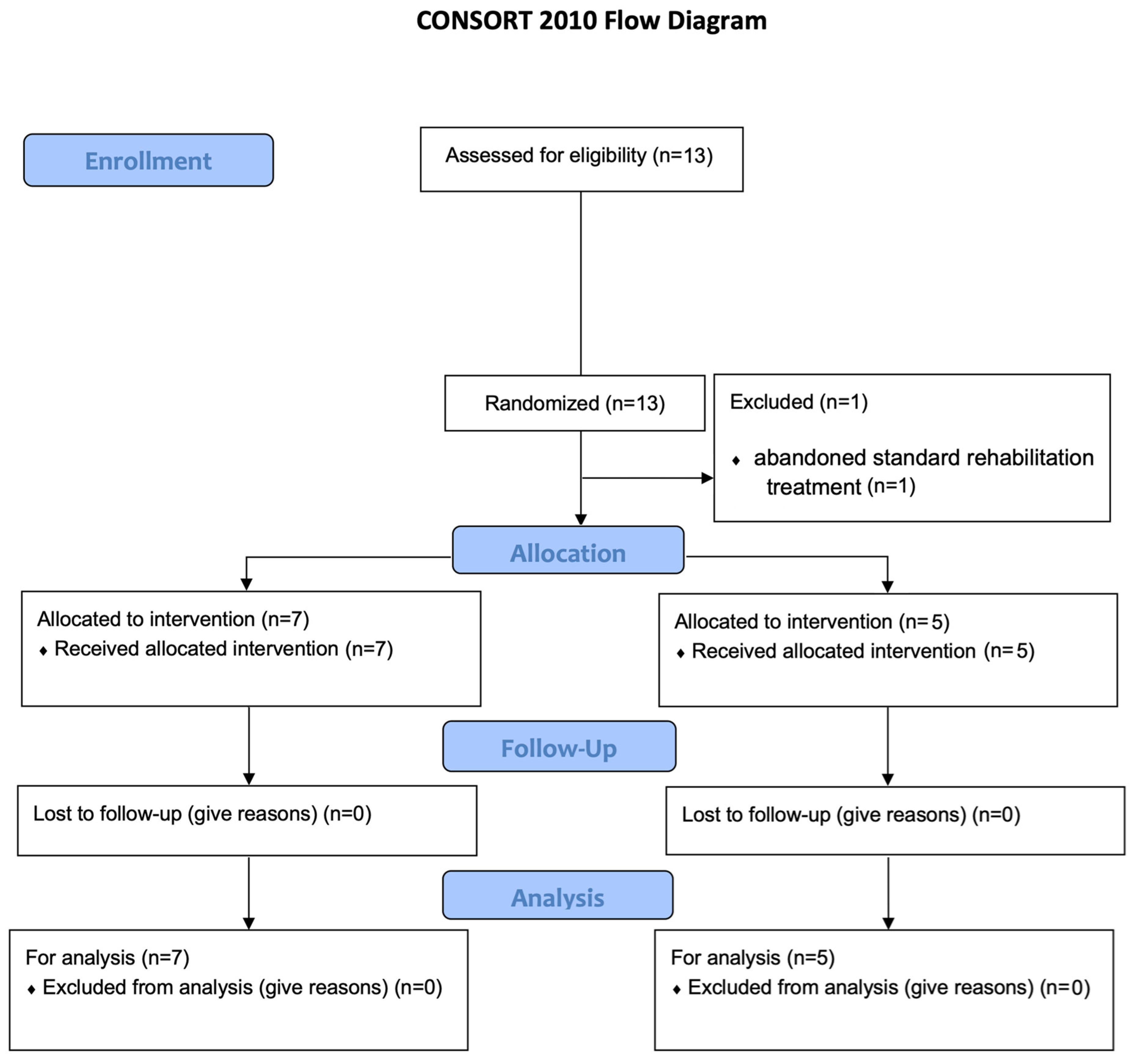
For administrative reasons, the physiotherapy facility where recruitment was taking place suspended the inclusion of new patients for therapy follow-up, substantially impacting the speed of recruitment. Consequently, in 2024 the inclusion of new participants in the research was discontinued. In an evaluation, data from the first 12 participants who complete the intervention protocol were analyzed preliminarily (7 from PBM group and 5 from placebo group). The CONSORT flowchart for recruitment, inclusion, interventions, and assessments (Figure 2) shows the thirteen recruited participants and also the reasons for case withdrawal not included in this preliminary statistical evaluation. After 8 weeks of treatment, 12 participants successfully completed the protocol, with no occurrence of side effects, without complaints regarding the application of light and with a reported subjective improvement in spasticity in 9 of the 12 participants or their family members (6 participants from PBM group and 3 from placebo group), demonstrating that this protocol is viable, easy to execute, and applicable without dropout of participants, adverse events, pain, or complications.
Even though participants aged 2 to 18 were accepted, during the period in which our recruitment occurred, the physiotherapy facility had no patients under follow-up or treatment who were younger than 7 years old or over 16 years old. Therefore, participants’ ages ranged from 7 to 16 years, with a mean age of 11.42 years (s.d. = 3.30) (s.d. = standard deviation) in the PBM group and 12.4 years (s.d. = 3.36) in the placebo group. The most frequent cause of CP was perinatal hypoxia. Seven participants had neonatal hypoxia as the primary cause. Furthermore, 4 participants presented prematurity, 1 presented repeated difficult-to-control seizures and cardiorespiratory problems since the age of 22 months. Three participants presented hydrocephalus under etiological investigation and one participant had a maternal history of drug addiction. Other variables showed minimal inter-participant variation. Among the participants, quadriplegia was the most frequent CP topography (n = 10), with all affected individuals using wheelchairs. The remaining two participants, who presented with diplegia, were crutch users. Eleven participants had congenital CP, and one had acquired CP at 22 months of age. All participants had received uninterrupted physical therapy for over two years and were maintained on continuous, full-dose regimens of anticonvulsants and oral systemic medications for spasticity management. Baseline GMFCS levels ranged from IV to V, with 6 participants classified as IV and 6 as V. Initial PEDI assessment before recruitment classified 4 participants as level 1 and 8 as level 0. No statistically significant differences were found in goniometry or GMFCS scores between groups at baseline, confirming sample homogeneity. Table 2 presents the clinical characteristics of the included participants.
Data analysis for the MAS (the primary outcome measure) was performed using two-way repeated-measures ANOVA as an exploratory analysis (Table 3). Differences were observed across intervention timepoints (p = 0.003) but not between intervention groups (p = 0.18). From the ANOVA results (η2 = 0.171), it was possible to identify the effect size of PBM for improving spasticity in these participants (Table 4).
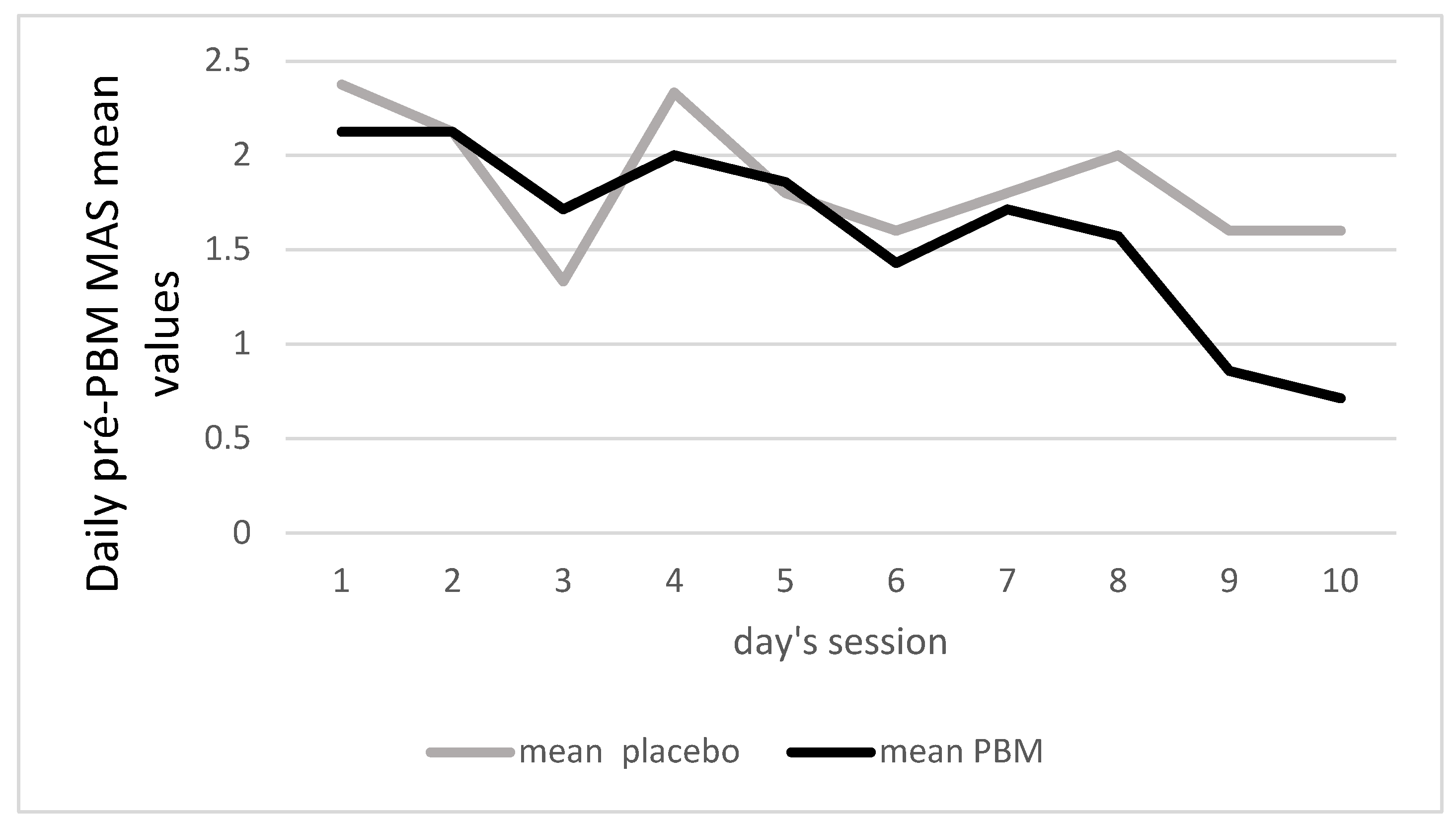
Daily pre-PBM MAS mean values per group across sessions are shown in Figure 3.
A gamma distribution model demonstrated better fit, indicated by the Quasi-likelihood under Independence Model Criterion (QIC = 14.62) compared to a normal distribution model (QIC = 25.32), both using an identity link function and unstructured covariance matrix. Therefore, a GEE adjusted for gamma distribution with an identity link and unstructured covariance analyzed results for MAS (Table 5).
Wald chi-square statistics (Type III) assessed global effects. No significant main effects were observed for group (Wald χ2(1) = 0.001, p = 0.97) or group × time interaction (Wald χ2(2) = 1.84, p = 0.398). However, intervention time had a significant effect (Wald χ2(2) = 6.20, p = 0.045), obviating post hoc group comparisons. Although the GEE model indicated a marginally significant effect of intervention time (Wald χ2(2) = 6.20, p = 0.045), pairwise comparisons (pre-intervention vs. fourth session and post-intervention) revealed no statistically significant differences after Bonferroni correction. Trend-level effects in the global test may not persist in individual comparisons (e.g., p = 0.073 and 0.100). Multiple comparisons between timepoints that used Bonferroni correction are presented in Table 6. No statistically significant differences were found in any of the secondary outcomes, including goniometry and GMFCS scores, either between groups or across timepoints. No adverse events were reported, and no participant withdrawals occurred in either group.
No statistically significant differences were found in any of the secondary outcomes, including goniometry and GMFCS scores, either between groups or across timepoints. No pain or other adverse events were reported, and no participant withdrawals occurred in either group.

4. Discussion

Although previous studies have demonstrated that photobiomodulation is a promising technique for managing muscle injuries of various etiologies [19,39,40,41,42], this clinical trial represents one of the first studies to evaluate the safety, immediate response, and effect size of PBM on gastrocnemius spasticity in children and adolescents with spastic cerebral palsy. Furthermore, this study was designed according to CONSORT guidelines, and the results of this preliminary analysis may provide highly reliable evidence. We conducted a randomized, controlled trial in which PBM was applied to the gastrocnemius over eight weeks, comparing outcomes with a placebo PBM group, both in conjunction with standard physiotherapeutic treatment for spasticity. We conducted a pioneering preliminary pilot analysis of the first twelve participants who completed the intervention protocol and identified promising outcomes from the results.
The application of PBM in spasticity management has been explored in both experimental and clinical models, through either central nervous system stimulation or peripheral neural and muscular stimulation [18].
The first clinical publications on this topic emerged in the 1980s. In a pioneering 1985 study, Walker et al. [43] conducted a double-blind trial with 21 individuals with spastic paraparesis secondary to chronic spinal cord injury (levels T12 to L2). Participants received transcutaneous irradiation with helium-neon laser (632.5 nm, 40 s, 1 mW, 20 Hz) over the radial, median, and saphenous nerves, placebo laser, or electrical stimulation. Notably, 40 s of laser application produced clonus suppression equivalent to 1 h of electrical stimulation. This constitutes the first controlled clinical trial employing PBM as an inhibitory technique for peripheral neural pathways in spasticity treatment. However, the limited description of technical parameters prevents study reproduction in other populations, such as children or individuals with cerebral palsy. Subsequent studies documented changes in nerve conduction, ROM, spasticity, and functionality, following peripheral PBM in limited samples of spastic patients [44,45,46,47].
However, beginning in 2015, research focus shifted toward studying PBM effects directly on spastic muscle tissue. Although previous publications had demonstrated PBM’s effects on contraction, strength, and fatigue parameters in healthy muscles, it was only from 2015 that clinical trials began analyzing these outcomes in spastic adult stroke patients undergoing PBM protocols targeting muscle fibers directly, rather than solely neural pathways. These studies demonstrate that photobiomodulation can improve muscle function in spastic muscles independently of neural inhibition mechanisms. This opens new therapeutic possibilities for spasticity management, suggesting that PBM can enhance muscle quality even in spastic fibers, similar to conventional physical rehabilitation approaches.
Regarding children with CP, studies by Santos et al. [27,28,48] investigated PBM efficacy applied to masseter muscles. Their initial 2015 case report [48] used 808 nm wavelength, 5.0 J/cm2 energy density, and 20 s exposure per point. Bilateral irradiation was performed at the masseter midpoint. After six sessions at weekly intervals, parents reported improved sleep quality, reduced involuntary mandibular movements, and facilitated oral hygiene without pain. Clinical examination revealed increased muscle thickness and 7 mm improvement in interincisal distance. Their subsequent 2016 [28] and 2017 [27] clinical studies with thirty children evaluated bite force and mouth opening amplitude before and after a PBM protocol (808 nm, twice weekly for three weeks, 120 mW power, 3.0 J/cm2 energy density). Significant improvements were observed post-intervention (p < 0.05), though values returned to baseline six weeks after treatment completion.
Recently, in 2023, Abdelhalim et al. [49] evaluated forty children with spastic diplegia assigned to either laser therapy combined with physiotherapy or physiotherapy alone. Pain intensity was assessed using the Visual Analog Scale (VAS), while muscle fatigue and strength were evaluated through Maximum Voluntary Isometric Contraction (MVIC). Blood lactate levels were measured in both groups before treatment and after one-month follow-up. Significant between-group differences favored the low-level laser therapy group in VAS scores, MVIC results, and blood lactate levels after one month. The authors concluded that low-level laser therapy positively affected muscle strength, reduced fatigue indicators, and improved pain in patients with spasticity.
However, no studies have evaluated whether PBM applied to triceps surae in cerebral palsy patients can reduce local spasticity while improving functional outcomes. In this context, our protocol represents a pioneering randomized controlled trial and the results presented in this study may provide highly reliable evidence for clinical practice.
Regarding this study’s results, the effect size analysis revealed larger magnitudes for within-group (timepoint) comparisons than between-group comparisons. It is also noteworthy that most participants’ caregivers, regardless of study group, reported noticing subjective, improvement in muscle relaxation after the beginning of the study intervention period. The standardized therapeutic exercise likely contributed to overall improvement, aligning with evidence that coordinated, multidisciplinary rehabilitation improves short-term spasticity [50,51]. No statistically significant reduction in spasticity was observed between groups in either the ANOVA, which is a test very traditionally used to compare two groups at two timepoints, or the GEE, which more accurately fits our sample and provides reliable data regarding the analysis. Secondary outcomes also showed no intergroup differences.
Nevertheless, the ANOVA test found a quantifiable small, non-significant effect size for PBM. It was possible to identify through the ANOVA η2 results that the effect size of PBM for spasticity improvement, compared to placebo PBM associated with exercise in these participants, was 0.171. The effect sizes found suggest that the participants’ improvement with PBM-related effect sizes, although small, indicates a positive therapeutic capacity of the light in this population confirming the hypothesis that PBM may serve as an adjunct therapy to the physiotherapy program or it may be a useful therapy in patients who have contraindications to the use of an integrated rehabilitation program or muscular exercises. Most likely the between-group differences have not yet emerged, as these preliminary results were obtained in a small, still incomplete sample. The interpretation of η2 shows us a small to moderate effect, and most likely suggests a tendency for larger samples to identify differences between groups and can be used in the future to calculate the sample size of studies on this topic. Adding to this is the fact that no adverse events or minimal discomfort occurred during the study in any of the evaluated participants, reinforcing that PBM is safe, even for pediatric populations. In addition, no participant in the treatment group showed worsening of spasticity, once again confirming PBM’s safety for children and adolescents.
It is important to highlight that this study did not evaluate mechanisms of action of PBM in muscle. Therefore, it cannot be categorically stated that a muscular biological effect occurred. However, our sample presented an initial MAS value lower than the maximum possible value of the scale, indicating mild-to-moderate baseline spasticity. When outcomes fall within narrow ranges, the limited variability may obscure minimal clinically important differences—even if biological effects are present [52]. Moreover, although MAS is widely used and has been the subject of numerous studies, its responsiveness (sensitivity to detect change over time at a group level) and Minimal Clinically Important Difference (MCID) (the smallest score change meaningful for an individual patient) are not conclusively defined for the cerebral palsy population, despite extensive investigation [53]. The current lack of a consensus on these definitive metrics for MAS to limit the ability to determine whether these observed changes in spasticity are both genuine and clinically significant in this population. This likely increased the risk of Type II error (failing to detect a true treatment effect), a common issue when analyzing discrete variables with restricted ranges like the MAS scores in this study. Moreover, MAS scores fluctuated not only throughout treatment but also daily, reflecting the scale’s subjective nature. While reproducible, MAS is examiner-dependent [34,54]. In this way, for upcoming trials, it would be valuable to address spasticity focusing on kinematic, viscoelastic, contractile, or hemodynamic properties [55,56,57,58], which are more objective measures for spasticity and the muscular changes observed in central neurological lesions, potentially revealing treatment aspects in a more objective manner. In addition, spasticity’s inherent day-to-day variability, influenced by temperature, acute injuries, comorbidities, fatigue, and even assessment timing [59,60] which were not controlled in this study—may have influenced our results and warrants investigation in future research. Therefore, biologically, the therapy’s mechanism (e.g., PBM’s muscle effects) remains plausible, but optimization of outcome evaluation may be needed.
Notably, all participants had baseline GMFCS levels IV or V and PEDI mobility scores of 0 or 1, indicating high dependency on wheelchairs, which may have also impacted results. The therapeutic PBM targeted the gastrocnemius, a lower-limb muscle group that remains underused in non-ambulatory persons, lacking physiological stimuli from standing or gait except during physiotherapy sessions. The beneficial physiological effects of physical activity, functional movement, and spontaneous motor function on both muscle quality/fiber responsiveness to therapy and spasticity treatment outcomes are well-documented [61,62]. Persons with muscle disuse, hypoactivity, and immobility may exhibit poorer strength, elasticity, stretching capacity, endurance, and relaxation than those with preserved functionality, even under identical physiotherapeutic treatments [63]. Prolonged immobilization and disuse impair calcium regulation by the sarcoplasmic reticulum, leading to impaired muscle contractions and compromised relaxation [64]. Furthermore, disuse induces mitochondrial dysfunction, characterized by increased reactive oxygen species (ROS) production and reduced synthesis of ATP [65]. This energy deficit limits the capacity for effective muscle contraction and diminishes strength, even following standard training protocols [66]. Concurrently, disuse promotes increased muscle stiffness and a loss of elasticity, reflecting alterations in the muscle’s viscoelastic properties and increased rigidity of non-contractile tissues, which typically respond poorly to conventional treatments [67]. Finally, immobilization results in muscle atrophy—a decrease in muscle mass and fiber size—which is accompanied by impaired neuromuscular signaling and limited responsiveness to traditional therapeutic interventions [68]. Thus, while PBM may experimentally improve muscle relaxation and fiber quality in persons with some functionality, these effects may not be evident in non-functional, immobile persons like those in this sample. Future studies should stratify participants by functional severity (ambulatory vs. non-ambulatory) to identify subpopulations that may respond better to PBM. Larger trials can evaluate these preliminary results with greater accuracy.
It is also very rewarding to note that these results were found using a dose of 1.5 J per point (3 J/cm2), consistent with recommendations by World Association Photobiomodulation therapy guidelines [29], the successful previous publications by Santos et al. [27,28] and previous studies that evaluated the use of PBM to improve muscle functionality and viscoelastic properties in various clinical conditions [41,42], which reinforces the effectiveness of these parameters.
Therefore, new studies following this protocol are justified, particularly in populations with contraindications to physical exercise and muscle manipulation, or who lack access to integrated rehabilitation treatment. Future studies should prioritize patients with some degree of existing functionality, to reduce bias and better evaluate the therapy in a more specific target population with more promising effects. Based on the effect size values obtained in this preliminary analysis, a statistical calculation of the required sample size can also be performed so that upcoming studies may demonstrate differences between subgroups in similar protocols for spastic CP patients.

Limitations

It is important to highlight that the programmed sample size is not yet complete and that there may be other variables that have not yet been considered. Furthermore, although the participants were blinded all the time to the assessments and treatments, the researcher who assessed the cases was the same person who carried out the intervention, which may have led to biases at the time of evaluations due to the lack of blinding of the researcher. Added to this is the fact that although the homogeneity of the sample corroborates the results, it does not reliably translate the diversity of clinical patterns of spastic CP patients, which makes the clinical implementation of these results a distant reality. Moreover, this study design did not include intermediate evaluations, session by session after PBM, which may have prevented the evidence of immediate effects of the treatment. Further study limitations include the lack of a follow-up assessment to determine the persistence of changes, the absence of functional outcome measures (such as the Functional Independence Measure), and potential confounding due to variations in the standard physiotherapy regimen. In addition, other studies should control for other factors that may influence the results—such as the inherent day-to-day variability of spasticity, which is affected by temperature, acute injuries, comorbidities, fatigue, and assessment timing—to yield more reliable outcomes. Finally, future studies and continued data collection from this protocol may bring more robust and reliable data.

5. Conclusions

This PBM protocol safely improved gastrocnemius spasticity in children and adolescents with cerebral palsy, without dropouts or short-term adverse events. Although the small sample size precluded definitive conclusions on the efficacy of PBM in reducing spasticity in the studied population, a certain small but positive effect sizes post-intervention suggest PBM’s therapeutic potential as an adjunct therapy to physiotherapeutic treatment. The results of this study are preliminary and hypothesis-generating. While promising, they underscore the critical need for subsequent large-scale trials with sufficient statistical power to validate these initial observations and determine their clinical significance. Future studies should employ more objective spasticity assessments and prioritize patients with higher functional abilities or patients who have contraindications to the use of an integrated rehabilitation program and muscular exercises. The effect sizes from this preliminary analysis justify the continuation of this protocol, encourage new studies, and can inform sample size calculations for future trials. This pioneering protocol suggests an applicable, easy, safe, and promising PBM therapy in cerebral palsy patients bringing future contributions to the development of guidelines for clinical rehabilitation and supportive treatment of spasticity on gastrocnemius muscles.

Supplementary Materials

The following supporting information can be downloaded at: https://www.mdpi.com/article/10.3390/disabilities5040112/s1. Supplementary File S1: CONSORT 2010 checklist of information to include when reporting a pilot or feasibility trial.

Author Contributions

Conceptualization, A.C.Z. and R.B.C.; methodology, A.C.Z., M.F.S.D.R., R.A.M.-F. and R.B.C.; validation, A.C.Z., A.C.F.G.A., I.A.D.S., F.L.B.d.M., M.F.S.D.R., R.A.M.-F. and R.B.C.; formal analysis, A.C.Z., A.C.F.G.A., I.A.D.S. and R.B.C.; resources, A.C.Z., A.C.F.G.A., I.A.D.S., F.L.B.d.M., M.F.S.D.R., R.A.M.-F. and R.B.C.; data curation, A.C.Z. and R.B.C.; writing—original draft preparation, A.C.Z., F.L.B.d.M., I.A.D.S. and A.C.F.G.A.; writing—review and editing, A.C.Z., A.C.F.G.A., I.A.D.S., F.L.B.d.M., M.F.S.D.R., R.A.M.-F. and R.B.C.; visualization, A.C.Z., A.C.F.G.A., I.A.D.S., F.L.B.d.M., M.F.S.D.R., R.A.M.-F. and R.B.C.; supervision, R.B.C.; project administration, A.C.Z. and R.B.C.; investigation: A.C.Z. and R.B.C.; funding acquisition, R.B.C. All authors have read and agreed to the published version of the manuscript.

Funding

We thank the Programa de Excelência Acadêmica (PROEX) da Coordenação de Aperfeiçoamento de Pessoal de Nível Superior (CAPES)/Brazil, granted through a Scholarship from the Post-Graduate Program at Universidade Nove de Julho, without any influence on the impartial conduct of the research to Ana Cristina F G Amorim (88887.818181/2023-00) and Illora A D Shimozato (88887.976667/2024-00).

Institutional Review Board Statement

This study complies with the Declaration of Helsinki, and it has already been approved by the Research Ethics Committee of Universidade Nove de Julho, UNINOVE, Sao Paulo, Brazil (CAAE: 66626422.8.0000.5511, Approval Number: 6.231.345, Date of Approval: 10 August 2023).

Informed Consent Statement

The participants were only included after properly obtaining consent and signing the Free Informed Consent Form. No published or shared data will contain sensitive data that identify the participant. The study does not interfere with the clinical follow-up and medical decisions of the health care team or participants’ medical routines.

Data Availability Statement

All data relating to this study are presented in the manuscript. Any other information required can be requested from the corresponding author and will be provided.

Acknowledgments

Universidade Nove de Julho/UNINOVE provided consumables, internet access, databases and bibliographic support, physical space, and digital resources to carry out this study.

Conflicts of Interest

The authors have no relevant financial or non-financial competing of interests to disclose. The authors declared no potential conflicts of interest with respect to the research, authorship, and/or publication of this article.

Disability Language/Terminology Positionality Statement

The authorship team comprises health researchers and clinicians with continuous interests in collaboration with people with disability. Our study adopts person-first language which reflects a commitment to inclusive and respectful communication. Person-first language emphasizes the individual before the condition, recognizing that their condition is only one aspect of a person’s identity, rather than a defining characteristic.

Abbreviations

The following abbreviations are used in this manuscript:
ATPAdenosine TriPhosphate
CPCerebral Palsy
GEEGeneralized Estimating Equations
GMFCSGross Motor Function Classification System
ICFInformed Consent Form
JJoules
KSKolmgorov-Smirnov
LEDLight Emitting Diode
MASModified Ashworth Scale
nmNanometers
η2Eta-squared
PEDIPediatric Evaluation of Disability Inventory
PIPrincipal investigator
PBMPhotobiomodulation
QICIndependence Model Criterion
ROMRange of motion
ROSReactive oxygen species
s.d.Standard deviation
WWatt
mWMilliWatt
WALTWorld Association of Laser Therapy

References

  1. Rosenbloom, L. Definition, Classification, and the Clinician. Dev. Med. Child Neurol. 2007, 49, 43. [Google Scholar] [CrossRef] [PubMed]
  2. Rosenbaum, P.L.; Paneth, N.; Leviton, A.; Goldstein, M.; Bax, M. The Definition and Classification of Cerebral Palsy. Dev. Med. Child Neurol. 2007, 49, 1–44. [Google Scholar] [CrossRef]
  3. Trompetto, C.; Marinelli, L.; Mori, L.; Pelosin, E.; Currà, A.; Molfetta, L.; Abbruzzese, G. Pathophysiology of Spasticity: Implications for Neurorehabilitation. Biomed. Res. Int. 2014, 2014, 1–8. [Google Scholar] [CrossRef]
  4. Sáinz Pelayo, M.P.; Albu, S.; Murillo, N.; Benito Penalva, J. Espasticidad En La Patología Neurológica. Actualización Sobre Mecanismos Fisiopatológicos, Avances En El Diagnóstico y Tratamiento. Rev. Neurol. 2020, 70, 453. [Google Scholar] [CrossRef]
  5. Lieber, R.L.; Steinman, S.; Barash, I.A.; Chambers, H. Structural and Functional Changes in Spastic Skeletal Muscle. Muscle Nerve 2004, 29, 615–627. [Google Scholar] [CrossRef]
  6. Sussman, M.D. Book Review: J. R. Gage, M.H. Schwartz, S.E. Koop, T.F. Novacheck (Eds): The Identification and Treatment of Gait Problems in Cerebral Palsy. J. Child Orthop. 2010, 4, 177–178. [Google Scholar] [CrossRef]
  7. Rethlefsen, S.A. Causes of Intoeing Gait in Children with Cerebral Palsy. J. Bone Jt. Surg. 2006, 88, 2175. [Google Scholar]
  8. Satkunam, L.E. Rehabilitation Medicine: 3. Management of Adult Spasticity. CMAJ 2003, 169, 1173–1179. [Google Scholar]
  9. Rekand, T. Clinical Assessment and Management of Spasticity: A Review. Acta Neurol. Scand. 2010, 122, 62–66. [Google Scholar] [CrossRef] [PubMed]
  10. Rosales, R.L.; Dressler, D. On Muscle Spindles, Dystonia and Botulinum Toxin. Eur. J. Neurol. 2010, 17, 71–80. [Google Scholar] [CrossRef] [PubMed]
  11. Gracies, J.-M.; Bayle, N.; Goldberg, S.; Simpson, D.M. Botulinum Toxin Type B in the Spastic Arm: A Randomized, Double-Blind, Placebo-Controlled, Preliminary Study. Arch. Phys. Med. Rehabil. 2014, 95, 1303–1311. [Google Scholar] [CrossRef] [PubMed]
  12. Graham, L.A. Management of Spasticity Revisited. Age Ageing 2013, 42, 435–441. [Google Scholar] [CrossRef]
  13. Dompe, C.; Moncrieff, L.; Matys, J.; Grzech-Leśniak, K.; Kocherova, I.; Bryja, A.; Bruska, M.; Dominiak, M.; Mozdziak, P.; Skiba, T.; et al. Photobiomodulation—Underlying Mechanism and Clinical Applications. J. Clin. Med. 2020, 9, 1724. [Google Scholar] [CrossRef] [PubMed]
  14. Karu, T. Primary and Secondary Mechanisms of Action of Visible to Near-IR Radiation on Cells. J. Photochem. Photobiol. B 1999, 49, 1–17. [Google Scholar] [CrossRef]
  15. Karu, T.I. Cellular and Molecular Mechanisms of Photobiomodulation (Low-Power Laser Therapy). IEEE J. Sel. Top. Quantum Electron. 2014, 20, 143–148. [Google Scholar] [CrossRef]
  16. Frankowski, D.W.; Ferrucci, L.; Arany, P.R.; Bowers, D.; Eells, J.T.; Gonzalez-Lima, F.; Lohr, N.L.; Quirk, B.J.; Whelan, H.T.; Lakatta, E.G. Light Buckets and Laser Beams: Mechanisms and Applications of Photobiomodulation (PBM) Therapy. Geroscience 2025, 47, 2777–2789. [Google Scholar] [CrossRef]
  17. Clijsen, R.; Brunner, A.; Barbero, M.; Clarys, P.; Taeymans, J. Effects of Low-Level Laser Therapy on Pain in Patients with Musculoskeletal Disorders: A Systematic Review and Meta-Analysis. Eur. J. Phys. Rehabil. Med. 2017, 53, 603–610. [Google Scholar] [CrossRef]
  18. Stamborowski, S.F.; Lima, F.P.S.; Leonardo, P.S.; Lima, M.O. A Comprehensive Review on the Effects of Laser Photobiomodulation on Skeletal Muscle Fatigue in Spastic Patients. Int. J. Photoenergy 2021, 2021, 5519709. [Google Scholar] [CrossRef]
  19. Ferraresi, C.; Huang, Y.; Hamblin, M.R. Photobiomodulation in Human Muscle Tissue: An Advantage in Sports Performance? J. Biophotonics 2016, 9, 1273–1299. [Google Scholar] [CrossRef] [PubMed]
  20. Glass, G.E. Photobiomodulation: A Review of the Molecular Evidence for Low Level Light Therapy. J. Plast. Reconstr. Aesthetic Surg. 2021, 74, 1050–1060. [Google Scholar] [CrossRef] [PubMed]
  21. Jiménez, A.; Carrick, F.R.; Hoffman, N.; Jemni, M. The Impact of Low-Level Laser Therapy on Spasticity in Children with Spastic Cerebral Palsy: A Systematic Review. Brain Sci. 2024, 14, 1179. [Google Scholar] [CrossRef]
  22. Eldridge, S.M.; Chan, C.L.; Campbell, M.J.; Bond, C.M.; Hopewell, S.; Thabane, L.; Lancaster, G.A.; PAFS consensus group. CONSORT 2010 Statement: Extension to Randomised Pilot and Feasibility Trials. Pilot Feasibility Stud. 2016, 2, 64. [Google Scholar] [CrossRef]
  23. Chen, C.-L.; Chen, C.-Y.; Chen, H.-C.; Wu, C.-Y.; Lin, K.-C.; Hsieh, Y.-W.; Shen, I.-H. Responsiveness and Minimal Clinically Important Difference of Modified Ashworth Scale in Patients with Stroke. Eur. J. Phys. Rehabil. Med. 2019, 55, 754–760. [Google Scholar] [CrossRef]
  24. Mutlu, A.; Livanelioglu, A.; Gunel, M.K. Reliability of Ashworth and Modified Ashworth Scales in Children with Spastic Cerebral Palsy. BMC Musculoskelet Disord. 2008, 9, 44. [Google Scholar] [CrossRef]
  25. Lieber, R.L.; Fridén, J. Functional and Clinical Significance of Skeletal Muscle Architecture. Muscle Nerve 2000, 23, 1647–1666. [Google Scholar] [CrossRef] [PubMed]
  26. Johnson, M.A.; Polgar, J.; Weightman, D.; Appleton, D. Data on the Distribution of Fibre Types in Thirty-Six Human Muscles. J. Neurol. Sci. 1973, 18, 111–129. [Google Scholar] [CrossRef] [PubMed]
  27. Santos, M.T.B.R.; Nascimento, K.S.; Carazzato, S.; Barros, A.O.; Mendes, F.M.; Diniz, M.B. Efficacy of Photobiomodulation Therapy on Masseter Thickness and Oral Health-Related Quality of Life in Children with Spastic Cerebral Palsy. Lasers Med. Sci. 2017, 32, 1279–1288. [Google Scholar] [CrossRef]
  28. Santos, M.T.B.R.; Diniz, M.B.; Gouw-Soares, S.C.; Lopes-Martins, R.A.B.; Frigo, L.; Baeder, F.M. Evaluation of Low-Level Laser Therapy in the Treatment of Masticatory Muscles Spasticity in Children with Cerebral Palsy. J. Biomed. Opt. 2016, 21, 028001. [Google Scholar] [CrossRef]
  29. World Association Laser Therapy (WALT) Recommended Treatment Doses for Low Level Laser Therapy 780-860 Nm Wavelength: World Association for Laser Therapy, 2010. Available online: https://waltpbm.org/wp-content/uploads/2021/08/Dose_table_780-860nm_for_Low_Level_Laser_Therapy_WALT-2010.pdf (accessed on 18 May 2025).
  30. Hamblin, M.R. Mechanisms and Applications of the Anti-Inflammatory Effects of Photobiomodulation. AIMS Biophys 2017, 4, 337–361. [Google Scholar] [CrossRef]
  31. Huang, Y.-Y.; Sharma, S.K.; Carroll, J.; Hamblin, M.R. Biphasic Dose Response in Low Level Light Therapy—An Update. Dose-Response 2011, 9. [Google Scholar] [CrossRef]
  32. Merletti, R.; Cerone, G.L. Tutorial. Surface EMG Detection, Conditioning and Pre-Processing: Best Practices. J. Electromyogr. Kinesiol. 2020, 54, 102440. [Google Scholar] [CrossRef]
  33. Hermens, H.J.; Freriks, B.; Disselhorst-Klug, C.; Rau, G. Development of Recommendations for SEMG Sensors and Sensor Placement Procedures. J. Electromyogr. Kinesiol. 2000, 10, 361–374. [Google Scholar] [CrossRef]
  34. Nourizadeh, M.; Shadgan, B.; Abbasidezfouli, S.; Juricic, M.; Mulpuri, K. Methods of Muscle Spasticity Assessment in Children with Cerebral Palsy: A Scoping Review. J. Orthop. Surg. Res. 2024, 19, 401. [Google Scholar] [CrossRef] [PubMed]
  35. Palisano, R.; Rosenbaum, P.; Walter, S.; Russell, D.; Wood, E.; Galuppi, B. Development and Reliability of a System to Classify Gross Motor Function in Children with Cerebral Palsy. Dev. Med. Child Neurol. 1997, 39, 214–223. [Google Scholar] [CrossRef]
  36. LIANG, K.-Y.; ZEGER, S.L. Longitudinal Data Analysis Using Generalized Linear Models. Biometrika 1986, 73, 13–22. [Google Scholar] [CrossRef]
  37. de Melo, M.B.; Daldegan-Bueno, D.; Menezes Oliveira, M.G.; de Souza, A.L. Beyond ANOVA and MANOVA for Repeated Measures: Advantages of Generalized Estimated Equations and Generalized Linear Mixed Models and Its Use in Neuroscience Research. Eur. J. Neurosci. 2022, 56, 6089–6098. [Google Scholar] [CrossRef] [PubMed]
  38. Cui, J. QIC Program and Model Selection in GEE Analyses. Stata J. Promot. Commun. Stat. Stata 2007, 7, 209–220. [Google Scholar] [CrossRef]
  39. Covatti, C.; Mizobuti, D.S.; da Rocha, G.L.; da Silva, H.N.M.; Minatel, E. Photobiomodulation Therapy Effects at Different Stages of the Dystrophic Phenotype: A Histomorphometric Study. J. Manipulative Physiol. Ther. 2024, 47, 142–154. [Google Scholar] [CrossRef]
  40. Chen, J.; Hu, Q.; Hu, J.; Liu, S.; Yin, L. Differences in the Effectiveness of Different Physical Therapy Modalities in the Treatment of Delayed-Onset Muscle Soreness: A Systematic Review and Bayesian Network Meta-Analysis. J. Pain Res. 2025, 18, 2993–3008. [Google Scholar] [CrossRef]
  41. Assis, L.; Moretti, A.I.S.; Abrahão, T.B.; Cury, V.; Souza, H.P.; Hamblin, M.R.; Parizotto, N.A. Low-level Laser Therapy (808 Nm) Reduces Inflammatory Response and Oxidative Stress in Rat Tibialis Anterior Muscle after Cryolesion. Lasers Surg. Med. 2012, 44, 726–735. [Google Scholar] [CrossRef]
  42. Liu, H.; Cheema, U.; Player, D.J. Photobiomodulation Therapy (PBMT) in Skeletal Muscle Regeneration: A Comprehensive Review of Mechanisms, Clinical Applications, and Future Directions. Photodiagnosis Photodyn. Ther. 2025, 53, 104634. [Google Scholar] [CrossRef]
  43. Walker, J.B. Temporary Suppression of Clonus in Humans by Brief Photostimulation. Brain Res. 1985, 340, 109–113. [Google Scholar] [CrossRef] [PubMed]
  44. Asagai, Y.; Ueno, R.; Miura, Y.; Ohshiro, T. Application of low reactive-level laser therapy (lllt) in patients with cerebral palsy of the adult tension athetosis type. Laser Ther. 1995, 7, 113–118. [Google Scholar] [CrossRef]
  45. Tsuchiya, K.; Harada, T.; Ushigome, N.; Ohkuni, I.; Ohshiro, T.; Musya, Y.; Mizutani, K.; Maruyama, Y.; Suguro, T. Low level laser therapy (lllt) for cerebral palsy. Laser Ther. 2008, 17, 29–33. [Google Scholar] [CrossRef]
  46. Putri, D.E.; Srilestari, A.; Abdurrohim, K.; Mangunatmadja, I.; Wahyuni, L.K. The Effect of Laser Acupuncture on Spasticity in Children with Spastic Cerebral Palsy. J. Acupunct. Meridian Stud. 2020, 13, 152–156. [Google Scholar] [CrossRef] [PubMed]
  47. Dabbous, O.A.; Mostafa, Y.M.; El Noamany, H.A.; El Shennawy, S.A.; El Bagoury, M.A. Laser Acupuncture as an Adjunctive Therapy for Spastic Cerebral Palsy in Children. Lasers Med. Sci. 2016, 31, 1061–1067. [Google Scholar] [CrossRef]
  48. Santos, M.T.B.R.; Pinto, M.d.S.; do Nascimento, K.S.; Maciel, S.C. Photobiomodulation Effect on the Masseter Muscle in Children with Cerebral Palsy: A Case Report. Acta Fisiátrica 2015, 22. [Google Scholar] [CrossRef]
  49. Abdelhalim, S.M.; Shoukry, K.E.; Alsharnoubi, J. Effect of Low-Level Laser Therapy on Quadriceps and Foot Muscle Fatigue in Children with Spastic Diplegia: A Randomized Controlled Study. Lasers Med. Sci. 2023, 38, 182. [Google Scholar] [CrossRef]
  50. Liguori, S.; Young, V.M.; Arienti, C.; Pollini, E.; Patrini, M.; Gimigliano, F.; Negrini, S.; Kiekens, C. Overview of Cochrane Systematic Reviews for Rehabilitation Interventions in Individuals with Cerebral Palsy: A Mapping Synthesis. Dev. Med. Child Neurol. 2023, 65, 1280–1291. [Google Scholar] [CrossRef]
  51. Shilesh, K.; Karthikbabu, S.; Rao, P.T. The Impact of Functional Strength Training on Muscle Strength and Mobility in Children with Spastic Cerebral Palsy—A Systematic Review and Meta-Analysis. Dev. Neurorehabil. 2023, 26, 262–277. [Google Scholar] [CrossRef]
  52. Peacock, J.L.; Lo, J.; Rees, J.R.; Sauzet, O. Minimal Clinically Important Difference in Means in Vulnerable Populations: Challenges and Solutions. BMJ Open 2021, 11, e052338. [Google Scholar] [CrossRef]
  53. Gal, O.; Baude, M.; Deltombe, T.; Esquenazi, A.; Gracies, J.; Hoskovcova, M.; Rodriguez-Blazquez, C.; Rosales, R.; Satkunam, L.; Wissel, J.; et al. Clinical Outcome Assessments for Spasticity: Review, Critique, and Recommendations. Mov. Disord. 2025, 40, 22–43. [Google Scholar] [CrossRef]
  54. Pandyan, A.D.; Johnson, G.R.; Price, C.I.M.; Curless, R.H.; Barnes, M.P.; Rodgers, H. A Review of the Properties and Limitations of the Ashworth and Modified Ashworth Scales as Measures of Spasticity. Clin. Rehabil. 1999, 13, 373–383. [Google Scholar] [CrossRef]
  55. Aviram, R.; Kima, I.; Parmet, Y.; Bassan, H.; Willigenburg, T.; Riemer, R.; Bar-Haim, S. Haemodynamics and Oxygenation in the Lower-limb Muscles of Young Ambulatory Adults with Cerebral Palsy. Dev. Med. Child Neurol. 2023, 65, 978–987. [Google Scholar] [CrossRef]
  56. Martín-Sierra, P.; Sanchez, C.; Urendes, E.; Raya, R. Assessment of Upper Limb Motor Control: Establishing Normative Benchmarks for Clinical Applications. PeerJ 2025, 13, e19859. [Google Scholar] [CrossRef]
  57. das Neves, M.F.; Pinto, A.P.; Maegima, L.T.; Lima, F.P.S.; Lopes-Martins, R.Á.B.; Lo Schiavo Arisawa, E.A.; Lima, M.O. Effects of Photobiomodulation on Pain, Lactate and Muscle Performance (ROM, Torque, and EMG Parameters) of Paretic Upper Limb in Patients with Post-Stroke Spastic Hemiparesis—A Randomized Controlled Clinical Trial. Lasers Med. Sci. 2024, 39, 88. [Google Scholar] [CrossRef] [PubMed]
  58. Nourizadeh, M.; Saremi, Y.; Pirhadi Rad, A.P.; Mortezanezhad, S.; Tehrani, I.A.; Bégin, J.; Juricic, M.; Mulpuri, K.; Shadgan, B. Evaluating the Intensity of Muscle Contraction by Near-Infrared Spectroscopy, a Potential Application for Scaling Muscle Spasm. J. Biophotonics 2025, 18, e70020. [Google Scholar] [CrossRef]
  59. Cheung, J.; Rancourt, A.; Di Poce, S.; Levine, A.; Hoang, J.; Ismail, F.; Boulias, C.; Phadke, C.P. Patient-Identified Factors That Influence Spasticity in People with Stroke and Multiple Sclerosis Receiving Botulinum Toxin Injection Treatments. Physiother. Can. 2015, 67, 157–166. [Google Scholar] [CrossRef] [PubMed]
  60. Phadke, C.P.; Balasubramanian, C.K.; Ismail, F.; Boulias, C. Revisiting Physiologic and Psychologic Triggers That Increase Spasticity. Am. J. Phys. Med. Rehabil. 2013, 92, 357–369. [Google Scholar] [CrossRef] [PubMed]
  61. Raghavan, P. Muscle Physiology in Spasticity and Muscle Stiffness. Toxicon 2025, 259, 108350. [Google Scholar] [CrossRef] [PubMed]
  62. Sayed, R.K.A.; Hibbert, J.E.; Jorgenson, K.W.; Hornberger, T.A. The Structural Adaptations That Mediate Disuse-Induced Atrophy of Skeletal Muscle. Cells 2023, 12, 2811. [Google Scholar] [CrossRef]
  63. Yeo, D. Muscle Disuse Atrophy. In The Skeletal Muscle: Plasticity, Degeneration and Epigenetics; Ji, L.L., Ed.; Springer: Berlin/Heidelberg, Germany, 2025; pp. 157–183. [Google Scholar]
  64. Reggiani, C.; Marcucci, L. Breaking the Link between Sarcoplasmic Reticulum Calcium Leakage and Mitochondria to Counteract Unloading-Induced Muscle Atrophy. Pflugers Arch. 2025, 477, 1241–1243. [Google Scholar] [CrossRef]
  65. Delfinis, L.J.; Khajehzadehshoushtar, S.; Perry, C.G.R. Perspectives on the Interpretation of Mitochondrial Responses during Skeletal Muscle Disuse-induced Atrophy. J. Physiol. 2025, 603, 3679–3699. [Google Scholar] [CrossRef]
  66. Oates, B.R.; Glover, E.I.; West, D.W.; Fry, J.L.; Tarnopolsky, M.A.; Phillips, S.M. Low-volume Resistance Exercise Attenuates the Decline in Strength and Muscle Mass Associated with Immobilization. Muscle Nerve 2010, 42, 539–546. [Google Scholar] [CrossRef]
  67. Thot, G.K.; Berwanger, C.; Mulder, E.; Lee, J.K.; Lichterfeld, Y.; Ganse, B.; Giakoumaki, I.; Degens, H.; Duran, I.; Schönau, E.; et al. Effects of Long-term Immobilisation on Endomysium of the Soleus Muscle in Humans. Exp. Physiol. 2021, 106, 2038–2045. [Google Scholar] [CrossRef] [PubMed]
  68. Ruggiero, L.; Gruber, M. Neuromuscular Mechanisms for the Fast Decline in Rate of Force Development with Muscle Disuse—A Narrative Review. J. Physiol. 2024. [Google Scholar] [CrossRef]
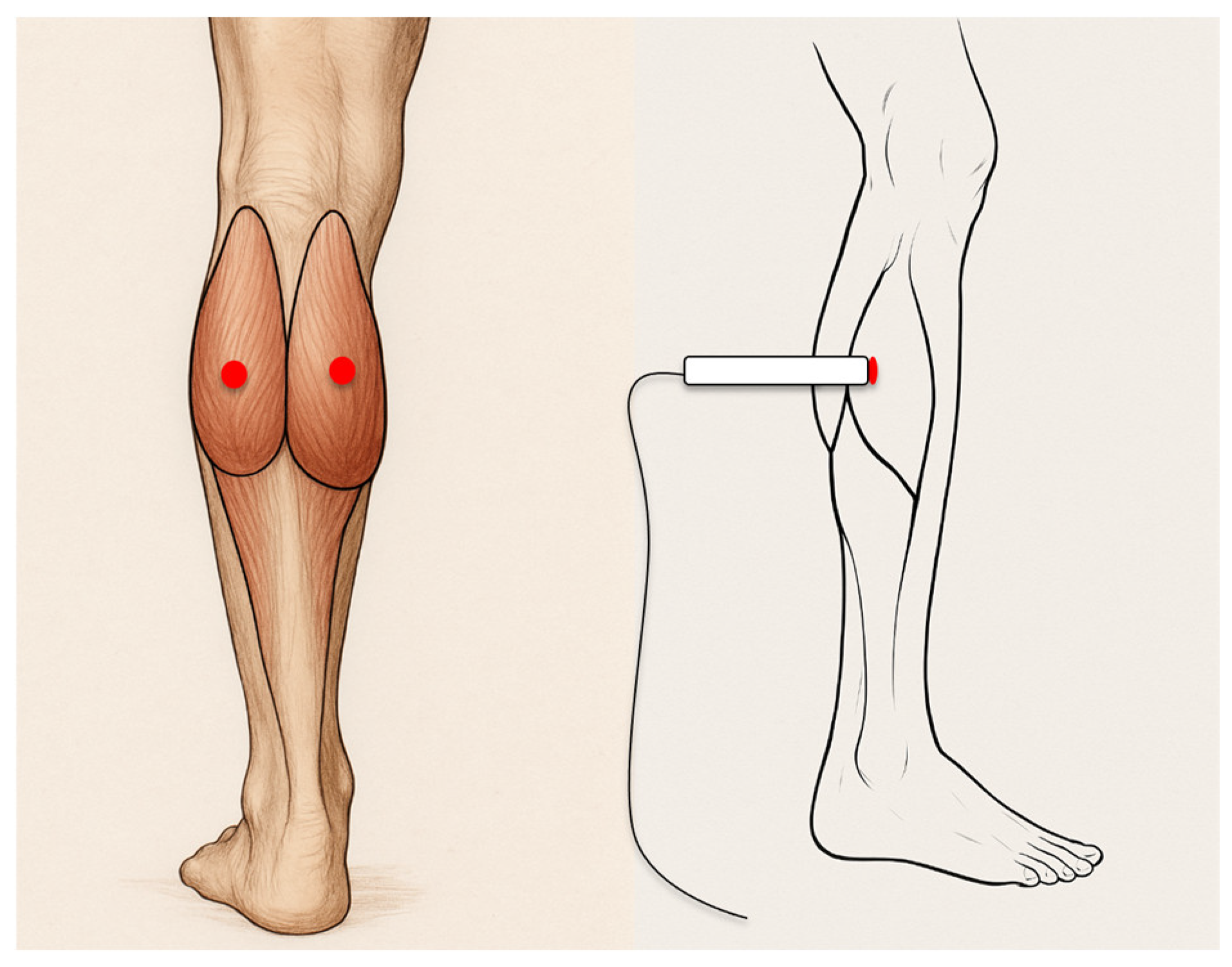
Figure 1. Schematic Drawing of PBM (Photobiomodulation) Applied to the Lower Limb. Lower Limb in Posterior and Lateral Views, Respectively; the Red Circles Are the Site of PBM Stimulation.
Disabilities 05 00112 g001
Figure 2. The CONSORT (Consolidated Standards of Reporting Trials) Flowchart for Recruitment, Inclusion, Interventions, and Assessments.
Disabilities 05 00112 g002
Figure 3. Pre-PBM Mean MAS Values for Both Groups Daily across Sessions.
Disabilities 05 00112 g003
Table 1. PBM Parameters of LED Therapy.
DeviceLaserpulse (Ibramed TM)
Wavelength (nm)LED 850
Emission ModeContinuous
Application TechniquePerpendicular contact point
Power (mW)100
Beam area on target (cm2)0.5
Energy (J)/point1.5
Fluence (J/cm2)3
Time (s)/point15
Total energy/session (J)3
Points1 point in each gastrocnemius muscle
(lateral and medial, total 2 points in total)
PBM: photobiomodulation; LED: light emitting diodes; J: Joules; nm: nanometers; mW: miliwatts; s: seconds.
Table 2. Clinical Characteristics of the Included Participants.
GroupGenderAge (Years)Previous BoNT-A InjectionsPrevious SurgeryAFOGMFCSBaseline
MAS
PBMM12NoHip flexor muscle stretching 2 years agoRigid bilateral calcaneal orthosis, wheelchairIV3
PF12NoTonsillectomy and adenoidectomyRigid bilateral calcaneal orthosis, wheelchairIV2
PBMM12NoNoRigid bilateral calcaneal orthosis, wheelchairV3
PBMF7NoNoRigid bilateral calcaneal orthosis, wheelchairV2
PM7NoValve placement for ventriculo peritoneal shunt, bilateral triceps surae tendon stretching in April 2023, umbilical hernia correction 1 year ago, bilateral orchidopexy and phimosis correction more than 1 year agoRigid bilateral calcaneal orthosis, a pair of crutchesIV2
PM13Once, bilateral triceps sural more than 6 months ago Bilateral hip flexor stretching, orchidopexy more than 1 year agoRigid bilateral calcaneal orthosis, wheelchairIV2
PBMF13NoValve placement for ventriculo peritoneal shunt at 2 years old, and at 9 months years oldWheelchairV1
PF14Once, left wrist flexors, May 2022Left cavus foot correction with calcaneus and medial foot osteotomy and anterior and posterior tibial tendon stretching, right cavovarus foot correction, all in August 2022Rigid bilateral calcaneal orthosis, wheelchairV2
PBMF7NoPlacement of gastrostomy and gastric antireflux valve surgeryRigid bilateral calcaneal orthosis, wheelchairV1
PBMM16NoSurgery to correct bilateral hip dislocation 5 years ago and gastrostomy 4 months agoA pair of crutchesV2
PM16Once, left wrist flexors, 2012Hip flexor stretches, knee flexor stretches and bilateral triceps surae streches, more than 1 year agoRigid bilateral calcaneal orthosis, wheelchairIV3
PBMF13NoNoWheelchairIV3
AFO: Ankle-Foot Orthosis; BoNT-A injections: Botulinum Toxin Injection; F: Female; M: Male; GMFCS: Gross motor Function Classification System; PBM: Photobiomodulation; P: Placebo; MAS: Modified Ashworth Scale.
Table 3. Data Analysis for the MAS (the primary outcome measure) Performed Using Two-way Repeated-measures ANOVA. Means Values and Standard Deviation for PBM and Placebo Group.
GroupMeans.d.N
MAS_baselinePBM2.140.9007
Placebo2.200.4475
MAS_finalPBM0.860.3787
Placebo1.600.5485
MAS: Modified Asworth Scale; PBM: Photobiomodulation; s.d.: Standard Deviation; ANOVA: Analysis of Variance.
Table 4. Comparison between Moments and Groups Regarding MAS Values Using Two-way Repeated-measures ANOVA.
SourceType III SSFSig.Partial η2
MomentLinear15.6470.0030.610
Moment/GroupLinear2.0690.1810.171
Source: Source of Variation; Type III SS: Type III Sum of Square; F: F Value; Sig: Significance/p-value; η2: Partial Eta-Squared
Table 5. Comparison between timepoints and groups regarding MAS values using GEE Model Effect Tests.
SourceType III
Wald Chi Squaredfp
(Intercept)88.73110.000
Group0.00110.973
Moment 6.20220.045
Group Moment/Intervention1.84320.398
df: degrees of freedom. p: p-value indicates statistical significance. GEE: Generalized Estimating Equations.
Table 6. Pairwise comparisons of estimated marginal means based on the original scale of the dependent variable spasticity.
Moment
Intervention
Mean DifferenceStd. Errordfp (Bonferroni)95% Wald Confidence Interval for Difference
LowerUpper
120.450.19910.073−0.030.92
30.490.23010.100−0.061.04
230.040.1851>0.999−0.400.49
Disclaimer/Publisher’s Note: The statements, opinions and data contained in all publications are solely those of the individual author(s) and contributor(s) and not of MDPI and/or the editor(s). MDPI and/or the editor(s) disclaim responsibility for any injury to people or property resulting from any ideas, methods, instructions or products referred to in the content.