1. Introduction: Energy Use, Environmental Pressure, and the Role of Flue Gas Valorization
The global energy system is undergoing a profound transition driven by the dual imperatives of sustaining economic growth and mitigating environmental degradation. Energy consumption has increased steadily over the past decades, reaching unprecedented levels due to industrialization, urbanization, and population growth. According to the
International Energy Agency (IEA), global primary energy demand exceeded 600 EJ in recent years, with fossil fuels—coal, oil, and natural gas—still accounting for nearly 80% of the total energy supply [
1]. This persistent reliance on carbon-intensive fuels has led to a parallel rise in greenhouse gas (GHG) emissions, with global CO
2 emissions surpassing 36 Gt/year [
2].
The environmental implications of such an energy structure are profound. Anthropogenic CO
2 emissions are widely recognized as the primary driver of climate change, contributing to global warming, ocean acidification, and increased frequency of extreme weather events [
3,
4]. The
Intergovernmental Panel on Climate Change (IPCC) highlights that limiting global temperature rise to 1.5 °C requires rapid, deep, and sustained reductions in CO
2 emissions across all sectors [
5]. However, despite the accelerated deployment of renewable energy technologies, fossil fuel-based systems continue to dominate due to their high energy density, established infrastructure, and economic competitiveness.
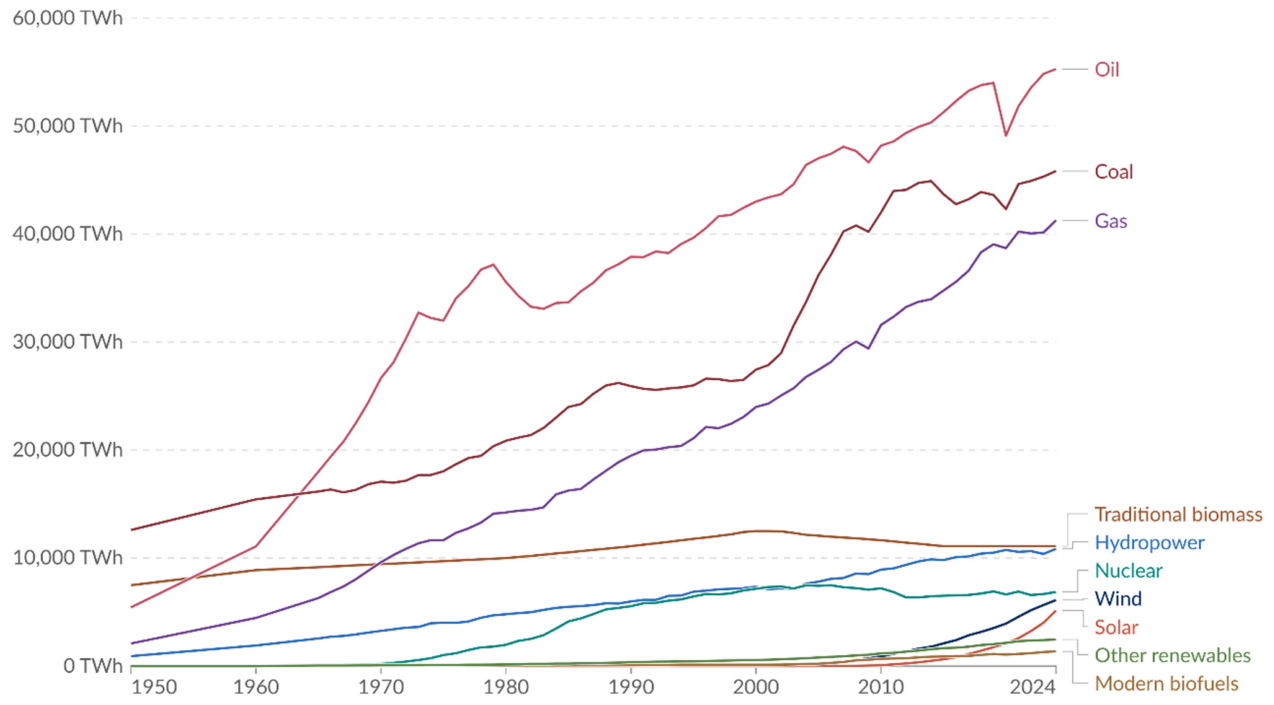
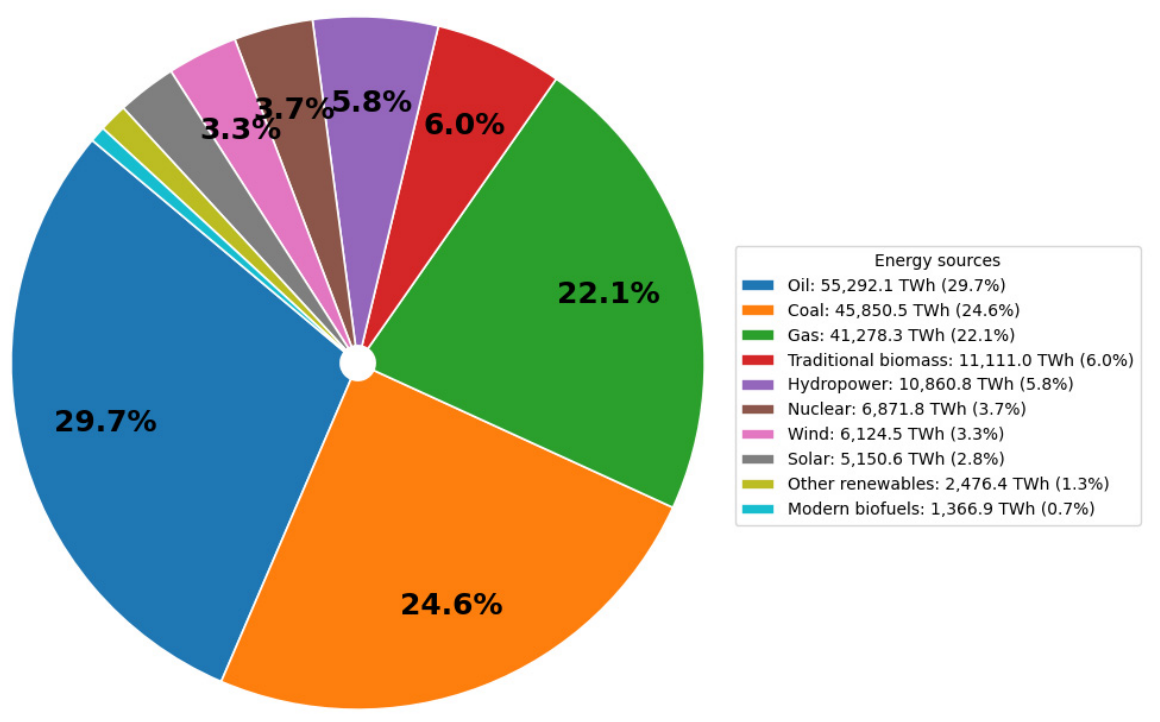
A detailed breakdown of global energy consumption reveals a heterogeneous mix of sources, each with distinct environmental and operational characteristics. Fossil fuels remain the backbone of electricity generation and industrial energy supply. Coal, in particular, is still responsible for a significant share of global electricity production, especially in emerging economies, due to its availability and cost-effectiveness [
6]. Natural gas, often considered a transition fuel, has gained prominence owing to its relatively lower carbon intensity and operational flexibility [
7]. Oil continues to dominate the transport sector, accounting for over 90% of energy consumption in this domain. To this purpose,
Figure 1 and
Figure 2 illustrate the energy consumption trend (from 1950 to 2024) and the 2024 share by source [
8].
In parallel, renewable energy sources—including solar, wind, hydroelectric, and geothermal—have experienced rapid growth. According to the
International Renewable Energy Agency (IRENA), renewable capacity additions reached record levels, with solar photovoltaic (PV) and wind energy leading the expansion [
9]. Nevertheless, the intermittent nature of these sources, coupled with storage limitations and grid integration challenges, constrains their ability to fully replace fossil-based generation in the short to medium term.
Biomass represents another important component of the global energy mix, particularly in the context of circular economy strategies and carbon neutrality [
10]. The
World Bioenergy Association (WBA) reports that bioenergy contributes approximately 10% of global energy supply, making it the largest renewable energy source when traditional biomass is included [
11]. Advanced bioenergy systems, such as biogas, biofuels, and biomass gasification, offer promising pathways for decarbonization, especially when integrated with carbon capture technologies. In addition, energy harvesting and waste-to-energy pathways can make a valuable contribution to the energy transition and to energy circularity [
12,
13].
Despite the growth of renewables and bioenergy, the continued dominance of combustion-based systems underscores the importance of developing technologies that can mitigate their environmental impact without compromising energy security [
14]. In this context, Carbon Capture, Utilization, and Storage (CCUS) has emerged as a critical enabling technology [
10,
14,
15]. CCUS aims to capture CO
2 emissions from point sources, such as power plants and industrial facilities, and either store them underground or utilize them in various applications [
16].
Flue gases generated from combustion processes typically consist of nitrogen (N
2), carbon dioxide (CO
2), water vapor (H
2O), oxygen (O
2), and trace pollutants. Among these, CO
2 and N
2 represent the major components, with CO
2 concentrations ranging from 3% to 15% depending on the fuel and combustion technology. Traditionally, these gases are released into the atmosphere, contributing to environmental pollution. However, recent advancements in gas separation and cryogenic technologies have enabled the efficient capture, purification, and liquefaction of these components [
17,
18,
19].
The separation of CO
2 from flue gas can be achieved through several methods, including chemical absorption (e.g., amine scrubbing), physical adsorption, membrane separation, and cryogenic distillation. Each technique presents specific advantages and limitations in terms of energy consumption, scalability, and cost [
19,
20]. Cryogenic processes, in particular, are gaining attention for their ability to directly produce liquefied CO
2 with high purity, which is suitable for transport, storage, and utilization.
Liquefied CO
2 has a wide range of industrial applications, including enhanced oil recovery (EOR), food and beverage processing, refrigeration, and as a feedstock for synthetic fuels and chemicals [
21]. Moreover, the concept of CO
2 valorization is gaining traction, where captured CO
2 is converted into value-added products such as methanol, methane, and polymers [
22,
23], also used as a reforming agent for hydrogen generation [
24], or a reactant for syngas production in Solid Oxide Co-Electrolyzers [
25].
An emerging and innovative approach involves the use of liquefied CO
2 as a working fluid in energy systems. By exploiting the thermodynamic properties of CO
2, particularly near its critical point, it is possible to design high-efficiency power cycles, such as the supercritical CO
2 Brayton cycle [
26]. In addition, the concept of storing CO
2 in liquid form and subsequently expanding it in a turbine to generate electricity introduces a pathway for energy storage and recovery [
27].
The liquefaction of nitrogen, although less discussed in the context of CCUS, also presents opportunities for energy applications [
28]. Liquid nitrogen (LN
2) can be used in cryogenic energy storage systems, where excess electricity is used to liquefy air, and the stored cryogenic fluid is later expanded to generate power [
29]. This concept, known as Liquid Air Energy Storage (LAES), demonstrates the broader potential of cryogenic technologies in integrating energy systems and enhancing grid flexibility. For example, study [
30] deals with the nitrogen separation from combustion gases adopting the Pressure Swing Adsorption (PSA) technique and using zeolites.
From a thermodynamic perspective, the integration of CO
2 capture, liquefaction, storage, and expansion into a unified process line represents a complex but promising system [
31]. Such integration enables not only the mitigation of emissions but also the recovery of energy embedded in the flue gas stream. The expansion of pressurized CO
2 in a turbine can be seen as a form of energy recycling, where the pressure and temperature potential of the captured gas are harnessed to produce electricity.
Recent studies have explored the techno-economic feasibility of integrated CCUS systems, highlighting both opportunities and challenges. While the energy penalty associated with CO
2 capture remains a significant barrier, advancements in process integration, heat recovery, and novel materials are progressively reducing this penalty [
32,
33]. Furthermore, policy support and carbon pricing mechanisms are expected to play a crucial role in accelerating the deployment of these technologies [
34]. Other studies have also explored alternative pathways for the thermodynamic valorization of captured carbon dioxide beyond conventional storage. For example, Alabdulkarem et al. [
35] investigated optimized CO
2 liquefaction and pressurization cycles for carbon capture and sequestration applications, demonstrating that liquefaction–pumping strategies may reduce compression power demand compared with conventional multi-stage compression approaches. More recently, Su et al. [
36] proposed an integrated zero-emission system combining power generation with the simultaneous production of liquid CO
2 and liquid N
2, highlighting the potential of cryogenic separation and product valorization in advanced energy systems.
By transforming waste streams into valuable resources and integrating them into energy recovery systems, it is possible to enhance overall system efficiency, reduce emissions, and contribute to a more sustainable energy future.
Work Contribution
This work contributes to the scientific literature by proposing and thermodynamically assessing an integrated process for the cryogenic separation, liquefaction, storage, and valorization of flue-gas components, with particular focus on carbon dioxide (CO2) and nitrogen (N2) recovered from methane-combustion exhaust streams. The originality of the proposed system lies in the integration of carbon capture, cryogenic product generation, and energy recovery within a single thermodynamic process architecture.
Unlike conventional cryogenic CO2 capture systems, which are generally limited to the separation and liquefaction of carbon dioxide for storage or transport, the present configuration expands the process boundary toward full flue-gas valorization. Specifically, the proposed system simultaneously performs: (i) the sequential cryogenic separation of H2O, CO2, and N2 according to their thermophysical properties; (ii) the production and storage of liquefied CO2 and liquefied N2 as valuable process products; and (iii) the partial recovery of the invested compression energy through the controlled vaporization and expansion of stored liquid CO2 for electric power generation.
Compared with previously reported cryogenic carbon-capture technologies, which typically focus exclusively on CO2 recovery, the present work introduces a broader multi-product approach in which both major flue-gas constituents are recovered and thermodynamically valorized. Furthermore, unlike Liquid Air Energy Storage systems, where atmospheric air is liquefied solely for grid-scale energy storage, the proposed methodology starts directly from combustion exhaust gases and combines carbon management with cryogenic energy storage. In addition, differently from conventional supercritical CO2 power systems, where CO2 is externally supplied as a working fluid, here carbon dioxide is directly captured from the exhaust stream, liquefied, stored, and subsequently reused as an internal energy carrier. A section is also dedicated to the reuse of the “waste” process water as a hot resource for heating purposes outside the system architecture.
From a methodological perspective, the study adopts a rigorous steady-state modeling framework based on mass and energy balances, phase-equilibrium calculations, and detailed unit-operation analysis implemented in DWSIM [
37], thereby providing a transparent and reproducible approach for the analysis of complex cryogenic systems. From a technological perspective, the proposed process aligns with emerging energy-transition paradigms, where decarbonization must be pursued together with resource efficiency, energy harvesting, and circular utilization of industrial process streams.
Overall, this study advances the current body of knowledge by demonstrating that flue gas can be reinterpreted not only as an emission stream requiring treatment, but as a thermodynamic resource capable of providing recoverable matter, cryogenic storage media, and usable energy within an integrated low-carbon process framework.
2. Process Configuration and System Architecture
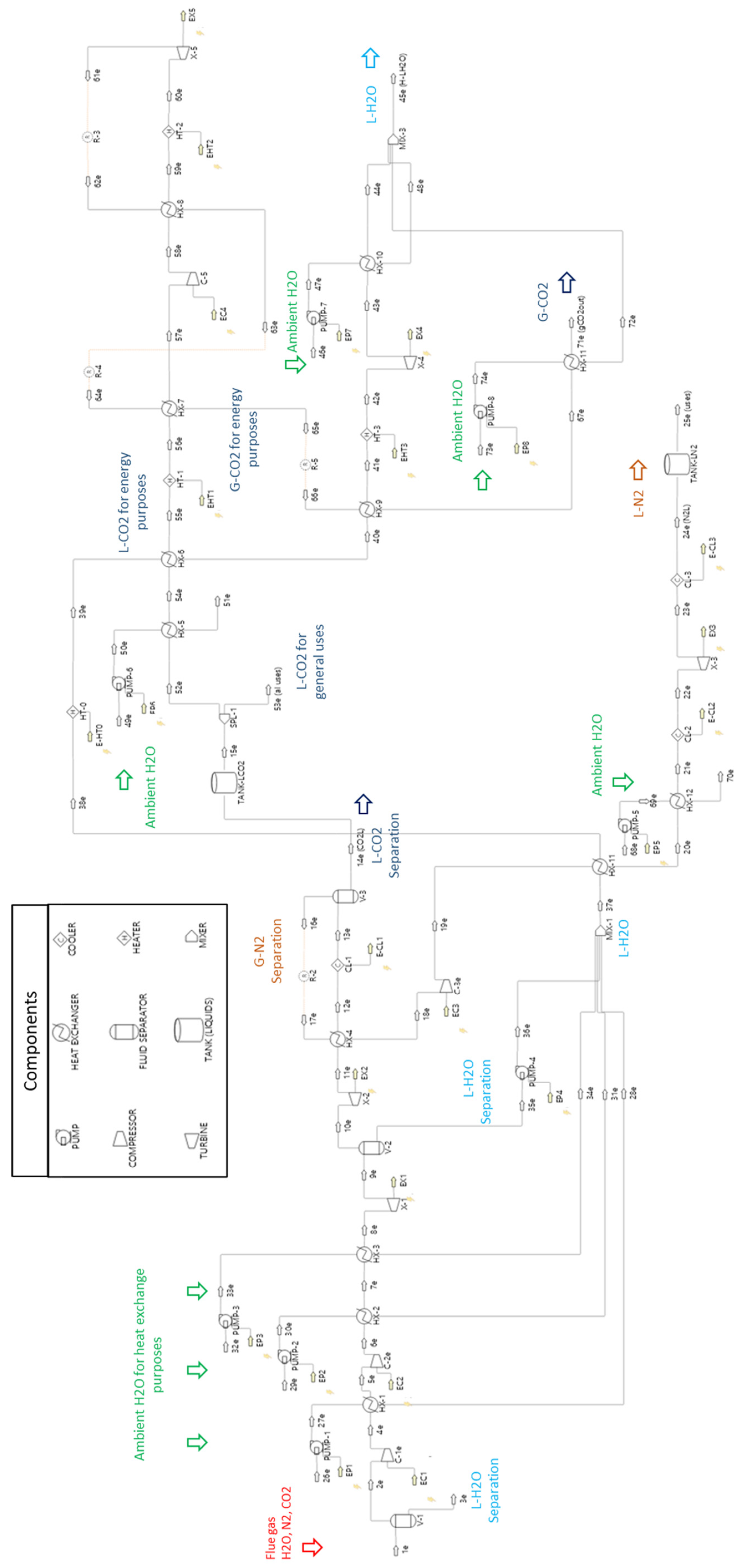
The proposed plant configuration, illustrated in the schematic of
Figure 3 is designed for the comprehensive processing of flue gas from methane combustion. The primary objectives are producing liquid carbon dioxide (L-CO
2) and liquid nitrogen (L-N
2), while also enabling on-demand power generation through the vaporization and expansion of a portion of the produced L-CO
2. The process leverages the distinct thermophysical properties of the flue gas components—namely water (H
2O), carbon dioxide (CO
2), and nitrogen (N
2)—specifically their different liquefaction temperatures at atmospheric pressure, to achieve sequential separation and purification.
The incoming flue gas stream, a high-temperature mixture predominantly composed of N2, H2O, and CO2, first enters a preliminary cooling stage where it is brought to near-ambient temperature using a heat exchanger network. This initial cooling exploits the fact that water vapor has the highest dew point among the mixture’s primary constituents. As the flue gas temperature drops, H2O undergoes a phase transition, condensing into a liquid. This stream is immediately directed to a gas–liquid Fluid Separator, which effectively removes the condensed water. This step is critical not only for obtaining a usable by-product but also for preventing corrosion and ice formation in the subsequent, much colder sections of the plant.
Following dehumidification, the dry gas stream—now a binary mixture of N2 and CO2—proceeds to the core of the liquefaction and separation train. This section is designed around the substantial difference in the boiling points of CO2 and N2 at standard pressure. At atmospheric pressure, CO2 does not form a stable liquid phase and undergoes solid–gas transition at approximately −78.5 °C. However, when the pressure is increased above the triple-point pressure, CO2 can be condensed and maintained in the liquid phase. Therefore, in the proposed process, the CO2-containing stream is compressed before cooling, so that carbon dioxide can be selectively liquefied and separated from the residual nitrogen-rich gas without entering the solidification region. Nitrogen, in contrast, has a boiling point of −196 °C, at standard atmospheric pressure. This disparity allows for a multi-stage process where CO2 is preferentially condensed and separated.
To achieve the necessary cryogenic temperatures, the plant employs a cascade of compressors and turbo-expanders. The gas is first compressed in a series of compressors, which raises its pressure and, consequently, its temperature. Inter-stage cooling using Coolers (electric-based refrigeration units) and Heat Exchangers (utilizing ambient water as a cooling medium) brings the temperature back down. Multiple heat exchangers are distributed throughout the process line. Whenever thermodynamically feasible, the system is designed to exploit available ambient or locally accessible thermal resources for cooling purposes (ambient-natural water). When passive or resource-based cooling is not sufficient to achieve the required temperature levels, electric-based units are employed to provide the necessary cooling of the process streams. The compression step serves a dual purpose: it provides the pressure differential required for efficient expansion cooling and elevates the condensation temperature of CO2, making it easier to liquefy with the available cooling duty. The high-pressure gas is then passed through a series of turbo-expanders. In these devices, the gas expands adiabatically, performing work (which can be harnessed to drive compressors or generators) and experiencing a sharp drop in temperature. The expansion cascade is thermodynamically staged, with each expansion followed by heat exchange either against the incoming process stream for cold-energy recovery or, whenever thermodynamically feasible, against an ambient water circuit. The latter is adopted to exploit locally available and low-cost thermal resources, minimizing auxiliary electric cooling demand during intermediate cooling stages. In these cases, the water circuit may operate under pressurized conditions to maintain liquid-phase stability and prevent undesired vaporization during heat exchange.
Once the stream reaches a temperature below the dew point of CO2 at the operating pressure, a second Fluid Separator is employed. This vessel separates the condensed CO2 from the remaining gaseous stream, which is now nearly pure N2. The separated L-CO2 is directed towards a cryogenic storage Tank. From this tank, the L-CO2 is split into two distinct product pathways. The first pathway is for “general uses”, where the L-CO2 is dispatched as a final product for industrial or commercial applications. The second pathway is dedicated to “energy purposes”. When grid power is required, a portion of the stored L-CO2 is drawn from the tank, pumped to a high pressure, and passed through a Heat Exchanger where it is vaporized using ambient water as a heat source. This vaporization produces a high-pressure CO2 gas, which is then expanded through a dedicated series of turbines to generate electricity. This process effectively recovers a portion of the energy invested in liquefaction, acting as a cryogenic energy storage system. Meanwhile, the gaseous N2 stream separated from the L-CO2, though cold, is still far above its liquefaction temperature. This stream is subjected to a second, deeper cryogenic cooling loop, analogous to the first but designed to reach the extreme temperatures required for N2 liquefaction. This involves a further cascade of Compressors, Coolers, and Turbo-Expanders. The N2 gas is compressed and then expanded to ultra-low temperatures, with inter-stage heat exchange against the ambient water circuit and potentially against the outgoing product streams. Once the N2 stream is cooled below its boiling point of −196 °C, it condenses into a liquid. A final Fluid Separator separates the L-N2, which is then stored as a final product. Any gaseous remnants could potentially be vented or, more efficiently, recycled.
As anticipated, ambient water is crucial. Pumps drive ambient water through a network of Heat Exchangers placed at every stage of the process where cooling is required: after each compression step, and during the vaporization of CO2 for power generation. This water absorbs thermal energy from the process streams, serving as the primary heat sink. As a result, the water is heated to a temperature potentially useful for sanitary or district heating purposes, creating a valuable co-product of the main cryogenic processes. The entire plant layout thus integrates thermodynamically efficient compression-expansion cascades, leveraging the distinct liquefaction temperatures of H2O, CO2, and N2 to achieve high-purity separation, storage, and on-demand power recovery, while simultaneously valorizing the waste heat through a hot water circuit.
According to the legend for
Figure 3, the streams are labeled with sequential numbering from 1e to 71e. The machine components (compressors, pumps, turbines, heat exchangers, heaters, coolers, etc.) and other equipment (such as tanks, separators, and mixers) are grouped within dedicated blocks. Additionally, the main process sections—including ambient water feeding, gas feeding, and re-gasified CO
2 for energy purposes—are clearly distinguished using different colors.
3. Materials and Methods
The integrated plant shown in
Figure 3 is modeled using a steady-state mass and energy balance approach, in which each unit operation is treated as a control volume and then assembled into an overall process network. For this purpose, the DWSIM v9.0.5 software, an open-source chemical process simulator widely adopted in academia and industry for steady-state and dynamic simulations of complex thermodynamic systems, has been employed. DWSIM is a CAPE-OPEN compliant simulation environment that enables rigorous modeling of chemical, petrochemical, and energy processes through the integration of mass and energy balances, phase equilibrium calculations, and detailed unit operation models. The software incorporates a wide range of thermodynamic packages (e.g., Peng–Robinson, Soave–Redlich–Kwong, NRTL, UNIFAC) and allows the simulation of multiphase systems, including vapor-liquid and liquid-solid equilibria, which are essential for accurately describing gas separation and liquefaction processes.
The flue-gas stream, composed of CO
2, N
2, and H
2O, is progressively cooled, compressed or pumped, partially condensed, split inside phase separators, stored in liquid tanks and, where required, reheated or expanded in turboexpanders to recover useful power. Accordingly, the mathematical formulation is built on the conservation of total mass, species mass, and energy, complemented by algebraic relations for pressure variations, heat-transfer duties, phase separation, mechanical efficiencies, and refrigeration consumption. For a generic control volume operated at steady state and neglecting kinetic and potential energy terms, the overall mass balance is written as the equality between the sum of inlet mass flow rates and the sum of outlet mass flow rates (1).
For each chemical species
i, the component balance is imposed independently so that the redistribution of CO
2, N
2, and H
2O among gaseous and liquid streams can be tracked across the entire cryogenic line. In the absence of chemical reactions, the species balance reduces to a simple inlet-outlet equality (2).
The steady-state first-law balance of each unit is then expressed in enthalpy form, as shown in (3). This formulation allows the same equation to represent coolers, heaters, heat exchangers, compressors, pumps, separators, and storage tanks by simply assigning the appropriate heat and work terms.
At plant level, the sum of all unit balances yields the global closure of the process. Hence, the total electric demand of the plant is evaluated by summing the absorbed powers of compressors, pumps, and electric chillers, and subtracting the power recovered in turboexpanders. The net electric balance of the plant can therefore be written as reported in (4).
Heat exchangers, heaters, and coolers
All heat exchangers are modelled through enthalpy balances between hot and cold streams. When only one process stream exchanges heat with an external utility, the exchanged duty is directly obtained from the enthalpy variation of the process fluid. For a single stream crossing a heater or a cooler, the duty is reported in (5).
When two process streams exchange heat internally, the heat lost by the hot stream is set equal to the heat gained by the cold stream, after accounting for any residual heat loss to the surroundings. In design-oriented calculations, the same duty can be expressed with the classical overall heat-transfer relation, as in Equations (6) and (7).
Here,
U is the overall heat-transfer coefficient,
A is the exchange area, and Δ
Tlm is the logarithmic mean temperature difference. For chillers based on an electrically driven refrigeration cycle, the electric consumption is linked to the removed thermal duty through the coefficient of performance
COP. By defining
COP (8) as the ratio between useful cooling capacity and absorbed electric power, the chiller demand is expressed as in (9).
Compressors, pumps, and pressure-rise devices
Gas pressurization stages are modeled as adiabatic compressors with assigned isentropic efficiency. Given the inlet state and the target discharge pressure, the ideal isentropic outlet enthalpy
hout,s is first evaluated from the entropy equality (
sout,s =
sin). The real outlet enthalpy is then derived from the compressor isentropic efficiency, and the electric power required is obtained from the enthalpy rise, considering the compressor efficiency (
ηcomp), as reported in (11).
For liquid streams, pumps are modelled either using the incompressible approximation or the isentropic-efficiency formalism. When the density is weakly dependent on pressure, the real specific pumping work can be approximated as reported in (12), considering the pump efficiency
ηpump.
where
v is the specific volume.
Pressure drops (Δ
P) through pipelines, valves and compact process elements are introduced by prescribing a pressure loss ratio or an absolute pressure decrement. In its simplest form, the pressure at the outlet of each passive component is evaluated as:
Turboexpanders and energy recovery
The recovery of electric power from pressurized gaseous CO
2 or other gaseous streams is described by means of an adiabatic turbine model. For a given inlet state and outlet pressure, the ideal isentropic outlet enthalpy
hout,s is evaluated assuming constant entropy (
sout,s =
sin). The real enthalpy drop is then corrected through the turbine isentropic efficiency, and the produced electric power is calculated considering the turbo-alternator efficiency (
ηturb).
This expression is particularly relevant for the branch in which previously liquefied and stored CO2 is vaporized, pressurized if needed, heated to the desired turbine-inlet condition and then expanded to generate electricity. In this way, the plant not only captures and stores the carbon dioxide contained in the flue gas, but also partially revalorizes the stored fluid as an energy carrier.
Phase separators and cryogenic condensation
The separation of liquid water, liquid carbon dioxide, and liquid nitrogen from the multi-component gas mixture is formulated as an equilibrium flash problem. After cooling and/or pressurization, each stream entering a separator is assumed to split into a vapor fraction
V and a liquid fraction
L. The total balance and the component balances across the separator are calculated from (16) and (17).
Here,
F is the feed flow rate,
zi is the overall feed composition,
yi is the vapor-phase composition and
xi is the liquid-phase composition. The phase equilibrium condition is expressed through the distribution coefficients
Ki, defined as in (18).
Particular attention is devoted to the thermodynamic control of carbon dioxide phase behavior during deep cryogenic cooling, in order to prevent undesired CO
2 solidification within heat exchangers, expansion devices, and separation vessels (in this regard, the literature presents some techniques to prevent it [
38,
39]). Since carbon dioxide may enter the solid phase when the operating pressure–temperature trajectory crosses the sublimation boundary, the compression–expansion cascade is designed so that the process stream remains within the vapor–liquid equilibrium region throughout the CO
2 separation section. To this purpose, intermediate pressure levels, expansion ratios, and cooling duties are iteratively adjusted in the simulation environment to ensure that the local temperature remains above the corresponding CO
2 frost point at each pressure level. In addition, a conservative thermal safety margin is adopted during the design phase to avoid accidental dry-ice formation caused by local non-idealities, temperature fluctuations, or pressure drops. This operational strategy ensures stable cryogenic separation while minimizing the risk of solid deposition and flow obstruction in the low-temperature section.
Storage tanks and recirculated liquid streams
Liquid storage vessels are treated as perfectly mixed holdup units. Under steady-state operating conditions, the tank balance reduces to an equality between incoming and outgoing mass flow rates. In general form, the equation is that expressed as in (19).
The thermal condition of the stored cryogenic liquids may vary due to ambient heat leaks, vaporization losses, or intentional heating before reuse. Accordingly, the tank energy balance may be written as in (20).
For steady-state calculations, the accumulation terms are set to zero, whereas the outlet state of each stored liquid is assigned from its pressure, temperature, and quality, depending on whether the stream is delivered for industrial use, for power recovery, or for recycle to the separation line.
4. Results
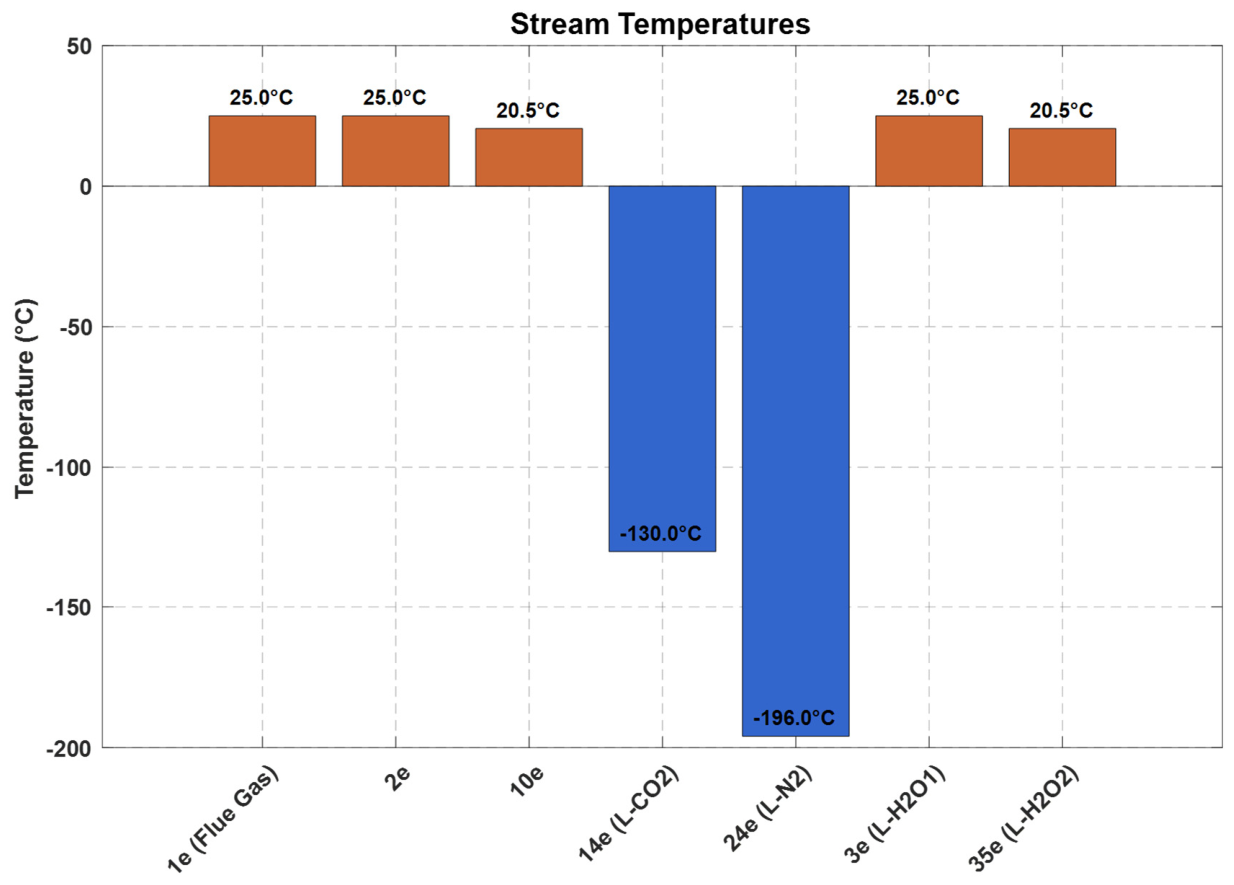
This section illustrates the results from a thermodynamic and energy perspective, assessing the main performance parameters. Given the system’s complexity, only the primary streams and sections (1e, 2e, 10e, 14e, 24e, 3e, 35e) are evaluated here, while the comprehensive set of results is extensively presented in the
Appendix A.
In this work, the simulation environment is configured to represent a flue gas stream resulting from the complete combustion of methane (CH
4) under stoichiometric conditions. The resulting gas mixture has been defined on a volumetric basis, consisting of 9.5% CO
2, 71.5% N
2, and 19% H
2O, which is representative of typical exhaust gases from natural gas-fired systems (see
Table 1). This composition reflects the absence of residual oxygen and carbon monoxide, confirming complete combustion and enabling a simplified yet realistic basis for subsequent separation and liquefaction modeling. The selected thermodynamic framework ensures accurate prediction of phase behavior, particularly for CO
2 and H
2O condensation at low temperatures and high pressures, which are key aspects of the process under investigation. The plant configuration is conceived to extract part of the liquefied CO
2, that can serve as an on-demand power delivery. In this case, as an example, half of the mass flow rate is processed energetically to expand into the turbine.
Table 2 provides a detailed breakdown of the specific energy involvement (Wh/kg of processed flue gas) at the component level, offering a granular insight into the thermodynamic structure of the plant. The results clearly demonstrate that the energy demand is highly concentrated in specific subsystems, particularly in the deep cryogenic section dedicated to nitrogen liquefaction and in the CO
2 compression–expansion cascade.
Among the compression stages, EC2 exhibits the highest specific contribution (94.90 Wh/kg), followed by EC1 (63.89 Wh/kg) and EC3 (58.49 Wh/kg). This trend confirms that the intermediate compression stage operates at a thermodynamically less favorable pressure ratio, likely due to the requirement of elevating CO2 partial pressure to enhance its condensation temperature. The cooling loads (from E-CL1 to E-CL3) are significant but remain moderate compared to compression, confirming that mechanical work dominates over refrigeration duty in the first separation loop.
A striking result emerges from the expander EX4 (234.01 Wh/kg), indicating that this unit is responsible for the largest single mechanical energy transformation within the CO2 cascade. This suggests that EX4 corresponds to the principal cryogenic expansion stage where the temperature drop crosses the CO2 dew point. However, the most relevant energy term in the entire table is the heat transfer EHT3 (1230.60 Wh/kg), which overwhelmingly dominates the balance. The magnitude confirms that N2 liquefaction represents the most energy-intensive operation in the plant, in agreement with the extremely low boiling temperature of nitrogen (−196 °C).
Conversely, pump contributions (EP1–EP8) are negligible (<2 Wh/kg), demonstrating that hydraulic work plays a marginal role compared to compression-expansion thermodynamics. The near-zero value of EHT1 further indicates that the early-stage heat exchange is largely passive or thermally balanced.
Overall,
Table 2 highlights a thermodynamic asymmetry: CO
2 liquefaction is energetically moderate and partially recoverable, whereas nitrogen liquefaction dictates the overall energy footprint of the process. This confirms that system optimization efforts should primarily focus on the second cryogenic loop.
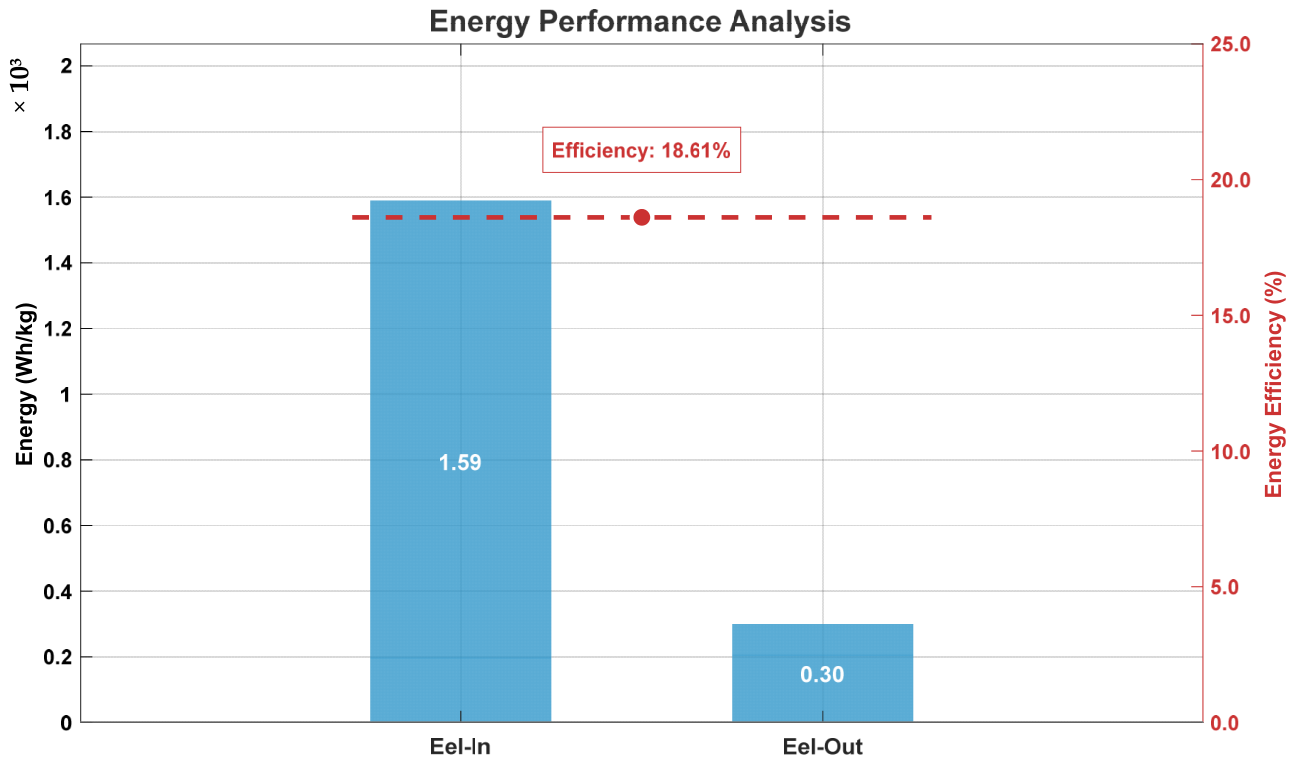
Figure 4 synthesizes the global energy performance of the plant by aggregating compression work, expansion recovery, and heat exchange contributions. The chart visually confirms the numerical findings of
Table 2, clearly identifying the nitrogen liquefaction section as the dominant energy consumer. It must be underlined that the key performance parameters are calculated only on the electrically driven equipment.
Figure 4 thus presents the energy performance of the system by comparing the electrical energy invested during the liquefaction stage (Eel-In) with the electrical energy recovered during the subsequent vaporization and expansion of the stored liquid CO
2 (Eel-Out). The results show that the compression and liquefaction process requires an electrical input of 1.59 kWh, while the expansion stage allows the recovery of 0.30 kWh in the form of electric power. This corresponds to a round-trip efficiency of 18.61%, confirming the technical feasibility of using part of the liquefied CO
2 as an internal energy carrier. This efficiency value increases if the thermal energy eventually recovered from the warm liquid water at the outlet is accounted for in the calculation.
The difference between invested and recovered energy highlights that the system operates as a net energy consumer during the separation and liquefaction phases, as expected for cryogenic processes. Nevertheless, the partial recovery of mechanical work through the expansion stage demonstrates the thermodynamic advantage of integrating turbo-expanders rather than relying exclusively on throttling-based expansion devices.
From a system-engineering perspective,
Figure 4 confirms the dual functionality of the proposed process: on one hand, it performs flue-gas separation and cryogenic product generation; on the other, it enables partial energy recuperation through the controlled reuse of stored liquid CO
2. The obtained efficiency also suggests that future improvements should focus on minimizing exergy destruction in the compression–expansion train and enhancing heat integration, particularly in the deep cryogenic sections of the plant.
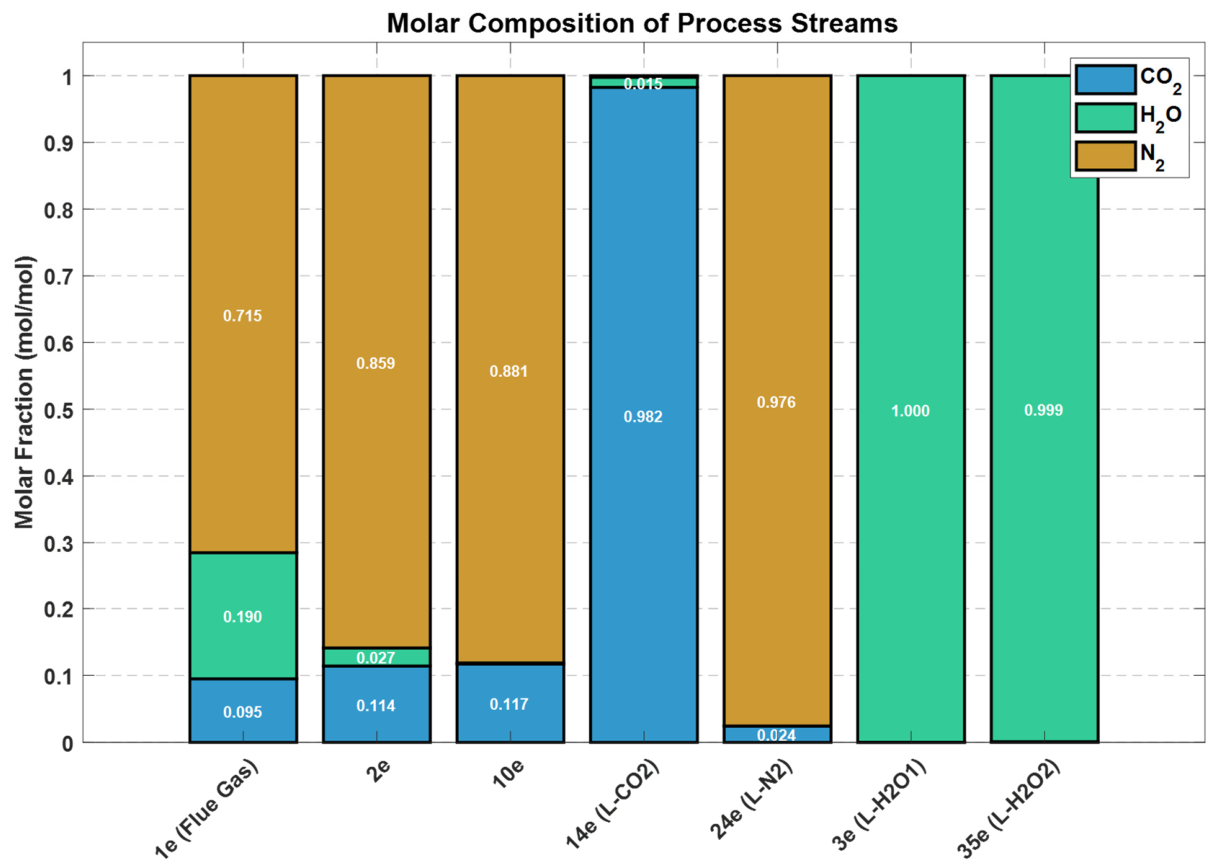
Figure 5 illustrates the molar composition evolution across the major plant sections, providing direct evidence of separation effectiveness. The trend confirms the sequential removal mechanism described in the process scheme. At the inlet, the flue gas mixture is composed of N
2, CO
2, and H
2O. Following preliminary cooling and condensation, the water fraction drops sharply, validating the efficiency of the first gas–liquid separator. The almost complete removal of H
2O is critical to avoid ice formation in downstream cryogenic stages and to ensure reliable operation.
In the intermediate section, after the CO2 liquefaction cascade, the molar fraction of CO2 in the gas phase decreases dramatically, while nitrogen approaches near-purity conditions. The chart shows a clear bifurcation: liquid CO2 accumulates in the separated stream, whereas the residual gas becomes predominantly N2. The steep decline in the CO2 molar fraction confirms that the condensation temperature was effectively crossed under the selected pressure conditions.
In the final section, nitrogen is progressively enriched until reaching liquefaction conditions. The residual gaseous fraction becomes negligible, demonstrating high separation efficiency. The molar purity trends confirm that cross-contamination between streams is minimal and that phase equilibrium conditions are properly exploited. Thermodynamically, the figure validates the design assumption that differential boiling points can be effectively used for sequential separation. From a process perspective, it confirms that no auxiliary chemical absorption step is required, as physical cryogenic separation alone achieves high purities.
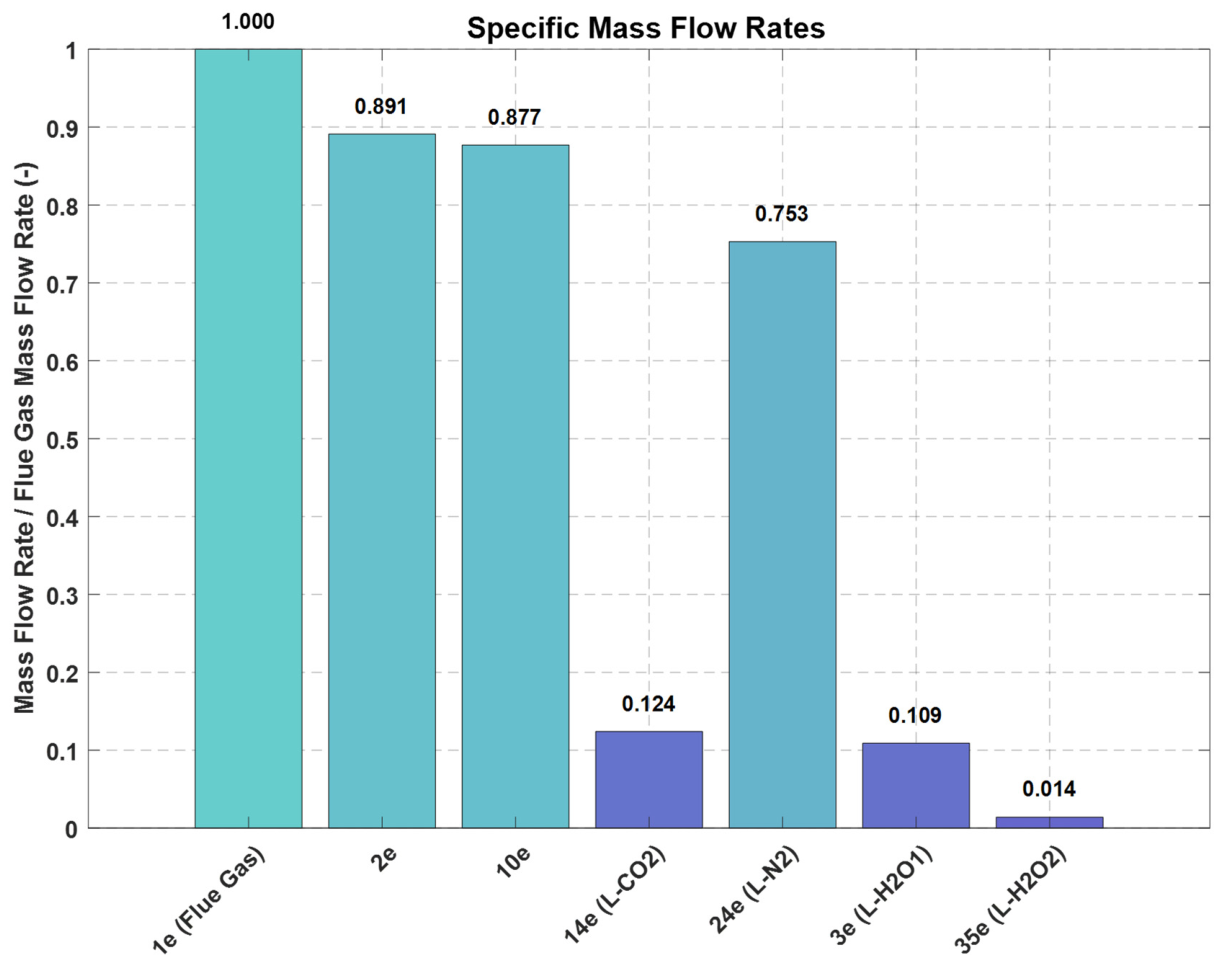
Figure 6 presents the specific mass flow rate (calculated as “Mass Flow Rate/Flue Gas Mass Flow Rate”) evolution along the plant sections. The trend reflects phase changes and stream bifurcations occurring during separation. Initially, the total mass flow remains constant through compression and cooling stages, as no mass removal occurs. Upon water condensation, a distinct reduction in the gaseous mass flow is observed, corresponding to liquid withdrawal. This confirms the quantitative consistency between molar composition changes (
Figure 5) and the mass balance.
A second marked reduction appears at the CO2 separation stage. The extraction of liquid CO2 (L-CO2) reduces the residual gas mass flow, leaving primarily nitrogen in the stream. This mass bifurcation is a direct indicator of separation efficiency. The slope variation indicates that CO2 represents a significant fraction of the initial flue gas mass (0.124 kgL-CO2/kgflue-gas), consistent with typical combustion exhaust compositions.
In the final nitrogen liquefaction section, mass flow again splits into liquid and residual gas streams. The magnitude of the change reflects the high nitrogen content (0.753 kgL-N2/kgflue-gas) of the original mixture.
The figure also indirectly demonstrates that pump loads remain limited, as liquid mass flow rates are moderate compared to gaseous compression flows. Overall, the mass flow chart confirms conservation laws and validates the internal consistency of the thermodynamic simulation.
Figure 7 shows the temperature evolution across the plant and clearly highlights the staged cryogenic strategy. The first temperature drop corresponds to water condensation near ambient conditions. Subsequent compression stages cause temperature increases, followed by controlled cooling through heat exchangers.
The most pronounced temperature decreases occur in the turbo-expander sections. The CO2 condensation zone is characterized by a temperature plateau around its liquefaction point under the operating pressure (−130 °C, 1.4 bar), confirming the proper thermodynamic crossing of the phase boundary.
The nitrogen section shows an extreme temperature decline toward cryogenic values approaching −196 °C (1 bar). The steep gradient indicates the high refrigeration demand and explains the dominant EHT3 value reported in
Table 2.
Importantly, the temperature recovery during CO2 vaporization for energy generation demonstrates the system’s ability to absorb ambient heat, closing the thermodynamic loop. Throughout the CO2 liquefaction section, all operating temperature-pressure points remain above the CO2 solidification boundary, confirming that the adopted expansion cascade avoids dry-ice formation while preserving stable liquid-phase recovery.
Furthermore, it should be underlined that a significant amount of energy can be extracted from the “waste” exhaust water stream (stream 45e). In fact, this stream represents a portion of 12.94 kgL-H2O/kgflue-gas at a temperature of 91 °C (1.2 bar), which can be further used for heating purposes outside the system.
Overall, the temperature chart confirms correct phase-transition targeting, absence of undesired temperature overshoots, and coherent integration between compression, cooling, and expansion stages. It validates the thermodynamic feasibility of the entire cascade.
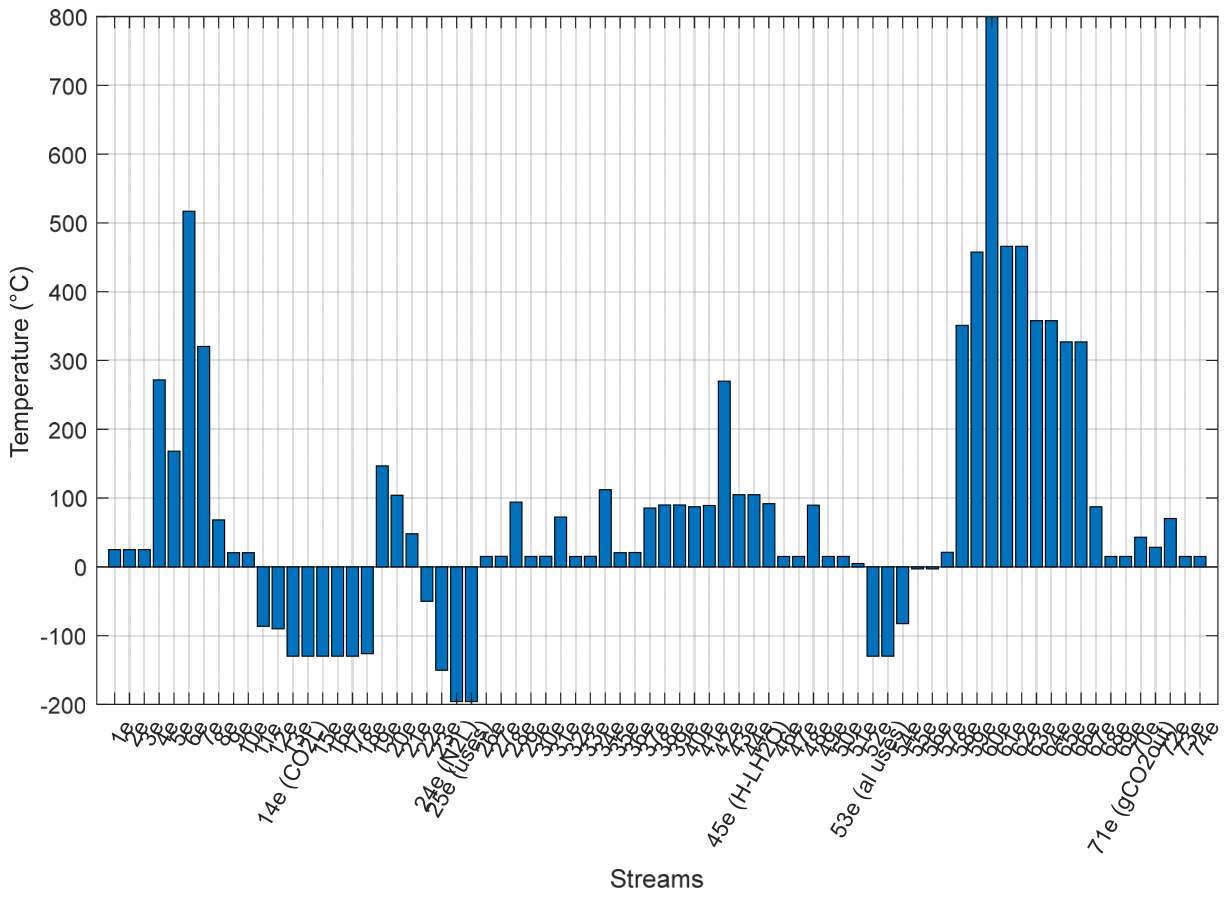
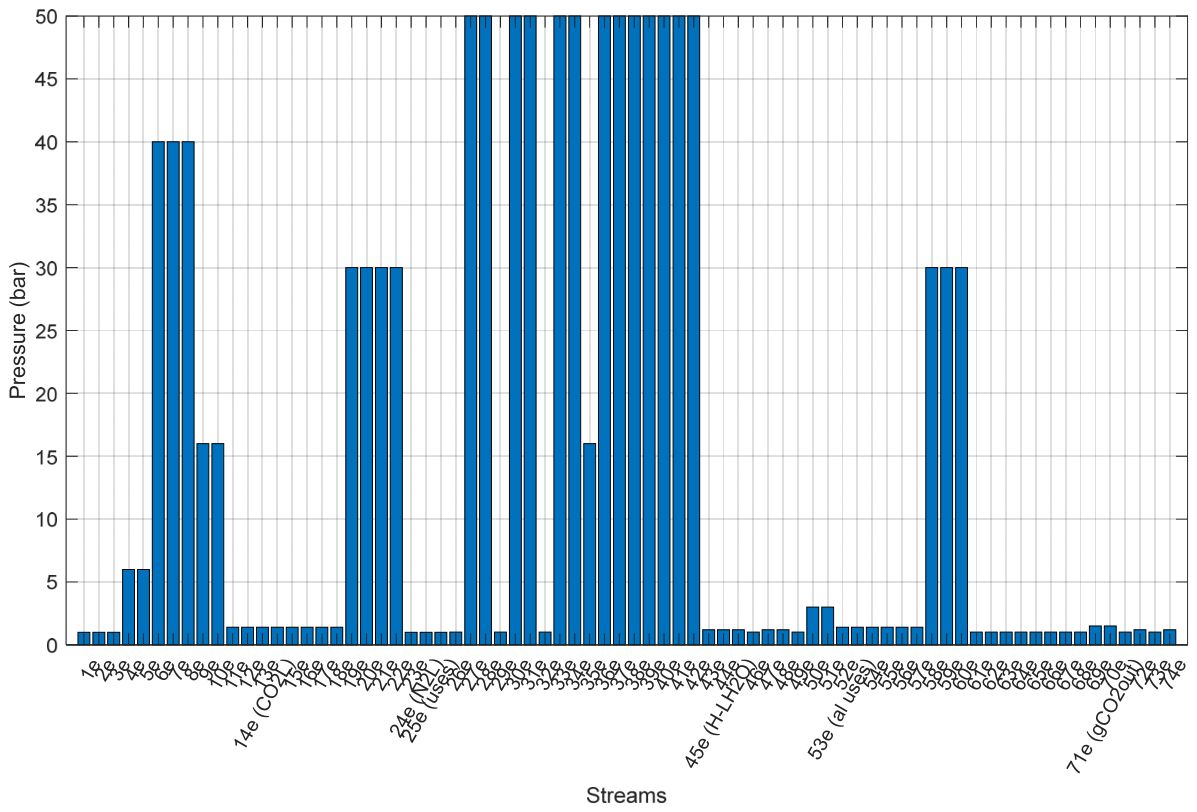
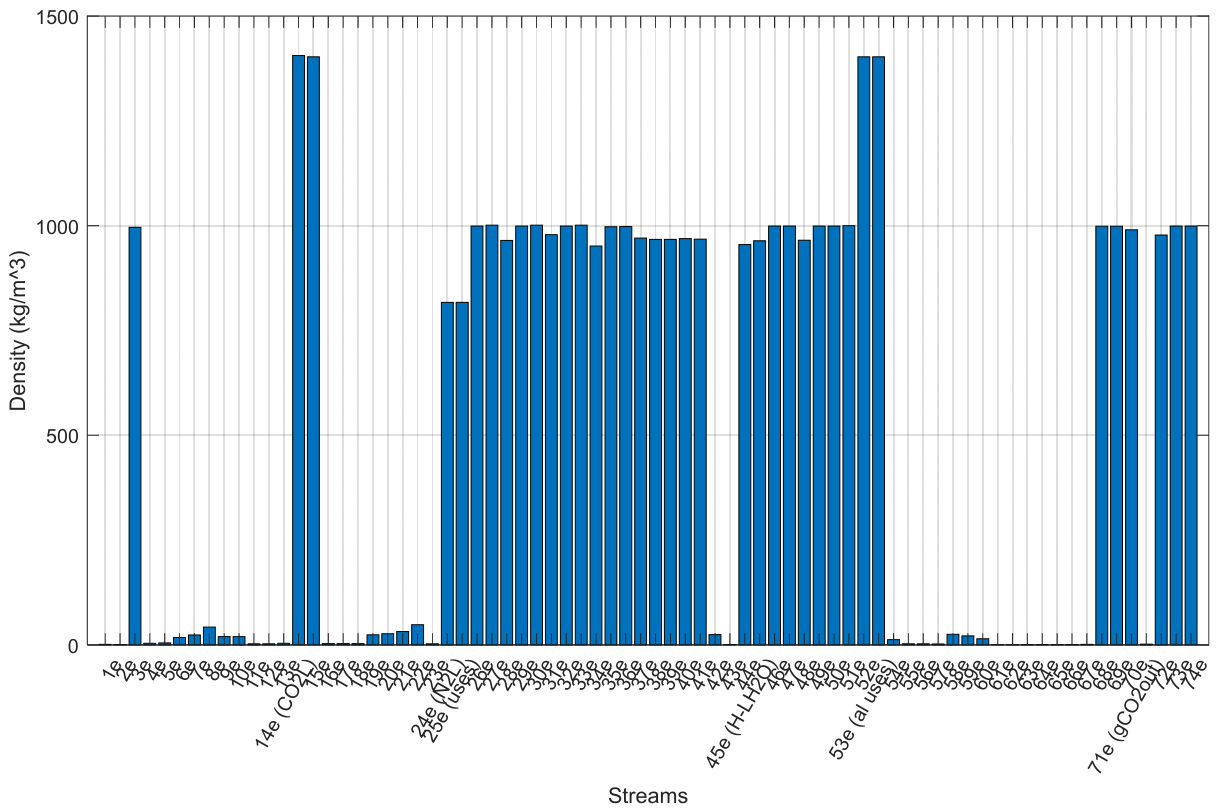
As anticipated, the complete set of simulation results is reported in detail in the
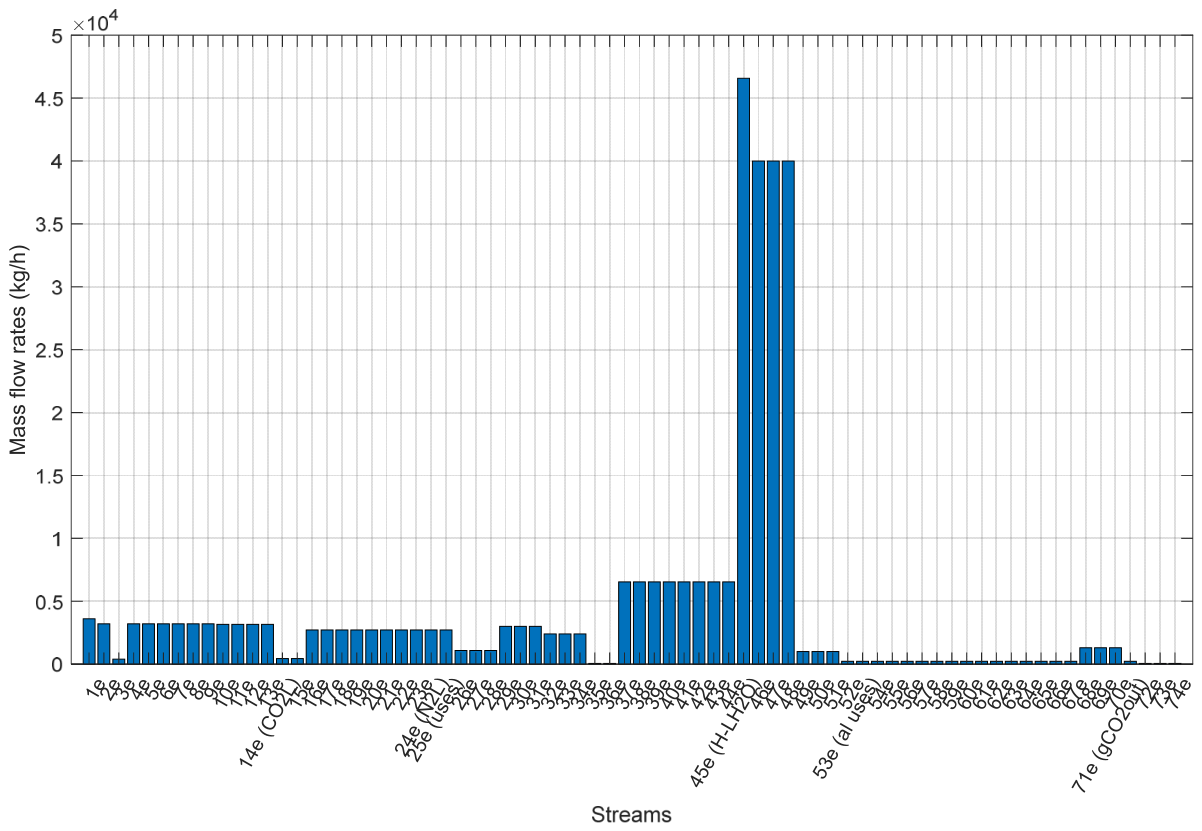
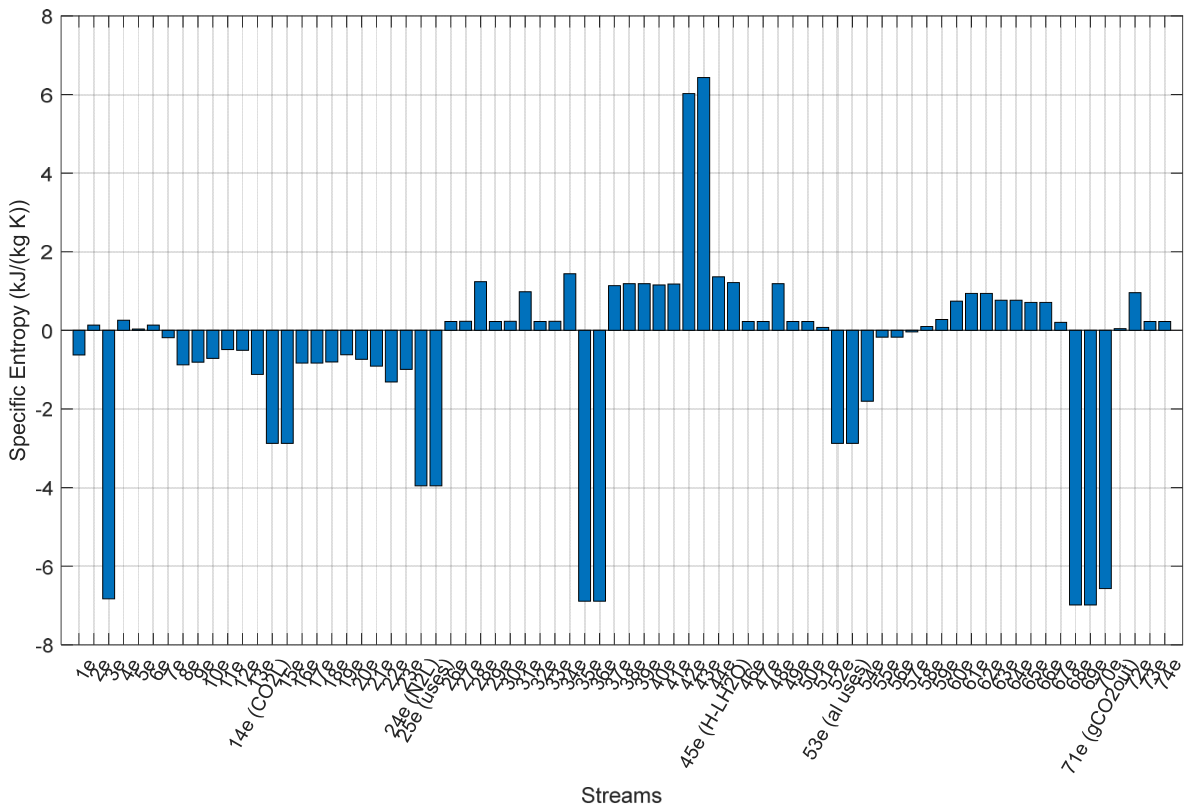
Appendix A, where the thermodynamic and process variables are systematically presented for each section of the plant. In particular, the
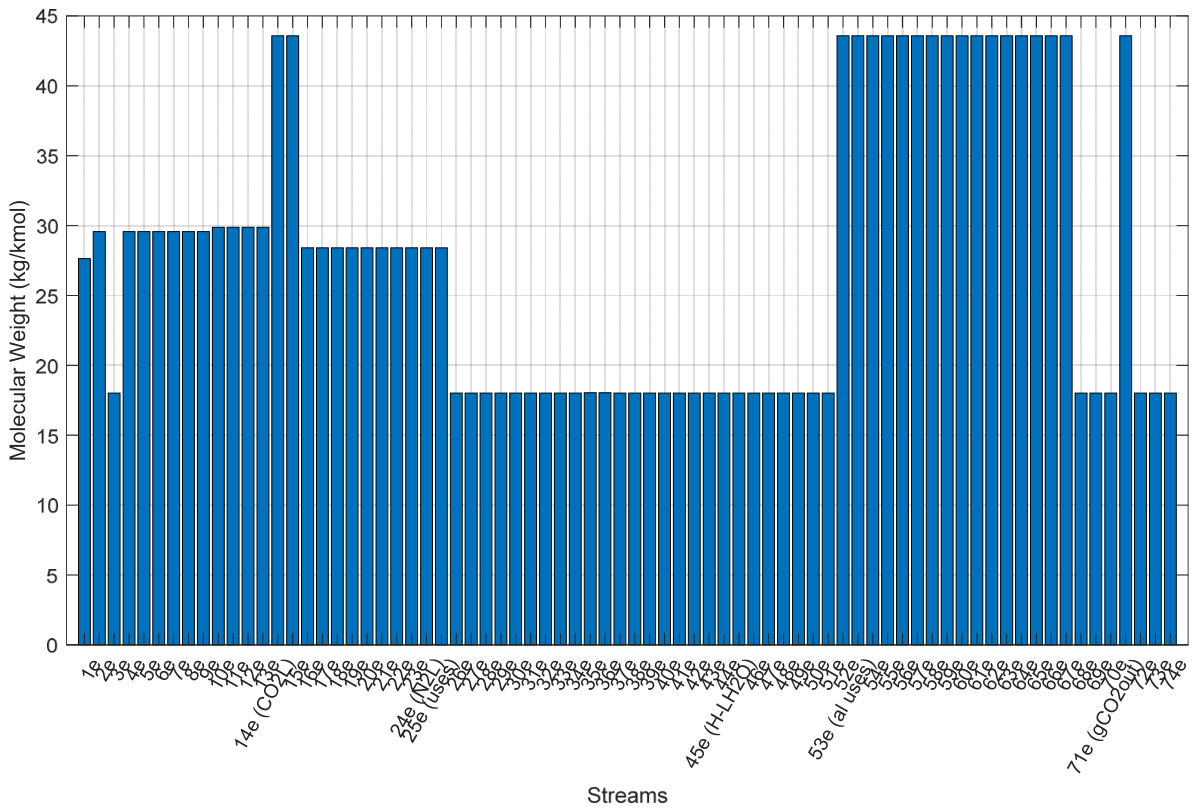
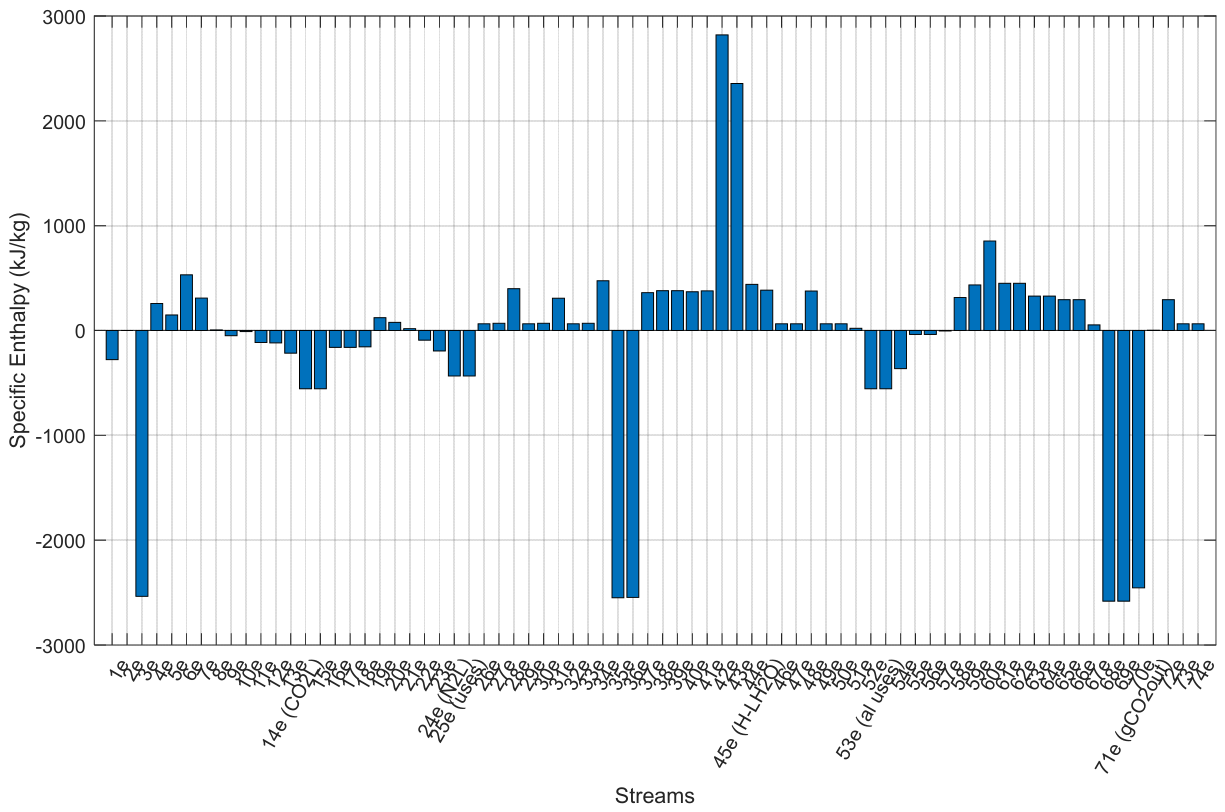
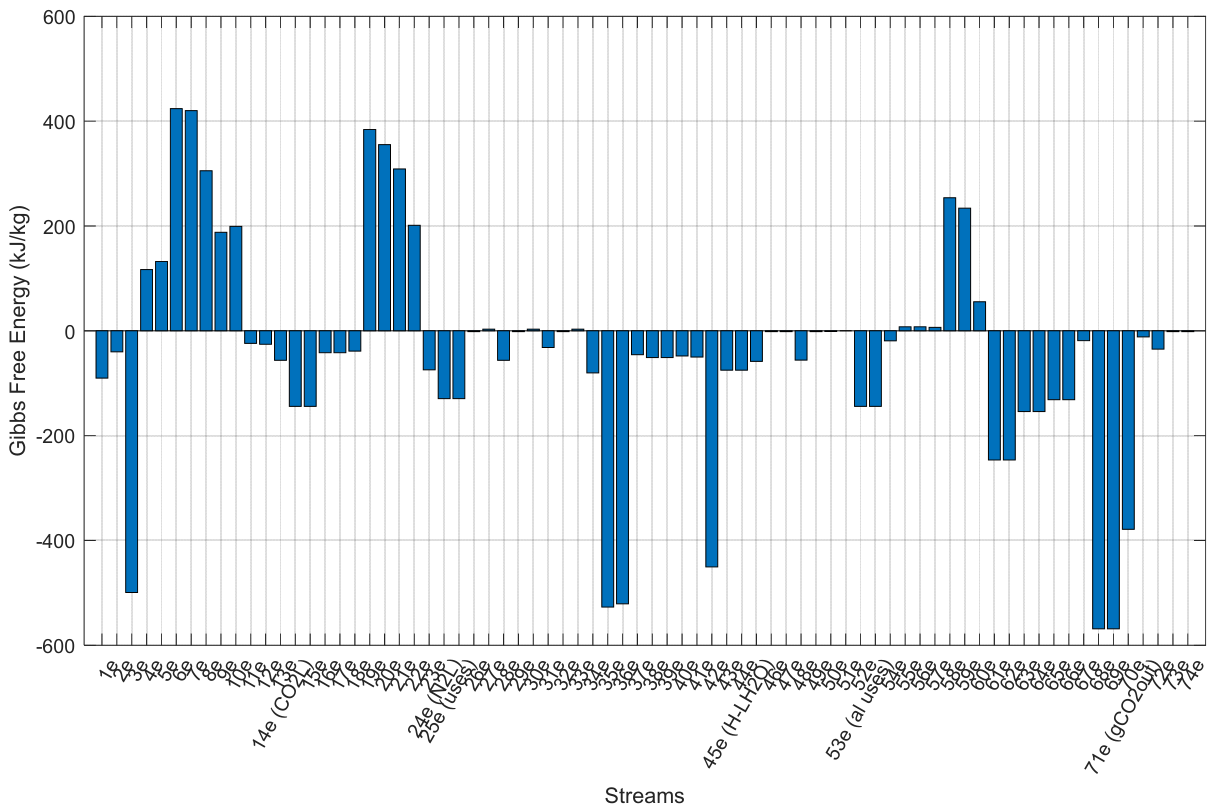
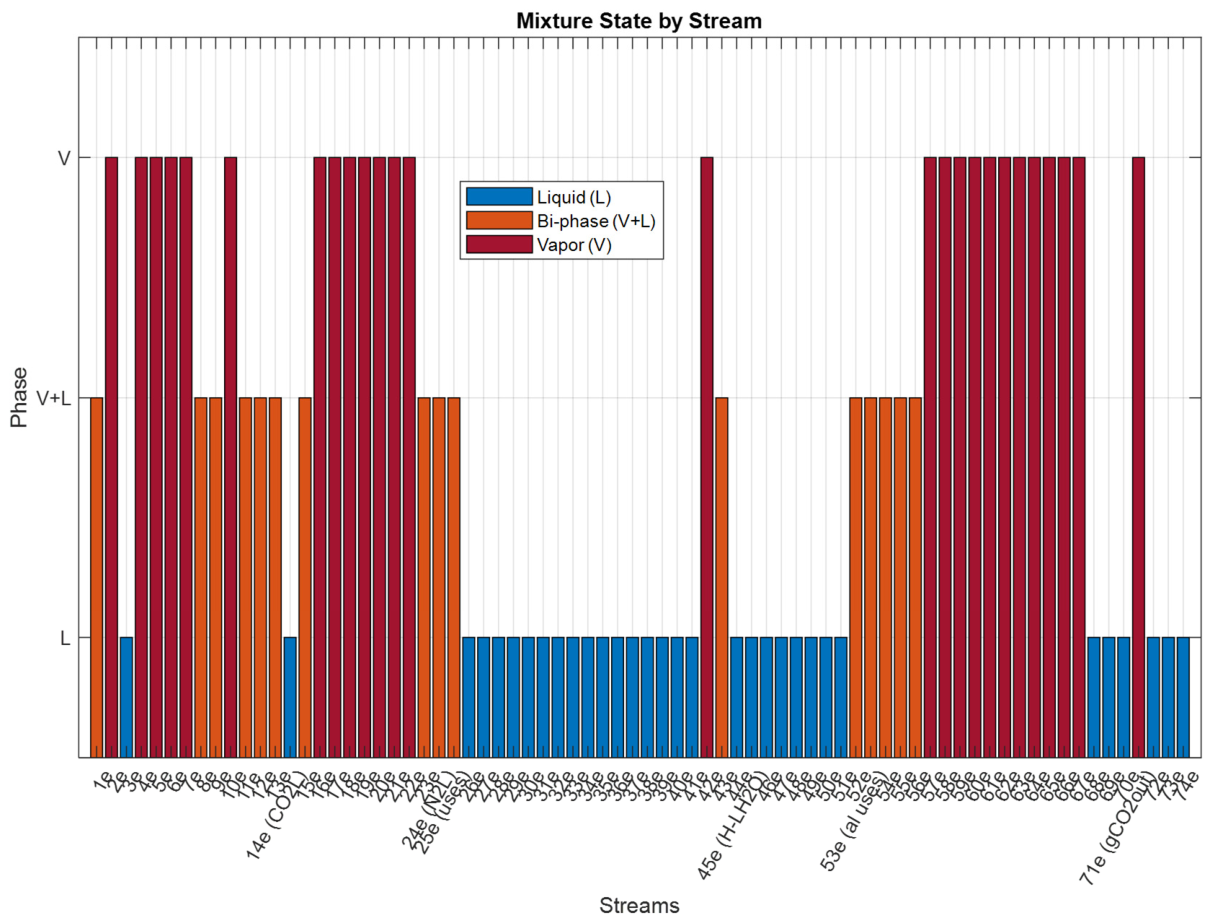
Appendix A provides a comprehensive collection of charts and tabulated data illustrating all calculated parameters along the process flow, including mass flow rates, temperatures, pressures, densities, average molecular weights, specific enthalpies, entropies, Gibbs free energies, and phase distributions.
The results reported in
Table 3 provide a concise yet insightful overview of the thermodynamic and energetic performance of the proposed flue gas separation and CO
2 valorization system. The total electric demand of the plant, equal to 1.29 kWh/kg of treated flue gas, indicates the overall energy requirement when normalized to the inlet stream. This suggests that the process integration—particularly the use of heat recovery and turboexpansion—mitigates the intrinsic energy penalties typically associated with gas separation and liquefaction systems.
A more detailed analysis emerges when considering the specific electric consumptions (SEC) of the separated components. The SECCO2 value of 10.44 kWh/kgCO2 is significantly higher than the SECN2 value of 1.71 kWh/kgN2, reflecting the greater thermodynamic effort required to capture, compress, cool, and liquefy carbon dioxide compared to nitrogen. This difference is physically consistent with the higher condensation pressure and critical temperature of CO2, as well as with the additional processing steps required to achieve high-purity CO2 suitable for storage and energy recovery applications. Conversely, nitrogen separation is less energy-intensive due to its inert nature and its dominant presence in the flue gas mixture.
The CO2 capture ratio of 81.7% demonstrates a high separation efficiency. While not reaching complete capture, this value represents a strong compromise between efficiency and energy consumption, as achieving higher capture ratios would likely require disproportionately higher energy inputs and more complex process configurations.
Finally, as anticipated, the round-trip efficiency (ηRT,CO2) of 18.61% provides a key indicator of the effectiveness of the CO2-based energy storage and recovery pathway. Although relatively modest compared to conventional energy storage systems, this value is notable considering that the system simultaneously performs carbon capture, liquefaction, storage, and partial energy recovery. The result highlights the dual function of the process: not only mitigating emissions but also enabling a degree of energy recuperation from the pressurized and stored CO2 stream.
Overall, the results underline a balanced system in which moderate energy consumption, high CO2 capture efficiency, and meaningful energy recovery are simultaneously achieved, supporting the potential of the proposed configuration as a viable pathway for integrated carbon management and energy valorization.
It is also worth paying some attention to hot wastewater (45e flow, 91 °C), which could recover up to 800 Wh/kgflue-gas if considered a useful byproduct. This would improve specific energy consumption and the efficiency of the entire process. For example, the SECCO2 would be 3.86 kWh/kgCO2, while ηRT,CO2 would be around 70%.
Discussion and Technical Comparisons
The performance indicators obtained in the present work are technically consistent with the trends reported in previous cryogenic carbon-capture and CO2-based energy-storage studies, while also reflecting the distinctive multifunctional nature of the proposed plant.
First, the CO
2 capture ratio of 81.7% is consistent with values usually reported for cryogenic flue-gas capture systems. Xu and Lin, in a study on cryogenic CO
2 capture from LNG-fired power-plant flue gas, reported that CO
2 recovery can reach 90% or higher when the flue-gas temperature is reduced below −140 °C [
40]. Although the capture level predicted here is slightly lower, the agreement is still significant because both works confirm that deep cryogenic cooling combined with compression-expansion staging is capable of achieving high CO
2 recovery without resorting to chemical solvents. The difference is technically reasonable and can be ascribed to different process boundaries and operating solutions: the cited system benefits from LNG cold energy, whereas the present configuration performs the full separation while simultaneously producing liquid N
2 and allocating part of the liquefied CO
2 to a power-recovery branch.
Second, the specific electric consumption for CO
2, equal to 10.44 kWh/kg
CO2, confirms the favorable thermodynamic position of the CO
2 branch within the plant. For comparison, Xu et al. proposed a novel cryogenic CO
2 liquefaction and separation system and reported a 90% recovery and over 99% purity [
41]. Both analyses indicate that cryogenic CO
2 processing can remain within a technically plausible energy range when multi-stage compression, staged refrigeration, and internal cold recovery are properly integrated. The present results also show that the dominant energy burden does not lie in the CO
2 branch itself, but rather in the deeper cryogenic N
2-liquefaction section, which is fully consistent with the literature on cryogenic processes and with the much lower boiling temperature of nitrogen.
Although the round-trip efficiency of the CO2-based energy recovery branch, equal to 18.61%, is lower than the values typically reported (A significant amount of energy can further be recovered from the ‘waste’ exhaust water stream (12.94 kgL-H2O/kgflue-gas, at 91 °C and 1.2 bar) up to 800 Wh/kgflue-gas, improving the performance of the entire process (SECCO2: 3.86 kWh/kgCO2, ηRT,CO2: 69.79%)) for standalone Liquid Air Energy Storage systems, which generally range between approximately 45% and 60% under optimized thermal integration conditions, this result should be interpreted within the specific multifunctional context of the proposed process. Conventional LAES systems are specifically designed for large-scale electrical energy storage, with dedicated thermal storage units and optimized charging–discharging cycles. In contrast, the present system is primarily conceived for flue-gas treatment, carbon capture, and cryogenic product generation, while energy recovery represents an additional valorization pathway rather than the main design objective. Therefore, the recovered electric power should be interpreted as a partial thermodynamic recuperation of the energy invested during gas separation and liquefaction, rather than as a direct competitor to dedicated energy-storage technologies. From this perspective, the obtained round-trip efficiency demonstrates the feasibility of transforming part of the captured liquid CO2 into an internal energy carrier, partially offsetting the separation energy penalty and improving the overall energetic sustainability of the integrated process. Further optimization of thermal integration, expansion staging, and cold-energy recovery could significantly enhance this value in future developments.
The overall behavior predicted by the model is also aligned with recent benchmarking studies showing that hybridization and process integration are decisive for reducing cryogenic capture penalties. Pike et al. reported that a hybrid cryogenic-membrane post-combustion capture system reduced energy consumption by 51% relative to medium-entropy alloys (MEA) capture and by 17% relative to oxy-fuel post-combustion capture on a consistent basis [
42]. The present results appear coherent: the plant achieves high CO
2 capture, modest net electricity demand on the inlet-flue-gas basis, and a non-negligible energy recovery contribution, while the largest irreversibilities are concentrated in the nitrogen cryogenic loop.
For broader technological positioning, the proposed cryogenic process is compared with conventional post-combustion carbon capture systems based on chemical absorption using Monoethanolamine, which currently represent one of the most mature industrial solutions [
43]. Typical MEA-based systems report regeneration energy requirements in the range of approximately 3.0–4.0 MJ/kg
CO2, corresponding to about 0.83–1.11 kWh/kg
CO2, with CO
2 product purities generally exceeding 95% under optimized operating conditions [
44]. In comparison, the present cryogenic process exhibits a higher specific electric consumption, equal to 10.44 kWh/kg
CO2, mainly due to the energy-intensive compression and deep-cooling stages required for phase separation. As reported earlier, exceptionally, the SEC
CO2 would decrease to 3.86 kWh/kg
CO2 if the thermal energy recovered from the hot waste-exhaust water is accounted for in the calculations. However, a direct comparison based solely on specific energy consumption may be misleading, since the proposed process performs additional functions beyond carbon capture. Unlike amine-based systems, which require solvent circulation, thermal regeneration, solvent replacement, and corrosion mitigation, the present configuration simultaneously enables the separation and liquefaction of multiple flue-gas components (H
2O, CO
2, and N
2), direct production of high-purity liquefied products, and cryogenic storage capability. A dedicated CO
2 recirculation branch is included for power recovery. Therefore, while amine absorption remains advantageous in terms of pure capture efficiency, the proposed cryogenic approach offers a broader multifunctional framework with potential benefits in solvent-free operation, product valorization, and integration with future cryogenic energy systems.
5. Conclusions
This work investigated the thermodynamic feasibility of an integrated cryogenic process for the separation, liquefaction, storage, and valorization of carbon dioxide (CO2) and nitrogen (N2) from methane-combustion flue gas. The proposed system combines carbon capture with cryogenic energy recovery, enabling the production of liquefied CO2 and N2 while allowing part of the stored CO2 to be reused as an internal energy carrier. The process was modeled under steady-state conditions using mass and energy balances, phase-equilibrium calculations, and detailed unit-operation analysis implemented in DWSIM v9.0.5. A representative flue gas composition of 9.5% CO2, 71.5% N2, and 19% H2O by volume was considered as the feed stream.
This study demonstrated the thermodynamic feasibility of the integrated cryogenic process. By exploiting the different phase-transition characteristics of H2O, CO2, and N2, the proposed configuration successfully achieved sequential component separation without relying on chemical absorption technologies.
The results show that the system achieves a CO2 capture ratio of 81.7%, with an overall net electric demand of 1.29 kWh per kg of treated flue gas. The specific electric consumption was found to be 10.44 kWh/kgCO2 for carbon dioxide capture and liquefaction, and 1.71 kWh/kgN2 for nitrogen liquefaction. Furthermore, a significant amount of energy can be extracted from the “waste” exhaust water stream (12.94 kgL-H2O/kgflue-gas, at 91 °C and 1.2 bar) to be used for heating purposes outside the system. This could recover up to 800 Wh/kgflue-gas, reducing specific energy consumption and improving the efficiency of the entire process (SECCO2 would be 3.86 kWh/kgCO2, while ηRT,CO2 would be around 70%).
These results confirm the technical viability of the proposed cryogenic pathway, while also highlighting the different thermodynamic requirements associated with the two recovered products.
A key contribution of the proposed process is the integration of an internal energy-recovery branch based on the vaporization and expansion of stored liquid CO2. The obtained round-trip efficiency of 18.61% confirms that captured CO2 can also operate as an internal cryogenic energy carrier, partially recovering the energy invested during liquefaction. This efficiency value increases if the thermal energy eventually recovered from warm liquid water at the outlet is accounted for in the calculation. Although lower than dedicated energy-storage technologies, this result is significant considering the multifunctional nature of the system, which simultaneously performs carbon capture, product generation, and energy recovery.
The analysis further identifies the nitrogen liquefaction section as the dominant source of energy consumption and thermodynamic irreversibility, suggesting that future optimization efforts should primarily focus on improving heat integration, reducing exergy destruction, and enhancing the efficiency of the deep cryogenic section. Overall, the proposed process demonstrates that flue gas can be reinterpreted not only as an emission stream requiring treatment, but as a thermodynamic resource for integrated carbon management, cryogenic product recovery, and low-carbon energy valorization.