1. Introduction
Over the past few decades, bacterial infections have re-emerged as a significant threat to public health due to the overprescription and overuse of antibiotics [
1,
2,
3]. It is estimated that approximately 30% of the antibiotics prescribed in the clinical setting are unnecessary for the intended application [
1,
2]. When combined with the recent void in the development of novel antibiotics, alternative treatment methods have become a significant topic of research within multiple scientific disciplines to combat multidrug-resistant bacteria (MDR) [
4,
5,
6,
7,
8].
One of the most frequently cited statistics related to antibiotic resistance is the Center of Disease Control’s (CDC) Antibiotic Threat in the United States reports. According to these documents, it is estimated that more than 2.8 million antibiotic-resistant bacterial infections were reported in 2019, leading to more than 35,000 deaths in the United States alone [
9]. When compared to the 2 million infections resulting in 23,000 deaths reported in 2013, cases of antibiotic resistance have increased by 40% over the span of 6 years [
10]. Additionally, the number of deaths from such infections has increased by 52% in 6 years despite preventative measures [
9,
10]. As portrayed by the statistical data, multidrug resistant bacteria are a current major threat to public health. Advancements in technology and scientific understanding have allowed for the development of enhanced bacterial treatment methods to combat MDR bacteria including combination therapies, engineered bacteriophages, photothermal therapy (PTT), and photodynamic therapy (PDT) [
11,
12,
13]. Among these new methods, photodynamic therapy has become a leading alternative due to its relative simplicity, versatility, and clinical potential.
PDT is best suited for localized and light-accessible bacterial infections, including chronic wounds, diabetic ulcers, dental and periodontal disease, catheter-associated infections, and prosthetic joint infections. These clinical sites are particularly challenging to treat with antibiotics due to biofilm formation, reduced membrane permeability, and multidrug efflux activity, all of which limit intracellular drug accumulation. In contrast, PDT generates short-lived reactive oxygen species that damage multiple cellular targets and are less susceptible to classical resistance mechanisms. In this context, methylene blue serves as an established phenothiazinium photosensitizer, AuNPs enhance MB photophysics and ROS generation, and INF-55 inhibits MB efflux to increase intracellular retention. Because MDR pathogens frequently overexpress efflux pumps such as AcrAB-TolC, efflux inhibition can meaningfully improve PDT outcomes in clinically relevant infections. Host toxicity is expected to be minimal, as MB is clinically used at therapeutic doses, AuNPs are employed here at non-cytotoxic concentrations, INF-55 is used solely as an in vitro mechanistic probe, and ROS diffusion distances are extremely short (<20 nm), restricting PDT effects to targeted bacterial cells.
Because this study is intended strictly as a proof of concept to evaluate whether efflux pump inhibition enhances MB-mediated PDT, we employed INF-55 solely as a well-established in vitro tool compound rather than as a therapeutic candidate. The goal is to isolate the mechanistic contribution of efflux blockade, not to propose INF-55 for clinical application.
It is important to note that although CDC reports cite millions of antibiotic-resistant infections annually, only a subset of these are clinically accessible to photodynamic therapy. PDT is inherently a localized technique that requires light delivery and therefore is most applicable to infections in anatomically reachable or device-associated environments including chronic wounds, diabetic ulcers, burn sites, indwelling catheters, prosthetic joints, dental and periodontal pockets, and superficial biofilm-forming infections. These categories represent a clinically meaningful fraction of the reported cases, but not systemic or deep-seated infections. Thus, PDT is best positioned as a complementary, localized antimicrobial modality for infections where conventional antibiotics fail due to limited penetration or biofilm-associated resistance.
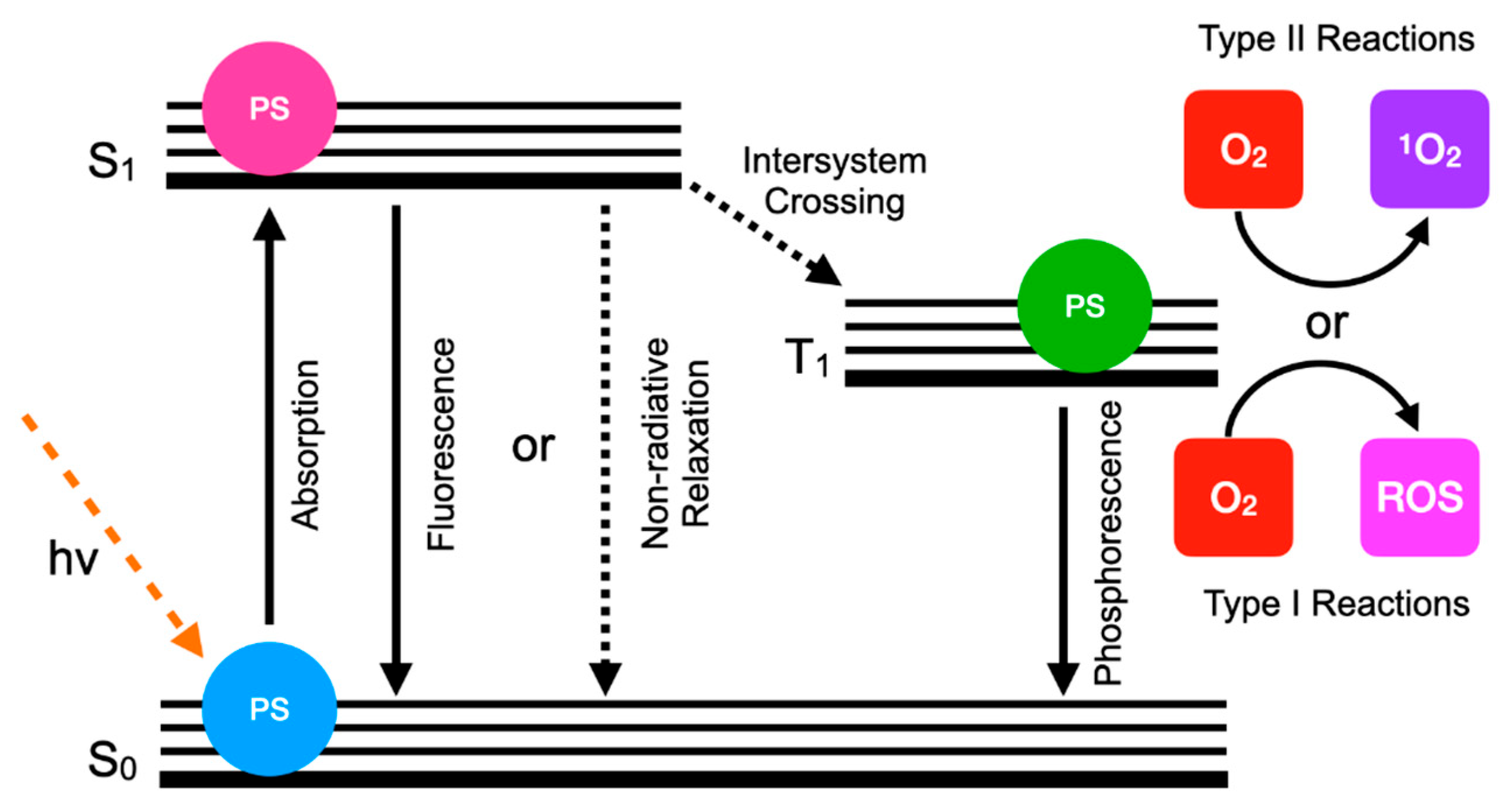
PDT uses photosensitizers such as methylene blue (MB), which absorb light and transition from singlet to triplet states, producing reactive oxygen species (ROS). These ROS damage cellular components such as proteins, lipids, and nucleic acids, causing cell death [
11,
14,
15,
16,
17]. This process is summarized in
Figure 1. It has been well demonstrated in the literature that photosensitizers are chemical compounds that transition from a ground singlet state to an excited singlet state upon irradiation with a particular wavelength of light. When in this excited singlet state, the photosensitizer can transition to an excited triplet state via intersystem crossing. Once in the excited triplet state, the photosensitizer can react with molecular oxygen in one of two types of reactions to generate reactive oxygen species (ROS), as seen in
Figure 1 [
11].
Once generated in situ, the relatively short half-life of ROS in biological tissues allows for site-directed treatments as cells within the relative proximity of the photosensitizer will be impacted by the generation of ROS [
15].
While bacterial infections are widespread, certain types such as biofilm-associated infections, chronic wounds, and infections involving prosthetic joints or indwelling catheters remain difficult to treat with conventional antibiotics due to limited drug penetration and resistance mechanisms. Photodynamic therapy (PDT) using methylene blue offers a localized, non-antibiotic approach to inactivate bacteria in these contexts. By combining MB with gold nanoparticles (AuNPs) to enhance reactive oxygen species (ROS) production and incorporating INF-55 to inhibit efflux pumps, this study establishes a proof-of-concept platform with potential for translation to clinically relevant infection sites using minimally invasive light delivery methods.
The photosensitizer used in this work was methylene blue (MB). MB belongs to a class of compounds known as phenothiaziniums which are heterocyclic compounds that contain nitrogen and sulfur [
13]. Since its synthesis in 1856 for use in the textile industry, MB has been used for cellular staining, for the treatment of malaria, as a redox indicator, and as a photosensitizer in PDT as it has a peak absorbance between 600 and 668 nm [
17]. When used independently, MB has been proven to be effective in the photodeactivation of bacteria in multiple cases for both Gram-negative and Gram-positive bacteria [
18,
19,
20]. However, PDT has limitations which restrict its effectiveness, including low concentrations of produced ROS, the introduction and localization of the photosensitizing agents, and light penetration within biological tissues [
15].
Various methods to overcome these limitations have been proposed, including the introduction of nanomaterials [
21,
22,
23,
24,
25,
26,
27]. To increase the concentration of ROS, nanomaterials have been proposed to be used in conjunction with photosensitizers due to their intrinsic properties such as nanoscale size, binding capabilities, surface plasmon resonance, photothermal properties. Gold nanoparticles have specifically been investigated for use in PDT due to their optical properties, surface plasmon resonance, thiol chemistry, and enhanced permeability and retention in biological tissues [
28,
29,
30,
31,
32,
33,
34,
35]. Additionally, AuNPs are relatively easy to synthesize and generally biocompatible, making them viable for use in PDT [
36,
37,
38,
39].
In this work, AuNPs were synthesized using pulsed laser ablation in citrate solution, which avoids toxic byproducts common in chemical synthesis and produces nanoparticles that are directly usable in biological applications [
38,
40].
Unlike chemical synthesis that produces toxic by-products, PLAL generates AuNPs in solution without additional reagents [
32,
38]. PLAL, on the other hand, can be used to directly synthesize AuNPs in solution without the need for strong reducing agents or toxic compounds allowing the samples to be used in biological applications immediately without sample preparation if the aqueous solvent is chosen correctly [
38]. For example, aqueous sodium citrate, which was used in this work, can be used to stabilize the produced AuNPs while keeping the solution biocompatible [
41,
42,
43].
In addition to understanding the chemical and physical mechanisms of PDT for the proposition of enhancements such as the incorporation of AuNPs, it is also crucial to consider the biochemical causes of antibiotic resistance to assist with the development of additional enhancements for the PDT process. The most prevalent mechanism of resistance relevant to PDT is removing compounds from the bacterial cell. One of the most notable molecular mechanisms that decreases the concentration of antibiotics within the bacterial cell are bacterial efflux pumps. Efflux pumps are integrated membrane proteins that span the membrane and act as a means for the cell to remove toxic substances from within the cell [
44,
45,
46]. Substrates for these protein pumps include antibiotic compounds and photosensitizers. Efflux pumps are one of the primary ways that both Gram-negative and Gram-positive bacterial cells remove toxic compounds from their cellular matrix.
Efflux pumps are a key target for overcoming resistance and improving PDT efficiency [
44,
45,
46,
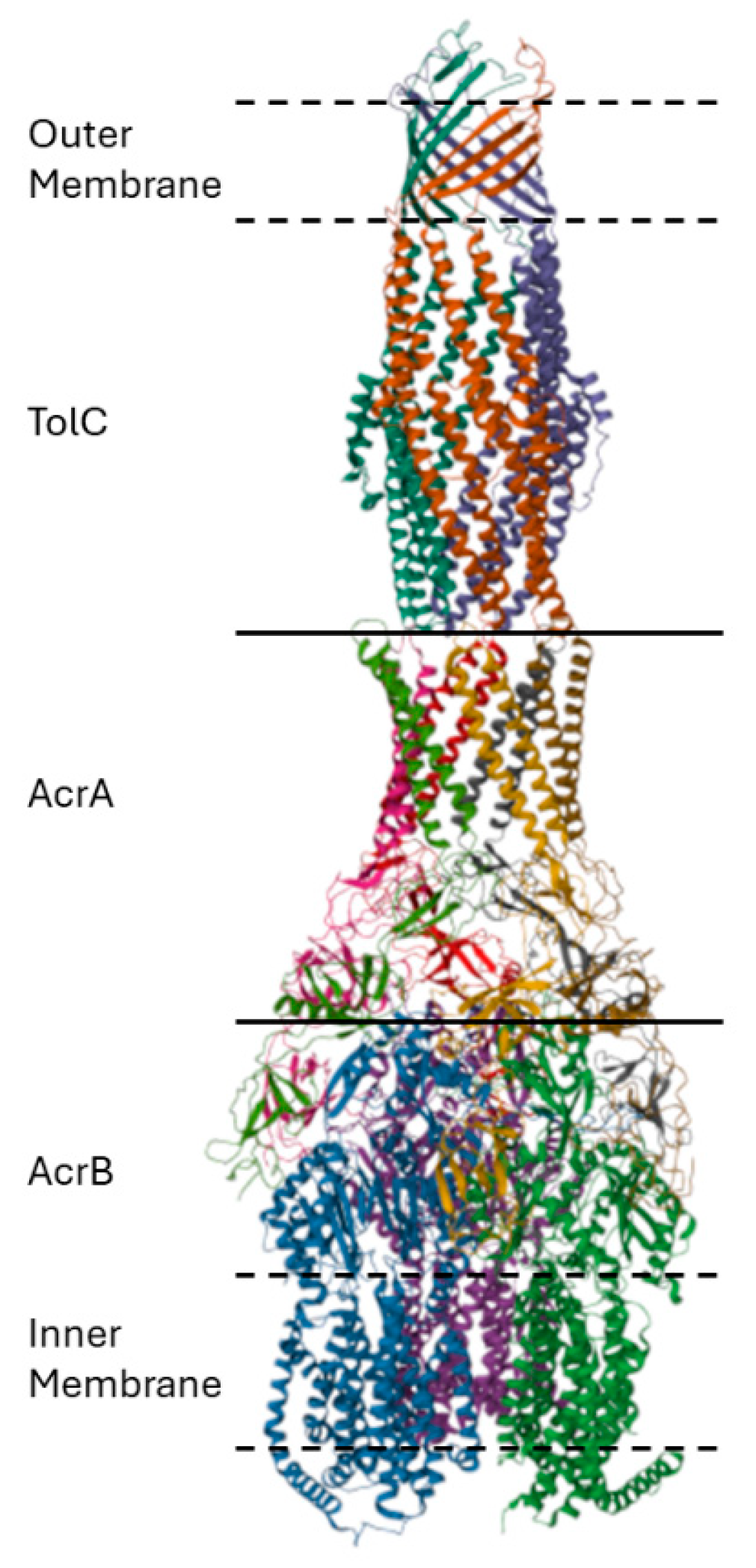
47]. The efflux pump targeted in this work is the AcrAB-TolC complex found within the membrane of the Gram-negative bacteria Escherichia coli (
E. coli), the structure of which is depicted in
Figure 2 [
48,
49,
50].
The AcrAB efflux pump is a well-studied model efflux pump [
48,
51]. It is specifically located in the inner membrane of
E. coli and consists of an AcrA, AcrB, and TolC subunits. The AcrB subunit pumps toxins from the cytoplasm to the periplasm where the TolC protein pumps the toxins from the periplasm to the extracellular space [
52,
53,
54]. Such efflux pump proteins can be inhibited by various compounds including reserpine, cathinone, piperazine, and 5-Nitro-2-phenyl-1H-indole (INF-55) based on their binding affinities to a particular pump [
46,
55]. It is hypothesized that by doing so, the photosensitizer can remain in the cytoplasm of the cell for a longer period, leading to a more effective photodeactivation process.
Because methylene blue is a documented substrate of bacterial efflux systems—including the AcrAB–TolC RND pump in
E. coli, the MexAB–OprM system in
P. aeruginosa, and the NorA MFS pump in
S. aureus—inhibition of these outward transport processes increases the intracellular retention of MB and thereby enhances photodynamic inactivation. This has been demonstrated in several studies of phenothiazinium dyes [
56,
57,
58], and was also confirmed in our recent work showing that reserpine increases intracellular MB levels and improves PDT efficiency in
E. coli.In this work, the molecular docking of the efflux pump inhibitor INF-55 was examined to lay the conceptual foundation for the proposed application of INF-55 in PDT. INF-55 is reported in the literature to be an efflux pump inhibitor of the NorA efflux pump in the Gram-positive bacteria
S. aureus [
46]. However, its efficacy as an inhibitor for the AcrB subunit of
E. coli has yet to be examined.
It should be noted that INF-55 is not a clinically approved therapeutic agent and was used here solely as an established in vitro efflux pump inhibitor to probe the mechanistic contribution of outward transport to methylene blue retention. Our findings are not intended to imply clinical deployment of INF-55 but instead highlight the relevance of efflux modulation for improving intracellular photosensitizer accumulation.
This work specifically investigates enhancing the PDT process via the introduction of AuNPs and the efflux pump inhibitor INF-55. First, AuNPs were synthesized via PLAL and characterized to determine the most effective laser parameters for synthesis of the optimal AuNP solution. After synthesis of the AuNPs, ROS generation measurements were conducted to determine the optimal nanoparticle size as well as predict a possible mechanism for the enhancement of the PDT process. Next, molecular docking between the AcrB subunit and the photosensitizer methylene blue and the proposed efflux pump inhibitor, INF-55, were used to verify the viability of INF-55 to act as an effective inhibitor complex. Finally, AuNPs were tested in vitro on the Gram-negative bacteria E. coli to confirm the efficacy of nanoparticle enhanced PDT. This work helps establish the conceptual understanding of the viability and mechanism of the introduction of AuNPs and INF-55 to enhance PDT.
2. Materials and Methods
2.1. Synthesis of Gold Nanoparticles
The AuNPs were synthesized via pulsed laser ablation in a 2 mM aqueous citrate solution. A gold target (99.99%, 0.250 mm thickness, GoodFellow) was fixed to an aluminum stage using double sided carbon tape and placed in a 50 mL beaker with a magnetic stir bar. Next, a sodium citrate solution was prepared as described in the
Supplementary File, and 22 mL were added to the 50 mL beaker to achieve a solution height of 5 mm above the Au target. The 50 mL beaker was then placed on a magnetic stir plate which was located on a PI-MikroMove XYZ-stage. The beaker was covered with a 1 mm thick Pyrex Petri dish cover to prevent splashing of the solution. Laser ablation was performed using a Nd:YAG laser operating at wavelengths of 532 nm and 1064 nm, each with a pulse width of 10 ps and a repetition rate of 20–50 kHz. The pulse energies were 200 µJ for 532 nm and 300 µJ for 1064 nm irradiation. The corresponding spot diameters on the target were approximately 19.4 µm and 38.7 µm, yielding fluence values of 67.8 J cm
−2 and 25.4 J cm
−2, respectively. The beam exhibited a Gaussian profile, verified using a knife-edge scan.
The beam was focused using a 10 cm focusing lens and the target was raised to the focal point using the translational stage. The solution was ablated for 5 min. During the ablation period, the solution was stirred to prevent aggregation of the nanoparticles, and the target was moved in the x and z directions using the translational stage at a speed of 10 mm/s to vary the ablation location.
2.2. Solvent Selection
Prior to the analysis of various laser parameters, multiple aqueous solutions were examined for their efficacy in the PLAL synthesis of AuNPs and analyzed using transmission electron microscopy (TEM; JEM-1400 Plus, JEOL Ltd., Tokyo, Japan). Deionized (DI) water, ethanol, polyvinylpyrrolidone (PVP), and sodium citrate were among the tested solutions using Picosecond, 532 nm, 40 kHz parameters. In both the DI water and ethanol solutions, the AuNPs were found to aggregate in solution which would limit their efficiency for the PDT process. This aggregation of AuNPs is a result of surface polarization which is enhanced in high salt containing solutions or highly polar solutions and can be mitigated by the introduction of a stabilizing agent such as sodium citrate [
43]. Therefore, these solutions were eliminated. When using the PVP and citrate solutions, spherical AuNPs were obtained. However, the PVP solution was eliminated due to the relatively high viscosity of the solution which made the particles difficult to view, measure, and characterize. Therefore, aqueous sodium citrate was the solution of choice due to its ability to stabilize the AuNPs and prevent aggregation as well as its ease of use for synthesis and characterization.
2.3. Characterization of Gold Nanoparticles
As stated previously, the AuNP solutions were characterized by transmission electron microscopy. To prepare samples for TEM measurements, a drop cast technique was used. To do so, 3 μL of the AuNP solution was placed onto a 300-Mesh Copper TEM grid and allowed to dry. After the TEM images had been obtained, the program ImageJ (v1.53c) was used to automatically measure the size of the produced AuNPs and obtain size distribution data. To do so, a Gaussian Blur was added to the images, the image contrast was decreased to mitigate background interference, the threshold was set to include the maximum number of nanoparticles, and the Feret diameter, i.e., the longest particle dimension, was measured. These particle measurements were used to generate size distribution histograms and to calculate the average Feret diameter and standard deviation (n = 150) using the graphing program OriginPro 2024 (v10.1.0.170).
The yield of AuNPs was estimated from particle counts obtained directly from TEM micrographs. A small aliquot of each sample was drop-cast onto a carbon-coated copper grid, and representative fields were imaged at uniform magnification. The number of nanoparticles within each field was counted manually and normalized to the known deposition volume to estimate particle yield per milliliter. Data represents the mean ± standard deviation of three independent synthesis batches.
In addition to TEM characterization, the synthesized AuNPs were analyzed using UV–Visible Spectroscopy (Cole-Parmer, Vernon Hills, IL, USA), Fluorescence Spectroscopy (Shimadzu Corp., Kyoto, Japan), and Fourier Transform Infrared (FTIR) Spectroscopy (PerkinElmer, Shelton, CT, USA).
2.4. Electrostatic Adsorption of Methylene Blue onto Gold Nanoparticles
Methylene blue (MB) was electrostatically adsorbed onto citrate-stabilized gold nanoparticles (AuNPs) through simple mixing in low ionic strength phosphate buffer (10 mM, pH 7.0–7.4). The cationic MB molecules spontaneously bound to the negatively charged citrate surface via electrostatic attraction during a 20–30 min incubation period at room temperature in the dark. It should be noted that MB adsorption onto the AuNP surface was not directly quantified in this study. Although prior reports have demonstrated strong interactions between phenothiazinium dyes and metal nanoparticles, our mechanistic interpretation is based on the CFU evidence for increased intracellular MB retention following efflux pump inhibition rather than on adsorption measurements.
2.5. Reactive Oxygen Species Generation Measurement
To verify and quantify the production of reactive oxygen species by the excitation of methylene blue in combination with AuNPs, the compound 9,10-Anthracenediyl-bis(methylene)dimalonic Acid (ABMDMA) was used in a colorimetric assay. ABMDMA has a peak absorbance at 400 nm. When in the presence of reactive oxygen species, ABMDMA undergoes a 2+4 cycloaddition of oxygen to form an endoperoxide. This cycloaddition results in a loss of the aromatic π-system of electrons leading to photobleaching of the optically observable properties [
59,
60]. Therefore, the absorbance of the solution directly corresponds to the ROS generated in solution.
Experimental solutions were prepared by combining the desired reagents, including MB (10−6 M), AuNPs, and INF-55 with 100 µL of a 2.4 mM ABMDMA solution in a 1.5 mL cuvette. The total volume was brought to a standard 1 mL using phosphate-buffer solution (PBS). The initial absorbance was measured, and each cuvette was placed under irradiation for the allotted time. After irradiation, the absorbance was measured to verify the production of ROS. All ROS measurements were performed using n = 4 independent biological replicates. Error bars in the corresponding figures represent the standard deviation (SD) from these replicates.
2.6. Bacteria Photodeactivation
To determine the effectiveness of AuNPs in combination with MB for PDT in vitro, the Gram-negative bacteria E. coli was irradiated both in the presence and absence of the various compounds. To do so, E. coli was inoculated in LB Broth and allowed to grow for 18–24 h at 37 °C with 200 rpm mixing. After the incubation period, the culture was diluted until an absorbance of ~1.7 at 600 nm was obtained which correlates to approximately 108 CFU/mL.
Bacteria containing experimental solutions were prepared in a six well plate. The final concentrations of each compound tested were 0.03 µM MB, 0.025 mg/mL commercially produced AuNPs, 0.0095 mg/mL experimentally produced AuNPs and 8 µM INF-55. Once prepared, the plate was covered with aluminum foil to prevent unintended light exposure and was placed on a shaker plate and mixed at 100 rpm for 10 min. After the mixing time had elapsed, the aluminum foil was removed, and the plate was irradiated using a 660 nm red LED lamp (Bestqool Inc., 70 mW/cm2; St. Petersburg, FL, USA) for the allotted amount of time. The height between the lamp and the plate was maintained at 9 cm to ensure consistent fluence. After irradiation, each solution was serially diluted, plated, and allowed to incubate at 37 °C for 18–24 h. After incubation, the colonies present on the plate were counted to determine cellular viability. All CFU measurements were performed in n = 4 independent biological replicates, and error bars represent standard deviation (SD).
2.7. Protein-Ligand Docking Modeling
Molecular docking was carried out using AutoDock Vina (v1.2.0) [
61], following previously reported procedures [
54]. The exhaustiveness parameter was set to 8. Ligand structures, including INF-55 (PubChem CID: 280309) and Methylene Blue (PubChem CID: 6099), were obtained as SDF files from the PubChem database. These files were converted to PDB format using Open Babel, after which the ligands were prepared in AutoDock Tools (v1.5.7) by allowing all rotatable bonds. The protein structure (PDB ID: 2DRD) was retrieved from the RCSB PDB database. For preparation, two subunits of the homotrimer as well as the co-crystallized ligand (minocycline) were removed. The protein was then processed by adding hydrogen atoms and assigning charges. A search grid of 20 Å
3 was defined and centered within the identified drug-binding pocket.
3. Results and Discussion
3.1. Size and Morphology of Gold Nanoparticles
Both 532 nm and 1064 nm were selected to allow comparison between resonant (SPR-matched) and non-resonant ablation regimes, enabling us to determine whether plasmon-enhanced coupling at 532 nm produces systematically different nanoparticle sizes or yields under picosecond ablation.
The AuNPs were synthesized using picosecond laser at different wavelengths and frequency. It has been demonstrated that with metal targets such as gold, the closer the wavelength is to the surface plasmon resonance (SPR) wavelength of the metal, the deeper penetration into the material, resulting in a larger ablated mass per pulse, ultimately producing larger nanoparticles [
40]. The SPR wavelength of pure gold is approximately 518–530 nm for spherical nanoparticles depending on the size [
62]. Therefore, the 532 nm wavelength is almost identical to the SPR wavelength, resulting in deeper target penetration, leading to larger particle production on average. However, deeper penetration is also likely to produce fewer uniform particles.
The gold nanoparticles were synthesized with 1064 nm and 532 nm wavelengths with frequencies of 20 kHz, 30 kHz, and 50 kHz.
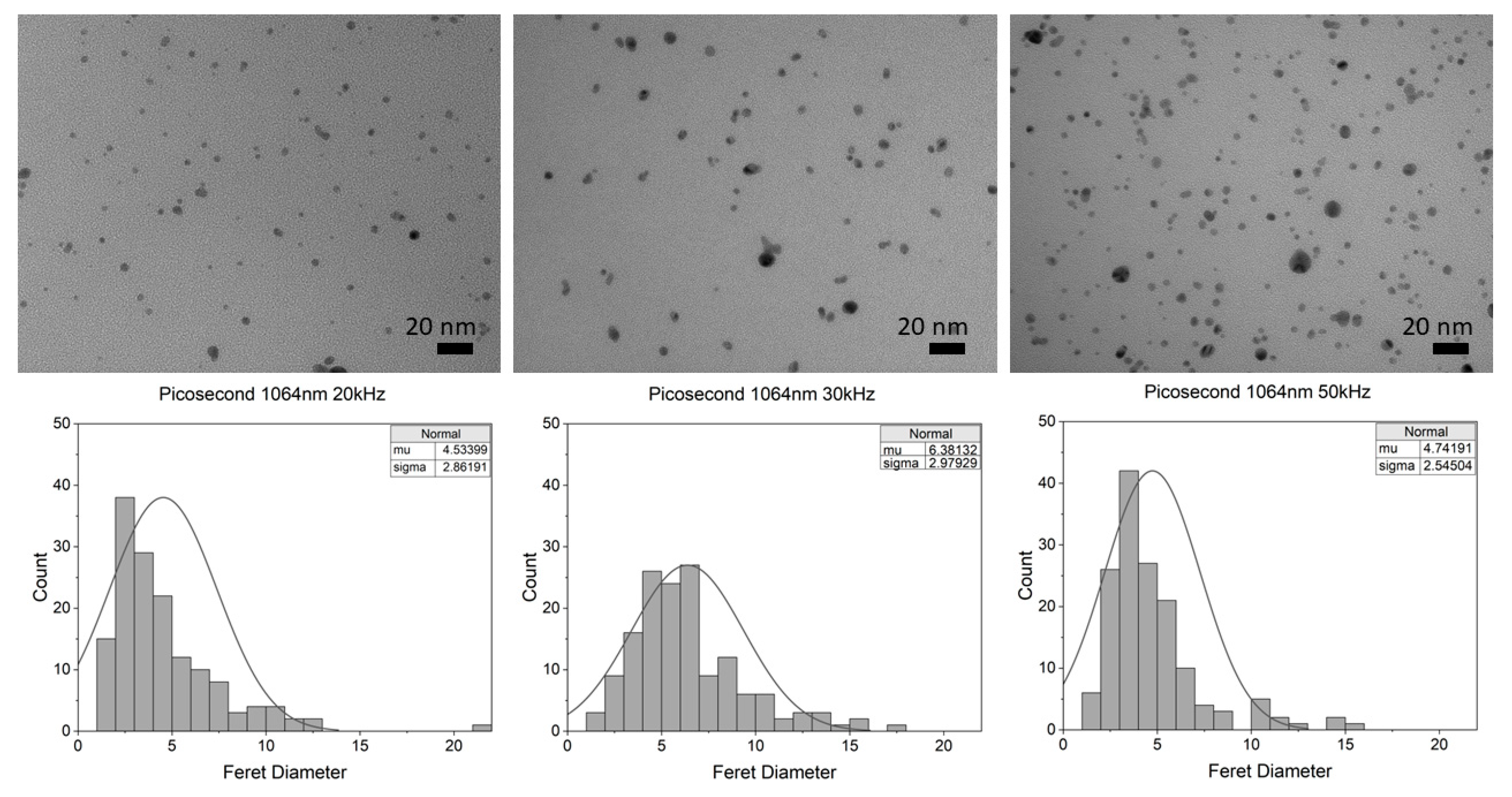
Figure 3 shows the results obtained for the picosecond 1064 nm wavelength.
The average particle sizes obtained at 20 kHz, 30 kHz, and 50 kHz, were determined to be 4.53 ± 2.86 nm, 6.38 ± 2.98 nm, and 4.74 ± 2.54 nm, respectively. By comparing the obtained TEM images, it was observed that the 50 kHz frequency resulted in the highest nanoparticle yield, with the 20 kHz frequency resulting in the second highest particle yield. This observation was later confirmed with UV-Vis spectroscopy. Interestingly, while the 30 kHz frequency resulted in the lowest particle yield, it generated the largest average particle size. However, all frequencies produced comparable standard deviations.
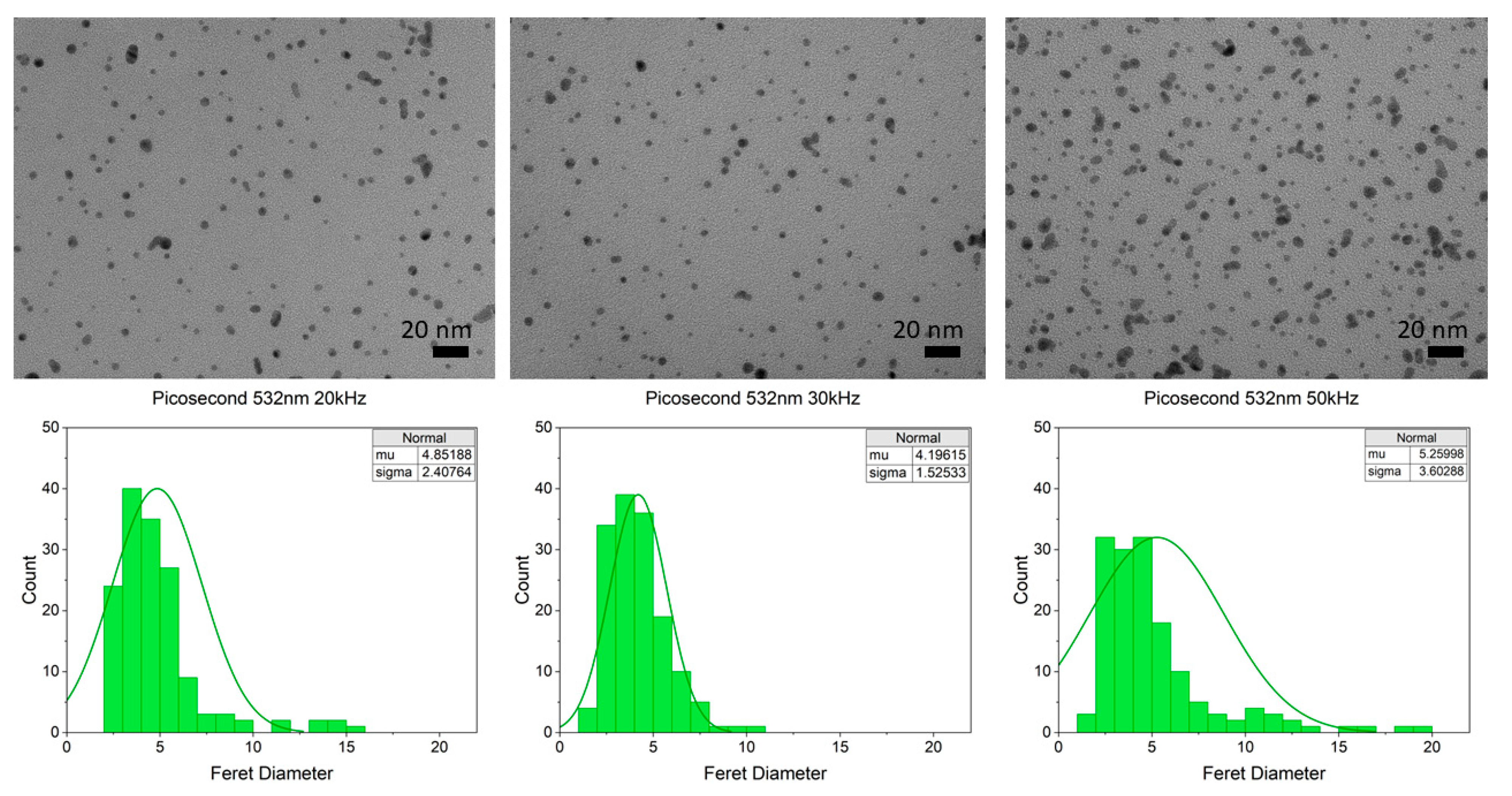
When AuNPs were synthesized with the picosecond 532 nm wavelength, the average particle sizes for the 20 kHz, 30 kHz, and 50 kHz, frequencies were determined to be 4.85 ± 2.41 nm, 4.20 ± 1.53 nm, and 5.26 ± 3.60 nm, respectively.
Similarly to the 1064 nm wavelength, when using the 532 nm wavelength, the 50 kHz frequency generated the highest particle yield while the 20 kHz frequency generated the second highest particle yield. However, when using the 532 nm wavelength, the 30 kHz frequency resulted in the smallest average particle size as opposed to the largest as was the case with the 1064 nm wavelength. Additionally, each frequency generated a distinct size distribution, with 50 kHz resulting in the wider distribution and 30 kHz resulting in the narrower distribution.
When considering the variations in frequency, it is predicted that as the repetition rate decreases (if the average power is constant), the fluence increases, resulting in higher ablated mass per pulse, resulting in higher nanoparticle yields [
40]. However, some experimental works have shown higher yields at higher frequencies [
63]. This inconsistency between the predicted effect and the observed effect is well represented in the obtained data in this work. With both the 1064 nm and 532 nm wavelengths, the 50 kHz frequency generated the higher concentration of AuNPs following the experimental trend, while the 20 kHz frequency generated the second highest concentration of AuNPs congruent with the predicted trend. The experimentally observed higher yields at higher repetition frequencies can be explained by the reduced time interval between consecutive pulses. If this interval is shorter than the characteristic diffusion time of the nanoparticles in the liquid, the laser pulse may re-irradiate the previously generated nanoparticles before they have dispersed. This leads to secondary fragmentation, producing a higher number of smaller fragments, thereby increasing the overall nanoparticle yield and broadening the size distribution [
40].
Figure 4 shows the corresponding TEM images and size distributions for the 532 nm wavelength. When comparing the effect of wavelength, there did not appear to be any systematic increase or decrease in particle size between the 1064 nm and 532 nm wavelengths as was observed with the nanosecond laser. Smaller gold nanoparticles are generally expected when using 532 nm instead of 1064 nm due to the higher absorption efficiency of the 532 nm wavelength. Both the higher fluence and stronger absorption at 532 nm would normally result in smaller particles due to enhanced fragmentation of colloidal nanoparticles. However, in our case, the particle sizes remained essentially the same for both wavelengths. This similarity is likely due to the very small particle sizes obtained (~4–6 nm), where picosecond ablation operates in a fragmentation-dominated regime. At these high fluences, both wavelengths exceed the fragmentation threshold, and repeated re-irradiation at high repetition rates drives the particles toward a characteristic few-nanometer size, making wavelength-dependent differences less noticeable.
3.2. Spectroscopic Characterization of AuNPs
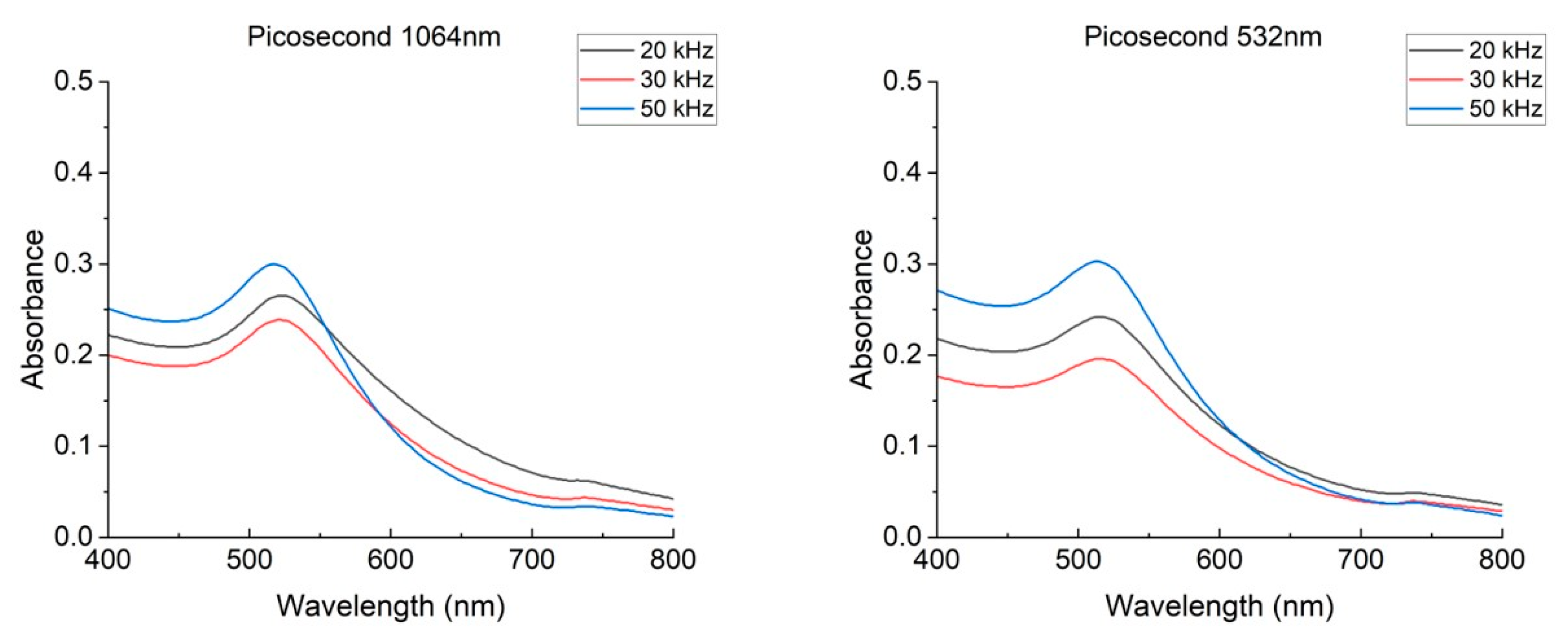
The UV–Visible spectroscopy was performed on the AuNP solutions to determine relative particle concentrations as well as verify the identity and purity of the AuNPs.
Figure 5 shows the UV–Visible spectra for the samples synthesized using the picosecond laser. The SPR wavelengths for each solution fell within the 516–520 nm range, again correlating with nanoparticles ranging from 5 to 10 nm in diameter [
60,
64]. Additionally, the absorbances of the samples produced using the picosecond laser at both the 1064 nm and 532 nm wavelengths confirmed the approximate nanoparticle concentrations observed in the TEM images. For both wavelengths, the 50 kHz frequency produced the highest particle yield, followed by the 20 kHz frequency, and then the 30 kHz frequency.
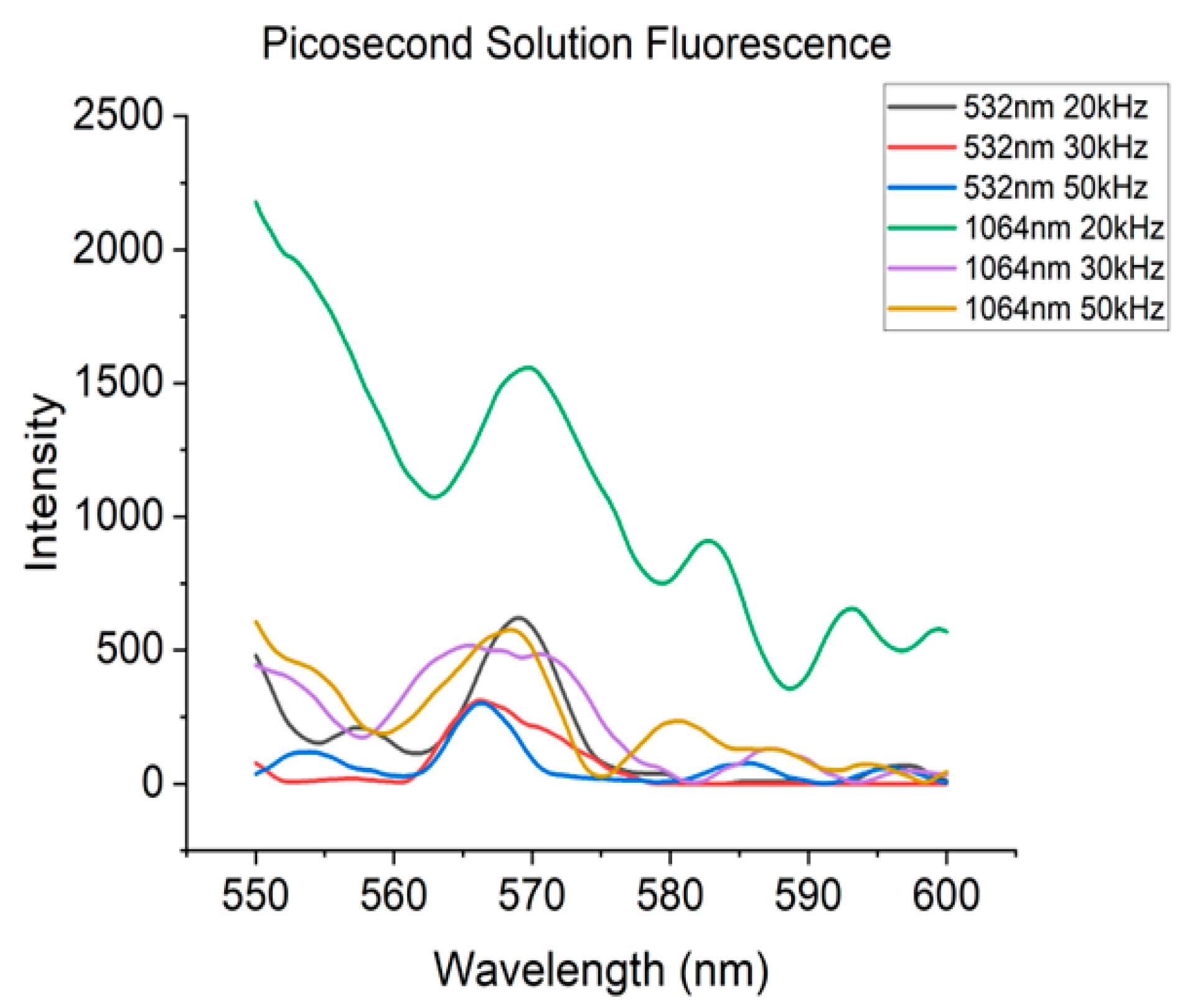
A slight shift in the plasmon peak was observed for the 50 kHz sample, which likely reflects changes in the local dielectric environment or interparticle coupling rather than a true decrease in average nanoparticle size, consistent with the TEM results. Although higher repetition rates can enhance bubble dynamics and laser–plasma interactions that promote additional fragmentation pathways, the net particle sizes measured here remained similar across all frequencies, indicating that these effects mainly influence the optical response rather than producing systematically smaller nanoparticles. In contrast, the fluorescence emission intensity was highest for the 20 kHz, 1064 nm sample, which did not correspond to the highest UV–Vis absorbance. This suggests that the enhanced fluorescence arises from surface-state emission and plasmon-assisted radiative recombination rather than increased particle yield. While UV–Vis absorbance scales approximately with nanoparticle concentration under the Beer–Lambert law, fluorescence intensity depends strongly on surface defects, crystallinity, and non-radiative relaxation pathways; therefore, it cannot be used as a direct indicator of nanoparticle yield.
Although the AuNPs exhibit minimal absorbance above 600 nm, this does not limit their ability to enhance MB-mediated PDT. Nanoparticle–photosensitizer interactions do not require spectral overlap with the excitation wavelength. Metal nanoparticles are known to increase the intersystem crossing (ISC) rate, extend the triplet-state lifetime, and enhance singlet oxygen generation of photosensitizers through local electromagnetic field modulation, spin–orbit coupling effects, and stabilization of the monomeric photosensitizer state. These off-resonance enhancement mechanisms have been widely reported [
21,
32,
65,
66,
67]. Consistent with this, we previously demonstrated that AgNPs significantly increased MB phototoxicity and singlet oxygen yield despite absorbing in the 390–410 nm region and not at 660 nm [
12,
68,
69].
In addition to UV–Visible spectroscopy, fluorescence spectra for each solution were obtained using an excitation wavelength of 518 nm.
Figure 6 depicts the fluorescence spectra for gold nanoparticles. Given that the surface plasmon resonance (SPR) peak is ~518 nm, the Stokes-shifted fluorescence emission from AuNPs is expected to appear ~40–60 nm to the red of this SPR peak. For each solution, this primary peak shift was observed at approximately 560–570 nm. Additional peaks were also observed at approximately 580, 585, and 595 nm. These additional peaks are most likely due to the size variation in the AuNPs in solution as different sized AuNPs will experience a different Stokes shift [
70]. Therefore, samples with fewer fluorescent peaks would most likely have more uniform particles.
3.3. Reactive Oxygen Species Production
To understand the probable mechanism of bacteria deactivation, the ROS yield was measured via spectroscopic analysis of the photobleaching of 9,10-Anthracenediyl-bis(methylene) dimalonic Acid (ABMDMA) as previously explained in the
Section 2. The efficiency of singlet oxygen generation depends on the population of excited triplet photosensitizers, which arise through intersystem crossing (ISC) from the excited singlet state. Incorporation of heavy atoms has been shown to enhance this efficiency [
71,
72]. The enhanced singlet oxygen generation efficiency observed in the nanoparticles was attributed to effective intraparticle energy transfer within photosensitizer-doped conjugated polymer nanoparticles [
72,
73].
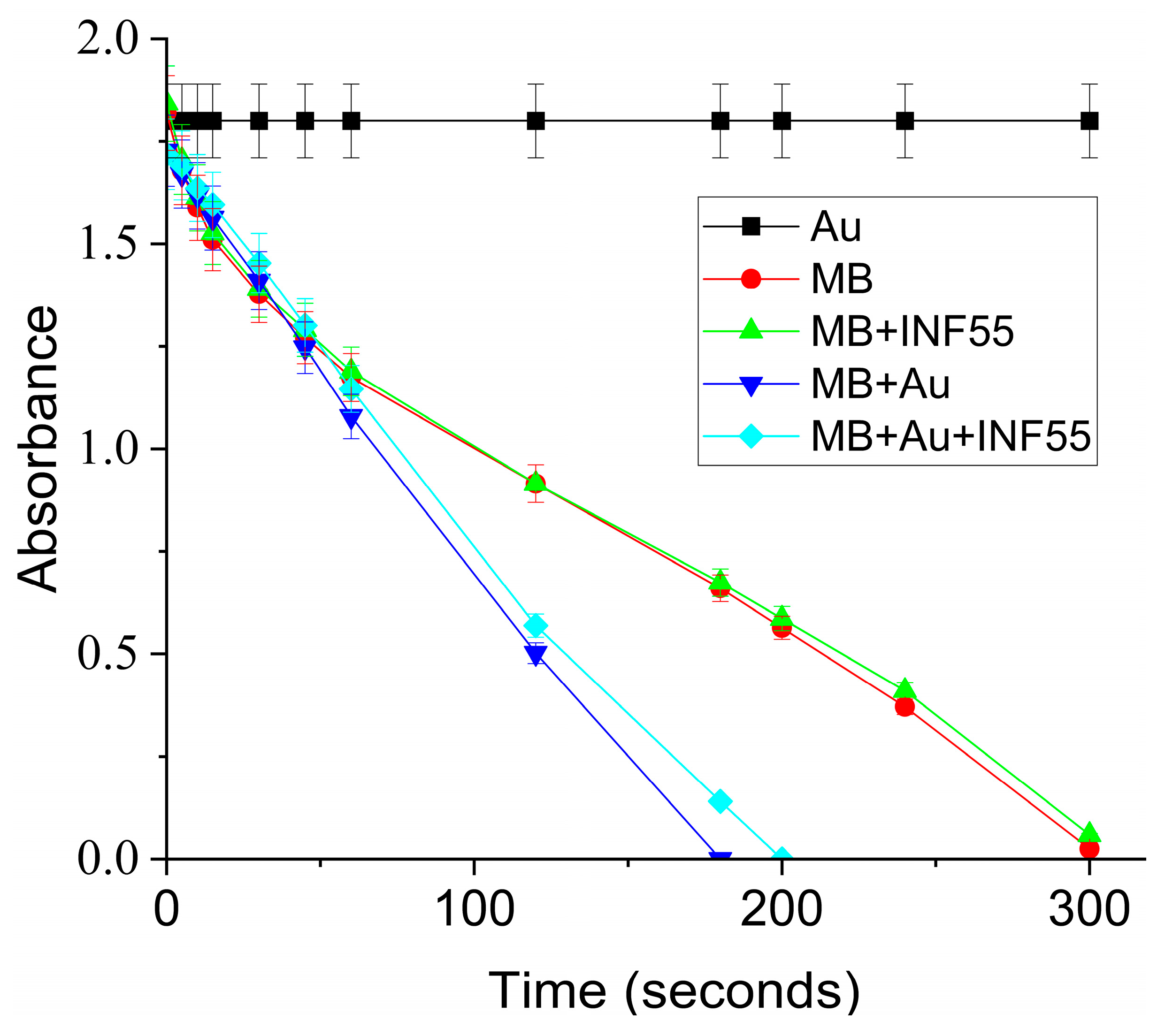
Figure 7 illustrates the optical density decay at 400 nm as an indicator of singlet oxygen generation in different conditions. For MB alone, the decay profile remains essentially unchanged with the addition of INF, demonstrating that INF does not directly alter the intrinsic photophysical properties of MB. In contrast, MB combined with AuNPs exhibits a markedly steeper decline, consistent with enhanced singlet oxygen production due to plasmonic interactions between AuNPs and MB. Specifically, the MB + Au sample shows a complete reduction in optical density to nearly zero after approximately 175 s of irradiation, while the MB + Au + INF condition reaches baseline slightly later, at around 200 s. The MB + INF curve overlaps closely with MB alone, confirming the lack of direct singlet oxygen generation from INF. Both curves decrease to zero around 300 s. The AuNP-only sample maintains a constant OD throughout, indicating negligible photobleaching or ROS generation in the absence of MB. These results collectively highlight the synergistic enhancement of photodynamic activity through AuNP-mediated plasmonic coupling and INF-assisted efflux inhibition.
As a control, AuNPs alone were tested under identical irradiation conditions and showed negligible ABMDMA degradation, confirming the absence of direct ROS production. The MB concentration used (10−6 M) is below the photobleaching threshold, consistent with prior AgNP–MB systems.
From a photodynamic therapy perspective, these findings are significant. They indicate that INF does not function as a direct photosensitizer or ROS amplifier. Instead, its therapeutic contribution is likely mediated through complementary mechanisms such as efflux pump inhibition or modulation of bacterial resistance pathways. The compatibility of INF with MB/AuNPs is further underscored by the fact that it does not diminish the overall ROS output, ensuring that the nanoparticle-assisted PDT effect remains intact while potentially adding a synergistic, non-ROS-mediated antibacterial action.
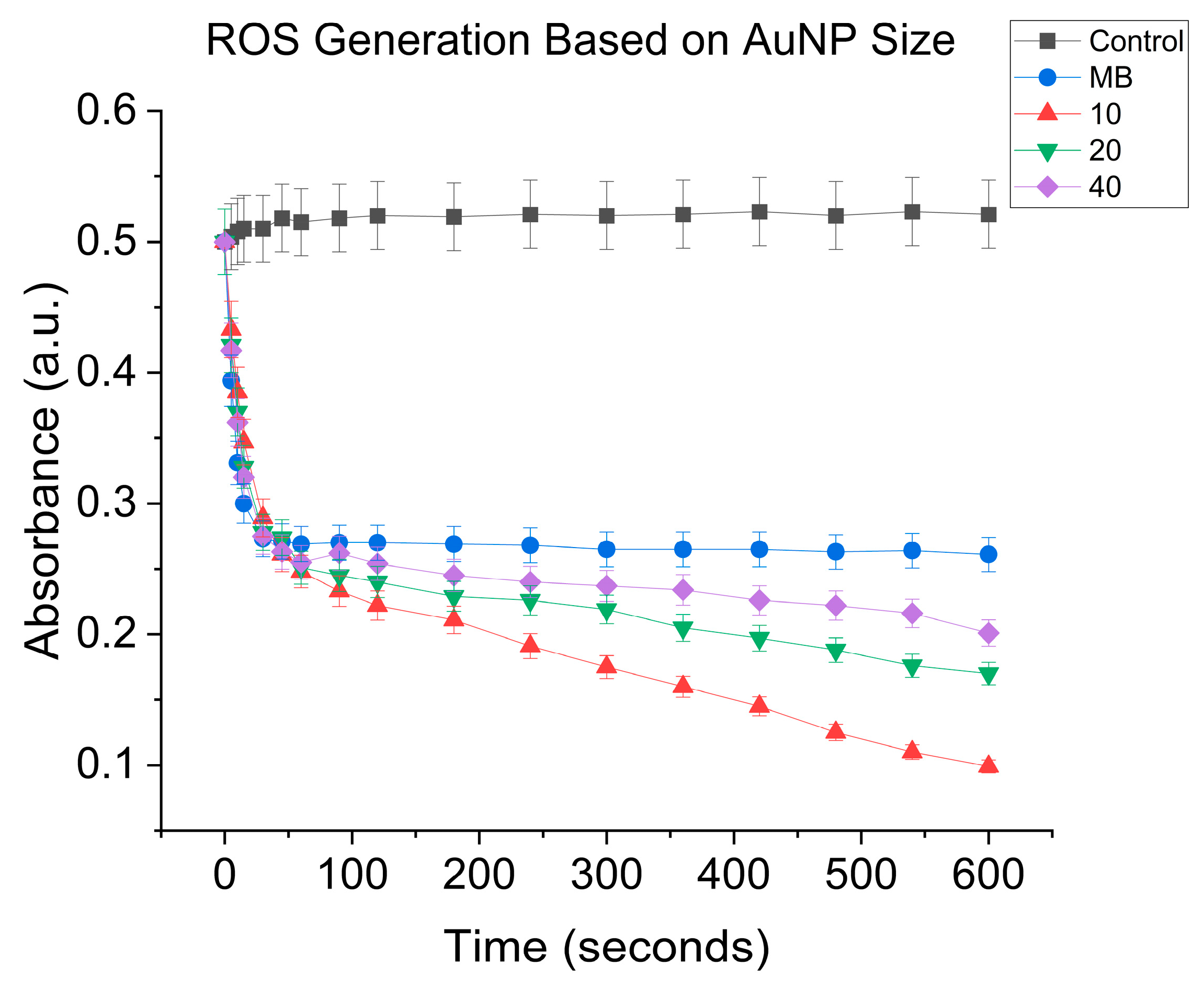
We then studied to see whether the size of the nanoparticle has any effect on singlet oxygen generation. The results obtained are reflected in
Figure 8. First, the effect of nanoparticle size was examined utilizing standardized, commercially produced nanoparticles of three different sizes: 10, 20, and 40 nm as seen in
Figure 8.
It should be noted that the concentration in
Figure 8 is different than that in
Figure 7. Based on the obtained data, it is evident that the presence of AuNPs enhances the photobleaching of ABMDMA, which is directly correlated with an increased concentration of produced ROS. Furthermore, we observed that as the size of the gold nanoparticles decreases, the rate of singlet oxygen generation increases, consistent with our earlier findings [
12,
68,
69]. With nanomaterials, increased catalytic yields are often correlated to the increase in the surface area to volume ratio with a decrease in particle size [
74,
75]. Consequently, smaller nanoparticles are predicted to be more effective in PDT due to their higher surface area and enhanced catalytic properties.
In addition, particle size critically influences in vivo pharmacokinetics and biodistribution. Smaller nanoparticles (<20 nm) are generally cleared more rapidly through renal filtration, which improves systemic circulation and reduces long-term accumulation in organs such as the liver and spleen [
76,
77]. However, this advantage comes at the expense of tumor retention, since extremely small particles may be excreted before reaching or remaining at the target site. Conversely, nanoparticles in the intermediate size range (20–100 nm) often benefit from the enhanced permeability and retention (EPR) effect, promoting passive tumor accumulation [
78,
79]. Yet, even within this size range, smaller particles can still exhibit reduced opsonization and longer blood half-lives compared to their larger counterparts [
80]. Thus, while decreased particle size improves circulation and biocompatibility, it simultaneously introduces challenges in achieving efficient, site-directed localization, an important consideration in optimizing AuNP-mediated PDT.
3.4. Bacterial Deactivation Measurement
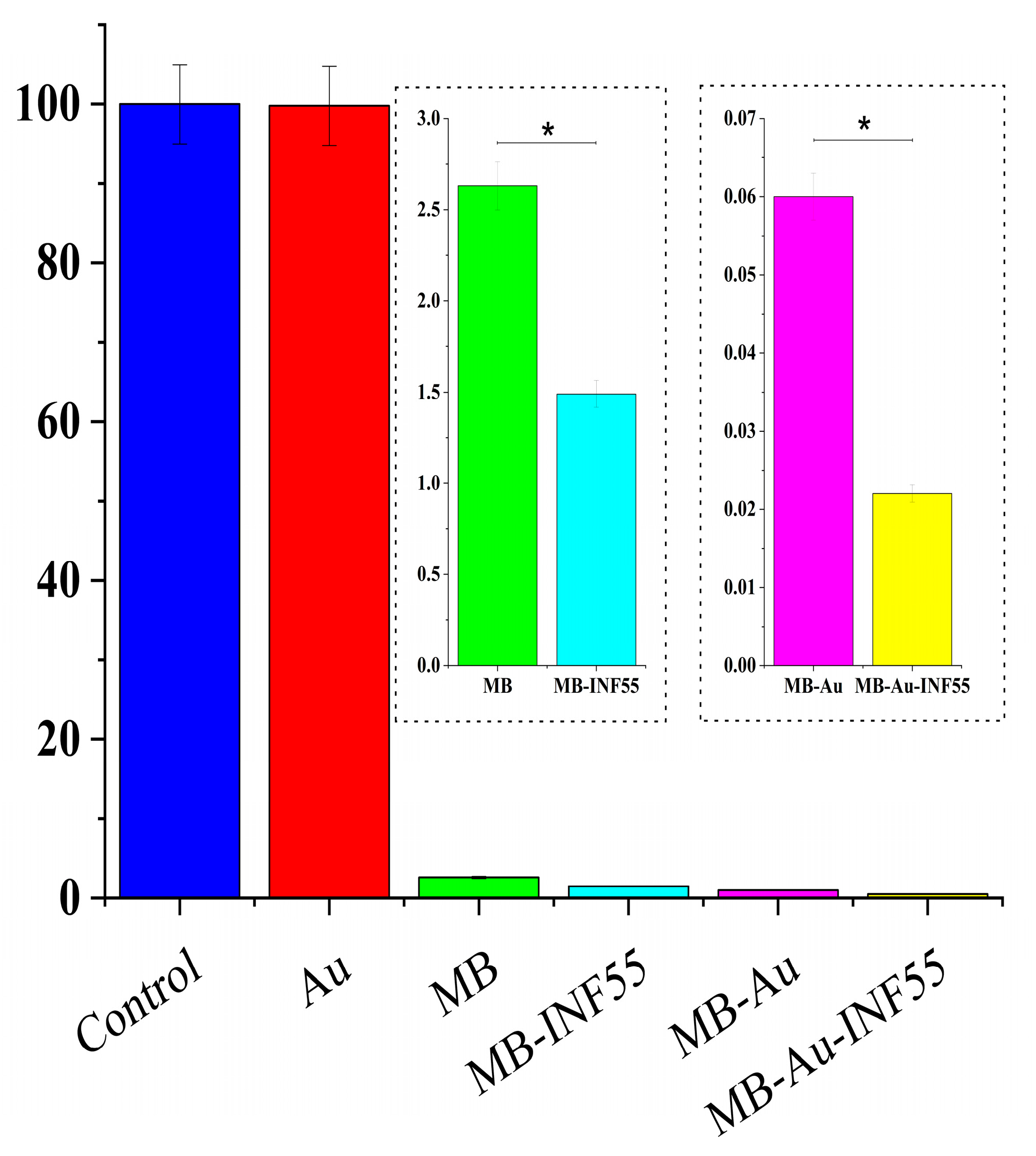
When INF-55 was combined with MB or MB/AuNPs, however, the photodeactivation rate of bacteria increased substantially, as shown in
Figure 9. At 6 min of irradiation, INF-55 enhanced bacterial killing by ~43% when combined with MB, while the combination of INF-55 with MB/AuNPs yielded nearly a 59% reduction compared to MB/AuNPs alone. These results strongly suggest that INF-55, an efflux pump inhibitor, facilitates intracellular retention of MB and/or AuNP complexes, thereby amplifying ROS-mediated bacterial killing. The antimicrobial properties of gold nanoparticles are less pronounced than silver, but they possess unique photophysical properties that make them particularly relevant for PDT. AuNPs can enhance singlet oxygen production through plasmon resonance and light scattering, thereby amplifying MB’s photodynamic effect.
To minimize their intrinsic antibacterial effect and focus on PDT enhancement, AuNPs were used at concentrations well below the MIC and with a short pre-irradiation incubation (10 min). Under these conditions, AuNPs or INF-55 alone did not significantly reduce bacterial counts compared to control.
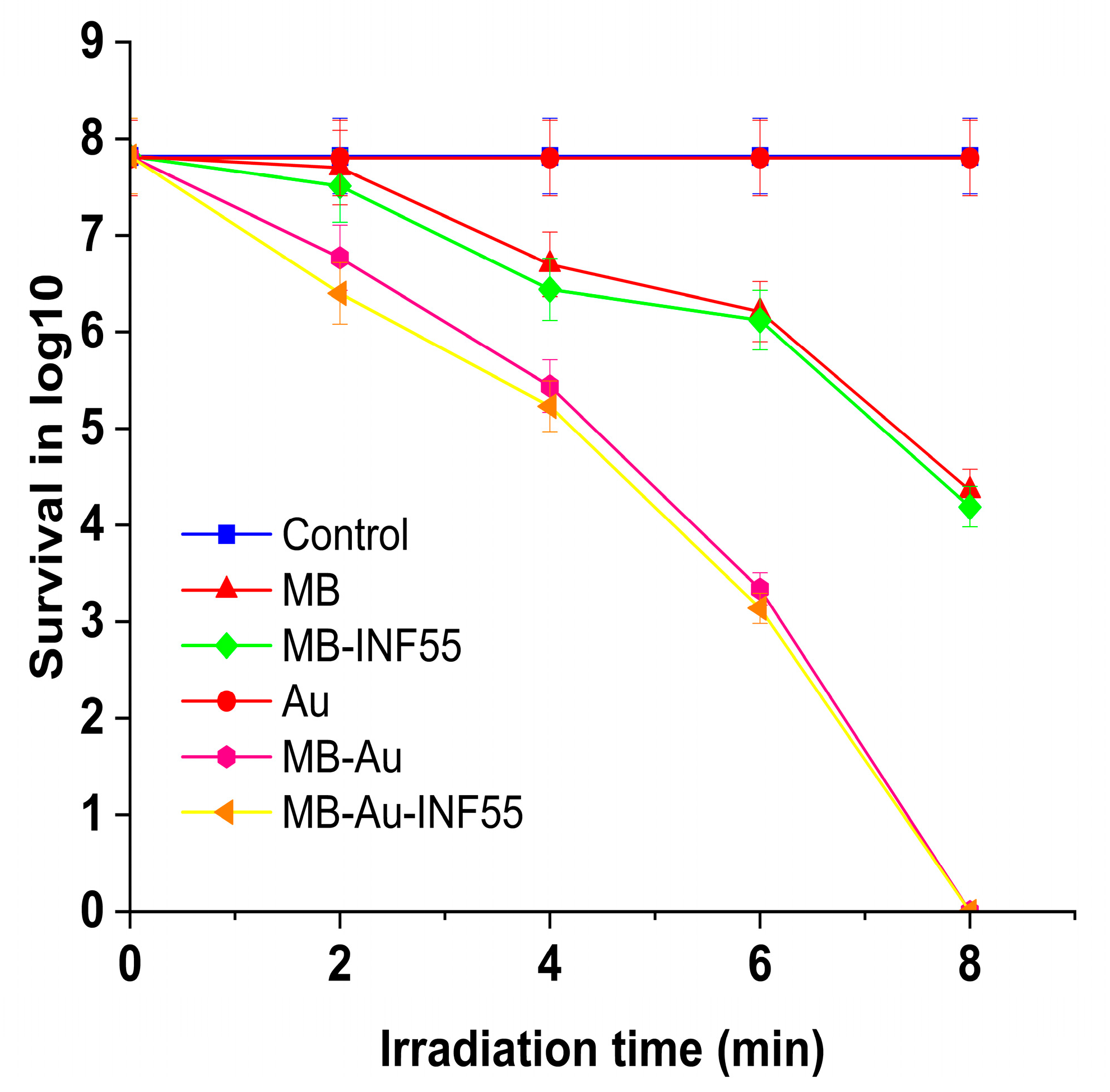
Figure 10 shows the deactivation rate of
E. coli colonies with respect to irradiation time in a logarithmic graph. When MB was used alone, the bacterial count decreased from about 10
8 to 10
5 CFUs after 8 min of irradiation, corresponding to a 3-log reduction. The addition of INF-55 slightly improved the outcome, lowering the count to ~10
4 CFUs, with the effect becoming more apparent at longer irradiation times due to the logarithmic scale. A much stronger improvement was observed when MB was combined with AuNPs, which reduced the bacterial load to ~10
3 CFUs at 6 min and nearly eliminated all colonies by 8 min, representing a 5–6 log reduction. The most pronounced effect was observed when MB, AuNPs, and INF-55 were applied together, resulting in complete bacterial eradication with no colonies detected after 8 min.
This suggests that while INF-55 alone provides only modest benefit in combination with MB, its contribution becomes critical when paired with MB and AuNPs, leading to total elimination. Mechanistically, this outcome can be explained by the dual action of AuNPs, which enhance ROS generation, and INF-55, which inhibits efflux pumps, thereby increasing intracellular MB accumulation and maximizing bacterial killing efficiency.
3.5. Effect of Au Nanoparticle Size and INF-55
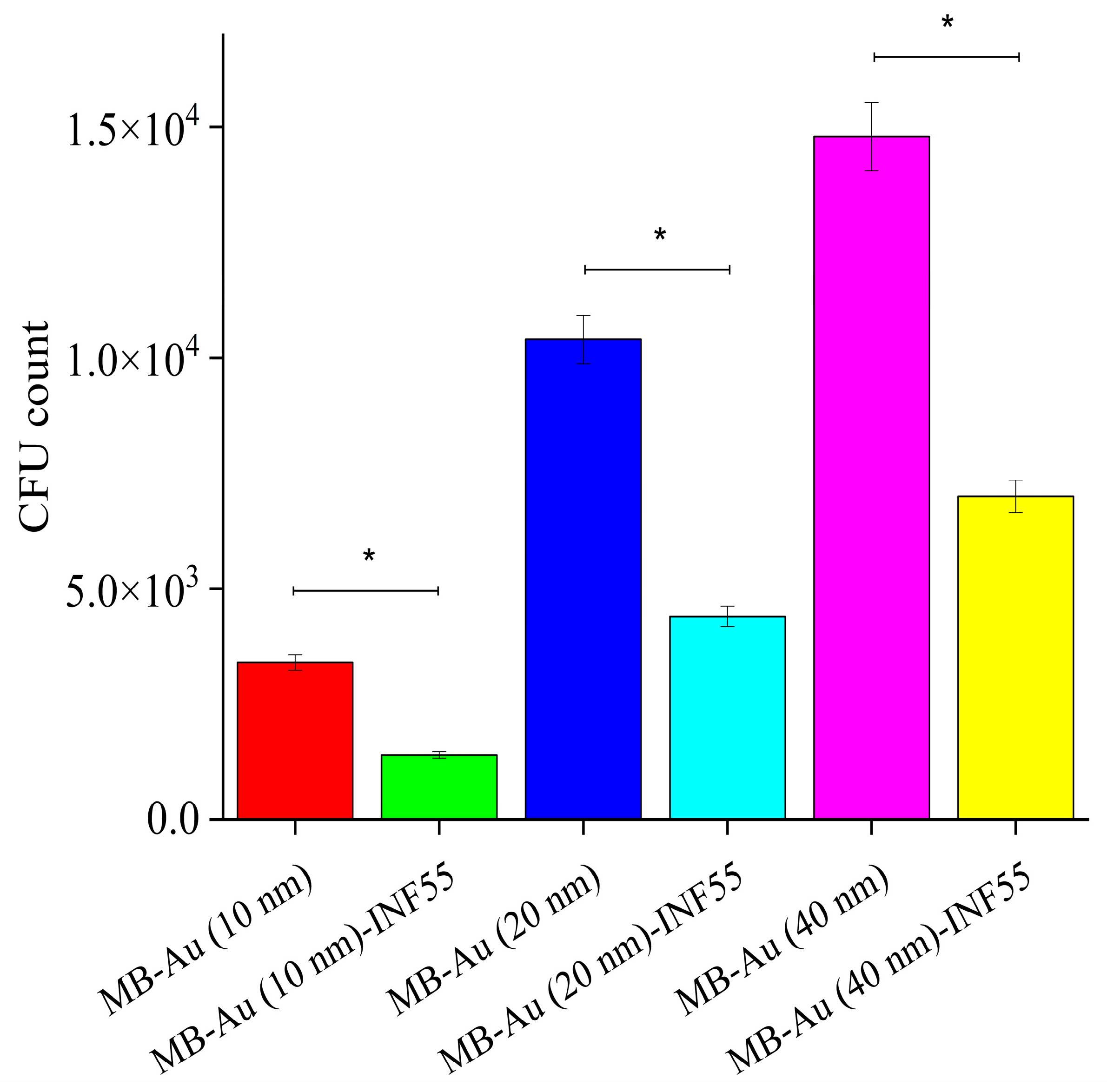
To further evaluate whether INF-55’s activity is size-dependent, AuNPs of 10, 20, and 40 nm were tested (
Figure 11). Consistent with previous findings, smaller AuNPs demonstrated stronger PDT enhancement due to their higher surface area-to-volume ratio and increased intracellular uptake. However, unlike the case for MB/AuNPs alone, no clear size-dependent trend emerged for INF-55’s enhancement. INF-55 produced measurable reductions in CFU counts across all three AuNP sizes, with decreases of approximately 41% for 10 nm, 42% for 20 nm, and 47% for 40 nm AuNPs, respectively. Taken together, these results indicate that while smaller AuNPs intrinsically augment MB’s photodynamic efficiency, the potentiating role of INF-55 is consistent across particle sizes.
Thus, INF-55 contributes an additional efflux pump-targeted mechanism of bacterial deactivation that operates independently of nanoparticle size.
It is important to emphasize that efflux pump inhibition enhances PDT efficacy only when the photosensitizer is a substrate of outward transport. This applies directly to methylene blue, which—As a planar aromatic cation—has been repeatedly shown to be actively extruded by multidrug efflux pumps particularly the RND family pumps AcrAB–TolC and MexAB–OprM in Gram-negative bacteria. Prior studies have demonstrated MB efflux and its retention upon efflux pump inhibition [
56,
57,
58]. Therefore, the INF-55 enhancement observed here reflects improved intracellular MB accumulation rather than a universal photosensitizer effect. This mechanism is specific to MB and other efflux-susceptible phenothiazinium dyes rather than all classes of photosensitizers.
3.6. INF-55 and Methylene Blue Docking Analysis
Molecular docking was performed to predict the binding affinity and interaction stability of INF-55 within the AcrB drug-binding pocket, enabling us to evaluate whether INF-55 can effectively compete with MB and function as an efflux pump inhibitor using Autodock Vina as described in the
Section 2.
The AcrB subunit has been predicted to be the primary binding site for ligand transport [
44,
45,
46,
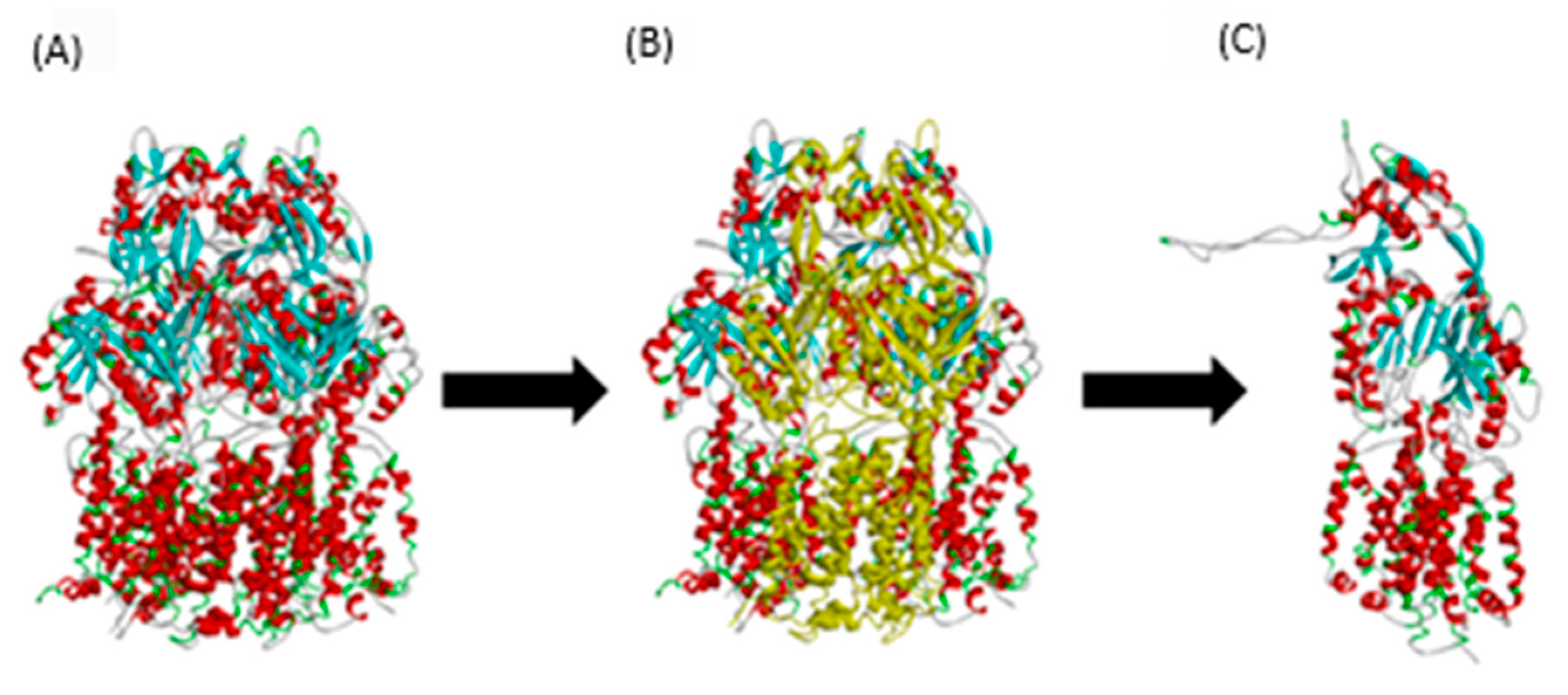
47]. As the AcrB is a homotrimeric antiporter, a single polypeptide unit was isolated for the docking calculations. The overall structure of the AcrB subunit and the isolation of the polypeptide unit is represented in
Figure 12. After the isolation of a single polypeptide unit, the binding affinity of the best 9 modes for both MB and INF-55 were calculated using Autodock Vina and are summarized in
Table 1.
These results indicate that each of the INF-55 binding modes has a higher binding affinity than the binding modes for MB. Therefore, INF-55 would most likely be preferentially selected by the AcrB component, acting as a competitive inhibitor and preventing the binding and subsequent removal of MB via the efflux pump mechanism.
3.7. AcrAB-TolC Bacterial Efflux Pump
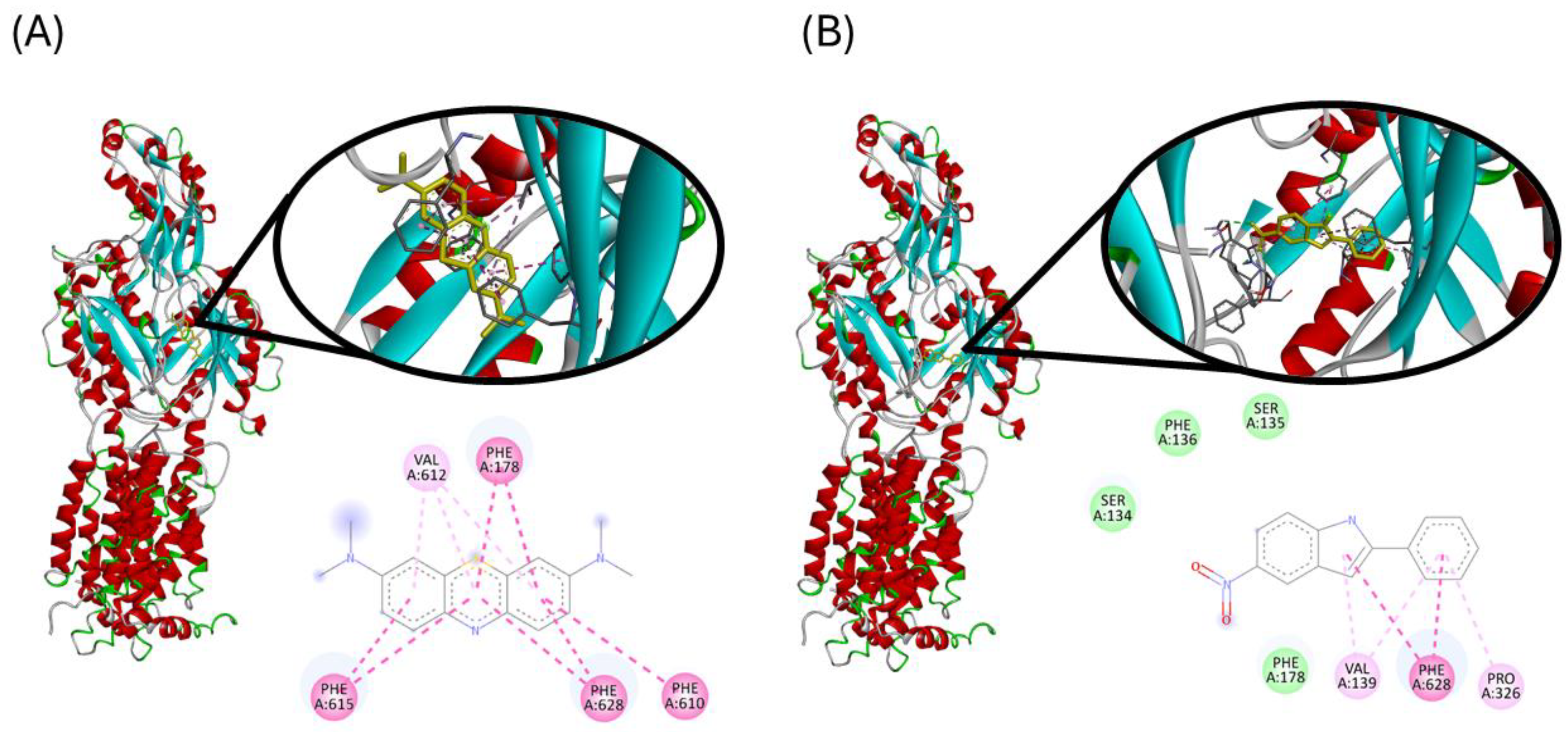
After the binding affinities had been calculated, the specific interactions between the amino acid residues and the ligands were modeled both two- and three-dimensionally. The binding mode with the highest affinity for both MB and INF-55 is represented in
Figure 13.
Based on this information, it is evident that INF-55 interacts with SER134, SER135, PHE136, and PHE178 via Van der Waals interactions, VAL139 and PRO326 via Pi-Pi stacking, and PHE628 via Pi-alkyl interactions. Additionally, each functional group of the INF-55 compound is stabilized by at least two amino acid residues. The nitro group is stabilized by SER134, SER135, PHE136, and PHE178, the pyrrole ring is stabilized by VAL139 and PHE628 and the phenyl group is stabilized by PHE628 and PRO326. MB, on the other hand, is only centrally stabilized via Pi-Pi stacking with the conjugated Pi system by the residues PHE178, PHE615, PHE628, PHE610, and a Pi-alkyl interaction via VAL612. This provides additional evidence that INF-55 has stronger binding interactions than MB. Additional two- and three-dimensional binding interactions for the top 3 binding modes for both INF-55 and MB can be found in the
Supplementary File.
The previously identified residues have been isolated in the literature as the main amino acids involved in the ligand binding in the drug binding pocket of the AcrB component [
44,
47,
54,
78,
80].
Multiple ligands including doxorubicin, minocycline, and ciprofloxacin, ethidium bromide, reserpine, and methylene blue have been shown to interact with these residues, indicating that INF-55 could, in fact, bind to the AcrB subunit in the drug binding pocket. One of the primary residues involved in virtually every protein–ligand interaction in both the literature, as well as the additional binding modes for MB and INF-55 found in the
Supplementary File, is PHE628. It is possible that PHE628 is one of the primary binding residues when it comes to drug efflux via the AcrB subunit. Therefore, compounds such as INF-55 that interact strongly with PHE628 could act as competitive inhibitors for the AcrB subunit.
In this study,
E. coli (K-12) was selected as a proof-of-concept Gram-negative model to elucidate the dual photodynamic mechanism of AuNP-enhanced methylene blue and INF-55 co-administration. Our previous work has demonstrated similar methylene-blue-mediated photoinactivation against multiple clinically relevant MDR species, including
Acinetobacter baumannii,
Klebsiella pneumoniae, and
Pseudomonas aeruginosa [
81,
82]. These results suggest that the present strategy is broadly applicable to MDR pathogens, and future studies will extend this investigation to confirmed MDR isolates.
Although cytotoxicity testing for AuNPs was not conducted in this study, our group has previously reported in vitro biocompatibility data for laser-ablated AgNPs synthesized under identical PLAL conditions. The MTT assay performed on HEK-293T cells showed no measurable toxicity up to 50 µg mL
−1 [
69]. Because both Ag and Au nanoparticles generated by PLAL are ligand-free, chemically pure, and were used here at concentrations below 10 µg mL
−1, similar or lower cytotoxicity is expected. This assumption is supported by prior studies reporting that gold nanoparticles exhibit minimal toxicity below 50 µg mL
−1 and are generally more biocompatible than silver nanoparticles of comparable size and surface chemistry [
83,
84].
Because the MTT assay reflects metabolic activity rather than reproductive capacity, its results do not always correlate with clonogenic survival [
85]. In this study, MTT was used only as a qualitative metabolic viability screen to confirm the absence of mammalian cell toxicity from AuNPs and INF-55. All conclusions regarding PDT efficacy are based exclusively on CFU measurements, which directly quantify viable, proliferating bacterial cells.




 ,
,