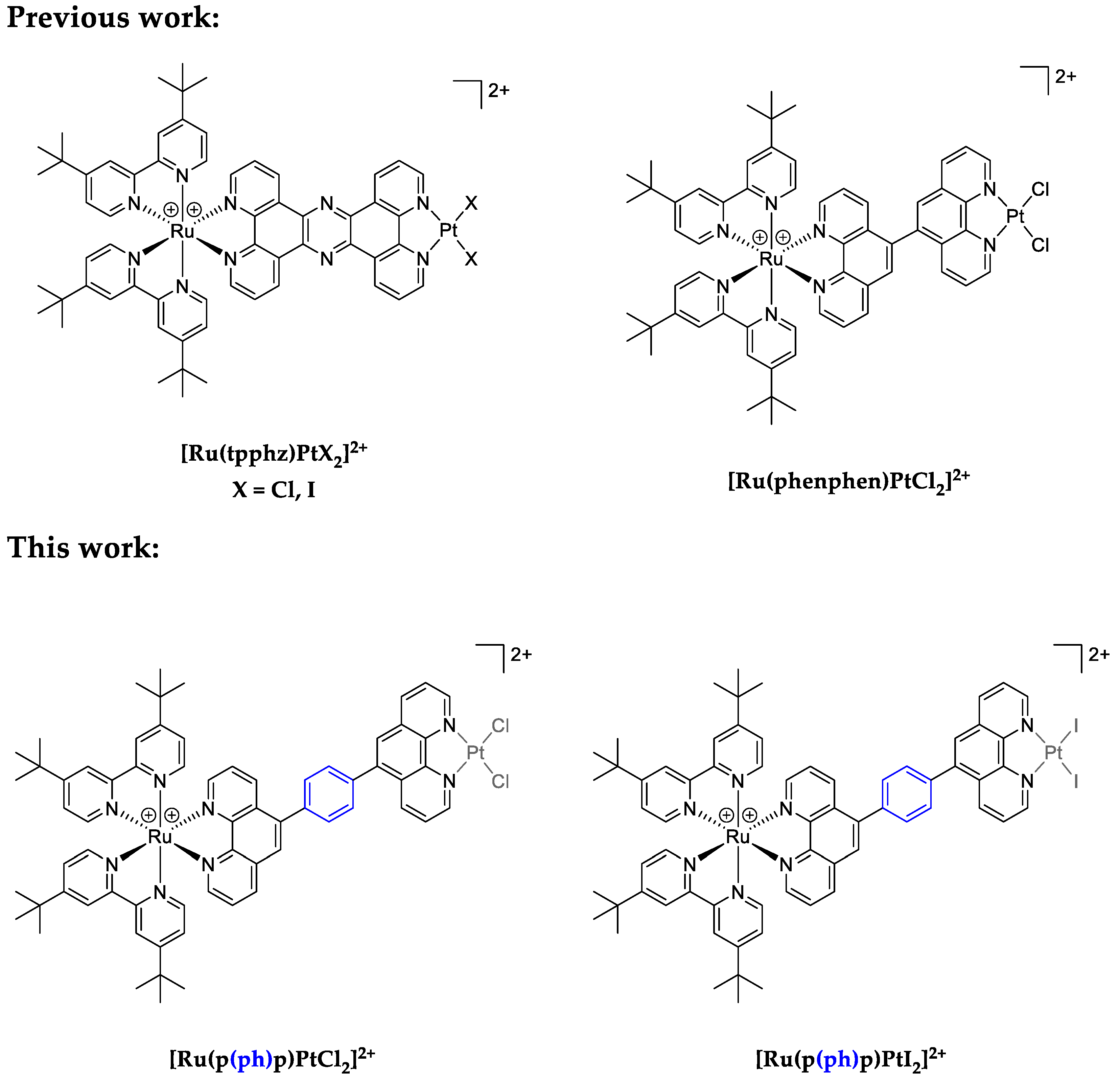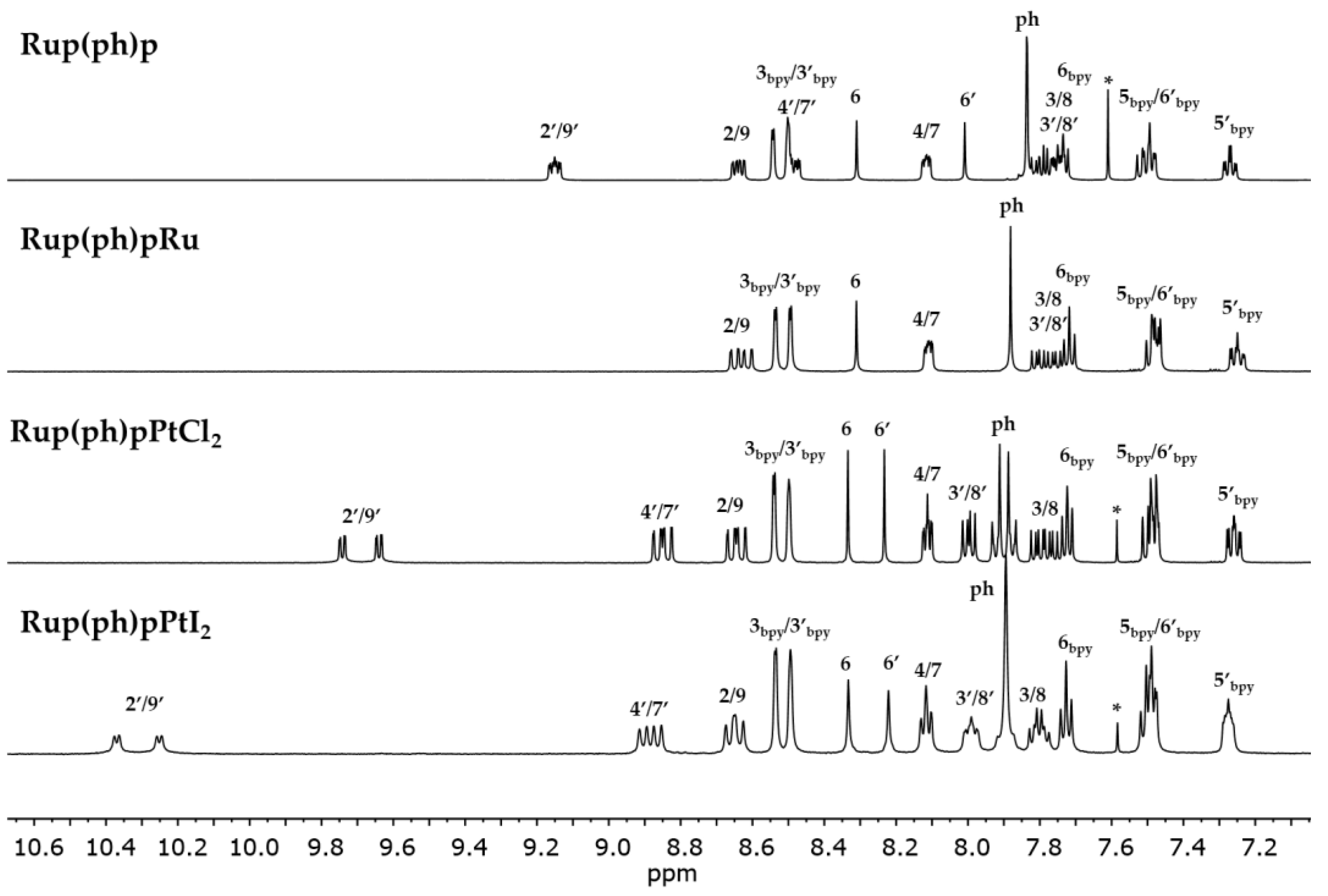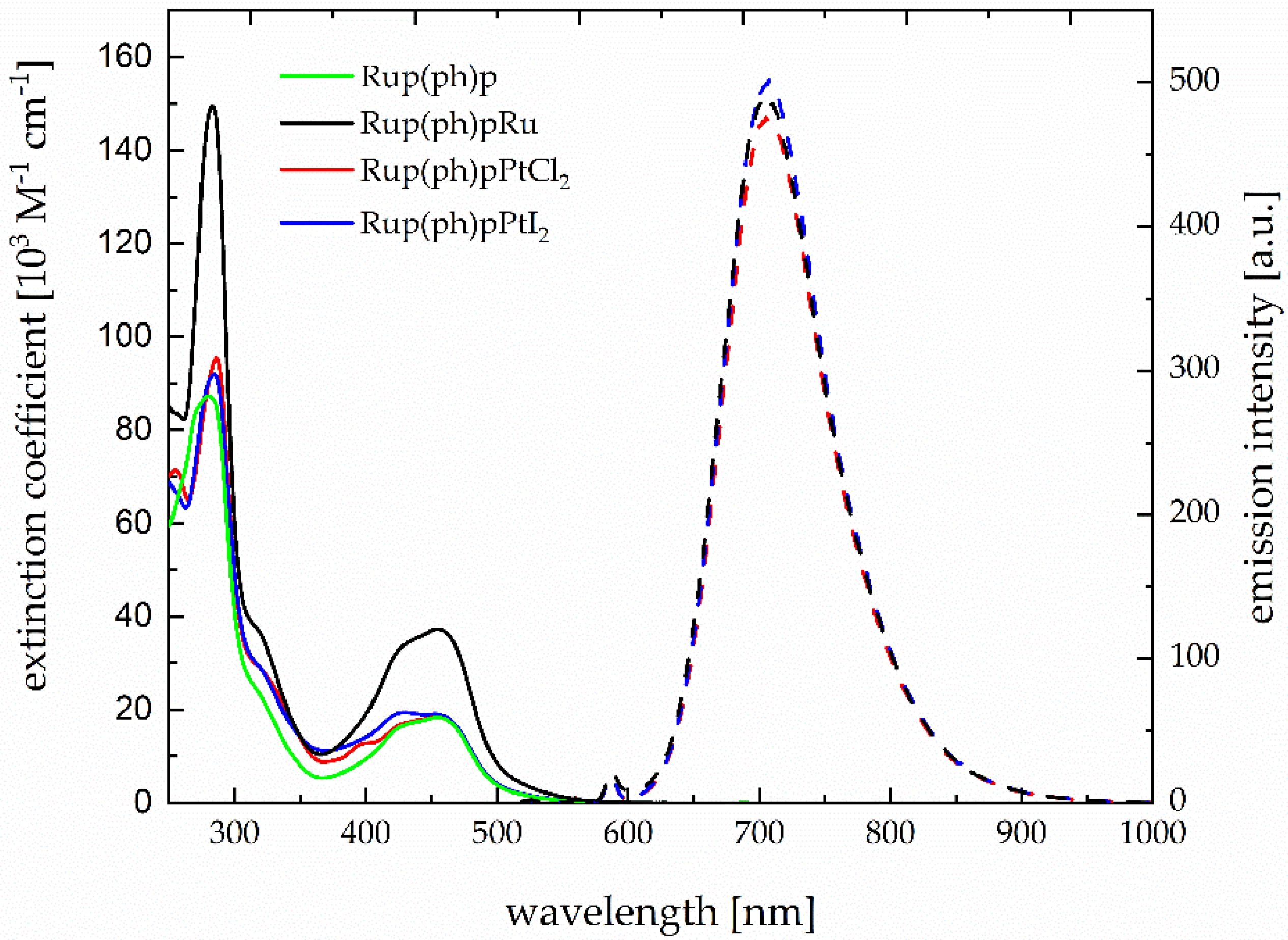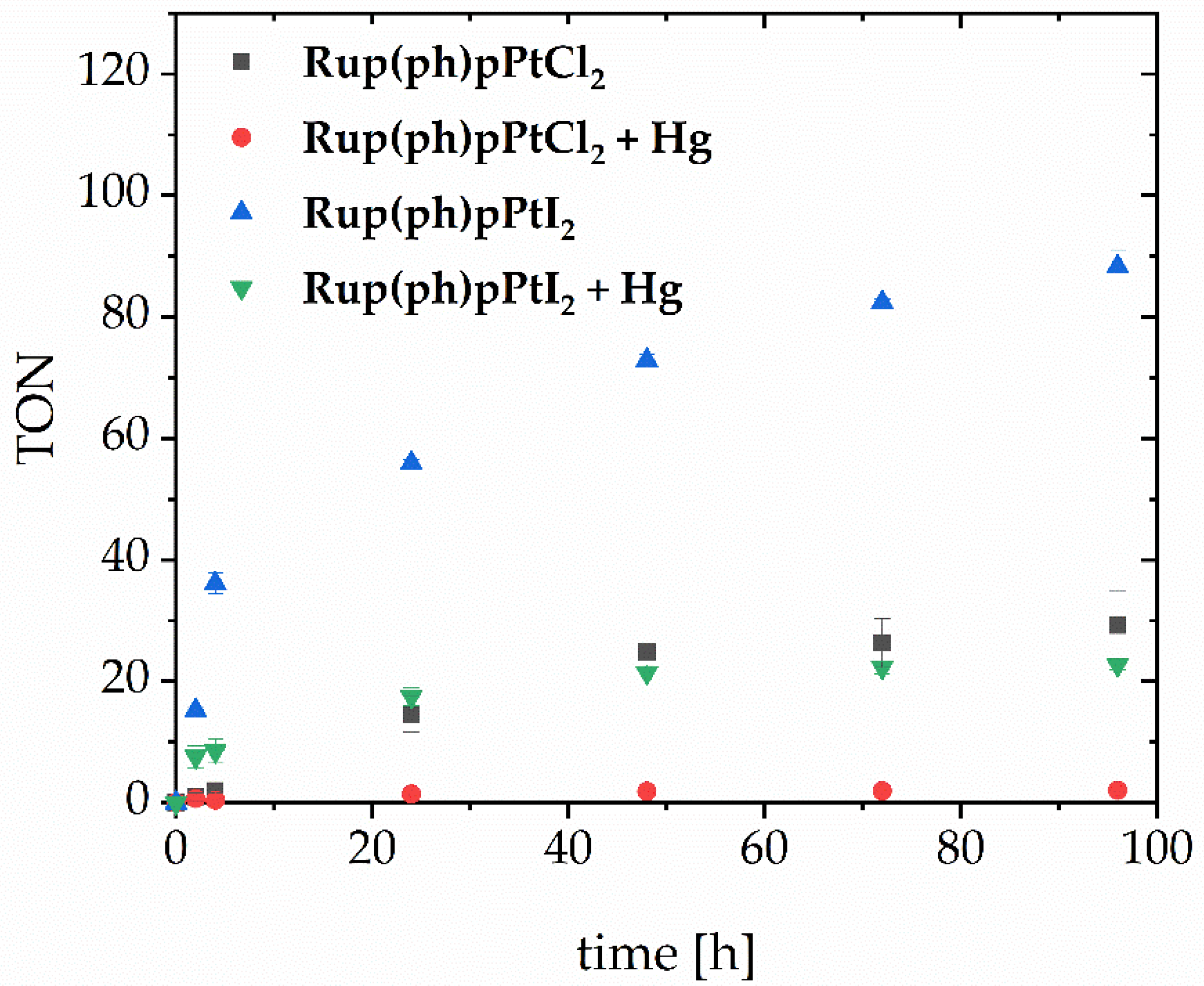

Efficient Access of Phenyl-Spaced 5,5′-Bridged Dinuclear Ruthenium Metal Complexes and the Effect of Dynamic Ligand Exchange on Catalysis

 , and
, and Abstract
Share and Cite
Lämmle, M.; Volk, S.; Klinkerman, M.; Müßler, M.; Mengele, A.K.; Rau, S. Efficient Access of Phenyl-Spaced 5,5′-Bridged Dinuclear Ruthenium Metal Complexes and the Effect of Dynamic Ligand Exchange on Catalysis. Photochem 2022, 2, 831-848. https://doi.org/10.3390/photochem2040053
Lämmle M, Volk S, Klinkerman M, Müßler M, Mengele AK, Rau S. Efficient Access of Phenyl-Spaced 5,5′-Bridged Dinuclear Ruthenium Metal Complexes and the Effect of Dynamic Ligand Exchange on Catalysis. Photochem. 2022; 2(4):831-848. https://doi.org/10.3390/photochem2040053
Chicago/Turabian StyleLämmle, Martin, Steffen Volk, Madelyn Klinkerman, Marius Müßler, Alexander K. Mengele, and Sven Rau. 2022. "Efficient Access of Phenyl-Spaced 5,5′-Bridged Dinuclear Ruthenium Metal Complexes and the Effect of Dynamic Ligand Exchange on Catalysis" Photochem 2, no. 4: 831-848. https://doi.org/10.3390/photochem2040053
APA StyleLämmle, M., Volk, S., Klinkerman, M., Müßler, M., Mengele, A. K., & Rau, S. (2022). Efficient Access of Phenyl-Spaced 5,5′-Bridged Dinuclear Ruthenium Metal Complexes and the Effect of Dynamic Ligand Exchange on Catalysis. Photochem, 2(4), 831-848. https://doi.org/10.3390/photochem2040053